Lost In the UK? Ask This Woman For Directions

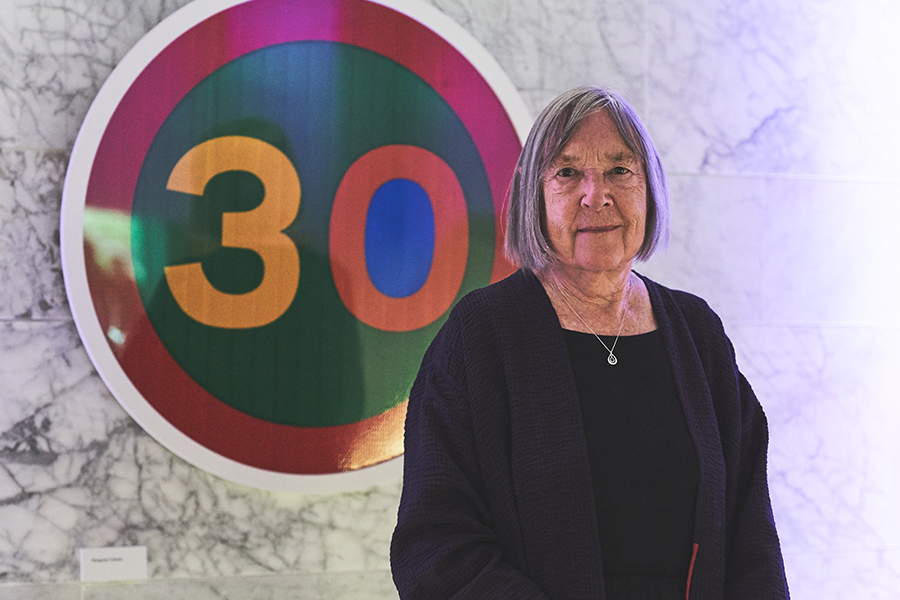
With a career spanning over six decades, British graphic designer Margaret Calvert has helped shape the visual identity of the United Kingdom. Her work has defined roads, rail stations, and airports, and her work has given clear directions to locals and visitors alike since the 1960s.

In October, the Design Museum in Kensington, West London launched an exhibition to celebrate Calvert’s incredible influence on design and designers and her continuing impact through projects such as the new Rail Alphabet 2 typeface for Network Rail, designed in collaboration with typographer Henrik Kubel.

The exhibition will show how typography and wayfinding systems are designed. Starting with initial drawings and proposals, to familiar finished pictograms and transport signs, visitors are guided through the display with commentary from Calvert herself.

Born in South Africa, Calvert moved to England in 1950, where she studied at St Paul’s Girls’ School and the Chelsea College of Art. Her tutor, Jock Kinneir, asked her to help him design the signs for Gatwick Airport and they chose the black on yellow scheme for the signs after researching the most effective combination. They also designed luggage labels for P & O Lines in 1957.

In 1957, Kinneir was appointed head of signs for Britain’s roads and he hired Calvert to redesign the road sign system. She came up with simple, easy-to-understand pictograms, including the signs for ‘men at work’ (a man digging), ‘farm animals’ (based on a cow named Patience that lived on a farm near to where she grew up), and ‘schoolchildren nearby’ (a girl leading a boy by the hand), using the European protocol of triangular signs for warnings and circles for mandatory restrictions.

Margaret Calvert’s studio.

The Design Museum exhibition features hand-drawn materials; insights into early projects that shaped her design process, including her first commission, and the original British Rail corporate identity manuals.

Visitors will get to know Calvert through three timeless typefaces: Rail Alphabet, designed by her in the 60s and used in train stations and on an array of railway related material; Calvert, her iconic face used for the Tyne & Wear Metro and the identity for the Royal College of Art; and Transport, for the UK road signs which, despite minor modifications, are still in use today. New Transport, a commercial face, was designed at a much later stage with Kubel. It is now the official face for the Gov.UK website.

“Margaret Calvert showed Britain the way into the modern world,” said Deyan Sudjic, Director Emeritus of the Design Museum. “Her brilliant signage system made sense of the new motorways in the 1960s, welcomed us into a generation of new NHS Hospitals, and guided us through brand new airports and railway stations.”

Wayfinding as a design field explores how new systems are designed to create a safer and more inclusive travel environment. The next time you’re looking for directions in the UK, remember that behind that directional sign is a woman showing the way.


From Vandalism to Cultural Expression: Boston’s Mural of Hope

The Museum of Fine Arts, Boston (MFA), has launched a community mural project co-led by artists-in-residence Rob “Problak” Gibbs and Rob Stull. In collaboration with the City of Boston, Gibbs has begun painting a new outdoor mural — which he calls the Breathe Life series — on the exterior of Madison Park Technical Vocational High School.

“It signals the beginning of a new day in the MFA’s 150-year history,” says Makeeba McCreary of MFA. “The museum can shape the cultural sector, but more importantly, we have the opportunity to be shaped by the culture surrounding us.”

“Growing up during the golden age of hip-hop, I spent a lot of time venturing between the Lenox Street apartments and the Orchard Park projects of Roxbury,” says Gibbs. “I came across graffiti, which was often labeled as vandalism. To me, it was clear that graffiti was an art form that had the power to convey culture, history, and knowledge. It became my mission to transform Boston’s streets with graffiti art — an art form that is frequently criminalized, undervalued, and misrepresented in mainstream culture. I hope to continue to find new ways to innovate my craft and to mentor others in the art form that changed my life.”

A Former NBA Coach Gives Advice on When to Pivot

PODCAST PEOPLE: A Summary of the Real Leaders Podcast

We all have the superhero power of choice to live this lifestyle through the habits that we build. And it really comes down to just continuing to do it, 1% step after 1% step, day, after day, after day.”

David Nurse is a former professional basketball player and current life optimization coach, worldwide keynote motivational speaker, and bestselling author of Pivot & Go.

The following is a summary of Episode 120 of the Real Leaders Podcast, a conversation with NBA life optimization coach David Nurse. Read or listen to the full conversation below.

Pivot and Go

David shares his journey with basketball and how he pivoted multiple times to finally realize he was meant to be a coach. He explains that failure was a crucial component in forming his career.

“Honestly, rejection, just like we’ve been pivoting terms, is a great thing. Failure is a great thing. Because failure is not only an option of a way you can learn and grow, it is the only way you learn and grow.”

Failure is something David acknowledges as an opportunity for self-assessment. Whether this means addressing internal concerns or acting upon a large-scale call for change like a global pandemic, sometimes the best course of action is to pivot.

“I don’t give up right away, but also see the bigger picture of when you aren’t succeeding in something that you thought was your gift. Most of us don’t assess ourselves. We just do life and just go go go go go, and then 10 years down the road, we don’t know where that time went. Take time, at the end of each day. Take time once a day, per month, and just assess yourself. Where are you at? And you’ll be able to learn a lot about yourself and think like, hey, I’ve been banging my head against this wall and it’s not going. But what are the skill sets that I learned from doing this? Could I use it in a different direction? And then if it coincides with what you’re passionate about, then that’s when you know how to pivot.”

Listen to Episode 120 on Spotify, Anchor, Crowdcast, and Apple Podcasts

Surviving to Thriving

David shares that the difficulties he’s faced on his career journey have become all the more meaningful because they have come to serve a greater purpose. His decision to continually take steps forward has enabled him to help others do the same.

“We are our biggest defenders. Our biggest full-court press is ourselves because we give up when things get tough. Now, if everybody could look at it from this mindset-pivot of thriving over just surviving, that would open huge doors for everyone. Think about a difficult situation that you go through. You can embrace that and you can actually want those to happen. Because you know that somebody else coming along the way will go through that same exact thing and now you can help them through it. So it’s for a much bigger purpose than just yourself. You’re pivoting those difficult situations from just surviving to thriving.”

To affirm this thrive mentality, confidence is required. But David re-defines confidence as something beyond the abstract, something attainable for all of us:

“I like to say confidence isn’t about the results that you get or isn’t about anything the world might say it is. It’s about true self awareness.” 

Transcript

Connect

Find more of David’s insights here:

Jump Out of Bed to Serve Your Customers

PODCAST PEOPLE: A Summary from the Real Leaders Podcast

Simply if we make people’s lives easier and better, if we reduce stress, if we build and curate experiences for other people that we personally would want to have, we will always have a customer.

Blake Morgan is a keynote speaker, customer experience futurist, podcast host, and author of two books on customer experience. She is recognized as one of the Real Leaders Top 40 Female Keynote Speakers Worldwide.

The following is a summary of Episode 126 of the Real Leaders Podcast, a conversation with customer experience futurist, Blake Morgan. Read or listen to the full conversation below.

How to be Customer Centric

Blake explains that as a customer experience futurist, she teaches companies how to prioritize the customer over product or profit. The mark of a customer-centric company is one that endeavors to make the customers’ lives easier and better.

“Companies do not organize themselves around the customer. They organize themselves on how to be most profitable for the next quarter. And they’re not willing to make these bets, make the investments, be misunderstood for long periods of time, like the Amazons of the world, like Netflix. And that’s a shame because the companies that do it well, they are reaping all the profits and the others are getting left behind.”

Blake lists Amazon, Netflix, and Spotify as examples of companies who offer a positive customer experience because it has been built into the fabric of each company. They continue to come out on top because customers want to come back — the service is so seamless customers rarely have to call for customer support.

“My belief is that you should never, ever, under any circumstances have to call a company unless you want to. And [Amazon] really understands that and they’ve taken it to such an extreme level that this company has put a stake in the ground on customer experience. And they’ve got billions of dollars in profits to prove it.”

Blake suggests that many businesses could learn from this example, as there are still so many industries renowned for poor customer treatment (such as insurance companies, healthcare providers and the DMV). Covid has made the need for a seamless customer experience all the more pertinent, because inconveniences like requiring in-person visits and manual receipt signatures are obsolete in a pandemic world.

Listen to Episode 126 on Spotify, Anchor, Crowdcast, and Apple Podcasts

The Customer of the Future

Blake explains that companies need to address three elements to remain resilient in the future and create an overall positive customer experience:

psychological – building customer experience into company culture and operationalizing leadership development into company strategy

technical – shifting to digital operations, incorporating big data, analytics, AI and machine learning, tracking customer history and anticipating their needs, but at the same time incorporating more human interaction, not less

experiential – marketing and customer communication, having a data and ethics mission statement, serving customers who expect a zero friction, customer experience, and taking care of a customers that are not reading the terms and conditions

Transcript

Connect

Find more of Blake’s insights here:

The Man Who Built a Jungle

The observance of the International Day for the Eradication of Poverty can be traced back to 17 October 1987. On that day, over a hundred thousand people gathered at the Trocadéro in Paris, where the Universal Declaration of Human Rights was signed in 1948, to honour the victims of extreme poverty, violence and hunger.

They proclaimed that poverty is a violation of human rights and affirmed the need to come together to ensure that these rights are respected. Since then, people of all backgrounds, beliefs and social origins have gathered every year on October 17 to renew their commitment and show their solidarity with the poor.

However, many poor people are looking for a hand up, not a handout. Here’s one story of an Indian peasant who decided to take action against deforestation, despite being the only person willing to act. His conservation efforts have been recognized internationally and he is now ready to replicate his efforts in similar areas of need. Never underestimate the will, and power, of people with little means.

The Man Who Built a Jungle

In 1979, Jadav Payeng, then 16, joined a forestation project in the Golaghat district of India, in the hope of preventing flooding along a desolate sandbank. The project was abandoned after five years and everyone left, except for Payeng, who continued to plant trees every day.

Thirty-seven years later, Molai forest is now 1,360 acres – larger than Central Park in New York — the result of one man’s labor of love. His forest now houses Bengal tigers, Indian rhinoceros, and over 100 deer and rabbits. It’s also home to monkeys and several varieties of birds. A herd of 100 elephants regularly visits the forest and have given birth to 10 calves in recent years.

“No more global warming if everyone plants a forest,” says the ‘Forest Man of India.’ 

“In Paris, I asked the Economic Forum for Climate Change why they emphasize the word ‘economy’ so much,” says Payeng. “What value is the economy if there is no oxygen? I asked them to stop breathing for two minutes to realize the importance of oxygen.”

Live Podcast Alia Eyres

Alia Eyres is the CEO of Mother’s Choice, a local Hong Kong charity that provides and promotes loving, nurturing care for babies and children needing permanent homes, and for single girls and their families facing crisis pregnancies.

<iframe width="100%" height="800" frameborder="0" marginheight="0" marginwidth="0" allowtransparency="true" src="https://www.crowdcast.io/e/alia-eyres?navlinks=false&embed=true" style="border: 1px solid #EEE;border-radius:3px" allowfullscreen="true" webkitallowfullscreen="true" mozallowfullscreen="true" allow="microphone; camera;"></iframe><a ng-href="https://www.crowdcast.io/?utm_source=embed&utm_medium=website&utm_campaign=embed" style="color: #aaa; font-family: 'Helvetica', 'Arial', sans-serif;text-decoration: none;display: block;text-align: center;font-size: 13px;padding: 5px 0">powered by Crowdcast</a>

Traditional Leadership Has Done a Terrible Job. Here’s How to Fix it

Since the turn of the century, we’ve learned that our leaders have illegally avoided taxes, lied about emissions in the car industry, rigged interest rates, presided over an offshore banking system that was larger than anyone ever thought, destroyed pension funds as they themselves grew wealthier.

Collectively, they oversaw the biggest collapse of the financial system and watched as their life savings placed into investment funds set up by leaders of unimpeachable integrity turned out to be Ponzi schemes. Our spiritual leaders have covered up sexual abuse in the Church. Our political leaders have cheated on their expenses, admitted sexually inappropriate behavior, and were taken completely by surprise by the Brexit vote. Our charity leaders have sexually abused the vulnerable. Our entertainment leaders are facing multiple allegations of sexual harassment and abuse. Our leading broadcasters have falsely accused some political figures of being child abusers while allowing actual abusers to commit crimes on their premises. Meanwhile, our sporting leaders have been caught cheating and doping.

These events sound unlikely, unbelievable, even impossible, but they all happened in the last two decades. Outside of the cataclysmic events of the world wars, it is difficult to remember a time when our leaders have appeared more wholly and thoroughly discredited.

How do we rebuild trust in our leaders? It won’t be quick or easy. We cannot establish the presence of the positive without first ensuring the absence of the negative. We have to understand why these events happened by asking what they had in common. Could it be that we lacked the imagination to think, this was even possible? Did the leaders never imagine that they would be caught? An obvious connection was that they all had leadership groups that lacked diversity. Another factor is that these groups were fronted by confident men. We’ve seen the effect of this in pollsters and pundits who didn’t see Donald Trump or Brexit or the financial collapse of 2009. We have to stop predicting one outcome and preparing for all outcomes.

Another factor was that all of these leaders had been traditionally educated in drill-down, analytic, Western Reductionism. This makes them good drilling-down but not necessarily at looking across. By their very nature, diverse groups tend to have a broader view, think longer-term in their views, and tend to be qualitative. A disproportionate number of MPs are from privately-educated background and/or attended Ivy League universities. Equality and representation in leadership is not just a matter of social justice, it’s a matter of business efficiency.

The over-reliance on logic and analysis tends to favor thinking rather than the feeling. This means or leaders can misread the mood because they’re too reliant on the math. During the British parliamentary expenses scandal, for instance, the politicians argued that the scale of the expenses abuses was tiny compared to state expenditure. They were missing the point about the overall level of trust.

If it’s a problem of trust you’re trying to fix, you have to start with an understanding that what makes us trust our leaders is not always logical. More data and more education may not be the answer. We’re looking for evidence that they are representing our interests first and not just their own. If they looked more representative of the communities they are seeking to serve; then this would be a start.

This is especially true of our technology leaders. They can no longer argue that they are furthering the interests of the community they serve when they treat personal data carelessly. Cambridge Analytica was an example of this. If this wasn’t enough, Facebook providing a live-stream of the murdering Muslims in a mosque was a watershed moment.

It’s no wonder people are angry with the current leadership. They feel they’re not listening. They think they don’t care. The elevators seem to be broken. This is dangerous. It opens the way for demagogic leaders with ‘simple solutions’. History tells us quietly that we’ve been here before.

Trust is something that takes years to establish that can be lost in moments. It’s so precious that we can no longer entrust it to one infallible (often male) individual. It needs to be invested in teams that work in a collective structure that have timeless values. These are called leadership institutions, and they survive the test of time better than any individual leader.

This is an excerpt from the book “The Leadership Lab” by Dr Philippa Malmgren and Chris Lewis (pictured above).

Dr. Philippa Malmgren is an author who writes about megatrends in the world economy. She is especially interested in explaining trends in the economy that people can take advantage of or better prepare for. She is very focused on technology and policy. Rather than just talking about the world economy, she tries to shape it by advising Presidents and Prime Ministers.

Chris Lewis is the founder and CEO of LEWIS. He is a media trainer who has coached senior politicians, business people and celebrities, and a published author and journalist who has written for the Financial Times, The Daily Telegraph, The Times and The Guardian.

Ice Climber Returns to Africa’s Highest Mountain to Climb a Glacier Before it Melts Forever

Canadian ice climbing legend Will Gadd revisited the highest point in Africa in February 2020 to make the last ascent of Mount Kilimanjaro in Tanzania before climate change sees the ice glacier melt away forever.

Researchers in 2000 predicted that the ice on the 5,895m high dormant volcano in the Eastern Rift mountains of Africa may disappear by 2020, prompting Gadd’s desire to return this year. In 2014, Gadd, Sarah Hueniken and photographer Christian Pondella first ascended the unique glacier ice features formed by melting factors that are unique to the tropics.

Photo: Christian Pondella/Red Bull Content Pool

Gadd decided earlier this year to take a trip back to climb some of the mountain glaciers before rising equatorial temperatures see it disappear. For this attempt Douglas Hardy, a researcher at the University of Massachusetts Amherst who has maintained a weather station atop Mount Kilimanjaro since 2000, also joined the group.

Photo: Christian Pondella/Red Bull Content Pool

Using Hardy’s pinpoint GPS mapping, the team was able to establish that some of the glacier fins lost nearly 70 percent of their ice mass in the elapsed period between trips, a period of 6 years.

Photo: Christian Pondella/Red Bull Content Pool

Gadd, 53, explained: “The thing about this trip that is most important to me is to show people this change in a way that a graph and a newspaper can’t. We think of climate change as being a relatively slow process, but just six years made a world of difference up there. When you look at the cumulative effects of what we saw, it’s quite fast. I always thought of climate change as a future problem. It’s going to be a lot faster, at times, than we think it is.”

Photo: Christian Pondella/Red Bull Content Pool

Community Solar is Creating an Energy Revolution

PODCAST PEOPLE: A Summary from the Real Leaders Podcast

“We’ve impacted a lot of people’s lives in a very positive way, and we’re proud of all of that. But what we’re most proud of is the team that we’ve built. And I think a real leader is someone who consistently inspires the best in others and inspires them to join a mission. We are very proud of the mission that we’re on, which is to revolutionize energy with simple, powerful solar solutions.”

Trevor Hardy is the CEO of BlueWave Solar, a Certified B Corp. with a vision of protecting the planet by transforming access to renewable energy. BlueWave Solar is among the Real Leaders 100 Top Impact Companies of 2020.

The following is a summary of Episode 60 of the Real Leaders Podcast, a conversation with BlueWave Solar CEO, Trevor Hardy. Read or listen to the full conversation below.

On Board the Solar Coaster

Trevor shares his journey from a career in real estate private equity to a more meaningful endeavor on a new frontier. When he “jumped on board the solar coaster” ten years ago, the industry was in it’s wild west days, but solar’s potential was too impactful to ignore.

“In the US, I think it’s a no-brainer, and I say a no-brainer because it makes fundamental economic sense right now. Solar and wind are the cheapest sources of new power. I said to myself, “Why aren’t we doing this as a community? You know, we’ve got this unbelievable resource. Why aren’t we doing this? It seems to be the most obvious thing.”

Listen to Episode 60 on Spotify, Anchor, Crowdcast, and Apple Podcasts

Community Solar

BlueWave Solar capitalizes on solar potential as a community solar service provider. Their solar farms offer innovative community solar subscriptions. These farms consequently eliminate individual households’ need to install (and independently finance) rooftop panels. As a result, homeowners, renters, small business owners, and municipalities can all be part of the energy revolution. Additionally, there are environmental and economic benefits for everyone.

“When you look at the broader economic impact of installing these large solar farms, were you also employing local people to build the facilities? Are you employing local people to manage and maintain those facilities? A lot of those facilities in rural areas which are really really struggling economically, I mean, it is a no-brainer.”

Connect

Learn more about BlueWave Solar, or follow on:

9 Photographs That Celebrate Indigenous Culture

In an age of accelerated change, technology and consumerism, it’s easy to forget that ancient, indigenous cultures still have relevant wisdom to share. Remaining open to insights and rituals beyond our own culture, can give us valuable lessons on how to deal with difficult times, and how to live more in harmony with Earth’s natural resources. Here are 9 photographs from the United Nations that celebrate indigenous culture.

United Nations Secretary-General António Guterres (above, left) is greeted in the traditional Maori style of “hongi” — pressing noses together and touching foreheads — during a welcome ceremony upon his arrival to New Zealand. Guterres traveled to the South Pacific to spotlight the issue of climate change ahead of the Climate Action Summit in 2019 in New York. The trip took him to New Zealand, Fiji, Tuvalu, and Vanuatu. In each country, he met with government leaders, civil society representatives, and youth groups to hear from those already impacted by climate change and successfully engage in meaningful climate action.

The group Sjisäwishék “Keeping the fire strong,” indigenous girls of the Onondaga Nation, Haudenoaunee Confederacy, perform at the opening of the eighteenth substantive session of the Permanent Forum on Indigenous Issues themed “Traditional knowledge: Generation, transmission and protection.”

A participant at the opening of the Permanent Forum’s eighteenth substantive session on Indigenous Issues themed “Traditional knowledge: Generation, transmission, and protection.”

Grand Chief Wilton Littlechild (seated) speaks with Chief Perry Bellegarde, Assembly of First Nations (center), and Chief Tadodaho Sidney Hill of the Onondaga Nation, ahead of the High-level event of the General Assembly on the conclusion of the 2019 International Year of Indigenous Languages.

A participant at the World Conference on Indigenous Peoples, held at the UN Headquarters.

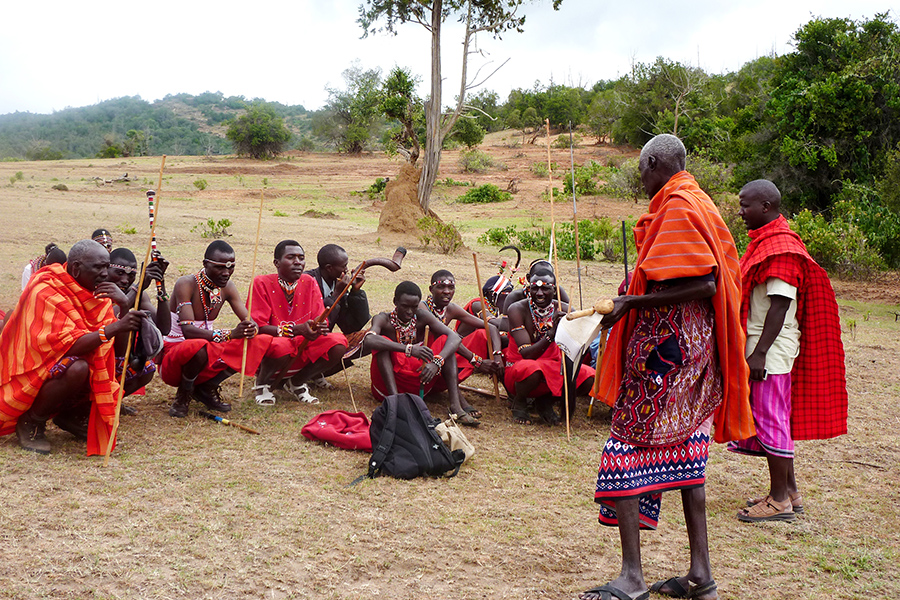
Members of a Maasai traditional singing group, Kenya.

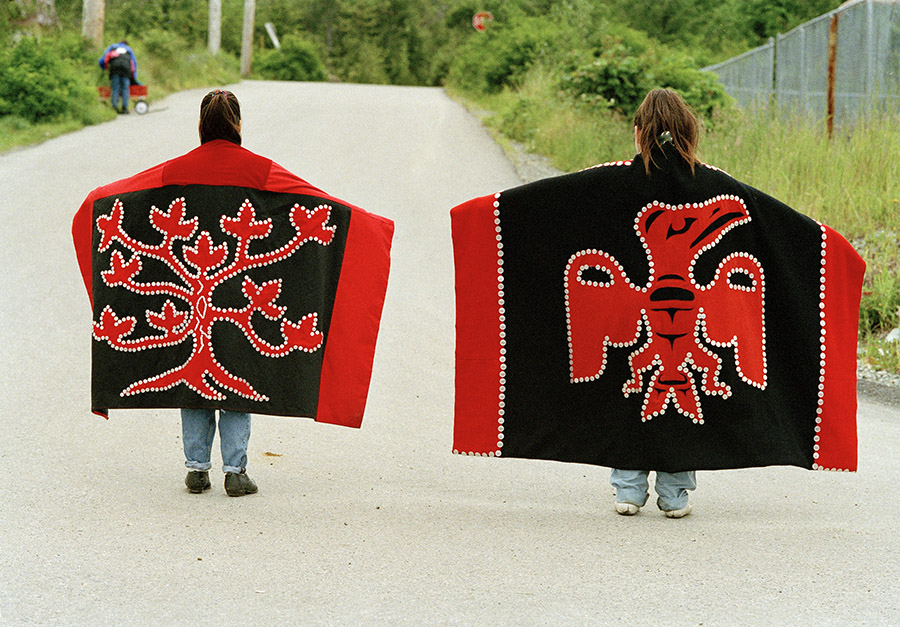
Two members of the Quileute Nation displaying the intricate patterns of their button blankets during the Qatuwas Festival of the indigenous nations of the Pacific Rim.

Then Secretary-General Ban Ki-moon, travelled to Greenland in 2014 to see first-hand the impacts of climate change. Together with the Prime Ministers of Denmark and Greenland, he visited the town of Uummannaq, where they hoisted flags, observed a prayer ceremony in a local church, went dog sledding; and met with indigenous people. 

Descendace Aboriginal and Torres Strait Islander Dance Theatre of Australia performs the opening presentation at the opening ceremony of a cultural exhibition entitled “Indigenous Peoples: Honouring the Past, Present and Future”, held at UN Headquarters

0