North America’s first zero-carbon commercial tower, The Stack, opened in September 2023 at 1133 Melville St. in downtown Vancouver, British Columbia. Co-owned by Oxford Properties and CPP Investments, The Stack is 37 stories tall, totaling 550,000 square feet of prime real estate. James K.M. Cheng Architects designed the unique, twisting stacked box aesthetic. The building was awarded the Canada Green Building Council’s Zero Carbon Building – Design Standard certification and is pursuing LEED v4 Core and Shell Platinum.
“The Stack is leading the real estate industry to new levels of sustainability,” says Andrew O’Neil, vice president of development for Oxford Properties.
Employee Haven
Employee experience and wellness were other priorities in The Stackʼs design, with architectural elements such as operable windows for natural ventilation, several outdoor terraces, and a landscaped pocket park that features a public art installation by Canadian contemporary artist Lawrence Paul Yuxweluptun. To foster active transportation and promote wellness, The Stack features a 5,000-square-foot fitness center, 250 bike parking stalls, and health-club quality end-of-trip facilities for those who want to bike, jog, or walk to work.
Tackling Decarbonization
Innovative features minimize carbon emissions and energy intensity, including low-carbon building systems, high-performance, triple-pane glazing, and solar panels. The Stack also deploys smart technology to provide insights on energy management, optimize building performance, and enable preventative maintenance.
“We can use the insights and learnings from this project across our portfolio and share best practices with the wider industry as we collectively tackle decarbonization as one of the most pressing issues of our times,” says Andrew O’Neil, vice president of development for Oxford Properties.
Taking Things Up a Notch
At 530 feet high, a 6,000-square-foot rooftop terrace offers unobstructed panoramic views of English Bay, Stanley Park, Burrard Inlet, and the North Shore Mountains with regular access as well as corporate events.
“We’re seeing in cities across the globe that providing employees with a high-quality workplace experience has been an integral part in successful return-to-office programs for firms looking to unlock the benefits of in-person collaboration,” says Ted Mildon, vice president of office leasing and operations at Oxford Properties.
Cleancult keeping your home and the planet free of waste
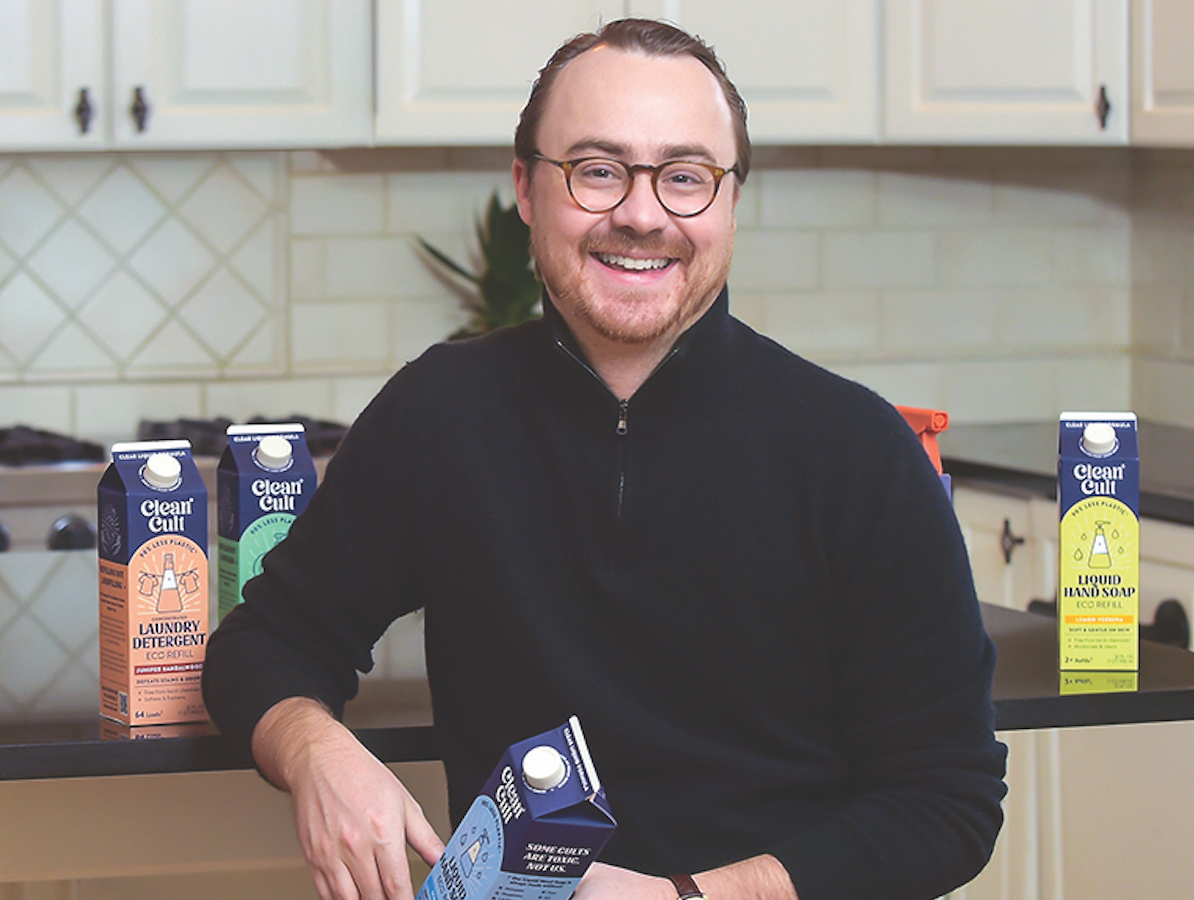
Ryan Lupberger is helping lead the movement to clean up the cleaning industry. The Colorado native grew up valuing natural products, and upon reading the ingredients in his laundry detergent, he was concerned to see so many unrecognizable ones.
Lupberger started researching and became even more disheartened when he learned that many of the chemicals allowed in the U.S. are banned overseas, and there is no regulatory body overseeing cleaning products in the U.S. So, he was inspired to start Cleancult, a natural cleaning product company, in 2019. Cleancult sells hand soap, dish soap, all-purpose cleaners, and laundry detergent.
“As we further our mission, the goal to bring accessible sustainable solutions to more and more people is not only a fundamental business model, but also an innate responsibility to our community and the cleaning industry,” Lupberger says.
Not only does Lupberger care about what is in the products, but he also has achieved zero-waste packaging, as opposed to the industry-standard single-use plastic bottles. After all, Americans dispose of 40 million tons of plastic every year, only 5% gets recycled, and it takes over 500 years to decompose.
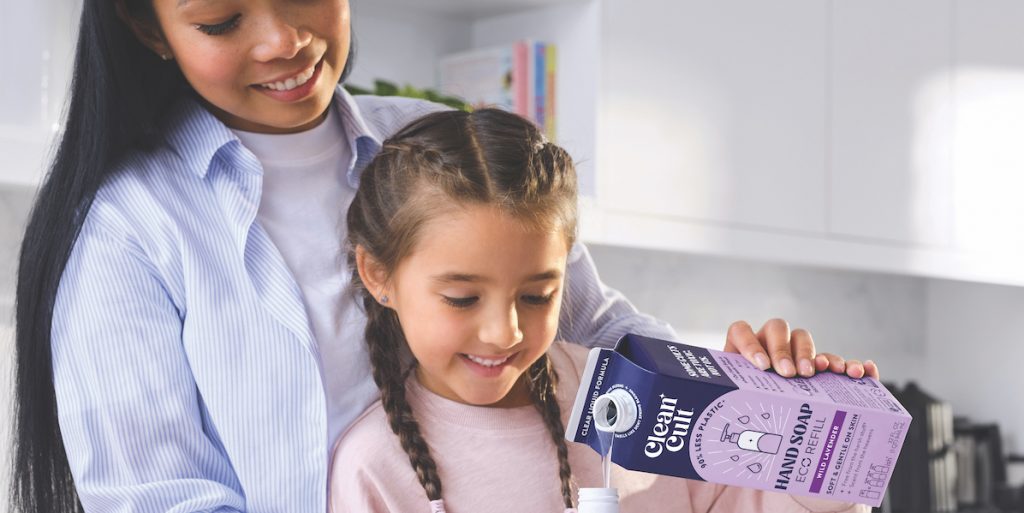
Lupberger spent a year traveling the U.S. to find the best solution and ended up having his own machinery built to create a patented, recyclable cardboard refill packaging similar to milk cartons that consumers are encouraged to transfer into glass dispensers (which they can purchase from Cleancult) for at-home use. The company uses Forest Stewardship Council-certified paper. Recently, it also introduced refillable aluminum bottles. Cleancult has diverted over 7 million pounds of plastic from landfills and oceans.
While other eco-focused cleaning product companies sell concentrated liquids or powder alternatives, Lupberger sees Cleancult as preferred for consumers who don’t want to add a step or change to powder.
“We want to go after the 99%,” Lupberger says. “We have to meet them where they are with ready-to-use formulas and ready-to-use bottles.”
Cleancult’s Support for Innovative Waste Management Projects
Cleancult is an activator in the U.S. Plastics Pact, a global network working toward a goal of having all plastic packaging be reusable, recyclable, or compostable by 2025. The company is a member of the Sustainable Packaging Coalition to take action toward packaging sustainability. Plus, it joined rePurpose Global, and its Plastic Neutral Certification helps fund and support sustainable waste management projects that recover and remove as much plastic waste from the environment as it uses in its packaging.
Among these initiatives lies Sueño Azul, supporting a cooperative of waste workers who have revolutionized waste management practices in Bogotá, Colombia.
When Lupberger started Cleancult, he launched a direct-to-consumer (D2C) website. “I really hoped D2C would work long-term,” Lupberger says. However, he found the digital marketing and shipping costs to be challenging, especially during the Covid-19 pandemic.
So, in 2021, Lupberger shifted the company’s focus to retail sales, debuting in a handful of regional grocers. In 2022, Cleancult entered Walgreens, CVS, and Bed Bath & Beyond. This year, in its largest retail expansion yet, it hit shelves at 3,000 Walmart stores across the U.S., as well as on its online marketplace. Plus, Cleancult is available on Amazon.com’s marketplace. Lupberger has been pleased with the results, with sales growing 50% year over year for the business overall (while sales are flat on Cleancult’s website).
“Through key retail partners, including Walmart, we have grown the brand’s retail presence by 7,500% since 2019 and are excited to continue on this positive growth trajectory,” Lupberger says.
Cleancult keeping your home and the planet free of waste
Ryan Lupberger is helping lead the movement to clean up the cleaning industry. The Colorado native grew up valuing natural products, and upon reading the ingredients in his laundry detergent, he was concerned to see so many unrecognizable ones.
Lupberger started researching and became even more disheartened when he learned that many of the chemicals allowed in the U.S. are banned overseas, and there is no regulatory body overseeing cleaning products in the U.S. So, he was inspired to start Cleancult, a natural cleaning product company, in 2019. Cleancult sells hand soap, dish soap, all-purpose cleaners, and laundry detergent.
“As we further our mission, the goal to bring accessible sustainable solutions to more and more people is not only a fundamental business model, but also an innate responsibility to our community and the cleaning industry,” Lupberger says.
Not only does Lupberger care about what is in the products, but he also has achieved zero-waste packaging, as opposed to the industry-standard single-use plastic bottles. After all, Americans dispose of 40 million tons of plastic every year, only 5% gets recycled, and it takes over 500 years to decompose.
Lupberger spent a year traveling the U.S. to find the best solution and ended up having his own machinery built to create a patented, recyclable cardboard refill packaging similar to milk cartons that consumers are encouraged to transfer into glass dispensers (which they can purchase from Cleancult) for at-home use. The company uses Forest Stewardship Council-certified paper. Recently, it also introduced refillable aluminum bottles. Cleancult has diverted over 7 million pounds of plastic from landfills and oceans.
While other eco-focused cleaning product companies sell concentrated liquids or powder alternatives, Lupberger sees Cleancult as preferred for consumers who don’t want to add a step or change to powder.
“We want to go after the 99%,” Lupberger says. “We have to meet them where they are with ready-to-use formulas and ready-to-use bottles.”
Cleancult’s Support for Innovative Waste Management Projects
Cleancult is an activator in the U.S. Plastics Pact, a global network working toward a goal of having all plastic packaging be reusable, recyclable, or compostable by 2025. The company is a member of the Sustainable Packaging Coalition to take action toward packaging sustainability. Plus, it joined rePurpose Global, and its Plastic Neutral Certification helps fund and support sustainable waste management projects that recover and remove as much plastic waste from the environment as it uses in its packaging.
Among these initiatives lies Sueño Azul, supporting a cooperative of waste workers who have revolutionized waste management practices in Bogotá, Colombia.
When Lupberger started Cleancult, he launched a direct-to-consumer (D2C) website. “I really hoped D2C would work long-term,” Lupberger says. However, he found the digital marketing and shipping costs to be challenging, especially during the Covid-19 pandemic.
So, in 2021, Lupberger shifted the company’s focus to retail sales, debuting in a handful of regional grocers. In 2022, Cleancult entered Walgreens, CVS, and Bed Bath & Beyond. This year, in its largest retail expansion yet, it hit shelves at 3,000 Walmart stores across the U.S., as well as on its online marketplace. Plus, Cleancult is available on Amazon.com’s marketplace. Lupberger has been pleased with the results, with sales growing 50% year over year for the business overall (while sales are flat on Cleancult’s website).
“Through key retail partners, including Walmart, we have grown the brand’s retail presence by 7,500% since 2019 and are excited to continue on this positive growth trajectory,” Lupberger says.
In the wake of research from Harvard Business Review, which discovered that women makebetter leaders in times of crisis, Real Leaders has highlighted some leadership lessons from female founders and CEOs who are at the top of their game.
1. Mary Barra / CEO, General Motors
Quote: “It’s okay to admit what you don’t know. It’s okay to ask for help. And it’s more than okay to listen to the people you lead — in fact, it’s essential.”
Why it works: Research by leadership development experts, Zenger Folkman, suggests that leaders who exhibit a preference for listening are rated as significantly more effective than those who spend most of their time talking.
Pro tip: According to “The 11 Laws of Likability” by Michelle Tillis Lederman, effective listening is the single most powerful tool for building and maintaining a climate of trust and collaboration.
DO
Maintain eye contact and focus on the speaker
Limit your talking
Confirm understanding, paraphrase, ask questions
Give non-verbal messages that you are listening (nod, smile)
Manage your emotions
DON’T
Interrupt or finish someone’s sentences
Assume you’re being attacked
Use condescending or aggressive language
Listen with biases or appear closed to new ideas
Jump to conclusions
2. Susan Wojcicki / CEO, YouTube
Quote: “Rarely are opportunities presented to you in a perfect way, in a nice little box with a yellow bow on top. ‘Here, open it; it’s perfect. You’ll love it.’ Opportunities — the good ones — are messy, confusing, and hard to recognize. They’re risky. They challenge you.”
Why it works: A successful leader should distinguish the difference between an opportunity that is worth seizing and could yield results, from an opportunity that isn’t aligned with the organization’s beliefs or will not benefit the business.
Pro tip: Smart Company recommends keeping up to date with industry trends and insights to stay ahead of the game by:
Subscribing to relevant publications
Setting Google Alerts for key industry terms
Joining groups and associations within your niche
Following other industry experts on social media
3. Ambika Singh / Founder & CEO, Armoire
Quote: “Recognizing how your employees work — and knowing that this takes individual attention — is important to being a successful leader.”
Why it works: Motivated employees are more likely to think creatively, go above and beyond, want to learn and grow, feel personally connected to the company, and ultimately drive the business forward.
Pro tip: Find out what kind of environment your employees thrive in by asking your
employees these three questions:
What is your favorite project you’ve ever worked on, and what made it your favorite?
What was the best team you were ever a part of and what made it the best?
Which of your former bosses brought out the best in you? What did
they do, or not do, that you appreciated?
4. Karen Young / Founder, Oui the People
Quote: “The simplest time management skill as an entrepreneur comes down to understanding what’s most important and knowing that it can change by the day or by the hour.”
Why it works: Learning how to manage your time effectively can help you feel more relaxed,
focused, and in control.
Pro tip: Too many emails? A study found that one in three office workers suffers from
email-related stress. Practice the “4 Ds” to avoid an anxiety-inducing email inbox:
Delete — old emails, emails with no value, spam, etc. can all be deleted.
Do — complete any action from an email that is urgent or where the task can be completed quickly.
Delegate — if the email can be better dealt with by someone else, delegate it.
Defer — set aside time later to respond to emails that may take longer to deal with.
5. Rowena Everson / Former CEO, Standard Chartered
Quote: “I like to find smart, capable people and set them up for success by giving them the information, tools, and connections they need. I’m clear in my expectations and value regular feedback. If I’m micromanaging, that’s usually a bad sign.”
Why it works: Micromanagement kills creativity, breeds mistrust, causes undue stress, and can demoralize your team. Setting clear expectations and offering timely feedback can make the world of a difference.
Pro tip: Tell your team what you want them to strive for — not how you expect them to do
it — by clarifying the following:
What you’re hoping to achieve
A time frame for the task to be completed
How success will be measured
How often you will be checking in with them
6. Tyler Haney / Founder, Outdoor Voices
Quote: “You need to have unbound enthusiasm for what you’re building. Energy is contagious, so your team and everyone you interact with feels it.”
Why it works: Leading by example doesn’t start and end with work performance; it comes down to the way you talk about your work and the emotions you express too. If negativity breeds negativity, the opposite is also true.
Pro tip: Founder of Small Business Trends, Anita Campbell, shares three quick ways to spread enthusiasm and inject positive energy into your day-to-day leadership:
Appeal to passions. Try to find out what each person on your team is passionate about and what motivates them.
Celebrate accomplishments. Nothing breeds success like an environment of success, so celebrate team and individual successes no matter how small.
Do something unexpected. Surprise your team with something nice, from bonuses to an afternoon off or an early finish.
7. Whitney Wolfe Herd / Founder & CEO, Bumble
Quote: “When you accept that failure is a good thing, it can actually be a huge propeller toward success.”
Why it works: Failing once, twice, or even hundreds of times doesn’t mean you’ve hit the end of the road — it means you’re one step closer to success. These experiences give us an opportunity to learn, find new solutions, and grow as individuals.
Pro tip: The author of Enlightened Entrepreneurship, Chris Myers, recommends these
three tips for accepting, processing, and learning from failure:
Don’t worry about what people may think; everyone is too preoccupied with their own lives to notice.
Instead of dwelling on the negatives, learn from the experience and use it as an opportunity to grow.
Accept that failure is part of the journey and keep moving forward; it is impossible for you to really fail.
In the wake of research from Harvard Business Review, which discovered that women makebetter leaders in times of crisis, Real Leaders has highlighted some leadership lessons from female founders and CEOs who are at the top of their game.
1. Mary Barra / CEO, General Motors
Quote: “It’s okay to admit what you don’t know. It’s okay to ask for help. And it’s more than okay to listen to the people you lead — in fact, it’s essential.”
Why it works: Research by leadership development experts, Zenger Folkman, suggests that leaders who exhibit a preference for listening are rated as significantly more effective than those who spend most of their time talking.
Pro tip: According to “The 11 Laws of Likability” by Michelle Tillis Lederman, effective listening is the single most powerful tool for building and maintaining a climate of trust and collaboration.
DO
Maintain eye contact and focus on the speaker
Limit your talking
Confirm understanding, paraphrase, ask questions
Give non-verbal messages that you are listening (nod, smile)
Manage your emotions
DON’T
Interrupt or finish someone’s sentences
Assume you’re being attacked
Use condescending or aggressive language
Listen with biases or appear closed to new ideas
Jump to conclusions
2. Susan Wojcicki / CEO, YouTube
Quote: “Rarely are opportunities presented to you in a perfect way, in a nice little box with a yellow bow on top. ‘Here, open it; it’s perfect. You’ll love it.’ Opportunities — the good ones — are messy, confusing, and hard to recognize. They’re risky. They challenge you.”
Why it works: A successful leader should distinguish the difference between an opportunity that is worth seizing and could yield results, from an opportunity that isn’t aligned with the organization’s beliefs or will not benefit the business.
Pro tip: Smart Company recommends keeping up to date with industry trends and insights to stay ahead of the game by:
Subscribing to relevant publications
Setting Google Alerts for key industry terms
Joining groups and associations within your niche
Following other industry experts on social media
3. Ambika Singh / Founder & CEO, Armoire
Quote: “Recognizing how your employees work — and knowing that this takes individual attention — is important to being a successful leader.”
Why it works: Motivated employees are more likely to think creatively, go above and beyond, want to learn and grow, feel personally connected to the company, and ultimately drive the business forward.
Pro tip: Find out what kind of environment your employees thrive in by asking your
employees these three questions:
What is your favorite project you’ve ever worked on, and what made it your favorite?
What was the best team you were ever a part of and what made it the best?
Which of your former bosses brought out the best in you? What did
they do, or not do, that you appreciated?
4. Karen Young / Founder, Oui the People
Quote: “The simplest time management skill as an entrepreneur comes down to understanding what’s most important and knowing that it can change by the day or by the hour.”
Why it works: Learning how to manage your time effectively can help you feel more relaxed,
focused, and in control.
Pro tip: Too many emails? A study found that one in three office workers suffers from
email-related stress. Practice the “4 Ds” to avoid an anxiety-inducing email inbox:
Delete — old emails, emails with no value, spam, etc. can all be deleted.
Do — complete any action from an email that is urgent or where the task can be completed quickly.
Delegate — if the email can be better dealt with by someone else, delegate it.
Defer — set aside time later to respond to emails that may take longer to deal with.
5. Rowena Everson / Former CEO, Standard Chartered
Quote: “I like to find smart, capable people and set them up for success by giving them the information, tools, and connections they need. I’m clear in my expectations and value regular feedback. If I’m micromanaging, that’s usually a bad sign.”
Why it works: Micromanagement kills creativity, breeds mistrust, causes undue stress, and can demoralize your team. Setting clear expectations and offering timely feedback can make the world of a difference.
Pro tip: Tell your team what you want them to strive for — not how you expect them to do
it — by clarifying the following:
What you’re hoping to achieve
A time frame for the task to be completed
How success will be measured
How often you will be checking in with them
6. Tyler Haney / Founder, Outdoor Voices
Quote: “You need to have unbound enthusiasm for what you’re building. Energy is contagious, so your team and everyone you interact with feels it.”
Why it works: Leading by example doesn’t start and end with work performance; it comes down to the way you talk about your work and the emotions you express too. If negativity breeds negativity, the opposite is also true.
Pro tip: Founder of Small Business Trends, Anita Campbell, shares three quick ways to spread enthusiasm and inject positive energy into your day-to-day leadership:
Appeal to passions. Try to find out what each person on your team is passionate about and what motivates them.
Celebrate accomplishments. Nothing breeds success like an environment of success, so celebrate team and individual successes no matter how small.
Do something unexpected. Surprise your team with something nice, from bonuses to an afternoon off or an early finish.
7. Whitney Wolfe Herd / Founder & CEO, Bumble
Quote: “When you accept that failure is a good thing, it can actually be a huge propeller toward success.”
Why it works: Failing once, twice, or even hundreds of times doesn’t mean you’ve hit the end of the road — it means you’re one step closer to success. These experiences give us an opportunity to learn, find new solutions, and grow as individuals.
Pro tip: The author of Enlightened Entrepreneurship, Chris Myers, recommends these
three tips for accepting, processing, and learning from failure:
Don’t worry about what people may think; everyone is too preoccupied with their own lives to notice.
Instead of dwelling on the negatives, learn from the experience and use it as an opportunity to grow.
Accept that failure is part of the journey and keep moving forward; it is impossible for you to really fail.
A cruise ship leaves Venice, Italy (above). The cruise ship, which arrived in Venice for the first time in 17 months, signaled the return of tourists after the coronavirus pandemic but enraged those who decry the impact of the giant floating hotels on this world heritage site. Natural and heritage sites around the world are under threat from over-tourism. As crowds flock to see unique sights, they become inadvertent destroyers of the very thing they’ve come to enjoy. The port in Venice (as in most ports around the world) can’t provide enough electricity to keep the services and amenities running onboard the ships, so ship engines run 24/7 to produce electricity.
Ship fuel is 1,500 times more polluting than car fuel, and a 100,000-ton ship will displace 50 million liters of water (the quantity of 20 Olympic-sized swimming pools) when entering a small location such as Venice. The movement of these massive amounts of water erodes the hundreds and even thousands of years old foundations of the palaces and the streets of Venice. The heavy digging of the canals to allow big ships to enter the Venetian Lagoon increases the amount of water that enters and exits the lagoon during tides, which increases the intensity of high tides, and partially floods the city.
Children playing on a beach filled with plastic waste, April 2018 Manila, Philippines.
Where Will the Children Play?
Children play on a beach filled with plastic waste in Manila, Philippines. The Philippines has been ranked third on the list of the world’s top-five plastic polluters of our oceans, after China and Indonesia. Many organizations and businesses have found ways (big and small) to help end plastic pollution and change people’s attitudes and behavior about their consumption and the impact it has on the environment. Over a million people have reportedly signed petitions worldwide, demanding that corporations reduce their production of single-use plastics. Without established recycling facilities, rapidly developing countries create mountains of disposable packaging like food-wrapping, sachets, and shopping bags that end up on coastlines after being discarded.
Most of these countries lack the infrastructure to manage their waste effectively. Those who live on lower incomes usually rely on cheap products sold in single-use sachets, such as instant coffee, shampoo, and food seasoning. According to studies, there could be more plastic in the sea than fish by 2050, while actual plastic pieces might become a regular ingredient of our seafood — as fish consume bits of plastic that are coated in bacteria and algae, mimicking their natural food sources — that eventually lands on our dinner table.
Figures from Antony Gormley’s ‘Amazonian Field, 1992’ fill a gallery at the Royal Academy of Arts ‘Earth: Art of a Changing World’ exhibition.
Here’s Looking at You
British artist Antony Gormley is well known for his life-size statues which mimic the human body. His Field series represents a different approach. Each work consists of tens of thousands of small clay figures, each of them between 8 and 26 cm high. They are all installed on the floor of a room facing the viewer. Gormley states that he wants to make works about our collective human future and our responsibility for it. His artwork aims to look back on its makers and the viewers as if they are all responsible for the world.
Gormley deliberately made this installation uncomfortable so that the viewer is cast as the main character who has subconsciously walked onto a stage and now faces an audience that seems to ask: Who are you? What are you? What kind of world are you making? The artist has recreated this art installation five times in different parts of the world, involving hundreds of locals to help make the clay figures. The involvement of these volunteers has added to the community awareness and collective sense of responsibility. “From the beginning, I was trying to make something as direct as possible with clay: the earth,” says Gormley. “I wanted to work with people and to make a work about our collective future and our responsibility for it. I wanted the art to look back at us, its makers (and later viewers), as if we were responsible for the world we are in.” What will you say to your audience when they ask “What kind of world are you making?”
A cruise ship leaves Venice, Italy (above). The cruise ship, which arrived in Venice for the first time in 17 months, signaled the return of tourists after the coronavirus pandemic but enraged those who decry the impact of the giant floating hotels on this world heritage site. Natural and heritage sites around the world are under threat from over-tourism. As crowds flock to see unique sights, they become inadvertent destroyers of the very thing they’ve come to enjoy. The port in Venice (as in most ports around the world) can’t provide enough electricity to keep the services and amenities running onboard the ships, so ship engines run 24/7 to produce electricity.
Ship fuel is 1,500 times more polluting than car fuel, and a 100,000-ton ship will displace 50 million liters of water (the quantity of 20 Olympic-sized swimming pools) when entering a small location such as Venice. The movement of these massive amounts of water erodes the hundreds and even thousands of years old foundations of the palaces and the streets of Venice. The heavy digging of the canals to allow big ships to enter the Venetian Lagoon increases the amount of water that enters and exits the lagoon during tides, which increases the intensity of high tides, and partially floods the city.
Children playing on a beach filled with plastic waste, April 2018 Manila, Philippines.
Where Will the Children Play?
Children play on a beach filled with plastic waste in Manila, Philippines. The Philippines has been ranked third on the list of the world’s top-five plastic polluters of our oceans, after China and Indonesia. Many organizations and businesses have found ways (big and small) to help end plastic pollution and change people’s attitudes and behavior about their consumption and the impact it has on the environment. Over a million people have reportedly signed petitions worldwide, demanding that corporations reduce their production of single-use plastics. Without established recycling facilities, rapidly developing countries create mountains of disposable packaging like food-wrapping, sachets, and shopping bags that end up on coastlines after being discarded.
Most of these countries lack the infrastructure to manage their waste effectively. Those who live on lower incomes usually rely on cheap products sold in single-use sachets, such as instant coffee, shampoo, and food seasoning. According to studies, there could be more plastic in the sea than fish by 2050, while actual plastic pieces might become a regular ingredient of our seafood — as fish consume bits of plastic that are coated in bacteria and algae, mimicking their natural food sources — that eventually lands on our dinner table.
Figures from Antony Gormley’s ‘Amazonian Field, 1992’ fill a gallery at the Royal Academy of Arts ‘Earth: Art of a Changing World’ exhibition.
Here’s Looking at You
British artist Antony Gormley is well known for his life-size statues which mimic the human body. His Field series represents a different approach. Each work consists of tens of thousands of small clay figures, each of them between 8 and 26 cm high. They are all installed on the floor of a room facing the viewer. Gormley states that he wants to make works about our collective human future and our responsibility for it. His artwork aims to look back on its makers and the viewers as if they are all responsible for the world.
Gormley deliberately made this installation uncomfortable so that the viewer is cast as the main character who has subconsciously walked onto a stage and now faces an audience that seems to ask: Who are you? What are you? What kind of world are you making? The artist has recreated this art installation five times in different parts of the world, involving hundreds of locals to help make the clay figures. The involvement of these volunteers has added to the community awareness and collective sense of responsibility. “From the beginning, I was trying to make something as direct as possible with clay: the earth,” says Gormley. “I wanted to work with people and to make a work about our collective future and our responsibility for it. I wanted the art to look back at us, its makers (and later viewers), as if we were responsible for the world we are in.” What will you say to your audience when they ask “What kind of world are you making?”
Greyston Bakery’s (pictured above) mission is to create thriving communities through the practice and promotion of open hiring. The company doesn’t hire people to bake brownies; they bake brownies to hire people who face barriers to employment. “When people have the opportunity to participate fully in our economy, we all benefit,” says CEO Joseph Kenner. Every year, 6.5 million brownies are baked, and in 35 years, they’ve employed 176 individuals through their open hiring model. Profits from Greyston Bakery go to the Greyston Foundation, providing community gardens and workforce development programs to local communities. Greyston.org
Listen Up
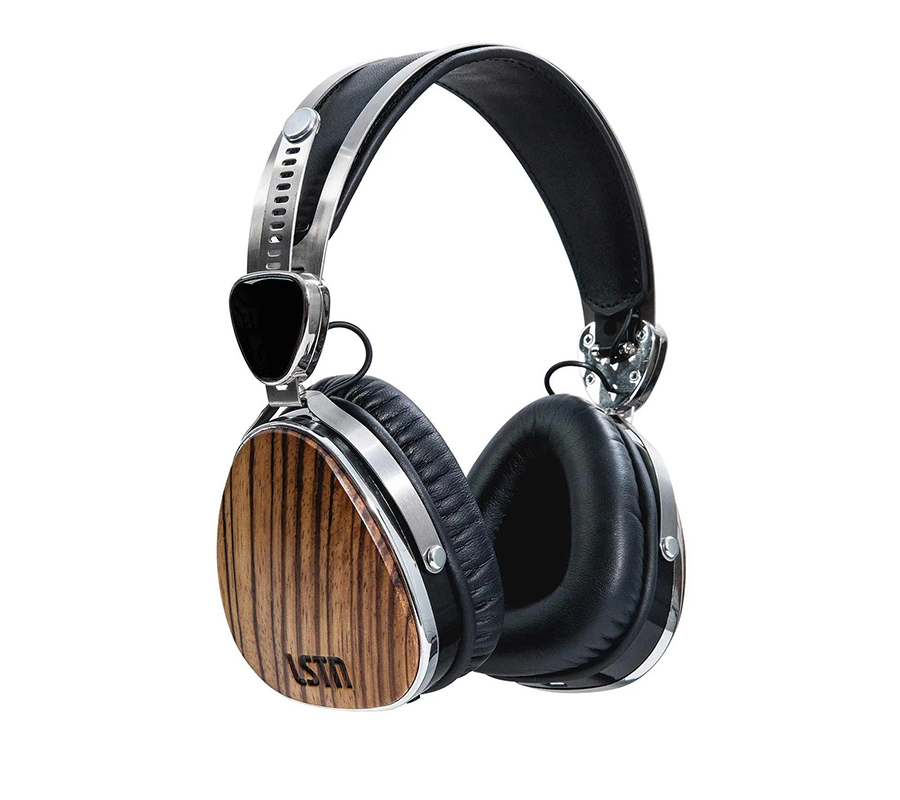
More than 360 million people have disabling hearing loss, with the most prevalence in developing countries. Less than 3% of these individuals can afford hearing aids or have access to proper care. Every purchase of LSTN Sound Co.’s audio products help someone hear for the first time by giving them a hearing aid through the Starkey Hearing Foundation. The foundation has helped over 22,000 people in nine countries — Peru, Dominican Republic, Mexico, Uganda, China, Indonesia, Sri Lanka, Kenya, and the USA. Many have experienced the sound of music, laughter, and their families’ voices for the very first time. lstnsound.com
Sustainably Yours
Newly makes beautiful home goods from 100% recycled or repurposed materials. The company began in 2016 with five friends, who identified what they believed to be a severe problem: not enough consumer goods made from recycled content. Each product is made from 100% recycled or repurposed materials to help conserve the Earth’s finite natural resources. In just a few years, Newly has diverted 6.12 tons of waste from landfills; recycled 7,200 plastic water bottles into blankets; and saved 1.35 million gallons of water by using recycled thread. Newly.com
Gear for Good
Fifty percent of the world’s population is at risk of malaria, and an infected child dies every two minutes. Providing bed nets treated with anti-malarial insecticide is one of the most cost-effective solutions to saving lives. Cotopaxi’s Nothing but Nets campaign has distributed more than 660,000 bed nets since 2000. The brand creates sustainably designed outdoor gear that fuels adventure and global change and dedicates a percentage of its revenues to nonprofits working to improve the human condition. Cotopaxi founder Davis Smith witnessed first-hand the glaring hardship of unequal access to economic opportunity while growing up across Latin America and decided to build a brand that offered a solution. Cotopaxi is a certified Climate Neutral Corporation, a certified B Corporation, and uses sustainable or recycled materials. Every purchase helps provide an antimalarial mosquito net to a refugee in Sub-Saharan Africa. Cotopaxi.com
Natural Sparkle
Jewelry designer Paula Mendoza grew up in Colombia surrounded by the reverence of Andean earth-mother figure Pachamama. When she decided to launch her jewelry brand, she spent months traveling around the southwestern region of Colombia, taking quality time to work with local artisans and learn about the symbols they use in their crafts. This hands-on experience sets her apart from many of her contemporaries. She immerses herself in every aspect of her creations, from the design process; to sourcing raw, conflict-free materials like emeralds and gold from ethical Colombian mines; to working with local artisans in her Bogotán-based workshop. This work ethic has enabled her to fully support and give back to marginalized communities and provide much-needed jobs. “To be sustainable, you first have to be sustainable with the people who work with you,” says Mendoza. PaulaMendoza.com
Making Electric Cool
The new Electric MOKE is a continuation of the 1964 Mini Moke, created by the father of the Austin Mini, Sir Alec Issigonis. It quickly became a global icon and an enduring symbol of the swinging 60s after being seen in the hands of celebrities including The Beatles and Bridget Bardot in glamorous locations like the French Riviera and the Caribbean. It replaces the combustion engine version of the MOKE which makes MOKE International the first heritage brand to go fully electric. By reinvigorating the MOKE as an electric vehicle, the company has brought the world-famous road and beach car into the era of e-mobility, ensuring generations to come will enjoy the sense of fun and freedom that made it such a hit with famous faces, travelers, and coastal resorts six decades ago. The Electric MOKE covers up to 80 miles of range on a single charge — enough for four round trips from Cap-Ferrat to Monaco — and a full charge takes just four hours via a Type 2 port. MokeAmerica.com
Greyston Bakery’s (pictured above) mission is to create thriving communities through the practice and promotion of open hiring. The company doesn’t hire people to bake brownies; they bake brownies to hire people who face barriers to employment. “When people have the opportunity to participate fully in our economy, we all benefit,” says CEO Joseph Kenner. Every year, 6.5 million brownies are baked, and in 35 years, they’ve employed 176 individuals through their open hiring model. Profits from Greyston Bakery go to the Greyston Foundation, providing community gardens and workforce development programs to local communities. Greyston.org
Listen Up
More than 360 million people have disabling hearing loss, with the most prevalence in developing countries. Less than 3% of these individuals can afford hearing aids or have access to proper care. Every purchase of LSTN Sound Co.’s audio products help someone hear for the first time by giving them a hearing aid through the Starkey Hearing Foundation. The foundation has helped over 22,000 people in nine countries — Peru, Dominican Republic, Mexico, Uganda, China, Indonesia, Sri Lanka, Kenya, and the USA. Many have experienced the sound of music, laughter, and their families’ voices for the very first time. lstnsound.com
Sustainably Yours
Newly makes beautiful home goods from 100% recycled or repurposed materials. The company began in 2016 with five friends, who identified what they believed to be a severe problem: not enough consumer goods made from recycled content. Each product is made from 100% recycled or repurposed materials to help conserve the Earth’s finite natural resources. In just a few years, Newly has diverted 6.12 tons of waste from landfills; recycled 7,200 plastic water bottles into blankets; and saved 1.35 million gallons of water by using recycled thread. Newly.com
Gear for Good
Fifty percent of the world’s population is at risk of malaria, and an infected child dies every two minutes. Providing bed nets treated with anti-malarial insecticide is one of the most cost-effective solutions to saving lives. Cotopaxi’s Nothing but Nets campaign has distributed more than 660,000 bed nets since 2000. The brand creates sustainably designed outdoor gear that fuels adventure and global change and dedicates a percentage of its revenues to nonprofits working to improve the human condition. Cotopaxi founder Davis Smith witnessed first-hand the glaring hardship of unequal access to economic opportunity while growing up across Latin America and decided to build a brand that offered a solution. Cotopaxi is a certified Climate Neutral Corporation, a certified B Corporation, and uses sustainable or recycled materials. Every purchase helps provide an antimalarial mosquito net to a refugee in Sub-Saharan Africa. Cotopaxi.com
Natural Sparkle
Jewelry designer Paula Mendoza grew up in Colombia surrounded by the reverence of Andean earth-mother figure Pachamama. When she decided to launch her jewelry brand, she spent months traveling around the southwestern region of Colombia, taking quality time to work with local artisans and learn about the symbols they use in their crafts. This hands-on experience sets her apart from many of her contemporaries. She immerses herself in every aspect of her creations, from the design process; to sourcing raw, conflict-free materials like emeralds and gold from ethical Colombian mines; to working with local artisans in her Bogotán-based workshop. This work ethic has enabled her to fully support and give back to marginalized communities and provide much-needed jobs. “To be sustainable, you first have to be sustainable with the people who work with you,” says Mendoza. PaulaMendoza.com
Making Electric Cool
The new Electric MOKE is a continuation of the 1964 Mini Moke, created by the father of the Austin Mini, Sir Alec Issigonis. It quickly became a global icon and an enduring symbol of the swinging 60s after being seen in the hands of celebrities including The Beatles and Bridget Bardot in glamorous locations like the French Riviera and the Caribbean. It replaces the combustion engine version of the MOKE which makes MOKE International the first heritage brand to go fully electric. By reinvigorating the MOKE as an electric vehicle, the company has brought the world-famous road and beach car into the era of e-mobility, ensuring generations to come will enjoy the sense of fun and freedom that made it such a hit with famous faces, travelers, and coastal resorts six decades ago. The Electric MOKE covers up to 80 miles of range on a single charge — enough for four round trips from Cap-Ferrat to Monaco — and a full charge takes just four hours via a Type 2 port. MokeAmerica.com
In psychology, there’s a term called “transfer of exaltation.” Roughly explained, it’s about a person’s ability to transform an experience of fear into an experience of love.
It’s ingrained in all of us to avoid feeling afraid; our brains sometimes change this emotion of fear into something more pleasant. Afterward, you can feel much more alive. We’ve chosen four destinations that might be hair-raising for some but will leave you exhilarated and with a renewed sense of respect for our natural world. Here are some places where you can experience nature as nature does.
A Natural Adrenaline Boost
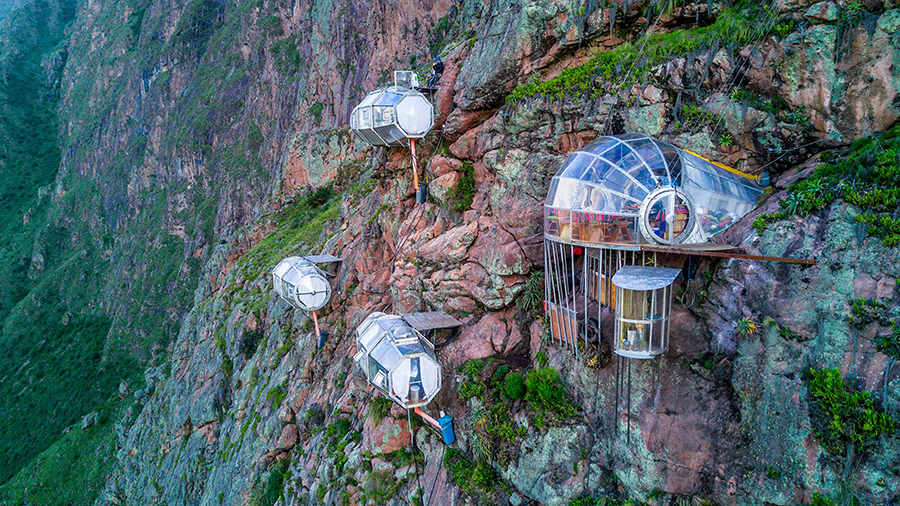
Have you ever wanted to sleep in a condor’s nest? Here is the next best thing! A transparent luxury capsule that hangs from the top of a mountain in the Sacred Valley of Peru. The exclusive Skylodge Adventure Suites offers you the chance to sleep inside a completely transparent hanging bedroom that allows you to appreciate the impressive view of this magic and mystic valley. If you want to experience nature like the protected and endangered Andean condor, then this experience will give you a new perspective on the importance of preserving our natural heritage. To sleep at Skylodge, you must climb 1,300 feet or hike a less daunting trail that includes zip lines. The hanging capsule suites offer 300-degree views of the majestic Sacred Valley. Hand crafted out of aerospace aluminum and weather-resistant polycarbonate, each suite comes complete with four beds, a dining area, and a private bathroom. Naturavive.com
Sleep with the Fishes
Utter Inn, or translated to English, Otter Inn, is an art project by Swedish artist and entrepreneur Mikael Genberg that offers underwater accommodation to the public in a lake near Stockholm. The unique lodging is entered through a small, traditionally looking Swedish house on the surface of the water, but below, you’ll find a single underwater room. Spend your nights 10 feet underwater with panoramic views of the fish and natural beauty in all directions. It’s the opposite of an aquarium — a place for fish to stare at you instead. VisitVasteras.se/hotell-utter-inn
Swing into the trees
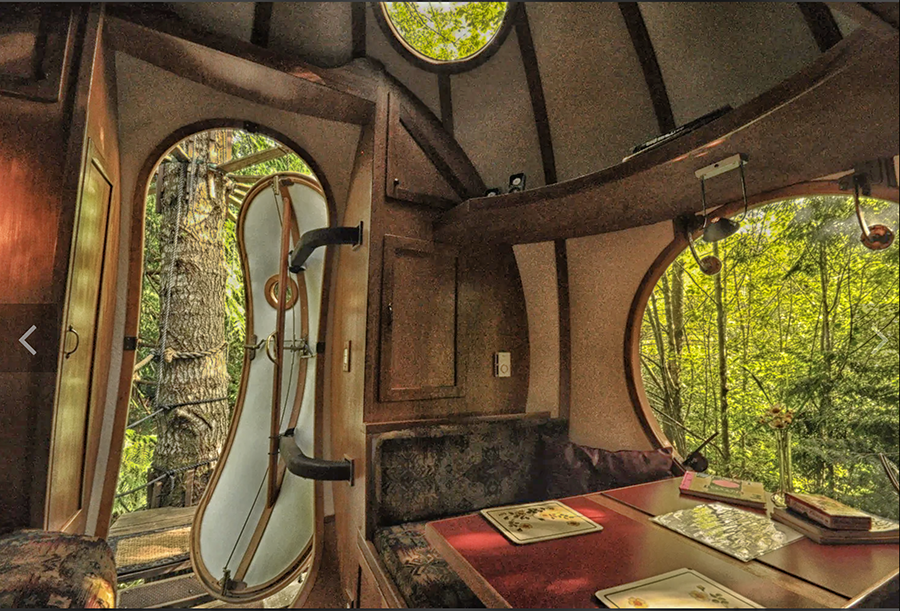
Canadian company Free Spirit Spheres builds spherical tree houses as works of art — functional, tasteful, simple, and elegant — and invites people to spend a night at their unique and magical forest hotel. Much of the design and build is informed by the principle and practice of Biomimicry. According to the Biomimicry Institute: “Biomimicry is an approach to innovation that seeks sustainable solutions to human challenges by emulating nature’s time-tested patterns and strategies. The goal is to create products, processes, and policies — new ways of living — that are well-adapted to life on earth over the long haul.”
“We envision a truly world-class resort — one that allows people to experience nature in relative luxury while showcasing the majesty and true value of the west coast rainforest,” says Tom Chudleigh, a master craftsman and creative director of the project. “We hope to cultivate partnerships focused on extending this vision as a model for conserving forests and supporting healthy communities around the world.” FreeSpiritSpheres.com
Live in a Water Volcano in the Jungle
Huilo-Huilo Biological Reserve in Chile is an area under private protection that encompasses 100,000 hectares of temperate rainforest. The area has great biological diversity, with one of the highest densities of unique fauna species in the world. It features glacier lakes and countless watercourses and eternal snow. One of the ten accommodations on the reserve is Montaña Magica, a mountain-shaped lodge that features nine fairytale-inspired rooms. The hotel is a gigantic man-made volcano that spews water over its rocky sides instead of lava. Windows peak from the sides like giant eyes with green, mossy eyelashes. The hotel and reserve is located within 232 square miles of living, breathing rainforest 400 miles South of Santiago. HuiloHuilo.com