Become A Better Leader: Enrich Your Breathing!

Breathing is the essence of life. It’s the quintessential pulsation that constantly connects us to our environment until the day we die. Every living organism on the planet contracts and expands in the most microscopic of ways. The bigger, more sophisticated and nuanced this pulsation is, the more complex and interesting its inner life can be. We know that human leaders are the most elaborate mosaic of textures, shades and forms to be found on this Earth. So what’s their breathing like? You wouldn’t believe how utterly mechanic and lifeless it’s become.

Especially because you don’t know what it used to be like thousands of years ago, before wars, civilization and the internet revolution streamlined us down to unfeeling shadows of what we used to be. Take a deep breath now. At least as deep as you know how. I could ask you how many walls of muscles you just moved. But the really interesting question would be how many you didn’t move. The problem is, you can’t feel what you don’t move.

And this is why poor breathing also makes us poor leaders. Despite our best efforts and intentions. Once upon a time humans lived in love with Nature. Life was about a deep-felt exchange of feelings, experiences and resources with the magnificent paradise around us. Mother Nature provided fruits and berries, fleshy animals and breath-taking views to feed our bellies and caress our sensitivities to unimaginable heights of intensity.

She also challenged us to grow smarter with all kinds of difficulties and hardships. We venerated Mother Nature with every breath we took: we inhaled whole-heartedly and exhaled energetically, just as all other animals still do today. We used to breathe in such a way that almost every muscle wall in our body moved. Our chest expanded in every direction and our diaphragm pushed down. Our belly inflated like a balloon, expanding our abdomen, yes, but also displacing our entire pelvic floor. Our head and shoulders moved upwards as many walls of tissue in our throat, and others in those secret spaces between our brain matter and our hard skull, heaved together.

Every breath awoke sensations and feelings all over our bodily vehicles, sending essential messages out to our environment, while bringing in crucial information on how we needed to respond to each moment of life. Our bodies were designed to lead all other species because we displayed more flexibility and adaptability than anybody else. We adapted better to each exam from Mother Nature. Our bodies instinctively ducked, stretched, accelerated or slowed down physically, emotionally and mentally. We were the materialization of perfect adaptation and leadership. And then our growing logic got the better of us.

With every horrible thing we did in the name of progress, civilization and technology, a small part of our bodies stopped breathing to avoid our own ugly feelings. With every generation of greed, wars and materialistic enrichment, our breath wave became poorer, smaller, more timid, and a lot less connected to its surroundings. As we lost amplitude, energy and security in our breathing patterns, we stopped moving layers and layers of tissue that no longer informed us about ourselves and our loved ones in silent, unmoving passivity.

Today we live longer than any other generation in human history, but we are more rigidly bent out of shape, more tense and more set in our planet-trashing, eccentric ways than ever before. We know we’ve passed thirty years because our bedside table is full of medicine. And with every decade we become stiffer. Physically, emotionally and mentally. As we endlessly discuss and write about ideals of leadership, success and KPI-measurable happiness with the parts of our bodies that still move, we ignore the fact that leadership and joy are about flexibility, feeling and instinct.

We talk about how to spark motivation with the tight breath of someone who hasn’t unleashed his own passion for a long, long time. So yes. Becoming a better leader is directly tied to how many muscles and tissues we move every time we breathe. And as you mentally order yourself to take another deep breath in reading these words, let me tell you why that pulsation will not go farther or fuller or deeper: too many ugly feelings hiding in all those immobilized tissues. Too many sad memories constricting muscles, organs, tendons and bones.

Some of these ugly sensations are inherited, some are our own. The rigidity in our bodies that keeps us from being better leaders is a silent witness to the many horrible things we’ve put behind us in our personal paths, our family stories and our entire human history. There is, however, great beauty to be found in those ugly emotions we try not to feel. There is enormous dignity and undying loyalty in every tear and every growl our body would express if we allowed it to.

Daring to breathe deeper is a quest for warriors. It’s an adventure into the secret jungles of our body’s wordless memories and unchecked emotional ordeals. Those who stop talking or writing to make space and time for silent deep breathing, releasing trapped sensations and expressing old emotions, find the joy, youth and passion the rest of us are tweeting about. To breathe more is to venture out into the unknown, to reconnect with Nature, to rediscover what makes us human, loving, leaders of the world. More than ever before, improving our leadership is about embracing the wild that silently hides inside our bodies, waiting for our permission to come out and roar like a lion.

As emotion and sensation flood back into our deepest, oldest tissues and joints, we regain youthful flexibility, wisdom of heart, and passionate connection to Nature. We grow closer to the kind of leader everybody loves, honors and respects. So please do keep up those deep breaths after you finish reading my post. Find privacy to help you safely uncover feelings, memories and past experiences.

Ask experts to help you focus your attention, explore breath variations and experience new levels of intensity. Embrace the hidden story your body tells about who you are and who you came from. And like any mother on her way to deliver a baby is told, whatever happens, breathe again.

As deeply and humanely as you possibly can. A new you will soon be born. A better man or woman. And a breathtakingly better leader.
What If We Allowed Emotions To Lead For Once?

In the twenty-first century emotions have been relegated to the domain of penniless poets or artists, losers and weaklings. Business discussions are about objectivity, facts, numbers. Strategy is about “maximizing shareholder value” –whatever that means—and well, lab-cold science seems to be the new religion. Deep down inside every one of us, however, emotion pulsates dramatically, silently, irresistibly… driving our lives despite our most rigorous denial. Connecting back into our passionate hearts may just be the secret to youthful, exciting leadership every day of our lives.

We forget that once upon a time leadership was a matter of the heart. When we loved our people so much that we were willing to sacrifice everything in order to feed them and protect them against all odds. Leadership was about heroism, bravery, true hearts and pure intentions. It was never about money, powerful connections or manipulated appearances. And it certainly had nothing to do with the scandals and corruption we wake up to read about every morning.

Before we became citizens roaming cement jungles in search of WIFI coverage, we used to be small groups of humans walking the Earth in search of food, water and safety. We couldn’t afford to choose a ruler who didn’t care about the entire tribe at least as much as he (or she) cared about himself. Leaders were called to make life or death decisions concerning the entire tribe’s future every minute of every day. And all they could rely on were sensations in their bodies. There were no maps. No radars. No GPS location devices and no google searches “near here”.

Survival was a game with zero information where heart and guts were more relevant, and hugely more useful, than brains. A tight gut indicated a possible enemy. A warm heart brought closeness and affection. Sudden chills or skin curling startled us into immediate defense against a nearby predator. No matter what our minds were trying to figure out at the time, our bodies were fully connected to every sensation, odor and noise in our environment in order to keep us safe another day.

A leader who didn’t know what he felt or how he felt about this cave, that lake or the nearby pack of wolves, would lead his followers right into the jaws of extinction. Well, actually, he probably wouldn’t be followed at all. The group would immediately sense that something was deeply wrong and somebody else would step up in the name of everybody’s survival. Today, however, something is deeply wrong with so many of us, that everybody’s survival may be at serious risk. When I ask CEOs and board members from any one of the five continents how they feel, I typically get “fine. Thanks!” or “huh?” Or an urgent incoming call to save them from a rather annoying question. Questions about body sensations, feelings and emotions are closed as quickly as possible, before anything can actually be felt. Labels like fine, ok, or happy are most effective remedies.

Rapid shifts to new conversational topics and innumerable iphone enabled interruptions also work. And if all else fails, well, the pharma industry gladly comes to our rescue. Unless an ulcer is torturing our stomach or lumbar pain is bending us over our chairs, we seem to be pretty bad at diagnosing body-felt sensations. We are saturated with information, flooded by communication and paralyzed by analysis on a regular basis. And while our brains run around in circles trying to decide which path to follow, our hearts are pitifully trapped inside unreachable cages of judgment, discipline, will-power and denial.

We actually prefer to exhaust ourselves with effortful research, sleepless number-crunching and circular scenario-planning, than allow ourselves to feel what our bodies have to say about the decisions we face. Decisions that will shape the future of our organizations, our societies and our entire planet. How to invert this dangerous global trend? By attacking the root of the problem: judgment, discipline, will-power and denial. Our shared effort to constantly keep emotions in check is making our economies run faster and faster, like hysterical chickens racing up and down in blind motion.

Our biggest, globally present enemy is our collective judgment of emotions as weaknesses. The minute we begin to feel the smallest inkling of grief we start thinking of ourselves as inferior. Our restless minds plan scenarios in which we are expelled from society, treated as losers and gossiped about behind our backs. We wonder if we should take medication, or we desperately try to get busy with anything to distract us from unpleasant sensations. We judge ourselves as losers before anybody else has the chance to, thereby making our hearts hurt even more. We become hard, cruel dictators to our softly weeping, unfairly jailed bodies.

It always amazes me how easily and quickly executives relax when they experience a total lack of judgment on my part. Their shoulders drop slightly and they suddenly breathe a big, sad sigh. Once we receive assurance that feeling sad, or angry or scared is exactly what we are supposed to do, we stop fighting it, judging it, and generally trying to kill it, whatever it is. The battle between our minds and our hearts finally ceases.

Working, running, hurrying, worrying… they all fall away like old, dead skin. We stop wasting energy on a fight we can’t win, and we finally give in to what our body sorely needs from us: attention. And then, surprise, surprise, the ugly emotion consumes itself. Maybe a few hours, maybe a couple days. It’s gone. Often leaving a new association of thoughts in our minds as a thank you gift: new comprehensions about who we are and what we stand for.

Serenity, clarity, and bravery surface to structure our ideas and offer new avenues of purpose. Youthful passion for life flows and replenishes our bodies just as it used to do, before we learned to build intellectual dams of discipline against unruly, liquid emotion. Imagine the global wave of sudden relaxation we could create if every CEO on the planet stopped trying to avoid his or her own emotions for a day. Or for one hour.

If we all stopped willing ourselves to write another email, make another call, tweet another smart thought. If the Internet went silent and phones stopped ringing. And all we could hear was the slow, powerful beat of our own hearts. Would we all sigh in relief and feel human again?


Guilt Can Turn You Into A Better Leader

Guilt is an ugly thing. We all know it. And we all try to avoid it at any price. But guilt is necessary to personal growth and leadership. We need to stop hiding from it and start accepting it. Our progress and unlimited learning have taken its toll on our planet. It’s time to face our guilt in order to transform it. Two stories this week made me choose guilt as my topic for today: The first was published on the daily mail in UK, and retweeted to me yesterday (dailymail.co.uk). A baby elephant was refusing to abandon the dead body of its mother, braving the cold and darkness of the night.

Fortunately it was rescued by the David Sheldrick Wildlife Trust, and welcomed into an elephant orphanage to find a new future. Still, looking at the amazingly humane posture of the animal, hugging its mother’s body with its trunk, I asked myself how many orphans, human and animal, have stood guard by a dead parent in human history. More importantly, how many paid such a high price for a reason other than life itself: pillage, conquest, enrichment of someone, glory of others?… the many questionable excuses we’ve used to kill for thousands of years.

One of my clients provided the second story. A rather successful entrepreneur, he’s become mortally demotivated in the past few months. A few discussions into the origins of his fatigue with what used to be very exciting business adventures led him to identify an acute and overwhelming feeling of guilt. Once he stopped forcing himself to work, allowing himself some time to rest and connect back into his body, he was able to put a name on this feeling which had always been there in his background. Like a noise that’s annoying you, but you don’t really notice until it stops. Rather coincidentally, a picture of a great grandfather became quite present in his mind. This distant relative had left Spain at fourteen to go find fortune in Mexico in the nineteenth century.

Having become a very wealthy man, he suddenly left everything to come back to Spain in his forties. The old, black and white picture haunting my client depicted his fortune-seeker ancestor standing with one foot on top of a dead man’s head. An indigenous man. While it may be easy to judge this scene from the safety and comfort of our twenty-first century lives in modern cities, it would be very unfair to do so without understanding the circumstances that drove my client’s relative to kill one or many men back then, back there.

My client is now in the process of accepting that what his great grandfather did must have had a profound impact later in life. The guilt of taking another person’s life for reasons other than survival may have pushed him to move back to Spain as an escape, or an effort to forget. [pullquote]The problem is, even if we do manage to forget on a conscious level, our bodies hold on to the feelings we have not expressed.[/pullquote] The problem is, even if we do manage to forget on a conscious level, our bodies hold on to the feelings we have not expressed. As we fool ourselves into “turning the page”, “moving on”, and hoping for a better future, our bodies obediently bury our emotions deep underneath, in that dark pool we call the unconscious.

What is buried rather than resolved, however, can come back to haunt us many decades later. And because our bodies are mammals who share feelings and emotions spontaneously before our conscious minds even get a whiff of what’s taking place, we can’t help but share such buried burdens with those who most love us and cherish us. Thus, younger generations can find themselves carrying an unspeakable level of guilt in what psychiatrist Ivan Boszormenyi-Nagy named “invisible loyalty”.

There are many lines of thinking in family therapy developing this concept, but I’ll keep it very simple and intuitive. Unsolved wounds and affronts suffered in one generation are unconsciously passed on to the next generations to work on. Just as a baby elephant is ready to sacrifice his own wellbeing in the hopes of somehow reliving his dead mother, many human babies take on huge emotional loads from their parents in a loving effort to free them of the weight. It is pure mammal solidarity.

We see examples of it every day in Nature. Though we try not to see how it also drives us to make choices in life which ultimately sacrifice our own happiness in the hopes of somehow restoring our long lost parents’ and grandparents’ joy. As we get older we find ourselves repeating dumb patterns of failure, or exclusion, self-sabotage or self-imposed loneliness. All of which directly impact our companies as much as they impact our personal lives.

We also fool ourselves into thinking we won’t do it again. And so we set ourselves up for blind repetition by applying all our efforts to look away, forget, deny…making us leaders of trash. Resolving our patterns, however, is as simple as looking at them. My client has already noticed an improvement in his motivation because he has started to look at himself and accept the feelings of guilt that haunt him. He has begun to look into his family’s history to discover the patterns repeating down through generations, also spilling into his own life. As he continues to connect the dots of his own life choices with the decisions made by his ancestors, he slowly resolves the buried burdens his elders have unknowingly put away for later.

It would be difficult to find a family free of guilt in our current society. We’ve mixed and mingled so much by now that we’re all related to someone who killed, exploited or enslaved others for profit. Guilt is invisibly present in all those selfies going up on internet around the world. Whether we care to look for it or try to ignore it in the many millions of colored pixels we produce. Avoiding our inherited guilt pushes us to repeat patterns of abuse that trash our planet mercilessly.

But if we each stop a moment to do something other than take a selfie snapshot, we may become aware of the share of guilt we carry. We may connect it to what we know about our family. Finally, we may resolve it for once and for all. The guilty are stronger than the innocent because they know what it feels like to hurt another. The innocent may yet do many dumb things in life. The guilty will not. The guilty will try to do something to honor those they hurt in their blind innocence.

They will, in fact, live to honor their victims with love and proud commitment every day. This is how guilt transforms into love. Don’t forget. Don’t move on. Don’t look away. Find the patterns you are repeating and connect the dots of guilt in your past. Stay with your guilt. You will find yourself building truly wonderful business models in the future. Business models of inspired love for Nature and grateful respect for life in all its forms.

If every leader transforms his guilt into loving respect of life, we will finally give meaning and purpose to all those who died in the name of profit. Profit will at last be at the service of life.


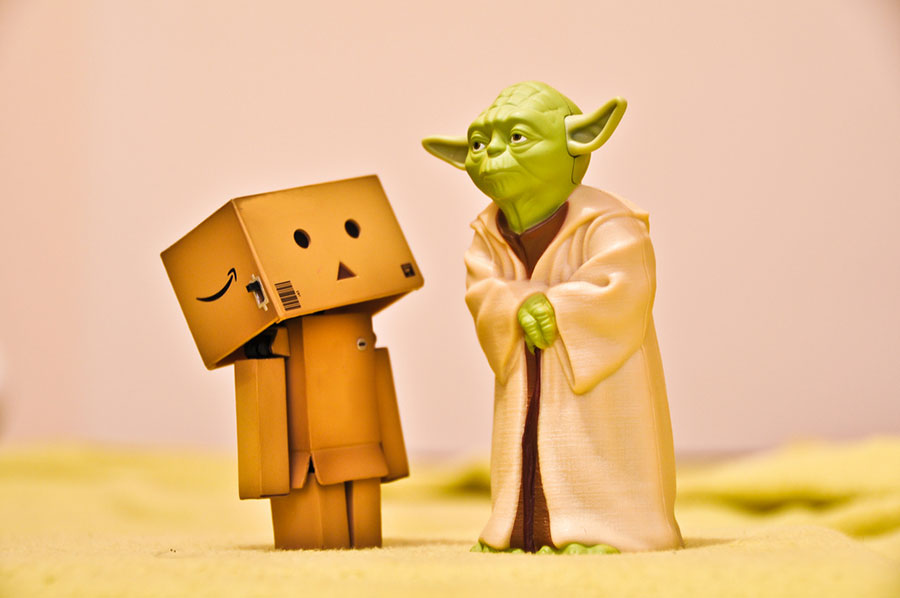
Leader’s Vision: May The Force Be With You

I have a confession to make: when I was nine I was teased at school by a boy who called me Yoda. If you remember the very small, chunky character in the Star War series, you will understand my mortification. Yoda was green, bald and had lots of white hair surrounding his pointy ears. Little did I know, however, that this boy would turn out to be quite right about me. Lucky for me, I haven’t turned green (yet!) and I’ve grown to be an average size woman with hairless, normally sized ears. But I do train many CEO warriors in the arts of leadership, business wars and how to optimize their own instincts.

In short, it’s hilariously similar to Yoda’s job as trainer of the revered Jedi warriors. He taught them how to feel “the Force” in order to succeed in battle by moving with it. Now, what “the Force” means to each one of us is a very tricky question, and most of us don’t dare confess our deepest notions about it. According to master Yoda, “My ally is the Force. And a powerful ally it is. Life greets it. Makes it grow. Its energy surrounds us and binds us…. You must feel the Force around you, between you, me, the rock, everywhere.” To some the Force is of divine nature, not of this world.

To others randomness and luck explain everything, making secret lucky socks critical to sportsmen and stockbrokers. Several traditions speak of the role of destiny in our lives, and scientists, well…scientists don’t believe in anything that is not scientifically proven, do they? What’s funny, though, is we all believe in something. One of my favorite neuroscience stories is the study on mystical experience performed by Canadian psychologist Michael Persinger in the eighties. When he stimulated individuals’ right temporal lobe, they felt the presence of divine beings matching their cultural and religious beliefs. Agnostic subjects, strong disbelievers of any form of religion, felt they were being abducted by aliens!

So let’s agree to disagree. Let us each explain “the Force” that moves things in our world in our own private way. And let us move on to Master Yoda’s real point. Our accuracy as leaders depends on our ability to predict how things will move in our markets and industries. Without a deep felt understanding of what moves people and organizations to act, we can’t build a vision to guide our teams through economic turmoil, financial uncertainty and unforeseen disasters.

As Yoda tells his pupils, “You will know good from bad when you are calm, at peace”. Knowing what to do is not so much about having plenty of information and analyst rankings. How many of them actually predicted the fall of Lehman brothers and the unprecedented worldwide financial storm that followed? Did any? “You must unlearn what you have learned” Yoda would say. Knowing what to do is about feeling in your gut what rings true.

Our problem is, we live in the era of knowledge, science and information. We are insistently taught to ignore our feelings, distrust our bodies and control our emotions. Decades of schooling, armies of consultants, and long shelves of intellectual books have been drilling us to think like robots since we can remember. To the point that many of us have forgotten what it is to feel calm and at peace about a huge business decision. In the world of Yoda, Star Wars and Jedi warriors, we might all be dead by now. While I don’t have my clients carry me around sticky forests and mossy lagoons in physically extenuating workouts, I do help them focus their attention on what matters in their business context.

The most important generator of your professional challenges is you. What you do and what you don’t do have a fundamental impact on the entire organization you lead, for a start. What you look at, and more importantly, what you try not to look at, can mean the difference between a curve of growth and a spiral of defeat. Once again internet-driven speed is a dangerous game of distraction from ourselves and how we impact other people with our doubts, our fears and all the other stuff we try to hide about who we are. The first step to accurate leadership vision is time, calm and peace. The second step is accurate focus of our attention and thoughts on what is happening now, instead of what might go down tomorrow. The third step is to stop hiding from ourselves: Stop avoiding our pains and stop making up intellectual justifications for our past mistakes.

When we join the dots between our past actions and their impact on the world we begin to feel “the Force” Yoda talked about. We start to understand how everything connects to everything else in subtle, slow-moving, almost imperceptible ways. I like to say that we need to evolve from leaders of trash to warriors of the wild. Much unnecessary trash is generated by this mindless, visionless speed to be better, richer, more popular than others.

We only stop repeating stupid mistakes, and spreading trash, when we dare to look at ourselves as we really are. This is when we discover all those wild, ineffable sensations, emotions and impulses which, ironically, are designed to keep us connected to the world, “the Force” and the Wild Natural planet. Like Luck Skywalker, many of my clients complain that “it’s impossible. I can’t. It’s too big. I can’t believe it”. And like Yoda, I find myself replying “That is why you fail” or “there is no why. Clearly you like questions”.

There’s nothing easy about focusing our attention on our wilder selves and learning to manage the intensity of our own unbridled emotion. It’s a path for enduring warriors to finally become heros, admired –and followed– by all. But without connection to our wilder heart and guts, our leadership vision is worthless. Paper nobody actually reads. Stacks of slides that get longer and include more data tables the more we hide. Intellectual blabber that inevitably disconnects from reality, leading our teams to destruction by fantasy.

“May the Force be with you”, as Yoda would say. When you feel it, you know good from bad, calm serenity grounds you, and nobody can prove you wrong. Trust me: “I kid you not!” 😉

When Wild Is Wise

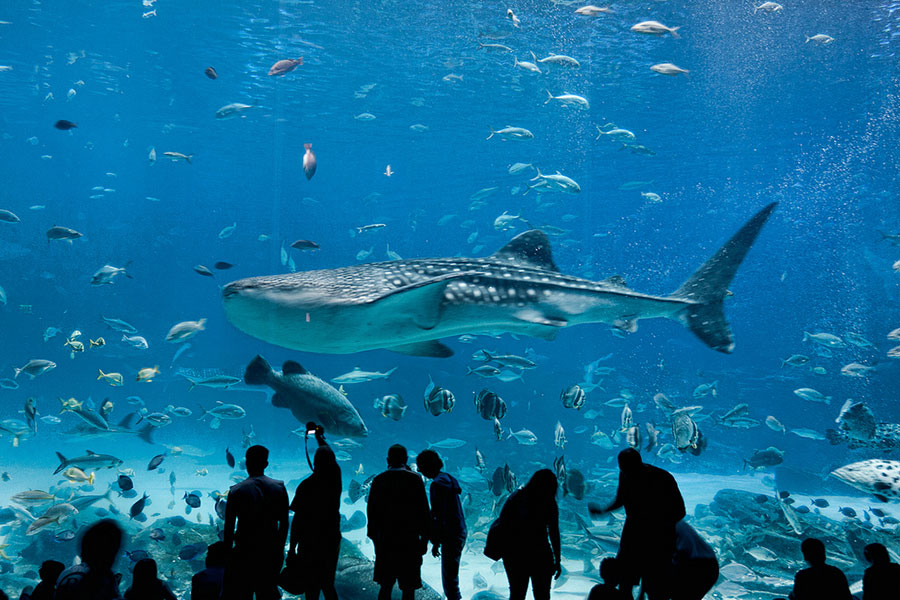
Last Saturday 9th of June was World Ocean Day. As tweets, pretty pictures and deep blue video footage passed in front of my eyes, a big blue whale and her calf, placidly sunbathing on the surface of a shiny ocean somewhere, stuck in my mind. This is what wisdom feels like to me. We know that wisdom is a critical leadership quality. Wise leaders know how to wait for the right moment to strike.

They can make accurate decisions about environments they may know little about, and they remain very aware of their own limitations and means to influence circumstances. Wisdom helps us read other people’s behavior to interpret their true motivations. More importantly, wisdom shines so brightly that even the youngest, most impulsive hot-shot is drawn to slow down and think before acting. Such is the power of wisdom.

Yet we’re unsure of exactly how some of us acquire this virtue. Experience is important, for sure. That’s why wisdom is associated to older people, or to those who have made it through significant hardship. Though knowledge and training are more pervasive in our societies than ever before in Human history, true wisdom is scarce. Reading books and doing MBAs or completing doctorate degrees doesn’t necessarily make us wise.

Sometimes it just makes us boring. Where does wisdom come from? We usually associate wisdom with quotes by dead people we have never heard of before. Small pieces of enlightened thinking drift to us constantly on twitter, like a light summer shower we’re unprepared for, and can’t really savor or appreciate. Wise eyes are often surrounded by wrinkles, weathered skin and simplicity: clothes, hair, gestures… Despite so many well-practiced stage performances, scripted videos and intellectual TED talks by sought-after achievers like CEOs, academics or whizz kids, the wiser ones are always quiet little men and women, poorly dressed, with ethnic backgrounds and exotic, or indigenous, features.

Is there something about trendy, cool and civilized that wipes wisdom right out of us? There’s nobody as cool and trendy as a Silicon Valley techie these days. A new craving for something other than fast fortunes, unending lines of app code and venture capitalist deals is hungry for initiatives like the Wisdom 2.0 summit: “Founders from Facebook, Twitter, eBay, Zynga and PayPal, and executives and managers from companies like Google, Microsoft, Cisco … in conversations with experts in yoga and mindfulness.”, as The New York Times defines it.

Now preparing their first European summit in Dublin for next September (www.wisdom2Europe.com), founder Soren Gordhamer and his team are promoting new ways of living and working that leverage technology to achieve more mindfulness, presence and wisdom. Something about being constantly bombarded by emails, instant messaging and too much information is definitely eating away at us, increasing our stress levels and pushing our bodies to succumb under the weight of television, greasy food and sedentary jobs.

Too much speed, too much of everything—in fact– is making us dumb, or numb, or a little of both. And back to the Oceans: powerful currents pushing life around in a living, organic dance of calming silence. Entire communities of species exchanging energy, racing each other to hunt for food, reproduce, grow and then die to feed others. Animals aren’t depressed, they don’t have to think about their weight, and they certainly don’t run marathons around New York’s Central Park out of pure sport. When animals and fish speed up, you can bet somebody’s life is at stake.

Slowing down is definitely a way for technology-enhanced humans to improve our perception and insight. Instead of endlessly alternating between ballistic work weeks or compulsive calorie-burning habits and depressive immobility on weekends, we could do nothing for a change. We could tune in to the natural rhythms of our own organism, while observing the symphonies of Nature: flowers take their time to blossom, leaves change color ever so slowly, ocean tides come in and out like soothing lullabies. Actually making time to simply observe the magnificence of our own Planet is, in fact, just the beginning of true human wisdom.

It’s what the wisest chiefs and shamans of ancient peoples have always done. Earliest expressions of Human cave art around the world invariably depict Nature at its wildest. Doing nothing was the best possible use of wise men’s time. We modern-day intellectuals, however, seem to have forgotten that connecting to the wild, in all its wonderfully unpredictable forms, is the source of our wisdom. We’re too busy running. But please don’t ask us where we’re going… we don’t know. Sometimes, we don’t even want to know. The big blue whale who bathes in the sun with her calf is in constant contact with every sensation in her huge, nurturing body.

She knows such sensations alert her to what is going on around her. So medicating against pain or trying to numb her own sensations would not be wise at all. She enjoys the warmth of the sun as she saves much needed energy and resources for later battles. She effortlessly defines adequate limits and new challenges for her calf, stimulating his development as he dares to put growing muscles and agility to the test. Like the wise leaders I described earlier, she reads other animals’ behavior, accurately judging when and how to escalate her own signals and defense reactions.

Every second that passes is another decision between staying or moving on in an enormous dark pool full of dangers she has no information about. Even the act of giving in to predators shows how wise our wild animals can be. No energy is wasted in the fight for survival. No useless resistance is offered when it’s time to give up. No begging or thinking of what could have been. Wild animals die with exemplary honor, dignity, and selflessness.

As did our earlier, wilder human ancestors in most every aboriginal settlement on the planet. Wisdom comes from the Wild. From our Oceans, our animals and our superiorly designed human bodies. Slowing down to reconcile ourselves with the Wild that lives inside us and around us is our next frontier. Embrace the Wild within you. It will make you wise.


Love Soccer? Leading Can Be Much The Same!

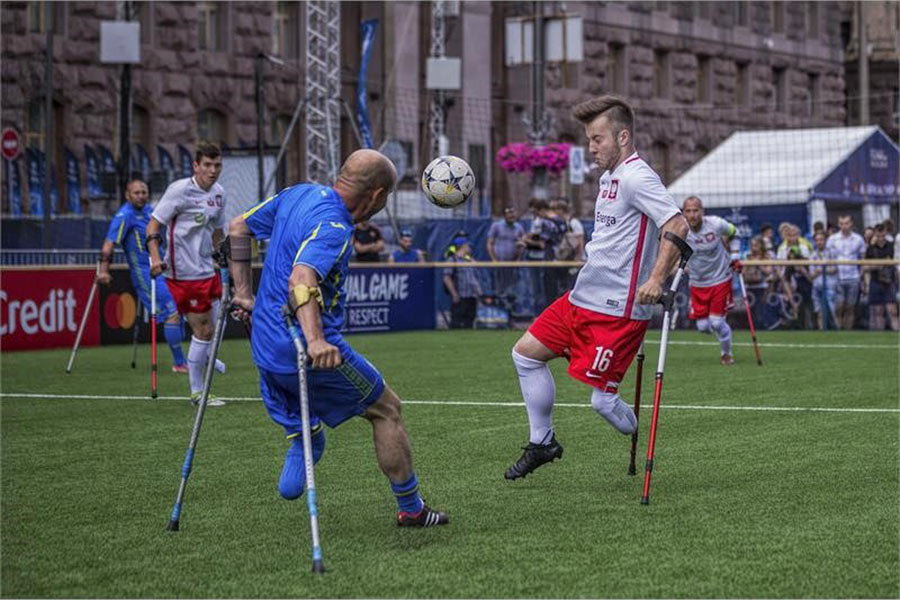
When you live in a country like Spain, it’s literally impossible to ignore soccer. We get at least ten minutes of soccer on all our television news reports, while most conversations are invaded with match results. Star players and their model wives appear regularly on magazine covers, show off the season’s hottest fashion on huge street ads, and fill our lives with lots of juicy gossip. With Brazil’s word cup kicking off next week, we’re in for full-blown soccer shock this summer. But as the popular Spanish saying goes, “if you can’t avoid it, enjoy it!” We may even learn a lesson or two about how soccer frenzy can help us become better leaders.

Millions of hot-blooded fans impassioned about a bunch of strangers fighting with each other and pursuing a ball is quite a spectacle to witness in itself, and an even better ride to take part of, if we care to join. It’s a universal phenomenon, and there’s nothing new about it. Think of the Roman Coliseum in full splendor, with its 80.000 heated spectators screaming and swearing at gladiators who fought for their lives. Or the famous Mayan ball court of Chichen Itza in Mexico, where sacred beliefs and political disputes centered the entire civilization’s attention on the movements of a rubber ball in a court famous for its still mysterious acoustic perfection.

Why do so many people get so excited over a show that won’t really impact their lives directly? Crowd psychology theories tell us that large groups of people become infested with emotional connections, making rationality a lot less influential on decisions and behavior. Individuals are said to feel less responsible for their own actions, fading into invisibility in a mob where it’s hard to say who does what. Simply put, when surrounded by large numbers of emotionally inflamed people, we go wild. We’re not the only ones.

It’s a mammal thing. Mammals are designed to connect unconsciously to other mammals in order to synchronize behavior before we have time to think rationally about it. Dogs do it. Lyons do it. This is what has made mammals so successful in Evolution. We all have an innate ability to spontaneously organize around our prey to maximize our hunting results, or minimize losses among our own pack members when attacked.

It happens on an unconscious level way before our conscious, more calculating human minds begin to realize what is at stake. When we are synchronized on an unconscious level, we don’t need to know where we are going or why. We just need to know, or better said, feel in our guts, who we’re following. And we don’t need to be human either. Mammals can synchronize between species, enabling a rider to perfectly coordinate with his horse without a word, or a dog to launch into action with his hunter before he’s uttered a sound.

Pet owners often sense their mammal pets know exactly how they feel. Because the language of our unconscious mammal bodies is not made up of words or numbers, but of emotion, sensation and impulse. So when we gather with friends to watch a soccer match, we know we’re going to relax into a part of ourselves that doesn’t worry so much about what other people think. If we go to a stadium where tens of thousands are building excitement together, elation, distance from daily worries and exaggerated drama are guaranteed.

Maybe this is why sports entertainment is immensely profitable worldwide. We pay important amounts of money to access experiences where we can “let ourselves go” and “lose our minds” in sensation-rich environments like large soccer stadiums or dark techno-music clubs. A wilder, more primitive part of ourselves seeks spaces to come out of its closet, if only for a little while. Charismatic leaders, powerful stage performers and a few world-famous soccer players have a knack for inducing crowds into a frenzy of agitation.

Still, they are not always sure of how they do it, often becoming insecure or very superstitious, to the point of losing their magnetism entirely in time. Knowing how to bring out our own charisma when we want it is for pros. Though public speaking skills can be trained to a certain point, charisma can not. It’s not conscious. It comes from our wilder, more primitive and sensational selves, seducing crowds to give in before they are ever conscious of what’s happening. And it only works if we give in first.

When we lose our self-consciousness to flow without restraint, following our emotions as they interact with our audience in unpredictable spirals of fire. Sounds dangerous, doesn’t it? Yes. It can be. Take a look at history… What we can train is our ability to let go of our inhibitions and trust our own animal emotions to guide us, and our followers, to the right destination. Where to start? With self-awareness.

Becoming aware of what happens to us while our national soccer team wins or loses their first match in Brazil next week is as good an opportunity as any. If you love to lose yourself in the passion of soccer, don’t let me spoil your fun. You can try this out some other time. But if soccer bores you to death, you can bring a notebook with you and write down everything you notice about the mammals surrounding you in front of the television screen. Dogs included!

How do you know what each viewer is feeling? Where and how do they express it in their bodies? Who is following who? Who is excluding or opposing who? And most importantly, what’s happening inside your own mammal body as suspense builds, aggression rises or disappointment flows.

We need to stop thinking of our human bodies as cheap cars we order around, and picture them more like magnificent horses we’re learning to ride: allowing our animal-selves to run with emotion when needed, or keep calmly grounded despite dangerous storms of passion. Professional horse-riders improve with age and experience. Leaders do too. Enjoy the ride!


Forget Success. Failure Is Your New Mojo.

Success-based learning has been around for a while. Most business schools put MBA students through endless piles of cases depicting top-ranking companies and executives as models to be copied. Most leadership and personal growth books also seek out winners of all kinds to help readers learn how to improve their own performance. But here’s the catch: success-based learning is pretty useless when it comes to leadership skills. Millions are being wasted on entertaining theoretical discussions, feel-good corporate executive development programs, and thought-provoking articles and conferences. It’s about time we took the hint: what worked for others often doesn’t necessarily work for us.

“How-to” approaches are simple and methodical. They work brilliantly for technical knowledge. From cavemen huddling around a warm fire thousands of years ago, teaching youngsters how to make an axe out of a stone, to the many videos you can find on youtube about how to solve most any technological challenge today. We look at the successful result, break down its ingredients, retrace all steps and instructions involved in making it happen, and repeat until we get it right. Easy-peasy lemon squeezy!

Until we try to replicate Obama’s communication savvy, or Mark Zuckerberg’s much admired entrepreneurial prowess, Steve Jobs’ market vision, or any other leadership example endlessly portrayed all over the media. Seven habits, six steps, eight qualities, nine secrets…you name it…there is no end to the pile of irrefutable, irresistible methods “we can’t afford to miss” to “maximize our potential”. Even I must confess to promising readers “success in six cups of coffee” in my first book about networking a few years back.

It’s like trying to teach our horse snazzy tricks watched in another horse’s performance.

Our horse might spook at the sight of the hoop he’s supposed to jump through, or hate places full of people and noise. He may be sloppy about overcoming obstacles or lack the necessary energy. The diet and training routine that prepares another horse for stardom may be completely inadequate for our own. In fact, amazing race champions often come out of nowhere, like “Noozhoh Canarias”, a Spanish horse from Canary Islands.

Lacking any relevant pedigree, and completely unknown to experts and high-power investors in the race industry, this unlikely champion miraculously won several international races last year, going from an 11.000 euro purchase price to a 1.5 million euro valuation in less than twelve months. Think of how many conscientious race horse breeders followed scientifically proven “how to” methods without exception, only to fall behind Noozhoh.

Like horses, our human body vehicles grow to develop a unique set of preferences, sensitivities and natural talents, making us fit for very different kinds of races or shows. When we try to dress up or perform as somebody else, we miss out on what we’re really good at. At best we become cheap imitators of those we are trying to emulate. As that much pursued promise of success eludes us year after year, we become exhausted with the impossible challenge of attempting to live somebody else’s life. 

We can learn how to do an especially convincing voice tone like our favorite news anchor from television.

We can’t, however, learn how to enjoy doing it, or how to do it spontaneously, before having to think. Which makes for a whole world of difference, doesn’t it? Leading others is the same. If we’re not authentic about it, it just doesn’t work. Also, we are actually more sensitive to failure than we are to success. If only because messing up usually hurts. While we breeze through happy conquests in life, sometimes so fast we barely get a minute –or an inclination– to stop and reflect on what we may be doing wrong, there’s no avoiding the pain of our biggest fiascos.

They sting in our memories for a long time afterwards, clearly alerting us of the reactions and thought processes we need to avoid going forward…even when we ignore our own alerts and fall right into the same trap again. And again. And again. We learn from failure by repetition. This is where repetition actually does bring us to success.

Each recreation of past downfalls can provide lots of valuable feedback about what we missed in our thinking, why we followed an impulse that was clearly ill intended, and most importantly, which feelings and emotional interpretations of the business situation were moving us to replay the very same mess all over again. If our mistakes get smaller, if it takes us less time to become aware of them, then real, long-term, spontaneous learning is at play.

Our unconscious body is carefully registering the diminished pain and reduced struggle of a smarter response, gradually getting closer to effortless perfection.

We then forget about such experiences and our attention moves on to the next pattern of error that most hurts. All we need to do is actually pay attention to our mistakes instead of ignoring them. Could it be so simple? Ask babies. Human babies are the most efficient learning machines on the planet.

Think of all they achieve in their first three years of life: they acquire full control of motor skills, learn to talk and interact with others; they develop new notions of time and space all the time, and they master the use of many complex tools like tooth brushes, forks and even ipads. Why? Because they focus all their attention and resources on correcting their patterns of failure until total dissolution. If you thought that your path to success was about trying to forget past fiascos, moving on and hoping you’ll be better in the future, think again.

Dismiss business cases and hero stories about how other people manage their bodies –or horses- to get what they want. Get to know your own body-horse and help it excel at what it really loves to do in clean, effortless flow. Focus all your attention and resources on your own pattern of error, feel the pain of failure and help it guide your body towards better future attempts. Enjoy the same thrill every baby feels when conquering each patiently pursued milestone of development. Success will find you before you know it!


How To Fuel Civilization: Learn From The Primitives

European explorers first met North American Indians in the sixteenth century, two distinctly opposite visions of the world fatally crashed into each other: while Europeans imported their strict moral code centered on will power, effort and hard work, native Indians had never been exposed to anything like it. To these hunter-gatherer tribes, will power and effort were a useless waste of energy.

Nature would provide everything they needed as She’d always done, and sweating it out in anxious gold-digging was definitely not the way to get into Her good graces. As we all know, that way of life disappeared under strong-willed engines of progress and civilization in the Americas, and most everywhere else in the world. But these primitive and unsophisticated visions of life may just be the remedy to many of our environmental problems hundreds of years later.

The head of cultural transformation for a large Dutch multinational company told me recently that “we seem to be investing so much money in moving people towards the right mindset in order to advance sustainable practices, and what’s frustrating is that when people have the right mindset, you don’t need much money at all to get things done”. This is exactly what Native Indians were trying to tell us! It’s like the difference between a trigger-happy soldier with lots of ammunition on his hands and an Indian hunter who spent all day yesterday proudly applying his father’s and grandfather’s careful teachings to carve out five deadly arrows. The soldier can afford to miss his target as many times as bullets he can fish out of his deep pockets, while our Indian hunter wouldn’t want to fail even once, lest he lose one of his laboriously crafted weapons.

“Well that’s why we need to work hard, to make lots of money, to buy many bullets, to make sure we don’t come home empty-handed”, you might argue. We study expensive MBAs, we kill ourselves writing email after email, soldiering through long meetings, saving our pennies to spend all our pounds, as we run around in circles or rise on speculation bubbles which invariably pop us right back down to where we started. Or maybe this is why we should stop firing stupid bullets at anything that moves in the forest, and learn a few tricks from our Indian hunter friend.

To these apparently primitive societies, covering their needs was not about mindless exploitation of Nature’s resources, but rather very mindful and respectful attention to all those little details betraying the presence of much-needed protein in its many life forms. In the mind of a man deeply connected to his Natural surroundings, no life should ever be wasted, and every life taken should serve the higher purpose of prolonging his family’s and tribe’s life. Sixteenth century European Catholics, Anglicans, Calvinists and Puritans, however, were brought up in a very different environment.

Centuries of armed conflict over territories and resources had destroyed all innocence to the point that Nature had become a mere silent observer of human brutality. Patriarchal thinking had fuelled the growth of civilizations running on expensive gas: slaves kept the backstage running while gold and other natural resources fed defensive armies and aggressive conquests. These early colonizers were often fleeing from a societal system that enslaved them with long hours of heavy work in exchange for a promised celestial reward somewhere in the unforeseeable future.

Still, they carried these constricting beliefs deep inside their souls even as they arrived in a land rich and heavenly abundant as they come. Our planet Earth was a heavenly paradise of abundance to hunter-gatherer tribes of the North American plains, lush forests and plentiful lakes. Worrying, working, counting or accumulating stuff you couldn’t carry with you from settlement to settlement was a terrible waste of time.

Their secret recipe was about not doing, not trying…not pursuing better futures. It was all about breathing, perceiving, admiring, listening, and deeply feeling every movement on the ground. This is how healthy prey fell into their hands, fresh river streams flowed into their mouths and safe settlement grounds emerged before their expert exploring eyes.

I’ve seen so many entrepreneurs launch a new business because they had the money to fund it and not because it was actually a good idea. We spend so many hours complaining about the lack of funding for new initiatives or projects in our companies and countries. And we work so many hours for so many days along so many decades. In search of what? When will we learn the lesson those first Indians generously tried to share with us? Wait until the wind flies in your direction.

Focus on the animal that gives into your hunter skills. Use every failure to hone your ability and sharpen your instinct. And please, please, please! Stop firing all those noisy, expensively-mined lead bullets all over the place. Stop complaining about how you need more of them. Just stop all at once. And now, breathe…


Mindfulness is Spreading, But Here’s What’s Missing

I’m thrilled to discover how many multinational corporations are embracing mindfulness as a desirable skill for their executives and leaders. Google, General Mills and Philips are only some of the global companies involved in helping their highest decision-makers stay present and attentive to the many crucial details hidden in the present moment. The list of top-ranking executives coming forward to advocate benefits of meditation techniques on business efficiency is growing fast: from Arianna Huffington, or Philipp Hildebrand at BlackRock, to Janice Marturano at General Mills, and Chade-Meng Tan at Google.

Even the late Steve Jobs described in his biography how meditation had shaped his fantastically successful vision for Apple.

There’s only one thing that baffles me in this growing wave of deep-breathing enthusiasts: how do they conquer the emotional conflicts that still bother the rest of us? Does their fear of loss simply dissipate between yoga postures? Or do their worst disappointments dissolve silently under the buzz of heavenly mantras and chiming bells?

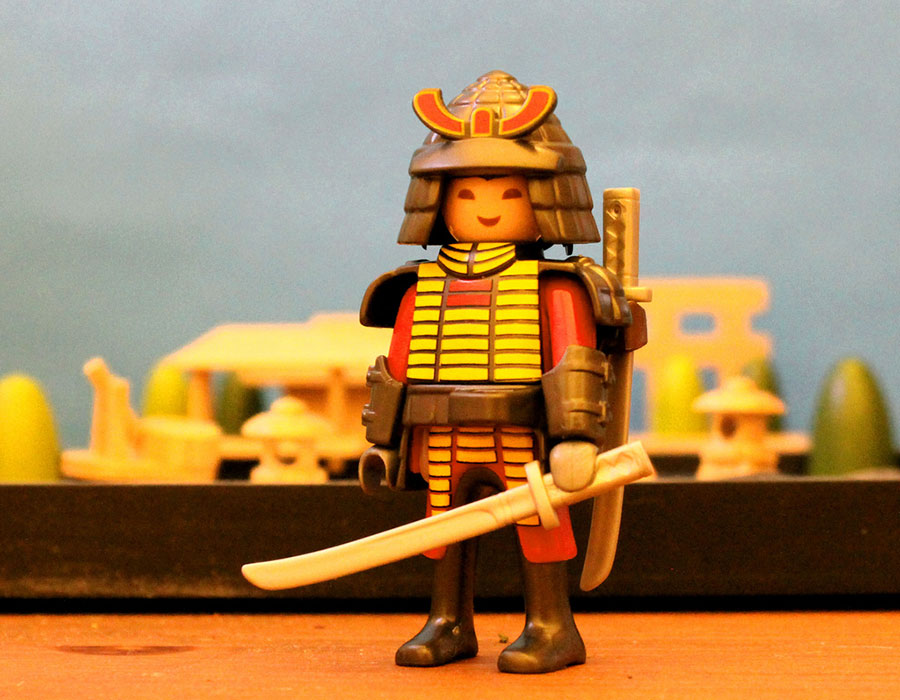
Almost every brilliantly worded personal testimony I’ve looked up leaves these gritty details out of their poetic success stories. But seriously, this is the most interesting part! In feudal Japan those who dared to train as Samurai warriors had to overcome a seemingly impossible feat before diving into fancy sword movements and kinky jumps in the air: apprentices had to overcome their own fear of death before they could envision any real future as a noble Samurai hero. Do you think they just sat under a beautiful tree for hours until their deepest instinct of survival flew away with the gentle summer breeze? Of course not!

If a young man was ready to embrace one of the noblest and most well respected arts of warfare of his time, he had to expel any and every fear from his body before confronting his enemy on the battlefield. It wasn’t enough to erase negative thoughts from his conscience, as so many so-called self-help books and meditation gurus would have us believe. Physical shivers had to be gone forever if one was to incarnate Bushido accuracy to the point that “the mind forgets about the hand, the hand forgets about the sword”. There really is only one way to achieve this: shivering your body dry. Shivering the fear right out of your system in as many horrific hours of real-life terror as needed.

The path to Samurai glory was never about forgetting or denying that fear had been sinuously sewed in to every muscle fiber in the human body by Evolution.

Unbreakable courage came from surfacing every possible flight instinct hidden in one’s own psyche by exposing oneself to live threats: the more numerous, the more complex and the more unpredictable the better. It took decades of experience, and we can safely assume it didn’t happen while sitting in front of a laptop. Or a tablet.

If we look into preparation rituals for warriors and shamans in aboriginal tribes around the world we find similar rites of passage to maturity once and again in as many formats as cultural interpretations of the world: defying gravity in impossible feats of balance, challenging evermore powerful wild animals to combat or daring to guess which trail wouldn’t lead to certain death…They were all about helping young men experience their deepest fears as the quickest way to release them for good. It’s true that board rooms today hold many unforeseen dangers which could fatally end one’s career at any moment. Our best and brightest leaders, however, seem to breeze right through such hurdles without a scratch, if we believe what they tell us. Or more probably, they hide their wounds from hungry media predators and aggressive, blood-thirsty competitors.

Showing emotion, especially the kind we judge as negative, demeaning or unflattering, is forbidden in the business arena of Fortune rankings. Bringing meditation into our corporations as a subtle maneuver to keep conversations positive defeats the very purpose of these millenary techniques. Mindfulness is not supposed to be about feeling calm, motivated and happy all the time. Quite the opposite: it’s about giving yourself the opportunity to release all that negative mumbo-jumbo that pulls you down before you even know it’s there. And it’s not meant to be pretty.

It’s just meant to be real. Corporations who fail to enable safe spaces where employees can ventilate the negativity out of their systems will inevitably deform the essence of mindfulness practice, nipping such initiatives in the bud: Employees will become frustrated with new impositions of fake peace, tree-hugging exhibitions and deceptive smiles. Meanwhile, executives will grow impatient with zen-looking rituals that don’t achieve any tangible business goals or make a real difference to their productivity.

The secret to Samurai heroism is authenticity.

Staying true to who we are pushes us to embrace our entire self, with our smart ideas and all our sorry little feelings of fear, anger and grief. Without judgment. Without hiding embarrassing details or denying ourselves the right to have a tantrum worthy of our wildest toddler memories. The only way out of our own self-loathing is to swim right into it. Just as Japanese young men had to do hundreds of years ago, we will conquer our emotional whims by facing them, expressing them and giving into them…in spaces where we are not exposed to unwanted stares or undesirable consequences.

Mindfulness is indeed the next frontier of leadership training in a world where noticing the present impact of our business practices on our Natural surroundings is more urgent than ever before. Let’s not use it to escape our wild, unpredictable emotions. Let’s be mindful to embrace the wild Samurai warriors we already are, carrying our scars and sharing our war stories with pride.


Mindfulness is Spreading, But Here’s What’s Missing

I’m thrilled to discover how many multinational corporations are embracing mindfulness as a desirable skill for their executives and leaders. Google, General Mills and Philips are only some of the global companies involved in helping their highest decision-makers stay present and attentive to the many crucial details hidden in the present moment. The list of top-ranking executives coming forward to advocate benefits of meditation techniques on business efficiency is growing fast: from Arianna Huffington, or Philipp Hildebrand at BlackRock, to Janice Marturano at General Mills, and Chade-Meng Tan at Google.

Even the late Steve Jobs described in his biography how meditation had shaped his fantastically successful vision for Apple.

There’s only one thing that baffles me in this growing wave of deep-breathing enthusiasts: how do they conquer the emotional conflicts that still bother the rest of us? Does their fear of loss simply dissipate between yoga postures? Or do their worst disappointments dissolve silently under the buzz of heavenly mantras and chiming bells?

Almost every brilliantly worded personal testimony I’ve looked up leaves these gritty details out of their poetic success stories. But seriously, this is the most interesting part! In feudal Japan those who dared to train as Samurai warriors had to overcome a seemingly impossible feat before diving into fancy sword movements and kinky jumps in the air: apprentices had to overcome their own fear of death before they could envision any real future as a noble Samurai hero. Do you think they just sat under a beautiful tree for hours until their deepest instinct of survival flew away with the gentle summer breeze? Of course not!

If a young man was ready to embrace one of the noblest and most well respected arts of warfare of his time, he had to expel any and every fear from his body before confronting his enemy on the battlefield. It wasn’t enough to erase negative thoughts from his conscience, as so many so-called self-help books and meditation gurus would have us believe. Physical shivers had to be gone forever if one was to incarnate Bushido accuracy to the point that “the mind forgets about the hand, the hand forgets about the sword”. There really is only one way to achieve this: shivering your body dry. Shivering the fear right out of your system in as many horrific hours of real-life terror as needed.

The path to Samurai glory was never about forgetting or denying that fear had been sinuously sewed in to every muscle fiber in the human body by Evolution.

Unbreakable courage came from surfacing every possible flight instinct hidden in one’s own psyche by exposing oneself to live threats: the more numerous, the more complex and the more unpredictable the better. It took decades of experience, and we can safely assume it didn’t happen while sitting in front of a laptop. Or a tablet.

If we look into preparation rituals for warriors and shamans in aboriginal tribes around the world we find similar rites of passage to maturity once and again in as many formats as cultural interpretations of the world: defying gravity in impossible feats of balance, challenging evermore powerful wild animals to combat or daring to guess which trail wouldn’t lead to certain death…They were all about helping young men experience their deepest fears as the quickest way to release them for good. It’s true that board rooms today hold many unforeseen dangers which could fatally end one’s career at any moment. Our best and brightest leaders, however, seem to breeze right through such hurdles without a scratch, if we believe what they tell us. Or more probably, they hide their wounds from hungry media predators and aggressive, blood-thirsty competitors.

Showing emotion, especially the kind we judge as negative, demeaning or unflattering, is forbidden in the business arena of Fortune rankings. Bringing meditation into our corporations as a subtle maneuver to keep conversations positive defeats the very purpose of these millenary techniques. Mindfulness is not supposed to be about feeling calm, motivated and happy all the time. Quite the opposite: it’s about giving yourself the opportunity to release all that negative mumbo-jumbo that pulls you down before you even know it’s there. And it’s not meant to be pretty.

It’s just meant to be real. Corporations who fail to enable safe spaces where employees can ventilate the negativity out of their systems will inevitably deform the essence of mindfulness practice, nipping such initiatives in the bud: Employees will become frustrated with new impositions of fake peace, tree-hugging exhibitions and deceptive smiles. Meanwhile, executives will grow impatient with zen-looking rituals that don’t achieve any tangible business goals or make a real difference to their productivity.

The secret to Samurai heroism is authenticity.

Staying true to who we are pushes us to embrace our entire self, with our smart ideas and all our sorry little feelings of fear, anger and grief. Without judgment. Without hiding embarrassing details or denying ourselves the right to have a tantrum worthy of our wildest toddler memories. The only way out of our own self-loathing is to swim right into it. Just as Japanese young men had to do hundreds of years ago, we will conquer our emotional whims by facing them, expressing them and giving into them…in spaces where we are not exposed to unwanted stares or undesirable consequences.

Mindfulness is indeed the next frontier of leadership training in a world where noticing the present impact of our business practices on our Natural surroundings is more urgent than ever before. Let’s not use it to escape our wild, unpredictable emotions. Let’s be mindful to embrace the wild Samurai warriors we already are, carrying our scars and sharing our war stories with pride.


0