How Tech is Disrupting Poverty, Energy & Health Care

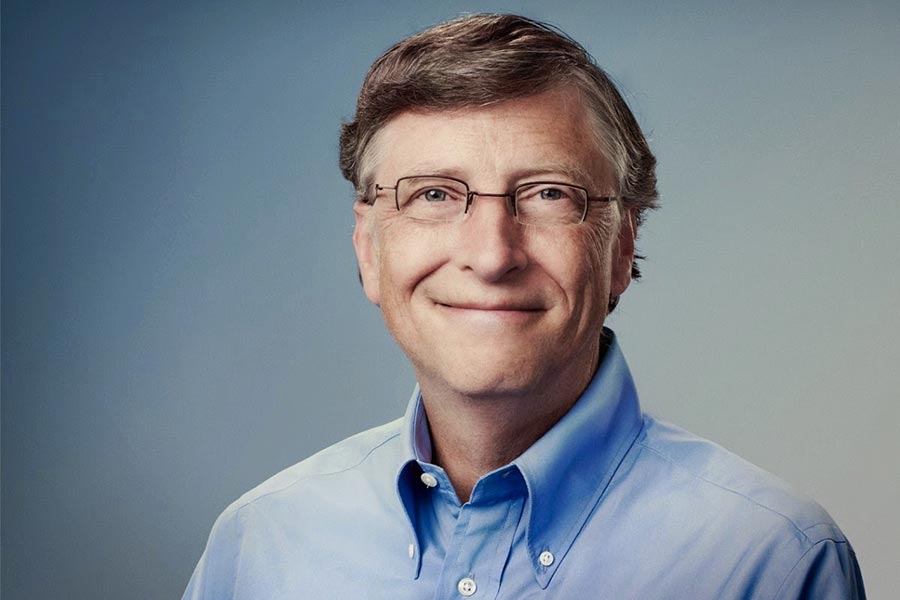
At the recent Bloomberg Global Business Forum, held in New York, one of Wall Street’s most prominent figures, David Rubenstein, the founder and co-CEO of the private-equity firm The Carlyle Group, hosted a panel discussion between Aliko Dangote, Bill Gates, Indra Nooyi and Masayoshi Son.

David Rubenstein: I’d like to ask each of you; clearly there’s going to be a lot of innovation over the next ten years, 20 years, 30 years. All of us might not be here 30 or 40 years from now. We might if we’re lucky.

If you like this, subscribe here for more stories that Inspire The Future.

If you had the chance to give up everything you currently have; your wealth, your fame and accomplishments, and live through the next 30 years or so of innovation and start all over again, would you rather live through the next 30 years of innovation and see what the world’s going to become or would you like to stay where you are right now?

Dangote: I will give up, yes, because I’m sure great things are going to come.

Gates: Living longer is worth the better deal.

Nooyi: I’d like to say something my two kids told me. I asked them what they’d like for their birthday. They said, “We’d like a week without the Internet.” So in a way, I’d like to go back to those days when life was a little simpler.

Son: Oh, I’ll go for everything for the future.

What has been the most important innovation that you have seen in the last 10 years in the world in which you operate? What’s been the most crucial change or innovation?

Son: I think in the world in which I operate, in Africa, there’s this massive GSM revolution. If you look at us in Europe, we had about 500,000 lines in 2001. In 2017, we already have 139 million lines. So it’s a massive jump, and you can also see what happened in India, where they were able to create 100 million lines in 170 days.

Gates: I had an early career in the digital revolution, and that’s still the fastest-moving thing. It’s so horizontal in nature that it’ll change banking, education, scientific research, sales and marketing. Today, a lot of my focus is more on health, and particularly miracle vaccines – developing malaria, HIV and TB vaccines. I get to back amazing scientists.

The digital revolution isn’t slowing down. So we get the benefit of that. But regarding equity, it’s the health breakthroughs I’m most excited about.

And you think people with health breakthroughs can live to be 90, 100, 110?

Gates: Well, I’m not working on that problem. There are other Silicon Valley billionaires who want to live forever.

My main focus is on inequity. It’s 100 times more likely for a child in Africa to die than a child in the United States. And these are all solvable diseases; we can get rid of that inequity. Extending life is very difficult because your many body parts, including your brain, wear out. So I’m not in that field. I’m in the malaria, HIV and nutrition game.

I don’t think your brain’s going to wear out, but OK.

Nooyi: I think every aspect of our life is changing because of what people are doing with technology. The single biggest thing I feel good about is how technology is enabling gender inclusion. Women are being enabled a lot more and their voices are being heard. And I hope that progresses going into the future.

Well, let me ask about that. You have done two things in your career that were very innovative. One, you’re an immigrant to the United States and became the CEO of one of the most important companies in the United States and the world, but you’re also a woman. Was it more challenging to become the woman CEO or the Indian immigrant CEO?

Nooyi: All of it. I came into the workforce when there were hardly any women in senior executive positions. It’s different now, but 20 or 30 years ago when I first started working, there weren’t many women. It was difficult. Being an Indian got me attention because I was often the only colored person in the room. And so that got me attention, but I had to work harder to prove that color and gender should not be counted against me – that I could do a damn good job, too. 

Well, you have to be better qualified than white men, right? 

Nooyi: Way better. A lot more. 

What’s the most significant innovation that you’ve seen in the last ten years? 

Son: Not just ten years, but the last 30 years. Using the microprocessor as a base for creating the Internet has changed the life of almost everyone on the earth. But going forward, it’s accelerating even more on that. 

Earlier in your career, you were a technology innovator. And at one point, I think in the year 2000, you lost $70 billion of net worth. What did it feel like to lose $70 billion of net worth in one year? 

Son: Well, it was a crash. Everybody crashed. But somehow, at the bottom of the crash, I actually revived my fighting spirit, so it was good. By the way, what Bill doesn’t know is that for three days, I became richer than him. But 12 months later, I was almost broke. I had a 99% drop in our share price in one year. 

At one point, you made an investment of $20 million in a little, unknown company called Alibaba. It became worth around $90 billion and is now worth about $130 billion. How did you decide that Alibaba was a good investment and do you have more like that you could recommend to us? 

Son: Well, it was about Jack Ma. Not because of his business model or technology, but because of his charisma and leadership. China had an enormous opportunity for the upside. I said this is the guy that can be the leader of this innovation. 

Indra, you’ve tried to take a company that was known for selling sugar water – in the view of some people – and make it a more nutritionally safe and better company. Was that hard, to beat the bureaucracy back at Pepsi when many people didn’t want to do the things you wanted to do? 

Nooyi: I think it was hard within the company, it was hard outside the company. I remember investors telling me not to forget that we’re Americans – we like our soda and chips. Don’t try to change us. And when I asked them if they changed their habits, he said oh yes, we’ve changed our habits, but we don’t want you to change what you’re doing. 

We had to fight battles on multiple fronts. Change does not happen quickly in our industries. Because we have to change consumer taste, we have to change the product portfolio; we have to change the business system. So it’s still happening. It’s a work in progress. 

Now when you go to somebody’s house for dinner, and they say would you like a Coke, what do you say? Has that ever happened and would you rather leave?

Nooyi: I’d say it was nice knowing you and leave. Actually, my secretary sends them a list ahead of time in case there’s a mistake. 

Bill, I’d like to ask you a question I have asked you before, but people are still interested. All of us who use personal computers are familiar with turning them on. We need three fingers to do so, control, alt, delete. It’s a little awkward sometimes. You’re the person who came up with this idea. Why? 

Gates: The IBM PC hardware keyboard only had one way that it could get a guaranteed startup. Clearly, the people involved should have included another key to make that work. A lot of machines now days do have that as a more obvious function. 

No regrets about doing it that way? It worked out OK? 

Gates: Well, I’m not sure you can go back and change small things in your life without putting the other things at risk. Sure, if I can make a small edit, I would – I’d make that a single-key operation. 

By the way, you dropped out of college. Do you think if you’d gotten your college degree your life would have been better off? 

Gates: At the time it felt like it. There was a huge sense of urgency around the fact that the microprocessor was revolutionary and software needed to be written for it. A lot of existing companies, including IBM, with infinite resources would have gone and done that. 

So if we were to have any hope, the sooner we did it, the quicker we did it, and the more hardcore we were about it, the better. I didn’t want to waste a day. In my 20’s I worked weekends, I didn’t believe in vacations. 

We had to move at high speed because eventually, IBM did compete with us. Many companies came along later, and of the companies formed in that time, we were the sole survivor. 

It would’ve been hard to hold me back once I saw that opportunity. Harvard, which I loved, was very relaxing; where you would sit in class and stay up all night talking. It didn’t have the same intensity. Once I saw the opportunity, I knew I was going to leave.

And your parents, what did they say? 

Gates: They said: “Hey, we’re paying your tuition. What does this mean?” And I said, “well, I’m on leave,” which was true, I could have gone back. Harvard’s very generous about that but eventually, the course catalog moves on and you become a little too old for it. 

They weren’t sure if it would succeed or not so my parents thought maybe I’d head back. But, I was single and maniacal in those days, and it was the perfect thing for me. 

Now you’re innovating in a number of areas and one of them is energy. You’ve started a fund to invest in energy innovation. Why? 

Gates: With energy, we have a real danger that even with fantastic innovation it can proceed at different paces within different industries. In education, it proceeds very slowly for a variety of structural reasons. There is no one incentive because a new type of power plant is going to take decades to prove and your patents will expire. The regulatory commissions don’t want to take the risk of a new power plant. We’ve seen what’s happened with nuclear, how tough that’s been. And so, because of climate change, and because Africa has less electricity today per person than they had ten years ago because the population has exceeded the electrical generation capacity increase, we have a huge problem. We need low-cost clean energy.

For those with spare capital – risky capital – joining in on this is a great thing. 

You now have that fund?

Gates: Yes, it’s about a billion dollars, and we’ve spent the last year hiring an incredible team. It’s about a 15 to 20-year time period per person, a little longer than you’d have in, say, biology or digital investment because just proving the energy plants and scale is very hard. 

Aliko, rightly or wrongly many people think innovation is based in Silicon Valley, Seattle, Japan or China, but not Africa. Is this unfair and do you think there are African entrepreneurs who in the next ten years will change the face of Africa?

Dangote: Let me tell you a short story. We have about a million people we want to reach through the Ubuntu Foundation in various local governments– local governments are what you call counties in the USA.
We go to every local government and meet with thousands of women and give them free grants to improve their lives.

In the beginning, we did this manually, through commercial banks, but later we registered all of them and now use a mobile banking system to both pay and register everyone on our database. In doing this, we’ll be able to use the database to determine if it’s really changing lives – which it is currently doing.

The same idea is delivering results in our partnership with Bill to fight Polio. Despite vaccinators going into the field to vaccinate seven million children, we saw the incidence of Polio going up. Now we give the health workers a mobile device with a chip that shows us where they’ve been – to verify it’s being done properly.

Bill, let me ask you about your efforts to beat back malaria. What’s the argument against killing all mosquitoes? Why don’t we just eliminate all mosquitoes, which I think we have a capability of doing, to eliminate malaria. What’s the argument against that?

Gates: Malaria is only carried by the Anopheline mosquito, which is only one out of every 1,000 mosquitoes. The main reason is that it can set a precedent. If you think “OK, humans can go and eliminate this species,” then what’s your criteria for anything else that might be a nuisance? You might make a mistake; it might be key to an ecosystem.

There some bats that feed on those mosquitoes and you’d have to look at the effect on those ecosystems. There’s a new genetic approach called gene drive that’s still in the labs and not totally proven, but it has a good chance of knocking down Anopheline populations by 99% over five years. 

Indra, we often hear about great technology leaders or great innovators that are men. Is that because of a sexist thing where men don’t tend to give women opportunities? Do you think it’s going to change anytime soon?

Nooyi: I’m not an expert on women in technology, but I will say something interesting. I was at an MIT event recently, and the president of MIT told me that 50% of their engineering graduates are women. But if you go to most companies, 50% of engineering staff are not women. If you read the stories about Silicon Valley, 50% of the people getting funding are not women. There’s obviously something causing that leak between MIT and the workplace. We have to do something different.

Masa, is artificial intelligence a good thing for humans or not? Are your robots going to take over humanity?

Dangote: I think that the misuse of artificial intelligence could be horrible. But there are thousands of good reasons to utilize artificial intelligence for good – for humanity. It has solved unsolvable diseases, solved unsolvable disasters and many other things. So I think it’s really good.

If you like this, subscribe here for more stories that Inspire The Future.

Chinese “Take Over America” Campaign for 4th of July

A marketing agency in Shenzhen has given the world a glimpse of what the world could look like if China took over – by creating U.S. currency featuring the faces of Chinese emperors.

Timed to coincided with the yearly Fourth of July celebrations – American Independence Day – the date was chosen for maximum impact. Chinese marketing company ITTIZ and Asian business advisors Global from Asia sent out red envelopes containing U.S. banknotes to 500 of the biggest companies in Shenzhen, a commercial area of China that links it to Hong Kong.

All the bills were actual U.S. currency notes, ranging in value from $1 to $100, with a removable sticker of a Chinese emperor covering the respective images of U.S presidents that appear on the notes. *

ITTIZ came up with the idea for the campaign a few months ago when considering the outcome of the U.S. presidential election. Sean Davis, CEO of ITTIZ, said that with the current state of globalization and the general interconnectedness of countries, the likelihood of China’s rise is as probable as ever, and pulling back isn’t a reasonable option. 

The company wanted to create something that taught companies in Shenzhen the value of thinking creatively, and so the financial, political, competitive and comedic aspect of this campaign became appealing to them.


Along with support from Mike Michelini, CEO of Global from Asia, the campaign came to life. Each note is customized and titled, “Are you ready to take over America?”

The marketing company believes this was a creative way to share the importance of marketing with Chinese companies – by tying the idea directly to currency, revenues, and overseas competition. The campaign is expected to reach a wide audience spanning various industries. Thus far, there has been a range of reaction, with the majority finding the campaign humorous.

“We see Shenzhen becoming a technology hub for the 21st century,” says Davis. We feel that creative ideas will only accelerate this movement. The future is coming at us quickly, everything in today’s economy is up for grabs, and Shenzhen is ready to grab hold and take it.”

* The currency is not defaced in a way that would violate Title 18, Section 333 of the United States Code.


American and Vietnamese Cyclists Seek Fathers’ Downed Fighter Jet

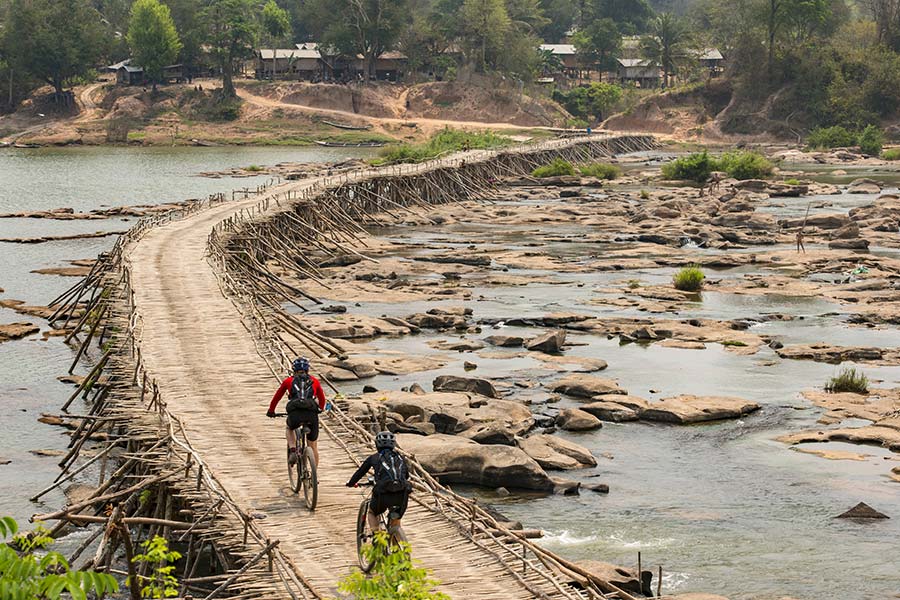
Mountain biker Rebecca Rusch rides the Ho Chi Minh Trail in Vietnam in a new documentary that documents a personal journey of healing.

Ultra-endurance athlete Rebecca Rusch has won competitions all around the world in several disciplines, however she faced her toughest challenge yet in new Red Bull Media House documentary Blood Road.

The American, who is also known as “The Queen of Pain”, set out on an arduous journey of healing and self-discovery in search of the site where her father’s plane went down during the Vietnam War.


The film follows Rebecca and her Vietnamese riding partner, Huyen Nguyen, as they pedal 1,200 miles along the infamous Ho Chi Minh Trail through the dense jungles of Vietnam, Laos, and Cambodia. Their goal: to reach the site where Rebecca’s father, a U.S. Air Force pilot, was shot down in Laos more than 40 years earlier. During this poignant voyage of self-discovery, the women push their bodies to the limit, while learning more about the historic ‘Blood Road’ and how the Vietnam War shaped their lives in very different ways.

The 48-year-old explained, “The most alarming discovery of the entire journey was learning about the vast amount of unexploded wartime ordnance that still remains and continues to threaten human lives. I went there searching for my Dad and pieces of myself, but came home with the understanding that I can use my bike for a bigger purpose than just winning races.”


“Initially our focus of the story was chronicling Rebecca’s intense physical journey on the Ho Chi Minh Trail, but along the way we uncovered a much deeper emotional journey,” said the film’s director Nicholas Schrunk. “My hope is that regardless of a viewer’s background, political views, or personal feelings that they would see not just the physical and emotional scars that war leaves, but also how families, countries, and cultures can come together to heal those wounds.”

Blood Road is not only a powerful story of a daughter’s love letter to her lost father, but also one about how two women forge a deep bond triggered by a shared experience of war and loss.


Lupita Nyong’o: Mexican-born Kenyan Actress

Lupita Amondi Nyong’o is a Mexican-Kenyan actress, born in Mexico to Kenyan parents and raised in Kenya.

Her parents, Dorothy and Peter Anyang’ Nyong’o, were in political exile at the time of her birth, but managed to return to their homeland of Kenya during their daughter’s childhood. Her father later became part of the country’s senate while her mother, who worked in family planning, took a leadership position with the Africa Cancer Foundation.

Nyong’o took drama lessons in Mexico as a teenager and starred in the lead role in a production of Romeo and Juliet. During a school summer vacation she returned to Kenya, where she discovered that filming for the drama The Constant Gardener was happening in her area. She joined the set as a production assistant and met Ralph Fiennes, who told her to become an actor.

Nyong’o sharpened her craft as a filmmaker by directing, editing and producing the 2009 documentary In My Genes, that told the stories of Kenyans living with albinism. She also directed a Kenyan television series Shuga, which was backed by MTV and UNICEF that focused on sexual relationships among youth in Nairobi, aimed at promoting HIV awareness and safe sex via storytelling.

She returned to the US and earned a master’s degree from the Yale School of Drama in 2012. Weeks before graduating she found out that she had landed a part in 12 Years a Slave, a film directed by Steve McQueen and produced by Brad Pitt. She won the 2014 Academy Award for best supporting actress for the role in the film.

In 2015, Nyong’o returned to Kenya and announced that she would advocate for the preservation of elephants with the international conservation organization ‘WildAid’, as well as promote women’s issues. Mother Health International is dedicated to providing relief to women and children in Uganda by creating local birthing centers. She felt bringing attention to such important but overlooked issues is a important for her as an artist. She was honored for her work at 2016 Variety’s Power of Women.

In 2016, Nyong’o launched an anti-poaching “hearts and minds” campaign with WildAid in conjunction with Kenya Wildlife Service. The historic event saw 105 tonnes of Ivory and 1.35 tonnes of rhino horn burnt in a demonstration of zero tolerance towards poachers and smugglers who threaten the survival of elephants and rhinoceros in the wild.

In October 2016, Lupita Nyong’o was an honoree at the 2016 Elle Women in Hollywood Awards.


Why “Working on the Road” Can Strengthen Your Team

Seventy percent of millennials who took part in a recent survey stated that the ability to travel was the main motivation for working, second only to paying for necessities such as rent and bills.

But while millennials may be foot-loose and experience-driven, they are also career-minded, ambitious and motivated by jobs that allow them to acquire the skills and knowledge they need to grow both personally and professionally.

Offering flexibility for work schedules and vacations is important for employers who want to attract the best talent out there. Increasingly, companies are allowing and even encouraging employees to work remotely for set periods of time, which is proven to improve morale and productivity.

But instead of simply offering employees the perk of working in pyjamas from their over-priced inner-city apartments a couple of days per week, there are multiple benefits to embedding a company culture that encourages staff to travel and work “on the road” for short periods of time each year.

Here are three reasons encouraging employees to work while travelling could improve a lot more than just team morale:

1. Traveling and working allows your team to grow personally and professionally

According to a recent survey by Hipmunk, 38 percent of millennials travel for business, compared to just 23 percent of Gen Xers and 8 percent of baby boomers. However, Sara Sutton Fell, founder and CEO of FlexJobs states, “From the surveys we’ve done of millennials and flexible work, it’s not so much that they want their jobs to include travel such as traditional business trips to meet clients,” says Sutton Fell. “It’s that they want to be able to travel and still do their jobs.”

While not every job role requires foreign travel, there are multiple opportunities for growth and learning abroad which any employee could benefit from while still doing their normal job remotely, such as visiting foreign branches, business cross-pollination exchanges with companies in the same sphere, networking events and conferences.

Offering the opportunity to represent your company abroad is not only an attractive incentive for talent acquisition, but also has a positive impact on many other levels. Travel experiences increase employee commitment to the organisation, focus and productivity and give a goal for employees to work towards. Travel has been proven to broaden individuals’ horizons, and boost professional and personal growth by placing people out of their comfort zones, and forcing them to adapt to foreign norms, languages and customs.

In the increasingly ‘global’ work ecosystem, sending employees to work and cooperate with, and learn from other companies is a great way of growing your network. Thanks to a growing number of events, conferences and accelerator programs emerging around the world, cooperation and communication is improving in the startup ecosystem. Rather than going head to head, startups are increasingly learning from each other, and gaining inspiration from the innovation of other startups in their sphere.

Encouraging your employees to interact and cooperate with other startups around the world can inspire them to implement ideas spawning from different cultures as well as strengthen their entrepreneurial mindset, which they can transfer back to their work back home.

2. Embedding working ‘on the road’ forces your company to provide real flexibility.

Rigid 9-5 office based schedules are fast becoming a thing of the past. Forward thinking companies are realizing that aside from improving morale, offering flexibility in schedules and for vacations actually improves productivity too. With smartphones, portable devices and increased wireless internet saturation, workers can effectively be plugged into their desk from anywhere, at any time of the day, and if they want to take an afternoon off and catch up over the weekend it shouldn’t affect their overall output.

However, while timetable and vacation flexibility are becoming more common, for many companies they still remain a perk, to be taken advantage of or not at the employee’s discretion. Leading companies like Netflix, Best Buy and Virgin are pioneering “unlimited vacations” a policy which on face value appears attractive to experience-driven millennial employees, and talent-hunting managers alike. But critics argue that in reality this tricks employees into taking less vacations, isn’t applicable to all industries and is hard to implement fairly across teams.

For early stage startups the limitations posed by skeleton teams and limited resources can often make ‘unlimited vacations’ unrealistic, but if working trips are embedded in your company culture, your company will be forced to make this flexibility part of day to day operations.

Rather than being forced to hastily organize cover and shift responsibilities at the last minute before someone takes vacations, your company needs to have systems in place to accommodate remote working. These include rolling out communication tools like Slack, and using shareable documents like Google Docs and Excel which can be accessed by different employees easily. Employees working remotely can easily join team meetings and brainstorming sessions via Skype or Google Hangouts, and tools like Join.me even allow for screen sharing and interactive online whiteboards for conference calls.

3. Traveling and working allows you to attract the best talent

Attracting and retaining talent is becoming more challenging. As the demand for qualified professionals with specific skills grows – especially for development and technical roles – so do potential candidates’ expectations in terms of flexibility, work environment and many other perks that go way beyond financial compensation.

Adam Kingl, director of learning solutions at the London Business School argues “With younger workers being fully aware that you can email or call someone from anywhere, the idea of working differently becomes a criterion that people are expressly looking for before they’ll sign on the dotted line, it’s not a perk or reward.”

Modern employees want the whole package. As well as being paid appropriately, they expect to work in environments where they can learn, challenge themselves, and fulfill their own personal goals, whether that be initiating their own projects, or travelling the world.

Until recently, employees who wanted to take an extended trip needed to quit their jobs, or take unpaid sabbaticals. However, startups like Remote Year, now offer ‘round the world’ year long digital nomad experiences, and can arrange openings with leading companies for people with specialized skill sets as well as entry-level employees. Similarly, Embark, We Roam, and Hacker Paradise offer shorter couple of weeks to twelve months experiences in Latin America, Europe and Asia. To stay competitive, attract and keep ahold of experience driven millennials, offering the chance to travel while working remotely could put your company in good stead with potential employees, who want to discover the world, but also develop their careers.

Managing remote teams has its challenges, and will require extensive training and adoption of new tools to facilitate team members being away from home base for extended periods. However, the benefits of encouraging team members to spend time in foreign countries outweigh the challenges. So instead of worrying which talented employees are getting cold feet and will move on to new adventures, allow them to pick up their backpack, their laptop and get out there, with the knowledge they will come back even better than before.

By Juliana Hernandez and Juan Nates, co-founders of WorkplaceA.com  


“African Union Should Stop Acting Like Exclusive Club”

Africa is approaching a tipping point across a number of issues, including the fight against terrorism, creating economic opportunity and embedding democracy across the continent.

“Africa at the Tipping Point” was the theme of the Mo Ibrahim Foundation’s annual Ibrahim Forum on Saturday, 8 April. While the continent’s future is in the balance as opportunity or failure both loom depending on the policy actions of the private and public sectors and civil society. Most attendees voiced guarded optimism that African nations can overcome the obstacles to progress, especially in the three main areas of discussion: the fight against terrorism, defending democratic institutions, and creating enough jobs for the coming explosive growth in population.

The Mo Ibrahim Foundation was established in 2006 with a focus on the critical importance of leadership and governance in Africa. By providing tools to support progress in leadership and governance, the Foundation aims to promote meaningful change on the continent. The Ibrahim Prize celebrates excellence in African leadership and is awarded to a former Executive Head of State or Government by an independent Prize Committee. 

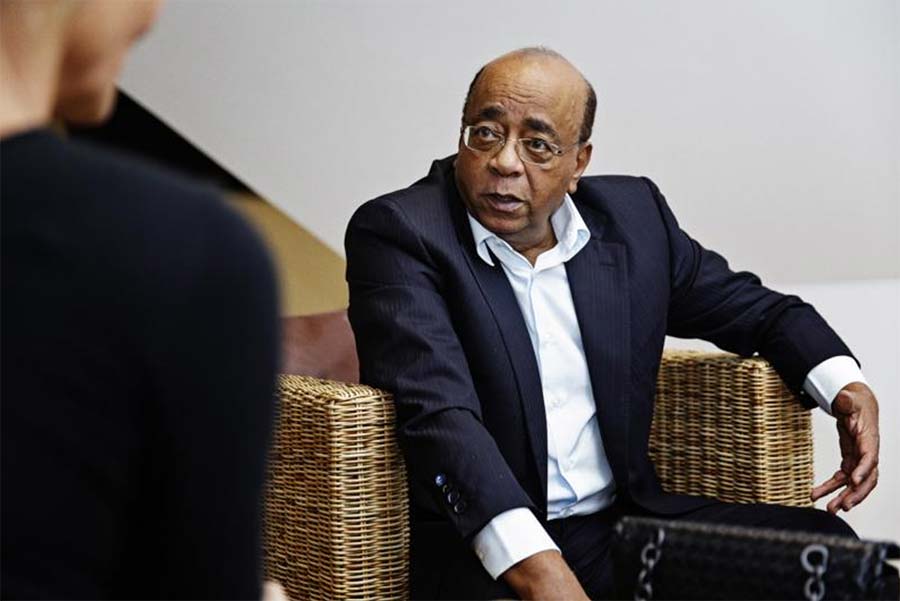
Mo Ibrahim, Founder and Chair of the Mo Ibrahim Foundation, said, “The African Union should really stop acting like an exclusive club of presidents, whose only objective is to protect themselves. Come on, that doesn’t work at this time anymore.”

Former UN Secretary-General Kofi Annan, said that institutions had to be reformed at the highest level, including the UN Security Council and Mo Ibrahim agreed concerning the African Union. Fatou Bensouda, Prosecutor of the International Criminal Court, noted that African countries are well-represented at the court, which is a good signpost for achieving a fairer society.

Lamido Sanusi, Emir of Kano, Nigeria, warned that local conditions and traditions had to be taken into account – there is no “one-size-fits-all” remedy.

All of these issues don’t just affect Africa. U2 lead singer and founder of ONE and (Red) Bono said that Europe cannot be prosperous without a prosperous Africa.  “There is a totally different relationship with the continent now. Nobody in Europe doesn’t understand that we are eight miles from the continent of Africa. Europe cannot succeed if Africa fails. Most people know that now,” he said. 

Member of the Moroccan Royal Cabinet Youssef Amrani called for more regional integration, to share problem-solving and share prosperity. Former Nigerian Finance Minister and World Bank Managing Director Ngozi Okonjo-Iweala said more support for small and medium-sized enterprises, especially those run by women, could be an important engine for job growth.

Engaging the younger generation in everything from political involvement to entrepreneurship seemed to answer questions about how to avoid the negative tipping point across most of the issues. Two Ibrahim scholars are translating their internships and academic experience into action – Aya Chebbi in her own Afrika Youth Movement, and Mariam Yinusa through her work at UNECA and the AfDB.

Another way of reaching that younger generation with the message of good governance is through football and music. A friendly match between Kawkab Marrakech and TP Mazembe of the DRC ended with the Congolese team taking home the Ibrahim Trophy for the third year in a row with a 1-0 victory.

And at the end of the weekend, thousands of young people attended the closing concert, featuring Youssou NDour, Angelique Kidjo, Hamid al Kasri, Hoba Hoba Spirit, and Hindi Zahra, which lasted late into the night.


India’s Solar Farm Overtakes California’s as World’s Largest

India has overtaken California and now has the largest solar farm in one location in the world. It was built in a record eight months, despite monsoons and floods.

The vast 2,500 acre site in Tamil Nadu is the size of nearly 60 Taj Mahals, while the area of the solar panels alone could hold 476 football pitches. And, during the construction, just the storage area was the equivalent of 6 Sydney Opera Houses.

The southern Indian solar farm can generate 648 megawatts of clean, green electricity. By 2022, India aims to power 60 million homes by the sun. This will help propel India as a world leader in renewable energy generation.

Vneet Jaain, CEO of Adani Power, says, “Before us, the largest solar power plant at a single location was in California in the U.S. That was 550 MW and was completed in around three years. We wanted to set up a solar plant of 648 MW in a single location in less than a year.”

The enormous solar farm took just eight months to build by 8,500 people in Kamuthi, Ramanathpuram, in the southern state of Tamil Nadu – a staggeringly short amount of time, given the sheer scale of the project and the massive floods and monsoon in the region at the time of construction.

The plant comprises of 380,000 foundations, 2,500,000 solar modules, 27,000 metric tonnes of structure, 576 inverters, 154 transformers and 6,000 km of cables (that’s almost the equivalent distance of India to Australia). The overall cost of the mega-structure was approximately U.S. $679 million.

Chairman of the Adani Group – the company who owns the solar farm – Guatam Adani says, “We have a deep commitment to nation-building. We plan to produce 11,000 MW of solar energy in the next five years, putting India on the global map of renewable energy.”

The huge number of solar panels is cleaned daily by a robotic system, itself charged by its own solar panel. The solar farm is part of the Indian government’s ambitious targets to reduce carbon emissions by 33-35% and to produce 40% of its power by non-fossil fuels by 2030.


Effective Leaders Don’t Forget to Move

Humans are made to move. This is clear by the huge number of benefits exercise has for mind and body.

“There is a linear relation between physical activity and health status; an increase in physical activity and fitness directly improves your health status,” says Dr Craig Nossel, head of Discovery Vitality Wellness in South Africa.

“Exercise can easily get boring or routine,” notes Steph Donaldson, Discovery Vitality biokineticist. “The multi-disciplinary nature of triathlons keeps training interesting and challenging. Plus, the variety of racing distances makes it accessible for all fitness levels: from kids’ races and sprint distances right through to ultra-distance races.” In short – multisport offers something for everyone.

“Exercise can easily get boring or routine.”

Multisport also has a great social element. Family and friends can get involved, which is a great motivator to keep you exercising.

There are many health and fitness benefits of multisport training. These include:

Full body strengthening
Each aspect of a triathlon offers its own health benefits. Swimming creates definition in your upper body and improves flexibility; running develops long and lean muscles; and cycling tones the lower body while building strength.

Strengthens bones:
People who run often have a higher bone density than those who don’t. That’s because the body increases the density of bones in an effort to accommodate for the impact of running. Running boosts bone strength and development more than cycling or swimming do.

Improved health:
A regular combination of swimming, cycling and running can help you lower your blood pressure; prevent diabetes, obesity, cardiovascular diseases and cancer; as well as lower the risk of osteoporosis or depression.

A workout for the arteries:
The inner lining of artery walls can be damaged by factors like high blood pressure, high cholesterol, diabetes, smoking and the wear and tear of ageing. Injured spots in the lining, in turn, are often the starting points for the growth of plaques that can block arteries, leading to a heart attack. Researchers believe that the regular expansion and contraction of arteries during exercise keeps the blood vessels “in shape” and preserves their inner lining.

Mental health:
When you begin to improve your health, you also start to improve your perspective on what you can achieve and how far you can push yourself. You will begin to notice an increased level of self-confidence and a difference in the way others perceive you. 

Quick tip: You get a sense of achievement by completing a race, improving your overall fitness levels and progressing to the next racing distance. These feats help to improve your self-confidence and self-image.

More energy:
A dramatic increase in your exercise and the change in your diet will help to heighten your energy levels and improve productivity. Although some training sessions will be gruelling, and you will obviously be tired afterwards, your overall energy levels will be much higher.

“We’ve invested in multisport to encourage greater activity levels, especially among novice athletes. The beauty of multisport is that anyone can do it. There are events to suit all ability and fitness levels, and it’s a great way for families to spend time together having fun,” says Dr Nossel. 

“Many studies have shown that maintaining a minimum quantity and quality of exercise decreases the risk of death, prevents the development of certain cancers, lowers the risk of osteoporosis and increases longevity. Training programs should include exercises aimed at improving cardio-respiratory fitness and muscle function, as well as flexibility and balance,” adds Nossel.“Multi-disciplinary sports can be a great way to accomplish these health and well-being benefits.”


Friedrich Trump, Donald Trump’s Grandfather

A German historian, Roland Paul, has uncovered a local council letter from 1905 informing Donald Trump’s grandfather Friedrich Trump – who had become a United States citizen – that he would not be granted his German citizenship back and that he had eight weeks to leave the country or be deported. He also claimed that Trump had illegally left Germany, failing to notify authorities of his plan to immigrate.

Paul came across the document on Friedrich Trump’s threatened deportation in German state archives and also found several letters from him pleading with authorities to allow him to stay. Paul mused on how this one administrative decision seemed to have changed the course of history.

Donald Trump’s father was born in the US, where he met Trump’s mother, Mary Anne MacLeod, who hailed from Scotland.

In 1885, at age 16,Friedrich Trump emigrated to the United States aboard a steamship and arrived at the Emigrant Landing Depot in New York City on October 19. U.S. immigration records list his name as “Friedrich Trumpf”, last place of residence as “Kallstadt”, country of birth as “Germany”, and his occupation as “farmer”. He moved in with his older sister Katharina – who had emigrated in 1883 – and her husband Fred Schuster. Only a few hours after arriving, he met a German-speaking barber who was looking for an employee and began working the following day. Trump lived with his relatives in the Lower East Side of Manhattan in a neighborhood with many other immigrants.

In May 1904, when he applied in New York for a U.S. passport to travel with his wife and his daughter, he listed his profession as “hotelkeeper”. In Germany, Trump deposited into a bank his life’s savings of 80,000 marks, equivalent to $505,248 in 2016.

Soon after returning, Bavarian authorities determined that Trump had emigrated from Germany to avoid his military-service obligations, and he was labeled a draft dodger. On December 24, 1904 the Department of Interior announced an investigation to expel Trump from the country. Officially, they found that he had violated the Resolution of the Royal Ministry of the Interior number 9916, a 1886 law that punished emigration to North America to avoid military service with the loss of German citizenship. For several months, he unsuccessfully petitioned the government to allow him to stay.
 
He and his family finally returned to New York on June 30, 1905 where Donald Trump’s father, Fred, was born on October 11, 1905, in Queens, New York.
 

Join Forest Whitaker in Defeating a “Death Star” for $50,000

An online auction of “Star Wars: Rogue One” items is being held by actor Forest Whitaker to support the young women and men of The Whitaker Peace & Development Initiative (WPDI).

In a time of conflict, a group of unlikely heroes band together on a mission to steal the plans to the Death Star, the Empire’s ultimate weapon of destruction. This key event in the Star Wars timeline brings together ordinary people who choose to do extraordinary things. Among them is someone doing something extraordinary in real-life – selling the movie experience and items from it to help save the planet.

Forest Whitaker, who plays the role of Saw Gerrera in “Star Wars: Rogue One” the newest episode in the celebrated “Stars Wars” series, is sharing this incredible experience with fans from all over the world – the chance to attend a private screening and after-party, where they’ll have a rebel encounter with Forest Whitaker. The funds raised will support their peace work with young people from vulnerable communities in Mexico, Uganda, South Sudan and the United States.

Star Wars related online auction offerings have been placed on If Only and Sotheby’s websites and are sure to spark the magic of “Star Wars: Rogue One” to fans, while helping bring peace and prosperity to communities in need. Among the unique items auctioned are tickets for the Los Angeles and London premieres and after-parties, valued at between $50,000-$70,000, and includes the chance to meet Forest himself at the London event. 

Other items from the movie include photographs and baseball caps autographed by Whitaker and  a “Rogue One: A Star Wars Story” suitcase filled with collectables.

By participating in the online auction, a handful of lucky will enjoy a once-in-a-lifetime experience and contribute to making positive change happen by helping young people from conflict affected places build the future of their communities. 

To bid on the items visit the If Only platform: https://bit.ly/2fYg6u7  or Sotheby’s platform : https://bit.ly/2gSiOlF