How to Raise a Young Leader

Why are some kids only interested in playing video games while others take action to change the world? Real Leaders asked someone who knows.

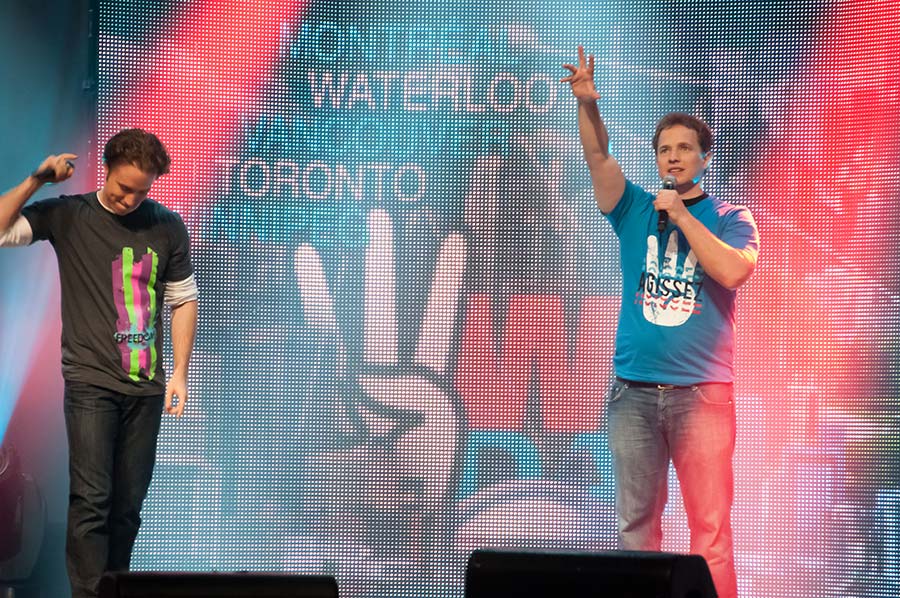
As a 12-year-old, Craig Kielburger (picture above, left) convinced his parents that he needed to fly half-way around the world when he learned that children were being sold into slavery. Upon his return, he and his 14 year-old brother Marc founded Free The Children, now known as WE. Today they are empowering millions of young people to change their communities and the world, packing 16 stadiums each year in celebrity-marqued “WE Day” events.

Craig, how do you instill that level of empathy, skills and motivation in kids?

Both my parents created an awareness around serving others through their example, something that inspired my brother Marc and me to want to serve the children of the world. When we were young, my mother would always acknowledge homeless people by asking their names and how long they’d been living on the streets. She would pull my brother and me into that 30-second conversation, and short as it was, it left a mark on us for the rest of our lives. We only realized later in life that she’d taught us the value of conscious engagement with others, something we can only clearly see now – as young adults ourselves, trying to engage with kids around the world. Of all the lessons parents teach their kids, it’s sometimes the small ones that can have the biggest impact.

Marc and I wrote a book called  “The World Needs Your Kid” on how to raise children who will care and contribute to society. If you walk into any bookstore section on parenting you’ll find endless literature on how to get your child into Ivy League universities, the right school or supercharging your baby’s brain – all achievement focused. But it’s hard to find a book about fostering compassionate and engaged kids. However, study after study has shown that parents most want to instill values like responsibility, caring, loyalty, happiness, and honesty in their kids. They rarely say I want my kid to be Valedictorian or Captain of the football team.

We believe that volunteering and service are crucial parts of any kid’s development and will lead to the values I have just mentioned. This is even borne out by scientific research. The University of Virginia ran a structured volunteer program, and after four years, those that had volunteered ended up with higher grades and made more responsible life choices. These values do not have to be at the expense of traditional family values either. Kids can still succeed academically and in the workplace while gaining valuable insights through community service.

It’s important to clarify the differences between volunteerism and service. Volunteerism might be picking up trash or helping out in a soup kitchen – all important and wonderful things to do – but service learning furthers academics and life skills.


We’ve created an Advance Placement (AP) Service-Learning curriculum. For example, in a service-learning AP Biology class, you might test the water in your community for purity. In Spanish class, you might study with a new immigrant to your country. In computer science, you wouldn’t only code apps, but also engage with students across the country with social apps to solve social problems. We’ve developed  a system whereby completed educational courses with service components built into them count as credits toward your qualifications. Service credits can now reflect on high school transcripts or university registrar office records. It’s a revolutionary moment, and proof that we are shifting learning from memory-based to experiential learning. While still at high school, teenagers can now be involved in a service that creates social impact.

There are many studies that show students learn better through doing. Grades, marks and graduation are important, but equally so is the development of life skills – what some people would call leadership.

Leadership skills include skills such as emotional intelligence, teamwork, critical thinking and grit. These may be seen as “soft skills” but they are incredibly important and best taught through service programs. Real leadership requires group-led action, community engagement and persuasive communication.

In the United States we already have many great service initiatives, such as the Peace Corps, but many require members to be over the age of 18. I believe that the earlier you intervene as a parent the greater the benefits down the line. We need to focus on kids from the ages of 8 to 11. These are critical ages in which to develop a sense of self and there is currently no national program in the United States for developing the idea of service in these early years.

I’ve seen first-hand over the last 20 years how this is possible. In the beginning, our organization (WE)  just focused on international development. Then Oprah got involved and pledged to build 100 schools in our developing communities and gave us coverage on her shows.

Despite the attention and media coverage from influential people, we realized an amazing thing – children were the ones wanting to help the most.

Kids in North America established a sister village with counterparts on the other side of the globe. More than 5,000 young people went on service trips with us and an incredible global education began. WE Schools is now a yearlong service learning program of youth making a difference in their local and global communities. These actions are celebrated at WE Day events which now fills 16  stadiums with 200,000 kids each year and is a reminder of how children should not be seen as problems to be solved, but rather, as problem-solvers themselves.

An incredible thing has started to happen at our WE Day events. CEOs and people from all walks of life are flying with their kids to attend. Parents will discuss leadership with their kids and reinforce the messages from WE Day as part of their family values. Kids used to see charity events as an evening that took their parents away, something they were never invited to attend. Now they create  a family experience together, one focused on service.

Some of our speakers have included Magic Johnson, Richard Branson and Prince Harry, who are all extremely busy people, yet they have taken the time to speak to young people, realizing the importance of inspiring our youngest generation today to find their own solutions to the world’s problems.

Real Leaders: It’s amazing what a couple of determined kids can accomplish!

For more information go to www.We.org
 

It’s TED Time Again: Technology, Entertainment and Design

TED has always been the birthplace of ideas that impact the global village. TED talks have been seen more than 3.5 billion times, and nothing inspires quite like them.

Started as a 4-day conference in California 30 years ago, TED has grown worldwide to support world-changing ideas with multiple initiatives with talks ranslated into 93 languages. TED fans are just about as crazy for the event as Apple fans are for their iPhones and the speakers who appear on stage are the world’s elite thinkers, innovators and change makers.

Imagine if we could allow each speaker and performer to bring people together and allow them to visualize an “imagined future”. How would we inspire and share one idea via experiences in addition to giving a talk? How can we offer everyone the opportunity to touch and feel an idea? Imagine we could transform the previously impossible into possibility by one idea.

TEDxLA

TEDxLA will be an event where the village in which it is held will play a central role in how we have global impact. Where the action we take will be as important as the ideas we share. Imagine a day when the City of Angels, acts like a city of angels. Where hungry minds collaborate, where entertainment, science, arts, innovation, inclusiveness, freedom, and the spirit of being oneself becomes like a tradition that always existed. Where a city fulfills the destiny of its namesake, for the world.

How do we dare to think this big? The City of Angels is also the fertile crescent of innovation, design, entrepreneurship and technology. Creativity and imagination, has its address in this great city. TEDxLA is an invitation to create and experience ideas in action.

It is an epic call to participation, an international collaboration with global reverberation. We offer everyone a new creative space where the stage is the city and celebration of ideas its climax. Besides visionary speakers, individuals and firms will also create new experiences and co-produce content that will be the foundation for new revelations.

tedxla-speakers

TEDxLA brings the spirit of the TED conference to Los Angeles, and more than a host city, the city of angels will provide a unique sandbox for unmatched experiences and an opportunity to bring the world in a unique and beautiful setting all around the city. It will be a time for guests and citizens to check out from the day-to-day routine and go on an intellectual journey filled with brilliant speakers, captivating performances, amazing new technology, culmination of city wide experiences, and naturally thought-provoking ideas.

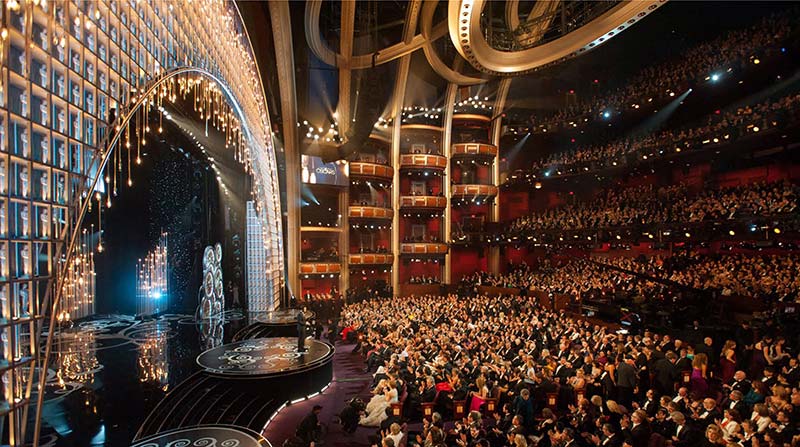
TEDxLA is be organized throughout 2016 and will be welcoming the community in various experiential and innovative events, culminating on December 2-3 at the Dolby Theater. The theme of the TEDxLA 2016 is “Imagine”. We are inviting everyone to participate in the making of our imagined future.

Have an innovative idea that aims to have a positive impact in the community, along with a plan to implement it? Apply for the Young Real Leaders Prize! The winner will be announced at TEDxLA on December 3rd and will receive:  A cash prize, VIP experience at TEDxLA, professional video by Young Real Leaders, and mentorship services. Deadline to apply is November 10th, 2016.


Warning: Singularity University May Cause Your Mind To Explode

Imagine spending 12 hours a day for a week having non-stop life changing, exponentially advancing technology breakthroughs downloaded into your primitive brain (they reminded us that our brains have not been upgraded in 50,000 years)! It is somehow both exhilarating and exhausting simultaneously.

I am writing this as I near the end of a one week Executive Program at Singularity University at the NASA Research Center in Silicon Valley with 80 peers from around the globe. Topics have included; dangers of linear thinking in an exponential world, robotics, nanotechnology, energy, health, biotechnology, nanotechnology, artificial intelligence, big data, crowdsourcing, and more. As I speak to the investors, CEOs, and Innovation Officers in attendance about the experience, their reactions are similar; “Transformational”, “Amazing”, “I have so many ideas to take back to my company!”

It would not be an overstatement to say that any leader who does not take the time to be exposed to the world-changing, transformational technologies that are occurring today is at a severe disadvantage and likely to find themselves as one of the 4 in 10 companies that will not survive the next decade. The world champion at both chess and Jeopardy today are not human beings, and a mediocre player with the help of artificial intelligence can now beat a human world champion.

A diesel truck running on natural gas

A diesel truck running on natural gas

The same is true in many fields. Increasingly, the best leaders can no longer win when competing with average leaders who have the best technology to back them up. Of course, this is not news. Imagine trying to lead an organization without the support of telephones, automobiles, airplanes, computers. No one could compete without those tools over the last 50 years. However, are you using newer tools like 3D printers, Artificial Intelligence, big data, robots, and gamification?

Understanding the latest tools that are available, as well as those still coming, is a space Singularity University hopes to fill among leaders desperate to know what’s coming next. Understanding how seemingly unrelated fields are converging gives us the opportunity to disrupt our industry, rather than be the one being disrupted.

A mattress company is now providing mattresses that report on vital health signs, as is a toilet manufacturer and many Smartphone apps. Previously unrelated industries like these are now converging with the medical sector and providing much higher value to their customers. The underlying message throughout the week was that the technologies that will increasingly be disrupting the status quo are exponential in nature, which means that they are initially over-hyped and underperform. Think about the first shoebox-sized mobile phones.

As they improved and acceptance doubled each year or two they began to gain traction slowly. Then suddenly, they became omnipresent and game-changing! Consider some of the statements I heard this week: “Kids under 5 today may never learn how to drive.” “We can compute inside a cell now! 8-bit computing is already possible and this is just the beginning.” “By 2029 Artificial Intelligence will be at the same level of humans.”

No one is here to play small. The challenge on a banner in front of the class all week was this:

“How will you improve the lives of a billion people?”

Imagine the world we will create if we all take on that challenge! Wear a helmet and buckle up!


Occupy Hollywood: How Films With A Conscience Are Invading Your Screen

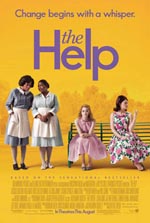
What do these blockbuster films have in common?: Lincoln, The Help, Contagion, Waiting for Superman, Charlie Wilson’s War, The Kite Runner, North Country, An Inconvenient Truth, Good Night and Good Luck, Syriana. Participant Media of course. And they’re expanding our thinking while entertaining us. 

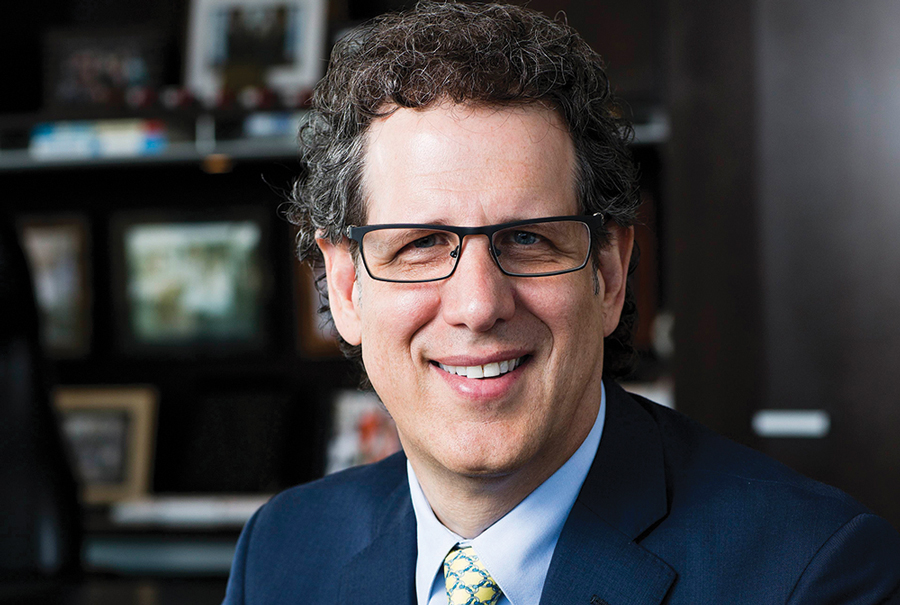
The challenge founder Jeff Skoll presented to CEO Jim Berk (pictured above) was impossible according to many industry pundits: Build a commercially successful media company by telling stories that both entertain and raise important issues that inspire people to take action. In only 10 years, Participant’s 50 films, 36 Academy Award nominations, and seven Oscars can no longer be treated as an anomaly.

Jeff believes that a good story, told well, can truly make a difference in how one sees the world. Whether it’s a feature film, documentary, television show or other form of media, the work exists to tell compelling, entertaining stories that also create awareness of the real issues that shape our lives. To date, Participant has developed active, working relationships with 600 nonprofits that collectively have the potential of reaching more than 75 million people. We asked Berk about the role of entertainment in changing people’s perceptions of the world.

What is the key ingredient needed to inspire a movie audience to take action? 

You have to introduce something in the spirit of the film that makes an audience realize something is really important. We focus on that because we know that politicians and policymakers react to that, and if people demand a product or idea, then there’ll always be companies that come to the rescue and start delivering them. We use a term called “key influencers,” who are people found in small numbers, but who have the ability to impact and influence a huge audience. It’s the same reason a brand has an athlete to endorse something.

We’ve found that with some of our films, even if the box office numbers aren’t anywhere near the latest Spider-Man movie, our impact is disproportionate because the stars are people who have the ability to change an issue for the better. In many ways, there’s a parallel between what we do and what Real Leaders is doing, a magazine that put ideas in front of people, that provides awareness initially, and then ignites an interest that ultimately drives action for the better. Most people want to live in a world of peace and sustainability, something at the heart of what Participant founder Jeff Skoll set out to achieve.

You fundamentally have to be an optimist and believe there are solutions. Films are the perfect vehicles for conveying solutions; that’s the power of storytelling. It allows us to create a narrative that binds you emotionally to something. Despite our success there hasn’t been a year where Jeff hasn’t sat us down and said, “Yes that’s all great, wonderful stuff,” yet sends me an email over the weekend saying, “I’ve been thinking about this and think there are three other areas we should also be thinking about, come back to me with a plan.”

This year we have 11 films that are going to premier in a festival or be released, between our feature length documentaries and feature narrative films. We’ve also launched Participant PanAmerican, and have our first Latin American films coming out next year. It seems the more we do, the more aggressive we get about wanting to do more; it exhausts us in the most wonderful way.

The influencer approach then targets in a very specific way. Our small, award-winning film The Middle of Nowhere, looked at a family that was pulled apart by incarceration. We connected recidivism to a lack of access by prisoners to their family members. We also discovered telecommunications companies didn’t regulate collect calls from prisons, and that inmates were paying five, 10 or 20 times the going rates.

If a standard call rate was three cents a minute, they were being charged US$3.50 a minute. Many calls would drop because of this.  We targeted that issue and it ended up making it’s way through the Federal Communications Commission (FCC) with a coalition of NGOs we had pulled together. Consumers will save over a billion dollars a year as a result of this.

contagioninconvenient_truthlincolnhelp

How do you respond to people who try and put you into a political party box?

That depends on the context and the content. One minute we’re called a liberal company, the next minute we’re very conservative. According to people who saw Waiting for “Superman,” we’re a very conservative company. People saw An Inconvenient Truth and thought we’re a more liberal company. I view Participant as a progressive company, interested in positive social change and I simply don’t care whether you wear red, green or blue, we just want you to be aware of the colors.

How do you take advantage of the key influencers that you have access to? How do you get the films that you most want to get in front of key influencers in a way that fits the organization?

For us the double bottom line, the social impact, is as important as the financial part in terms of driving the financial aspect. It keeps the “what,” “how” and “why” of what we do at the forefront. Look at how Corporate Social Responsibility has moved into the marketing department – it’s no longer something we do for long-term brand efficiency, it’s now how we retain our customer base in a world where people have no hesitation in ditching a brand, unless that brand stands for something, other than giving you 10 cents for every noodle you buy.

It’s about being authentic. For Millennials, authenticity is more important than price.  They want authenticity and transparency and they don’t care if you’re trying to sell them something, they just want to be told when you’re trying to sell something to them. They want a purpose beyond the sale. It’s trying to do something that has authentic impact.

With all your focus on social change, is Participant doing well financially?  

Yes, we’re pleased with where we are in the financial growth of Participant these past 10 years. Jeff is focusing the rest of his life on making bold bets on good people doing good things. He’s someone who’s going to deploy all the capital of his lifetime into making the world a better place. We use financial success as part of our measurement, because if we’re financially successful we know people are consuming our content, and this enables us to accelerate our impact.

In the last two years, we’ve been a part of films that have grossed over US$750 million in U.S. domestic box office receipts. Ten years later, people have now realized this is not a hobby or a one-off event. Jeff’s not making films for vanity or to be liked. There’s a reason we chose a business model for Participant over a nonprofit.

Look at Disney, where the founder has instilled values that have lived on well beyond him. I would rather be like Disney than a traditional foundation, where the business evolves into a global brand. There is a place for both. Look at the work of the Skoll Foundation; the social entrepreneurs they support are creating meaningful, lasting impact.

Is there any chance that others will see your approach as highly profitable and want to follow what you’re doing?

It’s already happening. The reason we created TAG, our cause marketing agency, is because blue-chip companies were coming to us wanting to know how we did things, and what our secret sauce was, that they wanted to apply to their business model. We want to apply this idea of social engagement as a way of building relationships with the consumer, so we’re creating programs and training people. It doesn’t matter what you sell or what business you’re in.


A Lesson of Mandela That No One is Talking About

Do you wonder who Nelson Mandela would have been to the world if he had not been imprisoned for 27 years? Do you believe he would have been one of the great leaders of our world had he avoided that hardship? Given the revolutionary path he was on, and the likelihood of escalating violence intended to overthrow an oppressive regime that was not yet willing to cede control, it is likely that few would remember who this man was.

It is almost as if he was sent away to mature and be groomed until just the right time when both he and the world would be ready. He is respected for who he became as a result of his hardship and incarceration. He described his 27 years in prison as a unique opportunity to work on himself, to become a better man. Everyone is likely to agree that being arrested and sent to prison for life feels like a bad thing.

Is it possible that it was the best thing that could have happened to Nelson Mandela, South Africa, and even the world? I have a friend that often says “It’s aaall goood” in his charming southern drawl, and for a long time he appeared to use it at the most inappropriate times. “How are you doing?” I’d ask, and he’d reply “Looks like I may need to go in for a root canal. It’s aaall goood.” How getting a root canal is “all good” was hard to understand.

But as the years have passed, have you noticed how the “bad” things that happened to you turned out to be what my mother used to call “a blessing in disguise”? When I was diagnosed with a painful, degenerative, incurable disease of the spine I was devastated. This was “bad”. Very bad. It was not until years later that I was able to see that this was one of the best things that had ever happened to me.

It forced me to completely rethink my lifestyle and my life. I quit my high stress job, launched a more fulfilling career, began taking care of myself, and found purpose and love in my life. Without that disease, I would not have changed and would still be unhappy, stressed, and unfulfilled. Finally it was clear that indeed, it is all good! It’s not always clear at the time how it’s good, and it often doesn’t feel good, but it always is.

This is not a recommendation that you go out and get arrested to spend time in prison or do anything to cause you to contract a disease. But if you do, or when anything “bad” happens to you, the lesson from Mandela is to look for the opportunity for good in it. The opportunity is always there if you seize it. However seizing the opportunity is optional.

Nelson Mandela could have spent 27 years in prison building justifiable hatred for his captors and plotting revenge instead of taking advantage of the opportunity to become a better man and a real leader. Some may look at these life challenges as random events, others may see the hand of God, Karma, or any number of things, but the fact remains that things that feel bad happen to all of us.

We can make them feel worse by resisting what is, or we can make it feel better by embracing it and looking for the opportunity created by this challenge. That is a lesson that every woman, child and man on the planet can learn from this great leader. Nelson Mandela would love to have his 27 years back, but given the choice of giving back the man that he had become as a result of that hardship, I think he’d say “No thanks. It’s aaall goood.”


Our 25 Day Italian Experiment On Sustainable Travel

I love Italy! The people, the food (Eat-aly), the wine, the history and the warmth… what’s not to love? Well ok, the overwhelming shiploads and busloads of tourists that sometimes give it that overwhelming “Disneyland” feeling. My PIBAL (Partner in Business and Life) Julie and I recently set out to experience the best of Italy in 25 days and explore how the real leader inside all of us can make travel more sustainable. Many of the strategies we employed can help you in your travels, no matter where you go.

I began with my travel agent of 20 years who knows my preferences well, but is no expert on eco-tourism. I honestly didn’t even think to tell him of our sustainability mission from the start. This actually worked out well, because he did what most agents do and recommended some excellent (and horrifyingly wasteful) examples of unsustainable luxury hotels.

To his credit he did also throw in some world leaders in sustainability too. We agreed that four nights each in Venice, Florence, Sardinia, Cinque Terre, Amalfi, and Rome would allow us to see as much as possible without feeling too stressed about the constant moving between cities. This turned out to be just the right formula.

With so much moving between planes, trains and automobiles, packing light is essential. I was able to convince Julie to limit our luggage to two carry-on bags each, and she did (I love her!) Remember that you can always use the housekeeping service to launder items as you go, or simply buy items as you need them. Carry-on also meant less time wasted in terminals. She thanked me later.

We left at the end of May to take advantage of the best weather, without having to deal with the high-season crowds. We experienced four very different examples of how responsible hospitality businesses have created innovative and sustainable accommodation. Most had converted and repurposed their underutilized real estate to dramatically increase the number of people who could enjoy it, instead of building newer or additional buildings. All four of the examples below are ways you can enjoy a luxury vacation in a more sustainable manner, rather than selecting a more recently built property.

1. In Tuscany (Greve, near Florence) we stayed in a beautiful 6,000-foot, hilltop Italian family villa owned by a countess and managed by luxury vacation club Inspirato. For thousands of years the world’s wealthy have owned vacation homes to enable them to enjoy the same privacy and luxury while on vacation as they do at home. Inspirato has disrupted the status quo with a business model that manages and staffs 130 luxury estate and villas around the world for their members at a small fraction of the cost of ownership. Why would anyone choose to buy a second home when they could enjoy a professionally managed luxury home anywhere in the world? Inspirato provides a concierge, housekeepers, cooks, gardeners and maintenance for a carefree vacation.

Upon arrival we were welcomed by a multi-lingual concierge who had stocked our kitchen with requested items and arranged for a private wine tasting in the surrounding region of Chianti. In the morning we were greeted with coffee and breakfast. In addition to the obvious appeal of a having a low-cost alternative to choose from rather than owning a second home that sits empty most of the time, you’ll feel good knowing that you’re supporting a more sustainable vacation solution that more fully utilizes these properties, meaning fewer need to be built and maintained. The particular villa we stayed at sleeps 18 and is great for a family reunion, forum, business retreat or private getaway.

2. Our next stop was Villa La Massa in Florence, a spectacular 16th century Medici villa that has been recycled into an intimate 37-roomed luxury hotel in 1948. The restaurant patio is alongside the Arno River, with world-class service and food. The food has more flavor, because the vegetables are picked fresh in their organic garden.

The organic olive oil is also grown and bottled on-site. In addition, this property requires no piped municipal water, choosing to supply all its own water from a well on the property. This villa is a peaceful oasis 10 minutes away from the seething crowds of Florence. Villa La Massa is an excellent choice for couples, forum or chapter retreats, a romantic getaway, or even an intimate wedding in their chapel! This was another great example of how the owners took a property that had been underutilized for hundreds of years and greatly expanded its use and functionality, rather than build more. 

3. We rented a car and drove for two hours from Naples to Amalfi (what were we thinking!). Frommer’s describes the “technical difficulty” of this drive as “easier than the road to Hana in Maui, let’s say, but more difficult than the Pacific Coast Highway”. Having driven both several times (who would do that?) I must agree with Frommer’s. Technically, however there is something about this stunningly beautiful, terrifying 3,000-foot cliff and the passionate, crazed Italian drivers that put this route on my list of top driving challenges.

The narrow and winding drive was very exciting and was also perhaps the best test on earth for the compatibility of any couple in a rental car. We survived without incident and actually had fun, not to mention our newfound gratitude for life! You might think that a 12th century convent is the antithesis of a luxury vacation, but don’t be too hasty in your judgment. Those nuns might have known what they were doing after all. Convento Di Amalfi enjoys the best location and views of Amalfi from its’ hillside perch. Our friendly hotel manager was quick to point out that historically it hadn’t actually been a convent with nuns, it was a monastery.

What was still unclear, however, was why they call it “convento” instead of “monastero”. Regardless of what it was called, the 53 room five star hotel is full of pleasant surprises, from the 800-year-old church and infinity pool to the contemporary interiors and breathtaking views.

It was recently renovated and was reopened last year with an international quality management system award (the ISO 2000). This old convent/monastery turned out to be the most energy-efficient of all the places we stayed during our 25 days in Italy!

The manager pointed out that the hotel is one of 400 hotels owned by NH Hotels of Spain, who’d made a pledge five years ago to reduce their environmental footprint by 25%. They have since exceeded this goal and their aim is to now inspire the hospitality industry to follow their lead in sustainable practices.

4. The only experience we had of Italy without the presence of tour buses and crowds of tourists was thequaint 13th century village of Trevignano, situated outside Rome on the shores of beautiful Lake Bracciano. Here you can go beyond the simple looking and tasting of Italy, you can experience living in Italy with local Italians. We were the guests of Borgo Vistalago, one of about 40 Albergho Diffuso-type renovations found throughout Italy.

Albergho Diffuso is an innovative concept of hospitality that was launched in Italy in the early 1980s as a means of reviving small, historic Italian villages and town centers that are situated off the beaten tourist tracks. The idea is of a hotel, that is not in a single block, but rather created from various historic buildings within a small community, with a central hotel manager. If you want an authentic Italian experience and can live without room service, fitness room and pool this may be for you

Found about 40 minutes outside of Rome, we enjoyed the authentic local culture of Borgo Vistalago – the playing Italian children and the conversations of locals at the café during breakfast. We had dinner with the proprietor and architect of Borgo Vistalago and found the food to be unexpectedly exceptional. After dinner we had a Skype call with her husband and chef, Simon, at his restaurant in New York, that had just been recognized by the Wall Street Journal.

This was our first attempt at aligning our values with vacation spending and it was far from perfect, but it did give us the motivation and confidence to continue exploring eco-tourism and sustainable options for the future. Hopefully we’ve inspired you to give it a try too and to challenge the status quo of tourism on your next trip.

PS. We still have a lot to learn so please share your experiences or suggestions below.

0