Beyond sustainability, this company is working toward regeneration with its recycled glasses.
Cigarette butts. Used fishing nets. Old carpets. Their next stop is typically the landfill, but one company sees these items as ready for their next life and in an unexpected place — on your face. Karun makes fashionable eyewear from recycled materials.
Founded by Thomas Kimber in 2012 in Patagonia, Chile, and present in over 20 countries, this certified B Corporation is also certified CarbonNeutral. Its product carbon footprint is less than half that of conventional eyewear. Karun aims to inspire the world to reflect on the question, “What would the world look like if we were all nature?” The company created a regeneration model that goes a step further than sustainability; instead of just replenishing what is used, it works to restore contaminated ecosystems.
A 2025 Real Leaders Top Impact Companies winner, Karun’s production process is conscientious every step of the way. It buys waste such as fishing nets, ropes, metals, wood, pigments, and organic materials from collectors in southern Chile and Patagonia. Then it recycles the items into eyeglasses, sunglasses, and straps, ensuring the factories have good working conditions. They are packaged in recycled cases and shipped on the most responsible route possible. When customers are ready to dispose of their glasses, they can return them to Karun to be recycled or donated for a discount on their next pair.
Karun’s latest innovation makes it perhaps the first company to produce glasses from cigarette butts. About 1.3 million tons of cigarette butts are discarded every year, and one cigarette butt can contaminate a dozen gallons of water. Karun repurposes acetate, the main component in cigarette ends, through a process recently developed by the CleanTech IMEKO, which removes toxicity from filters and recovers cellulose acetate as a sustainable raw material.
“Thanks to this collab with IMEKO, we can transform what was once considered waste into beautiful, high-quality products that generate a positive impact on our planet,” Karun says.
“The challenge with cigarette butts was to implement logistics capable of addressing such small and widely dispersed waste,” head of impact Carlos Aubert tells Real Leaders. “Here, the collaboration with IMEKO, alongside the motivation of businesses and the local government, enabled the establishment of city-wide collection networks while also raising public awareness about the environmental impact of cigarette butts.”
Karun is building small-scale, flexible distributed manufacturing networks with a more local dimension by sourcing the discarded materials in the same region where they are recycled, made into final products, and distributed.
In the spirit of transparency, it releases an annual impact report; measures and labels the product footprint of each product; and manages and traces its supply chain through blockchain technology displayed on its website. Karun aims to allow shoppers to make more informed purchasing decisions while encouraging the eyewear industry to follow suit in reducing their carbon emissions.
Celebrity Collaboration
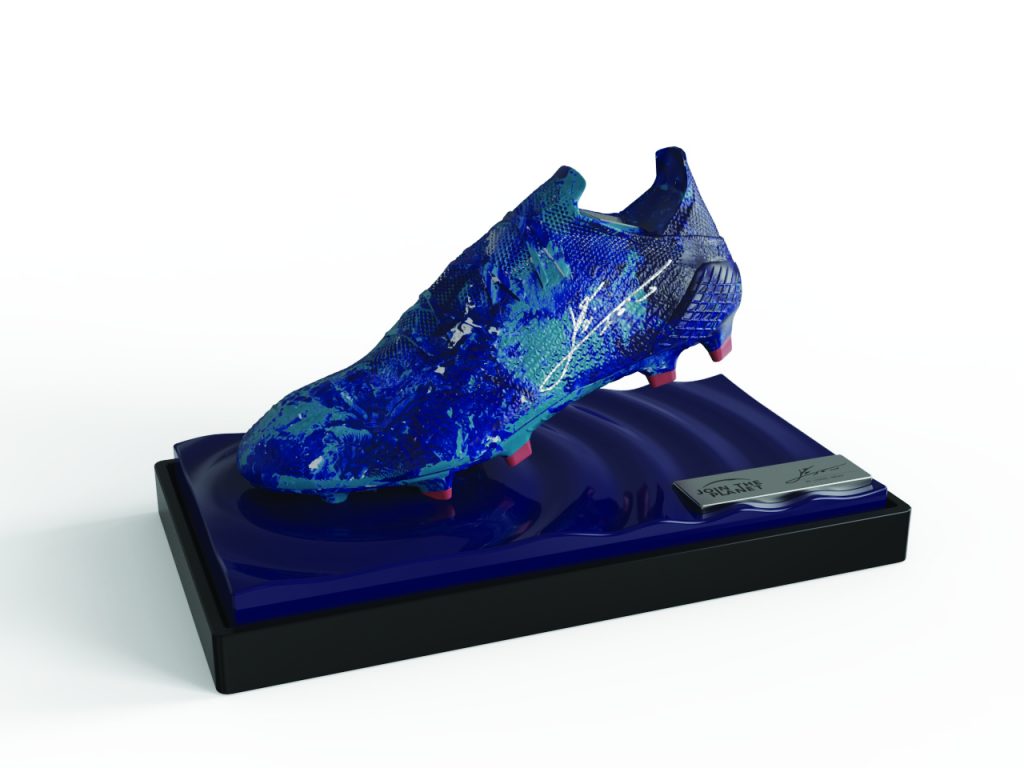
Karun recently stepped into a different space when it partnered with Join the Planet to create a limited-edition collectible replica of world-renowned soccer player Lionel Messi’s left boot. Entirely made of recycled materials including discarded fishing nets, ropes, and bottle caps, the sports memorabilia comes with a digital certificate of authenticity and is traceable through blockchain technology.
There’s a better way to bring consumers their cocoa fix — and it can be profitable.
Consuming chocolate is an ancient ritual long savored as a delectable treat — but it has a dark side. A majority of the world’s cocoa beans are grown in West Africa due to optimal growing conditions, where there’s a disturbing history of illegal deforestation and child labor that continues today.
Companies like Alter Eco Foods defy these practices, offering a better alternative. Founded in 2004, the public benefit corporation’s core principles are restoring ecosystems, improving livelihoods, and reducing waste. Alter Eco’s name refers to finding an alternative ecosystem for delivering food. Its chocolate, quinoa, and granola are grown in thriving environments by small-scale, fair trade farmers; made with clean, organic ingredients; and packaged using recyclable or compostable materials.
Not only did Alter Eco become B Corp certified in 2009, but it also became Climate Neutral certified in 2010, offsetting 100% of its carbon emissions by planting and protecting trees in Central and South America in partnership with PUR. In 2013 Alter Eco launched the first commercially compostable candy wrapper in its chocolate truffle product line; and in 2016 it came out with the first commercially compostable pouch for its quinoa line. In 2020 it started the Alter Eco Foundation to further its commitment to combat climate change and inequality through regenerative agriculture. As opposed to industrial farming, regenerative agriculture nourishes soil, secures farmers’ livelihood with a variety of crops, creates shade that improves working conditions, and builds resilience to climate change.
“We believe helping farmers embrace regenerative agriculture and agroforestry will be one of our biggest successes for years to come, as these changes not only provide the tools for these farmers and their families to be successful but help to restore the planet a little at a time,” Alter Eco CEO Keith Bearden tells Real Leaders.
Some Bitter, Some Sweet
While dark chocolate bars are the company’s mainstay, it has put out some less successful items that it later discontinued, including grass-fed milk chocolate, coffee, and rice products. “It was really finding the products where we could differentiate ourselves,” Bearden says. As for a recent win, in 2022 the company launched a no-sugar-added granola line. “We were looking for something to get into different categories. We found that we could source oats quite readily from regenerative farms. We were able to fit it into our brand DNA.” To differentiate its granola in a somewhat saturated market, Alter Eco identified another issue with consumers today — sugar — so it sweetens its granola with date powder and monk fruit. “The market has been very supportive of us. This category has quickly become almost 20% of our sales.”
The company’s greatest hurdle has been churning a profit. “Staying true to the mission has never been a challenge for the team; however having a sustainable and profitable company has been a challenge. Many companies that try to practice conscious capitalism struggle with how to support those in their supply chain while delivering a quality product and at that same time making money to continue to invest and grow the business. I’m proud to say we have somewhat mastered this formula over the past few years, and this has given us the opportunity to continue to invest and grow the business.”
How did they do it? “It’s a matter of starting out with understanding that no business, no matter how impactful you may be — to the climate, or to fair trade and wages, or to sustainable farming — if you don’t make money at the end of the day, unless you’re a nongovernmental organization, then you only can exist for a finite period of time. So when I got involved with Alter Eco, it was a classic natural product company founded with all the right principles, and everybody wanted to do the best that they could in the world, but they were losing money — and losing a lot of it.”
Bearden joined Alter Eco’s board in 2021 and became CEO in 2023, partnering with Trek One Capital to lead the acquisition of the company from a private equity group. “Unless they found a buyer, the company was on the verge of going away,” Bearden says. “They asked me to step in as CEO and help turn the company around.”
Remarkably he says it only took him three months to do just that. He shares his key moves: “I’ve done a number of turnarounds, and being on the board for a few years, I knew what levers to pull. I had this formula already laid out. You’ve got to find that balance of how can I make money but still stay true to the things that are our core principles as a company? The changes I made were really focused on looking at operational efficiencies to make the company profitable. So we made changes in logistics, staffing, and supply chain. We moved our warehouse. It was risky, but it saved over a million dollars. We discontinued products that weren’t performing well. We focused on products that were performing well. We went to market and managed our trade spend. We did a number of different things, but we’ve had a significant change in the position of the company financially to the point that now we are profitable and sustainable for the long haul. We’re up 16% in sales in 2024 from 2023, and 2023 was flat to the year before that.”
With those major changes behind him, Bearden sees his biggest risk today as ingredients’ price fluctuations — mainly cocoa beans. The cost of organic, fair trade cocoa beans tripled from January to April 2024. “The only advantage there is that the entire world is playing by the same rules,” Bearden notes. “So we went to the market and explained the situation of why we had to increase our price. For the last three years in Western Africa, there’s been an El Nino, and 60% of the world’s crop comes out of Western Africa. So it’s a matter of educating the market on the value associated with your products and finding the market that will understand it, embrace it, and pay for it.”
Alter Eco markets its products in the U.S., Canada, Australia, and New Zealand. Shoppers can find Alter Eco products primarily in organic/natural grocers such as Whole Foods, Sprouts, and The Fresh Market, but it has started to expand into more mainstream retailers as well like Albertsons, Publix, and Harris Teeter. “That’s where we really see the growth opportunities,” Bearden notes.
His best advice for other impact CEOs goes back to profit. “If you aren’t profitable and can’t see a path to profitability, you have to rethink your mission,” Bearden says. “I admire everyone who is trying to have a positive impact on the world around us, but if you cannot achieve a level of profitability that allows you to sustain your being and grow, your impact will be significantly minimized. Don’t underestimate what the consumer will pay or do to support your mission if indeed the mission is one that has true measurable impact.”
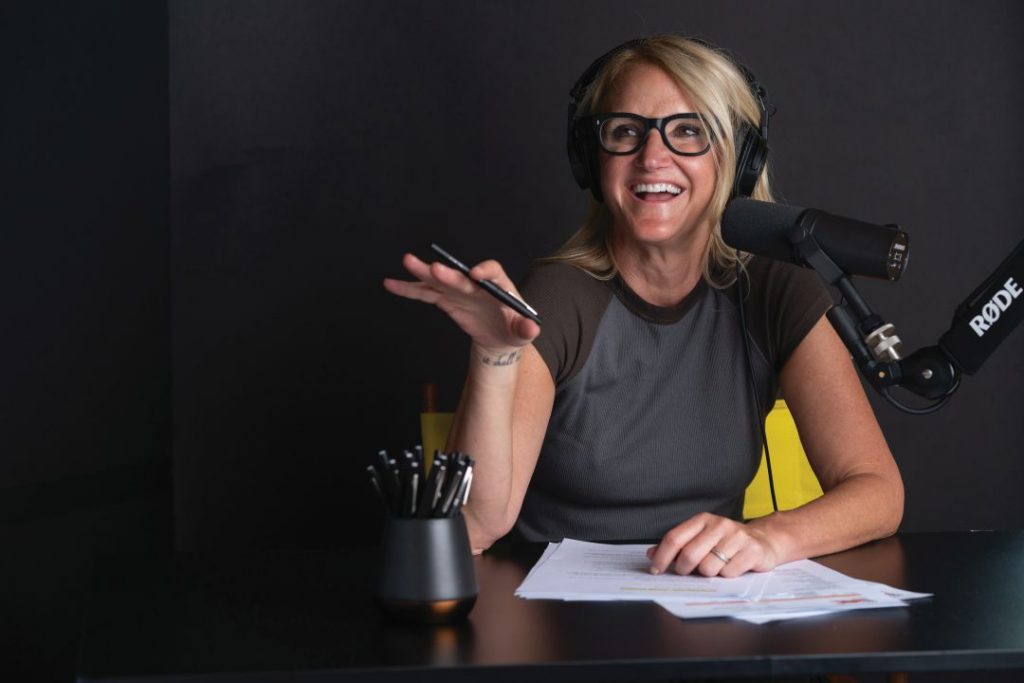
After 15 years of Army-crawling in the dirt, as she puts it, she recently erupted on the scene as one of the more followed and sought-after experts in mindset, behavior change, and life improvement; and her media company, 143 Studios, has worked with some of the biggest companies on earth.
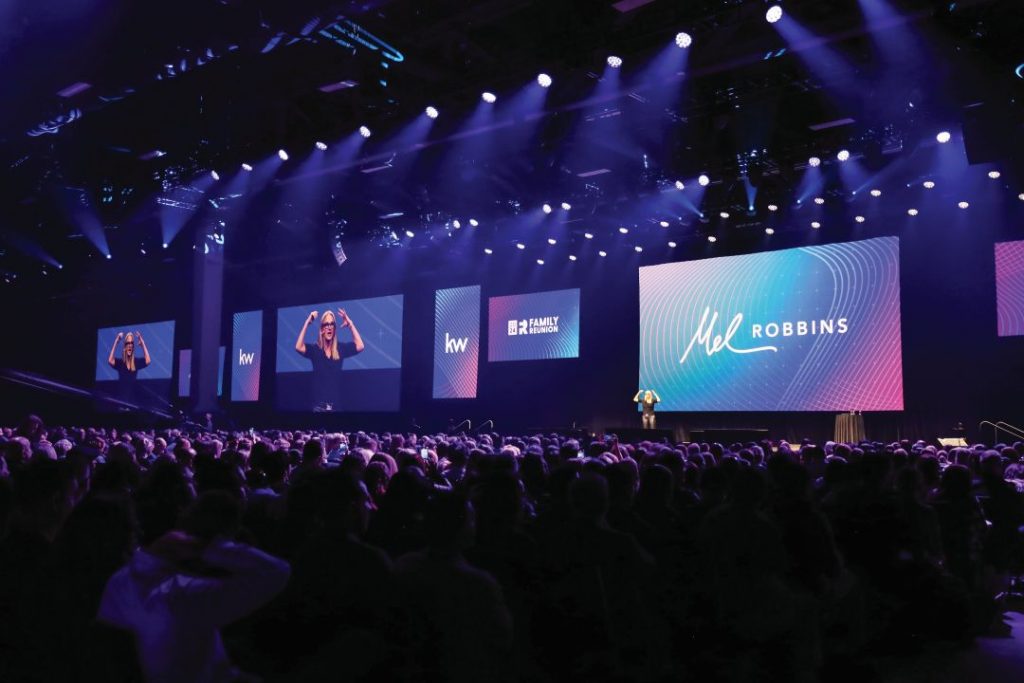
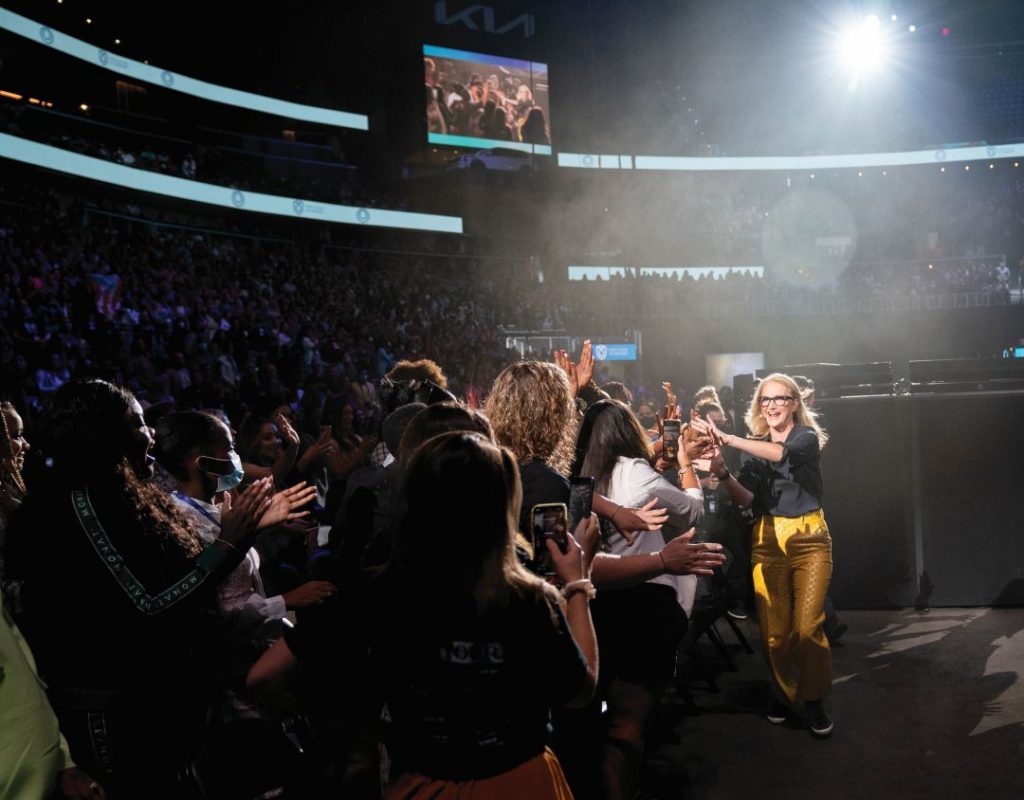
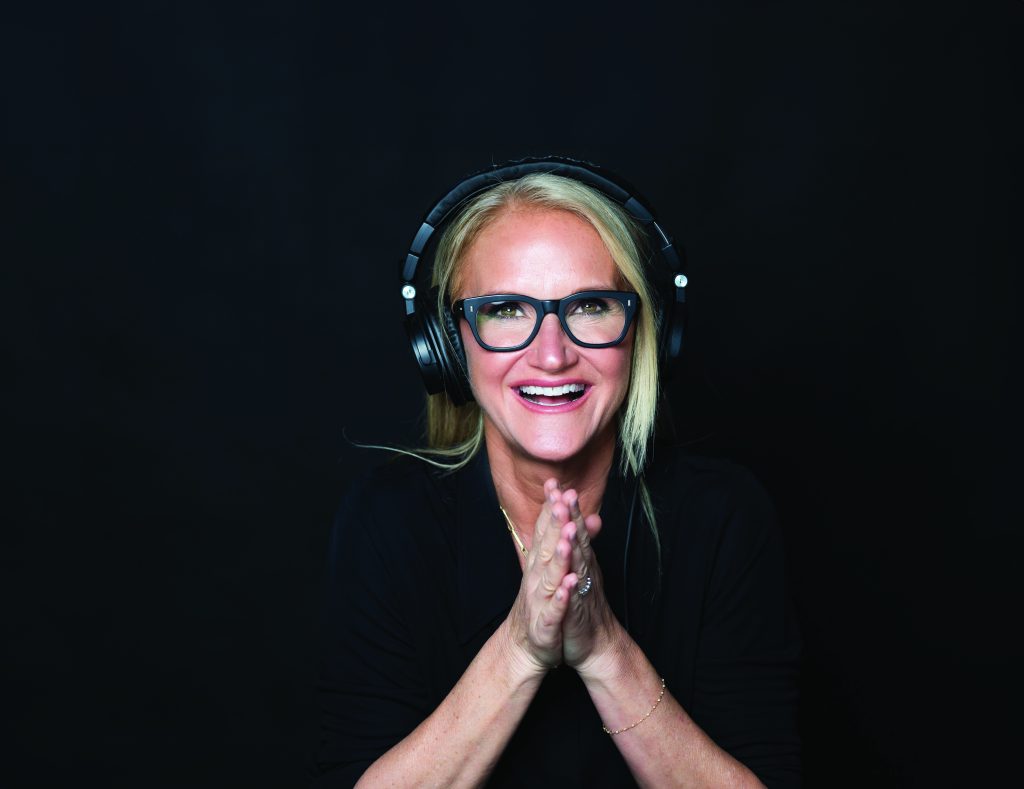
In this exclusive interview with Real Leaders, Robbins unpacks insights from her new book and its wildly popular, research-backed The Let Them Theory. Plus, she gives a crash course on ChatGPT for business, explains why you need to get on TikTok Shop now, and gets real about her gravest mistakes as CEO.
Real Leaders: How do the ideas in The Let Them Theory apply to business founders and CEOs?
Mel Robbins: The Let Them Theory is a simple mindset tool that shows you in any moment in your business and your life what’s in your control and what’s not — and lets you take the power back and lead. It is particularly important in business because when you get yourself obsessed with the things about your business or your team that you can’t control, it’s going to stress you out. The more you’re stressed, the more you bring that tight, micromanaging, narrow-focused energy to your team and business, the worse your team is going to do, and the worse your business is going to do.
Let them is a recognition that this issue that’s bothering me is not where my power is. Therefore I’m going to recognize that and say, “Let them.” The thing that your team did, the nasty review that the customer left online, the deal that you didn’t win, the interest rates that you can’t control — already happened. The power is not in getting upset about what’s going on in the markets or about how hard it is to hire talented people. Your power is in your response, and that’s the second part of the theory.
After you say, “Let them,” you’re going to say, “Let me — let me remind myself at all times that I have three things I can control: what I think about this, what I do, and what I don’t do.” One of the major mistakes that I’ve made as a CEO is I often feel the need to do something and react out of panic, fear, or anger. All that does — because leaders bring the weather — is it spreads more panic, fear, and anger through your organization and team.
The third thing you can control — and this is where it changes you as a leader and trickles down into your organization — is the let me part. It’s also about let me manage my response to my feelings about this thing. Let me show up as a CEO instead of showing up like an 8-year-old inside a big body who’s constantly reacting to things and sending shock waves through an organization that needs something different from me.
RL: What inspired you to create a bonus chapter on leadership?
Robbins: There are two big topics that require and deserve more attention and detail: One of them is parenting, and the other is how to use The Let Them Theory at work. As a CEO I can’t just let my team do whatever the hell they want. I can’t just let things play out. I have to lead. So I wanted to lean more into those two specific applications of The Let Them Theory.
“Leading With Let Them” is a guide to remind you what you know to be true and give you some principles to use The Let Them Theory to be more effective. It’s about using the science of influence instead of trying to manage top-down. It’s about activating the motivation, skills, and interest of people who work for you to rise up. You’re doing it through people rather than feeling like you have to be the one directing everything. It’s a very different management approach.
Let’s talk about operations. Operations are people. A company is nothing without its people. I know everybody is extraordinarily nervous and excited about AI, but people are also concerned about AI and how we’re going to use it. At the end of the day, it’s still all about the people. Are the people who work for you excited to work for you? There’s a simple way you can tell. Ask yourself when you pull into work in the morning, do you think the people who work for you are excited to walk into the building? Are they excited when your name shows up on an email? Do you think people are generally open to what you have to say, or they roll their eyes at you because you’re a nightmare?
The Let Them Theory forces you to understand that you will get better results when you empower and influence people, not when you micromanage them. One of the hardest aspects of using The Let Them Theory, at least for me, is making sure I’m the one: Let me be focused on outcomes, and let me be clear about my expectations and what it means to deliver these outcomes for success. Nine times out of 10 if something is not going well in a business, if you use The Let Them Theory and let them know what the outcomes are, let them know what success looks like, let them have the resources they need to get what you have asked done, and then let me get out of the way and focus on how to nudge people along and lift them up inside a very clear container — that’s the winning formula.
The biggest mistake I’ve made is not being clear in my communication. If there’s a breakdown, it’s almost always about a lack of process, clarity, or skill set in a particular seat. It’s almost never about somebody’s desire to succeed.
If you take time to make this shift and you’re willing to go, “It’s on me. Let me lead the way, define the way, and then get out of the way and go into a supporting role,” it’s pretty incredible how things change.
PhotoCredit: Jenny Sherman
RL: Where have you landed on leadership for yourself?
Robbins: It would be way easier if I were just the CEO. It is very challenging to be the person creating the content and the face of the brand and the company behind the microphone and in front of the camera — and do a good job as CEO.
I think about my business like we’re on a bus, and I’m driving the bus, and we’re going in a certain direction, and I’m the person as the CEO and the face of the business who defines the direction we head in, but I have to understand what seat in the bus I’m actually sitting in because I shouldn’t be driving it — that’s the COO. I should look at the GPS because I’m defining strategy. One of the most important things about leadership is understanding what is the best seat on the bus for you to sit in. (Jim Collins’ book Good to Great lays out the metaphor about having the right people in the right seats on the bus, aka the correct employees in the correct roles.)
As a leader, I have to recognize the things I do well, and if I’m not the best person to do some other job in this company, I need to get out of that seat and get somebody in it who can.
A major, major breakthrough for me was to understand that being a great leader requires self-awareness. The first step of self-awareness is that you manage your emotions and you are not bringing rain clouds and storms and dysregulation to your team because you’re stressed and fearful. The second step is self-awareness of your unique genius. It takes founders too long to replace themselves. The reason why is you don’t actually think about what is your unique genius — that only you can do in this company — and that’s the seat you should be in. Once you define the vision, what the outcomes should be, and what success looks like — and you have an organization where everybody knows the one thing that matters most today for their seat — things run very smoothly. The hardest person to get out of the way when it comes to an organization is yourself.
Photo Credit: Jenny Sherman
RL: You launched The Mel Robbins Podcast just three years ago, and this year it reached the No. 1 spot in the world. How did you do it?
Robbins: The first thing I ever did in media was host this little Saturday morning radio show in Boston, and I loved that job. When podcasting started to take off, I was like, “I need to get in the game,” but then I started saying, “I’m too late. There are too many podcasts.” Every time I saw somebody launch a podcast, whether it was my buddy Jay Shetty or anybody else, I’d be like, “Oh now I can’t do it.” It’s not true. There are 8 billion people on the planet. There is room for you. If you start putting it out there, the people who want to listen to you will find you.
We did the first episode from the floor of my closet. We were complete idiots. We had no idea how much work or how complicated this was going to be, but we jumped in with both feet. Even though I knew the formula, I didn’t understand the complexity of how to do it. This thing hit like lightning in a bottle — because name the other female podcast host my age (now 56) with a level of trust from corporations and people globally whose podcast is not celebrity-obsessed or slightly political that’s entertaining and you can relate to. There’s nobody.
It’s taken me 15 years of Army-crawling my way through the dirt to get to a point where people are like, “Wow, she’s everywhere.” I’m still the same person I was 15 years ago when my husband’s restaurant business was going under, and we were under crushing debt, and I was just trying to wake up and do a little better each day and solve the problems we were facing. The core of my business is sharing all this learning with everybody else. My business is about helping people see a bigger possibility for themselves and giving them the tools, expert resources, and encouragement they need.
Having a business model that is ad-supported so that 99% of what I do is free to everybody matters to me because I have been in periods of my life where I felt like I was the only one with this struggle, I couldn’t afford to talk to a therapist, or I was so stressed and lonely, and I didn’t know there were simple solutions to the issues I was dealing with. I’ve been really focused on how to create an audio or video experience or book that’s worth somebody’s time. I start with the end user in mind.
The second thing is I’ve never changed my focus, and this is super important. I am a one-to-one brand. You will never hear me name my audience. You will never hear me talk about everybody. I have always thought about what I do as a walk with a friend, and I have put that intention at the forefront of everything.
The final thing that has really changed the game over the long-term is I play the long game. I’m very aware of the lever points of what I want to control and what I don’t care about controlling. I have always cared about controlling my content and owning it. Eight years ago when I first self-published The 5 Second Rule book and audiobook rights, everyone thought I was crazy. No it didn’t make The New York Times Best Sellers list. It did something way better. As it’s gone on to sell millions and millions and millions of copies, it’s been translated into 50-some languages, and as it went on to become the most successful audiobook ever launched in history by a self-published author — I own it all, and I set a precedent. As you look at The Let Them Theory explode around the world, guess what? I own it all too because I’m smart enough to understand the longtail of any business deal. As a business owner, I will never do a deal for money now that in success I would be pissed off that I didn’t make a smarter deal, which means I play the long game because I bet on myself.
Photo Credit: Jenny Sherman
RL: You’ve said that better leaders create a better world. What is your vision for a better world, and how do we get there?
Robbins: I’m very discouraged that we’ve gotten to a point where people seem incapable of having conversations with opposing or different points of view, because everything is not a zero-sum game in life or in business. Not every win has to mean somebody else loses. To be for somebody, you don’t have to be against something else. And I am deeply concerned that politics, business, everything has become entertainment. Everything is reduced to a sound bite. Everything is about the profit and not the people.
One of the things I fundamentally believe is that 95% of people have a good heart. They’re a kind person. They want to do well. Start from that truth — that most people believe the same things and are just looking to show up at work and feel like they know what to do in order to do a good job, and they have the tools and the resources to actually get it done, and when they do a good job, they’re acknowledged for it, and there’s not this constant beat down of everything that’s wrong.
The way that I see a better world happening is it starts with each one of us, and this is also part of the principle of The Let Them Theory. It’s easy in today’s world to look at the headlines, the economy, or the constant drumbeat of change and feel overwhelmed and powerless. My message is simple: You’re not powerless — because the power is not out there; the power is in how you respond to these things.
The world will become a better place if we can learn how to sit in a room and be with people who have different ways of seeing things. Be the mature adult who’s able to let them have their opposing point of view, and then step forward and try to understand why they might have that point of view.
RL: What’s next for you?
Robbins: What’s next for me — and I think this is also a very hard thing in business — is not taking on more. I would like to get better at what I’m already doing, and that is a very new skill for me because as an entrepreneur and a CEO, I have always chased the next thing.
Breaking it Down: 5 Ways to Lead Better
Robbins co-wrote a free companion guide to The Let Them Theory for leaders with her business coach, David Gerbitz. The bonus chapter, “Leading with Let Them,” identifies five behaviors to amplify a leader’s ability to influence others.
Let Me – Focus on What I Can Control
Let Me – Reframe Mistakes as Growth Opportunities
Let Me – Manage by Outcomes
Let Me – Be Personable and Present
Let Me – Be Consistent
She tells Real Leaders why No. 3 is most critical for leaders:
“I have been such a micromanaging freak before The Let Them Theory because I was constantly stressed out. The problem with micromanaging is that what you’re communicating to your team is, ‘I don’t trust you. You can’t do this.’
“Micromanaging happens because you never even bothered to truly communicate what you wanted done, how you wanted it done, by when, and how you’re going to measure it. How am I going to know that this is actually done, and are there steps along the way that are important to me that you follow so I can understand how this got done? That’s on you, it’s not on your team.
“Managing by outcomes forces you to actually stop the Zoom parades and define very clearly, what does this job look like in terms of this person’s roles and responsibilities, and what does success look like in that job?
“Most of us are so busy running our business and doing things the way we’ve already done it that quarterly or annual goals or revenue targets are the only things we’ve defined — but do you know what a successful week looks like? What are those outcomes? Because that’s actually what your team needs. Your team needs a level of clarity about the outcomes for this week because just as the business world is in a constant state of change, so too are the priorities and requests on the desks of the people who work for you.
“This is a simple way to apply this: From the CEO chair down, does everybody who works for you know the one thing that matters most that they get done today? If people in your organization cannot answer that question, what the hell are they doing? They’re guessing, and that’s not their fault. It’s yours.”
Crash Course: How to Use ChatGPT to Create Your Winning Business Formula
Robbins believes that every leader can achieve business success by following an existing formula.
“In today’s world you don’t have to guess because even if you’re innovating, somebody has figured out a problem, a goal, or something you’re trying to do somewhere else,” Robbins says. “They’ve probably given a speech or written a book or a blog article. It’s all out there, so stop guessing and start looking for formulas.”
How do you find the right formula for your business and see it through? It’s simple. “One of the best tools that you have is ChatGPT,” Robbins says. Here’s how to use it — and you won’t find this in the pages of her new book either:
“Write down the problem you’re trying to solve or the innovation you’re trying to create or the growth that you’re trying to have.
“Challenge ChatGPT to think like the world’s best business coach analyzing the top business growth in the world and come back to you with a 60- to 90-day plan of exactly what you need to do.
“You’re going to get a formula in a nanosecond. Keep iterating that until you get a formula that feels good.
“Put it back in, and ask, “What is the team I would need, and what are their roles to get this done?”
“I’m constantly doing this,” Robbins says. “I’m constantly saying to my team things like, ‘Well, I understand that it takes us this long to go from taping a podcast to actually creating the 73 assets that go with the podcast, from the episode to the social media assets to communicating with the guests to the blog articles to the description to the thumbnails online to the titles of the podcast — it’s unbelievably complicated what we do — but I would like to know has anyone else out there, whether it’s in television or movies or processing engineering code, figured out how to actually find the roadblocks that keep slowing us down?’ We can hire a consultant. We can search online. So we are constantly looking for ways to improve the way that we do things in industries outside of our own. That’s the way you use a formula.”
The challenge lies in the resistance. “Here’s the big pushback that most CEOs and entrepreneurs have around formulas,” Robbins explains. “They say, ‘Well then I’m copying everybody.’ The fact is the second you have the formula, that’s the easy part. You have to use it, and that’s the hard part. Once you start applying it to your business, you’re going to make it your own.”
Hot Tip: Why You Should Sell on TikTok Shop
Robbins suggests that you own the rights to your books and other products so you can sell those items on TikTok Shop. She explains, “TikTok Shop is a wholesale play, which means it doesn’t actually get reported as a book scan, and most authors are so focused on making The New York Times Best Sellers list and having sales reported. I’m not. I’m focused on the impact. What’s incredible about TikTok Shop, the formula I figured out, is because it’s a wholesale sale, I get to set the price and turn our entire audience into an affiliate, and anybody who recommends the book can make a percentage of the sale of the book. That means I’m an affiliate on my book too, so now I make money on the back and front ends. How cool is that?”
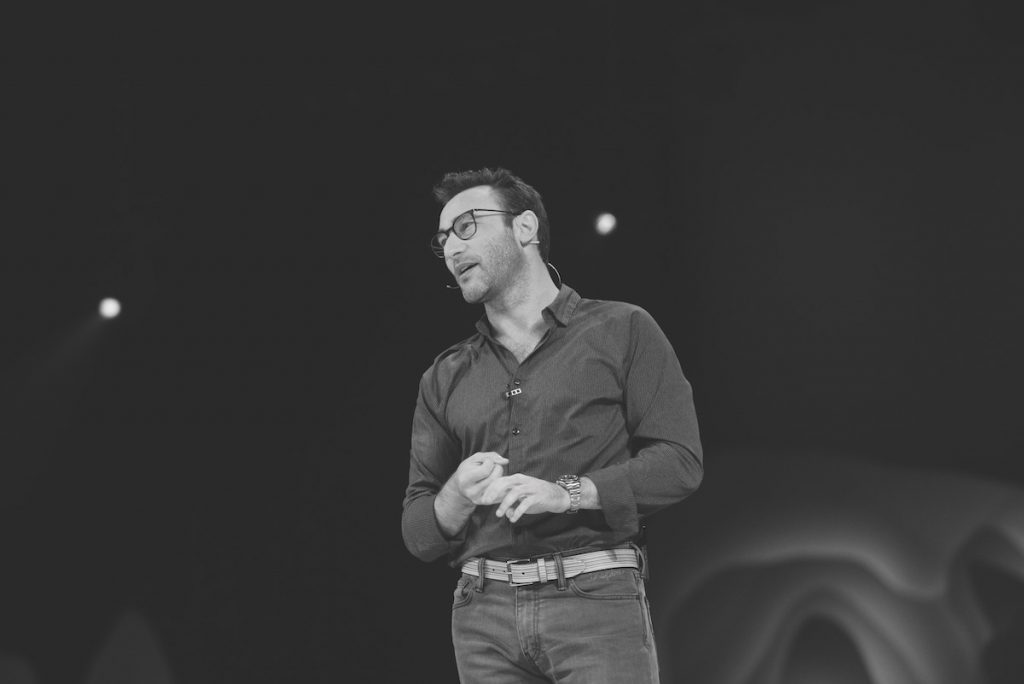
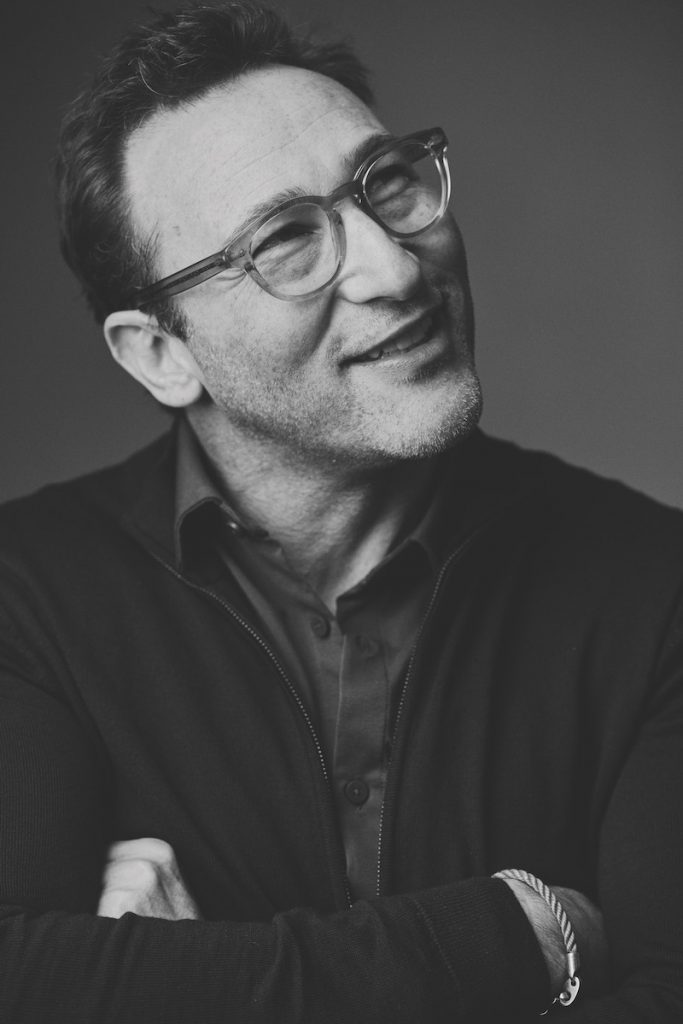
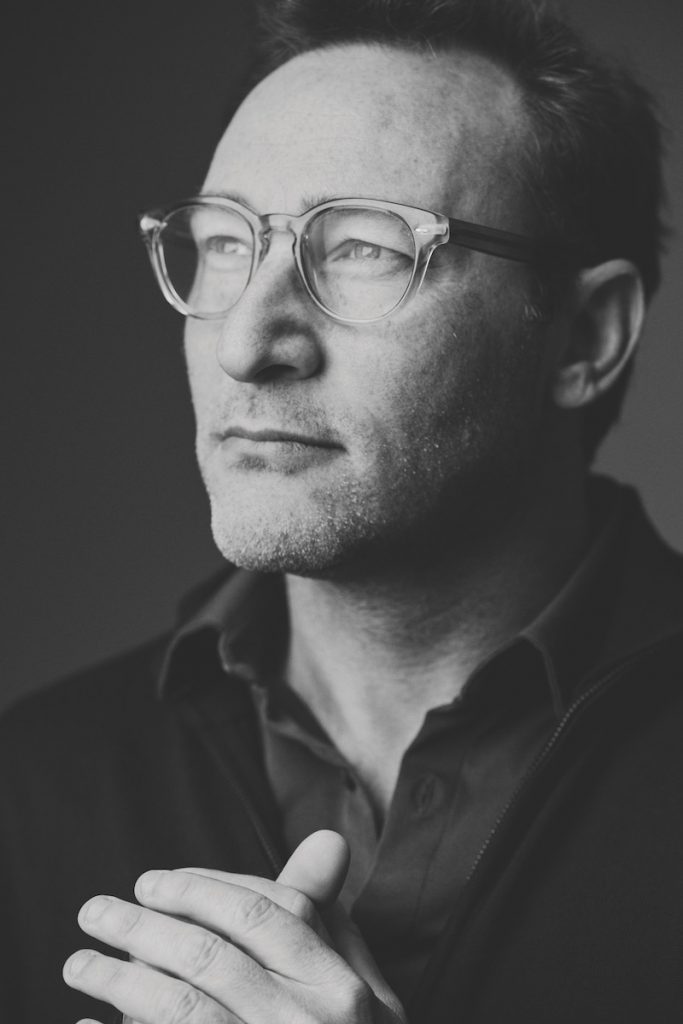
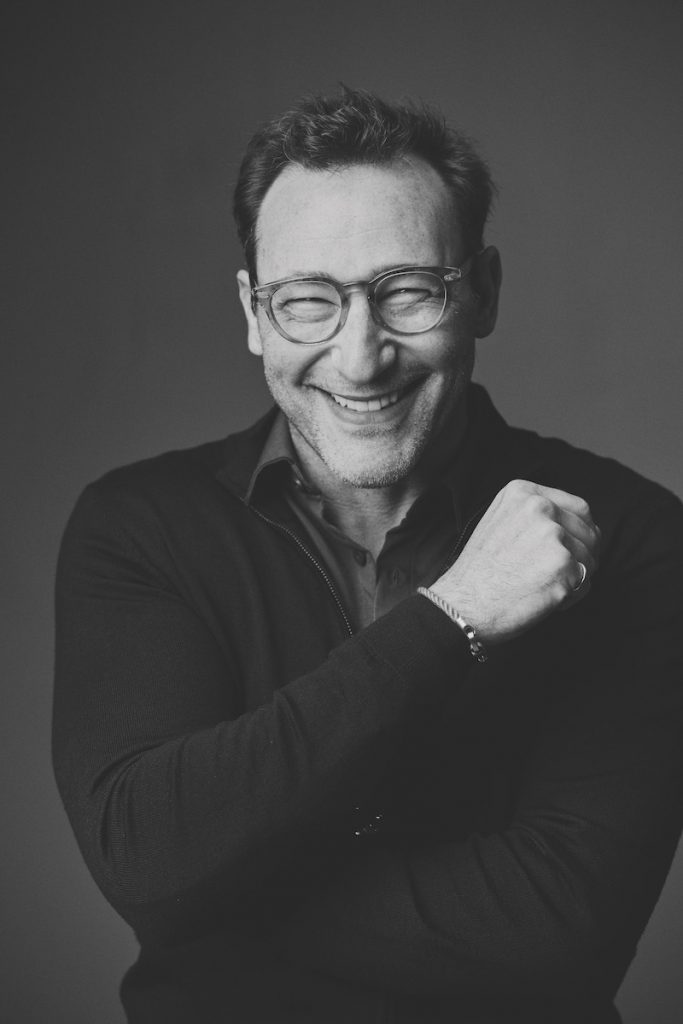
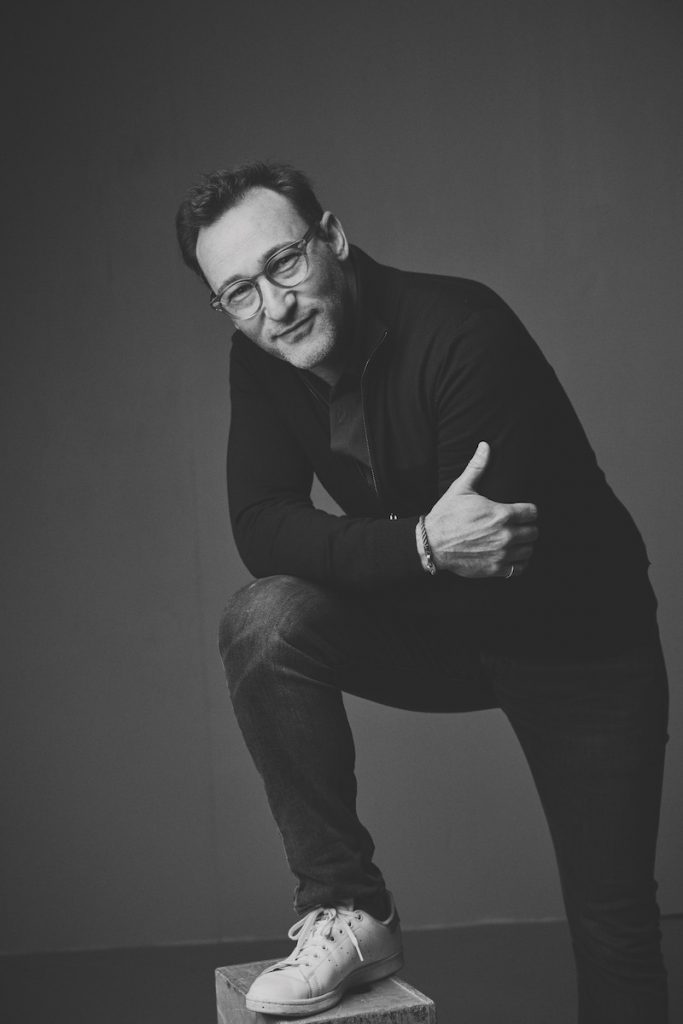
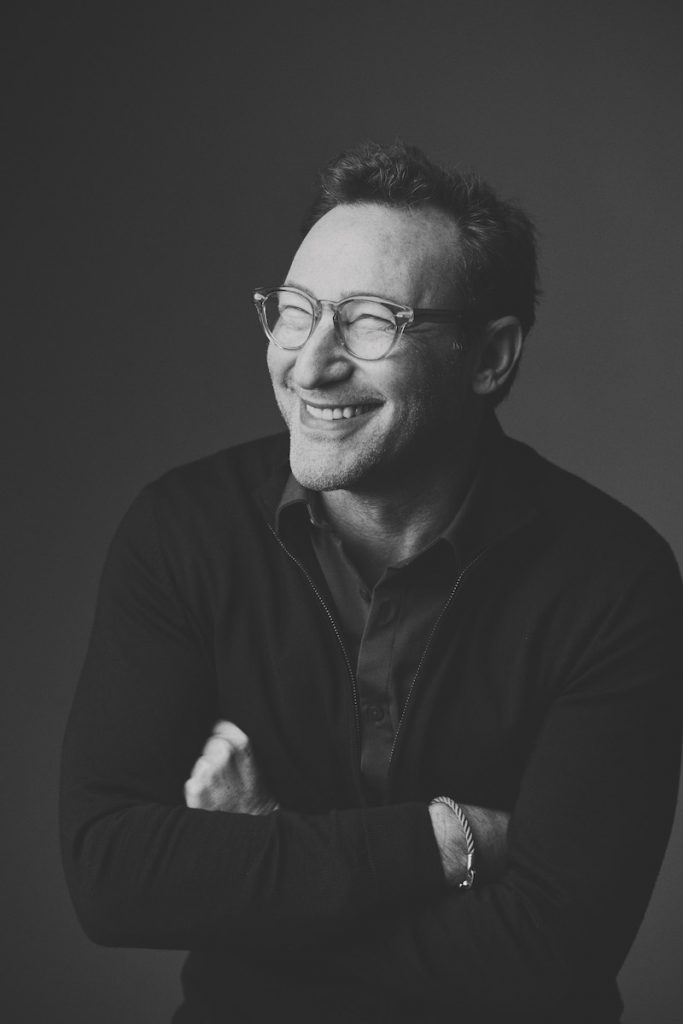
The unshakable optimist, the why guy — whatever comes to mind when you think of Simon Sinek — our exclusive interview provides fresh insight from this wildly popular leadership author, speaker, and founder.
Real Leaders: You had a milestone birthday last year. How did you feel about turning 50, and was this one hard for you?
Photo Credit: Jake Rosenberg
Simon Sinek: I’m not a big birthday person. I don’t like being the center of attention and wasn’t planning on doing anything, but my friends said I had to, so I threw them a party. I knew there were six other guests who also had milestone birthdays that year, and so when it was cake time, I had six additional cakes with their names and ages on them because why should I be the only person who celebrates my milestone?
RL: We have a special section in this edition about executive coaches. Have you ever had a coach?
Photo Credit: Jake Rosenberg
Sinek: I have had a coach. I’m a great believer in having a coach. Finding a coach is like finding a partner. It’s got to be somebody who gets you, and there’s got to be a good personality match. You might need a couple sessions to figure that out, and it can be hard. I don’t understand how people in senior positions think they don’t need it. Professional athletes think they need it — how are we the exception?
Maybe because we can’t see our swing. We have blind spots, and sometimes it’s good to talk through a problem with a dispassionate person who’s not involved. Most of the conversations we have are with coworkers who are quite passionate about the decisions we make.
RL: What leadership blind spots are you noticing these days?
Photo Credit: Jake Rosenberg
Sinek: Most leaders think they’re good listeners. It’s hilarious. Also, people get promoted, and they forget that a whisper becomes a shout. A little offhanded “way to go” could make someone’s week, but an offhanded “that wasn’t very good work” could destroy someone’s confidence. Learning how to manage that is very, very difficult for leaders.
I’ll tell you one funny story. I was having a photo shoot, and we started pretty early. I asked what time lunch was, and they said 1 o’clock. I said, “Can we get the food in here at noon? I’m kind of hungry.” So they got it in at noon, no big deal. Then we had another shoot and we started pretty late, like 10 a.m., and the food came at noon. I was like, “Why is the food here so early?” And I found out in the background that when they were making the schedule, someone said, “Simon insists on having the food at noon,” which, of course, is nonsense.
Self-awareness is one of the biggest blind spots. Actually, self-awareness is a misnomer — self-awareness is situational awareness. When you’re sitting in a meeting, do you know that you’re talking too much? Well, you won’t know that unless you see people in the room trying to speak but you keep interrupting them. You learn self-awareness by honing the skill of situational awareness — in other words, paying attention to the room.
Another leadership blind spot is asking for people’s advice after you’ve already given your opinion. That’s a big one. I would classify that under listening skills.
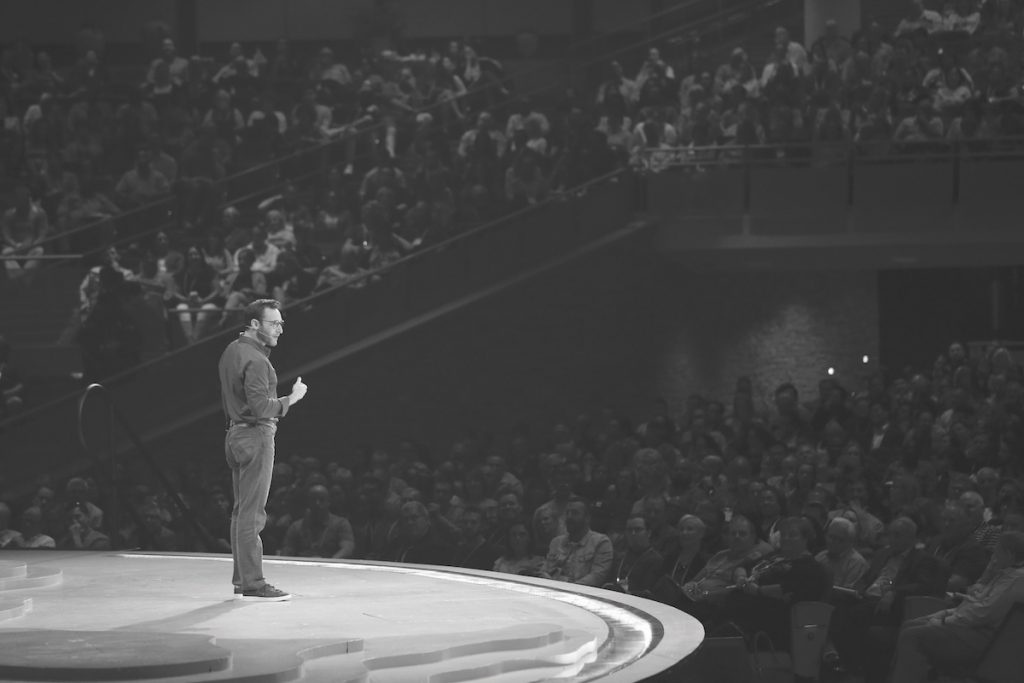
RL: You do quite a bit of keynote speaking and ranked No. 2 on the Real Leaders Top Keynote Speakers list for the last two years. How does speaking relate to your why?
Sinek: My why is to inspire people to do the things that inspire them, so together, each of us can change our world for the better. I’m agnostic as to how I deliver that message. It happened by accident that I became a speaker, but clearly, it fulfills the why. For many years, I thought of myself spreading my message as a preacher. I was spreading a gospel of the way business should work. It made perfect sense. It’s not the only way I can spread my message, but it certainly has been a good one for me.
RL: How do you give your audience goosebumps?
Photo Credit: Jake Rosenberg
Sinek: That’s an underappreciated skill, which is the art of storytelling. When most people speak, they make it about themselves. “Let me tell you how great I am. Let me tell you about all my accomplishments.” There’s some ulterior motive — buy my book, buy my product, subscribe.
The way you connect with an audience is you have no ulterior motive other than to serve. I don’t ever think I’m right. I think I have a point of view, and I’m there to share it. I’m not looking for people to agree with me. I’m looking to offer an invitation. One of the reasons I connect with an audience is because I’m genuinely there as an act of service. I’m there for them. I’ve always had that mindset. Before I go on stage, I’ll mutter out loud to myself under my breath, “You’re here to give,” just to remind myself. It’s wonderful.
RL: Would impact company leaders benefit from seeing themselves as preachers of their cause?
Sinek: The simple answer is of course, but frequently saying that you’re an impact company is preaching to the converted, and it can potentially alienate the unconverted. Don’t talk about it so much — just do it. Just be impact, right?
To constantly say you’re an impact company is about self-aggrandizing. It’s virtue signaling for the people who are already in the club. If you’re truly an impact person, your responsibility is to invite people who are not already in the club and to find the language, methods, and systems that are an invite rather than an attempt to convince or shame. Just do the good work, and then you’ll reach the cause that you’re preaching. Find the language that invites as many people as possible.
I don’t use the words vision or mission or cause or purpose. I use the term why. I found new language that reinforced those who already believed but that invited people who weren’t sure to take a look. The only way a movement can move is with new people.
RL: After the murder of George Floyd, you started a nonprofit called The Curve to support better leadership in policing. Why did that particular incident resonate with you so deeply?
Sinek: Multiple reasons. It’s a profoundly human problem caused by humans, and the impact is on humans. It is largely a leadership and culture problem. Yes, policing has issues in training and hiring, and those are symptomatic of the leadership and culture problems that policing suffers from. If you look at the advances in leadership theory, the military is way ahead of most corporations when it comes to embracing new ideas, but policing is about 20 years behind. Though often well-intentioned, outside pressures and legislative fixes either flat out won’t work or will have a short-term or minor impact without completely changing the culture of policing, which is what’s needed.
The only way to do it is from the inside out. I was drawn to it because it’s an unbelievably complex human problem, which interests me. I like very difficult things. And there’s already plenty of people looking for the cure for cancer. There weren’t enough people who were doing this except as outsiders looking in.
RL: You are known for being unshakably optimistic, but is a little pessimism helpful for leaders?
Photo Credit: Jake Rosenberg
Sinek: Let’s first define optimism, which is not blind, nor is it naive positivity where you’re saying everything’s fine, everything’s good — that’s dangerous. Optimism is the undying belief that the future is bright. It allows for darkness, it allows for difficulty, it allows for frustration, it allows for anger, it allows for pessimism. But fundamentally, it is the undying belief that even if it’s a difficult time now, if we work together, we will get through this and come out stronger.
I’m cynical very often. I can be grumpy, I can be judgy, but that doesn’t affect the fact that I fundamentally believe the future is bright.
RL: Leaders are often deeply devoted to their causes. Talk a little about your concept of cause blindness and how they can avoid that pitfall.
Sinek: We are living in leaderless times. There seems to be a distinct lack of idealism in the world. Our presidents don’t talk of world peace anymore. Go back a few years and world leaders like Ronald Reagan and John F. Kennedy literally talked about peace on earth in their inaugurations. Being driven by a higher calling is very important to inspire people and instill trust, loyalty, and innovation.
We’re very short-termist these days. We’re driven by short-term growth or short-term impact investor pressures, and a large part of it is because of the loss of idealism.
One of the things that prevents and insulates you from cause blindness is idealism because you’re looking so far ahead to advancing a cause that is for all practical purposes unrealizable. World peace is not realistic, but it is inspiring, and we can take steps toward it. Cause blindness tends to be when we become sheltered and looking down and can’t see the forest for the trees. When you look up at the grand vision, it actually makes you more awake.
RL: What about your term ethical fading? How can leaders make sure that ethical fading doesn’t creep in to their businesses?
Sinek: We’re all susceptible to ethical fading, and this is where strong leadership and strong culture inoculate you — if you have a truly just cause and are not simply driven by short-term financial gains. You must also spend the time to build strong teams where there’s psychological safety, and if you do these things, you are inoculated from ethical fading.
In any company, people will have stupid, unethical ideas. We all do. But in a good company, someone will go, “We’re not going to do that.” It’s not the generation of the idea; it’s whether the idea gets implemented or not. Ethical fading happens with poor leadership and an incentive structure that rewards short-termism. Good leadership and good incentive structures are the antidote.
RL: You talk about the importance of having worthy rivals, not competitors. What have you learned from making that mindset shift?
Sinek: This is one of the most magical mindset changes that somebody can make, and it’s so easy to do.
You’re going to learn so much by being grateful for those who do things better than you rather than trying to undermine or compete or put them down. You become more like, “Damn. They’re good.” And it makes you better because they become pacers that push you harder, right? You’ll find solutions to problems that you’ve been struggling with from a worthy rival. It makes you much more self-confident and relaxed and better at what you do. You are less distracted by the silliness of creating fake competitions where there are no finish lines.
RL: How have you implemented this mindset in your organization?
Sinek: It’s become a practice that when we’re working on something, someone will ask, “Who’s the worthy rival on this?” and we’ll go find the best of breed, the people who are more experienced, way better, and really innovative.
RL: How does your concept of infinite-mindedness impact leadership?
Sinek: It depends where in the pecking order you are. If you’re at the top of the pecking order, you know that having just causes is really where it starts, and then adjusting the incentive structures to ensure that you and your people are building an infinite-minded company.
If you’re just in the organization, you have no say over the incentive structures or setting the vision. But you can come to work every day to be the leader you wish you had and to ensure that the people with whom you work go home every day feeling inspired, safe, and fulfilled. Infinite-mindedness is: “How do I help the people around me rise?” They’ll become better versions of themselves because I worked with them and because they worked with me.
That mindset has a massive impact on someone because you find yourself in service, which is ultimately what an infinite mindset is.
RL: As a trained ethnographer, you’ve discovered patterns about how the best leaders and organizations thrive. What are the prominent patterns you’re seeing today?
Photo Credit: Jake Rosenberg
Sinek: The big one — and I don’t say it explicitly, but all my work touches on it — is this idea of human skills. Cats don’t have to work very hard to be good at being a cat, but it turns out that people have to work pretty hard to be good at being human. We are not good listeners. We are not good at giving or receiving feedback. We’re not good at having difficult conversations, and the list goes on. The biggest pattern I’ve seen is that to be human takes work, and those who do the work become better human beings, better leaders, better friends, better spouses, better sons, better daughters, better parents.
It doesn’t matter where we learn it. If you learn to be a better listener because your relationship is struggling, you’ll bring that skill set to work. At work, we can teach people how to be better listeners because we want them to cooperate better. And then, you’ll bring that skill set home to your relationships and to your parenting because the skills are the skills. They don’t teach human skills in business school, and I think companies have the opportunity to pick up the slack.
Companies that teach human skills tend to outperform the companies that don’t. And though it’s hard to measure, I would venture a guess that companies that double down on teaching those things, I bet the people who work for them have lower divorce rates, their kids do better at school, and they have lower rates of cancer and diabetes and things like that, which are all stress-related disorders.
There are a lot of good reasons to hone our human skills. All my work is in some way, shape, or form talking about human skills. Notice I don’t use the term soft skills. I hate the term soft skills. Hard and soft are opposites, and these are not opposite skills. Hard skills I need to do my job. Human skills I need to be a better human. And I need both those things to excel in life and at work.
RL: You implemented an agreement with your friends during the COVID pandemic that none of you would cry alone. When it comes to leadership, is there anything that just has to be done alone?
Sinek: Accountability. Ultimately, if you’re the leader, the buck stops somewhere, and if a decision is made and it goes wrong, you can’t cast blame if someone on your team made the decision and you trusted that they could. You have to support them in the difficulty of repairing whatever that bad decision was. We’re not talking about negligence here. We’re talking about someone just made a bad call. Accountability is a solo affair. Everything else can be shared. Joy and congratulations can always be shared. I would never do that alone.
We see lack of accountability a lot. When people say, “The lawyer said we can’t do that,” what they’re really saying is, “I won’t take accountability for the decision that needs to be made because of the risk associated with it.” Lawyers don’t make decisions. Lawyers advise on risk. My lawyers tell me that I can’t do things all the time, and I say, “Tell me what the risks are,” and then I’ll either do it or not because I think it’s worth the risk or not. But ultimately, it’s my decision. Anybody who pushes that off is becoming a refugee from accountability.
RL: Your last book came out in 2019, and it’s 2024…
Photo Credit: Jake Rosenberg
Sinek: You sound like my publisher.
RL: When are we going to see your next book? What will it be about?
Sinek: I’m working on a book about friendship. There’s an entire industry to help us be better leaders. There’s an entire industry to help us be better parents. There’s an entire industry to help us eat better, work out better, sleep better. Yet there’s precious little to help us be better friends.
If you look at all the challenges we face in the world today, and with anxiety and depression and suicide on the rise — even our obsession with longevity — friendship is the ultimate biohack. If you learn to be a good friend, you live longer, you’re healthier, you’re less susceptible to addiction. It is the greatest thing in the world, and yet there’s so little that teaches us how to be good friends. I’ve really become quite obsessed with what it means to be a friend.
The number of us who prioritize work over friendship because our friends will understand when we cancel on them is really gross. Your work will never be there for you in hard times. Your work’s not going to save you, but your friends will. Nobody calls their work ride or die.
So many of us think we’re a good friend, but if you really peel the onion back a little bit, are you sooner to cancel on a friend for a meeting, or would you postpone a meeting for a friend? Do you know how to be there for someone when they’re struggling, or do you just try and fix their problems? Do you know how to listen to someone so that they feel heard? If a friend’s depressed, do you tell them to buck up, or do you go to their house, get into bed with them, eat ice cream, watch movies all day, and be depressed with them so that they don’t feel alone in that space?
We all have a lot to learn about how to be a better friend, so I’m writing that book with my friend Will Guidara, who wrote Unreasonable Hospitality.
RL: Can you expand on how being a better friend makes you a better leader?
Sinek: Friendship is scalable, right? Being a better leader doesn’t necessarily make you a better friend, but being a better friend definitely makes you a better leader. It is the only truly scalable skill. Being a better dad doesn’t necessarily make you a better friend, but being a better friend makes you a better dad.
RL: Are you good at friendship? Or is it a self-identified weakness that led you down this journey?
Sinek: Like everybody, I thought I was a good friend, but I still have some stuff that I’m learning. I’ll give you an example. I thought I was a great listener — until I took a listening class. I learned that I am an absolutely fantastic listener with people I will never see again for the rest of my life, but with my friends, I was appalling. When my friends would say, “You’re such a bad listener,” I’d be like, “Do you know what I do for a living?” Turns out I was crap. I was useless. And so I called my friend and said, “Remember when you told me I’m a bad listener? Turns out you were right.”
There’s a lot to learn. I’m definitely a better friend now than I have been in the past because I am learning more about human skills. Managing a friendship is difficult and requires a lot of intentionality.
RL: Circling back to that big birthday, how would you characterize your first 50 years? How do you envision your next 50?
Sinek: It’s all a magical journey. I’m in life for the fun of it. Some of it is easy, some of it is hard, some of it is clear, some of it is foggy. But all of it goes better when I do it with others. “Remember that time…” is a much more fun conversation than, “Let me tell you what I did.”
And any kind of stress is endurable with others around us. It’s a journey with others. We all make the mistake sometimes of forgetting that we are surrounded by people who love us. They’re there to help us if we just ask. So the first 50 years has been learning those lessons, quite frankly, that I’m not alone. It’s OK to ask for help. It’s OK to accept it. It doesn’t make me dumb or weak. In fact, it makes me stronger. It makes me more confident. It makes me more grateful, more humble.
The next part of my life, however long it is, is the joy of getting to live with purpose, to take all those lessons and actually do it all.
RL: What’s your message for the Real Leaders community?
Sinek: The best thing that this audience has is each other. I hope they spend time in this community without their phones, without their computers, without their emails. I hope they talk to each other about what works and doesn’t work.
I cannot emphasize enough the value of community when doing something difficult and bucking the system of how capitalism has worked for the past 30–40 years. It’s the status quo that is working against us. And even though it’s trendy for every company now to have a purpose on their website, go compare the decisions they make to the statements on their websites, and in many cases it’s just marketing. How are you treating your employees? You can’t call yourself an impact company and not practice good leadership or learn good leadership or teach your people good leadership.
Just go do the good work. Do the work that demonstrates the impact that you’re having because the people who want to come work for you in this new generation of employees, they care about that stuff.
RL: What companies are your gold standard when it comes to leadership and impact?
Photo Credit: Jake Rosenberg
Sinek: I love Patagonia. They demonstrate it in their bottom line. They demonstrate it in the way they treat people. They demonstrate it in the way they talk about the impact they’re having on the communities in which they operate. They don’t use any euphemisms — they just do it. They just get it done, and they’re open, and they’re accountable. They still do damage, and they don’t recycle everything, and they’re super honest about it. We should copy their model.
Airbnb is also pretty good, and Brian Chesky is open about being an infinite-minded company. All of them have work to do. None of them are perfect. They all have blind spots. They all have pressures. But the way that Airbnb treated its people during COVID when they had to have layoffs was a model of how to do it. They were so generous. They set up a page on their website and uploaded everybody’s resume who lost their job, and the day they got laid off, you could hire them. That’s so much more than just saying, “We care about our people.” This is a company that even cared about them after they let them go. They didn’t just let them go — they helped them land on their feet. That, to me, is impact.
Level Up Your Human Skills
Interested in Simon Sinek’s’ online courses? Visit simonsinek.com and use code REAL LEADERS for 15% off all e-learning (not to be combined with other promotions).
As Burt’s Bees marks 40 years, co-founder Roxanne Quimby shares her keys to growing the planet-focused personal care product company from a roadside startup into a billion-dollar household name.
Burt’s Bees. It’s a household name and a billion-dollar personal care product company with 40 years of exponential growth and success.
But its beginnings could hardly be humbler. Behind Burt Shavitz — the late straggly-bearded beekeeper whose face became synonymous with the brand — was lesser-known co-founder Roxanne Quimby, a fiercely determined woman with a continuous drive to expand the company from its roadside roots all while keeping the planet an unwavering priority.
“Burt’s Bees was an unexpected success,” Quimby says. The queen bee sat down with Real Leaders to share her raw, unfiltered lessons on their path to building a colony — err, company — of epic proportions.
1. Start Anywhere
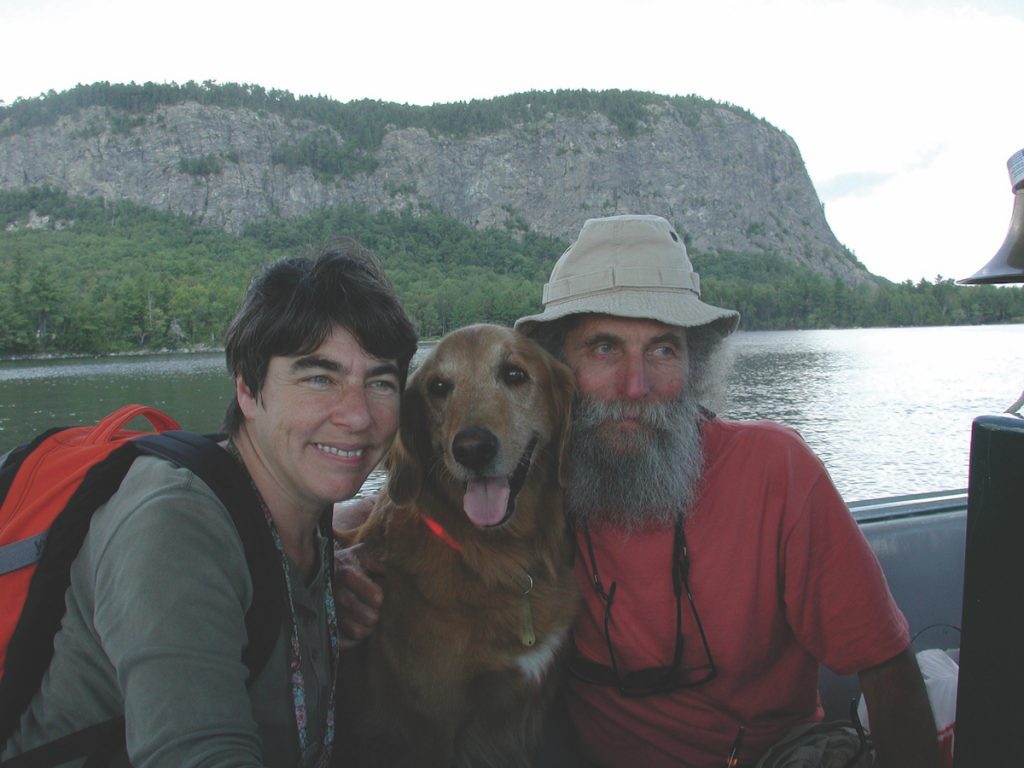
Some might say they had no business starting a business, but isn’t that the beauty of the wild, wild west of entrepreneurship? Shavitz, a photojournalist from Manhattan, and Quimby, an artist from San Francisco, separately traded their congested city lives for the off-grid backwoods of Maine, forgoing running water and electricity. In what turned out to be arguably the best hitchhiking outcome of all time, Shavitz picked up a thumbing Quimby in his truck and they hit it off — certainly not the typical start to a business partnership or romance, but there they were beginning both.
When they met in 1983, a solo Shavitz was beekeeping and selling honey roadside to get by, while a newly single Quimby, a mother of twins and ever the artist yearning to create, also needed work. “We were living hand to mouth,” Quimby recalls. “I really wanted to stop waitressing.” She moved in with Shavitz and started making beeswax candles and lip balm to supplement his wholesale honey and beeswax sales. “He sold the honey and beeswax as commodities, and my feeling was that we could enhance value with smaller, more aesthetically pleasing packaging, making them into a souvenir of one’s trip to Maine,” she says. “I saw really quickly that that worked, and we were able to get more revenue.”
2. Learn from Consumers
Initially, Quimby set up shop at local craft fairs and allowed observation to guide their product development. “I let the consumers teach me about what they wanted, how they gathered information about a product,” she recalls. “It was a practical, on-the-street way of understanding the relationship between a product and a person who would purchase it or not. It was fundamentally important to my ability to put together a formula to create and grow the business.”
The candles phased out and the skincare line expanded, with free samples hooking people in. “We did tons of sampling,” Quimby says. “That was really important because we felt that the product was the thing that was going to sell people — because it worked, and it felt so good, and it smelled so good. We wanted people to try it. We really believe in our products.”
3. Face the Giants
Quimby also took inspiration from businesses she admired, with Ben & Jerry’s chief among them. “They were so creative, and they broke all the rules,” she notes. “They were very countercultural and yet accepted by everybody because they have a great product that everybody loves.”
She cites Ben & Jerry’s 1984 national campaign “What’s the Doughboy Afraid Of?” as formative to her journey. The Pillsbury Corporation, known for its Doughboy mascot, owned Häagen-Dazs at the time and threatened to stop selling its ice cream to a mutual distributor if it continued to sell Ben & Jerry’s to grocery stores, essentially blocking it from shelves. The distributor couldn’t afford to lose such a lucrative client, so it obliged.
Ben & Jerry’s wanted to fight but was still small and didn’t think it stood a chance in a lawsuit against such a giant. Instead, it created a campaign encouraging customers to push back, sending hundreds of people each week to flood Pillsbury’s hotline and write letters. Eventually, Pillsbury backed down and allowed the distributor to supply Ben & Jerry’s to its stores.
“Ben & Jerry’s gave me permission to exist in a marketplace where we were the alternative when we were very unknown and tiny,” she reflects. “I felt like we could take on gigantic companies and appeal to a customer base that was not interested in the large mega-brands.”
4. Build Your Brand
Quimby set out to create a loyal customer base for Burt’s Bees, applying the lessons she read in Building Strong Brands by David A. Aaker. “Selling a consumer product is more than just about the product,” Quimby shares. “It’s about a story. It’s about aspiration. And it’s about a connection to the consumer. Once you create this very strong attachment between a brand and a consumer, you don’t have to keep selling to them. They love and buy your brand without you having to pitch it to them every single time. We put a lot of energy into creating a brand.”
Not only did Burt’s Bees hone in on Shavitz as its small-town beekeeper mascot, but it also emphasized its values of authenticity, purity, and cleanliness. “People were ready for that story,” Quimby says.
The company’s countercultural message resonated with its audience. “Beauty and personal care products always feature beautiful women and an aspirational look of flawlessness, so we just did the opposite,” Quimby notes. “We put this bearded beekeeper on the packaging, and what we were saying was that you should be more interested in the performance of the product. It’s not going to make you look like a supermodel, but it is going to be satisfying on a very healthy and soul level. That was a story we told through the brand.”
5. Stay Authentic to Your Cause
Deeply appreciative of what nature provided them, Quimby and Shavitz respected and preserved the planet from the get-go with Burt’s Bees, from process to packaging. Rejecting consumerism and living off the grid in Maine were formative to that.
“It really changed my point of view,” she says. “I was much more careful about the way I used resources and on very, very limited resources financially. The way bees live — the way bees make a living, the way they organize the workflow to create their products — that was sort of one and the same with my way of living. It wasn’t like I could start a company that contradicted those values that were completely baked into the way I lived and looked at things. It never occurred to me to do anything contrary to the way I lived and looked at the world. So that was all part of the DNA of Burt’s Bees.”
The company committed to botanical ingredients sourced from the Earth, as opposed to chemicals made in a lab. However, keeping packaging environmentally friendly presented hurdles. “It was definitely challenging because at that time, things were packaged in plastic, metal, or glass — and you don’t want children’s products or products used in the bathroom or shower to be in glass. Metal has its limitations. So plastic was the alternative, and it was very hard to get around,” Quimby reflects. “But we just didn’t make a product until we figured out how to do it without a damaging environmental impact. There were a lot of products that we couldn’t make, like shampoo and lotion. I couldn’t see us adding to the waste stream with a virgin plastic bottle that gets thrown out after you use the contents.”
Burt’s Bees’ first lip balms were packaged in terracotta pots, then metal tins. Only once Quimby learned about postconsumer recycled plastic did Burt’s Bees start making shampoo and lotion, significantly boosting sales while giving plastic a second life and helping increase recycled plastic’s industry demand.
Today, the company continues to use postconsumer recycled materials in its packaging and responsibly sourced ingredients from nature under landfill-free operations.
6. Navigate Your Partnership
Shavitz and Quimby navigated highs and lows in their personal and business relationships. Eventually, the end of the former relationship would lead to the end of the latter. “Having a partner is a double-edged sword, but I still recommend it,” Quimby says. “I would feel very lonely without having somebody by my side for better or for worse.”
Among the benefits of working with a trusted partner, she lists loyalty, a different viewpoint, and a safe space to vent. “Partnerships can be incredibly beneficial,” she states. “I could go to Burt and tell him every bad thing that happened that day, and he was there for me. As Burt would say, ‘If it was easy, Roxy, everybody would do it.’”
Quimby also valued his photography experience, which came in handy while working with their catalog photographer. “Partners should bring expertise complementary to yours,” she notes. “Those differences can also cause conflict, but struggles are what make for a better person, a better product, a better company because the resolutions can make you stronger. Burt and I were partners in that sense.”
7. Know When to Exit
As the company grew, operations outgrew Shavitz’s kitchen to a one-room schoolhouse, then a bowling alley, and eventually headquarters relocated to Raleigh, North Carolina. After a brief stint in Raleigh, Shavitz returned to Maine to live on a piece of property Quimby gave him in exchange for his third of the company, bringing her to full ownership of Burt’s Bees in 1999. Along the way, Shavitz and Quimby’s romantic relationship went south.
“We did separate for personal reasons that had nothing to do with the company,” Quimby shares. “It was a personal situation that we were not able to resolve, and so we went our separate ways, and he still maintained his ownership share of the company for a few years.”
After the breakup, Quimby’s heart was no longer in Burt’s Bees, and she recognized it was time to plan her exit. “Burt’s Bees was our child, and we put everything into it,” she reflects. “When he and I split up as romantic partners, it was very difficult for me to still stay buoyant and happy and inspired by the company, and that led us to want to sell it.”
Quimby and a business broker met with 40-plus potential acquiring companies over the span of a year. “We had a pretty hot property to sell,” Quimby notes. In 2003, she sold 80% of her stake in Burt’s Bees to private equity firm AEA Investors, who valued the company at $177 million. She stepped down as CEO soon after. “I wanted to go with people whom I really cared about and whom I thought really cared about us and our values,” she shares. “I love that we went with a private equity company, and they never lost respect for what we created.”
8. Find Fulfillment Post-Exit
In 2007 Clorox bought the entire company for over $900 million, with Quimby selling the rest of her stake. “I didn’t really need all that money,” she admits. “I wasn’t going to change my lifestyle, start getting fancy cars, and make mansions. It seemed logical to put a great deal of the proceeds into some kind of environmental enterprise.”
Quimby ramped up her focus on wilderness preservation, starting a philanthropic foundation, giving $90 million to charities, and acquiring 87,500 acres of untouched Maine woodlands through lip balm profits, which she donated to the National Park Service to become Katahdin Woods and Waters National Monument in 2016.
“You feel connected to something bigger than yourself,” Quimby says. “I can think of no better thing to do with Burt’s Bees profits than to return them to the Earth. We want people to enjoy the land in a non-consumptive way.”
In 2019 she purchased a company that combines her passions for art and environmental consciousness — Eco-Kids, which sells sustainable art and craft supplies for children. “I felt a real affinity to the beeswax crayons,” she says.
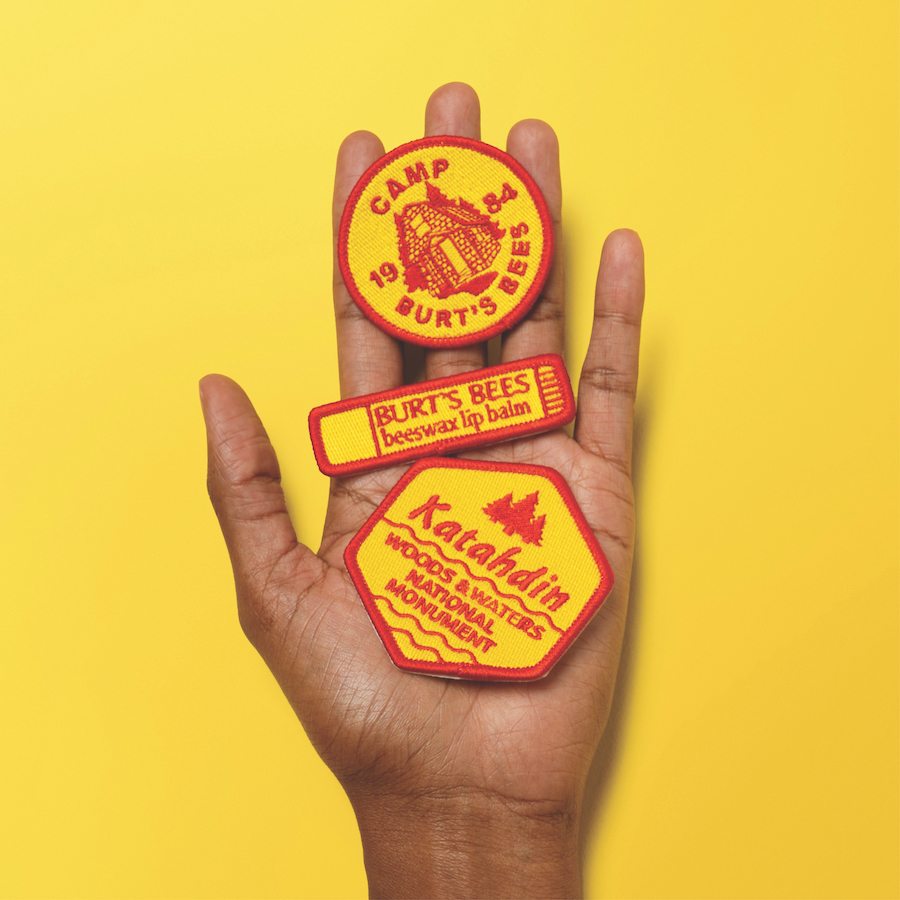
In 2020–21 Burt’s Bees invested $3 million to help build her national monument’s Tekakapimak Visitor Contact Station scheduled to open summer 2024. It’s a tribute to the native Wabanaki people in partnership with the Roxanne Quimby Foundation, Elliotsville Foundation (led by her son), a Wabanaki advisory board, and the National Park Service. For its 40th anniversary in 2024, Burt’s Bees also honored Quimby with a limited-edition lip balm that celebrates her legacy and the brand’s investment in the monument.
“We’re thankful for the blueprint of kindness toward people and planet that Roxanne built into the brand,” says Paula Alexander, director of sustainability and responsible sourcing at Burt’s Bees. “Our team is proud to continue her legacy of reinvesting in nature and our communities.”
Novogratz talks leading a moral revolution and helping pioneer impact investing, an industry that just might save the world.
By Kathryn Deen
If you could use a dose of hope, look to Jacqueline Novogratz. Hers is not some vague, pie-in-the-sky hope. It’s hard-edged and backed by action and results. This impact investing pioneer has been beating the drum for lifting people out of poverty for nearly 40 years, and her company, Acumen, has helped lead the way for 23 of those years.
Novogratz founded Acumen in 2001 during the early days of impact investing. Acumen invests in and supports nonprofit and for-profit companies and individuals fighting poverty and restoring dignity for long-term change. It has impacted over half a billion people and earned a spot on the 2024 Real Leaders of Impact Investing list.
She shares her well-earned lessons and most valuable insights on using money as healing in this candid conversation with Real Leaders.
Real Leaders: You helped establish impact investing as a new sector. What was it like to be at the forefront of this movement?
Jacqueline Novogratz: Nearly 50 years ago, pioneers like Muhammed Yunus, founder of the microfinance bank Grameen, and Ela Bhatt, founder of the Self-Employed Women’s Association, saw the power of using tools of business to make change. They made small amounts of credit available to very low-income women who otherwise would have had to pay usurious rates to many lenders.
I came in on this wave in 1986 when I moved to Rwanda and co-founded the nation’s first microfinance bank. That experience taught me not only that a small group of people could make a big amount of change, but that making markets work for the poor was essential to building nations. That thesis — using tools of business to solve problems of poverty and build a world of dignity — has been my life’s work.
The early days of establishing an entirely new sector can be tough. I founded Acumen in 2001 and can remember countless meetings with captains of industry who would explain with great certainty that my understanding of business was muddled. “I make money on one hand, and I give it away on the other” was their conventional wisdom. I found little curiosity among them regarding what had failed the poor and whether there might be new ways to solve problems that were more effective either than maximizing financial returns or giving charity away. Gandhi says, “First, they ignore you, then they laugh at you, then they fight you, then you win.” In 23 years our investments have impacted the lives of more than half a billion people. Patient capital and impact investment have grown into a multi-trillion-dollar market. Change is possible if you have the grit and resilience to keep working at an idea whose time has come.
RL: Tell us more about the new approach you took to solving poverty with Acumen’s patient capital model.
Novogratz: Our financial systems are constructed based on short-term thinking that no longer serves — if it ever really did. Patience is a revolution. For entrepreneurs to build business solutions serving very low-income people takes experimentation, sometimes failing and getting up to try again.
Early on we saw a growing group of entrepreneurs who had what we call moral imagination — the audacity to imagine the world that could be and the humility to interact with the world that is. They also had the resilience and grit to stick with solving a problem. We were willing to take bets on those entrepreneurs. Entrepreneurs see the possible in the impossible. They recognize opportunities in every problem. When it comes to low-income people, they see customers who want to change their own lives instead of passive recipients waiting for charity.
Acumen could bring long-term, risk-oriented patient capital as well as access to our social capital — networks, expertise, and knowledge.
When we started I thought patient capital meant seven to 10 years. I now see it as 10-20 years. That’s what it takes to build markets in places where people are very low-income, where there is very little infrastructure, where there’s often very little trust, where it’s hard to build talent pools that you can afford, and where there are often high levels of corruption.
RL: How has impact investing changed since you started?
Novogratz: When I started there was no impact investing space. So in the early years, we were one of the only games in town, and we were very defiantly focused on using philanthropy, investing it as long-term equity and debt. Accounting for the impact we made, any money that we get back gets reinvested.
There was an early set of philanthropists who had their own money and thought, “I can also do this,” but they didn’t want to give up returns. So they would set up capital pools with the same expectations — 20-23% returns — despite the fact that they were trying to solve world hunger. It took time for the industry to acknowledge that we need different pools of capital to solve different kinds of problems.
As the impact sector grew in size and sophistication, we grew in size and skill. Today we manage philanthropic-backed patient capital investments as well as a portfolio of larger for-profit impact funds. Those funds are structured for the problems they address. For instance, the Acumen Resilient Agriculture Fund is a $58-million blended fund with a first-loss component and significant technical assistance support. We’re working on a $250-million facility composed of philanthropy, debt, and equity to bring off-grid solar electricity to those considered hard to reach in 16 of the most fragile African nations. Our investment portfolios represent more than half a billion dollars in assets. Through all of it, we are committed to seeing investment as a means to solve tough problems of poverty — and not as an end in and of itself.
RL: Whom have you looked up to most in the impact investing space?
Novogratz: Ceniarth has always been willing to take outsized risk, move first, and go where others will not dare. Omidyar played a very strong role in this field. Currently the Green Climate Fund — the world’s largest climate fund funded by major governments around the world — is a brave partner with a commitment to fighting climate change. They are a real leader in structuring blended facilities so that we can reach the hardest-to-reach individuals with electricity or agriculture. IKEA Foundation also has been very innovative in supporting us to build new models in energy access, helping build green pathways out of poverty using new and inclusive business models. Without such partnerships, we would not have been successful.
RL: Is impact investing here to stay?
Novogratz: I once told a prospective philanthropist in Acumen about one of our companies, d.light, which is an off-grid solar energy company that has now reached over 160 million people with solar light and electricity. The philanthropist said, “I love the work that you do, but are you a real investor — because you still raise philanthropy and not just returnable capital?”
It really shook me. I said, “Help me understand what your definition of a real investor is.” He said, “I want at least market rates.” I said, “Help me understand what a market rate is when there hasn’t been a market and you’re the first one to create one.” And he said, “I would at least want 15-20% returns.” I said, “Here is the rub. The world continues to look at ‘real’ simply as the financial returns made to the investor. We are in a world where we have to deal with climate change and inequality, and we both believe that the private sector is a critical player in solving those problems. Yet when will we get to a point when real investors are rewarded for the good they do — the impact they create, the forests they conserve, the people they employ? To me, that’s what real investing is.”
I look forward to a day when we no longer need words like impact investing, social enterprise, and patient capital — where those modifiers are just assumptions and we don’t continue to put on pedestals players who might destroy value to the natural worlds and diminish human beings in service of shareholders alone.
RL: What metrics must the impact investing industry align on?
Novogratz: We need to have a conversation in the business and investing communities about the importance of subsidy. Look at Europe and the U.S. Both regions subsidize their agricultural and energy sectors. No nation has electrified without significant subsidy. Yet when it comes to the poor, investors often recoil at any hint of subsidy. We’ve never been more unequal. I was just in Kenya, where the nation is experiencing devastating floods due to climate change. Making rural electrification work for the poorest people will require businesses that are supported by wise policy and effective financing. That requires new ways of thinking and acting.
When it comes to building a company that serves the poor, affordability is everything. It’s right at the heart of how low-income people make decisions. Think about solving a problem like deforestation. Peter Scott was literally a tree hugger in the 1990s trying to save forests in Africa when he finally realized that the root cause of deforestation in Africa comes down to a few things, but the No. 1 reason is these little cookstoves that low-income women cook on. They cut down trees or use charcoal, which is made from trees. He realized that to save the trees, he had to build a cookstove that women can afford. That was hard to do because very poor women can’t afford a $40 unit, which is essentially the lowest cost that will reduce your fuel consumption by 50-60%. We were the first investor in his company, BURN Manufacturing. This year BURN will have sold 4 million cookstoves, saving 20 million trees, employing over 2,000 young people, and impacting over 20 million human beings whose health is changed, whose income is significantly increased, and whose footprint, which is already very small, is reduced even further.
We need more measures around the environmental impact that a company is creating, and we need to internalize those costs in the environment and for human beings.
Chocolate is a $100-billion industry built off 5 million cocoa families, 90% of whom make less than $2 a day. We will not have high-quality chocolate unless we find ways to fully integrate a supply chain so that those smallholder farmers are seen, valued, and earning a wage that allows them not to live in poverty. It shouldn’t be that difficult, yet we still measure a company’s performance in ways that make farmers price takers — whatever the global price is, here’s the price I will pay you even if it keeps you in poverty — rather than price makers valued for what they contribute. None of us wants to keep somebody in poverty every time we buy a chocolate bar.
RL: What is Acumen’s process for making investing decisions?
Novogratz: If you sat in on one of our investment meetings in the very beginning, it would look like serious investors sitting around the table.
Our manifesto is where you can begin to see why we are different. The first question we ask is, “Does this investment reach low-income people?” It starts by standing with the poor. “Is it structured in a way to give the company the best chance of succeeding in the long-term? And what is the character of the entrepreneur in whom we are investing?” At some point our tagline became, “At Acumen, we invest in character.” Why character? Because when you are trying to make significant change in these markets, you often end up operating in very corrupt environments.
We need to find those entrepreneurs who not only have the vision but also the grit, resilience, persistence, and moral imagination — who see low-income people as full human beings and therefore have the skills of patience, deep listening, and knowing how to connect across identities — to build companies that might start very small like Ziqitza HealthCare with nine ambulances and grow to bring 50 million people to hospitals across India.
Dave Ellis and his partner, Joe Shields, had never held a live chicken when they decided to start EthioChicken, a poultry company in Ethiopia. We were their first investor. They understood that farmers don’t have the capacity to do all it takes to raise a few baby chicks to maturity, but once a chicken is grown, it will forage for itself and provide eggs — an important source of protein — even during droughts. So the entrepreneurs built a business that employed agents who would buy 1,000, day-old chicks and work night and day to raise them to maturity. They would then sell them to farmers in tiny batches, and the farmers would sell the eggs that their families didn’t eat to local markets.
We accompanied that company with our patient capital for probably eight years. They paid us back, and then one of our for-profit funds, the Acumen Resilient Agriculture Fund, invested another round of capital in the for-profit impact space. Under the holding company Hatch, EthioChicken is now operating in nine African countries. The company works with 16 million agents, some of whom make $10,000 or more per year. Last year the company sold 43 million chickens to more than 3.5 million smallholder farmers who, in turn, sold 3.5 billion eggs. In Ethiopia they’ve been credited for significantly reducing childhood malnutrition. It’s thrilling for me to see Ethiopians building capacity in new markets like Rwanda or Ghana. They are creating local jobs, and they are creating value, not extracting it.
RL: Let’s talk about some hard-earned lessons when things didn’t go right.
Novogratz: We have a failure report. It’s so important to us. We make it public. It is an accountability mechanism for us, for our companies, for other impact investors, and for our peers. If we want to call ourselves a learning organization, we better not just have stories of how good we are. You learn more from your failures. You grow more from the hard times as a leader, and that’s the reality of risk-taking and investment.
About 25% of our investments fail. What’s interesting is most of those companies are still functioning, but we exited our investment. I would say there are typically three reasons for our failures.
One is the character issue, where you might discover two sets of books being kept. We have very few of those examples, but when they occur, they break your heart.
The second is when we’ve been too early on the innovation curve. In Pakistan we were the first investor in micro-health insurance without fully understanding the customer — that people didn’t want to pay for something they couldn’t see that might happen in the future if they got sick — so we wrote off our investment. But what was exciting about that is we watched a whole industry then build off of that experience and become a real leader in micro-health insurance for low-income people.
Third, early on we sometimes were too excited by the technology without fully understanding the distribution systems and low-income people’s preferences. A hearing aid that was $30 and operated as well as a $3,000 model — fantastic, but if you don’t have a distribution system, and if a low-income farmer doesn’t see the connection between that hearing aid and working in the field, you’re not going to have a market.
We’re a lot smarter now. We still make mistakes, and in fact, we have an adage in Acumen that if you aren’t willing to fail, you will not succeed.
RL: What is your outlook for the future of impact investing and Acumen?
Novogratz: What I’m excited about for the future is to see more players in this space and to support young people who deserve opportunities to build their ideas into reality. I’m committed to bringing forth practices of moral leadership that are not about righteousness or a set of rules coming down from on high but are about what it actually takes to operate in a world based on the growing recognition that we are connected to all human beings and living things, that our action and inaction can impact people every day, and that we have it within us to solve these problems.
However, the new set of skills needed are not the ones I learned in business school. They are focused on what we sometimes think of as soft skills: deep listening, holding opposing truths in tension, seeing our identity as a way of connecting with each other rather than as a way of dividing one another, telling stories that are truthful in ways that matter in a world of fake news. I believe that these skills of moral leadership are the new hard skills.
So how do we lift these hidden heroes, these new business models for a generation that is looking for more than inspiration? How do we show up as leaders and point to those people who are trying not to tear down but to build up?
I worry sometimes that investing and business get a bad name, some of it deservedly so. How do we get under all these labels and instead use the tools of business, the tools of capital in service of our world? I see how much change is possible, and I also don’t want people to forget that in my lifetime, we’ve gone from a world with 40% of people living in extreme poverty to 8%. I’ve seen the 40 energy companies we’ve invested in reach more than 230 million people with affordable solar light and electricity. Change is possible. You just have to work for it.
RL: What is your definition of a real leader?
Novogratz: A real leader is here to serve. A real leader asks herself not, “What am I doing in service of myself?” but, “What am I doing in service of others?” A real leader listens. A real leader learns how to partner. A real leader walks with humility and never lets go of their audacious dreams to build a world they know is possible.
Use the power of markets; don’t be seduced by them.
Partner with humility and audacity.
Accompany each other.
Tell stories that matter.
Embrace the beautiful struggle.
Novogratz’s Top Practice
As told to Real Leaders, here is Novogratz’s top practice.
The most important principle is to just start. There’s a lot of fear and cynicism in the world. “Where will I get the capital?” “I don’t know anybody.” There are a million excuses not to start. To that, I say start where you are with what you have. If you see something that looks like a problem, ask yourself, “What opportunity is that problem hiding? How might it be solved?” Take a step toward that problem. Try to understand it — not from your perspective but from the perspective of the people being impacted by it.
You probably will make a mistake. Fine. Learn from it. Take another step. Before you know it, not only will you be on your way to finding solutions to that problem, but you will be on your way to finding the purpose that will reveal itself to you as the whole reason that you’re here. Just start and then don’t quit.
I was a woman who just started — probably recklessly. As a 25-year-old banker with three years of Wall Street experience, I had no business trying to build a bank for women, and I was stretched to find Rwanda on a map back in 1986. I didn’t know a soul, but women had just gotten access to open a bank account without their husband’s signature. What I did know was that humans are capable of extraordinary things. So all I saw was the upside.
What I lacked when I first started was the humility to know what I didn’t know and to come without solutions but with a whole bunch of questions with respect for local knowledge. I learned to listen and to learn from those I was there to serve. I learned to be more patient and to behave like a guest until the locals decided to treat me like an insider — and that made all the difference.
As I grew I saw that you could change a corner of the world and make history. Maybe I had to go through the humiliation, rejection, and people calling me crazy. In fact, I’ve learned that when people call you crazy, it usually means you’re onto something. But if you persist, you keep showing up, and you treat the people around you with the kind of respect that you believe we need in the world, all of a sudden there’s an entity that’s bigger than you, and everybody who works with you is smarter than you. That all starts to teach you.
I have the same spirit now that I did when I was 25 years old. I know change is possible. I know what the tools are, and I’ve seen solutions work. I know the problems ahead are a heck of a lot more complicated and bigger than the problems seemed way back then, but it gives me a chance to seem crazy sometimes and start that journey all over again, and I am not stopping till I’m no longer here.
Prioritizing equity and empowerment for entrepreneurs and business owners is a winning formula.
By Kathryn Deen
Since its founding in 1992, Advantage Capital has invested over $4.1 billion in over 900 companies, spanning a diverse array of industry sectors and covering the entire risk spectrum through a combination of public-private partnerships. In addition to growing small businesses, the company finances affordable housing and expands renewable energy solutions. Real Leaders connected with President Steven Stull to learn how Advantage Capital is helping lead the way in the impact investing space.
Real Leaders: Describe the problem Advantage Capital is trying to solve.
Steven Stull: Since the founding of our firm, we have worked to bring businesses, jobs, and technologies to communities that have historically lacked access to investment capital.
Those in underserved communities often face economic instability, a volatile housing market, limited opportunities for quality jobs, and various financial burdens. We leverage our investment acumen, legislative experience, and our emphasis on impact to funnel capital to growth-ready entrepreneurs, innovators, and industries in overlooked areas. We invest with intention in job-generating small businesses — along with affordable housing developments and renewable energy solutions — to grow economies and communities.
RL: What are the company’s most innovative ways of addressing lack of access to investment capital?
Stull: We uncover and implement innovative, flexible financing solutions often enabled and accelerated by public-private partnerships, and we meticulously measure the investment outcomes.
It is important to actively advocate for proven public policy that establishes partnerships with state and federal economic development organizations to turn incentives into investments into impact. For Advantage Capital, we have always worked to expand the scope and compliance of tax credit programs to, in turn, expand access to capital across the country beginning with one fund in one state — specifically for small businesses — to dozens of states and programs that include low-income housing and renewable energy investment.
RL: Can you share a couple of Advantage Capital’s success stories?
Stull: After being denied by more than eight banks, Carmen Tapio partnered with Advantage Capital and secured a $1.5-million small business loan in connection with the federal and state New Market Tax Credit (NMTC) programs. The loan allowed her to purchase North End Teleservices, a call center in the highly distressed community of North Omaha, Nebraska. Carmen has grown the company to over 500 employees, providing household-stabilizing benefits including health care, transportation, an apprentice program, micro-academics, performance bonuses, and tuition reimbursement.
Here’s another example: When Stirling Ultra Cold was at a pivotal point in its growth trajectory, it needed capital to continue. Advantage Capital’s investment, made in connection with the NMTC program, enabled the company to hire new employees, increase research and development, and support the rollout of a new product line. The company manufactures freezers that have become the sustainable choice for hospitals, research centers, universities, and corporate laboratories to store lab samples and other biomedical materials. It is a major employer helping to boost the local economy in rural Athens, Ohio.
RL: What have been some of the company’s biggest challenges, and how have you overcome them?
Stull: Our investment strategy is challenging. We go to communities and areas where traditional lenders are not necessarily active or interested, and we provide financing to the businesses and people who need it and are ready to seize it. We do that by being champions of small business — working hard to provide sophisticated and diverse options. And we ensure thoughtful fundraising and structuring are at the foundation of every fund and initiative — with a nationwide network of prominent investors who share our interest in positive impact. At the end of the day, we meet entrepreneurs and other innovators where they are and join them in their journey. It’s about sharing a common goal: growth.
RL: Why should other leaders in the field of investing follow suit?
Stull: We know capital changes lives. For many people, life is not getting any easier. Investing with intention and being motivated by meaningful impact can go together with successful investment outcomes and competitive returns. There is an opportunity — perhaps an obligation — to do both. Taking a double-bottom-line investment approach can lift people up, grow local economies, and have an enormous ripple effect across the country. Ensuring talented, experienced professionals are participating in that process is important.
RL: What does the future of impact investing look like, and what role does Advantage Capital hope to play in it?
Stull: The future of impact investing is poised for major growth. Impact investing is a trillion-dollar industry and isn’t going away anytime soon. I am optimistic and believe more businesses are going to establish and accelerate strategies that do good while doing well. We will continue to do what we do best — funnel flexible financing to the places and people who need it and are ready to seize it. And we hope to continue to expand our scope as we grow our affordable housing and renewable energy business lines.
This CEO is calling for a radical waste reduction in the apparel industry.
By Kathryn Deen
Clothes are not trash. That’s the message Dan Green is working to spread because quite frankly, the United States is doing a bad job of recycling clothes, he says. Green is on a mission to keep clothes out of landfills by radically changing how unwanted clothing is collected and reused.
Green co-founded Helpsy, the only clothing collection company in the U.S. that has earned both Certified B Corp and Public Benefit Corporation distinctions.
Helpsy collects clothing, shoes, and accessories for reuse, recycling, and upcycling to help local communities, nonprofits, and the planet. The company keeps more than 30 million pounds of clothes out of the trash each year, diverting over 250 million pounds of carbon emissions annually.
More Than Recycling: Helpsy’s Impact on Jobs, Communities, and Carbon Emissions
“Together with our 1,200 East Coast partners, we convert discarded clothing into thousands of American jobs and millions in payments to businesses and community organizations,” Green says. “We prevent the emission of hundreds of millions of pounds of carbon dioxide and the use of billions of gallons of water while saving municipalities more than $1 million in waste disposal fees each year.”
A former portfolio manager on Wall Street, Green co-founded Helpsy with friends Alex Husted and Dave Milliner. Together they bought 11 companies primarily in clothing collection since 2017. They also invested in technology to modernize systems and utilize data to predict when and which collection points should be serviced to maximize the community’s satisfaction and minimize the economic and environmental costs of running trucks around.
“We exist to extend the life of clothing,” Green says. “We need to get out and let more people know that there are alternatives to the trash. It’s still unfortunately very normal for people to throw clothes in the trash — and we’re hoping to make that less and less socially acceptable.”
Beyond Goodwill: The Future of Clothing Reuse Starts with Helpsy
Helpsy collects unsold goods from a couple hundred thrift stores, does a few hundred drives each year with municipalities and charities, and in a newer initiative, it sells sorted, branded clothing to about 600 thrift stores.
“Clothing is the only major stream of waste that is growing on a per capita basis in a real way,” Green says. “We have to get over the mental hurdle that reuse does not destroy your brand and in fact enhances your brand.”
Green says the company has had big ups and downs. One stumbling block was when Helpsy tried to do direct-to-consumer e-commerce but did not get enough response to continue it. As for a bright spot, Helpsy realized its goal of providing benefits and stock options for all 145 of its employees. In another highlight, Helpsy expanded its reach with facilities in New York, Boston, and New Jersey, as well as trailers in Maryland and South Carolina.
“My family is very deeply rooted in social justice and making sure you leave the world a better place — that’s the point of your life,” he says. “We look forward to a future where used clothing is the first place people shop.”
Retiring Soccer Megastar Megan Rapinoe kicks up her fight for equality in the world arena — and shares why businesses have no excuse but to close the gender pay gap now.
She has been cheered from the stands by pro soccer fans for 15-plus years. She has been called upon by Congress to testify in a historic fight for gender pay equality. And she has become synonymous with being a disruptor on both world stages. Megan Rapinoe may be hanging up her cleats this year, but her advocacy work is far from finished. In fact, she tells Real Leaders that she is just getting started.
Hanging Up Her Cleats: Rapinoe’s Transition to Full-Time Advocacy
Rapinoe will retire as one of the most influential athletes on the planet with two World Cup titles, an Olympic gold medal, and a Presidential Medal of Freedom, and one of the first soccer players to publicly come out as gay. Now, Rapinoe is taking the field for gender equality in full force and is kicking up her activism efforts for LGBTQIA+ rights and racial justice.
Known to passionately speak her mind, Rapinoe reflects with Real Leaders on her leadership lessons from the game, why businesses have no excuse but to close the gender pay gap now, the impact company she recently launched with her fiancée, WNBA legend Sue Bird, her desire to make politics “cool,” and a whole lot more. Rapinoe’s new chapter is shaping up to be her most impactful one yet, and in true Rapinoe fashion, she is embracing it with arms wide open.
Real Leaders: Congratulations on your upcoming retirement from pro soccer. How did preparing for and competing in four World Cups, including as co-captain in 2019, transfer into your leadership strategy in business?
Rapinoe: When you’re playing on a team that has been as successful as the U.S. Women’s National Team where you’re literally playing with and against the best players in the world all the time, you need to have a level of even aspirational confidence in yourself and your teammates. If you’ve made it to the World Cup on the Women’s National Team, you’ve run the gauntlet. You’ve been in a pressure cooker. You’re resilient.
I apply these same qualities — confidence, teamwork, performance under pressure — to leadership in business. For me, I was born with this amazing talent to be an athlete. Just as I grew into a leadership role on the team and tried to be the best player I could be, I’m trying to leverage these skills off the field as well.
Being a leader on a team or in a business means you have to be accountable to yourself and to your teammates. I’ve always been a team-first player, and that definitely carries over to my businesses outside of soccer. I want to be successful, of course, and I want everyone to be successful with me, and I want to be successful with them. I don’t think individual success actually exists, and the foundation of that belief came from playing on the biggest stage with my teammates. You need everyone to really win at anything.
RL: You helped lead the charge in the U.S. Women’s National Team’s class action gender discrimination lawsuit against the U.S. Soccer Federation, settled in 2022 with a promise for equal future pay with the men’s team. How is this affecting employee equity in business today? How would you characterize the progress that has been made, and what will it take to reach equal gender pay everywhere?
Rapinoe: We’re definitely experiencing a paradigm shift in how we understand the value and potential of women, which has been undervalued for so long. The Equal Pay Act became law six decades ago, and yet we still hear the statistics: Women make 82 cents for every dollar a man earns. For Black women and women of color, the gap is even greater. The wage gap has hardly moved in 15 years. It’s absurd. It’s not acceptable or sustainable, and finally it seems like enough people are starting to say “enough” — whether that’s U.S. women’s soccer, protesters, investors, or employees.
Our victory as a team was really momentous for women’s soccer and for all of women’s sports and the equal pay movement, but the average person doesn’t have the platform — much less the bandwidth or the ability or the freedom — to engage in a fight like we did. We need to ensure all working women and all marginalized groups are being paid equitably. As chief equality officer for Trusaic, my goal is to use my platform to bring awareness not only to the problem-because we all know by now that there’s a problem- but also to talk about the solutions.
And it’s not just about compensation, although obviously being paid fairly is important. For the team, it was also about equal investment and equal caring — that’s equal access to resources, investment in coaching, marketing, ticket sales, sponsorship, all of it. In a corporate setting, that looks like equal access to opportunity — who gets the new assignments, the great projects, who gets additional training and development, and who gets promoted.One thing I believe is that you have to create a space that signals to people that it’s safe before they even enter that environment. Maybe that’s diversity training, but it’s also: What are your hiring practices? How diverse is your workforce? Who do you do business with? What does your executive suite look like? Does everyone look exactly the same? Because that’s not going to signal to other people that there’s space for them there.
The pressure’s been turned up. We know investors are looking more closely at companies and their workplace practices, employees want to work for companies that pay fairly, and customers want to do business with companies that do the right thing. So the pressure is coming from a lot of places, and industries and companies should also put pressure on one another. There should be an element of holding their feet to the fire in this. Legislation and legal action are obviously part of that pressure too.
Companies hold the key to closing the wage gap. There are no longer any excuses. At this point, we have enough information and the tools, like Trusaic’s PayParity technology, for companies to get on the other side of this in a real, meaningful way.
Megan Rapinoe and her fiancée, WNBA legend Sue Bird, recently announced their retirements from sports and co-founded A Touch More production company to give a voice to underrepresented groups.
RL: As a mission-oriented leader, what are your personal and professional missions right now? Rapinoe: My professional mission while I am still playing is to be the best teammate and the best player I can be and to leave the game in a better place for the next generation of players.
My personal mission is to use my platform to fight for gender equality, LGBTQIA+ rights, racial justice, and equal pay. I hope to inspire others through my advocacy and actions to join the fight for equality and justice and help create a more fair and inclusive world.
I am very selective about who I work with, and value alignment is something I take seriously in business. I became chief equality officer last year for Trusaic, which I know your publication recognized earlier this year. (Trusaic was a 2023 Real Leaders Top Impact Company.) They are a workplace equity technology company focused on achieving pay equity, which is obviously very close to my heart. And, of course, I’m involved with my own businesses as co-founder of A Touch More, the production company my fiancée, Sue Bird, and I have formed together to really change what kind of stories are being told and who is telling them.
RL: Speaking of co-founding A Touch More with Sue Bird, what are you learning about yourself and each other in this process? Rapinoe: A Touch More was actually created early in the pandemic as an Instagram Live show really just for fun. We had games and different guests. Sue produced the show and it was a blast. It really became about creating community in new ways under unprecedented circumstances. There was so much heaviness, and we just wanted to be a light however we could, even if it was just for a few hours.
So we kept that title for the production company, and our goal now is to create content that centers on stories of revolutionaries who move culture forward. If we can get eyes on these stories, we can broaden the cultural understanding of what it means to move in the world and to be successful when you don’t look a certain way or fit a certain mold. We want to partner with people and organizations and brands who want to do the same kind of thing: uplift the culture through powerful narratives.
We’ve never had any qualms about working together professionally. This experience just reinforces that we’re really passionate about the same things. We probably appreciate each other’s unique strengths even more, and we can pick each other up in those areas where the other one might fall short. It’s really cool to work with someone you love to advance your shared vision for the world. I truly think Sue’s brilliance is one of her most underrated qualities publicly.
RL: Do you and Bird have any other projects in the works together? Rapinoe: In terms of future projects, activism is probably always going to be at the heart of what we want to do. It’s what we both have always believed in as individuals, so it makes sense. We’ve both had these really influential platforms as athletes, and we know the impact we can make on the world together. It’s not about our story and our personal success. Everyone’s heard our story. We want to get eyes on things that we feel are really important and not getting enough attention, and we have the resources between us to turn up that light.
Fueling Change for Future Generations
RL: What areas of your work and mission excite you the most? Rapinoe: I’m really fueled by the opportunity to make a difference for the young athletes who look up to me, for women in the workforce, for trans kids, for marginalized groups that deserve to be championed and to be seen and heard.
I’m excited about finding ways to get more people interested and invested in politics to make politics “cool,” not necessarily in the traditional sense, but actually getting people to understand that politics is engaging with you, whether you’re engaging with it or not. So those could be the decisions that your school system, city government, and insurance company are making. If people realize that when they participate in politics at whatever level, then policies will better reflect the needs and desires of their communities. We can impact our ability to live a better life by being a little bit more involved. If we take the time to understand all the issues we can have a say in, we can hold our elected officials accountable, so that’s a big mission of mine.
RL: How can you leverage your personal brand as an advocate for the businesses you align with? Rapinoe: Many of the brands that approach me do so because they feel a connection to what I’m doing on the field or what I’m doing and saying off the field, probably some of both. So that might be finding a way to win or to push yourself to the highest level or taking a stand for things that matter — justice, equality, fairness. I’m obviously not shy about putting myself out there, and so I imagine the brands that want to work with me and the brands I want to work with feel the same.
For me, it’s how can I leverage my personal “brand” — who I am — for good? How can I make a difference? I’m fortunate to have people who do pay attention to what I say, so I feel a responsibility that comes with that — a responsibility to do what I can with that influence and try to make the world better, whatever that might look like.
Megan Rapinoe delivers remarks during a virtual Equal Pay Day event Wednesday, March 24, 2021, in the South Court Auditorium in the Eisenhower Executive Office Building at the White House. (Official White House Photo by Adam Schultz)
RL: You’ve spoken publicly about impact investing. What led you to commit to it? Rapinoe: Values apply to every aspect of your life, not just some. My personal financial advisor and firm are really committed to impact investing. We definitely want to be successful and make money, but we also want to think about a new path forward. Doing the same things obviously isn’t working. I like to invest in companies that are disruptive and progressive and concerned with making a difference in people’s lives. My goal is to keep doing this. My portfolio includes Mendi, which is run by my sister, Rachael, and makes CBD products for athletes; Real, which is a mental health startup; and STATSports, which makes wearable technology for athletes. We are just getting started in this space. There will be more to come. I want to continue to carve out a path for women — who don’t acquire as much capital — to come together and build for everyone.
RL: Whose leadership has inspired you the most — in sports or otherwise? Rapinoe: My biggest influence on leadership is my mom, Denise Rapinoe. She has always been the leader of our family and like so many women, has worked tirelessly her entire life to provide for her family, herself, and anyone who needed her. My mother gave me the strength to be who I am today. She taught me how to stand up for what is right, fight for myself, and fight for others who need a helping hand. I absolutely would not be the person everyone knows today without her leadership.
RL: What is your definition of a real leader? Rapinoe: A real leader is someone who is confident and accountable and creates an environment where everyone feels seen and heard and like they have a place on the team. Being a leader is about being faced with the choice to make the right decision for the greater good and actually choosing it every time. A real leader is not afraid to challenge the status quo to make positive changes within their company, industry, or the world. I don’t think there’s one right leadership style. It’s about serving the person next to you and the people around you and giving them what they need. Real Leaders need to make a point of understanding the people they lead and then being intentional in their actions to support them and bring the very best out of them.
Rapinoe Embraces Her Next Chapter
RL: What’s next for you? Rapinoe: Knowing this year would be my last in soccer, I’ve just tried to really enjoy every moment and appreciate what a special opportunity I have had playing for so long. I’m so grateful for everything this game has given me and so honored to have represented my country for so many years, and it, of course, has opened up many other doors.
I definitely want to continue to use my platform to expand the conversation. It would be irresponsible of me not to. I want to push people and companies to re-imagine the status quo. We obviously need more women in leadership positions. We need more gay and trans people in leadership. We need a bigger commitment to pay equity and inclusion. It’s easy for everyone to say they agree with this until it comes time to actually invest in or hire or promote someone who doesn’t look like you. We’ve made some progress, but we certainly have a long way to go. I think a lot about how we can break down these barriers and open more doors for women, Black people and all people of color, gay people, and the people who live in intersecting spaces and have so much perspective to offer all of us.
I’d like to continue to be involved in more projects that get people energized about the civic process and more active in their communities. I don’t think enough people get involved when it’s not literally their skin in the game, but if you look at the intersectionality of everything, it is all of our skin in the game, so I hope to encourage people to speak up or to take positive action. The most important thing for anyone is to do something — and you don’t have to do it perfectly. You don’t have to have all of the answers, but don’t be scared into inaction because you don’t think you have it exactly right.
I feel strongly that the business of Megan Rapinoe can go in all kinds of different directions. I have a lot of irons in the fire. Soccer will always be that touchstone for me, but how can I use that foundation to enter other spaces? That might be fashion, technology, investing, or who knows? We’re just getting started.