Attention Getter — Gary Vaynerchuk


The master of knowing what’s next, Gary Vaynerchuk tells real leaders where their brands need to be — right now — if they want to stay competitive.
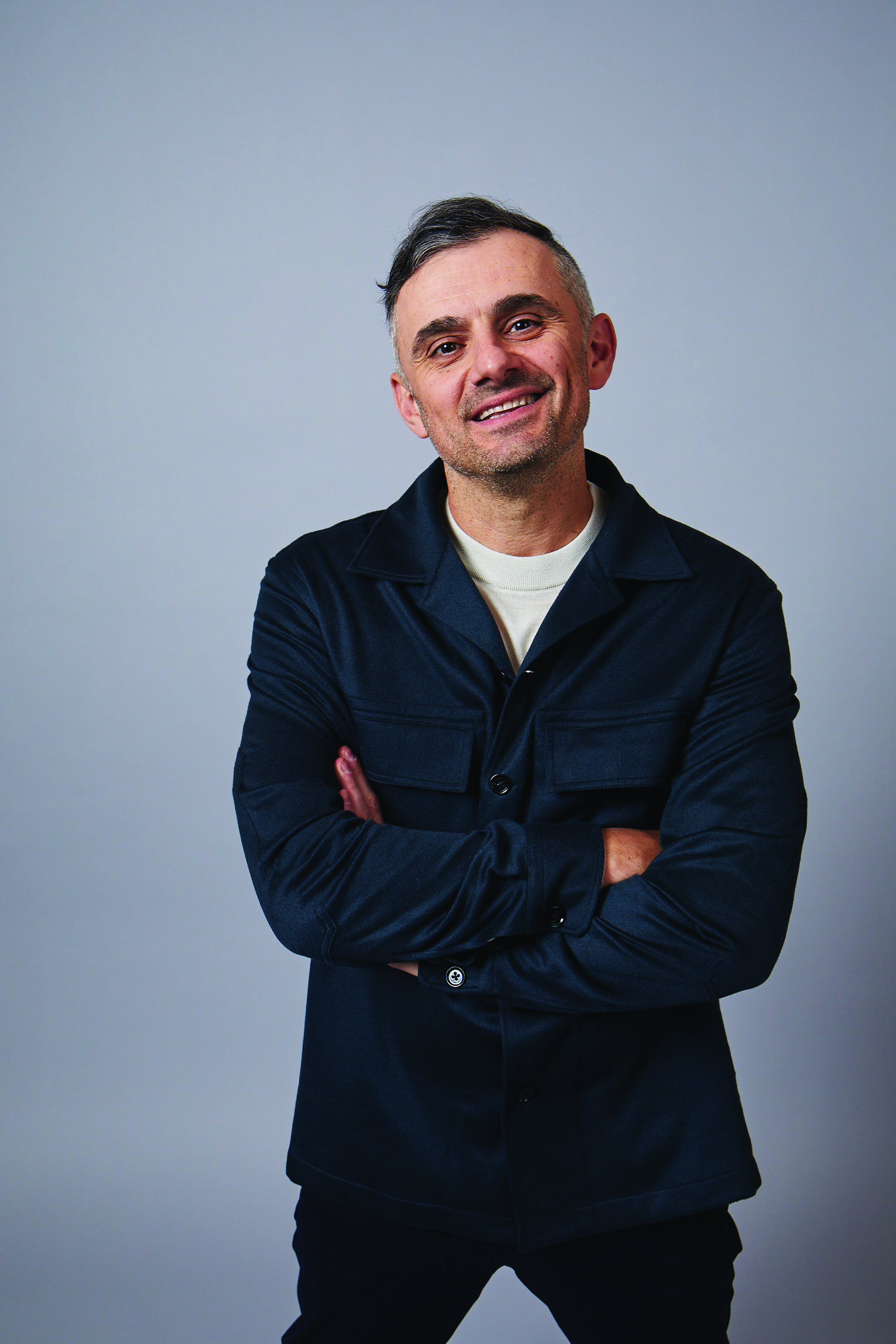
All photos courtesy of Gary Vaynerchuk


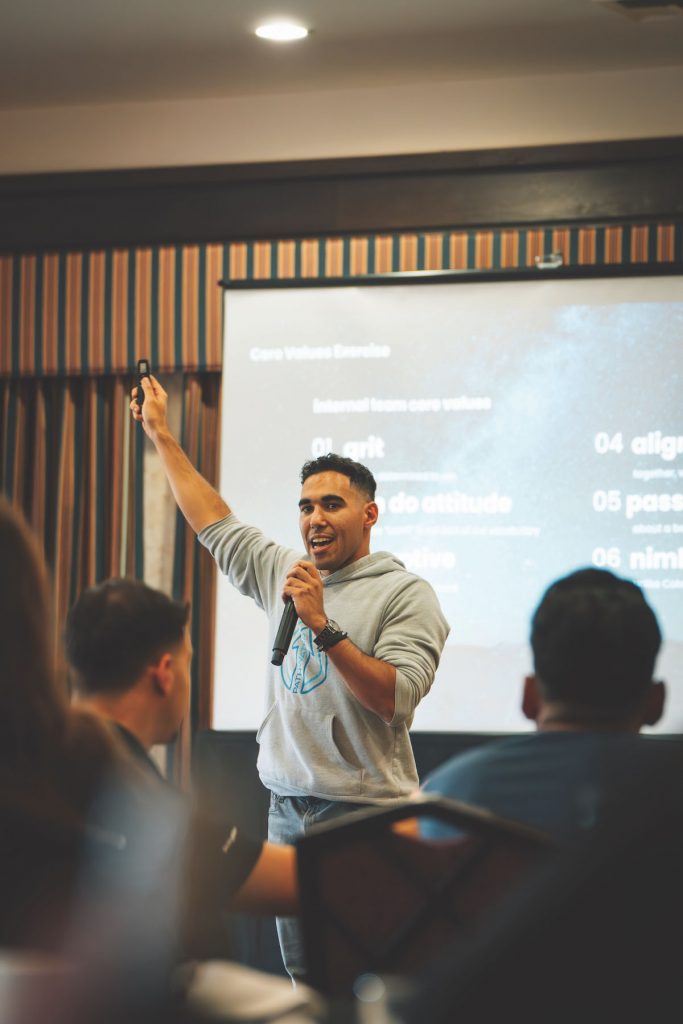
Gary Vaynerchuk — or GaryVee as many know him — has more than 44 million combined followers across social media. Vaynerchuk has built his personal and business brands by producing consistently compelling content across all the major platforms, hosts a top 100 business podcast with daily episodes, and is a bestselling author. Plus, he ranked in the top three on the Real Leaders 2025 Top Keynote Speakers list. He’s a storyteller on steroids, a no-holds-barred kind of guy who will tell you where and why you’re going to fail — and how to get ahead of it.

Real Leaders: You’re a master of personal branding, but how can leaders build their brands online when there’s so much noise? What important lessons have you learned about branding and brand equity?

Gary Vaynerchuk: One of the coolest things about business is it’s kind of like sports in that it’s very merit based. I often hear, “But there are so many other people trying to do it,” or to your point, noise. And I always remind them there’s really no option. If you’re crippled by competition, you probably shouldn’t be in business in the first place. That’s a really important mindset going into this.

I take the other side of the pillow and see the absolute insanity of it in a positive way. Many of us remember a world when social media wasn’t the dominant force. What’s amazing about LinkedIn is I can post a video right now with great thoughts, and it can get 4 million views — if it wins on the merit of the creative. It’s not the social media that I grew up in when I invested in Facebook, Twitter, and Tumblr. Back in 2007 you had to build a community for a long period of time to get millions of followers so that a lot of people could see something you said. 

So I think the answer to your question is tough shit. Of course everyone is going to compete with you. But we are no longer in the era of social media but interest media — and this is the most substantial thing that has happened in communication in a very long time. With interest media, even if you haven’t started a personal brand for the last 15 years and it’s your fourth day posting on LinkedIn, Instagram, or TikTok and you have six followers — I have news for you. Don’t think you’ve missed the boat and envy GaryVee because he’s been doing it for 15 years. Because of the way the algorithms work, we are on an equal playing ground now. If your stuff is good — but today I just kind of mailed it in and did a mundane C-minus execution compared to typical GaryVee content — your video is going to get more views than mine. That’s a level of merit of thought and creative that has never existed.
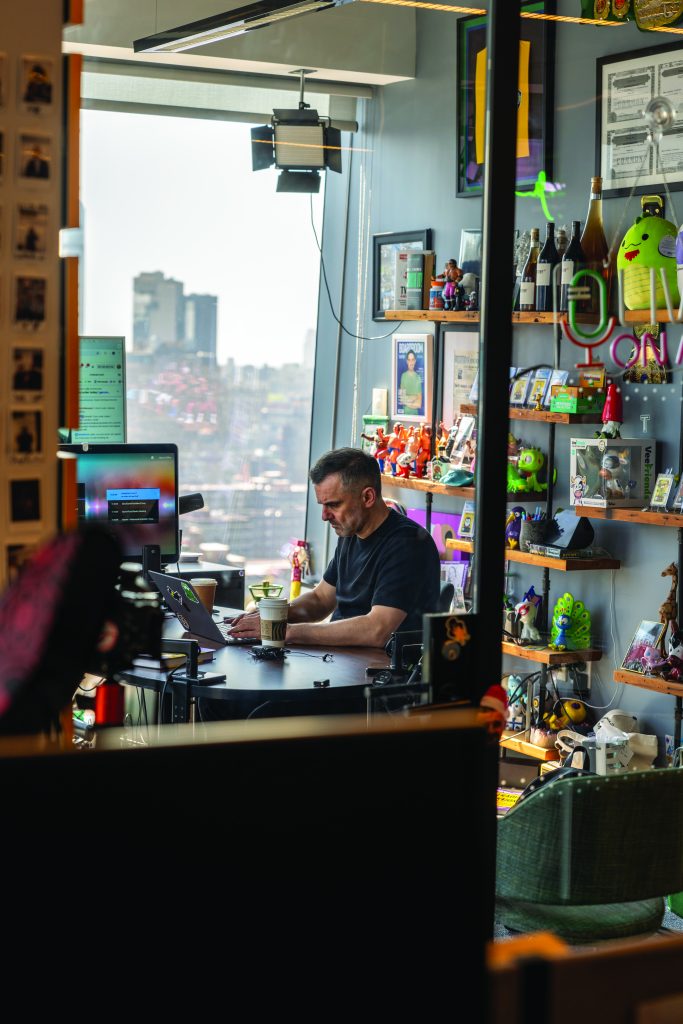


RL: You’ve said that how you make money is more important than how much you make. Is that a nod to impact businesses, and what are your thoughts about the impact space in general?

Vaynerchuk: I believe in the brands that pioneered the impact space like Patagonia and Tom’s shoes. What really happens in your life between age 40 and 90 is that the dollars in your bank account don’t drive the level of happiness you thought they would, and a lot of people are confused by that. How you make money matters because you’ll have a happier life as a human being if you believe in what you’re doing. You’ll have more joy in your life, in your family and friendships, and how you feel about yourself as you round out your journey.

When I think back to 2005 through 2010 when the early seeds of the impact movement got going, it was remarkable. But when I think about 2015, I felt like every startup I looked at would walk in and be like, “Gary, you’re gonna love my startup. We sell umbrellas, but every time we sell an umbrella, we give an umbrella to somebody in a rainforest.” And then I would look under the hood and be like, “Yeah, but you’re selling an umbrella for twice the price.” That’s not being altruistic — that’s just using good as a facade for your selfishness.

Now in 2025 we’re in a beautiful place. We’re in this place where humans are thoughtful about this, and we’ve got a little bit of the muckery and snake-oil salesmen using it as a weapon out of the system. We’re almost in this mature space where it is a subconscious or conscious thought of every entrepreneur when they start a company that social responsibility is an option, and that’s a remarkable place for us to be. 

RL: What do you look for in a business before you put money or resources into it? Have your criteria changed since your days as an angel investor in Facebook, X (formerly Twitter), Uber, Snapchat, and Venmo?

Vaynerchuk: You know that I love to talk publicly about my big wins. There are many more losses that I don’t talk about. The beauty of being 49 now instead of my early 30s is that the last 15–20 years of investing have taught me that I’m looking for the jockey and the horse. In the earliest parts of my career, I would only invest if I thought the person behind the business could do it — so it was pure jockey. Then I got high on my own supply because I was so on fire that I lost my way a little bit and became only about the horse — if I liked the idea, I imagined myself in the role of helping it get big — so I almost overlooked the jockey. I am now firmly in a place where I have to adore the idea and the intuition, I have to believe that the human being in front of me is capable of seeing it through. So I look for that now, and because I do such early-stage investing, I don’t have the company’s results to rely on to prove that the person can do it. I have to go on my intuition. Can they do that? But I’m looking for what I call the jockey and the horse. 

RL: You’re one of the leading global minds on what’s next — and you’ve been talking about live shopping recently and how it will revolutionize business. Can you expand on that and how it will affect founders and leaders?

Vaynerchuk: This is the quote, and you can put it in a dark black box: Literally anyone reading this article, if you sell something, you must stop reading this article immediately. Go spend 25 hours researching the current state of life, social shopping, TikTok Shop, obviously, notwithstanding what happens here with a U.S. ban or not. Obviously this is global. A startup called Whatnot is the leader, but we’ve already seen Walmart, Amazon, and eBay have their own live platforms. It’s inconceivable to me that Facebook, X, and YouTube do not have aggressive announcements. M&A perhaps — I don’t know what they’re up to. I have no inside information, but it’s inconceivable to me that we won’t see things from Instagram, Facebook, X, YouTube, and YouTube Shorts this year.

If you’re a businessman or woman who has lived in or executed in or paid attention to China, you’re completely bored by what I’m saying because this has been a decade of reality in China, but it’s finally hit the Western world. It’s significant. It could be incredibly detrimental to consumer packaged goods apparel or retailers if they dismiss it the way many dismissed Amazon and social media. This is big girl, big boy stuff. QVC and Home Shopping Network still do crazy amounts of revenue, and half of the people under 40 don’t even know they exist. Anybody over 40 is flabbergasted when they look under the hood. There is something inherently human that humans love to buy stuff when it’s in a live environment. It’s why live auctions do well. It’s why QVC does well. And when you take the conglomerate of the seven platforms that lead social media, the sheer attention, the hours spent by human beings in social media is profound and misunderstood in its dominance. And now you’re layering in shopping. This is a very big deal. I would argue, in a 15-year window, if Amazon stumbled and misplayed it, this could be the thing that knocks them off their perch.

Even if you’re a B2B company reading this right now, and you’re like, “Well, I sell SaaS. That doesn’t mean anything to me,” I implore you to figure out how to go do a collaboration with a fashion brand and make a cool hoodie for your B2B company and then sell it on live shopping  just for the awareness and brand building — not the revenue, which I know would seem far-fetched to a B2B person reading this — but I’m not saying it for my health. It’s a big media.

In 2009, 2010, 2011, I begged traditional media companies to understand how big social media is. It’s similar to what I’m doing right now with retailers and package goods companies regarding live shopping.



RL: How does a traditional media platform like a magazine — an American pastime — stay relevant?

Vaynerchuk: By conforming to the new distribution model through an awareness of what it does. If you fall in love with your form factor instead of your brand, you become vulnerable. Sports Illustrated is a great example. Sports Illustrated could have been House of Highlights and Overtime, but it became obsessed with its medium, not its brand.

My dad’s wine store in New Jersey is in an affluent area — Millburn, New Jersey — a nice green town, good money, upper-middle class to wealthy. There are plenty of small stores on Main Street in Millburn that are just dying. Of course, we know why — online shopping, right? However, if one of those store owners woke up this morning and decided to turn their store, even a piece of it, into a studio that did live shopping all day long, they would explode over time if they were good. That’s another way of answering your question. It’s about not becoming delusional or ideological about your medium. It’s about becoming obsessed with your brand and finding ways to convert it into new attention parallels.

RL: Your new book, Day Trading Attention — what does that term mean?

Vaynerchuk: It was a big moment for me when I came up with the term — one of those eureka moments. It captures everything I’ve been trying to say for 15 years.

Attention is the ultimate asset in the world. Nothing can happen unless someone’s listening to it. 

You can’t become president of the United States if you’re in a cave talking to yourself with no people around. As a parent, your child won’t become the human you want them to become if you don’t talk to them. Every single thing on earth is based on attention, what people give attention to. The quality of the content — the written word, the audio, the video, etc. — is the variable that determines if it lands or not. But without the attention, it’s that whole thing about if a tree falls in the forest, does it make a sound if no one is there to hear it? So attention is my obsession.

I grew up building my dad’s business and then my personal brand — first on direct mail, print magazine ads, newspaper ads, radio, and local television. Then I did it on Google AdWords and email marketing, then I did it on YouTube, then I did it on social media. And I promise you, based on the history of my career, I will be at the forefront of when VR matters. I promise you when and if VR gets three hours of your day the way a phone does, you’ll go into your VR device, and you will be like, there he is — there’s Gary — because I don’t have any romance. And this is actually very important for every real leader to hear: I am not romantic about how I got here or how I currently make my money because if I do, I can get caught back to antiquated. I’ve got to always understand where it’s going, and I’ve got to get that timing right.

Day trading is a term on Wall Street, and it is very different than the way people used to invest in stocks. Our grandparents and our parents, they would buy a stock and they would go to sleep, or a mutual fund and they would be like see you later, I’ll look at it in a couple of years. Then when the internet came along, we had these kids buying stocks and selling them every second — day trading. If I buy an ad in a magazine, I’ve got to make the ad, buy it, and then there’s a long period of time before it shows up in an issue. Magazines are great and important, but the way social works now, the sheer tension, the speed in which you have to make content and be on top of this, is more like day trading than buying mutual funds — so day trading attention captured the essence of what I want to say about marketing. From Nike to Real Leaders, to GaryVee the personal brand, to a store on Madison Avenue, to a law firm — if you are doing marketing, if you are trying to get attention, if you want to succeed and build anything, a personal brand or a business, the more you understand that you’re day trading attention now, the better you will succeed.

Once you understand that, you start to realize how much science and art and strategy and complexity there is to be good at it. If I told every kid who was an athletic freak 20 years ago when they were 6 years old, “Hey, you should all become basketball players — not football players — because I see the future, and basketball is going to grow, and because there are only 15 players on a basketball team and not 53 like there are on a football team, you make a lot more money if you’re a good basketball player,” that would have been the right strategy that wasn’t obvious 20 years ago. And yes, being great is hard, and that’s what this is: I’m telling you that basketball is coming, but the reason I wrote the book is to show you how to train and actually be great at it.

RL: If I’m a direct-to-consumer, socially conscious, or certified B Corp company, where should I be playing online today?      

Vaynerchuk: I mean required — not even optional — Facebook, Instagram, TikTok, and YouTube Shorts. I couldn’t comprehend if you’re trying to sell something direct to consumer not being on those channels. The next tier would be X, LinkedIn, and Snapchat Spotlight, which is the TikTok/Instagram part of Snapchat. But the first four are utterly required to have any prayer of success.

RL: If I’m a small B2B service provider looking to target socially conscious business owners, what kind of strategy would cater to them best?

Vaynerchuk: This is going to blow people’s minds. The AI algorithms that run the For You Pages and the feeds of the social networks are getting better and better by the hour in understanding content and then putting that content in front of the people they’re trying to reach. Can you imagine what’s going to be in place in a year or two? It’s already happening — but I’ll go with a year or two — where this individual who’s saying words like “socially conscious” or “for good,” literally algos are picking that up, and then the feed will send it to people who’ve shown a propensity for being interested in that subject matter.

So my answer for that B2B service provider you describe would be very heavy in YouTube Shorts and LinkedIn to reach that socially conscious business person — LinkedIn because it just finds the B2B environment and YouTube Shorts because YouTube is the second-biggest search engine in the world, and so when you put a social piece in there, a YouTube Short will show up for the people looking for that kind of content, and that would be stronger than you doing it on Facebook and Instagram right now.


RL: If you are a founder growing a business on social media, should you grow it on your personal platform profile or on the company’s?

Vaynerchuk: Great question. The answer is both. Every business brand I have has its own pages, and then I have my pages. Humans tend to over index brands and companies. It’s just the nature of the medium, but by doing both you’re able to take the human audience and push them to your business, and you can work with them back and forth. Collab posts are now a thing, and so I genuinely believe it’s both. But if somebody’s crippled by that and thinks that’s so hard, or they can’t, the reality is either will work.

RL: Should a company have brand guidelines, or is that giving away the ultimate creativity?

Vaynerchuk: Should brands have guidelines? Sure. It’s good to know what you’re up to for new employees. But for the leaders reading this, this is a marketing terminology issue more than a business and operations one. In Marketing Land, how to build a brand, brand guidelines — a lot of this stuff is hurting people in the new world. It was good for television — it’s not good for social media. I would rather brands focus on being relevant to as many different consumer segmentations as possible versus coming up with a tagline or color scheme that restricts their creativity in this new world.

RL: Real Leaders is all about the holistic leader — developing not just the professional side, but the personal side. We have a lot of family businesses in the Real Leaders community. Are you thinking about bringing your kids into your business?

Vaynerchuk: I have no ambition for my children to be businessmen or women. If my daughter and son end up not being an entrepreneur or not even interested in business — let’s say they want to go nonprofit, or they want to be a politician, or they want to be an artist — I’m great with that because I’m obsessed with my children being as passionate about what they do as I am about what I do. If they decide they want to be in the game, the first thing that comes to mind is the fear of nepotism. I’m incredibly scared to create a fake environment that will ultimately be financially lucrative for my children but will be emotionally detrimental. I wouldn’t even do it to my own employees because I view them as family. I wouldn’t put my children in a position that lets them leapfrog over someone who’s earned it.

My kids are 15 and 12 right now, so I’m still a few minutes away from the red zone, but I’m at the point where it’s worth thinking about. I’m very fortunate that I’m growing up in an era where we’ve got 100 years of data and anecdotal examples of what can go wrong when you don’t play this right. The good news is, I don’t have my own self-esteem wrapped up in my children’s financial and professional success. What really hurts parents is when their self-esteem is wrapped up in their kid’s school, in their sports, and how much money they make. I don’t have that. I’m obsessed with being their father — not their friend or cheerleader — and as a father, I need to be a counterpuncher to the truth of who they are in their soul and try to help them into a place of joy and fulfillment and passion, and hopefully that will be how it plays out. 
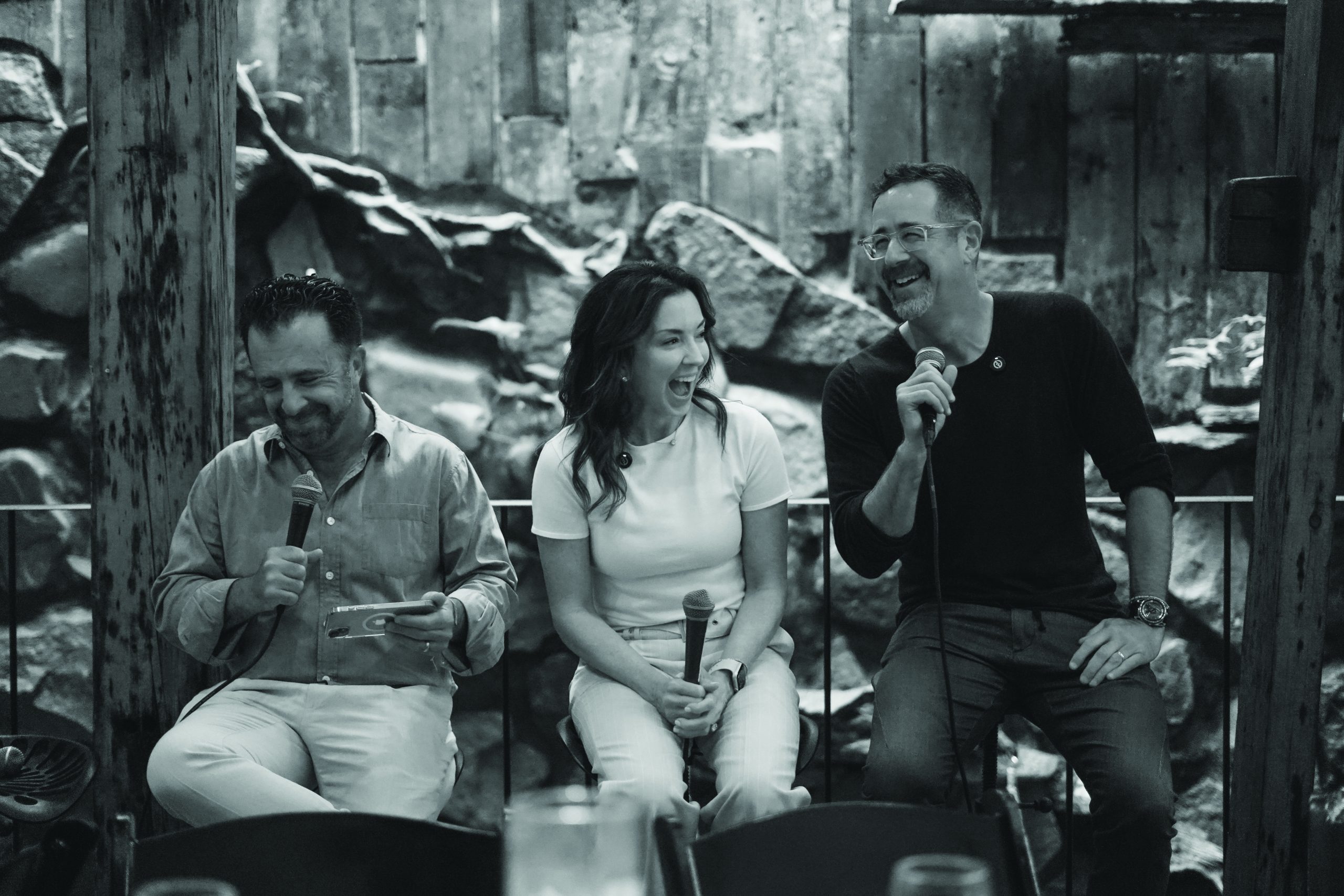
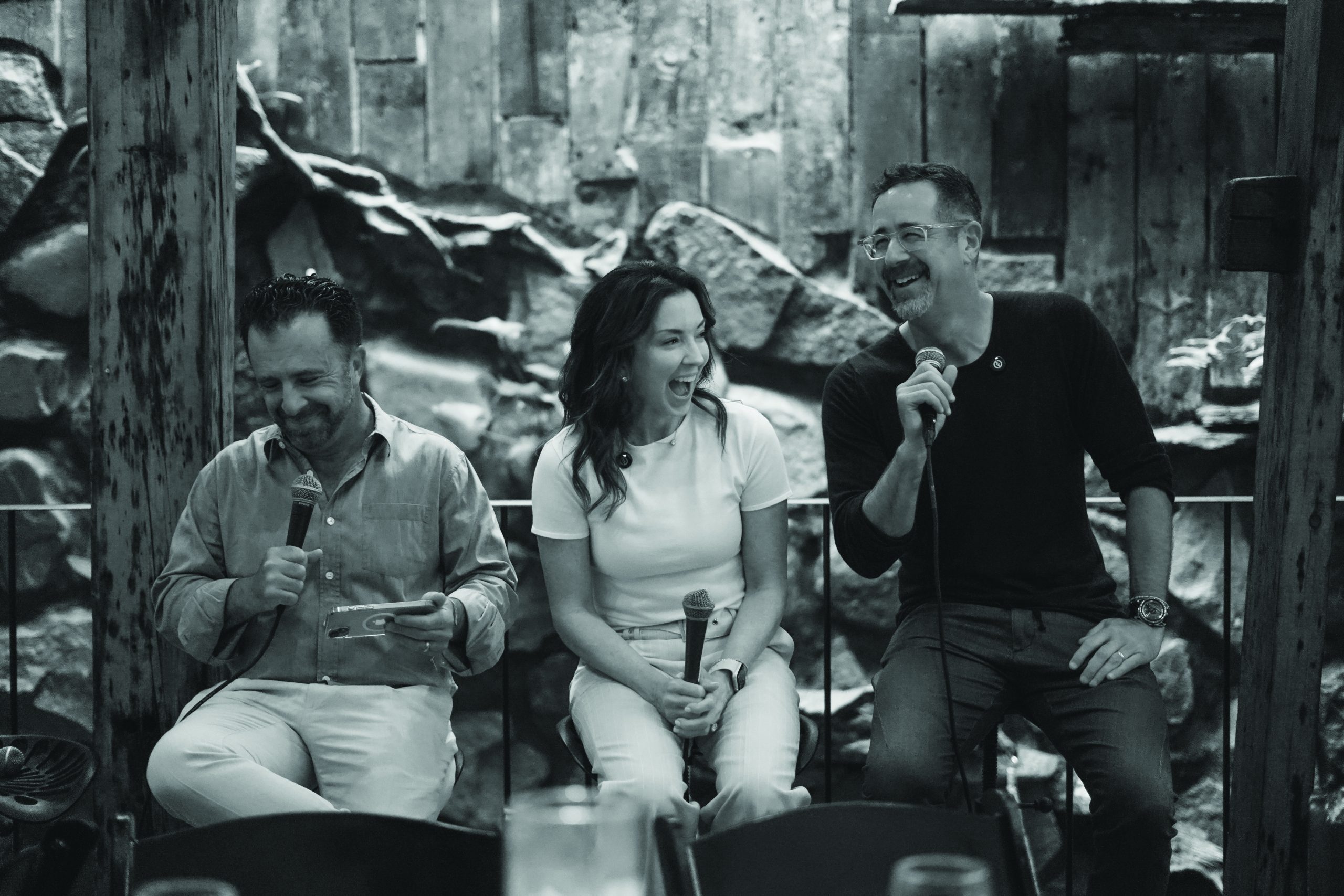
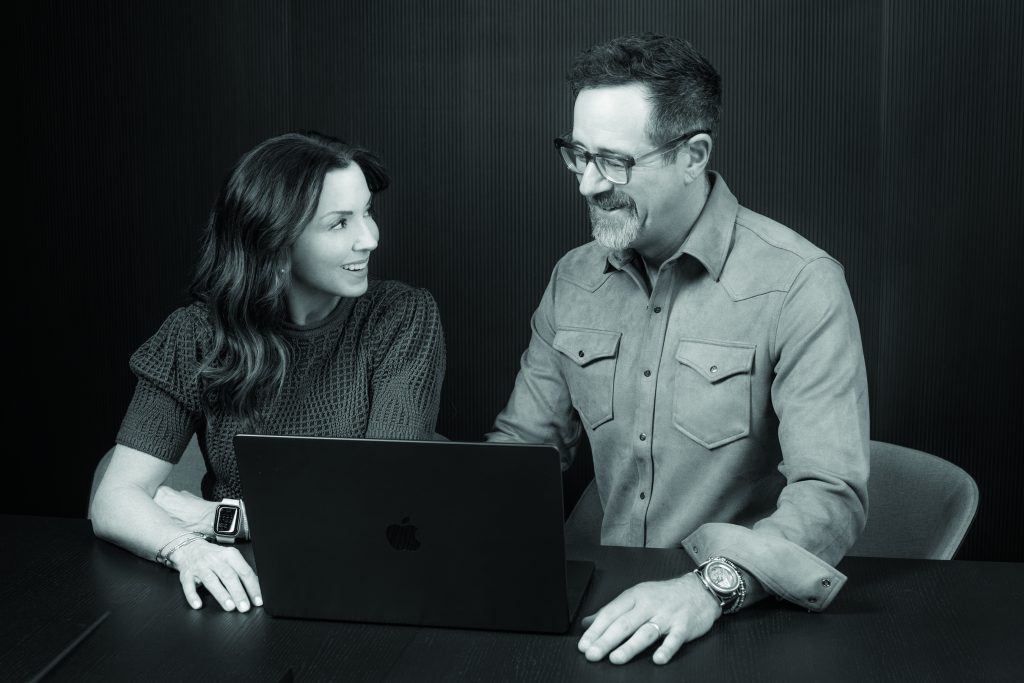
Mike and Kass Lazerow: A Couple of Entrepreneurs Who Have Their $h!t Together


The husband-and-wife team tell raw, personal stories that show how to triumph over the uncertainty that they say most certainly awaits new entrepreneurs.


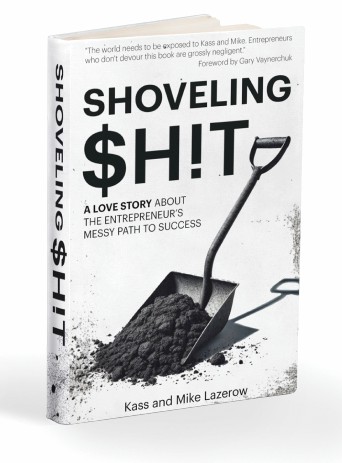
Mike and Kass Lazerow wrote a newly released love letter to entrepreneurs starring a four-letter word. If you’ve ever launched a business, the book’s title, Shoveling $h!t, won’t surprise you — in fact, many battle-worn business warriors are surely reading this and nodding their heads in surrender. The book encourages embracing the beauty of the struggle and draws from decades of helping entrepreneurs build companies. 


Kass and Mike are serial entrepreneurs and investors best known as the co-founders of Golf.com (sold to Time Warner in 2006) and Buddy Media, the leading social media marketing platform that sold to Salesforce in 2012 for $745 million. Since then they have focused on providing capital and advice to the world’s most innovative founders and have been co-founders and early investors in almost 100 startups generating more than $10 billion in realized gains.


They served as angel investors and advisors to Scopely, which sold to Savvy Games for $5 billion in 2022, and Liquid Death, the canned water company whose “evil mission” is to make people laugh and drink healthy beverages more often, all while helping to kill plastic pollution. He is business development, sales, and product. She is operations and HR.

“The first thing I look at when deciding whether to invest in a startup is the market,” says Mike. “I’ve never seen huge companies come out of tiny markets, so it always starts with that, but the most important thing is the founders. Do they know what they don’t know? Are they humble enough to realize that they’re not going to know the answer to everything? I’m not looking for someone to spin me a great story. I’m looking for humility and authenticity. If they tell me they have the product vision but they aren’t a salesman, that’s the perfect answer to me because I know they get it.”

When considering an investment, Mike and Kass don’t care much about the competition because most markets aren’t winner takes all. They are more focused on building a psychological profile of the founder: Who are they? What motivates them? What’s the product, and why is it different? How well do they know the customer?

Sales and marketing is next. “We care a lot about whether your product can get to market,” says Mike. “You need to be able to explain how to get this into your customers’ hands. How do they find out about it? How do you deliver it?”

Finally, does the financial model make sense? “Yes, you’ll pivot, you’ll change,” Mike says. “But if it doesn’t make sense at the beginning on a piece of paper or back of a napkin, it’s not going to make sense when you launch it.”

So what’s trending right now? Mike and Kass say now is a critical time for investors to look at social impact companies. “Diversity, equity, and inclusion as a corporate marketing term is dead — DEI has been killed,” Mike says. “However, the principles behind it have never been more essential for businesses to embrace because any business that isn’t diverse and celebrates equality for everyone — not only in the company but customers and partners, any company that’s not inclusive to their stakeholders — what kind of company is that? Look at the news. It’s depressing. This is a better time than ever to double down on these principles.”

For example, Kass and Mike are helping Dylan Zajac’s company, Computers 4 People, fix the inequity gap when it comes to computer access across the world. “Dylan’s goal is to donate a million computers, and he’s been working on this all through college. He even came up with a way to give computer lessons to the people he’s giving the computers to,” says Kass. “I love it because I’m seeing a big group of young adults who are very much looking for companies to run that have a social good component, if not the whole business model.”

Oh, $h!t


Kass and Mike hear a lot of pitches, and there are a few things that make them cringe. “First is if they’ve done zero research with their name, and it’s pretty obvious that it’s going to get them in trouble down the road and they’ll have to pivot and rebrand,” says Kass.


Another concern is the inflation of titles. “Everyone wants to seem cool, so when everyone in the group is running around with some C-level title with zero experience, that also makes me cringe,” she continues. “How are you going to operate efficiently and move at the speed you need to as a startup with as many pivots as you’re going to need to do? You’ve got to protect who you hire, give those people the right titles, and put the structure in place from the beginning.”


Mike’s No. 1 pet peeve is a lack of focus. “One of the questions I ask is: What are the top three priorities for your business this year? You would be shocked at how many young founders — and frankly, business owners — don’t know that,” he says. “If you don’t know what you need to be focused on, how do you know where you’re going and what you want to accomplish? If you as the founder don’t know it, your whole organization definitely doesn’t know it. We like clarity. You have to know how to spend your resources, and if you don’t have clarity of vision, you have no chance.”


The Culture Formula

The Lazerows are often asked how to build a strong culture, especially in remote work environments. “It definitely stems from leadership,” Kass says. “It’s your job as the leader to make sure you know what you’re concentrating on. What is the mission of this company over the next 12 months? Your job is to make sure everyone is on the same page.”


Kass emphasizes that an important part of the culture formula is making sure everyone understands the focus. “They’ve got to understand it because they have a role in that focus,” she points out. “The goal might be $10 million in revenue, but you have to show them how every team within the company should work to get that. You explain it, you show diagrams on how every person in the company connects to that mission, and then your job is to say it over and over and over again. You can never say it enough. You’re saying it in one-on-one meetings, in small groups, to teams, to investors, in press releases.”


Kass says most companies believe that it’s easier to have people remote, but there are problems with that. “You learn a lot from being around other people. You learn the skill of reading other people, understanding how to negotiate, how to pick up on little nuances,” she says. “As the leader you have to show them how you interact with people. Companies hate when I say this but if they are going to have remote teams, then the leaders need a budget so they can go around the country. If you can’t afford to bring everyone in, you’ve got to do the road show, you’ve got to have hubs, you’ve got to have in-person meetings. I feel very strongly about this.”


Building culture is about the traditions, the symbols, the celebrations. “Whether you have a remote workforce or everyone in person, culture isn’t just about the good times,” Kass says. “It’s getting through a necessary pivot or losing a big customer. Is everyone going to stay with you even though they’re scared about the unknown and what’s going to happen? Do they believe the leaders got this? Are the leaders communicative and transparent about everything? Don’t shine the turd. Culture is built on the tough times and how you tell people what’s happening and what they should be doing.”


Mike adds that while he and Kass are realists, his belief is that companies should be in person. “If I am starting a company today, I want to be together,” he says. “I think we’ve all got to go back to the office, even if it’s hybrid. That’s the way you execute strategies and have any chance of creating relationships that stick.”


Forget Work-Life Balance

In the new book, Kass and Mike write about the imbalanced life of an entrepreneur. “You can only do one great thing at a time,” says Kass. “When I think about entrepreneurs and the amount of crap thrown at them — you lose your office space, three people quit, there’s a lawsuit, you have to rebrand — there’s never enough time to do everything at its top level.”


She says she and Mike accepted from the beginning that they would be sacrificing their kids’ childhood for a while. “Our hope was that we could give more back to them when they were a little bit older,” she says. “We calculated for that. We didn’t have many friends outside of work. Spring break was our family time.”

“There’s no balance because it’s unlimited work,” Mike says. “You’re not just doing a job — there’s this whole world that you’re in charge of — and that leads to a lot of fear and doubt. You will be miserable many days, and you’ll say to yourself, ‘I don’t want to do this.’  You will be miserable and realize at the same time that it’s the only thing you were put on earth to do. It’s where you’ll find your passion, your purpose, but it comes with significant personal costs.”


Kass and Mike want to help leaders embrace the uncertainty because they say that’s the best way to handle the fear — not eliminate it but thrive inside it, and be able to make better, more confident decisions.


“Don’t try to separate personal from business — just live your life,” Mike advises. “If it’s important, make it part of your day-to-day living. Make giving back part of your nine-to-five, not just nights and weekends. You’ll get better at navigating risks and helping people. All of a sudden you’re a better employer, mentor, friend. You’re communicating better, having the hard conversations, staying healthy. There will be this new-found calmness inside the shitstorm. The shitstorm doesn’t go away — and you don’t want it to — because the shitstorm is what takes people and companies to the next level.”


Check Your Ego

The sacrifices paid off for Kass and Mike, who live happily in New York City and Hudson Valley and have three grown children and two rescue dogs. “One of our family’s favorite phrases when our kids were young was, ‘We never give up, and we always give back,’” says Kass. “I love that even with everything going on, our kids saw and recognized this was our way.  There’s no better drug out there than giving back as leaders with unconditional support and love to help glue the culture together.”


Even with disruptions, rising costs, and trade wars, they believe it’s a great time to be an entrepreneur. “The best time to start a company is today,” says Mike. “Whether you’re in a depression or have zero revenue, you’re not going to do less than zero. It’s time to build — but always be ready to pivot.”


“The pivot is not something to fear,” adds Kass. “It’s something to embrace just like other uncertainties. Your ego can’t drive decisions. If ego drives the decision, you’re too late. You might have to pivot three, four times. Ask, ‘What do my customers really want, and did I build that?’ You literally have to step aside and check your ego.”


Mike and Kass also encourage entrepreneurs to fully integrate the impact that they want to make into the business. “Businesses and entrepreneurs are the biggest drivers of good in this country,” he says. “It feels so good to use your resources and your company for good. When you give, you get so much more in return. You get a company with a purpose and people who feel like they’re not only working together but doing good together.” 

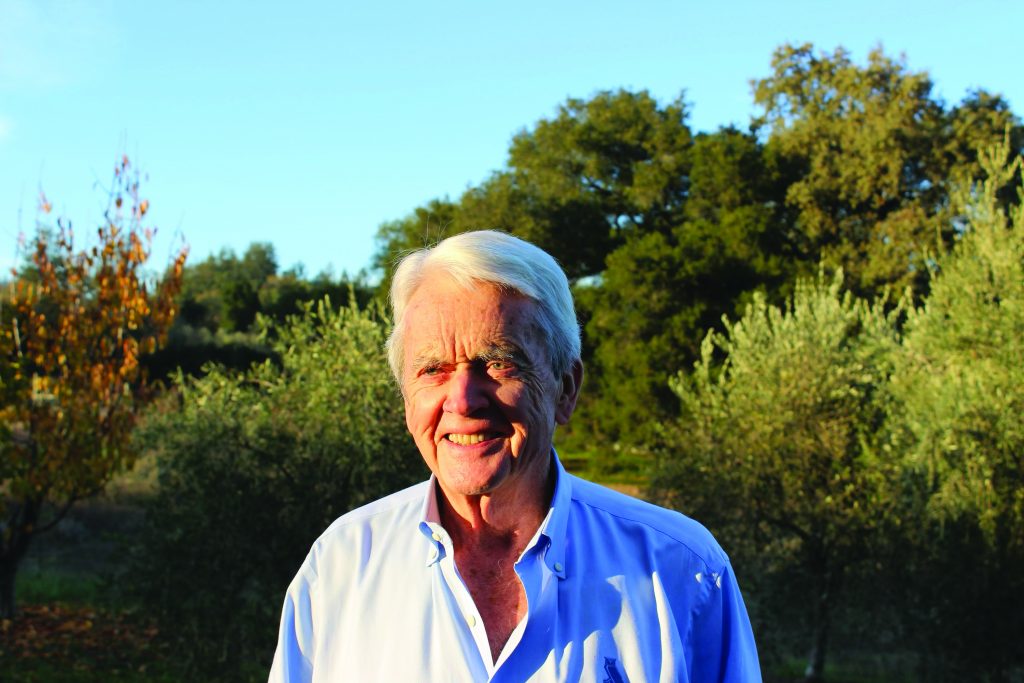
Former EPA Head William Reilly’s Wrestle With Regret


In the twilight of his career, Reilly ruminates over the climate change road not taken — but it’s not over yet.

He had direct access to a sympathetic president of the most powerful country in the world but struggled — he might even say failed — to secure the most critical planet-focused agenda of our time: the battle against global warming. Now it’s all coming to light in a documentary about why the U.S. walked away when the rest of the world was poised to stop the climate crisis.

Head of the Environmental Protection Agency from 1989–1993, William K. Reilly was asked to share intimate details about the behind-the-scenes battle that shaped the nation’s stance on climate change for a film called The White House Effect. With screenings around the world for the last 12 months, the documentary surfaced a host of memories and a deeply personal contemplation of his role in what Indiewire describes as “the quiet tragedy about how we let our planet slip away.”

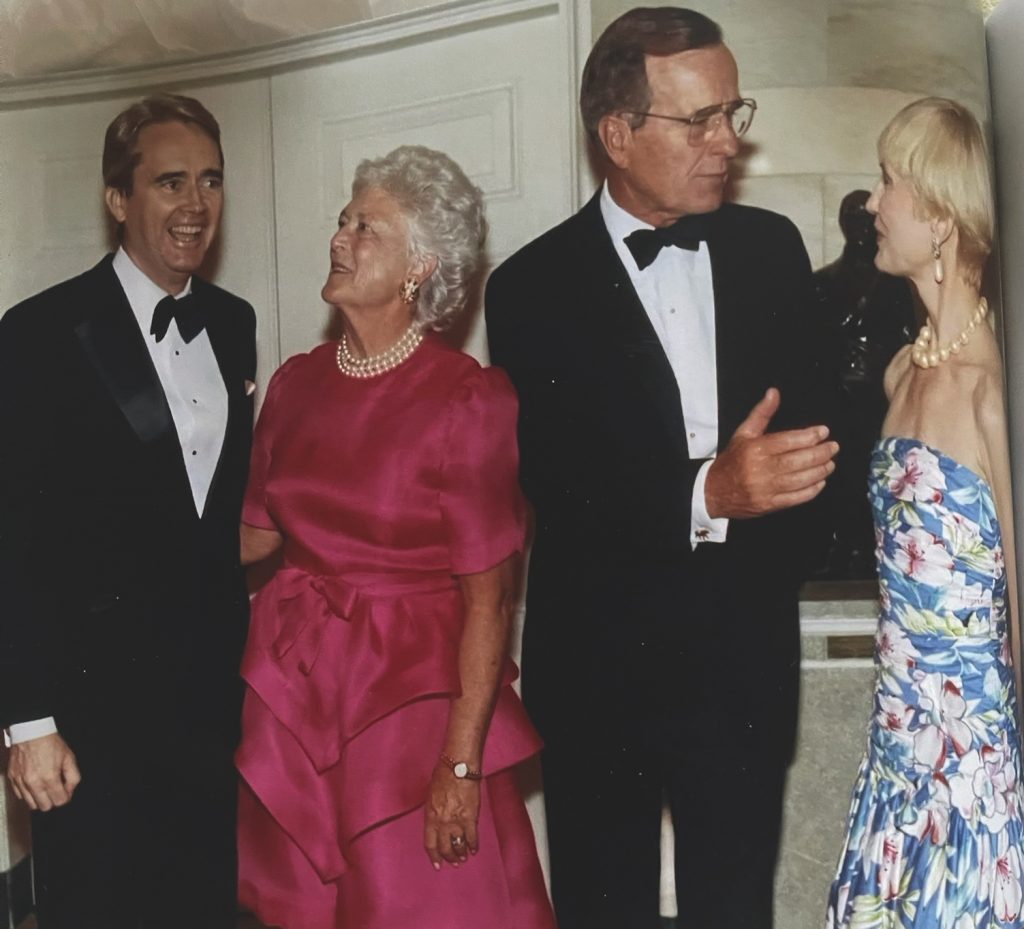
From left: William K. Reilly, Former First Lady Barbara Bush, Former U.S. President George H.W. Bush, and Reilly’s wife, Elizabeth (Libbie) B. Reilly

Directors Bonni Cohen, Pedro Kos, and Jon Shenk focus on the pivotal years of the George H.W. Bush administration, when scientists were desperately trying to educate people about global warming. Bush promised to use “the White House effect” to face the issue head-on and create a plan to get it under control. The documentary reveals how Bush finds himself wedged between Chief of Staff John H. Sununu and industry powerhouses on one side and Reilly and climatologists on the other. The White House Effect explores how, when faced with tremendous pressure to make a decision, the United States undermined a global agreement at the 1992 Rio Earth Summit that set aggressive limits on emissions — and changed history.

“I was not thrilled to hear a movie was being done on one of my biggest disappointments, but they got it right,” Reilly tells Real Leaders. “They treated Bush as a serious man whose reasons for doing what he did were quite plausible. It was clear that the directors were not chasing headlines. They were extremely careful.”

For the making of the documentary, Reilly gave interviews and shared thousands of pages of notes from his years serving the White House and the American people as its chief environmentalist. His personal stories from that time feature an all-star cast: Bush, Sununu, James Baker. The plot? Tackling global warming in a country divided on the issue. The villain? Senior leaders in a presidential administration who didn’t stand with the rest of the world on climate change. The hero? Well that’s the problem. Reilly wonders if it should have been him.

He certainly had his share of triumphs — founding Aqua International Partners, an investment group that serves the water and renewable energy sectors; leading the World Wildlife Fund with over 1 million members; heading the EPA, where he employed over 18,000 people and managed a $7-billion budget; and overseeing amendments to the Clean Air Act, including an emissions trading program to cut acid rain. Reilly also fostered innovative technologies for cleanups, breathing new life into the Superfund program and raising billions of dollars through tough enforcement regulations.

But as heroes often do, Reilly questions whether he should have — or even could have — done more to ensure the U.S. took climate change more seriously and acted with the rest of the world on what the science was saying.

Science — that was also part of the problem, says Reilly. While he was able to strengthen the role of science at the EPA, securing the adoption of “green” provisions in the North American Free Trade Agreement and asserting environmental priorities in U.S. foreign policy, the sad truth is that the need to protect our planet became politicized. 

Reilly says the fossil fuel industry, for example, was quite calculating in the way it dealt with the climate issue. “They got advice from their lobbyists not to disparage the science behind climate change but to simply point to the facts and say that it’s uncertain and that scientists have not really agreed,” says Reilly. “The scientific community would not attribute any specific heat wave or great storms or hurricane frequency to climate change, so that played into it too. It was a smart political strategy: ‘Don’t say it isn’t true. Just say it isn’t proven,’ which basically meant they didn’t have to step back on fossil fuels or support a change in our lifestyle. Environmentalists, frankly, were mistaken in repeatedly shouting from the rooftops that climate change requires a transformation of the American way of life. I don’t think the public wanted anything to do with what sounds like a transformation of their way of life.”

Just prior to his service in the Bush administration, Reilly says people could talk about nothing else but climate change. “It was a hot summer in 1988,” he recalls. “Medical waste had washed up on the beaches of New Jersey. There were records set in city after city for pollution problems connected to the very heavy heat, and it was quite clear that Bush’s statement that he would bring the White House effect to bear on the climate effect was extremely important politically. Everybody’s mind was on climate change, and the press was covering it every night.”

Reilly says the documentary captures the arc from high public concern around climate change to utter disinterest four years later, when the headlines turned to the economy and jobs. “It’s quite clear that they made the right call to switch focuses from a political point of view,” says Reilly. “People could see their friends losing jobs, but climate change was more of a future problem.”

Reilly says everyone close to Bush urged him to focus on the economy. “Everyone except me and National Security Adviser Brent Scowcroft,” he recalls. “We thought Bush should join the rest of the developed world and focus on climate change. Bush had promised stabilization of greenhouse gases, but he was the only major world leader who didn’t press it. He dropped it when he saw the way things were going at home.”

The documentary, Reilly says, accurately portrays how Sununu isolated the president from any real scientists. “Bush never met with the National Academy of Sciences, for example, and the movie made clear that Secretary of State Jim Baker was always friendly toward me and had delivered a very supportive speech about the climate problem, but the chief of staff warned him off. Baker recused himself from the climate issue, and he sent word to me, ‘Tell Reilly he will never beat the White House,’ which was his way of saying to drop the climate issue.”

The documentary gave Reilly a chance to reflect on that time and process its most important lessons. “One of my lessons from this experience is stay with the issue, whether you’re losing or not. You could still have an impact, and at least historically, people would see that we did have the information. We did have cause to do something that we chose not to do.”

Secondly Reilly learned the importance of acting on opportunity when it comes. “If you don’t seize it, it may have consequences you don’t anticipate,” he says. “When you’re doing important work, drive it hard. Realize those moments for what they are and take great satisfaction in them because it may never come again in your career.”

Highs and Lows

During an interview at the end of the documentary, Reilly reflects on a conversation he had with George Mitchell, senior majority leader at that time and a strong environmentalist. “I asked him, ‘If Bush had made a different decision to stabilize or reduce our greenhouse gas emissions, and we put that into a legislative proposal, could it have passed?’ He said, ‘No, you could not have beaten Dingle in the House and Byrd in the Senate and the coalitions they had.’ Then he quickly added, ‘But I would have said the same thing about the Clean Air Act, and you did win there. You defeated them on that, but I don’t think you could have done it again.’”

Over the years Reilly has thought a lot about why the American public doesn’t always take climate change seriously. He points out that while people could see air pollution in the late 1960s and early 1970s, climate change is imperceptible on a day-to-day basis. “For so long scientists have been unwilling to attribute special episodes of heavy heat to climate change,” says Reilly. “They said it’s consistent with what the science tells us to expect, but they couldn’t trace it directly. It took a long time for the scientists to resolve altogether that humans are causing this. I knew they had essentially resolved it during our time in office. The National Academy of Sciences reported twice on climate change, so we had enough science, and that bothered me a lot.”

The truth is, he says, that many industries are completely aware of climate change, but to acknowledge it publicly would result in more regulations and the need to conform to new, more costly practices. “That’s why Al Gore calls it an inconvenient truth,” says Reilly. “Many people don’t want to acknowledge climate change to protect their own economic interests.”

In preparing his memoir Reilly has had the opportunity to think about the highs and lows of his career. His high point was the signing of the Clean Air Act amendments, which Reilly describes as path-breaking due to its use of market-based incentives, the fact that it was a permit-based system with sensors in the smokestacks that sent data straight to EPA, and that it had very significant fines for overages.

“If you exceeded your emissions limit, you had to buy the rights from another company that had reduced its emissions more than the requirement,” Reilly explains. “It was a very efficient market system. The Office of Management and Budget predicted that the cost of the clean air and acid rain requirements would be about $1,400–$1,600 a ton. It ended up being less than $100 a ton because of the efficiency of the market design.”

He remembers his career low very clearly. He was head of the U.S. delegation to the United Nations Conference on Environment and Development in June 1992 in Rio de Janeiro, Brazil. “I got up to deliver the statement for the United States, and I remember walking toward the platform thinking, ‘This should have been the high point of my career, but it’s not.’ I couldn’t talk about the biodiversity convention — which we were refusing to sign — or the climate convention, which was our idea, but we were refusing to put teeth into it by not making the commitment to reduce greenhouse gases. So I talked about the magnificent work the EPA was doing cleaning up Eastern Europe. There were a lot of Eastern European countries who were very pleased with that statement, but it wasn’t the statement I wanted to give. It was a real disappointment.”

Reilly says he overanalyzed whether there was anything he could have done to change Bush’s mind on greenhouse gas stabilization. “Given that I was all alone on that, I don’t think so,” he admits. “The vice president, senior staff, the Council of Economic Advisers chairman, the science adviser — they were all on the other side of the issue. I don’t think it’s reasonable to think that I could have, but I have thought about it for decades.”

For example he wonders what might have happened had he gotten Helmut Kohl, chancellor of Germany who was very respected by Bush, to call the president. “During a meeting in Germany, Kohl looked me square in the eye and said, ‘On your country and mine depends whatever hope this planet has to avert a catastrophe of climate, and on your shoulders, Mr. Reilly, rests the responsibility for bringing your president to understand the significance of this decision and of this issue.’ I knew how passionately Kohl cared about climate, but I didn’t use that card. I didn’t try to get Kohl involved, and I’ll never know whether it would have made any difference.”

Another important factor in America’s stance on climate change is that all of this was unfolding during an election year. “Tommy Koh, a Singaporean diplomat, said that a very important lesson from this conference is never schedule a conference of international significance within an American election year,” recalls Reilly. “I thought that was very shrewd, and it’s true because in an election year we are much more vulnerable and sensitive to the politics than we would be otherwise.”

Business in Politics

Reilly doesn’t think it’s a bad thing that more business leaders are getting involved in politics. “There is a shift in the country toward protecting the environment, and businesses know that,” he says. “Renewables are making the case for themselves.”

Reilly admits he was at a real low point after the first two months of the Trump administration. “He basically destroyed a number of things I personally initiated, like the Office of Environmental Justice, EPA, and ENERGY Star. It has been proposed to defund a whole series of regulations on cars and trucks. I was pretty unhappy and wasn’t sleeping very well.”

But Reilly found his inspiration again last April at the 2025 William K. Reilly Leadership Award presentation at the Center for Environmental Policy, School for Public Affairs, at American University. Research scientist award-winners Gretchen Goldman and Adrienne Hollis were recognized. Before the ceremony, Goldman taught a class that Reilly attended. “There were probably 40 or 50 students, and the energy in that class was electric. You could feel it. It was crisp, excited, and ambitious,” says Reilly. “I was so taken by their energy, their enthusiasm. They were not preoccupied with all the destruction of the environmental apparatus. They asked me for advice on finding environmental careers.”

Reilly told the students that while many environmentalists work at the federal government, most states have environmental problems and need their help. He shared a story about a young environmentalist from Kentucky that he met at a Yale University symposium. “She said that never until the first Trump administration did Kentucky establish a series of environmental priorities and responsibilities, which the state had never thought was in its purview. She said because the federal government was not doing anything on climate or the environment, the state decided to take it on themselves. She said Kentucky never had a more creative and productive period than the four years of the first Trump administration. And I was quite taken by that.”

Reilly told the students, “We’re about to see if the states can step up to this challenge. Many states have built a great record on the environment over the last 50-plus years since Earth Day 1970, and they’re going to want to keep it. That’s where you will find your jobs.”

Soon after at a screening of The White House Effect at Yale University, Reilly was inspired again by the students’ questions. “It’s not a very hopeful movie because things didn’t come out well for those of us who wanted a response to climate change,” he says. “But the students thought that I had really stayed with the issue, which surprised me. I said, ‘I think you should learn from that. It’s not over when you lose a big decision. It’s not over. Look for your day to come again and work for it.’”

Reilly, 85, has given much thought to what he wants his legacy to be: He hopes the next generation will draw from his lessons and boldly champion the charge against climate change — with no regrets. 


A New EPA? Opportunity to Right Some Wrongs

Reilly recently gave a keynote speech at the EPA Alumni Association Annual Meeting with an insightful message: The decomposition of the EPA by the Trump administration gives environmentalists a chance to fix what is broken. “The EPA’s creation and structure were political,” he says. “It was not operational or efficient.”

For example he points out that the National Oceanic and Atmospheric Administration should never have been put in the Commerce Department. “People who are appointed commerce secretary are typically trade people,” Reilly says. “They’re not environmental or scientific people. NOAA is only part of the Commerce Department because the Interior secretary in the Nixon administration attacked the Vietnam War policy — so no way was Nixon going to give a large, new agency to the Interior Department, which is where it had been slated to go.”

Reilly’s point is that in a future reconfiguration, these issues can be fixed. “We can put NOAA, Fish and Wildlife, and the Interior exactly where they belong in a newly structured EPA,” he suggests. “Maybe it won’t be the EPA — make it the Department of the Environment, full cabinet level. That’s where I would place my mind and attention.” Reilly says the EPA Alumni Association created a project team to contemplate how to rebuild the environmental protection and regulatory apparatus. 

“The EPA wasn’t perfect,” he says. “We weren’t perfect. We can do better, and we have to. We can rebuild the EPA. I don’t know if I will be around to be part of it, but I believe it will come sooner than we think. If we don’t have a functional FEMA, if people go to our national parks and discover there are not sufficient rangers to manage the waste and crowds and take care of the trails, the country might become very impatient.”

Mind the Gap: Q&A with Shelley Zalis, Founder and CEO of The Female Quotient


She’s sharp, witty, gutsy — the coach you wish you had. Shelley Zalis started a company, sold it for $80 million, and then went into the business of equality. Here’s why.

Real Leaders: You worked in media, research, and marketing, and you founded successful companies before you shifted your focus to the business of equality. Was there a specific life event that led to this shift?

Zalis: I pioneered online research — so if you’ve ever taken a crappy survey on the internet, I’m sorry, not sorry, because that was me. And I built that research company into a big success. We were profiled in some high-profile media, and my former statistics professor read an article and called me up and said, “How is that possible? You were terrible at statistics.” But I actually mastered how to tell stories from data. It’s all about storytelling. That’s how marketers use research. Before we hung up, I asked my professor if he’d like me to do a guest spot in his class. I told him I’d be happy to rescue his students, and we had a good laugh. That’s the feminine, by the way. Women are contextualizers and storytellers. Men are linear and analytic.

RL: Why did you start The Female Quotient?

Zalis: I was the only female CEO in the top 25 market research firms. While it felt isolating, it didn’t stop me — it motivated me. After I sold my company, I realized it was time to give back and create the support I wish I’d had throughout my career: girlfriends in business. At that time, there were so few women at the top, and we often competed with each other for limited spaces. I’m not going to pass that down to other generations of women. I wanted to shift that scarcity mindset to one of collaboration, where there’s room for all women to rise together. I also wanted to rewrite the workplace rules, which were written over 100 years ago by men for men. I was tired of being the exception — I wanted to help set a new standard.

RL: Were you able to preserve the culture of what you had built?

Zalis: When I sold my company, I had 250 employees operating in six cities and an incredible culture. Overnight, we became a publicly traded company of 16,000 employees. So now I’m sitting on the board of a publicly traded French company — 23 men and two women. I had just sold my company and given them a five-year commitment — and we’re talking about my employees and integrating my beautiful little company into their organization. The new executives are discussing my team as if they were chess pieces, and here I am with tears coming down my face.

After the meeting I was pulled aside and told there’s no room for emotion in the boardroom. So I had two options: One, agree — that’s what your head says you should do, your cognitive reasoning. The other option is what I call a heartbeat moment, where you follow your heart — and that is how all my best decisions have been made. My heart knew that was wrong, and I made the decision to speak up. That’s when I began publicly advocating for empathy in leadership. Emotion, compassion, empathy, and genuine care should have a place in leadership. That experience solidified my belief that leadership must evolve.


RL: Why is empathy so important in business?

Zalis: Empathy is the heart of leadership. Without it, you can’t connect with or inspire your team. After that boardroom experience, I realized that my next focus was going to be on changing the gender equation and closing the gap. Empathy is at the core of this mission. We need companies that have equality in their DNA and CEOs with empathy, and both of those things are truly missing. When I received an invitation to the World Economic Forum, it came with the disclaimer, “We want you to come, but you might not feel welcome.”

Wow. My head said, “Who wants to go to a place you might not feel welcome?” My heart said, “You have to go.” At what point do we take the responsibility to break a pattern? How do you change the status quo at the World Economic Forum? Gender equality wasn’t on the agenda, so I decided to bring it there.

That’s why I founded The Female Quotient — to create spaces where women feel seen, valued, and equal, even in the most male-dominated environments. We bring together leaders — both men and women — who understand that conscious leadership isn’t about gender; it’s about choice. Once you’re conscious of inequality, you have a choice: act or don’t. We bring together leaders who choose to act. Conscious leaders recognize their influence and use it to drive equality, proving that change begins with intentional decisions. 

I had no idea if it was going to work, but it did. It is amazing when you follow your heart and you bring something to the world that is filling a need. I did it because it was something I wish I had had as a female CEO.

The Female Quotient focuses on three things: We have The Equality Lounges, which are experiences at pretty much every industry conference across 30 categories from cybersecurity, technology, and finance to sports, music, and entertainment. Our content and social media struck such a chord that we grew to 6 million women in business following us, so now we’re one of the fastest-growing media businesses. And the third area is transformational thought leadership.

RL: What kind of thought leadership?

Zalis: The World Economic Forum estimates it will take 131 years to close the gender gap. Why should it take 131 years? We’ve achieved the “impossible” before — it took 10 years to send people to the moon, and we created pandemic vaccines in record time — so why not gender equality? Gender equality is a human-made problem. In fact, it is the only one of the UN’s 17 global goals that a CEO can achieve in the lifetime of their leadership. They can’t fix climate, they can’t fix hunger, they can’t fix education, but they can actually close the gender gap in their workplace. It’s the only legacy they can leave in the lifetime of their leadership. 

At The Female Quotient, we call this the Flipping Point. We are partnering with Fortune 500 companies to tackle gaps in workforce, leadership, pay, care, data, and procurement. Companies take intentional, measurable steps to close the gender gap in just five years — “flip it in five,” we like to say. It’s not just a dream — it’s a commitment. All it requires is intentional action for change and a conscious mindset and prioritization. Good CEOs don’t want to leave the pay gap data sitting on their shelves. Equality is possible if you want it. 

RL: What can fixing the gender gap actually do for a company?

Zalis: We call it the business of equality. It’s about closing the gender gap in the workplace, not as a “nice-to-have,” but as a business imperative. Equality impacts everything — from talent attraction to market success. Today, CEOs know that equality is essential for sustainable growth and innovation. Equality isn’t an option; it’s a necessity. The business of equality is good for business. CEOs must be accountable and responsible for equality.

RL: How did most companies receive that message 10 years ago?

Zalis: Women are labeled as too aggressive and too pushy and too assertive, and everyone’s always trying to fix the women. Stop trying to fix it. We’re not broken. Why is it that women are the ones always getting the leadership training? Men don’t get leadership training — they get management training. We should all get management training.

Women subconsciously are like, “Oh, I’m not a good leader because they say I need leadership training.” And the men are thinking with bravado, “We don’t need leadership training because we’re not getting it. So we’re the leaders and they’re the followers because they need the leadership training.” For 10 years I’ve been in the business of equality, but first I had to get women to support women.

It’s OK to own your passion, your compassion, your empathy. Own it. You’re not too aggressive, you are just passionate. When you have tears coming down your face, it’s not because you’re weak. It’s because you care, and caring is a good thing. You don’t have to hide that.

RL: Do you think the leadership training for women sometimes falls under the guise of a company saying, “Look what we’re doing for women?”

Zalis: Yes, but everyone should get leadership training, and everyone should get management training. Whoever needs it should get it, but it tends to be only the women getting it, so that’s a stereotype.

RL: What are the non-negotiable qualities that a real leader must have?

Zalis: Compassion, empathy, collaboration, kindness, support. Real leaders tend to eat last. They push people up. They listen to hear. I hire for passion, train for skill.


RL: What are your thoughts about female empowerment?

Zalis: I recently wrote an article and posted it on LinkedIn, and it went viral. It was about getting rid of the word empower. I realized that we talk a lot about female empowerment, but you never hear about male empowerment. You talk about empowered women, but you never hear about empowered men. And if you actually look up the word empower, it means someone gives you power. Why do women have imposter syndrome? We have always been waiting for someone to give us permission, for someone to give us a seat at the table, for someone to give us that voice. We’re always waiting. We’re always waiting for what? We’ve always had power within us. Men have not been waiting for anything. They’ve taken it, they’ve used it, they’ve owned it. 

Let’s create a new word: We are not empowered; we are “inpowered.” Let’s stop waiting for a permission slip to do things. It’s about women recognizing their inherent strength and using it unapologetically. We don’t need male allies — we need leadership allies — people in power who value equality and act on it. 

I don’t care if you’re a man or a woman — if you’re in a position of power, use it. We don’t need to take power from men to give it to women. We can all have it. We just use it differently. There’s the masculine and the feminine. And by the way, plenty of men have the feminine, plenty of women have the masculine. I don’t call them soft powers. I call them essential, critical skills. Empathy, compassion, and passion are critical skills. They are strengths.

RL: You were one of the creators of the “See It Be It” movement in media. How does what we see in the media impact female emerging leaders?

Zalis: Media shapes how we see ourselves and each other. During the Paris Olympics, despite achieving gender parity among athletes, the only ad in the Opening Ceremony showed only men and male athletes — even though women were the stars and also brought home more medals. These aren’t minor oversights; they send powerful messages about who deserves recognition. We work with companies to address these biases constructively, making intentional changes to reflect equality. After I sold my company for $80 million, The New York Times ran the story on the front page — but in the Style section, not Business. If I were a man, where would the story have been? I want to change that narrative for all women.


RL: Would you agree that some gender balance issues are unintentional or a result of ignorance?

Zalis: There’s not always some agenda behind it. It may be sloppy work. It may be thoughtless.The most important thing is first to make people aware. I’ll make you aware, but I’ll do it quietly. Once you’re aware, you have a choice to do something or not, but I’ll first give people the benefit of the doubt and then make them conscious of the imbalance.

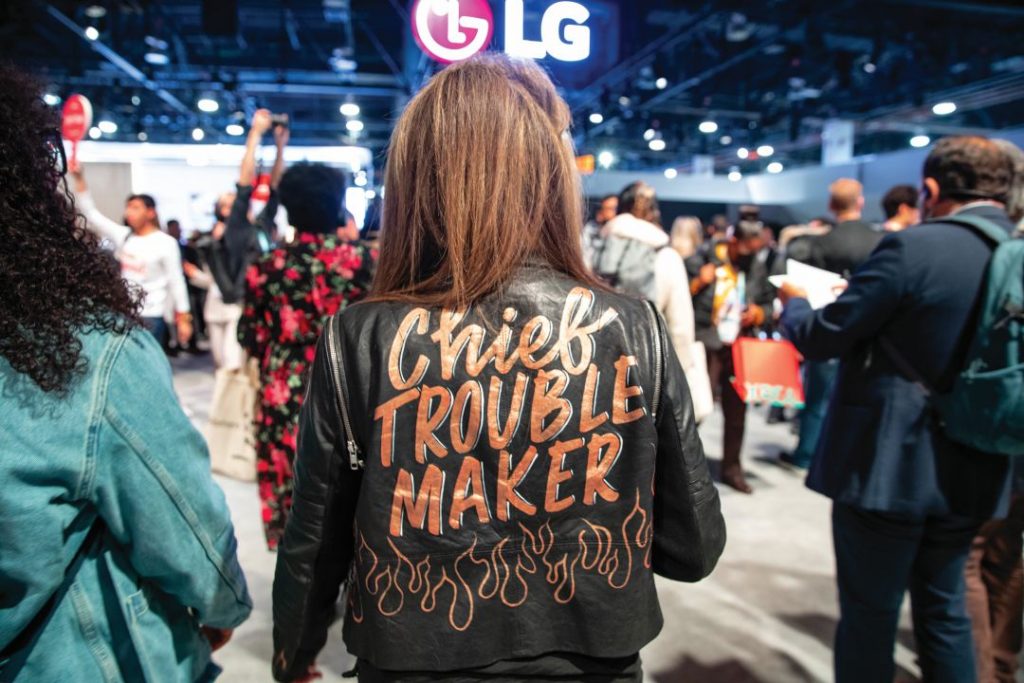
RL: You call yourself the chief troublemaker. What is your favorite kind of trouble?

Zalis: I break the rules. Old patterns need to be broken to change the equation and close the gender gap. I left the traditional workplace because the rules didn’t work for me; I was tired of being the exception. I believe that if you create rules that work for the exceptions, they’ll work for everyone. Lived experience is key to understanding how to create these rules — it’s not in a textbook. I disrupt norms, challenge patterns, and set new standards so we can all thrive at home and work. It’s not about causing trouble; it’s about creating progress.

RL: Looking back, is there anything you’d do differently? Any advice you’d give to others?

Zalis: Follow your heart. I am 62, and I actually think I’m at the best part of my life  — I really do. This is such a great chapter. Every chapter is a new chapter. I don’t think that 60 is the new 40, or whatever people say. 60 is 60. I think I’m better than I’ve ever been. Be ageless. Live life with no regrets. Age is a mindset. Live at the moment. I’m bold and getting bolder.

I want to look back and know I tried everything I believed in. My advice is simple: Take risks. Don’t let fear of failure hold you back. Every movement I’ve started came from a risk I was willing to take. Age is just a mindset. Whether you’re 20 or 60, it’s about having the courage to follow your heart and pursue what matters most. The best is yet to come. 

The Path Less Chosen: PATH Water

PATH Water’s co-founder and CEO Shadi Bakour shares three branding lessons, including why leaders should stop resisting collaborations.

By Carla Kalogeridis


Shadi Bakour is an entrepreneur who finds motivation in tackling the world’s largest problems. In 2015 he co-founded PATH Water, which launched a sustainability-focused aluminum water bottle to challenge businesses and consumers to rethink the bottled water industry. Today, PATH is a global brand partnering with individuals and brands like Kevin Hart, Ryan Seacrest, Guy Fieri, Ninja Fortnite, Adidas, Dropbox, Whole Foods, Apple, Yellowstone National Park, and more.

PATH is the first water packaged in a certified refillable and 100% recyclable BPA-free aluminum container. Since its inception, PATH has helped save more than 250 million single-use plastic bottles from oceans and landfills. The product is sold in all 50 United States plus seven countries.

Working collaboratively with partners, PATH has put its aluminum-bottled water in more than 55,000 locations around the world. The company has exclusive licensing deals with Nickelodeon and Hasbro. “Our whole approach to business has been the power of collaboration,” says Bakour. “Collaboration helps us make a larger impact and build a larger business much faster. We’ve learned that the new age of business is collaboration.”

Bakour isn’t claiming he invented the concept, but he has harnessed it more effectively than most entrepreneurs. “If you look at successful brands across the world, you’ll see that many have leveraged each other to make a larger brand impact,” says Bakour. “You can create win-win situations where you’re adding value to each other’s businesses and creating synergy to grow.”

He frequently cites a favorite African proverb: If you go alone, you can go fast; but if you go together, you can go far.

“It’s not really about what I can extract from the other organization or person,” he says. “And it’s not about what I can just give away, because I have to build a business with sustainable, profitable growth. It’s about how can we work together, and at the same time, what added value can I bring to the table?”


Here are three branding lessons Bakour has learned along the way.

Lesson No. 1: Go Against the Grain


Shadi Bakour told attendees at the recent Real Leaders UNITE conference in San Diego that being rejected by peers at a young age gave him time to think about how to do things differently.


As a child of immigrant parents, Bakour says he was “not the coolest-looking kid” in school.

“You could probably measure my weirdness by measuring the gap between my buck teeth,” he jokes. “But in that journey of not really being accepted among my peers at a very young age, it allowed me to think about how I can do things differently. It gave me an outsider’s perspective and taught me that sometimes going against the grain can be a really good thing.”

When he started PATH, at the core of everything he did was one question: How do we do things differently than how they’ve been done before?

“That one question goes to the essence of our product, which is a bottled water company that doesn’t want to sell you any more water because our product is in a reusable container,” he says.


Lesson No. 2: Put Ego Aside and Collaborate


The PATH Water idea really took off in San Francisco International Airport in 2019, which had banned the sale of single-use plastic on its property. “By some act of God and a lot of hard work, we took over the entire airport and created a catalyst for our business,” says Bakour. Because San Francisco is one of the tech hubs of the world, they were soon approached by an executive at Salesforce.

“Salesforce was really excited about our product,” he says. “They’re very anti-plastic, and they’re impact focused.” PATH was a very small business at the time — about $100,000 in sales — and it was just getting into 7-Elevens in Northern California. Salesforce wanted PATH to feature its logo on the PATH bottle.

“If you know anything about beverage or food, it’s all about brand equity,” Bakour says. “We were focused on building our own brand, right? We thought there wasn’t as much value in private labeling because you have no brand equity. That was the ideology planted in our brains at a very early stage.”

Eventually, Bakour says they gave Salesforce a “little, tiny spot” on the back of their bottle. “We fought tooth and nail over that little piece of real estate on our bottle,” he recalls. “When it comes to collaboration, ego can be the killer of growth. For a long time, we really resisted this idea of collaboration. Later, we had another opportunity where a big investor wanted us to make them a special bottle. So slowly over time, we started to let go of this idea that we had to be the only brand front-and-center on our bottle. We started falling more and more into this idea of collaboration.”

With the new shift in thought came a new program called Partnering to Save the Planet. “Over the past few years, that program has been growing like wildfire,” says Bakour. “Most people know us for our retail product at Whole Foods and Target — 100,000 retailers. But now we’ve partnered with all types of organizations, and this program we’ve created is completely banning single-use plastic within each partnering organization.” Recent program partners include Madison Square Garden, SpaceX, and several hotel groups. 

“You won’t find it in the business books and few advisors will counsel you about this, but collaboration has opened up our sales channel and opened up the door for us in so many different ways,” he says. “By partnering with these organizations, we are leveraging our brand but also their brand equity. We’re lean on their brand equity to create more trust with our consumers, to create different experiences with them. When you have these different organizations building pyramids of our product in the middle of their facility, there’s added value that we never would have considered.”

Lesson No. 3: Most New Ideas Are Recreations of Old Ideas


Through the collaboration strategy, Bakour says he came to realize that even when you’re going against the grain, you probably still don’t have a purely original idea.

“Our licensing idea really came from one of our partners, someone from the fashion industry who had zero experience in the beverage space,” admits Bakour. “He looked at our product not as a bottle of water, but as a fashion accessory. It completely changes your approach to how you would sell or promote this product or how you would even build the brand. One of the key strategies when it comes to fashion is licensing. So, he brought this idea from the fashion industry, a strategy of accessorizing our product to an industry that largely was focused on brand equity.”

Bakour says through this one strategy, PATH learned to cobrand and partner with different organizations to eliminate single-use plastic and make a larger impact together. “We launched into retail licensing — which was a completely different concept for us — but a known strategy for our partner,” he says. “I realized that at the end of the day, most ideas are not really original ideas — they’re just recreations of ideas that already existed in the past. Few ideas out there are actually new or original.”

Bakour says that most entrepreneurs look back and think, “Well, this is the way things were done for so long, and there’s a reason for that.” However, he says, business leaders forget that the world and the economy are changing daily, as are the needs of the global economy.

“We should use the lessons from the past and the reasoning behind them, but we should always question them,” he advises. “Always try different approaches and new angles and see how the old ideas integrate into the new age of the world.”

Mission-Focused Makes Money


Bakour says focusing on PATH’s mission of reducing the world’s use of single-use plastic opened his mind to new-old ideas.

“Even though we take a little backseat with our own brand sometimes, by featuring all these other brands and putting them in the spotlight of sustainability, we’re not just giving it away — it is a collaboration, a partnership. We’re helping people make sustainable choices and look like they are sustainability leaders. In addition, serving different communities and audiences increases your own impact.”

Here are the questions that Bakour says all leaders should consider:

  1. What are we doing with like-minded organizations to collaborate and leverage each other to create synergistic value?
  2. How has our ego limited certain opportunities to work with others that may have been beneficial for us?
  3. Have we worked with people or organizations from different industries? And if so, how has that impacted our story? How has that brought a fresh perspective to what we’re doing?

Bakour encourages leaders to also keep their minds open about who they might collaborate with. “Sometimes you stand your ground and turn down the opportunity to work with a particular brand, making a statement in doing so,” he acknowledges. “But we’ve even partnered with plastic-bottle water companies. It’s interesting because if we are true to our mission, and we really want to make a larger impact, then by offering them this sustainable option, we are making a larger impact. We haven’t turned down any organizations to date — even if they don’t fully align with our purpose.”

Bakour says PATH has even opened its doors wide to some of the biggest beverage brands, realizing that if PATH can tap into these large distribution systems and networks, that’s how it can make a larger impact. 

“When these companies have asked to get involved with us, we’ve said yes,” he says. “It’s kind of like making an impact from inside the belly of the beast.” 

What’s in a Name?

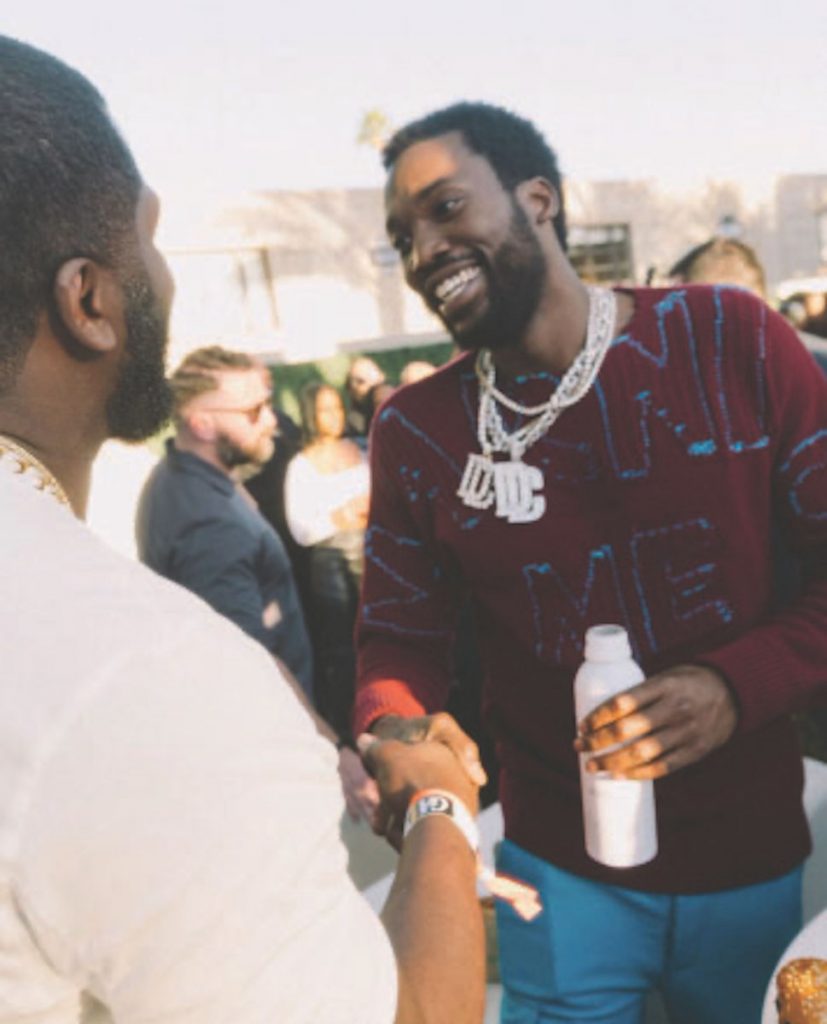
Rapper Meek Mill holding a PATH water bottle


When asked how he came up with the PATH brand name, Bakour admits it was a long process with many twists and turns.

“I always believed that a strong brand name has four or five letters, and it should be a word commonly used in day-to-day conversation,” he says. “A brand name is important. One of my co-founders actually thought that Smart Water made him smarter, and even when I told him it didn’t, he still kept drinking it.”

Bakour and his team settled on PATH because they believe water is the path forward. “It’s a path to a more healthy and sustainable future,” he says. “We are all on this path together. It’s a cool word that has different meanings for different people. Follow your path. Choose your own path. Join our path. Join us.”

Q&A with Daymond John: How to Reel in a Shark

Daymond John, a 2024 Real Leaders Top Keynote Speaker, zeros in on what it takes to lure investors and be more intentional as a social impact company.


By Carla Kalogeridis

If you have even one good business idea in your head, you’ve probably fantasized about pitching it to Daymond John. What would you say if you had 3 minutes alone with Shark Tank’s branding and marketing guru?

Well, I didn’t get 3 minutes with Daymond John — I got over 30. And while I didn’t pitch anything, I made the most of my time with a broad swath of questions to capture the best of America’s favorite entrepreneur. John opened up about the big shift in the second half of his career, why he’s not leaving his kids any money, and much more. 

Real Leaders: Our readers are impact company leaders, founders, entrepreneurs — that’s our sweet spot. So, I wanted to start with your experience in hearing and making pitches. What are the most important qualities you look for in a founder or entrepreneur in order for you to make an investment?

John: First of all, can they articulate the story to get my attention? Because that’s the human interaction aspect of it. What are you talking about, and why would I care? Are you educating me that this is a problem, or are you assuming that I should just know about it? 

Then I ask myself: Is this person a rock star? Do I want to know this person? Is there a need for me to be in this business with this person? If the founder is a rock star, then whether this business works out or not, we’re going to do something else together. I hope your thing is baked. I really do. But guess what, if it fails, alright, you’ll work with me, and we’ll do something else. At the end of the day, that’s what it is.

RL: What are the mistakes people make when they pitch investors — the things that make you cringe?

John: Not studying the investment target. Why would you want me as a partner? Do you know what’s in it for me? Some people come to Shark Tank, and they think because I have a successful clothing company, I should invest in their clothing idea. Well, if you really knew me, you’d know those are the only companies I don’t want to invest in because I have too many clothing companies. I need to diversify my portfolio.


RL: How have your own investment criteria changed over time? What’s that journey been like for you?

John: Originally, it was, “I don’t have any money,” so I had to concentrate on what I could do. Then it was, “I have money and I want to invest in sectors I know.” But I made a lot of mistakes in those sectors because I thought money was the solution without putting in the work and doing my homework. Then I moved to being in various sectors. I’d throw money at it, and I was right in the middle trying to learn on the fly. I’m throwing a lot of money at it, and I’m trying to tweak it to find better ways to be more effective.

But what I’m doing now is purely about the people. I have to see where I truly add value. I have to have a passion for it. And I have to really trust that the founder has a massive amount of information in the industry. 

RL: What role has social entrepreneurship played in your life?

John: It’s huge. My biggest, most successful investment on Shark Tank is Bombas socks (a 2023 Real Leaders Top Impact Company), which is about social. I care about what I do. All my investments have some kind of social driver to it. FUBU may not have been a nonprofit and the messaging wasn’t social, as in let’s make a better planet or something of that nature, but it was about one culture empowering another culture. Then I move on to Shark Tank, which is about investment empowering other people. My books and everything else I do now are about empowering people. So it’s critical.

The first half of my career, from an investment standpoint, the social aspect wasn’t a big topic. But now, with the success of Bombas, I’ve learned that it’s critical to have that component. Customers want to stand for something, and it has to be genuine. I’ve had some experiences with companies wanting me to be the face of their brand, and I saw that social impact was not their driving force, and they were not being honest with their intentions.

RL: When you look at the investment landscape and how that might impact business leaders, what are some of the market disruptions you’re seeing?

John: Well, AI is the common one everyone is talking about. But I want to give you some meat on the bones. AI is the market assumption, but it’s the use of AI analysis that will cause disruption. AI is such a big conversation. It’s in everything in a big way. Think about your newsletters. With AI, maybe you can go from a copywriting and social team of 20 down to five. People think that AI is going to replace those people, but maybe there will be other jobs created as a result of AI. We just don’t know what they are yet.

The big thing all CEOs are struggling with is how to get effective work from people, how to deal with remote and semi-remote and virtual, fragmented teams. This virtual, remote, fragmented way of the world working is not working. 

RL: You’ve done a lot of motivational speaking. What makes a great speech and a great speaker, and what are you still trying to improve in your own speaking?

John: A great speaker is self-aware. This is extremely important because they’re not making any more attention in this world, and captivating people in the beginning and keeping their attention is very hard. Maybe you can captivate somebody for the first 10 minutes, but then you lose them after 20 minutes. So how do you pack in what you need to say in 20 minutes? How do you relate to them, feel equal to them even though you’re the one on stage who is deemed as somebody with this greatness or special information?

It’s all in your presentation of the message and how you make people feel. Do you make them feel like they’re connecting because you’ve had the same struggle? And you’re both, at the end of the day, arriving at the same solution or inspiration. 

A great speaker has a takeaway action that somebody is motivated to do at home. I mean, even if you had the person in tears, what is the takeaway? It’s always got to be about what’s in it for them. And of course, last but not least, are you in tune with what the client needs? The person or group who asked you to speak — what do they want? The client has a vested interest in your talk. Everything is on the line for them. Some speakers take up the stage with their own priorities, and if you act like that, then you let people down.

RL: Do you like public speaking?

John: Oh, I love it. I absolutely love it. I love that we find a way to connect through the conversation and the struggle.


RL: What are some of the most valuable life lessons that have profoundly made a difference in your thinking and actions?

John: You have to be extremely hard on yourself in striving for knowledge and constantly tweaking yourself to be better. But at some point, if you have put in the time, then you also have to take a moment to smell the roses. Be proud of yourself. You have to really take inventory of yourself.

You know, the three pillars to success are pretty simple: You got to know your why, you got to set goals, and then you got to do your homework. If your why is the why your parents told you, then that’s what success looks like to you. Do you want to belong to a bunch of people you don’t know who will never change your life? Then you’re setting the wrong goals and you’re going to do the wrong homework to get to those wrong goals. Being brutally honest is a really big key to success.

RL: Many of our readers are the heads of family businesses, and they’re working on succession planning. You have said that you’re not going to leave your daughters any money, citing the importance of a legacy versus an inheritance. Can you talk a little bit more about that?

John: The percentage of generational wealth that gets passed through to children and grandchildren is not that great. It’s been said that the first generation makes the money, the second generation enjoys it, and the third destroys it. I’m not going to say the third destroys it, but in only a small percentage of businesses do the second and third generations take the business to another level or expand it significantly. Now, does that money stay there in the family? Absolutely. Do the Rockefellers still have their money? Of course, and their foundation still does great things for this country. But are the children running their own businesses or extending what the family has? Not as much as probably people would think.

So that brings us to inheritance versus legacy. The thing that any parent wants to do is give their children the things that they themselves never had access to — whether it’s education, freedom, whatever the case is. But when you give your child everything, you make them the poorest person in the world.

I started off letting my girls know I would not leave them anything. And I did that for various reasons. Number one, someone might come into their life to use them for something that was not best for them. I want them also not thinking there is going to be a pot for them at the end of the rainbow. They need to work hard for themselves. They must become really great people to society.

I’ve been to many funerals, but I have never been to one where they talk about what somebody had, their possessions. I only heard of how they made people feel and how they impacted people’s lives. If my legacy is that my children can say, “My father was an everyday man who tried to empower people,” then I think that example will open way more doors for them. I don’t want the door open because they got money hidden behind that door.

RL: You once said that anything worth doing is worth overdoing. What is your passion these days? What are you overdoing right now?

John: My passion is giving access to people who deserve it — but not just giving access — also, showing them they already have access. The one thing people don’t realize is access is all around us — it’s the use of access that is not utilized. As connected as we are, I truly feel like we are at the dumbest goddamn time in history because people hit the top link on Google and then wonder why what they’re asking for does not work. They say all they get is “no.”’ They say, “I did this and then didn’t get that.” Did you pick up the phone? No? Pick up the damn phone. It’s pretty simple, right? I just don’t get it.

I am not about giving access to people who get stuck on these little devices that they’re not going to be further than 3 feet away from for the next 97% of their lives. I give access to a CEO who says, “Listen, I’m somebody who nobody knows, but I’m doing a lot of great work out there, and I want to be the voice of authority.” Or I will give access to a kid who has no financial intelligence. I want all our children to have financial intelligence. It’s not about having my own personal Shark Tank. It’s about giving access to the people or foundations who are going to use it for the right reason. That’s my passion.

Somebody told me something the other day: “The first half of your life, you do it for your ego. The second half, you do it for your soul.” If I think that you’re going to do something to make the world a better place — no matter where you are in life — I’m going to give you access by showing you how to utilize the access that you have.

RL: Now that’s a legacy.

John: Well, hopefully, the windfall is that I’ve inspired people of more colors to say, “Whatever my culture, my beliefs, I can work within my community and empower people.” No matter what side of the table you’re on, you can create investments or ways that people can have a synergistic relationship with those outside America. This is the American dream that’s been given to us, that corporate America doesn’t care about your color, your creed, your gender. And look at me — if I can do it, you can do it.

But our education system is broken. We’re still going off of an 80-year-old system that teaches kids shop and how to build things, but it doesn’t teach them financial intelligence — and that’s one of the few needs we all have in common. A lot of people don’t know if they want a formal education, but they don’t have financial intelligence starting off as children, and then they get marketed by predatory companies at 16 or 17 years old, and they end up with a $700,000 debt for a college education that they were not even certain they wanted.

I do believe in higher education. But the data shows that 57% of the kids graduating now will retire with a job title that doesn’t exist today. It’s like telling somebody 20 years ago, “You’re going to be an AI expert or a social media expert.” So you have no financial intelligence, but you do have $700,000 worth of student debt that you’re not going to pay off until your 50s for a career that you didn’t even know if you wanted. What does that do to our country?

Here’s what it does: All of a sudden, it’s expensive to eat clean. So what happens? Well, you start having a bad diet because the cheapest thing to consume in our country is made of butter, sugar, and salt. Domestic violence rises and incarceration rates rise because if you don’t have an education or you cannot afford enough, what are you going to do? It is a big problem, and it can easily be adjusted if we give our children financial intelligence. We don’t need them starting off with 18% on their credit cards and student loans, with careers they don’t want to have so they can buy a whole bunch of stuff they’ll never need.


RL: Anything you want to say specifically to our readers who are trying to use business as a force for good?

John: I think they need to be more intentional about what they’re doing. We always hear there are so many absolutely amazing leaders and corporate citizens who are doing great things, but they feel dirty about trying to say and show what they’re doing because it feels like they’re trying to make a profit off of doing good. 

When George Floyd was killed, a lot of my friends and business associates called me for advice. They felt compelled to do something. I was honest with them. Even though I’m African American, and I want to steer all the help I can to the African American community, I advised them not to take any action just because it’s the trendy thing to do. If your action isn’t coming from a genuine place, the community — be it the African Americans, LGBTQ+, veterans, whoever — will recognize that, and it could end up hurting you and your brand. As they say, real recognizes real.  

If you want to be authentic, start by talking to the people closest to you — your staff, your friends, your colleagues, or business partners. Many of your people have been a part of these communities for years and you may not even know it. That’s a bloodline through which you can take very intentional steps.

People like to be associated with good causes. If you can give them a way to do it, they will talk about it. That’s user-generated content. That’s why Bombas has worked so well. People want to do good and brag about it. Yes, they’re great socks, but they’re just socks. When I did the deal, they were doing 700,000, and they will do 1.4 billion this year. When I did the deal, I had a million dollars’ worth of socks in my warehouse that I couldn’t sell. The only way I sold them is that I was sneaking into your laundry room at night and taking one out of your basket.

RL: I know that’s true.

John: People buy Bombas because they want to brag that they are giving back. If you have a business that’s also doing good, now you save them from having to go and intentionally give because they buy from you and will tell your story for you.

I will tell you a story. My daughter worked at a pizza parlor. She says, “Daddy, I gave 20 times this year. Every time I bought this, I helped clean up the ocean. Every time I bought this, I stopped human trafficking, and every time I bought a pair of socks, a pair of socks went to one of the homeless shelters. And by the way, Daddy, I’m going to buy every person I know socks for Christmas so they can help 10 other people.” That’s an example of why you have to be very intentional about what you’re doing because people want to brag about what you’re doing and what they’re doing. You can be a force for good — and your customers will help you.

Maria Menounos: A New Picture of Health

Maria Menounos says real leaders must be CEOs of their own health — and that means making health care one of your best skill sets.

By Carla Kalogeridis

After having an intracranial tumor removed in 2017 and successfully battling stage 2 pancreatic cancer in 2023 — both of which she attributes in part to an accumulation of poor health choices including not prioritizing her health — Maria Menounos is on a mission. Her message: Leaders must be CEOs of their own health.

Menounos is best known for her work in the entertainment world. She was a TV correspondent and host (Entertainment Tonight, Extra, E!News, Today, Access Hollywood), presenter (Miss Universe pageant, Eurovision Song Contest), actress, bestselling author, entrepreneur, award-winning journalist, and host of the daily podcast Heal Squad.

She describes her earlier life as a whirlwind of 18-hour days, driven determination, high stress, and poor eating. Taking care of herself was not on the priority list — until her body just couldn’t keep pace any longer. Her health traumas led her to what she considers her higher purpose.

For Menounos, it took a brain tumor to open her eyes.

“I knew I had to make changes; I just didn’t know how,” she tells Real Leaders. “I was trapped in an old dream. I wasn’t really happy anymore. I wasn’t fulfilled. But I was doing great.”

At the time, she was hosting E!News. “I was doing like 50 jobs at once,” she recalls. “The first thing I remember waking up from surgery was thinking, ‘What the f— was I doing? I was trying to keep up with people. I don’t need this. This doesn’t define me at all.’”

Menounos describes it as “a rebirth moment.”

“I knew it was my chance to make changes in my life. My body was screaming for help for so long, and I would just shush it, like, ‘Body, be quiet. I’ve got to go back to work.’ My priorities were not in place.” 

Menounos knows her story is not unique. “It’s a general issue with high performers. We must go from illiterate health kindergarteners to being CEOs of our health. Kindergarteners don’t know anything. They just do what their friends are doing. Likewise, we tend to follow what we hear about health without any research, and that’s just not serving us. With all the things happening to our air, our water, our food supply, that’s just not good enough anymore. Unfortunately, there is no health literacy, and we are farming out our health decisions to doctors without really understanding what they’re fully capable of and what their expertise is.”

Growing up, Menounos says she loved being with older people because she wanted to learn from their mistakes and avoid making the same ones. “Similarly, my goal is to affect people with what I’ve learned so they can start implementing little things in their life that will make a big difference down the road. Health trauma is so often an accumulation of poor choices. It’s trauma that takes us to the places where we are forced to learn, but I really want to help people find this message without the trauma.”

She points out that leaders hear all the time about work-life balance, but they don’t realize that the balance comes from taking care of themselves. “All we know how to do is win and succeed,” she says. “From the time we are little kids, we are taught to get good grades so that we can go to a great college, get a huge job, make a lot of money. But nowhere in that equation is anyone talking about your health and getting enough sleep, making sure your circadian rhythm is balanced, your hormones are balanced.”

Health Literacy as a Business Skill

Menounos says that to be a real leader and take the best care of your people, you need to develop health literacy as one of your business skills.

“Health literacy is so important because your people need to know that you care about them,” she says. “It’s not normal to do the job of 10 people just because computers have made it possible. We’re taking in so much, and our brains are exhausted and fried. You’re not going to get the best work out of people. Health is just one of those things that you can’t delegate — not anymore.”

Menounos says real leaders show people that succeeding isn’t the only thing. “What you need is 360-degree succeeding,” she says. “It’s really feeling fulfilled — achieving, of course, and doing something meaningful — but also taking care of yourself. If leaders show their people that it is OK to prioritize their health, and other people do the same, then we have a whole new health care system.”

Menounos recalls being terrified to take a day off from work, terrified to not be at the morning meeting. “Living like this, how are you supposed to fit health care into your life? Your employees will work so much harder for you if you give them the freedom and flexibility to take care of themselves,” she says. “Real leaders don’t say that productivity is the most important thing. This is a new area that leaders need to tackle, and they’re going to benefit from it too.”

Your Thoughts Are Your Body

One important step to being CEO of your health, she says, is to learn to manage your thoughts. “It’s a hard pill to swallow, but our thoughts become things,” she says. “As much as we want to avoid the idea that we are contributing to our health, from everything I’ve studied and everyone I’ve learned from, your brain doesn’t know the difference between perception and reality. So, you can tell the brain anything you want — good or bad — and that has a huge impact on what you’re going to experience. The relationship between mental and physical is one thousand percent real. Changing your thinking can change your reality.”

Menounos does a great deal of work on meditation and the mind-body connection, studying people like Dr. Joe Dispenza and Gabby Bernstein. “I want full mind-body-soul healing. I realize what a massive task and undertaking I’m asking of Dream Big Maria. But I’m learning that things bubble up to the surface to be healed. Sometimes you’re trapped in an old dream, and you don’t even realize it. You’ve got to listen and follow the breadcrumbs.”

The Servant Leader Mistake

Menounos says high achievers often think of themselves as servant leaders, and to them, that means putting themselves at the bottom of the list. “But are you going to be valuable to those people you serve when you go down?” she points out. “What are your employees supposed to do — keep pumping you for information while you’re in your hospital bed?”

She recognizes that coaching your people to take care of themselves can be a delicate conversation. “The message about how to take care of yourself must be applied to the right person at the right time. If you’re young and you want to succeed, you’re going to have to work hard. I’m a believer in working hard. But get your sleep, eat right, wear blue light glasses. Good health is an accumulation of choices.”

Menounos believes her health issues were the result of an accumulation of bad choices, extreme stress, and working in a toxic environment. “Now I’m accumulating so many more good choices, and I’m trying to turn that train back,” she says. “Young leaders today can start out making good choices. I thought it was cool to be a workaholic. What an idiot I was. Now, I prioritize my well-being at all costs. I don’t want another brain tumor to learn this lesson all over again.” 

Where to Start

Maria Menounos’ message for real leaders:

“You cannot lay your care at anyone’s doorstep but your own. You must become an expert who knows what each doctor you deal with is good at and what they’re not good at. It’s hard work to be healthy these days. But you must do this in a way that sets an example for your employees, and then allow them to follow your example.”

Menounos clarifies that she is more critical of the medical system than of doctors themselves. “Doctors are amazing, but most of them are amazing at a few things,” she says. “As Tony Robbins puts it, ‘Doctors can be sincere, but they can be sincerely wrong.’”

She underscores that the smart play is to take charge of your own health plan. “When you get an opinion, you’ve got to get another opinion. Get multiple opinions until you feel good. You need to know your surgeon has done this thousands of times — not one time, not 10 times.”

Menounos admits that asking questions is hard. “People come into doctors’ offices with their Google stuff, and doctors get really abrasive,” she says. “So now you’re fighting egos when all you’re wanting to do is to be an advocate for yourself. You have to ask the right questions: How many of these surgeries have you performed? How long have you been doing this? What possible things could go wrong? Their experience is the No. 1 thing, but you must ask about it in a nice way.

“Nurses and doctors are overstretched,” she continues. “They’re exhausted. By the time they see you, they’ve already dealt with a lot of cranky people who have been mean to them. So, you must find a way to massage egos and communicate and get what you want, which is a good outcome.”