

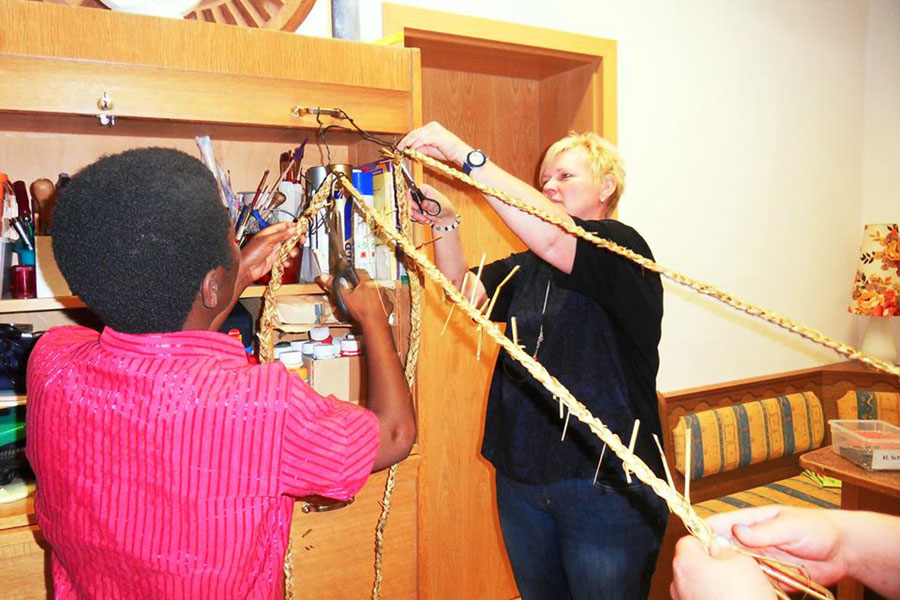
My Decision to Move to Rural Zimbabwe – it Just Felt Right!

“What are you doing?” said Marianne Knuth’s friends. “You’re moving in the wrong direction – to Zimbabwe!?” They called her foolish for wanting to move to Southern Africa and start an educational program — Kufunda Learning Village.

There was no guarantee of support, infrastructure or financial help to make it happen. The decision to move was based on intuition. To Knuth, it just felt right.

When she arrived, Knuth couldn’t do anything about farming or sanitation, so she decided to focus on what she could do — facilitate. She wanted the local people to see the value of what they already knew about farming and other practical things, and have a positive approach to it. The turning point for her was when she celebrated a birthday in Zimbabwe together with her international friends and the local people. She realized that they had different skills and together they could do great things.

Knuth is half Danish and half Zimbabwean. She remembers well the moment when she decided to leave her international career and move to Zimbabwe. She has become increasingly reliant on her intuition and says that it has become the most important resource for herself, and anybody needing to trust themselves and develop self-confidence.

Kufunda is based on a typical African village. Its inhabitants were demoralized from the grinding poverty and stuck in a mental cycle that kept them in a mindset of scarcity. Now, after 15 years, Kufunda includes 30 farmers and 60 community members, including children and relatives. There is a Waldorf-inspired school to help children develop the emotional intelligence and self-awareness for personal growth. The village is designed by the local community to ensure real empowerment and to implement local knowledge that already existed.

Each person’s journey is important and It’s what makes Kufunda different from all the other initiatives that may look the same. “We see the person being left behind and want them to think out of the box,” says Knuth. “We try to give each individual self-confidence, instead of just academically-focused education. Kufunda helps community members rediscover their creativity and is a platform for their own projects to unfold. People are coming together and looking into the future, building a vision.”

Additionally, a strong relationship with the local councillors has been built and Kufunda’s success is now used as a model in other parts of the country.

“I think my personal courage comes from listening,” says Knuth. “I listen and learn. I’m fulfilling the destiny I was meant to carry out. I know in my gut and in my heart when I’m on track and I’ve learned to listen to my intuition, to my gut. When I’m on the right track I feel courageous, as if nothing can stop me. It becomes easier with age to learn to listen to yourself and to say no when something doesn’t feel right.”

“If I can give one recommendation,” she concludes. “Have trust in yourself. Trust your sense of right and wrong and when something doesn’t feel right, don’t rush ahead, but take a step back. Have the courage to stay until your path is clear.”
The Chinese Architect who Defied Centuries of Tradition to Build Something New

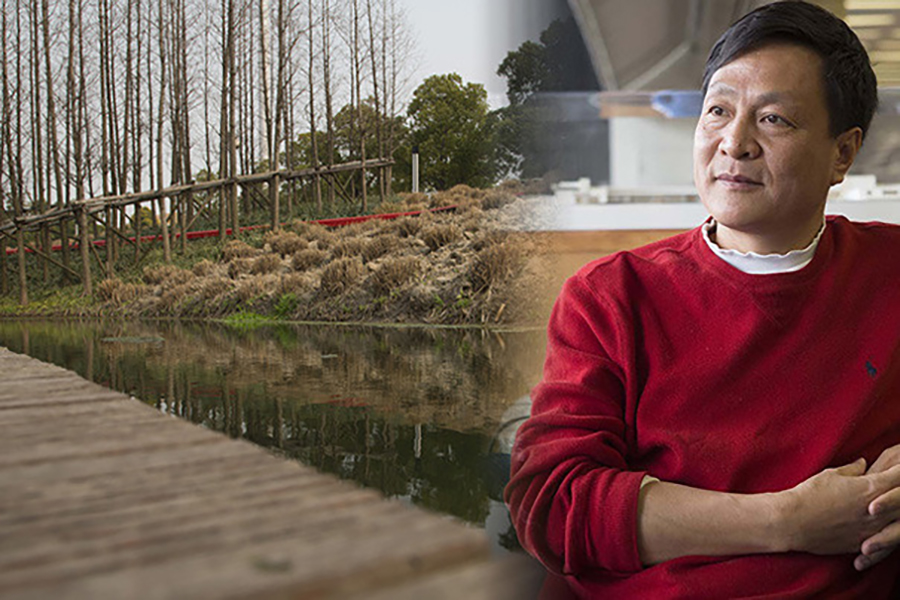
Kongjian Yu is a Chinese architect who defies the norms imposed on him as an architect. He promotes environmental thinking by building contemporary eco structures for urban developments while preserving cultural integrity. Here, he shares his journey.

“I had a shock! I saw how rivers were being polluted, ancient cities were being torn down, trees were being felled. All this seemed so wrong to me. I started writing articles and made as much noise as I could because I wanted to expose the flaws within Chinese policy; to the extent that policy was also disrupting values and people’s behavior. The response I got was anger from my local community, and even from other professionals and former teachers. They said I was betraying Chinese culture for having criticized tradition and culture. “You are a traitor to our whole culture,” they said to my face.

You have to be brave to be a good leader. I was born a peasant, and my family became landlords. As such, I was classified as “the enemy” while growing up in China. I suffered a lot financially, and to survive, I had to learn to stand up for myself.
I was a critical thinker and earned a Harvard degree, which brought with it new ideas. At first, I was respected in China because of my success in the United States and was invited to speak at conferences. Articles were even based on my ideas. But then people began realizing that I had different opinions, ones that went against the status quo. They started to call me and wrote letters saying that they didn’t like what I was doing.

I kept going and started building projects to demonstrate my thinking about China’s ongoing destruction of the environment. Pollution has gotten so bad in China, and we are no longer in a position to deny our responsibility to fix this situation. If our government officials take the initiative, we can still become the leading nation when it comes to cleaning up the environment.
My first project was to clean up a shipyard in Thungsan, in the Gongdan district, in the late 1990s. I was lecturing a group of mayors about ecology, sustainability, and a new way to approach the problem when one of the mayors came up to me after my speech. He liked my ideas. The city had a piece of land, an old shipyard that was heavily polluted, filled with garbage, and which had gone bankrupt. He wanted to clean it all up, dismantle it, sell things off and build a park. He showed me a picture with a rusty railroad and rusty machinery.

I found this site valuable – an old industrial park is a memory for the city. I was able to convince the mayor not to tear it down and that the shipyard was part of our history. I took an ecological approach and told him that we could create a new cultural park, repurposing the existing buildings. It was both contemporary and controversial, and everyone was skeptical about how a rusty industrial park could be transformed into a flowering cultural park.
Ninety-nine percent of the architects fought me. They thought I should instead build it according to old Chinese traditions of gardening. But I stuck to my plan. Finally, we put on an exhibition for the public and found that 80 percent of the local people loved the idea.

The project was awarded the 2002 American Society Landscape Architects Award and recognized as the first contemporary project in China. Yet, it was not recognized or awarded anything in China!
I turned my efforts to convince the mayors instead of the architects. Mayors have more awareness around the global environmental crisis that we all find ourselves in. They also have a more hands-on approach and are more enthusiastic about new methods of urban planning.

Knowledge has made me brave. More and more young people are also becoming my friends and supporters. Within circles that were previously against me, young people now support me. It’s sometimes easier to convince young people, whereas the older generations are stuck in their ways. You ultimately need to rely on yourself, which is not the traditional Chinese way of living. As the farmer that I am, I have to tell the truth. It’s much easier to work together if you have the same values.

After 20 years of denial, my ecological thinking is finally becoming a reality. It’s not just a victory, but also a hope for the future. You always have to stick to what you know and believe in.

A Grassroots Activist Swims Against the Tide

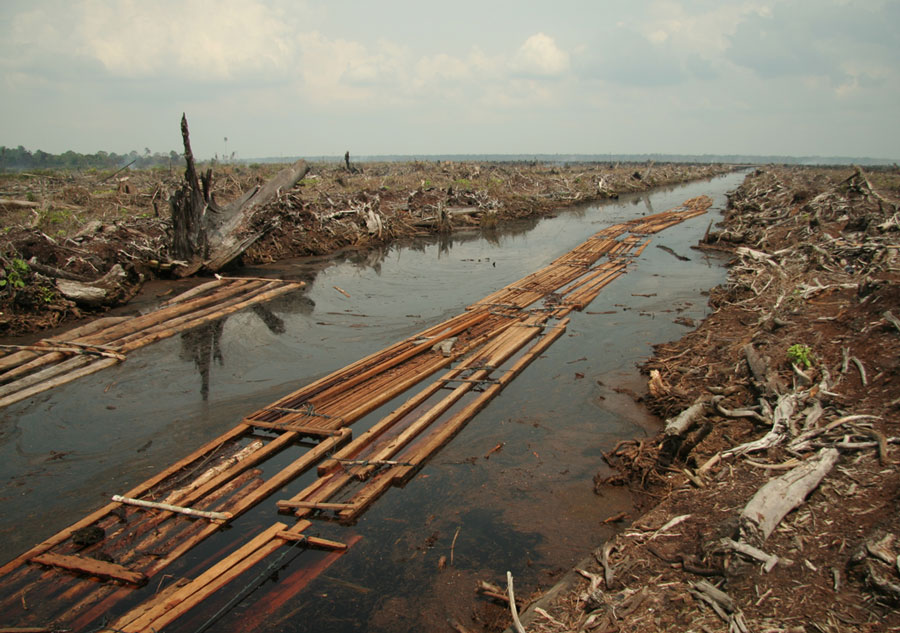
At first glance, Marina Silva is a politician who served as the Minister of Environment in Brazil. At second glance, you realize that she is also a grassroots activist who has fought to protect local communities and against deforestation in the Amazon.

“I had to swim against the tide in many situations- political and personal. When there was a road to be built in my state of Amazonas, crossing the territory of some traditional communities. Most people wanted the road to be built, but it would strongly affect the environment of those traditional territories. So I opposed this decision because it had no study on its environmental impact and no appropriate license. To me, it meant a very high price to pay.

I couldn’t visit half of my state during four years. People got angry with me because they lived in an isolated area, 500 km from the capital city, that could be accessed only by buying very expensive air tickets. The road would be a great achievement for those people if it was made in the right way, but it was not being made in the right way.

If you like this, subscribe here for more stories that Inspire The Future.

So I opposed this decision and it was very hard for me. I used to hear people criticizing me with unfair arguments, saying I was against development, against the improvement of people’s well-being. I knew that the road would not be good, even for them. But not doing it my way was not an option, because not doing it would go against the values I believe in. When we are guided by principles and values, it becomes the basic framework of our actions, of everything we do. But of course, it is not always understood the right way. We have to embody generosity to plant the tree, even when others are going to reap the fruits.”

Silva has an unusual background for a politician. She was born into a family of rubber tappers, in a small village. She was illiterate and orphaned when she moved to the capital at age 16 to study in a convent. She graduated from the Federal University at 26 years old and quickly got involved with local politics. She became Brazil’s Environment Minister and was named one of the “Champions of the Earth” by the United Nations Environment Program.

She has moved from “having” towards “being” that is closer to nature and community, and the way that the earth’s original indigenous people lived like. What we really need is to be persistent and it means that some causes can only take form after a maturation period. The world is made of those who have values, who transform those values into promises and those promises in actions. That is persistence.

As a Minister of Environment she and her team developed a plan how to reduce deforestation by 80% in 10 years. “However, at the same time I suffered big pressure from the Brazilian government to revoke the measures we were implementing. She and her team did not know if they were going to be victorious with the plan but at the same time they couldn’t let it go and not do it. And they did. To achieve the results, they had to conduct several operations with the federal police and other things and all this created big conflicts.

It was a very intense period and they saw many people being murdered for standing against deforestation. It required a lot of persistence. We did provoke a great deal of risk and it was not always working well. Us being criticized by colleagues inside our own government and peers of different states that had been confronted by offenders. But persisting on that matter was very rewarding just to think that we kept 2 billion tons of CO2 from being released into the atmosphere, and millions and millions of native forest hectares from being destroyed. That required a lot of persistence. Courage is not the absence of fear; courage is the prevalent of commitment.”

Meaningful change doesn’t happen overnight. If we want that to happen, we have to understand that it takes some time. It is fundamental to learn how to deal with three things.

  1. Disappointments, which is sometimes very hard to do. Sometimes we do things and we strongly believe that everything is going to work out, but sometimes that doesn’t happen. So we don’t give up on our first, second or third try. That’s why I always say we need to be persistent and insistent.
  2. “Adjournment of pleasure”. Many times, we want to prompt acknowledgment and gratification. We need to learn how to deal with that recognition being delayed.
  3. Weight of responsibility.

Nowadays, more and more people don’t know how to deal with these three aspects of life. I learned this with my grandmother, my mom and my uncle, who worked in the forest, lived with indigenous people and learned the “native science”. I want people to learn how not to be a hostage of the past but to create something good from the past.

If you like this, subscribe here for more stories that Inspire The Future.


0