Left in the Financial Dumps, This Designer Upcycled Her Way Out

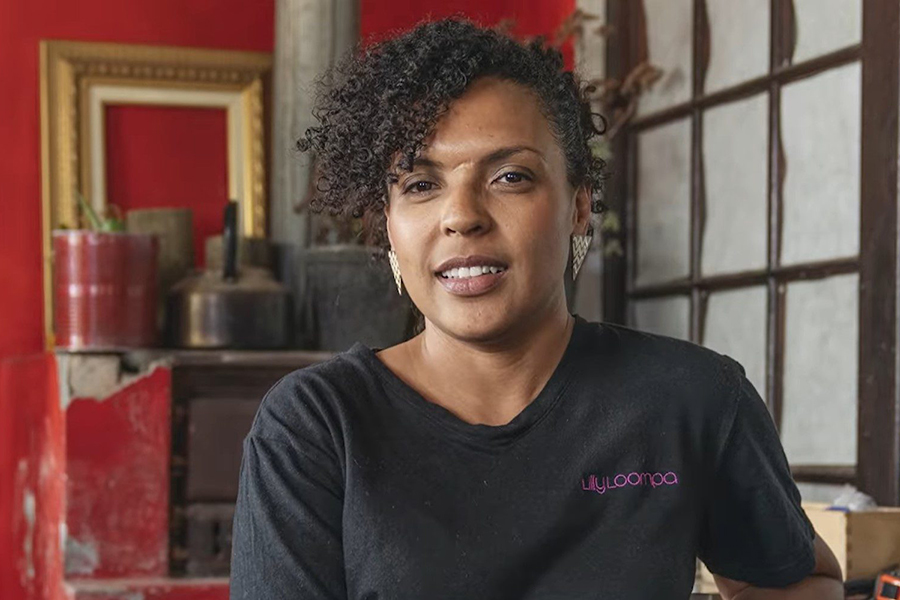
Do you ever think about your garbage once it’s been thrown away? Lizl Naude does, because everyday waste is what eventually pulled her out of the dumps.

When a business deal went awry, Naude lost everything – her house, car, and most of her possessions. With two children to feed and no way to support them, she had to come up with a sustainable solution. She decided to start at the end — using her creative streak to give new life to items that had seemingly run their course.

“I looked to my environment and saw the possibilities,” Naude says. Realizing that people often discarded functional materials, the self-taught designer began turning trash into products she could sell through something she calls ‘hip-cycling’. “You see waste, I see a possible lamp,” Naude says. In 2016, she founded Lilly Loompa. Her company manufactures a range of homeware, from elegant table accessories to stylish glass platters – all handcrafted from scrap. “An item’s second life can be more significant than the first,” Naude says.

With the increasing demand for more sustainable products, Lilly Loompa is growing. Not only can Naude now provide for herself and family, but she has hope for a bright, fruitful future. “Just as I give these pieces a second chance, this business gave me a second chance,” she says. All of our lives are capable of being crafted into something better than it was before – it’s just up to us to recognize, shape, and renew our potential.

The Extreme Athletes Who Built a Home for Orphans in Six Days

Bruce Hughes moves back and forth, yet goes nowhere. His arms and legs are constantly at work, pulling and pushing with rhythmic force.

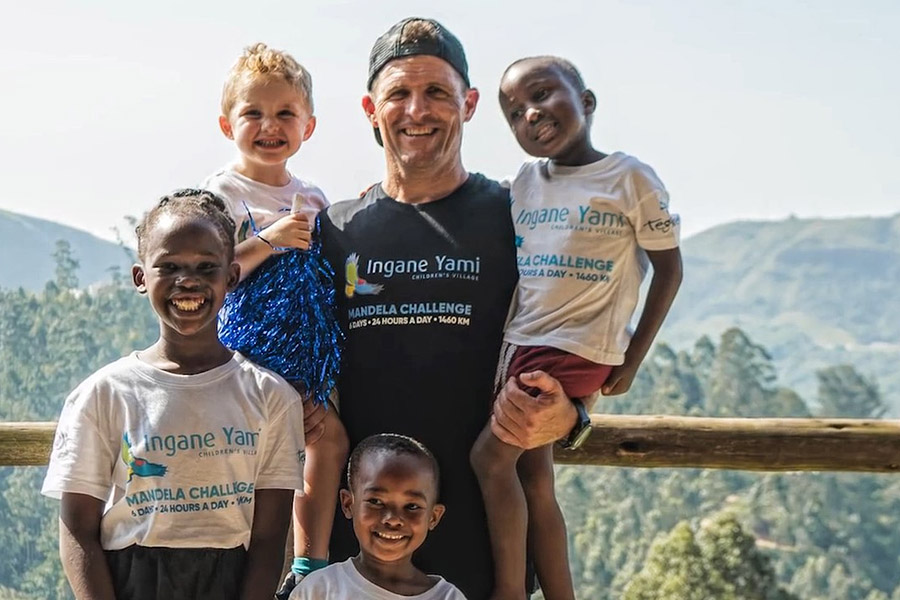
Yet when Hughes rowed on a stationary machine for six days straight, covering 1,460 kilometers, he went further than he thought he could to raise funds for South Africa’s most vulnerable children. 

“Not everybody has the home they deserve,” Hughes says. But at Ingane Yami Children’s Village, orphans are given a house complete with foster parents and siblings. When Hughes heard about the initiative in 2013, he immediately fell in love with the organization and wished to see it grow. “It’s a great start and a great foundation to creating future leaders for our country,” he says. Having just completed the Atacama Crossing, a 250-kilometer marathon in the Atacama Desert, Hughes realized he could use his passion for extreme sports to help these orphans. 

In 2019, Hughes and his friends, Stefan Terblanche and Mike Morris, alternated turns to stationary row, completing the equivalent distance from the children’s village to Robben Island. The motivation behind this feat kept them going. “I know these children face harder challenges every single day,” Hughes says. Their stunt raised enough funds to build two new buildings that house six children each, creating a new and loving family for those in need. “Everybody can give back and everybody can make a difference, even if it’s a very small way,” Hughes says.

He Grew up without a Father. Now He’s Stepping up to Support Others

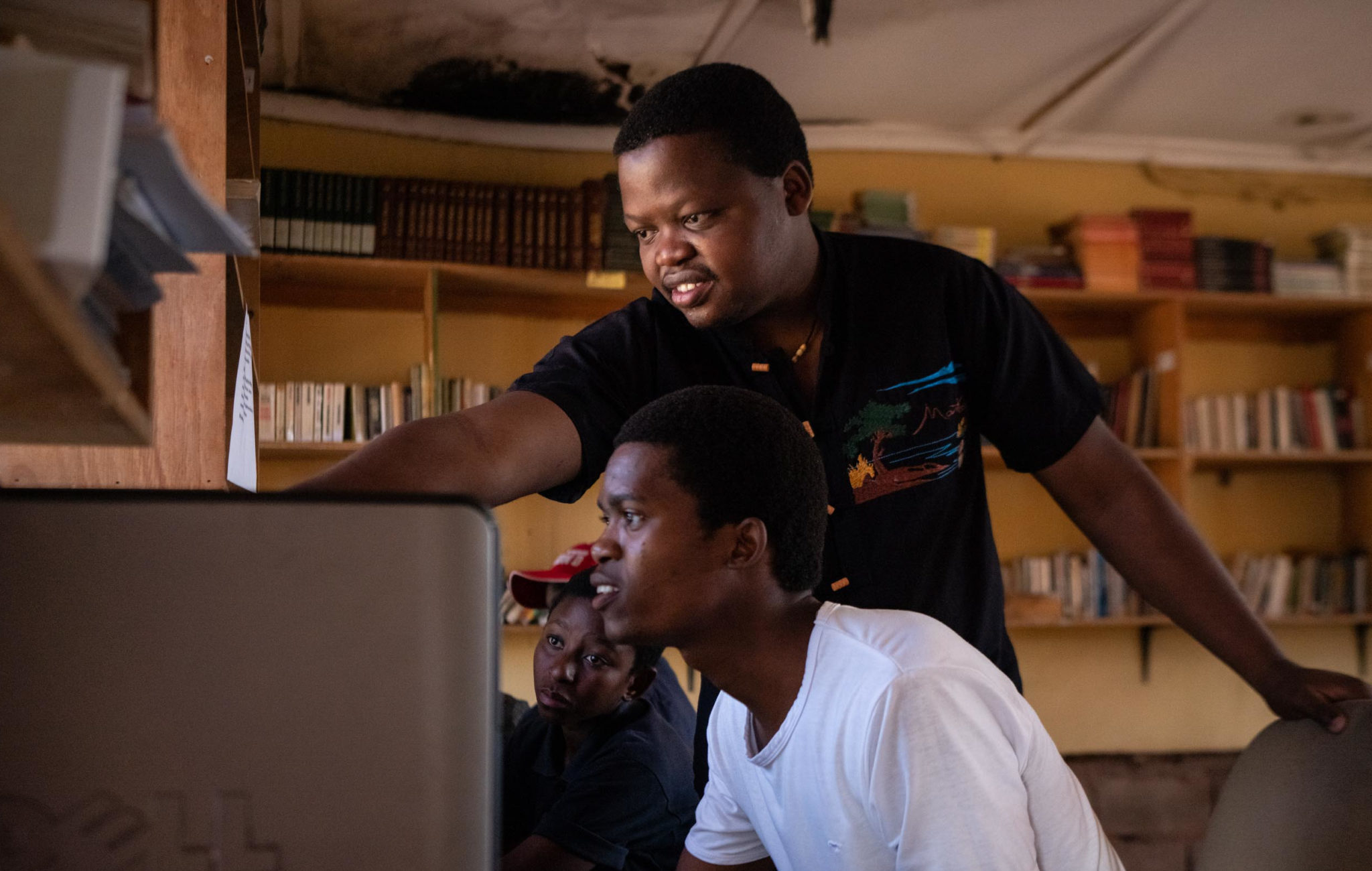
Growing up, Msizi Phewa’s future was clouded in uncertainty. What direction should he take? Who could he turn to for help? “For many years I lived without a father,” Phewa says. “I felt so lost without that figure in my life.” Little did he know that being adrift would one day steer his path. Today, Phewa is a role model in the township of KwaNyuswa, KwaZulu-Natal. “I’m here for young people,” Phewa says. 

Unemployment and lack of opportunity can lead many down the wrong track. Not Phewa. “Where some see hopelessness, I see potential,” he says. As the director of the Light Providers Youth Club, Phewa is opening doors for others to grow. The NPO has a library filled with resources, as well as a space for people to work on their strengths, whether it’s netball, singing, or dancing. Phewa also offers valuable lessons in computer literacy. “Everyone has a talent,” he says. “I hope that by coming here, the youth will find theirs.” 

Along the way, Phewa himself has discovered his purpose. He identifies as a leader, there to encourage people on their journeys. “We underestimate how important it is to have a deep understanding of ourself,” Phewa says. It could be the key to unlocking life’s possibilities.

https://www.facebook.com/beautifulnewssa/videos/2582865198493766/

He Grew up without a Father. Now He’s Stepping up to Support Others

Growing up, Msizi Phewa’s future was clouded in uncertainty. What direction should he take? Who could he turn to for help? “For many years I lived without a father,” Phewa says. “I felt so lost without that figure in my life.” Little did he know that being adrift would one day steer his path. Today, Phewa is a role model in the township of KwaNyuswa, KwaZulu-Natal. “I’m here for young people,” Phewa says. 

Unemployment and lack of opportunity can lead many down the wrong track. Not Phewa. “Where some see hopelessness, I see potential,” he says. As the director of the Light Providers Youth Club, Phewa is opening doors for others to grow. The NPO has a library filled with resources, as well as a space for people to work on their strengths, whether it’s netball, singing, or dancing. Phewa also offers valuable lessons in computer literacy. “Everyone has a talent,” he says. “I hope that by coming here, the youth will find theirs.” 

Along the way, Phewa himself has discovered his purpose. He identifies as a leader, there to encourage people on their journeys. “We underestimate how important it is to have a deep understanding of ourself,” Phewa says. It could be the key to unlocking life’s possibilities.

https://www.facebook.com/beautifulnewssa/videos/2582865198493766/

Author Getting Children on the Same Page

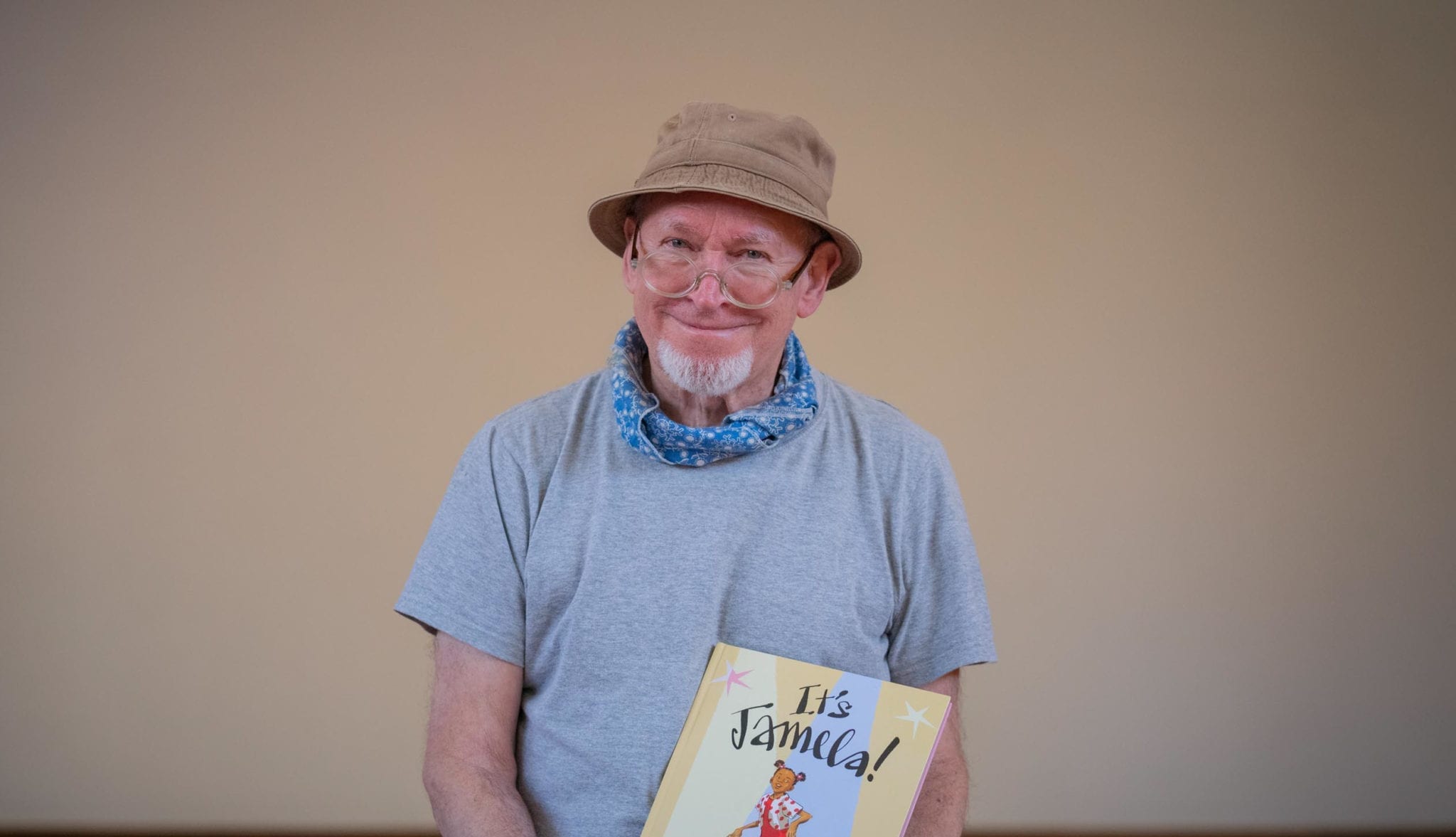
Some of our country’s first bridges were built upon books. Niki Daly grew up in a time when there was a notable absence of multiracial and multilingual stories, which created a literary divide in addition to the unrest caused by apartheid. In 1971, Daly moved to London to pursue a career as a singer and songwriter, but this wasn’t his calling. After returning to South Africa, Daly wrote and published his first book, Not So Fast Songololo in 1985, featuring primarily black characters.It was a milestone in children’s literature. 

Daly’s style embodied the perspective of the world from a child’s eyes. With pictures portraying people of colour, he aimed to accurately depict the lives of all South Africans. “Children need to see themselves identified in books,” he says. Daly’s tales kickstarted a revolution, inspiring other authors to speak up and write down their stories. As a result, he laid the foundation for distributing inclusive content. 

To this day, Daly still writes, edits, and illustrates. His stories have been published locally and abroad, winning him the Katrine Harries Award for Children’s Book Illustrations in South Africa and the Parent’s Choice Award in the USA. Daly was also shortlisted for the Hans Christian Andersen Award, one of the most prestigious literary awards. His meticulous representation of children of colour has placed a sense of power back in the minds of the youth. When they pick up a book, they can be proud of who they are. 

https://www.facebook.com/beautifulnewssa/videos/580440566038658/

Using Bees to Save Trees and Elephants

[et_pb_section fb_built=”1″ _builder_version=”3.22″ custom_margin=”||-39px|||” custom_padding=”||37px|||” fb_built=”1″ _i=”0″ _address=”0″][et_pb_row _builder_version=”3.25″ background_size=”initial” background_position=”top_left” background_repeat=”repeat” min_height=”828px” custom_padding=”||0px|||” _i=”0″ _address=”0.0″][et_pb_column type=”4_4″ _builder_version=”3.25″ custom_padding=”|||” _i=”0″ _address=”0.0.0″ custom_padding__hover=”|||”][et_pb_text _builder_version=”3.29.3″ background_size=”initial” background_position=”top_left” background_repeat=”repeat” hover_enabled=”0″ _i=”0″ _address=”0.0.0.0″]

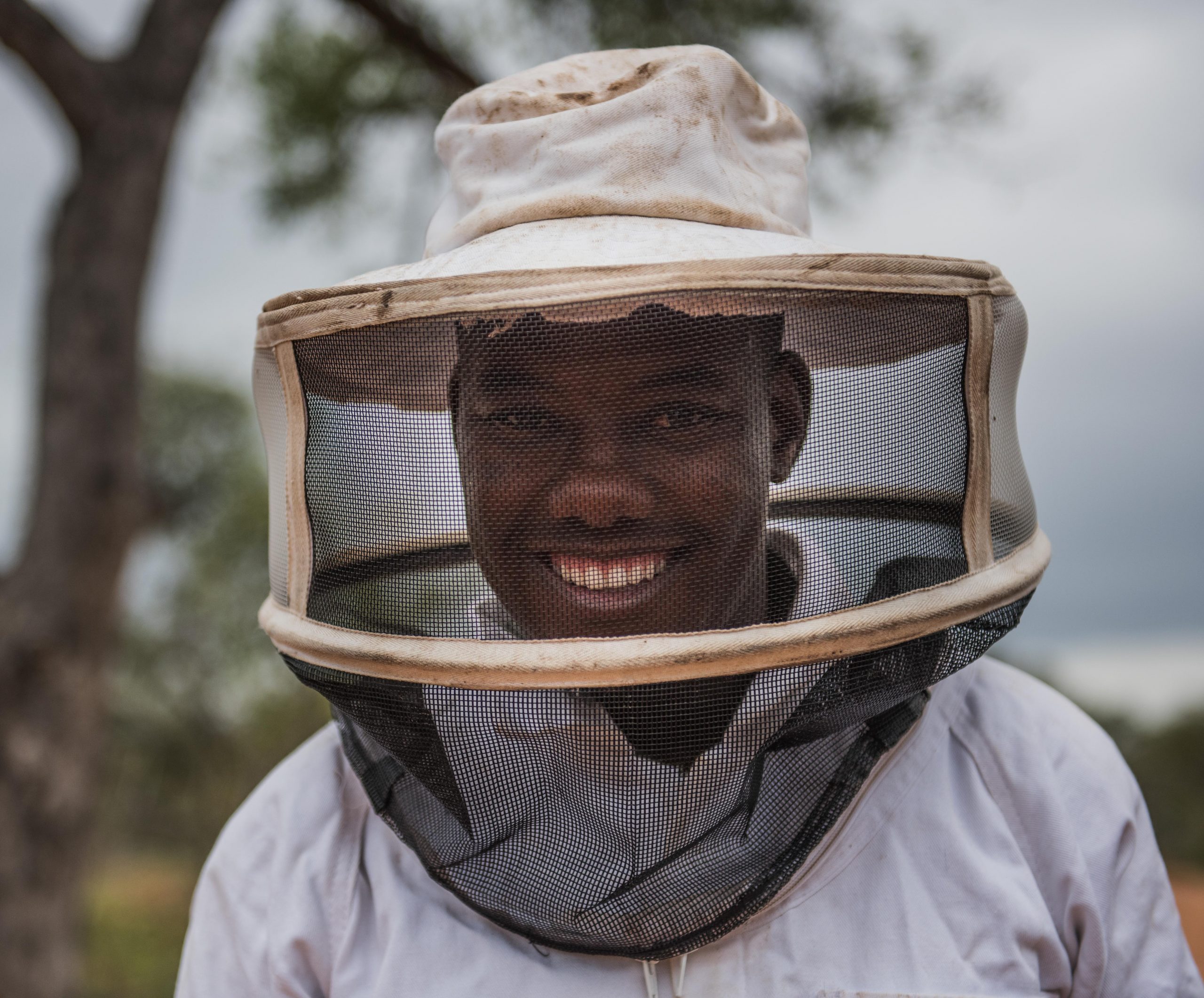
It’s unimaginable that a 14,000 pound animal would fear a tiny insect, but elephants are scared of bees. Ronnie Makukule is using this simple fact to conserve vulnerable vegetation and protect crops. Elephants have the capacity to completely wipe out thickets of trees by eating or trampling them. Efforts to deter them – thorny hedges, deep trenches, or fighting back with rocks, spears, firecrackers and guns – have not only failed, but in some cases resulted in the loss of life of both humans and elephants. In the midst of what appears to be a lose-lose situation, Makukule manages the world’s largest land mammals with fences made from bee hives.

The revolutionary method harnesses the natural animosity between the two creatures. When bees are aggravated by elephants, they target their vulnerable spots – their trunks and eyes. The elephants have since learned to stay away. Working in bee husbandry, Makukule’s fences provide a more humane method of control. It also allows him to explore his interest in conservation, which has been growing since he was a child. After Makukule was awarded a scholarship to study environmental education and nature conservation at the Southern African Wildlife College, he then ran environmental awareness programs at schools for the Timbavati Foundation. In 2016, Makukule joined Elephants Alive, using his ability to identify individual elephants and collect DNA samples to become a valuable researcher on the team. However, it’s his work as head of the Bee Project that has made the most significant impact.

Human aggression towards elephants has contributed to their already dwindling numbers caused by poachers. Beehive fences are a peaceful means of alleviating the conflict between humans and elephants, without causing harm to either. The bees also pollinate plants and add to the biodiversity of the area. Unlike electric fences, the initial cost of beehive fences is soon counteracted by the income from honey production. It’s an ingenious method and proof that nature has the best solutions. With a little creative thinking, something small can make a huge difference in conservation and wildlife management.

Beautiful News is reframing our world, one film at a time, every day at 4:14pm.

[/et_pb_text][/et_pb_column][/et_pb_row][/et_pb_section][et_pb_section fb_built=”1″ _builder_version=”3.29.3″ fb_built=”1″ _i=”1″ _address=”1″][et_pb_row _builder_version=”3.29.3″ _i=”0″ _address=”1.0″][et_pb_column type=”4_4″ _builder_version=”3.29.3″ _i=”0″ _address=”1.0.0″][et_pb_code _builder_version=”3.29.3″ text_orientation=”center” custom_margin=”-65px|||||” _i=”0″ _address=”1.0.0.0″][/et_pb_code][/et_pb_column][/et_pb_row][/et_pb_section]