Grameen America Changes Lives, One Microloan at a Time 

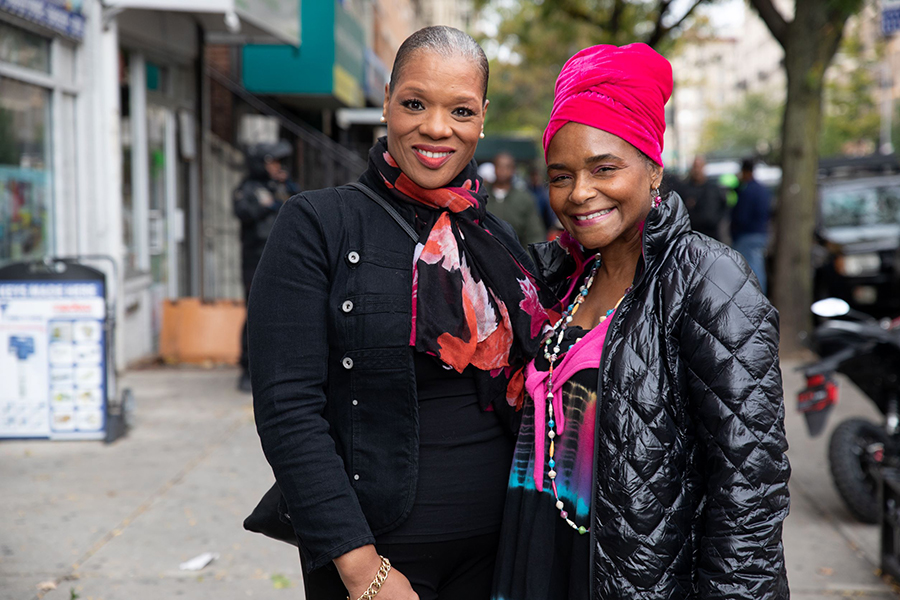
When David Gough needs to be inspired, he thinks of people like Shanté, a custom jewelry entrepreneur in Newark, NJ; Alfa, who owns and operates a beauty and skincare salon in Miami; and Shirley, a gourmet popcorn proprietor in Fresno, CA. 

They are among tens of thousands of women across the United States who took their entrepreneurial dreams and turned them into reality with the help of Grameen America, a nonprofit provider of microloans, financial training, and support to its borrower members. 

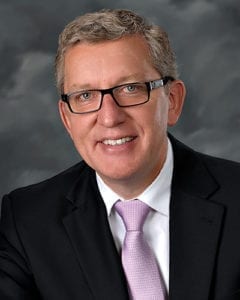
“Our borrowers are resilient, and they have great business ideas; they just need a little capital to make them happen,” said Gough, Grameen America’s Executive Vice President and Chief Financial Officer. “It’s inspiring to see what an impact a small loan can make in the lives of women and their families.”

A Hand Up

Since its founding in 2008, Grameen America has loaned more than $2.4 billion to over 150,000 women, replicating a business model that was developed by Muhammad Yunus, a Bangladeshi economist and civil society leader who was awarded the Nobel Peace Prize for founding the Grameen Bank and pioneering the concepts of microcredit and microfinance.

Grameen America focuses on women who live below the federal poverty line—a group with few options for accessing capital, opening bank accounts, or establishing credit scores. It has remained faithful to Yunus’ original methodology, which requires women to form a support group and go through training to learn about loans, savings, and credit building before receiving a microloan. Initial loans cannot exceed $2,000, and borrowers make weekly payments over a 6-month term.

Borrowers open free savings accounts with commercial banks and make weekly deposits as part of the program. Grameen also reports microloan repayments to Experian, helping the entrepreneurs establish a credit score and build their financial identity.

But the secret sauce of Grameen’s program is the weekly center meeting, during which about 35 entrepreneurs meet with a relationship manager. Appointments are mandatory, and attendance is taken. Members must bring proof of repayment of that week’s installment, and they participate in financial literacy training designed to help their businesses succeed and enable financial mobility out of poverty. 

The weekly meetings create a peer-to-peer learning environment that nurtures success. “Our members learn the discipline of borrowing money, they see everybody else in a similar position, and they share what they’re doing with the money,” says Gough. “You have this wonderful social capital model that gets developed. We would lose that if we were just giving the money out without any accountability or community.”

Scaling Impact

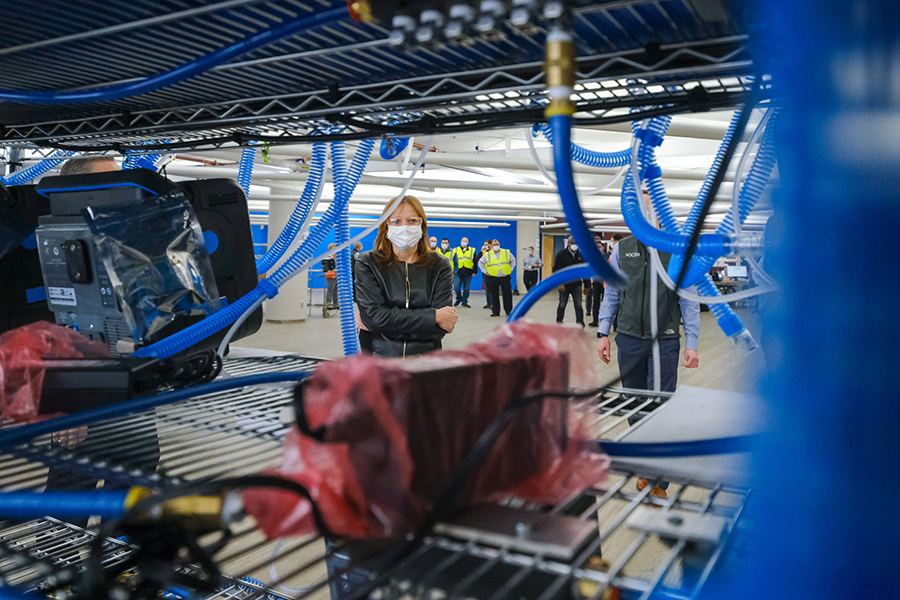
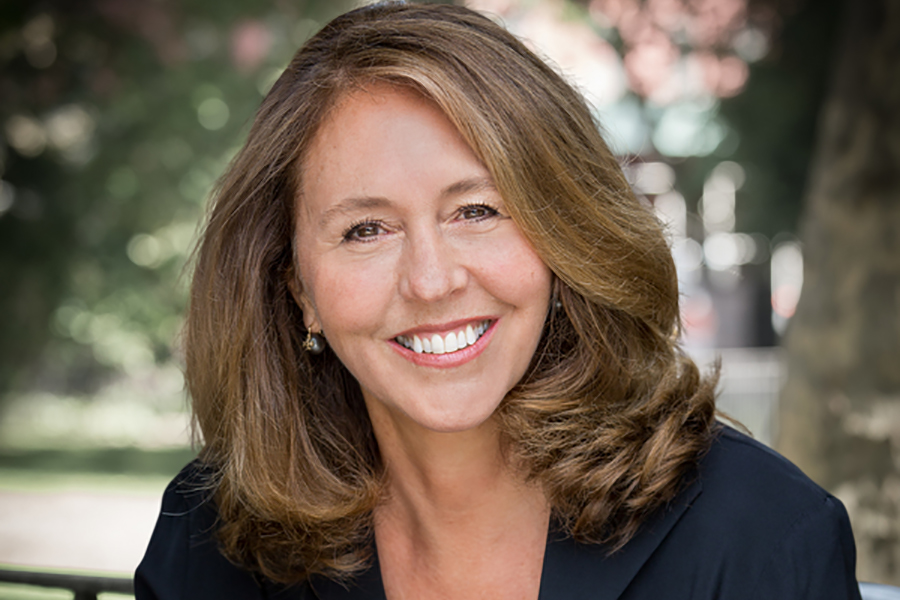
Grameen America, led by former Avon CEO Andrea Jung, has ambitions to scale up its reach into communities across the country rapidly. To do so, Gough says the nonprofit will need to operate like a social business that is as self-sustaining as possible. “We need to deliver in a businesslike way to cover our costs,” he says. “If we’re going to ask our members to pick themselves up by their bootstraps, we should do the same as an institution. So, we run it as a business to be reliable to our borrowers.”

With 29 branches in 23 cities, Grameen aims in 2022 to add six new branches in underserved communities in Atlanta, GA, Phoenix, AZ, Riverside, CA, Philadelphia, PA, and a second location in Charlotte, NC, and Miami, FL. For every branch they open, the organization tracks key performance indicators to ensure the branch can cover direct costs and achieve full sustainability within five to six years.

The organization is reaching deeper into communities with initiatives like the $100 million ‘Lifting America: The Campaign for Her Future,’ as well as the ‘Elevating Black Women Entrepreneurs’ Initiative, which launched in May 2022 and aims to expand to $1.3 billion in loans to more than 80,000 Black women entrepreneurs by 2030. 

Grameen is also leveraging technology to drive efficiencies, including digitizing loan disbursements and repayments.  During the pandemic, they pivoted to using services like Zoom and WhatsApp. “We were worried about members being able to adopt the technology, but to our great joy, they learned it well…with a little help from their kids,” said Gough.

Perhaps most ambitious, Gough says, are Grameen’s plans to grow its loan portfolio—from $158 million currently to $600 million in ten years.  While some money can be raised with philanthropic donations and bank Community Reinvestment Act lending, Grameen is also tapping impact investors with a debt investment targeting foundations, banks, high net worth individuals, and offerings through ImpactAssets.   

But no matter how big Grameen gets, the bottom line comes back to people like Sheila, who took out a Grameen loan to start a mobile boutique on 125th street in Harlem, next to the iconic Apollo Theater. “Our borrowers are some of the smartest people when it comes to generating income and going out and hustling to get it,” he says. “They just need access to an affordable microloan and a little support to help them reach their goals.”

Interested in learning more about Grameen America’s impact investing opportunities? Contact dgough@grameenamerica.org

Pro Athletes Build Dream Team of Impact Investors

Over the past year, in communities across the country, Derrick Morgan has quietly built “The Dream Team” of impact investors.

With a unique playbook and the grit and determination that made him a star linebacker for the Tennessee Titans, Morgan in 2021 launched I AM Nation, a network of 40 professional athletes that has come together to share knowledge, pool resources and educate each other on ways to meet collective goals in business and impact investing.

By building a collective of athlete investors, I AM Nation has the influence and critical mass needed to break down barriers and open opportunities for its members and for the communities they came from. 

“I AM Nation is the go-to platform for the athlete that has ambition to continue to grow after the game,” said Morgan. “It’s centered around group economics and the common thread is the greater good and giving back. We’re investing together, building our networks and finding creative ways to give back to our communities.”

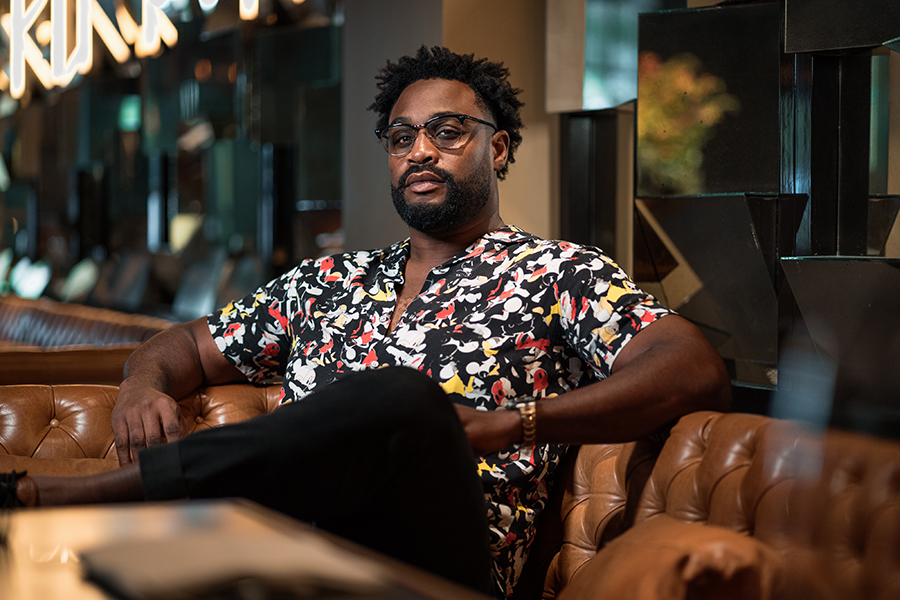
Added Leger Douzable (pictured above), a former defensive lineman who’s now a college and professional football broadcaster: “What do we want to accomplish with our investments?  It’s all about leveraging capital, influencing culture, and creating a community.”

The group’s membership is a Who’s Who of elite athletes and includes NBA champions, Pro Bowlers and Super Bowl winners. But it’s what members are doing outside the game that may eclipse their stardom. 

Among I AM Nation’s members are Ex-NFL linebacker Spencer Paysinger, the producer, creator and writer of All American, the successful CW Network series inspired by his life; Cliff Avril, Seattle Seahawks Super Bowl champion and Pro Bowler, who is today a real estate entrepreneur; former New Orleans Saint Marcus Colston, a professor at University of New Orleans;  and NBA star Josh Childress, who launched Landspire Group, a real estate firm that’s part of TPG NEXT, a new initiative providing growth capital and operating resources to seed, support, and scale the next generation of diverse investors and entrepreneurs. 

That community of peers is what attracted strong safety Johnathan Cyprien, who is building a career after football in real estate. “What I enjoy most is this group of like-minded current and ex-pro athletes joining together in business,” he said. “The power of I AM Nation to pool resources and assets brings an advantage to the community over other investment groups. This being the first group of its kind will not only inspire but be a resource to new professional athletes to educate themselves in investments and maximize their finances.”

For Morgan, I AM Nation is all about capturing the collaborative power of professional athletes and, at the same time, overcoming the silos that sometimes form in a locker room. “On game day, you’re sitting next to your teammates, hyper-focused on the game, but a lot of the time you don’t get to talk about things outside of that realm,” he said. “It’s such a missed opportunity. When do you get that much social and financial influence in a room?”

One powerful tool for busting silos is education. In July, I AM Nation held its first retreat featuring Gary Vaynerchuk, chairman of VaynerX , early-stage investor Anthony Pompliano, community real estate developer Brandon Rule, and Nathan Rodland, General Partner, Elefund and Founding COO, Robinhood, among an impressive line-up of investors and entrepreneurs. Cyprien, who is working on his first real estate project, a 373-unit community development in Orlando, said the retreat was “exceptional. The whole experience was first-class, and the educational portion was memorable and informative.”

For Douzable, I AM Nation’s focus on education and collaboration has a cumulative effect. “I know people always talk about wanting to get a ‘seat at the table,’ but with I AM Nation, we’re creating our own table by realizing the value of our influence to build new opportunities.”

“Without professional athletes, there is no game, but too often we’ve relinquished our value to the powers that be who control the industry,” added Morgan. “So as a collective of professional athletes that is very business-minded, we’re taking our value to the next level.”

The athletes are bringing that value back to their communities through impact investing.  Morgan has made several impact investments—including affordable housing developments in Nashville and a venture investment in Fresno-based Bitwise Industries, a LatinX founded tech training and consulting company that works with underserved populations in underdog markets. Other athletes have also done impact deals, but now are joining forces through the Hometown Fund, a pooled donor advised fund at ImpactAssets. By bringing multiple donors together, the fund is unlocking catalytic investment capital and leveraging the off-the-shelf architecture of donor advised funds to create fast, strategic constructs with deep impact capabilities.

“Part of our education around impact and giving back to the community is to point out that this doesn’t have to be a traditional philanthropic effort, it could be a double bottom line return type of format,” Morgan said. “ImpactAssets represents a very creative resource for our members in terms of giving back and caring for the community they come from. We want to help the guys fulfill their desire to benefit the community and find creative ways outside of the traditional playbook for athletes to get into the community.”

I AM Nation also sees the potential for a “network effect” with the Hometown Fund. With the fund providing seed money for an impact investment, Morgan and other members are developing partnerships that can come alongside and anchor a lot of their efforts. “We don’t have institutional money amongst us, but there are foundations and institutions that do,” he said. “This is a partnership model with strong allies,” including fans, friends and financial services that can form a network of support for impact investments.

But whether it is affordable housing investments or pooled impact capital in The Hometown Fund, Morgan is crystal clear on what he wants to achieve: “I want results. Capital is a very critical piece of the puzzle in terms of moving the needle on a lot of systemic issues. That’s why I gravitated towards the impact investment route because capital gets things done. Whatever else you want to say about it, money moves the needle.”

The Multi-Million Dollar Child Development Company Shaping the Minds of the Next Generation

Entrepreneurs often have a “lightbulb moment,” a sudden realization or insight that drives a business idea into reality. But, for Jessica Rolph, cofounder and CEO of early childhood brand, Lovevery (above, right), her moment of inspiration came as a new mother in what was almost an “anti-lightbulb” moment.

“I remember one morning watching my son pull himself up to this toy and push one button, and suddenly lightbulbs are flashing, a purple cow is popping out, and all of this stuff was happening,” she says. “I asked myself, ‘what was this toy really doing for my connection with my child and his brain development?’”

Rolph threw herself into a search for answers, reading a doctoral thesis on infant brain development, making her own toys, and talking to experts, researchers, and specialists. And in 2017, Rolph and cofounder and Lovevery President Roderick Morris put those answers to work. The pair launched Boise-based Lovevery, a maker of stage-based play essentials for children and multi-channel content for parents. 

The brand has grown rapidly since, with a unique subscription-based business model that supports parents and children throughout the developmental stages of early childhood. It has generated a subscription Annual Recurring Revenue exceeding $90 million. Lovevery’s high-profile fan base includes multi-hyphenates Jessica Alba and Ayesha Curry, models Ashley Graham and Gigi Hadid, and Olympian Allyson Felix. Google Ventures and Chan Zuckerberg are among its investors. Through rapid growth and the COVID-19 pandemic, Lovevery has stayed focused on “helping parents feel confident they are giving their children the very best start in life,” says Rolph. “There’s always purpose in work, and for Lovevery, our purpose” is to be a support system for families.

I spoke with Rolph on a recent summer day as she juggled multiple calls and meetings — a skill honed from nearly 20 years in the entrepreneurial trenches. Here are four takeaways from that conversation:

The Power of Co-creation

A serial entrepreneur, Rolph has cofounded three organizations — Happy Family in 2003 with Shazi Visram; the Climate Collaborative in 2017 with four co-founders; and Lovevery with Morris. “The co-creation process is important to me,” she says. “In my experience, that deep trusting partnership is where so much brilliance can be created. It takes more than one person to build out a vision” for a company.

Three Pillars of Impact

As a builder of businesses with purpose, Rolph grounds decisions on triple-bottom-line factors. At Lovevery, sustainability and climate have fundamentally shaped how products are made. Sustainably harvested wood, organic materials, and recyclable packaging “are table stakes.” And to extend the life of their products, the company also offers a spare parts guarantee, so a lost puzzle piece or missing peg doesn’t mean something becomes landfill. “We want to keep our products in use for as many babies as possible.”

Lovevery is also focused on expanding initiatives around equity and inclusion and education and access so that all families can experience the transformational benefits of Lovevery’s early learning resources.

Fundraise with Purpose

Lovevery’s “A-List” of investors reflects fundraising skills honed from launching multiple companies, as well as a subscription-based business model that has exceptionally high retention rates and addresses early childhood development. Investor interest is also grounded in a sense of shared purpose. “I think there’s a meaning and a purpose around the backers we have,” she says. “Chan Zuckerberg and Reach Capital want to impact early childhood development. Google wants to help shape the future, and children are our future. And Maevron wants to work with disruptors and innovators who are values-based, so I think that is why we’ve been able to connect with them.”

Lovevery also benefited from another source—investors who use philanthropic dollars to make investments, including the ImpactAssets donor advised fund. “They’re some of the most mission-aligned investors we have,” says Rolph. She and her husband, Decker, are also clients of ImpactAssets and have made similar investments in firms. “These are the kinds of investors we want to bring in as we scale. We want to feel like we are all in it together, that there is real respect for what we’re trying to accomplish.”

Research to Reinvent Play

From its beginning, Lovevery has been a research-based company, digging into data and scientific reports rather than just designing eye candy for babies, toddlers, and parents. “Research defines everything we do,” she says. “We’ve deconstructed this notion that a toy has to look a certain way — have flashing lights or be cozy and cute — and think of them as tools for learning. We want to be that link between the research around child development and the parents.”

Rolph’s long-term vision for Lovevery transcends toy making. “We are building a platform for parents to connect with experts around speech development, occupational therapy, and emotional, social development. We want to be a go-to resource for early childhood development research and thereby improve outcomes for all children.”

How Business Leaders and Impact Investors Are Stemming the PPE Shortage

The U.S. is seven months into the coronavirus crisis and yet a critical shortage of personal protective equipment (PPE) remains.

As fall and the cold and flu season approach, which will increase demand on health systems, many doctors and nurses continue to reuse single use N-95s. A recent survey of 20,000 nurses conducted by the ANA cited that  “1 in 3 nurses say they are ‘out’ or ‘short’ of N95 masks” and “68% of nurses say the practice of reusing single-use PPE, like N95 masks, is required.” An FDA report of medical device shortages on August 20, corroborated these shortages.  Politico has reported that the problem is exacerbated at “smaller and poorer hospitals” and that “a clear disparity has emerged and persisted” as “larger and richer hospitals and practices outbid their smaller peers.”

Schools are also scrambling to secure sufficient supplies of masks and hand sanitizer to enable safe reopening. With FEMA’s recent decision to not fund school safety measures, schools and families are assuming the cost of protecting students and teachers. A shortage of PPE presents a significant risk to older teachers and staff and to multigenerational families if children bring the virus home with them. It has been widely reported that risks for both children and adults are more pronounced in Black and Latinx households. 

Business steps up

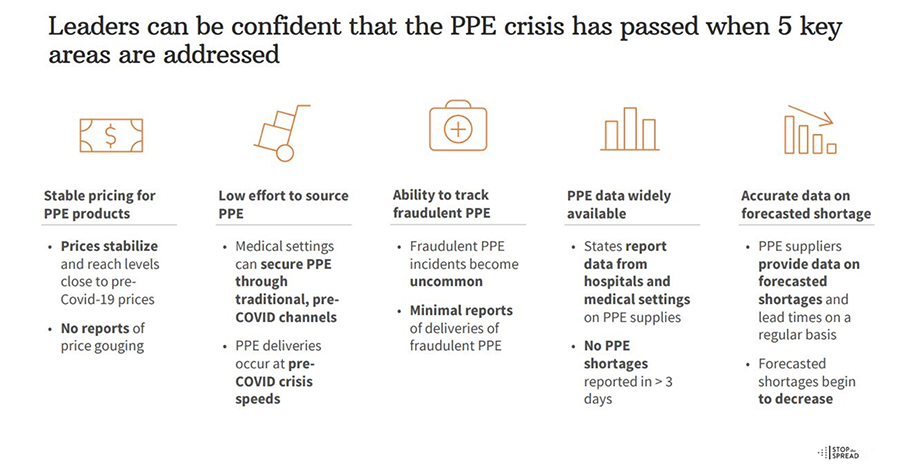
How will we know when the PPE crisis has passed? According to research by Stop the Spread (STS), a coalition of 1,300+ CEOs and executives working to catalyze the private sector response to COVID-19, we can be confident that the PPE crisis has passed once key areas are addressed: stable and transparent pricing for PPE; robust and resilient supply chains; ability to track fraudulent PPE; widely available, accurate data on PPE availability to help forecast shortages.

To help attain success in the PPE market, STS has collaborated with partners such as C19 CoalitionProject N95, and the World Supply Chain Federation to push critical PPE to the most essential areas at fair prices, helping stabilize the market. The organization also worked with non-medical mask suppliers and manufacturers who pivoted operations to provide PPE, including Brooks BrothersRent the Runway, Eagle Fabrics , Lucky Brand and VIDA. All told, STS spurred the manufacturing of more than 20 million units of personal protective equipment, including N95 face masks, face shields, and more.

Impact to fight COVID-19

Impact investors are also jumping into the fray. Through a partnership with STS and several other funding initiatives, ImpactAssets clients have invested and granted $213 million in three COVID-related critical needs areas, including supporting “front line heroes”; preserving the progress made towards climate change and social justice; and supporting individuals and small businesses who have been hit hardest by the economic crisis, particularly the unbanked, low-income communities and communities of color. The Global Impact Investing Network has also organized around the R3 Coalition to accelerate impact investments in response to COVID-19.

Here are three examples of impact investments in PPE:

Roots Studio

Roots Studio digitizes last-generation art from rural communities into an online library for licensing. The Heritage PPE Collections features art from tribal communities in India, Jordan, Ethiopia, China, and Panama, amongst others. Tribal communities have been severely affected during COVID-19. Roots Studio aims to provide these communities with steady income and protective wear. Thirty percent of the profits from each purchase are returned to the community and every artist receives protective wear featuring their artwork.

To the Market

Startup TO THE MARKET helps corporations source and purchase from ethical suppliers around the world. The company promotes transparent supply chains and provides overlooked suppliers, such as women-owned and operated factories and artisan groups, with access to the global supply chain. Through an investment from ImpactAssets Stop the Spread Fund, TO THE MARKET will expand services to hospital systems that have immediate procurement needs but are challenged to work with many suppliers’ pandemic-driven payment terms. TO THE MARKET has already vetted and approved more that 200 suppliers to see whether they could help meet unfulfilled demand for PPE and shipped more than 10 million units to hospitals throughout the U.S. 

The Community Purchasing Alliance 

The Community Purchasing Alliance (CPA) leverages the buying power of community institutions to accelerate progress towards sustainability, equity, and justice. Its 121 member-owners and 160 total participating organizations include schools, faith-based organizations, unions, child-care and senior-care centers, and other local non-profits. CPA is organizing up to $1M of PPE purchases each month, directing at least 40% to businesses owned by people of color across all geographies and helping members save 10-40% on purchases. An investment through the ImpactAssets Stop the Spread Fund will enable CPA to expand, helping roughly 250 additional organizations purchase PPE.

“It is precisely in times like this that impact investors and philanthropists can make their greatest impact,” said ImpactAssets CEO Margret Trilli. “We all have more work to do to overcome the coronavirus pandemic, but investments in innovative social enterprises and partnerships with STS and business leaders are helping to fill the gap and drive innovation.”

Amy Bennett is the Chief Marketing Officer at ImpactAssets; Sharon Knight is Executive Director, Stop the Spread.

5 Social Impact Lessons from the Front Lines

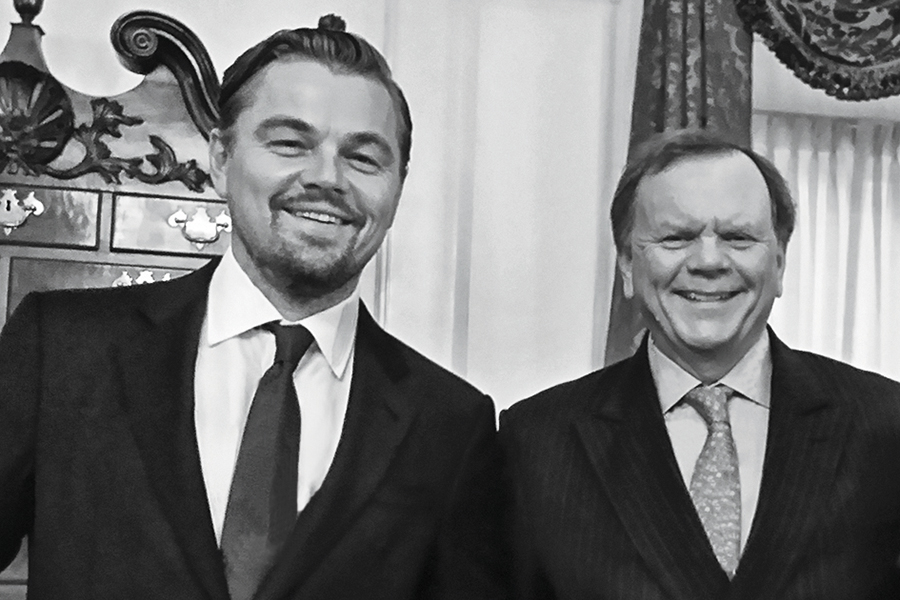
As he watched the devastating fires in Australia destroy nearly 7,000 square miles of countryside and 3,000 homes last year, Terry Tamminen (above, right) thought of canaries that miners carried into coal mines to determine if carbon monoxide had collected in mine shafts.

“Australia was a microcosm, and these fires are a warning that we should pay attention to,” says Tamminen. “Here’s a developed nation with lots of resources, and the whole country is literally on fire. The climate science tells us that this will be our future if we don’t change quickly.”

Tamminen has spent a career making change happen quickly and for the better — whether as secretary of the California EPA under Gov. Arnold Schwarzenegger, CEO of the Leonardo DiCaprio Foundation, or co-founder of leading environmental NGO Seventh Generation Advisors. Here are five lessons learned from three decades of making a positive impact on the planet.

01 Learn And Adapt

Australia’s infernos give business and government leaders in other countries an opportunity to anticipate how climate change will impact their communities. “Businesses need to be thinking both about mitigation and adaptation, and policymakers need to be thinking about how to be a part of the solution of the climate emergency instead of standing in the way of progress,” he says.

02 Stay Positive

Tamminen recalled working with Leonardo DiCaprio on a formal address to the U.N. Climate Summit. They wanted to write a speech that described problems and solutions to the climate crisis, “but we kept listing the problems and looking at the science, and we found ourselves almost in tears trying to write the speech,” he says. “It’s hard to stay positive, but in the end, we wrote a persuasive speech that called for bold, unprecedented action.”

03 Share Best Practices

As head of the California EPA, Tamminen ushered in impactful policies, including the Million Solar Roofs initiative and California’s landmark Global Warming Solutions Act of 2006, which emphasized economic development opportunities around clean/efficient energy and waste reduction. “We proved that a strong environment and a strong economy are two sides of the same coin,” he says. 

04 Amplify Change

Through his work with global celebrities, including Leonardo DiCaprio, Jane Goodall, and Barak Obama, Tamminen has helped amplify issues and success stories to inspire change. With climate change, “We need clear voices and people we can trust, and we tend to trust celebrities,” he says. “It’s important to harness celebrity to get the message out, to normalize it, and make people realize that their actions matter and that they can be part of the solution.”

05 Think Generations Ahead

Tamminen founded 7th Generations Advisors based on the ancient First Nations philosophy that decisions we make today should result in a sustainable world for future generations. That same philosophy needs to guide actions as society confronts climate change. As individuals and as a society, “We need to be thinking generations ahead and act with urgency,” he says. 

3 Ways American Companies have Joined Forces to Fight The Pandemic

As coronavirus reignites in states across the country, a volunteer business organization is quietly helping companies take bold action to bring the spread of coronavirus under control — marshaling private and public sector resources to solve the immediate and evolving needs of this urgent public health crisis.

Stop the Spread was started by Kenneth Chenault, the former chief executive of American Express, and Rachel Romer Carlson, the CEO of Guild Education, in early March. The organization now includes more than 1,300 volunteer CEOs and business executives in its ranks.

Through unique partnerships with member companies, Stop the Spread has facilitated the production of more than 40,000 ventilators and manufacture more than 20 million units of personal protective equipment, including N95 face masks, face shields, and more.

“Our goal is to connect businesses and organizations that are best-positioned to address critical needs during this public health crisis, often in innovative or unexpected ways,” says Christian Peele, director of Stop the Spread operations. “Some of the most creative and effective responses to COVID are coming from business leaders across the country who have ideas and assets they can deploy to the fight.”

So how does an organization leverage the collective resources of some of America’s leading companies and executives? Peele and her “amazing team” of experts, analysts, students, and volunteers say these three leadership principles have helped guide their unique and powerful response to the pandemic:

Create a Call to Action

The Stop the Spread movement began with a call for change in a New York Times op-ed, written by Chenault and Carlson. It closed with this entreaty: “Wherever we can, however we can, we must meet this unprecedented challenge… What is called for is nothing less than the full strength of our capital, our ideas, and our leadership.”

The response from business leaders was immediate and galvanizing: Within days more than 400 executives and leaders — from Golden State Warriors star Stephen Curry to CEOs of Zoom and PagerDuty — had signed on, with a thousand more joining the movement within weeks. “It was so inspiring to see these leaders step up in this moment and have the courage to think creatively about the problem and solutions,” said Peele. As the country experiences the summer spike in COVID cases, “the current moment requires that same kind of bold
imagination.”

Build Partnerships

Stop the Spread’s core work brings companies together to address critical resource needs. Early on, Stop the Spread linked ventilator maker Ventec Life Systems with General Motors — a partnership that produced 10,000 units a month when ventilators were in critical demand. Today, the organization is collaborating with firms and research institutions to scale production of coronavirus testing, treatment and tracing efforts. And Stop the Spread is pivoting to focus on racial and economic disparities exacerbated by the pandemic, through areas such as food security and the equitable distribution of testing and Personal Protective Equipment.

One of Stop the Spread’s latest partnerships occurred in June when it joined forces with ImpactAssets to find, foster and fund the most innovative and impactful ideas that were surfacing in response to the pandemic. ImpactAssets investors have already put more than $170 million into COVID-related investments. Now a rich pipeline of 400 Stop the Spread investment opportunities holds promise not only as impact investments but also as funding for supporting and championing critical response efforts around the U.S.

Never Underestimate Your Resources

From the beginning, Stop the Spread has embraced a principle that says, “we have more available to us than we think and if we just take a second and survey what we have we can change the world with it.” Peele says, “Our combined capital, our combined network, our combined brainpower, it is enough to do this work.”

That ethos has been expressed countless times by Stop the Spread’s volunteer executives. One example: Rick Schostek, Executive Vice President at Honda North America, Inc., surveyed the idle resources his firm had due to the pandemic and forged a partnership with Dynaflo, Reading, Pa. to manufacture at scale a sophisticated compressor that is an essential component in critical care medical ventilators. That partnership ensured that ventilators got off the assembly line and into hospitals on time. Said Schostek: “I’m humbled to be part of a manufacturing enterprise that is working to find ways to join this fight, with each of our business lines —automobiles, power equipment, power sports and aircraft — offering unique solutions and support.”

As the pandemic evolves, Stop the Spread and ImpactAssets will leverage these principles to address significant gaps in the COVID response — with a focus on communities of color that have been disproportionately impacted by COVID-19. Says Peele: “We are committed to helping catalyze private sector response and building innovative solutions that go beyond the immediate crisis to address issues of social equity and support the communities and individuals hit hardest by the crisis at hand.”

Please join Stop the Spread. This fight is far from over, and private sector leadership is essential to solving this crisis. Please ask leaders in your organization to complete this form to let us know how you’ll support this urgent and unprecedented moment in American history.

5 Key Learnings From An Impact Investing Master

Career paths take people on fascinating life journeys. For Kim Wright-Violich (above), the crossroads along her career path have provided opportunities for exciting and meaningful work.

Wright-Violich is a Managing Partner at Tideline, an impact investing consulting firm, and a member of the ImpactAssets Board of Directors. Through a mosaic of a career spent in financial services, philanthropy and academia, she has developed a unique and informed perspective on the rapidly growing world of impact investing. 

“When you can connect the pace and rapid iteration of private-sector with the solutions-focused, mission-driven orientation of the social sector, work becomes intensely gratifying and meaningful,” said Wright-Violich. “That alignment of purpose and profit is what impact investing is all about, and it’s much more powerful than business or philanthropy or even government efforts in isolation.”

Here are five key learnings Kim has discovered on her impact investing journey.

1. Investors’ perceptions are changing rapidly

Since co-founding Tideline in 2014, Wright-Violich has seen a sea-change in interest and demand for impact investing. Individuals, family offices, foundations, and other early adopters of impact investing were joined in in the last couple years by mainstream and institutional investors exploring impact investing. Wright-Violich says, “the market reached a tipping point when expectations shifted from an assumption that investors would need to compromise on returns to achieve positive social and environmental impact to an openness and even belief that impact investing could achieve market rate returns, would often mitigate risks, and even occasionally provide higher return opportunities.” Growth is accelerating in the $500 billion global impact investing market driven by both individual and institutional investors demand. Leading organizations in impact investing such as ImpactAssets, Tideline, and others are setting precedents, defining best practices, and influencing how this burgeoning sector is developing. 

2. Impact Investing Knows No Political Bounds 

Some investors associate impact investing with liberal political views, partially due to roots in the student-driven divestiture movements but Wright-Violich sees a big tent when it comes to impact. “This should appeal to conservatives who believe in small government and believe we should not rely on the government to exclusively solve social problems,” she says. “The private sector has a significant role to play. Additionally, the faith-based investors are becoming increasingly interested in aligning their values with their investing.” Of the three sectors of the economy, she says, the social sector is not big enough and struggles from not having a market feedback mechanism, which prevents it from moving as quickly as it could.

Government is big and cumbersome, and political winds change, making a sustained effort challenging, particularly when it involves some political risk. “The private sector is uniquely positioned to experiment and to make things happen at scale without abandoning its primary purpose of driving the economy.” Wright-Violich is also encouraged by the recent decision by the Business Roundtable announcement to expand the organization’s Principles of Corporate Governance, noting that the purpose of a corporation should no longer be exclusively maximizing shareholder value. The group of 200 CEOs also said companies must also invest in their employees, protect the environment and deal fairly and ethically with their suppliers, according to the New York Times.

3. Learn by teaching

Although her work as founding CEO of Schwab Charitable, a donor-advised fund, had given Wright-Violich a leg up when it came to understanding impact investing, teaching the subject at the Haas School of Business deepened her knowledge. “I took to heart the quote that says, ‘If you want to learn something, read about it. If you want to understand something, write about it. If you want to master something, teach it.’” She joked she had to race to keep ahead of her students—and sometimes learned from them. Having that opportunity to learn through teaching was pivotal to making the deliberate shift in focus to impact investing. “Consistently, over the last twenty years, my goal has been to align what was meaningful to me and my career.”

She first pursued that by helping to democratize philanthropy in a financial service firm donor-advised fund, and now she is promoting impact investing in a rapidly growing donor-advised fund ImpactAssets as a board member and contributing to the development of the impact investing market as a Managing Partner at Tideline. “Expanding my expertise kept me on the steep part of the learning curve, which is exciting. I believe that you should invest in your expertise, rather than assuming passion alone will carry you. Knowledge does not necessarily translate from one related specialty to another without putting in the work to rigorously educate yourself.” 

4. It’s a long game

Impact investing is not yet ready, though it may be soon, for the risk-averse or the impatient investors, particularly because impact investors are cutting new ground and often the underlying investment and enterprises are young. “There are a few unicorns in the impact investing space,” says Wright-Violich. “However, more often and more likely they are just good, healthy and ethical businesses that will grow over time, so it is usually best for those with a longer investment horizons” The dividends social, environmental, and financial can be surprisingly positive and meaningful for those with patience. 

5. Not a cure-all

While the rapid growth in interest in impact investing, development of more sophisticated practices are positive signs, Wright-Violich cautions against raising unreasonable expectations. “The promise and hope generated by the growth is exciting, but impact investing is not the panacea. It’s not going to solve all social problems, nor will it grow without hiccups,” she says. Some of those missteps will be a natural outcome of learning and iterating, and unintended consequences, but some will result from short cuts and abuses such as “impact washing.” Tideline was founded on the premise it could help avoid some of those risks and fulfill the promise. Issues like climate change and social inequality will require a multitude of approaches and a full array of solutions—from government attention and policy, philanthropic and non-profit initiatives including acting as catalytic capital, and the private sector. “And where you can authentically and thoughtfully align mission and investment money, you can drive substantial financial and impact results. That won’t happen every time, but it is powerful when it works.”

4 Lessons From an Impact Investor

Wall Street is often the source of inspiration for investment professionals. But Gerhard Pries took a different path. It was on the streets of Calcutta working with Mother Teresa’s Missionaries of Charity that he found a deeper motivation that has led him to the pinnacle of impact investing.

Gerhard Pries of Sarona Asset Management

Pries is the Managing Partner of Sarona Asset Management, a Toronto-based impact investing firm that taps growing investment opportunities in frontier and emerging markets. With an eye to investments that offer strong financial returns and significant positive social and environmental impact, Sarona plays a unique role in frontier markets—delivering capital to entrepreneurs in under-served markets and helping develop companies and communities profitably and sustainably.

His career and life have taken him from corporate board rooms and the United Nations to rural African villages and West Bengal orphanages. These experiences have shaped a compassionate capitalist who embraces market solutions and sees increasing opportunity amid “our unique time in history” to shape a positive future. 

Here are four lessons from Pries’ work:

1. Find Your Place

Pries’ career at Sarona is a long way from his first line of work at PricewaterhouseCoopers, where he was an advisor to mid-market enterprises. While the pay was good, “something was missing” and he eventually left the firm.

“I explored the writings of Mother Teresa, Jim Wallis and Ron Snyder, went to study theology in Europe and eventually stumbled into Mother Teresa’s Missionaries of Charity in Calcutta. What struck me when I first landed in Calcutta was that this whole debate that I was a part of, and still am a part of—the debate between capitalism and socialism—was a moot point in Calcutta. The poor were not looking for socialism or a handout. They simply wanted a way to access the market, to be participants in the market. Because all of them put food on the table through production, through trade and commerce, not through handouts or social programs.”

2. Renew What is Old

Sarona is a young company with a rich history. The firm traces its roots to 1953 when a group of business people formed a private company to invest in the Sarona Dairy in Paraguay. While impact investing is often thought of as a 21st century phenomena, that dairy investment 66 years ago was certainly impactful, combining sound investment principles with strong social values.

Over time the original private investment company became MEDA, an international development organization. Pries spun out Sarona Asset Management from MEDA in 2010, reflecting a desire to build a more scalable business.

Sarona still makes private equity investments, but the firm has shifted its deal sourcing. “When I started in frontier and emerging markets, there were no private equity firms in those markets, at all. The only way we could invest in emerging markets then was to fly out, invest directly in a company, fly back home and begin to pray that it goes well. Whatever you think about prayer, it’s not a great way to invest.”  Today, Sarona invests in local private equity funds and private debt funds, run by people on the ground who know the industries and markets. The objective, however, remains the same: to deliver capital to entrepreneurs in under-served markets and help them develop their companies and their communities profitably and sustainably.

3. Ride Waves of Change

Riding the waves of change that are sweeping across the global economy will be crucial for the long-term success of business and society. Two significant shifts that Pries sees right now:

Development of a global framework to address climate change and inequality: “When the United Nations agreed on the 17 Sustainable Development Goals, we were believers,” said Pries. “The SDGs have become a galvanizing force for the corporate and investment sectors—particularly the impact investment sector.” Through its private equity funds program, supported by public government agencies, Sarona seeks to make a scalable and significant contribution towards the SDGs, embedding them in its monitoring and evaluation of their investments.

A new era of public/private partnerships: At a 2015 to the United Nations Assembly in Addis Ababa, Pries saw one nation after another declare, ‘If we’re going to put our shoulders into the Sustainable Development Goals, we have to work with the private sector.’ Across the street, a World Economic Forum had gathered and CEO after CEO echoed those sentiments. “We now have an opportunity that is unique in history to create real long-lasting partnerships to build a new economy based on collaboration between public and private sectors.”

4. Layer Your Impact

Tapping into his experience working with the Sisters in Calcutta, Pries says that in life and business, actions reverberate, creating meaning and impact across layers of society.

For Sarona, that means delivering thought leadership and financial impact across three levels.

The basic level is at the company investment level, where Sarona helps companies create better jobs, women’s empowerment, reduction of environmental footprint and other tangible and measurable impact.

A bigger impact, says Pries, is the partnership and influence Sarona has with private equity firms across frontier and emerging markets, helping them implement policies and strategies to improve social and environmental impact through their portfolio of companies.

At the apex level, Sarona is participating in the global discourse on public-private collaboration to build this new economy. “At this level, the impact is far-reaching. It’s not about the jobs we create this year; it’s about how the world structures itself for the next 100 years.”

Ever the optimist, Pries concludes, saying, “The world is a scary place, but I see hope in the way investors care about how their assets are deployed, and in the MBA students I speak to, who show far more interest in marrying heart and head than when I was in school. Yes, I think we’re living in a challenging time, but a very opportune time to be engaging globally.”

Giving Fund Donors Invest in Seed Stage Social Entrepreneurs at “Angel Tank”

The 2nd Angel Tank social enterprise pitch competition was an inspiring kick-off to the 2019 SEED Conference in San Francisco, CA on May 20, 2019.

An impact twist on ABC’s Shark Tank, this year’s Angel Tank featured five leading Bay Area impact investors as judges and a select group of six social entrepreneurs. Each entrepreneur had 5 minutes to pitch their world-changing idea to a live audience for a change to win two prizes: the Angels Choice and Audience Choice Award.

ImpactAssets and Real Leaders co-hosted Angel Tank for the second year to support the growing field of investors and entrepreneurs activating seed capital for good.

“We are thrilled to have the opportunity to support and showcase this exceptional group of social entrepreneurs. Their fresh ideas and inspiring vision of a more inclusive and just system are helping to transform business as a force for good — for profit, people and planet.” — Tim Freundlich, CEO, ImpactAssets

The Angels Choice Award winner was Savvy Cooperative, who won the judges vote for their innovative approach to healthcare. Savvy Cooperative is designing healthcare through patient insights and creating income opportunities as the first patient-owned co-op and public benefit corporation. Jen Horonjeff, Ph.D., Founder and CEO of Savvy Cooperative accepted the award — a $12,500 philanthropic investment through the ImpactAssets Giving Fund, a donor advised fund.

Giving Fund donors Elizabeth Stelluto Dunaier, Kristin Hull and Janine Firpo sponsored the investment.

“Being an Angel Tank judge at the SEED conference is inspiring because there is such a wide variety of people addressing the problems in our society through business. I like the breadth of the investments and personally do my seed stage investing through my Giving Fund because it’s philanthropic capital. I’m able to take a much different approach to risk and invest in companies earlier on than if I needed the financial return.”— Elizabeth Stelluto Dunaier, Angel Investor, NextWave / Personal Portfolio

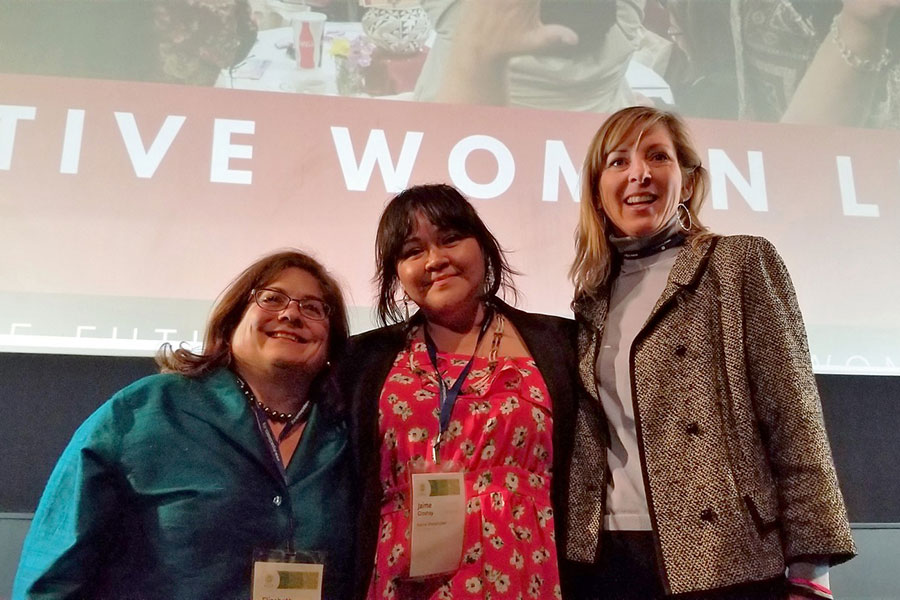
The Audience Choice Award winner was Native Women Lead, who won the support of the audience as a native women led business network that’s revolutionizing systems in a way that honors native culture, creativity and sustainability practices. Jaime Gloshay, Co-Founder of Native Women Lead accepted the award — a $20,000 Real Leaders Media Prize.

Giving Fund donor Kristin Hull also committed an additional $5,000 of capital into Native Women Lead.

The excitement from impact investors and social entrepreneurs who participated in Angel Tank highlights the timely opportunity to invest in world-changing entrepreneurs, and the important role philanthropic capital must play in accelerating solutions at the seed stage.

To learn more about how you can invest philanthropic capital in early-stage impact ventures through the Giving Fund click here.

2019 Angel Tank Entrepreneurs

  • Jen Horonjeff, Founder & CEO, Savvy Cooperative
  • Sarah Lin, Co-Founder, EllieFunDay
  • Emily Darchuk, Founder, Wheyward Spirit
  • Jaime Gloshay, Co-Founder, Native Women Lead
  • Sapna Satagopan, Xyza News For Kids
  • Pedro Moura,Co-Founder, CEO, Flourish


2019 Angel Tank Judges

  • Chris McLemore, Program Manager of Oakland Startup Network, Kapor Center
  • Aarti Chandna, Partner, SV2
  • Kristin Hull, Founder, CEO & CIO, Nia Impact Capital
  • Eva Yazhari, CEO, Beyond Capital
  • Elizabeth Stelluto Dunaier, Angel Investor, NextWave/Personal Portfolio

Why Smart Aquaculture Makes Sense for Smart Impact Investors

Eat more fish for a healthy diet, but what about raising more fish for a healthy portfolio and planet?

That’s the idea behind Aqua-Spark, an investment fund with a focus on sustainable aquaculture businesses around the world.

The small-to-medium enterprises (SMEs) in which it invests “are working across the value-chain toward the production of healthy, sustainable and, accessible aquatic life, such as fish, shellfish and plants,” according to the company.

It aims to create triple impact—specifically, “each investment is chosen for its potential to generate significant financial returns while also activating positive environmental and social outcomes.”

Amy Novogratz (above left), the firm’s co-founder and managing partner, explains what aquaculture is, what it entails and the lasting investing and environmental returns it can generate.


What was the ‘spark’ that started Aqua Spark?

My partner and I met through an ocean conservation event that I produced with TED and deep ocean explorer Sylvia Earle. After a week spent immersed in ocean-related challenges, on a boat in the Galapagos with a hundred committed individuals, we left wanting to do something together to preserve ocean health.

We came across aquaculture and were stunned by the size of the industry and how quickly it’s growing. Aquaculture will play a big role in the future of our ocean and food security, and though it has the potential to be the most resource efficient food system, current practices are far from efficient. It’s a highly fragmented industry with no real dedicated financing streams, and we see a big opportunity to influence how the industry grows.

How did you personally become involved in the work?

After running the TED Prize for almost a decade, I became adept at cultivating large scale global collaborations that brought different types of thinking together to form solutions. With a challenge as big as transforming the global aquaculture industry, we knew we needed to work with many partners and create synergies across the value chain and geographies. I wear many hats as a Managing Partner, but spend a lot of time developing and nurturing a global aquaculture ecosystems, aligning visions and fostering collaboration. I am very excited that we live in a time where we can take so many perspectives into account, and work towards redesigning an aquaculture system that works for us all.

You mention real power comes from collaboration and partnership. How? 

The scale of this challenge is too big for any one company or group to do it alone. Globally, we are farming almost 700 species in diverse environments ad economies, using different operating systems. But there has been a lot of knowledge gained in recent decades. New solutions have been developed and many stakeholders have entered the space with the vision of a more sustainable industry.

We need to triple aquaculture production globally by 2050. And as a relatively undeveloped industry, with few regulations, little technology, minimal data usage, there is a huge opportunity to take a far reaching, multisector, multilevel approach in order to transform practices and lift aquaculture to its potential. Sustainable aquaculture will be a core part of our future food system, and we need to keep the big picture in mind.

As part of your approach and philosophy, you note that entrepreneurs and investors have the power to change the world. How do you tap that creative energy to achieve your mission?

 Aquaculture is a good example of an industry where doing things sustainably is better business in the long run. We need the right solutions to scale in order to get the industry to the point where sustainability is accessible and cost effective. This is going to be driven by innovative, committed entrepreneurs and investors who are going to back them. In less than five years, with our portfolio leaders, we’ve seen that we can redirect the aquaculture industry to be cleaner, more efficient and far more sustainable, and many large investors and industry strategics are taking notice and getting on board.

What kind of evaluation/selection process do you engage in?

Our investment team does thorough due diligence. First, we look at what the company is solving in the aquaculture industry, how they are different and how they help us reach our impact goals. We look at the strength of the team and how they fit into our portfolio. We have a synergistic portfolio, where our companies work together and benefit from each other. We make sure they are going to add value to the other companies and get value in return.  

We involve our network of experts and partners in the different stages of due diligence, in assessing the product, the market, the partners, the industry fit, etc. One of our industry experts always joins us on our site visits and produces a separate report alongside our team’s report.

Is there an anecdote about one or two that you could elaborate on now in terms of impact?

A simple example of how new technologies can play a clear role in cleaning up the industry is eFishery, an aquaculture tech company based in Bandung, Indonesia. They use sensors to gauge water movement, which then codes how much a fish is moving, and then has an algorithm that determines the appetite of the fish to feed them automatically.

It’s truly revolutionary, but also really affordable. It saves farmers up to 24 percent each cycle of feed. Feed can be up to 80 percent of the cost of operating a farm. So, it’s huge economically. But also, feed is one of the big pollutants and also plays a big role in fish health. When you’re talking about aquaculture, getting feed right is one of the big challenges/opportunities.


How can innovative philanthropic capital play a bigger role in something like sustainable aquaculture?

When you look at the blended needs of different capital in aquaculture and the different partners working in aquaculture, there’s an immense amount of opportunity. We have a private equity offering, for example, as an investment option in ImpactAssets’ donor advised fund. We are also planning to launch a subset of our fund that’s focused solely on sub-Saharan Africa. We’re talking to a number of different foundations that would potentially have an interest in economic development and food security in Africa, so there’s a great opportunity here. Philanthropic capital can be “patient capital.” It will help us start to create a financing model to develop the industry, de-risk aquaculture investments and build a track record in aquaculture in Africa – and in aquaculture generally.

What’s the outlook for aquaculture growth?

We hit a point a couple of years ago where we’re actually producing more fish via aquaculture globally for human consumption than we’re catching in the wild. Aquaculture is also bigger than beef. Tripling the industry means we need to produce an additional 140 million metric tons of fish in the next thirty years. Taking into account how much of that will be fed species, it means we will need 8 times the amount of feed, just for aquaculture. 


0