Jawed Karim, Co-founder of Youtube

Jawed Karim was born in Merseburg, East Germany in 1979. His father, Naimul Karim, is a Muslim Bangladeshi who works as a researcher at 3M and his mother, Christine, is a German scientist of biochemistry at the University of Minnesota.

He crossed the old East-West German border with his family in 1981 and grew up in Neuss, West Germany, after which he moved with his family to Saint Paul, Minnesota in 1992. While studying at the University of Illinois, Department of Computer Science, he decided to leave before graduation to become an early employee of PayPal.

While working at PayPal, he met Chad Hurley and Steve Chen. The three later founded the YouTube video sharing website in 2005 and YouTube’s first-ever video “Me at the zoo” was uploaded by Karim on 23 April 2005.

After co-founding YouTube Karim enrolled as a graduate in computer science at Stanford, while still acting as an adviser to YouTube. When the site was eventually launched, Karim decided not to be an employee, but rather an informal adviser because he wanted to focus on his studies. As a result, he took a much lower share in the company compared to Hurley and Chen and subsequently became a mostly unknown, third founder of YouTube.

Despite his lower share in the company, the purchase of YouTube by Google in 2006 was still large enough for him to aquire stock worth about $64 million.

In March 2008, Karim launched a venture fund called Youniversity Ventures, with the goal of helping current and former university students to develop and launch their business ideas.
Max Levchin, Cofounder of PayPal

Maksymilian Rafailovych “Max” Levchyn was born in in Kiev in 1975 to a Ukrainian Jewish family. In 1991 he moved to the United States under political asylum and settled in Chicago. 

In an interview with Emily Chang of Bloomberg, Levchin discussed overcoming adversity as a child. He had respiratory problems and doctors doubted his chances of survival. He took up the clarinet to help expand his lung capacity. He survived, and went on to earn a bachelor’s degree in computer science at the University of Illinois. 

If you like this, subscribe here for more stories that Inspire The Future.

In 1998, Levchin and Peter Thiel founded Fieldlink, a security company that allowed users to store encrypted data on their PalmPilots and other PDA devices in order for handheld devices to serve as “digital wallets.” After having changed the company name to Confinity, they developed a popular payment product known as PayPal and focused on the digital transfers of funds by PDA. In 2000, the company merged with X.com and by 2001 adopted the name PayPal after its main product.

PayPal went public in early 2002, and was subsequently acquired by eBay. Levchin’s 2.3% stake in PayPal was worth approximately $34 million at the time of the acquisition. He was named by the MIT Technology Review as one of the top 100 innovators in the world under the age of 35, and Innovator of the Year. He is primarily known for his contributions to PayPal’s anti-fraud efforts and is also the co-creator of the Gausebeck-Levchin test, one of the first commercial implementations of CAPTCHA.

As of January 2016, Levchin is the CEO and cofounder of Affirm, a financial technologies company.

If you like this, subscribe here for more stories that Inspire The Future.

Eduardo Saverin, Facebook Cofounder

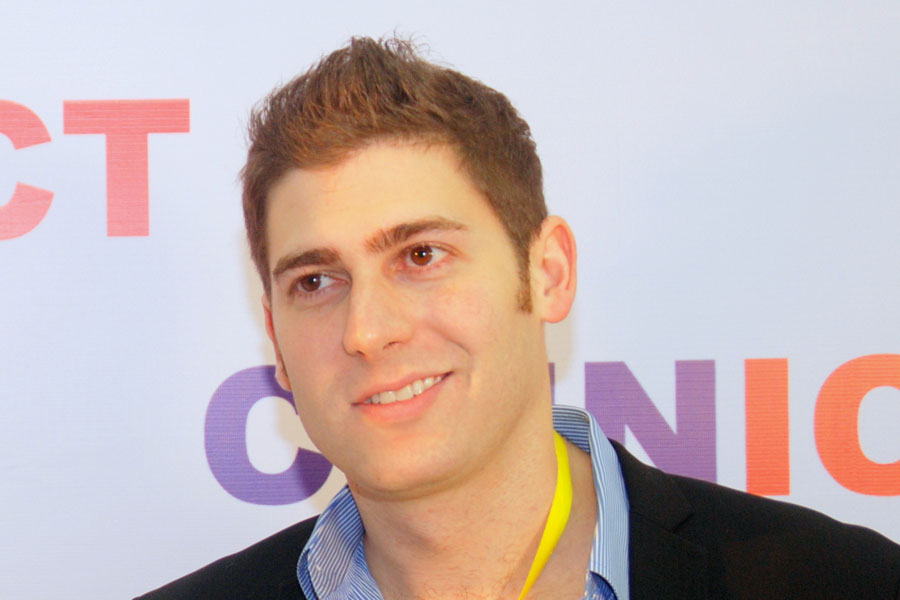
Eduardo Luiz Saverin was born in São Paulo, Brazil, to a wealthy Jewish Brazilian family. In 1993, the family immigrated to the U.S., settling in Miami.

Saverin attended Harvard University, where he graduated with a bachelor’s degree in economics. During his junior year at Harvard, Saverin met fellow Harvard undergraduate, Mark Zuckerberg. Noting the lack of a dedicated social networking website for Harvard students, the two worked together to launch The Facebook in 2004. As co-founder, Saverin held the role of chief financial officer and business manager.

In 2012, Business Insider obtained and released an exclusive email from Zuckerberg detailing how he cut Saverin from Facebook and diluted his stake. A lawsuit was filed by Facebook against Saverin, that was eventually resolved. Terms of the settlement were not disclosed and the company affirmed Saverin’s title as co-founder of Facebook. Saverin signed a non-disclosure contract after the settlement.

As of 2015, he owns 53 million Facebook shares (approximately 0.4% of all outstanding shares) and has a net worth of $8.7 billion, according to Forbes. He has also invested in early-stage startups such as Qwiki and Jumio.


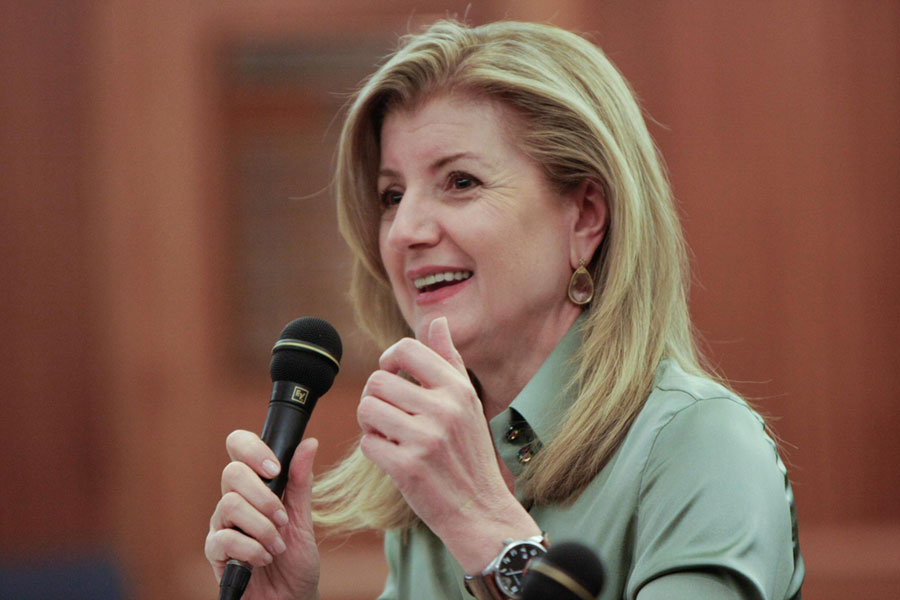
Arianna Huffington, Founder of The Huffington Post

Huffington was born in Athens, Greece and at the age of 16 moved to the United Kingdom to study economics at Girton College in Cambridge. Here, she became the first foreign, and third female President of the Cambridge Union.

Huffington began writing books in the 1970s, with editorial help from Benard Levin, the love of her life, mentor and role model. The two traveled to music festivals around the world for the BBC. In 1980 she moved to New York. 
Huffington rose to national U.S. prominence during the unsuccessful Senate bid in 1994 by her then husband, Michael Huffington, a Republican.

She became known as a reliable supporter of conservative causes such as Newt Gingrich’s “Republican Revolution” and Bob Dole’s 1996 candidacy for president. She teamed up with liberal comedian Al Franken as the conservative half of “Strange Bedfellows” during Comedy Central’s coverage of the 1996 U.S. presidential election. For her work, she and the writing team of Politically Incorrect were nominated for a 1997 Emmy for Outstanding Writing for a Variety or Music Program.
 
In 2009, Huffington was ranked number 12 in Forbes’s first-ever list of the Most Influential Women In Media and also ranked number 42 in The Guardian’s Top 100 in Media List. As of 2014, she was listed by Forbes as the 52nd Most Powerful Woman in the World. 

AOL acquired The Huffington Post in 2011 for US$315 million, and she became the President and Editor-in-chief of The Huffington Post Media Group, which included The Huffington Post and other AOL properties, including AOL Music, Engadget, Patch Media, and StyleList. 

In 2016, she announced that she was stepping down from her role at The Huffington Post to devote her time to her new startup, Thrive Global, that focuses on health and wellness.
 

Lupita Nyong’o: Mexican-born Kenyan Actress

Lupita Amondi Nyong’o is a Mexican-Kenyan actress, born in Mexico to Kenyan parents and raised in Kenya.

Her parents, Dorothy and Peter Anyang’ Nyong’o, were in political exile at the time of her birth, but managed to return to their homeland of Kenya during their daughter’s childhood. Her father later became part of the country’s senate while her mother, who worked in family planning, took a leadership position with the Africa Cancer Foundation.

Nyong’o took drama lessons in Mexico as a teenager and starred in the lead role in a production of Romeo and Juliet. During a school summer vacation she returned to Kenya, where she discovered that filming for the drama The Constant Gardener was happening in her area. She joined the set as a production assistant and met Ralph Fiennes, who told her to become an actor.

Nyong’o sharpened her craft as a filmmaker by directing, editing and producing the 2009 documentary In My Genes, that told the stories of Kenyans living with albinism. She also directed a Kenyan television series Shuga, which was backed by MTV and UNICEF that focused on sexual relationships among youth in Nairobi, aimed at promoting HIV awareness and safe sex via storytelling.

She returned to the US and earned a master’s degree from the Yale School of Drama in 2012. Weeks before graduating she found out that she had landed a part in 12 Years a Slave, a film directed by Steve McQueen and produced by Brad Pitt. She won the 2014 Academy Award for best supporting actress for the role in the film.

In 2015, Nyong’o returned to Kenya and announced that she would advocate for the preservation of elephants with the international conservation organization ‘WildAid’, as well as promote women’s issues. Mother Health International is dedicated to providing relief to women and children in Uganda by creating local birthing centers. She felt bringing attention to such important but overlooked issues is a important for her as an artist. She was honored for her work at 2016 Variety’s Power of Women.

In 2016, Nyong’o launched an anti-poaching “hearts and minds” campaign with WildAid in conjunction with Kenya Wildlife Service. The historic event saw 105 tonnes of Ivory and 1.35 tonnes of rhino horn burnt in a demonstration of zero tolerance towards poachers and smugglers who threaten the survival of elephants and rhinoceros in the wild.

In October 2016, Lupita Nyong’o was an honoree at the 2016 Elle Women in Hollywood Awards.


Tan Le: Co-founder of Emotiv

Tan Le is a Vietnamese-Australian telecommunications entrepreneur who co-founded brain monitoring company Emotiv.

Born in South Vietnam, Le migrated to Australia as a refugee with her family in 1982. She began university studies at the age of 16 and completed a bachelor’s degree in law and commerce at Monash University.

Her first venture was SASme, a pioneer in providing SMPP platforms to telecommunication carriers and content aggregators, that became one of the companies responsible for the creation of Australia’s SMS application market. Le helped grow SASme to 35 employees and multiple locations worldwide.

Le co-founded software company Emotiv which specializes in electroencephalography (EEG) headsets. Emotiv is the pioneer of simple to use, high quality, mobile headsets that do advanced brain monitoring. In 1998, she was named Young Australian of the Year and voted one of Australia’s 30 Most Successful Women Under 30.

She has been appointed Special Ambassador to the United Kingdom, a Goodwill Ambassador for Australia in Asia, and a Patron of the Australian Youth Ambassadors for Development Program. A role model for women in business, Le was made an Ambassador for the Status of Women in 2001 and been appointed to a number of prominent boards, including Plan International Australia, National Committee for Human Rights Education in Australia, Australian Citizenship Council and RMIT Business in Entrepreneurship.

Le has been featured in “Who’s Who in Australia” List since 1999 and “Who’s Who of Australian Women” List in 2007 & 2008, Fast Company’s Most Influential Women in Technology in 2010 and Forbes’ 50 Names You Need to Know in 2011. She has also been honored by the World Economic Forum as a Young Global Leader since 2009.


Adrienne Clarkson, 26th Governor General of Canada

The 26th Governor General of Canada (1999-2005), Adrienne Clarkson is universally acknowledged to have transformed the office during her six years at Rideau Hall and to have left an indelible mark on Canada’s history. 

Clarkson was born in Hong Kong and came to Canada as a refugee in 1942. Her family settled in Ottawa, where she attended public schools until graduating from Lisgar Collegiate Institute in 1956. She obtained both an Honours B.A. and her M.A in English Literature from the University of Toronto’s Trinity College, followed by studies at La Sorbonne. Her work has been recognized with dozens of awards in Canada, the United States, and Europe including 32 honorary doctorates.

Her tenure as Governor General was remarkable for the considerable attention she brought to the courage of Canada’s Armed Forces and increased our vigilance to Canada’s commitment to international peace and security. Her passionate interest in Canada’s North, and in the circumpolar nations as a whole, led her to establish the Governor General’s Northern Medal, awarded annually to an individual who has contributed outstandingly to the understanding and development of the North. In particular, her interest in the Aboriginal peoples was remarkable and has helped push the question of native peoples in Canada to the forefront of national discussion.

National Post Columnist John Fraser once remarked that she “has the ability, unique among public officials, of making Canadians feel good about themselves and their country.” This talent was recognized by the Blood Tribe of Alberta who adopted her as an honorary chief. Clarkson was given the title “Grandmother of Many Nations.”

Upon leaving the office of Governor General in 2005, Madame Clarkson co-founded the Institute for Canadian citizenship (ICC), with her husband, John Ralston Saul. The Institute seeks to accelerate the acculturation of new citizens into Canadian life so they can participate fully and add their important voice to Canada’s pluralistic society.


0