

Ignorance is Not Bliss. We Must Take Action

We live in an ignorant world. A world that’s made to believe that it’s ok to live the same way each day: wake up, go to work, earn your salary, feed your children and do just enough to get by. But to me, this is real ignorance.

Life often feels unfulfilling if we just do enough to get by. What are we leaving behind for the next generation? Do we know what is happening around us? Or do we choose to ignore it?

People often have an egocentric approach to life, and we tend to believe that as long as we aren’t directly affected by a problem, then we are excused from addressing it. This gives a false sense of security. Things may not affect us directly, but whether we believe it or not, events such as climate change affect us all, and it’s happening right before our eyes.

Despite the decision made by the U.S. government to pull out of the Paris Agreement, individuals, organizations, companies, and communities in that country and around the world, should continue to take action on global climate. Our future is at stake, and it’s up to us to make a collective effort by working together and forming partnerships to implement a plan. 

We all have different ideas and skills, and when we team up and combine our thinking, innovation, and expertise, we are capable of developing a greater impact. Here are a few ways we can all take action.

Don’t buy a car – Cycle instead

If more people ride bikes, this will cut down the co2 emissions and also keep people fit and healthy. One of the biggest global warming contributors is the burning of fossil fuels and with the world’s population increasing each year emissions are escalating rapidly. If we cut down on the use of cars that emit co2 and ride bikes instead, there would be a gradual decrease in emissions.

Eat less red meat, or none at all

Did you know eating red meat contributes to the emissions of greenhouse gasses? On a global level, approximately 14.5% of all greenhouse gas pollution is caused by livestock. Animal flatulence creates methane – a potent greenhouse gas – and the manufacture of cattle food uses a lot of resources. We can live a much healthier life without red meat, and if you’re worried about not getting enough protein, you can get it from white meat, beans, eggs, milk, and nuts.

Recycle & Up-cycle

Trash in landfills is growing. Most of the time we buy things we don’t need, and we should start spending less on things we don’t need and get creative with what we already have. Reuse your plastic, paper, scrap metal, clothes and other non-biodegradable materials. Don’t throw it away, create something from it and decrease the trash in our landfills.

Below is a list of young leaders, who are making a positive impact on the environment, helping further sustainable growth and inspiring others to do the same:

1. The Vello Bike

https://www.instagram.com/p/BK8eiAAhlvM/?taken-by=vellobike

Vello bikes are high-performance, handmade and foldable bikes developed for urban commuting. The are the first self-charging electric folding bike.


2. Urban Green Farms

https://www.instagram.com/p/BRDG1fAANpR/?taken-by=urbangreenfarms

Australian-based Urban Green Farms is helping reduce our environmental impact by finding sustainable ways to farm and offer great healthy recipes that don’t include red meat.


3. South African Art

https://www.instagram.com/p/BPo1TMigaCU/?taken-by=caitlinmkhasibe

A South African artist who recycles old notes, cardboard and old paper to create moulds for her paintings.


4. Ocean Clean Up

https://www.instagram.com/p/6U2Ec5LP4Z/?taken-by=theoceancleanup

The Ocean Clean Up is an innovative start up that is dedicated to developing technologies that extract, prevent and intercept ocean plastic pollution. They are also investigating how they can reuse the material once it is back on shore.


5. Weaver Green

https://www.instagram.com/p/BGwYIIXRMSx/?taken-by=weaver.green

Weaver Green makes indoor and outdoor rugs and textiles from yarn spun entirely from recycled plastic bottles. 100% recycled, environmentally friendly and ethically produced.


6. Sustainable Surf

https://www.instagram.com/p/BTxpbBmjz_R/?taken-by=sustainsurf

Sustainable Surf create surfboards from styrofoam and up-cycles damaged surfboards.


Climate Change Threatens Ability of Insurers to Manage Risk

Extreme weather is driving up uninsured losses and insurers must use investments to fund global warming resilience, says study.

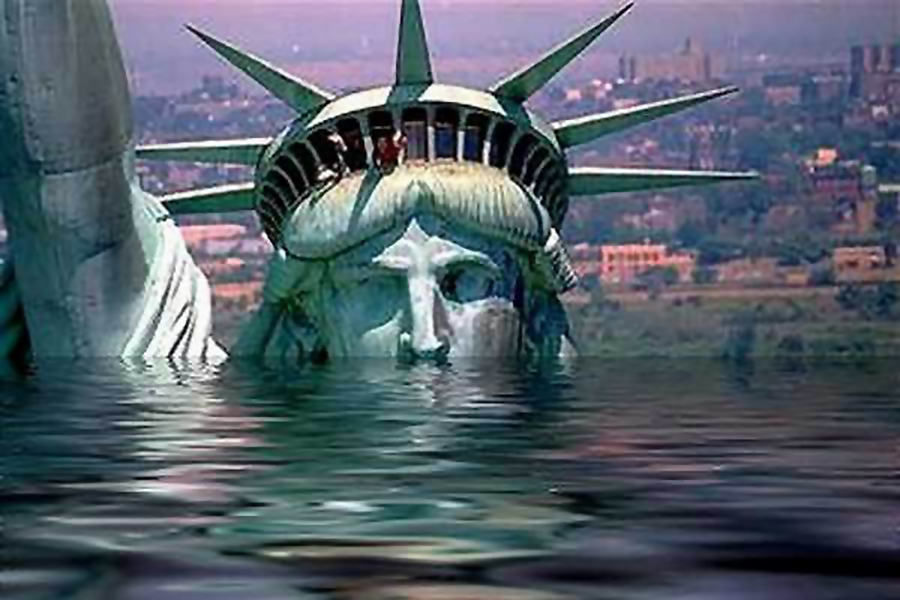
The ability of the global insurance industry to manage society’s risks is being threatened by climate change, according to a new report.

The report finds that more frequent extreme weather events are driving up uninsured losses and making some assets uninsurable.

The analysis, by a coalition of the world’s biggest insurers, concluded that the “protection gap” – the difference between the costs of natural disasters and the amount insured – has quadrupled to $100bn (£79bn) a year since the 1980s.

“Over time, the adverse effects of climate change could threaten economic resilience and financial stability and insurers are currently at the forefront.”

Mark Carney, the governor of the Bank of England, warns in the new report that: “Over time, the adverse effects of climate change could threaten economic resilience and financial stability and insurers are currently at the forefront.”

The ClimateWise coalition of 29 insurers, including Allianz, Aon, Aviva, Lloyd’s, Prudential, Swiss Re and Zurich, conclude that the industry must use more of its $30tn of investments to help fund increased resilience of society to floods, storms and heatwaves.

The Bank of England warned in 2015 that insurance companies could suffer a “huge hit” if their investments in fossil fuel companies were rendered worthless by action on climate change and some insurershave already shed investments in coal.

The ClimateWise report, published on Wednesday, also says the industry must also use its risk management expertise to convince policymakers in both the public and private sector of the urgent need for climate action.

The industry’s traditional response to rising insurance risks – raising premiums or withdrawing cover – would not help deal with the rising risks of global warming, it said.

“The insurance industry’s role as society’s risk manager is under threat,” said Maurice Tulloch, chairman of global general insurance at Aviva and chair of ClimateWise. “Our sector will struggle to reduce this protection gap if our response is limited to avoiding, rather than managing, society’s exposure to climate risk.”

The report said that, since the 1950s, the frequency of weather-related catastrophes has increased sixfold. As climate-related risks occur more often and more predictably, previously insurable assets are becoming uninsurable, or those already underinsured are further compromised, it said.

The economic impact of these natural catastrophes is growing quickly, according to Swiss Re, with total losses increasing fivefold since the 1980s to about $170bn today. This increase is partly due to an increase in extreme weather but also due to an increase in assets as cities and towns have grown, especially in vulnerable locations such as on coasts.

“Insurance provides a very important role in providing support for people in their time of need,” said John Scott, chief risk officer at the Zurich Insurance Group and chair of ClimateWise’s “Investing for Resilience” programme. “Finding viable ways to help society adapt and become more resilient to the inevitable changes related to ongoing climate change is vital. It is very clear that as carbon dioxide concentrations increase, we should expect to see more patterns of severe weather disruption.

“We understand climate change as underwriters, because we are trying to manage the physical consequences of the severe weather we get from climate change, so we can be a really important industry in terms of informing policy makers, either in the public or private sectors, about the pace at which we should make the change from a high-carbon to low-carbon economy.”

Other actions insurance companies can take are to work with their customers to make them more resilient to extreme weather and encourage the development of insurance markets in poorer nations that are growing rapidly, the report said.

Carney, who has warned repeatedly of the serious risks posed by climate change, said: “Insurers, including those who are members of ClimateWise, have unique risk-management expertise to help address the protection gap among those who are most exposed to climate risk.”

By Damian Carrington. This story originally appeared at The Guardian


The Little Company With A Big Goal

Carbon Lighthouse is a rare breed of young company – an environmental organization executing nuts and bolts building retrofits, while seeking startup-like growth. Startups seek exponential growth and wide market reach, while most  service companies doing physical work (e.g. contractors, restaurants, consultants) have a local focus and scale more or less linearly with the number of staff. Carbon Lighthouse was founded with the audacious goal of solving climate change and we intend to get there through relentlessly pursuing practical solutions, starting with energy efficiency in commercial and industrial buildings.

To meet our mission, we need to be both highly local while also rapidly scalable. Interestingly, this exact challenge faces many socially motivated ventures. The recurring storyline is a huge, seemingly unsurmountable challenge that needs to be tackled quickly – education in inner cities, clean water, malaria – and solving it requires working with people and infrastructure – individually, locally, and personally.

Scaling this type of business model, where there is no substitute for hands-on action, is hard. Teach for America is arguable one of the most successful examples from the non-profit space, yet there are placing only 10 times more teachers in schools per year today than they did at their start 20 years ago. (Teach for America started with 500 teachers in 1990 and placed 5,100 new teachers in 2011.)  Zipcar, the most successful car sharing company in the  U.S., is another example. When they were acquired in 2012 after 13 years of business they were profitable and had 800,000 users, a business success story, but they have not fundamentally changed the landscape of personal car ownership.

Given the difficulties of rapidly scaling this type of company, why did Carbon Lighthouse choose to pursue such a labor intensive solution (physically managing energy efficiency projects) to a problem that requires immediate, scalable action (climate change)? There are some very good companies that are developing software solution for reducing energy and helping mitigate carbon emissions.

However, actually solving climate change is an infrastructure problem; someone needs to physically enter buildings and do a thorough job or making them run better, so that is what we are doing. This puts us in relatively uncharted waters when it comes to growing our type of company as quickly as we need to and our mission is our only guide. There are three key areas that are critical to scaling, each of which has been strengthened and focused in surprising beneficial ways by our strong and unwavering commitment to mitigating climate change.

People

Being a good energy efficiency engineer is hard and not terribly glamourous. It requires doing complicated engineering calculations, conducting potentially dangerous field work and interacting with C-suite executives all in the same day. People with these skills are really hard to find, but we have been extremely fortunate in recruiting and have securing our top picks in every hiring round.

Moreover, in the three years since our founding not a single teammate has left the company. There are many reasons for this, but a few are directly related to the strength of our mission. First and foremost, making the mission front and center during the recruitment process attracts people who are passionate about what they (and we) do. Second, once people are one board, our mission unites us as a team against a larger challenge.

This keeps us from getting bogged down in details of small ego-related issues. I have personally watched hundreds of disagreements get resolved by refocusing the discussion on how best to serve the mission.

Innovation

As a company, making physical changes in the world, Carbon Lighthouse’s ultimate success depends on changing an enormous number of valves, pumps, fans, and other equally exciting assets in buildings. Since valves cannot be changed by an app, our mission necessarily requires us to grow our team and make it possible for each person to be more productive each month than they were the one before.

In recognition of this, we have worked hard to make sure that our company has a culture actionable innovation. Our first priority is to innovate and automate ourselves out of the labor and tasks wherever possible, such as downloading field data. Our second priority is to increase achievable energy savings per building by improving modeling, reducing the cost of installing measures, and accelerating the measurement and verification process.

Our third priority is to develop new ideas for solving climate change. Carbon Lighthouse’s mission motivates a clear understanding of these priorities and focuses every team member’s work in the same direction, resulting in rapid iteration and improvements on the highest impact areas.

Operations and Measuring Progress

Our mission has given us the foresight to invest in long-term company infrastructure and operations early. For example, because we will need thousands of engineers within the next decade to achieve our goals, we invested heavily to create a program that reduced the training time for our most recent hires from six months to six weeks. The value of this asset will grow exponentially as we do. Our operations team also spent hundreds of hours creating a project management tool that reduces project time by dozens of hours per project.

Without the focus on long-term scale provided by our mission, we would not have been able to justify either of these time-investments so early on. Our corporate metrics for progress are also driven entirely by our mission; they are CO2 reduced per person-hour of labor and profit per ton of CO2 eliminated – in that order. Because we see profit as a means to an end, and that end is solving climate change, we repeated defer short term profits to lay the groundwork for a more impactful economy in the long term.

This has made us a much more resilient and scalable company because our investment in research has opened up more savings per building and new market segments, while decrease labor per project.

Carbon Lighthouse’s mission commitment has put us on a challenging path, but it is also acting as the guiding light that will get us there. As we succeed and grow, we hope that the course we are charing will provide direction to the huge range of ambitious companies tackling rapid growth in hands-on industries.


0