A Grassroots Activist Swims Against the Tide

At first glance, Marina Silva is a politician who served as the Minister of Environment in Brazil. At second glance, you realize that she is also a grassroots activist who has fought to protect local communities and against deforestation in the Amazon.

“I had to swim against the tide in many situations- political and personal. When there was a road to be built in my state of Amazonas, crossing the territory of some traditional communities. Most people wanted the road to be built, but it would strongly affect the environment of those traditional territories. So I opposed this decision because it had no study on its environmental impact and no appropriate license. To me, it meant a very high price to pay.

I couldn’t visit half of my state during four years. People got angry with me because they lived in an isolated area, 500 km from the capital city, that could be accessed only by buying very expensive air tickets. The road would be a great achievement for those people if it was made in the right way, but it was not being made in the right way.

If you like this, subscribe here for more stories that Inspire The Future.

So I opposed this decision and it was very hard for me. I used to hear people criticizing me with unfair arguments, saying I was against development, against the improvement of people’s well-being. I knew that the road would not be good, even for them. But not doing it my way was not an option, because not doing it would go against the values I believe in. When we are guided by principles and values, it becomes the basic framework of our actions, of everything we do. But of course, it is not always understood the right way. We have to embody generosity to plant the tree, even when others are going to reap the fruits.”

Silva has an unusual background for a politician. She was born into a family of rubber tappers, in a small village. She was illiterate and orphaned when she moved to the capital at age 16 to study in a convent. She graduated from the Federal University at 26 years old and quickly got involved with local politics. She became Brazil’s Environment Minister and was named one of the “Champions of the Earth” by the United Nations Environment Program.

She has moved from “having” towards “being” that is closer to nature and community, and the way that the earth’s original indigenous people lived like. What we really need is to be persistent and it means that some causes can only take form after a maturation period. The world is made of those who have values, who transform those values into promises and those promises in actions. That is persistence.

As a Minister of Environment she and her team developed a plan how to reduce deforestation by 80% in 10 years. “However, at the same time I suffered big pressure from the Brazilian government to revoke the measures we were implementing. She and her team did not know if they were going to be victorious with the plan but at the same time they couldn’t let it go and not do it. And they did. To achieve the results, they had to conduct several operations with the federal police and other things and all this created big conflicts.

It was a very intense period and they saw many people being murdered for standing against deforestation. It required a lot of persistence. We did provoke a great deal of risk and it was not always working well. Us being criticized by colleagues inside our own government and peers of different states that had been confronted by offenders. But persisting on that matter was very rewarding just to think that we kept 2 billion tons of CO2 from being released into the atmosphere, and millions and millions of native forest hectares from being destroyed. That required a lot of persistence. Courage is not the absence of fear; courage is the prevalent of commitment.”

Meaningful change doesn’t happen overnight. If we want that to happen, we have to understand that it takes some time. It is fundamental to learn how to deal with three things.

  1. Disappointments, which is sometimes very hard to do. Sometimes we do things and we strongly believe that everything is going to work out, but sometimes that doesn’t happen. So we don’t give up on our first, second or third try. That’s why I always say we need to be persistent and insistent.
  2. “Adjournment of pleasure”. Many times, we want to prompt acknowledgment and gratification. We need to learn how to deal with that recognition being delayed.
  3. Weight of responsibility.

Nowadays, more and more people don’t know how to deal with these three aspects of life. I learned this with my grandmother, my mom and my uncle, who worked in the forest, lived with indigenous people and learned the “native science”. I want people to learn how not to be a hostage of the past but to create something good from the past.

If you like this, subscribe here for more stories that Inspire The Future.


Nude Foods: Cape Town’s First Plastic-Free Grocery Store

While walking the streets of Cape Town recently, I discovered South Africa’s very first plastic-free grocery store: Nude Foods. It has an old-school ambience with a simple, modern-twist.

Founder Paul Rubin has created an environmentally friendly shopping experience for those who care about their food and how it’s packaged. Launched in December 2017 the store helps care for our environment and the health of others, offering a variety of organic and earth-friendly foods – all of which are GMO free.

If you like this, subscribe here for more stories that Inspire The Future.

Stepping into the store was rejuvenating, I had a look around and asked Paul a few questions:

What was the motivation behind creating this plastic-free store?

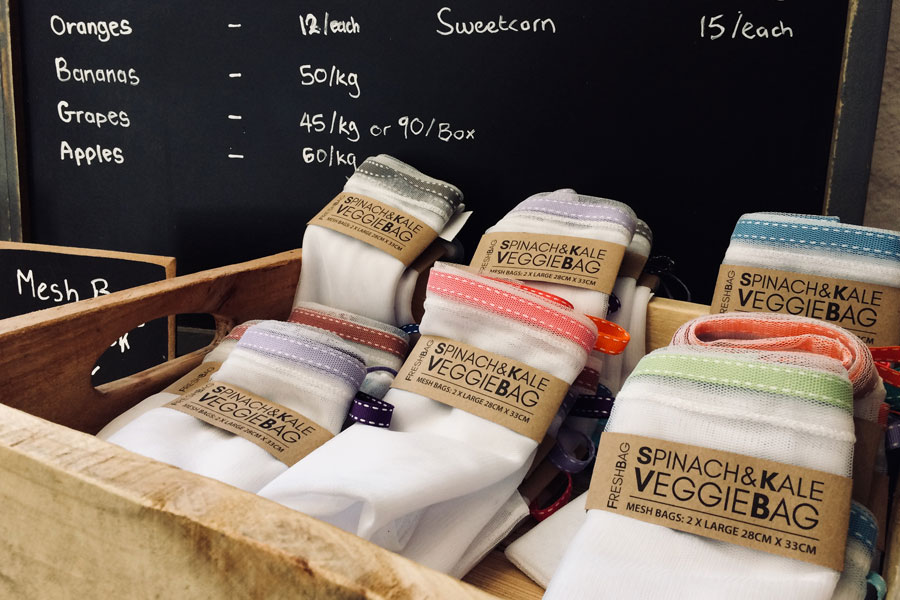
The ethos of my store is to eliminate single-use plastic and unnecessary packaging. We encourage our customers to bring their own containers where we weigh them in a jar at a pre-weigh station. Customers can fill the jar with their purchase and we then deduct the weight of the container from the amount owing. If you don’t have your own container, we sell glass jars and bottles, pure cotton, reusable dry goods bags, mesh bags for fresh produce and free brown paper bags.
 

How do you intend growing Nude Foods?

We like to engage with our customers, educating them on the reason behind our mission and purpose. We also ask for feedback because we want to establish the types of products people want (and don’t want) so we can fine-tune our food to cater to residents in the area. We want to appeal to people with an environmental conscience and hope this becomes a growing movement.

In addition to being plastic free we support quality food brands, which have eliminated preservatives and fillers. We get our fresh produce from a local farm called Naturally Organic, an EU certified 100% organic farm in Phillipi, an agricultural area near Cape Town. We try and source everything locally, and by doing so, we support local business.

 

Are you looking to create partnerships with existing businesses?

Not yet, but we are open to collaborating with small local businesses. We recently collaborated with a nearby coffee store called Kamili. They created a pop-up coffee stand in our store that offered customers free coffee. Although we have no formal partnerships, we seek suppliers that work with the same ethos, and are happy to help support other startups and entrepreneurs.

How will you scale your idea?

We plan on opening another store within a few months in Cape Town. It will be a smaller version of our first store, which will offer only our most popular goods. My longterm plan is to open a few more stores, maybe six, around the Western Cape province, but we first want to learn to walk before we can run.

What feedback have you received from regular customers?

Many of our customers love shopping this way as they feel more connected to their food. It allows them to be precise in how much they need to buy, as opposed to buying pre-packaged goods that might sit on shelves for weeks, spoil, and go uneaten.

After visiting this innovative store I came to the realization that a plastic-free grocery store can play an important role in showing how to take action around environmental issues. It tackles three important goals of the 17 Sustainable Development Goals, laid out by the United Nations: Goal no.3: Good Health & Well-being, Goal no.12: Responsible Consumption & Production and Goal no.13: Climate Action. Consumers have a choice in where they choose to spend their money, and shopping at stores that promote a healthier, cleaner planet can help achieve these goals. 

If you like this, subscribe here for more stories that Inspire The Future.
Ignorance is Not Bliss. We Must Take Action

We live in an ignorant world. A world that’s made to believe that it’s ok to live the same way each day: wake up, go to work, earn your salary, feed your children and do just enough to get by. But to me, this is real ignorance.

Life often feels unfulfilling if we just do enough to get by. What are we leaving behind for the next generation? Do we know what is happening around us? Or do we choose to ignore it?

People often have an egocentric approach to life, and we tend to believe that as long as we aren’t directly affected by a problem, then we are excused from addressing it. This gives a false sense of security. Things may not affect us directly, but whether we believe it or not, events such as climate change affect us all, and it’s happening right before our eyes.

Despite the decision made by the U.S. government to pull out of the Paris Agreement, individuals, organizations, companies, and communities in that country and around the world, should continue to take action on global climate. Our future is at stake, and it’s up to us to make a collective effort by working together and forming partnerships to implement a plan. 

We all have different ideas and skills, and when we team up and combine our thinking, innovation, and expertise, we are capable of developing a greater impact. Here are a few ways we can all take action.

Don’t buy a car – Cycle instead

If more people ride bikes, this will cut down the co2 emissions and also keep people fit and healthy. One of the biggest global warming contributors is the burning of fossil fuels and with the world’s population increasing each year emissions are escalating rapidly. If we cut down on the use of cars that emit co2 and ride bikes instead, there would be a gradual decrease in emissions.

Eat less red meat, or none at all

Did you know eating red meat contributes to the emissions of greenhouse gasses? On a global level, approximately 14.5% of all greenhouse gas pollution is caused by livestock. Animal flatulence creates methane – a potent greenhouse gas – and the manufacture of cattle food uses a lot of resources. We can live a much healthier life without red meat, and if you’re worried about not getting enough protein, you can get it from white meat, beans, eggs, milk, and nuts.

Recycle & Up-cycle

Trash in landfills is growing. Most of the time we buy things we don’t need, and we should start spending less on things we don’t need and get creative with what we already have. Reuse your plastic, paper, scrap metal, clothes and other non-biodegradable materials. Don’t throw it away, create something from it and decrease the trash in our landfills.

Below is a list of young leaders, who are making a positive impact on the environment, helping further sustainable growth and inspiring others to do the same:

1. The Vello Bike

https://www.instagram.com/p/BK8eiAAhlvM/?taken-by=vellobike

Vello bikes are high-performance, handmade and foldable bikes developed for urban commuting. The are the first self-charging electric folding bike.


2. Urban Green Farms

https://www.instagram.com/p/BRDG1fAANpR/?taken-by=urbangreenfarms

Australian-based Urban Green Farms is helping reduce our environmental impact by finding sustainable ways to farm and offer great healthy recipes that don’t include red meat.


3. South African Art

https://www.instagram.com/p/BPo1TMigaCU/?taken-by=caitlinmkhasibe

A South African artist who recycles old notes, cardboard and old paper to create moulds for her paintings.


4. Ocean Clean Up

https://www.instagram.com/p/6U2Ec5LP4Z/?taken-by=theoceancleanup

The Ocean Clean Up is an innovative start up that is dedicated to developing technologies that extract, prevent and intercept ocean plastic pollution. They are also investigating how they can reuse the material once it is back on shore.


5. Weaver Green

https://www.instagram.com/p/BGwYIIXRMSx/?taken-by=weaver.green

Weaver Green makes indoor and outdoor rugs and textiles from yarn spun entirely from recycled plastic bottles. 100% recycled, environmentally friendly and ethically produced.


6. Sustainable Surf

https://www.instagram.com/p/BTxpbBmjz_R/?taken-by=sustainsurf

Sustainable Surf create surfboards from styrofoam and up-cycles damaged surfboards.


Ignorance is Not Bliss. We Must Take Action

We live in an ignorant world. A world that’s made to believe that it’s ok to live the same way each day: wake up, go to work, earn your salary, feed your children and do just enough to get by. But to me, this is real ignorance.

Life often feels unfulfilling if we just do enough to get by. What are we leaving behind for the next generation? Do we know what is happening around us? Or do we choose to ignore it?

People often have an egocentric approach to life, and we tend to believe that as long as we aren’t directly affected by a problem, then we are excused from addressing it. This gives a false sense of security. Things may not affect us directly, but whether we believe it or not, events such as climate change affect us all, and it’s happening right before our eyes.

Despite the decision made by the U.S. government to pull out of the Paris Agreement, individuals, organizations, companies, and communities in that country and around the world, should continue to take action on global climate. Our future is at stake, and it’s up to us to make a collective effort by working together and forming partnerships to implement a plan. 

We all have different ideas and skills, and when we team up and combine our thinking, innovation, and expertise, we are capable of developing a greater impact. Here are a few ways we can all take action.

Don’t buy a car – Cycle instead

If more people ride bikes, this will cut down the co2 emissions and also keep people fit and healthy. One of the biggest global warming contributors is the burning of fossil fuels and with the world’s population increasing each year emissions are escalating rapidly. If we cut down on the use of cars that emit co2 and ride bikes instead, there would be a gradual decrease in emissions.

Eat less red meat, or none at all

Did you know eating red meat contributes to the emissions of greenhouse gasses? On a global level, approximately 14.5% of all greenhouse gas pollution is caused by livestock. Animal flatulence creates methane – a potent greenhouse gas – and the manufacture of cattle food uses a lot of resources. We can live a much healthier life without red meat, and if you’re worried about not getting enough protein, you can get it from white meat, beans, eggs, milk, and nuts.

Recycle & Up-cycle

Trash in landfills is growing. Most of the time we buy things we don’t need, and we should start spending less on things we don’t need and get creative with what we already have. Reuse your plastic, paper, scrap metal, clothes and other non-biodegradable materials. Don’t throw it away, create something from it and decrease the trash in our landfills.

Below is a list of young leaders, who are making a positive impact on the environment, helping further sustainable growth and inspiring others to do the same:

1. The Vello Bike

https://www.instagram.com/p/BK8eiAAhlvM/?taken-by=vellobike

Vello bikes are high-performance, handmade and foldable bikes developed for urban commuting. The are the first self-charging electric folding bike.


2. Urban Green Farms

https://www.instagram.com/p/BRDG1fAANpR/?taken-by=urbangreenfarms

Australian-based Urban Green Farms is helping reduce our environmental impact by finding sustainable ways to farm and offer great healthy recipes that don’t include red meat.


3. South African Art

https://www.instagram.com/p/BPo1TMigaCU/?taken-by=caitlinmkhasibe

A South African artist who recycles old notes, cardboard and old paper to create moulds for her paintings.


4. Ocean Clean Up

https://www.instagram.com/p/6U2Ec5LP4Z/?taken-by=theoceancleanup

The Ocean Clean Up is an innovative start up that is dedicated to developing technologies that extract, prevent and intercept ocean plastic pollution. They are also investigating how they can reuse the material once it is back on shore.


5. Weaver Green

https://www.instagram.com/p/BGwYIIXRMSx/?taken-by=weaver.green

Weaver Green makes indoor and outdoor rugs and textiles from yarn spun entirely from recycled plastic bottles. 100% recycled, environmentally friendly and ethically produced.


6. Sustainable Surf

https://www.instagram.com/p/BTxpbBmjz_R/?taken-by=sustainsurf

Sustainable Surf create surfboards from styrofoam and up-cycles damaged surfboards.


Climate Change Threatens Ability of Insurers to Manage Risk

Extreme weather is driving up uninsured losses and insurers must use investments to fund global warming resilience, says study.

The ability of the global insurance industry to manage society’s risks is being threatened by climate change, according to a new report.

The report finds that more frequent extreme weather events are driving up uninsured losses and making some assets uninsurable.

The analysis, by a coalition of the world’s biggest insurers, concluded that the “protection gap” – the difference between the costs of natural disasters and the amount insured – has quadrupled to $100bn (£79bn) a year since the 1980s.

“Over time, the adverse effects of climate change could threaten economic resilience and financial stability and insurers are currently at the forefront.”

Mark Carney, the governor of the Bank of England, warns in the new report that: “Over time, the adverse effects of climate change could threaten economic resilience and financial stability and insurers are currently at the forefront.”

The ClimateWise coalition of 29 insurers, including Allianz, Aon, Aviva, Lloyd’s, Prudential, Swiss Re and Zurich, conclude that the industry must use more of its $30tn of investments to help fund increased resilience of society to floods, storms and heatwaves.

The Bank of England warned in 2015 that insurance companies could suffer a “huge hit” if their investments in fossil fuel companies were rendered worthless by action on climate change and some insurershave already shed investments in coal.

The ClimateWise report, published on Wednesday, also says the industry must also use its risk management expertise to convince policymakers in both the public and private sector of the urgent need for climate action.

The industry’s traditional response to rising insurance risks – raising premiums or withdrawing cover – would not help deal with the rising risks of global warming, it said.

“The insurance industry’s role as society’s risk manager is under threat,” said Maurice Tulloch, chairman of global general insurance at Aviva and chair of ClimateWise. “Our sector will struggle to reduce this protection gap if our response is limited to avoiding, rather than managing, society’s exposure to climate risk.”

The report said that, since the 1950s, the frequency of weather-related catastrophes has increased sixfold. As climate-related risks occur more often and more predictably, previously insurable assets are becoming uninsurable, or those already underinsured are further compromised, it said.

The economic impact of these natural catastrophes is growing quickly, according to Swiss Re, with total losses increasing fivefold since the 1980s to about $170bn today. This increase is partly due to an increase in extreme weather but also due to an increase in assets as cities and towns have grown, especially in vulnerable locations such as on coasts.

“Insurance provides a very important role in providing support for people in their time of need,” said John Scott, chief risk officer at the Zurich Insurance Group and chair of ClimateWise’s “Investing for Resilience” programme. “Finding viable ways to help society adapt and become more resilient to the inevitable changes related to ongoing climate change is vital. It is very clear that as carbon dioxide concentrations increase, we should expect to see more patterns of severe weather disruption.

“We understand climate change as underwriters, because we are trying to manage the physical consequences of the severe weather we get from climate change, so we can be a really important industry in terms of informing policy makers, either in the public or private sectors, about the pace at which we should make the change from a high-carbon to low-carbon economy.”

Other actions insurance companies can take are to work with their customers to make them more resilient to extreme weather and encourage the development of insurance markets in poorer nations that are growing rapidly, the report said.

Carney, who has warned repeatedly of the serious risks posed by climate change, said: “Insurers, including those who are members of ClimateWise, have unique risk-management expertise to help address the protection gap among those who are most exposed to climate risk.”

By Damian Carrington. This story originally appeared at The Guardian


Climate Change Threatens Ability of Insurers to Manage Risk

Extreme weather is driving up uninsured losses and insurers must use investments to fund global warming resilience, says study.

The ability of the global insurance industry to manage society’s risks is being threatened by climate change, according to a new report.

The report finds that more frequent extreme weather events are driving up uninsured losses and making some assets uninsurable.

The analysis, by a coalition of the world’s biggest insurers, concluded that the “protection gap” – the difference between the costs of natural disasters and the amount insured – has quadrupled to $100bn (£79bn) a year since the 1980s.

“Over time, the adverse effects of climate change could threaten economic resilience and financial stability and insurers are currently at the forefront.”

Mark Carney, the governor of the Bank of England, warns in the new report that: “Over time, the adverse effects of climate change could threaten economic resilience and financial stability and insurers are currently at the forefront.”

The ClimateWise coalition of 29 insurers, including Allianz, Aon, Aviva, Lloyd’s, Prudential, Swiss Re and Zurich, conclude that the industry must use more of its $30tn of investments to help fund increased resilience of society to floods, storms and heatwaves.

The Bank of England warned in 2015 that insurance companies could suffer a “huge hit” if their investments in fossil fuel companies were rendered worthless by action on climate change and some insurershave already shed investments in coal.

The ClimateWise report, published on Wednesday, also says the industry must also use its risk management expertise to convince policymakers in both the public and private sector of the urgent need for climate action.

The industry’s traditional response to rising insurance risks – raising premiums or withdrawing cover – would not help deal with the rising risks of global warming, it said.

“The insurance industry’s role as society’s risk manager is under threat,” said Maurice Tulloch, chairman of global general insurance at Aviva and chair of ClimateWise. “Our sector will struggle to reduce this protection gap if our response is limited to avoiding, rather than managing, society’s exposure to climate risk.”

The report said that, since the 1950s, the frequency of weather-related catastrophes has increased sixfold. As climate-related risks occur more often and more predictably, previously insurable assets are becoming uninsurable, or those already underinsured are further compromised, it said.

The economic impact of these natural catastrophes is growing quickly, according to Swiss Re, with total losses increasing fivefold since the 1980s to about $170bn today. This increase is partly due to an increase in extreme weather but also due to an increase in assets as cities and towns have grown, especially in vulnerable locations such as on coasts.

“Insurance provides a very important role in providing support for people in their time of need,” said John Scott, chief risk officer at the Zurich Insurance Group and chair of ClimateWise’s “Investing for Resilience” programme. “Finding viable ways to help society adapt and become more resilient to the inevitable changes related to ongoing climate change is vital. It is very clear that as carbon dioxide concentrations increase, we should expect to see more patterns of severe weather disruption.

“We understand climate change as underwriters, because we are trying to manage the physical consequences of the severe weather we get from climate change, so we can be a really important industry in terms of informing policy makers, either in the public or private sectors, about the pace at which we should make the change from a high-carbon to low-carbon economy.”

Other actions insurance companies can take are to work with their customers to make them more resilient to extreme weather and encourage the development of insurance markets in poorer nations that are growing rapidly, the report said.

Carney, who has warned repeatedly of the serious risks posed by climate change, said: “Insurers, including those who are members of ClimateWise, have unique risk-management expertise to help address the protection gap among those who are most exposed to climate risk.”

By Damian Carrington. This story originally appeared at The Guardian


0