Gender Pay Gap Means Women in UK “Work for Free” Until Year End

Women in Britain will effectively work for free from Thursday until the end of the year because of the disparity in earnings with their male colleagues, a leading women’s rights group said.

Overall, women in Britain were paid 13.9 percent less than men in 2016, a slight improvement on the previous year when the average full time gender pay gap was 14.1 percent, according to the Fawcett Society.

As a result, Equal Pay Day, which marks the date after which women “work for free” due to the pay gap fell on Nov. 10, one day later this year than in 2015, it said.

At the current rate, it will take another 62 years before women’s work is valued as much as that of men, the group calculated using data from the Office for National Statistics (ONS).

“We won’t finally close the gender pay gap until we end pay discrimination, address the unequal impact of caring roles, tackle occupational segregation and routinely open up senior roles to women,” Fawcett Society’s chief executive, Sam Smethers, said in a statement.

Many women in Britain are trapped in low-paid, part-time work in which their skills are not fully used, a parliamentary committee said in March.

Only about a quarter of senior staff roles at the Britain’s biggest companies are filled by women, according to a government-backed review published on Wednesday.

The independent Hampton-Alexander found that executive committees belonging to 12 FTSE 100 companies had no women on them and urged firms to increase female representation in senior management to 33 percent by 2020.

“It’s vital we help more women get into the top jobs at our biggest companies, not only because it inspires the next generation but because financially business can’t afford to ignore this issue,” Britain’s minister for women and equalities, Justine Greening, said in a statement.

Bridging the gender gap could add 150 billion pounds ($185.51 billion) to the British economy by 2025, with 840,000 more women in work, according to a McKinsey Global Institute study published in September.

In 2016, the UK dropped from the 18th position to the 20th in the World Economic Forum’s annual Global Gender Gap Report, due to a slight drop in female representation in politics and business.

Iceland and Finland ranked highest among 144 nations measured on progress in equality in education, health and survival, economic opportunity and political empowerment.

($1 = 0.8086 pounds)

By Umberto Bacchi @UmbertoBacchi, Editing by Katie Nguyen.c the Thomson Reuters Foundation, the charitable arm of Thomson Reuters.


My Lessons on Women at a Male-dominated Conference in Dubai

Since 2012, the United Nations has recognized October 11 as ‘International Day of the Girl,’ in an effort to improve the health, education, and well being of women and girls everywhere.

The magnificence and irony of this day, for me, was recently highlighted by the message I heard in Dubai on October 11, 2016 while attending the Global Restaurant Leadership Conference.

This educational networking conference included highly successful industry leaders from East to West.  Although there were a number of women attending, the audience was overwhelmingly male underscoring the importance of continuing these discussions.

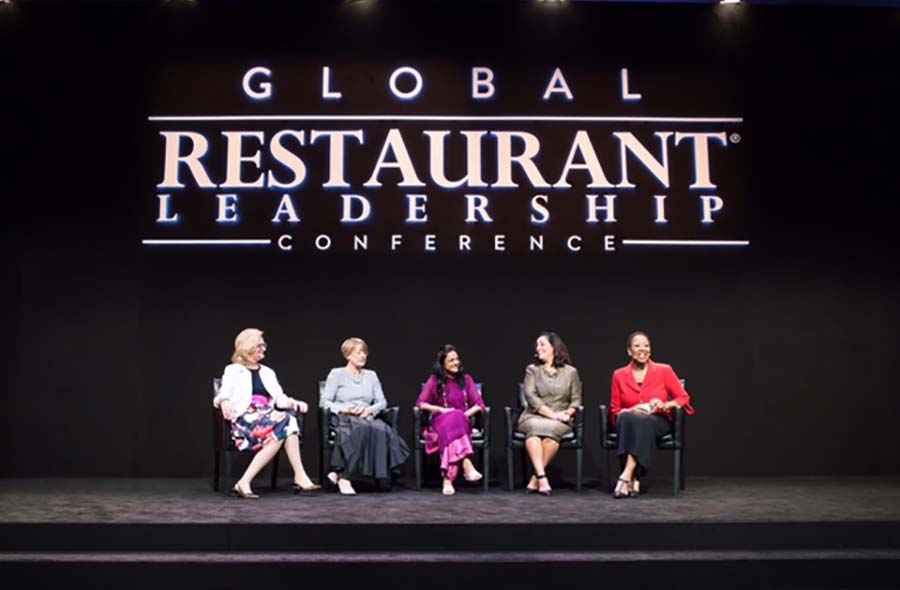
I attended the “Global Impact of Women” forum with my husband, who along with the rest of the audience, was being challenged to actively work towards improving the balance of women at the upper echelons of their respective companies. A panel of five highly accomplished, insightful and encouraging women convened, offering positive messages about their experiences and valuable takeaways for both men and women in the audience. I was encouraged to see hundreds of men showing up to this forum, implying personal energy and interest to focus resources and implement change. 

The panel comprised of Hattie Hill, moderator, Dawn Sweeney, Smita Jatia, Kathleen Ciaramello, and Sylvia Metayer all of whom work tirelessly for their respective organizations to promote business first and foremost.  The GRLC agenda was packed with topics and speakers addressing industry growth and worldwide partnerships but this particular panel presented a different “ask” to their peers, a bit of a “what you can do now” challenge to continue to promote women into executive leadership roles.

The speakers’ messages resonated with me because I was one of five female graduates in Mechanical Engineering from Vanderbilt University in 1985. At that time, there were few women in the field. Even more rare were female role models in leadership. At this snapshot in time, it was personally rewarding to quantify the changes over 30 years and see fantastic growth in women’s opportunities and accomplishments.  They are real and significant. To be certain, a marked improvement has occurred since I left the workforce in 1995 and the future is even more energizing.  Two specific, yet relatively simple, concepts were shared this day that can maintain momentum for women in leadership.

One was introduced by Sylvia Metayer, CEO of Worldwide Corporate Services for Sodexo. She encouraged people to utilize “Reciprocal Mentoring,” which she described as developing two-way transfers of experiences in the workplace. Everybody in a leadership role can gain valuable insight from others around them, regardless of rank or gender. This struck a chord for me as I have tended to look at mentoring as a top down teaching relationship, but this approach demonstrates that mentoring can and should involve a level of equality.

This shift in mindset, that we can all learn from each other, not just from our leaders, not only empowers women in the workplace, but it can also translate into a measurable impact on an organization’s bottom line.  Sylvia noted that research shows profitability increases in companies with more female leaders.

Another strategy was the “Power of Three” introduced by Kathleen Ciaramello, President of National Food Service for The Coca-Cola Company. She explained the value added by promoting not just one woman, but a second and third to management teams. One woman joining an executive team is undoubtedly the starting point for adding diversity, but there are exponential benefits when a second and then a third are included.  Women can then develop a stronger team approach gathering ideas and consensus with the support of their peers, a strength in numbers concept.

The individual and collective efforts of men and women change the face of business. Women are having an increasing impact on the global economy, and while more and more opportunities are opening up for women every day, we still have a long way to go when it comes to including women in leadership roles.

The strategies shared at this forum can make dramatic differences in that effort. It was inspirational to hear these presenters on “International Day of the Girl” – brilliant, influential business people from all corners of the world participated in important conversations about empowering women. However, in order to continue building on the progress made, we must all commit to putting strategies such as “Reciprocal Mentoring” and the ‘Power of Three” into practice.


It’s TED Time Again: Technology, Entertainment and Design

TED has always been the birthplace of ideas that impact the global village. TED talks have been seen more than 3.5 billion times, and nothing inspires quite like them.

Started as a 4-day conference in California 30 years ago, TED has grown worldwide to support world-changing ideas with multiple initiatives with talks ranslated into 93 languages. TED fans are just about as crazy for the event as Apple fans are for their iPhones and the speakers who appear on stage are the world’s elite thinkers, innovators and change makers.

Imagine if we could allow each speaker and performer to bring people together and allow them to visualize an “imagined future”. How would we inspire and share one idea via experiences in addition to giving a talk? How can we offer everyone the opportunity to touch and feel an idea? Imagine we could transform the previously impossible into possibility by one idea.

TEDxLA

TEDxLA will be an event where the village in which it is held will play a central role in how we have global impact. Where the action we take will be as important as the ideas we share. Imagine a day when the City of Angels, acts like a city of angels. Where hungry minds collaborate, where entertainment, science, arts, innovation, inclusiveness, freedom, and the spirit of being oneself becomes like a tradition that always existed. Where a city fulfills the destiny of its namesake, for the world.

How do we dare to think this big? The City of Angels is also the fertile crescent of innovation, design, entrepreneurship and technology. Creativity and imagination, has its address in this great city. TEDxLA is an invitation to create and experience ideas in action.

It is an epic call to participation, an international collaboration with global reverberation. We offer everyone a new creative space where the stage is the city and celebration of ideas its climax. Besides visionary speakers, individuals and firms will also create new experiences and co-produce content that will be the foundation for new revelations.

tedxla-speakers

TEDxLA brings the spirit of the TED conference to Los Angeles, and more than a host city, the city of angels will provide a unique sandbox for unmatched experiences and an opportunity to bring the world in a unique and beautiful setting all around the city. It will be a time for guests and citizens to check out from the day-to-day routine and go on an intellectual journey filled with brilliant speakers, captivating performances, amazing new technology, culmination of city wide experiences, and naturally thought-provoking ideas.

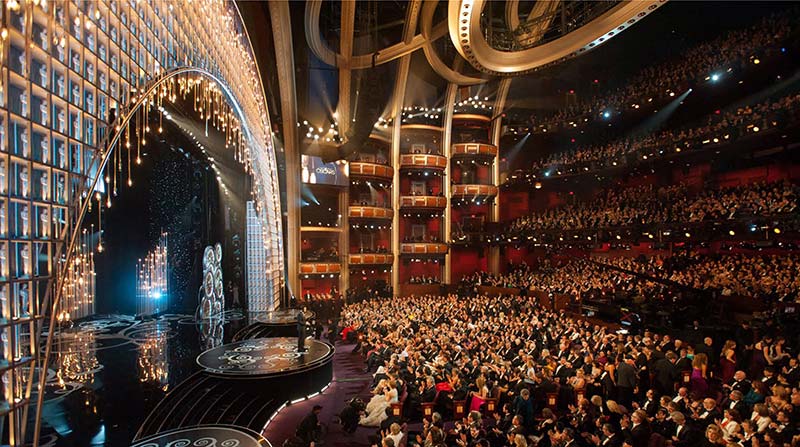
TEDxLA is be organized throughout 2016 and will be welcoming the community in various experiential and innovative events, culminating on December 2-3 at the Dolby Theater. The theme of the TEDxLA 2016 is “Imagine”. We are inviting everyone to participate in the making of our imagined future.

Have an innovative idea that aims to have a positive impact in the community, along with a plan to implement it? Apply for the Young Real Leaders Prize! The winner will be announced at TEDxLA on December 3rd and will receive:  A cash prize, VIP experience at TEDxLA, professional video by Young Real Leaders, and mentorship services. Deadline to apply is November 10th, 2016.


It’s TED Time Again: Technology, Entertainment and Design

TED has always been the birthplace of ideas that impact the global village. TED talks have been seen more than 3.5 billion times, and nothing inspires quite like them.

Started as a 4-day conference in California 30 years ago, TED has grown worldwide to support world-changing ideas with multiple initiatives with talks ranslated into 93 languages. TED fans are just about as crazy for the event as Apple fans are for their iPhones and the speakers who appear on stage are the world’s elite thinkers, innovators and change makers.

Imagine if we could allow each speaker and performer to bring people together and allow them to visualize an “imagined future”. How would we inspire and share one idea via experiences in addition to giving a talk? How can we offer everyone the opportunity to touch and feel an idea? Imagine we could transform the previously impossible into possibility by one idea.

TEDxLA

TEDxLA will be an event where the village in which it is held will play a central role in how we have global impact. Where the action we take will be as important as the ideas we share. Imagine a day when the City of Angels, acts like a city of angels. Where hungry minds collaborate, where entertainment, science, arts, innovation, inclusiveness, freedom, and the spirit of being oneself becomes like a tradition that always existed. Where a city fulfills the destiny of its namesake, for the world.

How do we dare to think this big? The City of Angels is also the fertile crescent of innovation, design, entrepreneurship and technology. Creativity and imagination, has its address in this great city. TEDxLA is an invitation to create and experience ideas in action.

It is an epic call to participation, an international collaboration with global reverberation. We offer everyone a new creative space where the stage is the city and celebration of ideas its climax. Besides visionary speakers, individuals and firms will also create new experiences and co-produce content that will be the foundation for new revelations.

tedxla-speakers

TEDxLA brings the spirit of the TED conference to Los Angeles, and more than a host city, the city of angels will provide a unique sandbox for unmatched experiences and an opportunity to bring the world in a unique and beautiful setting all around the city. It will be a time for guests and citizens to check out from the day-to-day routine and go on an intellectual journey filled with brilliant speakers, captivating performances, amazing new technology, culmination of city wide experiences, and naturally thought-provoking ideas.

TEDxLA is be organized throughout 2016 and will be welcoming the community in various experiential and innovative events, culminating on December 2-3 at the Dolby Theater. The theme of the TEDxLA 2016 is “Imagine”. We are inviting everyone to participate in the making of our imagined future.

Have an innovative idea that aims to have a positive impact in the community, along with a plan to implement it? Apply for the Young Real Leaders Prize! The winner will be announced at TEDxLA on December 3rd and will receive:  A cash prize, VIP experience at TEDxLA, professional video by Young Real Leaders, and mentorship services. Deadline to apply is November 10th, 2016.


UN Secondary Education Goals Will be Missed by 50 Years

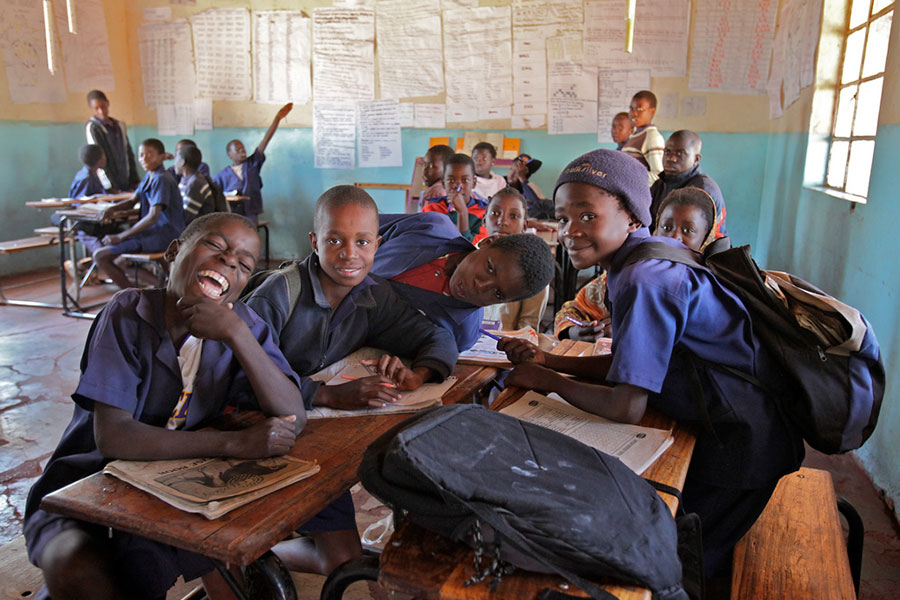
The world is set to miss by more than half a century a deadline for ensuring all children receive secondary education, the United Nations has said, adding that 40 percent of pupils are being taught in a language that is not their mother tongue.

World leaders agreed last year that by 2030 all girls and boys should be able to complete free quality primary and secondary education, but chronic under-funding is holding back progress, a U.N. report said.

“This report should set off alarm bells around the world and lead to a historic scale-up of actions to achieve (this goal),” economist Jeffrey Sachs said in a foreword.

The deadline on universal education was agreed as part of the Sustainable Development Goals (SDGs) – an ambitious plan to end poverty, hunger, advance equality and protect the environment.

“The gaps in educational attainment between rich and poor, within and between countries, are simply appalling,” said Sachs, a special U.N. adviser on the SDGs.

On current trends, universal primary education will be achieved in 2042, universal lower secondary education in 2059 and upper secondary in 2084, according to U.N. educational body UNESCO.

It said aid to education needs to increase six-fold to achieve the goal of quality universal education by 2030.

UNESCO said education was key to every aspect of sustainable development including increased prosperity, better agriculture and health, less violence and greater gender equality.

Achieving universal upper secondary education by 2030 in low income countries could lift 60 million people out of poverty by 2050, the report said.

Educating mothers to lower secondary education in sub-Saharan Africa by 2030 could also prevent 3.5 million child deaths between 2050-60.

CONFLICT

The report said conflict was one of the greatest obstacles to progress in education, keeping over 36 million children out of school.

It also pointed out that poverty and unemployment resulting from a lack of education could fuel conflict.

The UNESCO report warned that the type of education children are receiving is not equipping them for the challenges ahead.

It called for more emphasis on teaching children about environmental concerns, climate change and how to think collectively so that they can become global citizens.

“A fundamental change is needed in the way we think about education’s role in global development, because it has a catalytic impact on the well-being of individuals and the future of our planet,” said UNESCO Director-General Irina Bokova.

“Now, more than ever, education has a responsibility to be in gear with 21st century challenges and aspirations …”

Sachs called for a Global Fund for Education modelled on the Global Fund to Fight AIDS, Tuberculosis and Malaria which he said had helped drive dramatic improvements in health interventions and funding.

Around 263 million children are currently out of school globally, according to the report, and almost 30 percent of children from the poorest households in low income countries have never been to school.

Critics of the educational goal believe that pushing for universal upper secondary completion distracts from ensuring at least nine years of basic education for all.

By Emma Batha. Editing by Ros Russell. c Thomson Reuters Foundation, the charitable arm of Thomson Reuters, which covers humanitarian news, women’s rights, trafficking, corruption and climate change.


Stop Telling Women What to do or Wear

This summer my mother read one of the great classics of Spainish XIXth century literature: “La Regenta” by Leopoldo Arias Clarín. Over this same period, I watched Lena Dunham’s award-winning series “Girls”. The two of us have spent a few late evenings, chatting and comparing notes on the two, in Madrid’s sweltering heat.

Meanwhile, the international media have spent all summer debating burkini’s, and cultural Spanish traditions were tainted by a filmed gang-rape in Pamplona, among other sexual aggressions. So what’s going on with women? Have we advanced as much as we’d like to think? Are we really, really free?

What a mess. As a woman it’s really hard to say whether we’ve changed substantially or only just redecorated our lives. Nearly two hundred years separate Clarín’s female character, Ana Ozores, from Dunham’s fictional incarnation of herself as Hannah. Ana married a socially convenient husband and lives in a small provincial town called Vetusta. Hannah has confused sexual relationships with a number of young men in Manhattan, while pursuing a writing career. Both women long for something they can’t quite define.

It’s fascinating to realize that two centuries ago women still had to marry as an act of economic survival in Spain. When Ana, whose close confidant is – of course! – the town priest, eventually falls prey to the local womanizer, the entire city gangs up against her. Women around her seem to be chosen by destiny to live one of two lives: A live-in maid who is expected to silently comply with their male bosses’ sexual desires (both fathers AND young sons) or a wife who is morally superior, yet sexually frustrated and professionally irrelevant.

Hannah, on the contrary, has so much sexual freedom she doesn’t know quite what to do with it. Her three friends are no better. Explicit sex and revealing nudes populate every episode. Hannah is at once refreshing, endearing, disturbing and hilarious. She continuously rants about her unconventional body type – and yes, she does show it off to the camera in all kinds of sexy lingerie. She defends feminist ideals and complains about how men try to shut women up. She then proceeds to run back to her clumsy and socially inept boyfriend for comfort. Despite all the apparent freedom to be herself, she’s still under lots of social pressure to have a nicer body, get married (to the right guy!), have beautiful kids and be successful at her job.

And now back to the filmed gang-rape by five, twenty-something-year-old boys from Seville, during a night of booze during Pamplona’s Saint Fermin celebrations. They picked up a girl and walked her to her car. As they passed an open doorway, and in their drunken logic, they pushed the girl inside and used a mobile phone to record the cheering violence that ensued. Sexual aggression seems to be more frequent over the summer’s many festivals and celebrations across Spain. They were normal boys. One of them was studying to become a police officer. What got into them? Do they believe the porn they watch is what real women want?

Hundreds of articles have raved over the liberty or oppression that a burkini represents on a European beach. We European women feel very free because we can wear whatever we want.

We condemn Muslim and Arab women because they need to wear a veil or cover their entire bodies to play sports at the Olympics or swim in a pool. But… we fret about our own bodies all day long. We feel too fat, too short or too old to be accepted into a society that worships a very specific set of measurements. If this is freedom maybe we should all wear a burkini and be happy nobody is staring at our cellulite or gossiping about our sagging tummies. Would a burkini have protected girls from sexual assaults during the festive summer nights in Spain or even on an American campus?

Women’s forums love to criticize men as enforcers of limitations to our freedom. But do men really have so much power over us? Or are there too many women contributing to the demonizing of the female body in its wild, tumultuous imperfection? Are the women’s magazines we go to for inspiration and learning pushing us to be morally superior, stylishly slim, “lean-in,” multi-faceted mothers, sexually proficient lovers and industry-dominant CEOs? Have we honestly advanced as much as we think we have, or do we suffer as much pressure and judgment as Ana Ozores did in little Vetusta back in 1885?

Taryn Brumfitt is currently promoting her debut documentary “Embrace” because she doesn’t want her daughter to be part of the 91% of women who hate their bodies. A hundred women were asked for one word to express how they felt about their bodies. Responses ranged from disgusting, to loathing, fat, wobbly, stumpy, geriatric, gross or imperfect. They were all free women from the most advanced western societies. Free to hate their bodies. Free to hate themselves. Free to feel as marginalized and misunderstood as XXIst century Hannah and XIXth century Ana Ozores.

There is something deeply wrong in the way we all approach womanhood in today’s global awareness.

We have this awful, hidden lack of respect or appreciation for the amazing fountain of abundant fertility, sexual pleasure, motherly love and creative efficiency that is a woman.  We’ve become mortally accustomed to brutalizing it, starving it, abusing it, criticizing it, buying and selling it, aesthetically altering it and hating it.

Maybe we’ve forgotten what a woman is supposed to be. Maybe we’ve killed, raped, lynched and witch-hunted every single female leader there ever was in our quest to impose great civilizations and technology over primitive tribes. Maybe we’re all wearing a highly-sophisticated cultural version of a burkini after all.

If this summer’s news is what female advancement and progress look like… we’re going to have to stop kidding ourselves and get real. Stop telling other women what to do or wear, and focus on what we’re doing as women that’s enabling the sale of our freedom at far too cheap a price.


Are Tech Companies Deaf?

Imagine you’re sitting in the audience where the Nobel prizes are being awarded. This year, the prize for physics is being awarded to an obscure French genius who has discovered the algorithm that runs the universe.

Just suppose it has been described as the greatest scientific discovery in all history. Now imagine the physicist, who is a woman, has a thick French accent and it’s making it hard for you to understand her without focusing all the energy of your brain as you translate the sounds of her voice into thoughts you can comprehend.

Now imagine that the two colleagues that sit on either side of you are on their cell phones. One is playing a violent video game. The other is texting someone at work about a missed deadline. Meanwhile our Nobel Prize winner is announcing that she is on the verge of making another mankind-shifting discovery she calls the biology of physics or the “secret of life.” Initially you’re interested, at least in the topic. But you find her voice so difficult to decipher that you soon drift off into a ping-pong match of mental multitasking.  Eventually you pull out your phone and start responding to new e-mails from work.

Suddenly the crowd is on it’s feet clapping so hard it sounds like crashing ocean waves even as the wooden floor beneath your seat shakes in resonance. As you and your newly awakened friends bolt to your feet you can’t help but wonder what it is that she said. But the moment is lost. Your time at the event was wasted. In the presence of genius you tuned out. You made yourself… deaf. Well, maybe you will read about it later.

That story represents why women will continue to leave tech companies in an un-ending flood. We have known for years that the primary reason tech companies lose their smartest professional female talent isn’t pay equity, or the workload, or the desire to have children. It is being UNHEARD and OVERLOOKED. The genius of women falls too often on deaf and distracted ears.

Of course it’s not that pay inequality doesn’t matter. Of course it matters. It’s what is known as a necessary but insufficient condition of work satisfaction. It’s also known as an organizational hygiene factor. It simply means that taking a daily shower is necessary not to be repulsive to others. But simply not smelling doesn’t make you attractive to others. All pay equity does is make employers not stink. But that is not enough.  So not enough.

Lately I’ve been trying to explain this to leaders of tech companies who are getting sore shoulders from patting themselves on the back from their most recent studies showing that companies like Apple, Facebook and Intel have reached 99.7% pay equality between men and women. Many of these executives talk as if they solved the problem. Now they want their female workforce to quit whining and get back to work. Frankly I’m flabbergasted. Reaching gender pay equality in 2016 is like giving women the right to vote or allow them to own property. Are you kidding me? To think of that as an achievement is an embarrassment.

Some companies are trying to do more. They are trying to close the opportunity gap. Some companies have discovered that men and women who graduated from the same top-tier schools with the same degrees in the same year find themselves on very different rungs of their career ladder 10 years later.

In one case I know of, two Ph.Ds. were research partners in graduate school and were hired by the same software company. Within a decade he is her boss’s boss even though her name is on over 50 patents.

My new partner, Women in Technology International (WITI), recently completed research discovering that the lack of advancement opportunity is women’s biggest source of work frustration. It’s no wonder. 52% of women managers in tech companies have held the same job position for over 5 years. Of course this is the opportunity gap that causes the most pay unfairness over one’s career. For some professionals, men will make over $2 million more than women over the course of their career due to the good fortune of their gender.
So closing the opportunity gap is a good thing right?  Well, it all depends on how you do it.  Highly analytical people run most tech companies. After all, it’s technology right?  So they do what all engineers seem to do.  They set targets to have a certain percentage of women in the ranks of directors, senior directors and vice presidents. I know this may sound good idea. But here’s why it isn’t… at least not the way it’s being done in every tech company I’ve talked to.

Management jobs are scarce. As you go higher in an organization they become even more scarce. When gender-based quotas or targets are established and women are elevated on a preferred basis it has the inevitable result of creating mass resentment among males who feel like they are being discriminated against. The result is that men are angry and women are set up to fail.

When anyone is perceived to have been granted promotion for any reason other than merit, they are put on a hot seat.  Every flaw and every mistake is amplified. If the people they lead are resentful they are likely to create subtle acts of sabotage to prove that the new leader is undeserving. This is going on right now. I know because I find myself coaching newly elevated women leaders who feel like the Nobel Laureate in my story.

What is happening is if new women leaders don’t lead like men they’re almost immediately dismissed as lightweights. Of course if they try to lead like men they quickly gain a reputation as ball-busters.

I believe there is only one true solution to the problem and opportunity of gender differences in the workplace. For over 5,000 years armies, governments and businesses have been organized as male authoritarian structures.

This organizational design promotes people into leadership-demonstrated authoritarian traits. Competitiveness, confidence and decisiveness are all viewed as leadership traits in authoritarian organizations. These are traits found most commonly in men.

Recent science tells us these traits are the result of the way male brain neuro-networks develop combined with social modeling. The problem for tech companies is that authoritarian cultures are not agile or easy to transform. That’s why companies who have great success with their initial product usually have great difficulty disrupting themselves with new ideas, business models and solutions needed to keep thriving.

Science confirms that most women do not think like most men. We know that women are much more flexible and versatile in their thinking which enables them to consider far more different ideas before settling on an action plan. We know that women are much more likely to have a deeper and richer view of the user or customer experience which will lead to high-value innovation rather than bells and whistles which fascinate engineers but do little to wow customers.

There is much more scientific evidence that supports the idea that if you want to build an agile, innovative and efficient organization, women who lead like women are an essential source of leadership talent.  However, in most current technology cultures women are treated as if they are speaking a foreign language. They are simply tuned out. They are frequently ridiculed behind their backs. Too frequently they are subtly sexually harassed.

Recent Harvard research shows that most companies today have only about 7% of their workforce that are well-balanced enough to truly drive results through collaboration. Meanwhile, 34% of the workforce (mostly male) is relying on authoritarian power and 59% (mostly female) are simply compliant.  This why companies are not agile, innovative or even efficient.

My experience has taught me that the only solution to this immense and obnoxious waste of talent comes down to three things:
1. The CEO must believe that women who lead like women are a significant competitive advantage to the organization’s growth and prosperity. (This a mindset shift for most CEOs that only comes from opening their minds and having them participate with women in leadership in ways that generate better solutions and opportunities then they’ve had in the past.  They have to experience the benefits. I have been able to set this up in disciplined leadership experiments.)
2. Women need to be unleashed!  Women have been trained to devote themselves to helping others achieve their goals. This makes most women helpers rather than leaders.  I have found that when women are trained to use their gender strength to lead you often see a powerful synthesis of social intelligence and strategic wisdom, which is transformative.
3. Men need to listen to the questions women are asking. Most men must learn how to work with women as partners. For example, most men have never received any modeling or coaching about how to translate the way women have been conditioned to communicate so that their ideas will be heard and valued. (Social science confirms that women communicate their preferences through questions rather than assertions. It is common for woman to say something like “Would you like to go to a Mexican restaurant tonight?” when she actually means that she would like to go to a Mexican restaurant. At work it may sound like, “What do you think of putting Susan on the team?” instead of “I would really like Susan on the team.”)

Women have been conditioned to communicate their preferences softly for thousands of years because they feared either violent consequences or economic sanctions, and those legitimate fears don’t disappear in a single generation. Of course, as more women are unleashed (#2) they will become more clear and powerful.
To sum up.

If companies really do value both the talent and judgment that women can bring to an organization, the CEO must open his or her mind to the probability that women are a competitive advantage. 

Women need to be trained to amplify their talent and judgment in organizations that have evolved around male strengths. And, it’s critical that men learn how to work with women in in ways that make both male and female strengths synergistic.

Anything less will lead to failure . . . and that would be tragic.  Women have tried to be heard before but not achieved the success we need. This time the powerful contributions of tens of millions of women must be liberated if we want to create a future that our children will thrive in.

If you are waiting for some one to take action, wait no longer. Send this blog to your CEO and ask for a response. If doing so might put you at risk, then you need to find a new CEO.

 

‘Equity’ Review: Women on Wall Street – A Financial Thriller

Equity is about women on Wall Street. It’s a Wall Street drama, but it’s not about corruption, crime, or catastrophe. It’s about women who thrive on competition and ambition, deals and strategy, but who must carefully calibrate every aspect of their lives, professional and private, to stay equal in the game. 

Sarah Auerbach Ifrah attended a recent pre-screening of this financial thriller by Sony Pictures Classic, opening on July 29th. She gives her opinion below:

Equity, the brainchild of Amy Fox and Meera Menon, cogently depicts the intertwined stories of three career women grappling with a formidable glass ceiling. Naomi Bishop, central protagonist and investment banker, opens the film with a powerful statement that for women, money and ambition should not be stigmatized.

Despite her aim to advance herself on Wall Street, however, her boss constantly reminds her that her intensity ‘rubs clients the wrong way’. Furthermore, the media refuses to absolve Naomi of a past error in taking a former company public. Yet the major obstacle that Naomi deals with is her fear of aging in a banking career that favors women in their twenties.

Naomi personifies the ideals of the 1980s career woman: she is strong, independent, and uses her intellect to gain respect, especially in attempting to equalize herself with her male counterparts. She exemplifies traits that in the past, were classified as mostly male: a talent for numbers, and collected composure in a professional setting, even in trying situations.

These traits are somewhat distasteful, threatening, and unsettling to her peers and clients. This is a conflict many women today who graduate with MBAs and work experience deal with internally: do they gain admiration with their intellect and professionality, and leave the femininity out of the equation?

Naomi’s foil is Vice President of the firm and her younger subordinate, Erin, who is equally ambitious, but uses different means to advance her career. Erin aspires to be promoted, however, her pregnancy presents an obstacle. Just as age is discriminated against in the workplace, so is motherhood. Erin, unlike Naomi, exudes femininity in her gait and gestures. She is more personable than Naomi and she understands the way people think, what they want, and how to communicate with them.

When Naomi and Erin attempt to take social network company Cachet public, Erin is the one with whom the founder prefers to communicate; Yet Cachet’s founder has a chilling message for women in business. He tells Erin that ‘she is merely the VP; when he wants to talk business, he will talk to Naomi.’ Here we see the paradox: if we as women give up our ability to be feminine, personable communicators and become more like Naomi, we are seen as ‘too male’ yet if we become like Erin, we may not be taken seriously.

Equity shows us that perhaps a balance of both is necessary to navigate the business world.

Lastly, we see prosecutor Samantha, who uncovering a spiderweb of corruption, brings ethics to the world of Equity. Samantha is sharp and strong yet feminine, collected yet ambitious, and through all of this a mother. Is Samantha the character who combines and balances the extremes that Naomi and Erin portray, and is she the answer to our struggle in the workplace as women: that ultimate balance we all seek to be everything and do everything?

Equity does not give us an answer but it powerfully poses that question.

Sarah Auerbach Ifrah is an MBA candidate at the Chicago Booth School of Business, with a focus on Finance and Economics.

httpss://www.youtube.com/watch?v=Xg2TSp5tJy4

‘Equity’ Review: Women on Wall Street – A Financial Thriller

Equity is about women on Wall Street. It’s a Wall Street drama, but it’s not about corruption, crime, or catastrophe. It’s about women who thrive on competition and ambition, deals and strategy, but who must carefully calibrate every aspect of their lives, professional and private, to stay equal in the game. 

Sarah Auerbach Ifrah attended a recent pre-screening of this financial thriller by Sony Pictures Classic, opening on July 29th. She gives her opinion below:

Equity, the brainchild of Amy Fox and Meera Menon, cogently depicts the intertwined stories of three career women grappling with a formidable glass ceiling. Naomi Bishop, central protagonist and investment banker, opens the film with a powerful statement that for women, money and ambition should not be stigmatized.

Despite her aim to advance herself on Wall Street, however, her boss constantly reminds her that her intensity ‘rubs clients the wrong way’. Furthermore, the media refuses to absolve Naomi of a past error in taking a former company public. Yet the major obstacle that Naomi deals with is her fear of aging in a banking career that favors women in their twenties.

Naomi personifies the ideals of the 1980s career woman: she is strong, independent, and uses her intellect to gain respect, especially in attempting to equalize herself with her male counterparts. She exemplifies traits that in the past, were classified as mostly male: a talent for numbers, and collected composure in a professional setting, even in trying situations.

These traits are somewhat distasteful, threatening, and unsettling to her peers and clients. This is a conflict many women today who graduate with MBAs and work experience deal with internally: do they gain admiration with their intellect and professionality, and leave the femininity out of the equation?

Naomi’s foil is Vice President of the firm and her younger subordinate, Erin, who is equally ambitious, but uses different means to advance her career. Erin aspires to be promoted, however, her pregnancy presents an obstacle. Just as age is discriminated against in the workplace, so is motherhood. Erin, unlike Naomi, exudes femininity in her gait and gestures. She is more personable than Naomi and she understands the way people think, what they want, and how to communicate with them.

When Naomi and Erin attempt to take social network company Cachet public, Erin is the one with whom the founder prefers to communicate; Yet Cachet’s founder has a chilling message for women in business. He tells Erin that ‘she is merely the VP; when he wants to talk business, he will talk to Naomi.’ Here we see the paradox: if we as women give up our ability to be feminine, personable communicators and become more like Naomi, we are seen as ‘too male’ yet if we become like Erin, we may not be taken seriously.

Equity shows us that perhaps a balance of both is necessary to navigate the business world.

Lastly, we see prosecutor Samantha, who uncovering a spiderweb of corruption, brings ethics to the world of Equity. Samantha is sharp and strong yet feminine, collected yet ambitious, and through all of this a mother. Is Samantha the character who combines and balances the extremes that Naomi and Erin portray, and is she the answer to our struggle in the workplace as women: that ultimate balance we all seek to be everything and do everything?

Equity does not give us an answer but it powerfully poses that question.

Sarah Auerbach Ifrah is an MBA candidate at the Chicago Booth School of Business, with a focus on Finance and Economics.

httpss://www.youtube.com/watch?v=Xg2TSp5tJy4

Anne Hathaway Announced as UN Goodwill Ambassador

UN Women, the United Nations organization dedicated to gender equality and the empowerment of women, today announced the appointment of American award-winning actor Anne Hathaway as global Goodwill Ambassador.

A long-standing supporter of women’s and girls’ rights, Ms. Hathaway will put the spotlight on the issue of the unequal burden of care work in the home as one of the key barriers to gender equality, working internationally to advance the adoption and implementation of policies that will bring measurable change. These include affordable childcare services and shared parental leave at both government and corporate levels.

“The appointment of Anne is timely because this year UN Women is driving hard to foster more positive mindsets and practical arrangements around workplaces that build and support equality for women,” stated Phumzile Mlambo-Ngcuka, UN Under-Secretary-General and UN Women Executive Director. “The ‘motherhood penalty’—which means that when they become mothers, women’s pay and opportunities at work suffer—is a particularly insidious demonstration of gender inequality in the workplace. For too long it has been difficult or impossible to view raising a child as being truly an equal responsibility for both parents.

“Stereotypes that make it hard for fathers to take time away from work to care for a child are outdated leftovers from the ‘male breadwinner’ model and have no place in today’s mixed workforce. Well-implemented parental leave is just one way for employers to demonstrate that they understand the value of their staff—both male and female,” added Ms. Mlambo-Ngcuka. “To make the case for how this will increase opportunities for women we needed an advocate who had the intellect and passion to tackle this complex issue. Within moments of meeting Anne I realized that we had found our woman. We are truly honoured to have her onboard.”

Childcare services and parental leave are two ways for employers and governments to demonstrate that they understand the value of their people. Just as they hinder women’s equal participation in the workforce, rigid gender roles keep men stuck in harmful cultural stasis. Consumed by a culture of overwork that penalizes them for taking time off for family-care responsibilities, men too face dire consequences from our failure to value care. Failing to involve men in the conversation about care as a core component of gender equality only calcifies harmfully rigid social norms about gender overall.

When it comes to equality, Ms. Hathaway is a committed voice for change. She previously served as an advocate for Nike Foundation and travelled to Kenya and Ethiopia to raise awareness on child marriage. In 2013, Ms. Hathaway provided the narration on ‘Girl Rising,’ a CNN documentary film, which focused on the power of female education as it followed seven girls around the world who sought to overcome obstacles and follow their dreams.

“I feel honoured and inspired by this opportunity to aid in advancing gender equality. Significant progress has already been made but it is time that we collectively intensify our efforts and ensure that true equality is finally realized,” said Ms. Hathaway.


0