
12 Cultural Practices You’ve Probably Never Heard About

Each year a special UNESCO committee meets to evaluate cultural norms from around the world that are put forward for consideration for a list like no other – The Representative List of the Intangible Cultural Heritage of Humanity.

The list is made up of intangible heritage elements that demonstrate the diversity of that particular heritage raises awareness about its importance. Many of these cultural element are in urgent need of safeguarding because they’re at risk of disappearing forever, despite the efforts of the community, group, individual or State to preserve them. In December 2017, 12 more heritage elements where added:

If you like this, subscribe here for more stories that Inspire The Future.

Kazakhstan  – Kazakh traditional Assyk games

Kazakh Traditional Assyk Games are an ancient tradition in Kazakhstan; each player has their own set of Assyks, traditionally made out of a sheep bone, and a ‘Saka’ dyed in bright colours. The community of practitioners mainly comprises children aged between 4 and 18, but young people and adults are also involved. The game is a good model for positive collaboration, social inclusiveness and a sense of friendship, and is primarily transmitted through observation from older boys to younger ones.

Portugal  – Craftmanship of Estremoz clay figures

The Craftmanship of Estremoz Clay Figures dates back to the 17th century and involves a process lasting several days. The clay figures are dressed in regional attires of Alentejo or religious clothing and follow specific themes; the very characteristic aesthetic features of the figures make them immediately identifiable, and the craft is strongly attached to the region. Artisans ensure the viability and recognition of their craft through non-formal workshops and pedagogical initiatives, as well as through local, national and international fairs.

Germany  – Organ craftsmanship and music

Organ craftsmanship and music has shaped Germany’s musical and instrument-making landscape for centuries, and there are a diverse number of traditions around constructing and playing the organ. The highly specialized knowledge and skills of organ makers are significant markers of group identity and organ music constitutes a universal language that fosters interreligious understanding. Knowledge and skills related to the element are transmitted through a direct teacher-pupil experience as well as in vocational schools, universities, and organ construction workshops.

Greece  – Rebetiko

Rebetiko is a musical and cultural expression directly linked to song and dance that initially spread among urban working-class populations. Rebetiko songs are now a standardized repertoire in social occasions, containing invaluable references to the customs and traditions of a particular way of life. Rebetiko is transmitted orally, as well as by the media and in music schools, conservatories and universities, and musicians and enthusiasts continue to play a key role in keeping the practice alive.

India – Kumbh Mela

Kumbh Mela, the festival of the sacred Pitcher, is a peaceful congregation of pilgrims during which participants bathe or take a dip in a sacred river. The congregation includes ascetics, saints, sadhus, aspirants-kalpavasis and visitors. The tradition plays a central spiritual role in the country, encapsulating a diverse range of cultural customs. Knowledge and skills relating to Kumbh Mela are mainly imparted through the teacher-student relationship, but transmission and safeguarding are also ensured through oral traditions and religious and historical texts.

Indonesia  – Pinisi, art of boatbuilding in South Sulawesi

Pinisi, or the Art of Boatbuilding in South Sulawesi, refers to the famed ‘Sulawesi schooner’ and represents the epitome of the Archipelago’s indigenous sailing craft. Today, boatbuilding centres are located at Tana Beru, Bira and Batu Licin, where shipbuilding and sailing are central to the community’s social, economic and cultural fabric. Knowledge and skills are transmitted from generation to generation both within and outside of the family circle, and local shipwrights are engaged in active marketing initiatives to safeguard the practice.

Iran (Islamic Republic of)  – Chogān, a horse-riding game accompanied by music and storytelling

Chogān is a horse-riding game traditionally played in royal courts and urban fields and accompanied by music and storytelling. In Chogān, two rider teams compete and the aim is to pass the ball through the opposing team’s goal post using a wooden stick. Chogān has a strong connection to the identity and history of its bearers and practitioners. It is transmitted informally within the family sphere, as well as by dedicated associations through training and support for local masters.

Iran (Islamic Republic of); Azerbaijan  – Kamantcheh, The art of crafting and playing with a bowed string musical instrument

The art of crafting and playing Kamantcheh/Kamancha (‘little bow’), a bowed string instrument, has existed for over 1,000 years. In the Islamic Republic of Iran and Azerbaijan, it is a major element of classical and folkloric music, and performances occupy a central place in many gatherings. Kamantcheh is both a key source of earning a living and a strong part of the communities’ living heritage. Knowledge relating to the art of crafting and playing Kamantcheh is transmitted both within families and in musical institutions.

Ireland  – Uilleann piping

Uilleann Piping is a musical practice in which a particular type of bagpipe (known as ‘uilleann’, ‘Irish’ or ‘union’ pipes) is used to play traditional music. Bearers and practitioners include participants of all ages, dispersed throughout the world. Uilleann Piping offers an important way of socializing, providing a sense of rootedness and connection to the past. Knowledge and skills are transmitted using both long-established and modern practices, and the practice is primarily safeguarded through the efforts of the group Na Piorabairi Uilleann.

Italy – Art of Neapolitan ‘Pizzaiuolo’

The art of the Neapolitan ‘Pizzaiuolo’ is a culinary practice consisting of four different phases relating to the preparation of the dough and its baking in a wood-fired oven. The practice originates in Naples, where around 3,000 Pizzaiuoli now live and perform, and plays a key role in fostering social gatherings and intergenerational exchange. Knowledge and skills related to the element are primarily transmitted in the ‘bottega’ of the Pizzaiuolo, where young apprentices can observe their master at work.

Kyrgyzstan  – Kok boru, traditional horse game

Kok boru, a horse game, is a synthesis of traditional practices, performances and the game. The game is played by two teams on horseback, who compete by trying to score as many ‘ulaks’ (a mould in modern-day games) into their opponents’ goal as possible. The element is an expression of the cultural and historic tradition of its practitioners and unites communities regardless of social status. Related knowledge and skills are primarily transmitted through demonstration, as well as during festive and social events.

Malawi  – Nsima, culinary tradition of Malawi

Nsima, the Culinary Tradition of Malawi, is a compound name for the culinary and dietary tradition of Malawians as well as a single component of this tradition, a form of thick porridge prepared with maize flour. Nsima is prepared through an elaborate process requiring specific knowledge, and eating it is a communal tradition in families. Communities safeguard the element through continued practice, publications, festivals and revitalization activities, and knowledge is transmitted both informally and through on-the-job training and education.

If you like this, subscribe here for more stories that Inspire The Future.
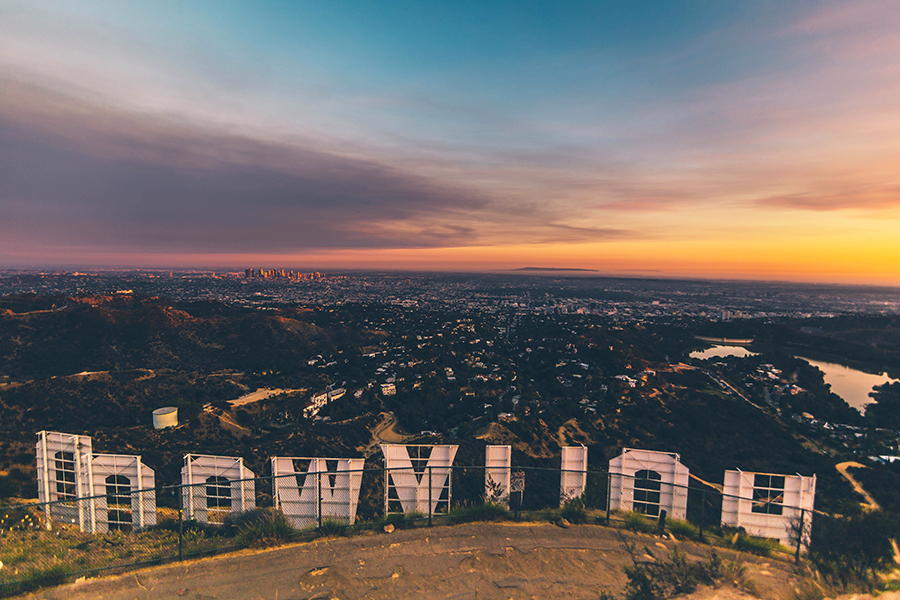
Hollywood’s Hiring Freeze: Female, Black & Asian Directors Rarely Worked in 2017 Films

The upcoming Golden Globe Awards will present yet another man its Best Director award, giving the cold shoulder to female directors such as Greta Gerwig, Dee Rees, Patty Jenkins and Kathryn Bigelow.

But a new report on films from 2007 to 2017 reveals a larger problem than a lack of award nominations for female directors. Diversity in the director’s chair is virtually nonexistent, and gender in the executive ranks of major companies remains grossly imbalanced. 

The report, entitled “Inclusion in the Director’s Chair?” analyzes new data on movies released in 2017. Authored by Professor Stacy L. Smith and the USC Annenberg Inclusion Initiative, the report is the most comprehensive intersectional analysis of directors of motion pictures to date, combining data on the gender, race and age of 1,223 filmmakers working on 1,100 top-grossing films released between 2007 and 2017. The analysis also focuses on women in executive and leadership ranks at major media companies. The results reveal that for female, Black and Asian directors, the doors to Hollywood remain mostly closed.

If you like this, subscribe here for more stories that Inspire The Future.
Only 4% of all directors across the 1,100 top films from 2007 to 2017 were female, a ratio of 22 males to every one female director. Moreover, only four Black females, two Asian females, and one Latina have worked as directors on those 1,100 films over the span of 11 years analyzed. There has been no change over time.

“Hollywood’s ‘female director problem’ has been the source of much dialogue over the past several years. The evidence reveals that despite the increased attention, there has been no change for women behind the camera,” said Dr. Smith. “Mere conversation is not the answer to these problems—and the time for conversation is up. Until major media companies take concrete steps to address the biases that impede hiring, nothing will change.”
The majority of female directors (83.7%) worked on only one top-grossing film across the time frame, including all four of the Black female directors. Slightly more than half (55.3%) of male directors only worked once over the 11-year sample. Notably, the 8 female directors added to the list in 2017 are all new to the study—which the authors state is another indicator that little progress has been made.

“As we said last year, most female directors are ‘one and done’ when it comes to helming popular films, particularly women from underrepresented racial/ethnic groups,” said Dr. Smith. “In 2017 none of the women entering the ranks of 100 top film directors appeared in our study previously. This is not true progress. Real change means that we see women working across multiple years and that the number of opportunities for female directors expand each year.”
The number of films directed by both males and females over the 11-year time frame was assessed. Male directors worked on as many as 15 films, while females did not exceed 4. One explanation for this disparity is the age at which directors work. Men create films over a span of nearly 60 years, from their 20s to their 80s. Women, however, work across only four decades, from their 30s to their 60s.

The study also explores the small percentages of Black and Asian directors working behind the camera. Only 5.2% of the 1,223 directors of 1,100 top films were Black, and 3.2% were Asian. This translates into 31 individual Black directors and 20 Asian directors of popular movies released from 2007 to 2017. Again, no change over time was observed.

The researchers suggest that the lack of opportunities for Black directors is tied to who appears in the films they direct. For Black directors, 81% of the movies they helmed had a Black actor among the two top-billed cast. “Hiring patterns that rest on ‘matching’ director race to the race of the top cast partially explain why we see little change over time,” said Dr. Smith. “The identity of the director must be uncoupled from industry expectations about what kind of stories he or she can tell if any progress is to be made.”

The report details the number of films by female, Black, and Asian directors released by each of the major film distributors over the 11 years studied. Warner Bros. released the most female-directed films, with 12 movies between 2007 and 2017. Lionsgate topped the list for Black directors, putting out 18 movies—15 of which were helmed by Tyler Perry. Universal released 13 movies with an Asian director between 2007 and 2017, the leader in that category. Importantly, Disney did not release a single movie with a Black director from 2007 to 2017.

Women are Underrepresented in the Executive Ranks at Major Media Companies
The new report also includes a profile of the executive ranks at seven major entertainment companies. Across all seven corporations, 18.8% of the board members are female, along with 17.9% of the C-suite positions (CEO, CFO, CTO, etc.). Looking more closely at film executives in particular, 31% of those ranks are filled by women. In the executive ranks, females are more likely to appear in EVP, SVP, and VP positions than at the apex of organizations in President or Chairperson jobs.

“It is no surprise that an industry which does not hire female directors also lacks women in leadership roles across the organizations that finance and distribute content,” said Dr. Smith. “Inclusion is not a one-time problem to be solved, it is a systemic issue that must be addressed by individuals at all levels of these companies. If these companies are going to meet the push for 50/50 by 2020, this data shows how far they have to go.”

Other report highlights include an assessment of the genre of films made by women, Black, and Asian directors. The authors also offer solutions for consumers and shareholders to address the ongoing disparities behind the camera. The report is the latest from the Annenberg Inclusion Initiative, and can be found online here.

If you like this, subscribe here for more stories that Inspire The Future.
 

Hollywood’s Hiring Freeze: Female, Black & Asian Directors Rarely Worked in 2017 Films

The upcoming Golden Globe Awards will present yet another man its Best Director award, giving the cold shoulder to female directors such as Greta Gerwig, Dee Rees, Patty Jenkins and Kathryn Bigelow.

But a new report on films from 2007 to 2017 reveals a larger problem than a lack of award nominations for female directors. Diversity in the director’s chair is virtually nonexistent, and gender in the executive ranks of major companies remains grossly imbalanced. 

The report, entitled “Inclusion in the Director’s Chair?” analyzes new data on movies released in 2017. Authored by Professor Stacy L. Smith and the USC Annenberg Inclusion Initiative, the report is the most comprehensive intersectional analysis of directors of motion pictures to date, combining data on the gender, race and age of 1,223 filmmakers working on 1,100 top-grossing films released between 2007 and 2017. The analysis also focuses on women in executive and leadership ranks at major media companies. The results reveal that for female, Black and Asian directors, the doors to Hollywood remain mostly closed.

If you like this, subscribe here for more stories that Inspire The Future.
Only 4% of all directors across the 1,100 top films from 2007 to 2017 were female, a ratio of 22 males to every one female director. Moreover, only four Black females, two Asian females, and one Latina have worked as directors on those 1,100 films over the span of 11 years analyzed. There has been no change over time.

“Hollywood’s ‘female director problem’ has been the source of much dialogue over the past several years. The evidence reveals that despite the increased attention, there has been no change for women behind the camera,” said Dr. Smith. “Mere conversation is not the answer to these problems—and the time for conversation is up. Until major media companies take concrete steps to address the biases that impede hiring, nothing will change.”
The majority of female directors (83.7%) worked on only one top-grossing film across the time frame, including all four of the Black female directors. Slightly more than half (55.3%) of male directors only worked once over the 11-year sample. Notably, the 8 female directors added to the list in 2017 are all new to the study—which the authors state is another indicator that little progress has been made.

“As we said last year, most female directors are ‘one and done’ when it comes to helming popular films, particularly women from underrepresented racial/ethnic groups,” said Dr. Smith. “In 2017 none of the women entering the ranks of 100 top film directors appeared in our study previously. This is not true progress. Real change means that we see women working across multiple years and that the number of opportunities for female directors expand each year.”
The number of films directed by both males and females over the 11-year time frame was assessed. Male directors worked on as many as 15 films, while females did not exceed 4. One explanation for this disparity is the age at which directors work. Men create films over a span of nearly 60 years, from their 20s to their 80s. Women, however, work across only four decades, from their 30s to their 60s.

The study also explores the small percentages of Black and Asian directors working behind the camera. Only 5.2% of the 1,223 directors of 1,100 top films were Black, and 3.2% were Asian. This translates into 31 individual Black directors and 20 Asian directors of popular movies released from 2007 to 2017. Again, no change over time was observed.

The researchers suggest that the lack of opportunities for Black directors is tied to who appears in the films they direct. For Black directors, 81% of the movies they helmed had a Black actor among the two top-billed cast. “Hiring patterns that rest on ‘matching’ director race to the race of the top cast partially explain why we see little change over time,” said Dr. Smith. “The identity of the director must be uncoupled from industry expectations about what kind of stories he or she can tell if any progress is to be made.”

The report details the number of films by female, Black, and Asian directors released by each of the major film distributors over the 11 years studied. Warner Bros. released the most female-directed films, with 12 movies between 2007 and 2017. Lionsgate topped the list for Black directors, putting out 18 movies—15 of which were helmed by Tyler Perry. Universal released 13 movies with an Asian director between 2007 and 2017, the leader in that category. Importantly, Disney did not release a single movie with a Black director from 2007 to 2017.

Women are Underrepresented in the Executive Ranks at Major Media Companies
The new report also includes a profile of the executive ranks at seven major entertainment companies. Across all seven corporations, 18.8% of the board members are female, along with 17.9% of the C-suite positions (CEO, CFO, CTO, etc.). Looking more closely at film executives in particular, 31% of those ranks are filled by women. In the executive ranks, females are more likely to appear in EVP, SVP, and VP positions than at the apex of organizations in President or Chairperson jobs.

“It is no surprise that an industry which does not hire female directors also lacks women in leadership roles across the organizations that finance and distribute content,” said Dr. Smith. “Inclusion is not a one-time problem to be solved, it is a systemic issue that must be addressed by individuals at all levels of these companies. If these companies are going to meet the push for 50/50 by 2020, this data shows how far they have to go.”

Other report highlights include an assessment of the genre of films made by women, Black, and Asian directors. The authors also offer solutions for consumers and shareholders to address the ongoing disparities behind the camera. The report is the latest from the Annenberg Inclusion Initiative, and can be found online here.

If you like this, subscribe here for more stories that Inspire The Future.
 

We Can Do Better: Let’s Give Fans And Sponsors What They Want

I lived in South Africa in the 1990’s at a time where the divide between the haves and have nots was more marked than you can imagine.

It was also a time in which sport played a central role in the lives of everyone, irrespective of which side of the divide they found themselves. Building a sports marketing business through the transition from minority to majority rule at this time, not surprisingly, played a foundational role in how I now view the world.

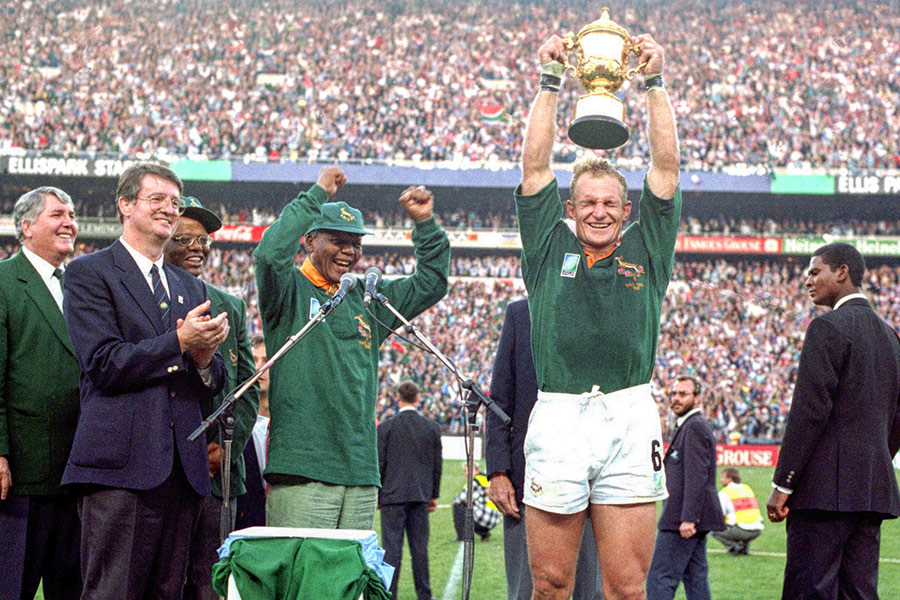
The 1995 Rugby World Cup was a pivotal moment for me along my journey as I witnessed first hand the role that sport can play in making the world a better place. President Nelson Mandela’s instincts around the opportunity to tap into fan passion and pride around a major sports event to heal an otherwise divided nation was nothing short of brilliant and set up the “Rainbow Nation” for the years of success that it subsequently enjoyed.

If you like this, subscribe here for more stories that Inspire The Future.
President Mandela’s opening remarks at the first Laureus World Sports Awards say it all: “Sport has the power to change the world. It has the power to inspire. It has the power to unite people like little else does. It talks to the youth in a language they understand. Sport can create hope where once there was only despair.”

Inspired by my Rugby World Cup experience, and the expectations of the ruling ANC party that business should play a significant role in helping the country to make up for lost time during apartheid, we made a special effort at my agency Octagon South Africa — one of the leading agencies in the Octagon Worldwide network — to incorporate a “development” component into every sponsorship that we managed for our corporate clients. These mainly involved opportunities for South Africa’s marginalized communities to gain access to sport and inclusion in society generally. And what we learned during this time was that this approach amplified the returns enjoyed by everyone involved — the sponsor, the rights holder and the community. We learned that doing good through sport made a real difference in the communities where our clients operated and helped them in the process to become relevant contributors in the new South Africa.

Fast forward to 2017 and few will deny that a move to purpose is now underway across the world as corporations try to remain relevant to a growing number of their customers that expect business to stand for something more than just making profits.

While this expectation exists across a broad cross section of the global community, 2.5 billion people by some estimates, it is particularly strong amongst younger people whose influence in society and on business — what they buy, where they work, what they invest in, what they promote — has gathered tremendous momentum over the last 5 years.
And corporations are quickly finding out that doing good is good business as more and more examples of purpose-full corporations out-performing their competitors (and the market) start to hit the headlines. There are, for example, now over 2000 corporations registered as certified B Corporations, corporations committed to doing good while they do well through a triple bottom line approach to how they do business.

It was these collective insights that informed our decision at the Super Bowl 50 Host Committee — where I was Chair of the Sustainability Committee and Lead Sustainability Advisor — to build our strategy for the mega-event around the central purpose of leveraging it as a platform that would improve the lives of young people in the Bay Area.
The Host Committee delivered Super Bowl 50 as the “most shared, most participatory and most giving Super Bowl ever…all delivered in a “net positive” way — socially, environmentally and economically.” The event was the most successful in history from a commercial, engagement and impact perspective directing $15M of corporate funding to local Bay Area organizations aligned with their purpose.

Super Bowl 50 was one of the most net-positive events in football history(Source: SB 50 Host Committee). In the process, we like to think that we delivered a transformative event with Super Bowl 50 that will change the way that future Host Committees go about hosting the Super Bowl and other mega-events. It is still in the early days, but our example is being followed by both the NFL and future Host Committees, and I would not be surprised to see either Minnesota or Atlanta meet our challenge and raise the bar even further with Super Bowl LII and LIII respectively.

The business of sport, however, seems to have been slow to react to this move to purpose which is puzzling given the industry’s appetite for doing well. It seems that everyone in the sector has been so distracted by the next piece of shiny technology, building the next mega-stadium and selling seats and tickets that they haven’t been paying attention to what their fans and sponsors want.

While the business of sport does do good in the community, they still seem to be caught up in the traditional “1%” philanthropy or CSR model and have yet to understand the opportunity to embrace purpose as a key strategic business driver and in the process drive multiple benefits for their organization and the community on whose well-being they rely.

The fact that not a single sports team, league, event or venue has become a certified B is indicative of how far the business of sport has fallen behind.

Things are, however, starting to change, driven in the main by examples like Super Bowl 50 and expectations of the corporate sector who wield great influence over sports rights holders given the importance to the business of sports of their sponsorship dollars. More and more purpose-full corporations are now starting to look for ways to activate their purpose through their sports sponsorship programs, and rights holders that aren’t able to help them authentically do so will start to lose out.

My experiences over the years have come full circle to inform the work I now do through my new purpose-full agency Purpose + Sport which we launched last year. We’ve assembled an awesome Advisory Board and are already working with a number of leaders in the industry — rights holders and corporate sponsors — who have now seen what’s possible when you embrace purpose as a management philosophy.

In the case of the property owners we’re working with, we’re helping them to define, express and activate their organizations purpose so that they too can do good and do well. And for the corporate sponsors we’re working with, we’re helping them to activate their purpose across their sponsorship portfolios in a meaningful way that drives both community and business outcomes. It’s an exciting time.

My wish, through all of this, is that the business of sport moves beyond the 1% philanthropy and CSR model to embrace purpose as a management philosophy and in the process redefine sports role in society as a whole and importantly in a contributing towards developing a sustainable future for us all. Given all the uncertainty that exists in the world, there isn’t a better time than now for the business of sport to stand up and take a leadership role in this space, to do good and do well. The fans expect it and corporations are looking for partners to help them activate their purpose.

If President Nelson Mandela were still with us today he would be grateful to know that the example that was set around the Rugby World Cup in 1995 through the theme of “sport for good” has played some small part in inspiring the move to purpose that is at last underway across the business of sport.

No doubt he would also remind us that “it always seems impossible, until it’s done.”

If you like this, subscribe here for more stories that Inspire The Future.

 

Real Leaders And Sustainable Brands Redefine The Good Life

Real Leaders, the world’s first sustainable business & leadership magazine, and Sustainable Brands, the premier global community of business innovators, have joined forces to produce a special edition of Real Leaders – highlighting stories that inspire the future.

You can view the magazine and read some of the highlights here:

  • How KoAnn Skryzniarz, Founder of Sustainable Brands, is creating future brands by ‘Redefining the Good Life.’
  • How Elon Musk and Tesla just made your car and NASA obsolete.
  • How Terracycle is aiming to end poverty, protect the planet and ensure prosperity for all.
  • Three steps to creating your own personal leadership brand and sharing it with the world.
  • And much more!

Never before in history have so many CEOs, political leaders, companies and celebrities come together to lead and inspire a more sustainable future for the benefit of every person on the planet. Self-interest and narrow business agendas that focus only on profit have given way to inclusive thinking, a mindset that we are convinced will become the norm and deliver bigger profits down the line.

One of the 17 Sustainable Development Goals drawn up by the United Nations is “Partnerships for the Goals.” It’s a goal that both Real Leaders and Sustainable Brands have taken to heart. Two different companies, generating different products and services, can still find common ground if they share the same values.

“Cynicism is the enemy of the good,” says KoAnn Skryzniarz, CEO of Sustainable Brands. “We must focus on the positive and never forget that any action, big or small, in support of a better world helps tip the future in the right direction.”

In 2010 Real Leaders realized the world needed tipping in the right direction. We were in desperate need of far-sighted leadership, and no publication existed at that time which dedicated itself entirely to this vital topic – one that is still relevant and urgent today.

Real Leaders filled this gap, with a mission to inspire better leaders for a better world, and now serves a global community of business leaders who represent 10% of the global economy. We seek stories of leaders who have thrived by tackling social and environmental issues. We celebrate their achievements and share them with the world. Our challenge to you is: How will you inspire the future?

Since 2006, Sustainable Brands has inspired the future by engaging and preparing business leaders to prosper by showing the path to an abundant future through sustainable business practice. They provide a platform for thought leaders at live and online events and host peer-to-peer learning groups – all aimed at growing and inspiring brands, design professionals and social entrepreneurs.

Our partnership aims to create something bigger – a journey of like-minded brands that seeks to unearth new possibilities. Will you join us?


Starbucks and USAID Empower Colombian Coffee Farmers

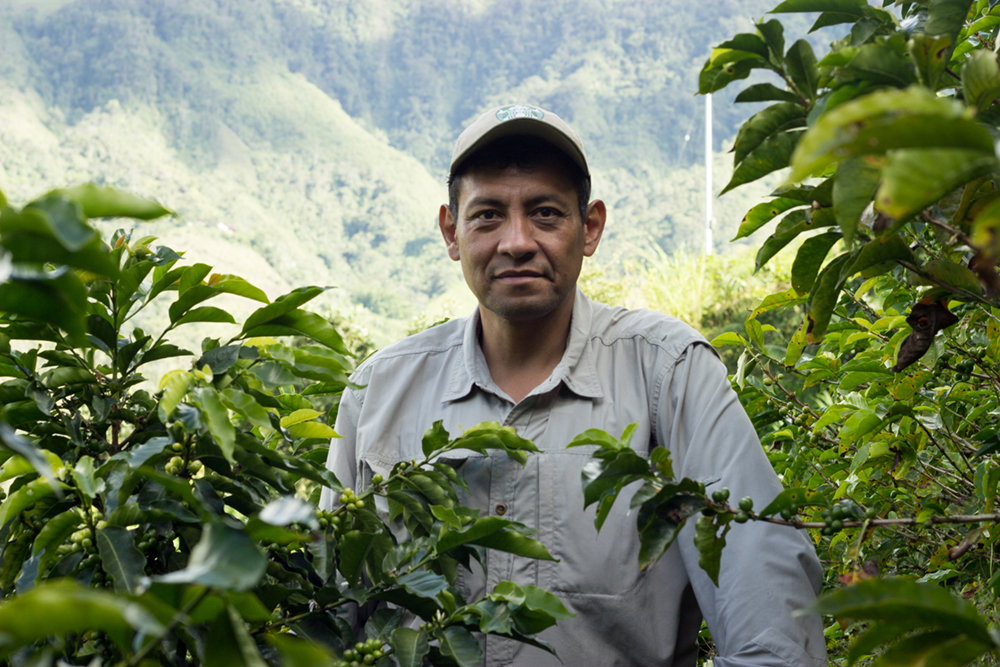
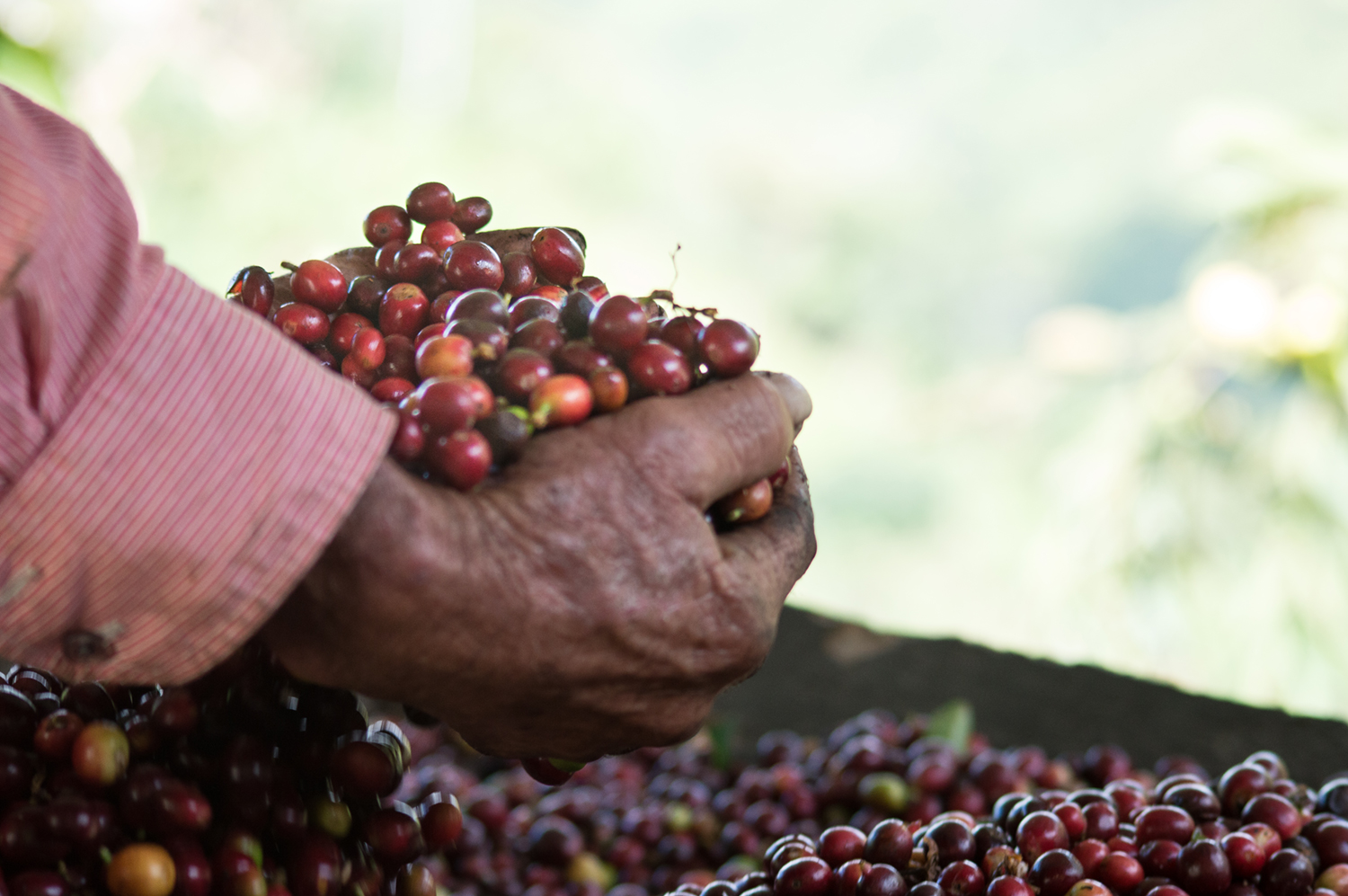
Coffee farmers in Colombia faced challenges maintaining their crops during the country’s 50-year civil war. An alliance between Starbucks and the U.S. Embassy, through its Agency for International Development (USAID) is now helping farmers refocus on their crops with an emphasis on coffee quality.

“At times, coffee farmers were unable to travel in certain areas held by guerrilla forces, which prevented them from obtaining the technical assistance necessary to maintain the health of their crops,” says Alfredo Nuño, general manager, Starbucks Farmer Support Center in Colombia. “Through Starbucks work with USAID, we have been able to help 17,500 farmers improve their crops.”

As the largest purchaser in the world of premium arabica coffee from Colombia, Starbucks is committed to the livelihoods of Colombian coffee farmers. In 2012, two years prior to signing the agreement with USAID, Starbucks opened a Farmer Support Center in Manizales, Colombia, to deliver training and agronomy support to Colombian coffee farmers.

“The quality of Colombian coffee is one of the best in the world and the idea behind this public-private alliance with Starbucks is to improve its quality even more, to be able to produce more coffee to export and thus contribute to the development of rural areas in Colombia,” said Kevin Whitaker, U.S. Ambassador to Colombia.

Starting with the soil
The initial task of the Starbucks and USAID collaboration was to promote a soil analysis program.

“Most farmers here do not use soil analysis because it’s cost prohibitive,” Nuño says. “By offering the service to them free of charge, they were able to learn so much more about their crops.”

Starbucks agronomists helped farmers learn how to collect soil samples, which were shipped to a local laboratory for examination. More than 13,000 farmers submitted samples for evaluation.

“It took us about a year to collect all of the samples,” Nuño says. “We learned that 85 percent of them had similar needs, so we enlisted the support of a local fertilizer manufacturer to develop a formula addressing the nutrient deficiencies of the soil.”

Farmers who provided the remaining 15 percent of the soil samples received recommendations for existing fertilizers to use or how to build their own formulas to support their crops.

“Teaching farmers to take soil samples, might sound trivial, but it’s not,” added Nuño. “The coffee farmers were excited to learn these new techniques and are committed to taking samples, getting results and using those results in the future.”


Engaging with farmers
With soil analysis covered, Nuño turned his focus on conducting a series of workshops to educate farmers about agronomy and maintaining quality to sell coffee at a premium price.

“There’s a perception, particularly with younger farmers, that growing coffee is not a good way to earn a living,” says Nuño. “We know that with proper knowledge and applying best practices, a coffee farm can be successful.” 

Nearly 8,500 farmers were trained at the 349 workshops organized over the past two years.

“I have seen a change in the farmer’s mentality as a result of our work together. They have knowledge and new techniques to use. They feel empowered to manage their farms and speak about their coffee with greater authority,” Nuño says. “We want the farmers to be successful. We have had a chance to serve as link between them and the tools needed to produce the highest quality coffee possible. For me, that’s very important.”


New Film Exposes Child Sex-trafficking In America

I am Jane Doe, is a powerful new documentary film that chronicles the epic battle that several American mothers are waging on behalf of their under-age daughters who were bought and sold for sex on Backpage.com, the adult classifieds section that for years was part of the iconic Village Voice.

Reminiscent of Erin Brockovich and Karen Silkwood, these mothers have stood up on behalf of thousands of other mothers, fighting back and refusing to take no for an answer. The Film is written and directed by Mary Mazzio, narrated by Academy-Award and Golden Globe nominee Jessica Chastain (Zero Dark Thirty, Miss Sloane), and produced by Mazzio and Academy-Award nominee Alec Sokolow (Toy Story).

The film shines a light on child sex-trafficking, a gut wrenching reality that affects every community in America.

I am Jane Doe launches worldwide on Netflix beginning May 26, 2017 and also launches on iTunes, Google Play, Vimeo and Amazon on May 12, 2017.

Esquire has called the film “a gripping legal thriller” while the Los Angeles Times has hailed it as “a powerful call to action.” The project and the issue of child sex-trafficking has garnered extraordinary coverage amongst critics and popular press, such as The New Yorker, Vogue, Cosmo and People Magazine, and NBC Nightly News.

A new Backpage case, filed by the family of Desiree Robinson, age 16, will coincide with the May release of I am Jane Doe. Desiree, a middle school student in Chicago, disappeared from her father’s home on Christmas Eve. Hours later, she was advertised on Backpage and subsequently murdered by the buyer. Her mother, Yvonne Ambrose, is determined to change current laws which have been interpreted by federal judges to protect Backpage from all responsibility.

Writer and director, Mary Mazzio is a force to be reckoned with. She’s a 1992 rowing Olympian and has negotiated a corporate contract on Boston’s State Street (she is a former partner with the law firm Brown Rudnick), and collaborated with the White House to raise over $100 million dollars in public and private partnerships to fund STEM education for low-income students, as she did with her last film, Underwater Dreams.

In all of Mazzio’s films, her mission is to shed light on compelling narratives of social significance, making her one of the country’s prominent filmmakers promoting stories of diversity. Fifty percent of profits from I am Jane Doe will be donated to organizations serving Jane Doe children.

www.IamJaneDoeFilm.com


What the Nonprofit Sector Needs to Reach Its Full Potential

The nonprofit sector has limbs. It has fingers that reach into the most neglected corners of society, forearms that lead large national chapter and affiliate organizations, legs made up of the nation’s foundations and massive individual donor base that fund it and help it to move.

It has blood pumping through its veins – 10 million people doing its good works day in and day out. It has a central nervous system that alerts it to pain in the form of looming federal policy threats to tax exempt status and other core functions. It has eyes and ears in the form of an army of program officers and internal assessment functions trying to analyze the impact of its work.

But it doesn’t have a brain. It doesn’t have one center of organization and imagination looking out at the far horizon to inspire and guide all of the component parts to get to a place together that none operating independently could ever get to on its own. It doesn’t have one voice to tell the rest of the world where it is headed and what it requires to get there. It has no coordinated analytical capability to help it understand its progress.

This reality makes its gait something like one of the zombies in Walking Dead. It’s moving. But in no particular direction save toward sustenance when it senses its presence.

One big qualification. When I say, “the nonprofit sector” here, I really mean what the public thinks of as “charities.” When I think of charities I think of the health and human services portion of the nonprofit sector. It represents about 18% of the sector as a whole — it’s small up against higher education, religion and hospitals.

The sector has many of the pieces that it needs to form a brain, but they operate at a distance from one another, with little or no neural connection. And just as the whole is greater than the sum of its parts, so too are the parts woefully less than a division of the whole.

What it does have is Independent Sector, originally chartered to protect tax exemption. It has the Council on Foundations, which provides leadership and opportunity to philanthropic organizations. It has the National Council of Nonprofits, a network of groups across the nation which does advocacy work and helps organizations learn from one another to achieve greater collective impact. It has InsideNGO, which works to improve the operational and management capacity of organizations in the global NGO community.

It has the evaluating agencies that do their best to give the public information on various charities. These include Great Nonprofits, Charity Navigator, Guidestar, and the Better Business Bureau Wise Giving Alliance, among others. It has the Center for Effective Philanthropy, which provides data and insight to foundations. It has a new organization I have created with a group of other sector leaders — the Charity Defense Council – whose mission is to fill critical voids in antidefamation, legal defense, public advertising, and the building of a national grassroots database. This is not a complete list, but it represents some of the unique efforts.

What if they all merged into one force for the sector?

What if the sector had one coordinated force doing its advocacy, its media, its communications, its legal defense, and its grassroots organizing, and this was all connected to a merged effort to take the best practices of the evaluators and combine them into one powerful new information engine for the public? Imagine eliminating all of the redundancies in fixed costs. Consolidating databases and information and talent. Imagine the strength of the acumen and the voice. Imagine the sense of pride it would engender.

This is the kind of exciting, courageous, surprising, breathtaking action the people who work in this sector are waiting for its leaders to take. And it’s the kind of action that would multiply our ability to have an impact on all those that we serve.

What would this entity do, in a world with so many diverse charities with so many diverse political and religious views? First, those views become less diverse when you leave the religious and higher education entities out of it, as I suggested above. The issues narrow to how do we best help those in our world who are disenfranchised and suffering. It would fight for the common denominator issues that we all agree on, particularly the need for the donating public to start paying serious attention to impact instead of charity CEO salaries and overhead ratios. Before anyone says that this is a pipe dream — a vision too pie-eyed to be practical — consider this.

All of these organizations are tiny, with budgets ranging from a few hundred thousand dollars a year in our case on up to a little over $10 million in the case of Independent Sector and Guidestar and $16 million in the case of the Council on Foundations. Their combined budgets total less than $75 million annually. Let’s set aside for the moment how tragic that figure is for a $1 trillion sector to which Americans give $300 billion in charitable contributions to alone.

If putting together a $75 million merger of 10 organizations is more than we can handle, we should all go home. In just five quarters ending in 2014, Apple spent over $11 billion on 29 acquisitions, not including its acquisition of Beats Headphones for $3 billion. The Kansas City Royals’ 2015 team payroll was over $110 million. The budget for any run-of-the-mill Hollywood action movie is three times the scale of what would be required. Can all of the intelligence of the sector’s leaders not put together a deal of that scale?

“There are too many egos involved!” people will say. Well, make them an offer they cannot refuse. America’s foundations are sitting on a trillion dollars in assets. Eighteen of them could put together a couple of hundred million dollars and say to each would-be member organization, “We will double your annual operating budget for the next three years if you do join us.” See what social change agent’s conscience can stand up to that proposition.

“There are too many cultural differences!” A commitment to progress should be our overriding culture. And if 20 multi-millionaire sport celebrities of all ethnicities and backgrounds can get together as a team and win the World Series, surely we can navigate the cultural differences of a group of people all committed to making a difference, all dedicated to service, all committed to something larger than themselves, to form one unified force.

We can, of course, continue along the way we are. But if we do, anyone with half a brain can tell you we will never achieve our full potential.


Forget Glamour, Model Lily Cole Wants Tech to Inspire Women

As a British supermodel and actress, Lily Cole has lived a life of glamour, but it is her new role as a social entrepreneur using technology to do good that she hopes will inspire women.

Scouted on a London street in 2002 at age 14 and featured on the cover of British Vogue at age 16, Cole became a fixture on catwalks and in fashion magazines with her trademark red hair and then in films such as “Snow White and the Huntsman.”

But Cole, 28, with a double first degree from Cambridge University, wanted more, so she started tracking the supply chains of fashion companies she was working for, hoping to drive some good. 

In 2013, amid a wave of publicity, she founded impossible.com, a “social giving” website and app where people post money-free requests and offers of assistance

The tech startup, part of a growing global trend to build a shared economy, faced some controversy as it emerged that Cole received 200,000 pounds ($248,000 U.S.) of taxpayer funds from the British government for her project that lost money in 2014 and 2015.

But Cole said Impossible has since evolved and become sustainable, adding a shop selling ethically sourced goods, a magazine and a lab to find innovative ways to create new products and deliver services.

With a new-look app launched in September and on Android this week called Impossible People, Cole said Impossible is now accessible in more than 120 countries, using the power of technology to create social good.

“I threw myself into a totally different world, with so many awesome people, and I was so amazed by the impact that technology can have,” she told the Thomson Reuters Foundation on Tuesday in an interview in Impossible’s central Lisbon office.

Cole, who was attending Europe’s largest tech event, the Web Summit, in Lisbon, said the use of technology was critical to help build a shared economy and stronger communities. 

The whole point of Impossible is taking people back to a time when communities thrived and trust played a major part in everyday exchanges, although the international reach makes that challenging, she said.

“It has been a blessing and a curse. It is wonderful to have an international community,” she said, adding that the follow-through of connections made through Impossible can be tricky.

“It is problematic in trying to get offline interaction, which is a big part of the mission,” she said.

With the tagline “We reimagine the planet one product at a time,” the app lets people post requests and offers of “small favours” and matches posts with users based on friendships, location and interests “to make sharing easier.”

A quick trawl of the app found one man offering to give visual design lessons, a musician seeking help with artwork for an album cover and a Chinese resident of Spain offering to help people practise their languages skills.

“I did a voice-over for a film for someone (off Impossible), and someone gave me driving lessons,” said Cole, adding that she passed her test. 

“It is a bit of a mix of skills on offer, but generally it is quite simple skills.”

Although Cole said she does not see herself as a role model, she is increasingly being called upon to talk to girls about career options. 

“I do wish there were more women in tech, as I wish there were more women in most industries,” she said.

“I don’t think I will inspire anyone to be an engineer as I am not an engineer, but I do hope I can inspire more women to run their own business,” she said.

By Belinda Goldsmith @BeeGoldsmith, Editing by Ellen Wulfhorst; c Thomson Reuters Foundation.


Gender Pay Gap Means Women in UK “Work for Free” Until Year End

Women in Britain will effectively work for free from Thursday until the end of the year because of the disparity in earnings with their male colleagues, a leading women’s rights group said.

Overall, women in Britain were paid 13.9 percent less than men in 2016, a slight improvement on the previous year when the average full time gender pay gap was 14.1 percent, according to the Fawcett Society.

As a result, Equal Pay Day, which marks the date after which women “work for free” due to the pay gap fell on Nov. 10, one day later this year than in 2015, it said.

At the current rate, it will take another 62 years before women’s work is valued as much as that of men, the group calculated using data from the Office for National Statistics (ONS).

“We won’t finally close the gender pay gap until we end pay discrimination, address the unequal impact of caring roles, tackle occupational segregation and routinely open up senior roles to women,” Fawcett Society’s chief executive, Sam Smethers, said in a statement.

Many women in Britain are trapped in low-paid, part-time work in which their skills are not fully used, a parliamentary committee said in March.

Only about a quarter of senior staff roles at the Britain’s biggest companies are filled by women, according to a government-backed review published on Wednesday.

The independent Hampton-Alexander found that executive committees belonging to 12 FTSE 100 companies had no women on them and urged firms to increase female representation in senior management to 33 percent by 2020.

“It’s vital we help more women get into the top jobs at our biggest companies, not only because it inspires the next generation but because financially business can’t afford to ignore this issue,” Britain’s minister for women and equalities, Justine Greening, said in a statement.

Bridging the gender gap could add 150 billion pounds ($185.51 billion) to the British economy by 2025, with 840,000 more women in work, according to a McKinsey Global Institute study published in September.

In 2016, the UK dropped from the 18th position to the 20th in the World Economic Forum’s annual Global Gender Gap Report, due to a slight drop in female representation in politics and business.

Iceland and Finland ranked highest among 144 nations measured on progress in equality in education, health and survival, economic opportunity and political empowerment.

($1 = 0.8086 pounds)

By Umberto Bacchi @UmbertoBacchi, Editing by Katie Nguyen.c the Thomson Reuters Foundation, the charitable arm of Thomson Reuters.


0