I can point to two moments while attending college that put me on the path to where I am today as a social entrepreneur and business leader.
First, I started a business printing T-shirts. I made a decent amount of money from this business and even used it to complete an internship requirement for my degree.
The second moment came during a campus ministry trip to Tijuana, Mexico, where I volunteered to help build homes. That feeling of doing something good for others inspired me to think differently about my work and compensation. I received a huge emotional paycheck for my effort to build those homes.
That’s when I had an epiphany: how could I feel this good about doing something for others in my daily life while making a good living?
What if I used the profits from my T-shirt business to help build more homes? Would that be possible?
I took the question to one of my business professors.
His immediate answer?
No.
“You need to preserve your profits for your shareholders,” he explained.
But I own the company, I thought to myself. “Can’t I choose what I want to do with my company’s earnings?” I asked.
His answer was still no. “Making money is the sole purpose of a company,” was his message.
That didn’t sit right with me and inspired me to prove him wrong. It put me on the path to one of my defining philosophies as a CEO: in business, you can do well by doing good. Ironically, it might just make your business more financially successful and make your life fuller of meaning and purpose.
Scarcity vs. Abundance Mindset
I’ve come to see that most CEOs lead their businesses with a scarcity mindset. They live in fear that everything is limited – whether it’s people, time, new opportunities or money. They have been taught that short-term profit maximization is the purpose of business. This is exactly what my university professor tried to impress on me.
When you introduce value creation other than monetary returns to shareholders (aka mission = social good, environmental sustainability, capability creation, brand awareness) into the business, that’s where the scarcity mind immediately calculates a negative cost versus an investment in a long-term benefit. The scarcity-minded CEO believes “mission” only subtracts from the business margin. (Margin – Mission = Less Profit)
But I don’t agree with that mindset. In fact, mine is focused on a state of abundance. My cup is not half empty or half full; it is refillable. I firmly believe having a strong mission-driven business multiplies both financial (margin) and mission success.
At Sunrise Banks, for example, we focus on mission and capability creation to differentiate ourselves from other financial institutions. Our mission is an asset (not recognized on our balance sheet) that drives new business to us. It is who we are and what we sell.
When we ask ourselves why people should bank with us, we want them to choose us because we offer options that other financial institutions don’t. We offer opportunities to do good in their communities with their money. And we invite them to join us because our values align with theirs.
Using that abundance mindset to build our mission has led to more customers, more employees, more innovation, big opportunities and…wait for it…growing profitability. That provides us the financial resources to do more good.
Partnerships and Collaborations
Our abundance mindset also positions us to partner with other values-aligned businesses and organizations to expand our capabilities and impact. There is nothing we can’t do if we have the right partners and collaborators.
I like to use the classic starfish story to help illustrate this point.
The classic (scarcity) starfish story: Let’s say you’re walking along the beach, and you see a starfish in the sand. You stop, pick it up and gently place it back into the ocean so it doesn’t die. Then you see another starfish a few feet away. You do the same. You see more starfish and do the same thing. I stop you and ask, “Hey, what are you doing?” You respond, “I’m trying to save all the starfish from dying.” In this example, you’re the only one who can save the starfish on this beach.
The new (abundant) starfish story: Now imagine this same scenario, but instead of being the only one saving the starfish, you respond, “I know I can’t save all of them, but I have friends who share my same values and they will come and help me. Then, they will contact others who share their passion for this beach ecosystem. Then, we will not only save the starfish, but we will improve the reef and benefit all the marine life and have a healthy beach to enjoy.”
By working together, this shows how we can align our values to solve problems and have a positive impact at scale. For some leaders, partnering and collaborating with other organizations is scary. They fear others will steal their ideas or take credit for their work. They have no sight line beyond themselves or their company and, as a result, limit their personal and company growth. Partnerships and collaborations can exponentially grow a company’s mission and margin. Want proof? Sunrise Banks is now in its third round of 10x asset growth. Starting from $14 million in 1995, it has grown past $140 million (1st ), then $1.4 billion (2nd ), and today has $2.4 billion in total assets on our journey to $14 billion (3rd ). Sunrise Banks’ 10x total asset growth is built on its mission lending and values-aligned partnerships to achieve greater than 60% of its loans year-in and year-out being made to low to moderate-income people and places.
My Challenge to You
Become an abundance leader – think beyond just profit to making something bigger than yourself. Inspire others to join you. Exponentially expand your capabilities with partnerships and collaborations. Visualize a company and a personal life of earning double paycheck of margin and mission every day.
It wasn’t an extraordinary day. It was the holiday season, and a family request for batteries landed Amer, Ali, and me in the nearby CVS. That’s where we found ourselves in the water aisle.
Standing there, Ali broke the silence. He just said what we were all thinking, that all this plastic would immediately become trash right after someone took a few swigs. We stood there, in awe of the whole mess. This was just one store. We looked up and imagined water aisles around the world, filled with millions of tons of plastic stacked near the ceiling. What were they actually selling? Water? Nah. They were selling plastic. They were selling a lifestyle, and an incredibly inconvenient one at that. How the heck could we ever solve this?
That’s when my mind started playing the opposites game. It’s a problem-solving hack I use: You jump to the other side of the issue. Want to create a solution for dryness? You have to get wet. Want to fix something? You have to break something.
So, I played the game. The opposite of these shelves packed with plastic? Poof. Gone. Start with nothing. But is the problem really the plastic material itself? Whether it’s compostable, sugar-cane, or aluminum, single-use is still a massive wave of waste. It might hopefully get recycled, but most of the time, it doesn’t.
Throwing a Yeti or a Stanley on that shelf wasn’t going to cut it either. People are conditioned to grab a bottle of water and drink it right now. We needed to replace that barrage of waste with a real business solution, one that still allowed commerce to thrive.
The opposites game landed here: The shelves are empty except for maybe one single bottle. That bottle represents all of us. It’s for you, me, and everyone else. That bottle on the shelf wasn’t about the material; it wasn’t even about the water. It represented a culture shift.
When I was in military school, I learned about the Unknown Soldier. Sometimes it’s a statue, sometimes a grave. It’s a single, unidentified figure that demonstrates sacrifice and unity, allowing a nation to collectively focus on a shared loss and mourn together. It’s a unifying point.
That single bottle would represent our basic need for hydration. But, more importantly, it would show the world who we are and what we value. It demonstrates a desire to be better, to have a lighter footprint, and to hit a reset button. We could still get the immediate water we need, but that bottle would be a chance to make better decisions down the road, once it was in your hand.
Think about it: What even is bottled water? When you play the opposites game, the opposite of single-use is reuse. The opposite of “I want to sell you more containers” is “I want to sell you fewer containers.” To truly win this fight, the opposite of selling water is to stop making it about the water. Make it about the culture.
The cultural reset is about offering the same convenience, but turning it into a portal for a new belief system, one that reminds us that less is always more. Carrying a sleek, good-looking bottle to refill is instantly more powerful than carrying cheap, low-grade plastic around for a minute. Water can be found abundantly around us. Why would you pay for 30 bottles when you could buy one and refill it 30 times?
So, selling more becomes a market disruption to sell less. As the bottled water company that doesn’t actually want to sell you water, we’ve found our success by observing and leveraging these opposing thoughts.
Jumping into the Opposite
Reset the Frame. Step back from the problem and strip it to its core. Ask: What am I really looking at? For PATH, we didn’t consider ourselves yet another bottled water company; we asked how we could be the opposite. When you remove assumptions, you can see the true system you’re trying to fix.
Reflect on the True Purpose. Ask what the intended outcome is, not the process currently used to reach it. For example, in our case, the goal wasn’t to sell more water; it was to keep people hydrated without waste. This shift lets you decouple what people need from how the market currently delivers it. Ask: Are we serving the actual need or just the habit?
Reverse Engineer the Opposite. Imagine the world if the current problem you’re looking at disappeared. Start with nothing, empty shelves, zero products, no market, then rebuild. What’s left behind is the essence of what must remain. Then ask: If the opposite of today’s model existed, how would it work? For PATH, the opposite of single-use is not another single-use magical material; it is a reusable model that reshapes the consumer mindset.
Reimagine Value. Invert a reward system. Ask, How can we help people buy less and still grow? Replace volume-based success with market disruption and longevity-based success. Redefine value as impact and tie impact directly to bottom-line success.
These five building blocks turn real-world experience and a bigger purpose into meaningful action.
Some of the best leadership journeys begin on the frontline, where problems are met head-on and solutions are developed based on real-world experience. As the co-founder and CEO of Phlow Corp., one of the first certified B Corporation pharmaceutical manufacturing organizations modernizing U.S. medicine manufacturing, I have had the pleasure of working with an amazing team focused on our mission of securing a reliable supply of critical medicines on American soil.
My path to this role started at age 17, volunteering as an emergency medical technician. On far too many rescue squad calls, I witnessed firsthand the devastation caused by shortages of basic, life-saving medicines. Those difficult moments shaped my belief that leadership must understand the real-world impact of the problem at hand and have the grit and resilience to not only address today’s challenges but also create a way forward for a better tomorrow.
Today, as I lead this purpose-driven organization, I’ve realized that empathy is a cornerstone of transformational leadership, driving innovation and strengthening communities. Whether you’re guiding a company or contributing to a local initiative, here are five building blocks for turning frontline experience and purpose into meaningful action.
1. Ensure each employee understands their role in the mission.
Empathetic leadership requires stepping into the shoes of those you aim to serve. Everything begins with taking a genuine interest in the concerns of your employees and your customers while going beyond traditional boundaries to consider others’ perspectives.
At Phlow, this means casting a purpose-driven vision and ensuring our employees understand the impact each one of them has on achieving our mission. It also means addressing the vulnerabilities in our nation’s medicine supply chain and truly understanding what that means for individuals and families across the nation.
When drug shortages threaten patient lives, it’s not just a health care issue – it’s a matter of national resilience. By embracing empathy, leaders can envision a future where the lives of others are prioritized, ensuring that the organization’s purpose aligns with its every action. Empathy can help transform the obstacles you’re sure to face into opportunities for innovation and growth, enabling real leaders to inspire teams and achieve bold goals.
2. Build partnerships rooted in purpose.
No leader succeeds alone. It takes collective action. The partnerships Phlow has built as an innovative contract development and manufacturing organization with public-private partners are rooted in a shared purpose. Together, we’ve operationalized state-of-the-art infrastructure in the United States to produce Active Pharmaceutical Ingredients with tech-enabled, environmentally friendly manufacturing processes. Purpose-driven partnerships amplify their impact by uniting diverse expertise and aligning efforts toward the common good. In any industry, collaboration without ego strengthens resolve, drives innovation, and creates real change.
3. Be bold, but stay grounded in service.
Bold leadership requires relentlessly challenging the status quo. At Phlow, we’ve embraced advanced pharmaceutical development and manufacturing technologies to revolutionize medicine production in America. But boldness alone isn’t enough. True leadership is grounded in service — putting the needs of others above personal or organizational gain. As a medical clinician, I’ve seen the importance of serving first, whether responding to a crisis or fostering a culture of humility and accountability in the workplace. Leaders who serve empower those around them to achieve lasting results that benefit their organization, their community, the nation, and the world.
4. Create resilient systems.
Resilience is at the core of sustainability. Phlow has built deep infrastructure with the U.S. government to ensure the rapid deployment of APIs during national emergencies. Creating pharmaceutical sovereignty is more than a logistical achievement; it’s a symbol of our commitment to safeguarding public health. Resilient systems — whether in supply chains, teams, or business models — protect communities from disruption and enable organizations to thrive even in times of uncertainty. Frontline leaders find a way to always prioritize adaptability, transparency, redundancy, and innovation to build structures that endure the most difficult times.
5. Mentor the next generation of leaders.
Frontline leadership is not only about achieving lofty milestones; it’s about inspiring others to carry the torch. Whether training new paramedics or mentoring young professionals, I’ve seen the ripple effect of investing in others. Purpose-driven leaders find a way to create a legacy by fostering a workplace culture where mentorship and growth are integral. By empowering future leaders, we ensure that our impact extends far beyond our own tenure.
Turning Purpose into Action
Empathy-driven leadership, rooted in firsthand frontline experiences, has shaped my journey as a CEO, doctor, and lifelong volunteer paramedic. It’s a simple yet powerful model that transcends industries and redefines success as a leader by focusing on your lasting impact on the lives of others. In today’s complex world, real leaders have an opportunity to drive meaningful change by leading with empathy, forging purpose-driven partnerships, and empowering those around them. When leadership is guided by service and resilience, we unlock the potential to transform not just our organizations but entire communities.
To my fellow purpose-driven and frontline leaders, let’s focus not only on what we achieve but on how we achieve it.
When we hear the word “change,” it can evoke powerful feelings spanning from fear to excitement with the anticipation of the unknown.
For some people, depending on their perspective and circumstances, change can be truly paralyzing, but for others, it can spur on creativity and engagement.
Wise leadership is essential during challenging times and requires the ability to know how to inspire others throughout a wide spectrum of circumstances, from lessening anxieties within an organization to channeling either negative or positive energy into a purpose-driven plan that creates exciting momentum.
If you’re a far-sighted business leader who can see positive opportunities within change, you can set the tone by uniting people to share what they consider as their positive purpose to help achieve favorable results. If your leadership view is more immediate and fearful, your narrow focus tends to skip personal expression and solely chases short-term financial goals — which can slow down momentum because it lacks collective purpose and acceptance. A key question during tumultuous times is, “How do we unite those with opposing viewpoints and strong opinions?”
This question can be especially relevant during times of political unrest, when many people are experiencing a lack of control over their changing circumstances. The answer is often found in leveraging any change that individuals value and which they can respond to with optimism. This requires some surveying, respectful team discussions, and perhaps a vision board to co-create a unity plan!
Outstanding examples of those leaders who knew how to leverage change for good within their organizations can be found in the winners list of the Top Impact Companies of 2025! We congratulate and appreciate every impact business who made the list. Support them in any way you can.
CEO Shelley Zalis, of The Female Quotient, is a great example of how to turn challenging topics into positive perspectives, which can change behavior. Read her inspiring cover story interview from the spring edition to find out the one goal you should achieve in your lifetime.
The common thread among many of these purpose-driven CEOs is leveraging their team’s input for positive change, creating mutually beneficial outcomes.
The process of change can be the same in “normal times” as well as in turbulent times. When a CEO is trying to shift thinking or adopt a new program, they can get their team to rally around a collective North Star vision if the players help co-create the vision that provides the change for good.
I’ve learned not to get discouraged by the people who resist change that I view as positive. Instead, I focus on supporting the 10% or 20% who are early adopters. They, in turn, bring the others around over time.
As Charles Darwin once said, “It is not the strongest of the species that survives, nor the most intelligent, but the one most responsive to change.” Patience and persistent input, aligned with a spirit of uniting for the greater good, will keep the wheels of change in constant motion while keeping people connected.
On average, the duration of an emotion moving through the body is around 90 seconds in its purest form. Like water moving through a hose, the water/emotion/energy arrives and wants to move. When it doesn’t move it creates build up. When in public spaces, work, etc., connect to your breath to regulate and be sure to schedule time with yourself to move this energy later.
It’s not about feeling it, getting stuck in it, and throwing you off track. It’s here to help move energy, clear your channel, and strengthen your resilience. The reason we suffer is because we aren’t willing to feel most of what arrives and if/when we do, we get stuck in the story of it (the mind) rather than the sense (the body).
The reference to 90 seconds comes from neuroscientist Jill Bolte Taylor, who explains that when we experience an emotion, the chemical process triggered — such as a surge of adrenaline or cortisol — lasts about a minute and a half! I say this excitingly because I’ve sat in my “stuff” for years, or I’d avoid it. The relationship I have with healing shifted once I immersed myself in somatic work. I began to allow myself to feel more deeply and create safe spaces where I can feel the full feel. Feeling, for me, has always been scary because I’ve been very heightened since sliding out into the world, and I didn’t know how to hold these big emotions that seemed so heavy.
It didn’t feel safe to. I didn’t know what to do with the emotions that came up, so I tucked them away into a little backpack that turned into a very big backpack, and I carried it around with me throughout my life. Yet, these emotions are not meant to be held and carried with us as much as they need to be held by us — the part of ourselves that seemed too much before.
The conflict, or more so the space between feeling an emotion and suffering, arises from what happens after those 90 seconds — the inner-dialogue — and to be conscious of it. If we continue to dwell on the emotion, replay the situation in our minds (the story), or resist the feeling, we create suffering.
I have a long history of suffering, and I had a very challenging time choosing different because I thought I needed to feel this way to feel it through. But it was the story I was at war with and found myself looping and emotionally drained.
Story versus sense: The emotion can feel heavy or burning, textured, etc., whereas the story is the story. What is the story that’s running in your mind that’s like a whisper in the background directing your life? Notice the tone of the voice/thoughts, and when it’s loud and shouting, etc., it’s the ego in panic.
Suffering isn’t a prerequisite for happiness.
Overall, the suffering stems from attachment to the story or resistance to the emotion, rather than allowing it to pass through. Feeling emotions means fully acknowledging, accepting, and experiencing them without judgment — with your witness on and redirecting your focus, setting boundaries and an intention when feeling an emotion through — while suffering is when we suppress or cling to those emotions with the story running.
Emotions are temporary — and it’s important to create a safe space for yourself to fully experience your human experience — welcoming in emotions and parts of yourself as you come into wholeness. As long as you want any type of intimate relationship, feeling is required — the pleasure, the pain, all of it, the full range — not suffering.
The nervous system and our body’s reactions hold onto experiences — whether joyful, pleasurable, or painful — in similar ways. This is due to emotional and physical blockages that form from past trauma or unprocessed emotions, which get stored in the body. Through somatic work, these stuck energies are released and with that space now available, both pleasure and pain can be fully experienced, witnessed, and released. By staying present with these emotions rather than dragging them along with you, people can free themselves from the grip of suffering tied to both pleasurable and painful experiences.
This isn’t easy. It also doesn’t have to be hard with loving support. You are becoming the holder of your life, and what’s needed is your willingness to explore — your curiosity alongside your witness being on is enough. It’s not personal; it’s the sovereign path — the spiritual evolution and journey you are on. May this find you and reach you —
to remind you of who you really are.
Take A Moment
A moment in silence invites you into the relationship that you have with silence. It invites you into the relationship that you have with yourself. It is an invitation for you to connect to the part of you that is seeking your attention — your guidance and holding. It offers you space to see between each blink so you can see more clearly; the space between each breath, sentence, and story. It offers you space to connect more clearly and to hear your own voice; not listening to what you can hear with your ears, yet what you can feel in your heart.
“Life shrinks or expands in proportion to one’s courage.” — Anaïs Nin
What do the words “stand tall” mean to you? There are so many complexities and interpretations around those words, and they can have significant impact.
In the addiction world it can mean not veering off your course for survival. In battle it can mean holding the line for mass protection. In business it can mean not compromising your principles and values and staying true to your mission. Regardless, those two fundamental words have monumental power because all their applications are grounded in courage. As a real leader who can alter the course of your company and its employees’ health and fiscal stability, standing tall means everything.
So why do we let our courage slip? Is it based on our own fears or uncertainties? If we ask ourselves that question and answer truthfully, it can help us achieve courageous leadership and immense rewards. Why? Because fear of the unknown can shrink us, and the courage to stand tall can expand us.
I urge everyone, especially in today’s challenging world, to take a solid, values-based position on what you know is right and stand tall in it. Speak and live your truth with conviction and fortitude. The more courageous leaders who figure this out and act on it, the better business and society will be. Think about it: Will we ever be able to say we know what courageous leadership feels like unless we try it? To never try is cowardly, and who wants to stay anchored in fear? On the flip side, if we truly don’t know where or how to begin, that’s okay because there are endless opportunities to learn, connect, and grow your leadership with courage.
In the fall 2025 edition of Real Leaders magazine, Mel Robbins shares how she turned her setbacks and fears into her greatest strength, which helped her build a highly successful business within the impact coaching community. Also in this edition, you can get inspired by real leaders Mike and Kass Lazerow — serial entrepreneurs, investors, and cofounders of Golf.com and Buddy Media; they tapped into the power of courage collaboratively by surrounding themselves with like-minded, purpose-driven people.
This focus on courage is growing worldwide. Business as a force for good has gained tremendous momentum and financial success over the past decade through the courage of those who stand tall in their commitment to a better way.
Let me know how you are standing tall. We love sharing your inspiring stories.
Beko ranked No. 1 on the 2025 Real Leaders Top Impact Companies list for brightening homes with green solutions and heartfelt care.
A global leader in home appliances, Beko offers a portfolio of 22 brands and 55,000 employees worldwide with expected sales of more than $11.9 billion. With subsidiaries in 58 countries and 46 production facilities in 14 countries, it strives to be a responsible partner to the industry, regulators, and, most importantly, consumers, seeking to raise standards, address efficiency, and drive innovation in the service of the planet and people. Here, Beko CEO Hakan Bulgurlu shares his knowledge and experience with Real Leaders.
Real Leaders:How do you thrive in the impact space?
Hakan Bulgurlu: It’s all about achieving sustainable goals without sacrificing economic value. Sustainability is no longer a whim or a luxury. The real business players know that and are quickly trying to close the gap between their impact and their ambitions. We embrace sustainability as a business model and inspire sustainable lives throughout our value chain.
RL: What milestones have you achieved this year?
Bulgurlu: We completed a significant transaction with Whirlpool and launched Beko Europe, joining Whirlpool’s European major domestic appliance business and Beko’s major domestic appliance, consumer electronics, air conditioning, and small domestic appliance businesses into a newly formed European appliance company. We acquired full ownership of Whirlpool’s Middle East and North Africa operations. We have also celebrated the official opening of our first manufacturing hub in Egypt. Beko Industrial Park is an over $110-million investment and will diversify Beko’s product offerings and strengthen its market presence.
RL: What is the biggest challenge you’ve overcome?
Bulgurlu: We are currently facing maximum headwinds; weak demand has led to a contraction for the third year in a row in our industry. Still, in this environment, we have managed to maintain our growth.
RL: What is your best strategy for finding investors?
Bulgurlu: Showcasing a solid track record of joining forces with companies via strategic partnerships and joint ventures enhances investor confidence. A laser focus on innovation and sustainability resonates well with potential investors.
RL: What is your long-term, mission-oriented dream?
Bulgurlu: Our purpose is to advance sustainability in an otherwise slow-to-change industry, to decarbonize as fast as possible, and to inspire others to learn how to survive with nature and take action along the way. I believe leaders should be on the right side of history.
RL: What is your best advice for fellow impact CEOs?
Bulgurlu: I strongly advocate that anyone in the business world should embrace a responsible business mindset and prioritize building resilience. In today’s landscape, a CEO’s ability to infuse purpose into their organization and lead by example is paramount.
Salas O’Brien ranked No. 2 on the 2025 Real Leaders Top Impact Companies list in recognition for engineering a better built environment.
Salas O’Brien is an employee-owned engineering and technical services firm focused on advancing the human experience through the built environment. It operates at the center of important global issues, including sustainability, energy efficiency, resilience, and decarbonization, helping clients in critical markets achieve operational goals while advancing team members through growth and opportunity. Here, Salas O’Brien CEO Darin Anderson shares his knowledge and experience with Real Leaders.
Real Leaders:How do you thrive in the impact space?
Darin Anderson: In a competitive market, finding and keeping top talent is essential, so we make sure our team members are rewarded well and equitably for their contributions and have no limits to their professional growth or rewards. Employee ownership is open to everyone, and it’s truly been a game-changer. Our people don’t just act like owners — they are owners.
RL: What milestones have you achieved this year?
Anderson: At the start of 2024, we announced a strategic minority investment from Blackstone, providing us with the resources to amplify our impact while remaining super majority employee-owned. We also broke into the top 50 of Engineering News-Record’s Top 500 Design Firms. Additionally, we achieved an exceptional +50 eNPS score, 250% three-year revenue growth, and 99% leadership retention over 15 years.
RL: What is the biggest challenge you’ve overcome?
Anderson: Filling the pipeline of talent required to deliver on the demand for our services — both the sheer number of professionals and the level of technical expertise needed — continues to be a big challenge for us and our industry peers. Through Q3 2024 we’ve hired over 400 team members, which is nearly 10% of our entire team member base. We streamlined our candidate sourcing processes, and this is helping us reach a greater range of military and early career individuals through programs like Hiring our Heroes, The Honor Foundation, and relationships with historically Black colleges and universities with strong engineering and technical programs.
RL: What is your best strategy for finding investors?
Anderson: We seek out like-minded partners who share our values and vision for success. I always ask three questions: Are they a healthy, vibrant, and strong organization? Do their leaders care, and are they in this for the long run? Are we stronger and better together? My goal is to make sure we have the healthiest environment possible for our team members and that we’re delivering meaningful projects that support our clients’ goals. If there isn’t alignment, we move on.
RL: What is your long-term, mission-oriented dream?
Anderson: Our long-term vision is to be a model organization for the world — transparent, vibrant, nimble, and accountable. We aim to create an equitable environment with no limits for anyone to achieve success, while creating a better future through our work, ensuring hospitals have reliable power, improving food quality in pharmaceutical production, and finding ways to preserve our precious resources.
RL: What is your best advice for fellow impact CEOs?
Anderson: Be clear on what success looks for you and your organization, take care of the people around you, share the rewards equitably, and surround yourself with great people and partners in life.
She’s sharp, witty, gutsy — the coach you wish you had. Shelley Zalis started a company, sold it for $80 million, and then went into the business of equality. Here’s why.
Real Leaders: You worked in media, research, and marketing, and you founded successful companies before you shifted your focus to the business of equality. Was there a specific life event that led to this shift?
Zalis: I pioneered online research — so if you’ve ever taken a crappy survey on the internet, I’m sorry, not sorry, because that was me. And I built that research company into a big success. We were profiled in some high-profile media, and my former statistics professor read an article and called me up and said, “How is that possible? You were terrible at statistics.” But I actually mastered how to tell stories from data. It’s all about storytelling. That’s how marketers use research. Before we hung up, I asked my professor if he’d like me to do a guest spot in his class. I told him I’d be happy to rescue his students, and we had a good laugh. That’s the feminine, by the way. Women are contextualizers and storytellers. Men are linear and analytic.
RL: Why did you start The Female Quotient?
Zalis: I was the only female CEO in the top 25 market research firms. While it felt isolating, it didn’t stop me — it motivated me. After I sold my company, I realized it was time to give back and create the support I wish I’d had throughout my career: girlfriends in business. At that time, there were so few women at the top, and we often competed with each other for limited spaces. I’m not going to pass that down to other generations of women. I wanted to shift that scarcity mindset to one of collaboration, where there’s room for all women to rise together. I also wanted to rewrite the workplace rules, which were written over 100 years ago by men for men. I was tired of being the exception — I wanted to help set a new standard.
RL: Were you able to preserve the culture of what you had built?
Zalis: When I sold my company, I had 250 employees operating in six cities and an incredible culture. Overnight, we became a publicly traded company of 16,000 employees. So now I’m sitting on the board of a publicly traded French company — 23 men and two women. I had just sold my company and given them a five-year commitment — and we’re talking about my employees and integrating my beautiful little company into their organization. The new executives are discussing my team as if they were chess pieces, and here I am with tears coming down my face.
After the meeting I was pulled aside and told there’s no room for emotion in the boardroom. So I had two options: One, agree — that’s what your head says you should do, your cognitive reasoning. The other option is what I call a heartbeat moment, where you follow your heart — and that is how all my best decisions have been made. My heart knew that was wrong, and I made the decision to speak up. That’s when I began publicly advocating for empathy in leadership. Emotion, compassion, empathy, and genuine care should have a place in leadership. That experience solidified my belief that leadership must evolve.
RL: Why is empathy so important in business?
Zalis: Empathy is the heart of leadership. Without it, you can’t connect with or inspire your team. After that boardroom experience, I realized that my next focus was going to be on changing the gender equation and closing the gap. Empathy is at the core of this mission. We need companies that have equality in their DNA and CEOs with empathy, and both of those things are truly missing. When I received an invitation to the World Economic Forum, it came with the disclaimer, “We want you to come, but you might not feel welcome.”
Wow. My head said, “Who wants to go to a place you might not feel welcome?” My heart said, “You have to go.” At what point do we take the responsibility to break a pattern? How do you change the status quo at the World Economic Forum? Gender equality wasn’t on the agenda, so I decided to bring it there.
That’s why I founded The Female Quotient — to create spaces where women feel seen, valued, and equal, even in the most male-dominated environments. We bring together leaders — both men and women — who understand that conscious leadership isn’t about gender; it’s about choice. Once you’re conscious of inequality, you have a choice: act or don’t. We bring together leaders who choose to act. Conscious leaders recognize their influence and use it to drive equality, proving that change begins with intentional decisions.
I had no idea if it was going to work, but it did. It is amazing when you follow your heart and you bring something to the world that is filling a need. I did it because it was something I wish I had had as a female CEO.
The Female Quotient focuses on three things: We have The Equality Lounges, which are experiences at pretty much every industry conference across 30 categories from cybersecurity, technology, and finance to sports, music, and entertainment. Our content and social media struck such a chord that we grew to 6 million women in business following us, so now we’re one of the fastest-growing media businesses. And the third area is transformational thought leadership.
RL: What kind of thought leadership?
Zalis: The World Economic Forum estimates it will take 131 years to close the gender gap. Why should it take 131 years? We’ve achieved the “impossible” before — it took 10 years to send people to the moon, and we created pandemic vaccines in record time — so why not gender equality? Gender equality is a human-made problem. In fact, it is the only one of the UN’s 17 global goals that a CEO can achieve in the lifetime of their leadership. They can’t fix climate, they can’t fix hunger, they can’t fix education, but they can actually close the gender gap in their workplace. It’s the only legacy they can leave in the lifetime of their leadership.
At The Female Quotient, we call this the Flipping Point. We are partnering with Fortune 500 companies to tackle gaps in workforce, leadership, pay, care, data, and procurement. Companies take intentional, measurable steps to close the gender gap in just five years — “flip it in five,” we like to say. It’s not just a dream — it’s a commitment. All it requires is intentional action for change and a conscious mindset and prioritization. Good CEOs don’t want to leave the pay gap data sitting on their shelves. Equality is possible if you want it.
RL: What can fixing the gender gap actually do for a company?
Zalis: We call it the business of equality. It’s about closing the gender gap in the workplace, not as a “nice-to-have,” but as a business imperative. Equality impacts everything — from talent attraction to market success. Today, CEOs know that equality is essential for sustainable growth and innovation. Equality isn’t an option; it’s a necessity. The business of equality is good for business. CEOs must be accountable and responsible for equality.
RL: How did most companies receive that message 10 years ago?
Zalis: Women are labeled as too aggressive and too pushy and too assertive, and everyone’s always trying to fix the women. Stop trying to fix it. We’re not broken. Why is it that women are the ones always getting the leadership training? Men don’t get leadership training — they get management training. We should all get management training.
Women subconsciously are like, “Oh, I’m not a good leader because they say I need leadership training.” And the men are thinking with bravado, “We don’t need leadership training because we’re not getting it. So we’re the leaders and they’re the followers because they need the leadership training.” For 10 years I’ve been in the business of equality, but first I had to get women to support women.
It’s OK to own your passion, your compassion, your empathy. Own it. You’re not too aggressive, you are just passionate. When you have tears coming down your face, it’s not because you’re weak. It’s because you care, and caring is a good thing. You don’t have to hide that.
RL: Do you think the leadership training for women sometimes falls under the guise of a company saying, “Look what we’re doing for women?”
Zalis: Yes, but everyone should get leadership training, and everyone should get management training. Whoever needs it should get it, but it tends to be only the women getting it, so that’s a stereotype.
RL: What are the non-negotiable qualities that a real leader must have?
Zalis: Compassion, empathy, collaboration, kindness, support. Real leaders tend to eat last. They push people up. They listen to hear. I hire for passion, train for skill.
RL: What are your thoughts about female empowerment?
Zalis: I recently wrote an article and posted it on LinkedIn, and it went viral. It was about getting rid of the word empower. I realized that we talk a lot about female empowerment, but you never hear about male empowerment. You talk about empowered women, but you never hear about empowered men. And if you actually look up the word empower, it means someone gives you power. Why do women have imposter syndrome? We have always been waiting for someone to give us permission, for someone to give us a seat at the table, for someone to give us that voice. We’re always waiting. We’re always waiting for what? We’ve always had power within us. Men have not been waiting for anything. They’ve taken it, they’ve used it, they’ve owned it.
Let’s create a new word: We are not empowered; we are “inpowered.” Let’s stop waiting for a permission slip to do things. It’s about women recognizing their inherent strength and using it unapologetically. We don’t need male allies — we need leadership allies — people in power who value equality and act on it.
I don’t care if you’re a man or a woman — if you’re in a position of power, use it. We don’t need to take power from men to give it to women. We can all have it. We just use it differently. There’s the masculine and the feminine. And by the way, plenty of men have the feminine, plenty of women have the masculine. I don’t call them soft powers. I call them essential, critical skills. Empathy, compassion, and passion are critical skills. They are strengths.
RL: You were one of the creators of the “See It Be It” movement in media. How does what we see in the media impact female emerging leaders?
Zalis: Media shapes how we see ourselves and each other. During the Paris Olympics, despite achieving gender parity among athletes, the only ad in the Opening Ceremony showed only men and male athletes — even though women were the stars and also brought home more medals. These aren’t minor oversights; they send powerful messages about who deserves recognition. We work with companies to address these biases constructively, making intentional changes to reflect equality. After I sold my company for $80 million, The New York Times ran the story on the front page — but in the Style section, not Business. If I were a man, where would the story have been? I want to change that narrative for all women.
RL: Would you agree that some gender balance issues are unintentional or a result of ignorance?
Zalis: There’s not always some agenda behind it. It may be sloppy work. It may be thoughtless.The most important thing is first to make people aware. I’ll make you aware, but I’ll do it quietly. Once you’re aware, you have a choice to do something or not, but I’ll first give people the benefit of the doubt and then make them conscious of the imbalance.
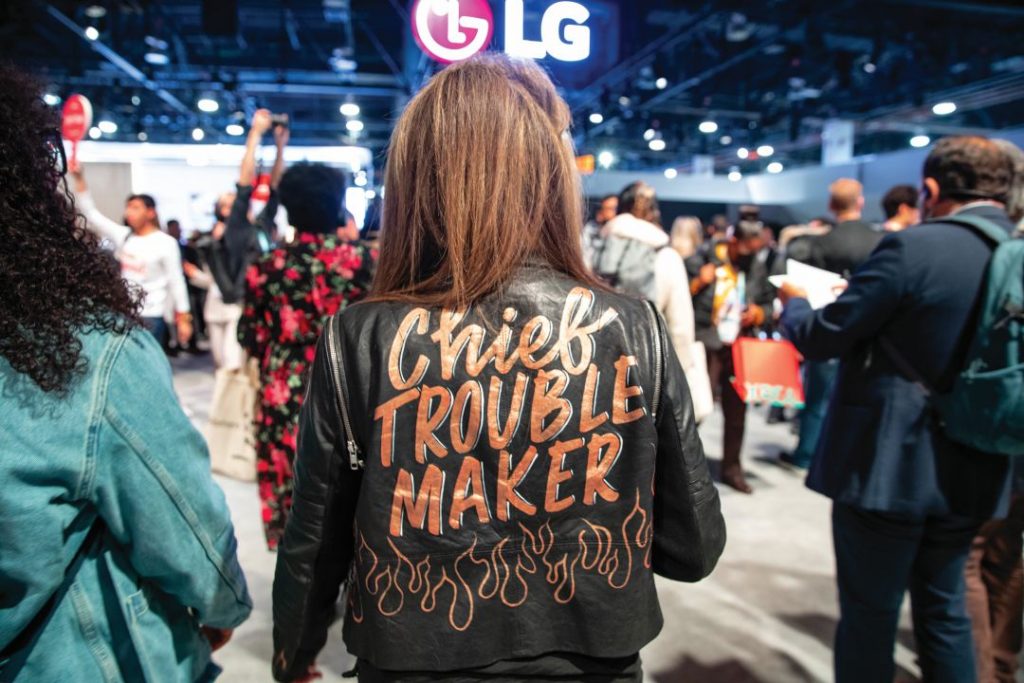
RL: You call yourself the chief troublemaker. What is your favorite kind of trouble?
Zalis: I break the rules. Old patterns need to be broken to change the equation and close the gender gap. I left the traditional workplace because the rules didn’t work for me; I was tired of being the exception. I believe that if you create rules that work for the exceptions, they’ll work for everyone. Lived experience is key to understanding how to create these rules — it’s not in a textbook. I disrupt norms, challenge patterns, and set new standards so we can all thrive at home and work. It’s not about causing trouble; it’s about creating progress.
RL: Looking back, is there anything you’d do differently? Any advice you’d give to others?
Zalis: Follow your heart. I am 62, and I actually think I’m at the best part of my life — I really do. This is such a great chapter. Every chapter is a new chapter. I don’t think that 60 is the new 40, or whatever people say. 60 is 60. I think I’m better than I’ve ever been. Be ageless. Live life with no regrets. Age is a mindset. Live at the moment. I’m bold and getting bolder.
I want to look back and know I tried everything I believed in. My advice is simple: Take risks. Don’t let fear of failure hold you back. Every movement I’ve started came from a risk I was willing to take. Age is just a mindset. Whether you’re 20 or 60, it’s about having the courage to follow your heart and pursue what matters most. The best is yet to come.
As the CEO of Phlow Corp., one of the first U.S.-based pharmaceutical manufacturers to earn B Corporation™ certification, I’ve seen firsthand that servant leadership isn’t just essential for the pharmaceutical sector — it’s a transformative model that can elevate any industry. In today’s interconnected and unpredictable world, leadership isn’t measured by profit alone but by the ability to protect and uplift the lives of those we serve. In our business, this means not only saving lives but also having the courage to focus on tough challenges with new business models that move beyond the status quo. Leaders can tap into a servant leadership mindset in any industry when we go about our work with the goal of pursuing a higher purpose — one that strengthens communities, fosters innovation, and fuels sustainable growth.
1. Lead with Purpose, Not Just Profit
At Phlow our B Corp certification reinforces our belief that business can be used as a force for good. The public good Phlow is creating is measured by our ability to improve access to and availability of domestically produced, high-quality pharmaceuticals and active pharmaceutical ingredients through advanced manufacturing and environmentally friendly manufacturing processes. This includes focusing on our most vulnerable patient populations. For example, we built one of the nation’s leading coalition of children’s hospitals focused on solving pediatric drug shortages and working to supply medicines that most of our industry had left behind due to the lack of economic incentives. Regardless of the industry, leading with purpose ensures your organization thrives while improving lives. In our case, it’s about something even more fundamental: ensuring the health of our nation by reshoring the production of life-saving medicines and ensuring they are made affordably and reliably.
2. Serve First, Lead Second
Servant leadership reverses the traditional power dynamic, putting the needs of others above personal gain. Whether I’m in the boardroom or on the frontlines as a doctor and volunteer paramedic — a role I’ve held for over two decades — I’ve learned that true leadership is about empowering those around you. By taking bold steps to focus on your team’s growth and well-being, you create a ripple effect that drives innovation and success throughout the organization. Across industries, the leader’s role is to serve first, enabling others to achieve more than they thought possible.
3. Build Resilient, Transparent Systems
Resilience is essential. At Phlow, we’re reimagining the domestic production of critical medicines — including how they are protected for a future public health emergency — by building and operationalizing America’s first Strategic Active Pharmaceutical Ingredient Reserve — a stockpile of critical medicine ingredients that can be deployed during a future public health emergency. Whether you’re managing a global supply chain or a small team, transparency and resilience are foundational to success. In a world constantly facing disruption, leaders must boldly design systems that can withstand crises, mitigate risk, and ensure continuity for the communities they serve. At Phlow, this isn’t just about business — it’s a matter of national security and ensuring the medicines America depends on are always available, especially in times of crisis.
4. Innovate with Impact
Innovation isn’t just about developing new technologies or products — it’s about addressing urgent problems with a focus on people. For us, we have been focusing on leveraging advanced pharmaceutical development approaches, including cutting-edge, continuous-flow chemistry to make pharmaceutical manufacturing more efficient and sustainable. The true value of innovation lies in how it impacts people’s lives. Leaders in every industry can create lasting change by centering their innovations around improving the human condition.
5. Never Stop Mentoring and Empowering Future Leaders
A leader’s legacy is measured by the people they inspire. Whether at Phlow or through my work volunteering on medical mission trips or training paramedics at my local rescue squad, I view leadership as an opportunity to mentor and empower the next generation. Across all industries, it’s crucial to foster a culture where employees are not only valued but nurtured to become leaders themselves. By boldly investing in the growth of others, you create an ecosystem of innovation and responsibility that endures well beyond your own tenure. As leaders, our missions should extend beyond our walls by developing future leaders and critical thinkers.
The Path Forward
In today’s ever-changing world, consider focusing on more than achieving success. Focus on significance and leaving behind a legacy of meaningful, positive impact. For those who seek to transform and are restless about finding a way to make a difference, serving others is the way forward — whether you’re serving your team, your community, or your nation.