Ziqitza Healthcare Limited

Ranking: 34

Industry: Emergency Medical Services

Mission: A professional ambulance and medical emergency service provider in India, addressing the country’s healthcare gap. They care for all, regardless of their income bracket, and aim to create a leading network of fully equipped ambulances across the developing world. Have grown into a fleet of 3,022 ambulances with 10,000 employees across 18 states in the country.

What 3 words best describe your company culture?

Ethical, Transparent, Socially Responsible

What quote best exemplifies your company?

“Saving a life is one of the most rewarding experiences a person can undergo in his/her lifetime.” — Mahatma Gandhi

How is your product or service having a positive social and/or environmental impact?

In 2005, Ziqitza Health Care Limited (Ziqitza Health Care) was founded by Shaffi Mather, Manish Sacheti, Ravi Krishna, Naresh Jain, Sweta Mangal — a group of young professionals — as a result of two contrasting personal experiences.

Late one fateful night in India, Shaffi Mather’s mother choked in her sleep and had breathing problems. Faced with the uncertainty of what to do, which number to call, and whom to rely on for assistance, the family felt helpless and chose to drive her to the hospital themselves. Just a few days later, Ravi Krishna’s mother collapsed in Manhattan, New York, USA, and within minutes, 911 arrived, provided medical aid and his mother survived.

The founders realized that the difference in both scenarios was the availability and accessibility of standardised emergency medical services provided. Every life matters and every second counts in saving a life. We believe that countless lives can be saved and numerous casualties minimised, with adequate and quick transportation facilities.

ZHL recognized the need of organized and professional ambulance providers in the country, and thus began the journey to create the best emergency response service in India that would be on par with 911 in the U.S. and 999 in the U.K. They realized the urgency of an organized and networked ambulance service required for saving those lives that would have been otherwise lost, for want of timely medical attention.

While EMS services are extremely well developed in countries like United States, they were severely lacking in India till early 2000. Despite other developments in the healthcare sector, India had yet to establish a single, comprehensive EMS system that could be accessed by all. The existing system was fragmented and did not meet the acute demand. The main providers of ambulance services were private ambulance owners, hospitals, NGOs, and government agencies. Some services were free, while others were not.

There was no service that covered the entire city, and most ambulances had little or no medical equipment—they were largely stripped down delivery vans. Victims often arrived at the hospital in the back of an auto rickshaw, in a family member’s car, or even in the bed of a delivery truck. There was no ambulance service that covered the entire city, much less one that could be reached 24 hours a day at an easy-to-remember phone number similar to the 911 system in the U.S. The founders of ZHL were also very clear that the service should be accessible and affordable to all sections of the society without burdening those who did not have the capability to pay for the same.

This made them realize that there was no ambulance service in India that covered the entire city that could be reached 24 hours a day at an easy-to-remember phone number similar to the 911 system in the U.S.

It is a universally accepted fact that a patient who receives basic care and is transported tothe closest healthcare facility within 15-20 minutes of a severe injury has the greatest chance of survival. Emergency Medical Services (EMS) is a critical element of any healthcare system as it has the potential to save countless lives by providing immediate care. The state of emergency care, however, varies radically from developed countries to developing countries.

There is a high demand for quality ambulance services in India. India is very disaster prone; almost 57% of India’s land mass is vulnerable to earthquakes, 68% to drought, 8% to cyclones, and 12% to floods. Additionally, the ratio of traffic accidents per 1000 vehicles is 21.3 times higher than the world average. 30% of accident victims in India die due to delays in transportation to medical facilities

The existing system is terribly fragmented and does not meet demand. The main providers of ambulance services are private ambulance owners, hospitals, NGOs, and government agencies. Some services are free, while others are not. These ambulances are often unavailable on a regular basis, are in poor condition and do not have appropriate medical equipment or trained paramedics, and the time taken to arrive at a patient’s location is lengthy. Regardless, most people in India do not use ambulances for medical emergencies The statistics collected show why ambulances are typically not called for in India.

Three key reasons demand the need for high quality emergency healthcare in India:

  1. Highest disaster and health accident prone areas in the world are in India
  2. High road traffic accident ratio and poor road infrastructure
  3. No established high quality emergency service in India

The solution of the founders to the above questions / issues was to set up and operate the ‘Dial 1298 for Ambulance’ Service as a cross-subsidy fee based business model. Under this model, it uses differential pricing: wealthier customers would pay the full rate for the Ambulance Service while the poor received a heavy discount and free service when required. To generate fixed income to service subsidized calls, 1298 gives external advertising space to corporates on yearly basis. Our corporate partners work with us through branding and awareness opportunities through our highly visible ambulance operations. This innovative pricing and leveraging corporate support has enabled us to make the service financially sustainable and cater to all sections of the society at the same time.

ZHL saw opportunity of partnering government to reach out quality ambulance service across the country, to execute the 108 services. Realising that it limited the opportunities for private organizations to participate in the process, ZHL played a very critical role in getting various states to introduce transparent bidding processes for private ambulance providers to bid for these PPPs in ambulance services. In 2009, ZHL won the 1st ever tendered out ambulance service in India (for Patna), bringing about a sequential change in other states also.

Keeping these factors in mind in 2005 and based on personal experiences of the founders the company was formed as Ziqitza Healthcare Limited. Our organization’s vision is to be the leading Ambulance Service provider in the developing world by assisting in saving human lives by providing a leading network of fully equipped Advanced and Basic Life Support Ambulances across the developing work.

We intent doing so, firstly, by adhering to our core values of being ethical, transparent and fostering teamwork within our organization. Secondly, in our road to realize our vision, we want to make sure that we meet international standards for quality in Emergency Medical Services, be accessible to all people irrespective of income and to be financially sustainable. At ZHL, emphasis on technology has been an important driver for improved service levels and quality of treatment during transit in emergency situations. Early technology adoption has helped ZHL with better management of our ambulance movements. During the very early stages the gap in existing training standards for the paramedics was very evident therefore to bridge this extensive emphasis is laid on skill training of the staff.

Today ZHL is operating more than 3300 ambulances across 16 states in India and has served more than people since inception. In last 15 years have created multiple service solutions that are tailor-made with quality standards benchmarked to international EMS. The focus has always been ensuring efficient transfers to trauma cenrtes by trained pre-hospital care professionals to save as many valuable lives. To this end, Ziqitza created different medical emergency response solutions, each serving the needs of very specific segments of customers and income class in India:

  1. Corporate EMS Wellness: Targeted at hospitals, corporates and manufacturing facilities, Special Economic Zones, Corporate Parks, Events, Sports Facilities, Public Gatherings and many more. Staffed with trained paramedics and drivers to manage day-to-day fleet operations with both Basic Life Support (BLS) ambulances and Advanced Life Support (ALS) ambulances
  2. Cross-Subsidized Subscription Model: A subscription based model that guarantees ambulance services at one’s doorstep, and one pays what they can afford. By charging more from the affluent, ZHL was able to provide the same quality service to those who came from less affluent strata.
  3. Public-Private-Partnership (PPP) Model: ZHL engaged with State Governments under the PPP model, making quality and standardized EMS accessible even in the remote corners of the country. ZHL is also working closely with the government to move towards a single EMS number, and has partnered with state governments of Madhya Pradesh, Jharkhand, Orissa and Punjab and the National Health Mission (NHM) to operate the 108 helpline for medical emergency services for the general public.

Industry Firsts by Ziqitza: The impact has been tremendous in area of EMS as an effort of ZHL like:

  • First company to launch GPS tracking of ambulances in India in the year 2005 with an aim to reduce response time.
  • First company to launch First Responder Programme (FRPs) to generate awareness and impart life-saving skills. 3,40,000 people have been trained till date.
  • First Indian ambulance service to partner with the London Ambulance Service and the New York Presbyterian-EMS for knowledge sharing.
  • Opened doors for Transparent tendering for PPP for EMS.
  • Had Created an innovative model under cross subsidy that makes world class ambulance service accessible and affordable to all sections of the society In this way, what started as a social initiative has become a highly successful business model, which is going the extra mile to ensure every life counts.
  • Saved 2,76,70,269 number of lives.
  • ZHL has a fleet of 3025 ambulances.
  • 10,000 employees across the country.
  • Served over 24 million people till date.

ZHL has been cited as a case study for its social impact in reputable educational institutions like Stanford, Columbia and Yale.

What is your company’s vision for the future?

Be the leading Pre-Hospital Service Provider of the developing world. To assist in saving human lives by providing a leading network of fully equipped Advanced & Basic Life Support Ambulances across the developing world.
Back to the full list

Imajine That

Ranking: 112

Industry: Education

Mission: A supplemental education program offering before and after school programs for children and professional development for adult educators. They inspire humans through playful imaginative exploration by bringing them closer to their true nature of love, one family, one community, and one planet. Cultivating the curious child within us all.

Back to the full list

Green Standards

Ranking: 58

Industry: Environmental Services

Mission: Sustainably manages the resale, recycling, and donation of corporate office furniture and equipment. They aim to help corporations and organizations recover value, benefit communities, and divert waste. Have thus far diverted over 73,000 tons of furniture, offsetting more than 183,000 metric tons of carbon emissions. 

What 3 words best describe your company culture?

People, Planet, Profit

What quote best exemplifies your company?

“Every step towards a circular economy counts. To achieve zero-waste, to extract the full value out of our products at their end-of-life, we need to see waste as the dynamic opportunity it is.” — Richard Beaumont, CEO of Green Standards Ltd.

How is your product or service having a positive social and/or environmental impact?

Background: Inspired by the circular economy, Green Standards (GSL) was founded in 2009 to solve the growing problem of office furniture waste. Green Standards has developed an industry-leading, managed program of office furniture donation, resale, and recycling, making it simple and cost-effective to clear out workspaces and enable our clients to do more good. To date, Green Standards has diverted 70,000+ tons of workplace furniture and equipment from landfill (a 98.6% diversion rate) and generated over $30M of in-kind donations to 5,000+ non-profits and communities across North America.

Now working with 22 of the Fortune100 companies, Green Standards has managed workplace decommission efforts on several of the largest corporate real estate portfolio modernizations/refreshes in history – often to the order of millions of sqft and tens of thousands of employees’ worth of furniture and equipment.

Our unique service gives corporations the ability to turn a conventionally wasteful process into something that actually drives value for their business, by helping them achieve their various CSR reporting mandates.

Initiative: By combining donation, resale, and recycling strategies with turnkey project management, Green Standards maximizes asset recovery, streamlines community donation, and virtually eliminates waste on corporate projects. It’s this innovative approach that generated value for businesses, local communities and the environment.

As pioneers of sustainable workplace decommissioning, GSL manages more than 10M sqft of projects annually and has forced would-be competitors to evolve their service offerings to catch up. Green Standards’ leadership and influence have led to a notable shift in the language and requirements that Fortune-sized companies use when preparing their workplace decom RFPs; “conventional disposal” is simply no longer the status quo – our solution is.

What is your company’s vision for the future?

Where conventional solutions like liquidation produce an alarming amount of waste, we generate value for businesses, local communities, and the environment, demonstrating industry innovation, leadership and social responsibility through our program. When we started, this was a service that people hadn’t even conceived of as an option. Fast-forward ten years, and we’re increasingly seeing Fortune-sized clients expecting a service like ours that can be employed across their portfolio. This is a testament to changing times, but also to how our work has influenced the industry. For many organizations, their real estate footprint is the largest component of their environmental impact. EPA estimates that 8.5M tons of FF&E are sent to landfill each year in the US alone, costing Americans up to $750M spent annually on landfill tipping fees. We discovered a niche and need within an industry and are set out to disrupt the current landscape keeping sustainability at the forefront. In the next 3-5 years we’ll be expanding to provide our services overseas in Europe, South America, and Asia as we have found our client partners are looking for a global solution to their furniture waste.

Back to the full list

Miyoko’s Creamery

Ranking: 36

Industry: Food Production

Mission: An American food producer revolutionizing the dairy industry by combining proprietary technology with age-old creamery methods to craft cheese and butter from plants. Dedicated to reducing the world’s consumption of animal products by making a Phenomenally Vegan lifestyle accessible to everyone. Crafting organic foods with artistry, integrity, and ethics.

What quote best exemplifies your company?

“Miyoko’s Creamery is leading the animal-free transformation of the dairy industry for the urgent salvation of the planet and all living beings. Since its launch just five years ago, Miyoko’s has introduced a wide range of award-winning dairy products 100% made from organic plants, that set a higher standard for taste and quality within the dairy industry, are cruelty free, and are radically better for the environment, producing 98% less greenhouse gases than their animal based counterparts.”

How is your product or service having a positive social and/or environmental impact?

Miyoko’s Creamery is known for its delicious, award-winning cheeses and butters that are healthier, more ethical, better for the environment, and 100% made from organic plants. Miyoko’s is a Certified B Corporation, having completed the rigorous certification process that ensures the company is meeting the highest standards of social and environmental performance, public transparency, and legal accountability. Going a step further in our sustainability efforts, Miyoko’s commissioned a third-party to complete a life-cycle analysis of the environmental impact in the production of our cashew-based line of cheeses, which proved Miyoko’s products are up to 98% lower in GHG emissions than dairy cheese. With innovation and compassion at its core, Miyoko’s developed a line of cheeses made from American-grown crops of legumes and potatoes and is working with domestic501(c)(3) organizations that help farms transition from dairy farming to plant agriculture for human consumption.

Back to the full list

Mentorship: The Toughest Job You Will Ever Love

Mentorship is foundational to business. One-on-one relationships between employees and mentors achieve a host of goals for all involved. CNBC recently reported that 91 percent of workers with career mentors are happy with their jobs.

Employee engagement and satisfaction hinge on mentorship, as does a company’s bottom line. Of course, it is impossible to overstate the role mentorship plays in helping employees and companies weather the ongoing COVID-19 pandemic challenges, including training hurdles, uncertainty, and downright loneliness.

Unfortunately, mentoring relationships are not guaranteed to succeed. Studies show that specific characteristics and strategies lead to success. Mentors that want to lead effectively and invest their time wisely should consider the following:

Seek Personal Synergies

In the business world, a significant amount of time is spent separating the personal from the professional. However, mentorship is one area where that strategy fails.

Personal connection and shared values help mentors and mentees create a relationship based on trust, mutual respect, and reciprocity. Collaborating in an environment of honesty, marked by open communication and constructive dialogue, is what allows a mentee to risk the personal exposure of opening up about her priorities, weaknesses, and fears.

It is possible to establish a good working relationship without a personal connection, as some mentorships are based on professional overlap alone. However, most successful mentorships are built upon a personal and professional synergy that makes communication, trust, and respect natural.

Mentors who seek to establish this level of connection should consider modeling the behavior themselves. Those that show vulnerability inspire the same from those around them. 

Clearly Establish Ground Rules

A mentoring relationship is only as strong as its communication, and the successful exchange of information begins with establishing expectations. This includes agreeing upon the relationship’s scope, the type of assistance provided, and a thorough discussion of boundaries.

As a mentor, your job is to establish your availability, scheduling constraints, preferred methods of communication, and expectations. You should also clearly delineate your role. Will you primarily serve as a teacher, friend, advocate, coach, business development partner, advisor, or a combination of these functions?   

Listen Carefully

Great mentors listen first and advise later. Yes, you are the expert and possess a wealth of knowledge in your field, but mentorship works best when information flows in both directions. Active listening helps mentors assess a mentee’s learning style and sets the stage for you to offer relevant and actionable suggestions.

You will want to ask your mentee to determine his goals, priorities, and roadblocks, as well as strengths, weaknesses, and long-term aspirations. Reconcile your understanding of what your mentee needs with his to create a professional development roadmap. This can be improved further by soliciting feedback from other relevant parties like your trainee’s boss, colleagues, or partners.

By thoroughly engaging your mentee in their development plan, you will devise a meaningful mentorship plan and make room for your mentee to take ownership of their learning and career path. 

Mutually Set and Measure Goals

We know that learning by doing is the most effective way to grow. Therefore, the best mentors offer advice and help their mentees navigate issues until they reach an appropriate solution. This ensures she will have the skills at her disposal to solve similar problems down the line. Your mentee needs to mostly drive her own development as this is what will keep her engaged and give her the skills necessary to meet her future goals. 

However, you can guide this process by clearly establishing what needs to be accomplished between each meeting and then hold your mentee accountable for her progress during check-ins. Additionally, it is wholly appropriate for you to make introductions and open doors. Part of the benefit of mentorship is the networking and relationships both parties bring to the table. 

Of professionals with a business mentor, 97 percent say they are valuable. Yet only 37 percent of professionals are lucky enough to have one. If you are not yet mentoring someone, know that your services are sorely needed.

Acting as a mentor can be incredibly fulfilling. While it requires valuable, limited resources, like time, mentors generally feel that they receive more than they give. Watching someone excel under your tutelage is both motivating and satisfying. As long as you pledge to collaborate with your mentee, respectfully delivering honest feedback, knowledge, advice, and inspiration, you will make the experience just as gratifying for him as it is for you.

Answer 5 Questions, Win A Free Book

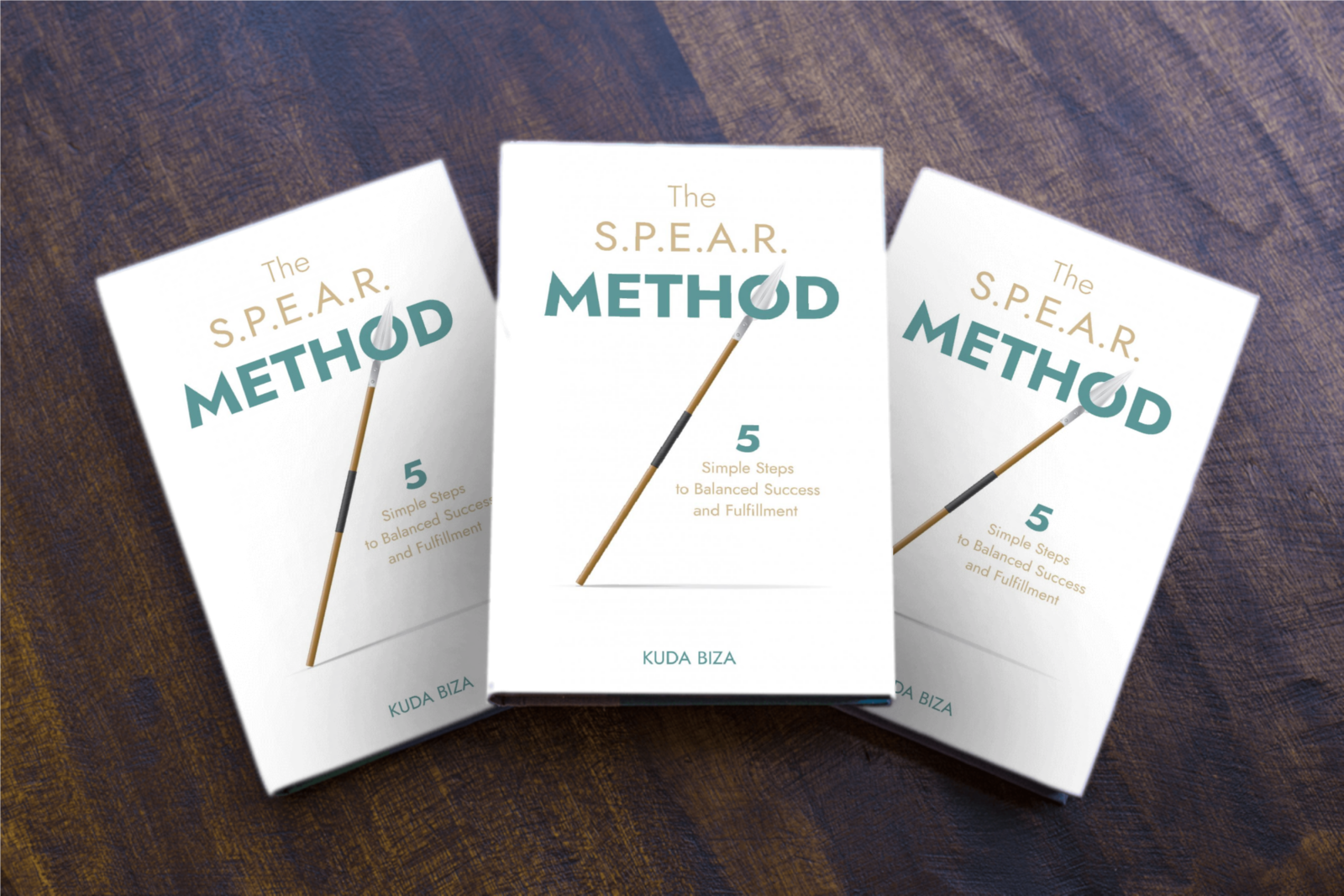
Win The S.P.E.A.R Method: 5 Simple Steps to Balanced Success and Fulfillment by Kuda Biza

Real Leaders Impact Investing Special Edition

To submit a longer, 300 word feature story, please ignore this section and complete the section below.
Ignore the 100 word description above if choosing this option. Describe your companies social impact and please include quotes from your leadership team on leadership, insights and your impact.
I agree to promote the inclusion of my company in this list across my social media platforms(Required)

W.S. Badger

Ranking: 59

Industry: Body Care

Mission: Manufactures and supplies organic and natural skin care products. Family-owned, family-run, and family-friendly, they blend the finest organic ingredients to make the safest, most effective products possible for both people and the planet. They are championing sustainable agriculture and workplace health in a 100% solar-powered facility. 

What 3 words best describe your company culture?

Inclusive. Family Friendly. Caring.

What quote best exemplifies your company?

“Family-run and family-friendly since 1995, we see our business as a vehicle for making positive change in the world. For us, running a healthy business is about how we treat our employees and the impact we have on our community and the planet. Becoming a certified B Corp and NH Benefit Corporation allows us to keep our mission and values close and to do so in a purposeful way.”

How is your product or service having a positive social and/or environmental impact?

We believe that business can be a force for good. And that includes addressing one of humanity’s most widespread and pressing challenges: climate change. At the 2019 United Nations Climate Change Conference (COP25) in Madrid, we joined a group of over 500 other B corporations in committing to Net Zero by 2030. That means reaching a perfect equilibrium with the earth—drawing all of our energy from renewable sources, and releasing zero carbon into the atmosphere. To achieve that goal, we needed to produce enough renewable energy onsite to power all of our manufacturing processes. Solar panels were a perfect choice. They produce enough clean energy for all our operations, eliminating about 636,000 pounds of carbon pollution every year. That’s what we call a brighter future.

What is your company’s vision for the future?

Everything we do, we strive for green. We’re proud to show that a small, rural manufacturer can set a big climate goal and achieve it. That our products aren’t just good for the planet; they’re made by the planet. And with the support of a community, anything is possible, including reaching our goal of NET-ZERO by 2030.

Back to the full list

Looptworks

Ranking: 121

Industry: eco-fashion

Company Mission: An eco-friendly fashion accessory producer that re-purposes and upcycles abandoned, pre-consumer, and post-consumer materials into limited edition products. They are working toward closed-loop solutions in manufacturing and paving the way for zero-waste solutions in retail. They conserve water, reduce carbon emissions, and divert waste from landfills in the process.

Back to the full list

Live Podcast Alia Eyres

Alia Eyres is the CEO of Mother’s Choice, a local Hong Kong charity that provides and promotes loving, nurturing care for babies and children needing permanent homes, and for single girls and their families facing crisis pregnancies.

<iframe width="100%" height="800" frameborder="0" marginheight="0" marginwidth="0" allowtransparency="true" src="https://www.crowdcast.io/e/alia-eyres?navlinks=false&embed=true" style="border: 1px solid #EEE;border-radius:3px" allowfullscreen="true" webkitallowfullscreen="true" mozallowfullscreen="true" allow="microphone; camera;"></iframe><a ng-href="https://www.crowdcast.io/?utm_source=embed&utm_medium=website&utm_campaign=embed" style="color: #aaa; font-family: 'Helvetica', 'Arial', sans-serif;text-decoration: none;display: block;text-align: center;font-size: 13px;padding: 5px 0">powered by Crowdcast</a>

Coronavirus Tips: Basic Protective Measures Against the New COVID-19 Pandemic

Coronavirus, or COVID-19, is still affecting mostly people in China with some outbreaks in other countries. Most people who become infected experience mild illness and recover, but it can be more severe for others. Take care of your health and protect others by doing the following, as advised by the World Health Organization (WHO):

Wash your hands frequently

Regularly and thoroughly clean your hands with an alcohol-based hand rub or wash them with soap and water.

Why? Washing your hands with soap and water or using alcohol-based hand rub kills viruses that may be on your hands.

Maintain social distancing

Maintain at least 1 metre (3 feet) distance between yourself and anyone who is coughing or sneezing.

Why? When someone coughs or sneezes they spray small liquid droplets from their nose or mouth which may contain virus. If you are too close, you can breathe in the droplets, including the COVID-19 virus if the person coughing has the disease.

Avoid touching eyes, nose and mouth

Why? Hands touch many surfaces and can pick up viruses. Once contaminated, hands can transfer the virus to your eyes, nose or mouth. From there, the virus can enter your body and can make you sick.

Practice respiratory hygiene

Make sure you, and the people around you, follow good respiratory hygiene. This means covering your mouth and nose with your bent elbow or tissue when you cough or sneeze. Then dispose of the used tissue immediately.

Why? Droplets spread virus. By following good respiratory hygiene you protect the people around you from viruses such as cold, flu and COVID-19.

If you have fever, cough and difficulty breathing, seek medical care early

Stay home if you feel unwell. If you have a fever, cough and difficulty breathing, seek medical attention and call in advance. Follow the directions of your local health authority. 

Why? National and local authorities will have the most up to date information on the coronavirus situation in your area. Calling in advance will allow your health care provider to quickly direct you to the right health facility. This will also protect you and help prevent spread of viruses and other infections.

Stay informed and follow advice given by your healthcare provider

Stay informed on the latest developments about COVID-19. Follow advice given by your healthcare provider, your national and local public health authority or your employer on how to protect yourself and others from COVID-19. If self isolating at home , read up on positive mental health issues that surround the pandemic.

Why? National and local authorities will have the most up to date information on whether COVID-19 is spreading in your area. They are best placed to advise on what people in your area should be doing to protect themselves.

Protection measures for persons who are in or have recently visited (past 14 days) areas where COVID-19 is spreading

  • Follow the guidance outlined above.
  • Stay at home if you begin to feel unwell, even with mild symptoms of coronavirus such as headache and slight runny nose, until you recover. Why? Avoiding contact with others and visits to medical facilities will allow these facilities to operate more effectively and help protect you and others from possible COVID-19 and other viruses.
  • If you develop fever, cough and difficulty breathing, seek medical advice promptly as this may be due to a respiratory infection or other serious condition. Call in advance and tell your provider of any recent travel or contact with travelers. Why? Calling in advance will allow your health care provider to quickly direct you to the right health facility. This will also help to prevent possible spread of COVID-19 and other viruses.

Read more on staying mentally positive during this difficult time.