If Your Food Could Talk, What Would It Tell You?

  • A young parent sees no innovation or healthy alternatives in the depressing baby food market around him.
  • He sees no reason why toddlers shouldn’t eat the same healthy, organic food as their parents.
  • Knowing he’s not alone, he becomes a leader among a nation of parents seeking better nutrition for their kids – in the process taking on established industry giants.
  • Neil Grimmer perfects an organic meal-on-the-go for modern families, with an innovative soft pack that has become an industry standard.
  • Plum Organics generated $93 million in gross sales in 2012 alone, while reducing carbon footprints and growing healthy kids.

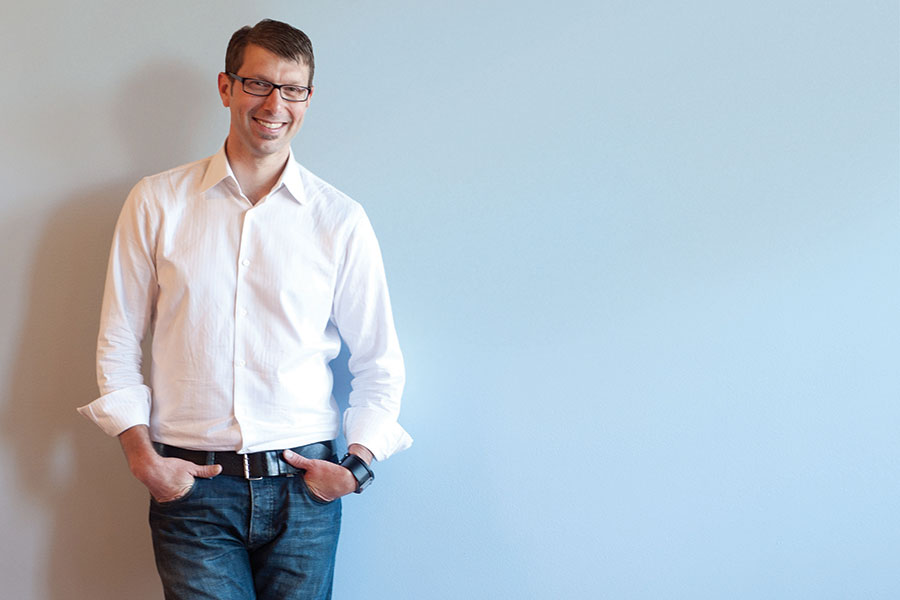
You’re never too young to start eating organic. At least, that’s what Neil Grimmer (pictured above) wants us to believe. For all those kids out there still wearing diapers and looking for healthy food while avoiding poisoning themselves with the synthetic chemicals of most diets, Grimmer has the perfect solution. He’s the cofounder of Plum Organics, the number one organic baby food company in the U.S. (now a unit of Campbell Soup Company) that has launched a range of meals to help remedy the situation; at the same time lessening the chance of mum’s having spoons smacked from their hands from force-feeding tasteless meals.

Grimmer is the perfect person to answer the question: “If your food could talk, what would it tell you?” He’s been hard at work since 2007 experimenting with baby food that is both inspirational and highly nutritious. As a working parent, Grimmer and his wife had spent evenings pureeing fresh vegetables for their two young daughters to ensure they could enjoy the same great tasting food they themselves enjoyed. “The jarred baby food at the time was just too bland and lacked any tasteful inspiration,” says Grimmer. Taking the lead, he gathered a small group of parents together and they began to reimagine the baby food category.

The incredible growth of children during the first years of life, and the role of good nutrition in deciding whether kids head towards health or away from it later in life, was a key consideration for Grimmer. He knew that the older a child became the harder it was for them to develop a taste for healthy food. Once the sugar and salt in unhealthy alternatives kick in, it’s very difficult to acquire healthy habits again. He calls the early adoption of this healthy taste preference “Nutritional Intelligence” and considers it no different to any other intelligent choice you’d make for a better life.

Remarkably, the group took on some of the leading global players in the food industry, such as Nestlé, that owns Gerber – a dominant force in the U.S. baby food market. “It was pretty audacious and probably a little naive to imagine that a small group of parents in the San Francisco Bay area could challenge that category,” says Grimmer. Yet after only eight years they have become the number one organic baby food brand in the country.

“At the time I was leading some major food projects for Pepsi and MacDonald’s as part of my role at a major innovation and design firm,” recalls Grimmer. “I was trying to figure out what health and wellness looked like and after my first daughter was born I started experimenting with some of these ideas in our home kitchen.”

Neil with his daughters.

Neil with his daughters.


“I was part of an emerging group of parents that didn’t want to compromise food quality, was very progressive about what we fed our kids and recognized the importance of early childhood nutrition,” says Grimmer. The group didn’t do any market testing; they went purely on the growing trend they saw among parents.

They went beyond organic fruits and vegetables and added culinary-inspired ingredients too, such as kale (wild cabbage), quinoa (a grain superfood) and amaranth (a high-protein seed). Plum Organics is now the largest purchaser of amaranth in the world.

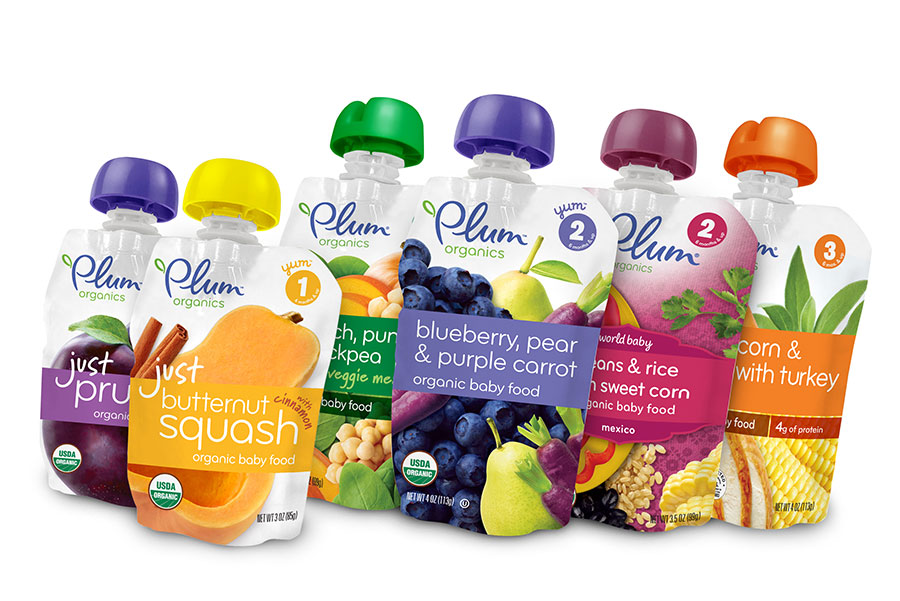
Grimmer’s background in product design played a major role in getting the product liked and noticed. His training had focused on understanding the needs, wants and desires of those he wanted to serve, and then to use those principles to make products. Grimmer leveraged a spouted pouch with a feeding spout and pioneered it for the baby food category, that has now become the industry standard. All that was available at the time was a glass jar with metal lid – the dominant design in baby food of the last 60 years. “Young parents with children are more mobile than ever before,” says Grimmer. “Nutrition that is portable and flexible enough to fit into various carry bags is key.” The design of the spout also tapped into the natural feeding intuition a baby has from breastfeeding.

Neil's innovative packaging design - a soft pack with feeding spout.

Neil’s innovative packaging design – a soft pack with feeding spout.


Initially distributed at Whole Foods, Grimmer was surprised at how quickly the brand grew. But it really took off after he managed to get his most disruptive product into Babies R Us – the aforementioned spouted, soft-pack container. This radically new packaging that was now endorsed by a leading infant retailer created, “organic for the masses,” as Grimmer explains. No longer a niche product, it was seen by consumers as a good mainstream alternative. Pre-acquisition, Plum Organics experienced tremendous growth, generating $93 million in gross sales in 2012 alone.

Most retailers had baby food on their shelves because it was a necessity for parents, but everyone was losing money. Low pricing ruled the day and margins were slim. “Depressed categories are depressing,” says Grimmer. “There was no innovation, no excitement. No one was investing in ideas to come up with a parent-centered or kid-centered solution. Subsequently, the quality of ingredients suffered too.” The fact that there’s a 28 percent price difference between organic baby food brands and conventional brands has not stopped parents from buying it. Grimmer gambled on an assumption that most parents would choose to buy pricier alternatives for the sake of a healthier child, and he was right.

Why is organic good?

  1. It’s better for nature. Organic farming uses fewer pesticides and encourages healthy soil. This builds a stronger natural resistance to pests and disease. This type of farming releases less greenhouse gases, resulting in a reduced carbon footprint.
  1. High animal welfare. Organic means free range. Animals are given plenty of space and fresh air to grow more naturally. Healthier animals mean less drugs and antibiotics. Great for the animals and also your peace of mind.
  1. More natural food. Genetically modified (GM) foods are banned in organic farming, as are hydrogenated fats, artificial pesticides, aspartame, tartrazine and monosodium glutamate. Organic is a more natural choice.
  1. Great tasting food. Organic farmers rely on developing a healthy, fertile soil. This results in crops that are bursting with flavour and taste great too.

Do you eat organic food? What do you think about Neil Grimmer’s view that kid’s should eat organic too? We’d love to hear your thoughts in the comments section below.


Why is Everyone Eating Chia Seeds?

  • An ancient seed used by the Mayans and Aztecs inspires an entrepreneur to develop a new range of beverages and snacks.
  • Janie Hoffman created a demand for her products before customers even knew what chia seeds were, and before she even had a guaranteed supply.
  • The company tagline “Seed Your Soul” wants to demonstrate that money is not the sole aim of a company. Don’t wait until you’re profitable before giving back.
  • Organic food is now mainstream and found in major supermarket chains at affordable prices.

“I’ve got to tell you, the body doesn’t lie,” says Janie Hoffman. The ancient Mayans and Aztecs of Mexico knew this basic fact, and so now does this fast-talking Californian CEO, the Mamma Chia, was formed after she cured herself from a 20-year long battle with an auto-immune disorder that left her with severe muscle weakness and unable to perform basic tasks, such as climbing stairs.

Her love affair with chia seeds started in 2009 on a small farm in rural San Diego, where Hoffman and her husband Lance, started seeing the vitality boost and curing powers of a little seed that had, until then, sat mostly unnoticed on shelves at health shops. Most people wouldn’t even know what to do with chia seeds; it’s not a common ingredient in mainstream recipe books and sounds like one of those passing health fads that overly enthusiastic friends will try and sell you on. As living proof of what the seeds could do, Hoffman began experimenting with recipes. Spurred on by friends and neighbors, who reported huge bursts of vitality, Hoffman developed a range of foods and what became a best-selling chia drink in her kitchen. Now packaged in bright, vibrant colors, Mamma Chia Vitality Beverages can be found worldwide in mainstream supermarkets and natural stores alike.

At Mamma Chia the sustained energy found in chia seeds is just one of the ‘bigger picture’ insights that Hoffman brings to her business. Chia seeds first made their debut to Western audiences in the 2011 New York Times bestseller Born to Run by Christopher McDougall. In the book, the hidden Tarahumara tribe of Mexico and their super athletic endurance races of over 100 miles were documented and chia seeds emerged as a major reason for their stamina. One tablespoon of chia was considered capable of sustaining a warrior for 24 hours. Hoffman decided that sustainable endurance was something she wanted to build into the core of her business plans too.


When she launched Mamma Chia, Hoffman was told she was crazy. Beyond her friends and family she had no idea what a larger audience might think about her products. “I knew that my mission was to bring organic chia to the world,” says Hoffman. ”When I started there were very little to no chia seeds in the world that were certified organic. Many people thought it was completely ridiculous for me to start an organic company without the supply being there, never mind a consumer to buy it.”

She felt that the organic, environmental aspect was essential, but that the social message was important too. “I strongly believe that our bodies and mother earth are far better off without the toxic synthetic pesticides, fertilizers, antibiotics, synthetic hormones, genetic engineering and sewage irrigation that are so common in conventional farming,” she says.

“It was a risk, and you stay hopeful, but I had a vision,” says Hoffman. “We wanted to be the leaders of the chia renaissance while creating a sustainable and conscious organization.” From day one Mamma Chia became a Certified B Corporation and is also a member of 1% for the Planet, an organization that believes business is responsible for positive change on the planet, with members donating one percent of sales to vetted, non-profit partners. “In the food and beverage industry, a donation like that is a big deal,” says Hoffman. “Many companies wait until there’s profit before they start giving back – that’s an old paradigm. Accumulating wealth first and then giving back is so outmoded.” Mamma Chia is also a founding member of Slow Money, an organization that has catalyzed more than $40 million in capital towards local food enterprises and organic farms. By seeking out like-minded people and organizations, and aligning herself with them, Hoffman has expanded her support group and found potential new suppliers, markets and customers.

Hoffman attributes her success to the fact that the company has a higher purpose. “It goes beyond making money,” she explains. “It’s reflected in our mission statement and our core values. We’re continually measuring ourselves against them.” The company tagline ‘Seed Your Soul’ hints at nourishment beyond appetite, and Hoffman’s leadership in this field has not been lost on others. Honest Tea, a subsidiary of Coca Cola, recently signed up for 1% For The Planet and Hoffman hopes that companies like Mamma Chia had a part to play in their decision. “Can large multi-nationals afford to not align themselves with social change anymore?” asks Hoffman.

Chia Seeds

“I don’t just talk about the power of good in business, I talk about the power of business for the highest good. I think that that highest good goes back to honoring both the soul of humanity and the soul of the planet – and I don’t think that’s an airy-fairy statement anymore.”

Yet, how scalable is organic? Are we destined to fight over that last bunch of limited edition, responsibly-picked Peruvian asparagus at a Whole Foods Market? Hoffman is unfazed. “When you have Wal-Mart become the largest purchaser of organic produce in the world, it proves that you can scale organic up to huge levels,” she says. “If we’re going to democratize organics, it has to include large-scale production. There are certainly folks that have proven that it can be done.”

“Continuing to hit producers over the head that use synthetic pesticides, fertilizers and antibiotics is not the way we’ll change,” says Hoffman. “Taste is king and by providing truly delicious products, that also happen to be incredibly nutritious, the market will gradually move in our direction.”

Click here for more interesting facts on the health benefits of chia seeds.


Jessica Alba Talks Business and the Future of The Honest Company

I caught Jessica Alba on the phone just as she was about to jet off to Thailand to shoot a new movie. She explained how hard it was saying goodbye to her two children at home that morning — and then got down to business.

These days the actress has a busy schedule behind the camera, but she’s also focused on the entrepreneurial side of her life — growing her natural, non-toxic family essentials brand, The Honest Company, into an international, multi-faceted lifestyle brand.

Alba co-founded The Honest Company with Brian Lee in 2011 and today it’s valued at $1 billion with over 300 employees. The company announced in August that it’s heading toward an IPO. She’s also learned the realities of becoming a business woman, and it’s not always pretty. The company is currently in a trademark dispute with a competitor, Cosmedicine. Alba has a new partnership with Girls who Code, the organization dedicated to educating young girls in STEM areas.

Last week Alba invited 100 teenage girls to the company’s Santa Monica, Calif., headquarters for an open house and will give 20 of them internships. In our interview, Alba reflected back on her own aspirations as a young girl and business woman. She spoke candidly about challenges she’s faced as an entrepreneur and her big plans for the future. Here are edited excerpts from our conversation:

Why did you decide to partner with Girls who Code?

Well I’ve always been passionate about really anything that has to do with giving women and children better choices and better chances at life and empowering them, whether it’s through education, or products or mentorship. This is a perfect blend of it all. When I was looking at the stats, by 2020 there’s going to be roughly 1.4 million jobs in tech and three jobs for every comp science grad, but only 18 percent of those graduates are going to be women. Also technology has given me an opportunity to be an entrepreneur and to see my dreams come true. I never would have been able to launch the company and had that success without technology. To be able to empower girls with tools and fulfill their personal job [aspirations]; it’s amazing to be able to be in that position.

How did the open house go?

We invited about a 100 girls to come to an open house to check out the office. Then we will choose 20 of them for a seven-week summer intern program in technology. They were so sweet, they were thoughtful and connected and excited about the opportunity and it was just cool to have them here. When you’re in an office environment you don’t often get that type of young energy, a different type of critical thinker. I was a little nervous they weren’t going to like it or think, ‘Oh this is so lame,’ but I think overall they liked it. I don’t come from a traditional business background and our office is pretty unconventional.

What do you mean? What is the office like?

It’s very homey and has a lot of light. It’s warm and it’s not really formal. It has an energy and a lot of talking. There’s a lot of people in one place. It gets a bit chaotic. It just has a lot of energy — we call it organized chaos.

When you were a teen, did you ever think you’d be running your own business today?

It wasn’t out of the question. I’ve always been pretty independent. My mom really encouraged me to not have limitations for what was possible. At their age I had already been acting for a few years and had already taken on a lot of responsibility as a young person. It’s funny to think back to 15, 16, 17 years old and to put myself in their shoes and how I would have perceived this experience.

What do you wish you could go back and tell a younger you?

One of the girls asked me that question. I was so insecure when I was their age, in a weird way, especially with boys and peers. I was insecure about not having a private, traditional education and so many different things I felt funny about. I would just tell myself that I was good enough, as long as I tried to be better, tried to learn, worked hard and I was nice to people, that it would all kind of fall into place. And it did, it took me 30 years to figure that out.

Why do you think more girls need to pursue careers in STEM?

What I found when I started this company and when I went around raising money for it, it’s one of the places that age and gender don’t matter. It’s all about your product and how it performs. Either it works, or it doesn’t. It’s an equal playing ground for them to work in. Also there are just not a lot of women out there creating stuff for women. I think it would be better for all of us if there was just that women’s touch on everything from grocery shopping to clothing shopping to appliance shopping to learning about a new method for putting a baby to sleep. All of these things done through a woman’s perspective would be different than [if it were done] by a man or data analytics company. I did so much when I built this company that came from my gut as a woman, and what just felt right. I found that [to be the case] from talking to a lot of successful entrepreneurs — that’s where they operate from. If girls did that more and were fearless in their choices and had the tools to do it, the world would be better place.

Can you think of an example of a time you followed your gut and it helped the business?

Launching online instead of through traditional retail. I had different business partners and they wanted to go through [a more traditional] retailer. It just didn’t sit right with me. I let that go and started all over again two years into that investment. This is a very innovative way to launch a company and it’s driven success.

What is your long-term goal for the business?

I’m really excited about going international and being a global brand — giving everyone access to beautiful products. I’m also excited about going into more categories. We’re launching feminine care, organic cotton non-toxic, with the first comfort applicator and panty liners that are all really safe absorbent materials. The packaging is very cute, not embarrassing to buy, and you can also have it delivered to your door. We’re also launching an organic food line for infants and young children. So that’s exciting and we’re also working on a beauty skin care line. Every vertical will have its own look and feel styled for that demographic. I’ve been really busy. Launching products is easy — it’s building it, finding the right manufacturers, getting the design right and all of the marketing that is hard.

It sounds like you’re still very involved in the company.

It’s kind of a problem. I’m still a bit of a micromanager. I’m so opinionated, I don’t know I feel like I’m always kind of compromised. I always feel like something’s missing. I try my hardest every day and I find when I go to bed early and wake up early, I feel the most productive.

What’s been the most challenging part of creating The Honest Company?

The unknowns and operationally, the logistics. It’s very difficult, the front-end technology has to match the back-end, which has to match the messaging online [to alert] the warehouse when to pack each box — It has to be precise.

Have you learned a lot about the tech side of things?

I’ve learned a lot of the tech side. I’m certainly not a coder. I wish I knew how to code. I sit with my tech team and go through wire frames. It matters — I care about it, I’m obviously passionate about it and the passion also inspires people who are working here. If I was sitting on my butt not doing anything it would be different, but they see me doing everything from hanging up pictures on the wall to giving them notes on wire frames to packing boxes and throwing them in the parking lot to see if they break with a new bubble wrap.

Do you think your kids will follow your footsteps and become entrepreneurs?

It’s certainly a very energetic and interesting work life. They get to see their mom and their dad — my husband is an entrepreneur as well — they’ve seen both of us have an idea and create something. For them to see what we’ve created — that’s probably pretty cool as a kid. I don’t know if that will inspire them or make them think, ‘No thank you, that’s too much work,’ (laughing). I’m a very creative person and I feel like one of my kids at least will get the creative bug.

What advice do you have for young women starting their careers today?

The only way you can measure your success is by reflecting and seeing what you want out of the experience. And the journey is just as much a part of the success you seek out. You do need to be very real with yourself on results and whether that’s paying off, and if it’s not, move on.

This article originally appeared on Bizwomen


0