Good News: How to Break The Chain of Negative Emotions You May be Feeling

Today the world finds itself in an unprecedented situation. The anxiety, depression, and psychosis triggered by the constant stream of negative news around COVID-19 are now as detrimental to our health as the coronavirus itself. And they are spreading faster than the virus, too, burrowing through our lives until it seems we will never be able to break out of the web of distress in which we feel trapped.

Desperate for information on this deadly virus, we have become hooked on the information feed, waiting for news each day with the same anticipation that we may anticipate a new series on Netflix. Despite the fact that consuming this information leaves us with a restless sense of disappointment, we cannot seem to help ourselves from following a path carved out by our preprogrammed state of mind. 

As a result of all this angst, our immunity gets compromised. Our energy levels slump, and we find ourselves reaching evermore compulsively for that comforting but unhealthy sugary snack or processed food. This is a familiar pattern, a chain reaction when we find ourselves feeling powerless and frustrated, in a situation seemingly beyond their control. 

It’s our state of mind that dictates this chain of reactions. It’s our mindset that governs our everyday actions. There is no other solution: if we want to experience a healthy, harmonious life, we must master our mind and steer these reactions in the way we want them to go. Just like any other part of our body, our brain loves to be trained. You may think your body doesn’t like exercising, but that’s just your mind telling you that you’d rather be comfier sitting on the sofa nibbling, while watching TV, rather than wearing yourself out in the gym. We know how our bodies benefit from physical activity through our own experience of that great buzz of strength and positivity we feel after a run or yoga session. Our mind is no different — it benefits from exercise, too. 

Often the relationship between our mind and body is far from harmonious. It’s not surprising that in this discord, we can lose a sense of who we are. Yet, we are neither our mind nor our body, neither our thoughts nor emotions. We are consciousness — which primes all else. Our mental, physical and emotional lives are subject to our consciousness. Our mind and body are vehicles through which our consciousness can experience all aspects of life.

To shake off a negative chain of reactions, we must first go to the root of the problem. The healing process starts from the moment you realize what you are and that you function by naturally engaging with your body, mind, and emotions. 

We often identify with our bodies, thoughts, and emotions, but they usually just act as tools to interpret our everyday experiences. It’s imperative to be aware of the space between us and these tools. Yes, they are most precious and indispensable, but they are not you; they are a means to experience you. Your body, your thoughts, and your emotions are always just that: “yours,” not “you.” 

If we want to break the cycle of fear and adverse reactions triggered by the current situation, then instead of blaming the news and social media, we instead need to be aware of the process from which these emotions are created. We must be aware of putting emotions in their place and recognizing that we are never at their mercy.

Emotions are not hard-wired into our brains. What we feel and how we react to a situation is determined by our interpretations based on previous experiences and current surrounding contexts. There is no such thing as an emotional circuit wired into our brains from birth. 

We are constantly bombarded by a barrage of sensations as information floods in through our sensors. Like a powerful computer, our brain processes quickly and efficiently. It helps us make sense of the world so we can predict danger and act appropriately. In a way, our brain is always guessing about the future, trying to predict possible outcomes by using the data from our five senses and our previous experiences. It links our physical sensations with our contexts and interprets that linkage as positive or negative. We could say that the brain is continually constructing our future by predicting possible outcomes of the sum of our sensations and contexts. 

Your feelings are the summaries of the sensations in your body. They are like a measuring device, but it is you who labels them as particular emotions. You are fully responsible for framing your sensations as your emotions and storing them as your memories.

For example, depending on the context, a sensation in your stomach could be interpreted as hunger or as fear, as excitement or as anxiety. It’s the same sensation, but the emotions are different. “Anxiety” and “excitement” are just emotional tags you give to a specific physical feeling, and that interpretation, that label, and the context, then determine how you react.

It’s essential to take a step back and observe this process. The interpretations are stored in our minds as memories, contributing to the mass of information the brain has access to when plotting an emotional response or course of action. So, it’s important to pay attention not just to the way you interpret your sensations but also to the way you remember them. Your body does not see the difference between a hypothetical situation or a real memory; it just responds to every thought you have. 

Our brains construct our future experience based on our previous experience. People often reinforce a traumatic experience by repeatedly reliving past emotions as a reaction to their memories rather than in response to what is taking place in the present. This all means that the way we narrativize our sensations determines how we feel or act.

Maybe you always think you are unlucky that nothing good ever happens to you, or perhaps you always look on the bright side. Again, the way you interpret your previous experience influences the narrative of your present. 

Every time we interpret a sensation, we are informed by a storyline underpinning our experience; “I’m going to die…” or “My life is such a mess…” There is always a personal story behind each negative response, based either on our own earlier experience or on our perception of the future. Most of these future narratives are not real; it’s just our mind trying to project possible outcomes to prepare for worst-case scenarios. And when emotional responses become so entrenched, we can begin to think that we will never be able to break the cycle. But with specific training, we can learn how to rewrite our memories and heal our relations with our past. 

Here’s how. When we find ourselves in a situation that prompts us to label a particular sensation as negative, we can pause for a moment, try to sink into the sensation, and remember that no emotions are built into it. Stay with the sensation; do not rush to label it as anxiety or disappointment. Wait to see if it could be excitement over a new opportunity coming your way.

We can choose how to react. We are in the driver’s seat and can steer our emotional reactions. So, when you find yourself swamped by depressing thoughts, or are anxious about what the future holds or even about what tomorrow might bring, remember you have the power to reprogram your thoughts and emotions right now. 

There is no need to reject your sensations. Simply take a moment to be with them and your inner kindness. It’s crucial to start by focusing your attention on yourself. Bring your attention to the “middle line” in your body and let your body recognize the sensations without repudiating, exaggerating, or clinging to them. Whenever you tell yourself that you are nervous or anxious, you are clinging to your experience, reinforcing it by narrativizing it in that particular way. Avoid words like “I’m anxious” and “I’m nervous,” but instead recognize your sensations as feeling uncomfortable. Think about them more as momentary as you breathe in and breathe out, letting the uncomfortableness go. Avoid an identification with it by keeping a space between you and the sensation. Observe it. Look at it as if you are wearing uncomfortable shoes for a special occasion, waiting for the moment when you will be able to take them off and be free and relaxed again. Just breathe.

The first time you try this, you might not manage to change your narrative immediately with a positive outcome, but practice is how you train your mind and doing it daily will eventually put you in charge of every moment of your life. With practice, you can master your ability to redirect your emotions by changing the way you interpret your sensations. You will then be able to move from a negative mindset to a positive and healthy one. Remember that there is no “us” in the past or future. We exist only in the present moment, and our consciousness colors the moment we experience now.

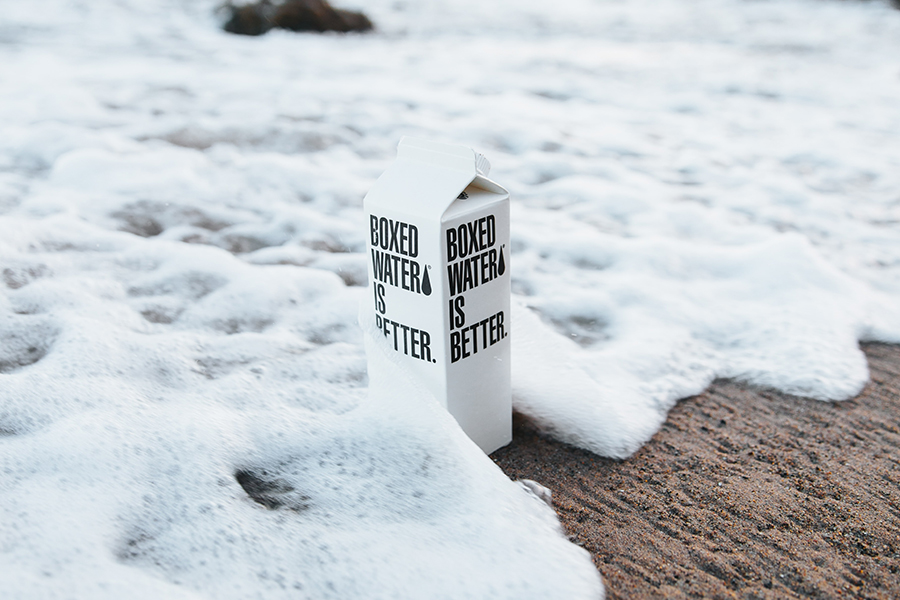
Good News: 10 Ways Water Can Keep You Healthy (Even While Sheltering in Place)

Editors Note: Real Leaders is making its archive of magazines freely available to all visitors to our website as part of our contribution to the Covid-19 pandemic. We believe you’ll emerge stronger and wiser when this crisis passes, and we hope our stories will keep you entertained and inspired while we sit out this challenging time. Sign up here and you’ll be instantly redirected to our archive.

Here’s some guidance from the CDC, USDA, Academy of Nutrition and Dietetics and top-tier experts on proper hydration, and how to avoid becoming dehydrated; even while sheltering in place during a health crisis.

Water. We all need it — and know we need it — for optimum health and wellness, but shockingly few live their daily lives in an adequately hydrated state, and certainly not with any consistency. One doctor-driven report revealed that 75 percent of Americans might suffer from chronic dehydration. It went on to underscore that, “Over time, failure to drink enough water can contribute to a wide array of medical complications, from fatigue, joint pain and weight gain to headaches, ulcers, high blood pressure, and kidney disease.” This is the tip of the proverbial dehydration-induced, illness iceberg.

“During a normal day, we lose about two liters of water just through breathing, sweat, and other bodily functions,” notes board-certified internist Dr. Blanca Lizaola-Mayo. “Even while asleep, we can lose over one kilogram (2.2 pounds) of water-weight not just through sweating, but respiration as well. Even air conditioning has drying effects on our bodies. The health implications of dehydration are vast and can range from mild to severe, including problems with the heart, blood pressure and breathing, headaches, and cognitive issues like concentration, to name a few. Those who’ve felt that ‘afternoon slump’ should know that dehydration is the number one cause of daytime fatigue. And, it’s essential to understand that when we first start to sense thirst, we are already close to two percent dehydrated.”

For all of its importance, proper hydration is a delicate balance to uphold. An Institute of Medicine report cited the fragility of keeping the body duly hydrated, noting, “Over the course of a few hours, body water deficits can occur due to reduced intake or increased water losses from physical activity and environmental (e.g., heat) exposure.” So, a perfectly hydrated body can tip the scales into a dehydrated state in a reasonably short amount of time, whether actively (as with exercising), or passively (as with breathing). 

Understanding there are commonplace facets of our collective lifestyles that put us at a higher risk of developing mild to severe dehydration, here are some insights and tips from preeminent health experts help you stay happily hydrated:

How Much Water Do You Need? 

According to the Academy of Nutrition and Dietetics, “Many factors impact how much water you need, including your age, gender, activity level, and overall health … For women, the amount of total water is about 11.5 cups per day, and for men, about 15.5 cups. These estimates, however, include fluids consumed from both foods and beverages, including water. You typically get about 20 percent of the water you need from the food you eat. Taking that into account, women need about nine cups of fluid per day and men about 12.5 cups to help replenish the amount of water that is lost.”

What Are Common Causes of Dehydration?

According to the Mayo Clinic, “Sometimes dehydration occurs for simple reasons: You don’t drink enough because you’re sick or busy, or because you lack access to safe drinking water when you’re traveling, hiking or camping.” While certainly not all-inclusive, known causes for dehydration can encompass sweating from exercise and playing a sport; air travel; traversing in overly hot, humid, cold or windy weather conditions; drinking too much coffee and other diuretic beverages; recovering from a hangover; and a litany of other relatively commonplace daily activities.

Do All Fluids Hydrate the Body?

No. The Cleveland Clinic is very clear with its advisory that “Some beverages are better than others at preventing dehydration,” and that “alcoholic and caffeinated beverages, such as coffee, teas, and colas, are not recommended for optimal hydration. These fluids tend to pull water from the body and promote dehydration. Fruit juice and fruit drinks may have too many carbohydrates, too little sodium, and may upset the stomach. Adequate hydration will keep your summer activities safer and much more enjoyable.”

What Are Some Benefits of Proper Hydration?

While the benefits of a properly hydrated body are copious, the CDC points to a few top-line health advantages, including keeping your temperature regular; lubricating and cushioning joints, protecting your spinal cord and other sensitive tissues; and getting rid of wastes through urination, perspiration and bowel movements. Healthline also offers several evidence-based health benefits of drinking plenty of water, which include maximizing physical performance, optimized energy levels, and mood, and aiding digestion and elimination. Be mindful of water intake, however, as Dr. Lizaola-Mayo warns, “Drinking too much water, or fluid can lead to hyponatremia, which causes sodium in the cells to become diluted and too low and can be dangerous—and even life-threatening—if untreated.”

What Are Signs of Early or Mild Dehydration?

The Rehydration Project non-profit organization says that “the degree of dehydration is graded according to signs and symptoms that reflect the amount of fluid lost. In the early stages of dehydration, there are no signs or symptoms. Early symptoms are difficult to detect but include dryness of mouth and thirst. As dehydration increases, signs and symptoms develop.” According to the organization, symptoms of early or mild dehydration include the following: flushed face; extreme thirst; consuming more than usual or the inability to drink; dry, warm skin; the inability to pass urine or reduced amounts (dark, yellow); dizziness made worse when standing; weakness; cramping in the arms and legs; crying with few or no tears; sleepiness or irritableness; sickness; headaches; dry mouth or dry tongue with thick saliva.

What Are Signs of Moderate to Severe Dehydration?

The Rehydration Project also denotes that symptoms of moderate to severe dehydration include low blood pressure; fainting; severe muscle contractions in the arms, legs, stomach, and back; convulsions; a bloated stomach; heart failure; sunken fontanelle—soft spot on an infants head; sunken dry eyes with few or no tears; skin loses its firmness and looks wrinkled; lack of elasticity of the skin (when a bit of skin lifted up stays folded and takes a long time to go back to its normal position); rapid and deep breathing (faster than usual); and a quick, weak pulse. They say that “In severe dehydration, these effects become more pronounced and the patient may develop evidence of hypovolemic shock, including diminished consciousness; lack of urine output; cool, moist extremities; a rapid and feeble pulse (the radial pulse may be undetectable); low or undetectable blood pressure; and peripheral cyanosis. Death follows soon if rehydration is not started quickly.”

Who Is At Greatest Risk of Dehydration?

No one is immune to a dehydrated condition, but specific populations are at higher risk. The Mayo Clinic indicates that these vulnerable groups include infants and children, older adults, those with chronic illnesses, and people who work or exercise outside. Serious complications can ensue, which they point out can include heat injury (ranging in severity from mild cramps to heat exhaustion or potentially life-threatening heatstroke); urinary tract infections, kidney stones, and even kidney failure; seizures due to electrolyte imbalance, sometimes with a loss of consciousness; and low blood volume (hypovolemic) shock. They say it’s time to call your doctor if you or a loved one “has had diarrhea for 24 hours or more; is irritable or disoriented and much sleepier or less active than usual; can’t keep down fluids, or has a bloody or black stool.”

How Can You Be a Water-Wise Shopper?

The USDA recommends consumers shop smartly, advising us to “Use the Nutrition Facts label to choose beverages at the grocery store. The food label and ingredients list contain information about added sugars, saturated fat, sodium, and calories to help you make better choices.” There are also highly efficient and economical dehydration avoidance and treatment innovations that can be integrated into one’s lifestyle and used daily. The experts at SOS Hydration explain that their medically-formulated drink-mix powder accelerates hydration equivalent to an I.V. drip, rehydrating the body fully three-times faster than by drinking water alone. This unique product’s heightened hydration process leverages the body’s digestive “sodium/glucose co-transport system”—an Oral Rehydration Therapy (ORT) endorsed by the World Health Organization (WHO) and UNICEF.

Can Foods Help You Stay Hydrated?

Yes, the body intakes hydration not only from water and other liquids but foodstuffs as well—some boasting as much 90 percent water content. According to the Academy of Nutrition and Dietetics, those in the 90-100 percent water content range include fruits like cantaloupe, strawberries, and watermelon, as well as vegetables like lettuce, cabbage, celery, spinach, and cooked squash. The organization further states that options with 70 to 89 percent of water content include fruits like bananas, grapes, oranges, pears and pineapples; vegetables such as carrots, cooked broccoli, and avocados; and dairy products like yogurt, cottage cheese, and ricotta cheese. For drinks, the good folks at EatRight.org advise we focus on unsweetened beverages, like water, to limit calories from added sugars, and to use strategies to increase water intake—like adding a flavor enhancer. For this, a fruit-flavored rehydration accelerant like the SOS Hydration drink mix can do tasty double duty.

Can Sports Drinks Undermine Hydration?

Yes. Why pay extra money for excess sugar when what you need are electrolytes? Dr. Lizaola-Mayo says that “in truth, only a minimal amount of sugar is required to help transport electrolytes and water into the cells as part of the sodium-glucose co-transport system. This system is most effective when it utilizes one molecule of sugar and one molecule of sodium in combination, which helps create the fastest and most effective way to transport water into the cells for hydration. Even water rehydration and other drinks that do claim to utilize the sodium-glucose co-transport system have been shown to contain excess sugar to enhance taste, apparently discounting the fact that that this added sugar commensurately increases calorie count and undermines cellular H2O absorption. If there is excess sugar in a drink, even one engineered as a rehydration solution; then you can trigger reverse osmosis. This process occurs when there is an incorrect balance of sugar to sodium. Sodium always follows sugar, and water always follows sodium. In a correctly balanced drink (utilizing the sodium-glucose co-transport system), the water and electrolytes optimally flow into the cells. In high sugar “rehydration” drinks, there is too much sugar for the quantity of sodium and, as such, sodium and then water is leached from the cells and passed out of the body as urine. This can cause dehydration—the opposite effect for a rehydration or sports beverage one has spent their hard-earned dollars to purchase.”

So whether indoors or out, active or at rest, suffering illness or perfectly healthy, one thing is clear: Keeping your water sources well at hand and ingesting with regularity (and consistency) can have a profoundly beneficial effect on your health and well-being. It’s one easy and highly accessible assist for a multitude of maladies.

Why Our Brain Causes Us to Be Underprepared for Major Disruptions

Editors Note: Real Leaders is making its archive of magazines freely available to all visitors to our website as part of our contribution to the Covid-19 pandemic. We believe you’ll emerge stronger and wiser when this crisis passes, and we hope our stories will keep you entertained and inspired while we sit out this challenging time. Sign up here and you’ll be instantly redirected to our archive.

We suffer from many dangerous judgment errors that researchers in cognitive neuroscience and behavioral economics like myself call them cognitive biases. These mental blindspots result from a combination of our evolutionary background and specific structural features in how our brains are wired

Our brain’s primary way of dealing with threats is the fight-or-flight response. An excellent fit for the kind of intense short-term risks we faced as hunter-gatherers, the fight-or-flight response is terrible at defending us from significant disruptions caused by the slow-moving train wrecks we face in the modern environment, such as the COVID-19 pandemic. 

More specifically, you need to watch out for three cognitive biases. 

  1. The normalcy bias causes our brains to assume things will keep going as they have been – normally – and evaluate the near-term future based on our short-term experience. As a result, we underestimate drastically both the likelihood of a severe disruption occurring and the impact of one if it does happen.
  2. When we make plans, we naturally believe that the future will go according to plan. That wrong-headed mental blindspot, the planning fallacy, results in us not preparing for contingencies and problems, both predictable ones and unknown unknowns.
  3. Last but not least, we suffer from the tendency to prioritize the short term and undercount the importance of medium and long-term outcomes. Known as hyperbolic discounting, this cognitive bias is especially bad for evaluating the potential long-term impacts of the COVID-19 pandemic.

It’s inherently uncomfortable to prepare for the realistic pessimist scenario. That feeling of discomfort is you going against your gut reactions, which is what research shows is needed for you to defeat these mental blind spots in your business and career. Envision a future where COVID-19 isn’t eradicated, but keeps on going and plan accordingly.

Right now, you need to sit down and revise your strategic plans in a way that accounts for the cognitive biases associated with COVID-19. Do the same revision with major project plans

By taking these steps, you’ll protect your business from the way-too-optimistic preparation guidelines of official health organizations and from our deeply inadequate gut reactions in the face of slow-moving train wrecks. 

US Surgeon General: How to Live a Happier, Healthier, and Longer Life

Loneliness is a root cause and contributor to many of the epidemics sweeping the world today, from alcohol and drug addiction to violence, depression, and anxiety. 

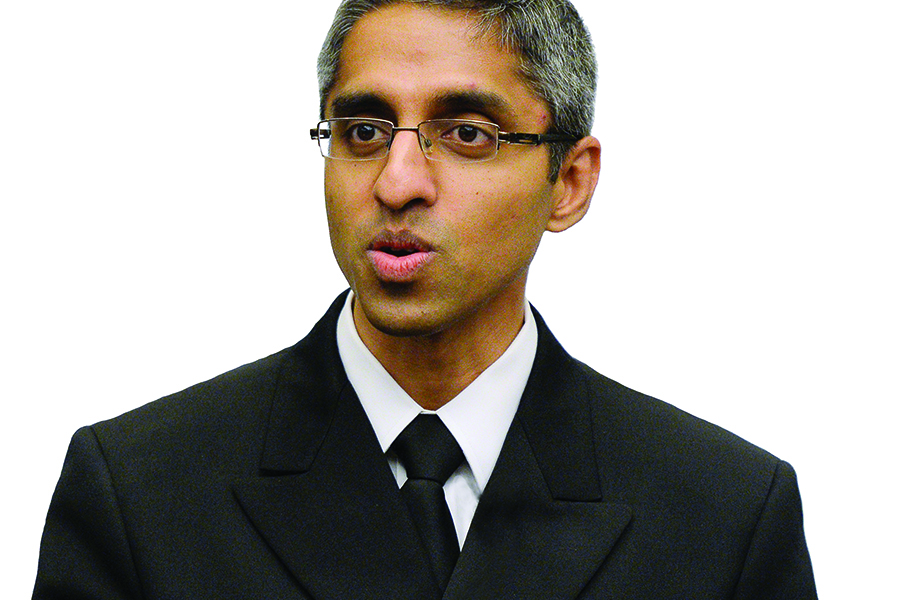
As America’s Doctor, Dr. Vivek Murthy called the nation’s attention to critical public health issues, including the opioid epidemic, e-cigarettes, and emotional health and well-being. He argues that loneliness is affecting not only our health but also how our children experience school, how we perform in the workplace, and the sense of division and polarization in our society. He also discovered that few issues elicited as much enthusiastic interest from both very conservative and very liberal members of Congress, from young and old people, or urban and rural residents alike. Loneliness is something many people have known or have seen in the people around them. It’s a universal condition that affects all of us directly or through the people we love. 

Murthy traveled the country and abroad, meeting with doctors, scientists, children, parents, and community members, looking to the latest science to better understand why people are feeling so disconnected. It’s no surprise that in our increasingly complex world, he found equally complex forces contributing to loneliness. Here are his observations:

When looking at loneliness through the lens of history and biology, we see the human need for social connection is more than a simple feeling or convenience — it’s a biological and social imperative rooted in thousands of years of human evolution. Our ancestors’ default setting was togetherness. Apart from practical reasons such as increased safety and consistent food supply, the benefits from connection include decreases in the body’s stress response. Prosocial behavior, like helping others, leaves people feeling less anxious and more secure. This low-stress state of connection should be our default state. We’re biologically primed not just to feel better together but to feel normal together. Loneliness is a built-in reminder that we are stronger together, not only as clans and tribes or family and friends but also as caring communities forming the foundation of a healthy culture.

But there are challenges to this today, including the sheer pace of change. While humans are built to adapt and evolve, the dizzying speed of innovation makes modern loneliness different than anything previous generations experienced. It’s affecting our health and life spans: Studies show that the impact of inadequate social connection reduces life span and is equal to the risk of smoking 15 cigarettes a day — higher than the risk associated with obesity, excess alcohol consumption, and lack of exercise. Simply put, a lack of social connections can be a significant danger to our health. Add to that, the fact that emotional and physical pain are processed by the brain in very similar ways, and it is clear why people may reach for more powerful and dangerous substances — like opioid painkillers and alcohol — when they experience emotional pain from loneliness. 

“Creating a connected life begins with the decisions we make in our day-to-day lives,” says Murthy. “Do we choose to make time for people? Do we show up as our true selves? Do we seek out others with kindness, recognizing the power
of service to bring us together? This work isn’t always easy. It requires courage. The courage to be vulnerable, to take a chance on others, to believe
in ourselves.” 

This is an excerpt from Dr. Vivek H. Murthy’s new book titled, Together: The Healing Power of Human Connection in a Sometimes
Lonely World.

Keep Going: 10 Ways to Stay Creative in Good Times and Bad

“Tell me to what you pay attention to, and I will tell you who you are.” — José Ortega y Gassett, Spanish philosopher

Your attention is one of the most valuable things you possess, which is why everyone wants to steal it from you. First, you must protect it, and then you must point it in the right direction. As they say in the movies, “Careful where you point that thing!” What you choose to pay attention to is the stuff your life and work will be made of. “My experience is what I agree to attend to,” psychologist William James wrote in 1890. “Only those items which I notice shape my mind.”

We pay attention to the things we care about, but sometimes what we really care about is hidden from us. I keep a daily diary for many reasons, but the main one is that it helps me pay attention to my life. By sitting down every morning and writing about my life, I pay attention to it, and over time, I have a record of what I’ve paid attention to. Many diarists don’t bother rereading their diaries, but I’ve found that rereading doubles the power of a diary because I’m then able to discover my patterns, identify what I care about, and know myself better. 

“For anyone trying to discern what to do with their life: Pay attention to what you pay attention to. That’s pretty much all the info you need.” — Amy Krouse Rosenthal, American author

If art begins with where we point our attention, a life is made out of paying attention to what we pay attention to. Set up a regular time to pay attention to what you’ve paid attention to. Reread your diary. Flip back through your sketchbook. (The cartoonist Kate Beaton once said if she wrote a book about drawing, she’d call it Pay Attention to Your Drawings.) Scroll through your camera roll. Re-watch footage you’ve filmed. Listen to music you’ve recorded. (The musician Arthur Russell used to take long walks around Manhattan, listening to his tapes on his Walkman.) When you have a system for going back through your work, you can better see the bigger picture of what you’ve been up to and what you should do next.

If you want to change your life, change what you pay attention to. “We give things meaning by paying attention to them,” author and editor Jessa Crispin writes, “and so moving your attention from one thing to another can change your future.”

“Attention is the most basic form of love,” says author John Tarrant. When you pay attention to your life, it not only provides you with the material for your art, it also helps you fall in love with your life.

Lessons From the Coronavirus: If You Don’t Tell the Truth, Technology Will

Ask 100 people if they believe in transparency. Every hand will go up. But practicing transparency is another matter.

We seem to have an inborn instinct to conceal the truth when the facts may not smile upon us. In this era of profound interdependency, we need to unlearn that instinct, and we need to do it quickly.

Case in point: COVID-19, the coronavirus crisis. China’s initial reflex was to conceal the outbreak. Bad move. As a result, the world is being systematically tutored in the reality of human mobility, global supply chains, and capital flows. Could the coronavirus have been prevented? Probably not. Could it have been better controlled in the beginning through transparency and collaboration? Absolutely.

The same principle applies to life and business. Be transparent and be transparent early. Overcome the instinct to hide.

Sometimes we’re noble and kind to each other. Sometimes we’re criminally irresponsible. Our track record as a species is, for the most part, a chilling history, a pageant of war, and a chronicle of conquest. We can be benevolent, compassionate, and kind. We can also be, as the Harlem Renaissance poet Langston Hughes put it, “stinkin’, low-down, mean.” Hiding the truth is mean.

It’s time for us to conduct a searching personal and institutional inventory. Why, after thousands of years, are we technologically advanced and yet still sociologically primitive? 

Technology Is Dragging Us to Transparency

The irony is that technology is dragging us to transparency. What we’ve made with our hands is forcing our hand. The era of big data, AI, mixed reality, and sensors are disinfecting the darkness with light.

Perhaps the most significant unintended consequence of the technological revolution is the unanticipated death of the very concept of hiding. There are simply fewer places to go to. You can’t hide a virus. You can’t hide malfunctioning software in commercial aircraft, as we saw in crashes involving Boeing’s 737 MAX. You can’t hide a missile strike, as the world witnessed when two Iranian missiles hit Ukrainian Flight 742. If you don’t confess the truth, technology will eventually confess it for you.

This is a good thing because we could use some help telling the truth.

Truth-Telling in Your Organization

As I work with leaders, I encourage them to foster psychological safety and tolerance for candor in their institutions. I encourage them to abolish the concept of hiding. This is not easy. It requires moral, emotional, and intellectual capacity.

Asking your employees to be transparent—and to scrutinize the status quo—normally injects a degree of conflict, confrontation, creative abrasion, constructive dissent, and chaos. When telling the truth is followed by criticism or punishment, when the intellectual battle turns into interpersonal conflict when fear becomes a motivator, the process collapses, and people go silent. They retreat into personal risk management.

This is a dangerous place to be because the enemy of transparency is arrogance and fear. In a fear-driven environment, we’re prone to conceal mistakes. We try to hide. And then we get stung.

A leader’s most important job—even above creating a vision and setting strategy—is to act in the role of a social architect and give people the respect and permission they need to speak truth to power.

Here are three practical suggestions to cultivate this type of transparency in your organization:

Reward vulnerability. As a leader, you must protect individuals and teams when they are most vulnerable. Ask for specific, honest, and diverse perspectives—and even disagreement—in ways that avoid emotional escalation and destructive social friction. If you reward vulnerability, it will become the norm.

Ask for the bad news. This may seem counterintuitive, but asking for bad news is a way of speeding up the process of identifying areas for correction, experimentation, and even innovation. When there’s bad news, it allows us to challenge the status quo more easily because something is already broken or not working right.

Don’t blame or shame. People make mistakes, and sometimes those mistakes are due to complacency and carelessness. Even in that situation, don’t correct with anger, blame, or shame. Any kind of public ridicule is off-limits. Instead, coach the person to understand his or her mistakes and take responsibility for them. Even candid, corrective feedback can be given respectfully.

The next time your team encounters an organizational coronavirus, overcome the instinct to hide.

Learn more at Leader Factor.

The Coronavirus is Cause For Introspection Not Further Infection

What does it feel like when Earth is temporarily closed for business? In a world of chaos, is getting united via the coronavirus the best we can do?

Here at Synchronistory, our music-inspired, televisionary “B’earthday” Party for the Planet is still a ways off, but the message is clear that the world is always close to a global moment of connection and reflection (thus far, borne of fear).

With abundant ingenuity across the worldwide community, what will it ultimately take to break the tired legacy of connecting through catastrophe rather than creativity?

It’s nobody’s fault. We were all born without a conscious choice or a user manual. It’s nobody’s fault we were born into a dysfunctional global family of orphaned nations hurtling through Infinity on a tiny spit of land called Earth, all hungry for love and a sense of purpose and worth.

The greatest threat to Humankind is the lack of Humankind(ness).

How will we ride this new virus warning light, which is yet another wakeup call in the never-ending bombardment of global challenges that afflict the human mess that seems to define our humanness? There are practical precautions we need to adhere to. However, the greatest threat to Humankind is the lack of Humankind(ness). This is also our greatest immune boost.

Wakeup calls come in waves large and small. And sometimes they come in a musical call; a call that goes viral, such as in the below MusiCall to Action from Viet Nam (“Viet Calm”), which reminds us to stay cool while we’re jittery and fidgety about the insanity of our Humanity.

Let’s steer leadership towards healership. Let’s kick up our heels and dance this virus into low gear. Let’s boogie our way through thls bizarre phase, and boy-oh-bouy our immune system knowing it won’t be the last time we’re reminded how fragile the lines are that both divide and unite us. Let’s use each opportunity as a seedling for Humankind(ness) to go viral.

P.S. Wash those hands while clearing that mind(set).

Why Love is a Word That Doesn’t Scare Great Leaders

Many words make professionals in positions of leadership uncomfortable; accountability, feedback, or coaching. And yet, as distressing as those words may be, there is still one word that they can’t imagine ever using at work — love.

It turns out that this complicated four-letter word is a critical element of effective leadership.  

What I found in my research, that studied more than 40,000 organizational leaders for my book Building the Best, is that those leaders who simultaneously use high levels of love and discipline are the most effective. Leaders who lead like this are using what we call the “elevate” style of leadership. Not only do leaders with this style of leadership get the best results over the long term, but on average, they see a 14 percent increase in employee engagement and an 11 percent decrease in voluntary turnover.

Love and discipline are words that can be ambiguous, so we must be on the same page about what these two words mean in the context of the workplace.

Love (verb): To contribute to someone’s long-term success and well-being.

Discipline (verb): To promote standards for an individual to choose to be at his or her best

While these definitions are easy to read and comprehend, leveraging them in how you lead is not easy. But, if you don’t use love, you won’t connect with people and get their best possible performance. If you don’t use discipline, you aren’t going to get anyone to levels they didn’t think possible. If that weren’t enough, it’s tough to be tough on people, and it’s tough to love people when you don’t feel like loving them.

Words like love and discipline in leadership mean nothing unless they are put to use, because power does not come through knowledge, but rather, through the application of knowledge. This became real when my mentor shared a valuable lesson with me: 

  • Knowledge is Information
  • Understanding is Comprehension 
  • Wisdom is Application

In an age of the Internet, information is readily available to more people than at any time in history. Anyone with an internet connection can find information at little, to no cost. This presentation of information is accompanied by the opportunity to comprehend it. Sometimes we can understand the information on our own; other times; we might need a teacher, instructor, or expert to help us. 

While understanding is an important step, the real test is the ability to apply. Wisdom and application are supreme because there is so much you can understand, but never implement. A dentist who smokes cigarettes, a person with diabetes who chooses to eat sugar, or a music student who can read music but cannot play an instrument. These are all examples of comprehension without application. What you should strive for is gaining a level of wisdom that also creates an ease of application. 

If you are going to leverage love in the workplace properly, it will require a lot of hard work and effort. It isn’t going to happen overnight because leadership is a journey, and not a destination. But like all essential transitions, it starts with choice and habit.  

There is a simple 3-second habit that you can implement to move toward a leader mentality; it’s what I refer to in Building the Best as the “PTS Method” — Prepare to Serve.

Anytime you change your environment, say to yourself, “prepare to serve.”  

When you walk into your house each night; before you open the door, say, “prepare to serve.”

When you walk into the office each day; before you open the door, say, “prepare to serve.”

When you get ready to walk into a team meeting, say to yourself, “prepare to serve.”

The simple habit of transforming your mind to think about others (and serve them) will be reflected in your actions. While there are many skills and competencies to develop around love and leadership, this is the simplest and most effective. 

Opioids: Either America Changes, or we Change America

“A man dies when he refuses to stand up for that which is right. A man dies when he refuses to stand up for justice. A man dies when he refuses to take a stand for that which is true.” — Martin Luther King Jr., March 8, 1965

How we choose to act once we know what’s right reveals our character. Integrity is when our actions match our ideals — when our “insides” match our “outsides.” It’s a spiritual principle that has guided me through the last few years of my recovery from heroin addiction. Now that I know better, I can do better. And as I’ve learned more about the opioid crisis — who’s responsible for it, and who’s standing up to fight — I know what side of history I need to be on.

I was led into activism by the stories of the people I met — ordinary, everyday people whose lives were indelibly changed by addiction. Their voices speak loudly about the injustice of the opioid epidemic. Why are people with substance use disorder treated like second-class citizens? Why are we ignoring the genocide-level deaths that happen every day in every community across our nation? Why has the federal government been so slow to acknowledge the crisis, and even slower to take action? Why do we keep pretending that addiction is someone else’s problem? As I’ve listened, traveled, talked, and learned, the answers are more clear. 

We didn’t ask for these problems. We didn’t create them. But, we are empowered to end them. You, too, are empowered to do this work. You can save lives, just by taking a few simple steps. What looks to us like an insignificant change, as small as a single mustard seed, can grow into something great. As you make these changes and scatter these seeds, you never know what is going to take hold.

For me, it was a Facebook Live video of the Facing Addiction rally in Washington, DC, in 2015. That one-minute clip of people marching on the National Mall, holding signs and openly identifying themselves as being in recovery, changed my life forever. Because of that video, you’re reading this story. If you’re waiting for a sign, this is it. Today is your day. It’s time to rise up. How do we create change? We start with ourselves. Simply building awareness of substance use disorder can have a positive effect. I help raise awareness by putting myself out there, sharing what I’ve been through, and identifying myself as a person in recovery. I’m loud and proud. Although this was intimidating at first, I quickly connected with other people who had been through similar experiences.

I learned that the more I told my story, the less shame I felt. I also didn’t realize how much shame I was carrying until I started shedding it by being vocal. I decided I wasn’t going to hide anything I had been through. I didn’t want to be silent anymore. Telling my story gave me pride in who I am. Instead of weakening me, those experiences are a source of strength. I can express gratitude for what I’ve endured and be thankful for the many people who have helped me on my journey.

Having the courage to say “Yes, addiction affects me” also makes it possible for someone else to say “Me, too.” Telling your story opens the door for the person who is still living in the dark, silenced by stigma, sick and afraid. When we openly admit that our son or daughter is struggling with substance use, we help other people. Talking about substance use disorder the same way we talk about heart disease and breast cancer helps make it feel “normal.” My dream is that one day I’ll walk into a bookstore, and the rack of greeting cards will have a section for recovery anniversaries, right next to birthdays and graduations. 

We don’t need to have the answers; we just need to speak up. We need to share, without fear or shame. Once that barrier is broken, it creates so much freedom! Sharing allows other people to see us, love us, help us. It also gives a new face and a new voice to substance use disorder. Instead of old, harmful stereotypes, we can say, “This is what a person in recovery looks like.” 

Addiction dehumanized us — but we are people, too. Our leaders, and even our neighbors, seem to have forgotten that we are human beings. We are still Americans. We live here, too. We work, raise kids, and vote here. We deserve to be supported, just like anyone else affected by a chronic illness. We deserve that visibility, that respect, and that love. But, we’re not going to get it unless we reach out and demand it. We must rise up.


How to Party With A Purpose This Holiday Season

Two years ago, Box, which helps businesses collaborate and manage content in the cloud, had a revelation about their holiday party. Sure, it was fun to dress up fancy, meet co-workers’ “plus ones,” and consume appetizers and cocktails, but was this really the best use of the company’s resources and their employees’ time? The top executives decided, no.

Instead, Box replaced the champagne and caviar with the Box Global Holiday Impact Day. Last week, at the company’s second annual event, they had 70% of their 2,000 employees (Boxers) volunteer with local organizations. With help from us at Give To Get, Boxers in 38 cities worldwide mobilized to create art therapy kits for veterans, deliver food to people with HIV, build furniture for those rebuilding after a fire, pack winter items for local shelters, create fun activities for kids in the hospital, and more.  

“People were skeptical at the beginning, wondering how we could be taking away the holiday party,” said Christina Louie Dyer, Box.org’s Senior Manager of Global Programs. “Now it’s one of their favorite days of the year.”

“In addition to bringing people together in an organic way”, said Dyer, “it brought the holiday spirit even more into the company. Plus, it’s really great for employee culture and retention.”

Indeed, today’s workers, especially Gen Z and millennials, are not sticking around for work that isn’t meaningful, and replacing them is much more costly than organizing a day of volunteering. Even the Business Roundtable recently made a groundbreaking statement that companies must stand for more than profit in order to survive in this new era of transparency and social responsibility.

If you haven’t already hopped on board the giving-back train, the holidays are a perfect time to start. Here are some of the elements that made Box.com’s party so successful, and what may also work for you:

  • Tie the cause to your company’s larger mission. When looking for a cause to get your team behind, look at your own sustainability report. Whatever you want your people to do, tie it to the larger mission and direction of the company. We are always surprised at this disconnect. Alignment usually unlocks funding, tells a larger story that motivates participation and gets the attention of the C-Suite. If your brand promise connects with your actions, you’ll enjoy consumer loyalty. And tying the cause to your larger mission will keep the event authentic, which your customers will recognize and support.
  • Use the holidays to launch a long-term plan – A year-round commitment to social good is so much more important than one great holiday experience. Yes, people need emergency aid after a hurricane, but mostly they need systemic ways to rebuild their lives. Similarly, all social and environmental causes exist beyond December and need ongoing support to make a difference. A seasonal event is a perfect opportunity to launch initiatives, such as “Dollars for Doers” or time off for volunteering throughout the year.
  • Don’t waste people’s time. Nobody wants to carve out a day to volunteer and then arrive only to stand around with nothing to do. Similarly, those who work at nonprofits aren’t sitting around waiting for 250 people to show up to “help” when there is not a clear task at hand. A successful event takes months to plan, from sign-ups and transportation to food and thank you notes, everything needs to be thought-through and executed well so that nobody’s time is wasted.
  • Take advantage of your employees’ skills. What are your employees passionate about and specifically good at? Find a nonprofit that can benefit from their unique expertise. For example, we work with the marketing agency Digitas, which is filled with creatives. Every year we harness their design prowess by beautifying a different inner-city school in Chicago. Hundreds of people come out to paint murals, update computer labs and art departments and generally take full advantage of the employees’ artistic and technical skills to give these run-down schools a boost of love and beauty. Digitas employees say it’s one of their favorite parts of working at this company.
  • Make it fun. Invest in a good sound system. Buy food and drinks for your team. Seriously, the more fun this event is, the more people will appreciate it and want to do more. Even Box.com, which transformed their holiday party into this amazing day of giving, ended the day with a scaled-back happy hour for people to relax and let loose.  

Times are changing. Business as usual is not enough. Use these holidays to break traditions, fire up your employees, and give back to your communities in a meaningful way. Because purpose is the new way to party!

0