4 Ways to Take Back Control and Avoid Imaginary Success

We’ve all been there: watching TV and admiring the perfect, wealthy family on the screen, who live in a big, white house and grin at the audience with perfect smiles. Or maybe you’re enamored by the business executive in a sleek, red Ferrari driving to his office in a chic downtown business district.

Perhaps you’re scrolling through Instagram, pausing to take in the latest exotic trip from your favorite influencer.

Meanwhile, you’re sitting on your sofa in a semiconscious state, feeling hopeless and a bit angry at yourself. You’ve had a dark realization as you’ve surrounded yourself with other people’s perfect lives: you’re far from living that kind of life.

You feel like your life is going nowhere, at least compared to the extravagant and exciting lives you see on TV and social media. When you get on with your daily activities and confront real life, you start in a negative mental state. Life is unfair. You landed on the wrong side of the fence where there’s no green grass—only dirt.

This type of depression and anxiety is increasing worldwide at unprecedented rates. The World Health Organization estimates that depression, anxiety, and other mental health disorders are the leading causes of illness and disability in adolescents, and adults aren’t far behind. In the U.S. alone, it’s estimated that 1 in 4 adults—a startling 26% of the total adult population—suffer from mental health disorders and depression, according to Johns Hopkins’ latest reports.

What’s happened to us?

Why is it getting more difficult to enjoy life and appreciate all we have?

We need to stop and reexamine how we define success today. If our definition of success is based on other people’s standards, we’re looking at the wrong indicators. When we let others decide what’s best and what success looks like, we’re giving our power away.

But guess what? You have the power to hit reset, rewrite your definition of success, and take back control of your mind. Here are four tips to help you redefine your best life on your terms:

1. Take in and appreciate all that you have.

This world is full of wonders. It doesn’t matter where you live: I can assure you that somewhere close by, there’s a beautiful park, forest, river, field, or majestic tree, just waiting for you to notice its existence. So be grateful for the home you’ve built, the people who care about you, and the food on your table.

Be thankful for everything you have. You’ll generate positive energy that will inevitably bring you more of what you appreciate and desire.

2. Spend more time outside — and less time in front of a screen.

Nowadays, most of our days are spent in front of computers and devices, whether at work, school, or home. The average person spends around seven hours a day looking at a screen. This rate has increased during the pandemic, where even the most basic activities, like shopping for food or consulting with a doctor, are happening online.

However, this shift in behavior isn’t good for our physical health. We’re less exposed to natural light from the environment, and we’re taking in too much blue light from our computers and mobile screens. This affects our sleeping cycles and moods; the predictable cycles of day and night—which our bodies have been used to for hundreds of years—have been severely interrupted by the adoption of LED and artificial lighting. It’s a scientific fact that constant exposure to artificial light leads to an increased risk of breast cancer, metabolic disorders, and psychiatric and mental disorders.

So, commit to getting more hours of natural light exposure. Take long walks during the day. Work outside on a balcony or in a garden. Avoid using computers or mobile devices during the weekends. Respect your natural sleep cycle and synchronize it with the natural light cycles of the earth. Remain active during the daytime, and reduce your activity when it gets dark. Nature will always be our best teacher!

3. Create a vision for your life.

Most people go about their daily lives without being conscious about what they’re doing. What motivates you to wake up every day? Look at yourself in the mirror every morning and ask: “If this is my last day on earth, would I do what I’m about to do today?”

What answer comes to mind?

Dr. Michael Bernard Beckwith, the visionary founder of the Agape International Spiritual Center, was correct when he said, “Pain pushes you until the vision pulls you.”

Find what pulls you during the day. Spend some time daily in introspection. Ask yourself: “What would I love to do or accomplish? How can I make this world a better place? What can I contribute to make it happen?”

The moment you find your vision, you’ll realize there’s no time to lose. You’ll wake up happy and energetic, knowing there’s a cause waiting for you. You won’t have time to waste scrolling through social media or thinking about what others have (and what you don’t).

4. Trust your inner voice.

Experts, gurus, and celebrities are overrated in our society. Yet many of us still listen to what they have to say about what they’ve done and how they did it, and then we try to imitate them.

But more often than not, these people don’t share the whole story. We only get to see the shiny, successful parts of their lives. We don’t see the long hours of effort, the suffering, or the failures. As a result, we have an unrealistic view of how things work, and then we wonder why we keep failing and not getting what we want.

Experts, gurus, and celebrities don’t tell us that success comes from developing your intuition and following your inner voice. It doesn’t come from taking the most-traveled path, but others can follow by blazing a new path.

Listen to your spirit and what you’re meant to do. Consider the life of an oak tree: It starts as a tiny acorn buried in the soil. With no apparent movement within the earth, months pass by, although much activity is happening inside the seed. Finally, after several months, a tiny oak seedling sprouts from the ground. Over the following decades, the young tree becomes a majestic adult, growing over 150 feet tall and living for hundreds of years.

What you decide to plant in your mind and spirit will determine what you’ll become. So listen to your inner voice and, over time, let that voice grow into a majestic being!

Don’t Let Rejection Define You

Can you remember the enduring pain of being ostracized from a social group as a teenager? I certainly can. 

I remember as vividly as if it were yesterday the day that Charles, who I thought was my best friend when I was a senior in high school in Washington, DC, told me that the group of five guys with whom I was planning to create a yearbook page said to him, “I’m just not sure I want to be remembered as being friends with Tony Silard.” 

I retreated into myself after that conversation and stopped making so much effort to be their friends. Instead, I started hanging out with students from Holland, India, and Iran who went to a nearby international school. 

Surprisingly to me at the time, the international students didn’t seem to care about the common labels I had been tagged with at my high school (e.g., “geek” and “nerd”) and were more interested in who I was as a person.  

I managed to cope with the ostracism and use it as fuel for growth and intrigue with other cultures that have become self-defining over the years and have led me to spend about half of my life overseas and marry a Mexican woman. 

Rejection Flies Fast and Furious Online 

Let’s now fast forward a few decades to the digital era: Try to picture the accelerated ostracism young people are currently experiencing at the hands of peers they thought were their friends through the medium of texting, email, or social media.  

If you have trouble forming this picture, consider David Molak, a high school sophomore in San Antonio, Texas. David received relentless text messages from classmates insulting him and his physical appearance.  

He committed suicide on January 4, 2016. His older brother Cliff wrote on Facebook: “I saw the pain in David’s eyes three nights ago as he was added to a group text only to be made fun of and kicked out two minutes later. He stared off into the distance for what seemed like an hour. I could feel his pain.” 

Imagine that after being insulted and told you are nothing and not desired as a friend, you are sitting at home alone like David Molak rather than ensconced in a social milieu of other teens, as I was, some of whom are friendly toward you. 

These small acts of human kindness may be all it takes to provide the buffer you need to move past the toxic emotions associated with feeling ostracized and once again to feel some semblance of self-confidence and inner strength. For this reason, a National Institutes of Health study found that victims of cyberbullying subsequently become more clinically depressed than those of in-person bullying.  

These incidences of cyberbullying most often occur through instant messaging from someone the victim knows—about half the time, from their school.  

I Thought You Were My Friend 

Surprisingly, the bullies are often either former friends or current “frenemies” (friendships in which both affection and aggression coincide). As incidents of bullying are a source of embarrassment for the victim and increased social standing for the bully90 percent of such incidences go unreported

The line between bully and victim can be fainter than you might think. In a sample of sixth graders conducted by UCLA psychologist Jaana Juvonen, 9 percent had been victims of bullying, 7 percent had been bullies, and 6 percent had occupied both roles.  

All of the students who had been exposed to bullying, independent of their role, experienced academic problems and challenges getting along with their classmates.  

While the victims of bullying were the most socially marginalized and emotionally distressed in the sample, the group with the highest levels of academic and behavioral problems, including getting along with others, were those who had acted as both bullies and victims.

These are some of the social costs teenagers are paying for their socialization in the digital era.  

We have to remember that it hasn’t been their choice: we’ve unquestioningly accepted the rise of a few social media companies and the associated consequences for how our children grow up. We must remember that when we point the finger at anyone— including Facebook or Instagram—three fingers are pointed back at ourselves. 

Emerging from Rejection 

While rejection certainly hurts—and bullying can easily add injury to insult—we must keep in mind that both rejection and acceptance are inextricable elements of learning how to develop what I call “CMSRs” (Compassionate, Meaningful, Sustainable Relationships). It’s an idea I have included in my new course Managing Loneliness: How to Develop Meaningful Relationships and Enduring Happiness.  

If we are going to enter the ring of building social relationships—and your ability to survive and thrive in this lifetime requires you to do so—we must learn how to internalize the true meaning of “NO”: “Next Option.” 

When a “friend” offers you a gift of rejection or aggression, don’t accept it. Instead, move on to find other friendships that have the potential to become the CMSRs you need. 

Exploring Otherness Can Create a Stronger Team

I was invited to meet a senior vice president of a tech company, who already ran a highly diverse, multicultural team and had just inherited another. She wanted to find the best way to integrate these disparate team members comprised of the old and new guard, men and women, several religions, various nationalities, and even different geographical offices. As their leader, how could she create a sense of shared identity and direction as soon as possible? How could she better assimilate and connect with the whole team and foster trust? This was my challenge.

The idea for my inclusiveness strategy started after the string of devastating terror attacks in London in 2017. Alongside my visceral reaction to the atrocities, I felt the familiar sense of otherness creeping back. It brought echoes of my high school days when I was at the receiving end of physical and verbal racial abuse — the racist slur “Paki” hurled at me regularly. While mourning the senseless loss of lives, I was simultaneously forced to recognize that my identity as a Muslim — a community being categorized indiscriminately as villains in the global narrative — had begun to overshadow all my other identities.

Given my background and training, I was able to self-introspect and recognize these feelings as connected to identity threat. Part of our self-identity derives from belonging to certain social groups, along with the value and social significance attached to that membership. When a group we belong to does well, we relate that success to ourselves. Belonging to a minority group presents challenges and can cause its members to feel marginalized, disconnected, and deprived of opportunity.

Leaders have to manage and maneuver within a complex melding of self and social identity. Successful leaders must be skilled entrepreneurs of identity, minding their own internal and external responses in the face of perceived identity threat. Social identity theorists propose that powerful leadership and influence greatly depend on leaders and teams sharing a sense of direction and group identity.

Back at the tech company, the first part of my workshop was exploring identity. Social psychologists have outlined how understanding and appreciation of different identities and roles can be crucial to connection and integration. An effective method of producing a safe and playful environment is through the use of art. Drawings can provide access to subconscious material and make it available for exploration to promote openness, learning, and healing.
The second part involves exploring experience via storytelling. Stories are a powerful tool to lower barriers and encourage sharing safely and comfortably, even within professional environments. Our individual narratives often highlight similar experiences and shared emotions such as fear, anxiety, excitement, and hope. Sharing stories can tap into the deeply embedded archetypes in our collective unconscious. This increases empathy, raises tolerance, and ultimately creates a sense of commonality within teams.

Exploring “otherness” is a critical and delicate part of the process, as it necessitates the participants being at their most vulnerable and outing their own sense of otherness. It also involves being honest about occasions when we have treated people like the other.

At this point in the workshop, I shared my own story about the heightened Muslim identity I felt after the London terror attacks. Leading with this personal vulnerability broke the ice. An Irish team member spoke up about the impact of Irish jokes in his London office; a female member recalled walking into a team meeting and finding a flip chart with a sexual drawing; an American Jewish member spoke about hearing an antisemitic joke while traveling; a 37-year-old remembered being part of a team where most people were under 26. The stories themselves were unique yet similar and relatable. The open sharing created an understanding of the impact of subconscious bias and how no one is really safe from it.

The final exercise is more organic. Exploring spontaneity needs a process that is physical, intuitive, or sensory; creating a new space that is meditative, reflective, energetic, and challenging. As the purpose of the tech company workshop was for the team to develop a shared identity and goal, I asked the participants to work together and create a symbol to reflect both their team identity and collective vision.

They debated and collaborated; they agreed and disagreed; they chopped and changed their minds several times. In the end, they created a multi-colored bird with broad wings. This fantastical bird represented their collective ability to take a high-level view of their markets, yet land and target with precision. It celebrated the diversity of the team, their togetherness despite the geographical space between members. They were flying together to reach their performance goals.

There is no question that we are in the midst of seismic times. Professional organizations are now obliged to take action and stop any form of injustice based on gender or color. Diversity and inclusion are now recognized as more than just the injection of minority hires into companies, but as a way of utilizing the unique strengths of a multi-racial, gender-balanced, and interconnected workforce. Ultimately, exploring our otherness can help us discover our sameness.

The Number One Ingredient to Living a Meaningful, Healthy Life

Is there a panacea for living a long, meaningful, healthy life? As it turns out, based on the convergence of numerous studies, there is one factor for long-term wellbeing that consistently stands out above the others. 

Research based on data from three longitudinal studies in the 1920s and 1930s (life events included the Great Depression and World War II) examined why some individuals crumble after adversity while others sustain their wellbeing. Both children and adults who were embedded in strong social networks were more likely to find meaning and purpose in the adversity they experienced than those who did not have such robust social relationships in their lives. 

Also, When the Good Times Roll 

Strong connections are not only needed in adversity but also in good times. A study of 79 dating couples by University of California Santa Barbara social psychologist Shelly Gable found that, when it comes to both relationship wellbeing and dissolution, supportive responses to positive news bear more influence than supportive responses to negative news.  

So you don’t only need healthy relationships to protect you from bad times; they carry even more weight in good times, so you have others with whom to celebrate your successes. 

Perhaps the longest-running study to examine the link between social connection and wellbeing over the life span was launched at Harvard University in 1937. Harvard’s health services director Arlie Bock formed a team of psychologists, psychiatrists, social workers, medical doctors, and anthropologists to conduct the study.  

Bock’s team conducted extensive medical examinations every five years, surveys every other year, and even sent social workers every fifteen years to the homes, first of 238 Harvard sophomores, and then (starting in 1938)—so as not to bias his longitudinal study toward the well-heeled, tweed-jacketed elite—to the homes of 486 eleven-to-sixteen-year-old male adolescents from Boston’s poorest neighborhoods.  

Bock and his colleagues tracked the life outcomes of these men for over seventy-five years. Among the Harvard elite, four participants ran for the US Senate, and one even became president.  

Harvard Medical School psychiatrist George Vaillant took over from Bock and ran the study for over four decades. He discovered that, by their mid-50s, about a third of the participants had become mentally ill. “They were normal when I picked them,” Bock told Vaillant in the 1960s. “It must have been the psychiatrists who screwed them up.” 

Friend It Forward 

Vaillant also discovered that the most critical factor for successful aging for these men in their 70s and 80s was the quality of their social relationships during middle age. When asked in a 2008 interview what he had learned from dedicating over half his life to this longitudinal study, Vaillant replied, “That the only thing that really matters in life are your relationships to other people.” 

The current Harvard Study of Adult Development director, Robert Waldinger, reinforced Vaillant’s primary lesson from the study in a TEDx talk that has over twenty million views

What are the lessons that come from the tens of thousands of pages of information that we’ve generated on these lives? Well, the lessons aren’t about wealth or fame or working harder and harder. The most apparent message from this 75-year study is this: Good relationships keep us happier and healthier. Period. 

Waldinger also learned from over seventy-five years of data that “social connections are really good for us, and that loneliness kills. It turns out that people who are more socially connected to family, to friends, to the community, are happier, they’re physically healthier, and they live longer than people who are less well connected.” 

The primary finding of the Harvard Study of Adult Development comports with one of the most widely agreed-upon findings in happiness research—that one of the most critical contributors to our long-term wellbeing is the social connections we share and the time we spend with family, friends, and people in our community

Get Over Yourself and Revitalize Your Friendships  

So what can you do to start developing what I call “CMSRs” (Compassionate, Meaningful, Sustainable Relationships) in my new course, Managing Loneliness: How to Develop Meaningful Relationships and Enduring Happiness?  

Waldinger offers advice on that, too: 

It might be something as simple as replacing screen time with people time or livening up a stale relationship by doing something new together, long walks or date nights, or reaching out to that family member who you haven’t spoken to in years because those all-too-common family feuds take a terrible toll on the people who hold the grudges. 

In short, get over yourself. Move past the misconception that social overtures symbolize that you need others and are not doing well in your life. Instead, recognize that putting yourself out there and reaching out to someone new or old in your life, even if you’ve gone through some challenges together, is a sign of strength, not weakness.  

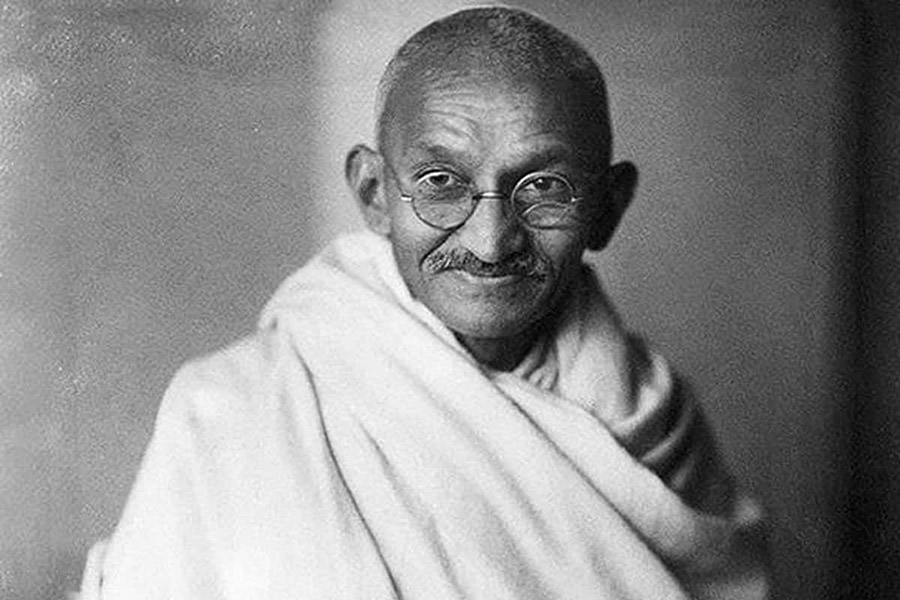
As Gandhi once said, “The weak can never forgive. Forgiveness is the attribute of the strong.” And he had to forgive the British for almost a century of occupation! What you have to forgive to create the relationships you need to survive and thrive is likely much easier and possible. 

Delaware Proclaims New Remembrance Day: International Overdose Awareness Day

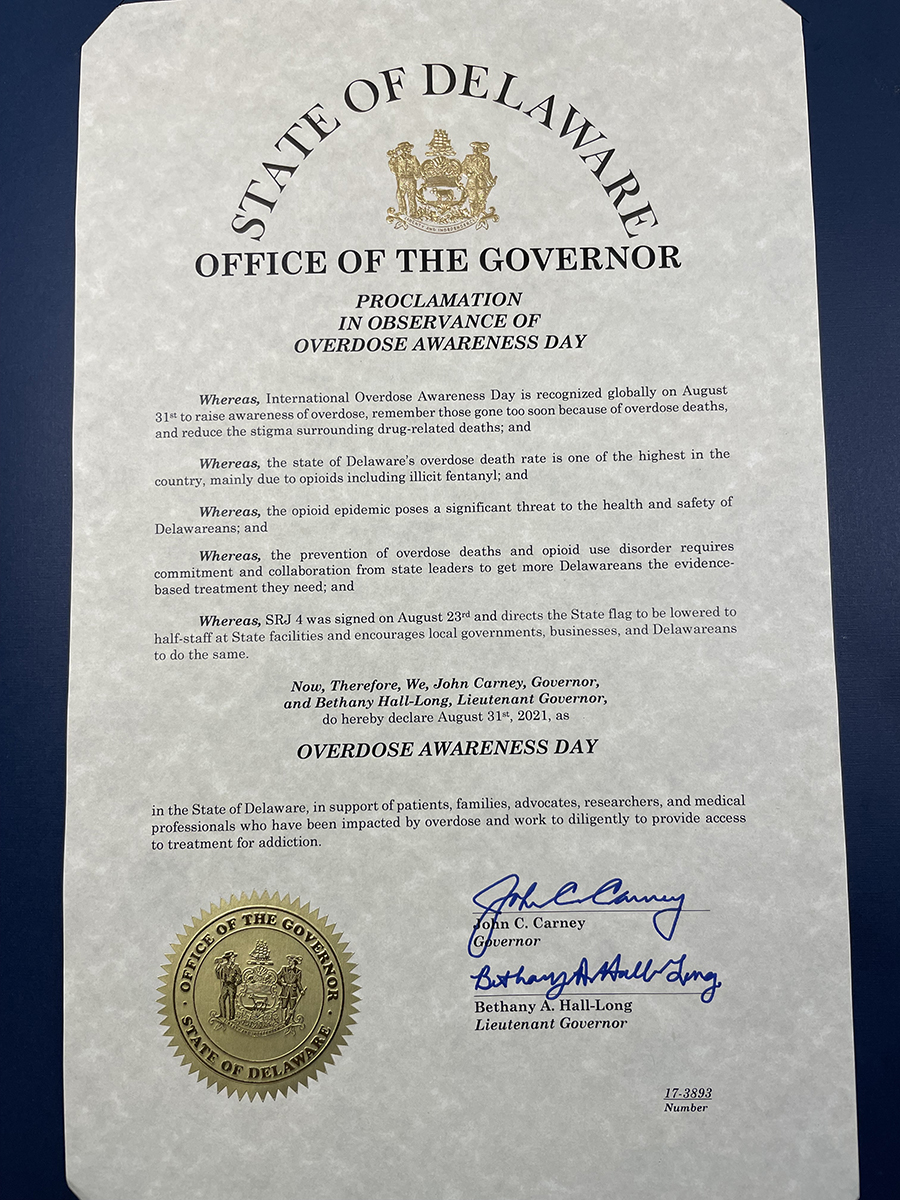
International Overdose Awareness Day symbolizes a global event that acknowledges those lost from the disease known as Substance Use Disorder. It honors the memories of those whose lives have been cut short and recognizes the enormous grief shared by those families left behind.

Delaware has the second-highest rate of overdose deaths in the United States. In addition, North America continues to be ranked the highest in drug-related mortality deaths in the world.

Delaware has passed a Senate Resolution that designates August 31st as “International Overdose Awareness Day” in the state and directs the State flags to be lowered at half staff at all State facilities.

This global event was launched to educate the public regarding the impact of the disease on human life and allows families to mourn in public without embarrassment or stigma. This day also raises awareness of the deadliness of this disease and how it impacts the global economy.

International Overdose Awareness Day is a day I wish I knew nothing about. But, unfortunately, I am one of the hundreds of Delaware parents who have lost my child to this misunderstood disease. My son Matt lost his battle on January 3rd of 2015. There is not a day that goes by that my heart doesn’t hurt knowing that he is gone from this life.

By recognizing August 31st as International Overdose Awareness Day globally and in Delaware, we are sending out a loud and clear message to the grieving families across our world that their loved ones will never be forgotten. We are sending the message that our children’s lives mattered. As we lower the flags on that very bittersweet day, we are setting an example for the world that the stigma surrounding the disease must be replaced with compassion and understanding.

This resolution recognizes the tremendous loss suffered by so many Delaware families. It validates our grief letting parents know that those in power in our state also grieve alongside us and will recognize this day as an opportunity to continue the conversation that could lead to saving the lives of Delawareans.

International Overdose Awareness Day, although it is a bittersweet day, will also be a healing day as those of us grieving our loved ones know we are not alone as we remember and honor the memories of our children.

For my son Matt, and so many others, I am honored to have initiated the acknowledgment of this day and thank both our Senators and House Members for supporting this resolution.

Marybeth Cichocki’s new book “Letters to Matt” bravely voices the ugly side of addiction and the unimaginable pain that results from loss of a child. Her letters also give hope. Through the years, her writing reveals how she found a way to channel her anger and grief into helping others by advocating for change so Matt’s death will have meaning. They also reveal the strength of a mother’s love to overcome anything.

Make it Happen: Start Replacing Screen Time With People Time and Stop Social Media Exploiting Your Loneliness

Imagine you are sitting home alone (not so difficult to imagine these days, considering over 3 in 5 Americans were lonely even before the pandemic) and have some time on your hands. What will you do with your free time? Call a friend? Read a book? If you’re like most people these days, you may be thinking, “I wish, but that’s so passé, oh out-of-touch writer. Why don’t you climb out from the rock you are under and greet the 2020s?”  

Yes, it’s true (sigh) that most of us are choosing Facebook, Instagram, or gaming over playing the guitar, going for a walk with a friend, or belting out some karaoke tunes. Alternatively, we are plopping down on the sofa, grabbing the remote, and…  

Watching the People We Once Were 

It is no coincidence that “reality shows” became popular after the advent of social media. Before the Internet, many would have responded to the concept of a reality TV show with “Why would I want to watch someone like me?” Now we watch because we are not viewing people like ourselves; rather, we are viewing people like who we once were. 

There is now a huge demand to know what’s transpiring in the lives of real, everyday people who interact with others in real time (which reality shows supply) because these real, everyday people are gradually removing themselves from our physical lives—lock, stock, and barrel, but not from our Facebook page. 

Capitalizing on our social isolation, reality shows tend to feature highly social characters with extended families and friendship networks. We want to know what real people are doing, but unlike the characters we binge-watch, craving what they have, we’re not prepared to step away from our screen to walk or drive over to see them. Instead, we follow them virtually on social media and watch them on TV. 

Your Worst Quenches Their Thirst 

Social media has, strangely, created its own demand. By isolating you from your friends, your loneliness becomes greater and you feel more motivated by what the British psychologist Pamela Qualter calls the “reaffiliation motive” to check your social media and see what your friends are doing. 

It doesn’t work. In some ways, social media is like calling the delivery number of a pizza franchise in your neighborhood. The more frequently you order, the fatter and less capable of walking outside to a grocery store or restaurant you become. 

So what do you do? You call the delivery number more often to save yourself from an increasingly challenging walk (to real, face-to-face connection). Perceptively summarizing this phenomenon, the Italian novelist Umberto Eco once wrote

“The Internet is one thing and its opposite. It could remedy the loneliness of many, but it turns out it has multiplied it; the Internet has allowed many to work from home, and that has increased their isolation. And it generates its own remedies to eliminate this isolation — Twitter and Facebook, which end up increasing it.”

Immobilized Without Connection 

By putting you in contact with the many who matter little to you (e.g., former classmates you didn’t even speak with in real time back then, friends of friends who are not friends for a reason), social media diminishes your ability to connect in real time with the few who matter a lot. Again, research identified this paradoxical effect of the Internet. So we know what’s happening, yet seem helpless to change our habits. 

Even worse—and more chilling—a new study has found that the more time you spend on your phone, the less enjoyment you derive from real-time conversations with the people who have truly been there for you in your life. You begin to perceive them, with all of their time-consuming idiosyncrasies, as requiring too much effort. 

Yet you still crave the intimate connection that only real-time interaction produces, which expands your demand for what seems the easiest, most effortless way to tap into it—ironically, the technology that’s stamped it out of your life—social media. 

So, like the pizza chain gleefully delivering delicious, non-nutritious food to your home, social media throws you overboard and then dangles a life preserver in front of your flailing, desperately lonely, sputtering body. You never quite make it back into the boat of human connection, but neither do you have the capability to swim away. 

Make It Happen 

Here is one strategy I can recommend from my new book, Screened In: The Art of Living Free in the Digital Age, to stop touching your phone, on average, over 2.600 times per day, and begin replacing screen time with people time. 

Put the apps you open multiple times daily—including all social media apps—onto your last screen. Decide how many times you want to check these apps weekly and only right swipe to the final screen on those occasions. This single act will make you more conscious of the decisions you make innumerable times every day of your precious life to attempt to connect with others through your phone rather than in person.  

What will happen when the existential angst sets in of not having your electronic comfort object to turn to at every potentially calm moment in your day? You may actually use your phone as … get ready … a phone. You might call some of the people who are or could become part of your social convoy that travels with you through your successes and challenges in life and keeps you in good social, physical, and mental health.  

Give this strategy a try. Once you become accustomed to regulating how often you check your most addictive apps, you will begin to answer the phone and no longer perceive the caller as an irritating obstacle to the pruning of your social media message queue. You will start to replace social media loneliness with real-time connection and derive more enjoyment from this vast, beautiful world out there.  

It’s Been a Tough Year: How to Deal With Traumatized Employees

If your employees are behaving in new and disturbing ways, it might not be stress; it may be trauma. And if so, we can’t expect employees to learn to cope or get over it. Here’s why leaders need to know the difference.

There are many reasons your employees might be suffering the effects of trauma. For the past year, of course, their lives have been disrupted by a pandemic and that has been plenty traumatizing. But even if that feels like old news, there are lots of other potential trauma inducers. Looming layoffs. The death of a coworker. A sexual harassment accusation. A major restructuring.

You get the point.

Trauma can be extremely destructive, not just to individuals but to entire organizations. If the crisis is not “named and claimed” as trauma and managed effectively, it’s sure to linger on in the form of chronic stress and anxiety. And left unspoken and unaddressed, blame, shame, and guilt often permeate the culture of the organization and erode its ability to thrive in the future. 

Only by naming, claiming, and framing trauma can we help people start to heal—and heal the organization along with them.

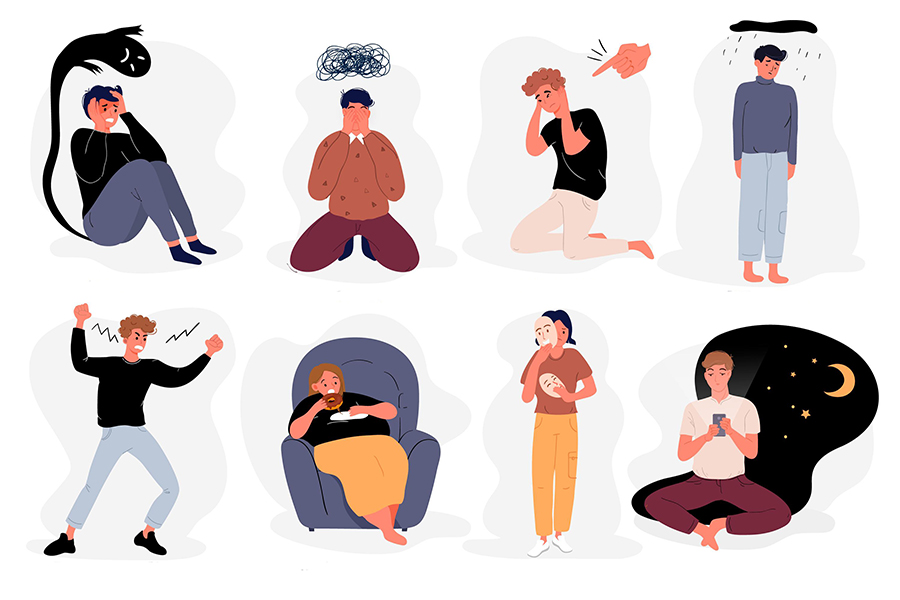
When people are traumatized, they experience the fight/flight/freeze survival response where they feel fear, uncertainty, and panic. Employees (and yes, leaders too) may exhibit these predictable behaviors:

  • Acting angry, aggressive, or “difficult”
  • Resisting change at all costs
  • Rigidly clinging to their “competence zones” and failing to learn new skills
  • Turning to self-destructive behaviors like substance abuse, avoidance behaviors, or overworking
  • Insisting they are “fine” when something is clearly wrong

If your employees are displaying these symptoms of trauma, it is important to recognize the warning signs ASAP. Here’s why:

It signals that someone needs help. Anyone struggling with trauma needs and deserves support and understanding. It’s the leader’s responsibility to intervene and get them the help they need.

It helps you realize people are not resisting change or resisting you. Instead, you understand that they’re holding onto ways of doing things that no longer work as an act of self-preservation. You will realize they’re not trying to be difficult. Rather, they are acting out of fear and uncertainty. When you know people are doing the best they can in bad circumstances, that can quickly defuse your feeling negatively toward them.

…which keeps you from judging or punishing them. Without recognizing trauma for what it is, you may write off unsavory behavior as “Sam’s just crazy” or “Bob has lost his mind.” Or worse, you may let go of a perfectly good employee who simply needs a little support and understanding.

…which allows you to respond in a way that helps employees heal rather than escalating conflicts. Calling out or scolding an employee for normal trauma responses only leads to further resistance and escalation (perhaps on both your parts). Recognizing trauma for what it is helps you circumnavigate this trap and get on a better path, quicker.

…which, in turn strengthens your relationship. All of this can rapidly deescalate conflicts between you and them. Furthermore, when they feel more understood than criticized, they have less need to be self-protective, guarded toward you, and reactive against you. When their defensiveness turns to appreciation for your understanding and compassion, that can make them want to cooperate with you instead of pushing back.

It helps you recognize trauma in yourself. For example, maybe you are lashing out at a colleague. Or maybe you have the urge to retreat to your office and hide. When you know why you are feeling the way you are, you can take a step back, assess, and shift your behavior to a more appropriate one.

It enables you to teach others why they feel the way they feel. Once people become aware of how they show up when they are afraid or insecure, they can start facing and changing undesired behaviors.

Ultimately, you are able to get the focus off of people’s “bad behavior.” This frees you up to start making healthy and productive changes that make life better for everyone. It is amazing how much leaders can accomplish when they do not constantly have to address “problem” employees.

Most importantly, recognizing trauma helps you intervene in time to stop tensions before they boil over. We already know panic is contagious. The sooner you recognize and address trauma, the better off everyone will be.

“When we recognize trauma as something entirely different from stress, it allows us to move away from typical coping skills and resilience-building and address the real problem,” says Dr. Goulston. “This minimizes the time people spend suffering and helps everyone move forward in a productive way.”

How to Overcome Rejection

Whether it’s a friend not returning our call, being broken up with, or being pulled off an important project, each of us has experienced rejection and we are very aware that it hurts. The following personal story can be applied to any leadership role, too.

A series of experiments led by social psychologists Jean Twenge of San Diego State University and Roy Baumeister of Florida State University found that even a brief experience of social rejection can propel someone into a downward spiral that includes feelings of hopelessness, increased aggression, binge eating, and irrational, risky behaviors. 

It sent me into a tailspin a few weeks ago. While my wife was away on a trip for ten days, my four-year-old daughter Chloe and I became very close. Once my wife returned home, in Chloe’s eyes, I all but disappeared.  

This past weekend, we were walking around visiting a nearby town, and on about four or five occasions, I reached out for Chloe’s hand to help her across the street and she pulled away and ran up to my wife and reached out for her hand. 

The proverbial straw that broke the camel’s back emerged a few evenings later when my wife and I were in our children’s room, and my wife lay down with Chloe to tell her a story. Meanwhile, I lay down on the other side of the room with our son, Alexander. After five minutes, as is our custom, my wife and I switched beds.  

“I don’t want you to lie down with me,” Chloe exclaimed, words that pierced my heart. 

“OK, but then don’t ask me to lie down with you when your mommy is away,” I caustically replied. Then I left the room.  

“You are taking it too hard,” my wife said half an hour later. “Sometimes Chloe screams at me or even hits me; it’s not a big deal. Also, you are holding Alexander’s hand more than Chloe’s, and she sees that.” 

“That’s because Chloe pulls away from me sometimes when I reach out for her hand, which Alex never does,” I replied. “Have you ever experienced Chloe pulling her hand away from you and then running up to me to hold my hand?” I asked, knowing the answer. 

“Well, no,” she replied. 

“You just don’t understand what it’s like to be a Dad,” I shared. Then I went up to bed and sulked for a while. 

Later, my wife joined me and suggested that next time, I talk with Chloe about her feelings and ask her a few questions, such as “Are you angry at me?” to help her share what’s going on inside her. 

The next morning, I woke up at five to go to the gym—as much for the self-regulating benefits of exercise as for the physical benefits. In short, exercise helps me regulate challenging emotions and remain sane. Without it, I wouldn’t be able to write this hopefully clear-minded article.  

While on the elliptical machine, I replayed everything that had happened. I realized that I had allowed the sting of rejection to dictate my behavior, resulting in precisely what educator and author Alfie Kohn rails against in his book Unconditional Parenting. In other words, I was setting conditions for my love for Chloe—you never reject me, I will continue to lay down with you and support you. 

Additionally, Chloe was reestablishing her relationship with her mother after their longest time apart in her four-and-a-half years on this planet. Rather than being about gender—many mothers also experience rejection and their children’s preference at times for their father—Chloe was simply reuniting with her primary caretaker and the most important relationship in her life. 

The next morning, when I dropped Chloe at school after joking around with her and Alexander for twenty minutes in the car, she reached out for my head and hugged me, whispering in my ear, “You’re funny, Daddy.” I smiled, and then reminded myself that our relationship will be replete with both acceptance and rejection over the coming years, and I have to make my peace with that. 

Not wanting Chloe to feel any pressure that evening, I figured out a solution. At their bedtime, I walked into her and Alex’s room at bedtime and simply asked: “Who would like me to lie in their bed when I tell the story?” Before Alex could react, Chloe shouted, “Me!” I lay down and she hugged me. Then Alex joined us. It was a highlight in this Dad’s life, a moment to treasure while it lasts. 

How Will We Emerge from the Pandemic? It Depends on How We Process It

While it’s certainly true that no two pandemics are alike, it’s also true that no two emotional responses to a pandemic are alike. Whenever we feel a distressing emotion, there are two primary ways in which we can process it: suppression and reappraisal. Suppression is perhaps not the best named response, as it is impossible to suppress our feelings; we can only suppress how we display our feelings.

If suppression is our go-to response when we experience an uncomfortable emotion, numerous studies have found that we are likely to experience stress, burnout, and isolation from ourselves and others. Reappraisal, which is to reframe your thoughts in response to a challenging situation, is much healthier.

This pandemic has been an extended period of collective trauma — in fact, the most distressing period of our lives — for most of us. The best we can hope for after experiencing trauma is what is called post-traumatic growth. A concept developed in the mid-90s by two University of North Carolina psychologists, Richard Tedeschi and Lawrence Calhoun, post-traumatic growth is the ability to achieve positive life changes after a traumatic event.

Tedeschi and Calhoun have found that the people who experience the most post-traumatic growth are those who also experience the distress of the traumatic situation they have undergone. When we allow ourselves to truly feel our emotions, including trauma, it is from the depth of our suffering that our growth can emerge.

Then, the real question that will determine our potential growth from the largest public health crisis of our lifetimes is whether we will run from our distress or embrace and learn from it.

Easier said than done. How can we confront the challenging emotions — including loneliness, anxiety, trauma, and sadness — we have experienced during this pandemic?

Here is a wonderful strategy I first read about in Susan Piver’s book, The Wisdom of a Broken Heart — you guessed it, after a devastating breakup in my life: Invite your challenging emotions over for dinner.

As you set the table for this feast, you will realize that you cannot invite over a dinner guest you can’t identify. Then, the first step is to say to yourself a few times each day, “I feel….” and see what comes next. Write down these emotions.

Once you have named how you have been feeling, literally imagine that these emotions are guests at your dinner table. Ask each guest, “So, why have you shown up this evening?” and “What are you here to teach me?” Then ask yourself, “What are my deeper values that are emerging from the presence of this emotion?”

Keep in mind that, as Berkeley psychologist Richard Lazarus elaborates, we only feel an emotion when something is important to us. While this characteristic of emotions is well-researched, what is lesser known is that we only experience an emotion when we still have something to learn in relation to the life events in which it is encoded.

This understanding comes not from academic research but from spiritual practices. For example, in her book When Things Fall Apart: Heart Advice for Difficult Times, Buddhist practitioner Pema Chodron sagely remarks that “Nothing ever goes away until it has taught us what we need to know … it just keeps returning with new names, forms, manifestations until we learn whatever it has to teach us about where we are separating ourselves from reality, how we are pulling back instead of opening up, closing down instead of allowing ourselves to experience fully whatever we encounter.”

Why is confronting your emotions important? Enter addiction. All addictions stem from the very human tendency to avoid the experience and subsequent learning associated with a challenging emotion. Whether it’s frustration, anxiety, abandonment, grief, trauma or any other distressing emotion, it can be easier in the short-term to attach to an external object — work, porn, gaming, your phone, alcohol or other drugs — than to acknowledge what the emotion has shown up to enable in your life.

Just as Luke Skywalker decided to confront his fears and embark on his journey to become a Jedi rather than staying home in Tatooine, we each always have this decision to make — avoid the distressing emotions we feel or rise to the learning they have shown up in our life to provoke.

Each of us is called to a personal mission that begins with recognizing that our emotions signal who we are and what we value. If we are willing to read the writing on the wall they etch for us, we move to our next level of personal development. Many of us will go to great lengths to avoid this internal work, which is why the definition of addiction is to repeatedly engage in a behavior despite its negative effects on our ability to function in our lives.

Then, our Shakespearean question is whether to confront or avoid who, at our most profound level, we are as human beings. How we answer this question will determine whether, ten years from now, we look back at the pandemic as the purveyor of all things negative in our life or as a giant reset button that enabled us to be who we are destined to become.

The Pandemic Made Me Value the Two Most Important Things In Life: Love and Life Itself

A few weeks ago, I had dinner with John, a friend of mine in California in his mid-60s who is grieving the loss of his wife from cancer. John was struggling to manage his grief, not an easy task at any time, and especially not during the social isolation of the pandemic. He told me he had recently spoken with a retired friend of his, who told him, “Life is a solo journey.”

“What do you think of that?” he asked me, knowing I research loneliness.

Riding Solo?

The words of John’s friend reminded me of what I used to tell people when I was a graduate student in my mid-20s: “We enter this world alone, and we will leave it alone.” Influenced by the trauma I experienced from my parent’s divorce and its aftermath, including a physically abusive
step-father, that statement made a lot of sense to me at the time.

I don’t believe it anymore.

Why? To explain how my view has changed, let’s first examine how we entered this world. Then, in the next part of this article, let’s consider how we will leave it.

How We Arrived Here

To subscribe to the belief that we entered this world alone is to forget one minor detail. We only exist in the first place thanks to the greatest sacrifice one human being can make for another: to birth them. Another human being has undergone untold physical, psychological and emotional duress, initially for nine months—replete with unprecedented levels of daily pain that anyone who has not gone through this process, including myself, cannot even begin to fathom—to accompany us on the first part of our journey.

These sacrifices don’t end when we are born. Consider this account from science writer Lydia Denworth in her book Friendship: The Evolution, Biology, and Extraordinary Power of Life’s Fundamental Bond:

“Before he could have his [closest] friend Christian, my son Jake had to have me—and his father, and some loving babysitters—but, in his case, mostly me. He and I spent our days together. For the first few weeks, that meant that he lay on my chest in the living room of our London apartment … Later, after we moved back to Brooklyn, we dug in the sandbox of the playground, put puzzles together, and chatted … We spent our nights together too, or at least it felt like it in the early months when we were up every few hours, nursing and rocking … In each of these interactions, even the exhausted ones, when I smiled at Jake, and he eventually smiled back, when I talked to him, and he eventually talked back, when I laughed, and he eventually laughed back, and when I cried, and he stared at me and tried to work out what was going on with Mommy, he was honing the early social skills on which his later friendships would depend.”

I hope this puts to rest the idea that we come into this world alone.

“Not so fast, Mr. Jump-to-Conclusions Author,” you may be thinking. “My parents were not as doting and attentive as Jake’s; they taught me through their neglect and abandonment that life really is a solo journey.”

Hmmm. Let’s come back to what you have shared in a later part of this article after we consider whether we leave this world alone.

Is Life a Solo Journey?

In early December of last year, my wife, our kids, and I all had Covid-19. Not a fun experience. On my fourth day after testing positive, I remember thinking about how it would either improve or deteriorate in the next few days, as has been the pattern for so many. Ensconced in my twelve-hour-per-night-sleep-filled cognitive haze, I had to face my own mortality. I didn’t really know what would happen next.

A Covid-Induced Epiphany

I’d like to say that the following epiphany came to me in my few lucid waking hours while under the thrall of the virus, but that’s not what happened. It came to me a few weeks later as I felt an ineffable gratitude that we had all regained our health.

At this point, I experienced two realizations. First, that the two most important things in life are love and life itself. Second, that of these two, we can only take one with us when we go: the love we’ve shared with other people along the way.

I now understand at a much deeper level why, at our wedding twelve years ago in San Miguel de Allende, Mexico, my wife and I engraved the back of the handcrafted diorama that we gave to all of our guests depicting a typical wedding scene—with the exception that, in true Mexican style, the bride, groom, and accompanying musician were all skeletons—with the words “El Amor es el Unico que es Eterno.”

These words mean, “Love is the Only Thing that is Eternal.” The rest, including life, is ephemeral.

A Difference between Love and Fear

In this sense, love is associated with gain. How does this come to be? When we express the love within us toward others and receive love from others, we gain this invisible yet highly coveted, critical resource that will extend beyond our brief time on this planet.

Fear, on the other hand, is always associated with the opposite of gain: loss. We fear what we may lose in our lives: material possessions, a friend, our health, and of course—a fear accentuated during this pandemic—life itself.

For this reason, people who exist in a state of fear do not tend to be very kind toward others. In this sense, fear is narcissistic—we haven’t received the love we feel we deserve in our lives, and so we become angry toward others; after all, they haven’t given us what we’ve needed from them. This is the carrying card of the narcissist: blaming others for what they haven’t received.

Love is About What You Give

People who live in a state of love, on the other hand, do not think very much about what they have or have not received from others. Instead, they are focused on what they can give to their relationships. In this sense, they are empowered: while others are cognitively paralyzed by their ruminations on what they didn’t receive, the thoughts of those who live with love revolve around how, how often, when, and what they can give to help others experience more happiness in this life. They are the living embodiment of the Italian expression “Ti voglio bene” (“I desire for your happiness.”)

0