Your Moment of Truth – Why Do You Run?

I’m racing against the speeding train of the future. I am trying to get to the track-switch before the speeding train of humanity arrives at the switch point. It’s vital. If the train doesn’t switch direction the track it’s on will take it right off a cliff.


Fortunately I am not running alone. Millions of us are running to various switch-points where we will collectively raise our arms on the giant levers and pull with all our might to push the rails in a new direction that will take humanity to a future of sustainable abundance.


I am one of the older runners. In fact some people wonder why I’m still running at all. At times, the lure of retirement is seductive. My major interests require health and vitality yet today I get eye injections to fight creeping cloudiness. Last year I spent months with heart specialists who were worried that my heart might just switch off.  That seems much less likely now. Yet I find that no matter how much good food I eat and bad food I avoid and how many days I walk 3 miles and sneak in an hour-long surf the warranty on my body parts is coming to an end. I feel a lot like an old car that requires constant tune-ups, frequent oil changes and a new set of tires.


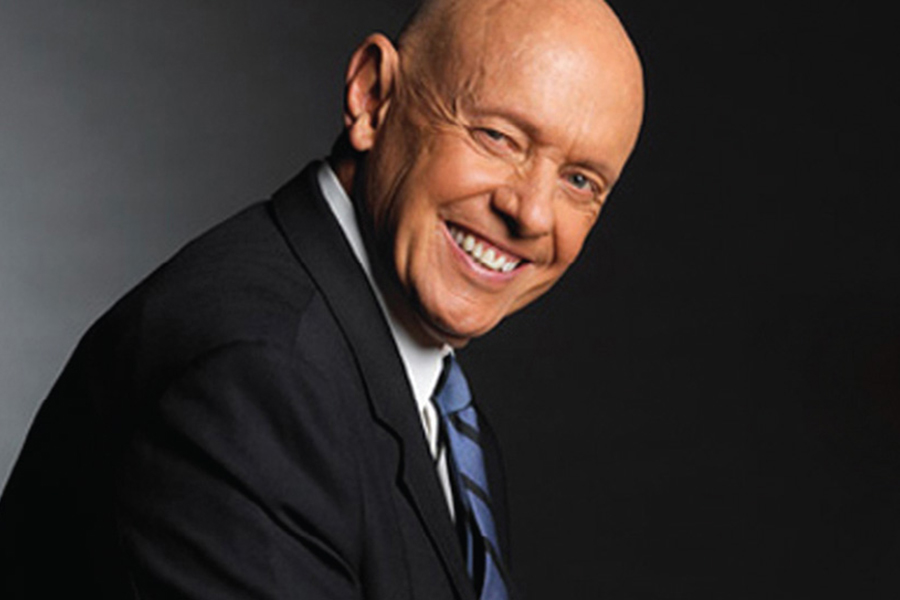
But if that’s what it takes, that’s what I will do because I am still running. You see I have unfinished business. I was thrilled this year with the 25th anniversary of the publication of The Seven Habits of Highly Effective People. With 25 million copies sold it is one of the most read business books in the world. I believe it’s truly a great book. One that is practical as well as inspiring. One that almost never got written. I remember vividly the day that Stephen Covey (above) walked into my office so exhausted from his repeated teaching of the Seven Habits workshop that he wanted to move on to something else. “Something in leadership” he said.

I tried to commiserate with him while I told him that he would never produce anything as relevant and life-changing to more people than the Seven Habits. He looked at me with very tired eyes and said “I hope that isn’t so.” He had a right to be exhausted. His speaking was the financial engine of the company and we were investing heavily in the future. Brad Anderson and I had recently finished a successful tour of our most supportive clients raising money to develop the Seven Habits video-based training course so that certified trainers could teach. We were young and stoked because this would be the tool that would let us reach millions worldwide… if we could just ignite widespread demand.


That seems quite unlikely to almost everybody at the time, especially Stephen. 

It’s true, we had gold-plated clients like Disney and Procter& Gamble but every client was a hard-fought win. Sales cycles were 12 to 18 months. We were doing the business version of trench warfare. What we needed was a book. A big bestseller. But Stephen was too busy to write something he was proud of. We had tried many editors and ghostwriters but none of them could capture Stephens’ voice, so on that day Stephen wanted to give up on the idea of a book.


When he left my office I felt twin motives of compassion for his discouragement and a passion to solve the problem. In that instant I turned to the bookshelf behind a  and gazed at a  thick transcript of eight hours of recorded video training of Stephen delivering the Seven Habits in front of a live audience. This was destined to be the core of our new training program. But as I looked at that transcript what I saw was every core principle and every great story expressed in perfect cadence in Stephen’s own voice.


Within an hour I had taken the section known as the Emotional Bank Account and given it to Roger Merrill to work on with his wife Rebecca over the weekend to see if they can transform the recorded word into the written word. By Monday they had. And it was perfect. Within a few days we sent that section to Stephen’s literary agent and within a month we had a real book deal with Simon & Schuster. I soon found out that writing a good book is not the same as selling it.

A year after publication the publisher announced that they were going to end the hardback edition and issue it in paperback. We had sold 300,000 copies.  The publisher was pleased but I was devastated. We needed to sell millions of books to create sustained demand for our training. Even 300,000 books had done little to generate organic interest in our training. It was time to make a decision.


I have found every success story has a moment of truth where you either go all in or shrink. 

I talk about this cautiously because we only tend to hear the stories of mind-boggling success. Yet there are many more stories of risking it all and losing all. That’s what makes going all in so hard. By this time we had a nice slow-growing training business. We were then faced with investing in a risky national speaking tour. The plan, developed by Greg Link, a wild man marketer, was to rent 3,000 seat symphony halls in 17 major U.S. cities to enable Stephen to do three-hour mass workshops.

Greg was a great believer in critical mass by getting lots of people to experience the same message at the same time. He wanted to engage entire business communities of cities to create a chorus of buzz. He beat back more reasonable people inside our company who were willing to support venues for 300 people but thought selling 3,000 tickets at a time was impossible. But Greg would have none of it.


The task and expense of direct mail and outbound call center to sell tickets was huge. Ultimately Greg and I convinced Stephen to give the green light while risking the company’s future and his own financial well-being on this audacious plan.


Fortunately it worked.


Some of the events made money, some lost money.  But midway through the tour our phones started ringing. Companies were calling us to bring the training to them as fast as we could. The new paperback version was flying of the shelf and we never looked back. Even today, 25 years laterThe Seven Habits of Highly Effective People is frequently a top 10 business bestseller.


The reason we fought so hard for so long and spit in the eye of risk is that we really believed in what we were doing. The consequences of failure were tiny compared to the consequences of success. We were also very lucky.


But I personally still have some unfinished business. 

We launched the Seven Habitstraining in major corporations in the 1980s. It was an audacious message to bring to business at a time when Milton Friedman’s ridiculous contention that ‘corporations only responsibility was to make money’ was gaining massive traction.  Our training had leaders writing personal mission statements, striving for life balance, negotiating win-win solutions, collaborating respectfully and espousing the balance between seeking golden eggs and taking care of the goose. We did this at the same time the movie Wall Street eloquently portrayed our emerging economic system that legalized greed.


During the last three decades there has been a war going on for the souls of leaders. 

It’s the same war I entered into at the beginning of my career. In some ways it’s sad that a book like The Seven Habits which is rooted in the universal morality of the Golden Rule and calls people to aspire to express their highest selves would be so popular at the same time our economic system has become so corrupting.  We are at a point of major system failure. Our finance-based economic system rewards and gives power to people with pathological self-interest. For our children to inherit a world we want them to live in this must change.


There are small and mighty forces that are focused on positively changing the way we all think about the purpose of work, our economy, business and society.  The opposing force of the powerful status quo is well financed and very noisy. They are both powerful and stupid. They justify what is unjustifiable. Yes, we can defeat them.


I honestly believe that SMART-Power thinking and leadership practice combined with the essence of conscious capitalism and new structures like B-corporations can become the business norm as a new generation of leaders and more women ascend into leadership.


My job is to equip them with tools that will enable them to lead, innovate and out-compete business as usual.


This can’t be done with soft ideas of asking people to behave better. This can only be done by resolving the paradox of hard and soft leadership, science and spirit, discipline and love, action and reflection. This is the core of wisdom.


It is time for aggressive wisdom.


So the reason I still run alongside humanities’ train is that not only do I want people be more personally effective… I want a future that creates more effective institutions so that our best ideas, our most inspiring hopes, and our moral imaginations can prevail.


And one thing I notice that makes me smile is that today there’re a lot more people running with me.

Be the Smartest Voice in the Room: Ask These Two Questions

I have been doing a lot of training of men and women leaders on the science of using the strength of both genders to create new solutions to nasty business problems.


I use something I call Trans-Logical Thinking. It requires a ruthless determination to transcend the low-level trade-offs of hard logic. Hard logic is either/or thinking, and it’s simplistic. Overly simplistic. It comes from a black or white mindset. It assumes there is one right answer to every problem. It assumes that virtually every outcome is the result of one principle cause. It is overly moralistic urging gets you to brand your opinion as good and different opinions as bad.


Hard logic is the main thinking tool of hard power. The aggressive drive to control, to dominate and be right are prime motives of hard power. You see it everywhere. You see it in Executives’ meetings. You see it in politics.  

The irony of hard power logic is that it is weak. 


SMART logic is simply a much more powerful way to think. 

It relies on a broad spectrum of thinking tools that combine the strengths of intuition, practical thinking and analysis. Leaders who use SMART logic are comfortable with complexity. They recognize that virtually every difficult problem has multiple causes and that any action is likely to cause unintended consequences.


SMART logic begins with the recognition that we swim in paradox. 

You can love your children and be incredibly frustrated with them at the same time. You can love your job and hate what you have to do today at work. That’s just the nature of reality and the reality of nature. Light is both a wave and a particle.


The most successful leaders, the ones we really admire, come up with unexpected solutions by resolving paradox.  Starbucks CEO, Howard Schultz turned coffee into a luxury. He made every drink customizable and combined it with fast service. He chooses to give part-time employees health insurance and pay for their college education. None of those ideas make sense to a hard logic thinker.  If he were pitching Starbucks to venture capitalists today they would laugh.


Steve Jobs made technology beautiful and easy to use when everybody else didn’t believe that an average person would ever want or use a computer. That’s why computers were ugly and complicated.


Walt Disney created a magic kingdom from carnival rides usually found in dusty county fairs. It didn’t make any sense that he would be so successful. His bankers abandoned him. It defied hard logic.


We admire Starbucks’, Apple’s and Disney’s unique solutions because they’re unexpected.  

These are leadership acts of creative courage. 


But what I observe is that in spite of its weakness, most leaders have embraced hard logic… the logic of either/or. They say “We can either make money or pay our front-line people well… but we can’t do both.”  (These leaders persistently ignore the examples of Costco, In-N-Out Burger and Zappos who pay well above their lagging competitors. Why? Because hard logic makes you dumb!)


Too often I find that when hard power leaders express an interest in elevating women into leadership they complain that it’s difficult to find a woman who “thinks like a man.” They also express doubts that women will give their work their exclusive attention. Yes, they frequently have a long list of reasons why women are unable to perform like men do.  

They seem unable to consider that the value of women in leadership is that they don’t think or work like men. 

It seems contrary to their hard logic that since most leaders are men they think they need to find women who act like men in order to make them leaders. That’s just plain stupid.


Let me make this real. 

I recently completed the leadership transformation project for Cricket Communications, the fifth largest wireless carrier in the U.S. As a no- contract carrier their primary customers were people in the lower-half of household income.  As they were looking for more customers many of the leaders who spent time on the front lines of the retail store network had the idea they could be successful by going down market. That’s right, go after poorer people. 

There was initial opposition. After all poor people make bad customers, right?  It’s pretty obvious… poor people don’t have money to spend on fancy phones or cell service. That’s simply logical.  It’s a perfect example of hard logic. And it was dead wrong.


It was wrong because there’s more to the story.  In the 1930s Congress passed a law giving subsidies to people receiving public assistance to help them get phone service. This idea was justified because of the overwhelming evidence that telephone communication increases people’s economic opportunities and upward mobility.

The law is still in effect and offers qualified low-income individuals $10 a month off their phone bill. The problem is there’s a lot of paperwork involved and qualifications vary from state to state. No other cell company was willing to invest the time, people and money to sort this complexity out and use Information Technology to make it efficient. The reason was simple, “Poor people make bad customers.”


The question that I coach people with creative courage to ask is… “What if the opposite was also true?” or “Under what conditions would the opposite be true?” 

For Cricket Communications it turned out that customers that received a subsidized discount were a lot more loyal and consistent than customers who didn’t. Once Cricket invested in making the whole sign-up process efficient and easy it became their fastest growing and most profitable business segment. The creative courage to take this risk came from spirited discussions of men and women leaders who were willing to suspend their simplistic prejudices and unravel the knots of opportunity.


The key to open the door to SMART logic is how you frame questions.

As soon as you ask the question “Under what conditions would the opposite be true?” you open brave peoples’ minds to see hidden opportunities were no one else has the guts to look.


For SMART logic to really create value leadership teams need diversity of thought, diversity of personality and diversity of experience.  They also need unity. Great leadership teams are united by the idea that the purpose of business is to create value.  Real value. Nontrivial value. Value that makes the quality of life of other human beings better.


What the world needs now are people who do not accept hard logic. We need people with creative courage and the emotional intelligence to persuade, influence and if necessary, hypnotize their opposers.


This is a requirement of great leadership. Stand up and lead from where you are. 

You can do that by asking courageous questions that open minds to SMART logic.

A New Measure of Business Success

We are currently facing some of the most difficult global challenges in a generation: inclusion, recession, and depletion.

Inclusion: nearly three billion people will enter the global middle class in the next 20 years. Recession: the global economy is still feeling the effects of the 2008 financial meltdown. Depletion: the climate is warming, which is straining our resources and depleting nearly two-thirds of our ecosystems (e.g. soil, fish and forests).

But there is good news.

While these problems are escalating worldwide, there has been a growing movement in the business community toward “triple bottom line” solutions—those that focus on people, profit, and the planet. Triple bottom line solutions actually enable companies to solve customer problems while driving increased profitably and improving society.

Sound too good to be true?

There is an increasing body of research to support this claim. For example, R. Paul Herman’s Human Impact + Profit (HIP) methodology tracks, rates, and ranks companies’ quantifiable impact on society, connecting “doing well” with “doing good.” The research from Paul’s 8-year old company shows consistent improvements in results with triple bottom-line strategies. While Paul’s ground-breaking book The HIP Investor is targeted at current or prospective business owners, the HIP Scorecard is also a management system that shows how business leaders can benefit from doing the right thing, the right way.

Simplification is almost always a good idea, particularly when you are attempting to focus a large group to act on complex global challenges. Since research supports exponential returns with this approach, I offer this equation as the new measure of business success: Responsibility3 = people + profit + planet Want even better news?

There is a dramatic increase in the number of business leaders who are working together and taking a Responsibility3 focus. Networks of these enlightened leaders are quickly growing around the world, and they include small to medium sized companies (the American Sustainable Business Council has over 200,000 members) as well as some of the world’s largest companies (the World Business Council for Sustainable Development has over 170 multinational members).

These networks also include more established groups that are adding Responsibility3 to their existing charters (the Young Presidents’ Organization has over 21,000 members worldwide). These groups are all focused on exponential vs. incremental change. Building on this momentum, several of these powerful networks recently chose to align.

As a result, the Business Alliance for the Future was formed. And while work is underway to determine how best to measure progress in all three areas, this alliance of networks has chosen as its motto: “The future of business is making the future its business.” The bottom line: Business is increasingly taking responsibility for a truly sustainable future. That’s really good news.

Become A Better Leader: Enrich Your Breathing!

Breathing is the essence of life. It’s the quintessential pulsation that constantly connects us to our environment until the day we die. Every living organism on the planet contracts and expands in the most microscopic of ways. The bigger, more sophisticated and nuanced this pulsation is, the more complex and interesting its inner life can be. We know that human leaders are the most elaborate mosaic of textures, shades and forms to be found on this Earth. So what’s their breathing like? You wouldn’t believe how utterly mechanic and lifeless it’s become.

Especially because you don’t know what it used to be like thousands of years ago, before wars, civilization and the internet revolution streamlined us down to unfeeling shadows of what we used to be. Take a deep breath now. At least as deep as you know how. I could ask you how many walls of muscles you just moved. But the really interesting question would be how many you didn’t move. The problem is, you can’t feel what you don’t move.

And this is why poor breathing also makes us poor leaders. Despite our best efforts and intentions. Once upon a time humans lived in love with Nature. Life was about a deep-felt exchange of feelings, experiences and resources with the magnificent paradise around us. Mother Nature provided fruits and berries, fleshy animals and breath-taking views to feed our bellies and caress our sensitivities to unimaginable heights of intensity.

She also challenged us to grow smarter with all kinds of difficulties and hardships. We venerated Mother Nature with every breath we took: we inhaled whole-heartedly and exhaled energetically, just as all other animals still do today. We used to breathe in such a way that almost every muscle wall in our body moved. Our chest expanded in every direction and our diaphragm pushed down. Our belly inflated like a balloon, expanding our abdomen, yes, but also displacing our entire pelvic floor. Our head and shoulders moved upwards as many walls of tissue in our throat, and others in those secret spaces between our brain matter and our hard skull, heaved together.

Every breath awoke sensations and feelings all over our bodily vehicles, sending essential messages out to our environment, while bringing in crucial information on how we needed to respond to each moment of life. Our bodies were designed to lead all other species because we displayed more flexibility and adaptability than anybody else. We adapted better to each exam from Mother Nature. Our bodies instinctively ducked, stretched, accelerated or slowed down physically, emotionally and mentally. We were the materialization of perfect adaptation and leadership. And then our growing logic got the better of us.

With every horrible thing we did in the name of progress, civilization and technology, a small part of our bodies stopped breathing to avoid our own ugly feelings. With every generation of greed, wars and materialistic enrichment, our breath wave became poorer, smaller, more timid, and a lot less connected to its surroundings. As we lost amplitude, energy and security in our breathing patterns, we stopped moving layers and layers of tissue that no longer informed us about ourselves and our loved ones in silent, unmoving passivity.

Today we live longer than any other generation in human history, but we are more rigidly bent out of shape, more tense and more set in our planet-trashing, eccentric ways than ever before. We know we’ve passed thirty years because our bedside table is full of medicine. And with every decade we become stiffer. Physically, emotionally and mentally. As we endlessly discuss and write about ideals of leadership, success and KPI-measurable happiness with the parts of our bodies that still move, we ignore the fact that leadership and joy are about flexibility, feeling and instinct.

We talk about how to spark motivation with the tight breath of someone who hasn’t unleashed his own passion for a long, long time. So yes. Becoming a better leader is directly tied to how many muscles and tissues we move every time we breathe. And as you mentally order yourself to take another deep breath in reading these words, let me tell you why that pulsation will not go farther or fuller or deeper: too many ugly feelings hiding in all those immobilized tissues. Too many sad memories constricting muscles, organs, tendons and bones.

Some of these ugly sensations are inherited, some are our own. The rigidity in our bodies that keeps us from being better leaders is a silent witness to the many horrible things we’ve put behind us in our personal paths, our family stories and our entire human history. There is, however, great beauty to be found in those ugly emotions we try not to feel. There is enormous dignity and undying loyalty in every tear and every growl our body would express if we allowed it to.

Daring to breathe deeper is a quest for warriors. It’s an adventure into the secret jungles of our body’s wordless memories and unchecked emotional ordeals. Those who stop talking or writing to make space and time for silent deep breathing, releasing trapped sensations and expressing old emotions, find the joy, youth and passion the rest of us are tweeting about. To breathe more is to venture out into the unknown, to reconnect with Nature, to rediscover what makes us human, loving, leaders of the world. More than ever before, improving our leadership is about embracing the wild that silently hides inside our bodies, waiting for our permission to come out and roar like a lion.

As emotion and sensation flood back into our deepest, oldest tissues and joints, we regain youthful flexibility, wisdom of heart, and passionate connection to Nature. We grow closer to the kind of leader everybody loves, honors and respects. So please do keep up those deep breaths after you finish reading my post. Find privacy to help you safely uncover feelings, memories and past experiences.

Ask experts to help you focus your attention, explore breath variations and experience new levels of intensity. Embrace the hidden story your body tells about who you are and who you came from. And like any mother on her way to deliver a baby is told, whatever happens, breathe again.

As deeply and humanely as you possibly can. A new you will soon be born. A better man or woman. And a breathtakingly better leader.

The True Cost of Capital: People

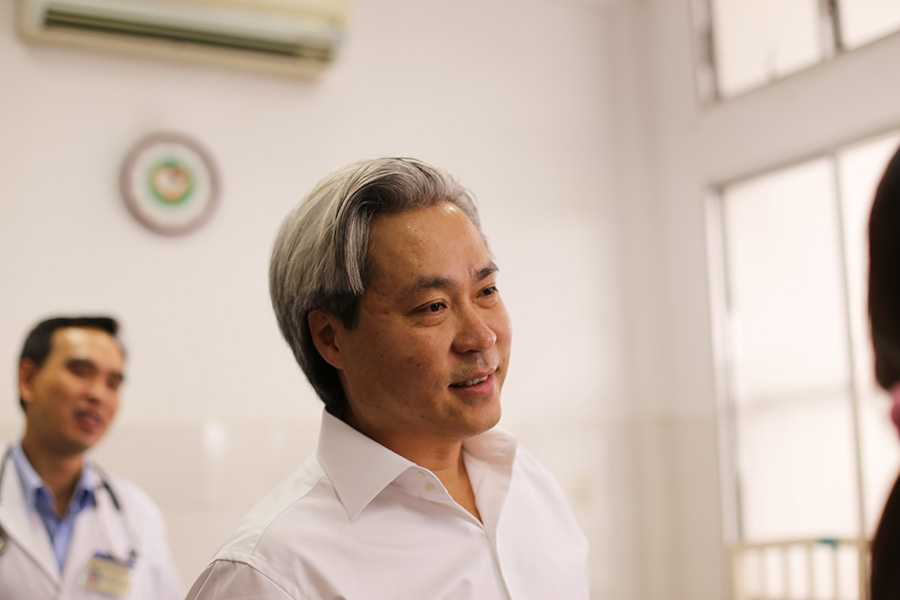
On a visit to rural Vietnam a few years ago Don Lam met with a mother who had just lost her 8-year old daughter to a heart condition because she didn’t have the money for surgery. When he discovered that it would only have cost $3,000 to save her, Lam decided to act. As the founding partner of Vina Capital, one of Vietnam’s leading asset management groups, he adopted an attitude of giving back to the communities in which they worked.

He has taken mainstream financial regulatory requirements of ethics, transparency and fairness, and applied this to a social business model that promotes good. “If we’re going to invest in the community then we should start giving back to the community,” says Lam.

Their latest venture, the Lotus Impact Fund started in 2013, is effectively an impact investment fund. Lotus Impact actively invests in private enterprises that help solve social and environmental problems. Projects that produce catering graduates, business graduates for rural economic growth and clean water projects are funded through a process that merges local market knowledge with financial and social analysis.

“We focus on high social intent, but not necessarily a high return,” explains Lam.  “The measure of social impact is more important to us.” Vina Capital’s investor base is mainly in Europe, where investors admire the positive developments Lam has introduced.  “Many of our investors visit us and say they want to become involved,” says Lam. “They tell me that if they’re looking at two funds, both being equal, they’d choose us because of our social impact.” “The key in business is to lead by example because then staff will look up to you and follow what you do.

You can talk as much as you want but if you don’t actually do it yourself then it won’t have any effect,” says Lam. With a succession of global financial crises behind us, Lam has sage advice for how we should view money. “You should see money as a tool to create stability in whatever you do,” he explains. “The money we generate should be looked at from a wider investment perspective. Not following traditional trends in finance and focusing beyond short-term profits can result in better profits down the line,” he says.

Don’s Investment Check List:

  1. The first thing Vina Capital does is look at the people they’re investing it, not the industry. What they manufacture is less important than the people managing the business.
  2. The people who manage the business might run a fantastic operation but if they’re not ethical it will go sideways very quickly
  3. Vina Capital looks at how the company treats the community around them. It’s important in the long-term that these businesses have a sense of social responsibility.
  4. They don’t invest in a business that is making a lot of money by cutting corners. An example would be in Bangladesh or Pakistan, where factories collapse and kill workers. You’ll make money in the short-term, but rather focus on a long-term return for your investment.

Air Asia X Shows How Flying Can Be Guilt-free

A new and responsible business model shows that flying can be guilt-free.

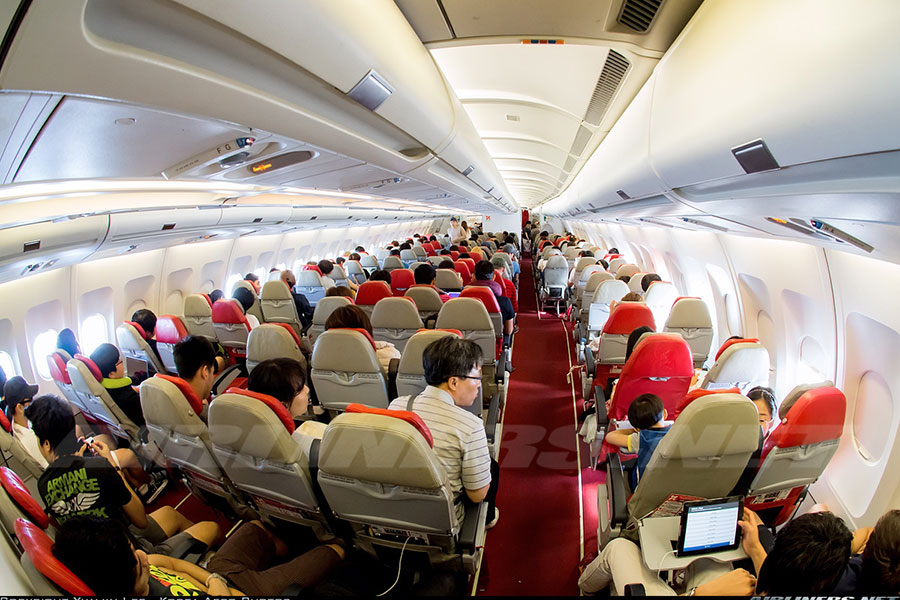
Azran Osman-Rani would like you to think that the lowest fares, in brand new planes with comfortable seats, on a time schedule comparable to any other mainstream airline is an attractive option to fly. Over two million passengers who’ve flown in the past year think he’s right. A passenger increase of  86 percent has made AirAsia X  the world’s fastest growing airline. Ticket prices which are 30-50  percent cheaper than other airlines, a fun and interactive brand people can relate to and the convenience of buying tickets online have also helped.

It all started 10 years ago when the Malaysian founder of AirAsia, Tony Fernandes, watched a reality show featuring European low cost airline Easyjet. He thought it would be a great idea to roll out in Asia. The region still suffered from expensive flights and a lack of travel infrastructure across rail and road systems. At that time Fernandes estimated that only 6 percent of Malaysians had ever flown in a plane. He recognized that low cost air travel in Asia could be the catalyst for connecting people better. AirAsia was launched in 2001 with the tagline “Now everyone can fly” with AirAsia X following in 2007, focusing on low cost, longhaul flights in larger planes such as the Airbus A330-300.

Before AirAsia X, the established players, such as Southwest, US Airways, RyanAir and Easyjet used small planes doing shorthaul regional flights, nothing more than four hours in duration. Longhaul had not been done successfully before and Fernandes thought there must be a way of capturing the growth he saw in shorthaul and translating it into a longhaul model. Shareholders were not convinced, however, and thought it was a risky idea, straying into territory that bigger and more successful and established airlines had steered clear of. Fernandes ploughed ahead, convinced of his intuition, and AirAsia X was formed as a separate company from Air Asia, with private equity money and with Osman-Rani instated as its first CEO. And what of longhaul flights resulting in more carbon emissions? Isn’t air travel increasingly being seen as a big contributor to our growing problem of burning more fossil fuels?

Osman-Rani has his own view on this. “We don’t agree with what other airlines are now doing to address this problem, which is offering carbon credits to offset emissions. This is basically shifting the guilt of air travel onto the passenger. What we focus on rather, is the fact that emissions resulting from burning jet fuel is a direct cost to us, the airline. We pay for these emissions as a direct consequence of buying the fuel. This is unlike other industries where pollution emissions are an externality of their manufacturing process. They pollute but do not bear the direct costs themselves of this pollution. Because we are committed to becoming the world’s lowest unit cost airline we keep figuring out a way to also become the world’s most fuel efficient airline.

The airline burns around 2.2 litres per seat per hundred kilometres as opposed to other airlines which burn around 4 litres. This also equates to 93 miles per gallon per passenger that we fly, a significantly better performance than most cars. Osman-Rani has achieved cost savings by placing it firmly on the agenda of the organization. While other airlines talk of financial instruments such as fuel hedgings as part of their savings plan, this doesn’t actually bring down the cost of fuel. AirAsia X focuses rather on the fact that the volume of fuel needs to be brought down, irrespective of its price.

“There’s no magic bullet in getting a 30-40 percent fuel burning saving in the airlines industry. We have various ways of getting the optimal saving possible though. For example we use new planes with the latest fuel efficient technology, fewer first and business class seats and more economy seats, resulting in a lower fuel to passenger ratio on take-off due to increased numbers onboard. Even when compared to a standard Airbus with standard seat configuration we are still burning lower than the industry.”

An obsession with weight has also seen load shedding on AirAsia X. Footrests on economy class seats have been removed. This might seem trivial, but 365 metal footrests can add up to quite a weight. Osman-Rani has not yet encountered any passenger who refuses to fly AirAsia X because the little footrest is missing.

“The quantity of water for lavatories is based on how many passengers are on a flight, or if it’s a night flight realizing that many people will be asleep. Many other airline groundcrews are instructed to simply ‘fill her up’. We’re very precise on measuring how much water is needed and if we can reduce a flight by 200 kilograms, that’s fuel saved.”

Pilots are trained in efficient route planning, managing and nursing the engines and immersing themselves in the AirAsia X culture which promotes sustainability. Because the company is not unionized, pilots feel part of this culture and take ownership of the process.

“Many airlines have pilots who have a ‘work to rule’ attitude, based on legislation negotiated by their unions.  In these environments many pilots don’t see any reason to implement fuel-saving measures,” explains Osman-Rani.

No airline works in isolation from the airport management companies with whom they need to negotiate parking bays and other logistics. Busy airports too, such as Heathrow, can scupper any fuel saving achieved from careful planning by making planes circle for half and hour before landing due to congestion. Avoiding peak hours at airports helps avoid this and keeps costs down. Osman-Rani would also like to see more ground power units at docking stations at airports. These diesel-powered generators plug into the plane while still parked and keep the plane powered  for lighting and other mechanical operations, avoiding using the plane engines to generate power and using less of the expensive and higher CO2 emitting fuel.

With fuel making up 90 percent of the environmental impact of air travel, it’s obvious that this is where the focus should be when it comes to saving.

With other industries able to supplement their energy needs with solar, wind and hydro, air travel is stuck with fuel for the foreseeable future. Biofuel blended with jet fuel or organically produced jet fuel from algae or palm oil is still at least five years away before it becomes commercially available.

“Of course the problem with biofuel is that it starts eating into arable land and takes away from food production. Food prices are extremely susceptible to agricultural resource allocation, so while we want to bring down the cost of fuel, we need to be careful we don’t inadvertently  increase the price of food.”

But surely many flights have become unnecessary in this day of free Skype calls, video conferencing and lightening fast communication, connecting people around the globe? Osman-Rani cannot imagine a world without air travel. Most importantly,  he sites tourism as critical for many economies. Understanding different people and cultures through physical contact is as important as the sustainability debate. “Look at conflict hotspots around the world, they all suffer from people who have limited interaction with the rest of the world. Put another way, the offset of air travel is economic stimulation and better human relations.”

With rising fuel prices, volcanic ash, viruses spreading through air travel, recession, tsunamis and the odd earthquake thrown in, times are certainly challenging for air travel.  “Air travel is not immune to the trend of responsible business we are seeing grow rapidly around the world. We strongly believe that there should be the market discipline to say that if you’re not an efficient air carrier you shouldn’t be artificially propped up, as we’ve seen with many national carriers over the past few years.”

10 Actions For Business Success and Happiness

A few years ago I wrote a book titled Save the World and Still be Home for Dinner. The title came from a running conversation I was having with a woman executive client who was trying to start a new purpose-driven business while she raised her two young daughters, helped her aging mother and stayed engaged as a loving wife. When I asked her what she really wanted she responded, “I just want to save the world and still be home for dinner.”

I don’t think anyone has defined a well-lived life better than that statement. Yet turning that aspiration into reality is a constant challenge. Today more than ever. Many times I am asked to summarize the practical principles that makes her request achievable. Here is a menu of 10 actions you can take that capture what my happiest and most successful clients do. If you want more from your life than you’re currently getting choose 1 or 2 of the items that would make the most difference and commit to do them for 21 days. If they produce the change you are seeking you will have a new positive habit. Then reload. Try another new habit and then another. The cumulative impact is transformational.

1. Decide to stand for something.

Make a promise to yourself to make your difference…a commitment to live your life in a meaningful, fulfilling way. This will change your priorities, what you’re willing to say “yes” to…and what you must say “no” to. I call this your personal promise. Write it down, take a picture of it and make it your home screen on your cell phone. When you pick up your phone and the screen lights up look at what you’ve written and ask yourself “Am I making my difference right now?”

2. Change your theory of life.

Many of the most challenging things that will ever happen to you are beyond your control. (Death, divorce, sickness, job loss, bankruptcy, caring for loved ones…) It is difficult to be happy if your expectations are that your life should be full of endless days of sunny weather. For most of us life is frequently stormy. A major part of life’s purpose is to learn to be resilient, resourceful, agile, and be able to transcend the drive for pleasure with the quest for meaning. I have found that life is not easy for anyone. It isn’t meant to be. We live to become stronger, better and to help others along their path. Align your expectations with reality and master the art of resilience.

3. Don’t allow the powerful, greedy, and stupid people who make our society and our world worse than it should be, to ruin your peace of mind.

Resist expending your energy on blame and focus on leading your own life. Be an activist by stopping the fight against bad ideas and invest all your energy in good ones.

4. ‘Saving the World’ does not mean you have to hold an important job at a nonprofit.

Saving the world does not have to be starting a new socially conscious business. For most of us it is the genius of turning our values in value for other that is seen in the way you do your work, love your loved ones and inconvenience yourself every day to make your difference. Never forget, sometimes the best way to change the world is to change a diaper.

5. Be proud of your employer.

Is your company valued and respected? Are its values aligned with yours?  Are you encouraged to grow and express your authentic, best self? Are you paid and treated respectfully?  Refuse to be exploited. Invest your time and effort in working for a great enterprise. Lists like ‘A Great Place to Work’ and websites like Glass Door offer unprecedented information about the quality of potential employers. Don’t work for jerks… it will make you feel small. Honor yourself by working for a great organization. Or start one!

6. Create a life-list of activities you most enjoy.

To make this list, pay attention to your true feelings. What activities consistently light up your passion and ignite your energy from the inside out? Write these activities down. Post them on your bathroom mirror. And take time to do them weekly. Hike, paint, bike, garden, play a musical instrument, do yoga… do something that fires-up your joy at least three times per week. Make it possible by making it easy to do. Just 20 minutes a day of doing something you love is a daily vacation.

7. Use creativity to solve your problems.

Don’t be an either/or thinker.  Ask yourself “how” instead of “if.”  Somebody with far bigger problems and fewer resources have solved the problem you’re facing. You can too.

8. Be intensely present with people.

Listen without an inner agenda…without formulating what you’re going to say next. Don’t allow your mind to wander. Quit pretending to listen while you’re having a second conversation in your mind or saying “uh huh” while you’re texting someone else. Keep bringing your total concentration back to the conversation in front of you. Do this with everyone…your family, friends, coworkers, cabdrivers and cashiers…just watch what happens to your own happiness.

9. Get off the Grid for three hours a day.

Be radical about this. No smartphones, computers, TV, or news. Think, reflect, journal, study, talk, walk, eat, help, love with no distractions. Fully engage yourself in the interests of the person you love the most. Take back your inner life and invest in your love life.

10. Eat wisely, exercise daily, sleep peacefully and spend wisely.

In order to save the world and still be home for dinner, what you value should be reflected in your day-to-day choices. So value your personal vitality and your health.  As far as wealth, you will feel rich if you buy a few high-quality things that you will continue to relish long after you purchase them. For everything else, make do with what you have or buy the cheapest acceptable option. The temporary pleasure of buying something you cannot afford will never exceed the stress of financial bondage.

So travel light because you will have many more opportunities to do what you really want to do and live the life you will find most deeply satisfying…that’s the greatest wealth of all. These are 10 big life changers. As I said, it’s better to choose one or two of these actions and do them with your full energy…otherwise they won’t have much impact. The great thing about positive behavior change is that it’s infectious. One good thing, we do a second thing and a third.

Also, sometimes changing 5% of your life will change the way you feel about the other 95%.

Life is a long journey on a path covered with thorns and broken glass.  These actions are like grippy-soled hiking boots.  Slip them on and keep climbing.

What If We Allowed Emotions To Lead For Once?

In the twenty-first century emotions have been relegated to the domain of penniless poets or artists, losers and weaklings. Business discussions are about objectivity, facts, numbers. Strategy is about “maximizing shareholder value” –whatever that means—and well, lab-cold science seems to be the new religion. Deep down inside every one of us, however, emotion pulsates dramatically, silently, irresistibly… driving our lives despite our most rigorous denial. Connecting back into our passionate hearts may just be the secret to youthful, exciting leadership every day of our lives.

We forget that once upon a time leadership was a matter of the heart. When we loved our people so much that we were willing to sacrifice everything in order to feed them and protect them against all odds. Leadership was about heroism, bravery, true hearts and pure intentions. It was never about money, powerful connections or manipulated appearances. And it certainly had nothing to do with the scandals and corruption we wake up to read about every morning.

Before we became citizens roaming cement jungles in search of WIFI coverage, we used to be small groups of humans walking the Earth in search of food, water and safety. We couldn’t afford to choose a ruler who didn’t care about the entire tribe at least as much as he (or she) cared about himself. Leaders were called to make life or death decisions concerning the entire tribe’s future every minute of every day. And all they could rely on were sensations in their bodies. There were no maps. No radars. No GPS location devices and no google searches “near here”.

Survival was a game with zero information where heart and guts were more relevant, and hugely more useful, than brains. A tight gut indicated a possible enemy. A warm heart brought closeness and affection. Sudden chills or skin curling startled us into immediate defense against a nearby predator. No matter what our minds were trying to figure out at the time, our bodies were fully connected to every sensation, odor and noise in our environment in order to keep us safe another day.

A leader who didn’t know what he felt or how he felt about this cave, that lake or the nearby pack of wolves, would lead his followers right into the jaws of extinction. Well, actually, he probably wouldn’t be followed at all. The group would immediately sense that something was deeply wrong and somebody else would step up in the name of everybody’s survival. Today, however, something is deeply wrong with so many of us, that everybody’s survival may be at serious risk. When I ask CEOs and board members from any one of the five continents how they feel, I typically get “fine. Thanks!” or “huh?” Or an urgent incoming call to save them from a rather annoying question. Questions about body sensations, feelings and emotions are closed as quickly as possible, before anything can actually be felt. Labels like fine, ok, or happy are most effective remedies.

Rapid shifts to new conversational topics and innumerable iphone enabled interruptions also work. And if all else fails, well, the pharma industry gladly comes to our rescue. Unless an ulcer is torturing our stomach or lumbar pain is bending us over our chairs, we seem to be pretty bad at diagnosing body-felt sensations. We are saturated with information, flooded by communication and paralyzed by analysis on a regular basis. And while our brains run around in circles trying to decide which path to follow, our hearts are pitifully trapped inside unreachable cages of judgment, discipline, will-power and denial.

We actually prefer to exhaust ourselves with effortful research, sleepless number-crunching and circular scenario-planning, than allow ourselves to feel what our bodies have to say about the decisions we face. Decisions that will shape the future of our organizations, our societies and our entire planet. How to invert this dangerous global trend? By attacking the root of the problem: judgment, discipline, will-power and denial. Our shared effort to constantly keep emotions in check is making our economies run faster and faster, like hysterical chickens racing up and down in blind motion.

Our biggest, globally present enemy is our collective judgment of emotions as weaknesses. The minute we begin to feel the smallest inkling of grief we start thinking of ourselves as inferior. Our restless minds plan scenarios in which we are expelled from society, treated as losers and gossiped about behind our backs. We wonder if we should take medication, or we desperately try to get busy with anything to distract us from unpleasant sensations. We judge ourselves as losers before anybody else has the chance to, thereby making our hearts hurt even more. We become hard, cruel dictators to our softly weeping, unfairly jailed bodies.

It always amazes me how easily and quickly executives relax when they experience a total lack of judgment on my part. Their shoulders drop slightly and they suddenly breathe a big, sad sigh. Once we receive assurance that feeling sad, or angry or scared is exactly what we are supposed to do, we stop fighting it, judging it, and generally trying to kill it, whatever it is. The battle between our minds and our hearts finally ceases.

Working, running, hurrying, worrying… they all fall away like old, dead skin. We stop wasting energy on a fight we can’t win, and we finally give in to what our body sorely needs from us: attention. And then, surprise, surprise, the ugly emotion consumes itself. Maybe a few hours, maybe a couple days. It’s gone. Often leaving a new association of thoughts in our minds as a thank you gift: new comprehensions about who we are and what we stand for.

Serenity, clarity, and bravery surface to structure our ideas and offer new avenues of purpose. Youthful passion for life flows and replenishes our bodies just as it used to do, before we learned to build intellectual dams of discipline against unruly, liquid emotion. Imagine the global wave of sudden relaxation we could create if every CEO on the planet stopped trying to avoid his or her own emotions for a day. Or for one hour.

If we all stopped willing ourselves to write another email, make another call, tweet another smart thought. If the Internet went silent and phones stopped ringing. And all we could hear was the slow, powerful beat of our own hearts. Would we all sigh in relief and feel human again?


Three Transformative Business Sustainability Trends

Sustainability has come a long way in the last 30 years. Fewer and fewer business leaders are asking, “Why should my company take action?” and more and more are asking “How?”—how do they create impactful programs that will take root, deliver return on investment, and drive innovation across the business? To answer that question, I spent two years embedded within nine major companies — none of the “usual suspects” on sustainability.

I explored the intricacies of their sustainability programs: what worked and what didn’t, and which ideas remained ideas and which became reality. In doing research for my book on building a culture for sustainability, I identified three powerful answers—three emerging trends that can re-shape standard business practices, and therefore shape a future in which sustainability considerations are no more unusual than budget considerations. I call these transformative impact practices in sustainability, or TIPS, and they form a powerful core for changing business culture and mindsets in ways that make sustainability and social responsibility indelible. Here’s a look:

1. CO-CREATION

Sustainability and corporate responsibility are not just top-down mandates, worked out by executives closed off in a conference room. In fact, sustainability works best with the opposite approach: executives working with customers and other external stakeholders to determine what to do and how to do it. It’s what the business world calls co-creation, and it’s one of the most powerful TIPS emerging in the sustainability space. Here are a few examples of the kind of co-creation that, if adopted more broadly, will help take private sector sustainability to the tipping point:

  • Co-Designing Products: Rather than engineers designing sustainability-enhancing products that nobody may buy, companies are increasingly bringing customers into the product development process. These co-created products can reach the greatest possible market and enhance customers’ own sustainability goals, making the product seller and buyer part of a seamless green business strategy. Ingersoll Rand, which manufactures heating and cooling systems used by businesses and consumers, has launched a system for determining its customers’ sustainability objectives and how much they’re willing to pay for products that support those objectives. This enables the company to “upgrade” products in ways that bake in a new generation of sustainability features that people will actually buy and use. In doing so, it makes a real contribution to protecting the environment—especially considering that its customers are heavy energy users.
  • Co-Creative Planning: Co-creation should start in the planning stages, and incorporate customer, employee, community leader, and other stakeholder voices from the outset. Co-creating sustainability strategies is the best way for companies to ensure that their work will take root and have impact. Several companies are already doing this. Alcoa, for example, uses co-creation to set up its community initiatives. Instead of dreaming up nice things to do for the community, it created a deliberate process and trains people on the front lines (for example, plant managers) to use the process to engage stakeholders, analyze and evaluate needs, and determine priorities. This Community Framework system teaches people that meeting community needs is part of their job; it also guides them through the steps needed to do so strategically.

2. BOTTOM-UP

Companies are increasingly adopting bottom-up approaches to sustainability that make employees a vital part of the innovation process. Bringing employees into the innovation process is precisely what many businesses want, and it’s a particularly powerful concept when applied to sustainability. Deep change in business—change that’s truly about social good and sustainability—is no longer as much about what happens at the highest levels of a company, but at the mid- and front-line levels. The latter are the ones who make business decisions and take actions daily that make or break whether sustainability happens.

In addition, once a movement is bottom-up, it’s hard to stop. And that’s exactly what we need! It also has the added benefit of being visible to others, giving it a multiplier effect. At Alcatel-Lucent—a telecommunications company in a male-dominated industry—a few women in France got together and brainstormed about how to create a program to help women unleash their potential. They created a group called StrongHer, which has since grown to more than 950 members (18 percent of whom are men) in 51 countries. The group collaborates on an internal social media network and organizes local events.

Senior management has taken notice, and now regularly consults the group’s leaders and sees it as a model for their industry. At chemical company BASF, everyone in the company—including scientists, sales people, and those on the factory floor—have individual sustainability objectives and have articulated sustainability in their own words and for their own jobs. It’s a top-down requirement aimed at unleashing bottom-up thinking and action that senior executives couldn’t dream of.

3. LONG VIEW

While companies are often accused of having a quarterly-earnings mentality, more and more corporate leaders are including longer-term growth concerns into their strategies. Sustainability requires a long view, and companies are starting to incorporate sustainability programs into a longer-term vision for their companies—not in conflict with shareholders but as a way to satisfy them. This is important for any company operating today that wants to thrive tomorrow, and it means planning for a whole new world of customers, employees, environments, and constraints. Sustainability is critical to future-proofing any company.

BASF has created an environment for strategic planning and business operations that may sound at odds with the near-sighted company stereotype. It’s focused on 2050 and has found ways to make future orientation part of corporate strategy, product development, and partnership creation. In particular, it’s looking at the role it will need to play as the global population reaches a projected 9 billion—something that will happen in our children’s lifetime.

An exploding population coupled with the rapid growth of the middle class in developing countries, in conjunction with ever increasing demand for ubiquitous connectivity around the world, means exponentially more people using the smart devices supported by Alcatel-Lucent’s IP, ultra-broadband, and cloud networks. That’s why the company’s Bell Labs founded a global research consortium called GreenTouch—to achieve the goal of making telecommunication networks up to 1,000 times more energy efficient than they are now.

The choice is deep change or slow death, because the products the world needs and the talent companies need to produce those products are going to be very different in a world that’s flatter, hotter, and more crowded.

The original article appeared at Stanford Social Innovation Review