The Surprising Secret to Employee Engagement

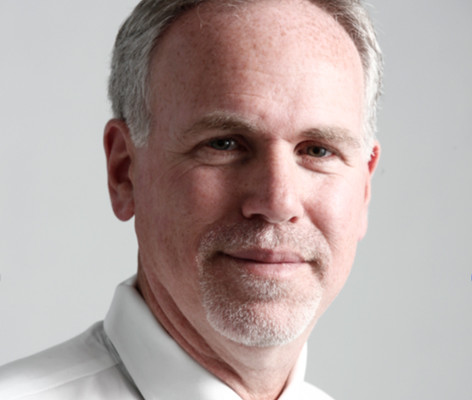
Ever since the Conference Board began studying it in 1987, employee engagement has steadily declined. A recent Gallup Poll reported that only 30 percent of Americans are actively engaged while at work. Have you ever wondered why this is happening? I recently had the opportunity to interview Mark C. Crowley(above), the author of Lead From the Heart: Transformational Leadership for the 21st Century. He had an excellent explanation for why employee engagement has been steadily declining for almost 30 years. He also shared some powerful ideas for how to fix it.

The Power of Engaged People

Most of us are aware of the importance of having actively engaged people in our organizations. The State of the American Workplace report makes it clear just how vital this is. The report showed that “companies with 9.3 engaged employees for every actively disengaged employee in 2010-2011 experienced 147 percent higher earnings per share (EPS) on average in 2011-2012 compared with their competition. In contrast, companies with a lower average of 2.6 engaged employees for every actively disengaged employee experienced 2 percent lower EPS compared with their competition during that same time period. “The exponential boost in earnings due to a higher engagement ratio is a competitive advantage that business leaders can’t afford to ignore.”

We Aren’t Giving People What They Need

In our interview, Mark C. Crowley stated that there’s a very simple explanation for why employee engagement is so low. What people need from their workplace environment is continuously evolving. But, to a large extent, the way we lead hasn’t changed. We continue to apply management techniques that were created in the industrial revolution. It seems we are reluctant to let go of our old belief that people are primarily motivated by money. But Mark makes it clear that our primary drive is finding an environment where we feel truly cared for. In essence, we’re all like oversized children who really only want to feel safe and appreciated.

A Sad Road to Happiness and Success

Mark began working to care for the people he led as a reaction to his upbringing. After his mother died when he was young, he was left to be raised by a very emotionally abusive father. So when Mark first began to lead others in the finance industry, he made a vow to give the people on his teams the things he never received while growing up. Although he set very high expectations and demanded excellence, he also made sure to really connect on a personal level, to be an advocate, to help people grow, and to offer frequent appreciation for the work people did. His approach worked very well. His teams achieved extraordinary success, resulting in rapid promotions for Mark. After being given a national leadership position at Washington Mutual, his division set records for both revenue and profit in 2008, and he was named “Leader of the Year.”

It’s Truly a Matter of the Heart

When Mark began writing his book he was asked why his approach to leadership was effective. Could he prove it works? Is it replicable? An answer to this question came after a discussion with a leading heart doctor. Mark learned that the heart is no longer seen as just a muscle that pumps blood. Over the last 20 years or so, it has become increasingly clear that the heart has its own intelligence, which is primarily emotional in nature.

An institute called Heart Math has grown around the research, which shows that the emotions of the heart are the primary driver of human performance. Mark was able to create and sustain highly engaged, highly successful teams because he was able to reach the part of people that drives engagement. He was able to affect people’s hearts, which is the secret to getting people engaged. By truly caring for the people he led, he was fulfilling a deep and universal need — a need much more important than money.

Hire for Heart

In our interview, Mark shared a quick summary of two of the four principles that he and other highly successful leaders apply to achieve greater levels of long-term success. The first principle is to make sure that the people we hire will be able to put their heart into their job. Talent isn’t enough. We must ensure that people are not only good at their jobs, but also passionate about them. If we ensure that people are doing jobs they actually enjoy, we take a big step to ensuring they’ll be engaged while at work.

Institutionalize Recognition

Too often, Mark says, leaders fail to provide appreciation frequently enough. We often get so caught up in the push for continuous achievement that we forget to take to time to recognize what people have already achieved. Mark recommends that we actually schedule time for recognition each week. If it’s on our calendars, we’re much more likely to actually take the time to recognize what people have done well. He also recommends that we don’t just recognize the top two or three performers. This can create a culture where most people don’t feel appreciated. We should recognize each person on the team who either meets or exceeds goals.

Give People What They Need and Engagement Follows

The formula for leadership success that Mark C. Crowley lays out is a simple one. By helping to fulfill a deep, universal, human need, leaders can create and sustain extraordinary teams comprised of highly engaged people who achieve very high levels of success, and this is a matter of the heart. If you’d like to see the entire interview with Mark, please click here.
Appreciating Business in a Global Gathering

I’m brimming with optimism and less cranky about the world of business! I confess this is a wild reversal in my outlook. As an investigative reporter for more than 30 years in local and network news, corporate misconduct fueled my stories. I couldn’t wait to tell you about a company doing something unethical, unhealthy, or underhanded. But I think I often left viewers in despair. After decades of deficit-based storytelling about the business of business, I’m appreciating a radical new perspective.

In fact, it has a name: appreciative inquiry. To open my mind, I took an executive education class from Professor David Cooperrider, the father of appreciative inquiry, to explore a different way to ask questions. After all, the questions we ask frame the stories we tell. If we search for problems, and talk about problems, we will find problems. And our psyche will be anxiously mired in an inexhaustible supply of obstacles. Appreciative inquiry invites an organization to collaboratively consider and build on its strengths.

If we ask questions and share stories about our most inspired, energizing, motivational successes… imagine the shift in corporate culture. Instead of poking at roadblocks we’re inquiring into a dynamic, hopeful, enthusiastic destiny. We discover a new vista of opportunities out there! And now more than ever, there’s a lot of good corporate conduct to celebrate. In fact, there’s a whole movement called B Corps. And it’s gaining momentum.

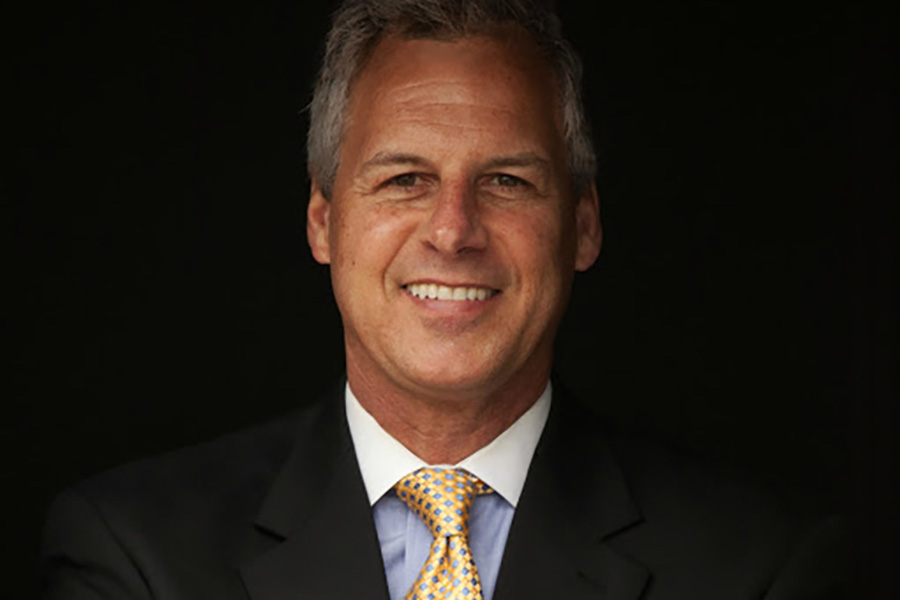
There are more than eleven hundred certified companies in 35 countries, based on the premise of “Business as a force for good.” B Corps are certified “to meet rigorous standards of social and environmental performance, accountability, and transparency.” Next week I’m looking forward to hearing from its co-founder, Bart Houlahan, who will lead a workshop at the Global Forum: Flourish & Prosper.

He’s invited three B Corps CEOs to join him to talk about the movement’s influence. More than 17,000 companies have downloaded the B Corp assessment tool to see how their impact on society measures up. It’s an inspiring source of metrics to help businesses reach higher. The Global Forum will be a gathering place for hundreds more CEOs and thought leaders to explore their best practices with a higher purpose than profits. And since it’s being held at the Weatherhead School of Management at Case Western Reserve, the next generation of business leaders will be helping to co-create the world we all want. There’s even more reason for optimism with those Millennials.

They’re poised to lead in generative ways, as changemakers. We can see it in our own interactions with them and in studies like the Deloitte Millennial Survey 2014. Millennials aim “to work for organizations that foster innovative thinking, develop their skills, and make a positive contribution to society.” Millennials are wired for social media, transparency, and engagement. They are eager to make a difference and charitable by nature.

The Deloitte global survey shows 63% donate to charity. And more than half of the Millennials say they want to work for companies who support charitable causes. All this feeds my new-found optimism. As a journalist I felt like I had a backstage pass to the world. Next week I’m eager for a front row seat at the Global Forum. Join us for this appreciative inquiry with dynamic business leaders and future business leaders generating ideas to flourish and prosper together.


Teenager Malala Yousafzai Wins Nobel Peace Prize

Malala Yousafzai, along with Indian children’s rights campaigner, Kailash Satyarthis, have won the Nobel Peace Prize. Malala won the hearts of millions when she faced death for advocating education for girls in pakistan. She survived and has taken a global stance. On the afternoon of Tuesday, 9 October 2012, 15-year-old Malala Yousafzai boarded her school bus in the northwest Pakistani district of Swat. Shortly afterwards the bus was stopped by a gunman who boarded and asked for Malala by name. He then pointed a Colt 45 at her and fired three shots. One bullet hit the left side of Malala’s forehead, traveled under her skin the length of her face and then into her shoulder.

She remained unconscious and in critical condition for days, before being sent for specialist treatment in London, where she made a full recovery. The reason for the attack on this teenager surfaced shortly after the incident: The Taliban in the region didn’t like her promoting the education of girls, where they had recently taken control and had banned girls from attending school. From the age of 11, Malala had already been writing a blog under a pseudonym for the BBC, detailing her life under Taliban rule.

She rose to prominence and caught the attention of the Taliban after a New York Times documentary was made about her life and South African activist Desmond Tutu nominated her for the International Children’s Peace Prize.  Since her near-death incident there has been an international outpouring of support for Malala, to the point where she may have become the most famous teenager in the world.

Then Prime Minister of the U.K., Gordon Brown, launched a United Nations petition using the slogan “I am Malala” and demanded that all children worldwide be in school by the end of 2015. The petition led to the ratification of Pakistan’s first Right to Education Bill. The universal condemnation and subsequent call to action cut across cultural divides and genders.

Time magazine named her one of  The 100 Most Influential People in the World, Pakistan awarded her the country’s first National Youth Peace Prize and in 2013 she received the Sakharov Prize for Freedom of Thought, previously bestowed on the likes of Nelson Mandela, Kofi Annan and Aung San Suu Kyi. Thirty-three additional awards and honors have been given to Malala, focusing the world’s attention on what might have been just another tragic, and silent, crime against women.

On her 16th birthday, she spoke at the United Nations to call for worldwide access to education. The event was dubbed ‘Malala Day’ and was her first public speech since the attack. It also led to the first ever Youth Takeover of the U.N., with an audience of more than 500 young education advocates from around the world.

“The terrorists thought they would change my aims and stop my ambitions,” she said. “But nothing changed in my life except this: weakness, fear and hopelessness died. Strength, power and courage were born. We realize the importance of our voices only when we are silenced.”

Why Business Is Like Surfing

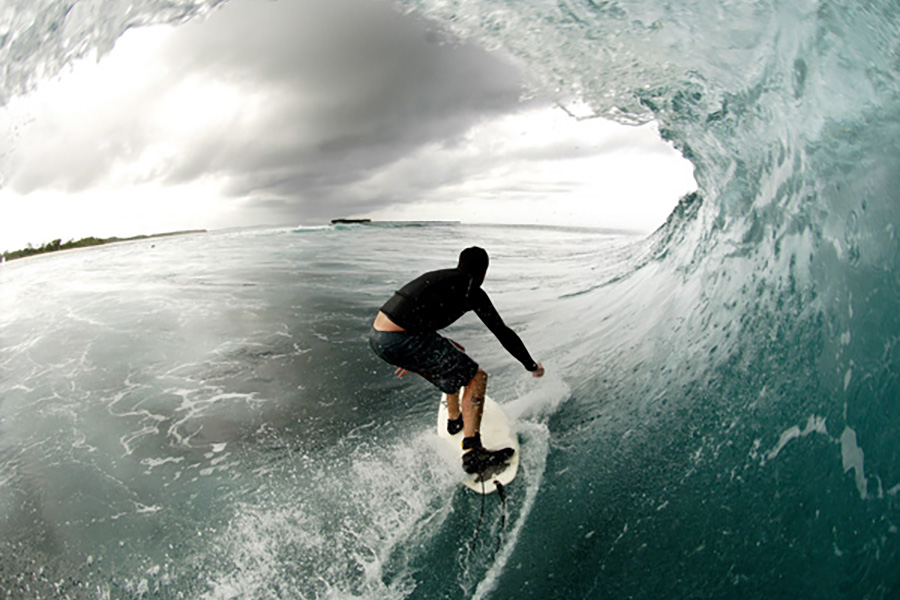
“I’ve decided business is like surfing. There needs to be a wave underneath us. We can’t do all the pedaling!” I joked over Skype to one of our partners in Holland last week. The hardest part of building new business models may be exactly this: knowing which waves to surf and which ones to stay away from. Because business, and life, are like a huge, turbulent ocean. It can carry you to success. Or it can drown you to death. At any given moment.

Many savvy business leaders rely on their instinct. Like old weathered sailors, they smell something’s in the air before the rest of us do. They feel it. And they go for it. Ruthlessly. Tirelessly. Fearlessly. They can spot the wave that will carry their surfboards high up in the air for many miles to come. Statistics, smart consultants and industry experts may provide background information, but each CEO builds his own vision. Each man must choose his own wave. Even while knowing that choosing the wrong one may be the death of him and everything he’s built.

But how does a CEO build an accurate instinct about waves of opportunity? Where does he get the stable security needed to swoosh from one ocean crest to the next without falling over, losing balance and falling off his chosen salty curl? Not his mind, I can tell you. He gets it from his body. I interviewed my osteopath recently. Car mechanics can tell a lot about the way we drive by looking at the cars we drive: how our tires wear out, or where our brakes and motor lose effectiveness. Professionals who work with our bodies are no different. The way our bodies break can tell us a lot about the way we’re surfing the ripples of our profession. Alvaro Moran is a reputed osteopath in Madrid with twenty years of experience.

He is my first visit after I fall off my horse. Yes, his specialty is the musculoskeletal system. But it’s not only about bones, muscles and joints. It’s about what causes injuries to happen and what keeps them from healing. He has studied traditional Chinese medicine, homeopathy and Bach floral therapy. And I have to say he asks great questions about what’s going on with me by looking at where my body gets stuck.

So I asked Alvaro about the sample of patients who walk through his doors and what their bodies show about their biz surfing abilities. After a long strenuous disclaimer paragraph, which I promised to respect, he illustrated some basic ideas which –caution please!— can’t be considered scientific certainties. Yet they do provide some very interesting questions to think about.

Four key elements move our skeletal structure in response to the oceans of our lives: our feet, our knees, our hips and our neck. While our feet connect us to the ground and to our roots, knees flex to deal with ups and downs in life. Our hips allow us to advance and grow, whereas our necks turn to focus our eyes, ears and noses on what we wish to learn more about…told you this wasn’t science! It’s much more interesting than that 😉 If your feet often act up on you, then, you may want to ask yourself about what’s going on in your support structures: home life is a big one of course.

But so are shareholders, key knowledge holders in your organizations, support teams, anything and everything that you stand on to do business. Feet are used to support the body on the floor and to identify irregularities on the path we walk. Surfers need their feet to judge the strength and speed of the wave underneath them. And leaders who can’t trust their feet tend to operate more on theory than on reality because they are blind to the undercurrents that shape their industries.

Knees are about flexibility. Just as a surfer will absorb the bumps or shifting flows in the water by bending and stretching his knees, so too do leaders need to bend to higher powers: cash flows, market regulations, prices fixed by others, technological limitations…repetitive knee trouble may be pointing to a lack of flexibility. Do you fight more than you can realistically win? Do you make a business out of defying the establishment? Do you fail to bend your knee when your company needs you to? Hip problems relate to advancement and growth.

Hips are essential to weight shifts on a surfboard. Hanging back can sink the board into the water, slowing you down. While too much weight on the front can throw you right off the crest into a rolling, tumbling, even life-endangering tunnel of salty foam. Hip trouble raises questions about big decisions involving greater levels of responsibility. From having a new child to starting a new business, taking over our father’s company or launching a sophisticated new product.

Advancing in life requires complex shifts and adaptations which articulate through our hip joints. And finally the neck. Who doesn’t have neck trouble after forty? This power joint brings together upper back muscles and shoulders in coordination with the head. Not only does our neck determine what we look at and listen to. It also keeps our head stuck to our body, no matter how much it tries to fly off into excel projection paradise!

For a surfer, to look at where he’s going is essential. His entire body adapts instantly to the direction marked by his head and eyes. Neck tension is often related to combats between head and body that could never happen on a surfboard, but often take place in executives’ lives: CEOs that don’t want to look at their company’s problems, business owners who want to pull their companies faster along than they can go, investors who fall prey to fantasies of grandeur in their heads while denying their bodies’ insistent objections.

Necks that try to control their bodies into strict obedience quickly become painful. Our physical body is the most important business tool we possess. It is built to surf waves of uncertainty and swirls of chaos instinctively. When it breaks down it’s very often trying to tell us something critical about the way we surf our professional oceans. Forget external gurus, experts and advisors. Nobody knows your business like your body does. Listen to its advice. And it won’t have to get injured to make you listen anymore!

Are You Driven by Goals at the Expense of Compassion?

Increasingly I find it easy to swing on an emotional pendulum from ‘angry-frustration’ to ‘inspiring-hope’ and back again. Something I get angry about are the corporate working conditions that inflame our stress and dampen our performance are much worse now than they were when I started my work 30 years ago (1984).

I am angry that most leaders lead from fear rather than vision.

I am angry the sum total of all the bad things powerful people have decreed on the masses…slavery-genocide-war-exploitation…are as prevalent today as they were at the dawn of history. I am angry because Hard Power leaders have made all the rules that matter since we became conscious. And hard power, which is the institutionalization of self-interest, will never lead a better future. You may be surprised at this, but even my deeper look into Buddhism makes me mad because it takes for granted that men are more advanced souls than women…otherwise they say…why would women be so powerless? Grrrr.

Hard power “logic” is always self-serving and always asserted with arrogant and endless confidence. But it’s ultimately self-destructive. There will never be a war to end all wars unless it’s a war to end all human life. You see, hard power thinking is like a dog chasing its tail. Training the dog to run faster and feeding it better food doesn’t accomplish anything except a more frustrated dog. And yet Soft Power, the power rooted in empathy and compassion is no match for hard power.

Leaders of companies and nations have experimented with it but ultimately it devolves into a hippy commune and collapses in exhaustion…whimpering for consensus while realty overwhelms good intentions.

The new answer is the old answer. It’s the only answer.

It’s the wisdom of balance. Yin and Yang. The harmony of empathy and discipline. Freedom and responsibility. Empowerment and accountability. Innovation and execution. Vision and the bottom line…Your head is in the clouds and your feet on the ground…that’s Smart Power. I know, it’s obvious. Yet it is rarely practiced. We need to change that.

It all starts with our inner voice.

The one that is telling us what our higher goals should be. And the one that makes up excuses to justify abandoning them when we are tested by disappointment. It’s that inner voice. Yesterday we had lunch with a Smart Power 30-year-old Tibetan women. She was married to a selfish, unfaithful, violent man. She demanded a divorce, which is very unusual in her culture.  She learned English so she could become an effective importer wholesaler. Then she asked her parents to select a new husband since she had not used the correct criteria for her first choice. When a marriage partner she approved of was found she informed him he would stay home and raise the children while she built her business.

She said men cannot work outside the home and remain faithful. She said “There are too many desperate women who wish to steal husbands so he must stay home where temptations are minimal.” Our new friend is a tiny, sweet compassionate woman who loves her family. Her work isn’t driven by her personal ego but from a vision for her family’s best future. I am not suggesting all women should work and keep their over-sexed husbands locked up. Rather I am admiring the strength of a Smart Power woman who cares enough about her future to take charge of it. So how about you?

Are you driven by goals at the expense of compassion?

Or are you driven by peace-making while your dreams melt away. What’s the Smart Power balance you need right now? If our seemingly powerless Tibetan friend can re- invent her life, so can you.

Encouragement versus Discouragement: A Personal Journey

For the past few months, I’ve been guided by a simple notion that appears to be quite powerful in how I relate to others. It has to do with encouraging versus discouraging. About a year ago, I began to see this distinction clearly, which begs the question, why hadn’t I seen this before? We’ll come to that later.

The question I’ve been left with is the following: Is the person I just interacted with left with a feeling of encouragement or discouragement? The question came to me after talking with my son about a concern I had with the way he was conducting himself. It was obvious that he left the conversation feeling down. I noticed his gait was slower, his shoulders slumped, and his energy clearly deflated. Now this is not how I want my son to be walking in his life. And yet that is how he left our conversation. My hope was that he would feel challenged and inspired to change.

However, he left feeling the exact opposite. I began to reflect on other times he had walked away from conversations we’d had and the impact of my opinions on him. I then began to notice that too often other people also left my presence in much the same way.

My wish is for people to be challenged, supported and uplifted—to be called to their better selves as a result of spending time with me. To make change in one’s life requires resolve, determination, and belief in oneself. In addition, some kind of disequilibrium or disruptive event or crisis is required. This can motivate people and ignite a desire for growth and development. However, change will be inhibited if a person only feels discouragement. And yet that is what I did – focused too much on the ‘challenge’ part.

Now this doesn’t happen all the time with everyone, mind you, but I recognized enough situations that I began to see a simple, yet profound pattern. When I am critical without compassion, and focusing solely on the negative, without seeing the potential of the person in front of me or communicating my belief in them, they leave discouraged and not feeling supported. It’s that simple. You know it and I know it. We all know it. Yet despite this knowledge, I kept repeating the pattern. When looking deeper into my own history of criticism, I began to see that I’d always been critical toward myself.

My pattern for learning had been focused on what I was doing wrong. This actually used to work for me (to a point) as I kept trying to fix what was broken. Yet at the same time, it was a very hard way of life. I was hard on myself and rarely, if ever, really enjoyed life. Yes, I was growing along the way, but the journey was very difficult. It was only when I began to see the beauty in my life and appreciate who I was, and had ultimately become, that my pattern of inner criticism began to change. And as it did, I felt more encouraged.

And as I felt more encouraged, I enjoyed the journey more and more. My success grew geometrically, not arithmetically as it had done earlier in my life. In other words, my capacity to grow had developed because of my changed stance in life.

Now my focus is directed toward others, to see if my behavior leaves people encouraged or discouraged. The question is front and center for me. If they leave encouraged, then I’ve done a greater service to them than if I‘d simply pointed out their flaws. This doesn’t mean I avoid speaking the truth when I see something wrong or needing improvement. It simply means that, when consulting others, I offer them the following:

  1. You are good by me—I respect you and honor who you are.
  2. I believe in you and your capability. I trust your ability to solve this.
  3. I care about you – I would not be sharing this feedback with you unless I cared about you and our relationship.
  4. Everything has an upside and a downside. The challenges you are facing are a natural expression of the upside of who you are. Let’s not throw out the positive as you try and find ways to minimize the negative. Let’s appreciate that the negative cannot exist without the positive and vice versa.
  5. You need resolve to tackle the challenges you face right now. This is a journey that may take time. Take it slow, and break it down into mini steps so you can monitor and acknowledge your progress. Don’t try to change it all at once.
  6. Accept and embrace any ‘failure’ you may have along the journey. Learn from these ‘setbacks’. Expect and don’t expect miracles!
  7. I am not attached to you after offering my suggestions or guidance. I trust you to create your own experiences and own the decisions and consequences that arise from them.
  8. You are not your results. You are far more than your personality, your actions, and your ability. Remember the deeper essence of who you are.

As I’ve been pondering the way in which people leave my presence, I’ve realized the profound impact it has had on me. I’ve realized that if people are discouraged, then I must not be completely satisfied with myself. The influence I’ve had on others, in other words, has become a teacher to me. As a result, I’ve become a source of encouragement for myself.

Almost every day I feel grateful, alive, full and whole, and the more I feel like this, the more people feel encouraged in my presence. Why couldn’t I see this before? Well, I couldn’t see that I was caught in my own paradigm of self-deflating behavior. I looked at others and myself through a lens of limited belief in what was possible.

These beliefs were not conscious and therefore my behavior was outside of my awareness. It was only when I desired more than walking through life with my shoulders slumped and feeling discouraged that my life changed. Who knew life could be so good?

Leaders: Stop Kicking & Slow Down

Speed is the hallmark of our time. It’s funny to hear how many industries and professions regard it as essential to survival and leadership. Reporters want to be the first ones to tell a story, brands try to plant their flags on a new market before anybody else, and well, don’t even get me started on the spectacle of cut-throat racing offered to us by the techno-gadget and services industry on a daily basis. Something is definitely not right.

Last week I attended a women’s event in Madrid. A roundtable discussion among top executives from best-in-class companies such as Microsoft, Atos, Orange and Manpower were discussing what they were doing to make our societies more resilient. No doubt they all had impressive track records of exposure to uncertainty. There couldn’t have been a better selection of panelists to discuss solutions in technology, connectivity and workforce.

But I was restless in my chair throughout the entire conversation. Something was wrong. I couldn’t put my finger on it. And then, out of nowhere, it hit me. I raised my hand to ask the question I’m asking you now: how much time do you dedicate to just contemplating life? The smartest and best prepared executives on the planet are in charge of formulating plans to help our societies meet future challenges. This sounds perfect to me.

The problem is these four brilliant thinkers were working at least ten hours a day. Probably more like twelve to fifteen hours a day. Are our destinies in the hands of superbly educated hamsters who can’t take a minute to themselves? Our earliest ancestors experienced incredible levels of uncertainty. Every day was full of unpredicted novelties that could wipe out a whole tribe. They could be attacked by hostile hunters, or the weather could turn on them before they could get to a safe place. Food could run out just as easily as it became available.

Small groups of humans survived and even thrived in complete aloneness. And who were the thinkers and the planners of everybody’s future? They were not tireless hamsters. That’s for sure! The people who advised hunters on the strategies to follow were older warriors. Shamans and elders spent entire days alone in Nature or cooking up sophisticated rituals to help the tribe decide where to go, what to do, what risks to take, which losses to accept and let go.

Many caves bear witness today to the evocative paintings which framed rituals and profound tribal ceremonies tens of thousands of years ago. The planners and thinkers of humanity’s most challenging beginnings did not work fifteen hours a day. It’s just as well they didn’t…otherwise we may not have come this far! One huge truth is that our best executives take no pride on running like hamsters. The system we’ve created insults their intelligence and wastes their talent on a daily basis. The four executives on that panel last Friday opened their eyes as big as saucers when I asked my question.

They recognized a doubt that had already plagued their minds. Our global economic system is trapping our best people in unending wheels of repetitive problem-solving in order to maximize the bottom line. I seriously doubt corporations and publicly traded companies are going to come up with realistic solutions to future threats to humanity. They seem to be too busy building hamster wheels and cornering talented executives into running for their lives.

But, if we concentrate on the truths that we can do something about, then our own personal speed comes into focus. Is it so hard to simply slow down? Is it worth it to even try? It’s a little bit like horse riding, which has become one of my absolutely favorite areas of growth, enjoyment and profound personal learning. Imagine that your body is a magnificent stallion. It’s a sight to be seen when it runs wild. His mere strength and power, the joy in his stride matching the shine on his black hide, his elegant sprints and effortless way around trees and over bushes.

There is nothing your wild horse can’t do when you give it some space. Now suppose you have domesticated it heavily for the last twenty, thirty or forty years. You’ve become accustomed to speedy racing at all times, always worried somebody else will outdo you. If you constantly kick the horse to make it run faster, the horse falls into the habit of lazily trailing along behind you at minimum effort. It just waits for your kick before it pays any attention to what you’re trying to achieve. You do all the work. You exhaust yourself with your kicks.

You look like a ghost. And your horse’s magnificent prowess is permanently absent from what you produce. If, however, you stop constantly kicking your horse to run faster at all cost, learning to do so only when absolutely necessary, an interesting transformation occurs. Your horse stops opposing you and begins to play with you. You go from mercilessly milking results out of it to unsuspected wonder at the amazing things it can do when you trust it. Our unconscious minds and bodies are full of magnificent tricks to show the world, if only we stop kicking the life out of them!

Our current obsession with speed turns us into evil intellectual jockeys, so obsessed by winning races, we’ve completely lost touch with our horse-bodies. The pleasure of working together, the complicity that comes with sharing success, the mutual respect imbued by hours of watching each other excel… they are all gone. Our bodies no longer trust our minds. All we have left is restless scenario planning in our heads as we drag our exhausted skeletons to meetings where we won’t come up with anything creative, or exciting, or worth remembering in any way.

Everything worth living for comes from the wild horse that is our body and unconscious mind. Our passion and out-of-the-box visions don’t come to us when we kick ourselves to perform. They come up inside us when our body is engaged and joyfully involved in our game. Creative ideas and approaches pop into our conscious minds when least expected, like my question to the panel did last week.

Leadership charisma comes from something in our voice and in our eyes that is closer to wild animal warmth than it is to intellectual reasoning…leading is more about the unpredictable wild within us than planned speed. Learning to slow down is not just a nice habit to think about. It’s an entire change of paradigm. It’s a choice worthy of courageous leaders, facing a global system of oppressive, compulsive hamster-wheel racing.

Please stop kicking. Slow down. The future of humanity just might depend on it.

Leaders: Stop Kicking & Slow Down

Speed is the hallmark of our time. It’s funny to hear how many industries and professions regard it as essential to survival and leadership. Reporters want to be the first ones to tell a story, brands try to plant their flags on a new market before anybody else, and well, don’t even get me started on the spectacle of cut-throat racing offered to us by the techno-gadget and services industry on a daily basis. Something is definitely not right.

Last week I attended a women’s event in Madrid. A roundtable discussion among top executives from best-in-class companies such as Microsoft, Atos, Orange and Manpower were discussing what they were doing to make our societies more resilient. No doubt they all had impressive track records of exposure to uncertainty. There couldn’t have been a better selection of panelists to discuss solutions in technology, connectivity and workforce.

But I was restless in my chair throughout the entire conversation. Something was wrong. I couldn’t put my finger on it. And then, out of nowhere, it hit me. I raised my hand to ask the question I’m asking you now: how much time do you dedicate to just contemplating life? The smartest and best prepared executives on the planet are in charge of formulating plans to help our societies meet future challenges. This sounds perfect to me.

The problem is these four brilliant thinkers were working at least ten hours a day. Probably more like twelve to fifteen hours a day. Are our destinies in the hands of superbly educated hamsters who can’t take a minute to themselves? Our earliest ancestors experienced incredible levels of uncertainty. Every day was full of unpredicted novelties that could wipe out a whole tribe. They could be attacked by hostile hunters, or the weather could turn on them before they could get to a safe place. Food could run out just as easily as it became available.

Small groups of humans survived and even thrived in complete aloneness. And who were the thinkers and the planners of everybody’s future? They were not tireless hamsters. That’s for sure! The people who advised hunters on the strategies to follow were older warriors. Shamans and elders spent entire days alone in Nature or cooking up sophisticated rituals to help the tribe decide where to go, what to do, what risks to take, which losses to accept and let go.

Many caves bear witness today to the evocative paintings which framed rituals and profound tribal ceremonies tens of thousands of years ago. The planners and thinkers of humanity’s most challenging beginnings did not work fifteen hours a day. It’s just as well they didn’t…otherwise we may not have come this far! One huge truth is that our best executives take no pride on running like hamsters. The system we’ve created insults their intelligence and wastes their talent on a daily basis. The four executives on that panel last Friday opened their eyes as big as saucers when I asked my question.

They recognized a doubt that had already plagued their minds. Our global economic system is trapping our best people in unending wheels of repetitive problem-solving in order to maximize the bottom line. I seriously doubt corporations and publicly traded companies are going to come up with realistic solutions to future threats to humanity. They seem to be too busy building hamster wheels and cornering talented executives into running for their lives.

But, if we concentrate on the truths that we can do something about, then our own personal speed comes into focus. Is it so hard to simply slow down? Is it worth it to even try? It’s a little bit like horse riding, which has become one of my absolutely favorite areas of growth, enjoyment and profound personal learning. Imagine that your body is a magnificent stallion. It’s a sight to be seen when it runs wild. His mere strength and power, the joy in his stride matching the shine on his black hide, his elegant sprints and effortless way around trees and over bushes.

There is nothing your wild horse can’t do when you give it some space. Now suppose you have domesticated it heavily for the last twenty, thirty or forty years. You’ve become accustomed to speedy racing at all times, always worried somebody else will outdo you. If you constantly kick the horse to make it run faster, the horse falls into the habit of lazily trailing along behind you at minimum effort. It just waits for your kick before it pays any attention to what you’re trying to achieve. You do all the work. You exhaust yourself with your kicks.

You look like a ghost. And your horse’s magnificent prowess is permanently absent from what you produce. If, however, you stop constantly kicking your horse to run faster at all cost, learning to do so only when absolutely necessary, an interesting transformation occurs. Your horse stops opposing you and begins to play with you. You go from mercilessly milking results out of it to unsuspected wonder at the amazing things it can do when you trust it. Our unconscious minds and bodies are full of magnificent tricks to show the world, if only we stop kicking the life out of them!

Our current obsession with speed turns us into evil intellectual jockeys, so obsessed by winning races, we’ve completely lost touch with our horse-bodies. The pleasure of working together, the complicity that comes with sharing success, the mutual respect imbued by hours of watching each other excel… they are all gone. Our bodies no longer trust our minds. All we have left is restless scenario planning in our heads as we drag our exhausted skeletons to meetings where we won’t come up with anything creative, or exciting, or worth remembering in any way.

Everything worth living for comes from the wild horse that is our body and unconscious mind. Our passion and out-of-the-box visions don’t come to us when we kick ourselves to perform. They come up inside us when our body is engaged and joyfully involved in our game. Creative ideas and approaches pop into our conscious minds when least expected, like my question to the panel did last week.

Leadership charisma comes from something in our voice and in our eyes that is closer to wild animal warmth than it is to intellectual reasoning…leading is more about the unpredictable wild within us than planned speed. Learning to slow down is not just a nice habit to think about. It’s an entire change of paradigm. It’s a choice worthy of courageous leaders, facing a global system of oppressive, compulsive hamster-wheel racing.

Please stop kicking. Slow down. The future of humanity just might depend on it.

Leaders Don’t “Have To” Anything!

Many are now coming back to routine these days with heavy hearts. Summer prepares to leave our gardens in search of southern destinations, while we lazily wake up to find all the stressors we’d happily left behind a few weeks ago. As it turns out, however, the worst stressor of all is our own excessive self-discipline.

It just might be our biggest weakness as leaders. One of my clients was complaining on a phone session about how his last week on holiday had become a nightmare. His son had got into teenage trouble and he had fought with his wife: “this is exactly the opposite of what I needed from my family when I’m preparing to take on a new company! I have to get ahead of our key Asian competitors a.s.a.p. and break in a whole new management team before Christmas…”

It’s typical to see tension building in families as the end of the holiday approaches. Nights become restless with nightmares and fights break out of nowhere over the dumbest little mishaps. Our bodies know that routine, work and school are right around the corner, and though our minds may still try to get the most out of our vacation, pressure activates uncomfortable feelings and sensations. Because we are mammal animals, we share the pressure unconsciously through sighs, snappy remarks, curt replies and an entire assortment of non-verbal cues which kids (and pets) immediately pick up on and act out in full color. No doubt my client’s challenges were big enough to keep anybody awake at night.

Still, he was carefully hand-picked by very selective shareholders to take on that job. If anybody can turn that company around it’s him. All he needs to do is reduce the pressure, and everything else will fall into place, including his rebellious teenage son and angry wife. But how?

Very often the quickest way to reduce excessive pressure is to eliminate “have to” from our vocabulary. Let’s be clear: Leaders don’t “have to” do anything. If you “have to” move or act in a certain way, then something or somebody else is leading you. This is the quickest way to identify the leader in a fish tank full of males. Who chases everybody else? The number of sentences containing “have to” we tell ourselves each day, therefore, is an interesting indicator that betrays our own excessive pressure on ourselves. Yes, we may be pursued by shareholders, we may be provoked by the speed of our competitors.

But we can choose to be rudely pushed by the situation, or become graceful pushers ourselves. It’s all about managing pressure and knowing when to send it right back to where it came from. If fish can do it, can’t we? In Spanish there’s a saying that goes “más sabe el diablo por viejo que por diablo”, which translated to English, means that the devil is smarter because he’s old, than as a result of his devilish nature. Board level executives are much the same.

The older they get, the smarter they are at keeping their cool under every kind of attack, patiently waiting for the perfect opportunity to strike back. They know that the first rule of leadership is keeping your cool at all times. Because when you feel cool, at ease, in perfect control of your own skills and resources, you don’t have to anything. You know you are killing it with every gesture, you can hear your own tone of voice rounding syllables in beautiful symphony, and you know exactly where the conversation is going to go: where you want it. An insecure player has to win the contest.

A cool, savvy player enjoys displaying his own talent without pressure or obligation, knowing full well he’s going to win. He just knows it in his gut. He can feel it. I’m sure you’ve felt this way at some point in your life. It’s unforgettable. When “have to” expressions pop up too often in our minds, we’re probably losing our cool and transforming into little helpless fish in a tank full of much larger, mean, bully-type fish. Yet it’s an illusion driven by our own insecurity. We aren’t fish in a fish tank. We’re leaders! We choose our battles. We can figure out a way to knock the other guy off his pedestal of certainty. We… just need a little more time.

Which is what I advised my frustrated client: “stop forcing yourself to over-perform and give yourself the space you need to regroup, relax and plan a strong, well-rooted strategy. Nobody is pushing you. Stop pushing yourself!” You should have heard his sigh of relief. I should have recorded it! I’m sure his family is secretly thanking me for that momentary shift. So, so simple. Yet so counterintuitive for us these days.

For some reason we are literally obsessed with self-discipline and effort. It reminds me of sweaty, worn posters on the walls of small gyms where unlikely bodybuilders slave away at their abs: “No pain, no gain!” If we’re not killing ourselves –rather than killing it at work – we may even feel guilty… sound familiar? All our leadership theories, our research publications and self-help books reinforce this global attitude of self-punishment in order to reach our goals. To the point that many executives actually decrease their own performance because they consume huge portions of energy in silent, often unconscious, self-recrimination and judgment: shouldn’t have said this, must improve that, have to do this a.s.a.p…. we are pushing ourselves to win instead of enjoying the test of our talent.

We will ourselves to be more like Mark Zuckerberg, Sheryl Sandberg or Bill Gates with excessive force, and even silent cruelty at times. Somehow we’ve become shamefully violent trainers to our innocent, animal bodies. The minute they stray from the path we’ve dreamed up in our heads, we beat down on them like there’s no tomorrow.

This, my friends, is the biggest source of pressure I see in many, many CEO’s and business owners today. It’s incredible! Leadership is not about pain. It’s about flow. And flowing is one of the most pleasurable sensations in life. Forget “have to.” Trust your body to flow. It’s strong, powerful and talented. And it simply loves to show off! The rest will fall into place. Family included.

Women – How to Increase Your Leadership Power

Right now I’m working with a remarkable woman leader. She is the head of Human Resources of North America for a major global company. To sum it up, she is smart, fearless and savvy. But it’s not just what she is but what she does that makes her powerful. If I were to identify the single leadership problem that is an epidemic today it is confusion. People don’t perform well when they’re confused and most employees in most organizations are very confused. It’s not surprising.

We live in a time of great complexity. Competition is ferocious. Companies used to have competitive advantages that would last years. Now that’s been reduced to months. External factors in the economy, technology and social trends all work to create employee whiplash caused by constant changes and escalating demands.

I’m not exaggerating this problem of confusion. Recently, Franklin-Covey published some research that asked employees to rank their leaders against 77 management behaviors. Although people ranked “being a hard worker” the number one trait of their boss, the worst traits were ones that are at the root of basic leadership. They said their bosses were lousy even terrible at:

  • Prioritizing work so that time is spent on what’s most important
  • Setting up your expectations when assigning tasks
  • Planning ahead to reduce working in a crisis mode
  • Providing timely feedback on performance

These behaviors were the lowest scored. They were dead last among managers of some of the world’s most prominent enterprises. This is a big problem. Lousy leadership creates lousy performance which fills organizations with dysfunctional anxieties. When people are worried and confused they hunker down into all the toxic forms of self-protection which makes working in large organizations seem like you are trapped in a Dilbert cartoon. Whenever I’m able to work with exceptional leaders it’s like breathing pure oxygen.

I really hunker down and take notes on their behavior. I try to be a leadership anthropologist watching for what causes success in challenging cultures. At the core of leadership is the wise development and use of power. By power I mean the leadership ability to focus peoples’ attention, motivate their abilities, and prioritize their work to achieve meaningful goals. In many ways leadership is very simple. People want to succeed and leaders who make success easy are given a lot of power. As I have written before most male leaders rely on hard power strategies to push people to get things done.

But when people are confused pushing people to work harder always makes things worse. Product failures, angry customers, plunging sales and passive aggressive cultures are all signs of employee confusion. Many female leaders mistakenly try to balance the shortcomings of hard power by over-relying on the tools of soft power such as empathy and collaboration. But getting people together to try to figure out what their boss really means only leads to more confusion.

It also weakens the power of women who may be misusing their emotional intelligence when it’s their practical intelligence that will make a difference. That’s exactly what my client does that is so refreshing… and so powerful. She wields SMART Power like a samurai, cutting through confusion by constantly simplifying complexity. She is able to articulate the big picture and the vital business priorities using an array of simple declarative sentences.

She always ties her HR agenda to the urgent needs of the business. She can articulate the strategic imperatives of the enterprise as clearly as the CEO. Then she states what must be done immediately and has a question such as, “Does it make sense to you that we replace our annual performance reviews with short, biweekly feedback sessions since people need a constant flow of coaching to stay focused on emerging priorities?”

This technique of making recommendations in the form of a question consistently raises her power wattage. Her questions frame the discussion and contain compelling ‘if-then’ logic. It also helps her not fall into the trap of either whining about or insisting on a change she wants to make. This technique is not trivial. There is plenty of research that confirms when women try to exert power using the same techniques as hard power males they actually reduce their power and influence and become labeled as “overly aggressive, or worse…”

To sum it up, if you want to increase your SMART power then simplify confusion, clarify priorities, and lead people to follow you by asking them smart questions. Above all have a leadership agenda. Don’t wait for orders and don’t spend your life trying to achieve other people’s goals. Your goals are probably smarter!