7 Things I Learned in Tibet

Debbie and I just returned from almost 3 weeks in Tibet, Nepal and Bhutan. Yes, we saw Mount Everest (from a small plane… no more mountain climbing for me). But the most enriching part of the trip was spending every day with a guide who happened to be either a devout Buddhist or Hindu. This allowed us to get into extended conversations about their beliefs, their hopes and dreams, and their life strategies. Two of the guides were young women ages 30 and 27. Both of them were very open, sincere and strong.

Perhaps the most compelling realization on the trip was that the new generation of women everywhere in the world shares a mindset that things are going to be different.

The cultures of these countries are deeply rooted in Buddhism or Hinduism. These religions contain deeply held beliefs that each of us are born into circumstances we deserve… and that men are more spiritually evolved than women. In other words, if you were an awesome spirit you would’ve never been born a woman. I know, what a great way to set up a culture if you’re a man. Well the young women of Tibet, Nepal and Bhutan are not buying it.

They are pursuing educations, significant careers, marrying later, and treating their husbands like partners rather than gods. One extremely positive outcome is that women are asserting themselves in terms of resisting sexual abuse, rape and virtual enslavement. This is all happened in one generation. Universal media and the Internet are definitely impacting it. It is also driven by a new web of personal connectivity between young women around the world.  Women do network and communicate… everywhere and all the time.

One thing I can predict with high certainty is that in the next 30 years the world will change significantly because more women will make more important decisions and create greater influence than ever before in history. It’s about time! (If you like to watch a film that reinforces this idea click here.)

Since the trip also allowed me to both study and reflect, I thought I would pass on 7 ideas I found worth considering. You may not agree with all of them but if there is a nugget for you put it in your “mental pocket” and examine it more closely.

  1. Buddhism is a lot more than meditation and chanting. Hinduism is a lot more than yoga.  While it is true that all religions have serious defects… invariably caused by centuries of hard power leaders using fear to control the thoughts and behavior of their believers…the spiritual inspiration at the root focuses on inner peace and acts of compassion. Finding inner peace is the power source of true compassion.
  2. The tribes we belong to dilute our conscience. For instance, when large groups of people engage in business activity that cause employees to suffer by reducing their individual power while increasing their demands in an effort to make products that generate high profits but little value, we accept it as business as usual.  The cost of this mindset is high. If my prosperity depends on others’ suffering my soul submerges in an ocean of self-justification.
  3. My TRUE self, my intrinsic self has a manipulative roommate. He shows up as the other voice in my head insisting I need status, money, popularity and achievements I can brag about to feel secure and self-satisfied. It turns out this nasty roommate is a big fat liar. My TRUE self knows that if I put my higher attention on attaining wisdom and loving others I will learn what I need to learn and do what I need to do to be happy in any circumstances.
  4. If I consistently sell out my TRUE self to anger, jealousy or fear I will find myself trapped in a life that is smaller and more stressful than the life my heart desires.
  5. If I allow my self-interest to masquerade as virtue I will become a moral barbarian. 
  6. Our life is designed to challenge us. Our future rarely turns out as we envision.  Nearly all our plans for our career, marriage, finances and health don’t materialize as we imagined. When we are surprised by crisis and disappointment it is time to question our desires, our values and our choices. If these moments cause us to pause and reflect and realign with our inner sense of purpose we will grow. If we don’t we will re-enter the cycle of disappointment and self-frustration. This is true for everyone. It is how life is designed.
  7. While it is reasonable to forgive people who seek our forgiveness, forgiving those who hurt us without remorse is masochism.  Escaping the anger of past and unresolved pain doesn’t require forgiveness…it requires transcendence. This means that we cease to want justice or to wallow as a victim.  We literally transcend our pain by focusing on our own growth, our own power and the positive difference we are designed to make. Transcending undeserved betrayal or abuse requires not thinking about it anymore. When we stop investing our energy in our mental movie of past wrongs and disappointments we free our minds so our hearts can embrace today and generate optimism for tomorrow. As my 27-year-old Buddhist guide said, “You will gain nothing from meditation… but you will lose your anger, jealousy and fear.”

I am so grateful for our trip because it was so thought-provoking and inspirational. I would write some more but it’s time to meditate… 🙂
Empowerment Through Change and Perseverance

Step into the shoes of an Ecuadorian women living in a small community in the Andes Mountains. It’s a Wednesday and wake up call is at 4:00 am. The sun is still a bit drowsy; the Earth and the people slowly arise for the day’s activities. With a family of growling stomachs your responsibility as a mother requires you to prepare breakfast. You’ll have to make whatever is in the house…whatever you could afford with your limited five dollars at the market yesterday. Perhaps there is some rice (1 pound is 0.50 cents), pastries (1 dollar buys you 10) or mangoes (1 dollar buys you 25) left over.

The clock is ticking; only 30 minutes left before you must go out to attend to your duties. With no time to spare, you head out into the field to tend the farm. Today’s job includes washing your donkey, feeding the sheep and collecting food for the guinea pig and rabbits. Yesterday you were watering crops, digging the buried potatoes and cutting weeds. You must allocate proper time for both the animals and agriculture. Poor time management equates to an empty pantry, no school uniforms (meaning no education), and no extra money for repairs around the house, for example.

Your back is in pain due to constant hovering and lifting in the field. Complaining might help the emotional side, but it won’t alter the physical. In fact, it won’t change the fact that tomorrow you will need to suffer the same physical challenges in order to bring health, education, clothes and shelter to your family. You’re willing to do anything for your loved ones. You grew up knowing that life can be hard; your ancestors told you that those who work the hardest are the ones that live the longest.

The sky has gotten dark and the evening chill is flowing. Dinner sounds nice, if money allows. Water would be great too, if one of your children went on a 5-8 hour walk to fetch it. A shower? Forget about that because you’ve had your shower for the week on Monday. It’s nine in the evening. You look at your successes and after a full day, the monetary gain is maybe 0.50 cents. Less than one dollar. It’s clear now that in your “free time,” before heading to bed, you need to knit a scarf for the women’s group. Someone needs t0 bring in the alternative income.

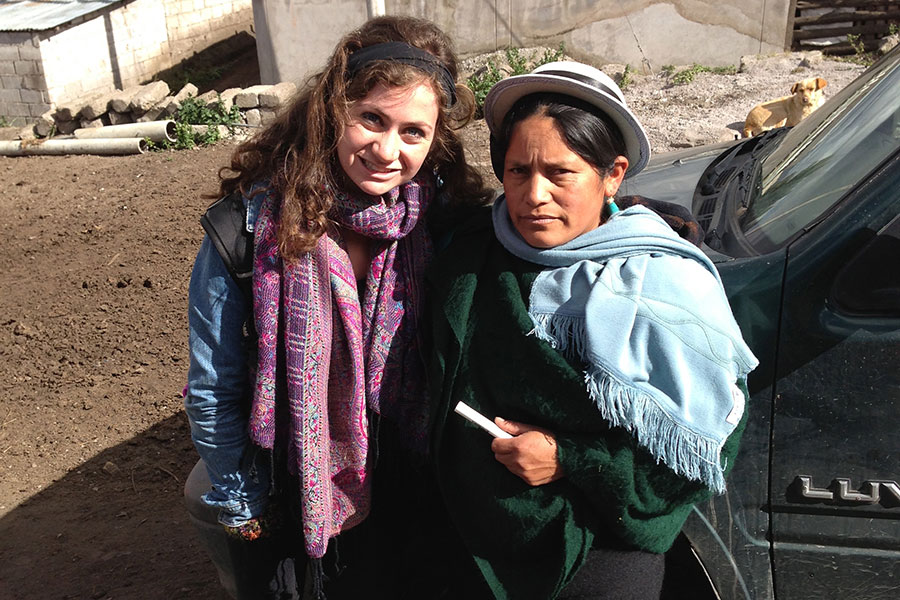
Not a second in the day goes by that your hands aren’t busy. Money means hard work and hard work means food. Your bed calls, ready for tomorrow starting at 4 am. Sleep, work, work, work, and repeat. During one of my Giveable Giggles trips to Ecuador in 2013 I met numerous women who live the daily experience described above. This, however, is the modern experience. Not too long along the communities and women, in general, lived in circumstances of extreme inequalities, violence or discrimination. One person in particular, Maria Angela Pacheco explained to us that she refused to go on living in these circumstances. She is living proof of how one’s goals combined with determination, passion, mobilization and action can make a difference.

As a young girl she grew up combatting the consequences of poverty, racism and sexism. She was raised in an environment in which women were treated and viewed as inferior and unequal. In comparison to the men of the community, there was a complete lack of opportunities for women. Perhaps it is because the culture called for the females to concentrate on domestic work, which inevitably created a barrier to the outside world. The household became a place for male domination despite it being a “women’s territory.” The men – husbands, politicians, brothers — made all of the decisions about how the women in the village lived their life.

Concerns relating to marriage, occupation and education were among some of the matters that were stripped from a women’s authority. Unsurprisingly, when a woman began to take control of her life, marriage or occupation, violence was expected. Avoiding the horrors of abuse the ladies, consequently, were silenced by the men. Once I understood this context, it began to make sense why the females I met were overwhelmingly shy. Who would want to speak out when their voice was cue for psychological or physical aggression? The women were shut out of opportunities to express their voice and opinions.

Maria Angela did not accept this reality. When she finished high school, she was disgusted with the overwhelming inequality. She took the initiative to listen to her fellow community members. Lost voices were suddenly heard. She essentially broke down the household barrier and welcomed females to speak out for what they believe in. As Maria Angela powerfully stood up for what she believed in, equality was given and respect earned. When she was 18 years old she became the first female president of her community. Following her leadership role and changing times, the community and surrounding areas have dramatically evolved. A woman’s space is no longer limited to the domestic realm. Their voices are no longer locked up in their own minds. Being a female no longer means extreme inequality or opportunities.

Through Maria Angela’s leadership and encouragement, she has introduced a number of microenterprises, for instance. She focuses on knitting projects with younger girls because it provides greater opportunities for their future and the development of the community as a whole. A young generation of educated, confident and powerful women is better equipped to succeed and start a chain reaction in modeling equality. Now even if the ladies had a tough day in the field, they have a safe place and group of like-minded women to interact with. Perhaps the past few day’s earnings were below the necessity; the profit from their group will serve as an alternative to maintain stable families. Maria Angelo has completely transformed the social structure, organization, politics, economy and institutions in these Ecuadorian communities.

When I went to visit Maria Angela, I realized that it has taken a long time for these communities to get to where they are today. Maria Angela did not wake up one day and find a suitable village in which to eradicate inequality overnight. I look towards her clarity, dedication and leadership to explain this transformation. In fact I found out that she ran leadership, ‘rights’ and self-esteem workshops to raise awareness within these communities.

In other words, she made a conscious effort to change a deeply embedded social norm of inequality to encourage positive progress. Maria Angela taught day after day, in place after place until she was able to recognize change. I would venture to believe that many of us resonate with Maria Angela. Perhaps in terms of the struggles we face as people (e.g., due to gender, religion, race or nationality) or as leaders (e.g. time, financial obstacles or space).

Often times I must remind myself that change is an ongoing process and that it may take time to reach our goals. Perseverance was key for Maria Angela. It is her dedication to seeing a change that generated a high impact. It is absolutely incredible that with the willingness to do what it takes to accomplish a goal many lives can be impacted for the better.

Maria Angelo can now measure her success based on the new laws passed, the many successful microenterprise women groups and an environment of equality. She proves that one person can make a difference.

Leaders: Are Your Vines Happy?

George MacLeod is a 92-year-old man who grows grapes and produces award-winning wine. In addition to the inspiration I draw from him as an elder, who has done so much with his life and continues to stay vibrant and alive, enacting his plans and vision for the future, I’m also inspired by his approach to wine making and what it can teach us about leadership. In contrast to so many wine makers who focus on the fermentation process, George focuses on the quality of the grapes.

He carefully nurtures the vine upon which they grow, to maximize conditions so that the grapes can be at their succulent best. Like a gourmet chef, who believes that high quality ingredients are essential to superior taste, he believes that the best grapes make the best wine. His fundamental question about growing wonderful grapes is simply this: Are the vines happy? In other words, his philosophy is, happy vines make delicious grapes, which in turn make extraordinary wine.

This philosophy is profoundly relevant to leadership and creating a conscious and healthy organization. Organizations are significantly effected by the quality of relationships, much like wine and the quality of the grapes. And what causes relationships to flourish? The answer is trust. Trust is at the core of all relationships. Trust is the vine of the relationship, without which everything else breaks down. It’s the glue that holds the relationship together. The quality of that trust determines the quality of the relationship. When trust breaks down, many other things break down too.

Communication suffers, information does not flow well, people tend to contract and withhold, and that often results in a lot of political game playing and self-protective actions. This creates a vicious cycle, which reinforces low levels of trust and negative behavior. So many leaders forget this. They focus solely on their goals at the expense of relationships to get the results they want. They forget that when they use actions that feel manipulative and don’t honor relationships, they damage and erode trust.

They may get the immediate results they want, but the vine of the relationship is weakened. Conscious leaders develop relationships with others. They seek to create bonds born out of mutuality and trust. They know that the stronger and more connected people are in their organizations, the better. Trust is the glue and needs to be built, maintained, and repaired if broken. Leaders would be well served to follow George MacLeod’s guidance and tend to their vines.

Here are some ways to fertilize the soil and water the plant so that the vine of trust becomes healthy:

  1. Tell the truth, always, no matter what. However make sure you balance candor and respect.
  2. Do what you say you are going to do. Keep your promises. Or re-negotiate. Be your word. If you don’t, be willing to take responsibility and apologize.
  3. Care for the well-being of all people involved in your plans or projects.
  4. Don’t take more than you have earned. Go overboard in honoring the contributions of others. Share the responsibility and rewards for success.
  5. Take responsibility for the whole system.


A New Definition of Sustainable Success

My dad once said that any baseball player can have a good season, but it takes a different kind of focus to be great throughout his entire career. The goal of any athlete should be sustained excellence, Dad said. He also taught me that in business, the same rule applied. As a career HR professional, Dad taught me that focusing on employees is the key to sustainable success and growth for a business.

When markets shift and customers’ needs change while technology enables new solutions, it’s a company’s employees who design, develop, and deliver the services and products that keep customers happy and attract new ones. I learned the key was to create cultures where employees would bring their best to work each day. Employees who fully engage enable companies to thrive, year after year.

When I went to business school, professors helped me expand my notion of sustainable success. They indicated the focus for sustainability should include the shareowner. I learned it’s a company’s shareowners that provide the capital necessary to run and build a business. Shareowners who can count on consistent, long-term growth will likely see improving stock prices and increases in dividends. In turn, capital will continue to flow to the company to fuel growth over time.

During my first job at Sperry Corporation, my notion of sustainable success expanded yet again. In sales, it became crystal clear that a company’s focus should always be the customer. It’s a customer who decides if a company is successful by making a buying decision. Companies must work hard to earn customer loyalty. While a satisfied customer might seek a slightly better product feature or better price from a competitor, loyal customers won’t. Building loyal customer relationships enables a company to enjoy sustained success, quarter after quarter.

More recently, my understanding of what sustainable success truly means expanded again when I learned about the four questions former CEO Sam Palmisano used when he ran IBM. The first three were in line with what I had learned about employees, shareowners, and customers: 1. Why would someone work for you? 2. Why would someone invest their money with you? 3. Why would someone spend their money with you—what is unique about you?

But the fourth question caused me to expand my thinking again: 4. Why would society allow you to operate in their region? This last question caused me to shift my thinking in two ways. First, it expanded my recognition of the impact of an organization and got me thinking about what measurable outcomes are required to claim success within a specific community.

We had employee engagement surveys, customer satisfaction analyses, and enough financial reporting to choke a horse. But being a good corporate citizen in the community includes more than an occasional philanthropic donation for social good or caring for the environment beyond simply not polluting. Sam’s fourth question requires more than a “do no immediate harm” approach; it requires a “make it better” solution.

Second, this new question also shifted my perspective about time. Unlike the first three questions that had an unspoken time frame of “quarter to quarter” or “year to year,” this question shifted my thinking from the short term to the truly long term. Thinking in terms of “decade to decade” or “century to century,” such that it could continue indefinitely, is clearly a new bar.

Taken together, this expanded view of inclusion along with a completely new view of accountability over time forms a new definition of sustainable success. Those companies that deliver truly sustainable growth are focused on all constituencies and a true long-term perspective. Companies that earn employee engagement, deliver shareowner value, create customer loyalty, and operate as conscious members of the community are accountable for the sustainable prosperity for this and future generations.

New Leadership And The Internet Of Things

We are leaving one age and entering another. The information age is waning and we are entering something new. Something beyond social, mobile and the cloud. The great synthesis perhaps. Between virtual and physical. Digital and analog. Silicon and carbon. Maybe, through the intelligent, intentional instrumentation of the physical world, we will create new ground truth. About water. Arable land. Energy. Population health. Nurtition. And with that ground truth, perhaps we will create more trust? And leadership. And meaning.

Some parts of this age need leaving The current, dominant instance of capitalism is marked by a mis-reading of Milton Friedman on the sole function of a private corporation being profit maximization. He thought, wrote, taught much more. And better. But a myopia about profit – particularly short term – limits some of the most talented people in the world to hedge, or turn away from their potential to create more and better for their customers, teams, and communities beyond shareholders. The current, advertised-as-most-advanced instance of governance is marked by a mis-reading of Darwin and the survival of the fittest that has arrived us at winner-take-all politics.

This has spawned the shaming of compromise that has cored out some of the most important local, regional, national and global institutions we have yet created. And this has severely limited the potential for our best and brightest to create systems that shed historical baggage, honor core values and leverage new insight.

The current instance of identity, marked by so many labels, likes and hashtags, has arrived us at a moment when a perception of a post in a distracted split second can be turned into reality for a product, a brand, a community, a segment of the population. This limits some of the most well intentioned people’s ability or ambition to connect deeply with the real world – including the people in the room, at the table, sitting beside them.

Who Says We Might Be In A New Leadership Moment?

Roy D Spence, Jr, is one of the planet’s greatest living ad-men. But, what a world this would be if they were all as inspired and intentional as Roy. I first met him in 2011, when we shared the stage at ScanSource’s annual partner conference. Suffice it to say, I did not belong in the same hall with the man. His primary thesis is much deeper than his pithy book title, Its Not What You Sell, Its What You Stand For. But that is a good start. Robert D. Kaplan, in his 2012 work, The Revenge of Geography, reminds us that despite the power of global tech, media and finance to obliterate many barriers, the physical world still has something to say about population health, culture, government, economy, security.

What is IoT if not the instrumentation of the physical world? Walter Isaacson, in his most recent work, The Innovators, homes in on a number of emerging themes that could likely be central to our success in selecting which systems to honor and invest in, and which to target for creative destruction, or something new. Among the arguments he hones throughout his work, is the cause for a re-elevation of the social and physical sciences. An homage to the mystery that is our creativity, our inventiveness, our unpredictability and our resilience. Great synthesis anyone?

The concept of leadership is undergoing a massive redefinition as we speak.

Our next great cadre of leaders is being forged in part by these ideas as expressed in the instrumentation of the physical world. These are the people defining, developing and deploying Internet of Things, or IoT solutions. They are doing it with intention, intelligence and a keen eye toward mitigating unintended consequences. We will benefit in many ways, especially their willful destruction of the false choices in too many systems. Following are a few examples of how they are going about conceiving and delivering their work Three maxims, three tactics, three examples of the new leadership expressing itself in IoT

During our TEDx talk on IoT last year, we were thrilled to share three maxims of emerging leadership in IoT. These are elements of a vision that we see over and over again in some of the most compelling IoT startups in the world.

  1. Grand challenges before small conveniences
  2. People above machines
  3. Faces more than screens

In an INEX post recently, we defined three ways that the new leadership in IoT is creating a new class of products, services and experiences, based in part on a new set of technical, commercial and social values. These are a core set of common tactics evident in some of the most powerful IoT solutions deployed today.

  1. Human-centered – or accessible analytics for anyone
  2. Persistent sockets – or the rise of reliable hardware
  3. Transparent business models – or the rise of authentic value over edge

And here they are. Three IoT companies with approaches that map – at the conceptual level with the maxims, and at the tactical level with the development approaches – to a number of elements of an emerging new leadership. In IoT. In national security and public safety. In resource management. In agriculture. Blueforce Development. Mike Helfrich’s team enables remote teams from multiple entities to rapidly stand-up manage and tear-down secure networks of people, proximate sensors and remote services. Securely. While the business began in the Tier 1 SOF (Special Operations Forces) and Intelligence communities, versions of these capabilities are now available to first responders and enterprises deploying mobile workers across a number of vertical markets.

Clearly a human-centered approach to IoT, Blueforce is a brilliant example of the faces more than screens maxim by delivering a single pane of glass common operating picture that enables operators to see only what they need to see quickly, accurately, actionably. They can get in a screen, get what they need, and get out quickly. Wellntel. Marian Singer and Nicholas Hayes have been bridging the mechanical engineering and geohydrology worlds, the real time control and extreme remote telemetry domains for nearly 20 years.

Their work made them global experts on pump equipment and machinery management. Their IoT company Wellntel goes beyond the pump to instrument the groundwater BEFORE it is consumed. Two of the strongest value propositions in their solution include: The design of their device, optimized to operate at the wellhead for years, and their focus on creating a business in profitable sustainability for them, well owner/ operators, and a number of other interested stakeholders. Farmobile.

Jason Tatge and his partners brought commodities markets to farmers on their hand held devices in the last decade. His new company aims to bring precision agriculture to the mid-sized, family and small scale agriculture operations. From application- specific sensors for ag equipment, machinery and ambient environments, to a cloud-based electronic farm record suitable for delivering regulator-authenticated intelligence, Farmobile is enable another revolution in ag, food, nutrition, population health and rural economic development.

There are a number of things unique about the Farmobile model, but, two map most closely to the maxims and tactics checklists: People above machines, and transparent business models. Each Farmobile client secures a licensing agreement that enables them to define the authorization of the re-exploitation of their data to 3rd/ 4th/ 5th parties – and share in the revenue from those subscriptions.

Chris Rezendes is responsible for leading client and partner engagements and new research initiatives at INEX Advisors, LLC. In his current advisory engagements  Rezendes focuses on helping clients define, select, and prosecute their most promising growth and investment opportunities in internet of things, M@M, and related kill enabling technologies markets. Rezendes has nearly 22 years of experience analyzing, advising, or operating in mission critical, real-time, embedded, mobile, and wireless technology businesses.

Leadership Lessons From A Slum

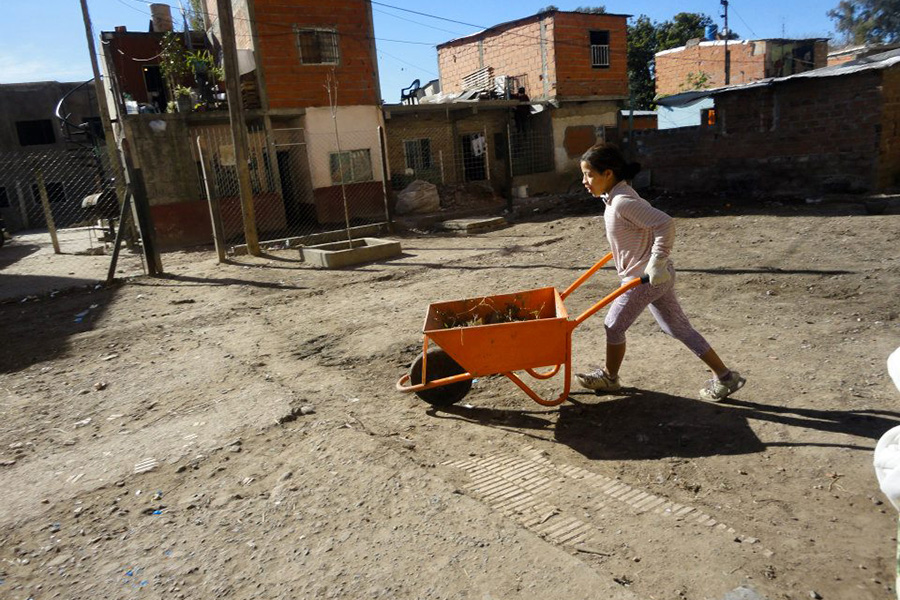
In the outskirts of Buenos Aires, Argentina – a place often viewed as inferior – I learned one of those lessons that no book can teach, other than the author of their own experiences. It’s something we generally take for granted but what I learnt in Argentina changed the way I thought about influence and ability. It’s one of those things often forgotten or rarely acknowledged, such as breathing, for instance, or the fact that today we can see, feel and be.

The same way that we are able to change the pattern of our breathing when we concentrate, so too can we change our capabilities. Prior to my arrival in Argentina, I had a very romantic picture of what the country would look like. It was a perfectly painted photo: the meat and wine, the mountains and colorful buildings. To my surprise, street artists dominated and the beautifully cooked steak with a glass of Malbec wine was not guaranteed everywhere.

Furthermore, I had a rather stereotypical image of what the poorer areas would look like: dirty, the stench of excretion, unorganized, crowded and polluted. Now this is a physical description but many of these depictions cross over to the psychological realm of what we may constitute as “poor mentality.” Areas like these, often called slums, are thought to be the lowest of the low, filled with trash, poor infrastructure, diseases, lack of education and resources.

Although there is some truth to this, my perfectly painted portrait slowly turned into one big blob of mixed colors. It was through the deterioration of my preconceived notions that I began to understand why these categorizations are exceptionally misleading. The labels associated with poverty and the poor tend to ignore the fact that these people aren’t living in a documentary movie that describes their life. What Hollywood portrays is just one reality, and perhaps not even an accurate one.

The community members in these areas are living a real life. That means they form relationships, a sense of identity, roles and responsibility, and there are times of celebrations and times of struggle. There is so much more behind the scenes that exemplify their authenticity and “realness.”

brazil_2 I certainly was guilty of being a foreigner to the truth about slums. Yet, I felt the need to make known that the youth and adults in these areas are inspirational and incredible. Some may not recognize them as the smartest against Western standards, but they are smart enough to build a house from surrounding resources and to survive with minimal assets. That, to me, is brilliance.
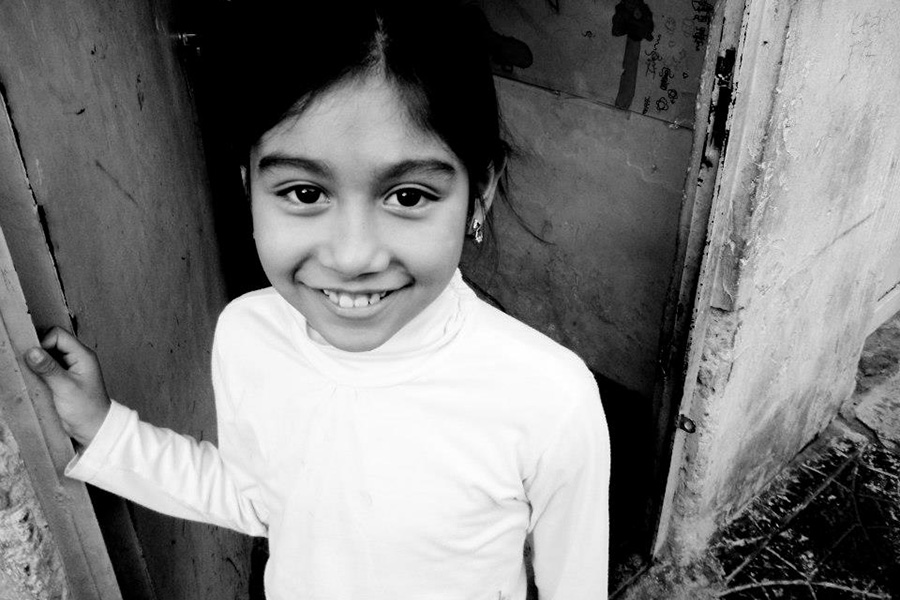
We cannot compare our context to their context and claim that their way of life is illogical. Despite some of the things they do or say not fitting into our systematic understanding, this should not mean it is wrong or less satisfactory. People tend to doubt the slums, but I see these communities as an inspiration and a powerhouse.

When we view others and the world in an egalitarian approach, we release our mind form bias and preconception. This allows us to recognize our breathing patterns… or at least the less obvious and unconscious matters in the world. It’s about finding the good out of something bad. There is beauty in ugliness. Now please don’t get me wrong, I’m not advocating that you drop your current life and move to a slum to find some inspiration. Nonetheless, I find it important that we recognize the kids and parents in such areas as real people. I simply cannot find one justification to claim superiority and deny them less of a right to their humanity.

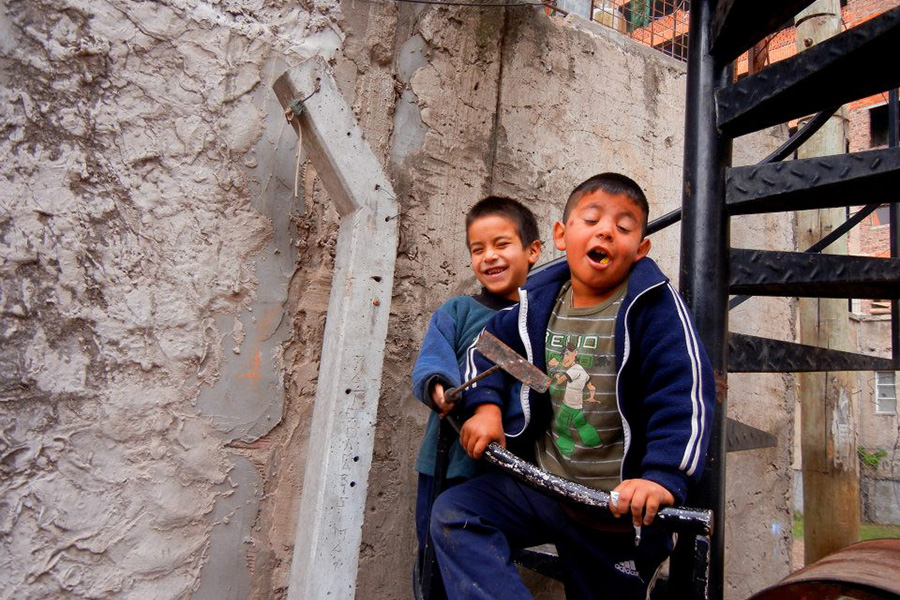
It’s time for us to escape the bubble we are trapped in; let us accept others above and below us; learn to love and to appreciate. It’s time we make a change. It’s a challenge to put ourselves in their shoes and imagine their experiences. But what I encourage you to imagine are people who overcome numerous daily challenges by living in the present – one day at a time. If children who are barely fed are able to voluntarily lend a helping hand to build a park, what can you do?

If kids who speak broken Spanish but still try to learn English with a foreigner, what can you do? If kids in the villas are able to say no to Paco (a cocaine paste drug in Argentina, ) and carry on strongly, what can you do? If children who worry about where to sleep, what to eat, or how to stay healthy yet still come out to play, smile, and laugh for a while, what can you do?

brazil_3 For them it’s one choice at a time – sometimes a change in attitude, sometimes the motivation to find a better situation. Each step or decision leads to the next step. A baby learns to walk step by step and over time it can walk. Walking turns into jogging and jogging turns into running. Take it day-by-day, step by step.


Inspiration can come from anywhere: from the packaging of your most recent purchase to the shape of the clouds, to the original song of a street busker. It all depends on yourself. We are in charge of our destiny, our accomplishments and our happiness. No matter where we are in the world or who we talk to, everyone has his or her “story.”

Leaders do not let their challenges remain standing still. The kids I spent time with for a couple of weeks in Buenos Aires taught me what leadership means. Leadership is having the tenacity to achieve even when the world is constantly throwing rocks your way. In the worst of situations, there’s an ability to grow, improve and make a difference.

The rain clouds don’t stop the sun from shining after all.

Meet The Next Generation Of World-Changing Entrepreneurs

Deforestation. Pollution. Soil degradation. Poverty. These are just a handful of the critical social and environmental problems Social Venture Network’s 2014 Innovation Award winners are addressing through groundbreaking business practices. From stoves that save 10 tons of firewood each year to a pioneering training program for low-income entrepreneurs, the SVN Innovation Awards program recognizes companies and organizations that are changing the way the world does business.

At SVN’s Fall Conference—where SVN’s peer-to-peer network of influential, values-driven entrepreneurs and investors gather every year—the SVN Innovation Award winners have the opportunity to share how they’re working in cutting edge ways to solve the most pressing social and environmental problems. They’ll take the stage in front of 300 high-impact founders and CEOs and spend four days immersed in the SVN experience.

With the right people, resource and ideas in the room, SVN’s Innovation Award winners can create the support system they need to improve their business, enhance their leadership and expand their impact. Selected by an expert panel of judges for their innovation, impact and capacity to scale, the Innovation Award winners share SVN’s imperative to leverage business to build a more just, humane and sustainable world. It’s the common thread that connects them to SVN’s 27-year history of innovation and leadership, and it goes a long way in building lasting business and personal relationships.

The Winners Jason Bradford and Craig Wichner, Farmland LP:

The demand for organic foods continues to grow exponentially, but the availability of organic farmland and raw materials lags far behind. With more than $50 million of acreage under management, Farmland LP demonstrates that sustainable agriculture at scale is economically superior to conventional agriculture, which relies on agrochemicals and commodity crops, due to the high cost of land. Farmland LP provides investors with the opportunity to own high quality farmland, while the company’s land management practices increase investor cash flow by using sustainable crop and livestock rotations. By providing access to high quality, organic, sustainable acreage, Farmland LP enables organic farmers and sustainable ranchers to focus on the crops and livestock they produce best.

Shannon Dosmegan, Public Lab:

A broken CD, an old VHS case and an inexpensive webcam. These three items usually end up as trash, but the innovators at Public Lab have turned them into a low-cost, do-it-yourself alternative to the traditional spectrometer – a tool used to detect neurotoxins that ordinarily costs thousands of dollars. This innovation is just one example of Public Lab’s unique approach to addressing environmental issues. Operating at the intersection of social entrepreneurship, the maker movement and citizen science, Public Lab makes inexpensive, do-it-yourself techniques available to underserved communities by applying open-source techniques to the development of tools for environmental exploration and investigation. In addition, Public Lab generates knowledge and shares data about community environmental health, while focusing on locally relevant outcomes that emphasize human capacity and understanding.

Alfa Demmellash, Rising Tide Capital:

Combatting poverty and isolation with opportunity and innovation, Rising Tide Capital believes the best way to revitalize local economies is to support and grow the entrepreneurial energy and talent that exists in every neighborhood. Rising Tide Capital works with a community of emerging entrepreneurs to equip them with the tools, skills and access to funding they need to grow successful businesses. When these entrepreneurs are empowered to succeed, they not only generate income for their families, they create a ripple effect that catalyzes the social and economic development of their local community.

Svati Bhogle, Sustaintech India:

Severe respiratory disease, unsustainable CO2 emissions and indoor air pollution are grave concerns facing India as a direct result of traditional cook stoves. Sustaintech India is a social enterprise that manufactures and sells sustainable energy products, including fuel-efficient commercial cook stoves, designed to improve the health of underserved populations, reduce firewood consumption, slow deforestation and contribute to India’s climate change mitigation efforts. Sustaintech’s smoke-free PYRO stoves provide a path out of poverty for street food vendors along with substantial environmental benefits: each stove in its lifetime conserves two acres of open forests and saves 10 tons of firewood per year.

Social Venture Network’s 2014 Fall Conference SVN’s Fall Conference unites these emerging innovators with pioneers like Linda Mason of Bright Horizons Family Solutions, Nikki Silvestri of Green for All, David Fenton of Fenton, Daniel Lubetzky of KIND Healthy Snacks and Baratunde Thurston of Cultivated Wit. The conference will be held October 23-26 in Greenwich, CT, and focuses on building valuable connections and collaborations among high-impact, innovative business leaders. More information on guest speakers and registration is available at www.svn.org/fall2014.

Since 1987, Social Venture Network (SVN, www.svn.org) has been the leading network of entrepreneurs who are transforming the way the world does business. SVN connects the leaders of socially responsible enterprises to share wisdom and resources, form strategic alliances and explore new solutions that build a more just and sustainable economy.

Are You Shrinking from Change?

I am traveling and trekking this week in the Kingdom of Happiness, Bhutan. It’s the Switzerland of Asia without the watches or the banks. Bhutan is a tiny mountain kingdom fairyland at the edge of the Himalayas jammed up against Nepal and Tibet. It’s a country of only 700,000 people with a 34-year old king and a parliament that has a public policy of investing in research based measures that promote personal happiness as well as sustainable economic growth. Although the country is jaw-dropping beautiful it is very poor by U.S. standards and grapples with the crazy problems of global modernity. It is almost universally Buddhist with temples, prayer flags, stupas, and monks just about everywhere.

The society is drenched in the spiritual mindset and ritual practice of Buddhism and yet The Big Bang Theory is the most popular show on television. Television only became available in 1997. Now you can Google and Wikipedia virtually anything and most monks seem to have a cell phone. I find this all fascinating because the country’s leaders are asking the big questions of what will make the best society. They are trying to integrate self-determination and the common good; spirituality and secular culture.

It’s all very tricky but at least they are dreaming big. 

I can’t help but contrast what Bhutan is attempting versus its giant neighbor, China. China is focused on one thing. Getting rich. Visiting China is like a visit to a capitalist’s dreamland. Think about it. Political power is focused on how they make their maniacal ambition to rule the world economically come true. Power is concentrated and corrupt.

There are no regulations or consumer rights. Climate change is something other countries should worry about because China opens high sulphur coal plants faster than KFC can open new restaurants in Shanghai. And China is so materialistic even their Buddhism is fake…at least that’s the opinion of Buddhists I’ve talked to outside of China. In China, Buddha images are of the fat, obese Buddha, sometimes called the laughing Buddha.

Their Buddha is focused on prosperity and long life…not the good works Buddhism is centered on most everywhere else. By contrast the Buddha images in other cultures are of a fit and lean Buddha reflecting an enlightened lifestyle rather than a gluttonous one. In China I found lots of people interested in lucky numbers but few in the Wheel of Life.

So what does it have to do with us?

Well it occurs to me we can either pursue our lives like the kingdom of Bhutan or the polluted mess of China. Make no mistake, pursuing happiness is tricky stuff. Our own culture has done a great job of equating fame and fortune with personal fulfillment…but it’s nothing more than worshiping a fat Buddha.

The path to happiness requires the guts to live with a purpose higher than self-interest.

As we grapple with our daily pressures it is easy to submerge our inner longings to fulfill our higher nature and just turn on The Big Bang Theory. But too often we find ourselves waiting for someone or something to change our lives. We become hypnotized by the inertia of our own bad habits. For most of us it takes a crisis to snap us out of our routine.

A useful crisis happens anytime our life does not conform to our plans.

Our work, our relationships, our finances and often our health do not turn out as we envisioned they surely would. This is exactly how life is designed…to shake us awake. We can either go inside ourselves like the Bhutanese and ask“What’s really important to me?” Or, we can just work harder at numbing ourselves with self- justification and do more of what isn’t working. I have had to face this choice many times in my life.  Sometimes I have chosen to grow. Other times I have chickened out of changing.

Shrinking from change has never worked for me. The only way out is up…at least that’s what I have found.

Here’s to the grand experiment in Bhutan! Changing your life doesn’t have to be driven by a crisis. IF you are a woman leader who wants to lead with greater confidence and greater purpose please consider joining me and a team of women leaders at the Leadership SPA Smart Power Academy. Its agenda is driven by up-to-the-minute research on women’s unique leadership power and practical tools you can use immediately. I’m on a mission to help more women ascend to the highest levels of leadership so please consider becoming a part of something big. Join us!

How Endings Teach Us To Lead Heroically

Last Sunday I got up early and looked out the window at the weather to see whether horse riding would be possible. A clear sky and lots of puddles from the night’s rainstorm invited me to try. But I never did get on the horse. A bigger lesson was meant for me that day.

When I arrived at Yeguada Olmaz, the horse breeding ranch I’ve come to call a second home, owners Jesús and Guiomar looked worried. One of the foals, Pagolín, had lain down in a field and would not get up. We tried to flip him over to his other side to help circulation and to push him back onto his feet. It didn’t work. Guiomar called the vet. We put a cover on him to keep him warm and a sack of hay under his head to avoid damage to his eye socket.

A possible ending loomed as we all faced our own feelings about death. I felt incapable of concentrating on a riding class or listening to the instructions that Guiomar tried to provide. I struggled to momentarily forget the concern for the six-month-old foal lying on the field. So while she and her husband tended to their herd’s needs that day, I made myself a little dry seat out of stones beside Pagolín and his mother Lorca. I must have spent two hours out there on that wet field. It felt important to be there. It felt like there was no other place I should be. Not because I was needed in any way.

But because something very important was happening right in front of me. Something I didn’t want to miss. A lesson on how to face death without resistance. On how leaders are supposed to react to difficult crisis like terrorist attacks, or impending foreclosures, or even the outbreak of a deadly new virus. I remembered all the times I’d hung out in the stall with newborn Pagolín and mother Lorca in the previous six months, coming up with unique leadership training exercises.

They were always there for me when I wanted them. How could I not be there for them at a time like this? Once again, they taught me something about life and leadership that I hadn’t fully comprehended before. Once again, I confirmed that animals are here to teach us how to be better people and better leaders. They didn’t resist. They didn’t try to fight. They didn’t protest. They simply experienced those two hours with me in total serenity. The kind of serenity we humans search for all the time. Pagolín nuzzled my hands and very slowly teased my palm with a playful bite.

His limbs rigidly stretched out in front of him. His mother standing behind me in silence. Both breathing deeply and slowly, facing each passing moment of pain and fear without judgment or complaint. It’s not that leaders should do nothing in the face of catastrophe. Far from it. This learning is about staying calm if you want to use your full talent and skill. In serenity we know exactly what to do, while in evasive anxiety we rigidify into tunnel vision and blind repetition. Still, we waste so much energy trying to escape from the endings we fear in life. We run around worrying, gossiping hysterically in corridors and venting frustration during long, circular meetings. Or we deny the obvious, convincing ourselves we can conquer anything while acting as if everything will magically turn out okay.

The only way we know to keep calm is to repeat “it’s gonna be alright!” to others and to ourselves. A formula which actually does very little to tranquilize our followers, be they adult employees, or our own children and pets. I stood up eventually to bring some feeling back to my bottom and stood alongside Lorca the mare. I remembered she had lost a foal the year before. This is what our grandmothers used to go through. Bearing children one after the other, losing many of them to wars, plagues or accidents. How did they do it? It’s incomprehensible to parents of today.

I buried my face in Lorca’s neck, just behind her head. And she leaned on me softly. Tired, maybe grieving, maybe holding me in my own sadness. We each face our own weaknesses when we look at death. Endings bring out the stuff we haven’t yet resolved about ourselves. Today we live in a culture with absolutely no tolerance to death. A lot of what we do is about staying young and healthy as long as we possibly can. We pursue success and happiness like no other generation has before. We escape difficulty and ostracize losers. At the same time we struggle to stay motivated or to keep our employees involved in our business adventures.

We talk endlessly about creativity, inspiration, passion… all the things true heroes are made of. We forget that heroes are not forged by sitting in bliss. Endless success or unbreakable health does not make us heroic. It just makes us weak and dependent on more good stuff in order to keep going. Warriors become worthy of such a title by facing hardship and difficulty many, many times. Warriors become heroes by facing death. Why not us?

What I learned that Sunday on the field is that death is part of life. The horses already knew it. It’s not something to understand from the head. It’s a truth to be felt from the heart. That’s why we humans still don’t get it no matter how many times we’re told about it. We don’t become warriors or good leaders by reading books. We learn to be brave by facing death in its many forms.

When I look at all the startups I’ve had to bury, I finally sense this need for endings if there are to be any new beginnings. As I embark on yet another hugely ambitious business adventure, I wonder every day if it will make it to adult life. I think of how much I’ve lost in the past: the money, the partnerships, the long days of tireless work, the credibility in a failure-averse country like Spain. And then I remember how very much I’ve learned. In my head, for sure, but especially in my heart.

Bravery and ambition are not concepts of the mind! When the vet arrived we all helped the foal back on its feet and got it out of the field with its mother, into a warm stall. X-rays and other tests ensued, eventually finding a fracture of the tibia, which may not be fatal if cured correctly. A ray of hope still shines over Pagolín’s future today.

None of us know if “it’s gonna be alright”, but we’re all a little bit braver than we were before, because testing ourselves against imminent endings slowly brings out the heroes we all carry…somewhere deep inside ourselves.


Passion Is The Fuel For Tackling Our Fears

It often seems that each year goes by faster than the one before. Frequently I find myself reflecting and contemplating on where the time has gone. I know that there are 24 hours in a day and 365 days in a year. Yet sometimes I struggle to believe it. How have the leaves started to change color and the symphony of crickets, bees, grasshoppers and cicadas so suddenly faded? As I conceptualize time, I focus more on the way I wish to spend my days.

I imagine days where I wish I could press the “replay” button and relive them time after time. I imagine feelings that I could press “pause” and preserve. I image times that will always be “recorded” in my mind. Perhaps every second of the day is not like my description above. As I identify themes in my daily life that make certain times worth replaying and recording, I have found that passion is a common denominator.

Passion drives and motivates us; it holds a part of our happiness. We will persevere, perhaps tackle our fears, do the unexpected and live in a state of contentment and gratification. Passion is our fuel. Days occupied with passion are days worth reliving, feelings worth pausing and memories worth recording. Passion may even provide the answer to that mysterious question, “how and why do we feel that there are less than 24 hours in a day?”

Passion is my answer to how my two-month internship in India ended up feeling like two weeks. Which is a bit odd, considering I tell people that I constantly had a headache. Yes, working in India made a couple of hairs turn gray. As frustrating as it was some days, I would not change one of them. Challenging situations forced me into undiscovered environments of which I had no knowledge. Those where the experiences I ended up thanking for personal growth.

Without it there is no opportunity for maturation; without passion my aged hair would be meaningless. In fact, with a lack of passion the two months would have felt like two years. With an absence of passion, so much of the summer would have been considered a waste. Living in a world where 24 hours feels like 12, there’s no wiggle room to waste time. Whether it’s purpose we find, the success that follows us, or the potential we realize, a passionate life is one of living rather than existing.

After spending this past summer working on a tourism project called “Explore India and Hinduism” and doing non-profit and village development consulting I now intend to lead, learn and live through passion. I think part of the process for maximizing our individual humanity is developing our purpose. When we live from a place of deep authenticity, our passion is at the forefront. In other words, in order to live a life of many days that are worthy of replaying, passion is essential.

If you’d like a loop-hole for “pausing” time, I’d recommend living with passion everyday. You will continuously preserve that feeling. When our lives are passionate, other people will then be eager to “record” our own success and happiness. Passion is the building blocks of greatness, achievement and reason.