Here’s An Idea: Learn To Lead By Receiving

In our society we love to give. I bet you’ve been mulling over new year resolutions related to helping others, doing good for those in need, or being nicer to your family and colleagues. Well, I’ve got news for you. The true secret of leadership is not giving. It’s about receiving. Today’s article was born in a truly singular place: the “Ría de Rodiles” in Northern Spain. My dear friend Soha Nashaat, reputedly one of the 100 most influential women in the Arab world, fell in love with Asturias a few years ago.

This special natural paradise knocked on her door to offer her a dream house whose windows boast a magnificent spectacle of natural beauty all day long, all year round. Soha redid the entire house to make it worthy of such a magical setting. I still can’t understand why she’s spent so many years leading financial markets from top class corporations. Her amazing talent for decoration and design have remained as hidden to the world as this beautiful oasis of great food, soothing tides and discrete animal neighbors. I guess the best kept secrets only reveal themselves to those who learn how to receive.

And receive I did, I can tell you. Not only was I lavishly hosted by generous friends with the best money can buy in every possible way. Mother Nature also cradled me with lullabies sung by all kinds of birds and ducks, warm sunny days to bask in, and the irresistible magnetism of tides flowing in and out before us.

The Ria is a charming coastal inlet running eight kilometers inland to Villaviciosa village from Rodiles beach. Formed by a drowned river valley that remained open to the sea in the Jurassic period, it was declared a natural reserve in 1995. I swear there isn’t a better place to reflect on leadership, life and the new year. Because there is nothing to get here. Nothing to fight for. Nothing to worry about achieving. Nobody to help and nobody to give to. Only you. Only the tide. Only birds and fish going about their daily business without you. Green fields and beige hills kissing murky waters under the sun.

All you are asked to do is to sit quietly and learn. Learn to receive. We learn to receive from our parents. They learn from theirs. This is how it works across the animal kingdom. One generation gives everything it has to the next generation, so that they too will nurture and fight for their offspring. Modern humans, however, have become pretty terrible at practicing this law of life. And the smartest, best educated of humans are often the very worst. I wonder if all those humble little birds and slow grass-chewing cows look tenderly at us in our highly intelligent inability to accept what we get from others.

Taking makes us feel small. But we’ve become very hoity-toity about life in general. Maybe we’re too scared. Maybe we’re too proud. Maybe it just hurts too much to feel that familiar softness inside our hardened executive hearts. Whatever our reasons, our difficulty to accept what life gives us sabotages our performance in everything we do. Our culturally accepted preference for giving doesn’t make us better leaders. It actually makes us worse.

Leaders who can’t accept what comes to them tend to find fault in everything they do get. That’s a bad start. Investing a whole lot of energy, man-hours and money to change the companies they are hired to manage, for example. Complaining endlessly about the orientation of their office, or the lack of sophistication of their teams, or whatever it is that helps them feel better about not accepting the reality that cradles them and pushes them to create something useful with it.

When they’re done verbally trashing the place, they launch improvement initiatives that often interfere with the general flow of things, bringing no end of conflict to other departments, rebellions against company founders and veteran bosses, and resulting in numerous failures to materialize flashy figures projected on no less flashy excel sheets. As if this generally counterproductive leadership style wasn’t bad enough, leaders who can’t receive can’t actually give either.

An inability that is sadly “transparent to the user”, as IT experts would describe it. They think they are giving, but they are actually asking for more. They may give you a job and then hold it over your head for the following five years every time they demand more time and more effort from you. They will help you as a way to secretly feed on your company or friendship with endless advice or too many favors that don’t actually change anything for you and make you feel exhausted. They will overspend company resources in an effort to buy approval or popularity in such a way that still feels big, independent and hoity-toity all at once. NGOs and foundations suffer this daily.

I have a client who’s had to fight off several huge banks and multinational companies whose CSR initiatives were actually going to kill her budding foundation with bureaucracy and eternal internal meetings, ambitious programs that completely derailed her from her actual mission, and inappropriate publicity to boost their own corporate brands. My client doubted her own judgment and wondered whether she was the one being ungrateful. But I suggested a simple test.

Pay attention to how your body feels during conversations and exchanges with these leaders. If you feel bigger or stronger than them, then you’re probably the one giving. Taking, accepting, and getting make us feel smaller than the other person. That’s the way it’s supposed to feel! So if feeling smaller in a conversation makes you feel uncomfortable, then you know you’ve got a critical lesson to learn as leader. The problem is not feeling small. It’s feeling uncomfortable about it.

As long as you shy away from receiving, you sabotage your own present performance, and you debilitate your capacity to give in the future. One has to receive in order to give. It’s a simple law of Nature, like gravity. Stop fighting with it and learn to go with it. These are all the things I thought about on a wooden bench overlooking the Ria at the end of Soha’s garden.

I watched how every living thing before me received the incoming tide with pleasure and glee. I thought about how hard it always was for me to accept what others gave me, how hard I tried and how sorely I failed, time and time again, for many years. And I basked in the recently found delight of receiving all day long, day in and day out, until it was time to come home.

Thank you, Soha, for a wonderful retreat of nurturing warmth. Thank you, Ria of Rodiles, for bathing my heart in silent wisdom for a few days. Thank you, family, friends and past employers, for putting up with my inability to receive as a young ambitious executive years ago.

And thank you, readers of Real Leaders, for this space to share my thoughts and air my doubts about leadership and life. I will create great things this new year with what you’ve given me.
How Jazz Can Teach Us About Leadership

Miles Davis starts with a delicate low rumble. John Coltrane listens quietly, waiting until he feels the beat, tone and tenor of the piece. He joins Miles slowly, complementing and adding until the two dance with each other. Paul Chambers, the bassist, waits patiently, feels the beat and offers a quiet undertone while simultaneously reinforcing the superstructure of the piece. None of them know where the music is going, only where it has been. Pianist Wynton Kelley takes the music to the next level and then passes the lead back to Miles.

The miraculous interchange comes from a powerful and generous listening experience where no ego is involved. The jazz ensemble now plays as one. Through this unspoken synchronicity, the music both soothes and bewilders. Two thirds of the way through it crescendos and then as if the piece was an ode to life, dies the same way it was born, with Miles and a low rumble. I love listening to jazz, mostly for its unexpected and soulful interplay between the musicians.

I find the same fascination with basketball. Considering all major sports, basketball is most like jazz. In contrast to football, which is mostly scripted, basketball unfolds in ever evolving ways. Great teams play basketball like an art form, with each player interacting and responding to the situation.

The ball never bounces the same twice. To master the game of basketball and ensemble jazz, there is a kind of resonance that is required. That resonance comes from a lot of practice, and most importantly paying attention to others. In addition, it’s essential to respond rather than try and control the circumstances and outcome. In business, the same is true of great teamwork.

High performing teams share a powerful relational bond, and rather than follow a script, in an ever-changing world, the team learns and adapts together. Plans are made, and tactics implemented. Depending on the outcome the team shifts or reaffirms collaboratively. Doing it together is where the resonance comes in; all team members are continuously adapting to one another in ever evolving synchronicity, that when done well, is truly something to behold. It is the quintessence of great teamwork.

The good news is that it can be learned. Recent research by Guillaume Dumas et. Al. has shown through the hyper-scanning of brain recordings that this synchronicity can actually be measured in the brain. There are now known regions of the brain that “light up” during social activity and reinforce the desire and ability to get in synch with one another.

This is not surprising, but is tantalizing nonetheless. It suggests that perhaps interacting and being in “synch” is a natural phenomenon. In the debate about whether we humans are competitive or cooperative by nature, here is some proof that our nature is actually quite cooperative.

Of course we can choose to be both, but the fact that we can observe and measure this need or desire to be in synch with one another is fascinating. Couples who are in synch know this well. They finish each others’ sentences as if their brains are tied together. Put scientifically, their “interbrain synchronizing network” just lit up. Great leaders understand this phenomenon too. It is the ability to listen generously to one another, get in synch around mutual aims, and then adjust to one another in a jazz-like manner that marks great teams.

As a result, conscious leaders cultivate, in themselves and others, the ability to listen, express, and mutually adapt. Together these qualities produce the kind of “dynamic steering” of a strategy to optimal and mutually satisfying outcomes. Great leaders are great jazz musicians.

Citation: Dumas G, Nadel J, Soussignan R, Martinerie J, Garnero L (2010) Inter-Brain Synchronization during Social Interaction. PLoS ONE 5(8): e12166. doi:10.1371/journal.pone.0012166

Leaders Who Almost Die For Their Followers

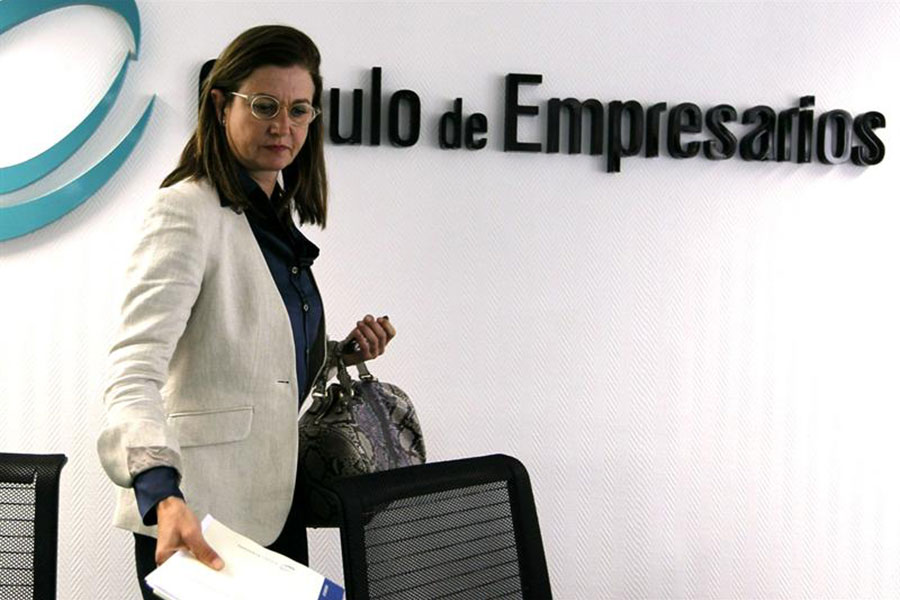
Mónica Oriol is a strong female leader if there ever was one. Former President of the Spanish YPO chapter and successful builder of Seguriber security services, she became the first woman to ever preside “Círculo de Empresarios”, the prestigious socioeconomic think tank including Spain’s most influential executives and business owners. Today Monica is paying very high prices. The kind that bring many great leaders to their knees. The hardest tests fall to those who are strongest. Or so they say.

It all started in an all too familiar way. She said what she thought about women’s struggle in the workplace. She said it in the way she says everything: with amazing strength, impacting and down-to-earth expressions, and fiery defiance in her eyes. Before she saw it coming, she was publicly burned on the stake in a modern day version of the obscure medieval witch hunts we’re supposed to be a lot smarter about. Apparently we’re not. For one thing, she laid down all the ugly facts about pregnancy, child care and how they pressure business models as we know them.

Being the tenacious, highly-educated, and even more demanding woman that she is, she had done her homework. Unfortunately, she’d also done everybody else’s. She pointed out all the ugly truths hidden in this complex debate. Which didn’t earn her many friends. It actually earned her enemies on every side of this subtly invisible war. Because Monica had the dubious privilege of planting her powerful flag on one of our most secretive and denied battle fields.

Men and women worldwide are engaged in an amazingly complex negotiation to redefine our roles in business, society, family, and even love. We have all been wounded by now in this war. And some of those wounds can run as deep and as thick as blood: breakups over work related absences, marital disputes over child care or eventually child custody, sexual harassment law suits and discriminating campaigns, gender violence, startup failures due to unfair exploitation of over-protective workforce policies…we could write an entire book about all the ways we are knifing each other in the painful process of materializing gender balance across the table. We hate to admit it. But we are all unknowingly at war with the opposite sex on some level.

And sometimes it hurts like hell. Fearless in her passion to shed light on the conflict between reproduction and profitability, Monica innocently became the “witch” everybody needed to burn. She became the perfect target for all sorts of abuse. Her reputation, her family, her business…everything connected to her has been mercilessly burned in social networks and Spanish media. Throwing stones at Monica was the perfect way to vent individual pain, anger and impotence under the protective umbrella of the anonymous crowd. And well, the media couldn’t stay away from the excitement. Let’s not forget.

Excitement brings crowds and crowds bring advertising income. It’s hard to find a journalist who can resist adding fuel to the flames. Last week I visited the valley of Baztan, in the North of Spain. Damp, cold and rainy most of the year, this valley holds many priceless secrets of Spanish History. There is a small town very near the French border with the most impossible name you can try to pronounce: Zugarramurdi. Wonderful way to practice rolling your r’s in Spanish, though! Zugarramurdi, as it turns out, is most famous for its caves and its witches.

Oh yes. Excitement and mystery abound in this magical valley. To cut a fascinating — and very well documented — long story short, 53 people were arrested by the Spanish Inquisition in the early sixteen hundreds. Accused of witchcraft, most of them were painfully pardoned or punished for minor crimes. But eleven of them were burned. Well, excuse me. Half of these last poor souls didn’t make it to the burning stake. They died during interrogations. It is one of the most obscure witch hunt episodes in Europe. Crazy, inflamed persecutions were heartily executed by mostly ignorant, fearsome crowds.

Some say that many of these witch hunts were initiated against powerful women. Women who were independent, or owned land that somebody else wanted. Women whose influence was built on ancient herbal remedies to common illnesses in isolated mountain villages. Women who may have facilitated community gatherings in evocative caves just outside Zugarramurdi: Emotional ceremonies to heal and mourn losses among the peoples of Baztan, where paganism fought an undercover rebellion against the growing authority of the Catholic Church for centuries.

Women with fiery defiance in their eyes, strong words and fearless passions. It’s never been exclusive to women, however. Celtic male druids, aboriginal shamans and the very Catholic apostles went through similar ordeals. Spiritual guides, shamans and druids were nuclear leaders to small tribal societies. It’s just all too easy to fire up a wounded, ignorant crowd against a powerful leader. We’ve done it so many times in so many ways in human history.

It’s quite humbling to acknowledge that we’re still doing it today, with all our university degrees, sophisticated knowledge and internet technology. And it’s scary to realize that sometimes these horribly destructive media frenzies aren’t even sparked intentionally by an obscure, machinating villain. They just happen. Like a burning blaze blowing across miles of forestry just because some guy roasted a couple marshmallows in the wrong corner of the woods.

I guess the hardest tests do come to the strongest leaders, don’t they? I hate to see a well-proven, generally respected leader like Monica be treated in this manner. Especially considering the fact that she is one of the very few women who have reached the circles of power where public policy and business practice are defined for us all. Most ardently knowing how hard she has fought to build everything she has, as well as every job, every area of economic growth, and every innovation she has brought to her fellow citizens. Still, I am grateful. I am unspeakably grateful to Monica.

Somebody has to “take the bull by the horns”, as we would say in Spanish, if we want to tackle our dwindling birth rates and enormous child care and educational challenges without killing our companies. Spain is not alone in this. All developed countries are struggling with these demons. If it weren’t for fearless, passionate women leaders like Monica, we might be stuck in obscure denial and passive inaction for a long time yet.

Let her undeserved punishment bring awareness to our crowds and enlightened inspiration to our policy makers. And let us all acknowledge the inner strength and bravery of those who are willing to die, physically or economically, to help us all resolve our own inner battles. Gracias Mónica.

The Organization Working At Ebola’s Ground Zero

To combat the unprecedented Ebola outbreak in West Africa, International Medical Corps has mobilized a comprehensive emergency response in Liberia, Sierra Leone and Mali, the epicenter of the humanitarian crisis. Led by President & CEO Nancy Aossey, International Medical Corps has responded to every major disaster of the last 30 years, delivering more than $1.8 billion in humanitarian relief and training in more than 70 countries.

The organization has been a First Responder in the world’s most challenging and remote places, including Darfur, the Democratic Republic of Congo, Syria, Afghanistan, Somalia, South Sudan, and Libya, among others. The Ebola outbreak has infected more than 17,000 people and caused more than 6,000 deaths in West Africa. The organization currently operates two Ebola Treatment Units in Liberia and one in Sierra Leone, where its first responders are providing lifesaving care.

In addition, they are  establishing another Ebola Treatment Unit in Sierra Leone and deploying an Emergency Response Team to Mali. Together, the four units will give more than 1.5 million people access to lifesaving care. International Medical Corps is also scaling up its training efforts and will train 3,500 frontline health workers to safely treat patients and manage Ebola treatment units that are critical to ending this deadly epidemic.

In addition, in Sierra Leone International Medical Corps has conducted ‘Ebola 101’ training of trainers for local organizations so that they can continue to safely operate.  This includes training 45 members of Street Child, an organization of schoolteachers, whom will themselves now train an additional 500 teachers in all provinces of the country.

Donating to a group like International Medical Corps, that is actually on the ground within the affected countries, treating patients, and helping to prevent further spread of disease is the best way to help. There are very few humanitarian agencies that have the capacity to manage and provide medical treatment to those infected with Ebola, and International Medical Corps is one of them.

For more information: httpss://internationalmedicalcorps.org/ebola To Donate: www.InternationalMedicalCorps.org/ebola-donate ebola2 ebola3

The Organization Working At Ebola’s Ground Zero

To combat the unprecedented Ebola outbreak in West Africa, International Medical Corps has mobilized a comprehensive emergency response in Liberia, Sierra Leone and Mali, the epicenter of the humanitarian crisis. Led by President & CEO Nancy Aossey, International Medical Corps has responded to every major disaster of the last 30 years, delivering more than $1.8 billion in humanitarian relief and training in more than 70 countries.

The organization has been a First Responder in the world’s most challenging and remote places, including Darfur, the Democratic Republic of Congo, Syria, Afghanistan, Somalia, South Sudan, and Libya, among others. The Ebola outbreak has infected more than 17,000 people and caused more than 6,000 deaths in West Africa. The organization currently operates two Ebola Treatment Units in Liberia and one in Sierra Leone, where its first responders are providing lifesaving care.

In addition, they are  establishing another Ebola Treatment Unit in Sierra Leone and deploying an Emergency Response Team to Mali. Together, the four units will give more than 1.5 million people access to lifesaving care. International Medical Corps is also scaling up its training efforts and will train 3,500 frontline health workers to safely treat patients and manage Ebola treatment units that are critical to ending this deadly epidemic.

In addition, in Sierra Leone International Medical Corps has conducted ‘Ebola 101’ training of trainers for local organizations so that they can continue to safely operate.  This includes training 45 members of Street Child, an organization of schoolteachers, whom will themselves now train an additional 500 teachers in all provinces of the country.

Donating to a group like International Medical Corps, that is actually on the ground within the affected countries, treating patients, and helping to prevent further spread of disease is the best way to help. There are very few humanitarian agencies that have the capacity to manage and provide medical treatment to those infected with Ebola, and International Medical Corps is one of them.

For more information: httpss://internationalmedicalcorps.org/ebola To Donate: www.InternationalMedicalCorps.org/ebola-donate ebola2 ebola3

How to Grow from the Storms in Your Life

There is a common myth that we are all resistant to change. I nearly always hear this when I’m working with an organization to bring about a cultural change of beliefs and behaviors that are necessary to thrive in a challenging environment.  But it’s wrong. Brain science and new advances in cognitive psychology reveal that we don’t resist change… we resist loss. It seems that human beings place a high-value on certainty.

We are constantly making predictions about our future. To the extent our predictions are true we feel secure and capable of meeting the challenges that show up every day. If, however life throws us a nasty surprise it triggers our insecurities, which immediately spurs us to write a mental screenplay about losing some things in our lives that we really value. This can turn into a personal horror movie, causing sleepless nights, relentless anxiety and dysfunctional coping. The three dysfunctions stimulated by fearing loss are:

  1. Denial. I see this constantly when businesses are merged or sold and employees are reluctant to embrace the fact they will need to find a new job. If there is any possibility that we might be retained for a job that we like then there is no disruption to our personal life and that’s what we cling to.  We hang on to low probability futures because it helps us cope with our fears of loss and the uncertainty of change. Denial is also at work when we refuse to take positive action to strengthen our health when we know we’ve gotten a little too overweight, become inactive or noticed our stamina is waning. We might also embrace denial when an important relationship is collapsing. When fear is strong, denial is our personality’s first line of defense but it is foolish and will inevitably make things worse when change is forced upon us.
  2. Blame. Our second dysfunctional strategy is to invest gobs of emotional and intellectual energy blaming others for the loss we fear. When a business is sold we often blame the greed of the owners. When a relationship is dying we blame the ‘other’ for betrayal. When our bad habits threaten our health we blame whoever is causing us the stress that stimulates our bad habits.
  3. Rationalization. This is essentially giving up. It means you accept that the loss is inevitable and are willing to dumb down your life to accommodate the negative impacts of things you do not control.  Common phrases your inner-voice might repeat are… “There’s nothing I can do, it is what it is or… once again, I am screwed.” This kind of self-talk sets you up for mal-adaptation.  This means you adapt to conditions that were previously acceptable because you’re unwilling to invest your energy to proactively create your new future.  This is not a small problem. People with little power and few resources are constantly mal-adapting because they have become hopeless. And hopelessness is a rational response to continuous failure.

However, hopelessness is a completely irrational response from highly capable people with reasonable emotional intelligence who are feeling beat down by change they do not control and fear losses that freak them out. I talk to people in these circumstances all the time. Here’s how I counsel them. Next to death our most primal psychological fear is that we won’t be happy in new circumstances. I point out that there are happy people in virtually all life circumstances.

Not to make light of real human suffering, there are people who are happy who have been paralyzed or have terminal cancer or whose spouse had an affair or who lost their job. Of course it’s true that virtually no one feels happy when they are going through sudden or deep suffering. The point is our fearful minds spin stories that we will never be happy again which is just not true unless we cling to our suffering and make it part of our permanent identity.

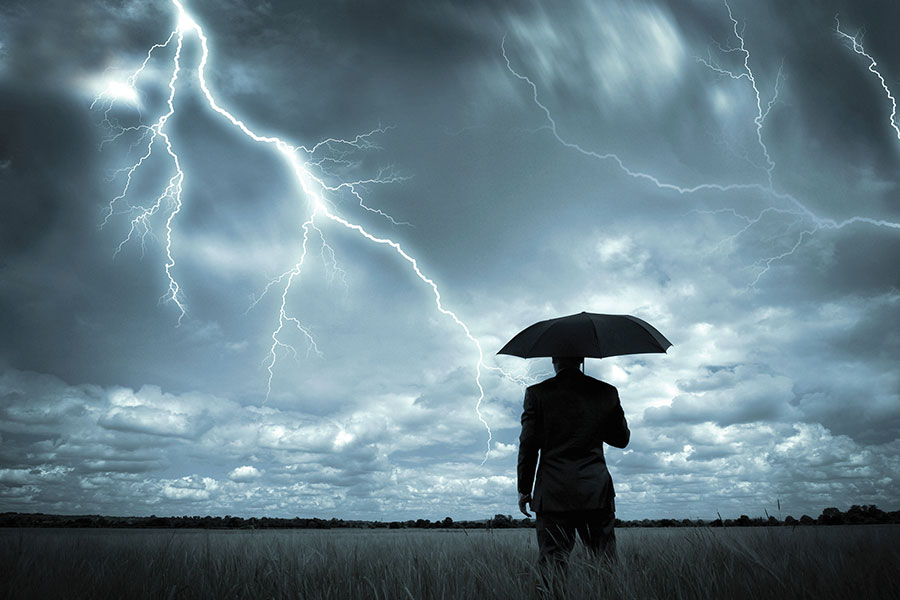
Research confirms that our emotional brains tend to overestimate the happiness caused by pleasure and the duration of sadness caused by life-changing disappointment. What this means is that we are wired to amplify the pain of our actual loss by expecting to control the uncontrollable conditions of our life. We are all like sailors in small boats trying to cross a vast ocean. Those of us who think we can control the wind and the weather are constantly frustrated and fearful. Sailors who pay attention to the changes in the weather and the direction of the wind actually learn to enjoy the journey.  Sailing through storms actually increases our skills and makes us wise sailors who can teach others.

Expert sailors do two things. They use a compass to make sure they’re heading in the right direction even when the winds are blowing the wrong way. And second, they focus their minds on optimism. They are solution-focused rather than problem obsessed. Our compass is our values. Our values are the character choices we make that we believe will make us both happy and fulfilled. Our values are always challenged when we face stormy changes in our lives. But it’s exactly at the time of our most fearsome challenges that our values are needed. This sailing journey we are on seems to be precisely designed to test our values. This is important. We have all inherited values from our parents, teachers, coaches, pastors and the overwhelming force of popular culture.

Our highest human capacity, our greatest gift is to evaluate all the values promoted by others and thoughtfully decide what is essential to our own character. 

Our choices shape our identity. Staying true to them is the basis of self-respect. For healthy people their values evolved over the course of their life as they became wiser. People who are guided by there 20-year-old identity are likely to be very unhappy and at least slightly irresponsible.

Since this evaluation of who we are and who we want to become never ends, daily reflection on the question… “What is most important to me?” is essential. As we become increasingly clear and committed to our values our lives improve as we develop the habit of optimistic thinking. Optimism is like having a powerful diesel engine in your sailboat. When there is no wind in your sails or when you’re trying to stay off the rocks in a storm, optimism becomes your power source to keep your boat on the path your compass is charting.

Optimism is fundamentally developed by changing the questions you ask yourself. 

“What can I learn from this mistake?” is a much more powerful way of talking to yourself than… “I am so lame, I always blow it.” Optimism thrives when you are clear and calm. When you’re clear on what you truly want for your work, your life and your relationships you will make the small daily choices as well as the big important ones that move you to a fuller and fuller life. As you train yourself to stay calm by taking the long view and reminding yourself that you can be happy no matter what happens you will find this calmness makes you both wise and powerful. This doesn’t mean you become emotionally dead.

Rather it means that you decide when and how to express your emotions rather than being driven by them. When either your exuberance or anger originate from your inner calm you will discover that there is a positive use to virtually every emotion.

So, no matter what you might be facing or denying you have a great capacity to successfully sail across the vastness of your personal ocean.  Be clear about who you are and what your soul desires. Stay calm. You can be happy no matter what.

Business Takes a Decisive Leap: Breakthrough in Collaborating for Good

If Planet Earth were a business, no executive could look at the metrics — whether melting glaciers or widening income disparity, whether disappearing rainforests or the global economic crisis — and not come to the same conclusion: we need a turnaround. Assuming that NASA’s Mar. 2014 forecasting is right — or even half-right — we’ve got 20 years to stave off irreversible global industrial civilization collapse “due to unsustainable resource exploitation and increasingly unequal wealth distribution.” Business leaders see this compelling case for change. And increasingly, many are taking a stand to be accountable for addressing humanity’s challenges. They recognize how we’re all part of this breakdown and are saying it’s time to change the game. Now. For good.

These leaders see that concerns about the future have become so blinkered by deeply entrenched conventional financial parameters that we’ve entirely lost touch with the true purpose of business — to provide value-added goods and services for a socially just, environmentally sustainable and economically thriving world.

That’s why companies like Unilever, Whole Foods, Salesforce and HP are shifting their products and protocols away from ones that maintain disintegrative global trends. Instead, they are leading toward a more interconnected world for the sake of a flourishing future for all stakeholders. They’re awakening to a greater responsibility for generations to come, and in so doing are proving the correlation between doing good and doing well.

As Paul Herman, author of HIP Investor (Human Impact + Profit) says, “We have mounting indisputable evidence that investing in initiatives that serve people and the planet provides a greater economic return than not doing so.” And, they aren’t doing it alone. Some people, like forerunners in social entrepreneurism, responsible investment, and the Corporate Leaders Group saw the signals early. They’ve been working on win-win solutions that deliver returns and serve the world for 10 years and longer.

More recently, creative cross-sector business partnerships like BICEP, the Business Alliance for the Future and We Mean Businessare making their members’ collective voices heard. Others finding new ways to work together and signing on to difference-making social and environmental initiatives include business groups such as BCorp, American Sustainable Business Council, Sustainable Brands, Conscious Capitalism, Huffington Post, Real Leaders, UN Global Compact, World Business Academy and many more.

Individually, these groups are having real impact. Three examples are: Social Venture Network’s Divest-Invest energy campaign, Ceres’ Call for Action on Climate Change, and World Business Council for Sustainable Development (WBCSD)’s Vision 2050new agenda for business serving the world. Yet, a critical question remains — are these worthy, noble initiatives happening fast enough, or at a scale large enough to produce the systemic change we need to remedy the breakdowns we face?

This question was asked to leaders of 30 business associations and networks at a gathering of the Business Alliance for the Future earlier this year. All 30 agreed that the answer was “no.” The collective view was there is about 5 years left to turn the raging tide. Many said they’re clear that the business community has the solutions and resources to address our global challenges. But what’s missing, they said, is a way of unifying or working together, in interdependent ways to support aligned organizations. They want to work within business and with other sectors of the economy, to accelerate what’s already happening on the ground.

So what’s needed here is something to fill the gap and create a breakthrough in collaboration to exponentially accelerate needed systemic change — without creating another organization. It’s true that organizations have been working on collaborative cultures, high performance teamwork, coopetition for a few decades. Yet, the collision of immense global challenges with shifting social consciousness and exponential technological change requires totally new human commitments and capacities to think and act in unified and interdependent ways. This world isn’t a dreamscape.

New collaborations are possible, doable, and happening. Just last month, sustainability pioneer Paul Hawken revealed Drawdown.org to show how reversing climate disruption impacts is not just possible, but predictable, if we share solutions that we know already work. And in California, the World Business Academy’ Clean Energy Moonshot is calling for new partnerships across government, business, science and civil society for an audacious, accelerated pathway to 100% clean and renewable energy economy. This new way of thinking about business is the challenge — and opportunity — for our age.

The future of business is making the future its business. By accelerating Business’ Decisive Leap in creating a breakthrough collaborating for good, business will become the engine that pulls us away from the precipice of decline and collapse and toward a future where business, people and nature flourish. To learn more about the work of the authors in the Business Alliance for the Future, visit here.

About the authors Claire Sommer is a sustainability writer based in West Orange, NJ. Since 1999, her business writing consultancy, Kayak Media, has helped Fortune 500 companies tell their stories. Clients include Wyndham Worldwide, Unilever, McGraw Hill, BNY Mellon and Aetna. In recent years, Claire’s work has centered on sustainability writing and helping sustainable businesses grow. She also writes for Greenbiz, Sustainable Brands and Green People Media.

She is a Certified Rutgers Environmental Steward, a NOLs (National Outdoor Leadership School) alumna, and a graduate of the LeaderShip for Sustainability program. Vince DiBianca, senior partner of Praemia Group has worked with thousands of leaders inspired to achieve game changing results that make a world-changing difference – where business excels, people thrive and nature flourishes.

Over the last 40 years, Vince has served as coach and consultant to CEOs and C-suite executives from global organizations including: Allstate, Deloitte, Hughes Aircraft, Men’s Wearhouse, Novartis, Reebok, Sears, Whole Foods, and the United Nations and many smaller organizations. Recognizing that we face a once-in-a-civilization opportunity to impact global change, Vince is spearheading Business Alliance for the Future, an alliance of business associations and global affiliations to advance the emerging “business for good” movement.

What Leadership Legacy Is Victoria’s Secret Leaving For Our Children?

On today’s TV news Victoria’s Secret was showcased with their upcoming world-celebrated parade of angels. Admittedly the show they will put on in London in a few days is spectacular. No other fashion parade in the world creates as much expectation and interest. Servers and entire networks are said to have gone down as global internet surfers tried to watch the show. Under every parameter of modern society, Victoria’s Secret parades rule. This is what we call leadership. Is it? Really?

It our current ideals of leadership is where all our invisible demons begin to show themselves. Twenty-first century society has reduced leadership to the smallest, most insignificant meaning of the term. We think of leaders as those who win. Those who appear on global rankings, make the most money, have the most followers on twitter. If we are to believe our own books, news articles and business school cases, Victoria’s Secret models, Rihanna, Beyoncé and Madonna are role models to be followed and copied. Seriously? Do you agree with this? Will this be our legacy to our children?

I always dreamed I would call my first daughter Tara. I haven’t had any children yet. But one day I looked up where the name came from. Everybody remembers the famous movie “Gone with the wind”, where a female role model of her time, Scarlett O ‘Hara, fought for Red Butler’s love and the survival of her family’s ranch, named Tara. But Tara actually comes from the Hill of Tara in Ireland. And it is a symbol of what leadership meant to Celtic societies in Europe two thousand years ago. To them leadership was, above all, about loving Nature. The Hill of Tara is about forty minutes outside of Dublin by car.

For more than six thousand years people have been going to this mysteriously simple hill to perform life changing rituals. An ancient tomb passage and deep ridges on the ground are all that you can see today. They bear witness to burials of Celtic druids and old wooden constructions which housed banquets, competitions and the very special crowning of no less than 142 Celtic High Kings of Ireland. How can we compare this ancient yearly gathering of Celtic tribes in Ireland to dispute the honor of being proclaimed High King to the Victoria’s Secret fashion parades of our current era?

We may be ashamed to see how far we’ve strayed from fundamental values of life and respect of Nature. We may be angered to see how differently we now portray women and sexuality. We may be worried to imagine our daughters and sons aspiring to imitate fancy video clips and play with priceless jeweled bras they see only on the internet.

The Celts were probably the last civilization to treat women as equals in Europe. It’s interesting to read how the Romans and Greeks who fought them already treated women as helpless, needy objects to be made pretty and to be passed on from father to husband like cattle. They joked in their journals about how scary Celtic women seemed in comparison, strong warriors and decision makers that they were. Celtic women had the right to inherit property and to divorce if they didn’t love their husbands. Celtic women only married for love. And they ate everything they felt like eating without feeling judged.

Today’s most desired angels, our daughters’ role models of success and attractiveness and our sons’ objects of desire, are starving away in some five-star resort to try and look as skinny and pretty as possible for this year’s parade. The leader of the parade, that is, the most spectacular, sought-after lingerie model, will be crowned by a beautiful ensemble made up of expensive diamonds, rubies and the like, framed by architecturally designed wings of fantasy. The reasons for this regal honor will be invisible to most of us, and probably most unknown to her. She will be proclaimed a global queen of feminine beauty because she was born that way, and because she harshly disciplined her body all week to hide all its small defects, in order to fabricate the materialistic angel the world expects to see. I remember the first time I visited a Victoria’s Secret store in some city in the USA.

It was the biggest disappointment in my life. I’ve loved and admired lingerie since I was very young: the faultless design of Italian craftsmen, the sophisticated engineering of French lingerie manufacturers, or the cheeky playfulness in British brands. Victoria’s Secret, as it turns out, seems to bet all their talent on their yearly fashion show. The product itself is like falling out of Heaven straight into a Hell of mass production, just-in-time carelessness and overseas outsourcing to the cheapest manufacturer. Leading the market of lingerie sales is pursued by investing a huge portion of product margin into an elaborate, unreal one-day dream, where everything we see if faked, pushed up, dieted down, blown out of proportion.

The man crowned as High King in Celtic Ireland twenty centuries ago, in stark contrast, was chosen among all others because he was an example of the leadership ideals they all aspired to fulfill. Many tests and competitions took place during these yearly gatherings, to prove which King was most intimately in tune with Mother Nature. Horse bones line the deepest layers of Tara soil because Epona, the Celtic Goddess of Natural abundance, was represented as a horse.

Pagan rituals of different sorts allowed aspiring candidates to prove themselves worthy of symbolically wedding Epona, thus guaranteeing good crops and plentiful living for all kingdoms under his rule. To the European Celts leadership was never about photo-shopped beauty or fancy marketing campaigns to hide mediocre wear and tear. It was about authenticity, about total respect to every single resource Nature provided, about men and women joining as equals to decide what was best for their young ones. It was about real, flesh-and-bone women with tummies and bad moods and circles under their eyes from fighting hardships alongside their husbands.

It was about taking what you needed from the planet in order to give back everything you managed to create with it. When you compare these two opposed examples of human celebration you may think that the fashion parade looks prettier. It looks great. It just feels really, really wrong. On so many levels I can only briefly point out in this short article of today. I love the Hill of Tara. I am in love with it. All those men and women thousands of years ago were also in love with Nature. They were in love with each other in ways we modern humans can’t begin to understand from our comfort-lined lives far from wild emotion and instinctive Nature. And when you are in love with something or someone, there is nothing you wouldn’t do to save it from harm.

No amount of money, fame or global admiration could drive you to tell the world that being happy is about a fancy show full of unrealistic images of perfection. Our angels of today hide the demons of our consumeristic culture. Our female role models hide the esthetically ugly things that make real women the most desirable creatures. And our men can’t feel like heroes or High Kings because they don’t know how to honor the Goddesses of abundance in their lives.

If I bear a daughter I will call her Tara and I will teach her to fall in love with her body exactly the way it is. I will wish her to fall in love with a man who sees a Goddess of abundance in her during her ugliest moments, and I will fight to show her that falling in love with Nature is the greatest legacy I could ever leave behind me.

How to Embrace Change and Make It a Tool for Growth

Intellectually, we all know that the one constant in the workplace – indeed in each moment of life – is change. We know that each moment is never quite the same as the one that precedes it. Yet, for many of us, change is a significant source of anxiety that limits our performance and our potential.

When change comes at us like a big wave in the ocean, we feel as though we might drown in the surf. Fortunately, we can actually train our minds to more effectively cope with change, and to even embrace change. We can learn to ride the waves of change just as a surfer would ride the beautiful wave above.

Embracing change in this way makes us significantly more effective in the workplace, and in life. The key is to transform our intellectual understanding of the constancy of change into wisdom. The evidence-based practice of mindfulness can help us do that.

The Difference Between Knowledge and Wisdom

There is, of course, a significant distinction between understanding something intellectually and actually having wisdom. The difference is simply a matter of experience. For instance, if Joe has never driven a car but has read 50 books on how to drive a car, we might call him an “expert.” Intellectually he understands every aspect of the task. However, he has no experience actually driving, so he lacks wisdom. Susan, on the other hand, has never read a book on how to drive a car, but she has been driving daily for 40 years. Susan has a tremendous amount of wisdom on the subject. If we needed a ride somewhere, we would surely choose Susan over Joe. Mindfulness allows us to develop wisdom about the truth of change by helping us to see change much more clearly, and thereby experience it viscerally versus only having an intellectual awareness of the fact that change has occurred.

Clarity of Awareness

The first step in the process is to train our awareness to be more stable. For most of us, it is very challenging to maintain present-moment awareness for more than a minute or so without being distracted by our thinking. Although change is always occurring, when our awareness is scattered, we fail to see the exact moment when one thing ends and another begins. For instance, we all know that our thoughts and emotions are always changing. However, we don’t see the exact instant when one thought ends and another begins, or when one emotion ends and another begins. Mindfulness practice involves making the effort to keep our awareness open to what’s happing in the present moment, without being pulled away by our thinking. Over time, awareness becomes much less scattered. As awareness becomes more collected, we start to clearly see things that many people never see.

Investigating Reality

The second step of the practice of mindfulness is to investigate reality. We make an effort to pay attention to the changes we experience in both our inner and outer worlds. With the more collected awareness that develops through mindfulness training, we are able to see moments of change with great clarity. We actually experience change deeply. This gives rise to wisdom. The more often we clearly see the cessation of things, and experience change deeply, the more we comfortable we become with the truth that nothing is stable for more than an instant. We see the absolute futility in trying to maintain things exactly as they are or have been. We are able to more easily let go of our fixed expectations and be open to the incredible opportunities that come along with change.

What Leadership Legacy Is Victoria’s Secret Leaving For Our Children?

On today’s TV news Victoria’s Secret was showcased with their upcoming world-celebrated parade of angels. Admittedly the show they will put on in London in a few days is spectacular. No other fashion parade in the world creates as much expectation and interest. Servers and entire networks are said to have gone down as global internet surfers tried to watch the show. Under every parameter of modern society, Victoria’s Secret parades rule. This is what we call leadership. Is it? Really?

It our current ideals of leadership is where all our invisible demons begin to show themselves. Twenty-first century society has reduced leadership to the smallest, most insignificant meaning of the term. We think of leaders as those who win. Those who appear on global rankings, make the most money, have the most followers on twitter. If we are to believe our own books, news articles and business school cases, Victoria’s Secret models, Rihanna, Beyoncé and Madonna are role models to be followed and copied. Seriously? Do you agree with this? Will this be our legacy to our children?

I always dreamed I would call my first daughter Tara. I haven’t had any children yet. But one day I looked up where the name came from. Everybody remembers the famous movie “Gone with the wind”, where a female role model of her time, Scarlett O ‘Hara, fought for Red Butler’s love and the survival of her family’s ranch, named Tara. But Tara actually comes from the Hill of Tara in Ireland. And it is a symbol of what leadership meant to Celtic societies in Europe two thousand years ago. To them leadership was, above all, about loving Nature. The Hill of Tara is about forty minutes outside of Dublin by car.

For more than six thousand years people have been going to this mysteriously simple hill to perform life changing rituals. An ancient tomb passage and deep ridges on the ground are all that you can see today. They bear witness to burials of Celtic druids and old wooden constructions which housed banquets, competitions and the very special crowning of no less than 142 Celtic High Kings of Ireland. How can we compare this ancient yearly gathering of Celtic tribes in Ireland to dispute the honor of being proclaimed High King to the Victoria’s Secret fashion parades of our current era?

We may be ashamed to see how far we’ve strayed from fundamental values of life and respect of Nature. We may be angered to see how differently we now portray women and sexuality. We may be worried to imagine our daughters and sons aspiring to imitate fancy video clips and play with priceless jeweled bras they see only on the internet.

The Celts were probably the last civilization to treat women as equals in Europe. It’s interesting to read how the Romans and Greeks who fought them already treated women as helpless, needy objects to be made pretty and to be passed on from father to husband like cattle. They joked in their journals about how scary Celtic women seemed in comparison, strong warriors and decision makers that they were. Celtic women had the right to inherit property and to divorce if they didn’t love their husbands. Celtic women only married for love. And they ate everything they felt like eating without feeling judged.

Today’s most desired angels, our daughters’ role models of success and attractiveness and our sons’ objects of desire, are starving away in some five-star resort to try and look as skinny and pretty as possible for this year’s parade. The leader of the parade, that is, the most spectacular, sought-after lingerie model, will be crowned by a beautiful ensemble made up of expensive diamonds, rubies and the like, framed by architecturally designed wings of fantasy. The reasons for this regal honor will be invisible to most of us, and probably most unknown to her. She will be proclaimed a global queen of feminine beauty because she was born that way, and because she harshly disciplined her body all week to hide all its small defects, in order to fabricate the materialistic angel the world expects to see. I remember the first time I visited a Victoria’s Secret store in some city in the USA.

It was the biggest disappointment in my life. I’ve loved and admired lingerie since I was very young: the faultless design of Italian craftsmen, the sophisticated engineering of French lingerie manufacturers, or the cheeky playfulness in British brands. Victoria’s Secret, as it turns out, seems to bet all their talent on their yearly fashion show. The product itself is like falling out of Heaven straight into a Hell of mass production, just-in-time carelessness and overseas outsourcing to the cheapest manufacturer. Leading the market of lingerie sales is pursued by investing a huge portion of product margin into an elaborate, unreal one-day dream, where everything we see if faked, pushed up, dieted down, blown out of proportion.

The man crowned as High King in Celtic Ireland twenty centuries ago, in stark contrast, was chosen among all others because he was an example of the leadership ideals they all aspired to fulfill. Many tests and competitions took place during these yearly gatherings, to prove which King was most intimately in tune with Mother Nature. Horse bones line the deepest layers of Tara soil because Epona, the Celtic Goddess of Natural abundance, was represented as a horse.

Pagan rituals of different sorts allowed aspiring candidates to prove themselves worthy of symbolically wedding Epona, thus guaranteeing good crops and plentiful living for all kingdoms under his rule. To the European Celts leadership was never about photo-shopped beauty or fancy marketing campaigns to hide mediocre wear and tear. It was about authenticity, about total respect to every single resource Nature provided, about men and women joining as equals to decide what was best for their young ones. It was about real, flesh-and-bone women with tummies and bad moods and circles under their eyes from fighting hardships alongside their husbands.

It was about taking what you needed from the planet in order to give back everything you managed to create with it. When you compare these two opposed examples of human celebration you may think that the fashion parade looks prettier. It looks great. It just feels really, really wrong. On so many levels I can only briefly point out in this short article of today. I love the Hill of Tara. I am in love with it. All those men and women thousands of years ago were also in love with Nature. They were in love with each other in ways we modern humans can’t begin to understand from our comfort-lined lives far from wild emotion and instinctive Nature. And when you are in love with something or someone, there is nothing you wouldn’t do to save it from harm.

No amount of money, fame or global admiration could drive you to tell the world that being happy is about a fancy show full of unrealistic images of perfection. Our angels of today hide the demons of our consumeristic culture. Our female role models hide the esthetically ugly things that make real women the most desirable creatures. And our men can’t feel like heroes or High Kings because they don’t know how to honor the Goddesses of abundance in their lives.

If I bear a daughter I will call her Tara and I will teach her to fall in love with her body exactly the way it is. I will wish her to fall in love with a man who sees a Goddess of abundance in her during her ugliest moments, and I will fight to show her that falling in love with Nature is the greatest legacy I could ever leave behind me.