When Leading Is Not Belonging

Do you remember the tale of the ugly duckling? Hans Christian Andersen reportedly described this popular fairy tale as the story of his own life, and today it is still a classic loved around the world. It depicts a swan whose egg accidentally hatches in a duck’s nest, and after going through all kinds of rejection, abuse and solitude, turns out to be a magnificent swan. Was he a leader, then? In our world of convenience, success and avoidance at all cost of troubles, the answer is no.

The ugly duckling was a total loser from the very beginning. Born in the wrong place, he was rejected and excluded once and again by every group he joined. He didn’t belong anywhere, and he didn’t lead anyone. Still, we don’t know what became of him once he flew away with the flock of wild swans he found at the end. Could he have turned out to be the strongest and bravest swan of all?

The dilemma of belonging is a huge one for us humans.

The dilemma of belonging is a huge one for us humans. It affects all mammals, in fact, because in mammal design, we are born in total dependence of our mother and/or father. Mammals are born helpless, only learning the necessary skills to socially navigate their packs of peers after birth. More importantly, to a mammal animal, not belonging is the equivalent of death. Mammals can’t survive on their own. Belonging becomes, therefore, a universal instinct of survival that no human being goes against intentionally. Yet history isn’t always fair, is it? Belonging to the pack can often set a very high price for us.

Especially if we want to one day lead such packs. Not because we want to demonstrate how much more powerful we are than the others, but because we believe there is something else out there. We want to innovate, to solve the problems others don’t want to look at, to push our peers into a new evolution, beyond today’s mediocre status quo. This is one of the most delicate and crucial questions would be leaders encounter in their lives. To belong or not to belong. How much to belong and when to break the rules in search of a bigger meaning, or a better game for all. Intellectually we all accept that at some point we may have to fly solo in order to follow our own truth. What we hardly understand at all, however, is how much that actually hurts. Both physically and emotionally.

It hurts so much if fact, that no duck has every experienced it. Only swans can know this pain. Many bright, talented executives have become superior to others precisely because they were especially challenged during childhood, just like the ugly duckling. Great charisma’s are often built on a child’s instinctive need to survive in an environment where engaging adult’s attention was the difference between life and death. Gifted negotiators may have grown up in families where adults relied on one of their children to create agreement and move the family forward.

Shameless conquerors have unavailable parents who had to be seduced by all and every possible means in order to focus their attention back on their children’s needs. And especially talented individuals may have always been the sad, ugly ducklings of their families and schools, desperately trying to be accepted by other ducks for decades. Being smarter, better athletes or becoming attractive characters will have been an instinctive survival strategy to buy acceptance or even a certain popularity. Deep down, however, they still know they’ve only bought a temporary duck passport which may expire at any minute.

If they are once again discovered as swans, something terrible will surely happen. Because though the duck was able to survive on its own in the fairy tale, a human baby or child could not. Human babies need affection, physical touch and inclusion into the family pack. When they are rejected by their parents for reasons beyond their control, these lonely kids become the perfect targets for playground bullies. And so these kids undergo the same public lynching ceremonies again and again and again.

Until one of two things happens: either they succumb to the pressure and simply die, or they become truly proud swans. As swans, however, they still pay high prices in every organisation they join. They are often innovators, fearless adventurers, breakers of the status quo. They can’t stop playing the ugly duckling role, even if they set their mind to it. Somehow they always find themselves right back where they started, facing full frontal opposition from everybody around them. Between the crowd and the deathly cliff. This leads to a tricky choice: who would you say is better prepared to lead their peers through adversity and uncertainty? The ducks who always play it safe to stay inside the group, or the swans who are ready to pay the highest possible price—exclusion, or even death—in order to succeed? It’s a tricky one, isn’t it?

What if the swan leads everybody over the cliff? Even if he does it with the best of intentions? The more pertinent question here, however, is this: Are you a swan or a duck? Because if you’re still the swan who is trying to behave like a duck, you can’t lead anybody anywhere. You’re still stuck in that life-long struggle of acceptance you remember from childhood. No, it isn’t fair. And no, it isn’t your fault. It’s your test. In traditional folklore heroes became outstanding after going through tests. Big tests. Long, long, very long tests. It took years of battle. Decades of facing the same challenge in different forms. And lots of unfair villains.

True leaders have always been forged through decades of unimaginable hardship. But lately we’ve become quite infantile about our tales: all we talk and write about is success, wealth, how to accomplish anything, and role models who made lots of money with lots of effort (and lots of unconfessed luck).

A noisy, repetitive and fairly obvious distraction we love to buy into these days on twitter and the like. Ducks quacking all day long. So if you were born a swan, rest assured, you do have an incredible opportunity in front of you. You just don’t know when it will materialise. Forget tweeting or quacking about it because none of the ducks will get it. As long as you’re still trying to fit in with the ducks, or trying to be the leading duck, or building an anti-duck club of your own, you won’t be ready.

And your heroism will not be recognised or accepted by anybody. Ducks or swans. The only way for a swan to stop behaving like a duck is to address the pain. Believe me, this pain is excruciating. It engages our deepest mammal feelings of survival and motivation to live. The pain of not belonging does require many years of introspection, learning and falling over and over and over.

It involves letting go of dreams we didn’t even know we wanted, and recognising how innocently our mammal bodies have been trafficking with our talents to escape from the certain death of pack rejection. One day you no longer let the fear of not belonging blind you. That day you will have become the true heroic leader you were always meant to be. That day your charm will be irresistible, and your swan like magnificence will be unquestionable.

That day everybody will know without being told that the test you have overcome is the highest possible challenge any mammal animal can overcome. Our world is becoming more and more uncertain as we speak. We need true swans to lead humanity into our shrinking planet paradox.

Stop trying, stop asking the ducks to follow you, stop waiting for duck success to come find you. All you need to do is transcend the pain of not belonging. The rest will all fall into place.

Leaders, Own Your Own Unique Place

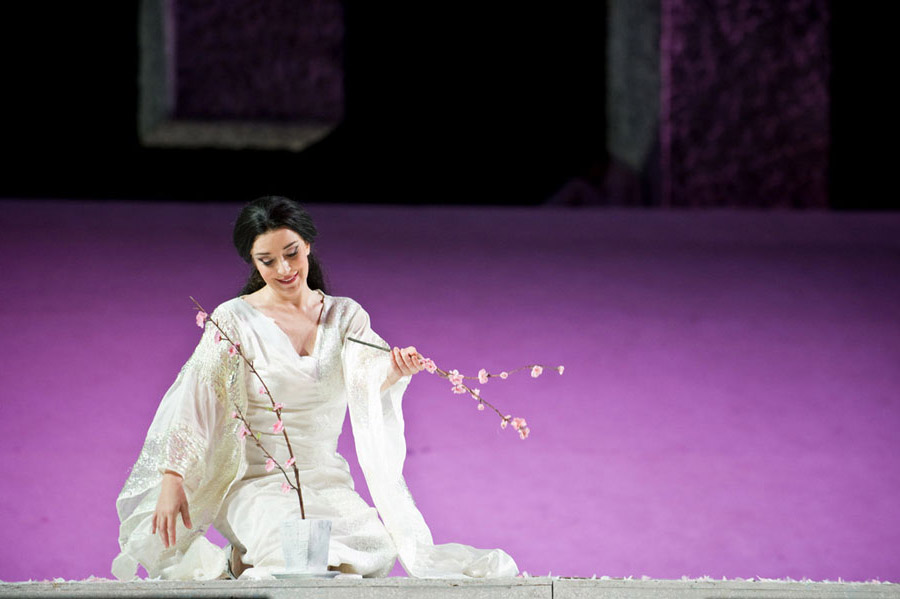
Kirsten Harms is one of my favorite friends. She directed the Berlin Deutsche Opera Theatre for ten years and just recently directed a wonderful production of Madamme Butterfly in Stockholm. She’s smart, beautiful, elegant and very talented. But what brought us together was our shared views on leadership and how the human body confirms or betrays its owners’ ambitions. In Opera as in business, owning one’s place is essential to earn follower trust.

In Opera as in business, owning one’s place is essential to earn follower trust.

It all started the way great friendships often do: drinking white wine in a hotel sky bar with spectacular views over Rome. We had attended a full day of conferences and panels in our International Women’s Forum and we were comparing notes about key messages and best speakers. As it turned out, Kirsten’s decades of experience preparing singers to impersonate kings and heroes on stage was not that far away from my own work with CEOs. In fact, we ended up joining forces to train high executives in multinational corporations. And space, believe it or not, is the first message most would-be leaders get wrong.

And space, believe it or not, is the first message most would-be leaders get wrong.

That first day in Rome we had witnessed an especially revealing example of how space influences a crowd’s opinion. During one of the panels a young, good looking Italian architect had discussed design with a discrete, brainy and supposedly prestigious woman. The fact that I can’t tell you much about her is already evidence of where she failed to create an impact. Not only did the Italian architect take up most of the talking space during the discussion.

He also occupied three fourths of the white leather sofa they were both sitting on. The woman was actually older and far more accomplished than her Italian counterpart, but we hardly saw her in her crouched little cross-legged posture. His waving arms and dynamic dance from one side of the sofa to the other, however, lulled us all, quite unknowingly, into the warm embrace of his charming accent. He created a huge impact on the room. She was forgotten a couple minutes into the following debate.

Interestingly, animals know this rule far too well. The first thing a dog does when he sees a stranger is bark: “hear how far my voice travels and recognize my territory”. Horses will fiercely run around occupying large areas to signify how much in charge they are and how little you are in comparison. Kingly opera singers will walk around the stage in slow grand strides to impress us with their might and power before they start singing. Owning the space is the first sign of leadership in the animal kingdom. So why do so many executives ignore its importance?

Owning the space is the first sign of leadership in the animal kingdom. So why do so many executives ignore its importance?

For one thing, we’re the intellectual generation. For some really dumb reason, we seem to think that anything that isn’t scientifically proven or clearly instructed in our conceptual studies is not important. So the animal wisdom carried along in millenary cultural traditions all around the world has fallen flat into oblivion with us wise guys and gals. Our next problem is we’re in a hurry about most everything in life. Which is stupid as well, because you see, in the animal kingdom if a guy is running really, really fast, there must be a bigger, stronger guy running after him.

Powerful leaders among animals move as little and as slowly as needed to make an impact. Once again Kirsten’s expertise was in agreement: “In opera you will never see a king running on stage”. They also move slowly to let the audience know how important they are. Too many executives, unfortunately, seem to be finishing a call, or sending a critical email or running late to preside meetings where they need to make an impact in order to actually get the job done.

Instead of initiating their reunions with the stance of a leader, they act like a stressed out assistant to the assistant of another really mean person in charge. The third reason why we fail to impersonate leadership with a correct use of space in the room is the secret doubts we hold about our own capacity to fulfill the task at hand. As we mentally decide to take charge and convince everybody of our plans, our bodies actually shrink like oysters beneath our very words.

Here we are, preaching our much rehearsed spiel of high and mighty intentions while our shoulders droop down, or our voice stretches into a murmur, or our head bends down to look at something on our laptop screen. Our words mean to make an impact, but our bodies escape all visibility by shutting down in our very own disappearing style.

We not only fail to use up big amounts of space with strong, booming voices, and direct, far-reaching eye contact. We also ignore the importance of specific places in the room. Those places that clearly signify leadership are often discarded or even avoided with all sorts of creative excuses about flat organizations and empathy, closeness and bla, bla, bla…you have one of these too, don’t you?

Shying away from center stage tells everybody in the room that deep down you’re not sure you can lead them. 

Meeting tables are long instead of round for a reason. Everybody wants to know who presides the meeting by looking at the header of the table. Small stages in large rooms, speaking atriums and screens often indicate the direction in which most people will be looking during the event. These are the places leaders need to occupy in order to be seen, heard and followed. Shying away from center stage tells everybody in the room that deep down you’re not sure you can lead them.

So they stop listening to you after your third word. Cell phones, tables and laptops kidnap their attention because the animal message sent to all the mammal bodies in the room is a red light of alert: “flee the scene, people. Incapable leader in charge means probable death ahead”. Yes, I did say death. In the body to body language of mammals, there is no time for subtleties.

Either it’s life or it’s death: “Tell me quick. I need to survive this very moment before I can think about it”. The next time you need to make an impact during a meeting or event of any kind, remember: Own the leader’s place like any other animal would do. You will be surprised at how much fluidly things will flow when all the animals in the room know who’s in charge.


50 Shades Of Balanced Leadership

Yes, 50 shades is on our list of trending topics this week as momentum builds for the movie’s worldwide premier on Valentine’s day, another much loved and hated topic in social media. I’m surprised the author chose the number fifty for her title, because 50-50 seems to be missing entirely in her story, the movie, and its current ad campaign.

Here’s an invitation, however, to become aware of today’s lack of balance in our business, life, and –rather inevitably— in our bedroom. I guess I should have read the book before writing about it, but frankly, I can not bring myself to go near it. Something about the whole phenomenon reeks of mass manipulation to a woman in her forties like myself.

But the reason I’ve chosen it as topic today is an article I came across on Fast Company about how the movie’s promotional posters glorified abuse. Because despite our many protests the fact remains: this story was a total turn on to millions of women the world over. What are we missing here?

The stuff that turns us on tells us a lot about the body we drive to work every day.

The stuff that turns us on tells us a lot about the body we drive to work every day. We drive our bodies as if they were stupid, disobedient cars. But the human body is still the most sophisticated and baffling technology on this planet, superior by far to anything we can create. Our problem is we’ve lost track of how it works and what it reacts to. If we were a little less ignorant about its deeply irrational, wild and very feminine, chaotic logic, we would know that when it turns on to something, no extra effort is needed. In fact, when the human body is really into something or someone, there’s actually little we can do to stop it.

Passion, my friends, is not something you build with fantastic storytelling, but rather an infinite source of energy you discover when you learn to drive your body-car the way it was designed. Judging by the incredible success of this book, both women — and the men they engage with –find the dynamic of dominant male and submissive female utterly exciting. Is this the way it was designed to happen in Evolution? Or is this the result of thousands of years of wars, pillage and progressive domination of everything female, chaotic or scary in its unpredictability? I read recently that elephants are now being born without ivory tusks.

It seems to be an intelligent adaptation of the species to its context. So many elephants are killed for the sole purpose of stealing and selling their ivory tusks, that the mysteriously sophisticated intelligence of organics has adapted to promote survival and growth of the species. Without the tusks. Have women’s deepest bodily drives adapted to find unfair and disrespectful domination attractive? Is this what it took for women to survive in recent history?

Our biases of perception and behaviour are given away by the patterns of mistake we repeat.

Before you tell me this has nothing to do with leadership, let me stop you right there. We use exactly the same body in everything we do. The way it reacts to sexual encounters is not that different to the way it interprets social conversations or work situations. Our biases of perception and behavior are given away by the patterns of mistake we repeat.

And the deeper the causes to such error patterns are, the more pervasively do they show up in our behavior. For example, would you be interested in working for Mr. Grey? Do you think he would be respectful of your ideas? Do you think he would be fair about recognition and punishment? Or does he sound like the kind of boss who plays mind games with you all day long until you forget who you are and what you want?

We don’t even need to watch the movie to answer these questions, do we? It’s quite clear that Grey’s patterns of error are not what we want in the leaders who shape our jobs. But what about his girlfriend’s patterns? What do you think of them? I work for many companies who want to promote gender balance in their leadership.

One of the biggest problems encountered once and again in female executives is lack of self-confidence, or its twin sister: excess of self-criticism. Perfectionism and fear of risk holds hundreds of women back from positions of power. And the question is, were women always like this or did they just get that way over centuries of violent domination?

One of the biggest problems encountered once and again in female executives is lack of self-confidence, or its twin sister: excess of self-criticism.

If the organic logic of women’s bodies is anything like that of elephants’, we have to wonder if women aren’t making it to the top of our businesses and societies because we’ve adapted to a context where being strong, self-confident and defiant was dangerously threatening to our lives. Being emotional and creatively chaotic about business may be as dangerous to executives today as growing ivory tusks is to elephants. Note that emotions and instinctive approaches are not only forbidden to women. Men are also heavily motivated to stay linear, rational and dominant. Alfa male role models are glorified across industries.

Mr. Grey is just another really rich, super successful business guy who thinks women exist to make his day more entertaining. How are women discussed among powerful men? What kind of women do these alfa guys choose as partners? The ones who oppose them, challenge them and clash with them in search of a better way to do things? Nope. Those are the much hated, avoided and humiliated ex-wives! Evolution developed male and female genders through a long, complex process of innovative trial and error. The combination of male and female genders proved to be very successful, reaching its ultimate level of sophistication in humans. Women exist to help men become better versions of themselves.

And men exist to help women do the same. We are so similar in some things, and so incredibly different in others, that our species wide game against each other has pushed us to grow and progress more than any other animal on the planet. Even if we do run into deformations from time to time. In the two-hundred thousand years of history of Homo Sapiens, exploitation of women is a deformation whose seed was planted around the time when we invented agriculture, only twelve thousand years ago.

When we realized we could exploit Nature to achieve smaller goals like wealth or social status, we also began to control and suppress the feminine in all its ways. Women stopped working, hunting and leading as equals to become pretty little things men inherited or traded with each other. Wars, conquests, pillage and rape slowly extended this deformation to every corner of the Earth. Gender balance, like strategy and charity, must start at home.

So if you consider yourself a leader, let me ask you to pay attention to what happens in your office, in your family and in your bedroom. Find out when and how you suppress the feminine in yourself, and make a note to stop it a.s.a.p. Self-awareness is the first step to leadership growth. It’s also the first step towards reconciliation between any two foes.

And with growing complicity, passion will flow. Real leaders are the best lovers.

Royal Dutch Shell Endorses Shareholder Resolution on Climate Change

Supermajor’s Support for Resolution Co-Filed by As You Sow Sends Signal to Policymakers: It’s Time for Global Accord On Climate.

The Royal Dutch Shell Board of Directors has endorsed a shareholder resolution requiring the company to commit to reduce emissions and invest in renewable energy, to do away with bonus systems that promote climate harming activities, and to stress test its business model against the two degrees Celsius warming limit adopted by 141 governments in the UN’s Copenhagen Accord.

Nonprofit As You Sow co-filed the shareholder resolution at Royal Dutch Shell and a similar resolution at BP as part of the “Aiming for A” Coalition of investors, coordinated by ClientEarth and ShareAction. “It’s remarkable that a supermajor like Shell supports a shareholder resolution that boldly questions its own business model,” said Andrew Behar, CEO of As You Sow.

“This acknowledgement of the need for change will ripple through the entire industry, and not a second too soon, as we see reports of 2014 being the hottest year on record. We see this as a signal to policymakers that the business community supports a robust global climate accord in Paris in 2015.” Climate-related shareholder resolutions filed at Anadarko and CONSOL Energy by As You Sow in 2014 were supported by 30% and 18% of shareholders respectively.

A similar resolution at ExxonMobil was withdrawnwhen the company agreed to publish a report on stranded carbon asset risk, in which Exxon acknowledged the risk of climate change and noted that if regulations on carbon were to be adopted, carbon pricing would be the most business-friendly regulatory mechanism. “Shell’s statement provides evidence that business as usual is no longer working for shareholders or industry, either from a global warming or markets perspective,” said Danielle Fugere, President and Chief Counsel of As You Sow.

“Whether oil prices are high or low, producers are finding themselves between a rock and a hard place: when prices are low, they can’t earn enough to cover costs, and when prices are high consumers are driven to lower-price competitors like renewables. In the meantime, global warming is driving regulatory action that is likely to strand fossil fuel assets.”

The Pains And Gains Of Leading

Last night I watched Braveheart, the 1995 Mel Gibson movie about Scottish hero William Wallace. It’s one of those movies we trainers can draw lots of clips from to teach leadership, and the story is as good as it gets where hearts are concerned. Of course they didn’t spoil an epic romance with the truth. It’s more of a legend than a factual depiction of what really happened. Legends have inspired many generations before us. This one may inspire you and your kids too.

The whole theme of the movie is freedom, one of humanity’s eternal challenges which I just wrote about last week. But the reason why it’s a great story to watch again with your kids, is pain. Braveheart shows how leaders are actually transformed by hurting emotionally and physically. It tells how humans used to march straight into pain instead of avoiding it and escaping it at all cost. Our current intolerance of pain in any of its forms, however, is holding us back.

Last week I fell off my horse. It was a clean fall on soft soil, but all the energy of the impact shot straight into my left hip. It took me about thirty minutes to get up, another thirty minutes to get back to my car, and another good while to breathe my way through aching joints and muscles as I drove very carefully and slowly back home. Something very important realigned in me that day, and diminishing physical aches throughout the week have impacted my way of thinking and feeling significantly. Oh, and the walking! Walking around like an old lady for a few days is a learning lesson in itself. But here’s what most impressed me: it’s how everybody advised me all the different things I could take to avoid feeling the pain.

It was so close to harassment that it was quicker just to act like I felt fine. People couldn’t even look at me straight in the face when I told them about the fall and its consequences. They winced, they looked away, they grimaced with imagined torture. All ages, genders, cultural backgrounds, races. Seriously. How can we become leaders if we can’t hear talk of potential bruises and contusions? Mel Gibson’s very handsome impersonation of William Wallace shows a man who loses his new wife, endures several injuries, faces betrayal from trusted allies and, not to spoil the ending for you, but it’s public record how Wallace was tortured once he was captured. During the entire movie different people come to him suggesting ways to reduce future agonies.

And every time he rejects their solutions. Every time he says that “every man dies but not every man truly lives”. When was the last time you rejected a pharmaceutical remedy to escape from physical or emotional distress? If there is one thing I have learned in my studies of human behavior and leadership, it’s that pain is the most effective master. Without a doubt. Pain in all its forms is “fuel for learning”, as Michael Brown puts it in his bestselling book The Presence Process.

Michael defines real learning as “an irreversible shift in perception,” a definition I retell to many clients and students. Without hurting, without falling, without failing, we remain innocent and naïve to leadership’s deepest and most significant mysteries. We remain weak in the face of greater, more complex battles. Not only is pain essential to actual leadership growth. It’s also a small price to pay for the qualitative jump ahead experienced when we come out the other side.

Once we have endured the ugly and challenging sensations that life’s setbacks impose on us, we suddenly begin to feel more alive and inspired than ever before. We reach a new level of performance that was unimaginable before we dared to fall apart. And it feels so incredibly great. It feels AWESOME! This is why escaping harm, or trying to surf over it with sedatives is delusional. If we don’t face and feel the aches life and business bring upon us, we waste a chance to grow as human beings and as leaders.

We remain just as we are. Not for long, though. Every man does die. We modern humans like to think that we have improved our quality of life enormously. It’s part of our credo of progress, democracy and capitalism. And it’s easy to believe because we didn’t actually witness any of the earlier, wilder forms of life. It’s easy to buy into the comforts of cozy homes, over-the-counter sedatives and mostly secure ways of life. It’s not, however, easy to truly live.

It’s increasingly hard to feel heroic, to feel brave and adventurous, to feel proud and passionate after thirty or forty. It takes very brave hearts to truly live through middle and old age. The only secret to becoming a leader is to slow down and breath. This is the summary of everything I have learned about leading others. Pain comes and goes. It’s a wave that grows and then suddenly diminishes. In all its forms. It just goes away exactly the same way it came.

And it only does so once learning has been achieved. But the only way we learn to go throw the waves of aching sensation is by going through them. There is no other way. Leaders don’t become leaders by reading, or copying other peoples’ tricks, or hiring experts to tell them how to do it. Leaders grow themselves by facing hardship, feeling the many pains that come with it, and breathing deeply until aches and grievances dissolve. It’s obvious the film inspired me.

I do recommend you watch Braveheart with your kids to help them see the role of pain in life, in freedom, in everything that makes life worth living. Nobody will have a bigger impact on your kids’ future leadership than you. Over a hundred years of psychological science and thousands of philosophical knowledge confirm this.

If you can teach your kids to slow down in the face of pain and breathe through it, you can also show your employees how slowing down reduces errors and focuses attention on the nuclear cause of pain. If you stop avoiding all the incredible assortment of bruises, mishaps and grazes life provides you with to help you grow as a leader, you won’t even have to talk about it out loud.

People around you will naturally follow your example, feeling comforted by your slow, breathing presence behind them. We all have a Braveheart inside us. We can all truly live before we die. All we need to do is face pain, slow down, and breathe until we feel our heart beating the timeless tune of heroes.

Will.i.am and Me Have a Dream

It was not an ordinary weekend for America, or for myself for that matter. President Obama was inaugurated for the second time and I was in complete awe as I walked away from a two and half hour conversation with global icon Will.i.am. He shared with me his purpose and love around making and producing music. “Every word I use in my songs,” he explained, “is meaningful. The messages I convey share a story, a history, an emotion, a call to action, or even the expression of the invisible and an outlet for the untold.” He mentioned that the pop songs that hit the charts often contain a different purpose – mostly to “hit” the charts. We look at him now: a global fan base, Grammy nominee and winner, an abundance of wealth. Life was not always like that.

A family of many children, and a single mom. Will explained that despite his hardships in his early life, he had an incredibly powerful passion to do something meaningful. Not only in the way rhythm moves his mind and soothes his heart, but also for spreading a message that dreams can become reality. I thought about how passion can drive how we change things, and who we become. This one conversation got me thinking, maybe it’s not about who we were yesterday or who we will be in the future, but who we are becoming. We’re changing.  

As the clock ticks, the birds chirp, as the seasons pass, we change. We are in the process of developing into who we are as a person, who we choose to become. Throughout our lives, we are evolving from caterpillars into butterflies. We live, we learn, we grow and mature: we break out of our cocoon. This transformation throughout our lives teaches us many things. The metamorphosis allows us to crawl away from the past and enter a world of undiscovered destinations. Although it may not be well-defined at this moment when we allow ourselves to change, adapt or grow we gain clarity with a new set of eyes.

These new sets of eyes allow us to see the world with clearer perspectives. With a new body we will learn to fly. Well, we might fail a few times, but eventually we will take flight. We will soar. Some of us may ask, where are we headed? No one has the answer to that, except you. That’s in your hands. It’s up to us. As Steve Jobs said, “You can’t connect the dots looking forward; you can only connect them looking backwards. You have to trust that the dots will somehow connect in your future. You have to trust in something – your gut, destiny, life, karma, whatever.” Trust in the journey of life perhaps? We live in a time where the future is ever-changing, and for that reason, we must focus our energy on today. The past is history and the future is yet unwritten.

Yesterday is long gone and tomorrow is not guaranteed. The present, today, right now, this moment in our life is what we have. Consider Walt Disney at age 22 or Debbie Fields who founded Mrs. Fields Cookies in her early 20s, 17 year-old Ingvar Kamprad founder of IKEA, or even Michael Dell who was 19 years old when he founded Dell Computers. They prove that today is our day. Any day is our day when we begin to take initiative. This is our time. No matter our age, young or old, a day is a day and an idea is an idea. I see no reason why age, for example, becomes a barrier to our success.

We can drive social change, we can become the innovators, or the entrepreneurs that generate progress. Life is too short for us to live silently. It seems as though our days are limited, and life is an uncertain length. Well if that is the case, let’s begin to speak up. I can almost guarantee that when that voice comes from within, from our passion in life, failure is not an option. Dr. Martin Luther King Jr’s. words are still relevant today: “Whatever it is you’re gonna become, become the best at it. If you’re gonna be a garbage man, be the best garbage man. To dream, dare, and do. Don’t ever let somebody else tell you what you can’t do. If you got a dream, you gotta protect it, and if you know what you want in life, you got to go do it.”

There is no reason to wait to become what he describes as the best version of ourselves. When we look in the mirror we must be proud of the person staring back at us, because that’s all we have. Let’s find that person in the mirror and say “I am somebody. I am somebody that this world needs. I’m leaving my mark. I am here.” Our future starts today. In June 2013, I gave the commencement speech at my high school graduation – a note specifically for the youth. The above is a modified version.

It was geared more towards youth entering the university environment. Nonetheless, I believe that what I have described above applies to anyone reading or listening. As the world is changing, we as leaders are changing. Our goals, ambitions and opportunities may depend on our concept of time. Is it here and now that we believe we can reach accomplishment and follow our heart? Or do we wait until those beliefs mature in our own cocoon? Yesterday feeds into today and today into tomorrow.

The common dominator is today, so we ought to begin today.

Conquering Fear and Setting Leadership Free

Do you feel like a slave? I bet your answer is no. Ok. Let me rephrase the question. Have you ever felt like you weren’t free to do as you wished? Mmmm…that one’s harder, isn’t it? Well, don’t give up on liberty just yet. Sometimes, the quest for total freedom builds irresistible leaders. Terminator was the first robot to develop human emotions in our generation. Well, that is if you don’t count Pinoccio, who was, in fact, the only kind of robot people could imagine before steel, machines and computers invaded our lives. Anyway.

Terminator came back from the future to help a boy prepare for war against an impersonal empire dominated by the very software programs and engineering devices humanity had created. We loved him so much that two more movies ensued, and don’t be surprised if he comes back yet again. A horribly grey, lifeless world dominated my impersonal machines was a deep fear in our collective minds that we all responded strongly to. Nobody wanted that to happen. The movie Matrix, several years later, also touched upon that same hidden worry of ours with lots of success.

Today, once again, our hidden fears about technology’s growing grip on our lives are alive and well. Jon Ander García, Continental Tires’ General Manager for Iberia and EMEA, came to Capital Radio’s morning talk show today to discuss some of their latest innovations. He hadn’t finished his first sentence before we plunged into the opportunities and threats of increasingly intelligent cars: Do you really mean we’ll be able to read the paper on the way to work as our car drives itself through traffic jams, finds a place to park itself and then finishes the full job? But in case of an accident, who shall we blame? Yes. It’s the same debate. And it’s getting hotter as we speak.

Machines are taking over a lot of our simplest daily routines, theoretically to free us up for more entertaining, value adding tasks, as Ander García assured us. Still, complex algorithms, cookies and all sorts of legal and illegal research tactics on internet are creeping up on our privacy, anticipating our preferences with geo-locators and selling juicy details about our online habits to who knows who. Are we being liberated or are we being enslaved by a new era of automation? Because in our growing world of oversized cities, huge corporations, and our most impersonal enormous creation yet, “big data”, we inevitably feel smaller and smaller. We seem to work harder and harder. And judging by black circles under the eyes of too many executives, we seem to enjoy our jobs less and less. Big decisions are made elsewhere.

Unquestionable policies are designed in remote headquarters. Innovation is imposed on us more often than pushed by us. Historians say slavery appeared with large civilizations. It didn’t exist in previous, tribal societies where everybody pulled their own weight in the face of Nature’s cruel uncertainty. It was only when the invention of agriculture secured food supply that humanity began to think bigger. As villages and empires became larger, big numbers of bodies were needed to keep the wheels of civilization running. Bodies without choice or will of their own.

Bodies who would be kept alive in exchange for their freedom. And herein lies the clue. Fear. Always fear. If you’re not afraid, nobody can turn you into a slave. No warrior, no arrogant Emperor, no lifeless machine. Fear is what holds us back, once and again throughout history, as individuals and as a species. To fight for our freedom is to conquer our own fear. This is how our most charismatic leaders were built. What are we scared of? Nothing and everything. We’re scared of losing our jobs. We fear public humiliation or judgment if we step off the train of corporate career success.

We’re scared of losing our homes, our possessions, our loved ones’ affections, our ambiguous places in impersonal cities where nobody really cares about yesterday’s news. We’re terrified of violence and power in other people’s hands. We’re scared of risk itself. We may be the most fearsome generation that ever lived on this planet. Thus, we seek to control our lives like no other generation before us. We develop technology to increase our grasp on uncertainty, and reduce it to nothing.

We give up growing parcels of privacy and independence in order to be kept alive. Ironically, we are more vulnerable to slavery than ever before as a species. Will machines and publicly traded corporations take over our lives? Only if we let them. Only if we use them to hide from what scares us. Only if we keep escaping our fears instead of facing them. Only if we forget where we come from. All aboriginal warrior training rituals around the world were designed to help youths face and conquer their own fears.

The day they stood their ground and breathed through their bodies’ tremors, their minds’ doubts and imaginary ghosts, they became adults. That day they experienced the kind of trust that nobody could ever take from them. The trust that comes from feeling yourself conquer and dissolve your own inner phantoms at all times. We need to relearn these ancient skills of emotional grounding once again.

We must develop our technology and grow our companies on the same grounded mindset that guided our earliest ancestors. Trusting leadership and bravery are encoded in our DNA. Humans were never designed to live in slavery. Freedom is our middle name.

How to Turn Anger into an Opportunity

All of us are emotional… thank heaven. Emotional energy motivates us to do great things. Emotion is the horsepower of sacrifice, dedication, innovation and love. Your emotions are nothing to be afraid of… not as long as they are harnessed and directed towards your deeper values that form the guardrails of your actions.

But what about bad emotions? For instance, for centuries angry emotions have had a bad reputation because irrational, fear-based behaviors often override our impulse control and make us do or say really crazy stuff. But recently social science started to turn its research eyes onto the “upside of negative emotions.” Let me explain. Anger is almost universally condemned as a very negative emotion. Virtually nothing wise is ever said or done when we are angry.

That seems true, doesn’t it? It’s certainly seems that way in my own life. For instance, I don’t believe I said anything I didn’t honestly regret whenever I have yelled. Yelling just makes me stupid. So, I think it’s true, unrestrained anger enables us to justify doing things we most often later regret. It is easy to just label anger as a “bad” emotion.

And yet… Consider this. Psychologists have concluded that our personal anger results most often when we feel undervalued. When we feel unappreciated, when our efforts seem invisible, when our ideas are ignored, when our interests are overridden, when our time is wasted, when our rights are violated… well, frankly it just pisses us off. And there’s another thing that makes us angry that isn’t so obvious.  There seems to be a deep longing in almost all of us to be respected. 

We want to be viewed as capable. This is at the root of our feelings of self -respect. So when people try to do things for us that we can do for ourselves we begin to resent them. If we sense at all that people are helping us because they think we are incapable of helping ourselves it makes us mad. The common expression is “biting the hand that feeds you.” Logically it doesn’t make a lot of sense to strike out at anyone being nice to us. 

Why would you be angry at someone who’s just trying to help?  The answer is we experience their help as an insult about our own capabilities.  This is the common type of war we have with our teenage children.  The way they know they’re capable is by cleaning up their own messes. They feel their own strength by taking responsibility for the consequences of their actions. So when parents keep bailing out their children from the natural results of bad decisions it makes them mad.

This is true whenever they ask for help they know they don’t deserve. This is not just true with our children but also with spouses, friends and co-workers. Nevertheless, when people get angry at us for our over-helping we throw up our hands and mutter to ourselves that they just don’t appreciate us.  If we don’t stop the anger cycle of mutual under–appreciation we become estranged.

Now that you know what the primary cause of anger is in ourselves and how we might trigger it in others let me give you a strategy to make the emotional energy of anger a positive force in your life rather than a destructive one. Anger is our inner alarm that we are being exploited. When we feel undervalued our anger can power up our proactive energy. We see this clearly in the efforts to extend human rights. Anger was a big catalyst in generating public demand that we extend civil rights to all. Anger also generates energy to get people to volunteer to support political candidates who promise to defend us from being undervalued by other politicians.

Clearly anger generated from feeling outraged about injustice can be hugely positive if channeled toward demanding positive change. And what’s true for societal issues of injustice can also be true for personal ones. For instance, I see a lot of resentment and anger in our modern workplaces.  In most businesses employees frequently feel undervalued. Surprisingly this doesn’t mean that they feel underpaid as much as it means that their expertise and ideas are so routinely ignored.  

In most organizations rework is constantly necessary because the people doing the work never get a chance to collaborate with the people who decide what work should be done. As you know, I frequently do leadership development for women leaders and managers.  What I find are often almost toxic levels of frustrated women because women in business are so frequently ignored or marginalized. Then male leaders wonder why all the women seem so “touchy.” The frequent male response is to “walk on eggshells” by being overly careful not to set off any of the women which leads to the women feeling even more undervalued.

So what should you do if you feel angry?  The research says that when you have a personal self-vision–which is simply a clear goal for your work and your life–and you have standards of what behavior and circumstances you will tolerate you can turn your anger into confidence, optimism and initiative to drive change. In other words, if you are really clear on what you DO WANT rather than just angry about enduring what you don’t want, angry energy can become creative energy. That kind of angry energy will sustain your consistent efforts to change your circumstances.

So here’s today’s bottom line. If someone is angry with you consider whether or not you are making them feel undervalued. You may be ignoring your needs or you may be doing something for them they should be doing for themselves. If you are angry it is probably because you feel undervalued. That means it’s time to be proactive. Get clear on what you want. Take responsibility. Be realistic. We judge ourselves by our intentions while others judge us by our behavior.

You may need to improve to get the respect and opportunities you desire. It’s not enough to be a good person…we also need to be effective. Learn what you need to learn and do what you need to do to receive the value you deserve. Deserve respect, ask for respect, and expect it. Don’t stay angry…create your future.

How to Ensure Values Are Actually Lived in Your Organization

Most leaders today understand the importance of having clearly articulated values that guide the decisions and behaviors of team members. But it seems that many organizations treat “core values” as just another couple of buzz words. Leaders get excited about creating core values that they hope will inspire both team members and customers.

The values are printed on a document that hangs prominently in the CEO’s office, or might even be displayed on the company website. Unfortunately, many organizations never move beyond this point. As a result, it’s difficult to find team members, or even leaders, who consistently live the core values or use them to guide decisions. I recently had the opportunity to speak with S. Chris Edmonds, author of the great new book entitled The Culture Engine. Chris shared several powerful tools for creating a workplace culture where values are inspiring, and result in a culture that people enjoy being a part of and produces great business outcomes because the values are actually lived on a consistent basis.

The Organizational Constitution

The central component of Chris’ work is what he calls an organizational constitution. This document defines the culture at an organization. The first key element of the organizational constitution is a clearly defined purpose that goes beyond producing a product or making money. Although it may take some time to uncover a deeper purpose that is inspiring for everyone on the team, it is well worth the effort. An inspiring purpose can significantly improve engagement levels of team members.

Limiting Core Values to the True “Core”

Another key element of the organizational constitution is the list of the most important values in the organization. This should not be a list of 15 or 20 values. It should truly be the absolute most important values that are non-negotiable. Chris recommends no more than five. By really getting clear on the absolute most important values and limiting them in number, it’s much easier for people to remember them and apply them. For organizations that have already been in existence for a while, Chris suggests that you make an effort to include team members in the process of defining the core values, leaning heavily on your top performers. Thus, there will be more buy-in from team members.

Clearly Defining Values with Associated Behaviors

If you ask five people on your team what “integrity” means to them, you will probably get at least several different answers. If you want to ensure that people are clear on what each value means, each value has to be defined in terms of the two or three behaviors that are most associated with that value. Chris recommends defining values with “I” statements. For instance, the value of integrity might be defined partly with the behavior, “I do what I say I am going to do.” In addition to making it easier to understand what is meant with each value, defining them with behaviors also makes them easier to measure.

Measure Values with the Same Effort We Measure Performance

Nearly every organization does a great job of measuring things like sales and quality and expenses. However, many organizations could do a much better job of measuring the alignment with the stated core values. We should place just as much importance on values alignment as we do on business outcomes because values alignment is what creates the strong culture that drives long-term business outcomes. The first people to be measured should be the leaders.

Leaders should be rated by peers and subordinates on the degree to which they live the values of the organization. When values are lived from the top down, the results include higher levels of trust, engagement, innovation, and ultimately business outcomes. Chris reports that organizations that follow through with designing and abiding by well-crafted organizational constitutions often see dramatic improvements in engagement levels, customer service, and profits within 12-24 months.

To see the full interview with S. Chris Edmonds, click here.

Here’s An Idea: Learn To Lead By Receiving

In our society we love to give. I bet you’ve been mulling over new year resolutions related to helping others, doing good for those in need, or being nicer to your family and colleagues. Well, I’ve got news for you. The true secret of leadership is not giving. It’s about receiving. Today’s article was born in a truly singular place: the “Ría de Rodiles” in Northern Spain. My dear friend Soha Nashaat, reputedly one of the 100 most influential women in the Arab world, fell in love with Asturias a few years ago.

This special natural paradise knocked on her door to offer her a dream house whose windows boast a magnificent spectacle of natural beauty all day long, all year round. Soha redid the entire house to make it worthy of such a magical setting. I still can’t understand why she’s spent so many years leading financial markets from top class corporations. Her amazing talent for decoration and design have remained as hidden to the world as this beautiful oasis of great food, soothing tides and discrete animal neighbors. I guess the best kept secrets only reveal themselves to those who learn how to receive.

And receive I did, I can tell you. Not only was I lavishly hosted by generous friends with the best money can buy in every possible way. Mother Nature also cradled me with lullabies sung by all kinds of birds and ducks, warm sunny days to bask in, and the irresistible magnetism of tides flowing in and out before us.

The Ria is a charming coastal inlet running eight kilometers inland to Villaviciosa village from Rodiles beach. Formed by a drowned river valley that remained open to the sea in the Jurassic period, it was declared a natural reserve in 1995. I swear there isn’t a better place to reflect on leadership, life and the new year. Because there is nothing to get here. Nothing to fight for. Nothing to worry about achieving. Nobody to help and nobody to give to. Only you. Only the tide. Only birds and fish going about their daily business without you. Green fields and beige hills kissing murky waters under the sun.

All you are asked to do is to sit quietly and learn. Learn to receive. We learn to receive from our parents. They learn from theirs. This is how it works across the animal kingdom. One generation gives everything it has to the next generation, so that they too will nurture and fight for their offspring. Modern humans, however, have become pretty terrible at practicing this law of life. And the smartest, best educated of humans are often the very worst. I wonder if all those humble little birds and slow grass-chewing cows look tenderly at us in our highly intelligent inability to accept what we get from others.

Taking makes us feel small. But we’ve become very hoity-toity about life in general. Maybe we’re too scared. Maybe we’re too proud. Maybe it just hurts too much to feel that familiar softness inside our hardened executive hearts. Whatever our reasons, our difficulty to accept what life gives us sabotages our performance in everything we do. Our culturally accepted preference for giving doesn’t make us better leaders. It actually makes us worse.

Leaders who can’t accept what comes to them tend to find fault in everything they do get. That’s a bad start. Investing a whole lot of energy, man-hours and money to change the companies they are hired to manage, for example. Complaining endlessly about the orientation of their office, or the lack of sophistication of their teams, or whatever it is that helps them feel better about not accepting the reality that cradles them and pushes them to create something useful with it.

When they’re done verbally trashing the place, they launch improvement initiatives that often interfere with the general flow of things, bringing no end of conflict to other departments, rebellions against company founders and veteran bosses, and resulting in numerous failures to materialize flashy figures projected on no less flashy excel sheets. As if this generally counterproductive leadership style wasn’t bad enough, leaders who can’t receive can’t actually give either.

An inability that is sadly “transparent to the user”, as IT experts would describe it. They think they are giving, but they are actually asking for more. They may give you a job and then hold it over your head for the following five years every time they demand more time and more effort from you. They will help you as a way to secretly feed on your company or friendship with endless advice or too many favors that don’t actually change anything for you and make you feel exhausted. They will overspend company resources in an effort to buy approval or popularity in such a way that still feels big, independent and hoity-toity all at once. NGOs and foundations suffer this daily.

I have a client who’s had to fight off several huge banks and multinational companies whose CSR initiatives were actually going to kill her budding foundation with bureaucracy and eternal internal meetings, ambitious programs that completely derailed her from her actual mission, and inappropriate publicity to boost their own corporate brands. My client doubted her own judgment and wondered whether she was the one being ungrateful. But I suggested a simple test.

Pay attention to how your body feels during conversations and exchanges with these leaders. If you feel bigger or stronger than them, then you’re probably the one giving. Taking, accepting, and getting make us feel smaller than the other person. That’s the way it’s supposed to feel! So if feeling smaller in a conversation makes you feel uncomfortable, then you know you’ve got a critical lesson to learn as leader. The problem is not feeling small. It’s feeling uncomfortable about it.

As long as you shy away from receiving, you sabotage your own present performance, and you debilitate your capacity to give in the future. One has to receive in order to give. It’s a simple law of Nature, like gravity. Stop fighting with it and learn to go with it. These are all the things I thought about on a wooden bench overlooking the Ria at the end of Soha’s garden.

I watched how every living thing before me received the incoming tide with pleasure and glee. I thought about how hard it always was for me to accept what others gave me, how hard I tried and how sorely I failed, time and time again, for many years. And I basked in the recently found delight of receiving all day long, day in and day out, until it was time to come home.

Thank you, Soha, for a wonderful retreat of nurturing warmth. Thank you, Ria of Rodiles, for bathing my heart in silent wisdom for a few days. Thank you, family, friends and past employers, for putting up with my inability to receive as a young ambitious executive years ago.

And thank you, readers of Real Leaders, for this space to share my thoughts and air my doubts about leadership and life. I will create great things this new year with what you’ve given me.