Kids Are Best Suited To Power Because They Never Seek It

  • Marc Dullaert, a successful businessman from Europe, witnesses a death in Africa and decides that he can no longer be a spectator to the world’s suffering.
  • Moved by a 14-year-old’s campaign to stop child labor, he wonders why a child cannot win the Nobel Peace Prize.
  •  A meeting with Mikhail Gorbachev results in the establishment of a peace price for children.
  • Children make up half the world’s population, yet are seen as second class citizens. Dullaert has shown how winners of the Children’s Peace Prize can influence key adult change makers and global institutions of influence.

One morning on the border of Sierra Leone I was woken by an awful sound. It sounded like an animal in distress. I stepped outside and saw a mother from a nearby refugee camp holding her child that had passed away. I was filming documentaries for my television production company and our vehicle had broken down the day before, resulting in us sleeping on the passenger seats. It was an incident that was to change my life forever. Seeing that mother holding her dead child was like being struck by lightning and I knew that I had to do something. I phoned my wife as soon as I got a signal, she designed a logo and I came up with a name: KidsRights. We started with a small project to benefit Aids orphans in South Africa and then steadily added more. It resulted in me selling my business, a large production company that produced shows for 12 European countries, to enable me to focus entirely on building KidsRights.

In 2004 the Children’s Peace Prize was born. I watched the announcement of the new Nobel Peace Prize winner on the evening news one evening and shortly afterwards a documentary on an 11-year-old boy called Iqbal Masih from Pakistan. Masih had organised a protest rally with thousands of children to protest against working conditions within the tapestry industry, basically children working in sweat shops. I was so impressed that I asked myself, “Why can’t a child win the Nobel Peace Prize?” 

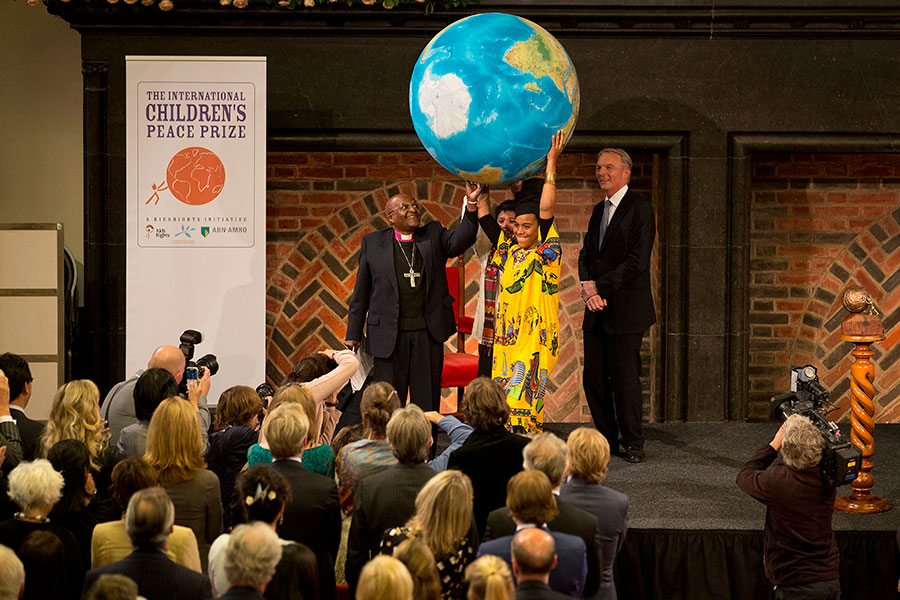
Chaeli Mycroft of South Africa won for her work to establish rights for children with disabilities.

Chaeli Mycroft of South Africa won for her work to establish rights for children with disabilities. Behind her is fellow winner Malala Yousafzai.


I made contact with the Oslo Nobel Peace Prize Committee, who were very kind but said, “Sorry Mr. Dullaert our statutes are more than 100 years old and we will not change them. The Nobel Peace Prize is not for children.”

Then I heard about the yearly gathering of Nobel Peace Prize winners, chaired by the former president of the USSR, Mikhail Gorbachev. I managed to secure a ten-minute meeting and met him at the Gorbachev Foundation offices in Moscow.

I tried to explain to him my idea of an international children’s peace prize, but despite being friendly, he didn’t speak English and the translator wasn’t helping much either. Gorbachev sat looking at me unblinking. I was getting nowhere. Suddenly, in desperation, I asked, “Mr. Gorbachev, do you have grandchildren and do you think you could learn something from them?” It was an icebreaker. He suddenly became emotional and started talking about his daughter and grandchildren. After my short interview, I was sent outside to wait for his answer – 45 minutes in a cold corridor, like a punished school child. I was eventually summoned back into his office and Gorbachev said, “Yes, let’s do this.”

Marc Dullaert founded the first international peace prize for children.

Marc Dullaert founded the first international peace prize for children.


The first International Children’s Peace Prize was launched at the 2005 peace summit in Rome and the first winner was South African Nkosi Johnson for his fight for the rights of children with HIV/AIDS. It was awarded to him posthumously as he had died of HIV/AIDS himself four years earlier at the age of 12. Ten years later, we now reach more than 1 billion people around the world when we acknowledge a child with a peace prize. The statuette they receive literally depicts a child moving the world because I strongly believe that children can be change makers. Sure, children are vulnerable, but they also harbor enormous strengths.
bono kids rights

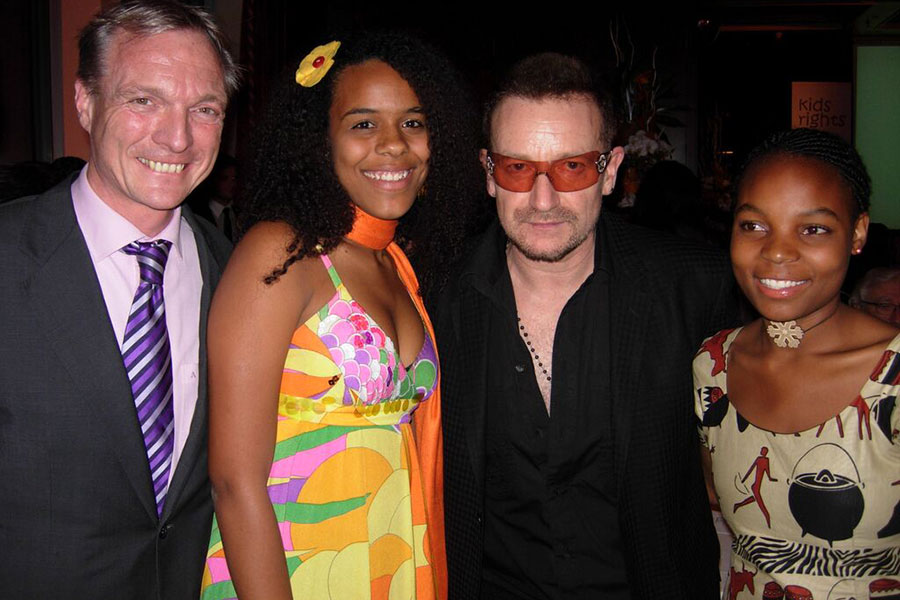
Winner Mayra Avellar Neves of Brazil, with founder Marc Dullaert (left) and Bono.


The Children’s Peace Prize provides a platform for children to voice their opinions and to inspire other children to bring about change. It can generate enormous impact. For example, Om Prakash Gurjar won his peace prize for freeing 500 children from slavery in India. He appeared on BBC news and when Gordon Brown, then U.K. minister of finance, visited India shortly after he requested a meeting. He was so impressed with Gurjar that he gave the Indian government £200 million to start eradicating child slavery and illiteracy. This demonstrates the power of a 14-year-old. After awarding the peace prize each year we can see the positive effects rippling out – it’s like throwing a stone into water.

However, exposure can also have a downside. In 2011 we got a handwritten letter from a schoolteacher in Pakistan, telling us about the remarkable story of a girl called Malala Yousafzai. She had stubbornly refused to stop her schooling, and despite being threatened by the Taliban, had continued advocating for girls education in a very public and courageous way. We wanted to award Malala the Children’s Peace Prize but were concerned for her safety, so we decided to nominate her instead – giving the prize that year to Chaeli Mycroft, a girl with a disability from South Africa.

The president of Pakistan was disappointed and he announced a few days later a National Peace Prize for Pakistan. It was awarded to Malala and she was thrust into the international limelight. The Taliban shot her a few months later. We could never have imagined that nominating her for a peace prize would trigger these series of events. The irony is that this tragic event led to her getting even wider exposure. She received the International Children’s Peace Prize in 2013 after all, and one year later received the renowned Nobel Peace Prize.

children-peace kids rights

Om Prakash won the peace prize for combating child labor and liberating child slaves in India.


What’s become clear is that children who win the peace prize can positively influence key adult change-makers. In 2007, The Elders was formed – a group of international leaders working together for peace and human rights. We decided to create the youth equivalent – The Youngsters. One of our winners, Thandiwe Chama has addressed the United Nations on the upcoming Sustainable Development Goals. Baruani Ndume from Tanzania, has addressed world leaders on what it’s like to be a child refugee and victim of war. Our winners have become ambassadors for good.

fw-de-klerk kids rights

Om Prakash receives his International Children’s Peace Prize from Nobel Peace Laureate FW de Klerk.


Children make up more than half the world’s population and are citizens of countries, despite being treated like second-class citizens. Many leaders and politicians pay lip service to children and jump at opportunities to have pictures taken with them, but they don’t take the time to listen to them. I’m not saying that young people know more than adults, just that they have a different view of the world. The least we can do is consult them when making laws or policies that directly affect them. One of my biggest eye-openers has been to see this happening more in Asia and Africa than in Europe – where it’s still very difficult to find real participation by children.

But, while children are capable of tackling tough social challenges and showing adults new ways of seeing the world, we still need to nurture an important ingredient of childhood – love. At one of our projects in India I once spoke to a boy who’d been freed from slavery. The kids were given a daily cooked meal and I said he must be very happy with that. He looked at me and said: “Of course I’m happy with one warm meal, but it’s more important to know that somebody cares for me.”
How Breathing Fully Releases Your Leadership

I coached the director a national women’s magazine recently for her speech at the journal’s tenth anniversary ceremony. The keys to her success the following night were two. On one side she understood that she should be the leader to make her 400 guests feel safe and engaged by her voice. The second clue was just as important: breathe in more often to release your spontaneous leadership.

Often people talk in very long sentences, dragging on the very bottom of their lungs to get to the end of what they want to tell us. Their voices seem unnecessarily deep, flat and effortful. Other times executives make a horse whistle noise when quickly inspiring a much-needed breath of air at obtuse corners of the conversation. But if we don’t breathe appropriately, we can’t replenish energy and color into our voices, our eyes lose their candor, and we feel old and tired. Sound familiar?

Inspiration is the first half of our breath wave. The more air we take in, the more energy circulates throughout our organic tissues. As that energy lights up our body in waves, sensations come alive again. Believe it or not, this is exactly why we fail to breathe appropriately.

Newborn children and animals give us good examples of what a full breath wave should look like: everything should move in and out. Everything means everything. Abdominal walls move forward and back, shoulders move up and down, back and neck also tilt slightly back to let more air in…and the taboo parts too: pelvic floor muscles also stretch out and back in. Limbs can show an advance and retreat wave as well some times. This is how an organism without worry or fear breathes.

We adults, however, don’t want to experience all there is to feel in our muscles, tissues and layers of skin. It’s not a conscious decision, of course. We stopped breathing fully at such an early age that we can’t remember it, and don’t really know why. It was probably a very gradual process of slowly, ever so subtly, reducing the width and depth of our breathing patterns until we got to our current meager inspirations.

We block our own generous breathing patterns instinctively, you see, in order not to feel an emotion we don’t know how to handle, or we do it to make ourselves invisible. Just like any other animal who finds itself in danger of exposure to a nearby predator, we inhibit breath to keep as silent, odorless and hidden as possible. Think of all the times you were surprised by an unexpected presence and instinctively stopped breathing for a second. It’s a very old, very wise evolutionary reflex in our mammal organism that kept a lot of our ancestors alive.

The big difference between our primitive ancestors and ourselves is that they were much better at processing their own blocked emotions after danger passed. We, on the contrary, have no intention of looking back into our past to search for events which could have been misinterpreted by our undeveloped brain as deathly. We really want to keep intact stories about happy childhoods or brave resolutions which require no more dwelling upon. And so any and every unresolved emotion from the many, many imperfect situations in our upbringing remains hidden in our muscles, tissues and organs, hoping our next inspiration will pass it by one more time.

Meditation, mindfulness and emotional management techniques all take us back to our breathing patterns. We are asked to alter our natural breathing movements to explore other alternative pathways. Many of us get lost, however, in our effort to master the technique itself. What’s really interesting about breathing more in than usual, or emptying our lungs, or holding in our breath is what happens in our body sensations. What wakes up, what stirs and spreads, what pulls at our attention in a new way?

In my coaching session we basically went through the speech marking pauses for my client to breathe in, and we made sure that we left no long sentences to drag her voice on and on and on. Even before the speech, I suggested she breathe in big waves of air every time she remembered to do so in her everyday routines. This small change in habits strongly increases the body’s usual levels of sensation in a few days. Beyond a successful speech — which it was, very successful, by all accounts–, the goal we set together was to increase her natural energy levels by simply getting more air in more often.

Yesterday I met another client who also burned his bodily fuel deposits empty when talking. So much so that his voice wavered like a car choking for gas at certain moments. It was quite remarkable because this executive meditates regularly: 45 minutes every day is a very disciplined meditation practice for any CEO!

The trick, though, is how our body fools us to keep breathing with the same pattern all the time, or how it finds ingenious turns and adaptations to any new technique in order to avoid the very sensations it really doesn’t want to have to face. Let’s not forget: the moment in which our innocent animal body decides to inhibit breath is a time of risk…or even of expected death.

The emotions held in during these occasions are of enormous intensity, more so as we go back in time. An incident at five years of age, for example, contains emotions at a much more intense level than a trauma at fifteen or twenty-five. Yet at five years of age our brain already has five years of neuron pathways and connections of safety, trust and harmony to rely on. If we get a mortal fright at five months of age, the intensity of the emotions we will refrain from feeling is on an all new level of horror. It can be something as innocent as losing sight of our Mom: to our still undeveloped nervous systems this can feel like an inevitably mortal tragedy.

Or it can be a total fit of anger from when we were only two years old, which we had no permission to express. The man I worked with yesterday kept saying “I’m a very nervous guy, this is why I meditate”. And this is why he still won’t breathe a real mouthful of air despite diligently meditating every morning…that old unresolved tantrum of rage might suddenly take over his entire life! As soon as he starts pausing for air more frequently while talking, anger in its many shades will certainly begin to seep up into consciousness and demand freedom. In which case boxing and other exercises involving physical impacts in a safe environment will be a great relief mechanism. His meditation practice will move to a new level of depth and serenity without doubt.

Yes. Breathing differently opens Pandora’s box in every sophisticated executive and business owner. It allows old feelings to come up into our busy minds and demand resolution. If you meditate, please don’t get lost in another stupid competition to maximize the number of minutes you empty your mind. That is NOT the goal.

The goal is to release every unresolved shred of negative emotion that is keeping you from breathing fully, happily, wisely. Increasing your perception of sensations in your own muscles and tissues will improve your interpretation of event around you significantly. Meditation should be more about observing what happens inside your body, and helping it find resolution, than about reaching silence. When your body finds peace, trust me, your mind will too!

The more and better you breathe, the more and better you will lead. Ohmmmmmm.

Surely it’s Too Late for Outrage When a Child is Dead?


  • The director of a South African organization that aims to prevent child abuse and promote children’s rights suggests that violence in society begins in the home.
  • If you don’t spank our kids at home, are you prepared to voice your concern when you see it happening to other kids in public?
  • Christina Nomdo asks why certain sectors of society, such as cultural or religious groups, seem to think that assault against children is “love” and “discipline”.

Sensationalist news reports on children killed by their parents was the reason someone called to wake me up at 6am one morning this week. Well, I have news for these reporters – I go to sleep with the knowledge that it has happened before and will happen again in South Africa. I try to put my energies into finding a strategic solution to this problem. I focus on prevention and the roles of all duty bearers, including myself, who should be ensuring that our children are safe – especially in their own homes.

Why are we expressing outrage so late, when children have died? Should we not be expressing outrage when members of our society use physical force, at any time and in any place, to control the behaviour of their children? I bet there will be many who immediately fight hard for the right to assault their children in their own homes. I’m told it’s called discipline and love and has religious or cultural justifications. Strangely I thought commonly held religious values were peace, care and respect. I read the Bill of Rights a few times and nowhere did I find the right to abuse children. So if we don’t have religious grounds and we don’t have a rights argument, what do we have? An intransigent society, unwilling to change, even when logic is applied.

It is no wonder we have a violence pandemic in South Africa. We are complicit! Professor Shanaaz Mathews, head of the Children’s Institute, helps us get to the bottom of this. In her PHD research she asked men in maximum security prisons how they came to kill their partners. She found that an underlying factor was how they were disciplined as children. Most men had emotionally unavailable parents and were not disciplined or they were beaten severely by their parents under the guise of discipline. So because we can’t find the right balance of discipline, we end up with murdered women and men in prison and the children left behind.

South Africa is revising the Children’s Act now but it is silent about a ban on corporal and humiliating punishment of children in the home. It is a political hot potato. It’s been jumping in and out of different versions and drafts of the Children’s Act since 2002. Those in power are not committed to take a clear stance. I’m not talking about government… I’m talking about us – South African society. Politicians and government officials fear condemnation from the voting public if they become ‘too progressive’ on the matter. But surely we need to progress from killing our children?

So now we’ll become defensive as parents. We will say, ‘I’m not a killer I only smack or spank them lightly.’ ‘In fact my children want me to spank them and I also encourage their teachers to do so.’ Let’s reflect on a scenario one step removed from our own parenting… What is our response when in a toy shop, for instance, we notice an adult beating a child to control their behaviour? What do we do? What do we think? Are we change agents or are we accepting of the behaviour, silently condoning? I am not going to arrange the words in order of severity – beating, spanking, smacking, killing, abusing, assaulting – to assuage our conscience, the bottom line is they are all rooted in physical violence by one person on another.

I am also a product of this society so I understand we have few models for using positive discipline with our children and we sometimes allow our worst selves to prevail when we become frustrated. I’ve been there. 

I want something different for our children. Children need guidance, discipline and boundaries to develop optimally. I want them to have parents who discipline by modeling respect and care. Who always think their children are as special as when they were born. Parents who guide inappropriate behaviour by engaging calmly with their child explaining the boundaries. RAPCAN’s understanding of positive discipline includes adults as positive role models for non violent conflict resolution; problem-solving rather than punitive and humiliating approaches to correct behaviour; and children’s involvement in decision-making and the setting of ground rules.

It is a challenge right now because some parents have so much trauma to recover from that emanated from their own childhood. Or they are so disenfranchised, economically marginalised and disempowered right now that the fight for daily survival is anathema to the dignity rights they should be enjoying. This is the story of South African adults today. Let us not write the sequels about trauma in generations to come.  Most of us are already trying to be more positive in our child rearing. Let’s think, feel and act together to create better lives for today’s children… and their children

Christina Nomdo is the Executive Director of Resources Aimed at the Prevention of Child Abuse and Neglect (RAPCAN) in South Africa. Christina is a PHD candidate in the Public Law Department of the University of Cape Town with a keen interest in the concepts of children’s rights and adolescent sexuality.

What do you think of Christina’s standpoint on spanking kids? Let us know in the comments below.

Live Your Life so That You Love Your Life

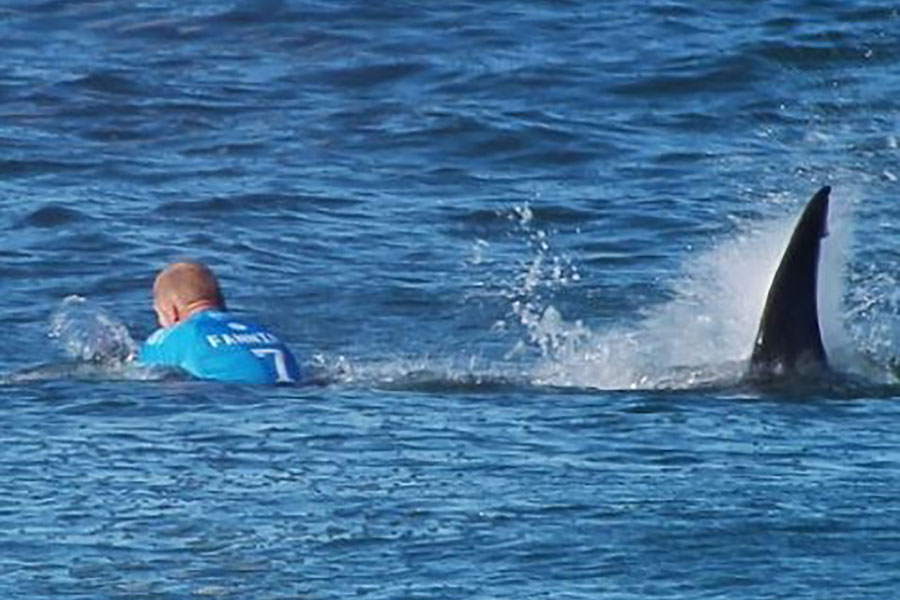
This past Sunday morning a three time world surfing champion, Mick Fanning, was nearly eaten by a great white shark during the finals of a major surf contest in South Africa. It was watched live via the web by hundreds of thousands of avid surfers including me and now by millions on YouTube.

The attack was frightening, ferocious and freaky. I know a bit about the shear panic of being stalked by a shark. Once at Rincon, California I was chased out of the water by an 8-foot shark. So scary I had to rinse out my wetsuit. In Samoa, I paddled to shore faster than a cartoon character when a tiger shark cruised by. As for the direct great white shark attack on Mick…I am so grateful that it ended without any injury. Amazing!

When Mick was interviewed a few minutes after he escaped he broke down in tears so grateful for his family, friends and life. Perhaps nothing is so clarifying about what’s important in life as a narrow escape from a violent death…or in my case a long, bumpy life with more than one sobering health scare caused by my uninsurable heart. My times of greatest fear and greatest discouragement have taught me the most about life.

Here are the life lessons that hit me hard watching Mick’s brush with physical obliteration:

  1. My deepest purpose is to love as big and as wisely as I can, and learn what I came here to learn…which is constantly emerging.
  2. Always live in daily balance with a sweet rhythm of love, work and play. (I have to do this in order to do #1.)
  3. Wake up each morning with a direct intention to improve someone else’s life that day.

Most of the people I coach and train have difficulty with number 2. But let me assure you it is possible to live a lifestyle of inner harmony and outer joy. It takes a powerful intention to do so and focused attention on the opportunities that will create the life rhythm you need. Millennial-age young people get the central importance of this. They have looked at the lives, stresses, and follies of their elders and want something more. And you know, at the core, nothing is more important to your inner integrity than # 2. It is the only way to live so that if you die unexpectedly, you will have no regrets.

Debbie and I are on a meditation and hiking vacation in the Tetons right now so that’s it for today. 

Those are the spontaneous thoughts that flooded me as I watched the horror of a shark attack and took a few minutes to contemplate what life lessons I have learned that I want to hang on to.

Live your life so that you love your life.

Surely it’s Too Late for Outrage When a Child is Dead?


  • The director of a South African organization that aims to prevent child abuse and promote children’s rights suggests that violence in society begins in the home.
  • If you don’t spank our kids at home, are you prepared to voice your concern when you see it happening to other kids in public?
  • Christina Nomdo asks why certain sectors of society, such as cultural or religious groups, seem to think that assault against children is “love” and “discipline”.

Sensationalist news reports on children killed by their parents was the reason someone called to wake me up at 6am one morning this week. Well, I have news for these reporters – I go to sleep with the knowledge that it has happened before and will happen again in South Africa. I try to put my energies into finding a strategic solution to this problem. I focus on prevention and the roles of all duty bearers, including myself, who should be ensuring that our children are safe – especially in their own homes.

Why are we expressing outrage so late, when children have died? Should we not be expressing outrage when members of our society use physical force, at any time and in any place, to control the behaviour of their children? I bet there will be many who immediately fight hard for the right to assault their children in their own homes. I’m told it’s called discipline and love and has religious or cultural justifications. Strangely I thought commonly held religious values were peace, care and respect. I read the Bill of Rights a few times and nowhere did I find the right to abuse children. So if we don’t have religious grounds and we don’t have a rights argument, what do we have? An intransigent society, unwilling to change, even when logic is applied.

It is no wonder we have a violence pandemic in South Africa. We are complicit! Professor Shanaaz Mathews, head of the Children’s Institute, helps us get to the bottom of this. In her PHD research she asked men in maximum security prisons how they came to kill their partners. She found that an underlying factor was how they were disciplined as children. Most men had emotionally unavailable parents and were not disciplined or they were beaten severely by their parents under the guise of discipline. So because we can’t find the right balance of discipline, we end up with murdered women and men in prison and the children left behind.

South Africa is revising the Children’s Act now but it is silent about a ban on corporal and humiliating punishment of children in the home. It is a political hot potato. It’s been jumping in and out of different versions and drafts of the Children’s Act since 2002. Those in power are not committed to take a clear stance. I’m not talking about government… I’m talking about us – South African society. Politicians and government officials fear condemnation from the voting public if they become ‘too progressive’ on the matter. But surely we need to progress from killing our children?

So now we’ll become defensive as parents. We will say, ‘I’m not a killer I only smack or spank them lightly.’ ‘In fact my children want me to spank them and I also encourage their teachers to do so.’ Let’s reflect on a scenario one step removed from our own parenting… What is our response when in a toy shop, for instance, we notice an adult beating a child to control their behaviour? What do we do? What do we think? Are we change agents or are we accepting of the behaviour, silently condoning? I am not going to arrange the words in order of severity – beating, spanking, smacking, killing, abusing, assaulting – to assuage our conscience, the bottom line is they are all rooted in physical violence by one person on another.

I am also a product of this society so I understand we have few models for using positive discipline with our children and we sometimes allow our worst selves to prevail when we become frustrated. I’ve been there. 

I want something different for our children. Children need guidance, discipline and boundaries to develop optimally. I want them to have parents who discipline by modeling respect and care. Who always think their children are as special as when they were born. Parents who guide inappropriate behaviour by engaging calmly with their child explaining the boundaries. RAPCAN’s understanding of positive discipline includes adults as positive role models for non violent conflict resolution; problem-solving rather than punitive and humiliating approaches to correct behaviour; and children’s involvement in decision-making and the setting of ground rules.

It is a challenge right now because some parents have so much trauma to recover from that emanated from their own childhood. Or they are so disenfranchised, economically marginalised and disempowered right now that the fight for daily survival is anathema to the dignity rights they should be enjoying. This is the story of South African adults today. Let us not write the sequels about trauma in generations to come.  Most of us are already trying to be more positive in our child rearing. Let’s think, feel and act together to create better lives for today’s children… and their children

Christina Nomdo is the Executive Director of Resources Aimed at the Prevention of Child Abuse and Neglect (RAPCAN) in South Africa. Christina is a PHD candidate in the Public Law Department of the University of Cape Town with a keen interest in the concepts of children’s rights and adolescent sexuality.

What do you think of Christina’s standpoint on spanking kids? Let us know in the comments below.

How Men and Women Can Co-Create Unexpected Value

Tonight I’m giving a speech to a group of senior executives on the strategic advantage of men and women working together. This is new territory, and new thinking for most male leaders. The current drive to elevate more women into leadership is largely driven by the pressure to be politically correct.  It is, after all, the right thing to do. What’s both sad and bad about that kind of thinking is that it simply marginalizes women’s potential contribution to success.

In a survey project I’m just starting it seems that many, many women in the workplace feel either invisible or patronized…but not valued.

The deeper problem is that simply telling men they should  value women as leaders only adds energy to the stereotype that women need ‘special’ help because they are the weaker sex.  This kind of thinking is not confined to the ‘Mad Men’ era.
It’s the unspoken bias that stubbornly persists.

I call it the cycle of “Bitchiness.”  It works like this.

Psychological research reveals that feeling powerless or under-appreciated leads to feelings of frustration and anger that produce either aggressive or passive-aggressive behavior.
Passive-aggressiveness is usually played out in behaviors such as complaining, blaming, silence, gossip and acting like a victim.  Low-power people tended to be passive-aggressive because it’s one way of maintaining psychological strength.
For instance it’s common for teenagers to be passive aggressive. (I have raised 6 teenagers so I am an expert in responding to passive aggressive strategies.)

Sociologists tell us that when a whole class of people, in this case women, try to effectively operate with low-power in organizations that favor high-power, that class will tend to perpetuate passive-aggressive behavior.  This of course produces the evidence that confirms the common male bias that women are too emotional, sensitive and indirect to be senior leaders.

So when I give speeches on this subject I point out that a working culture that subtly de-values the ideas, work ethic, and contributions of women will continually produce the superficial evidence to justify the dysfunction of the culture.

I take great care not to be a man basher. It’s not that men have ill-will toward women.  They just need a change of mindset. Here’s what I mean.

Men and women literally see the world differently.  Psychological research confirms that men and women regularly look at the same set of facts and see different opportunities and different threats. This is true with men and women with the same IQ, the same education, and similar work experiences. Men and women will notice different things and assign greater importance to them.

These differences offer tremendous new opportunities in both innovation and execution. Research reported in the Strategic Management Journal (September 2014) uncovered that organizations that have the most women in senior leadership positions grow faster because they produce more innovations that creates customer value. (High value innovations have higher profit margins.)

We believe that this is no accident. Neurological research confirms that male brains are wired for linear thinking.  This kind of thinking is ideal for creating consistent, incremental improvements in efficiency.  Many, many companies today make data-driven decisions to reduce costs by increasing labor and process-efficiency. This has proven to be very valuable. Male dominant skills of goal-setting and relentless accountability have been essential to building big, efficient enterprises.  However, what if being efficiency-focused is now actually getting in the way bigger bolder success?

Linear thinking tends to confine a leader’s thinking about innovation for product or service improvements.  Linear thinkers often get very excited when they can combine product and service enhancements with the mistaken notion that it represents an innovation breakthrough. Many companies are so busy working on process-efficiency they have to hire strategy consultants to come up with product or service improvements.  The problem is your competitors are hiring consultants with the same mindsets and data that your consultants have, so creating unique value becomes almost impossible. This level of innovation leads to slow growth and shrinking margins, which puts more pressure on operating efficiency. It’s very difficult to break out of this vicious and slow death cycle.

This is where women can make a big difference. For me, this is not theoretical as I’ve seen it time and again in my own leadership practice. It works like this.  Most women’s brains are wired for ‘practical empathy.’  This is also known as ‘social intelligence.’ Unlike linear thinking it is holistic, which enables people with this kind of brain design to both feel and understand what other people are feeling and experiencing.  (About 30% of men also have ‘practical empathy’ brain design. Few however rise to high levels in an organization because they are viewed as too “soft.”)

Leaders with practical empathy more naturally understand what ‘invisible needs’ their current customers and potential new customers have.  They are also more likely to come up with unexpected solutions that no one else has seemed to think of.

men and women

A great current example of this is Elizabeth Holmes the founder of Theranos.  You may have heard of her.  She is a 30-year-old Stanford dropout who developed a revolutionary way to do extremely cheap blood tests that can predict a wide spectrum of life-threatening diseases.  This is a really good idea. It’s estimated that she has a nearly $5 billion net worth.  She is described as “Steve Job’s with a big heart,” meaning that she is brilliant but driven to save lives and reduce misery for literally billions of people who otherwise would not get, or could not get their blood tested.

A major driver of her innovations is that one of the primary reasons people don’t get blood tests, even when they’re prescribed, is that they hate the pain of a blood draw.  Her test requires only a few drops of blood from a simple pinprick rather than being hooked up to a scary looking tube being jammed into your vein.

Here’s what I want to emphasize. Holmes’s motivation to innovate wasn’t because a market analysis showed that inexpensive blood testing was a multibillion-dollar market, but rather that there was a critical human problem that stood in the way of implementing our existing medical knowledge to immediately save millions of lives.

In my experience Elizabeth Holmes is not the exception when it comes to the thinking that women bring to generate high-value innovation.  When I run innovation workshops I make sure that at least half the participants are women.  I begin by asking the question, “If you look at our company’s total capabilities, how much good can we do?  How much value can we create to improve the quality of life for our current and potential customers?”  And what I see is that the people with the highest social intelligence and genuine practical empathy come up with the most astonishing and executable ideas.  And most of those people turn out to be women.

When I work with HR leaders on their struggles to attract, develop and retain talent I frame the challenge as this opportunity…“If you need to vastly improve employee talent quality, engagement, creativity, collaboration and productivity within your existing budget, what should you do?” Again, I find their social intelligence to be a volcano of unexpected solutions in spite of existing constraints.

I am a big believer in rapid, revolutionary change. We have entered the “Age of Relationships.” The value that we create is increasingly due to the quality of the relationships we are nurturing.  Relationships with customers, with employees, with society, and with the unborn. When I was working with Stephen Covey we called it “Synergy.”  One plus one equals three…or sometimes thirty.

I’m not suggesting that men are wrong and that women are right.  I am only pointing out that women are simply not valued in the essential way they bring value.  We need the synergy of  both efficiency and empathy.

Now is the time for true synergy between men and women in the quest to create a world of sustainable abundance.

Don’t Run With Wolves, Swim With Dolphins

“Women who run with the wolves” is a book written in the seventies by Clarissa Pinkola Estés. Dismissed copies rot away on many women’s shelves as an uncomfortable symbol of the untamed female soul. Forty years after its publication we’ve come to the era of women who swim with dolphins. Here’s why.

One of the earliest dolphin myths in human history involves Greek sun god Apollo, the killing of goddess Gaia – also known as Mother Nature or Earth – and the mysterious but very prosperous Oracle of Delphi. The Greek word Delphi, in fact, is said to mean womb. Among Eastern myths and carvings dolphins are often associated to Atargatis, goddess of vegetation, nourisher of life and supernatural guide of the dead to be reborn again.

Dolphins appear in our stories at a time when men became a lot braver about going out to sea, the primal womb from which all life on Earth emerged. They were greeted by curious dolphins who swam alongside their boats. It was a time when writing things down became important, overthrowing previous oral traditions who believed wisdom was too sacred to put into writing. A huge revolution was taking place. The masculine energy of intellect, effort and centralized power was rebelling violently against traditional rule of feminine instincts, wild emotion and life nourishing wombs among nomadic peoples. As always history is told, and recorded, by winners.

This explains why you won’t find many stories about ancient female warriors or wise women shamans. They were too busy fighting for their lives to sit down and write about it. They were too powerful to be ignored. Everywhere around the planet we beheaded each and every woman who led tribes in order to submit her peoples, and we made sure no written trace was left of such warrior queens’ existence. Several thousand years later, however, Lara Croft or Uma Thurman’s Kill Bill bride, among other sexually alluring warrior queens, are increasing popular in adult comics. Such tastes are also kind of concealed on our book shelves. Just as wild untamed women remain hidden somewhere in our collective unconscious, slowly but surely coming back to life.

I spent all last week at a dolphin facility whose name I won’t mention to save them harassment from verbally violent so-called animal lovers. I encountered a charming social group of ten dolphins led by a senior female, as is often the case among mammal packs or, in this case, pods. Officially I was training in dolphin therapy for disabled kids. Unofficially I was researching the realities of dolphins in human care as part of my plan to engage them in leadership training. Passionate male scientists, researchers and trainers pushed their certainties and knowledge at me. I, in turn, mystified them with provocative questions, earthy feminine humor and moving reflections bathed in emotional wisdom. I felt my new dolphin friends silently laughing with me as certainties melted away and poses lost balance.

As the week came to its end I realized all those dolphins knew a lot more about each of the humans in our group than we suspected. They see very well above water. They don’t waste time gossiping about unimportant details between lessons. They don’t only use eco-location to sense obstacles around them. It’s like a very special sense of smell, or an intuitive curiosity to identify who they can trust. My colleagues sat around the pool chatting with each other, whatsapping on cell phones or intelligently discussing dolphin facts and research conclusions. I sat there in silence admiring the dolphins at play. I worked with my inner sensations and feelings whenever I could. I gave the animals all my available attention when I was not attending the autistic child whose careful social development I supported in the water. Complicity grew among us all as the week advanced. The dolphins began swimming beside me as I walked past the pool, or coming up to the underwater glass to touch it with their heads as if I could pet them. My heart thumped. My emotions expanded. My mind wondered if I was imagining all these timid gestures of friendship and warmth. My guts knew this was a lot more real than all our elevated intellectual analysis.

I chuckled when I heard trainers speak of fish as primary motivation and loving cuddles as secondary reinforcement: only we over-intellectualized idiots could come up with such a back at the front understanding of life! I couldn’t help wondering if dolphins just take the fish from trainers to play along with our adult games of rationale. Bribery is always effective in the short term with subordinates – human or animal – …it’s irrelevant in the long run when true deep trust is alive among us. But well, let’s not take dolphin parks too far out of their current comfort zones, shall we?

Don’t agree with me please. I’d rather you thought long and hard about it. Felt deeply and strongly about all this for a while. Women who swim with dolphins don’t need to convince you instantly. We just want you to let go of your intellectual security and dive down into your emotional doubts: What if dolphins are not what we think they are? What if all animals and Nature are simply trying to help us remember where we came from? What if dolphins in parks and in the wild are sending us subtle waves of warmth, complicity and untamed wisdom?

That most men don’t get it is no surprise. Most women are used to that. But that women don’t get it is more worrying. It means we’ve lost contact with the part of ourselves that loved running with wolves. We’ve lost faith in the goddesses of abundance and wisdom that inhabit our instincts, passions and especially our legitimate anger. We’ve believed all those stupid written stories about how intellect killed instinct to make the world a better place. And we question all those moments in which we feel connections that can’t be explained with – honestly! — very limited scientific thinking.

Have I unsettled you? Good. That means you’re a little bit wiser than you were a thousand words ago.

Don’t be shy. Fall into your mysteries. Throw light on your obscured shelves. Stop thinking so much and start believing your feelings, however dark or conflicted they may be. Find that ancient female wisdom inside your heart and relish the animal instincts that mobilize your gut.

Rebirth the wild feminine in your life all round. Our oceans await her reappearance among men and women today. We have a lot of trash to clean up. A lot of pain to let go. A lot of joy to release. And a new conception of untamed leadership wisdom to unveil.

What if dolphins are unintentionally teasing us forward? Next time you see one ask yourself what he’s trying to share with you. Embrace the wild within you!

Don’t Run With Wolves, Swim With Dolphins

“Women who run with the wolves” is a book written in the seventies by Clarissa Pinkola Estés. Dismissed copies rot away on many women’s shelves as an uncomfortable symbol of the untamed female soul. Forty years after its publication we’ve come to the era of women who swim with dolphins. Here’s why.

One of the earliest dolphin myths in human history involves Greek sun god Apollo, the killing of goddess Gaia – also known as Mother Nature or Earth – and the mysterious but very prosperous Oracle of Delphi. The Greek word Delphi, in fact, is said to mean womb. Among Eastern myths and carvings dolphins are often associated to Atargatis, goddess of vegetation, nourisher of life and supernatural guide of the dead to be reborn again.

Dolphins appear in our stories at a time when men became a lot braver about going out to sea, the primal womb from which all life on Earth emerged. They were greeted by curious dolphins who swam alongside their boats. It was a time when writing things down became important, overthrowing previous oral traditions who believed wisdom was too sacred to put into writing. A huge revolution was taking place. The masculine energy of intellect, effort and centralized power was rebelling violently against traditional rule of feminine instincts, wild emotion and life nourishing wombs among nomadic peoples. As always history is told, and recorded, by winners.

This explains why you won’t find many stories about ancient female warriors or wise women shamans. They were too busy fighting for their lives to sit down and write about it. They were too powerful to be ignored. Everywhere around the planet we beheaded each and every woman who led tribes in order to submit her peoples, and we made sure no written trace was left of such warrior queens’ existence. Several thousand years later, however, Lara Croft or Uma Thurman’s Kill Bill bride, among other sexually alluring warrior queens, are increasing popular in adult comics. Such tastes are also kind of concealed on our book shelves. Just as wild untamed women remain hidden somewhere in our collective unconscious, slowly but surely coming back to life.

I spent all last week at a dolphin facility whose name I won’t mention to save them harassment from verbally violent so-called animal lovers. I encountered a charming social group of ten dolphins led by a senior female, as is often the case among mammal packs or, in this case, pods. Officially I was training in dolphin therapy for disabled kids. Unofficially I was researching the realities of dolphins in human care as part of my plan to engage them in leadership training. Passionate male scientists, researchers and trainers pushed their certainties and knowledge at me. I, in turn, mystified them with provocative questions, earthy feminine humor and moving reflections bathed in emotional wisdom. I felt my new dolphin friends silently laughing with me as certainties melted away and poses lost balance.

As the week came to its end I realized all those dolphins knew a lot more about each of the humans in our group than we suspected. They see very well above water. They don’t waste time gossiping about unimportant details between lessons. They don’t only use eco-location to sense obstacles around them. It’s like a very special sense of smell, or an intuitive curiosity to identify who they can trust. My colleagues sat around the pool chatting with each other, whatsapping on cell phones or intelligently discussing dolphin facts and research conclusions. I sat there in silence admiring the dolphins at play. I worked with my inner sensations and feelings whenever I could. I gave the animals all my available attention when I was not attending the autistic child whose careful social development I supported in the water. Complicity grew among us all as the week advanced. The dolphins began swimming beside me as I walked past the pool, or coming up to the underwater glass to touch it with their heads as if I could pet them. My heart thumped. My emotions expanded. My mind wondered if I was imagining all these timid gestures of friendship and warmth. My guts knew this was a lot more real than all our elevated intellectual analysis.

I chuckled when I heard trainers speak of fish as primary motivation and loving cuddles as secondary reinforcement: only we over-intellectualized idiots could come up with such a back at the front understanding of life! I couldn’t help wondering if dolphins just take the fish from trainers to play along with our adult games of rationale. Bribery is always effective in the short term with subordinates – human or animal – …it’s irrelevant in the long run when true deep trust is alive among us. But well, let’s not take dolphin parks too far out of their current comfort zones, shall we?

Don’t agree with me please. I’d rather you thought long and hard about it. Felt deeply and strongly about all this for a while. Women who swim with dolphins don’t need to convince you instantly. We just want you to let go of your intellectual security and dive down into your emotional doubts: What if dolphins are not what we think they are? What if all animals and Nature are simply trying to help us remember where we came from? What if dolphins in parks and in the wild are sending us subtle waves of warmth, complicity and untamed wisdom?

That most men don’t get it is no surprise. Most women are used to that. But that women don’t get it is more worrying. It means we’ve lost contact with the part of ourselves that loved running with wolves. We’ve lost faith in the goddesses of abundance and wisdom that inhabit our instincts, passions and especially our legitimate anger. We’ve believed all those stupid written stories about how intellect killed instinct to make the world a better place. And we question all those moments in which we feel connections that can’t be explained with – honestly! — very limited scientific thinking.

Have I unsettled you? Good. That means you’re a little bit wiser than you were a thousand words ago.

Don’t be shy. Fall into your mysteries. Throw light on your obscured shelves. Stop thinking so much and start believing your feelings, however dark or conflicted they may be. Find that ancient female wisdom inside your heart and relish the animal instincts that mobilize your gut.

Rebirth the wild feminine in your life all round. Our oceans await her reappearance among men and women today. We have a lot of trash to clean up. A lot of pain to let go. A lot of joy to release. And a new conception of untamed leadership wisdom to unveil.

What if dolphins are unintentionally teasing us forward? Next time you see one ask yourself what he’s trying to share with you. Embrace the wild within you!

What Leadership Role Will You Play In Your Life? Answer These Questions


Imagine being the cause of your life and the opportunity maker within it. We often put off designing the lives and careers we love until it is too late. We tend to believe that we have all the time in the world. The time to begin authoring the design of your life is now. You have the opportunity to rise and be an intentional leader of your own life.

When you are intentional in setting out after what you desire, your attention focuses on achieving it. We can wait to see what happens as we go through the motions of the day or show up with very deliberate intentions. It’s the old adage “You could do what you’ve always done and get what you’ve always got”, and 365 days from now be having the same conversation with yourself.

The first question to ask is – what role will you play in your life and career that will make you content with it? In order to determine where you want to go with your life or career you have to check in with where you are:

  • Is your life going in the direction you imagined it would?
  • Are your goals in motion?
  • Have you taken inventory of what you have and have not achieved?
  • Do you have a deliberate plan?

To be the cause or author of your life, you must define where you want to be and set on the path. Be clear on why you want to do or be what you are setting out to do or be. This will provide leverage during the inevitable challenging times. You may need to take on different, unfamiliar responsibilities. You may need to sort out balancing home “work” and work. Sometimes it takes moving into the unknown.

Being the author of your possibilities means you get to create and tell the stories of your life. The story you tell yourself can be one of “I can do it” or one of “I can’t.” It is your choice. J.K. Rowling says, “It is our choices that show who we truly are, far more than our abilities.”

To begin, ask a few questions:

  • What are my aspirations?
  • What will be my contribution to my family, community or culture?
  • What do I want to be known or remembered for?
  • What is my definition of success?
  • What do I want?

Declaring your intention is much like a declaration of independence from the thoughts holding you back. You need to create the statement of your intentions so that you are able to clearly describe your possibility in them. Simple examples include, “I Intend to:

  • Moderate at the World Economic Forum by year 2020.
  • Sell three new engagements each month.
  • Publish my book and sell a million copies by no later than age 50.

Your intentions are exactly that – Yours. When you assess them, you will realize what resonates with you. Write intentions. Keep them clear, concise and compelling. Consider how important they are and why you want to achieve them. Answer this question: “On this date _______ one year from today, what will my world look like?”

The person who ultimately decided whether you make progress is you. Every day you get to begin a new chapter in the book of your life and career.

Wangari Maathai: The Troublemaker Who Fought Back With Trees


  • A woman turns a tree planting movement into a pro-democracy movement that demands human rights from an African regime.
  • Despite gender discrimination and physical threats to her life she stands up to a dictator, abusive husband and the military and shows people around the world that determination can result in change.
  • Wangari Maathai showed that science and conservation should be in the service of humankind, and not exist to merely understand the world.
  • Regardless of cultural norms, women can break sexist barriers by ignoring obstacles and acting in a manner that suggests ‘rightful living.’

When Wangari Maathai was awarded the Nobel Peace Prize in 2004, questions were raised regarding her choice. “Why should an environmentalist receive a prize that is identified with peace and human rights?” people asked. Maathai had become famous for starting the Green Belt Movement in Kenya in the 1970s that had encouraged the planting of trees, but few saw the positive social change she created behind the scenes. She died in 2011, yet her non-compromising attitude towards conservation and democracy remains an inspiration to this day.

Raised in a rural village in the central highlands of Kenya, Maathai ‘s love of the earth began with rolling up her sleeves and getting her hands dirty. While many see this as a chore, Maathai’s experience bordered on the spiritual. “Nothing is more beautiful than cultivating the land at dusk,” she said. “As you remove the weeds and press the earth around the crops you feel content, and wish the light would last longer so you could cultivate more. Earth and water, air and the waning fire of the sun combine to form the essential elements of life and reveal to me my kinship with the soil.”

The majority of Africans must perform this daily task out of necessity to survive, but Maathai saw it as an opportunity to galvanize people for social change. In 1974 her husband campaigned for a seat in the Kenyan Parliament, promising much needed jobs. Maathai saw this as an opportunity to connect her ideas of environmental restoration with jobs for the unemployed. It led to the founding of Envirocare, a business that involved ordinary people planting trees.

The venture failed, but raised enough interest within the United Nations Environment Programme to get her invited to attend the first UN conference on human settlements, known as Habitat. It was from this global platform that Maathai realized the power of eco-politics and her Green Belt Movement was born.

It was a movement to plant millions of trees, but she was not merely an environmentalist who loved trees. She got people to plant trees as a way of healing a devastated landscape. She asked how a poor rural family in Africa is ever supposed to rise out of poverty if a woman must walk hours each day to get firewood from forests that recede farther and farther away each year. “The situation of a woman cutting down the last tree to cook her last meal is one we must avoid,” she said. It’s no wonder Maathai got the Nobel Peace Prize when viewed against this social impact. Science and conservation, at its best, should be in the service of humankind, and not exist to merely understand the world.

Wangari Maathai 2

Emboldened by the success of rallying people around trees, Maathai turned the Green Belt Movement into a pro-democracy movement and confronted the regime of Daniel Arap Moi. For this, she faced both traditional prejudice as a woman and political oppression. During a heated debate around the development of a green area in the capital of Nairobi, President Moi suggested Maathai be a proper woman in the African tradition, respect men and be quiet. But she didn’t. “I knew that we could not live with a political system that killed creativity, nurtured corruption, and produced people who were afraid of their own leaders,” she said. Part of this fear was the threat of physical violence, something Maathai personally experienced many times while protecting public forests that the regime had earmarked for its supporters.

Her husband filed for divorce in 1977, citing Maathai as “too strong-minded for a woman” and that he was “unable to control her.” After the divorce he demanded through his lawyers that she drop his surname – Mathai. She chose instead to add an extra “a” and became Maathai. She creating a new name for herself and obeyed the law, yet showed in a clever way that she was still firmly in control.

Maathai was certainly not afraid of confrontation. During a standoff with soldiers and thugs in a contested forest she was trying to protect, she stood facing rifles and machetes holding a watering can. Stubborn characteristics such as these can spell danger in a tyrant, but Maathai demonstrated that peace is not something to be viewed as weak.

Many people will support a cause monetarily, but to risk one’s life for an important humanitarian or environmental cause takes far more courage as a leader. It went beyond dying for a tree, Maathai was demonstrating the principles of democracy and giving the downtrodden a voice.

Education was a key concern for her and she dispelled the idea that education meant less attachment to the environment. “Education should not take people away from land, but instill in them even more respect for it,” she said. “Educated people are in a position to understand what is being lost. The future of the planet concerns all of us, and we should do what we can to protect it. You don’t need a diploma to plant a tree.”

Maathai taught us how determination can eventually create change if we have enough patience and belief in our cause. She did a lot more than organize groups of local women to plant trees. She also planted seeds of hope for democracy to replace a corrupt, greedy government. She was a leader others wanted to follow, for they saw that she knew instinctively how to get results.

For those who still ask: “What can one person do to make a difference?” here’s a hint: It can be as simple as trees, self-reliance and human endurance.