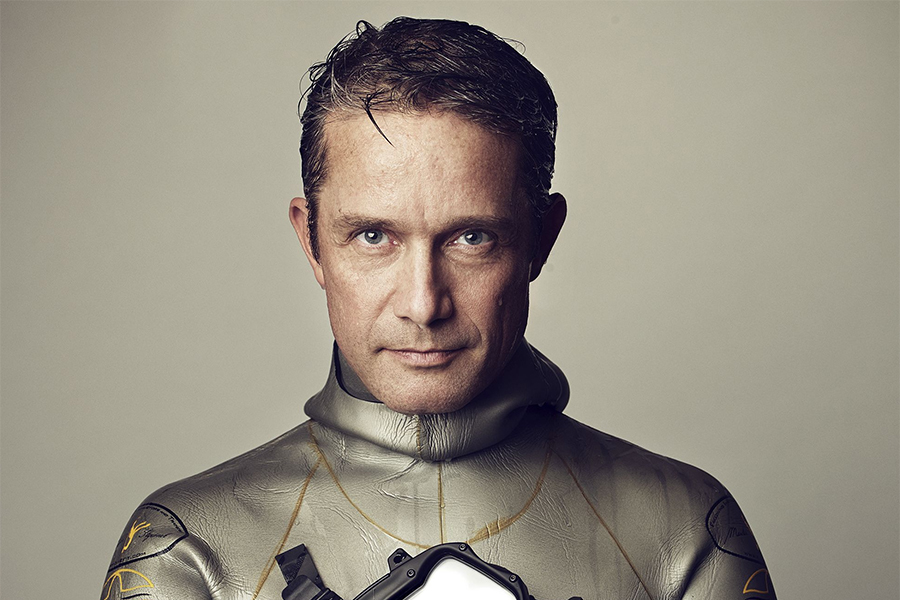
Fabien Cousteau’s hope for our planet lies in a revolutionary underwater research station and habitat where the world’s best thinkers can address humanity’s most pressing concerns.
As a renowned third-generation ocean explorer and environmentalist, Cousteau’s PROTEUS™ project, in conjunction with his non-profit, the Fabien Cousteau Ocean Learning Center, will work on viruses and cancers, examining chemical compositions that might deliver results in weeks rather than years. PROTEUS™ will also tackle food sustainability and climate change.
Cousteau likens PROTEUS™ to an underwater version of the International Space Station, a platform for global collaboration among the world’s leading researchers, academics, government agencies and corporations. At a time when humanity is still reeling from the COVID pandemic, Cousteau believes PROTEUS™ — and the promise of the ocean — hold critical answers for the future.
“I’m continuously inspired and impressed by the young creators I meet through the FCOLC’s programs — artists, activists, scientists — and what they are speaking up about,” Cousteau tells Real Leaders. “Creating a planet where our younger generations can grow up to live more sustainably and in balance with, versus against, the environment and each other remains a constant motivator.”
PROTEUS™ will be located off the coast of Curaçao in a biodiverse Marine Protected Area, about 60 feet deep (equivalent to three atmospheres). Equipped with state-of-the-art labs and the latest in freezers, microscopes, and other technologies, Cousteau says PROTEUS™ will host scientists, private companies, and NGOs who need to complete years’ worth of research in days. He expects the lab’s biggest impacts to come in ocean conservation; renewable clean energy including solar, wind, and ocean thermal energy conversion; and food advancements such as hydroponics and aquaculture. The findings will be transmitted to land via daily live video streams, social media, and news stories.
“We are living in extreme, complicated, difficult times,” he says. “We are witnessing daily the need for disruptive solutions.” Cousteau believes this is our chance to refill the Earth’s capital.
“We can and should be innovative, disruptive, and bolster new industries creating a just, fair, and vibrant economy based on valuing all life and the lifeblood — the ocean — that sustains it,” he says. “Much like this pandemic, climate change is indeed personal. It impacts each of us daily and in our own homes.”
The role of real leaders in all of this is to lead by example and practice what they preach, he continues, explaining that this type of leadership is what perpetuates hope in companies and communities. “I was raised with an understanding of the importance of the ocean — that ocean health is human health,” Cousteau says. “This awareness consciously guides so many of my actions, from recycling to being aware of the foods that I put in my body that are low-impact to the environment. As a real leader, it is my responsibility to put my values into action and hopefully inspire others to do the same.”
To function as a real leader requires tenacity, inquisitiveness, and inclusivity, he says. “A real leader must push boundaries but do so in a manner that inspires and motivates others,” Cousteau says.
What does he want our world’s real leaders to understand about his work? That the ocean is our life support system and is indispensable to solving the planet’s biggest problems.
“Challenges created by climate change, rising sea levels, extreme storms, and viruses represent a multi-trillion-dollar risk to the global economy,” says Cousteau. “The knowledge that will be uncovered underwater will forever change the way generations of humans live up above.”
Ever since the World Health Organization (WHO) redefined burnout and added it to the International Classification of Diseases, organizations and individuals have become more open to talking about burnout’s symptoms and potential causes—which, at face value, seem to come solely from the workplace.
Don’t kid yourself. While we can all point the finger at unrealistic workplace demands, difficult managers, and the convergence of work and home life into a not-so-neat bundle, burnout isn’t just “a work thing.” The truth is, all of us can move from burnout to breakthrough if we first recognize common real-world triggers that prompt exhaustion, anxiety, and overwhelm.
Trigger #1: Mental self-talk.
Yes, burnout is a condition that stems from working and doing too much, but ask yourself: why do you push at that pace? In every single case study, I’ve explored, people realize they’re responding to the voices of parents, ancestors, religious teachers, and others who set standards that may no longer be viable or reasonable. Ask yourself:
What do your voices say to you? Is it true?
Is this what you believe and want in your deepest self?
What is the price you pay? Is it worth it?
Sure, you might be the first one in your family to go to college. You might relish the praise of being a can-do-it-all guy but think again if burnout is the result.
Trigger #2: Tyrannical technology.
Do you jump to answer every text message ping? Do you shift focus as soon as an email pops up on the screen? Do you check email right before falling asleep? If you do these things, you’re now under the control of a technology tyrant, one that’s has persuaded you to believe that multitasking is a skill of only the most intelligent.
Wrong. Wrong. Wrong.
Some researchers suggest that multitaskers are 40 percent less productive. Not only will they need to work longer to get “caught up,” but, according to Stanford researcher Clifford Nass, heavy multitaskers have a hard time regaining focus and sorting out relevant information from irrelevant details.
Cal Newport, a computer science professor at Georgetown University, has long been a proponent of deep focus and digital minimalism (both are titles of two of his six books). Specifically, Newport proposes that limited time with our devices and social media is a way to gain control and attain what matters. Ask yourself:
Do you consider yourself a multitasking genius?
Do you have a hard time shutting off at the end of the day?
Are you addicted to your smartphone?
What would it take to limit all digital devices and social media to only those that are essential?
Trigger #3: Broken personal connections.
Last year, Scientific American revealed that a staggering 47 percent of Americans often feel alone, left out, and lacking any meaningful connection with others. Humans are wired for connection. When loneliness rears its ugly head, emotions of distress, anxiety, and even despair appear. Indeed, one can burn out by thinking no one cares, so work becomes a surrogate for human companionship.
In our work-from-home and socially distant world, loneliness becomes even greater. But there are steps you can take. Whether on Zoom, Skype, WhatsApp, FaceTime, or other platforms, we can see and hear each other. From virtual happy hours, virtual dinners, or candid conversations with a morning cup of java, it’s possible to break this isolation pattern. Now’s the time to ask:
When was the last time you had a meaningful conversation with a friend?
If not, what’s holding you back?
Do you know someone who could use a friend?
Are you willing to challenge yourself and smile at a stranger?
If you’re sharing a space with others, can you put away all smartphones and talk with one other? Play a game? Share cooking? Connect?
Trigger #4: A caretaking crisis.
Burnout can also flame when juggling the care of a sick family member or aging parents. So much mental anguish, guilt, and even anger can stir up an emotional stew when we’re confronted with the need to care for another. Self-care gets pushed to last on the list. If this situation resonates with you, consider these questions:
How often are you “on-call”?
What resources, if any, do you have available?
Do you ask for help? If not, why not?
What would it take to allow yourself time for self-care?
What will happen if you don’t take care of yourself?
Trigger #5: Uncertainty about your life purpose.
From the horror of a World War II concentration camp, Viktor Frankl wrote his classic book, Man’s Search for Meaning. His conclusion was that man (or woman) can survive anything if they have a “why.”
As we face a fast-paced, confusing COVID-19 world filled with economic upheaval and uncertainty, feeling that we don’t matter is a sure-fire way to light the burnout flame. More and more, organizations and individuals are becoming clear that work-life has to be more than a paycheck, a profit margin, or market dominance. Take a moment and think about:
Who benefits from the work you do? What would happen if you didn’t do it?
How can you bring a unique talent (that makes your heart happy) into your work or home life?
Are you the person who can find humor in anything and make others laugh?
Are you an artist who can leave drawings for others to find? A baker of cooked goods for those who can’t get out?
Are you a facilitator who can get a team to speak candidly?
Are you the type of person who creates understanding and harmony?
The questions that accompany each of these five triggers are there to prompt your thoughts. What helps control burnout is breaking free from beliefs and actions that drain your energy and resources. Find your points of control. Build them. And may the force be with you.
PODCAST PEOPLE: A Summary from the Real Leaders Podcast
“You know, leaders don’t really start out at the front of the lines. Leaders one day have the courage to get out from the back of the line and walk up to the front and lead.”
Devon Still is a former NFL defensive end and now entrepreneur, peak performance coach, and advocate for childhood cancer awareness. More recently, he is the author of Still in the Game and host of the Undefeated Podcast, helping others to overcome adversity and reach their highest potential in life.
The following is a summary of Episode 124 of the Real Leaders Podcast, a conversation with former NFL defensive end and performance coach Devon Still. Watch, read, or listen to the full conversation below.
From Athlete to Advocate
Devon shares the journey full of ups and downs in his athletic career that brought him to the NFL. But he details that the biggest obstacle he ever faced was his daughter Leah’s battle with cancer. At the age of four she was given a 50/50 chance at surviving. Devon wanted to give Leah’s battle a purpose to help her fight as hard as she could. He decided to use his platform as an NFL player to shed light on what it’s like for families facing this situation.
“When I sat in the hospital, a lot of families were going through things that nobody knew about. It was like a hospital full of the voiceless. And I had a chance to use my voice to give those voiceless families a voice to talk about what they were going through.”
As part of their advocacy for childhood cancer, Devon and Leah formed the Still Strong Foundation, which provides assistance to other families whose children are fighting the same fight.
Listen to episode 124 on Spotify, Anchor, Crowdcast, and Apple Podcasts
The Playmaker Playbook
Devon offers the playbook that got Leah through as guidance that can help anyone overcome adversity:
Give your battle a purpose.
“When you give any goal or any fight that you’re going through a purpose that’s bigger than yourself, you’re more likely to achieve that goal.”
Fight for four quarters.
“We have something in football where we’re taught that no matter how tired you are, no matter how much pain you’re in, you go out there and give it everything you have for four quarters, because you never know when the game can change.”
Triple A — Anticipate, Adjust, Accelerate.
“You have to anticipate that things may go wrong, you have to plan for things to go wrong. And then once they do, you have to adjust. Sometimes your goal stays the same, but the strategy or the plan to get to goal, it changes.”
“What are you doing?” said Marianne Knuth’s friends. “You’re moving in the wrong direction – to Zimbabwe!?” They called her foolish for wanting to move to Southern Africa and start an educational program — Kufunda Learning Village.
There was no guarantee of support, infrastructure or financial help to make it happen. The decision to move was based on intuition. To Knuth, it just felt right.
When she arrived, Knuth couldn’t do anything about farming or sanitation, so she decided to focus on what she could do — facilitate. She wanted the local people to see the value of what they already knew about farming and other practical things, and have a positive approach to it. The turning point for her was when she celebrated a birthday in Zimbabwe together with her international friends and the local people. She realized that they had different skills and together they could do great things.
Knuth is half Danish and half Zimbabwean. She remembers well the moment when she decided to leave her international career and move to Zimbabwe. She has become increasingly reliant on her intuition and says that it has become the most important resource for herself, and anybody needing to trust themselves and develop self-confidence.
Kufunda is based on a typical African village. Its inhabitants were demoralized from the grinding poverty and stuck in a mental cycle that kept them in a mindset of scarcity. Now, after 15 years, Kufunda includes 30 farmers and 60 community members, including children and relatives. There is a Waldorf-inspired school to help children develop the emotional intelligence and self-awareness for personal growth. The village is designed by the local community to ensure real empowerment and to implement local knowledge that already existed.
Each person’s journey is important and It’s what makes Kufunda different from all the other initiatives that may look the same. “We see the person being left behind and want them to think out of the box,” says Knuth. “We try to give each individual self-confidence, instead of just academically-focused education. Kufunda helps community members rediscover their creativity and is a platform for their own projects to unfold. People are coming together and looking into the future, building a vision.”
Additionally, a strong relationship with the local councillors has been built and Kufunda’s success is now used as a model in other parts of the country.
“I think my personal courage comes from listening,” says Knuth. “I listen and learn. I’m fulfilling the destiny I was meant to carry out. I know in my gut and in my heart when I’m on track and I’ve learned to listen to my intuition, to my gut. When I’m on the right track I feel courageous, as if nothing can stop me. It becomes easier with age to learn to listen to yourself and to say no when something doesn’t feel right.”
“If I can give one recommendation,” she concludes. “Have trust in yourself. Trust your sense of right and wrong and when something doesn’t feel right, don’t rush ahead, but take a step back. Have the courage to stay until your path is clear.”
“What are you doing?” said Marianne Knuth’s friends. “You’re moving in the wrong direction – to Zimbabwe!?” They called her foolish for wanting to move to Southern Africa and start an educational program — Kufunda Learning Village.
There was no guarantee of support, infrastructure or financial help to make it happen. The decision to move was based on intuition. To Knuth, it just felt right.
When she arrived, Knuth couldn’t do anything about farming or sanitation, so she decided to focus on what she could do — facilitate. She wanted the local people to see the value of what they already knew about farming and other practical things, and have a positive approach to it. The turning point for her was when she celebrated a birthday in Zimbabwe together with her international friends and the local people. She realized that they had different skills and together they could do great things.
Knuth is half Danish and half Zimbabwean. She remembers well the moment when she decided to leave her international career and move to Zimbabwe. She has become increasingly reliant on her intuition and says that it has become the most important resource for herself, and anybody needing to trust themselves and develop self-confidence.
Kufunda is based on a typical African village. Its inhabitants were demoralized from the grinding poverty and stuck in a mental cycle that kept them in a mindset of scarcity. Now, after 15 years, Kufunda includes 30 farmers and 60 community members, including children and relatives. There is a Waldorf-inspired school to help children develop the emotional intelligence and self-awareness for personal growth. The village is designed by the local community to ensure real empowerment and to implement local knowledge that already existed.
Each person’s journey is important and It’s what makes Kufunda different from all the other initiatives that may look the same. “We see the person being left behind and want them to think out of the box,” says Knuth. “We try to give each individual self-confidence, instead of just academically-focused education. Kufunda helps community members rediscover their creativity and is a platform for their own projects to unfold. People are coming together and looking into the future, building a vision.”
Additionally, a strong relationship with the local councillors has been built and Kufunda’s success is now used as a model in other parts of the country.
“I think my personal courage comes from listening,” says Knuth. “I listen and learn. I’m fulfilling the destiny I was meant to carry out. I know in my gut and in my heart when I’m on track and I’ve learned to listen to my intuition, to my gut. When I’m on the right track I feel courageous, as if nothing can stop me. It becomes easier with age to learn to listen to yourself and to say no when something doesn’t feel right.”
“If I can give one recommendation,” she concludes. “Have trust in yourself. Trust your sense of right and wrong and when something doesn’t feel right, don’t rush ahead, but take a step back. Have the courage to stay until your path is clear.”
As Baby Boomers retire and our world begins the largest transfer of wealth in human history — an estimated $30 trillion — a significant part of these assets will go to the descendants of family-owned businesses. According to the Conway Center for Family Business, the largest portion of wealth in the United States resides with family businesses, and the U.S. Census Bureau reports that 90 percent of all businesses in North America are family owned.
But as inspiring as that sounds, research from the Family Business Alliance reveals only 30 percent of family businesses will actually transition to the second generation. About 12 percent will still be viable into the third generation, and a mere 3 percent of all family businesses continue operating with the fourth generation.
How do certain families bake in a leadership culture that helps their businesses remain viable for multiple generations? How can you emulate a leadership culture in your own family, whether you work a business together or not?
According to a 2015 Harvard Business Review article, “Leadership Lessons from Great Family Businesses,” family business leaders focus on the next generation — not just the next quarter. They usually put employees and customers first and dedicate their organizations and their personal time to social responsibility. At their core, family businesses have stronger values, dedicate greater resources to worker motivation and leadership, and measure success in ways other than just growth and profit. Their culture often encompasses a strategy akin to The Golden Rule.
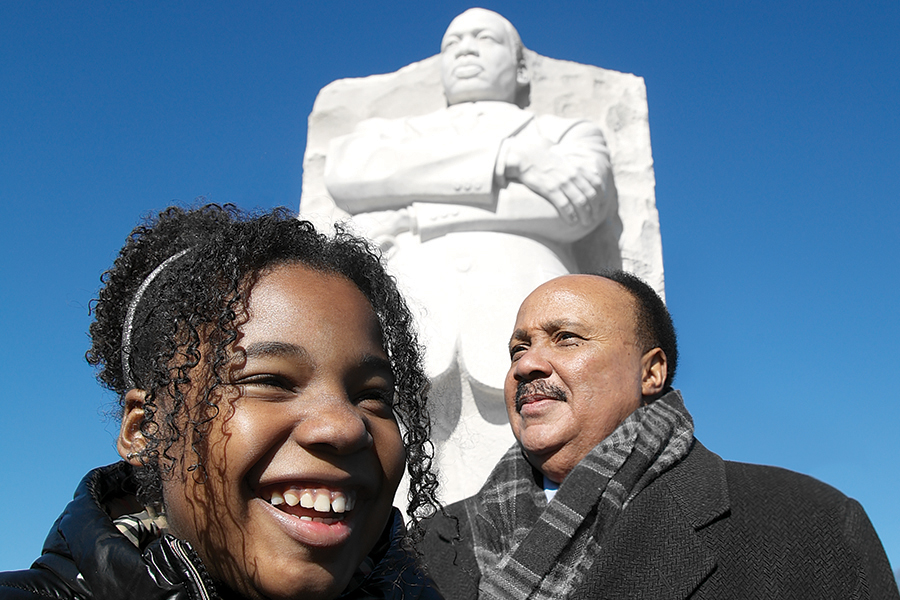
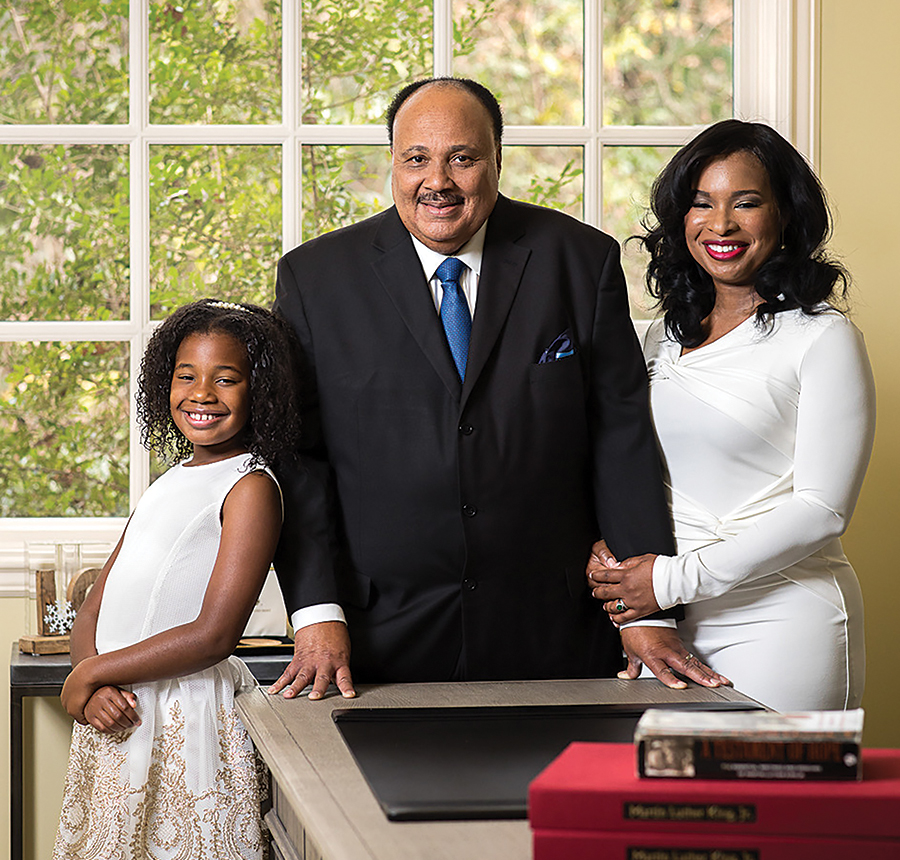
In this exclusive interview, Real Leaders explores the leadership philosophy of Martin Luther King III, and shares his insight on how your family can grow and sustain a mission-aligned leadership culture that transcends your next generation and beyond.
The Martin Luther King family describes what family leadership looks like against a landscape of global problems and then helping us pivot to a more specific discussion on family business leadership.
MARTIN LUTHER KING III:
Civil rights advocate and global humanitarian
Oldest living child of civil rights leaders Martin Luther King Jr. and Coretta Scott King (age 10 when his father was assassinated)
Founder and president of Realizing the Dream, Inc.
Where to focus family leadership efforts.
There are monumental world issues that we should focus on as a society. Climate change is among the most important because if our water and air are polluted, then everything else is for naught. If we don’t find ways to address it, we’re going to all be in trouble.
Second is the eradication of poverty in the world and certainly, within our own nation. Our nation has an inordinate amount of poverty based on the amount of resources that exist here. My parents used to talk about the eradication of poverty, racism, and I’d say violence – although my dad used to call it militarism. Those triple evils are where leadership-oriented families must focus.
The King family’s leadership focus.
Society has embraced a culture of violence. It’s in our cinemas and in the gaming industry targeting our children. It’s in our homes as domestic violence. Leaders have to think about how to create a culture of non-violence because non-violence is sustainable. Our culture cannot sustain itself if we continue to operate this way.
If we can live a day in peace, why can’t we live a week in peace? If we can live a week in peace, why can’t we live a month? If we can live a month, why not a year? And if we can achieve a year, why not a lifetime?
So many people look to the United States for leadership, but we are the most divided we’ve ever been. We can’t focus on one political interest — we have to look at what serves humanity. Leaders need to help communities get above the noise and think at a different level.
As a family, we are focusing on peace, justice, and equity. While that’s furthering the legacy of my parents, it’s also the legacy of our family in general, and our 11-year-old daughter is working with us on it, too.
Role of individual leadership in moving the needle on world problems.
Start by deciding what kind of society you seek for yourself and your family, and then identify where you can make a contribution. Some of us are concerned about the climate, so they should focus there. Some are concerned with police brutality, so they should focus there. Some are concerned with reproductive rights, so they need to engage and get involved there. All of us have a contribution we can make.
Importance of listening to young people.
The truth is that young people are leading the rest of us. The Parkland students are a perfect example. They worked very hard to mobilize people around the country so that the needle can move on responsible gun legislation. These young people are totally engaged and leading us. I haven’t seen a movement like that since 1963 when 3,000 kids were arrested in Birmingham attempting to desegregate the city.
“No one person, no one organization can do all this work. It’s going to take a collective. Leaders need to help communities get above the noise and think at a different level.” — Martin Luther King III
Then we’ve got young people like Greta Thunberg leading us around climate issues. And even younger children like Little Miss Flint leading us around the water crisis in Flint, Michigan.
I go to schools and ask kids what they are worried about. Too often, they say they’re concerned someone will come into their school and shoot them. Think about that: Our children have to practice what to do if someone comes into the classroom shooting at them. Our society has accepted a culture of violence. Instead of focusing on eradicating violence, we are focused on teaching our children how to cope with it.
I’m inspired by children and how easily and naturally they take action. Unfortunately, adults don’t tend to get involved until they are affected by it directly. When there’s a catastrophe, we get engaged. But the kids are showing us that we can get engaged at any time. Adults just have to learn how to disagree without being disagreeable.
On encouraging a culture of leadership within families.
I’m always telling my daughter, Yolanda, that she has to be authentic. She’s been around leaders in her family for generations — parents, grandparents, great-grandparents, aunts, and uncles — we’re all involved. But I tell her she has to find her own authenticity. You don’t have to be like us. Be your best self. You’ve got to find your way.
She got a chance to speak at the March for Our Lives, and she went way beyond what I would have said because I am regimented by the laws of our land. At the event, she said she had a vision, her own dream (see sidebar, “Yolanda Renee King: I Have a Dream, Too.”) We did not help her with this speech or give her any guidance. She said, “I know what I want to say.”
Lessons learned from my daughter.
From day one, she’s had an interest in homelessness and poverty. I never pushed her, but I’m thankful she has this interest. Families that lead let their child be who they want to be. And what if your kid is not focused on being their best self? Exposure is everything. Every kid has a gift, and when they find their gift, they are motivated to work on it because it’s what inspires them.
Yolanda knows what’s happening and why there’s a need to focus on U.S. poverty. If a kid comes to school hungry, they won’t have the energy to do anything. Principals tell me they have many transient students. There are apartments out there where you get your first month’s rent free, so after that, they move. They are constantly moving because they can’t afford to stay, and the kids never get a chance to adjust. Many in our society are completely unaware that these kinds of things are going on. How do we inspire kids to be leaders until we fix these problems?
Some time ago, I visited a school in Sudan. The school was in a tent — in fact, the whole place was a tent village. Our sponsor provided us with a shiny black Mercedes to drive out there. We got out of the car, and the kids started running out and pointing at the car and then running back in and bringing out more children and pointing at the car. And I thought, “Wow, materialism has even made it out here to these kids in Sudan.” But then I realized that the car was so shiny they could see themselves reflected on it. They had never seen a mirror before and were seeing images of themselves for the first time.
You may think you know what’s going on, but it’s all a matter of perspective. American kids often don’t realize how bad other kids have it. Exposure helps them realize, and then from that comes the desire to help others. Parents want to protect their children’s innocence, and that is preeminent. But we still need to let them grow up. Leadership-oriented families expose their kids to things so the kids can embrace the problems and become part of the solution.
Hardest thing about living a consistent life of leadership.
Most challenging is staying authentic in a nation where everything is quickly changing. You have to maintain your values and not let society change who you are and who your family is. But you do have to compromise to stay relevant.
We are focused on creating partnerships to align people and families who can help us with what we want to achieve. That’s what it’s going to take. No one person, no one organization can do all this work. It’s going to take a collective.
That’s what leadership is about — building this collective of collaborators. My dad would have called it creating the beloved community. And that’s what my wife and I, and even Yolanda, are focused on right now: creating these collaborations to continue the legacy and unfinished work of my parents.
YOLANDA RENEE KING:
The only granddaughter of Martin Luther King Jr. and Coretta Scott King is an 11-year-old innocent who speaks the wisdoms of an old soul and solves the world’s problems in one interview.
Real Leaders: Like your grandfather, you have a dream, too. Tell us about your dream.
Yolanda Renee King: I have a dream that this will be a gun-free world. We really need to solve this conflict. With a lot of young activists around the world, I think we can do it. We’ve done the rallying, but now we need to campaign to Congress — and we need to find a way to get this issue to the UN.
What makes someone a good leader?
A real leader wants to make a difference. They aren’t just doing it because they have to or to impress people. If that’s why you’re doing it, you’re not a true leader in your heart. Maybe you’re doing things as a hobby, but it’s not your purpose.
A leader needs passion. For example, Greta [Thunberg] has passion for saving the environment. But you don’t need a world voice. You can start things in your own community because even if you’re just doing something for your family, or your little town, or your small school, that’s still making a difference. And that’s better than sitting down and doing nothing and watching the news and saying, “Oh, that’s too bad that happened. Oh, well.”
Even in the smallest ways, you must stay active because that’s making a difference. A small impact can spread, and a lot of people making a small impact can make one big difference.
What are some things that make your dad a good leader?
Well, I probably have to go through a long checklist. It makes him happy to help people and help the community. He’s not just doing it to follow in his parents’ footsteps; he does it because it’s his passion.
He is courageous and brave because not everyone is going to agree with what you say, and he doesn’t let that bother him. He just gets back up. And sometimes, he doesn’t even let the other person push him down. He has thick skin.
Most grown-ups are good people, and they try hard. But where do you think grown-ups could do better?
We have some problems today because of things the grown-ups did a long time ago. They made a mess and left it standing there, and now we’re picking up their mess.
Accidents happen, but some things, the grown-ups have been doing on purpose. They keep doing it, and they leave it and never come back to clean it up. And now, people who are totally innocent, it will impact their generation unless they clean up the grown-ups’ mess.
So maybe they could do better by cleaning up their own mess. Or stop causing the mess. It’s never too late.
If you could wave a magic wand and change some things in this world, what would you change first?
I would change for all of us to get along. If we have peace and justice, then we probably wouldn’t be shooting each other. And all that hatred and negativity would get sucked out of everyone. There would be no more impoverished communities if we had peace. So, I would do one big magic spell of peace because that one big spell would take care of everything.
This whole world is one big community if you think about it. We shouldn’t hate anyone because they are a human being. Most of our world problems are caused by people. If every person was treated with dignity and respect, that would solve most of the problems in our world.
As Baby Boomers retire and our world begins the largest transfer of wealth in human history — an estimated $30 trillion — a significant part of these assets will go to the descendants of family-owned businesses. According to the Conway Center for Family Business, the largest portion of wealth in the United States resides with family businesses, and the U.S. Census Bureau reports that 90 percent of all businesses in North America are family owned.
But as inspiring as that sounds, research from the Family Business Alliance reveals only 30 percent of family businesses will actually transition to the second generation. About 12 percent will still be viable into the third generation, and a mere 3 percent of all family businesses continue operating with the fourth generation.
How do certain families bake in a leadership culture that helps their businesses remain viable for multiple generations? How can you emulate a leadership culture in your own family, whether you work a business together or not?
According to a 2015 Harvard Business Review article, “Leadership Lessons from Great Family Businesses,” family business leaders focus on the next generation — not just the next quarter. They usually put employees and customers first and dedicate their organizations and their personal time to social responsibility. At their core, family businesses have stronger values, dedicate greater resources to worker motivation and leadership, and measure success in ways other than just growth and profit. Their culture often encompasses a strategy akin to The Golden Rule.
In this exclusive interview, Real Leaders explores the leadership philosophy of Martin Luther King III, and shares his insight on how your family can grow and sustain a mission-aligned leadership culture that transcends your next generation and beyond.
The Martin Luther King family describes what family leadership looks like against a landscape of global problems and then helping us pivot to a more specific discussion on family business leadership.
MARTIN LUTHER KING III:
Civil rights advocate and global humanitarian
Oldest living child of civil rights leaders Martin Luther King Jr. and Coretta Scott King (age 10 when his father was assassinated)
Founder and president of Realizing the Dream, Inc.
Where to focus family leadership efforts.
There are monumental world issues that we should focus on as a society. Climate change is among the most important because if our water and air are polluted, then everything else is for naught. If we don’t find ways to address it, we’re going to all be in trouble.
Second is the eradication of poverty in the world and certainly, within our own nation. Our nation has an inordinate amount of poverty based on the amount of resources that exist here. My parents used to talk about the eradication of poverty, racism, and I’d say violence – although my dad used to call it militarism. Those triple evils are where leadership-oriented families must focus.
The King family’s leadership focus.
Society has embraced a culture of violence. It’s in our cinemas and in the gaming industry targeting our children. It’s in our homes as domestic violence. Leaders have to think about how to create a culture of non-violence because non-violence is sustainable. Our culture cannot sustain itself if we continue to operate this way.
If we can live a day in peace, why can’t we live a week in peace? If we can live a week in peace, why can’t we live a month? If we can live a month, why not a year? And if we can achieve a year, why not a lifetime?
So many people look to the United States for leadership, but we are the most divided we’ve ever been. We can’t focus on one political interest — we have to look at what serves humanity. Leaders need to help communities get above the noise and think at a different level.
As a family, we are focusing on peace, justice, and equity. While that’s furthering the legacy of my parents, it’s also the legacy of our family in general, and our 11-year-old daughter is working with us on it, too.
Role of individual leadership in moving the needle on world problems.
Start by deciding what kind of society you seek for yourself and your family, and then identify where you can make a contribution. Some of us are concerned about the climate, so they should focus there. Some are concerned with police brutality, so they should focus there. Some are concerned with reproductive rights, so they need to engage and get involved there. All of us have a contribution we can make.
Importance of listening to young people.
The truth is that young people are leading the rest of us. The Parkland students are a perfect example. They worked very hard to mobilize people around the country so that the needle can move on responsible gun legislation. These young people are totally engaged and leading us. I haven’t seen a movement like that since 1963 when 3,000 kids were arrested in Birmingham attempting to desegregate the city.
“No one person, no one organization can do all this work. It’s going to take a collective. Leaders need to help communities get above the noise and think at a different level.” — Martin Luther King III
Then we’ve got young people like Greta Thunberg leading us around climate issues. And even younger children like Little Miss Flint leading us around the water crisis in Flint, Michigan.
I go to schools and ask kids what they are worried about. Too often, they say they’re concerned someone will come into their school and shoot them. Think about that: Our children have to practice what to do if someone comes into the classroom shooting at them. Our society has accepted a culture of violence. Instead of focusing on eradicating violence, we are focused on teaching our children how to cope with it.
I’m inspired by children and how easily and naturally they take action. Unfortunately, adults don’t tend to get involved until they are affected by it directly. When there’s a catastrophe, we get engaged. But the kids are showing us that we can get engaged at any time. Adults just have to learn how to disagree without being disagreeable.
On encouraging a culture of leadership within families.
I’m always telling my daughter, Yolanda, that she has to be authentic. She’s been around leaders in her family for generations — parents, grandparents, great-grandparents, aunts, and uncles — we’re all involved. But I tell her she has to find her own authenticity. You don’t have to be like us. Be your best self. You’ve got to find your way.
She got a chance to speak at the March for Our Lives, and she went way beyond what I would have said because I am regimented by the laws of our land. At the event, she said she had a vision, her own dream (see sidebar, “Yolanda Renee King: I Have a Dream, Too.”) We did not help her with this speech or give her any guidance. She said, “I know what I want to say.”
Lessons learned from my daughter.
From day one, she’s had an interest in homelessness and poverty. I never pushed her, but I’m thankful she has this interest. Families that lead let their child be who they want to be. And what if your kid is not focused on being their best self? Exposure is everything. Every kid has a gift, and when they find their gift, they are motivated to work on it because it’s what inspires them.
Yolanda knows what’s happening and why there’s a need to focus on U.S. poverty. If a kid comes to school hungry, they won’t have the energy to do anything. Principals tell me they have many transient students. There are apartments out there where you get your first month’s rent free, so after that, they move. They are constantly moving because they can’t afford to stay, and the kids never get a chance to adjust. Many in our society are completely unaware that these kinds of things are going on. How do we inspire kids to be leaders until we fix these problems?
Some time ago, I visited a school in Sudan. The school was in a tent — in fact, the whole place was a tent village. Our sponsor provided us with a shiny black Mercedes to drive out there. We got out of the car, and the kids started running out and pointing at the car and then running back in and bringing out more children and pointing at the car. And I thought, “Wow, materialism has even made it out here to these kids in Sudan.” But then I realized that the car was so shiny they could see themselves reflected on it. They had never seen a mirror before and were seeing images of themselves for the first time.
You may think you know what’s going on, but it’s all a matter of perspective. American kids often don’t realize how bad other kids have it. Exposure helps them realize, and then from that comes the desire to help others. Parents want to protect their children’s innocence, and that is preeminent. But we still need to let them grow up. Leadership-oriented families expose their kids to things so the kids can embrace the problems and become part of the solution.
Hardest thing about living a consistent life of leadership.
Most challenging is staying authentic in a nation where everything is quickly changing. You have to maintain your values and not let society change who you are and who your family is. But you do have to compromise to stay relevant.
We are focused on creating partnerships to align people and families who can help us with what we want to achieve. That’s what it’s going to take. No one person, no one organization can do all this work. It’s going to take a collective.
That’s what leadership is about — building this collective of collaborators. My dad would have called it creating the beloved community. And that’s what my wife and I, and even Yolanda, are focused on right now: creating these collaborations to continue the legacy and unfinished work of my parents.
YOLANDA RENEE KING:
The only granddaughter of Martin Luther King Jr. and Coretta Scott King is an 11-year-old innocent who speaks the wisdoms of an old soul and solves the world’s problems in one interview.
Real Leaders: Like your grandfather, you have a dream, too. Tell us about your dream.
Yolanda Renee King: I have a dream that this will be a gun-free world. We really need to solve this conflict. With a lot of young activists around the world, I think we can do it. We’ve done the rallying, but now we need to campaign to Congress — and we need to find a way to get this issue to the UN.
What makes someone a good leader?
A real leader wants to make a difference. They aren’t just doing it because they have to or to impress people. If that’s why you’re doing it, you’re not a true leader in your heart. Maybe you’re doing things as a hobby, but it’s not your purpose.
A leader needs passion. For example, Greta [Thunberg] has passion for saving the environment. But you don’t need a world voice. You can start things in your own community because even if you’re just doing something for your family, or your little town, or your small school, that’s still making a difference. And that’s better than sitting down and doing nothing and watching the news and saying, “Oh, that’s too bad that happened. Oh, well.”
Even in the smallest ways, you must stay active because that’s making a difference. A small impact can spread, and a lot of people making a small impact can make one big difference.
What are some things that make your dad a good leader?
Well, I probably have to go through a long checklist. It makes him happy to help people and help the community. He’s not just doing it to follow in his parents’ footsteps; he does it because it’s his passion.
He is courageous and brave because not everyone is going to agree with what you say, and he doesn’t let that bother him. He just gets back up. And sometimes, he doesn’t even let the other person push him down. He has thick skin.
Most grown-ups are good people, and they try hard. But where do you think grown-ups could do better?
We have some problems today because of things the grown-ups did a long time ago. They made a mess and left it standing there, and now we’re picking up their mess.
Accidents happen, but some things, the grown-ups have been doing on purpose. They keep doing it, and they leave it and never come back to clean it up. And now, people who are totally innocent, it will impact their generation unless they clean up the grown-ups’ mess.
So maybe they could do better by cleaning up their own mess. Or stop causing the mess. It’s never too late.
If you could wave a magic wand and change some things in this world, what would you change first?
I would change for all of us to get along. If we have peace and justice, then we probably wouldn’t be shooting each other. And all that hatred and negativity would get sucked out of everyone. There would be no more impoverished communities if we had peace. So, I would do one big magic spell of peace because that one big spell would take care of everything.
This whole world is one big community if you think about it. We shouldn’t hate anyone because they are a human being. Most of our world problems are caused by people. If every person was treated with dignity and respect, that would solve most of the problems in our world.
PODCAST PEOPLE:A Summary from the Real Leaders Podcast
“Leadership is not a job title or how many followers you have or how many books you’ve read or written. It’s the ability that you have to become a better version of yourself and to lead others forward toward their possibility.”
John O’Leary is a keynote speaker, best-selling author, and host of the Live Inspired Podcast. His heartfelt discussions are teaching people around the world how to live inspired.
The following is a summary of Episode 118 of the Real Leaders Podcast, a conversation with keynote speaker John O’Leary. Watch, read, or listen to the full conversation below.
From Victim to Victor
John discusses the tragic but formative incident that changed his life when he was nine years old. An experiment with fire and gasoline created an explosion that burned 100% of his body, and he was given a less than 1% chance to live.
Despite the odds, John chose to triumph over his circumstances, but he emphasizes that he couldn’t compare his struggle to anyone else’s. He now uses public speaking as a means of inspiring others to transcend whatever might be holding them back.
“It is popular in a victim society to choose to remain beat down. Or, and here’s the invitation for all of us, you can choose to rise up. And every single time you walk into the room others may see what remains possible for them in their life. And ultimately, it’s your choice. It’s your individual choice and how you want to represent yourself in your life going forward, what an important choice it is to make to choose to be a victor.”
Listen to Episode 118 on Spotify, Anchor, Crowdcast, and Apple Podcasts
More than Comparative Happiness
Today’s culture of comparison is keeping many of us from feeling successful. John explains social media’s role in producing “comparative happiness,” and how its emphasis on self-interest leads to a genuine lack of fulfillment.
“My message is to make sure that we make our lives and our messages not only about us. I think if we do that, we get to the end of our life, and we realize we got to the very top of a ladder, and we had it leaned against the wrong wall. So we want to recognize the foundation of where that ladder rests, and make sure daily, as we climb, that we have it leaned against the right wall. Nothing would be worse than to become successful at things in life that do not matter.”
Advice for Living Inspired
Be aware of all you have to be grateful for
Have a vision of tomorrow that is far greater than the challenges today
Pursue your purpose
Lean into a network
The answer is “Yes”
“I think in the universe, work, professional journey, leadership, the answer to the question in front of you is ‘yes.’ Now go to work. Figure the thing out. “
The following is a summary of Episode 82 of the Real Leaders Podcast, a conversation with Classy co-founder and CEO, Scot Chisolm. Watch, read, or listen to the fullconversation below.
Stay Classy San Diego
Scot shares the humble origins of his social enterprise: a name inspired by the iconic line in Anchorman, and a group of guys in their 20s who wanted to spread some good in the world. They started off hoping to curate charitable events that would attract a younger crowd. But complications that arose with the money raised from their first unsanctioned pub crawl resulted in a greater opportunity to change the possibilities for giving in a much bigger way.
“The experience for us, trying to do what we call in our world a “third party event,” had so much friction. We were left saying, “Why does giving need to be so hard?” All that we wanted to do was make giving easier, more accessible, and even fun, especially for young people and the younger generation, because we felt like there was a disconnect between the way we wanted to give on our own terms, and the end product the organization was providing us.”
Listen to Episode 82 on Spotify, Anchor, Crowdcast, and Apple Podcasts
Transformation into Social Enterprise
Classy has evolved from something between a nonprofit and a for-profit into the social enterprise it is today. The site offers world-class online fundraising software and a full online fundraising platform for nonprofits of all sizes. Classy campaigns make fundraising more sustainable because they are attractive to a new generation that otherwise wouldn’t be contributing.
Some of the many avenues powered by Classy include websites, fundraising events, and peer-to-peer pages. However, they are all fully white-labeled for nonprofits’ use.
“We’re almost like WordPress is to a website or Shopify is to e-commerce. We’re behind the scenes. So we’d like to say philosophically, it’s their brand before ours. We’re not out there promoting ourselves. And I think that’s also been one of the key ingredients to our success, putting them in the forefront.”
Business Insight from Nonprofits
Scot sees so much activity in the nonprofit space that goes into quantifying and measuring a program’s impact. He believes businesses would benefit from undertaking similar efforts, and sees impact measurement as the future of all businesses and nonprofits.
“The work that organizations in the nonprofit sector are doing day to day on the ground is leading to innovations that eventually end up in the market. A lot of the nonprofit’s are actually trying to solve the root cause. And that’s where this impact measurement really comes in. What problem are you trying to tackle? And what’s the best way to tackle the problem?”
Classy has worked extensively to build an impact measurement framework and hosts impact awards of their own, the Classy Awards, which measure nonprofits on the merit of their impact.
Watch a segment of the conversation with Scot Chisolm on YouTube.
If this pandemic has taught us anything, it’s that we live in a VUCA world – we are experiencing volatility, uncertainty, complexity, and ambiguity in unprecedented ways. And we are finally talking about it.
Fueled by ambition, fear, or pragmatism, this pandemic’s massive disruption to the ordinary course of things has led to every organization shifting its strategy in some meaningful way. We have published extensively on the benefits of using scenario planning to make sense of and plan for disruption, and we’ve written about some of the more powerful no-regrets strategies that position companies for sustained success.
As companies have made strategic pivots, their employees have demonstrated flexibility and resilience while working from home and juggling competing responsibilities. Never has our physical and mental health been more critical to our well-being. Yet we’ve noticed a systematic under-investment in one of the most critical levers for sustained corporate success — leadership team health.
Healthy Teams Enable Rapid Scale
It’s well understood that to scale in any business climate, companies need a stellar strategy – an extraordinary product-market fit, a winning business model, and a differentiated approach to the market. Yet, success hinges on having a leadership team with strong execution capacity even with all of these things in place. That is, the ability to make high-quality decisions faster and more often than competitors. And the key to execution capacity is leadership team health.
Healthy leadership teams share these attributes:
They are aligned on their “why,” that is their shared purpose individually and as a team
They are clear on their “what,” their vision of where they are headed
They embrace a coordinated “how” by being committed to a shared roadmap, an operating system, and principles that guide them
They have a deep understanding of who they are individually, where their strengths and gaps are, and they are skilled at optimizing one another
With all of that in place – designed for the company’s people and strategy – they learn, grow, and scale together successfully.
When strategies change, and leaders are under more pressure than usual like in this moment, it’s time to check in on leadership team health. Because, more often than not, managing through disruption increases team health debt that, let’s face it, in many organizations was already higher than it should have been.
Team Health Debt
By team health debt, we mean mounting dynamics, such as conversations that never happen but should; decision-making that takes place in siloes; low levels of transparency; and low-quality dialogues when they do happen.
Teams suffering from team health debt might be very nice to each other – so nice that they don’t have the difficult strategic or personal conversations needed to succeed. They might find themselves in long, belabored, or meandering conversations that feel like they demonstrate transparency, but slow decision-making. Or, they might find themselves so busy focusing on the day-to-day, that they are tuning out, phoning it in, or otherwise disengaging from the level of relational development that is essential to mobilize strategy collectively.
The challenge of team health debt, like tech debt, is that it is not always a visible issue to all team members, despite its devastating impact. But once it’s paid back, the team can move to a higher level of performance, strategy execution, and even joy.
Unnecessary Tensions
It is essential to stay current on your team health payments. When you postpone a meeting to collaborate or deprioritize a tough conversation or don’t have the hard-hitting collaborative meeting to solve big strategic problems, you default, therefore incurring more team health debt. Teams who invest the time to be with one another, and take on the difficult dialogues not only pay down the debt but find themselves in a surplus where innovation and breakthroughs occur.
The easiest way to know if your team is suffering from high levels of team health debt is to look at how you address strategy and execution. Unhealthy teams see the world in black and white terms. They see binary choices where they don’t exist. And so, factions form, individuals, dig their heels in, and the quality of decision making suffers. On unhealthy teams, these misunderstood tensions are seen as trade-offs. They are not discussed openly, but exist just below the surface and toxify the team—slowing execution, causing poor decision making, and killing morale.
Product vs. go-to-market. Should you focus on technology and product development, as you did in the early days of the company, or on revenue generation? Of course, the answer is both, but if executives argue over resource allocation, roadmap clarity, or critical metrics and measurements, it’s likely that the underlying tension is unstated, over-rotation by essential leaders toward one side the other of this spectrum.
Autonomy vs. collaboration. As hiring ramps up – whether from 10 to 50 people or from 200 to 500 people – there’s a desire to ensure freedom and also address issues more holistically. If executives argue about roles, decision rights, and swim lanes or cross-functional decisions are delayed or made poorly, your team is likely stuck in this false choice.
Culture vs. growth. If your team asks, “How do we preserve our culture while we grow?” you’re probably not as clear as you should be about the company’s values, operating principles, and how individuals are empowered to live into them. In extreme circumstances, culture and growth are seen as trade-offs, which will undermine both.
Patience v.s action. “We need a bias toward action.” Or, “We have to be patient with the strategy, let the team do its job, and trust the process.” What if both are true? What if teams could discuss the areas where they should be patient and compare them to the places where the action is necessary?
Healthy teams see these tensions as opportunities for strategic dialogue and realities that can be optimized. They take a both/and approach rather than an either/or approach to resolving tensions – that is, they work together to understand how to get the best from both sides of the tension.
Imagine a team that has paid off its team health debt systematically, and has clear decision rights, structures, and agreements about which issues require urgency and require patience. Imagine a team that brings difficult conversations to the fore, resolves them, and builds relationships. Imagine a team with an updated simple, clear, and co-created purpose, vision, roadmap, and operating plan. How much more quickly could it scale? How much more fun could it be? What will be unleashed?
The Prescription
There are three core areas companies can focus on to improve team health, and to have a fast impact on strategy execution.
Individual Leadership — It all starts with individual leaders. Every executive leader should know their strengths and values and be clear about their areas of growth. They should see these continually evolving and be invested in exploring them in collaboration with others on the team. Each leader mastering their code builds both confidence and humility – necessary conditions for successful leadership.
Team Cohesion – Next comes team relationships. In a pandemic world where 5-star dinners, trust falls, and offsites are impossible, there’s an opportunity to focus on the deeper foundations of relationship – trust, vulnerability, and connection. When teams are wedded at a deeper level, they can more rapidly address issues, which means problems are discussed earlier and resolved more quickly, and better solutions are found. Updating the core foundations of a team in response to the pandemic – values, purpose, vision, roadmap, strengths, and operating systems – has the dual impact of providing a strategic or intellectual upgrade and doing so in a way that promotes strategic dialogue and builds connection.
Team Operating System — Just like computers, teams have operating systems that govern their functionality. In most cases, that operating system is not explicit – the rules are unclear for how the most important work gets done. We believe every team should design an operating system that identifies: the cadence of strategic and tactical meetings, the metrics or objectives, and key results (OKRs) to pay attention to; the rhythms and processes to ensure execution success; and the agreed-upon principles. With this operating system in place, the formula for strategy execution is transparent and continuously refined.
Improving Team Health During the Pandemic
The pandemic has shaken up strategies and execution. It’s an excellent time to ask whether you’ve sufficiently tended to team health–and whether there’s an opportunity to reduce team health debt during this moment of societal innovation, flexibility, and forgiveness.
By Doug Randall and Annette Templeton. Annette Templeton is a Partner at The Trium Group. For more than 20 years, she has helped individuals and organizations optimize performance through a transformative, strengths-based approach. She is an expert in developing effective cross-cultural business teams and implementing large-scale transformation programs across various industries.