Building an Inclusive Economy

Enable Ventures is working to close the wealth gap through disability investment.

By Real Leaders


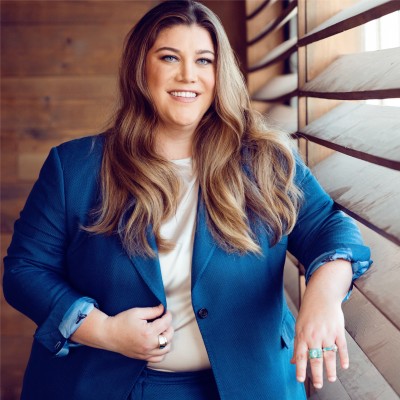
Enable Ventures is an impact venture fund focused on closing the disability wealth gap while achieving competitive, market-rate returns. Founder and managing partner Regina Kline was among the early players to invest in companies in the global disability technology industry.

She secured backing from Jim Sorenson and Sorenson Impact to launch Enable Ventures in 2022 and has since sourced, led, and supported seed through Series A investments across the spectrum of disability in a portfolio that includes digital software as a service, neurotechnology solutions, and wide-ranging applications of artificial intelligence. Real Leaders spoke with Kline to learn more.

Real Leaders: From lawyer to business owner, tell us about your path to starting Enable Ventures.

Kline: My previous career as a civil rights lawyer was vindicating the civil rights of Americans with disabilities. The largest untapped talent pool hiding in plain sight is people with disabilities who can generate great value in the labor force. There’s a nearly $2-trillion hole in global GDP where disability talent should be.

As a lawyer, I was looking at problem identification. Now I’m looking at building the rival image to those problems and finding like- minded people with conviction who want to fill that wealth gap by getting people access to skills training, higher education, workforce training, and workforce tech. Enable Ventures is the first impact venture capital firm dedicated to closing the disability wealth gap.

The disability community will usher in a new era in technology by leading with conviction around the idea that technology has a great equalizing effect. There is a magnificent market opportunity in people with disabilities in the tools they need as consumers. People with disabilities alongside their friends and families control over $13 trillion in disposable income.

RL: How do you decide what companies you invest in?

Kline: Our investment strategy involves focusing on technology that will drive changes at work in upskilling and reskilling. We’re also focused on what it takes to compete in today’s global marketplace in terms of workplace technology — how people find, obtain, and sustain employment.

Many of the founders in our industry are focused on digital technologies that will bridge the gap and help employers source, obtain, and retain the most talented people who have disabilities to enrich the talent pool and the bottom line. We know from many studies, but particularly from Accenture’s 2018 disability inclusion report, that businesses that retain disabled, diverse talent over time have 30% higher net-profit margins. So we’re looking at the kind of tech that will allow inclusion of disability at scale and employee recruitment and retention.

We’re also really focused on the next generation of assistive technology in the world. What can the tremendous advances in technology at the bleeding edge of AI, machine learning, sensor technology, and light detection and ranging technology in augmented and virtual realities do to remove barriers for people who are deaf or blind, who have barriers to cognition, communication, and speech? How can we allow technology to uplift human potential instead of replacing human potential? How can technology assist people to be on equitable ground with their peers at work, in school, and in education? We’re really focused on those strategies that have the potential to do that but also have significant effects to the rest of society and the rest of the consumer market.

RL: You were recognized with a 2024 Real Leaders Impact Award for Best Collaboration with CIONIC, a neurotechnology company that makes bionic clothing to improve mobility. What has made your partnership successful?

Kline: CIONIC has a very experienced founder, Jeremiah Robison, who is enlightened in the way of leveraging engineering, wearable technology, and sensing technology. I met Jeremiah in a community forum around cerebral palsy and observed the product and the way others reacted to it. I got to understand how the company intended to listen, learn, and grow with the community and saw that there is very much a need for the technology that CIONIC is creating.

As a parent of a daughter with a disability, Jeremiah is approaching this with particular sensitivity to the consumer experience, and he is putting human-centered design at the heart of the product. He is at the cutting edge of bionic clothing and allowing people to resume full integration into their lives and community in an inconspicuous way.

We’re really proud to be an investor in CIONIC. We work together as partners to ensure that as the company grows, it’s scaling with fidelity not only to best business practices and revenue growth, but it’s scaling its impact at the same time.


Creating Shared Value: The Builders Fund


Aligning growth and impact are key to harnessing purpose for competitive advantage.

By Tripp Baird


When growth is correlated with positive social and environmental impact, businesses can generate value for shareholders and stakeholders. At The Builders Fund, a private equity platform, we seek out collinear business models that embed impact alongside commercial growth and where purpose can be harnessed for competitive advantage. Our approach to impact value creation spans the investment lifecycle from capital formation to company vision, operations, and corporate form. Here’s a closer look at three impact companies we invest in and the difference they’re making.

Acelero LEARNING: Increasing Impact Through Purpose-Driven Investment


In 2022 Builders co-led a strategic investment in Acelero Learning, an early childhood education provider seeking to eliminate gaps between children’s potential and their achievement in school and life. Acelero serves low-income children and families as a direct operator of Head Start centers and through tech-enabled services to other Head Start operators, states, and municipalities. The company also provides training, technical assistance, and consulting services to bring its innovative practices to other childcare centers across the country, reaching over 400,000 children and families annually.

Builders co-led a syndicate of impact investors, including the BlackRock Impact Opportunities Fund and A-Street Ventures, catalyzing additional investment into Acelero Learning. At the time of investment, the company sought growth capital to expand the business and its impact, including the number of students and families served, and enhancing the business’s existing commitment to equity through workforce engagement. Builders led the creation of an Operating Blueprint focused on building the sales and marketing team and commercializing products and existing intellectual property. Through the combination of convening purpose-driven capital and operational engagement, Builders aims to create shared value for the investor group, the management team, and most importantly, the children, families, and communities Acelero serves.

Traditional Medicinals: Articulating Purpose, Values, and Vision


Traditional Medicinals, a certified B Corporation and California Green Business, is a pioneer of the wellness tea category in the U.S. and Canada. It was formed in 1974 to educate consumers about the benefits of traditional herbal medicine while re-inventing the industry of plant-based medicine. The company has a long-standing commitment to positive social and environmental impact through sustainable production practices and engagement with the often impoverished and indigenous herb-sourcing communities in its supply chain.

Purpose creates a fertile ground for increased alignment through shared values with employees and customers, from attracting and retaining top talent to improving customer service, increasing customer loyalty, and improving net promoter scores. Builders believes that purpose, values, and vision cannot come from the top of the company in a vacuum. They are more than the output of a meeting; they emerge from a participative process. Working with management, Builders helped facilitate a yearlong collaborative and companywide process to reexamine and redefine the purpose, values, and vision of the company. Its crystallized purpose, “to inspire active connection to plant wisdom in service of people and planet,” has since become a foundation for a realignment of strategy, an acceleration of in-market performance, and a flourishing of a 50-year-old culture to continue its remarkable run to leadership in the U.S. tea and medicinal supplement space. 

PosiGen: Committing to Being a Force for Good


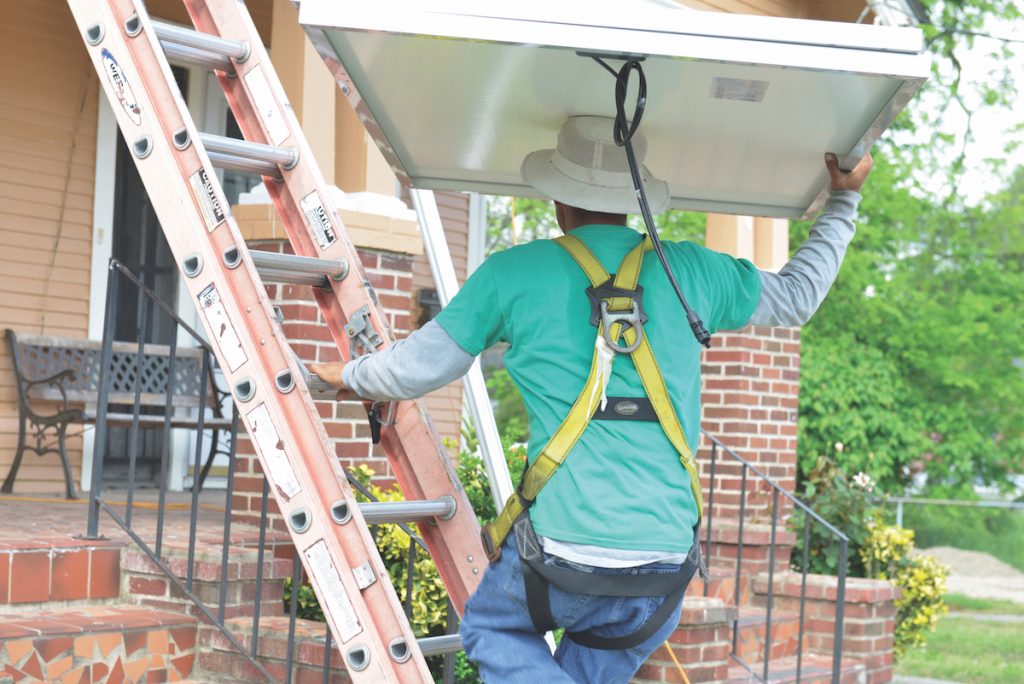
Headquartered in New Orleans, PosiGen is the nation’s leading residential solar and energy efficiency provider for low-to-moderate income families. The company’s mission is to close the clean energy affordability gap for LMI homeowners by delivering lower-cost utility bills along with the environmental benefits of clean energy through rooftop solar and energy efficiency upgrades. 

PosiGen makes an impact in underserved communities by facilitating annual household savings of upward of 20% on energy bills, with more than $190 million in savings to date. It also generates quality job opportunities in communities where it operates, with more than 65% of its staff identifying as women and/or Black, Indigenous, and people of color. These social benefits are intrinsically linked to the company’s positive environmental impact, with access to clean, reliable energy expanding to new homes and communities, helping reduce and avoid greenhouse gas emissions. 

After completing a Series D investment led by The Builders Fund and a subsequent growth capital round from Builders and other investors in 2022, PosiGen became a public benefit corporation and certified B Corp in 2023. Certified B Corporations meet the highest standards of verified social and environmental performance, public transparency, and legal accountability and aspire to use the power of markets to solve social and environmental problems. 

The Builders Fund, which has been a certified B Corp since 2015, provided PosiGen with guidance and support throughout the B Corp certification process in alignment with the fund’s impact management and measurement strategy. Builders leverages B Corp certification as part of its impact framework because it supports companies that seek to integrate purpose and profit and make decisions for the benefit of all stakeholders. Purpose-driven companies are uniquely positioned to deepen impact, improve transparency, and create value for stakeholders across the corporate ecosystem. 

Changing the Financing Model

Prioritizing equity and empowerment for entrepreneurs and business owners is a winning formula.


By Kathryn Deen

Since its founding in 1992, Advantage Capital has invested over $4.1 billion in over 900 companies, spanning a diverse array of industry sectors and covering the entire risk spectrum through a combination of public-private partnerships. In addition to growing small businesses, the company finances affordable housing and expands renewable energy solutions. Real Leaders connected with President Steven Stull to learn how Advantage Capital is helping lead the way in the impact investing space.

Real Leaders: Describe the problem Advantage Capital is trying to solve.

Steven Stull: Since the founding of our firm, we have worked to bring businesses, jobs, and technologies to communities that have historically lacked access to investment capital. 

Those in underserved communities often face economic instability, a volatile housing market, limited opportunities for quality jobs, and various financial burdens. We leverage our investment acumen, legislative experience, and our emphasis on impact to funnel capital to growth-ready entrepreneurs, innovators, and industries in overlooked areas. We invest with intention in job-generating small businesses — along with affordable housing developments and renewable energy solutions — to grow economies and communities.

RL: What are the company’s most innovative ways of addressing lack of access to investment capital?

Stull: We uncover and implement innovative, flexible financing solutions often enabled and accelerated by public-private partnerships, and we meticulously measure the investment outcomes.

It is important to actively advocate for proven public policy that establishes partnerships with state and federal economic development organizations to turn incentives into investments into impact. For Advantage Capital, we have always worked to expand the scope and compliance of tax credit programs to, in turn, expand access to capital across the country beginning with one fund in one state — specifically for small businesses — to dozens of states and programs that include low-income housing and renewable energy investment.

RL: Can you share a couple of Advantage Capital’s success stories?

Stull: After being denied by more than eight banks, Carmen Tapio partnered with Advantage Capital and secured a $1.5-million small business loan in connection with the federal and state New Market Tax Credit (NMTC) programs. The loan allowed her to purchase North End Teleservices, a call center in the highly distressed community of North Omaha, Nebraska. Carmen has grown the company to over 500 employees, providing household-stabilizing benefits including health care, transportation, an apprentice program, micro-academics, performance bonuses, and tuition reimbursement. 

Here’s another example: When Stirling Ultra Cold was at a pivotal point in its growth trajectory, it needed capital to continue. Advantage Capital’s investment, made in connection with the NMTC program, enabled the company to hire new employees, increase research and development, and support the rollout of a new product line. The company manufactures freezers that have become the sustainable choice for hospitals, research centers, universities, and corporate laboratories to store lab samples and other biomedical materials. It is a major employer helping to boost the local economy in rural Athens, Ohio.

RL: What have been some of the company’s biggest challenges, and how have you overcome them?

Stull: Our investment strategy is challenging. We go to communities and areas where traditional lenders are not necessarily active or interested, and we provide financing to the businesses and people who need it and are ready to seize it. We do that by being champions of small business — working hard to provide sophisticated and diverse options. And we ensure thoughtful fundraising and structuring are at the foundation of every fund and initiative — with a nationwide network of prominent investors who share our interest in positive impact. At the end of the day, we meet entrepreneurs and other innovators where they are and join them in their journey. It’s about sharing a common goal: growth.

RL: Why should other leaders in the field of investing follow suit?

Stull: We know capital changes lives. For many people, life is not getting any easier. Investing with intention and being motivated by meaningful impact can go together with successful investment outcomes and competitive returns. There is an opportunity — perhaps an obligation — to do both. Taking a double-bottom-line investment approach can lift people up, grow local economies, and have an enormous ripple effect across the country. Ensuring talented, experienced professionals are participating in that process is important. 

RL: What does the future of impact investing look like, and what role does Advantage Capital hope to play in it?

Stull: The future of impact investing is poised for major growth. Impact investing is a trillion-dollar industry and isn’t going away anytime soon. I am optimistic and believe more businesses are going to establish and accelerate strategies that do good while doing well. We will continue to do what we do best — funnel flexible financing to the places and people who need it and are ready to seize it. And we hope to continue to expand our scope as we grow our affordable housing and renewable energy business lines.

Investing for Impact – An In-Depth Interview with Alternative Wealth Partners CEO Kelly Ann Winget

Impact investor Kelly Ann Winget is a believer in investing for impact, yet she’s going about it in a different way.
 

By Real Leaders

As founder and CEO of Alternative Wealth Partners, Winget has built a successful career pursuing her unique, contrarian approach to driving positive change.

While others focus on checklists, Winget emphasized leveraging one’s lived experiences to make a difference on any scale. There are global leaders, but impact also happens locally within communities.

When asked about her philosophy, Winget dove into opportunities she sees differently. Where some concentrate on funding diverse founders, she stressed the need to develop the investor pipeline itself. Currently, most investment committees lack diversity, hindering their ability to properly evaluate all opportunities.

She continued by saying that by educating more women and minority investors, these groups gain knowledge and confidence to become impact investors supporting their own communities. Winget’s book “Pitch the Bitch” aims to bring more women into investing through financial literacy.

In her portfolio, Winge looks outside norms to drive change. She actively invests in traditionally male-dominated industries like manufacturing, energy infrastructure, and oil/gas extraction. One example was acquiring an ammunition component manufacturer, now the only woman-owned business in that field.

Winget believes diverse leadership provides a fresh perspective that can spot new problems and innovative solutions others may miss.

For too long, industries like oil/gas have narrowly focused on extraction costs rather than broader stakeholder impacts. Her approach weighs safety, environmental stewardship, and community impacts equally with returns.

Statistics show women reinvest profits more into local communities compared to men. For Winget, impact means redistributing wealth tangibly for the world, not just short-term profits. By empowering underrepresented groups as both investors and entrepreneurs, real, sustainable change can happen from within industries over time.

Winget’s experience-based philosophy challenges conventional wisdom.

Rather than checklists, she focuses on developing a more diverse ecosystem where underserved markets may finally gain needed attention and funding to drive progress.

In a deeper dive into her investment process, Winget looks for founders who truly believe in their vision for the long-haul, remaining calm under pressure with a sense of responsibility to investors. As an entrepreneur herself, Winget understands the dedication required and only partners with others equally committed.

When discussing ESG metrics, Winget noted challenges in industries like oil/gas but aims to operate sustainably within regulations. 

For stakeholders, she emphasized building relationships with suppliers to overcome obstacles together through open communication and mutual understanding of challenges.

By empowering underrepresented groups from the inside-out, Winget believes her contrarian approach can make the greatest impact where it’s needed most. Through financial education and diverse leadership, industries may finally address problems previously overlooked, benefiting communities and the planet.

Winget’s experience-driven philosophy challenges norms to drive progress through an expanded definition of impact investing. By developing inclusive ecosystems, underserved markets may gain long- overdue support for positive change.

How Your Inner Circle Affects Your Wealth

Spend more time with people who will support your money-building path.

By Tom Wheelwright

Years ago, I lived in a solidly middle-class neighborhood. My family and I were happy there, but I started to notice something interesting on Sundays. When we went to church, I could see a big difference between the people who lived in my neighborhood and people who lived in a neighborhood about a mile and a half down the road: money. 

The difference wasn’t so much in the amount of money people had. Both neighborhoods were doing well by most standards. The difference had more to do with mindsets around money.

People in my neighborhood focused on money a lot but not always in a healthy way. Money was more a source of stress than joy. Meanwhile, people in the neighborhood down the road had a very different attitude. Money seemed to be less important to them, yet they had plenty. They also seemed to be having a lot more fun.

It made me think a lot about what kind of relationship I wanted to have with money and who I wanted to spend my time with. Ultimately, I sold my house and moved into the neighborhood down the road. That move made a huge difference in my life.

Surrounding Yourself with Success: How My Community Transformed My Financial Reality

The new address meant I started spending more time with people with an attitude toward money unlike any I had ever experienced. They viewed money as a tool to help them achieve their goals rather than just a source of stress or something to accumulate for its own sake. They understood how to build wealth through entrepreneurship and investments. They looked at the world with an abundance mindset and were curious about learning new things and giving back. 

Over time, I started to adopt this view. I became more comfortable asking questions about different kinds of investments and curious about how entrepreneurship works. I had people to talk with who encouraged these interests and introduced me to resources and people who could help me in these areas. Ultimately, it transformed my mindset around money.

Level Up: Make Change, Be Intentional

If you’re looking to build more wealth, it’s important to look at the people you spend the most time with. Do they model the kind of life you desire? If not, it may be time to make a change.

This isn’t some sort of woo-woo manifestation technique, and moving didn’t come with a membership to a secret wealth-building society. This is about creating an environment that will support you in your pursuit of specific goals. When you surround yourself with people who are successful with money and understand how to build wealth and impact through entrepreneurship and investments, you give yourself a different view of the world and what opportunities are available.

In today’s fast-paced world, the importance of having a supportive network of people around us cannot be overstated. The people we associate with can have a significant impact on our beliefs, actions, and ultimately, our results. While you may not need to move, you do need to be intentional with whom you spend your time and energy. When you do, you’ll begin to find yourself making more money and effecting more change. 

Building Your Support Team

How do you spend more time with people who will support your wealth-building impact path? Here are five time-tested options that don’t require hiring a real estate agent.

1 Expand your network.

Attend local networking events in your industry or niche and join professional associations that offer opportunities to spend time with people who have achieved financial and career success. 

2 Attend conferences, workshops, and seminars about entrepreneurship or investing.

You’ll learn from experts and connect with like-minded people who are serious about their wealth journey.

3 Volunteer to serve on the board of a charitable organization.

This is not only a great way to make a difference in your community, but it also is likely to connect you with people who share your values and goals.

4 Connect online.

If you can’t find the right groups locally, look for social media groups and other online communities where entrepreneurs and investors hang out. Join the discussion forums and start building relationships. 

5 Hire professional advisors.

A CPA, investment advisor, and attorney can provide strategic recommendations that more than pay for the cost of their services. They also will help you continue to expand your thinking when it comes to your wealth strategy.

Tom Wheelwright is a CPA, visionary, and best-selling author behind multiple companies that specialize in wealth and tax strategy. He is also an expert and published author on partnerships and corporation tax strategies, a platform speaker, and a wealth education innovator. You can find his book Tax Free Wealth here.

Grameen America Changes Lives, One Microloan at a Time 

When David Gough needs to be inspired, he thinks of people like Shanté, a custom jewelry entrepreneur in Newark, NJ; Alfa, who owns and operates a beauty and skincare salon in Miami; and Shirley, a gourmet popcorn proprietor in Fresno, CA. 

They are among tens of thousands of women across the United States who took their entrepreneurial dreams and turned them into reality with the help of Grameen America, a nonprofit provider of microloans, financial training, and support to its borrower members. 

“Our borrowers are resilient, and they have great business ideas; they just need a little capital to make them happen,” said Gough, Grameen America’s Executive Vice President and Chief Financial Officer. “It’s inspiring to see what an impact a small loan can make in the lives of women and their families.”

A Hand Up

Since its founding in 2008, Grameen America has loaned more than $2.4 billion to over 150,000 women, replicating a business model that was developed by Muhammad Yunus, a Bangladeshi economist and civil society leader who was awarded the Nobel Peace Prize for founding the Grameen Bank and pioneering the concepts of microcredit and microfinance.

Grameen America focuses on women who live below the federal poverty line—a group with few options for accessing capital, opening bank accounts, or establishing credit scores. It has remained faithful to Yunus’ original methodology, which requires women to form a support group and go through training to learn about loans, savings, and credit building before receiving a microloan. Initial loans cannot exceed $2,000, and borrowers make weekly payments over a 6-month term.

Borrowers open free savings accounts with commercial banks and make weekly deposits as part of the program. Grameen also reports microloan repayments to Experian, helping the entrepreneurs establish a credit score and build their financial identity.

But the secret sauce of Grameen’s program is the weekly center meeting, during which about 35 entrepreneurs meet with a relationship manager. Appointments are mandatory, and attendance is taken. Members must bring proof of repayment of that week’s installment, and they participate in financial literacy training designed to help their businesses succeed and enable financial mobility out of poverty. 

The weekly meetings create a peer-to-peer learning environment that nurtures success. “Our members learn the discipline of borrowing money, they see everybody else in a similar position, and they share what they’re doing with the money,” says Gough. “You have this wonderful social capital model that gets developed. We would lose that if we were just giving the money out without any accountability or community.”

Scaling Impact

Grameen America, led by former Avon CEO Andrea Jung, has ambitions to scale up its reach into communities across the country rapidly. To do so, Gough says the nonprofit will need to operate like a social business that is as self-sustaining as possible. “We need to deliver in a businesslike way to cover our costs,” he says. “If we’re going to ask our members to pick themselves up by their bootstraps, we should do the same as an institution. So, we run it as a business to be reliable to our borrowers.”

With 29 branches in 23 cities, Grameen aims in 2022 to add six new branches in underserved communities in Atlanta, GA, Phoenix, AZ, Riverside, CA, Philadelphia, PA, and a second location in Charlotte, NC, and Miami, FL. For every branch they open, the organization tracks key performance indicators to ensure the branch can cover direct costs and achieve full sustainability within five to six years.

The organization is reaching deeper into communities with initiatives like the $100 million ‘Lifting America: The Campaign for Her Future,’ as well as the ‘Elevating Black Women Entrepreneurs’ Initiative, which launched in May 2022 and aims to expand to $1.3 billion in loans to more than 80,000 Black women entrepreneurs by 2030. 

Grameen is also leveraging technology to drive efficiencies, including digitizing loan disbursements and repayments.  During the pandemic, they pivoted to using services like Zoom and WhatsApp. “We were worried about members being able to adopt the technology, but to our great joy, they learned it well…with a little help from their kids,” said Gough.

Perhaps most ambitious, Gough says, are Grameen’s plans to grow its loan portfolio—from $158 million currently to $600 million in ten years.  While some money can be raised with philanthropic donations and bank Community Reinvestment Act lending, Grameen is also tapping impact investors with a debt investment targeting foundations, banks, high net worth individuals, and offerings through ImpactAssets.   

But no matter how big Grameen gets, the bottom line comes back to people like Sheila, who took out a Grameen loan to start a mobile boutique on 125th street in Harlem, next to the iconic Apollo Theater. “Our borrowers are some of the smartest people when it comes to generating income and going out and hustling to get it,” he says. “They just need access to an affordable microloan and a little support to help them reach their goals.”

Interested in learning more about Grameen America’s impact investing opportunities? Contact dgough@grameenamerica.org

Pro Athletes Build Dream Team of Impact Investors

Over the past year, in communities across the country, Derrick Morgan has quietly built “The Dream Team” of impact investors.

With a unique playbook and the grit and determination that made him a star linebacker for the Tennessee Titans, Morgan in 2021 launched I AM Nation, a network of 40 professional athletes that has come together to share knowledge, pool resources and educate each other on ways to meet collective goals in business and impact investing.

By building a collective of athlete investors, I AM Nation has the influence and critical mass needed to break down barriers and open opportunities for its members and for the communities they came from. 

“I AM Nation is the go-to platform for the athlete that has ambition to continue to grow after the game,” said Morgan. “It’s centered around group economics and the common thread is the greater good and giving back. We’re investing together, building our networks and finding creative ways to give back to our communities.”

Added Leger Douzable (pictured above), a former defensive lineman who’s now a college and professional football broadcaster: “What do we want to accomplish with our investments?  It’s all about leveraging capital, influencing culture, and creating a community.”

The group’s membership is a Who’s Who of elite athletes and includes NBA champions, Pro Bowlers and Super Bowl winners. But it’s what members are doing outside the game that may eclipse their stardom. 

Among I AM Nation’s members are Ex-NFL linebacker Spencer Paysinger, the producer, creator and writer of All American, the successful CW Network series inspired by his life; Cliff Avril, Seattle Seahawks Super Bowl champion and Pro Bowler, who is today a real estate entrepreneur; former New Orleans Saint Marcus Colston, a professor at University of New Orleans;  and NBA star Josh Childress, who launched Landspire Group, a real estate firm that’s part of TPG NEXT, a new initiative providing growth capital and operating resources to seed, support, and scale the next generation of diverse investors and entrepreneurs. 

That community of peers is what attracted strong safety Johnathan Cyprien, who is building a career after football in real estate. “What I enjoy most is this group of like-minded current and ex-pro athletes joining together in business,” he said. “The power of I AM Nation to pool resources and assets brings an advantage to the community over other investment groups. This being the first group of its kind will not only inspire but be a resource to new professional athletes to educate themselves in investments and maximize their finances.”

For Morgan, I AM Nation is all about capturing the collaborative power of professional athletes and, at the same time, overcoming the silos that sometimes form in a locker room. “On game day, you’re sitting next to your teammates, hyper-focused on the game, but a lot of the time you don’t get to talk about things outside of that realm,” he said. “It’s such a missed opportunity. When do you get that much social and financial influence in a room?”

One powerful tool for busting silos is education. In July, I AM Nation held its first retreat featuring Gary Vaynerchuk, chairman of VaynerX , early-stage investor Anthony Pompliano, community real estate developer Brandon Rule, and Nathan Rodland, General Partner, Elefund and Founding COO, Robinhood, among an impressive line-up of investors and entrepreneurs. Cyprien, who is working on his first real estate project, a 373-unit community development in Orlando, said the retreat was “exceptional. The whole experience was first-class, and the educational portion was memorable and informative.”

For Douzable, I AM Nation’s focus on education and collaboration has a cumulative effect. “I know people always talk about wanting to get a ‘seat at the table,’ but with I AM Nation, we’re creating our own table by realizing the value of our influence to build new opportunities.”

“Without professional athletes, there is no game, but too often we’ve relinquished our value to the powers that be who control the industry,” added Morgan. “So as a collective of professional athletes that is very business-minded, we’re taking our value to the next level.”

The athletes are bringing that value back to their communities through impact investing.  Morgan has made several impact investments—including affordable housing developments in Nashville and a venture investment in Fresno-based Bitwise Industries, a LatinX founded tech training and consulting company that works with underserved populations in underdog markets. Other athletes have also done impact deals, but now are joining forces through the Hometown Fund, a pooled donor advised fund at ImpactAssets. By bringing multiple donors together, the fund is unlocking catalytic investment capital and leveraging the off-the-shelf architecture of donor advised funds to create fast, strategic constructs with deep impact capabilities.

“Part of our education around impact and giving back to the community is to point out that this doesn’t have to be a traditional philanthropic effort, it could be a double bottom line return type of format,” Morgan said. “ImpactAssets represents a very creative resource for our members in terms of giving back and caring for the community they come from. We want to help the guys fulfill their desire to benefit the community and find creative ways outside of the traditional playbook for athletes to get into the community.”

I AM Nation also sees the potential for a “network effect” with the Hometown Fund. With the fund providing seed money for an impact investment, Morgan and other members are developing partnerships that can come alongside and anchor a lot of their efforts. “We don’t have institutional money amongst us, but there are foundations and institutions that do,” he said. “This is a partnership model with strong allies,” including fans, friends and financial services that can form a network of support for impact investments.

But whether it is affordable housing investments or pooled impact capital in The Hometown Fund, Morgan is crystal clear on what he wants to achieve: “I want results. Capital is a very critical piece of the puzzle in terms of moving the needle on a lot of systemic issues. That’s why I gravitated towards the impact investment route because capital gets things done. Whatever else you want to say about it, money moves the needle.”

5 Ways To Expand Your Philanthropy Impact at This Generous Time of Year

It’s the most generous time of the year. From Giving Tuesday to last-minute donations to favorite charities, December marks the month when Americans most benevolently open hearts and wallets to support the causes and issues that are most important to them.  

Of the $427.71 billion Americans contributed to charities in 2018, approximately 30 percent of giving occurred in December; nearly 10 percent of annual giving occurs on the last 3 days of the year.

This Holiday Season — with worries about climate change, economic inequality and other issues tearing at the fabric of civil society — philanthropy needs to do more than ever. The United Nations, for example, has identified an annual $2.5 trillion investment gap critical to realizing the Sustainable Development Goals by 2030. 

The urgency of human needs and system risks requires creative solutions that put more capital to work. So, what if you could double the impact of your philanthropic giving?  Through smart tax planning and growing opportunities to put philanthropic dollars to work in impact investing, more individuals are finding new ways to expand the power and positive feelings generated by philanthropic giving.

Impact investing — investments made with the intention of generating measurable social or environmental impact alongside a financial return — is a rapidly growing way that some philanthropists are putting charitable dollars to work even before they are granted. A 2019 report by Global Impact Investing Network, found that over 1,340 organizations currently manage $502 billion in impact investing assets worldwide, up from just $10.6 billion in 2014. 

“The impact investing industry is experiencing significant momentum,” noted Amit Bouri, Co-Founder and CEO, Global Impact Investing Network. “Major firms, large and small, are entering the impact investing market every week, and the industry has received a swell of support from governments, academics, and business leaders.”

Here are five ways to combine the generosity of the season with catalytic investments that can expand the impact of your charitable giving:

Donate Appreciated Securities:  Although a tax break is not the major motivation for most philanthropy, giving in a tax-smart way allows donors to give more and plan giving more strategically. Donating appreciated assets such as stocks, mutual funds or real estate either directly to a charity or to a donor-advised fund is a one such tax-smart strategy.  Giving long-term appreciated assets allows you to give to a charity and get a full tax deduction on the fair market value of the securities. Since the securities are donated rather than sold, you don’t have to pay capital gains taxes, meaning 100% of the value of the donation can go to work to support impact investing and charitable granting.     

Bundle Charitable Giving: The Tax Cuts and Jobs Act of 2017 (TCJA) changed the math for charitable contributions by nearly doubling the standard deduction to $12,000 for individuals and $24,000 for married couples filing jointly. As a result, fewer Americans will itemize their expenses and charitable deductions than prior to the TCJA.  

While it was feared that the TCJA could dampen charitable giving, donations were up slightly in 2018. One possible reason: ‘Bundling,’ a charitable strategy in which individuals make donations every two or three years instead of giving every year in order to meet higher standard deduction requirements. For instance, an individual who gives $5,000 annually could give $10,000 every two years, getting itemized deductions the first year and taking the standard deduction the next. Using a donor-advised fund is one way to take the bundled, invest the funds for potential growth and then grant money to charities over the course of two or three years.

Use a Donor-Advised Fund to make Catalytic Impact Investments: With more than 121.42 billion in charitable assets, donor-advised funds are the nation’s fastest-growing charitable vehicle. This efficient, low-cost charitable structure allows donors to reap tax benefits while putting charitable dollars to work in a strategic way. But increasingly, donors are finding ways to transform the charitable assets in donor advised funds into a catalytic resource for good. 

At ImpactAssets, a $1.1 billion donor advised fund, donors are investing in breakthrough solutions to some of the world’s biggest global challenges, through a 100% impact investment platform of mutual funds, private debt and equity and custom investments. Other funds, including many community foundations across the country, are also incorporating impact investment options into their menu of investments. 

With more individuals than ever turning to donor-advised funds to facilitate giving, the opportunity to solve problems with a combination of investments and donations will only grow. By activating the vast pool of philanthropic capital already set aside to do good, donor advised funds have the power to accelerate transformative change.

Extend Philanthropy Across Generations:  Making philanthropy and impact investing a family activity is a powerful way to extend deeply personal values to next generations. Whether it is an informal family discussion, or the creation of a formal structure, such as a foundation or donor advised fund, giving as a family can help build stronger bonds while seeking solutions to some of society’s biggest challenges. The learning goes both ways. As millennials move up the ranks in business or take charge of family wealth, many are showing their elders how to put more of their family’s wealth to work for good. 

Double Down with Organizations You Care About:  Individuals can also maximize their charitable impact by aligning social enterprise investments with charitable giving. At ImpactAssets, donors are using their donor advised fund to “double down” by both donating to nonprofits and investing in related organizations. Donors have made more than 500 ‘Custom Investments’ in social enterprises, including TerraCycle, Beyond Meat, Komaza and many others that are driving positive change. Donors see this strategy as sensible risk mitigation because supporting a charitable organization’s philanthropic mission is far more efficient if it doesn’t need to undo damage done by unaligned investment management.  

Making charitable dollars go further with strategic giving and impact investing is a benefit to charities and individuals alike. This giving season, challenge yourself to act with increased urgency in responding to the climate crisis, societal injustice and inequity around the world. Your donations can be a catalytic resource to fund social enterprises and move fast and fearlessly to create impact. 

Giving Fund Donors Invest in Seed Stage Social Entrepreneurs at “Angel Tank”

The 2nd Angel Tank social enterprise pitch competition was an inspiring kick-off to the 2019 SEED Conference in San Francisco, CA on May 20, 2019.

An impact twist on ABC’s Shark Tank, this year’s Angel Tank featured five leading Bay Area impact investors as judges and a select group of six social entrepreneurs. Each entrepreneur had 5 minutes to pitch their world-changing idea to a live audience for a change to win two prizes: the Angels Choice and Audience Choice Award.

ImpactAssets and Real Leaders co-hosted Angel Tank for the second year to support the growing field of investors and entrepreneurs activating seed capital for good.

“We are thrilled to have the opportunity to support and showcase this exceptional group of social entrepreneurs. Their fresh ideas and inspiring vision of a more inclusive and just system are helping to transform business as a force for good — for profit, people and planet.” — Tim Freundlich, CEO, ImpactAssets

The Angels Choice Award winner was Savvy Cooperative, who won the judges vote for their innovative approach to healthcare. Savvy Cooperative is designing healthcare through patient insights and creating income opportunities as the first patient-owned co-op and public benefit corporation. Jen Horonjeff, Ph.D., Founder and CEO of Savvy Cooperative accepted the award — a $12,500 philanthropic investment through the ImpactAssets Giving Fund, a donor advised fund.

Giving Fund donors Elizabeth Stelluto Dunaier, Kristin Hull and Janine Firpo sponsored the investment.

“Being an Angel Tank judge at the SEED conference is inspiring because there is such a wide variety of people addressing the problems in our society through business. I like the breadth of the investments and personally do my seed stage investing through my Giving Fund because it’s philanthropic capital. I’m able to take a much different approach to risk and invest in companies earlier on than if I needed the financial return.”— Elizabeth Stelluto Dunaier, Angel Investor, NextWave / Personal Portfolio

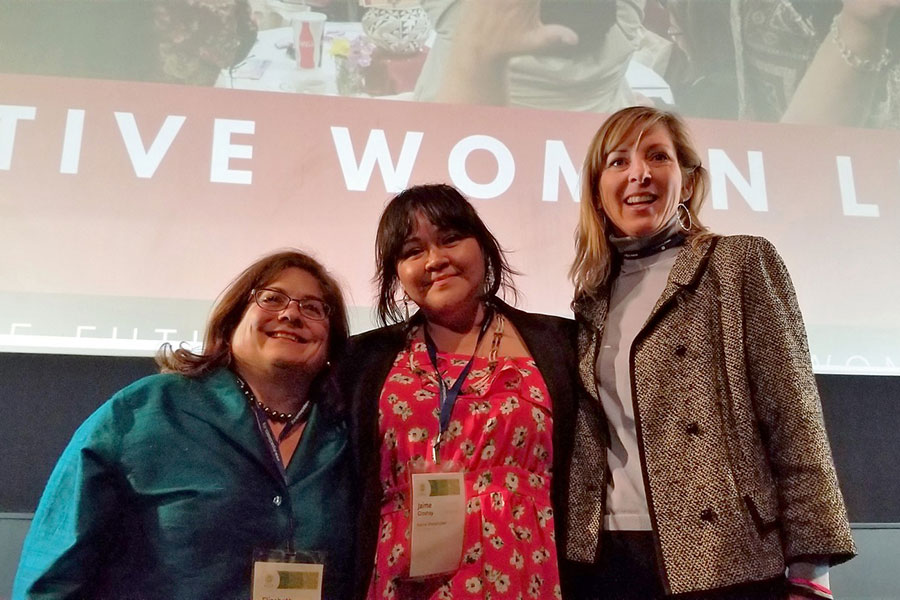
The Audience Choice Award winner was Native Women Lead, who won the support of the audience as a native women led business network that’s revolutionizing systems in a way that honors native culture, creativity and sustainability practices. Jaime Gloshay, Co-Founder of Native Women Lead accepted the award — a $20,000 Real Leaders Media Prize.

Giving Fund donor Kristin Hull also committed an additional $5,000 of capital into Native Women Lead.

The excitement from impact investors and social entrepreneurs who participated in Angel Tank highlights the timely opportunity to invest in world-changing entrepreneurs, and the important role philanthropic capital must play in accelerating solutions at the seed stage.

To learn more about how you can invest philanthropic capital in early-stage impact ventures through the Giving Fund click here.

2019 Angel Tank Entrepreneurs

  • Jen Horonjeff, Founder & CEO, Savvy Cooperative
  • Sarah Lin, Co-Founder, EllieFunDay
  • Emily Darchuk, Founder, Wheyward Spirit
  • Jaime Gloshay, Co-Founder, Native Women Lead
  • Sapna Satagopan, Xyza News For Kids
  • Pedro Moura,Co-Founder, CEO, Flourish


2019 Angel Tank Judges

  • Chris McLemore, Program Manager of Oakland Startup Network, Kapor Center
  • Aarti Chandna, Partner, SV2
  • Kristin Hull, Founder, CEO & CIO, Nia Impact Capital
  • Eva Yazhari, CEO, Beyond Capital
  • Elizabeth Stelluto Dunaier, Angel Investor, NextWave/Personal Portfolio

9 Cities With The Biggest Risks – And The Biggest Business Opportunities!

Deathly air pollution and slums are two of many challenges cities struggle with globally. Danish sustainable research company  Sustainia has compiled a list of nine cities with the biggest risks, and shows that beneath these risks lie a number of market opportunities.

Indonesia’s capital Jakarta is sinking. Lagos, Africa’s most populous city, urgently lacks 17 million housing units. Seven million people die every year globally from the direct or indirect effects of air pollution – most of them living in bigger cities. Cities around the world struggle with seemingly insurmountable challenges. Sustainia took a look at nine of the cities living with the toughest challenges.

There are a number of underlying causes to these challenges. Although they receive increasing attention from NGO’s, journalists and world leaders, businesses can do their part too. In fact, these risks can be turned into lucrative business opportunities.

Risks open doors to new innovation, especially when you consider the resources mobilized in cities and their strength as drivers of change. For instance, no country has ever raised itself from low-income to middle-income status without significant population shift into cities.

Companies and businesses can take advantage of the tremendous opportunities posed by these global risks, but they need to correctly identify the challenges to pursue these market opportunities.

Cities marred by air pollution
Smog that impedes you from seeing just a few meters ahead, constant coughing and permanent risk of fatal diseases. Air pollution is costing the equivalent of between two to ten percent of GDP across the G20 countries. With 85% of the world’s population living in areas where thresholds for safe air pollution levels have been surpassed, the market for air quality improvement is staggering. It is estimated that the global market opportunities for air pollution control equipment will reach $21 billion by 2021.

1. Tangshan and 2. Xian, China

Take Tangshan – one of China’s most polluted cities. It’s a hub of heavy industry and coal-burning, producing massive amounts of cement, chemicals and steel. The Chinese Government has undertaken a range of political initiatives – from pressing residents to give up coal stoves at home, to the decommissioning or preventing new construction of several hundred coal power plants. $6.4 billion was granted towards cutting carbon, sulfur dioxide and nitrogen oxide emission in 2018. In China, the market opportunities for fighting air pollution will reach an estimated of $3.2 trillion in 2030.

At the Communist Party’s annual congress in 2014, Premier Li Keqiang declared war on air pollution in China. The main reason is that air pollution kills between 1.6-3 million Chinese people annually – giving China the unfortunate ranking of first place for global deaths from air pollution.

Picking up this deadly fight, air pollution programs that monitor air quality in every major Chinese city have been launched, and massive investments in high-tech industries working with solar panels and electric cars have been made.

The private sector is already pursuing market opportunities. The car-sharing provider GoFun offers luxury hybrid vehicles equipped with air purifiers to combat smog. In the Shaanxi province, a novel solution to air pollution is showing early promise – a 100m high air purification tower in the Xi’an home of the Terracotta Army. The tower is funded by the Chinese Government and works by sucking polluted air into large greenhouses around the base, heating the air so it rises up through multiple layers of cleaning filters.

Still, much more has to be done. Even though the Chinese government is taking the lead, there is still a long way to go according to Greenpeace, because policies still favor heavy industry and coal. This opens immense market opportunities for energy companies like Iso Paint Nordic, who produces roof coatings that transforms harmful exhaust gases into harmless salts and generate energy savings by reflecting more rays from the sun.

3. Varanasi, India

The historical city of Varanasi in India, home to one million people, is choking on air pollution that is up to 20 times above safe levels, making it one of the most polluted cities in the world. Pollution is primarily caused by vehicular and industrial emissions, where rates of asthma and patients reporting breathlessness in the city have increased by up to 25% between 2010-16.

Outdoor air pollution caused 620,000 deaths in India in 2012, and the World Bank estimates that it costs the country nearly 8% of its GDP each year. Action is desperately needed if the health risks are to be reduced.

The overall market opportunity in India for electric and hybrid vehicles is expected to reach $29 billion by 2030.

Given that 14 out of 15 of the most polluted cities in the world are Indian, and that the global air quality monitoring market is growing ($3.9 billion revenue in 2017), the market opportunities are stunning.

Improving waste management to avoid burning of garbage and enhancing infrastructure to lessen trucks from entering Varanasi is one of the solutions needed to improve the city’s air quality. The Kolkata Solid Waste Management Project encourages segregation of waste with the ambition of eliminating open incineration of waste. Since their launch in 2006, a gradual decrease in diseases such as skin and liver ailments, malaria and poliomyelitis has been observed.

Pollution from transportation is one of the biggest issues and as demand for personal mobility is expected to increase in Varanasi and triple globally by 2030, market opportunities are huge. Plans to replace all public buses with new hybrid ones in 2020 have been put in place by the government, and a scheme has been launched to provide a $100,000 subsidy for electric and hybrid buses. There is clearly a burgeoning demand for electric vehicles in this city.

Cities in desperate need for affordable housing
Globally, 1.6 billion people will need affordable housing by 2025. At the same time the estimated market for affordable housing is expected to exceed a staggering $1,080 billion by, 2030.

4. Lagos, Nigeria

Africa’s most populous city is experiencing a housing deficit of more than 17 million units, causing slums to sprawl and creating insecure and poor living conditions for millions. An estimate of 2.6 million homes need to be built each year to meet this massive demand – opening up multiple market opportunities.

Creating affordable housing could create over 13 million of jobs in Africa by 2030. In Nigeria, up to 90% of urban housing is produced by private developers, which is a strong indicator of the massive market opportunity for companies to bring the housing deficit down.

In Lagos, the low-income urban dwellers upgrade informal housing to alleviate the housing deficits. At a national level, an innovative urban planning project called Eko Atlantic City, initiated by government departments and foreign and local companies, is projected to house 250,000 residents in an area equivalent to the size of Manhattan’s skyscraper district.

It’s questionable whether the property prices in Eko Atlantic City will meet the housing demands of low-income groups with an average annual income per capita of $7,000. Instead, building affordable houses from shipping containers is trending. Tempohousing Nigeria makes homes out of cargo containers that are 25% cheaper than traditional housing. One-bed houses sell for as little as $1,650.

5. Santiago, Chile

With more than 80% of its population living in cities, Latin America is now the world’s most urbanised region. Sadly, up to 25% of Latin Americans lives in slums or informal housing. These homes are exposed to health risks and are vulnerable to increasingly heavy weather conditions caused by climate change.

With few financing options available to low-income groups in Santiago, residents build their own houses with little or no mortgage. In the favelas of Santiago, slum dwellers use their savings and government subsidies to get help from architects to build half-houses with the other half completed over time. One approach, designed by the architecture company Elemental, has the potential to build housing units that cost as little as $7,500 per unit.

Patrimonio Hoy has come up with a solution to unlock housing opportunities with micro-financing. In collaboration with architects, they provide comprehensive advice on housing plans and issues weekly payback options. Patriomonio Hoy has benefited over 2.3 million people living in informal housing.

Sinking cities in a changing climate
Mega cities are threatened due to rising sea levels, pressure from heavy buildings, illegal pumping of groundwater, lack of proper sewer systems and heavy flooding. The challenge is highly complex as it combines health, environmental, economic and social risks at the same time. Therefore, assessing the market opportunities of sinking cities is difficult, but just ensuring affordable housing, safe drinking water and reliable energy have an aggregated potential value of up to $3.7 trillion.

6. Jakarta, Indonesia

Rivers flowing upstream and buildings slowly disappearing underground are everyday phenomena in the megacity of Jakarta – the fastest sinking city on earth. North Jakarta has sunk 2.5m in 10 years and the Greater Jakarta area, home to almost 30 million people, has sunk by 4m in the last 30 years. Abandoning North Jakarta, which will cost at least $220 billion, has been mentioned as the probable result if private companies and policy-makers don’t take action now. This risks stranding North Jakarta’s two million residents.

Overcoming this grueling challenge requires two actions: regulations need to be properly enforced, and private companies must take the lead in reconstruction and the provision of technological and infrastructural solutions. The Great Garuda, a 32km outer sea wall, is the only major infrastructure project proposed by the government. The plan has as many critics as proponents. It’s being built across Jakarta Bay to create an artificial lagoon along with 17 artificial islands by the Indonesian, Dutch and South Korean governments at a cost of $40 billion.

Ensuring affordable and climate-proof apartment units can improve sanitary conditions and prevent the outbreak of disease and unmanaged waste disposal. This currently costs the city $80 million every year and contributes heavily to the pollution of city rivers.

Investing in green infrastructure such as parks to reduce flood duration and enhance quality of life is crucial to reduce carbon emissions and create jobs for local Jakartans, who will see many more opportunities for work, as the city plans to construct 3,000 parks by 2022.

7. Mexico City, Mexico

Some parts of Mexico City – with its 21 million residents – are sinking at a rate of one meter per year. This poses multiple risks linked to water management and health, preservation of historical sites, traffic disruptions from flooding and housing vulnerability. It has cost the city billions in repairs and flood control since the 1900s. In the poorer neighborhoods, residents can go without tap water for two to three months during the dry season, forcing the government to dispatch water trucks.

No central agency is taking short or long-term responsibility for water resource management as Mexico City spreads across multiple state boundaries. But political decision-makers are aware of the problems related to water crisis. In 2018, mayor-elect Claudia Sheinbaum Pardo pledged a $370 million investment in the city’s water department to deal with the sinking and water crises, thereby opening up opportunities for stakeholders to take action. But long-term solutions are capital intensive and require centralized planning on a regional level to be effective.

The local government has launched a rainwater harvesting system “Aqua a tu Casa” to meet drinking water demands. Each harvesting unit guarantees the supply of up to 40,000 liters of drinking water per year, which means annual savings of around $200 per family. The construction of parks can mitigate water shortage by ensuring that the rain water reaches the water distribution systems to be used as potable water, diversifying the city’s water sources. Parque Lineal La Viga is an excellent example of how investing in public infrastructure can improve climate vulnerabilities through inclusive and green urban planning

Urgent need for access to sustainable energy
In 2015, 193 UN Member States agreed on an ambitious goal to “ensure access to affordable, reliable and modern energy for all by 2030.” In order to reach this goal by 2030, cities have to be onboard. Globally, cities consume more than two thirds of global energy and produce about 70% of greenhouse gas emissions. A market opportunity of between $555-770 billion is expected for companies providing clean and green energy in cities.

8. Buenos Aires, Latin America

In Latin America, demand for energy is expected to increase by more than 50% in the next decade, and greenhouse gas emissions from the building sector alone are expected to double between 2010 and 2030. This opens immense opportunities for energy companies with scalable, sustainable solutions.

Across Latin America, an estimated 25 million streetlights could be replaced, offering $2 billion in potential annual savings. Temperature control and electricity consumption are hot topics. In 2013, the capital of Argentina launched an energy plan to switch more than 90,000 streetlight bulbs to more energy-efficient LED bulbs as a part of a public-private partnership with Philips Lighting. LED lights provide long-lasting performance, with an expected lifespan of more than 20 years, while using 80% less energy and producing the same amount of light as traditional lights.

When the project was completed in 2015, the city had replaced 75% of its lighting stock, saving 50% in operational costs and cutting energy usage by 40-50%. 

9. Sub-Saharan Cities

Africa is starved of electricity. More than two-thirds of sub-Saharan countries are without proper access to electricity grids and are therefore struggling to support hospitals, schools, and sanitation systems, and sustain GDP growth. These risks can be turned into massive market opportunities and some companies are already on the move.

The largest business opportunities have a potential value of more than $296 billion by 2030 and could create nearly 16 million jobs. This could spark a long-lasting social and economic development for the region.

Based on a pay-as-you-go model for solar power, M-KOPA provides clean energy to a wide range of sub-Saharan countries. The company came in 34th on MIT’s list of the ‘50 Smartest Companies in 2017.’ Current customers are projected to save $300 million over the next four years and enjoy 50 million hours of kerosene-free lighting per month.

Lack of proper monitoring systems in sub-Saharan cities is another risk as most scalable solutions requires data monitoring of some sort. The American company Oopower, part of Oracle Utilities, provides smart data solutions for utilities with an opportunity to engage customers in improving their energy efficiency. In 2015, the company provided $1 billion in energy savings for customers and saved over 5.8 million tonnes of CO2.


0