Yes, Kids Can Create Lasting Peace

There are over 1.8 billion people on this planet between the ages of 10 and 24—the most at any time in history. This figure is a positive sign, for, in all the societies and countries of the world, young women and men are a group that actively looks for opportunities to generate unprecedented change and renewal.

But today’s youth are disproportionately concentrated in the poorest and most conflict-impacted countries on Earth. In the world’s 48 least-developed countries, children and youth make up a majority of the population. The dangers of this disparity are profound.

These conditions create vicious cycles where poverty and inequality – affecting millions of young people –severely dim their societies’ futures. What’s more, poverty and inequality in one generation lead to conflict within and between nations in the next, which opens the door to a future of chronic fragility, causing further poverty and violence, and so on. Violence has always had a major impact on the lives of young people—they are often among the first to be targeted as victims or recruited to join armed forces—but for too long, decision-makers have seen youth as being only those things, victims or perpetrators, and not as partners, as equals, with the capacity to be voices for hope and forces for lasting peace and sustainable development.

Fortunately, the need to promote youth as key players in addressing the challenges of our times is increasingly acknowledged around the globe. For example, last year, the leaders of the world adopted the 2030 Agenda, which both places transformative change at the center of the national and global stages and recognizes the potential and power of youth in all countries. Therefore, in placing the 2016 International Youth Day under the theme “The Road to 2030: Eradicating Poverty and Achieving Sustainable Consumption and Production,” the United Nations decided to stress the leading contribution of young people in making concrete the universal aspirations contained in the 2030 Agenda.

With its 17 crosscutting goals, the 2030 Agenda will help the world take important steps toward achieving universal education, improving access to information, ending the use of child soldiers, and reaching other outcomes that will empower youth to participate in the political and peacemaking processes. And just last December, the UN Security Council passed its first ever resolution on the role of young people in ending armed conflict. The Security Council is calling on nations to do more not only to protect and empower youths living in areas impacted by conflict, but to engage them as leaders and decision makers who have an important part to play in shaping the future of their countries.

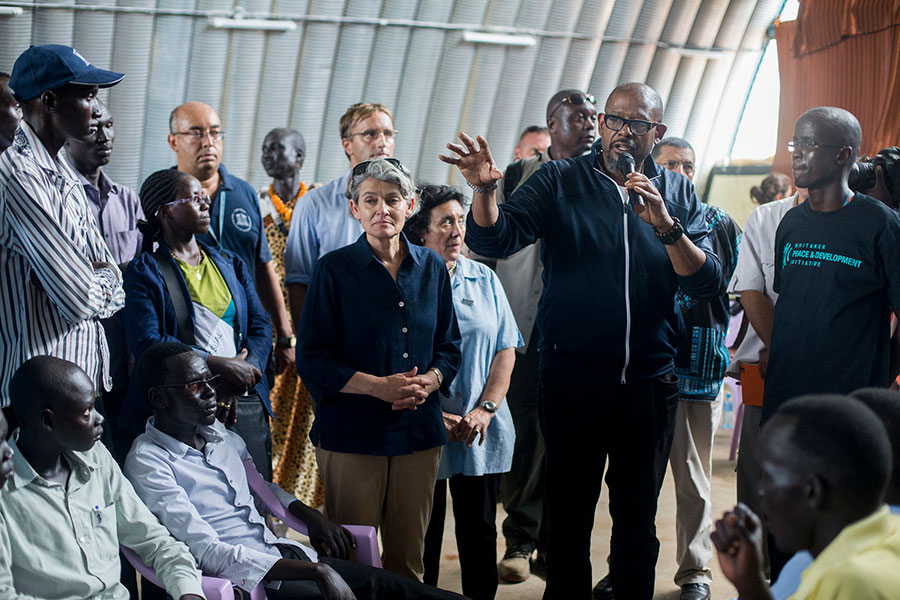
This is exactly what the Whitaker Peace & Development Initiative has been working toward since our founding in 2012 and with the support of such partners as UNESCO and Ericsson. We envision a world where young people everywhere are empowered with the education, the technology, and—most of all—the belief in themselves that they need to come together in staggering numbers to overwhelm their societies’ most-pressing challenges.

Because when we give young women and men the tools to become leaders and change makers, they are capable of remarkable things. In South Sudan, a nation torn by violence, two of the youth peacemakers we work with are currently serving in their nation’s parliament, bringing to the national debate a message of reconciliation and dialogue across ethnic divides. Others have received mandates from their governor to mediate long-standing conflicts between local tribes. In Uganda, former child soldiers are working together with small loans from WPDI to start businesses and community-building projects in their villages. From the ashes of war, they have become entrepreneurs and role models for the other young people in their communities.

Those are but a handful of positive stories out of a total population of 1.8 billion youth on this planet. If we could harness the energy of even a modest fraction of these eager young women and men, their small acts of goodness could help leverage peace and development to any corner of the world. Let’s resolve to empower the next generation of leaders and thinkers to do just that.


Working with Refugees Today to Prevent Tomorrow’s Conflicts

As the international community comes together to commemorate World Refugee Day, we face the somber reality that the number of refugees around the world continues to grow to unacceptable levels.

Today over 60 million people—about 1 per every 122 people on the planet—are currently displaced due to violence or conflict. To put that in perspective, that’s more than the entire population of Italy, the twenty-third most-populous nation on Earth.

Perhaps most disturbing of all, more than half the world’s refugees are under the age of 18—boys and girls who have been uprooted from their houses and schools by violence. In a world of plenty, it is unconscionable that so many children across our planet do not have a safe place to call home, yet that is the daily reality for tens of millions.

When such a staggering number of people, especially young people, are unable to live in safe communities, free of conflict, the consequences for all of us are profound. Conflict, no matter where it exists, is always the result of some fundamental human need—for food, for water, for education, or for political efficacy—going unmet. We must take it upon ourselves to help fill these vast needs for the 60 million displaced people in our world, or else we will perpetuate the same destructive conflicts into the next generations.

Not only do we have a strong moral duty to help our fellow human beings when we witness suffering around the world, but, in 2016, we can no longer afford to pretend that conflicts and violence in some far-off part of the world do not affect all of us. As we’ve seen all too tragically in recent months, conflict that might appear localized in a single region can breed hate and extremism that knows no international borders. Unrest anywhere is a threat to peace everywhere.

The best way to end conflicts, to fight extremism, and to eliminate hatred in our world is to work together to ensure that the most vulnerable among us are having their needs met. First and foremost, this means that the international community must open our doors and our hearts and make sure that those displaced by violence have a safe place to live, clean water to drink, and enough food to eat. I am grateful to the many selfless individuals and organizations that work tirelessly around the world to provide these services for refugees.

But we must also recognize that displaced people have needs beyond just shelter and physical nourishment. Two years ago, when I first visited the UN protection-of-civilian (POC) sites in South Sudan that had been established to house the 2 million South Sudanese citizens who had been displaced (and many of whom still are displaced) by civil war, I saw that there were not enough resources to provide people with emotional support for the trauma they had suffered. Feelings of hate and revenge were taking hold, and many youth were acting out on these negative emotions.

WPDI is working with displaced people in South Sudan to give them the tools and support they need to start the reconciliation process and move away from this terrible conflict productively. In one of the POC sites in the capital of Juba, we have developed an initiative called Peace Through Sports, which brings youth from many different backgrounds and ethnicities together on the soccer field and basketball court. We combine daily sports activities with lessons in tolerance and peacebuilding as well as with programs that provide psychosocial support for these young women and men.

The goal is to work with young people in the midst of this crisis to start laying the foundation for future peace. In the words of one of the Peace Through Sports participants, “I know that, by the time we leave the POC camps, we will have become a different people who are able to work together to build peace.”

At a time when refugees continue to grow in number and face increasing discrimination in may parts of the world, we must look to the angels of our better nature and find the will to reach out a hand for our most vulnerable brothers and sisters. We should have the wisdom to see that alleviating suffering today will make the world better for all of us tomorrow. And we must engage with displaced youth and seize on this opportunity to develop their capacities as global citizens. In doing so, we will be preventing future conflicts before they can start.


Building Peace in the Digital Age

Over the past decade, we’ve seen many examples of how technology has changed the ways we respond to crises and build broad-based, popular movements.

After the devastating 2010 earthquake in Haiti, individuals on the ground used the crowdsourcing platform Ushahidi to help direct search-and-rescue teams to the locations where they were needed most. In 2011, Arab Spring protesters organized on Twitter and other social-media platforms to create political transformations throughout the Middle East.

But despite the potential that information and communications technologies (ICTs) hold for mitigating disasters, promoting democracy, and creating peace, the very countries that could benefit the most from these tools are the ones where they are the most under-utilized. The International Communications Union (ITU) compiles statistics on the prevalence of ICTs across countries. In the developed world, for example, over 80 percent of individuals use the Internet; in the developing world, less than 35 percent do. What’s more, in the least-developed countries—those nations that, according to the U.N. display very low indicators of socioeconomic development—less than 10 percent of people have access to the Internet.

Increasing ICTs’ penetration into the developing world, particularly into the least-developed countries, will be an important piece of the global-development and peacebuilding agendas in the coming decade. In fact, one of the targets of the Sustainable Development Goals adopted last year is to provide universal and affordable access to the Internet in least-developed countries by 2020.

Much of Whitaker Peace & Development Iinitiative’s work empowering youths in regions of the world impacted by violence, poverty, and conflict relies on leveraging the potential of ICTs. Fundamentally, our philosophy is that young women and men are able to confront the challenges facing their communities most effectively when they do so together. Online social networks and smart phones allow our youth to reach out to each other, to form friendships and connections, and to brainstorm their responses to crises in real time.

Thanks to the generosity and dedication of the team at Ericsson, many of the youth we work with around the world are given smartphones and tablets and receive comprehensive training on how to utilize these tools to spread peace.

Our youth peacemakers are using these technologies to make a real and tangible difference in their communities. A few months after we launched our program in South Sudan, the nation was plunged into civil war. The fighting was most concentrated in Jonglei State, right where our program was centered. I was heartbroken to see how the violence impacted the young people we worked with, but I was also incredibly proud of how they responded to the situation. After the fighting started, they reached out to one another, often across ethnic lines. They called each other with warnings when they knew there was danger on the road ahead. They essentially formed an early-warning system, spreading information through their network and sharing that knowledge with their friends and neighbors. They acted as a single entity, dedicated to keeping people safe and advocating for non-violence.

In the short-term, ICTs can be a crucial component in responding to crises and managing disasters, but they can play an equally important role in long-term peacebuilding as well.

Nelson Mandela once said that “education is the most powerful weapon you can use to change the world.” ICTs are already revolutionizing the way individuals consume education. Here in the United States, for example, distance learning and iCourses have become common. Increasing the prevalence of ICTs in the developing world would be a great equalizer in allowing people in these countries to access the same knowledge and educational resources that those in the developed world take for granted. In the near future, a boy in rural South Sudan could learn about engineering from a professor at MIT. A young woman in Mexico could take a management course at the London School of Economics. A farmer in Uganda could bring his questions to an agricultural expert in South Africa.

As technological innovations expand the frontiers of what is possible, we must continue searching for ways to put this new potential in the service of the global peacebuilding agenda. WPDI and its partners are continuing to work at the forefront of these efforts with youths in conflict-impacted areas around the world.

Editors note: May 17 was World Telecommunication and Information Society Day. The theme was “ICT entrepreneurship for social impact.” The piece above is an  excerpt from Forest Whitaker’s October 2015 piece on technology and development.


Overlooked and Misunderstood: Older People Speak out About Conflict

Overlooked and misunderstood: older people speak about their experiences of conflict. A new HelpAge International survey of 300 older refugees fleeing from conflict in Syria, Ukraine and South Sudan has found evidence of neglect, poor health provision and feelings of isolation and fear.

The refugee crisis of the last few years has mainly focused on the lives of families torn apart by conflict, poverty and death. The focus of many of these stories, and the the heart-wrenching photographs that accompany them, has been on women and children – seen as the most vulnerable victims of crisis. Who can ever forget the image of 3-year-old Aylan Kurdi washed up on a Turkish beach, or women huddled in the freezing cold, clutching their hungry children in the heart of Europe?

Media outlets know that showing the most vulnerable victims of this crisis will strike a chord with their viewers and readers. Doing so plays an important role in raising awareness among those in more privileged situations, and hopefully inspires positive action. But what of elder victims? Are their lives and situations any less worthy of attention?

HelpAge International helps older people claim their rights, challenge discrimination and overcome poverty, so that they can lead dignified, secure, active and healthy lives. The results of their recent survey remind us that we should consider the elderly too, in any given crisis.

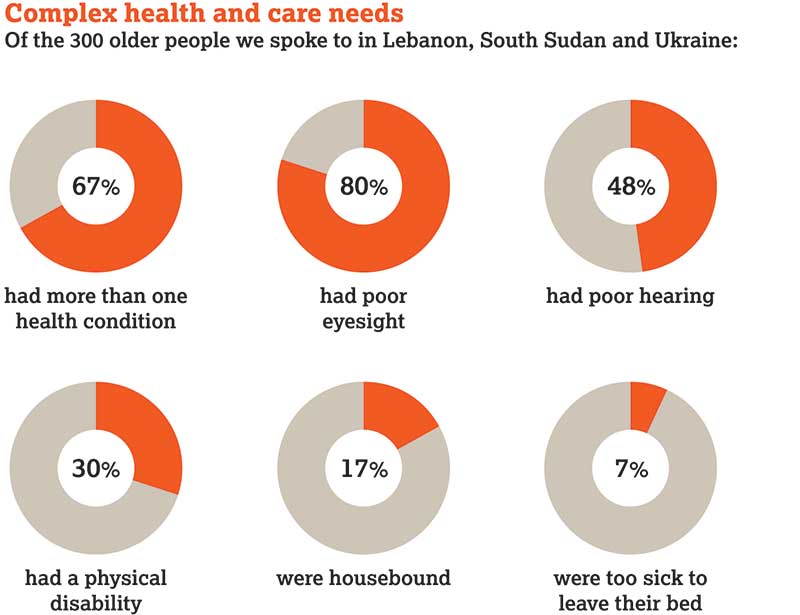
Almost every one of the older refugees in HelpAge’s report Older voices in humanitarian crises said they had not been consulted about their needs, more than two thirds said they did not have enough information about the humanitarian assistance available to them, almost half said health services did not provide care for their age-related conditions and close to half said they felt anxious, hopeless or depressed most or all of the time.

Older people are disproportionately affected when disaster strikes. In Hurricane Katrina, 75 per cent of those who died were over 60, despite making up only 16 per cent of the population. Similarly in the Japanese tsunami, 56 per cent of the victims were 65 and over, despite making up 23 per cent of the population.

The survey conducted at the end of last year offered older people the space to share their hopes and concerns and talk about the challenges affecting their daily lives in humanitarian crises.

Warda, 85-years-old, Syria.

Warda, 85 years old, Syria.

Warda, an 85-year-old Syrian woman living in Lebanon, spoke for many when she said: “I know that humanitarian aid might be helping, but only for those who can go and get it. How am I supposed to get this help if I can’t even leave the room?” 

Oboch, 86 years old, South Sudan.

Oboch, 86 years old, South Sudan.

Oboch, 86, living in a refugee camp in Juba, South Sudan said, “We’re always being filmed and photographed but nothing changes. We know humanitarian organisations can’t leave people to die of hunger but why is there not enough food?”

A shocking 95 per cent of older people spoken to in Lebanon, 93 per cent in South Sudan and 66 per cent in Ukraine said that no-one other than HelpAge had consulted them about their needs despite the fact that many older people are reliant on humanitarian assistance.

Anatoly, 89, (pictured at top of page) said humanitarian aid was a lifeline during the blockade in eastern Ukraine. “For nine months, we had no pension and many people simply starved. I don’t know how we would have survived without aid.”

Salwa, 60 years old, Lebanon.

Salwa, 60 years old, Lebanon.

Salwa, 60, a Syrian refugee living in Lebanon said, “We’re only able to live because of the blue card the UNHCR gave us. We used to receive US$120 per month but now we get US$40. It’s barely enough and medical help is impossible.

“My husband manages to provide us with US$4-5 a day from selling the cans he collects and my oldest daughter cleans stairs in the neighbourhood to make some money.” 

An 86-year-old Syrian refugee in Lebanon said: “I’m afraid all the time. I don’t sleep well. I get headaches and tremors. I used to be able to do everything by myself. I could clean the house, take out the garbage, do some repair work and now I can’t. Now I’m older it feels as though I’m a burden and people aren’t interested in me.”

An 85–year-old woman in South Sudan put it clearly: “No-one talks to me to find out what I’m going through.”

The survey findings contribute to a growing body of evidence illustrating the failure of the humanitarian system to protect older people’s rights or meet their needs, demonstrating the limited progress the humanitarian system has made to address the neglect of older people and other vulnerable groups.

Kuonyo, 79 years old, South Sudan.

Kuonyo, 79 years old, South Sudan.

The first-ever World Humanitarian Summit this May provides a chance to lay the foundations for a reformed humanitarian system – one that puts people at the centre of disaster response, builds resilience to crises and really does ensure that we ”leave no-one behind”.

Leading humanitarian agencies have drawn up an Inclusion Charter www.inclusioncharter.org setting out the pressing commitments needed to ensure humanitarian assistance reaches the most vulnerable people.

“To address the neglect faced by older people in conflicts and disasters, their opinions must be heard and changes made in the humanitarian system,” said Frances Stevenson, head of the humanitarian team at HelpAge International.

The commitments outlined in the Charter provide governments, donors and humanitarians agencies with a set of five key actions to ensure humanitarian assistance reaches the most vulnerable people in emergencies.

To sign up to the Charter go to: www.inclusioncharter.org

Health-and-care-needs-pie-jpg


17 Goals For Global Action

[et_pb_section admin_label=”section”][et_pb_row admin_label=”row”][et_pb_column type=”4_4″][et_pb_text admin_label=”Text” background_layout=”light” text_orientation=”left” use_border_color=”off” border_color=”#ffffff” border_style=”solid”]

Countries have started adopting a new sustainable development agenda, put forward by the United Nations, with targets to be achieved over the next 15 years. These 17 new Sustainable Development Goals build on the eight Millennium Development Goals that ended in 2015. While there have been some improvements, there are still many challenges. How can your business introduce measures to help these goals along? Real Leaders can help reposition and rebrand your company for the new sustainability economy. Attract a new breed of consumer and client and join the growing number of business owners who have put social impact at the center of their business – to generate greater profits. Contact Julie@old.real-leaders.com 

[/et_pb_text][/et_pb_column][/et_pb_row][et_pb_row admin_label=”Row”][et_pb_column type=”1_3″][et_pb_blurb admin_label=”Blurb” url_new_window=”off” use_icon=”off” icon_color=”#dd3333″ use_circle=”off” circle_color=”#dd3333″ use_circle_border=”off” circle_border_color=”#dd3333″ image=”https://old.real-leaders.com/wp-content/uploads/2016/04/Sustainable-Dev-1.jpg” icon_placement=”top” animation=”off” background_layout=”light” text_orientation=”left” use_icon_font_size=”off” use_border_color=”off” border_color=”#ffffff” border_style=”solid”]

836 million people still live in extreme poverty and one in five people in developing regions live on less than $1.25 per day.

[/et_pb_blurb][/et_pb_column][et_pb_column type=”1_3″][et_pb_blurb admin_label=”Blurb” url_new_window=”off” use_icon=”off” icon_color=”#dd3333″ use_circle=”off” circle_color=”#dd3333″ use_circle_border=”off” circle_border_color=”#dd3333″ image=”https://old.real-leaders.com/wp-content/uploads/2016/04/Sustainable-Dev-2.jpg” icon_placement=”top” animation=”off” background_layout=”light” text_orientation=”left” use_icon_font_size=”off” use_border_color=”off” border_color=”#ffffff” border_style=”solid”]

One in nine people in the world today (795 million) are undernourished. 66 million primary school children attend classes hungry.

[/et_pb_blurb][/et_pb_column][et_pb_column type=”1_3″][et_pb_blurb admin_label=”Blurb” url_new_window=”off” use_icon=”off” icon_color=”#dd3333″ use_circle=”off” circle_color=”#dd3333″ use_circle_border=”off” circle_border_color=”#dd3333″ image=”https://old.real-leaders.com/wp-content/uploads/2016/04/Sustainable-Dev-3.jpg” icon_placement=”top” animation=”off” background_layout=”light” text_orientation=”left” use_icon_font_size=”off” use_border_color=”off” border_color=”#ffffff” border_style=”solid”]

17,000 fewer children die each day than in 1990, but more than six million children still die before their fifth birthday each year.

[/et_pb_blurb][/et_pb_column][/et_pb_row][et_pb_row admin_label=”Row”][et_pb_column type=”1_3″][et_pb_blurb admin_label=”Blurb” url_new_window=”off” use_icon=”off” icon_color=”#dd3333″ use_circle=”off” circle_color=”#dd3333″ use_circle_border=”off” circle_border_color=”#dd3333″ image=”https://old.real-leaders.com/wp-content/uploads/2016/04/Sustainable-Dev-4.jpg” icon_placement=”top” animation=”off” background_layout=”light” text_orientation=”left” use_icon_font_size=”off” use_border_color=”off” border_color=”#ffffff” border_style=”solid”]

An estimated 50% of out-of-school children of primary school age live in conflict-affected areas.

[/et_pb_blurb][/et_pb_column][et_pb_column type=”1_3″][et_pb_blurb admin_label=”Blurb” url_new_window=”off” use_icon=”off” icon_color=”#dd3333″ use_circle=”off” circle_color=”#dd3333″ use_circle_border=”off” circle_border_color=”#dd3333″ image=”https://old.real-leaders.com/wp-content/uploads/2016/04/Sustainable-Dev-5.jpg” icon_placement=”top” animation=”off” background_layout=”light” text_orientation=”left” use_icon_font_size=”off” use_border_color=”off” border_color=”#ffffff” border_style=”solid”]

In 46 countries, women now hold more than 30% of seats in national parliament.

[/et_pb_blurb][/et_pb_column][et_pb_column type=”1_3″][et_pb_blurb admin_label=”Blurb” url_new_window=”off” use_icon=”off” icon_color=”#dd3333″ use_circle=”off” circle_color=”#dd3333″ use_circle_border=”off” circle_border_color=”#dd3333″ image=”https://old.real-leaders.com/wp-content/uploads/2016/04/Sustainable-Dev-6.jpg” icon_placement=”top” animation=”off” background_layout=”light” text_orientation=”left” use_icon_font_size=”off” use_border_color=”off” border_color=”#ffffff” border_style=”solid”]

At least 1.8 billion people globally use a source of drinking water that is fecally contaminated.

[/et_pb_blurb][/et_pb_column][/et_pb_row][et_pb_row admin_label=”Row”][et_pb_column type=”1_3″][et_pb_blurb admin_label=”Blurb” url_new_window=”off” use_icon=”off” icon_color=”#dd3333″ use_circle=”off” circle_color=”#dd3333″ use_circle_border=”off” circle_border_color=”#dd3333″ image=”https://old.real-leaders.com/wp-content/uploads/2016/04/Sustainable-Dev-7.jpg” icon_placement=”top” animation=”off” background_layout=”light” text_orientation=”left” use_icon_font_size=”off” use_border_color=”off” border_color=”#ffffff” border_style=”solid”]

One in five people lack access to electricity. Three billion people rely on wood, coal, charcoal or animal waste for cooking and heating.

[/et_pb_blurb][/et_pb_column][et_pb_column type=”1_3″][et_pb_blurb admin_label=”Blurb” url_new_window=”off” use_icon=”off” icon_color=”#dd3333″ use_circle=”off” circle_color=”#dd3333″ use_circle_border=”off” circle_border_color=”#dd3333″ image=”https://old.real-leaders.com/wp-content/uploads/2016/04/Sustainable-Dev-8.jpg” icon_placement=”top” animation=”off” background_layout=”light” text_orientation=”left” use_icon_font_size=”off” use_border_color=”off” border_color=”#ffffff” border_style=”solid”]

470 million jobs are needed globally for new entrants to the labour market between 2016 and 2030.

[/et_pb_blurb][/et_pb_column][et_pb_column type=”1_3″][et_pb_blurb admin_label=”Blurb” url_new_window=”off” use_icon=”off” icon_color=”#dd3333″ use_circle=”off” circle_color=”#dd3333″ use_circle_border=”off” circle_border_color=”#dd3333″ image=”https://old.real-leaders.com/wp-content/uploads/2016/04/Sustainable-Dev-9.jpg” icon_placement=”top” animation=”off” background_layout=”light” text_orientation=”left” use_icon_font_size=”off” use_border_color=”off” border_color=”#ffffff” border_style=”solid”]

In developing countries, 30% of agricultural production undergoes industrial processing. In high-income countries, 98% is processed.

[/et_pb_blurb][/et_pb_column][/et_pb_row][et_pb_row admin_label=”Row”][et_pb_column type=”1_3″][et_pb_blurb admin_label=”Blurb” url_new_window=”off” use_icon=”off” icon_color=”#dd3333″ use_circle=”off” circle_color=”#dd3333″ use_circle_border=”off” circle_border_color=”#dd3333″ image=”https://old.real-leaders.com/wp-content/uploads/2016/04/Sustainable-Dev-10.jpg” icon_placement=”top” animation=”off” background_layout=”light” text_orientation=”left” use_icon_font_size=”off” use_border_color=”off” border_color=”#ffffff” border_style=”solid”]

Income inequality increased by 11% in developing countries between 1990 and 2010. This is a threat to long-term social and economic development.

[/et_pb_blurb][/et_pb_column][et_pb_column type=”1_3″][et_pb_blurb admin_label=”Blurb” url_new_window=”off” use_icon=”off” icon_color=”#dd3333″ use_circle=”off” circle_color=”#dd3333″ use_circle_border=”off” circle_border_color=”#dd3333″ image=”https://old.real-leaders.com/wp-content/uploads/2016/04/Sustainable-Dev-11.jpg” icon_placement=”top” animation=”off” background_layout=”light” text_orientation=”left” use_icon_font_size=”off” use_border_color=”off” border_color=”#ffffff” border_style=”solid”]

Half of humanity – 3.5 billion people – live in cities today. By 2030, 60% of the world’s population will live in urban areas.

[/et_pb_blurb][/et_pb_column][et_pb_column type=”1_3″][et_pb_blurb admin_label=”Blurb” url_new_window=”off” use_icon=”off” icon_color=”#dd3333″ use_circle=”off” circle_color=”#dd3333″ use_circle_border=”off” circle_border_color=”#dd3333″ image=”https://old.real-leaders.com/wp-content/uploads/2016/04/Sustainable-Dev-12.jpg” icon_placement=”top” animation=”off” background_layout=”light” text_orientation=”left” use_icon_font_size=”off” use_border_color=”off” border_color=”#ffffff” border_style=”solid”]

Each year, an estimated one-third of all food produced – worth around $1 trillion – ends up rotting in bins.

[/et_pb_blurb][/et_pb_column][/et_pb_row][et_pb_row admin_label=”Row”][et_pb_column type=”1_3″][et_pb_blurb admin_label=”Blurb” url_new_window=”off” use_icon=”off” icon_color=”#dd3333″ use_circle=”off” circle_color=”#dd3333″ use_circle_border=”off” circle_border_color=”#dd3333″ image=”https://old.real-leaders.com/wp-content/uploads/2016/04/Sustainable-Dev-13.jpg” icon_placement=”top” animation=”off” background_layout=”light” text_orientation=”left” use_icon_font_size=”off” use_border_color=”off” border_color=”#ffffff” border_style=”solid”]

From 1880 to 2012, the average global temperature increased by 0.85°C. For each one degree of temperature increase, grain yields decline by about 5%.

[/et_pb_blurb][/et_pb_column][et_pb_column type=”1_3″][et_pb_blurb admin_label=”Blurb” url_new_window=”off” use_icon=”off” icon_color=”#dd3333″ use_circle=”off” circle_color=”#dd3333″ use_circle_border=”off” circle_border_color=”#dd3333″ image=”https://old.real-leaders.com/wp-content/uploads/2016/04/Sustainable-Dev-14.jpg” icon_placement=”top” animation=”off” background_layout=”light” text_orientation=”left” use_icon_font_size=”off” use_border_color=”off” border_color=”#ffffff” border_style=”solid”]

Over three billion people depend on marine and coastal biodiversity for their livelihoods. Oceans contain 97% of the Earth’s water

[/et_pb_blurb][/et_pb_column][et_pb_column type=”1_3″][et_pb_blurb admin_label=”Blurb” url_new_window=”off” use_icon=”off” icon_color=”#dd3333″ use_circle=”off” circle_color=”#dd3333″ use_circle_border=”off” circle_border_color=”#dd3333″ image=”https://old.real-leaders.com/wp-content/uploads/2016/04/Sustainable-Dev-15.jpg” icon_placement=”top” animation=”off” background_layout=”light” text_orientation=”left” use_icon_font_size=”off” use_border_color=”off” border_color=”#ffffff” border_style=”solid”]

23 hectares of arable land per minute are lost to drought and desertification – 12 million hectares per year – where 20 million tons of grain could have been grown.

[/et_pb_blurb][/et_pb_column][/et_pb_row][et_pb_row admin_label=”Row”][et_pb_column type=”1_3″][et_pb_blurb admin_label=”Blurb” url_new_window=”off” use_icon=”off” icon_color=”#dd3333″ use_circle=”off” circle_color=”#dd3333″ use_circle_border=”off” circle_border_color=”#dd3333″ image=”https://old.real-leaders.com/wp-content/uploads/2016/04/Sustainable-Dev-16.jpg” icon_placement=”top” animation=”off” background_layout=”light” text_orientation=”left” use_icon_font_size=”off” use_border_color=”off” border_color=”#ffffff” border_style=”solid”]

Among the institutions most affected by corruption are the judiciary and police. Corruption, bribery, theft and tax evasion cost US$1.26 trillion for developing countries per year.

[/et_pb_blurb][/et_pb_column][et_pb_column type=”1_3″][et_pb_blurb admin_label=”Blurb” url_new_window=”off” use_icon=”off” icon_color=”#dd3333″ use_circle=”off” circle_color=”#dd3333″ use_circle_border=”off” circle_border_color=”#dd3333″ image=”https://old.real-leaders.com/wp-content/uploads/2016/04/Sustainable-Dev-17.jpg” icon_placement=”top” animation=”off” background_layout=”light” text_orientation=”left” use_icon_font_size=”off” use_border_color=”off” border_color=”#ffffff” border_style=”solid”]

Over four billion people do not use the Internet, and 90% of them are from the developing world. 30% of the world’s youth are digital natives, active online for at least five years.

[/et_pb_blurb][/et_pb_column][et_pb_column type=”1_3″][/et_pb_column][/et_pb_row][/et_pb_section]

Remembering Hiroshima: The Threat of Nuclear War and Climate Change

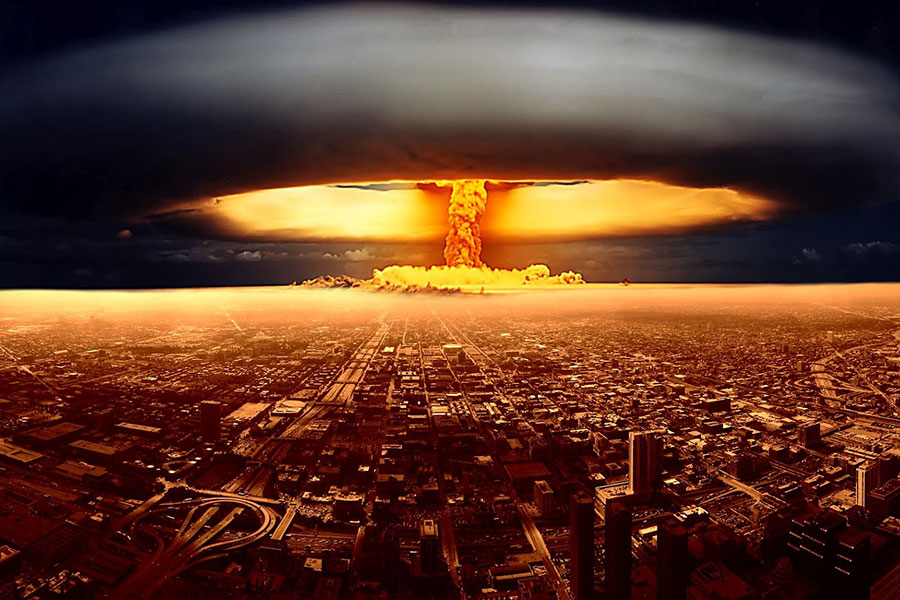
Seventy years ago, at 8:15am Japanese time, the world changed forever. The Enola Gay dropped the first nuclear weapon used in war on the citizens of Hiroshima. From that moment on the face of the world and the future of humanity became unrecognizable.

According to experts even though the Cold War is long over, in the short term, nuclear weapons remain the single greatest threat to humanity and the future of our planet.

My father, Ted Turner, has made nuclear abolition one of his top priorities as it is a looming threat for all of us and our life support system. He created history with his decision to donate one billion dollars to the UN Foundation, in an effort to support the work of the United Nations and prevent nuclear war. It was only a couple short months before the bombing of Hiroshima and Nagasaki that the United Nations convened for the first time in San Francisco on April, 25, 1945 to prevent a third World War. My father also went on to co-found the Nuclear Threat Initiative with former U.S. Senator Sam Nunn, which is funded by many prominent, international philanthropists. Among them is Warren Buffett, who shares my father’s belief that nuclear weapons are a top threat for humanity and is one of NTI’s leading funders.

ted-turner

We have never needed the United Nations and leaders like my father and Warren Buffett more. The crisis in Ukraine, the rise of militants, and the increase in countries obtaining nuclear weapons has pushed the threat level to an all time high.

In an article published on CNN recently, Dr. Ira Helfand, co-president of International Physicians for the Prevention of Nuclear War and past president of IPPNW’s U.S. affiliate, Physicians for Social Responsibility, wrote “In the last few years, climate scientists and physicians have shown that a large-scale nuclear war between the United States and Russia would drop temperatures across the planet to levels not seen since the last Ice Age, killing much of the human race in the process. Meanwhile, the crisis in Ukraine has raised the danger of such war to the highest level since the end of the Cold War. Indeed, even a very limited nuclear war, such as one that might take place between India and Pakistan and that saw the use of less than 0.5% of the world’s nuclear arsenals, would cause enough cooling to disrupt agriculture across the globe and spark a global famine that could kill as many as 2 billion people.”

Nuclear threat and climate change are the single biggest threats to civilization and are intrinsically linked. Beyond the physical destruction of the bomb and the resulting radiation, the impact of even a small nuclear disturbance could be profound, leading to serious issues of food scarcity.

On December 8, 2014 the Vatican released Pope Francis’ statement on nuclear weapons called   Nuclear Disarmament: Time for Abolition, which argues that the possession of nuclear weapons, even for purposes of deterrence, is immoral. The very existence of nuclear weapons prevents global peace from becoming a reality. A couple months later on May 24, 2015 Pope Francis released his encyclical Laudato Si’, On Care for Our Common Home, detailing the immediate threat of climate change. It is heartening that some of the world’s leaders are taking these issues seriously, but it is not enough. The world’s population is looking at us, as one of nine countries that possess nuclear weapons, to be responsible and lead the call for disarmament. It would be wonderful if our citizens could join up with some of the smartest, most successful people in the world to start voicing their wishes to get rid of nuclear weapons once and for all.

For more from Laura Seydel please follow her on Facebook


0