3 Lessons I’ve Learned From Turning My Passion into a Business — at Age 7

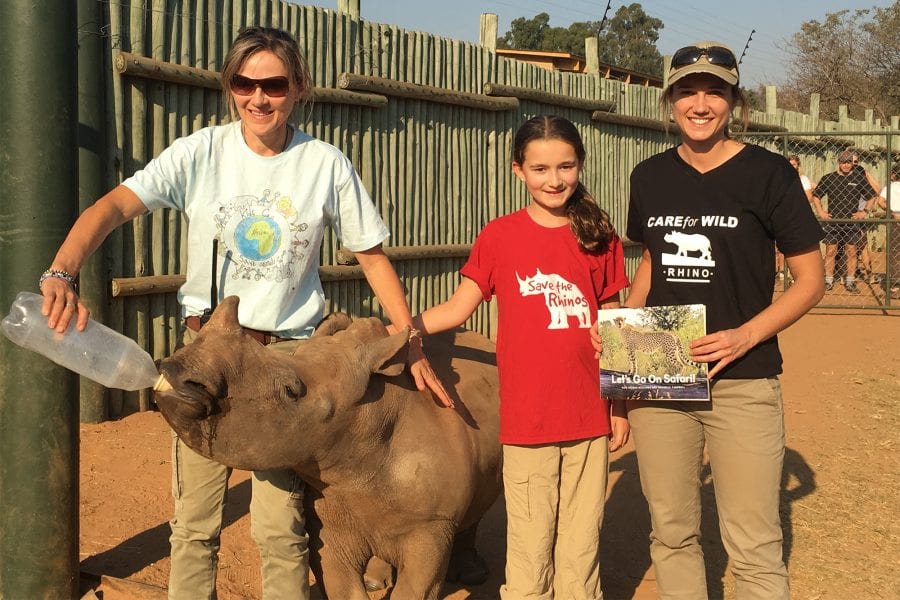
I traveled to Africa at the age of seven and learned that humans were harming animals. This was when I knew I had to figure out a way to turn the love that kids have for animals into advocacy.

I’m 11 years old now, and the fact that our planet could look very different by the time I turn 21 instills a sense of urgency in me. 

Taking my passion and ideas beyond a concept and turning them into an actual business venture required a team effort and help from giants in the fields of conservation and technology.

My journey to become an advocate and to teach others how to advocate for causes they believe in brings me tremendous joy. I learned so many lessons on what it takes to start a business. 

1. Finding a Call to Action

After adopting my motto, “Advocacy has no age limit,” I worked tirelessly to identify ways to teach kids about the benefits of helping animals and ways in which they could get involved. The first thing I did was co-author the book, Let’s Go On Safari to teach children and teens how to take action to save wildlife and wild spaces. In the process of writing this book, I worked with my team to get my voice out there and have as many people read the book as possible. I found my call to action when Dr. Jane Goodall read an early draft of my book and allowed me to write about her Roots & Shoots Youth Service Program. Dr. Jane gave me the idea to turn my book, Let’s Go On Safari, into a call to action. 

You can have all the passion you want, but if you do not find a way to make it actionable for others, you will likely struggle in creating an organization or service that can help with the problem you are trying to solve.

2. It Takes a Village, So Network!

After finalizing the book, I needed a way to elevate my platform to expand my reach and grow my audience. Had I solely taken on the task of trying to grow my platform by myself, chances are I would have reached a few 100 kids versus thousands if I partnered with the right people. 

Thanks to the help of Dr. Goodall, I was able to amplify the reach of my book through networking. I secured formal endorsements from Angela Sheldrick (The Sheldrick Wildlife Trust), Brian Sheth (Global Wildlife Conservation), and Emmy-award-winning actor and animal advocate Debra Messing. As a result, Penguin Random House in South Africa signed with me, and I became the youngest author in history to launch a global title that is 100% philanthropic. To date, my book has raised over $15,000. The money is split equally between my three conservation partners: the Jane Goodall Institute, The Sheldrick Wildlife Trust, and Global Wildlife Conservation (now named Re:wild).

Raising money for organizations that are saving animals is very important. I wanted to come up with a way to prove that kids could be philanthropic. When the wildfires swept through Australia in early 2020, over 1 billion animals died. Koalas were pushed to the brink of extinction. I came up with a campaign idea called “Quarters For Koalas.” I pitched it to my school. Soon, everyone was learning about koalas and how climate change affects bushfires. Kindergarten was in charge of advertising for the campaign, and older kids helped with school-wide messaging. We named a CFO, a female, of course, to count all of the quarters. In just one week, my school, Trinity Episcopal School, raised over $5,000 – all from quarters! My Marketing Director at Kids Can Save Animals, Magdalene, launched a campaign at St. Gabriel’s Catholic School, and they raised over $2,000 from quarters in the same week. I can tell you this  quarters add up quickly. My website has all of the tools needed for advocates to launch a similar campaign. 

3. Be Ready to Pivot Even if it Means Asking for Help

When the pandemic hit, tourism to Africa came to a complete stop. I knew I had to figure out alternative ways for kids to make an impact with conservation and sustainability issues. While participating in a televised covid-relief fundraiser called Endangered Rangers, I realized I had to pivot towards technology. 

Sarah Maston, the founder of Project 15 from Microsoft, came on the show and talked about the technologies keeping animals safe from poachers. Sarah showed a video, and at the end, she and her team asked people to join them. I knew at that exact moment that I had to ask her if kids could join too. I messaged her on Instagram. I told her about my organization and an idea to make a club inspired by Project 15 from Microsoft. I told Sarah that I wanted to connect young learners with scientists, advocates, and technology experts. Sarah took my call!

Club 15 launched in early May with a global lineup of conservation and technology guests, including Dr. Eric Dinerstein of RESOLVE, Fatema Hamdani of Kraus Hamdani Aerospace, Petronel Nieuwoudt of Care for Wild Rhino Sanctuary, and Dr. Liz Tyson of Born Free USA.

Microsoft contributed a learning lab for Club 15 so kids and teens can get their hands on technologies like computer vision and AI, all being used in the field to protect wildlife and wild spaces.

Just as in life, business plans and directions are bound to change. You have to be ready to embrace change and roll with the punches. I learned to never be afraid to ask questions or ask an expert for help. Most importantly, I learned never to let my age limit my potential. Just like with advocacy, my entrepreneurial journey has taught me that business has no age limit.

Addressing Climate Change is One of the New Roles of a CEO

Over 96% of scientists agree that climate change is caused by humans. It poses critical business risks such as breaks in the supply chain, customers who expect CEOs to address climate change, and activists in the investor circle advocating for CEO pay to be tied to climate change initiates.

However, the response among CEOs seem to be mixed. A Deloitte survey claims that about 80% of the surveyed CEOs indicate great concern with climate change issues. On the other hand, a PwC report suggests that climate change is still being played down by CEOs. In this survey, climate change came in at ninth on the list with only 30% of CEOs citing extreme concern and nearly 27% of CEOs report being ‘not concerned at all’ or ‘not very concerned about climate change and 60% of them have not factored climate change into their strategic risk management.

Individuals and organizations ignore the threat of climate change for a multitude of reasons. Still, they are all quintessentially human reasons – deep ideological polarization and identification with a particular community or group, sense of political identity rather than logic, our cognitive biases, distance and time horizons, and a sense of hopelessness with the doom message. How do we address this issue within organization and leadership development? While policy recommendations are crucial for incentivizing good behaviors and punishing bad behaviors, we also need to look at new solutions to shift people’s mental models and mindsets.

What can organizations do?

Help your employees and leaders develop ecologically embedded identities and a connection with the place. Positive meanings attributed to places keep people healthy. Ecological embeddedness is the connection to the physical land and development of beliefs with respect to ecological respect, caretaking, reciprocity, and being physically located and feeling connected in a place. Usually, this emotional connection to the land is preceded by one’s connection to the land through ties of family, history, ancestry, and shared memories. In a diasporic world, where many people do not end up where we were raised, it becomes important to cultivate it to wherever we are located now and to the planet at large.

Here are a few ideas on how this can be done.

  • When you onboard people in a new location (or otherwise), provide them an opportunity to experience and learn about the socio-ecological history and the original inhabitants of the place.
  • Begin meetings with a walk. Nature is us, and so a downtown city walk is as effective at cultivating a relationship with the place as going on a retreat to a distant location to experience ‘nature.’
  • Many BIPOC organizations routinely begin their meetings with land acknowledgment. Like how using pronouns for self-introductions is slowly becoming the norm, land acknowledgment can also become normalized. For example, my primary home is in the land of Lenape (New York City), but I am writing this piece from the land of the Kumeyaay (San Diego).

Examine your business’s impact on both local (place-based) and planetary well-being. Pay attention to the margins the crucibles of bold innovation. Most of the important and interesting climate change advocacy and change works happens in places where most organizational leaders do not think to look and led by people who do not look like or come from most traditional organizational leaders. Lift up their work and invite them to teach about building effective organizations and strategies to promote living in harmony with nature. Here are a few examples of such innovative leaders and organizations.

  • Tarun Bharat Sangh is a pioneering environmental movement organization that has built environmentally resilient rural communities for several decades.
  • Shreya Ramachandran is a dear friend’s daughter who as a high school freshman founded the Grey Water Project in 2016 that has served over 50000 people.
  • Elizabeth Yeampierre of Climate Justice Alliance is another role model who co-leads this grassroots movement working at the cusp of environmental and racial justice in the US towards a regenerative future.
  • Selco Solar is a proven social venture in the sustainability space that has broken myths such as poor people cannot afford sustainable technologies, or poor people cannot maintain sustainable technologies. Through their business strategy that is not tied to endless growth and profits, this organization has demonstrated an impressive 20% annual growth with modest profits while scaling their impact to touch a million poor people.

As Elizabeth Yeampierre of Climate Justice Alliance also exhorts, don’t supplant these leaders from the margins when you adopt their ideas but lift them up to positions of leadership. Share power.

Help people develop cognitive flexibility, which is an individual’s cognizance of alternatives, willingness to adapt to the situation, and their belief in their own ability to be flexible. As a fellow CEO of a tech startup, I truly appreciate the pressure to focus on financial viability and growth. But we do not have to take a reductive approach of having to choose between financial sustainability and ESG dimensions. We can be bold enough to say No to limitless growth or profits that is predicated upon damaging our planetary health The ability to switch between different thoughts, and different actions is a key leadership capacity is a key capacity. Several validated scales are available for cognitive complexity, and you might want to check this one out. Complexity thinking is also crucial for long-term orientation that is essential in climate work.

Help people develop an agentic and empowered approach to dealing with climate change issues through positive framing. One of the under-estimated approaches to sustainability orientation is mindfulness and contemplative practice. While developing a sense of urgency around climate change is crucial, neurobiology says that people’s brains shut down under threat and fear. My graduate school professor, Dr. Richard Boyatzis, has done a lot of important work on this front. Research shows that Positive Emotional Attractors (PEA) engagement allows people to be open, triggers the parasympathetic nervous system, default mode network, and positive emotions allowing us to feel safe, be open to others, possibilities, and learning and growth. On the other hand, Negative Emotional Attractors (NEA) engages the sympathetic stress system, increases self-consciousness, engages a defensive posture leading to shutting down our openness to change, reducing our flexibility, and increasing our cognitive rigidity.

Air Pollution Costs Each American $2,500 a Year in Healthcare – Study

Air pollution also contributes to 107,000 premature deaths per year in the United States, a report finds.

Air pollution from fossil fuels costs each American an average of $2,500 a year in extra medical bills, researchers have said, as climate change hurts both health and finances.

The national pricetag was put at more than $820 billion a year, with air pollution contributing to an estimated 107,000 premature deaths annually, said the Natural Resources Defense Council (NRDC), an environmental advocacy group,

“The science is clear: the dangerous effects of climate change – and their profound costs to our health and our pocketbooks – will worsen each year we fail to curb the pollution,” said the NRDC’s Vijay Limaye.

The report used data from several dozen scientific papers to tally the overall cost of a changing climate on U.S. health.

Heat waves, which can trigger strokes and exacerbate cardiovascular problems, cost the country $263 million a year, the report found, with wildfire smoke costing Americans $16 billion annually.

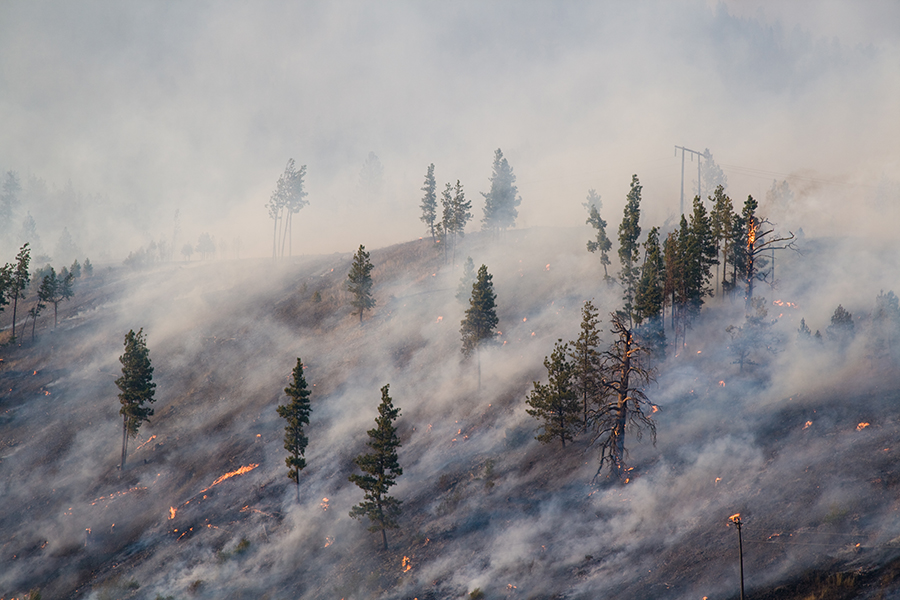
A wildfire in Los Angeles this week has fueled fears that California’s wildfire season is becoming longer. Five of the six largest wildfires in the state’s history occurred last year.

Lyme disease and West Nile virus, more common with rising temperatures, contribute to roughly $2 billion in health costs annually, the report found.

On Tuesday, scientists estimated that Hurricane Sandy, which pummeled New York City and much of the East Coast in 2012, caused $63 billion in property damage, making it one of the most costly storms in U.S. history.

At a virtual conference, Limaye said he hoped to convince lawmakers that climate change was more expensive than inaction.

“We’ve written this report to help policymakers, health professionals…to recognize the profound suffering and expensive health costs that can be avoided by cutting climate pollution,” Limaye said.

“A strong response to climate change is urgent and action is needed now.”

By Matthew Lavietes @mattlavietes; editing by Lyndsay Griffiths

Air Pollution Costs Each American $2,500 a Year in Healthcare – Study

Air pollution also contributes to 107,000 premature deaths per year in the United States, a report finds.

Air pollution from fossil fuels costs each American an average of $2,500 a year in extra medical bills, researchers have said, as climate change hurts both health and finances.

The national pricetag was put at more than $820 billion a year, with air pollution contributing to an estimated 107,000 premature deaths annually, said the Natural Resources Defense Council (NRDC), an environmental advocacy group,

“The science is clear: the dangerous effects of climate change – and their profound costs to our health and our pocketbooks – will worsen each year we fail to curb the pollution,” said the NRDC’s Vijay Limaye.

The report used data from several dozen scientific papers to tally the overall cost of a changing climate on U.S. health.

Heat waves, which can trigger strokes and exacerbate cardiovascular problems, cost the country $263 million a year, the report found, with wildfire smoke costing Americans $16 billion annually.

A wildfire in Los Angeles this week has fueled fears that California’s wildfire season is becoming longer. Five of the six largest wildfires in the state’s history occurred last year.

Lyme disease and West Nile virus, more common with rising temperatures, contribute to roughly $2 billion in health costs annually, the report found.

On Tuesday, scientists estimated that Hurricane Sandy, which pummeled New York City and much of the East Coast in 2012, caused $63 billion in property damage, making it one of the most costly storms in U.S. history.

At a virtual conference, Limaye said he hoped to convince lawmakers that climate change was more expensive than inaction.

“We’ve written this report to help policymakers, health professionals…to recognize the profound suffering and expensive health costs that can be avoided by cutting climate pollution,” Limaye said.

“A strong response to climate change is urgent and action is needed now.”

By Matthew Lavietes @mattlavietes; editing by Lyndsay Griffiths

Can Lessons From Star Trek Help Us Save Spaceship Earth?

In the early 1970s, my sisters and I would come home from school each afternoon and park ourselves in front of a cathode-ray tube, each with a gigantic bowl of ice cream. One of our favorite shows was Star Trek. For an hour each weekday, we imagined ourselves on the NCC-1701 cruising the galaxy with Mr. Spock and Captain Kirk — going where no one had gone before.

Star Trek made an indelible imprint on me in those formative years. I would frequently dream of being part of the crew, doing good deeds, and learning something new in every port of call. The morality plays that were the subtext of each episode were not obvious to me at the time but have stuck with me as an adult.

As a child, our home planet seemed impossibly big — a green space to play in and explore with unlimited resources and potential. My love of Star Trek gave me a frame within which to fit the universe — which was even more mysterious and incomprehensibly vast. Through those afternoon adventures, I didn’t feel so small and alone.

As an adult with “extensive experience,” it is clear that our world isn’t as large and limitless as I once imagined. Education and a global perspective have taught me that we all live on a spaceship that circles a large ball of plasma in an unremarkable corner of an unremarkable galaxy.

To illustrate this, close your eyes and join me on a journey to view Earth from one million miles away. We hit the positioning thrusters and turn the spacecraft back toward home. Through the window, we see a large, rocky ball with white clouds and vast blue oceans, as well as a smaller rocky ball in a tidally locked orbit circling it (our moon).

If you consider this stunning picture, you quickly realize that everyone and everything we’ve ever known, touched, and felt is back on that rocky blue ball. At one million miles, our home still looks rather large and hospitable. Now imagine our spacecraft is ten million miles away. At this vantage point, Earth is, as Carl Sagan famously called it, a “pale blue dot” in a sea of pitch black. Here, it becomes obvious how small, insignificant, and fragile our place is in the universe.

I’m speaking like I’ve actually made this trip. Through my imaginary voyages on the starship Enterprise and with the help of NASA’s real-life fleet of spacecraft (Voyager 1, Voyager 2, Galileo, etc.), I can paint an awesome image in my mind. From this viewpoint, our resources are clearly limited, and we’re all on Spaceship Earth together.

Just seventy years ago, talking like this would have been edgy science fiction. Seven hundred years ago, I would have been burned at the stake. Seven thousand years ago, we were looking up to the sky with wonder and awe, just trying to make sense of it all. Today, with the right resources and technology, such a voyage is in the realm of feasibility. A mere five thousand years since the beginning of recorded history, we all have access to the knowledge necessary to dream realistically of our twenty-million-mile round trip.

So, what’s the point?

I’m thrilled you’re still with me on our hypothetical journey. After we stick the landing back on Earth, we exit our spacecraft with a newfound sense of urgency to take care of our planet and each other, to use all the tools at our disposal to build a better world. The challenge appears so daunting and insurmountable that we ask ourselves where we should start. We’re committed to making Spaceship Earth a better place for current and future generations, but how?

The answer is education.

Throughout history, education has played the role of the “great leveler.” Social structures and societies have been transformed through education. We have clear examples that when education and creativity are stifled or reserved for the elite, our progress as a species is limited. When educational access is limited, entire swaths of the population are left behind or suppressed by those allowed into the club; our perspectives become more localized and narrow. We fight among ourselves for the betterment of a particular town, village, region, or country but almost always to the detriment of the planet as a whole.

With a limited education and a local-only view, it’s easy to convince ourselves that resources are unlimited and that we should borrow from future generations to maximize current consumption and comfort in the world that immediately surrounds us.

Then again, my ice cream bowl is empty, the “red shirts” in the Star Trek landing party have all met an untimely demise, Kirk and Spock are back safely on the ship, and Gilligan’s Island is on next.

This article was adapted from the book Balancing Act: Teach Coach Mentor Inspire.

U.S. Small Towns Take On Energy-Guzzling Bitcoin Miners

Environmentalists warn carbon emissions from power-intensive bitcoin mining could harm efforts to limit global warming.

In mid-April, nearly 150 local environmentalists marched to the gates of Greenidge Generation, a bitcoin mining facility in upstate New York, in a last-ditch effort to block its expansion.

Their objection: that the creation of the cryptocurrency, an energy-intensive process in which computers compete to solve mathematical puzzles, may harm efforts to limit global warming.

Three days later, the planning board in the small town of Torrey voted 4-1 to allow Greenidge Generation to more than double the number of machines it has mining bitcoin.

“Everything we want to do to fight climate change could be erased,” Yvonne Taylor, one of the march’s leaders, told the Thomson Reuters Foundation.

The showdown in New York – where a private equity firm turned a moth-balled coal power plant into one fired by natural gas that provides electricity to mine bitcoin onsite – is part of an increasingly fraught debate over the social benefits and environmental costs of the world’s most popular cryptocurrency.

Bitcoin consumes almost the same amount of electricity annually as Egypt did in 2019, according to an index compiled by the University of Cambridge.

On Wednesday, Elon Musk, the chief executive of Tesla Inc, said his company would no longer accept bitcoin for car purchases, citing environmental concerns, in a swift reversal of its position on the currency after criticism by some investors.

“As the price rises, bitcoin could consume as much energy as all the data centers in the world combined,” said Alex de Vries, founder of research platform Digiconomist, which publishes estimates of bitcoin’s climate impact.

“At least other data centers are providing us with cloud computing used by billions every day. Hardly anybody is using bitcoin,” he added.

Greenidge spokesman Michael McKeon said in an emailed statement the firm was doing all it could to address environmental concerns.

“Natural gas is a bridge to the future and it’s an important part of the energy mix for New York State,” he said. “We are committed to further investing in ways to enhance our green profile and are looking at various options right now.”

The Good News About Climate Change: There’s Still Hope

With warming environments, landscapes are shifting. But life is still abundant.

When ecologist Craig Allen looks across the brown, grassy shrublands on the east flank of the Jemez Mountains in northern New Mexico, he feels no satisfaction that he was right.

Right that the world was warming. Right that warming would spur such large, severe fires that the forest he studied for decades would disappear. And right that increasing temperatures here—and across the globe—have made it too warm for conifer trees to regain even a toehold across many of their old landscapes.

“It’s hard not to feel…well, it has felt like failure there,” says Allen, who recently retired from the U.S. Geological Survey, and has monitored landscape change in these mountains since he was a Ph.D. student in the late 1970s. “We saw the vulnerability. But we could not act substantively enough, quickly enough to deal with it.”

Across the Earth, people are watching the impacts of climate change play out across their homelands, the places they depend upon and love. From rising seas lapping at the shores and inundating coasts to the highest mountains, where snowpacks are dwindling and glaciers receding, we are reeling from how these changes affect every aspect of our lives. In all of this, there is room for grief. These changes are dangerous and disorienting. But building new relationships with the landscapes around us will allow us to survive—and give the other species we still share this planet with the chance to thrive.

Aside from a few exceptional years, the past two decades have been marked by warmer temperatures and a severe drought that have sucked up snowpacks and streamflows around the U.S. Southwest and northern Mexico. Hand in hand with other human interventions, like fire suppression, drought and warming have made forests increasingly vulnerable to die-offs, insect outbreaks and larger, more severe wildfires.

In the late 1980s, when NASA climate scientist James Hansen testified before the U.S. Congress about the link between human-emitted greenhouse gases and warming, Allen says the impacts of climate change still seemed theoretical. But by the early 1990s, temperatures were clearly rising, and in 1998, he co-authored a paper with David Breshears, looking at how climate change would produce large shifts in forests at “unprecedented rates.”

All too quickly, Allen and his colleagues watched this play out worldwide, including in the Jemez. In 1996, the Dome Fire burned over 16,000 acres of the Santa Fe National Forest and the adjoining Bandelier National Monument. Then in 2000, a prescribed fire ran out of control in the area; the Cerro Grande Fire burned 48,000 acres. Part of the problem in the Jemez, as with millions of acres of forests across the western U.S., lies with a century of fire suppression. By not letting even naturally-ignited fires burn, we allowed our forests to become overly dense and stuffed full of downed and dead trees that now more easily fuel bigger and more catastrophic wildfires.

But warming changed the whole dynamic.

“As soon as we started to go through multiyear drying, society no longer had the capacity to suppress those fires,” Allen says. “If you get an ignition on the wrong day, just forget it.”

That’s what happened when the 2011 Las Conchas Fire ripped through the Jemez with astonishing heat and unprecedented speed. No one had seen a fire like Las Conchas. And modelers still can’t get a grip on it.

Las Conchas ignited around 1 p.m. on a sunny Sunday in late June, shooting a huge, pyrocumulus cloud above the mountains. By 3 a.m., it had burned more than 40,000 acres. In all, it devastated 156,000 acres.

In some places where the highest severity fires burned, aspen groves are replacing the scorched and root-ripped pines that have tipped and fallen. Some scattered pines do survive, but most are skeletons, creaking and whistling in the whipping wind. And within about 30,000 acres of the burn scar, there’s simply no forest. A decade after the fire, it’s dusty. And even in mid-April, the sun feels punishing. No longer a cool, moist conifer forest, this land is now wide open to the Rio Grande Valley below—and covered with tufts of deer-munched grasses, low prickly bushes and a smattering of scrubby Gambel oak.

“It hurts to see the loss of the forest in the Jemez,” says Allen. “There are always winners and losers in change, right?” he says, repeating the mantra ecologists adhere to, that change is inherent in all ecosystems at all time scales.

“There’s life up there,” Allen says. “Abundant life. But it’s not forest life.”

More than 20 years ago, aquatic ecologist Michael Bogan interned with the California Department of Fish and Wildlife in Bishop, east of the Sierra Nevadas. It was 1998, a wet year for California, and the idea of studying water in the desert lodged in his brain.

Desert streams are approachable subjects, especially compared to, say, a massive and murky system like the Mississippi River, says Bogan, now a professor at the University of Arizona’s School of Natural Resources and the Environment: “The entire world is shrunk down to the size of your living room. To understand why something is going on, why the species are there, or why they’re disappearing — you have a pretty good chance of figuring it out.”

For Bogan, studying those small systems over the past two decades has meant witnessing their decline.

When he first started visiting one of his research sites in southern Arizona, French Joe Canyon, he’d hear birds singing from the cottonwood trees as he approached. “It was so full of life all the time. I knew the invertebrates there, I knew the species,” he says. Now, it’s hard to go back. “Most of the time now, it’s dry. The birds are definitely not there, the aquatic species are not there,” he says. “And even when it does have water, it’s not the same species that were there beforehand.”Santa Cruz River, Arizona. (Photo: Elnogalense)

That sense of loss is magnified from knowing change isn’t just occurring at that one living room-sized place he happened to be paying attention to—but knowing that springs and streams are drying up across the entire region, the entire world.

“The scientist in me knows that stasis is a myth, right?” he says. Ten thousand years ago, for example, southern Arizona hosted a forest of Joshua trees, not saguaros. “There was almost no similarity to what you see today. So, the scientist in me knows that nothing is ever stable and things are always changing,” he says. But he still feels grief at the rapid changes we’re experiencing.

To seek out joy, he also studies ecosystems that might persist or that can respond when we make different decisions.

The Santa Cruz River in Tucson, Arizona, had been dry—thanks to rampant development and reckless groundwater pumping—for roughly a century. A few years ago, the local water utility agreed to use its treated effluent to rewater the river.

Some fish species had gone extinct, like an endemic species of pupfish. But they’ve now reintroduced the Gila topminnow and are watching greenery come back, as well as myriad species of dragonflies. Coyotes and bobcats make appearances on game cameras set up along the Santa Cruz.

“That’s a situation where it’s treated wastewater, but where you do it right, where you are purposeful about how you do it, now it does support a lot of species, it shows resilience. It was dry for 100 years, but species are back,” he says. “The birds found it again, the ducks came back, down to the snails, they came back.”

Bogan keeps coming back to the idea of resilience: “French Joe Canyon is not resilient; it’s never coming back unless we enter a new Ice Age period,” he says. “But species themselves, and some ecosystems, they can be resilient if we change our actions, if we change the way we manage our water or other resources.”

Of course, many people already know how to adapt to change: climatic changes, cultural disruptions and shifting relationships with landscapes over lifetimes and generations.

Pueblo people in the Southwest have been adapting to their landscapes since long before colonial times—and they hold within them a “genetic memory of how to have a healthy watershed,” says Julia Bernal. She works on water issues in New Mexico and is executive director of the Pueblo Action Alliance, an environmental and social justice group.

There are 19 pueblos in New Mexico. Each of these Native American tribes is different, and a distinct, sovereign nation. But they share some commonalities, including ancestry traced back to places like Chaco Canyon and Mesa Verde. Bernal is an enrolled tribal member of the Pueblo of Sandia and is also from the Pueblo of Taos and the Yuchi-Creek Nations of Oklahoma.

Since pre-colonial times, Pueblo people have been adapting to their changing climates—migrating due to an epic drought in the 1100s from Chaco Canyon, for example, to live along the Rio Grande.

Today, that river’s waters are damned, diverted and overallocated. The state’s largest river, the Rio Grande now regularly dries up each summer downstream of the city of Albuquerque. And in southern New Mexico, the river channel is dry for most of the year.

Bernal recalls a recent conversation with her dad, who told her about almost falling into the river because it overbanked so much. “That really resonated with me, because I’ve only seen it as a very narrow, channelized system because of the dam,” she says, referring to the Cochiti Dam, built upstream in the 1960s and ’70s by the U.S. Army Corps of Engineers. “I don’t think we’ll ever see the river look the same way that it did,” she says.

The alliance’s movement of reclaiming what was stolen, first by the Spanish and then by the U.S. government, involves the recognition and reclaiming of lands. And waters. “Everything that we do is … for everybody, for the health of the whole because we understand the watershed system as a whole,” she says, adding, “This isn’t about taking all of the water resources. It’s not about taking all the land and not leaving anything for anybody—that’s a capitalist and colonialist concept.”

Bernal challenges non-Indigenous people to think more deeply about what Indigenous-led movements are trying to do. And to recognize they will benefit the global majority, particularly in this climate-changed world. “Some people think ‘decolonizing’ means we go back centuries,” she says. What it really means is having choices—in terms of energy, for example—and learning how to meet the needs of the community by building an economy around particular values.

It’s sad to see changes on the landscape, she says—whether they’re due to development, oil and gas, even recreational infrastructure, or to warming and its impacts. “Unfortunately, we’re going to see more of that; it’s inevitable, and especially at this rate we’re going at right now,” she says.

Whether it’s Bernal’s father recalling the Rio Grande before Cochiti Dam, or Bogan, Allen and others monitoring ecosystems and telling the stories of changing landscapes through the data they collect, storytelling helps us remember the past, and find new ways of living with the future.

Today, when Allen goes out to the burn scars in the Jemez, he says he’s starting now to see it as “normal.” The conifer forest is gone, and it’s not coming back. And this isn’t just happening in the Southwest: Studies over the last decade show that by 2100, at least half of the Northern Hemisphere’s conifer forests will have died due to rising temperatures and the associated impacts.

“It’s a different world,” he says. “But I guess the gut punch of it wore off some time ago, and I’m now more engaged in appreciating and fostering what we have.”

This story originally appeared in Capital And Main and is republished here as part of Covering Climate Now, a global journalism collaboration strengthening coverage of the climate story, of which Real Leaders is a member.

David Attenborough: Our Planet, Our Business

How does this  95-year-old environmentalist stay cool while the planet is heating up, and why is his strategy of “explain, inspire and rationalize” (rather than tell) showing the business world where the real opportunities lie?

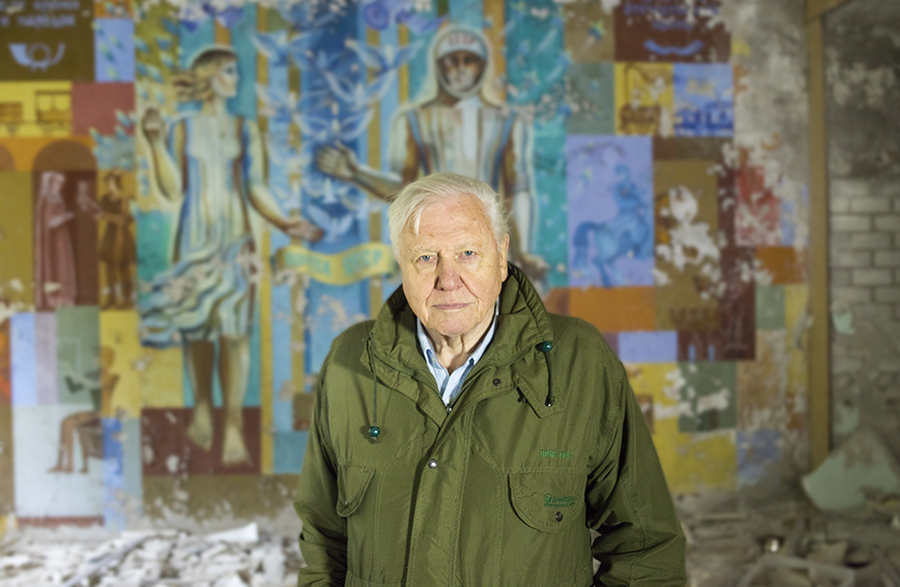
Over more than 90 years, and countless trips around the globe, David Attenborough has witnessed a severe decline in the living world over his lifetime. He has seen the rainforests retreating and the grasslands emptying and has searched ever harder for species hanging on in hidden corners of the world. He’s observed a downward trend that is set to cause a disaster far more profound and with more lasting impacts than the desolation of Chernobyl – a decline that will have a more limited impact on his life but will come to define the lives of all those who follow him.

At age 92, he hit the road again for a few grueling months to document the state of the natural world. Colin Butfield was the executive producer of David Attenborough: A Life On Our Planet, and worked closely with Attenborough at filming locations worldwide. The film was created by award-winning natural history filmmakers Silverback Films and global environmental organization WWF. Netflix came onboard as a distribution partner. With Attenborough’s classic British accent for the narration, WWF provided the scientific verification and evidence-based facts.

The film opens and closes with Attenborough visiting Chernobyl, a part of the world once made desolate from human error, but without us has now begun to rewild again. “Humanity has got this far by being the smartest species that has ever lived. But, to endure, we need more than intelligence; we need wisdom,” says Attenborough.

When the film was still under discussion three years ago, Attenborough turned to Butfield impatiently and said, “Don’t you think we ought to get on with this? I’m already 92, you know.” Butfield laughs recalling Attenborough’s immense energy when the shooting finally began. “I’m half his age, and it was sometimes tough keeping up with him.” 

Over nine decades Attenborough has visited every continent on the globe, and his honest, revealing, and urgent message is a powerful, firsthand account of humanity’s impact on nature and a message of hope for future generations. His decades of observing animals and nature have given him a profound insight into the challenges we face today.

“The COVID-19 pandemic has caused, and will continue to cause, immense suffering,” he says. “If there is hope that can come out of it, then that may arise from the whole world having experienced a shared threat and found a sense that we are all in it together. The same unique brains and communication skills that fueled the development of our civilizations now have access to technologies and institutions that allow all nations of the world to collaborate and cooperate should we choose to do so.”

To Attenborough, there should be no more excuses and hiding behind national identities or regional politics to avoid confronting what he views as an existential risk to humanity.

“The time for pure national interests has passed,” he explains. “If we are to tackle climate change, enable sustainable development, and restore biodiversity, then internationalism has to be our approach. In doing so, we must bring about greater equality between what nations take from the world and what they give back. The wealthier nations have taken a lot, and the time has now come to give.” …

Read the full story in the latest edition of Real Leaders magazine. Subscribe Here

What Is Environmental Racism? 10 Facts About How It Works

Lingering sunlight and suggestions of swelter are lifting spirits across the United States. For many, the spring air marks a transition out of the seasonal depression that comes with winter. For others, however, rising temperatures mean it’s time to find a cooling center.

These centers, which are used by cities like New York to provide air-conditioning for residents who don’t have it at home, are the end result of a decades-long fight against “environmental racism,” a term which refers to environmental injustice that occurs both in practice and policy. Factors like rising temperatures and a pandemic affect how comfortably people can live in their communities, and more often than not discomforts fall disproportionately on communities of color.

Young people have advocated for an intersectional approach to the climate crisis that addresses the realities of environmental racism. Here’s what to know about the unexpected effects of discriminatory environmental policies.

1. Living amid industry can impact mental health.

While it is acknowledged that living near landfills or toxic dump sites can disrupt physical health, there is less research available on how this impacts mental health. However, a 2007 study from Social Science Research found “sociodemographic, perceived exposure, objective exposure, and food consumption variables are significant predictors of physical health and psychological well-being,” and that there was “a significant relationship between physical health and psychological well-being,” specifically in low-income, Black communities in close proximity to a hazardous waste site. 

2005 study published in the Journal of Health and Social Behavior also found that perceived exposure can affect the mental well-being of communities of color. “Residential proximity to industrial activity is psychologically harmful because many individuals perceive industrial activity negatively, as a potential health threat or a sign of neighborhood disorder,” the authors wrote.

2. Areas with higher temperatures within cities are the same areas that were segregated decades ago.

Neighborhoods with higher temperatures are the same areas that were subject to the racist practice of redlining, in which banks and insurance companies systematically refused or limited loans, mortgages, or insurance to communities of color.

According to NPR, in a study of 108 urban areas nationwide, the formerly redlined neighborhoods in nearly every city studied were hotter than those not subjected to redlining. The temperature difference in some areas was nearly 13 degrees.

In fact, according to analysis by the Union of Concerned Scientists, “counties with large African American populations are exposed to extreme temperatures 2-3 more days per year than those counties with smaller African American populations.” Those same counties are projected to experience about 20 more extreme-heat days per year by around 2050, according to the analysis.

“[Formerly segregated communities] tend to have less green space — fewer trees along the street, less access to parks,” Gerald Torres, a professor at Yale Law School and the Yale School of the Environment, tells Teen Vogue. “Urban areas tend to be hotter, in general, just because there’s more concrete that stores heat. But where they store heat and they don’t have the mediating environmental amenities, the places just get hot.” 

This phenomenon explains the “urban heat island effect,” meaning areas are much hotter with fewer places to cool down. In 2019, Los Angeles hired the city’s first forest officer in an effort to increase the amount of shade in underserved areas by planting more trees. L.A. mayor Eric Garcetti has described shade as “an equity issue.”

3. Environmental racism is a leading cause of death in communities of color.

There are many factors that threaten the well-being of minority communities, such as discriminatory policing and housing availability, but environmental discrimination is actually one of the main causes of mortality for these residents.

“Air pollution and extreme heat are killing inner-city residents at a higher rate than almost all other causes,” Scientific American reported. “And as average temperatures continue to rise — contributing to what scientists call the ‘urban heat island effect’ — death and illness from the effects of climate change are expected to rise further.” 

4. It is cheaper for a corporation to pollute communities of color than white communities.

Research has shown that if you have a corporation who has violated environmental laws, the corporation is going to be fined. The fines tend to be lower in communities of color, especially Black communities and poor communities,” Dorceta Taylor, professor at the Yale School of the Environment and author of Toxic Communities: Environmental Racism, Industrial Pollution, and Residential Mobility, tells Teen Vogue. “Corporations, they’re not idiots — they can see this difference.” 

Lower fines lead to more pollution, which often decreases the land value of existing homes near a factory or landfill. As a result, more industry moves into the area, creating a vicious cycle. Left with little opportunity for mobility and sparse political clout, the remaining residents are subjected to continually worsening living conditions.

“One factor that might be playing into this is whether or not the communities are able to organize and mobilize to push for the cleanup that they should be getting,” Taylor says, “or even know when these [cleanup] cases are going to court.” 

5. Many environmental conservation organizations have racist founders or namesakes.

Some of the best-known environmental conservation groups have racist histories. For example, John Muir, known as the “father” of the national parks system and founder of the nation’s oldest conservation organization, the Sierra Club, used offensive slurs and called Indigenous people he encountered on a walk “dirty.” John James Audubon, namesake of the famous bird conservation group, was a slaveholder. Henry Field Osborn, a founder of the Save the Redwoods League, supported eugenics.

6. A lack of government and organizational diversity perpetuates the problem.

In a similar vein, many argue that a lack of diversity at climate conservation organizations and in government sectors affects whether or not an entity will rightfully put communities of color at the forefront of the conversation about climate change. 

Larger environmental, nongovernmental organizations (ENGOs) typically receive the most funding. These same organizations, across the board, are predominantly white.

“Where you have people from marginalized communities [in leadership], they’re going to cause you to ask questions you might not have considered,” Torres says. “You can think of it as, essentially, improving information flows so that decisions are better.” 

7. Environmental racism doesn’t affect only low-income communities.

“Even if you are a middle-class, highly educated Black person in this country, you’re more likely to still be living beside or close to communities with hazardous waste sites than if you are white, working-class with low educational attainment,” Taylor says. “So, however we slice it, there is a ratio that is more correlated with exposure to toxics and hazards with race than with the class.” 

In the notable 1978 court case Bean vs. Southwestern Waste ManagementCorp., a Black neighborhood of homeowners in Houston sued a waste management company, arguing that a permit for a new facility violated their constitutional rights. A judge ruled in favor of the waste management company. According to sociologist Robert Bullard, who collected data for the lawsuit and has since been dubbed “the father of environmental justice,” of the plaintiffs in the case, 85% of the people owned their homes and were considered middle-class.

8. Minority communities often live in affected areas before hazardous facilities are built.

study by University of Southern California sociology professor Manuel Pastor reviewed data for minority populations and move-ins before and after the arrival of toxic storage and disposal facilities in Los Angeles County from 1970 to 1990. Areas scheduled to receive waste factories were mostly minority communities; after the facilities arrived, there were no significant increases in the minority population. 

2003 United States Commission on Civil Rights report also concluded: “It appears, therefore, that minorities attract toxic storage and disposal facilities, but these facilities do not attract minorities.”

According to Bullard, in Houston during the time of the Bean vs. Southwestern case, all the city-owned landfills and 75% of the city-owned incinerators were in Black neighborhoods, even though they made up only 25% of the population during that period of time.

“There is a deliberate attempt to move into people of color communities. So that path of least resistance tends to run through people of color communities — if you look in the South, you’ll find Black communities, Latinx communities, Native American communities that were there before,” says Taylor. “That big, polluting factory came just before the waste dump was put beside their neighborhood.”

9. Environmental racism can also be expensive for people of color.

Energy and utility bills are a more subtle indicator of the ways that environmental policies can impact people unequally based on race. A paper from the University of California, Berkeley’s Energy Institute at Haasfound that, when controlling for year, income, household size, and city of residence, Black renters paid $273 more per year for energy than white renters between 2010 and 2017.

Additionally, an American Public Radio report found that residents in Detroit and other cities near the Great Lakes with large Black populations pay a lot more for their water than those in a city like Phoenix, which pumps its water from 300 miles aways.

“[Communities of color] get higher bills because their houses are not as weather-tight and therefore use more energy to heat a similar space [as their white counterparts],” says Torres. “To reduce [energy] bills to marginalized communities, you would put in new weather stripping around the doors or double-glaze windows — things that are really low-tech. But [without these measures], the course of a year [can] generate enormous costs because of the loss of energy.” 

10. United States policies aren’t just a United States issue.

Discriminatory environmental policies within the U.S. extend far beyond the borders of our country. According to reporting from Mother Jones, in Ipoh, a city in Western Malaysia, only half of the waste found at a dump site appeared to have originated in the country. The other half came from a wide variety of other countries, including the U.S. Much of the overseas waste was comprised of items collected for “recycling.”

Other countries, such as Indonesia, Vietnam, India, Thailand, and Taiwan, are subjected to similar waste dumping. Without a coordinated effort to combat dumping in the Global South, marginalized communities overseas are disproportionately affected by the polluting practices of the United States and other countries.

Ivana Ramirez is a student at Yale University and a writer for the Yale Politic. She is an intern at the United Nations Foundation where she contributes to digital storytelling and data visualization. This story originally appeared in TeenVogue and is republished here as part of Covering Climate Now, a global journalism collaboration strengthening coverage of the climate story, of which Real Leaders is a partner.

Sustainability is Everyone’s Business

In 1968, then Stanford professor Paul Ehrlich and his wife, Anne, published The Population Bomb. The book sounded the alarm about the growing population of humans around the globe and the impact rising population numbers would have on our planet.

The book predicted mass starvation in the 1970s, a subsequent breakdown of society, and the degradation of the natural world. Paul and Anne Ehrlich offered a singular prescription – to save the planet and humanity people should stop having children.

Although The Population Bomb galvanized activists and policy makers, the widespread famine that was predicted never materialized and Ehrlich’s claims have largely been debunked. In my view Ehrlich was only partly wrong, a growing population does indeed stress the natural world. The typical middle school study of food webs and habitats makes this quite clear. However, the idea that there is a single solution to creating a sustainable world was and is still erroneous. The climate movement has since been plagued by one-hit-wonder solutions for government and large industries. 

We are in a critical phase of a climate crisis that threatens the future of civilization and the survival of the human species. As is the case with most big problems, there are multiple solutions. As impact business leaders, even if we don’t lead traditionally “green” businesses, we all have an important role to play. Sustainability is everybody’s business.

But it’s easy to understand why many business leaders are just waking up to this idea. Instead of helping us to think of the earth as a system with interconnected organs of which humans and human run business are one part, climate communicators have tried to simplify climate response into ONE BIG ACTION that everyone should focus on. But in fact, there is a kaleidoscope of climate solutions that intersect with each other and the way we all do business. And to better understand those intersections, we all need to communicate more effectively about the complex problem and the both expected and unexpected solutions.

According to Project Drawdown’s research, reducing food waste (10.3-18.8 gigatons of carbon dioxide emissions avoided) and educating girls (as much as 85.4 gigatons of carbon dioxide emissions avoided), are just as impactful as driving electric vehicles 11.9-15.7 gigatons of carbon dioxide emissions avoided). The choice to use smart thermostats can have 50% of the impact created by restoring tropical forests. And it is increasingly clear that these choices aren’t just good for the planet. Sustainable business is good for the bottom line, with Drawdown estimating the potential for the business sector to save trillions of dollars.

An incredibly exciting finding is that equity and sustainability are mutually reinforcing. Making sure that girls and women have full access to education and can obtain healthcare that allows them to plan the size and timing of their families can have an outsized impact on our collective future. Project Drawdown estimates that related reductions in carbon dioxide emissions could reach 85.4 gigatons. And what’s more, investments in health and education for girls and women compound over time. It is a gift that keeps on giving.  As impact business leaders we know that often it’s not what we do, but how we do it. Building a sustainable business will benefit the planet and our pockets, but can also have enormously positive impacts on the lives of people. At PCI Media we’re proud to partner with organizations like UNEP to bring greater visibility to programs like Switch Africa Green that support eco entrepreneurism.

Our Livable Planet portfolio is dedicated to educating and inspiring audiences about how they can develop a  sustainable solution set that makes sense for them, their communities, and businesses.

With every seemingly small decision we make from meal plans, to office maintenance, to employee health and education funds, we have the power to create a more sustainable and equitable world.