Unlocking the Wealth of Gold — by Keeping it in the Ground

Can blockchain help save the environment? Phil Rickard thinks so.

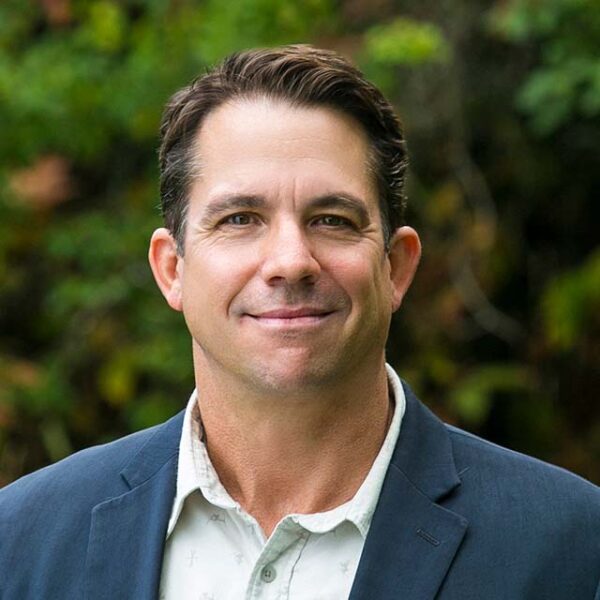
Rickard is the founder and CEO of Nature’s Vault, a Canadian company that has developed a blockchain-based investment platform to accelerate the funding of impact investments to combat climate change and ecosystem damage. 

The firm’s initial focus is on deploying a “Legacy Token” to tackle the environmental impacts of gold mining. But Rickard believes that the same technology and vision can be a solution for other natural resources projects to mitigate climate change, water issues, and other environmental challenges.

The Legacy Token launched last quarter will monetize the preservation of in-ground gold deposits at a mine in the Thunder Bay area of Ontario, Canada. The token finances the preservation of gold in the ground, thus avoiding the environmental impact of physical mining. Rickard says it is the world’s “first zero-carbon gold preservation linked investment.”

Keeping gold in the ground represents a unique and needed opportunity for the industry. 

“The simple reality is that 50 percent of gold mined — all with negative environmental impact—is collecting dust in bank vaults. Leaving it in the ground is nature’s vault,” says Rickard. “It’s time for the industry to evolve, and blockchain technology enables us to hasten that evolution by monetizing the store of value of gold without destroying the environment.”

A Personal Evolution

The genesis of Nature’s Vault reflects a personal evolution for Rickard. A philosophy-major-turned-entrepreneur born in Calgary, Alberta, Rickard spent his formative years in Indonesia and has also lived in Boston and Singapore. 

Rickard credits his eclectic career in Fintech, artificial intelligence (AI), and traditional hard rock mining for giving him a unique perspective on how to integrate blockchain and tokenization into natural resources. But it was a conversation with his teenage daughter that, in part, spurred the launch of Nature’s Vault. 

“I was investing in coal mining at the time, and my daughter said to me, ‘Can I tell my friends you’re a banker? It’s a bit embarrassing that you’re in the coal mining industry,'” he recalls. “I laughed it off at the time, but when your children are uncomfortable with your career, it makes you rethink your priorities.”

From there, Rickard visited the Lihir open-pit gold mine in Papua New Guinea — one of the largest in the world and a remarkable feat of engineering — but also a significant scar on the earth. “Seeing that made me think: Is there a way to realize the value in minerals like gold without digging them up?”    

Pistol Lake Mine, Ariel.

Here’s how the Nature’s Vault blockchain-based platform aims to tokenize the planet’s natural resources and unlock the value of gold assets at the Pistol Lake mine in Canada.

  • Nature’s Vault acquired the rights to an estimated 150,000 ounces of gold in the Pistol Lake mine. The mineral resource estimate was produced by an independent 43-101 Technical Report, the standard geological disclosure rule in Canada. Nature’s Vault has created “Legacy Tokens” representing an allocation of these unmined gold deposits. Each token equals 0.01 grams of gold.
  • Nature’s Vault will only tokenize up to 80% of the gold, ensuring that it never allocates more gold than is present in its deposits.
  • The initial Legacy Token offering to investors will launch in Q3 on a Tier 1 digital asset exchange and has already kicked off an oversubscribed private sale round.  
  • With a goal to achieve a net-zero future, Nature’s Vault is also exploring ways for token holders to earn carbon credits from avoided mining.

A Golden Climate Opportunity

The global mining industry is ripe for the disruption that Nature’s Vault suggests. According to McKinsey, mining is currently responsible for 4% to 7% of greenhouse gas (GHG) emissions. In addition, S&P Global estimates that mining one ounce of gold causes the emission of up to 800kg of greenhouse gases. While the industry is actively working to adapt to lower emissions, it’s also racing to scale up the production of clean-energy metals essential to the transition to a low-carbon future. Caught between these somewhat conflicting priorities, miners must rapidly find new ways to reduce their overall carbon footprint.     

Tokenizing ESG

Looking to the future, Rickard sees multiple scenarios for the Nature’s Vault platform. With a recent seed funding round, the firm’s focus is firmly on executing the Legacy Tokens. On the horizon, he believes tokens could be leveraged to enable ESG investors to buy and invest in a range of projects to address environmental and social equity challenges — from reforestation projects in Indonesia to carbon offsets earned from avoiding gold mining. 

“We are bringing our breakthrough approach to tokenizing ESG projects to help mitigate climate change in a transparent manner via distributed ledger technology and a platform that can be replicated and scaled up for future growth.”

Unlocking the Wealth of Gold — by Keeping it in the Ground

Can blockchain help save the environment? Phil Rickard thinks so.

Rickard is the founder and CEO of Nature’s Vault, a Canadian company that has developed a blockchain-based investment platform to accelerate the funding of impact investments to combat climate change and ecosystem damage. 

The firm’s initial focus is on deploying a “Legacy Token” to tackle the environmental impacts of gold mining. But Rickard believes that the same technology and vision can be a solution for other natural resources projects to mitigate climate change, water issues, and other environmental challenges.

The Legacy Token launched last quarter will monetize the preservation of in-ground gold deposits at a mine in the Thunder Bay area of Ontario, Canada. The token finances the preservation of gold in the ground, thus avoiding the environmental impact of physical mining. Rickard says it is the world’s “first zero-carbon gold preservation linked investment.”

Keeping gold in the ground represents a unique and needed opportunity for the industry. 

“The simple reality is that 50 percent of gold mined — all with negative environmental impact—is collecting dust in bank vaults. Leaving it in the ground is nature’s vault,” says Rickard. “It’s time for the industry to evolve, and blockchain technology enables us to hasten that evolution by monetizing the store of value of gold without destroying the environment.”

A Personal Evolution

The genesis of Nature’s Vault reflects a personal evolution for Rickard. A philosophy-major-turned-entrepreneur born in Calgary, Alberta, Rickard spent his formative years in Indonesia and has also lived in Boston and Singapore. 

Rickard credits his eclectic career in Fintech, artificial intelligence (AI), and traditional hard rock mining for giving him a unique perspective on how to integrate blockchain and tokenization into natural resources. But it was a conversation with his teenage daughter that, in part, spurred the launch of Nature’s Vault. 

“I was investing in coal mining at the time, and my daughter said to me, ‘Can I tell my friends you’re a banker? It’s a bit embarrassing that you’re in the coal mining industry,'” he recalls. “I laughed it off at the time, but when your children are uncomfortable with your career, it makes you rethink your priorities.”

From there, Rickard visited the Lihir open-pit gold mine in Papua New Guinea — one of the largest in the world and a remarkable feat of engineering — but also a significant scar on the earth. “Seeing that made me think: Is there a way to realize the value in minerals like gold without digging them up?”    

Pistol Lake Mine, Ariel.

Here’s how the Nature’s Vault blockchain-based platform aims to tokenize the planet’s natural resources and unlock the value of gold assets at the Pistol Lake mine in Canada.

  • Nature’s Vault acquired the rights to an estimated 150,000 ounces of gold in the Pistol Lake mine. The mineral resource estimate was produced by an independent 43-101 Technical Report, the standard geological disclosure rule in Canada. Nature’s Vault has created “Legacy Tokens” representing an allocation of these unmined gold deposits. Each token equals 0.01 grams of gold.
  • Nature’s Vault will only tokenize up to 80% of the gold, ensuring that it never allocates more gold than is present in its deposits.
  • The initial Legacy Token offering to investors will launch in Q3 on a Tier 1 digital asset exchange and has already kicked off an oversubscribed private sale round.  
  • With a goal to achieve a net-zero future, Nature’s Vault is also exploring ways for token holders to earn carbon credits from avoided mining.

A Golden Climate Opportunity

The global mining industry is ripe for the disruption that Nature’s Vault suggests. According to McKinsey, mining is currently responsible for 4% to 7% of greenhouse gas (GHG) emissions. In addition, S&P Global estimates that mining one ounce of gold causes the emission of up to 800kg of greenhouse gases. While the industry is actively working to adapt to lower emissions, it’s also racing to scale up the production of clean-energy metals essential to the transition to a low-carbon future. Caught between these somewhat conflicting priorities, miners must rapidly find new ways to reduce their overall carbon footprint.     

Tokenizing ESG

Looking to the future, Rickard sees multiple scenarios for the Nature’s Vault platform. With a recent seed funding round, the firm’s focus is firmly on executing the Legacy Tokens. On the horizon, he believes tokens could be leveraged to enable ESG investors to buy and invest in a range of projects to address environmental and social equity challenges — from reforestation projects in Indonesia to carbon offsets earned from avoiding gold mining. 

“We are bringing our breakthrough approach to tokenizing ESG projects to help mitigate climate change in a transparent manner via distributed ledger technology and a platform that can be replicated and scaled up for future growth.”

Now Read This: Stop Doomscrolling and Save the Planet

Seven new environmental books offer practical advice, lessons from successful conservation projects and inspiration in troubled times.

These are the times that try our souls — and our Facebook feeds.

So if you’re tired of the horrors unfolding hour after hour on social media and TV news, stop doomscrolling and point your eyes somewhere more useful: seven new environmental books that offer vital lessons on saving the planet and the creatures that live here.

Some of these books — all of which have come out since the beginning of the year — provide practical advice for people working in specific conservation areas. Others offer experience that we can put to good use in multiple avenues. All offer inspiration at a time when that’s all too fleeting — and important to hold on to. John R. Platt, editor of The Revelator — a news and ideas initiative of the Center for Biological Diversity — shares his top picks.

The Intersectional Environmentalist: How to Dismantle Systems of Oppression to Protect People + Planet

by Leah Thomas

The Revelator’s take: If you’ve ever heard the term “intersectional environmentalism,” you have Thomas to thank. The writer-activist focuses on the relationship between social justice and the environment, and she has a lot to say and learn from in this vital new book.

From the publisher: “From the activist who coined the term comes a primer on intersectional environmentalism for the next generation of activists looking to create meaningful, inclusive and sustainable change. Thomas shows how not only are Black, Indigenous and people of color unequally and unfairly impacted by environmental injustices, but she argues that the fight for the planet lies in tandem to the fight for civil rights; and in fact, that one cannot exist without the other. An essential read, this book addresses the most pressing issues that the people and our planet face, examines and dismantles privilege and looks to the future as the voice of a movement that will define a generation.”

Ever Green: Saving Big Forests to Save the Planet

by John W. Reid and Thomas E Lovejoy

The Revelator’s take: Lovejoy, a groundbreaking biologist, died late last year, but his ideas and influence live on. They’re also more important than ever, with deforestation increasing both in rate and climate impact.

From the publisher: “Megaforests serve an essential role in decarbonizing the atmosphere — the boreal alone holds 1.8 trillion metric tons of carbon in its deep soils and peat layers, 190 years’ worth of global emissions at 2019 levels — and saving them is the most immediate and affordable large-scale solution to our planet’s most formidable ongoing crisis. Reid and Lovejoy offer practical solutions to address the biggest challenges these forests face, from vastly expanding protected areas, to supporting Indigenous forest stewards to planning smarter road networks.”

Effective Conservation: Parks, Rewilding and Local Development

by Ignacio Jiménez

The Revelator’s take: This book speaks to a specific type of reader — the people directly working on conserving parks — but shouldn’t that be all of us, anyway?

From the publisher: “Jiménez offers a pragmatic approach to conservation that puts the focus on working with people — neighbors, governments, politicians, businesses, media — to ensure they have a long-term stake in protecting and restoring parks and wildlife. This highly readable manual, newly translated into English after successful Spanish and Portuguese editions, provides a groundbreaking and time-proven formula for successful conservation projects around the world that bring together parks, people and nature.”

Endangered Maize: Industrial Agriculture and the Crisis of Extinction

by Helen Anne Curry

The Revelator’s take: As we’ve written, agricultural crops face increasing pressure from climate change, pathogens and other threats, and the wild varieties of these common foods may provide the answer to avoiding mass hunger.

From the publisher: “Through the contours of efforts to preserve diversity in one of the world’s most important crops, Curry reveals how those who sought to protect native, traditional, and heritage crops forged their methods around the expectation that social, political, and economic transformations would eliminate diverse communities and cultures. In this fascinating study of how cultural narratives shape science, Curry argues for new understandings of endangerment and alternative strategies to protect and preserve crop diversity.”

Was It Worth It? A Wilderness Warrior’s Long Trail Home

by Doug Peacock

The Revelator’s take: I’ve been dipping in and out of this beautifully produced book ever since I received a review copy a few months ago. At 80 Peacock has a lot to say as he looks back in a way that helps us look forward.

From the publisher: “In a collection of gripping stories of adventure, bestselling author Doug Peacock — loner, iconoclast, environmentalist and contemporary of Edward Abbey — reflects on a life lived in the wild, considering the question many ask in their twilight years: Was It Worth It?”

Ecoart in Action: Activities, Case Studies and Provocations for Classrooms and Communities

edited by Amara Geffen, Ann Rosenthal, Chris Fremantle and Aviva Rahmani

The Revelator’s take: Here’s another way to stop doomscrolling by breaking out your pens, markers and paint (or graphics software if you’re digitally inclined) and getting ready to make a difference.

From the publisher: “How do we educate those who feel an urgency to address our environmental and social challenges? What ethical concerns do art-makers face who are committed to a deep green agenda? How can we refocus education to emphasize integrative thinking and inspire hope? What role might art play in actualizing environmental resilience? Compiled from 67 members of the Ecoart Network, a group of more than 200 internationally established practitioners, Ecoart in Action stands as a field guide that offers practical solutions to critical environmental challenges.”

The Bald Eagle: The Improbable Journey of America’s Bird

by Jack E. Davis

The Revelator’s take: The new book by the Pulitzer Prize-winning author of The Gulf: The Making of an American Sea feels especially timely, with several new bird extinctions announced last year and the need to counter those losses with tales of conservation success.

From the publisher: “Filled with spectacular stories of Founding Fathers, rapacious hunters, heroic bird rescuers, and the lives of bald eagles themselves — monogamous creatures, considered among the animal world’s finest parents — The Bald Eagle is a much-awaited cultural and natural history that demonstrates how this bird’s wondrous journey may provide inspiration today, as we grapple with environmental peril on a larger scale.”

John R. Platt is the editor of The Revelator. An award-winning environmental journalist, his work has appeared in Scientific American, Audubon, Motherboard, and numerous other magazines and publications.

This story originally appeared in The Revelator and is republished here as part of Covering Climate Now, a global journalism collaboration strengthening coverage of the climate story.

Now Read This: Stop Doomscrolling and Save the Planet

Seven new environmental books offer practical advice, lessons from successful conservation projects and inspiration in troubled times.

These are the times that try our souls — and our Facebook feeds.

So if you’re tired of the horrors unfolding hour after hour on social media and TV news, stop doomscrolling and point your eyes somewhere more useful: seven new environmental books that offer vital lessons on saving the planet and the creatures that live here.

Some of these books — all of which have come out since the beginning of the year — provide practical advice for people working in specific conservation areas. Others offer experience that we can put to good use in multiple avenues. All offer inspiration at a time when that’s all too fleeting — and important to hold on to. John R. Platt, editor of The Revelator — a news and ideas initiative of the Center for Biological Diversity — shares his top picks.

The Intersectional Environmentalist: How to Dismantle Systems of Oppression to Protect People + Planet

by Leah Thomas

The Revelator’s take: If you’ve ever heard the term “intersectional environmentalism,” you have Thomas to thank. The writer-activist focuses on the relationship between social justice and the environment, and she has a lot to say and learn from in this vital new book.

From the publisher: “From the activist who coined the term comes a primer on intersectional environmentalism for the next generation of activists looking to create meaningful, inclusive and sustainable change. Thomas shows how not only are Black, Indigenous and people of color unequally and unfairly impacted by environmental injustices, but she argues that the fight for the planet lies in tandem to the fight for civil rights; and in fact, that one cannot exist without the other. An essential read, this book addresses the most pressing issues that the people and our planet face, examines and dismantles privilege and looks to the future as the voice of a movement that will define a generation.”

Ever Green: Saving Big Forests to Save the Planet

by John W. Reid and Thomas E Lovejoy

The Revelator’s take: Lovejoy, a groundbreaking biologist, died late last year, but his ideas and influence live on. They’re also more important than ever, with deforestation increasing both in rate and climate impact.

From the publisher: “Megaforests serve an essential role in decarbonizing the atmosphere — the boreal alone holds 1.8 trillion metric tons of carbon in its deep soils and peat layers, 190 years’ worth of global emissions at 2019 levels — and saving them is the most immediate and affordable large-scale solution to our planet’s most formidable ongoing crisis. Reid and Lovejoy offer practical solutions to address the biggest challenges these forests face, from vastly expanding protected areas, to supporting Indigenous forest stewards to planning smarter road networks.”

Effective Conservation: Parks, Rewilding and Local Development

by Ignacio Jiménez

The Revelator’s take: This book speaks to a specific type of reader — the people directly working on conserving parks — but shouldn’t that be all of us, anyway?

From the publisher: “Jiménez offers a pragmatic approach to conservation that puts the focus on working with people — neighbors, governments, politicians, businesses, media — to ensure they have a long-term stake in protecting and restoring parks and wildlife. This highly readable manual, newly translated into English after successful Spanish and Portuguese editions, provides a groundbreaking and time-proven formula for successful conservation projects around the world that bring together parks, people and nature.”

Endangered Maize: Industrial Agriculture and the Crisis of Extinction

by Helen Anne Curry

The Revelator’s take: As we’ve written, agricultural crops face increasing pressure from climate change, pathogens and other threats, and the wild varieties of these common foods may provide the answer to avoiding mass hunger.

From the publisher: “Through the contours of efforts to preserve diversity in one of the world’s most important crops, Curry reveals how those who sought to protect native, traditional, and heritage crops forged their methods around the expectation that social, political, and economic transformations would eliminate diverse communities and cultures. In this fascinating study of how cultural narratives shape science, Curry argues for new understandings of endangerment and alternative strategies to protect and preserve crop diversity.”

Was It Worth It? A Wilderness Warrior’s Long Trail Home

by Doug Peacock

The Revelator’s take: I’ve been dipping in and out of this beautifully produced book ever since I received a review copy a few months ago. At 80 Peacock has a lot to say as he looks back in a way that helps us look forward.

From the publisher: “In a collection of gripping stories of adventure, bestselling author Doug Peacock — loner, iconoclast, environmentalist and contemporary of Edward Abbey — reflects on a life lived in the wild, considering the question many ask in their twilight years: Was It Worth It?”

Ecoart in Action: Activities, Case Studies and Provocations for Classrooms and Communities

edited by Amara Geffen, Ann Rosenthal, Chris Fremantle and Aviva Rahmani

The Revelator’s take: Here’s another way to stop doomscrolling by breaking out your pens, markers and paint (or graphics software if you’re digitally inclined) and getting ready to make a difference.

From the publisher: “How do we educate those who feel an urgency to address our environmental and social challenges? What ethical concerns do art-makers face who are committed to a deep green agenda? How can we refocus education to emphasize integrative thinking and inspire hope? What role might art play in actualizing environmental resilience? Compiled from 67 members of the Ecoart Network, a group of more than 200 internationally established practitioners, Ecoart in Action stands as a field guide that offers practical solutions to critical environmental challenges.”

The Bald Eagle: The Improbable Journey of America’s Bird

by Jack E. Davis

The Revelator’s take: The new book by the Pulitzer Prize-winning author of The Gulf: The Making of an American Sea feels especially timely, with several new bird extinctions announced last year and the need to counter those losses with tales of conservation success.

From the publisher: “Filled with spectacular stories of Founding Fathers, rapacious hunters, heroic bird rescuers, and the lives of bald eagles themselves — monogamous creatures, considered among the animal world’s finest parents — The Bald Eagle is a much-awaited cultural and natural history that demonstrates how this bird’s wondrous journey may provide inspiration today, as we grapple with environmental peril on a larger scale.”

John R. Platt is the editor of The Revelator. An award-winning environmental journalist, his work has appeared in Scientific American, Audubon, Motherboard, and numerous other magazines and publications.

This story originally appeared in The Revelator and is republished here as part of Covering Climate Now, a global journalism collaboration strengthening coverage of the climate story.

Meet the Recycling Start-up Hustling to Keep EV Batteries Out of Landfills

Just four years after launching a pilot plant in Canada, Li-Cycle has raised US$500 million from high profile investors to build out EV battery recycling plants and hubs across the U.S.

There’s no shortage of evidence that the electric vehicle market hit some kind of inflection point in the last year or so. But for Ajay Kochhar, the CEO and co-founder of Li-Cycle, the telling detail was buyer response to General Motors’ very first e-Silverado. The initial production run sold out in 12 minutes on the day it went up for sale in early January – and this is for a pickup that won’t roll off the assembly line until 2024. “Consumers,” as he says, “are speaking.”

And Kochhar is listening. Just four years after launching a small pilot plant in Kingston, Ontario, Li-Cycle has emerged as a formidable player in the nascent EV-battery recycling industry. Now publicly traded (LICY: NYSE), the company quickly raised more than US$500 million from investors. Last year, it secured another US$150 million in strategic infusions from global battery-maker LG Energy Solution, a partner in a newly announced $4.9-billion EV-battery plant in Windsor, Ontario, and Koch Strategic Platforms to build three large facilities in Alabama, Arizona and upstate New York. (While the oil and gas empire run by the Koch family has lobbied heavily against climate action, Koch companies have been investing in a number of renewable sector start-ups of late.)

With early-stage backing from Carnelian Energy Capital, a Houston venture fund, last spring the company also inked a deal with Ultium, the sprawling EV-battery joint venture established by GM and LG Chem, to set up a processing facility within a huge new Ohio battery-plant complex. The value of its planned capital investments is now almost half a billion dollars. As Li-Cycle has told investors, it expects to be recovering battery-grade materials from the equivalent of 60,000 tonnes of lithium-ion batteries annually by 2023.

Investors aren’t the only ones paying attention. In its national blueprint for lithium batteries for 2021 to 2030, the U.S. government puts a heavy strategic emphasis on recycling lithium-ion EV batteries, citing research showing that batteries that use recycled materials can cut costs by 40%, water consumption in the production process by 77% and energy use by 82%.

Not surprisingly, Li-Cycle’s sector is rapidly becoming a very crowded space, attracting China’s battery giant CATL (which currently claims to recycle enough lithium for 200,000 EVs per year), as well as huge investments by multinationals like Nissan, BASF and Tesla, via Redwood Materials, a battery-recycling company founded by a Tesla co-founder. All this activity is being driven in part by the relative scarcity of both lithium and cobalt, another ingredient of lithium-ion batteries, as well as the car industry’s efforts to achieve carbon reduction targets. Meeting those targets pivots on transitioning to electric power but also on contending with the pollution and emissions associated with mountains of used batteries. “It’s a make-or-break moment for the OEMs [original equipment manufacturers],” says Kochhar. “They’re looking at recycling as a way to reach net-zero and have a domestic supply source instead of going to the ends of the earth.”

Lithium, a metal found in abundance in Chile, Australia and China, has long been recognized for its ability to pack a lot of energy into relatively small volumes – hence its widespread use in consumer electronics. When Elon Musk began building EVs, he reckoned he could use lithium-ion batteries to power his vehicles, with modules consisting of stacks of the sorts of batteries used in laptops. Since the original Tesla debuted in 2006, demand for lithium has been climbing a steep growth curve. “In 2019 the installed capacity of lithium-ion batteries in the world exceeded 700 [gigawatt hours],” noted a 2021 life-cycle-analysis report prepared by Circular Energy Storage, a U.K. consultancy. “Of this 51% was installed in light or heavy duty electric vehicles. The same number in 2015 was 19% and in 2010 it was less than 1%.” Commodity prices for clean energy minerals have also soared, setting off something of a geopolitical sprint to secure access to both lithium and cobalt, the lion’s share of which is found in mines in the Republic of Congo. China has been busy snapping up global lithium resources (it recently acquired a Canadian lithium mine).

New mines often face heavy opposition (environmental protests in Serbia earlier this year over a proposed Rio Tinto lithium mine led to cancellation of the project). With surging EV demand over the next decade, the major challenge, according to a 2021 paper in Nature, will be scaling up the mining and production of lithium, which is itself an energy intensive process. And a bit further out, the accumulation of out-of-service batteries could begin to look like yet another geyser of post-consumer waste.

In short, the theoretical case for recycling seems obvious and important, not just for environmental reasons but to mitigate the geopolitical conflicts associated with lithium and cobalt mining.

However, EV battery recycling is a complicated proposition, for both electrochemical and logistical reasons. “This was a constant question for us,” says Kochhar, a chemical engineer who led a lithium study for a cleantech consulting arm of Hatch, the engineering giant, before co-founding Li-Cycle. “People would ask, what would happen with the used batteries?”

Unlike conventional car batteries, used EV batteries are not a uniform size, often weigh hundreds of kilograms and, in many cases, are integrated into a vehicle’s chassis or power train. While an EV battery may last more than a decade, the spent version still contains plenty of energy, enough to inflict serious harm on handlers. The first order of business for recyclers, therefore, is to drain the residual power, which can be done in various ways, including submerging them in an electrolyte, as Li-Cycle does. Recyclers then need to remove the plastic casing and reprocess the battery’s exposed innards, including the metals they’re made of: lithium, cobalt, nickel and other elements.

There are various techniques: exposing this material to extremely high heat or, as Li-Cycle does, “shredding” it into what’s known as a “black mass” – a confection of metallic crumbs that can be separated into its component metals and used as feedstock to make new batteries. But before any of this can occur, recycling firms need to secure supplies of used EV batteries. Although that process may be more straightforward than has been the case with consumer electronics, which often don’t end up in a recycling stream at all.

Li-Cycle’s secret sauce, which appears to have attracted investor attention, has more to do with the logistics of recycling heavy car batteries than with the electrochemical processes involved. The company opted to parse the whole process into what it calls a “spoke and hub” model. Some of the company’s plants – the “spokes” – will collect, drain and mechanically shred spent batteries, with the valuable residue – the black mass – shipped to a large centralized metallurgical facility in Rochester, New York, where that material is separated back into its component metals. These will then be sold back to the battery manufacturers or carmakers.

“This is reverse logistics,” Kochhar explains. “You don’t want to be transporting these massive batteries cross-country. It’s going to cost a lot, won’t be safe, and our customers like LG and GM – they won’t do that, right? That’s where our spoke comes in.”

This approach, he adds, has been designed to minimize emissions – a lot less shipping, no burning, and reclaiming the scrap generated by the shredding process. The company’s strategy is to construct 20 spoke plants and four hub facilities worldwide over the next three years. Li-Cycle also claims that its process generates 25 to 30% less life-cycle carbon than other battery recycling techniques.

For all of Li-Cycle’s bullishness about its future, there are still many tough questions hovering over this piece of the EV revolution. Among them: will recycling provide enough lithium and cobalt to meet future demand, or whether reprocessing aging EV batteries is better for the planet than other uses for the residual power in these objects, such as stationary energy-storage applications like back-up power instead of diesel generators.

Finally, we need to ask what role public policy plays in this story. The European Union will phase in tough recycling requirements by 2030. The Biden administration, as part of its lithium battery blueprint, calls for incentives to achieve 90% recycling for consumer electronics, EVs and grid storage batteries by 2030, as well as federal requirements to ensure that recycled metals are in fact used to make new ones. (Clean Energy Canada, a Simon Fraser University think tank, has called for a similar policy framework for an EV-battery supply chain that, to date, does not exist).

Kochhar, for his part, wants Li-Cycle to be driven by market forces and not subsidies. Which is fair enough, but it’s difficult to argue that public policy shouldn’t play some role in ensuring that these heavy, chemically volatile objects stay out of landfills – the final destination of countless numbers of smartphone batteries.

“How do you get those materials back from consumers?” he says. “That’s a big challenge.”

This story originally appeared in Corporate Knights and is republished here as part of Covering Climate Now, a global journalism collaboration strengthening coverage of the climate story.

Meet the Recycling Start-up Hustling to Keep EV Batteries Out of Landfills

Just four years after launching a pilot plant in Canada, Li-Cycle has raised US$500 million from high profile investors to build out EV battery recycling plants and hubs across the U.S.

There’s no shortage of evidence that the electric vehicle market hit some kind of inflection point in the last year or so. But for Ajay Kochhar, the CEO and co-founder of Li-Cycle, the telling detail was buyer response to General Motors’ very first e-Silverado. The initial production run sold out in 12 minutes on the day it went up for sale in early January – and this is for a pickup that won’t roll off the assembly line until 2024. “Consumers,” as he says, “are speaking.”

And Kochhar is listening. Just four years after launching a small pilot plant in Kingston, Ontario, Li-Cycle has emerged as a formidable player in the nascent EV-battery recycling industry. Now publicly traded (LICY: NYSE), the company quickly raised more than US$500 million from investors. Last year, it secured another US$150 million in strategic infusions from global battery-maker LG Energy Solution, a partner in a newly announced $4.9-billion EV-battery plant in Windsor, Ontario, and Koch Strategic Platforms to build three large facilities in Alabama, Arizona and upstate New York. (While the oil and gas empire run by the Koch family has lobbied heavily against climate action, Koch companies have been investing in a number of renewable sector start-ups of late.)

With early-stage backing from Carnelian Energy Capital, a Houston venture fund, last spring the company also inked a deal with Ultium, the sprawling EV-battery joint venture established by GM and LG Chem, to set up a processing facility within a huge new Ohio battery-plant complex. The value of its planned capital investments is now almost half a billion dollars. As Li-Cycle has told investors, it expects to be recovering battery-grade materials from the equivalent of 60,000 tonnes of lithium-ion batteries annually by 2023.

Investors aren’t the only ones paying attention. In its national blueprint for lithium batteries for 2021 to 2030, the U.S. government puts a heavy strategic emphasis on recycling lithium-ion EV batteries, citing research showing that batteries that use recycled materials can cut costs by 40%, water consumption in the production process by 77% and energy use by 82%.

Not surprisingly, Li-Cycle’s sector is rapidly becoming a very crowded space, attracting China’s battery giant CATL (which currently claims to recycle enough lithium for 200,000 EVs per year), as well as huge investments by multinationals like Nissan, BASF and Tesla, via Redwood Materials, a battery-recycling company founded by a Tesla co-founder. All this activity is being driven in part by the relative scarcity of both lithium and cobalt, another ingredient of lithium-ion batteries, as well as the car industry’s efforts to achieve carbon reduction targets. Meeting those targets pivots on transitioning to electric power but also on contending with the pollution and emissions associated with mountains of used batteries. “It’s a make-or-break moment for the OEMs [original equipment manufacturers],” says Kochhar. “They’re looking at recycling as a way to reach net-zero and have a domestic supply source instead of going to the ends of the earth.”

Lithium, a metal found in abundance in Chile, Australia and China, has long been recognized for its ability to pack a lot of energy into relatively small volumes – hence its widespread use in consumer electronics. When Elon Musk began building EVs, he reckoned he could use lithium-ion batteries to power his vehicles, with modules consisting of stacks of the sorts of batteries used in laptops. Since the original Tesla debuted in 2006, demand for lithium has been climbing a steep growth curve. “In 2019 the installed capacity of lithium-ion batteries in the world exceeded 700 [gigawatt hours],” noted a 2021 life-cycle-analysis report prepared by Circular Energy Storage, a U.K. consultancy. “Of this 51% was installed in light or heavy duty electric vehicles. The same number in 2015 was 19% and in 2010 it was less than 1%.” Commodity prices for clean energy minerals have also soared, setting off something of a geopolitical sprint to secure access to both lithium and cobalt, the lion’s share of which is found in mines in the Republic of Congo. China has been busy snapping up global lithium resources (it recently acquired a Canadian lithium mine).

New mines often face heavy opposition (environmental protests in Serbia earlier this year over a proposed Rio Tinto lithium mine led to cancellation of the project). With surging EV demand over the next decade, the major challenge, according to a 2021 paper in Nature, will be scaling up the mining and production of lithium, which is itself an energy intensive process. And a bit further out, the accumulation of out-of-service batteries could begin to look like yet another geyser of post-consumer waste.

In short, the theoretical case for recycling seems obvious and important, not just for environmental reasons but to mitigate the geopolitical conflicts associated with lithium and cobalt mining.

However, EV battery recycling is a complicated proposition, for both electrochemical and logistical reasons. “This was a constant question for us,” says Kochhar, a chemical engineer who led a lithium study for a cleantech consulting arm of Hatch, the engineering giant, before co-founding Li-Cycle. “People would ask, what would happen with the used batteries?”

Unlike conventional car batteries, used EV batteries are not a uniform size, often weigh hundreds of kilograms and, in many cases, are integrated into a vehicle’s chassis or power train. While an EV battery may last more than a decade, the spent version still contains plenty of energy, enough to inflict serious harm on handlers. The first order of business for recyclers, therefore, is to drain the residual power, which can be done in various ways, including submerging them in an electrolyte, as Li-Cycle does. Recyclers then need to remove the plastic casing and reprocess the battery’s exposed innards, including the metals they’re made of: lithium, cobalt, nickel and other elements.

There are various techniques: exposing this material to extremely high heat or, as Li-Cycle does, “shredding” it into what’s known as a “black mass” – a confection of metallic crumbs that can be separated into its component metals and used as feedstock to make new batteries. But before any of this can occur, recycling firms need to secure supplies of used EV batteries. Although that process may be more straightforward than has been the case with consumer electronics, which often don’t end up in a recycling stream at all.

Li-Cycle’s secret sauce, which appears to have attracted investor attention, has more to do with the logistics of recycling heavy car batteries than with the electrochemical processes involved. The company opted to parse the whole process into what it calls a “spoke and hub” model. Some of the company’s plants – the “spokes” – will collect, drain and mechanically shred spent batteries, with the valuable residue – the black mass – shipped to a large centralized metallurgical facility in Rochester, New York, where that material is separated back into its component metals. These will then be sold back to the battery manufacturers or carmakers.

“This is reverse logistics,” Kochhar explains. “You don’t want to be transporting these massive batteries cross-country. It’s going to cost a lot, won’t be safe, and our customers like LG and GM – they won’t do that, right? That’s where our spoke comes in.”

This approach, he adds, has been designed to minimize emissions – a lot less shipping, no burning, and reclaiming the scrap generated by the shredding process. The company’s strategy is to construct 20 spoke plants and four hub facilities worldwide over the next three years. Li-Cycle also claims that its process generates 25 to 30% less life-cycle carbon than other battery recycling techniques.

For all of Li-Cycle’s bullishness about its future, there are still many tough questions hovering over this piece of the EV revolution. Among them: will recycling provide enough lithium and cobalt to meet future demand, or whether reprocessing aging EV batteries is better for the planet than other uses for the residual power in these objects, such as stationary energy-storage applications like back-up power instead of diesel generators.

Finally, we need to ask what role public policy plays in this story. The European Union will phase in tough recycling requirements by 2030. The Biden administration, as part of its lithium battery blueprint, calls for incentives to achieve 90% recycling for consumer electronics, EVs and grid storage batteries by 2030, as well as federal requirements to ensure that recycled metals are in fact used to make new ones. (Clean Energy Canada, a Simon Fraser University think tank, has called for a similar policy framework for an EV-battery supply chain that, to date, does not exist).

Kochhar, for his part, wants Li-Cycle to be driven by market forces and not subsidies. Which is fair enough, but it’s difficult to argue that public policy shouldn’t play some role in ensuring that these heavy, chemically volatile objects stay out of landfills – the final destination of countless numbers of smartphone batteries.

“How do you get those materials back from consumers?” he says. “That’s a big challenge.”

This story originally appeared in Corporate Knights and is republished here as part of Covering Climate Now, a global journalism collaboration strengthening coverage of the climate story.

Five Million Deaths a Year and Rising — What Are You Doing to Save my F*** Life?

This story title is not a rude or hysterical question. It’s not an alarmist plea for protection against a theoretical future threat. It’s a now question.

‘It is a grave error to imagine that the world is not preparing for the disrupted planet of the future. It’s just that it’s not preparing by taking mitigatory measures or by reducing emissions: instead, it is preparing for a new geopolitical struggle for dominance.’ — Amitav Ghosh, ‘The Nutmeg’s Curse’ 2021.

In the early 1980s, US playwright Larry Kramer penned an article he furiously titled “What are you doing to save my fucking life?” Kramer was writing on behalf of gay men like himself who were dying of Acquired Immune Deficiency Syndrome (Aids) in growing numbers. Kramer’s ire was primarily directed at the US government, clinical researchers and the big pharmaceutical companies that manufacture medicines.

But it was also aimed at other Aids activists who Kramer condemned for being quiescent and captured.

Anger can be life-saving energy and it took the unfiltered anger of activists like Kramer, who died in 2020, to bring into being organisations like Act-Up (the Aids Coalition to Unleash Power) and catalyse a political movement around Aids. As the epidemic spread, so did activist organisations and, over the next 15 years, Aids activism spread to developing countries, inspiring activists and organisations including the Treatment Action Campaign (TAC), which I helped found in faraway South Africa in 1998.

With hindsight, we can see how targeted anger helped shatter the inertia and complacency around HIV/Aids; it shattered a status quo that would otherwise have allowed queers and poor black people to die, if they would only have stayed quiet about it. By 2022 savvy activism has contributed to saving 50 million lives by compelling the development of political will by governments and the United Nations. Activism also put Big Pharma under sufficient pressure to make their drugs affordable to poor people in developing countries, forcing the funding and rollout of antiretroviral treatment programmes even to the most discarded populations.

Today, in the face of the climate catastrophe, people in developing countries and people of colour in rich countries, those who bear the brunt of inequality (as we have seen during the Covid-19 pandemic), might well be demanding the same answer about global heating. Let’s say it again: 

What are you doing to save our fucking lives?” 

This is not a rude or hysterical question. It’s not an alarmist plea for protection against a theoretical future threat. 

It’s a now question. 

In 2018 alone, according to the Internal Displacement Monitoring Centre (IDMC), 17.2 million people in 144 countries were internally displaced due to natural disasters. In the decade between 2008 and 2018, says the IDMC, climate change forced the migration of 265 million people. 

‘Climate refugees’, to put it impolitely.

By 2021 it was calculated that climate change was already causing five million excess deaths a year. The vast majority of these deaths occur in developing countries, where poor people continue to die prematurely of the things they usually die of: except there’s a new determinant in town — climate change. 

And, as the latest (April 2022) IPCC report shows, inaction means it’s only going to get worse. And worse.

But because these excess deaths are out of sight, and rarely attributed to climate change, they are kept out of the media and so mostly out of mind of the world’s elites. Western governments and the multilateral institutions of the UN that they have captured have yet to develop a conscience over the untold harm their carbon emissions are causing.

And on the side of the poor, there isn’t enough anger yet. So there isn’t enough action.

Political will to confront the climate crisis

In his 2021 book How to Spend a Trillion Dollars: The 10 Global Problems we can actually fix, Rowan Hooper states the obvious. He provides evidence to show there is no technical or economic barrier to a just energy transition: “The barrier is political, at every level.” 

I say obvious because after 20 years of law-abiding activism, and in the face of incontrovertible science, by now it should be clear that, just as with the Aids epidemic, political will to seriously confront the climate crisis will not develop spontaneously from above. It will come only after a fight that will have to be driven by a historically unprecedented mobilisation of citizen activists from below.

Tragically though, at this moment the climate movement feels a bit stuck. There’s lots of outrage and theatre, but not enough movement-building. Why?

Throughout history, civil society has been a weather vane for emerging issues. This is because it is always closer to ground zero than governments. It senses issues before they become “ISSUES”; it uses activism to force them on to the agenda of the media and later government. 

However, activism too is usually coloured by class and privilege. To be successful in changing the world it too has to go through its own evolution, and whether it does (or not) determines its impact.

In this sense, climate and environmental activism are no different from Aids activism. 

Its modern incarnation began in the 1960s. Starting in the North (long before it was felt as an issue in developing countries) it was catalysed by exposés like Rachel Carson’s Silent Spring, and the first (largely overlooked) warnings from scientists about the dangers of global heating. 

By the early 2000s, a revolution was under way. For example, in his book Blessed Unrest, environmentalist Paul Hawken claimed that by 2007 there were one to two million organisations across the globe working on environmental justice: optimistically, he called this “the largest social movement in history” claiming that it was “restoring Grace, Justice and Beauty to the world.” 

But Hawken’s predictions underestimated the challenges. Environmental movements remained marginalised, stigmatised and (in parts of the world) persecuted until, in the past decade, a new radicalism erupted through campaigns like the Extinction Rebellion and youth movements like #FridaysForFuture inspired by Greta Thunberg. 

At every stage, activists have sought to inject urgency, boldness and imagination into official processes and there’s no doubt they have had an impact. Incrementally, their influence has been felt in multilateral fora like the Earth Summit in Rio in 1992, leading to the UN Framework Convention on Climate Change, and later the Paris Agreement struck in 2015. 

Most recently activists descended on COP26, held in Glasgow in November 2021, and organised the largest ever Global Day of Action for climate change with an estimated 100,000 people taking to the streets in Glasgow.

But it wasn’t enough. That is why, just like the Aids movement before it, the climate justice movement is now having to face up to its demons. 

When the Aids movement began in the mid-1980s it too was located in developed countries among middle-class people who found it outrageous to contemplate dying in their twenties and thirties. Their campaigns were inspiring but Aids activism only acquired its political and moral power when it became a representative global movement. 

That took more than a decade.

The same is happening with the climate crisis. Even though people in the global South are bearing the brunt of climate death and disruption, and are the least protected against future cyclones and storms (literally), in my part of the world activists are still having to fight for basic political freedoms, as well as for socioeconomic rights such as access to sufficient food, clean water, healthcare and basic education.

To the Global South the climate crisis is often hard to distinguish from the other depredations of authoritarianism, capitalism and corruption that are causing mass hunger, disease, violence and other miseries.  

In South Africa, the most unequal country in the world according to the World Bank, mass unemployment (now 35.3%) together with inequalities in access to health, education and food are still front of mind. Or front of belly. 

Only recently has there been a spurt in climate-related activism.

In the past six months, NGOs initiated successful public interest litigation to challenge #DeadlyAir pollution in the province of Mpumalanga (where coal-fired power stations have made the air pollution as bad as anywhere in the world); to halt Amazon’s attempts to build a new Africa HQ on a historic wetland in central Cape Town and against Shell’s efforts to conduct a seismic survey for fossil fuels off the West Coast of South Africa. 

Organisations such as the Amadiba Crisis Committee, based in rural villages in a part of the Eastern Cape, who are fighting to stop the mining of ecologically sensitive areas are valorised as Davids in a fight against multinational Goliaths. 

And so, belatedly, activism is catalysing government action on the climate crisis. In 2020 a Presidential Climate Commission was established; in 2021 South Africa adopted a more ambitious target for reducing its carbon emissions and a Climate Change Bill is expected to be passed by Parliament before the end of the year.  

Yet the climate justice movement still only numbers several thousand people and has not taken root in trade unions, faith-based organisations or poor communities — even though these are the people most at risk.

The trillion-dollar question is how climate activism in SA and internationally, goes to scale and unleashes its power.

2020s or bust: Scaling up and building power

Up to now, climate activists have worked from the same activist toolbox as the Aids movement; using protest, civil disobedience and litigation; mobilising the media; shaming politicians and fossil-fuel tsars; building alliances with scientists and sympathetic governments from countries that have recognised their vulnerability, like Small Island States.

But despite these commendable efforts, it’s not enough. 

The too-little-too-slowly responses to climate activism have exposed the extent to which Western governments in particular will promote the form but deny the fruits of participatory democracy. This exposes the extent to which Big Fossil Fuels have captured and corrupted politicians of all persuasions. 

In the face of Aids activist pressure, Big Pharma eventually had to drop prices and profits on essential antiretroviral drugs. But Big Fossil Fuel is proving a more difficult foe than Big Pharma. 

If the aim of advocacy is to shift policy and practice, then climate activists are fast discovering that there is some practice beyond their reach. Witness, for example, the gulf between US President Biden’s convenient rhetoric on climate change and his timid practice. 

Even in a relatively new constitutional democracy like SA’s, where Big Fossil is less well embedded in political structures, and where there exist enormous opportunities for creating jobs and new economic pathways through renewable energy, the violence of inaction goes on. 

Here Big Fossil is propped up by a faction in the governing ANC that is still committed to mining coal and other fossil fuels. At its worst, it has resorted to murder. At its mildest, it has tried to cloud issues by accusing environmental activists of having an “imperialist agenda” and representing “colonialism of a special type”.

This would be laughable if it wasn’t catastrophic because, in this standoff, civil society does not have the luxury of much time to refine its strategy and ‘theory of change’. In developed and developing countries alike, climate change is now triggering a vicious spiral that is a threat to even the attenuated democratic freedoms we have now. 

What do I mean?

In July 2019 Phillip Alston, then the UN Special Rapporteur on Extreme Poverty and Human Rights, issued a report to the UN Human Rights Council on Poverty and Climate Change that joined the dots between climate catastrophe, human rights and the future of democracy.

Eschewing the use of expletives a la Kramer, Alston warned of states responding to climate change “by augmenting government powers and circumscribing some rights”; he predicted “immense and unprecedented challenges to governance”; and that “growing inequality and of even greater levels of deprivation among some groups will likely stimulate nationalist, xenophobic, racist and other responses”.

In parts of the world Alston’s hypothesis is already being borne out and — should we need further persuasion — Covid-19 has been a salutary lesson of how, in this age of anxiety and anger, governments respond to crises by limiting, not deepening, democratic rights.

These are reasons why I believe we are at a watershed moment for climate activism. 

Temporarily knocked back by Covid-19 lockdowns and restrictions, civil society now needs to use democracy to its full potential. But side by side with this it will have to build its political power. It will have to reach and convince tens of millions, not tens of thousands. While keeping focus it will have to ally with class struggles for social justice and equality. It will have to move from mobilising fear to mobilising hope, popularising and persuading people of feasible alternatives and forcing political will.

It will be a struggle for and over power. This means that much like generations of freedom fighters against racism in South Africa and elsewhere, climate activists may have to take risks with their own freedom or risk losing both the possibility of climate justice and the bigger battle for democracy. 

The stakes could not be higher.

Mark Heywood is a social justice activist and the editor of Maverick Citizen. He was a co-founder of the Treatment Action Campaign (TAC) and several other civil society organisations.

This story originally appeared in Daily Maverick and is republished here as part of Covering Climate Now, a global journalism collaboration strengthening coverage of the climate story.

Five Million Deaths a Year and Rising — What Are You Doing to Save my F*** Life?

This story title is not a rude or hysterical question. It’s not an alarmist plea for protection against a theoretical future threat. It’s a now question.

‘It is a grave error to imagine that the world is not preparing for the disrupted planet of the future. It’s just that it’s not preparing by taking mitigatory measures or by reducing emissions: instead, it is preparing for a new geopolitical struggle for dominance.’ — Amitav Ghosh, ‘The Nutmeg’s Curse’ 2021.

In the early 1980s, US playwright Larry Kramer penned an article he furiously titled “What are you doing to save my fucking life?” Kramer was writing on behalf of gay men like himself who were dying of Acquired Immune Deficiency Syndrome (Aids) in growing numbers. Kramer’s ire was primarily directed at the US government, clinical researchers and the big pharmaceutical companies that manufacture medicines.

But it was also aimed at other Aids activists who Kramer condemned for being quiescent and captured.

Anger can be life-saving energy and it took the unfiltered anger of activists like Kramer, who died in 2020, to bring into being organisations like Act-Up (the Aids Coalition to Unleash Power) and catalyse a political movement around Aids. As the epidemic spread, so did activist organisations and, over the next 15 years, Aids activism spread to developing countries, inspiring activists and organisations including the Treatment Action Campaign (TAC), which I helped found in faraway South Africa in 1998.

With hindsight, we can see how targeted anger helped shatter the inertia and complacency around HIV/Aids; it shattered a status quo that would otherwise have allowed queers and poor black people to die, if they would only have stayed quiet about it. By 2022 savvy activism has contributed to saving 50 million lives by compelling the development of political will by governments and the United Nations. Activism also put Big Pharma under sufficient pressure to make their drugs affordable to poor people in developing countries, forcing the funding and rollout of antiretroviral treatment programmes even to the most discarded populations.

Today, in the face of the climate catastrophe, people in developing countries and people of colour in rich countries, those who bear the brunt of inequality (as we have seen during the Covid-19 pandemic), might well be demanding the same answer about global heating. Let’s say it again: 

What are you doing to save our fucking lives?” 

This is not a rude or hysterical question. It’s not an alarmist plea for protection against a theoretical future threat. 

It’s a now question. 

In 2018 alone, according to the Internal Displacement Monitoring Centre (IDMC), 17.2 million people in 144 countries were internally displaced due to natural disasters. In the decade between 2008 and 2018, says the IDMC, climate change forced the migration of 265 million people. 

‘Climate refugees’, to put it impolitely.

By 2021 it was calculated that climate change was already causing five million excess deaths a year. The vast majority of these deaths occur in developing countries, where poor people continue to die prematurely of the things they usually die of: except there’s a new determinant in town — climate change. 

And, as the latest (April 2022) IPCC report shows, inaction means it’s only going to get worse. And worse.

But because these excess deaths are out of sight, and rarely attributed to climate change, they are kept out of the media and so mostly out of mind of the world’s elites. Western governments and the multilateral institutions of the UN that they have captured have yet to develop a conscience over the untold harm their carbon emissions are causing.

And on the side of the poor, there isn’t enough anger yet. So there isn’t enough action.

Political will to confront the climate crisis

In his 2021 book How to Spend a Trillion Dollars: The 10 Global Problems we can actually fix, Rowan Hooper states the obvious. He provides evidence to show there is no technical or economic barrier to a just energy transition: “The barrier is political, at every level.” 

I say obvious because after 20 years of law-abiding activism, and in the face of incontrovertible science, by now it should be clear that, just as with the Aids epidemic, political will to seriously confront the climate crisis will not develop spontaneously from above. It will come only after a fight that will have to be driven by a historically unprecedented mobilisation of citizen activists from below.

Tragically though, at this moment the climate movement feels a bit stuck. There’s lots of outrage and theatre, but not enough movement-building. Why?

Throughout history, civil society has been a weather vane for emerging issues. This is because it is always closer to ground zero than governments. It senses issues before they become “ISSUES”; it uses activism to force them on to the agenda of the media and later government. 

However, activism too is usually coloured by class and privilege. To be successful in changing the world it too has to go through its own evolution, and whether it does (or not) determines its impact.

In this sense, climate and environmental activism are no different from Aids activism. 

Its modern incarnation began in the 1960s. Starting in the North (long before it was felt as an issue in developing countries) it was catalysed by exposés like Rachel Carson’s Silent Spring, and the first (largely overlooked) warnings from scientists about the dangers of global heating. 

By the early 2000s, a revolution was under way. For example, in his book Blessed Unrest, environmentalist Paul Hawken claimed that by 2007 there were one to two million organisations across the globe working on environmental justice: optimistically, he called this “the largest social movement in history” claiming that it was “restoring Grace, Justice and Beauty to the world.” 

But Hawken’s predictions underestimated the challenges. Environmental movements remained marginalised, stigmatised and (in parts of the world) persecuted until, in the past decade, a new radicalism erupted through campaigns like the Extinction Rebellion and youth movements like #FridaysForFuture inspired by Greta Thunberg. 

At every stage, activists have sought to inject urgency, boldness and imagination into official processes and there’s no doubt they have had an impact. Incrementally, their influence has been felt in multilateral fora like the Earth Summit in Rio in 1992, leading to the UN Framework Convention on Climate Change, and later the Paris Agreement struck in 2015. 

Most recently activists descended on COP26, held in Glasgow in November 2021, and organised the largest ever Global Day of Action for climate change with an estimated 100,000 people taking to the streets in Glasgow.

But it wasn’t enough. That is why, just like the Aids movement before it, the climate justice movement is now having to face up to its demons. 

When the Aids movement began in the mid-1980s it too was located in developed countries among middle-class people who found it outrageous to contemplate dying in their twenties and thirties. Their campaigns were inspiring but Aids activism only acquired its political and moral power when it became a representative global movement. 

That took more than a decade.

The same is happening with the climate crisis. Even though people in the global South are bearing the brunt of climate death and disruption, and are the least protected against future cyclones and storms (literally), in my part of the world activists are still having to fight for basic political freedoms, as well as for socioeconomic rights such as access to sufficient food, clean water, healthcare and basic education.

To the Global South the climate crisis is often hard to distinguish from the other depredations of authoritarianism, capitalism and corruption that are causing mass hunger, disease, violence and other miseries.  

In South Africa, the most unequal country in the world according to the World Bank, mass unemployment (now 35.3%) together with inequalities in access to health, education and food are still front of mind. Or front of belly. 

Only recently has there been a spurt in climate-related activism.

In the past six months, NGOs initiated successful public interest litigation to challenge #DeadlyAir pollution in the province of Mpumalanga (where coal-fired power stations have made the air pollution as bad as anywhere in the world); to halt Amazon’s attempts to build a new Africa HQ on a historic wetland in central Cape Town and against Shell’s efforts to conduct a seismic survey for fossil fuels off the West Coast of South Africa. 

Organisations such as the Amadiba Crisis Committee, based in rural villages in a part of the Eastern Cape, who are fighting to stop the mining of ecologically sensitive areas are valorised as Davids in a fight against multinational Goliaths. 

And so, belatedly, activism is catalysing government action on the climate crisis. In 2020 a Presidential Climate Commission was established; in 2021 South Africa adopted a more ambitious target for reducing its carbon emissions and a Climate Change Bill is expected to be passed by Parliament before the end of the year.  

Yet the climate justice movement still only numbers several thousand people and has not taken root in trade unions, faith-based organisations or poor communities — even though these are the people most at risk.

The trillion-dollar question is how climate activism in SA and internationally, goes to scale and unleashes its power.

2020s or bust: Scaling up and building power

Up to now, climate activists have worked from the same activist toolbox as the Aids movement; using protest, civil disobedience and litigation; mobilising the media; shaming politicians and fossil-fuel tsars; building alliances with scientists and sympathetic governments from countries that have recognised their vulnerability, like Small Island States.

But despite these commendable efforts, it’s not enough. 

The too-little-too-slowly responses to climate activism have exposed the extent to which Western governments in particular will promote the form but deny the fruits of participatory democracy. This exposes the extent to which Big Fossil Fuels have captured and corrupted politicians of all persuasions. 

In the face of Aids activist pressure, Big Pharma eventually had to drop prices and profits on essential antiretroviral drugs. But Big Fossil Fuel is proving a more difficult foe than Big Pharma. 

If the aim of advocacy is to shift policy and practice, then climate activists are fast discovering that there is some practice beyond their reach. Witness, for example, the gulf between US President Biden’s convenient rhetoric on climate change and his timid practice. 

Even in a relatively new constitutional democracy like SA’s, where Big Fossil is less well embedded in political structures, and where there exist enormous opportunities for creating jobs and new economic pathways through renewable energy, the violence of inaction goes on. 

Here Big Fossil is propped up by a faction in the governing ANC that is still committed to mining coal and other fossil fuels. At its worst, it has resorted to murder. At its mildest, it has tried to cloud issues by accusing environmental activists of having an “imperialist agenda” and representing “colonialism of a special type”.

This would be laughable if it wasn’t catastrophic because, in this standoff, civil society does not have the luxury of much time to refine its strategy and ‘theory of change’. In developed and developing countries alike, climate change is now triggering a vicious spiral that is a threat to even the attenuated democratic freedoms we have now. 

What do I mean?

In July 2019 Phillip Alston, then the UN Special Rapporteur on Extreme Poverty and Human Rights, issued a report to the UN Human Rights Council on Poverty and Climate Change that joined the dots between climate catastrophe, human rights and the future of democracy.

Eschewing the use of expletives a la Kramer, Alston warned of states responding to climate change “by augmenting government powers and circumscribing some rights”; he predicted “immense and unprecedented challenges to governance”; and that “growing inequality and of even greater levels of deprivation among some groups will likely stimulate nationalist, xenophobic, racist and other responses”.

In parts of the world Alston’s hypothesis is already being borne out and — should we need further persuasion — Covid-19 has been a salutary lesson of how, in this age of anxiety and anger, governments respond to crises by limiting, not deepening, democratic rights.

These are reasons why I believe we are at a watershed moment for climate activism. 

Temporarily knocked back by Covid-19 lockdowns and restrictions, civil society now needs to use democracy to its full potential. But side by side with this it will have to build its political power. It will have to reach and convince tens of millions, not tens of thousands. While keeping focus it will have to ally with class struggles for social justice and equality. It will have to move from mobilising fear to mobilising hope, popularising and persuading people of feasible alternatives and forcing political will.

It will be a struggle for and over power. This means that much like generations of freedom fighters against racism in South Africa and elsewhere, climate activists may have to take risks with their own freedom or risk losing both the possibility of climate justice and the bigger battle for democracy. 

The stakes could not be higher.

Mark Heywood is a social justice activist and the editor of Maverick Citizen. He was a co-founder of the Treatment Action Campaign (TAC) and several other civil society organisations.

This story originally appeared in Daily Maverick and is republished here as part of Covering Climate Now, a global journalism collaboration strengthening coverage of the climate story.

How a Small Community Can Make Big Changes in Sustainability through Collaboration

Sustainability and combating climate change are among the most critical global issues today. The United Nations Sustainable Development Goals underscore this point. Nowhere is that more evident than in small island nations and territories.

Reliance on outside sources for many goods (including food) and services, challenges with waste management, susceptibility to hurricanes and extreme weather events, and economic dependence on tourism can make these communities especially vulnerable. Island Green Living Association, a nonprofit on St. John in the U.S. Virgin Islands, was created to expand sustainability and combat the fallout from these looming issues. Perusing their tax returns shows nearly zero expense for development/fundraising as a volunteer board manages it.

Sixty-seven percent of St. John is preserved as national parkland. But with more than a million visitors a year, hundreds of times greater than the number of residents, St. John is at risk. The territory’s natural beauty attracts travelers, but these visitors are also a threat, causing increased pollution and a burden on resources. Since St. John is the smallest and least developed of the three U.S. Virgin Islands (which include St. Thomas and St. Croix), it’s the organization’s primary focus to institute meaningful change throughout the territory and ultimately serve as a roadmap for other locales throughout the world.

St. John, USVI – February 18, 2022 — Island Green Living launches Ocean-Bound Plastics Recycling with PADNOS. In attendance for the official ribbon-cutting ceremony from left to right: Senator Steven D. Payne; Island Green President Harith Wickrema; Congresswoman Stacey E. Plaskett; Governor Albert Bryan Jr.; Senate President Donna Frett-Gregory; Island Green Living Executive Director Kelly McKinney; Gary Barnett, CEO, Plastics Division, PADNOS. Photograph: Spencer Chaney, Island Media Co.

With its motto of “rethink, reduce, reuse, recycle,” Island Green Living has made significant strides in promoting sustainability. Its success has been collaborating with public and private entities and NGOs, forming solid partnerships, and engaging the community. 

“We cannot succeed alone,” explains Harith Wickrema, board president of Island Green Living. “Engagement is critical. We’ve made it a point to connect with the local community, including schools, businesses, those in government, and nonprofits, as well as larger entities outside the territory. A recent example is our collaboration with PADNOS, a Michigan-based recycling company, on our new Ocean-Bound Plastics Recycling Program, which debut in February 2022.”

Island Green Living’s priority is to eliminate the use of disposable plastics whenever possible. The Ocean-Bound Plastics Recycling Program, a first for the island, allows plastic that is already part of the waste stream to be reclaimed and recycled rather than polluting the land and sea. PADNOS provided Island Green Living with a baler retrofitted inside a converted shipping container, so the processing operation is fully self-contained. They also contributed to a new pick-up truck and provided dedicated bins placed at popular trash collection sites throughout the island. In addition, PADNOS has committed to purchasing and transporting recyclable material on deadheaded shipping containers – containers that otherwise would have returned empty. 

The collaboration goes beyond PADNOS. Island Green Living was able to secure the commitment of Governor Albert Bryan Jr., Senate President Donna Frett-Gregory, and Congresswoman Stacey E. Plaskett, who serves as the territory’s representative in the U.S. House, to support the measure and attend the ribbon-cutting ceremony. This created excitement and awareness in the community, accentuating their dedication to expanding sustainability. 

“There must be a commitment to make recycling a priority. And as leaders, we must find ways to make it a reality,” said Frett-Gregory. “We have the vision; we just need the will.”

“We need to be intentional with our consumption and actively engage in recycling to reduce pollution, protect our beautiful environment, and fight the climate crisis to ensure we sustain the planet for future generations,” Plaskett stated at the event.

“We aren’t just in recovery; we are rebuilding the Virgin Islands,” Governor Bryan emphasized. “We are building for the future.” 

Grassroots tactics also included outreach to local schools to encourage single-use plastics collections, signage creation, an essay contest, and more. Island Green Living representatives visited the school to educate the student body on the program. They have also forged awareness campaigns with local businesses and the general public starting with an open house and tour on the day of ribbon-cutting and regular community events. Encouraging residents and tourists to volunteer at the facility to have hands-on engagement has also been very popular.  

Island Green Living has initiated similar tactics with its other sustainable programming, turning what many would consider “waste” into a resource while collaborating with outside entities for funding and support. Island Green’s Aluminum Can Recycling Program has collected, crushed, and recycled nearly 1.3 million cans; the Resource Depot thrift shop has kept more than 650,000 pounds of used building materials & household items from the landfill; and the Brush Chipping Program has processed more than 4,000 cubic yards of green and brown debris to date, allowing this rich resource to remain on the island rather than being shipped to the landfill. Island Green arranged free Sustainable Deconstruction workshops late last year, providing instruction on recovering materials for reuse during demolition projects – a potential avenue for green career advancement. They have sponsored aquaponics and hydroponics farming programs at a local school. The board president sits on the governor’s Agricultural Plan Task Force, designed to expand sustainable agriculture in the territory. 

In addition to education, the organization has also found it helpful to support sustainable legislation. For example, Island Green Living led the effort for a local law banning the “Toxic 3 Os” of oxybenzone, octinoxate, and octocrylene in sunscreen, which is devastating to coral marine life, and human health. They continue to educate on the use of safe mineral sunscreens, partnering with Hawaii and 60 other entities on filing a Citizen Petition calling on the FDA to recall these toxins nationally. In addition, they were among the architects of the territory’s bans on disposable plastic bags and straws. 

“Cooperation and education are key,” added Wickrema. “We are firm believers that once people understand the damage their actions can cause and how they can make a difference, they will be part of the solution. But it’s opening those doors and making those connections that is everything.”

How a Small Community Can Make Big Changes in Sustainability through Collaboration

Sustainability and combating climate change are among the most critical global issues today. The United Nations Sustainable Development Goals underscore this point. Nowhere is that more evident than in small island nations and territories.

Reliance on outside sources for many goods (including food) and services, challenges with waste management, susceptibility to hurricanes and extreme weather events, and economic dependence on tourism can make these communities especially vulnerable. Island Green Living Association, a nonprofit on St. John in the U.S. Virgin Islands, was created to expand sustainability and combat the fallout from these looming issues. Perusing their tax returns shows nearly zero expense for development/fundraising as a volunteer board manages it.

Sixty-seven percent of St. John is preserved as national parkland. But with more than a million visitors a year, hundreds of times greater than the number of residents, St. John is at risk. The territory’s natural beauty attracts travelers, but these visitors are also a threat, causing increased pollution and a burden on resources. Since St. John is the smallest and least developed of the three U.S. Virgin Islands (which include St. Thomas and St. Croix), it’s the organization’s primary focus to institute meaningful change throughout the territory and ultimately serve as a roadmap for other locales throughout the world.

St. John, USVI – February 18, 2022 — Island Green Living launches Ocean-Bound Plastics Recycling with PADNOS. In attendance for the official ribbon-cutting ceremony from left to right: Senator Steven D. Payne; Island Green President Harith Wickrema; Congresswoman Stacey E. Plaskett; Governor Albert Bryan Jr.; Senate President Donna Frett-Gregory; Island Green Living Executive Director Kelly McKinney; Gary Barnett, CEO, Plastics Division, PADNOS. Photograph: Spencer Chaney, Island Media Co.

With its motto of “rethink, reduce, reuse, recycle,” Island Green Living has made significant strides in promoting sustainability. Its success has been collaborating with public and private entities and NGOs, forming solid partnerships, and engaging the community. 

“We cannot succeed alone,” explains Harith Wickrema, board president of Island Green Living. “Engagement is critical. We’ve made it a point to connect with the local community, including schools, businesses, those in government, and nonprofits, as well as larger entities outside the territory. A recent example is our collaboration with PADNOS, a Michigan-based recycling company, on our new Ocean-Bound Plastics Recycling Program, which debut in February 2022.”

Island Green Living’s priority is to eliminate the use of disposable plastics whenever possible. The Ocean-Bound Plastics Recycling Program, a first for the island, allows plastic that is already part of the waste stream to be reclaimed and recycled rather than polluting the land and sea. PADNOS provided Island Green Living with a baler retrofitted inside a converted shipping container, so the processing operation is fully self-contained. They also contributed to a new pick-up truck and provided dedicated bins placed at popular trash collection sites throughout the island. In addition, PADNOS has committed to purchasing and transporting recyclable material on deadheaded shipping containers – containers that otherwise would have returned empty. 

The collaboration goes beyond PADNOS. Island Green Living was able to secure the commitment of Governor Albert Bryan Jr., Senate President Donna Frett-Gregory, and Congresswoman Stacey E. Plaskett, who serves as the territory’s representative in the U.S. House, to support the measure and attend the ribbon-cutting ceremony. This created excitement and awareness in the community, accentuating their dedication to expanding sustainability. 

“There must be a commitment to make recycling a priority. And as leaders, we must find ways to make it a reality,” said Frett-Gregory. “We have the vision; we just need the will.”

“We need to be intentional with our consumption and actively engage in recycling to reduce pollution, protect our beautiful environment, and fight the climate crisis to ensure we sustain the planet for future generations,” Plaskett stated at the event.

“We aren’t just in recovery; we are rebuilding the Virgin Islands,” Governor Bryan emphasized. “We are building for the future.” 

Grassroots tactics also included outreach to local schools to encourage single-use plastics collections, signage creation, an essay contest, and more. Island Green Living representatives visited the school to educate the student body on the program. They have also forged awareness campaigns with local businesses and the general public starting with an open house and tour on the day of ribbon-cutting and regular community events. Encouraging residents and tourists to volunteer at the facility to have hands-on engagement has also been very popular.  

Island Green Living has initiated similar tactics with its other sustainable programming, turning what many would consider “waste” into a resource while collaborating with outside entities for funding and support. Island Green’s Aluminum Can Recycling Program has collected, crushed, and recycled nearly 1.3 million cans; the Resource Depot thrift shop has kept more than 650,000 pounds of used building materials & household items from the landfill; and the Brush Chipping Program has processed more than 4,000 cubic yards of green and brown debris to date, allowing this rich resource to remain on the island rather than being shipped to the landfill. Island Green arranged free Sustainable Deconstruction workshops late last year, providing instruction on recovering materials for reuse during demolition projects – a potential avenue for green career advancement. They have sponsored aquaponics and hydroponics farming programs at a local school. The board president sits on the governor’s Agricultural Plan Task Force, designed to expand sustainable agriculture in the territory. 

In addition to education, the organization has also found it helpful to support sustainable legislation. For example, Island Green Living led the effort for a local law banning the “Toxic 3 Os” of oxybenzone, octinoxate, and octocrylene in sunscreen, which is devastating to coral marine life, and human health. They continue to educate on the use of safe mineral sunscreens, partnering with Hawaii and 60 other entities on filing a Citizen Petition calling on the FDA to recall these toxins nationally. In addition, they were among the architects of the territory’s bans on disposable plastic bags and straws. 

“Cooperation and education are key,” added Wickrema. “We are firm believers that once people understand the damage their actions can cause and how they can make a difference, they will be part of the solution. But it’s opening those doors and making those connections that is everything.”

0