New Leadership And The Internet Of Things

We are leaving one age and entering another. The information age is waning and we are entering something new. Something beyond social, mobile and the cloud. The great synthesis perhaps. Between virtual and physical. Digital and analog. Silicon and carbon. Maybe, through the intelligent, intentional instrumentation of the physical world, we will create new ground truth. About water. Arable land. Energy. Population health. Nurtition. And with that ground truth, perhaps we will create more trust? And leadership. And meaning.

Some parts of this age need leaving The current, dominant instance of capitalism is marked by a mis-reading of Milton Friedman on the sole function of a private corporation being profit maximization. He thought, wrote, taught much more. And better. But a myopia about profit – particularly short term – limits some of the most talented people in the world to hedge, or turn away from their potential to create more and better for their customers, teams, and communities beyond shareholders. The current, advertised-as-most-advanced instance of governance is marked by a mis-reading of Darwin and the survival of the fittest that has arrived us at winner-take-all politics.

This has spawned the shaming of compromise that has cored out some of the most important local, regional, national and global institutions we have yet created. And this has severely limited the potential for our best and brightest to create systems that shed historical baggage, honor core values and leverage new insight.

The current instance of identity, marked by so many labels, likes and hashtags, has arrived us at a moment when a perception of a post in a distracted split second can be turned into reality for a product, a brand, a community, a segment of the population. This limits some of the most well intentioned people’s ability or ambition to connect deeply with the real world – including the people in the room, at the table, sitting beside them.

Who Says We Might Be In A New Leadership Moment?

Roy D Spence, Jr, is one of the planet’s greatest living ad-men. But, what a world this would be if they were all as inspired and intentional as Roy. I first met him in 2011, when we shared the stage at ScanSource’s annual partner conference. Suffice it to say, I did not belong in the same hall with the man. His primary thesis is much deeper than his pithy book title, Its Not What You Sell, Its What You Stand For. But that is a good start. Robert D. Kaplan, in his 2012 work, The Revenge of Geography, reminds us that despite the power of global tech, media and finance to obliterate many barriers, the physical world still has something to say about population health, culture, government, economy, security.

What is IoT if not the instrumentation of the physical world? Walter Isaacson, in his most recent work, The Innovators, homes in on a number of emerging themes that could likely be central to our success in selecting which systems to honor and invest in, and which to target for creative destruction, or something new. Among the arguments he hones throughout his work, is the cause for a re-elevation of the social and physical sciences. An homage to the mystery that is our creativity, our inventiveness, our unpredictability and our resilience. Great synthesis anyone?

The concept of leadership is undergoing a massive redefinition as we speak.

Our next great cadre of leaders is being forged in part by these ideas as expressed in the instrumentation of the physical world. These are the people defining, developing and deploying Internet of Things, or IoT solutions. They are doing it with intention, intelligence and a keen eye toward mitigating unintended consequences. We will benefit in many ways, especially their willful destruction of the false choices in too many systems. Following are a few examples of how they are going about conceiving and delivering their work Three maxims, three tactics, three examples of the new leadership expressing itself in IoT

During our TEDx talk on IoT last year, we were thrilled to share three maxims of emerging leadership in IoT. These are elements of a vision that we see over and over again in some of the most compelling IoT startups in the world.

  1. Grand challenges before small conveniences
  2. People above machines
  3. Faces more than screens

In an INEX post recently, we defined three ways that the new leadership in IoT is creating a new class of products, services and experiences, based in part on a new set of technical, commercial and social values. These are a core set of common tactics evident in some of the most powerful IoT solutions deployed today.

  1. Human-centered – or accessible analytics for anyone
  2. Persistent sockets – or the rise of reliable hardware
  3. Transparent business models – or the rise of authentic value over edge

And here they are. Three IoT companies with approaches that map – at the conceptual level with the maxims, and at the tactical level with the development approaches – to a number of elements of an emerging new leadership. In IoT. In national security and public safety. In resource management. In agriculture. Blueforce Development. Mike Helfrich’s team enables remote teams from multiple entities to rapidly stand-up manage and tear-down secure networks of people, proximate sensors and remote services. Securely. While the business began in the Tier 1 SOF (Special Operations Forces) and Intelligence communities, versions of these capabilities are now available to first responders and enterprises deploying mobile workers across a number of vertical markets.

Clearly a human-centered approach to IoT, Blueforce is a brilliant example of the faces more than screens maxim by delivering a single pane of glass common operating picture that enables operators to see only what they need to see quickly, accurately, actionably. They can get in a screen, get what they need, and get out quickly. Wellntel. Marian Singer and Nicholas Hayes have been bridging the mechanical engineering and geohydrology worlds, the real time control and extreme remote telemetry domains for nearly 20 years.

Their work made them global experts on pump equipment and machinery management. Their IoT company Wellntel goes beyond the pump to instrument the groundwater BEFORE it is consumed. Two of the strongest value propositions in their solution include: The design of their device, optimized to operate at the wellhead for years, and their focus on creating a business in profitable sustainability for them, well owner/ operators, and a number of other interested stakeholders. Farmobile.

Jason Tatge and his partners brought commodities markets to farmers on their hand held devices in the last decade. His new company aims to bring precision agriculture to the mid-sized, family and small scale agriculture operations. From application- specific sensors for ag equipment, machinery and ambient environments, to a cloud-based electronic farm record suitable for delivering regulator-authenticated intelligence, Farmobile is enable another revolution in ag, food, nutrition, population health and rural economic development.

There are a number of things unique about the Farmobile model, but, two map most closely to the maxims and tactics checklists: People above machines, and transparent business models. Each Farmobile client secures a licensing agreement that enables them to define the authorization of the re-exploitation of their data to 3rd/ 4th/ 5th parties – and share in the revenue from those subscriptions.

Chris Rezendes is responsible for leading client and partner engagements and new research initiatives at INEX Advisors, LLC. In his current advisory engagements  Rezendes focuses on helping clients define, select, and prosecute their most promising growth and investment opportunities in internet of things, M@M, and related kill enabling technologies markets. Rezendes has nearly 22 years of experience analyzing, advising, or operating in mission critical, real-time, embedded, mobile, and wireless technology businesses.


Meet The Next Generation Of World-Changing Entrepreneurs

Deforestation. Pollution. Soil degradation. Poverty. These are just a handful of the critical social and environmental problems Social Venture Network’s 2014 Innovation Award winners are addressing through groundbreaking business practices. From stoves that save 10 tons of firewood each year to a pioneering training program for low-income entrepreneurs, the SVN Innovation Awards program recognizes companies and organizations that are changing the way the world does business.

At SVN’s Fall Conference—where SVN’s peer-to-peer network of influential, values-driven entrepreneurs and investors gather every year—the SVN Innovation Award winners have the opportunity to share how they’re working in cutting edge ways to solve the most pressing social and environmental problems. They’ll take the stage in front of 300 high-impact founders and CEOs and spend four days immersed in the SVN experience.

With the right people, resource and ideas in the room, SVN’s Innovation Award winners can create the support system they need to improve their business, enhance their leadership and expand their impact. Selected by an expert panel of judges for their innovation, impact and capacity to scale, the Innovation Award winners share SVN’s imperative to leverage business to build a more just, humane and sustainable world. It’s the common thread that connects them to SVN’s 27-year history of innovation and leadership, and it goes a long way in building lasting business and personal relationships.

The Winners Jason Bradford and Craig Wichner, Farmland LP:

The demand for organic foods continues to grow exponentially, but the availability of organic farmland and raw materials lags far behind. With more than $50 million of acreage under management, Farmland LP demonstrates that sustainable agriculture at scale is economically superior to conventional agriculture, which relies on agrochemicals and commodity crops, due to the high cost of land. Farmland LP provides investors with the opportunity to own high quality farmland, while the company’s land management practices increase investor cash flow by using sustainable crop and livestock rotations. By providing access to high quality, organic, sustainable acreage, Farmland LP enables organic farmers and sustainable ranchers to focus on the crops and livestock they produce best.

Shannon Dosmegan, Public Lab:

A broken CD, an old VHS case and an inexpensive webcam. These three items usually end up as trash, but the innovators at Public Lab have turned them into a low-cost, do-it-yourself alternative to the traditional spectrometer – a tool used to detect neurotoxins that ordinarily costs thousands of dollars. This innovation is just one example of Public Lab’s unique approach to addressing environmental issues. Operating at the intersection of social entrepreneurship, the maker movement and citizen science, Public Lab makes inexpensive, do-it-yourself techniques available to underserved communities by applying open-source techniques to the development of tools for environmental exploration and investigation. In addition, Public Lab generates knowledge and shares data about community environmental health, while focusing on locally relevant outcomes that emphasize human capacity and understanding.

Alfa Demmellash, Rising Tide Capital:

Combatting poverty and isolation with opportunity and innovation, Rising Tide Capital believes the best way to revitalize local economies is to support and grow the entrepreneurial energy and talent that exists in every neighborhood. Rising Tide Capital works with a community of emerging entrepreneurs to equip them with the tools, skills and access to funding they need to grow successful businesses. When these entrepreneurs are empowered to succeed, they not only generate income for their families, they create a ripple effect that catalyzes the social and economic development of their local community.

Svati Bhogle, Sustaintech India:

Severe respiratory disease, unsustainable CO2 emissions and indoor air pollution are grave concerns facing India as a direct result of traditional cook stoves. Sustaintech India is a social enterprise that manufactures and sells sustainable energy products, including fuel-efficient commercial cook stoves, designed to improve the health of underserved populations, reduce firewood consumption, slow deforestation and contribute to India’s climate change mitigation efforts. Sustaintech’s smoke-free PYRO stoves provide a path out of poverty for street food vendors along with substantial environmental benefits: each stove in its lifetime conserves two acres of open forests and saves 10 tons of firewood per year.

Social Venture Network’s 2014 Fall Conference SVN’s Fall Conference unites these emerging innovators with pioneers like Linda Mason of Bright Horizons Family Solutions, Nikki Silvestri of Green for All, David Fenton of Fenton, Daniel Lubetzky of KIND Healthy Snacks and Baratunde Thurston of Cultivated Wit. The conference will be held October 23-26 in Greenwich, CT, and focuses on building valuable connections and collaborations among high-impact, innovative business leaders. More information on guest speakers and registration is available at www.svn.org/fall2014.

Since 1987, Social Venture Network (SVN, www.svn.org) has been the leading network of entrepreneurs who are transforming the way the world does business. SVN connects the leaders of socially responsible enterprises to share wisdom and resources, form strategic alliances and explore new solutions that build a more just and sustainable economy.

Appreciating Business in a Global Gathering

I’m brimming with optimism and less cranky about the world of business! I confess this is a wild reversal in my outlook. As an investigative reporter for more than 30 years in local and network news, corporate misconduct fueled my stories. I couldn’t wait to tell you about a company doing something unethical, unhealthy, or underhanded. But I think I often left viewers in despair. After decades of deficit-based storytelling about the business of business, I’m appreciating a radical new perspective.

In fact, it has a name: appreciative inquiry. To open my mind, I took an executive education class from Professor David Cooperrider, the father of appreciative inquiry, to explore a different way to ask questions. After all, the questions we ask frame the stories we tell. If we search for problems, and talk about problems, we will find problems. And our psyche will be anxiously mired in an inexhaustible supply of obstacles. Appreciative inquiry invites an organization to collaboratively consider and build on its strengths.

If we ask questions and share stories about our most inspired, energizing, motivational successes… imagine the shift in corporate culture. Instead of poking at roadblocks we’re inquiring into a dynamic, hopeful, enthusiastic destiny. We discover a new vista of opportunities out there! And now more than ever, there’s a lot of good corporate conduct to celebrate. In fact, there’s a whole movement called B Corps. And it’s gaining momentum.

There are more than eleven hundred certified companies in 35 countries, based on the premise of “Business as a force for good.” B Corps are certified “to meet rigorous standards of social and environmental performance, accountability, and transparency.” Next week I’m looking forward to hearing from its co-founder, Bart Houlahan, who will lead a workshop at the Global Forum: Flourish & Prosper.

He’s invited three B Corps CEOs to join him to talk about the movement’s influence. More than 17,000 companies have downloaded the B Corp assessment tool to see how their impact on society measures up. It’s an inspiring source of metrics to help businesses reach higher. The Global Forum will be a gathering place for hundreds more CEOs and thought leaders to explore their best practices with a higher purpose than profits. And since it’s being held at the Weatherhead School of Management at Case Western Reserve, the next generation of business leaders will be helping to co-create the world we all want. There’s even more reason for optimism with those Millennials.

They’re poised to lead in generative ways, as changemakers. We can see it in our own interactions with them and in studies like the Deloitte Millennial Survey 2014. Millennials aim “to work for organizations that foster innovative thinking, develop their skills, and make a positive contribution to society.” Millennials are wired for social media, transparency, and engagement. They are eager to make a difference and charitable by nature.

The Deloitte global survey shows 63% donate to charity. And more than half of the Millennials say they want to work for companies who support charitable causes. All this feeds my new-found optimism. As a journalist I felt like I had a backstage pass to the world. Next week I’m eager for a front row seat at the Global Forum. Join us for this appreciative inquiry with dynamic business leaders and future business leaders generating ideas to flourish and prosper together.


Building Bridges To A Sustainable Future

Dr. Jeana Wirtenberg, nationally-recognized expert in organizational change, shares an excerpt adapted from her new book Building a Culture for Sustainability.

Whether they realize it or not, companies today must choose between two fundamentally different paths: the path of yesterday and unsustainability, and the path of a prosperous and sustainable future for themselves, society, and the planet. We are all immersed in the same profound transformation, from a singular focus on profitability to an integrated triple bottom line: a holistic approach that simultaneously unleashes the talent, creativity, and innovation of people, takes care of our planet, and produces a prosperous future for the generations to come.

This triple-bottom-line focus on people, planet, and profits has been talked about for years, ever since John Elkington coined the term in his book Cannibals with Forks in 1998. Like all companies, the nine profiled in this book need to operate inside the current economic reality, which rewards short-term profits and puts shareholders above all else. Yet these companies consciously choose a sustainable path for themselves, their people, and the planet. Why? And how do they do it? What goes into the choices and decisions they make every day regarding how to run their businesses? What challenges do they face? What lessons have they learned?

This book tells the rich and authentic stories of why and how these nine successful global companies, from a wide cross section of industries and sectors, are making the transition to the triple bottom line in the emerging green economy. I describe how they are contributing to, and benefiting from, this transition. I share their struggles, their challenges, their successes, and the lessons they are learning on the journey to sustainability.

My intention in writing this book is to provide inspiration and practical ideas for people in all organizations—small, medium, and large companies; nonprofits; and public and educational institutions. I invite each person reading this book to say aloud, “If they can do it, so can I!” Take note of ideas that may be a fit for your organization, or even kernels of ideas on which you can build a foundation for your own journey to sustainability.

Setting the Context: The Urgent Need for Systemic and Holistic Change

There is no doubt that today we are experiencing global economic, ecological, and socioeconomic justice problems—financial crises, social unrest, and environmental disasters. Systems thinking tells us that these upheavals are inextricably intertwined. They point to a fundamental lack of sustainability and the urgent need for systemic and holistic change. The time for this change is now, and I choose to be optimistic and believe that the needed changes are not only possible, but already occurring. Critical is a shift in how organizations are led, are managed, and operate, moving from the single-bottom-line measure of profit to the triple-bottom-line focus on people, planet, and profit.

When I speak about sustainability throughout this book, I am referring to much more than going green or engaging in eco-friendly practices; I am speaking about a fundamental and profound redefinition of the purpose, way of being, and way of operating of every function and facet of an organization. The voices and actions of the nine diverse companies breathe life into this redefinition as they put the triple bottom line into practice, embed- ding it as an intrinsic part of their vision, mission, purpose, policies, practices, systems, and processes.

They engage their employees in co-creating a sustainable future for themselves and us all, and in this book, readers will experience the ways in which each company is making its own unique contribution to sustainability, fueled by the passion, hearts, and minds—and just plain common sense—of these employees. Readers will find a multitude of examples of how each of the companies’ people are discovering and implementing sustainable business practices and responding to the marketplace with products and services that meet the needs of tomorrow as well as today.

The choice is ours. We are at a critical juncture, and there is little time left. All businesses, as well as shareholders, customers, stakeholders, and the citizens of nations, regions, and cities, must choose sustainability and take control of what we have collectively created. This book distills and represents some of the best thinking and recommendations for how we can and must go about doing that.

Building a Culture for Sustainability

Even though 93 percent of CEOs consider sustainability important to their company’s success, most do not know how to embed it into their company. I propose that culture is the missing link here; it is key to accomplishing the shift to a sustainable future in organizations. And for this reason, I chose to focus on organizational culture in this book. In The Sustainable Enterprise Fieldbook: When It All Comes Together, my colleagues and I described organizational culture as “the shared values, beliefs, and work styles that define what is important to a specific organization,” and note that it “influences acceptable behaviors and practices.”

What does a culture for sustainability look like and how do companies get there? As we will see in the chapters to come, each company defines a culture for sustainability in its own way. Yet there are common threads running through each of these companies’ definitions.

How Do We Get There?

The good news, as evidenced in every chapter of this book, is that culture is fungible. It can change, and business leaders and managers can help shift the balance to sustainable mind-sets and behaviors by influencing their own and others’ belief systems. More good news is that companies don’t need to resort to top-down command and control, coercion, or even peer pressure.

People already care about these issues. Companies just need to offer the enabling environment, encouragement, and reinforcement for people to contribute what already resides within them. I wrote this book to provide pathways for organizations of every size, sector, and industry to do just that.

Occupy, Entrepreneurship, and Why Businesses Must Evolve

In September 2011 what started as a social movement in a public space at Zuccotti Park in New York City, became an opportunity for those unsatisfied with the way things were to speak out and demand change. At the Ben & Jerry’s Board of Directors (which, by the way, is full of activists who first handedly understand the importance of getting arrested while protesting) we were adamant that we take a public stance to support the movement. While the media focused on the camps themselves, and any sensational stories they could, we as a company found an opportunity to weave together issues we had been involved with historically to build a case for us and potentially other companies to support the Occupy Wall Street movement.

The similarities we envisioned included the issues: there is too much corporate influence in politics, the inequity that exists between classes is unacceptable, and that we were in an unemployment crisis with 13 to 14 million unemployed people in the U.S. and this was particularly challenging for the young. Ironically we also became the first company to support an inherently anti corporate movement angry at the excesses of Wall Street and overpaid senior executives. We were proud to work with many of the Occupy leaders from Zuccotti Park on an ongoing basis, not only providing them ice cream scooped by our cofounders and board, but also bicycle-powered generators to power their phones and laptops as fuel-powered generators weren’t allowed.

After organizing a press conference at the National Press Club in the nation’s capital to speak about our general support of the movement (and encouraging other companies to join us – none did), we coordinated Occupy leaders to bring their message to Vermont to speak to both Ben & Jerry’s employees and the Vermont media. What we were witnessing in the United States at the time wasn’t simply a national issue – it was indicative of a global crisis. The Occupy movement was doing its best to focus on the core issues, however, as with any social movement there were tactical and operational challenges, and the Occupy movement was no different.

Still, it’s hard to criticize how quickly the movement grew and solidified, how it highlighted the message of organizational greed by countries and corporations, and how it drew considerable interest across the world. We were impressed that the Occupy movement was led by young, thoughtful and intelligent activists who argued that it was time to speak out against the way things were. This unrest and understanding of the greater challenges we face was impetus for the Ben & Jerry’s team in Europe to consider what their executional campaign focus would be in 2012 to address this global void of employment opportunity and recognize the potential of our youth.

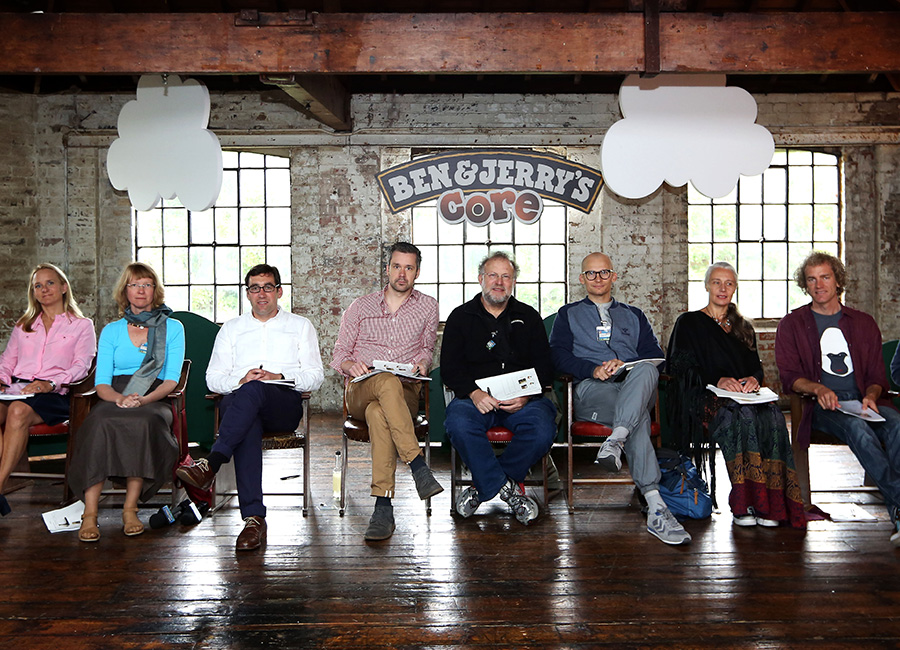
The idea was inherently to try to find the next Ben & Jerry’s, the next values led company that can create jobs, prosperity and address critical social issues. Our first Join Our Core (JOC) event was held in London in 2012 with five finalists who were selected from nearly 200 entries across Europe as the best in class. The JOC effort was to support young entrepreneurs who believe in more than simply being successful at business, but also in incorporating a concern for the global community around them.

The winning individuals would be featured on the packaging of a Ben & Jerry’s container, would receive a €10,000 Euro cash consideration, and would have ongoing professional mentoring, courteously offered by JOC program co-partner and global social entrepreneurial powerhouse, Ashoka. We at Ben & Jerry’s have been extremely fortunate to have knowledgeable and valued partners throughout our history, and in this case it was no different.

I’m not exaggerating to say that many of the winners were more excited to receive coaching from Ashoka versus the cash prize, or even being on their own tub of Ben & Jerry’s! While the JOC program was designed to focus on helping young entrepreneurs, we know that we at Ben & Jerry’s have benefitted as much as anyone. The program has reminded us of the power behind having an idea, that business can exist and care about more than simply making a profit, and that there are entrepreneurs who care passionately about being a positive force for change in society.

In today’s Wall Street Journal, the first three stories I noticed included headlines with the troubling words: “Artillery,” “Captors,” and “Attack.” I’m proud to work at a business that believes that as we’re successful we can share that success with our global community. With that focus in mind, we will expand the Join Our Core program this year into three global hubs for Ben & Jerry’s including Europe expanding its program to include even more countries, as Ben & Jerry’s in both Singapore and Japan will host their initial JOC gatherings.

Our cofounder, Jerry, will be on the road serving as the official JOC Ambassador, and I will proudly host the winners from across the globe here in Vermont at the Ben & Jerry’s company headquarters to explore how we can continue to support this burgeoning spirit, and to harness the power of young social entrepreneurs to remind us why existing businesses – with all the power that we have – must continue to evolve to better support and build prosperity in our local and global communities.

Jostein Solheim is CEO of Ben & Jerry’s Are you under 34 and on a mission to change the world? Enter you social business to Join Our Core for a chance to win 10,000 Euros, mentoring from Ashoka and a trip to the Ben & Jerry’s HQ in Vermont. Head to www.joinourcore.com

Diana Verde Nieto Puts The Chic Into Sustainability

 
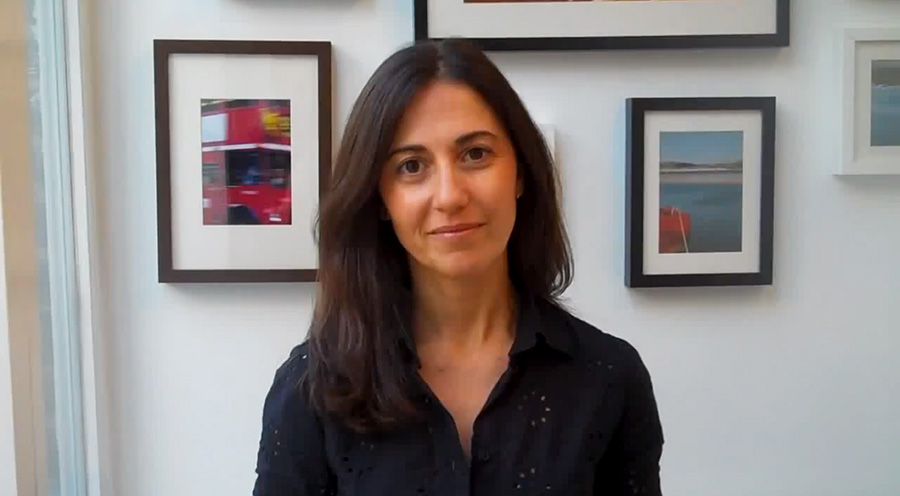
Diana Verde Nieto is a pioneer in the sustainability sector. She will be speaking to a group of aspiring leaders at the Pioneers for Change Programme hosted by Adessy Associates. Ellie Ward talks to Nieto about attitudes towards sustainability, what qualities good leaders have and about creating a global movement. 
 
Diana Verde Nieto studied at the Harvard Kennedy School on Global Leadership and Public Policy and was selected for the World Economic Forum’s Young Global Leader programme in 2011, for which she now sits on the advisory board. She is also a member of the Global Agenda Council for Sustainable Consumption and was trained by Bill Clinton’s former vice president, Al Gore.
 
Diana is a businesswoman with passion and through Positive Luxury – an award-winning membership programme for companies that demonstrate sustainability – she is changing prevailing attitudes and behaviour, and creating a global movement with sustainability at its core. Global recognition and status as an international business leader would have seemed a long way off for a young, Argentinian-born Diana however.
 
Pioneers Post: How have your experiences growing up shaped the decisions you’ve made in your career and your passion to create positive social change through business?
 
Diana Verde Nieto: I was born into the dictatorship in Argentina and always wanted the opportunity to make a difference – to be fair to people and societies. I was ten-years-old when the regime came to an end in 1982. I remember armed soldiers everywhere on my way to school. They were there to stop us talking to each other anywhere outside of the school premises. People could not talk in groups of more than three…the mood in the streets was always very fearful.When I was older I understood what it all meant and I wanted to be a human rights lawyer but I never had the courage whilst living in Argentina because I feared the consequences. So I went into business instead.
 
A sustainable career
Diana arrived in the UK at the age of 22. Finding work was initially a challenge because at this point, despite being able to speak four languages, her English was not very good. Diana found work dog walking before eventually getting a job at BBC Worldwide. Following stints at Virgin and a few ‘dot.com’ companies, she set up Clownfish, a pioneering global sustainability consultancy. 
 
PP: How would you describe your experience setting up your first business and then going on to sell it five years later?
 
DVN: Back in 2002, when sustainability was even more confusing and unpopular than it is today, I founded Clownfish. We grew from a London based consultancy to an international agency with offices in Shanghai, New York, Milan and Madrid. We built the company when sustainability was not on people’s radars.I sold the business to a media agency in 2008 and stepped down as CEO in 2010. The buzz of having built and sold a business was short lived. I had achieved conventional success but I felt like I had failed. For me success is beyond power and money, so I felt that I had not achieved what I had set out to do which was to normalise sustainability. Sustainability had become a dirty word, was considered un-chic and inspired the consumer with nothing but apathy. 
 
PP: What drove you to create Positive Luxury, which you co-founded with Karen Hanton, founder of TopTable, an online restaurant booking platform?
 
DVN: I wanted to start a business that moved away from the rhetoric of sustainability and instead, became a crusade of positivity (I was taking no prisoners). I wanted to unlock the potential brand value of sustainability and create a platform that allowed consumers to make informed decisions about the brands they were buying from.
 
Sustainability is now an essential ingredient for a company’s long-term success.
 
Consumers have little knowledge about the value chain of companies, and frankly it’s not at the forefront of their minds when they buy into a product or service. Having said that, people want to do the right thing, so providing consumers with relevant information about a company’s actions, at the point of sale, allows them to make more informed choices and generates revenue.
 
An immediately identifiable trust mark, which stood for recognised values, was needed.In the past 13 months, more than 300 brands have received The Butterfly Mark – Positive Luxury’s trust mark awarded to brands in recognition of the responsible way in which they manage product production, environmental resources, employee relations, distribution and other aspects of their operations.
 
PP: How has the concept of sustainability in business evolved throughout your career so far?
 
DVN: Thankfully broader social concern for sustainability has grown from a dull topic in the early 2000s, to a dominant theme today. Leaders of major corporations worldwide are increasingly facing the challenge of managing organisations that meet the expectations of a broad range of stakeholders (often themselves in conflict), while still delivering a substantial return to shareholders. As a result, sustainability is now an essential ingredient for a company’s long-term success.
 
Consumers are increasingly aware of issues throughout the value chain – for example labour, toxic chemicals and philanthropy. Companies are moving from Corporate Social Responsibility to social innovation that includes the environment – healthy people, healthy planet – and this is becoming embedded deeply into the core of their business.  For consumers it’s about trust. Which can brand can they trust? This is underpinned by the positive actions that brands are taking to have a positive impact on society whilst minimising their environmental footprint. 
 
Lessons on leadershipPP: What valuable lessons have you learnt that you can pass on to aspiring leaders?
 

DVN: The best way to learn leadership is to practise it. Don’t be afraid to show emotion and always make time to listen to your employees. Good actions foster even better actions. Leadership is not something you do to people but with people. It works as an exchange and interaction – a two-way road.

In my view what makes a good leader is the ability to inspire, be approachable, empathetic and to be honest.

PP: What qualities do good leaders have and which leaders inspire you? 

 
DVN: Anyone no matter title or position in society can be a potential leader in his or her community, job, school, etc. In my view what makes a good leader is the ability to inspire, be approachable, empathetic and to be honest.There are many people who I admire for their leadership skills – namely Bill Clinton, Sergey Brin, Larry Brin, Sir Alex Ferguson and Marisa Mayer. What they all have in common is that they are approachable and therefore are able to inspire others. 
 
The original article appeared on PioneerPost.com
Photo credit: Anna Michell

14.5 Million Books, 7 Million Children, 16,549 Libraries

Room to Read envisions a world in which all children can pursue a quality education through learning to read. Now 10 years old, and having helped over 7 million children in 10 countries, the 50 chapters of this remarkable organization are now on track to lift 10 million children out of poverty. Before images of studious, teacher-like types come to mind, consider that Room to Read has a leadership team comprised of corporate veterans from Goldman Sachs, Gap, Microsoft and Unilever.

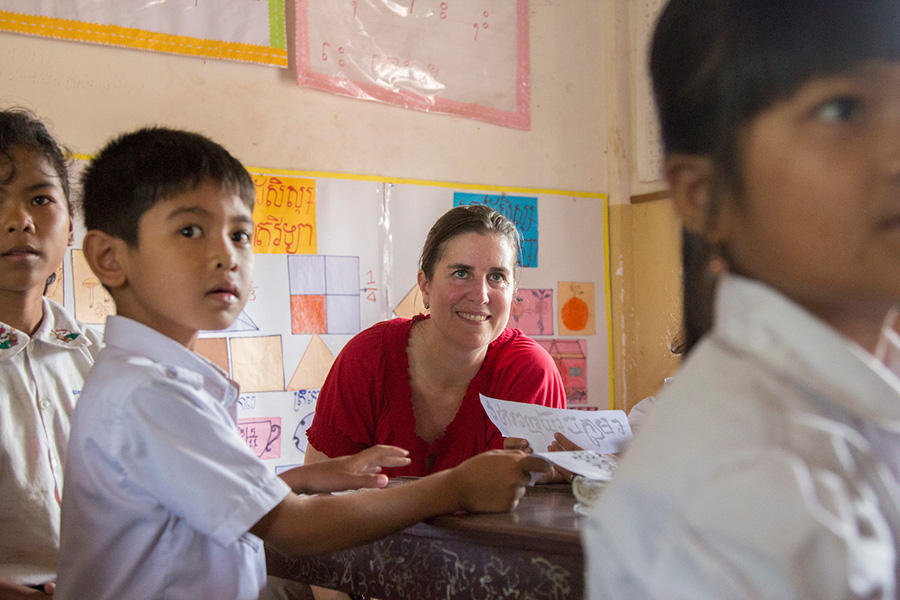
The team has a shared commitment to hiring and retaining a talented and passionate global team and they are now lending their expertise to kids around the world. A staggering 14.5 million books have already been distributed and 16,549 libraries have been established. Erin Ganju (above), CEO and co-founder of Room to Read was influenced by her university professor father and social worker mother. You could say that she is the perfect result of their combined talents.

“I grew up with a deep understanding of the value of education,” says Ganju. “My father was the first person in his family to go to college and even in my own country, the United States, it has only been a few generations since we’ve seen the impact that education can have,” she says. The importance of giving back was instilled in Ganju from an early age and she is fond of quoting, “To whom much is given, much is expected,” a philosophy she subscribes to when looking around the world wondering how she can make a difference.

Her early career as an investment banker at Goldman Sachs turned into a job at Unilever, which came with a posting to Vietnam. “This was a pivotal point for me,” recalls Ganju. “I was in my late twenties and working in a developing country where foreign direct investment had just been allowed and I could see how the work we were doing had already made a difference within one generation. I saw how education has the power to break the cycle of poverty,” she says.

“If you build a strong education system you can pull a country, community and every family out of the grips of poverty. I was also profoundly affected by how hard women were working – around the house, on child care and in the fields – and how much of the livelihood of a family depends on the work of women.” Ganjun realized that if you educate women in communities such as these, it creates a ripple effect. One of the most powerful ways to improve family nutrition and health and for a child to become literate is if there’s already a literate mother in the home.

“We began Room to Read to focus on child literacy and girls education in particular,” says Ganjun. “We try and keep girls in school for longer to ensure that they become empowered and take control of their own lives.” One of the greatest challenges of any global organization is to ensure that you are locally relevant. “The worst thing you can do is arrive with a cookie-cutter approach and develop solutions that aren’t relevant to the context of a country,” explains Ganju.

Partnerships with communities and government’s alike ensure proper support for Room to Read and employing local staff helps with language and cultural barriers. “People are driven by a passion for expertise. This is authentic leadership because it often comes from a deep sense of commitment for what you are doing,” says Ganju.

“The desire to create change speaks volumes about what committed leadership really means. I have developed cross-cultural skills and an ability to understand the global nature of the world around me. It’s no longer enough to just understand your own country’s perspective if you want to become a dynamic leader.

So much of the world today is interdependent and connected. “It’s critical to develop skills that understand and bridge cultural divides,” says Ganju.

Shaping Buildings That Shape Us

Jerry Fink’s lightbulb moment came 20 years ago when he swapped out some old toilets in an aging building and saw a 60% water saving. Today, with partners David Kim and Derek Chen, The Bascom Group has completed over $8.5 billion in real estate transactions and has built recycling into how they do business.

“Looking back, I think we were doing green activities before green even became popular,” says Fink. “Back then it was all about reducing expenses but we didn’t realize that we were acting green until green became more popular. We looked for ways to reduce utility costs with energy efficient lights, low flow toilets and showerheads, gas monitoring and efficiency devices. Most importantly we realized that the best way to incentivize the environment is to make it financially attractive,” he says.

This has included the creation of attractive, desert-type landscaping to reduce water usage and clever insulating techniques that cut utility costs. The firm is focused on sustainability and the environment and rather than creating new products they look for ways to use existing materials to revitalize and renovate existing buildings. “Bascom has always strived to find a balance of people, planet and profits,” says Chen. “Rather than throw away materials we look to reuse them within other communities,” he says.

Fink acquires and renovates buildings that are suffering from lack of maintenance, typically 10 to 40 years old, and the team put together a business plan to reposition the property. Tenants in the building are happy with the improved living conditions and the surrounding community is happy to see the revitalization of their neighborhood. They also see people putting money into the improvement of the community.

Fink knows that even his talented team does not have all the answers. “I consider a good leader someone who hires people that are better and smarter than they are,” says Fink. “You should also empower employees with responsibilities and the authority to make decisions and take action.” While Fink says an alternative to what they do would be creating new buildings he has always felt that by revitalizing older ones they help preserve the character and culture of an area.

“We try and find building materials within a short radius of the property we’re working on,” he says. “And use local vendors and construction workers that live nearby to help minimize CO2 emissions from commuting to the workplace. It also gives local people a sense of pride to be helping improve their neighborhood,” he says.

Renewable Materials Help The Planet and Businesses Thrive

Tetra Pak U.S. today released a new white paper examining the use of materials in packaging that can be regrown or replenished naturally as a solution to the planet’s growing resource scarcity and to sustain the future of the consumer packaged goods industry. The paper is part of the launch of a new campaign, ” Moving To The Front “, encouraging suppliers, manufacturers, brand owners, NGOs and others to expand focus from the mid and end of the packaging life cycle to the beginning.

The company’s efforts highlight the need for broader embrace and acceptance of industry practices that focus on the importance of material sourcing in protecting our world’s limited natural resources and how these practices can create long-term shared value for businesses and society. As the global population grows and demand increases for consumer packaged goods and packaging, global supplies of clean air, water, oil, natural gas, and minerals are under greater pressure, potentially disrupting entire supply chains.

“While recycling will continue to be a key part of a restorative circular economy, it is not the only component, said Elisabeth Comere, Director, Environment and Government Affairs at Tetra Pak. “As we note in our paper, What is Renewability in Packaging and Why Should We Care? the finite nature of these resources means that the time to change and innovate is now,” she added. “Packaging can be a tool for conservation; it has the potential to drive demand for sustainably produced raw material at an immense scale,” said Erin Simon, manager of packaging and material science at World Wildlife Fund.

“It’s exciting to see Tetra Pak embracing this model, and — even more important — encouraging others to ‘Move to the Front’ on packaging.” “As we have always seen it, renewability, which is using a resource that can be regrown or replenished naturally over time, such as paperboard-based packaging and bio-based polyethylene (PE) can have a positive impact on our global economic stability and the ongoing health and biodiversity of our planet,” Comere said.

“We want to encourage our suppliers, manufacturers, brand owners and others to understand what we all stand to gain in terms of planet and business impact by adopting these practices,” she added. According to Brian Kennell, President and CEO, Tetra Pak Inc., businesses that adopt renewability practices will:

  • Realize business growth because long term supply resources will be secured and retailer preference and consumer demand for packaging made with renewable materials will grow;
  • Manage and mitigate risks caused by geopolitical threats to sourcing more effectively, leading to a more reliable supply chain with less business disruption around supply of resources and better ability to manage costs and experience less price volatility.
  • Build brand equity, differentiation and emotional connections with consumers because as consumer knowledge around resource scarcity grows, so too will their demand for packaging with renewable content, as it did around recycling.

As noted in the white paper, decades of promotion and education around recycling changed societal practices and businesses focused on securing sustainable end-of-life solutions to products and packaging. “We don’t want to lose any ground on recycling or other commitments where we and others have been successful,” Kennell said.

“But a company’s license to operate is now firmly based in its ability to mitigate and reduce the impacts of products at all life cycle stages. Acting at the front end is a must in today’s economy.” In the coming months, Tetra Pak will be engaging suppliers, manufacturers, brand owners, NGOs and other stakeholders to join the Moving To The Front campaign.

“We’re asking these groups and others to help educate and advocate for broad acceptance of renewability practices that ensure the security of the packaging industry and the sustainability of natural resources for generations to come,” said Comere.

Sustainable Luxury Awards: Who Won

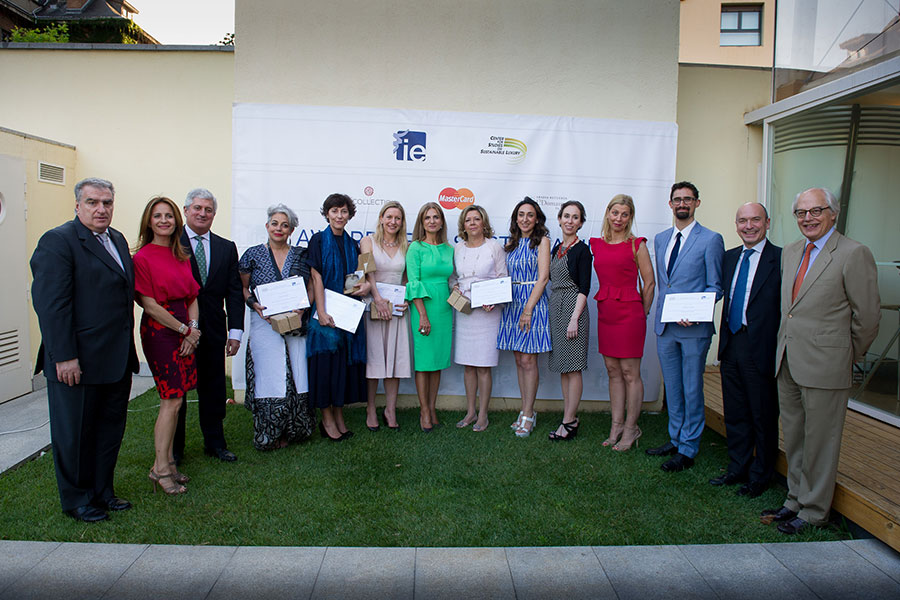
Winners of the IE Sustainable Luxury Awards were announced in Madrid yesterday, honoring a handful of talented and innovative brands that have taken the meaning of luxury to new levels. The awards are jointly organised by Fundación de Estudios e Investigaciones Superiores, Buenos Aires, Argentina and IE Business School, Madrid, Spain.

Its aim is to recognise and honour the practice of sustainability in the luxury and premium sector. The winners were Loewe, Elvis & Kresse, Soneva, Spazio Sumampa and Danish Institute Fashion. Prizes are divided into three categories: Apparel and accessories, Jewellery or Watches and Tourism (including Hotels). On this occasion none of the candidates met the requirements for the watch and jewellery category so prizes were only awarded fory Fashion and Accessories, and Hospitality.

awards

The winners were:

Fashion and Accessories category 

UK company Elvis & Kresse. The firm makes its pieces using waste materials from the London Fire Brigade, mainly discard fire hoses (pictured on home page).

Hospitality category

Luxury resort chain Soneva is a pioneer in sustainability with its battle against climate change. The hotels, in the Maldives and Thailand, are designed to “decarbonize” the atmosphere by absorbing carbon dioxide, instead of producing it. In addition to these two prizes, there were three honorary recognitions:

Danish Fashion Institute (DAFI): Recognized for its capacity to disseminate – it promotes the integration of sustainability and social responsibility in the world of fashion through international events, such as Copenhagen Fashion Week.

Spazio Sumampa: Recognized for its contribution to sustainable luxury in Latin America, helping to generate sustainable income for women in the province of Santiago del Estero (Argentina) and through ancestral textile art that is of great historical and cultural value.

Loewe: The Spanish firm was recognized for its long trajectory, having distributed traditional Spanish craftsmanship since 1846. It has also made a great effort to preserve traditional leather-working crafts, by including them in each stage of its production process. The company’s responsible approach is recorded in a sustainability report which details the processes, the people, and results. The awards were presented at the IE Business School campus, in the Paper Pavilion, designed by architect Shigeru Ban. Alexandra Cousteau, granddaughter of French oceanographerJacques-Yves Cousteau, served as master of ceremonies.

Ms. Cousteau is a champion of the environment and sustainable management practices for aquatic resources, and an ambassador for OCEANA. Executive Director of the awards, María Eugenia Girón, spoke about what the awards are designed to promote: “Sustainable luxury means a return to true luxury,” she explained. “To manufacture products made to last forever by people striving to make their mark while creating them. This is the essence of a luxury product.

These prizes recognize the companies that have always understood luxury in this way. Our awards are also aimed at entrepreneurs who launch projects with the conviction that the world has no need of brands that do not serve to make it a better place.” The honorary prizes are awarded in the spirit of the initiative, which, as founder Miguel Ángel Gardetti mentioned, “Are not only a way to gain greater respect for the environment and social development, but should also be synonymous with culture, art and innovation in different countries, and with maintaining the legacy of local craft.”


0