The Freedom of Choice

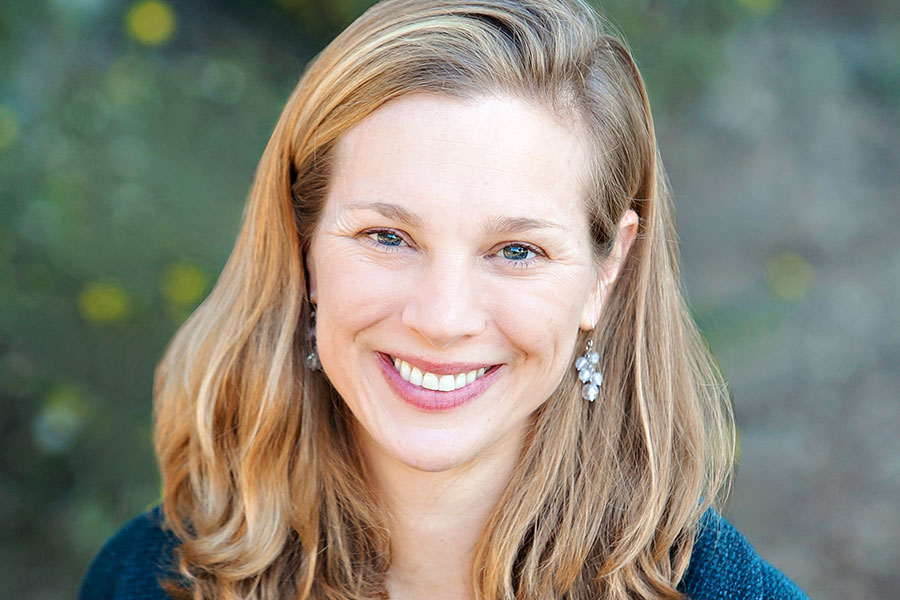
Former vegan punk rock kid. Band member. Previous animal rights activist. Artist. Baby food company CEO. Viewed through a wide lens, one of these things is not like the other. But zoom in and you’ll find they are all driven to impact the world in a positive way – through values, creativity and choice. “What is in my DNA that is consistent with the root of Plum Organics?” says Neil Grimmer, CEO of Plum Organics (pictured above). “When I was 20, I wanted to channel my creativity to inspire people to look differently at the world. It was music and animal rights then, but it was also the notion of living your own life. The idea that you can choose what you eat, what you are, how you live, what you wear. These are usually prescribed, but there is something meaningful to picking your path and living authentically. That is at the heart of it.”

Using creativity as his foundation, Neil got his “first official job” at IDEO, an international design firm. At that time, as an endurance athlete, he was exploring his relationship with food and using his body to experiment the fueling of it. “As the resident food guy, I worked with food companies in the midst of considering health and wellness for the first time. After six years, I realized, healthy food should come from a healthy company. That was meaningful to me personally, but I also saw the green shoots of that opinion emerging in other companies like Patagonia and Clif Bar.” Neil left IDEO to join Clif Bar in strategy and innovation, where he saw the practical aspects of codifying mission and vision, and of making transparent decisions.

And in 2007, with creativity, values and an idea driven by the birth of his first daughter, Neil co-founded Plum Organics, an organic baby food and toddler snack brand built on the core values of “healthy eating for life”. “When I was vegan, I was unhealthy and didn’t know what I was doing,” Neil said. “Being healthy can be complicated. But it doesn’t have to be. We want to make it simple for parents to feed their kids and live their values without compromise.” This led to successful and innovative products, as well as a strong culture that is interwoven in the daily life of the office. “We put our people first. We make every decision based on parents and their young children. In that process, we create a healthy business.

We hire people that are deeply passionate, talented, and personally connected to the work we do. They bring that mindset to the work and it creates a standard for excellence that comes from the heart.” In 2013, Plum Organics was acquired by The Campbell Soup Company. The acquisition provided Plum with structural support, the ability to grow and the ability to influence the larger corporation. “We knew the values of Plum would remain strong after the acquisition because behind every corporate deal, there are people. In our case, Denise Morrison, CEO of The Campbell Soup Company, was primarily the one behind the deal. When I met her, the first thing she said was ‘My grandchildren are Plum babies.

I understand what you do and why, because it is impacting my family in a positive way.’ For me, that personal commitment and sheer enthusiasm reassured me in the partnership.” Both inside Plum and Campbell, and outside to other businesses, Neil believes in sharing what Plum has done as an example of a fundamental refocus on how business should be done. “Pioneers before us showed us a path – that by doing good, you can create a great business.

Now consumers are backing companies that align with their values. Investors and corporations know this is the new economy, not just a marketing slogan. There is even more infrastructure and an acceleration of learning, measurement and guideposts from thought leaders. But we have to have courage and faith in the notion that you can lead a business with heart. We have to reinforce the message that you can have a personal and emotionally relevant vision for creating social good that is good for the business, too. We are demonstrating that through the Plum story.”

Neil will be speaking at the Conscious Capitalism 2015 annual conference, which will be held in Chicago April 7-9.

“There is radical values alignment between Plum and Conscious Capitalism. The credo and framework that built Conscious Capitalism as an organization and community are deeply embedded in our organization.” His practicum, Staying True to Your Mission in Times of Change, will provide valuable guidance on how to lead a mission-driven company through an acquisition, while reassuring stakeholders and protecting the company’s mission and purpose.
Dr. Sylvia Earle, Oceanographer

RL-100-badge89

“Health to the ocean means health for us.”

Vision: To develop a global network of areas on land and sea that can help safeguard the living systems that underpin life on earth. Action: Earle is the recipient of more than a hundred national and international honors. She was the first female chief scientist of the U.S. National Oceanic and Atmospheric Administration and has devoted her life to safeguarding oceans. She was named Time’s first Hero For The Planet in 1998. www.OceanElders.org


How Your 401K Can Help Build a Clean Energy Future

Much like the apartheid movement that preceded it, the fossil fuel divestment campaign started several years ago on college campuses and has quickly spread to foundations, faith groups, and institutional investors. The focus of Divest-Invest is to influence people, groups and institutions to sell their fossil fuel stocks and bonds and invest in renewable energies and other climate solutions.

Focusing on the top 200 oil, gas and coal companies, the Divest-Invest movement has already seen impressive results, with over 180 institutions and 600 leaders pledging to divest more than $50 billion in assets from fossil fuel companies. It’s only a matter of time before others follow the lead of Divest-Invest early advocates. SVN member Tom Van Dyck, founder of As You Sow Foundation, has been actively involved in Divest-Invest since its launch.

His passion for the movement goes back to the 80s when he leveraged his financial acumen to fight apartheid. “We believe in using the capital markets to create social change and gain return for clients simultaneously,” Tom says. “90 companies are responsible for 65% of carbon dioxide in the air today,” he explains, adding that politicians should be placing regulations and a price on carbon. But this isn’t just an environmental issue.

As Divest-Invest signatory Desmond Tutu explains, “Climate change has thus become the human rights challenge of our time.” It is responsible for many of the challenges that the impoverished face, including loss of life, lack of fresh water, the spread of disease and rising food prices. Divest-Invest signatories are joining from all walks of life, including foundations, business leaders, academic institutions and faith groups.

Individual pledge-makers are asked to take three steps: Make no new investments in the top 200 oil, gas and coal companies; sell existing assets tied to those oil, gas, and coal investments within five years; and invest in a sustainable, equitable and renewable energy economy.

It’s about small steps and doing what you can with what you have. Just ask SVN members Timothy and Rose Yee of Green Retirement, which focuses on the 401k market. Helping clients create socially responsible retirement plans is the couple’s primary concern so when they heard about Divest-Invest, they immediately got involved.

Ensuring retirement plans align with client values and avoid fossil fuels is a moral imperative, they say. And it’s a financial necessity, too. For those who wonder if a fossil-fuel free portfolio is less competitive without it, Rose says, “We have five times more inventory of oil, coal and gas than the earth can burn and still survive,” explaining that holding onto stocks that are overvalued can result in stranded asset risk.

Royal Dutch Shell Endorses Shareholder Resolution on Climate Change

Supermajor’s Support for Resolution Co-Filed by As You Sow Sends Signal to Policymakers: It’s Time for Global Accord On Climate.

The Royal Dutch Shell Board of Directors has endorsed a shareholder resolution requiring the company to commit to reduce emissions and invest in renewable energy, to do away with bonus systems that promote climate harming activities, and to stress test its business model against the two degrees Celsius warming limit adopted by 141 governments in the UN’s Copenhagen Accord.

Nonprofit As You Sow co-filed the shareholder resolution at Royal Dutch Shell and a similar resolution at BP as part of the “Aiming for A” Coalition of investors, coordinated by ClientEarth and ShareAction. “It’s remarkable that a supermajor like Shell supports a shareholder resolution that boldly questions its own business model,” said Andrew Behar, CEO of As You Sow.

“This acknowledgement of the need for change will ripple through the entire industry, and not a second too soon, as we see reports of 2014 being the hottest year on record. We see this as a signal to policymakers that the business community supports a robust global climate accord in Paris in 2015.” Climate-related shareholder resolutions filed at Anadarko and CONSOL Energy by As You Sow in 2014 were supported by 30% and 18% of shareholders respectively.

A similar resolution at ExxonMobil was withdrawnwhen the company agreed to publish a report on stranded carbon asset risk, in which Exxon acknowledged the risk of climate change and noted that if regulations on carbon were to be adopted, carbon pricing would be the most business-friendly regulatory mechanism. “Shell’s statement provides evidence that business as usual is no longer working for shareholders or industry, either from a global warming or markets perspective,” said Danielle Fugere, President and Chief Counsel of As You Sow.

“Whether oil prices are high or low, producers are finding themselves between a rock and a hard place: when prices are low, they can’t earn enough to cover costs, and when prices are high consumers are driven to lower-price competitors like renewables. In the meantime, global warming is driving regulatory action that is likely to strand fossil fuel assets.”

US-China Climate Pact A Good Start, But Not Quite Enough

The meeting in Lima, Peru, of the United Nations Framework Convention on Global Warming, which concluded on Sunday without a pathbreaking agreement, sent a strong message about how seriously we should be treating the global climate crisis.

But, really, it is only the actions of a select few nations that will have any lasting impact in terms of stopping or reversing global warming. Among those critical nations are the United States and China, who together contribute massively to climate change. In the wake of the Cold War, the US emerged as the dominant superpower on the world stage.

The Americans’ capitalist system had outlasted Soviet Russia’s communist philosophy and the US seemed poised to dominate the globe for decades to come. And, for some years after, it seemed there would be no new rival and no new war. However, recent decades have brought on a new superpower to rival the US: China.

Beijing’s rise was swift and it continues to this day, bringing new meaning to the relationship the countries have and new meaning to China’s place in geopolitics. Historically, relations between the US and China have been somewhat shaky but they are relatively stable today, despite significant cultural and political rifts that persist. The rise of China coincided with the increased significance of a new war of sorts, a war where China and the US are on the front lines.

This war is not being fought between China and the US, or between any nations. Instead, it is a war against human-induced climate change. Though this war has no singular enemy, in November the world’s leading and emerging superpowers united in response to climate change. The agreement between them on November 12 was unprecedented in the history of either country: the US will cut total emissions by more than a quarter by 2025 while China – whose industrial sector is still in the ascendant – will hope to reach peak greenhouse gas emissions by 2030. As ambitious as the terms of this deal were – and whether either country will be able to follow-through is unknown – the real question has to be: is it even enough?

China is a superpower on the rise, whose ancient cultures have pressed for environmental stewardship since long before the discovery of fossil fuels. America, on the other hand, has been spewing massive amounts of greenhouse gases for decades and is only just beginning to see the error of its ways. Together, though, I believe the US and China have the power to either save or destroy our planet, based on their actions in the coming decades and their adherence to this deal.

The key factor in determining whether our fight to contain global warming is succeeding or failing is global average temperature – and the temperature of our planet is on the rise, dangerously so. Right now, the signs are looking particularly bleak: if our global temperature rises by more than two percent, the scientific community tells us that there is likely no turning back. So what does this mean for you and me?

The United Nations Environmental Program released its 2014 report last month and the world’s leading panel of experts on global warming and climate change gave us a very direct, tough prognosis: to keep below the two percent rise in global average temperatures, humans can only dump another 1,000 gigatons of carbon dioxide into the atmosphere, in total. Should we fail, the consequences would not only be irreversible, but catastrophic.

So, is the China-US climate deal going to be enough to stop us from getting to 1,000 gigatons? Sadly, this writer is not very optimistic. According to a report by Business Insider, China and the US alone will contribute more than 600 gigatons of carbon dioxide to our atmosphere between now and 2050. All the other countries together, meanwhile, make up approximately 60 percent of global carbon emissions.

This means that by 2050, even if the US-China deal holds, we’ll have dramatically exceeded our 1,000-gigaton limit and the global temperature will have surely rise past the two percent threshold. I appreciate the value of the US and China coming together as partners in the war against human-induced climate change.

However, I think that neither country truly appreciates the scale of the problem – China is too busy growing and America is too busy clinging to its power. It’s easier to think about this problem in terms of something even larger than the moon landings – solving global warming is bigger than any single leader, bigger than any single nation. It’s a global problem that will require a global solution.  

Frank-Jürgen Richter is founder and chairman of Horasis, a global visions community.

The Organization Working At Ebola’s Ground Zero

To combat the unprecedented Ebola outbreak in West Africa, International Medical Corps has mobilized a comprehensive emergency response in Liberia, Sierra Leone and Mali, the epicenter of the humanitarian crisis. Led by President & CEO Nancy Aossey, International Medical Corps has responded to every major disaster of the last 30 years, delivering more than $1.8 billion in humanitarian relief and training in more than 70 countries.

The organization has been a First Responder in the world’s most challenging and remote places, including Darfur, the Democratic Republic of Congo, Syria, Afghanistan, Somalia, South Sudan, and Libya, among others. The Ebola outbreak has infected more than 17,000 people and caused more than 6,000 deaths in West Africa. The organization currently operates two Ebola Treatment Units in Liberia and one in Sierra Leone, where its first responders are providing lifesaving care.

In addition, they are  establishing another Ebola Treatment Unit in Sierra Leone and deploying an Emergency Response Team to Mali. Together, the four units will give more than 1.5 million people access to lifesaving care. International Medical Corps is also scaling up its training efforts and will train 3,500 frontline health workers to safely treat patients and manage Ebola treatment units that are critical to ending this deadly epidemic.

In addition, in Sierra Leone International Medical Corps has conducted ‘Ebola 101’ training of trainers for local organizations so that they can continue to safely operate.  This includes training 45 members of Street Child, an organization of schoolteachers, whom will themselves now train an additional 500 teachers in all provinces of the country.

Donating to a group like International Medical Corps, that is actually on the ground within the affected countries, treating patients, and helping to prevent further spread of disease is the best way to help. There are very few humanitarian agencies that have the capacity to manage and provide medical treatment to those infected with Ebola, and International Medical Corps is one of them.

For more information: httpss://internationalmedicalcorps.org/ebola To Donate: www.InternationalMedicalCorps.org/ebola-donate ebola2 ebola3

The Organization Working At Ebola’s Ground Zero

To combat the unprecedented Ebola outbreak in West Africa, International Medical Corps has mobilized a comprehensive emergency response in Liberia, Sierra Leone and Mali, the epicenter of the humanitarian crisis. Led by President & CEO Nancy Aossey, International Medical Corps has responded to every major disaster of the last 30 years, delivering more than $1.8 billion in humanitarian relief and training in more than 70 countries.

The organization has been a First Responder in the world’s most challenging and remote places, including Darfur, the Democratic Republic of Congo, Syria, Afghanistan, Somalia, South Sudan, and Libya, among others. The Ebola outbreak has infected more than 17,000 people and caused more than 6,000 deaths in West Africa. The organization currently operates two Ebola Treatment Units in Liberia and one in Sierra Leone, where its first responders are providing lifesaving care.

In addition, they are  establishing another Ebola Treatment Unit in Sierra Leone and deploying an Emergency Response Team to Mali. Together, the four units will give more than 1.5 million people access to lifesaving care. International Medical Corps is also scaling up its training efforts and will train 3,500 frontline health workers to safely treat patients and manage Ebola treatment units that are critical to ending this deadly epidemic.

In addition, in Sierra Leone International Medical Corps has conducted ‘Ebola 101’ training of trainers for local organizations so that they can continue to safely operate.  This includes training 45 members of Street Child, an organization of schoolteachers, whom will themselves now train an additional 500 teachers in all provinces of the country.

Donating to a group like International Medical Corps, that is actually on the ground within the affected countries, treating patients, and helping to prevent further spread of disease is the best way to help. There are very few humanitarian agencies that have the capacity to manage and provide medical treatment to those infected with Ebola, and International Medical Corps is one of them.

For more information: httpss://internationalmedicalcorps.org/ebola To Donate: www.InternationalMedicalCorps.org/ebola-donate ebola2 ebola3

Business Takes a Decisive Leap: Breakthrough in Collaborating for Good

If Planet Earth were a business, no executive could look at the metrics — whether melting glaciers or widening income disparity, whether disappearing rainforests or the global economic crisis — and not come to the same conclusion: we need a turnaround. Assuming that NASA’s Mar. 2014 forecasting is right — or even half-right — we’ve got 20 years to stave off irreversible global industrial civilization collapse “due to unsustainable resource exploitation and increasingly unequal wealth distribution.” Business leaders see this compelling case for change. And increasingly, many are taking a stand to be accountable for addressing humanity’s challenges. They recognize how we’re all part of this breakdown and are saying it’s time to change the game. Now. For good.

These leaders see that concerns about the future have become so blinkered by deeply entrenched conventional financial parameters that we’ve entirely lost touch with the true purpose of business — to provide value-added goods and services for a socially just, environmentally sustainable and economically thriving world.

That’s why companies like Unilever, Whole Foods, Salesforce and HP are shifting their products and protocols away from ones that maintain disintegrative global trends. Instead, they are leading toward a more interconnected world for the sake of a flourishing future for all stakeholders. They’re awakening to a greater responsibility for generations to come, and in so doing are proving the correlation between doing good and doing well.

As Paul Herman, author of HIP Investor (Human Impact + Profit) says, “We have mounting indisputable evidence that investing in initiatives that serve people and the planet provides a greater economic return than not doing so.” And, they aren’t doing it alone. Some people, like forerunners in social entrepreneurism, responsible investment, and the Corporate Leaders Group saw the signals early. They’ve been working on win-win solutions that deliver returns and serve the world for 10 years and longer.

More recently, creative cross-sector business partnerships like BICEP, the Business Alliance for the Future and We Mean Businessare making their members’ collective voices heard. Others finding new ways to work together and signing on to difference-making social and environmental initiatives include business groups such as BCorp, American Sustainable Business Council, Sustainable Brands, Conscious Capitalism, Huffington Post, Real Leaders, UN Global Compact, World Business Academy and many more.

Individually, these groups are having real impact. Three examples are: Social Venture Network’s Divest-Invest energy campaign, Ceres’ Call for Action on Climate Change, and World Business Council for Sustainable Development (WBCSD)’s Vision 2050new agenda for business serving the world. Yet, a critical question remains — are these worthy, noble initiatives happening fast enough, or at a scale large enough to produce the systemic change we need to remedy the breakdowns we face?

This question was asked to leaders of 30 business associations and networks at a gathering of the Business Alliance for the Future earlier this year. All 30 agreed that the answer was “no.” The collective view was there is about 5 years left to turn the raging tide. Many said they’re clear that the business community has the solutions and resources to address our global challenges. But what’s missing, they said, is a way of unifying or working together, in interdependent ways to support aligned organizations. They want to work within business and with other sectors of the economy, to accelerate what’s already happening on the ground.

So what’s needed here is something to fill the gap and create a breakthrough in collaboration to exponentially accelerate needed systemic change — without creating another organization. It’s true that organizations have been working on collaborative cultures, high performance teamwork, coopetition for a few decades. Yet, the collision of immense global challenges with shifting social consciousness and exponential technological change requires totally new human commitments and capacities to think and act in unified and interdependent ways. This world isn’t a dreamscape.

New collaborations are possible, doable, and happening. Just last month, sustainability pioneer Paul Hawken revealed Drawdown.org to show how reversing climate disruption impacts is not just possible, but predictable, if we share solutions that we know already work. And in California, the World Business Academy’ Clean Energy Moonshot is calling for new partnerships across government, business, science and civil society for an audacious, accelerated pathway to 100% clean and renewable energy economy. This new way of thinking about business is the challenge — and opportunity — for our age.

The future of business is making the future its business. By accelerating Business’ Decisive Leap in creating a breakthrough collaborating for good, business will become the engine that pulls us away from the precipice of decline and collapse and toward a future where business, people and nature flourish. To learn more about the work of the authors in the Business Alliance for the Future, visit here.

About the authors Claire Sommer is a sustainability writer based in West Orange, NJ. Since 1999, her business writing consultancy, Kayak Media, has helped Fortune 500 companies tell their stories. Clients include Wyndham Worldwide, Unilever, McGraw Hill, BNY Mellon and Aetna. In recent years, Claire’s work has centered on sustainability writing and helping sustainable businesses grow. She also writes for Greenbiz, Sustainable Brands and Green People Media.

She is a Certified Rutgers Environmental Steward, a NOLs (National Outdoor Leadership School) alumna, and a graduate of the LeaderShip for Sustainability program. Vince DiBianca, senior partner of Praemia Group has worked with thousands of leaders inspired to achieve game changing results that make a world-changing difference – where business excels, people thrive and nature flourishes.

Over the last 40 years, Vince has served as coach and consultant to CEOs and C-suite executives from global organizations including: Allstate, Deloitte, Hughes Aircraft, Men’s Wearhouse, Novartis, Reebok, Sears, Whole Foods, and the United Nations and many smaller organizations. Recognizing that we face a once-in-a-civilization opportunity to impact global change, Vince is spearheading Business Alliance for the Future, an alliance of business associations and global affiliations to advance the emerging “business for good” movement.

3 Ways To Break Boundaries and Repair the World

Twenty two years ago, a small community of MBA’s and entrepreneurs had a boundary-breaking idea. In the midst of a world where business was often viewed as an evil force, they dared to think differently. United by their vision of a future where business could mean more than making money, they held the first Net Impact Conference. The boundaries we now face are less obvious but no less limiting. In the realm of Corporate Social Responsibility (CSR), most of the low-hanging fruit has been picked.

We’re grappling with barriers that are global in scope and structurally multi-faceted. What’s more, the stakes are higher than ever; persistent poverty, global health epidemics, climate change, and joblessness threaten the lives and livelihoods of billions of people around the world. In early November, our community is coming together to take on the messy, uncomfortable, controversial (yet inspiring and imperative) challenge of breaking boundaries once again. We’ll hear from impact leaders across sectors who are embracing these three strategies for disruptive change.

1) Work with the “Enemy”

Breaking boundaries often requires being willing to collaborate with the most unlikely allies. Unilever’s CEO Paul Polman has broken many boundaries with his leadership of the world’s third-largest consumer packaged goods company. To have a discernible impact on big issues, Polman knows that he must work with many stakeholders, including the competition. Says Polman, “What we’re now dealing with are enormous challenges of poverty or climate change; sustainable growth in its broadest sense; equality… That requires a broader level of partnerships.”

As one example, Unilever is working with marketplace rival Nestle on a coalition to convert the global market to natural refrigerants for display cases. “It needs a tipping point; no individual company can do that alone,” Polman adds. Dr. Temple Grandin, who became famous for her achievements in mathematics, has also embraced the opportunity to work with unexpected bedfellows. Because of her high-functioning autism, Temple thinks differently than most of us. Temple has leveraged her keen ability to think visually, due to her hypersensitivity to noise and other sensory stimuli, into a unique and monumental career collaborating with fast-food companies like McDonalds to improve the conditions of slaughterhouses.

An animal lover working on slaughterhouses? As you might expect, her work with McDonalds and others has been decried by animal activists, yet Temple has been steady in her conviction to focus on maximizing animal comfort over lengthening animal lives.

2) Put the Truth on Trial

To overcome the limitations of the status quo, leaders cannot hide behind publicity and good marketing. They must embrace the opportunity to dialogue through differences in a public forum. Last year, Net Impact welcomed a lively debate between Exxon Vice President Ken Cohen and Sierra Club CEO Michael Brune. While charged at times, the forum helped further the dialogue on the future of energy. As conference attendee and sustainability professional Laura Clise noted, “Leadership is the willingness to participate in difficult conversations.

Dialogue takes courage on both sides.” (Read the debate here, or the keynote reaction here.) Monsanto has one of the worst reputations in the US, according to a Harris Poll, yet it is also a company that is deeply engaged with the challenge of how to feed the 2 billion people that are projected to join the population of the planet by 2020. Monsanto executives know their company invites controversy, and they embrace the opportunity to dialogue with people who oppose their perspectives.

This year, the Net Impact Conference will provide a forum for Monsanto executive Natalie DiNicola to debate the future of food with NGO leader M. Jahi Chappell from the Institute for Agriculture and Trade Policy, sharing their contrasting viewpoints on how to feed the world sustainably.

3) Measure What Matters

Overhead spending has been one of the most commonly used metrics to define “good” nonprofits by groups like the Better Business Bureau, but Dan Pallotta has begun a revolutionary movement to change how organizations measure the difference they make in the world. A decade ago, his company Pallotta TeamWorks was criticized for overspending on marketing, administration, and logistics. His critics argued that such overhead costs cut too deeply into the potential impact of their charitable contributions.

Too many nonprofits, Pallotta says, are rewarded for how little they spend instead of for their results. He suggests that nonprofits should be evaluated on the basis of their ambitious goals and measurable impact, not their overhead spending. In his now-famous 2013 Ted Talk, provocatively titled, “The Way We Think About Charity is Dead Wrong,” Pallotta makes the point that the outcomes of the charity—in his case, fundraising hundreds of millions of dollar for AIDS and other health causes—outweigh the need to limit overhead spending in the nonprofit sector.


0