Landfills Shouldn’t Be Laundry Piles

Today is Earth Day and companies around the world are thinking about how best to save the environment. Most of us would never consider our clothing being part of the problem, but it is.

Savers, a global thrift retailer, is challenging people to rethink their clothing footprint. A larger-than-life clothing spill installation (pictured above) on the famous Alki Beach in Seattle, Washington created a visually arresting wakeup call to remind everyone that clothing doesn’t need to end up in landfills. Americans throw away more than 10.5 million tons of clothing annually, 95 percent of which could have been reused or recycled.

For more than 60 years, Savers has been purchasing used clothing and textiles from nonprofit organizations and giving them a second, or third, life in its stores or through its recycling partners. They’re on a mission to create a better world through reuse – by inspiring local communities to rethink reuse.

“At Savers, reuse is in our DNA,” says Ken Alterman, president and CEO. “It’s who we are and how we operate, but not everyone considers reuse an option for their used clothing and household goods.

With the growing amount of clothing and textile waste ending up in landfills, we felt compelled to act. 

We want to help people better understand the environmental impact of their clothing waste and the steps they can take to reduce it. That’s why we are calling on everyone to rethink reuse – shopping thrift, donating used items to a nonprofit and consuming goods in a more sustainable way.”

Through its unique business model of purchasing, reselling and recycling secondhand merchandise, the Savers family of thrift stores (including Value Village, Unique Thrift and Village des Valeurs brands) benefits more than 120 nonprofit organizations, gives local consumers a smart way to shop and saves 650 million pounds of quality used goods from landfills each year.

Savers pays its nonprofit partners for donated goods, turning otherwise unused items into sustainable funding that supports their vital community programs and services.

Eighty-five percent of clothing waste ends up in landfills, with only 15 percent being reused or recycled. Companies such as Savers help give clothing and textiles another life through recycling and reuse – diverting millions of tons of clothing and textiles from landfills each year. Think about that next time you’re clearing out your closets.


Landfills Shouldn’t Be Laundry Piles

Today is Earth Day and companies around the world are thinking about how best to save the environment. Most of us would never consider our clothing being part of the problem, but it is.

Savers, a global thrift retailer, is challenging people to rethink their clothing footprint. A larger-than-life clothing spill installation (pictured above) on the famous Alki Beach in Seattle, Washington created a visually arresting wakeup call to remind everyone that clothing doesn’t need to end up in landfills. Americans throw away more than 10.5 million tons of clothing annually, 95 percent of which could have been reused or recycled.

For more than 60 years, Savers has been purchasing used clothing and textiles from nonprofit organizations and giving them a second, or third, life in its stores or through its recycling partners. They’re on a mission to create a better world through reuse – by inspiring local communities to rethink reuse.

“At Savers, reuse is in our DNA,” says Ken Alterman, president and CEO. “It’s who we are and how we operate, but not everyone considers reuse an option for their used clothing and household goods.

With the growing amount of clothing and textile waste ending up in landfills, we felt compelled to act. 

We want to help people better understand the environmental impact of their clothing waste and the steps they can take to reduce it. That’s why we are calling on everyone to rethink reuse – shopping thrift, donating used items to a nonprofit and consuming goods in a more sustainable way.”

Through its unique business model of purchasing, reselling and recycling secondhand merchandise, the Savers family of thrift stores (including Value Village, Unique Thrift and Village des Valeurs brands) benefits more than 120 nonprofit organizations, gives local consumers a smart way to shop and saves 650 million pounds of quality used goods from landfills each year.

Savers pays its nonprofit partners for donated goods, turning otherwise unused items into sustainable funding that supports their vital community programs and services.

Eighty-five percent of clothing waste ends up in landfills, with only 15 percent being reused or recycled. Companies such as Savers help give clothing and textiles another life through recycling and reuse – diverting millions of tons of clothing and textiles from landfills each year. Think about that next time you’re clearing out your closets.


Michelin Builds Eco-Friendly Tire Path in Yellowstone National Park

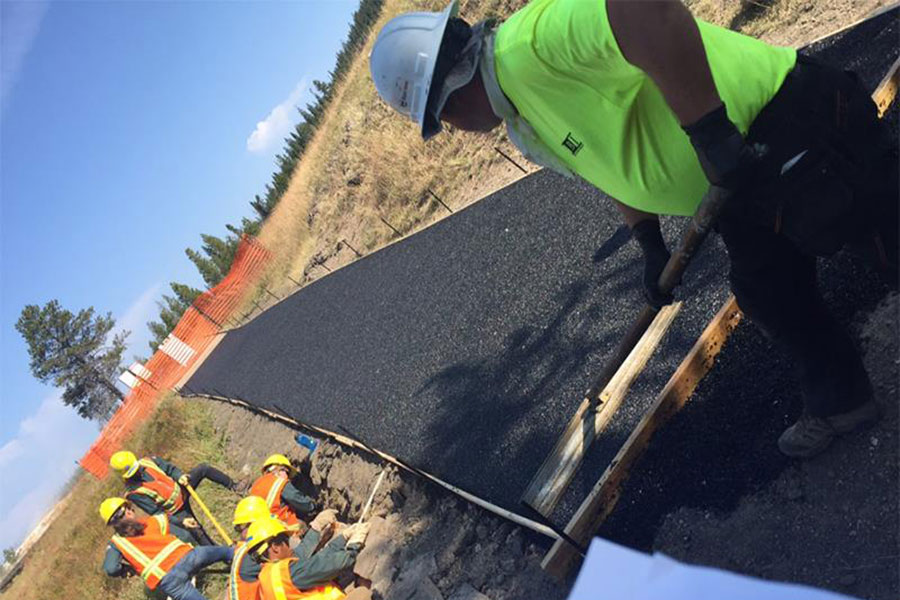
Visitors driving to Yellowstone National Park’s iconic geyser, “Old Faithful,” also will travel via tire once they exit their cars for a closer look. Old Faithful now boasts a porous, clean flexible walkway made mostly of recycled Michelin tires.

The pavement surface, known as Flexi-Pave and manufactured by the company K.B. Industries (KBI), is gentler to the environment than asphalt because the permeable composite material allows for better erosion control and preservation of the natural patterns of groundwater flow. In addition, the walkway surface is extremely durable and tolerant of heat and cold, and does not leach any oil into the surrounding environment.

“The material used to create KBI’s Flexi-Pave is completely benign and therefore can be used safely with the delicate aquifers here in Yellowstone,” said Kevin Bagnall, CEO and founder of KBI, in a statement. The Old Faithful Walkway Project covers 6,400 square feet and includes 900 Michelin tires. “The path allows 3,000 gallons of groundwater to pass per square foot. It also is designed to diffuse the water’s force, helping prevent erosion,” Bagnall noted.

“The Old Faithful Walkway Project is a great example of what a difference a company devoted to sustainability can make in the world’s first national park,” said Karen Bates Kress, president of the Yellowstone Park Foundation, in a statement. “We are fortunate to have a corporate partner as farsighted, public-spirited and generous as Michelin,” she added. In fact, Michelin flew in a team of employees from across the country to help complete the construction of the walkway. The 10 volunteers were winners of a company-wide contest to participate in the project.

Michelin serves as a major corporate sponsor of the Yellowstone Park Foundation, with a goal of helping the park curb operating expenses and reduce the consumption of raw materials. To that end, Michelin regularly donates and helps maintain thousands of tires for Yellowstone National Park’s more than 800 vehicles, including patrol cars, garbage trucks, snow plows and load-hauling tractor trailers. The tires feature the latest in green tire technology to help save fuel and reduce emissions.

“Helping build and provide material for this new pathway is very much in line with Michelin’s goal of working with the Yellowstone Park Foundation,” said Leesa Owens, director of community relations for Michelin, in a statement.


Ten Steps to Build the Cities of the Future

The World Economic Forum has released a new report, Inspiring Future Cities & Urban Services in which it highlights the emerging technologies and business models that are changing the way urban services are delivered. It proposes a 10-step action plan to enable cities to navigate the journey of urban transformation.

The “business of running cities” is changing rapidly due to the emergence of new business models and technologies, which cover a wide range of urban services, such as mobility, infrastructure, energy, water, waste management, health, safety, security, welfare, the environment, knowledge, skills and culture. It also requires the involvement of a large number of stakeholders in the planning and administrative process, including governments, citizens, the private sector and NGOs.

The World Economic Forum’s new report, Inspiring Future Cities & Urban Services, identifies the way in which emerging technologies and new business models are transforming how cities plan and operate. The report, written in collaboration with PwC, identifies how innovative business models – such as the sharing and circular economy, digital integration of services, public asset revitalization, innovative outsourcing – will unleash excess capacities in the urban realm and enable cities to do more with less. The report chronicles technology innovations such as the internet of things, mobile-based sensing, location and condition sensing, data analytics and open data, which will enable cities to tackle a myriad of urban challenges.

As cities try to embrace innovation in an effort to address major urban challenges, they are overwhelmed with issues such as budget constraints, flawed governance structure, lack of leadership commitment and talent, lack of trust among stakeholders (citizens, government and private sector), and external issues such as migration and demographic changes. The World Economic Forum recommends that city governments:

  • Usher in regulatory reforms to attract capital and human resources in an increasingly competitive landscape
  • Develop agile, transparent and city-scale governments to rapidly respond to an ever-changing global environment
  • Develop institutional capacity by investing in people and processes
  • Empower city leaders to change the default position of being risk-averse and take calculated risks
  • Involve citizens, NGOs, the private sector and academics in decision-making to improve legitimacy and build trust
  • Achieve the right balance to allow for organic growth while adhering to master plans
  • Leverage standards and promote reuse to reduce cost and promote interoperability

Gregory Hodkinson, Chairman, Arup Group, said: “Today, 54% of our global population live in cities and by 2050 it is estimated to reach 66%, which is an increase of 2.5 billion in the urban population. While our cities face many challenges, such as climate change, social segregation, economic development and resource constraints, new business models and emerging technologies have disrupted the way urban services are being delivered and resulted in excess capacity within cities being efficiently utilized. However, technology does not provide a silver-bullet solution to urban problems and instead a holistic approach is required that will transform planning, governance and regulatory aspects.”

“In the Fourth Industrial Revolution we are likely to see the biggest industrial shifts in a generation, changing the way we work and live in the urban environment.

Innovations such as 3D printing, artificial intelligence and next-generation robotics will shift models of work and production in ways that are impossible to predict. Cities and businesses need to be adaptive. Public-private collaboration will be required to enable cities to navigate the path of this urban transformation,” said Alice Charles, Lead, Urban Development, World Economic Forum.

The report recommends that the private sector should be made an equal stakeholder across the entire urban development value chain, with the public sector driving phases such as policy-making, planning and monitoring, and the private sector taking a lead in design, implementation, operations and management, and financing. The risks associated with entering into public-private partnerships are different across the developing world (risks are more fundamental pertaining to business environment and apply to most project phases) and the developed world (risks are centred around project phases such as planning, construction and termination). The report recommends that government initiate actions, such as creating a stable regulatory environment, introducing administrative reforms and developing reliable dispute resolution mechanisms to address the risks. It also recommends that the private sector further engage with government and the local population to develop trust.

Hazem Galal, Global Leader, Cities and Local Government Network, PwC, added: “Cities will have to ensure that their DNA (fundamental social and economic characteristics) is retained while they make the journey towards urban transformation. Cities should be willing to experiment and at the same time learn from other cities while they develop unique city-specific solutions that leverage an accepted standard. Cities will have to create a balanced strategy which gives due considerations to social, economic, environmental dimensions.”

The report provides a framework for cities to classify various urban dimensions across levels of maturity ranging from rudimentary (for example, a city which is addressing demand supply gaps across various urban services) to scalable (for example, a city that can adapt to changing needs), and suggests a 10-step action plan for cities planning to navigate the urban transformation journey.

In 2016, the World Economic Forum’s infrastructure and urban development industry partners will identify ways in which the private sector can enable cities to meet the new global priorities and targets, as set out in the Sendai Framework, Sustainable Development Goals and COP21, as well as implement the new 20-year urban agenda being set out in Habitat III. The Forum will also undertake a deep dive on migration and cities, exploring the types, causes and patterns of migration to cities and identify ways to enhance public-private cooperation to respond to this growing challenge, and assess how cities can leverage the opportunity presented by the circular and sharing economy to do more with less.

The World Economic Forum’s Shaping Future of Urban Development and Services Initiative serves as a partner in transformation to cities around the world as they seek to address major urban challenges and transition towards smarter, more sustainable cities in this rapidly urbanizing world. Directed by a Steering Board and guided by an Advisory Board, the Future of Urban Development and Services Initiative works in collaboration with local partners.


Why Companies are Adopting Sustainable Printing

For many businesses, office printing represents one of the largest expense categories, and yet few business leaders give it much thought. Some companies attempt to create a paperless office, and then they face all of the practical challenges and security uncertainties that accompany making that shift. Others ride a status quo that tacitly allows printing of any kind.

But for executive leaders who are constantly looking for ways to remain competitive and improve how they do business, the answer typically lies between those two extremes.

By switching to secure print solutions and fostering more mindful printing habits around the workplace, businesses can not only save millions of dollars, but they can also slash their carbon footprints significantly. The transition doesn’t happen overnight, but it soon leads to a more cost-efficient, secure, and healthy business.

The Simple Beauty of Mindful Printing

Today, some of the most effective business leaders have legacy-driven mindsets; they focus on taking actions that produce lasting results and have sustained positive impacts on their companies and their people. Initiating change in the way people print may not sound particularly exciting or revolutionary at first, but the mindful habits that a sustainable print strategy instills in employees will have a beneficial, evergreen influence for years to come.

Simply put, mindful printing reduces the amount of resources your company consumes.

When people understand the impact of each decision to print, they typically become more conscientious of their roles in meeting the company’s cost-savings and sustainability goals. This isn’t to suggest that employees should never print something that isn’t part of a required business process or workflow — it’s about fostering awareness and mindful habits.

A company comprised of people who understand the costs associated with printing and how mindful printing habits align with company goals will inevitably consume fewer resources and spend less money. Beyond the paper, ink and toner, and all of the resources that go into creating those consumables, you have to factor in total energy costs and the labor costs of IT resources tasked with managing print.

When demand for print is mindful across the enterprise, you also need fewer printing devices to meet that reduced demand. Fewer devices means less time and money spent to maintain a printer fleet. In our experience at Pharos, this factor alone has resulted in significant savings for many companies. We’ve found that on average, a company with 10,000 employees can save upward of $1.5 million every year by implementing the right print strategy.

Mindful print solutions improve a company’s security as well. Employees print to a secure, encrypted network queue and then use their identification or access cards to authenticate at whichever device is most convenient for them. This simple, flexible workflow encourages employees to think before they print, ensures document confidentiality, and practically eliminates “tray trash” — those uncollected, forgotten documents you often see in or around a printer, waiting for the wrong hands to them pick up.

It also enables the company to monitor who’s printing what and at how much cost. These insights reveal ongoing opportunities for improvement toward meeting cost-savings and sustainability goals.

Fostering Mindful Print Practices in the Workplace

Obtaining the right technology for secure printing is fairly straightforward. That solution alone goes a long way toward making people think about their printing choices. But to get the most out of any print management solution, you have to establish more mindful printing habits across the organization to reduce the overall demand for print.

Here are three ways you can encourage staff to be more mindful with their printing choices:

1. Establish printing policies, and make employees aware of them.

Print management software will help you figure out where the most waste is occurring. But even before that, there are some obvious places to start policing, such as personal printing. Printing from email clients and web browsers is rarely essential for business, and with the exception of marketing or presentation materials, who really needs to print in color? It’s often eight times more expensive than black and white, sometimes more.

You don’t have to set absolute rules or create the impression that the company is “cracking down” on print. The occasional personal document isn’t going to tank your budget on its own. But policies designed to inform employees about the cost of printing and that encourage people to think more critically about whether something really needs to be printed — that’s how you reach the tipping point.

2. Be a role model.

Modeling desired behavior is an underappreciated form of business leadership. Leading by example is an extremely effective way to encourage employees to embrace change.

In other words, clean up your own house before asking others to do likewise. Be a steward of print by illustrating through action the positive effects that reducing print volumes can have on your company.

3. Communicate, communicate, communicate.

Help employees understand the rationale behind your new printing policies, and explain how they can be proactive agents of change. Presenting the shift to a more sustainable workplace as a strategic cause will engage their minds and hearts, and it will make the job of managing the change far easier.

Look at it as an internal marketing campaign for your employees. Sell them on the value of mindful printing — whether it’s the money the company will save or its positive impact on the environment. Whatever the angle, make sure your employees can understand and internalize it as more than just a directive from the top, but as an important goal they should be eager to help the company to reach.

Breaking out of old habits is never easy — at Pharos we know this firsthand. Having guided a variety of organizations through the transition to more mindful printing, we understand just how difficult managing change can be for business leaders.

Clear communication increases cooperation. When employees are able to understand why the changes are being made, as well as their own roles in carrying them out, your company can move forward as a unified front — with each person committed to creating a better future.

Dale McIntyre serves as a vice president at Pharos Systems International, an enterprise print solutions provider based in Rochester, New York. Dale provides strategic leadership in the areas of sustainability, brand, and customer engagement. He regularly shares his unique sustainability perspective on print strategy through blogs, webinars, and appearances.

Earth Hour is this weekend, but energy conservation is important all year

The organisers of Earth Hour are encouraging you to switch on your social power and switch off your power sockets to shine a light on climate action on Saturday, March 19 between 8:30 p.m. and 9:30 p.m. 

To show support for Earth Hour, customers can safely go “off the grid” by turning off all non-essential lighting, appliances and devices. If using candles as a light source, do not leave them unattended. The event is held worldwide annually encouraging individuals, communities, households and businesses to turn off their non-essential electrical appliances and lights for one hour as a symbol for their commitment to the planet.

It was famously started as a lights-off event in Sydney, Australia in 2007. Since then it has grown to engage more than 7,000 cities and towns worldwide. Today, Earth Hour engages a massive mainstream community on a broad range of environmental issues.

Earth Hour is a global environmental initiative in partnership with World Wildlife Fund (WWF). Last year, electricity usage during Earth Hour dropped by 3.5%.

CONSERVATION TIPS 

  • In the winter months keep curtains open to heat your home naturally; in summer, close them to keep your home cool 
  • Shift your laundry and set your dishwasher to start after 7 p.m. when off-peak prices begin 
  • Turn down your thermostat. For every degree lower, you’ll save up to 3% on heating costs 
  • Unplug appliances and devices that aren’t being used to avoid phantom power 

httpss://www.youtube.com/watch?v=wxhHhyjcTmo


Reinventing Fire in an Energy-Hungry Civilization

Business can become more competitive, profitable, and resilient by leading the transformation from fossil fuels to efficiency and renewables.

An old Chinese proverb goes, ‘When the wind changes, some build walls and some build sails.’ “Which one will you be?” asks Michael Tucci of the Rocky Mountain Institute, an energy think tank employing 75 scientists in a quest to create the next big thing – new energy sources. Global warming aside, the volatile price of oil and the threat of pollution should be enough reason to realize that oil is not a sustainable energy source.

The dreams of our ancestors, which latched onto this miracle substance to drive the development of humankind at a pace unseen in our history, have come to an end as our consumption of oil has reached unsustainable proportions. To put this in perspective, each person uses 3 tons of coal, 1,000 gallons of oil and 75,000 cubic feet of natural gas a year, by the simple act of being a consumer in an energy-hungry civilization.
 
If you were to study a graph showing the consumption of fossil fuels over the last 100 years, you would find that the rise in GDP matches this consumption almost exactly. The wealth of humanity is directly linked to the diminishing wealth of the planet. Add to this the fact that we now live on average 30 years longer than we did 100 years ago and we can safely assume that the planet is slightly more stressed than it used to be.
 
There are a few dynamics we need to watch as we strive toward new energy sources according to Tucci. One is the price of oil per barrel, recently highlighted by the effects of political turmoil in the oil- rich Arab states. “Oil has also become more expensive to find,” says Tucci. “Oil is controlled by governments with their own agendas, unlike the oil tycoons of the 1970s who were in the game for their own enrichment.
 
The volatility we find in today’s oil markets don’t make good business sense either. Businesses are shackled by these fluctuations and are unable to plan properly.” Tucci’s solution? A longterm view aimed at reducing need and replacing fossil fuels with renewable energy. “Efficiency, then renewables,” he states. Our current energy systems were built in a time of plenty, where economies of scale followed a different matrix. This system has ensured that a staggering 75-90 percent of all fossil fuels are wasted.
 
An amazing 70 percent alone is wasted at source, at the power station. Along the supply chain further wastage occurs on the power grid, motors, pumps, switches and pipes. If you were to start with 100 units at the power plant you’d only get 10 units out at the end user. “Savings and efficiencies are actually to be found downstream, not at the end,” explains Tucci.
 
“If you look at the energy systems that have been overhauled in Europe, for example, you’ll find that people there consider themselves to have a quality of life equal to those living in the United States. This comes down to a simple process of efficient system design to ensure a continuation of a lifestyle to which we have become accustomed. We can have a quality lifestyle and be energy efficient, the two are not unsuited,” he says.
 
Most countries have an energy grid which is centralized, pretty much how the phone system was in the 1930s. So much has changed in other industries since then, take technology for example, yet the energy systems remain a challenge and open for radical innovation. Tucci illustrates this brilliantly, “If you took Thomas Edison to a TV station today he wouldn’t recognize a thing.
 
Take him to a power plant and he’d feel right at home, nothing much would have changed at all.” With exciting change and innovation taking place in almost every other sector, it’s time for energy to arrive in the 21st century.


How to Fight the Taliban With Flip Flops

  • An elite, highly-trained soldier decides that jumping from planes and blowing stuff up is not how change should happen.
  • He realizes economic activity is the only force that will eliminate poverty and especially discrimination towards girls and women.
  • Combat Flip Flops is launched, offering jobs to locals, money for education and cool fashion accessories made from waste military products.

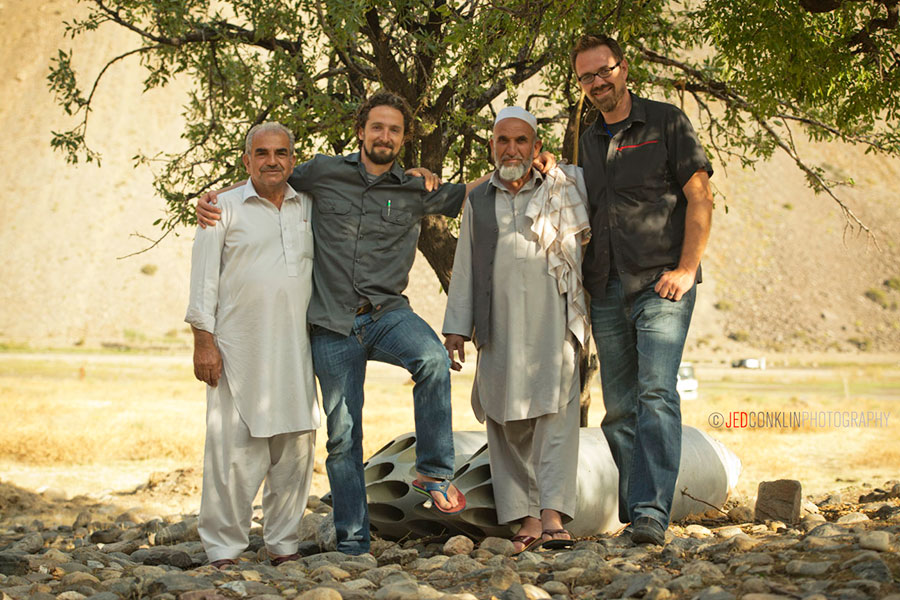
Matthew Griffin’s (pictured above) idea on the global war on terror ended within 15 minutes of arriving in Afghanistan. As a member of the 75th Ranger Regiment, one of the most elite infantry units in the world, he was expected to go further, faster and harder than any other unit. What he never expected was a change in how he viewed the war and that he’d coin the slogan: “Business, Not Bullets – flipping the view on how wars are won.” He also realized that Afghans wanted the same thing as many of us – job security.

“After serving multiple deployments in Afghanistan and Iraq, I knew I wanted to do more for the people living in these nations,” says Griffin. “The idea was simple: create an environment that gives people living in post-conflict nations the opportunity to peacefully rebuild their economy by manufacturing badass products.”

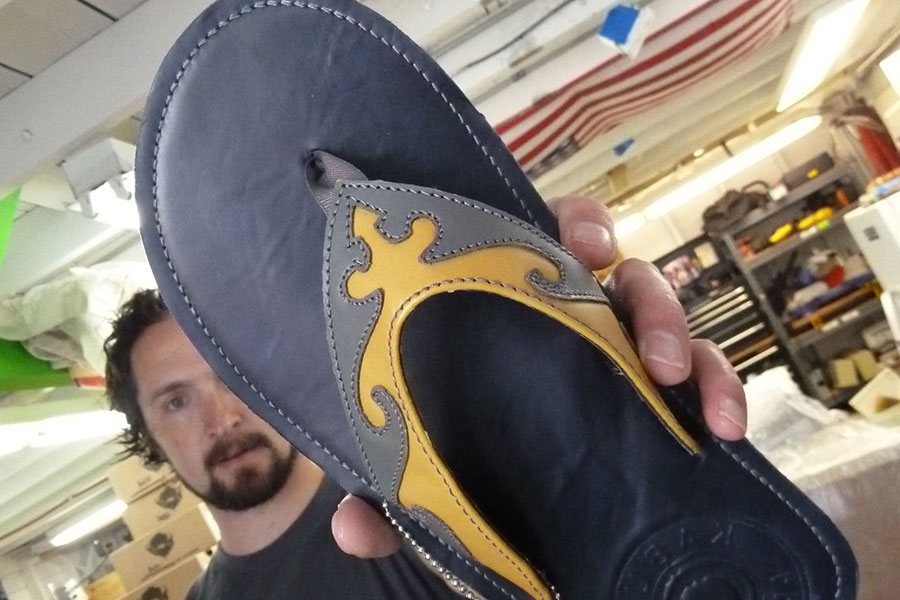
The farm boy from Iowa discovered his first badass product while visiting a military boot factory in Kabul. He was amazed to see a pair of flip flops being made from the soles of combat boots – two slits made in a rubber base with a leather thong added. Afghan soldiers had found it cumbersome to remove their boots five times a day for prayers and an ingenious manufacturer had come up with “combat lite” versions. It was exactly what Griffin had been waiting for. He registered the domain CombatFlipFlops.com within the hour, called fellow soldier Donald Lee to ask if he wanted to go into business, and then called his wife to tell her he was starting a company.

AK_flip combat flip flops

“The U.S. poured trillions of dollars into this country, we might as well have a cool commercial effort to sustain it once the war ends,” says Griffin. Many factories were established in Afghanistan by coalition countries to supply police and soldiers with military gear. Griffin knew that once the war ended, these factories would disappear too. By continuing to produce goods with the same locals, but for peaceful and fashionable reasons appealed to Griffin. Combat Flip Flops launched under a slogan many marketing experts would cringe at, yet for this soldier-turned-entrepreneur it’s perfect: “Bad for running, worse for fighting.”

They set up a really cheesy website and people loved the idea. They sold 1,500 pairs online in first few weeks, despite not having made a single pair.

What does a soldier know about business you’re likely to ask? Surprisingly, Griffin hadn’t only been squinting down the sights of a gun barrel, but also taking the economic lessons of war to heart. “Everywhere I went in Iraq and Afghanistan I saw conditions that were ripe for fundamentalist, extremist groups to take over,” says Griffin. What he saw was the enemy providing jobs.

“They’d say to a poor, rural farmer, ‘Here’s $50 and here’s a bomb. Go plant it.’ Someone with no food is going to take the money and risk planting that bomb to feed his family.”

Griffin decided that an economic strategy was better than a military strategy. “I saw that small businesses were creating sustainable change in some areas,” he says. “Whether it was a soda or SIM card stand, there were families that invested together, bought businesses, cleaned up their street corners and ran businesses.”

afghanistan combat flip flopsA tough childhood, divorced parents and harsh physiological examinations to enter the Special Forces had Griffin thinking he had no empathy. Watching young girls playing happily with nothing but a stick in the middle of a desolate Afghan mountain range changed all that. Witnessing the poverty and oppression of girls and women in these harsh environments made him realize that empathy was the one thing missing in his life. He decided to change and create economic opportunities for impoverished women.

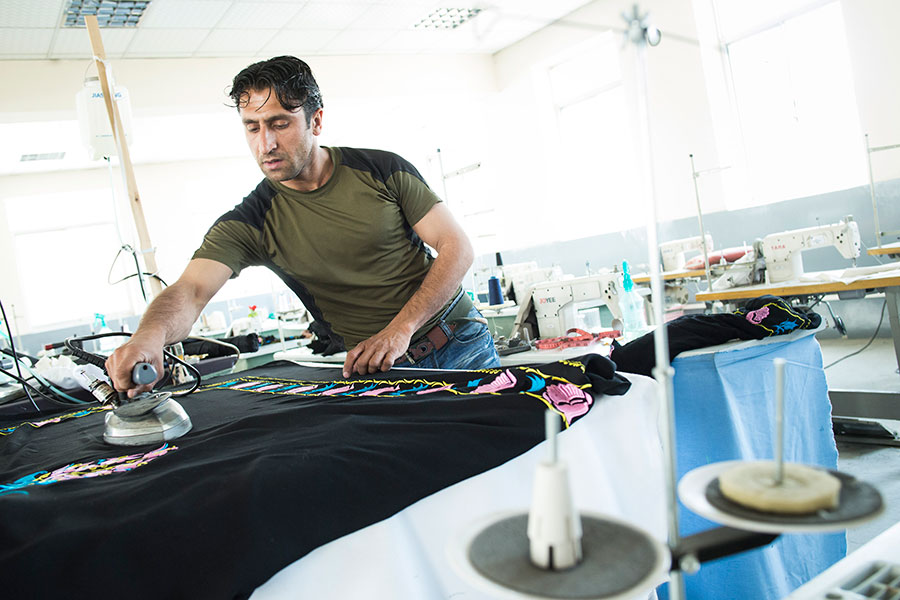
Flip flops were just the start. Griffin and his team had taken a product that people in nearly every country wear, and made it into a weapon for change. Production is now in Bogota, Colombia, providing jobs and investing in people who desperately need it. Their Claymore Bag’s flip the script on traditional weapons of war. Instead of carrying bombs, the bags carry iPad’s and laptops. Their Cover and Concealment sarongs are handmade in Afghanistan by local women and each sale puts an Afghan girl into secondary school for a week. The Peacemaker Bangle and Coinwrap are made in Laos – from bombs. Each bracelet sold clears three square meters of Unexploded Ordnance from a region rocked by long-term war.

afghanistan-education combat flip flops

Griffin is happy that proceeds are going towards educating girls. “If you want to kill radicalism, you can do it with education,” he says. “If you educate women, things will get better, because if you educate a mother, you educate a family and an educated mother is not going to let her child get radicalized.” So far Combat Flip Flops has donated enough money from sales to support the equivalent of 12.7 years of girls secondary education in Afghanistan and funded the clearing of 657 square meters of unexploded ordinance.

“I thought joining the military would be the most beneficial way to help people,“ says Griffin. I used to think that jumping out of airplanes and blowing things up was the best way to support stability in these areas, but after going to Afghanistan and seeing what I saw, enabling people to stand on their own feet is the best course of action for everyone.” Yet despite the change in tactics Griffin is still an adventurer at heart. “Unapologetically, we make cool shit in dangerous places,” he says with a grin.

combat-flip-flops

New Satellite System Sends Forest Clearing Alerts to Your Email

A new satellite-based system shows precisely where trees are being lost, with data so fast that new logging roads and illegal clearings are visible within one week after the loss, instead of months.

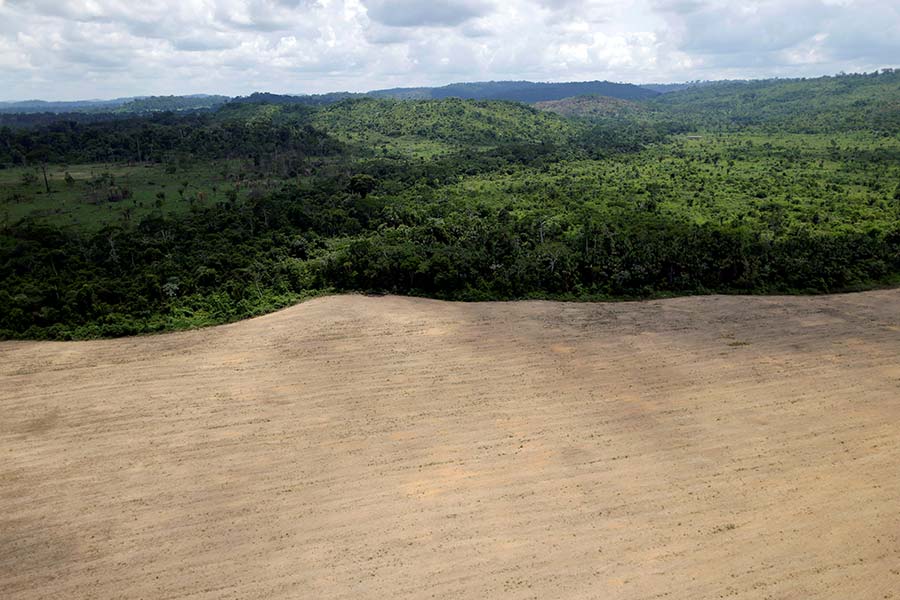
It’s a warm August day in the pristine forest of Cordillera Azul National Park, located in Central Peru’s Amazon Rainforest. Cordillera Azul, home to more than 1,800 species of plants and animals, is one of the most biologically diverse areas in the world—and one of the most endangered. On this day, new patches of forest-clearing pop up on the east side of the park’s surrounding buffer zone—some legal, some not—and for the next six months, they proliferate day after day, creeping toward the borders of the park.

We’re able to track this activity thanks to a new satellite-based forest monitoring tool, which tells us where trees are lost in as little as one week—depending on cloud coverage—after it happens. Developed by the University of Maryland and Google, the new GLAD (Global Land Analysis and Discovery) alert system now available on Global Forest Watch detects tree cover loss in Peru, Republic of Congo and Indonesian Borneo at 30-meter resolution, roughly the size of two basketball courts. Previously, governments, forest managers and communities had to wait an entire year to get detailed satellite data on tree cover loss, presenting challenges for law enforcement and anti-deforestation efforts.

Illegal logging has become a major issue in Peru, with estimates that more than 80 percent of timber in the country is illegally harvested. Selective logging is difficult to pick up directly at 30-meter resolution, but the roads used to transport the harvested timber out of the forest are large enough to be detected by the GLAD alerts. In the buffer zone around Cordillera Azul National Park, three logging roads can be seen expanding over the past six months, with a new fork popping up last month. Now that it’s rainy season in the Peruvian Amazon, the alerts seem to have stopped this month—for now. Whether that’s due to lack of visibility or cease in activity remains to be seen.

The GLAD alerts could revolutionize the way we monitor forests, beginning in Peru, Republic of Congo, and Kalimantan, and soon expanding to the rest of the world. But these alerts will not inspire action on the ground by themselves—we need people like you to use them.

With the GFW subscription, you can get an email notification every time there is a new alert in your area of interest—whether it’s in a national park, an entire country or a logging concession. The automated emails will tell you the number of new alerts in that area and a direct link to see them on the map. By keeping an eye on the world’s forests, everyone can help play a role in their protection.

Explore the data here, learn how to subscribe for alerts here, sign up for our webinar on how to use the alerts here


The Global Company That Turns Trash Into Cash

So you want to save money in your business? Where would you start? Most companies will begin looking at staff or existing suppliers when cutting costs. But what about waste?

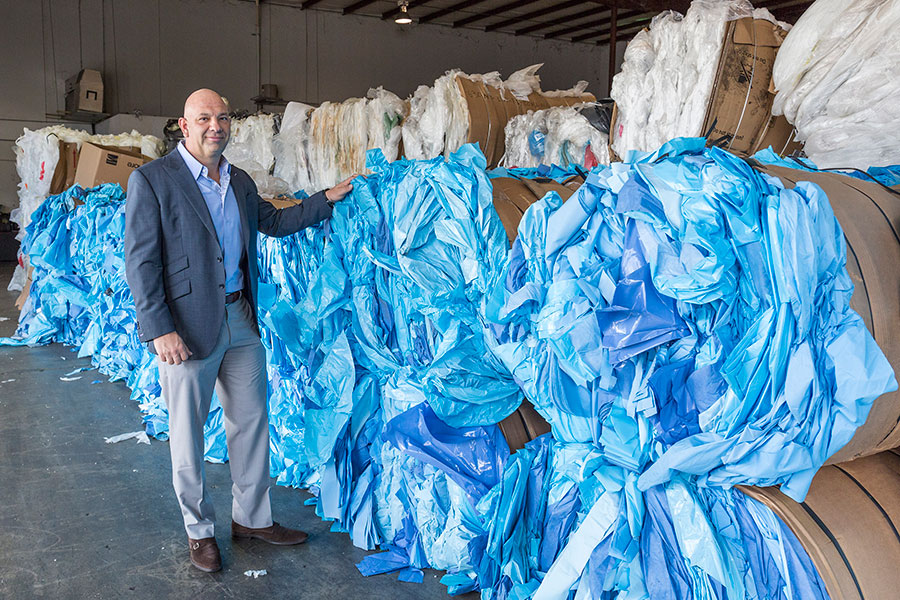
According to Rick Perez, Chairman and CEO of Houston-based Avangard Innovative (pictured above), there’s profit to be found in your factory waste bins. To prove it, some of his clients have reported returns of twelve times the savings on their waste. “You’ve already paid for the packaging on items you’ve bought,” says Perez, “so you’ll get 100 percent profit if you turn this waste into a commodity; something useful.” Rather than paying someone to cart trash away, Avangard has pioneered an ingenious business model that reverses the value chain, turning trash into an important budgetary item.

“We turn waste into money, something most companies don’t focus on,” says Perez. “It’s amazing what’s thrown into trash bins that companies are unaware of. We get skeptical glances at first, but once we’ve tracked it and presented a report, it’s much easier to show a dollar value to clients. Then they’re happy to pocket the cash.”

Perezs’ story is the classic American Dream. Arriving in the U.S. from Mexico City at an early age, he worked his way through school and university, always believing that new opportunities lay around the next corner. His father, a serial entrepreneur, had instilled a work ethic in Perez that taught him that hard work pays. His early career included a stint as a waiter and packing supermarket bags – work experience that any successful entrepreneur will only value later in life.

His ‘aha’ moment came when his brother, who worked at Merrill Lynch, told him about the deposit paid on returned Coca-Cola and Pepsi bottles. It had been an effective recycling system since being introduced in the U.S. in 1972, but Perez was one step ahead and had seen the future – discarded ‘one-way’ plastic bottles that would soon start flooding landfills. A fortunate trend at the time was an increase in the demand for synthetic fibers, used in the manufacture of polyester-based products. Avangard was soon processing 94,000 tons of plastic bottles and became the largest recycler of plastic bottles in the world.

Perez next swung his attention to supermarket chains, retailers and grocery stores, all with similar dilemmas around their waste packaging. Avangard developed a tech system that captured the data of recyclable material in real time. If you think Silicon Valley has an edge on innovation with their cool tech gadgets, think again. Perez has created the world’s first ‘trash-tech’ company.

So, how exactly do you convince a CEO to take their trash seriously? Perez reckons that once management moves beyond legislation and compliance issues and realizes they can make shareholders happy by increasing profit, the barriers disappear.

“Most annual reports have a page on sustainability nowadays. This offers a new opportunity for CEOs to shine,” says Perez.

The numbers don’t lie. A typical grocery store chain can achieve 20 percent of their net profit through waste recycling and improved efficiencies. “We’re mostly dealing with customers who already have a trash and recycling program in place, but we’ve redesigned the system to create profit,” says Perez. Most companies throw people at their trash problem, Avangard throws technology at it.

The cost of start-up equipment is minimal and the globally active company supplies all maintenance and training. Most customers will see a return on their investment within 12-18 months. Charlie Chanaratsopon, CEO of Charming Charlie Inc., was skeptical at first, but has now seen the benefits. “Avangard has allowed us to understand the composition of our waste, and therefore the value,” he says. “It’s brought an entirely new level of discipline to our sustainability program and by outsourcing this to Avangard, we can focus on what we do best: run our business.”

Finding value in your trash is great for generating profit, but Perez has always had his eye on a grander cause: helping save the planet. “Anything we can do that takes away from dumping things into landfills and acknowledges the importance of the environment, is a good goal,” he says. Most companies view sustainability programs as a cost, but Perez sees exactly the opposite – an opportunity to make money. “You’re also cleaning up cities and towns – there’s a social dimension as well,” he says.

Hosting events with quirky names, such as Styrofoam Amnesty Day, has helped Avangard raise awareness around the recycling of ‘difficult’ substances, while demonstrating they can indeed be recycled.

Waste is everywhere in a supply chain: cartons, pallets, buckets, tubs, lids, drums, used oil and organics. Many CEOs already know there’s a cost associated with getting rid of these items as they’ve paid for trucks to remove them, yet very few see waste as an asset – that someone owes you money on.

Recycling is not new either and Perez is aware that many view his sector as low-tech. His advantage lies with technology and tracking – a system that generates detailed reports through a control center that will inform CEOs on the status of a factory product, even before their own internal stock systems can. “When you have the right data, you can execute a plan,” says Perez.

It also helps that our software can generate sustainability numbers to use for marketing purposes – an important factor when positioning your brand with consumers who want to see a commitment to social impact before buying. “Think of us as your instant sustainability campaign,” laughs Perez.

Larry Del Papa, President of Del Papa Distributing, was surprised by the sheer volume of their waste. “We can now track our recyclables to maximize our revenue with Avangard, just like our other products,” he says. “We’ve increased our recycling revenue, cut our trash bill, helped the environment and boosted our bottom line.”

“Every company tracks their products, yet somehow waste and recyclables aren’t,” says Perez. “The receiving depot at the back of your store should be viewed as another money-making opportunity, on-par with the front-end, where consumers buy your products. Once you’ve convinced employees and your board that trash is a valuable commodity that is being given away, or even stolen, it will get treated differently.”

Perez feels the new generation of young people will usher in a new era of recycling, and with it bigger business opportunities.

“The kid’s of today know about recycling,” says Perez. “They know it’s the right thing to do, and a company that adopts a culture of recycling today will benefit from future generations (the future CEOs and employees of the world) who will understand that trash can be a normal part of any business plan.”

“We should all aim to leave something valuable behind for the future,” says Perez. “I’d like people to look back on my legacy one day and know that I turned trash into a valuable commodity.”

 

0