Think While You Drink: The Beer That Fights Climate Change

A British craft brewer has launched a beer made from melted polar ice caps, sending a case of “Make Earth Great Again” to the White House to highlight climate change denial.

Profits from the beer will be donated to 10:10, a charity that supports projects tackling climate change.

BrewDog said it was inspired by the U.S. withdrawal from the Paris Accord, a pledge made by nearly 200 countries in 2015 to limit global warming, mainly by cutting carbon dioxide and other emissions from the burning of fossil fuels.

If you like this, subscribe here for more stories that Inspire The Future.

“Make Earth Great Again is a reaction to declining interest from notable world leaders to the biggest issues facing our planet and civilisation,” Brewdog co-founder, James Watt, said in a statement. “Beer is a universal language.”

The Scottish craft brewer said the beer is brewed with water from melted polar ice caps and Arctic cloudberries, an edible fruit similar to a blackberry that is native to Arctic regions.

Labels on the Brewdog bottles depict a cartoon robot resembling U.S. President Donald Trump battling a polar bear.

By Lee Mannion @leemannion; editing by Lyndsay Griffiths.

If you like this, subscribe here for more stories that Inspire The Future.


Sailing on an Ocean of Trash: Caribbean to Norway And Back

Three people journeyed across the globe to discover the health of our seas. The Zing Ocean Conservancy team members have an incredible passion for the ocean; the beauty of it, the diverse life, the roughness of the seas and what is yet to be explored. Unfortunately, what they found is that how we live today is not very sustainable for our oceans.

Every year, at least eight million tons of plastic enters the ocean. That’s the equivalent weight of three million Honda Civics per year, or 5.8 Honda Civics per minute.

If you like this, subscribe here for more stories that Inspire The Future.

What’s so bad about plastic in the ocean, you may ask? Plastic takes about 400 years to biodegrade. Almost all plastic that has ever been produced still exits. The plastic that enters the oceans are broken into microscopic pieces from weather, sun and saltwater. These pieces are often mistaken for food and enter the food chain. Millions of marine animals are killed from eating plastic annually. Plastic chemicals can also be absorbed in our bodies and can cause serious health problems. Today, 94% of U.S. tap water is contaminated by plastic.

Zing Ocean Conservancy’s Co-Founders, Michele Donihe and Jonas Legernes decided to raise awareness around it. They embarked on a journey across the globe in a 30-foot sailboat to discover just how bad it is. Along the way, they documented it and cleaned some up.

The journey started in the U.S. Virgin Islands mid-May 2017 and ended in Spain late July 2017. In almost every port and country, they cleaned up beaches and spread their passion to save the ocean. The expedition included an Atlantic crossing and visits to three different continents.

What did they discover? An even bigger passion for the ocean within themselves. And that the health of our oceans is seriously threatened.

“We feel like we have to give back to the ocean, and encourage others to do so as well,” says Donihe. “Pick up trash for 10 minutes every time you go to the beach. Use less plastic. The average plastic bag is used for only 15 minutes; use reusable non-plastic bags. Anything and everything helps. Be cool and recycle.”

www.zingoceanconservancy.org

If you like this, subscribe here for more stories that Inspire The Future.


Forget Politics! Together We Can Save Our Climate!

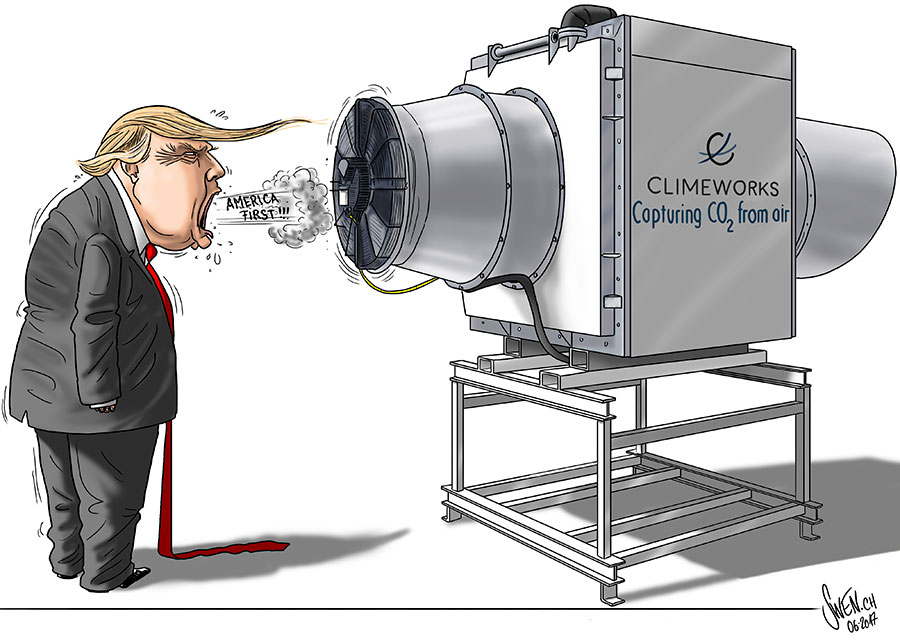
One day before President Donald Trump announced his decision to pull the USA out of the Paris Agreement, Climeworks, an innovative Swiss startup, launched the world’s first commercial carbon capture plant in Hinwil, Switzerland.

The plant, which filters carbon dioxide directly out of the air, offers a solution in the fight against climate change. Climeworks, which invented and developed a novel CO2 filtering material, aims to remove one percent of CO2 global emissions from the air by 2025.

If you like this, subscribe here for more stories that Inspire The Future.

Business campaigning Ltd., a Swiss campaigning firm with the motto “meaningful campaigns for meaningful ideas” was “dismayed by Trump’s decision, but buoyed with hope after seeing the launch of this potentially climate-saving technology,” made the decision to launch the Planet First campaign to remove 100 tons of CO2 from the atmosphere and store it safely underground.

The business campaigning team believe that technology now enables ordinary people to collectively make a difference in the fight against climate change, no longer needing to rely on governments to fight it on their behalf.

The filtered CO2 can either be stored safely underground, used as a raw material in the food and beverage industry, or to manufacture carbon-neutral synthetic fuels, which can be used in the auto industry.

The Planet First campaign will fund the removal of 100 tons of CO2 from the air in support of Climeworks’ goal in the fight against climate change.

“We want to make a mark with this campaign. Through technologies, such as Climeworks,’climate protection can become a viable business model,” explains business campaigning Ltd., owner and CEO Peter Metzinger.

“The filter plants in Switzerland can evolve into a global export industry and create a new economic sector — the circular carbon economy. Startups and companies can deliver decisive impetus to truly sustainable climate protection, utilizing CO2 as a raw material and reducing the reliance on fossil fuels. This is how we can fight climate change,” says Metzinger.

If you like this, subscribe here for more stories that Inspire The Future.


Millions Worldwide Participate in Earthquake Drills

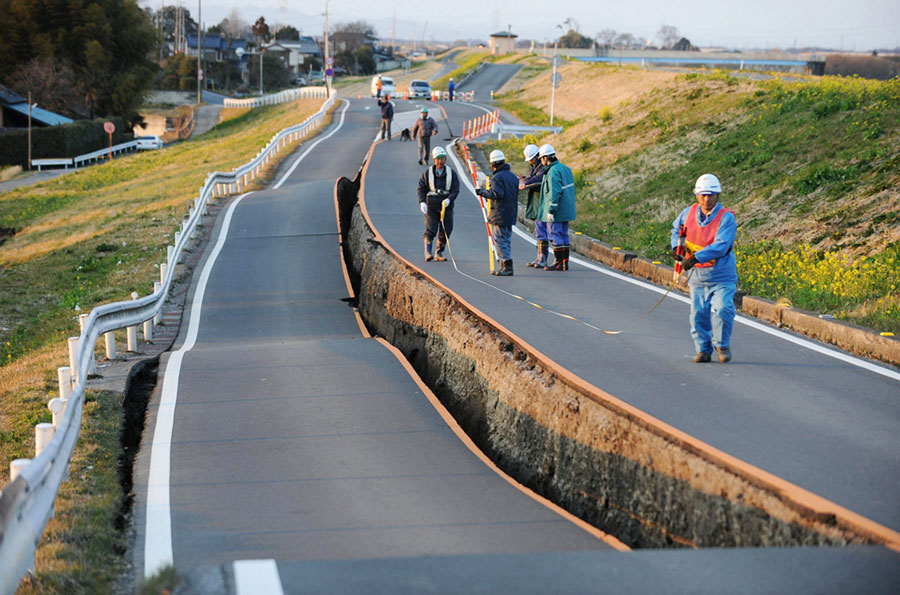
Great ShakeOut Earthquake Drills, regionally organized campaigns linked together as a worldwide preparedness movement spanning 60+ countries, are involving more than 52 million people (and counting) in earthquake safety activities throughout 2017.

Most participants practice how to “Drop, Cover, and Hold On” though many choose to do much more. ShakeOut organizers recommend people follow the Seven Steps to Earthquake Safety to get fully prepared to survive and recover from the next damaging earthquake.

If you like this, subscribe here for more stories that Inspire The Future.

Significant earthquakes in 2017 that serve as devastating reminders for the importance of improving earthquake safety include the two large Mexico earthquakes of September, both of which caused many casualties and property loss. Additionally, these earthquakes highlight how difficult recovery is, and that it is not just the shaking we have to be worried but our quality of life afterward. Hurricanes and wildfires in recent months also indicate that natural disasters are something that we must continue to deal with together and improve our efforts.

“ShakeOut encourages cross-sector, whole community conversation and action about earthquake preparedness, inspiring people to make better decisions for how they can prepare to survive and recover,” said Mark Benthien, Global ShakeOut Coordinator and Outreach Director for the Southern California Earthquake Center at the University of Southern California. “Social science research shows that when people see others take action, they are more likely to take action too.”

Recommended actions for a variety of special situations (in a theater, in a car, etc.) and for people with disabilities are described at www.EarthquakeCountry.org/step5 in the form of text, graphics, and videos, for a variety of learners.

Federal Emergency Management Agency (FEMA) Administrator Brock Long encourages everyone to participate. “Practicing these protective actions can better prepare you in case of an earthquake. A true culture of preparedness requires the effort of the whole community to understand the hazards, then develop and practice the proper protective actions.”

If you like this, subscribe here for more stories that Inspire The Future.


Governments Scramble to Ban New Petrol Cars

First France, now the UK. When it comes to motoring, countries are queuing up to show off their environmental credentials.

The British government has announced that new diesel and petrol cars and vans will be banned from 2040. The move follows hot on the heels of a similar announcement from France’s ecology minister with the same timeframe.

Both pledges are designed to cut toxic emissions, improve air quality and cut public health risks.

Car giants such as SEAT and Kia are already ahead of the game when it comes to alternative fuels. SEAT recently announced an innovative partnership in Spain to promote and commercialise natural gas powered vehicles. ​

Earlier this year four Kia Vehicles were named among Best Electrified and “Eco-Friendly” offerings by the trusted consumer website Kelley Blue Book’s kbb.com. Also, Volvo says that all of its new models will have an electric engine from 2019. And BMW has revealed that its new electric Mini will go into production in 2019 in the UK.

Following the announcements by the British and French governments, we can expect more and more initiatives such as these over the next few months and years from the big beasts of the automotive world.

If you like this, subscribe here for more stories that Inspire The Future.


Nearly 4 Million Americans Are Being Held Hostage by Violent Forces

Please share their urgent plea. WTF… Where’s the FEMA?

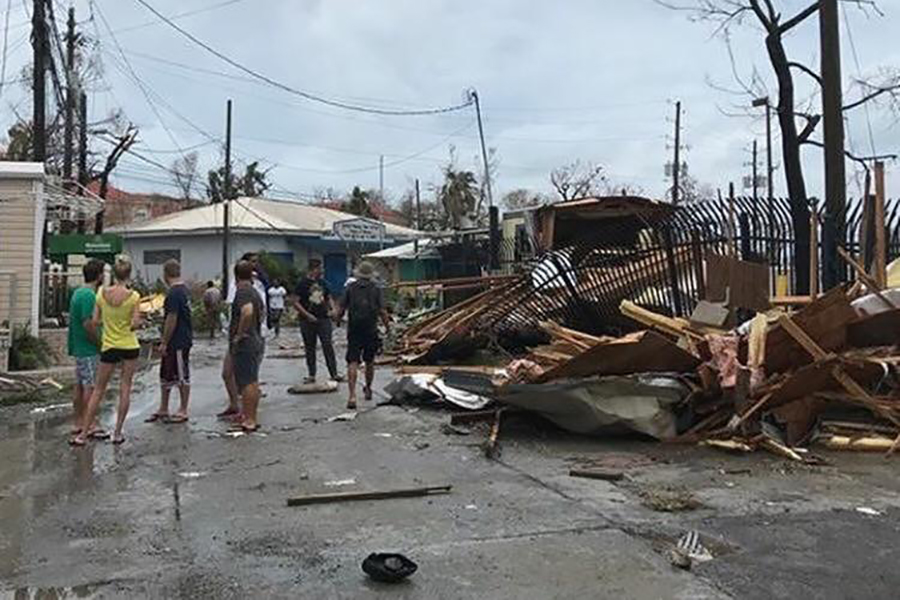
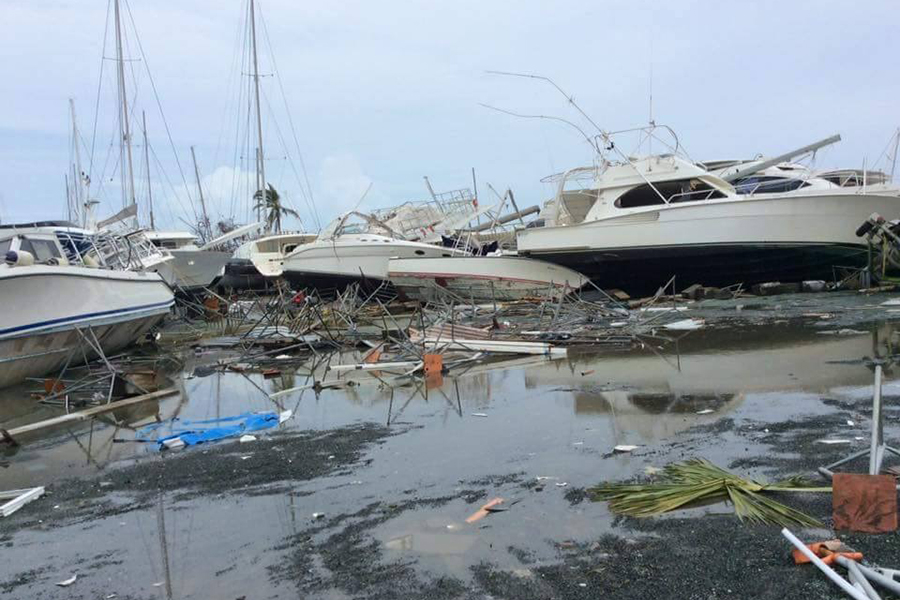
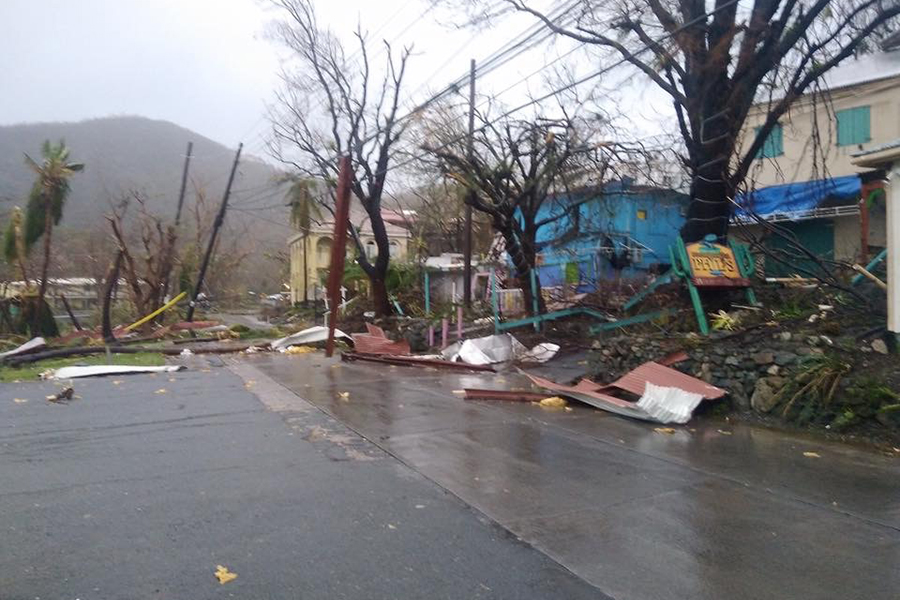
Did you know that nearly four million Americans are trapped in the path of a killer hurricane with no way to escape? Yes, media was on the scene reporting on Category 4 Hurricane Harvey’s destruction to Houston’s 2.3 million residents. Now they are in Miami reporting heavily on the potential impact on Miami-Dade’s 2.7 million residents by the approaching Category 5 Hurricane Irma. Both events are important news and both areas are getting a great deal of needed assistance.

But what is being under-reported is the devastation and isolation of the nearly 4 million Americans reeling from the attack by Irma and the Category 4 Hurricane Jose that is following her. Many reporters appear to be unaware that everyone born in the United States Virgin Islands and Puerto Rico are American citizens living in American territory. If millions of US citizens were victims anywhere else in the world, it would be our highest priority to save them. Do you wonder why we choose not to respond to these victims of natural disasters with the same powerful efficiency that we stage military operations?

The people of the United States Virgin Islands provide fun, rest and relaxation to 2.5 million vacationers every year. I am a resident of St. John who is on the mainland today and very worried about my friends and neighbors on one of the most beautiful places on the planet. We have no way to communicate with them or help them other than to let them know that help is coming and they are not forgotten.

If you would like to know and share more about what is happening on St. John there is a Facebook group called Stateside St. Johnians Alliance for Hurricane Irma.

If you want to help your fellow Americans recover from this devastation, please donate to one of these local 501c3 non-profit organizations:

And call your representatives and demand FEMA assistance for the island victims of these devastating hurricanes NOW.


The Toilet That Uses Your Air Conditioning to Flush

The world’s first cistern to use condensate from air conditioning units to flush the toilet has been launched and would save 4.7 billion liters of water a year for the 1,477 US hotels currently being built.

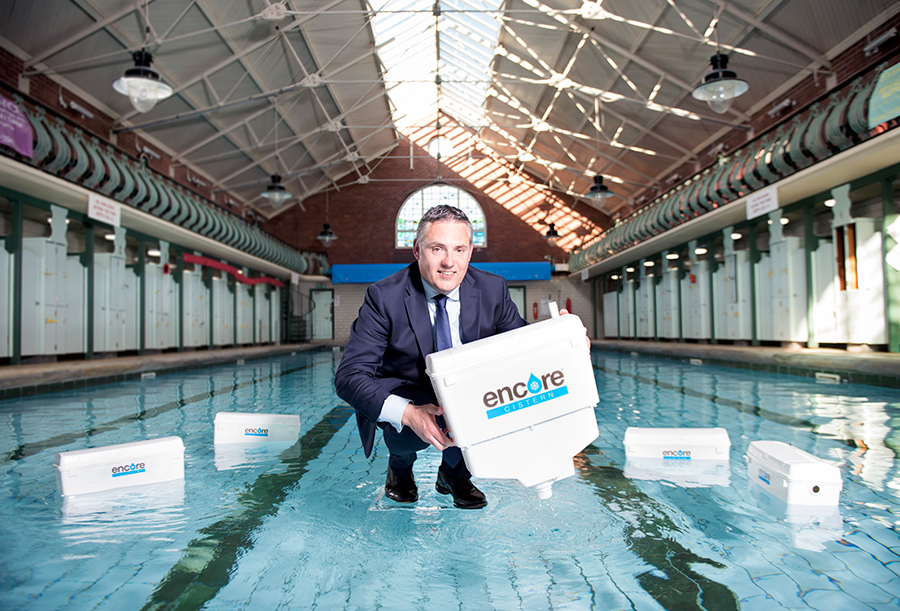
“For decades we’ve designed and installed schemes and watched the stream of water produced by air conditioning units literally go down the drain but not via the toilet,” says David Davis, director of UK-based company Encore (pictured above). The new, environmentally friendly, cistern developed by Davis’ company uses a free, sustainable water supply that has previously been drained to waste.

The cistern is suitable for villas, apartments, offices – almost anywhere toilets and air conditioning are found together. And in another first for cisterns, Encore allows architects, consultants and specifiers to secure two extra LEED points – the US Green Building Council’s gauge for sustainability.

“Air conditioning units have a pipe that drains all the condensate away,” says Davis. “We developed the only cistern that uses this free water to flush a toilet. When you consider how many buildings use air conditioning globally, billions of liters of condensate water is generated – all of which has been wasted – until now.

All buildings need toilets so why wouldn’t you use a cistern that recycles a free, sustainable water source especially when there is a global water shortage crisis?

Water savings 

Data from hotel specialist STR Global shows 191,832 rooms in 1,477 hotels are currently being built in the US. Compared to traditional cisterns, using Encore’s new cistern would save the average 130-bed US hotel 3.19m liters based on standard 80% occupancy levels. In total, Encore would save them 4.7 billion liters of water a year, filling the equivalent of 1,880 Olympic swimming pools.

How it works 

Encore holds 18-liters of water – three times more than a conventional cistern but its dual-chamber design means it fits like standard models. The bottom chamber holds 6-liters, which comes from the mains pipe.  The upper 12-liter chamber is filled with air conditioning condensate. When the toilet is flushed, the lower chamber empties then refills with condensate from the upper chamber. If there are multiple flushes close together or the air conditioning is not in use, the cistern is filled by the mains fed pipe. If the toilet is not used for a period, surplus condensate is fed away.

“Responsible businesses striving to construct the greenest buildings know how hard it can be to get LEED points,” says Davis. “Gaining two points for flushing with an Encore cistern makes it simple.”


Climate Change Threatens Ability of Insurers to Manage Risk

Extreme weather is driving up uninsured losses and insurers must use investments to fund global warming resilience, says study.

The ability of the global insurance industry to manage society’s risks is being threatened by climate change, according to a new report.

The report finds that more frequent extreme weather events are driving up uninsured losses and making some assets uninsurable.

The analysis, by a coalition of the world’s biggest insurers, concluded that the “protection gap” – the difference between the costs of natural disasters and the amount insured – has quadrupled to $100bn (£79bn) a year since the 1980s.

“Over time, the adverse effects of climate change could threaten economic resilience and financial stability and insurers are currently at the forefront.”

Mark Carney, the governor of the Bank of England, warns in the new report that: “Over time, the adverse effects of climate change could threaten economic resilience and financial stability and insurers are currently at the forefront.”

The ClimateWise coalition of 29 insurers, including Allianz, Aon, Aviva, Lloyd’s, Prudential, Swiss Re and Zurich, conclude that the industry must use more of its $30tn of investments to help fund increased resilience of society to floods, storms and heatwaves.

The Bank of England warned in 2015 that insurance companies could suffer a “huge hit” if their investments in fossil fuel companies were rendered worthless by action on climate change and some insurershave already shed investments in coal.

The ClimateWise report, published on Wednesday, also says the industry must also use its risk management expertise to convince policymakers in both the public and private sector of the urgent need for climate action.

The industry’s traditional response to rising insurance risks – raising premiums or withdrawing cover – would not help deal with the rising risks of global warming, it said.

“The insurance industry’s role as society’s risk manager is under threat,” said Maurice Tulloch, chairman of global general insurance at Aviva and chair of ClimateWise. “Our sector will struggle to reduce this protection gap if our response is limited to avoiding, rather than managing, society’s exposure to climate risk.”

The report said that, since the 1950s, the frequency of weather-related catastrophes has increased sixfold. As climate-related risks occur more often and more predictably, previously insurable assets are becoming uninsurable, or those already underinsured are further compromised, it said.

The economic impact of these natural catastrophes is growing quickly, according to Swiss Re, with total losses increasing fivefold since the 1980s to about $170bn today. This increase is partly due to an increase in extreme weather but also due to an increase in assets as cities and towns have grown, especially in vulnerable locations such as on coasts.

“Insurance provides a very important role in providing support for people in their time of need,” said John Scott, chief risk officer at the Zurich Insurance Group and chair of ClimateWise’s “Investing for Resilience” programme. “Finding viable ways to help society adapt and become more resilient to the inevitable changes related to ongoing climate change is vital. It is very clear that as carbon dioxide concentrations increase, we should expect to see more patterns of severe weather disruption.

“We understand climate change as underwriters, because we are trying to manage the physical consequences of the severe weather we get from climate change, so we can be a really important industry in terms of informing policy makers, either in the public or private sectors, about the pace at which we should make the change from a high-carbon to low-carbon economy.”

Other actions insurance companies can take are to work with their customers to make them more resilient to extreme weather and encourage the development of insurance markets in poorer nations that are growing rapidly, the report said.

Carney, who has warned repeatedly of the serious risks posed by climate change, said: “Insurers, including those who are members of ClimateWise, have unique risk-management expertise to help address the protection gap among those who are most exposed to climate risk.”

By Damian Carrington. This story originally appeared at The Guardian

 

Surf Champions Lead Clean-up on Earth Day

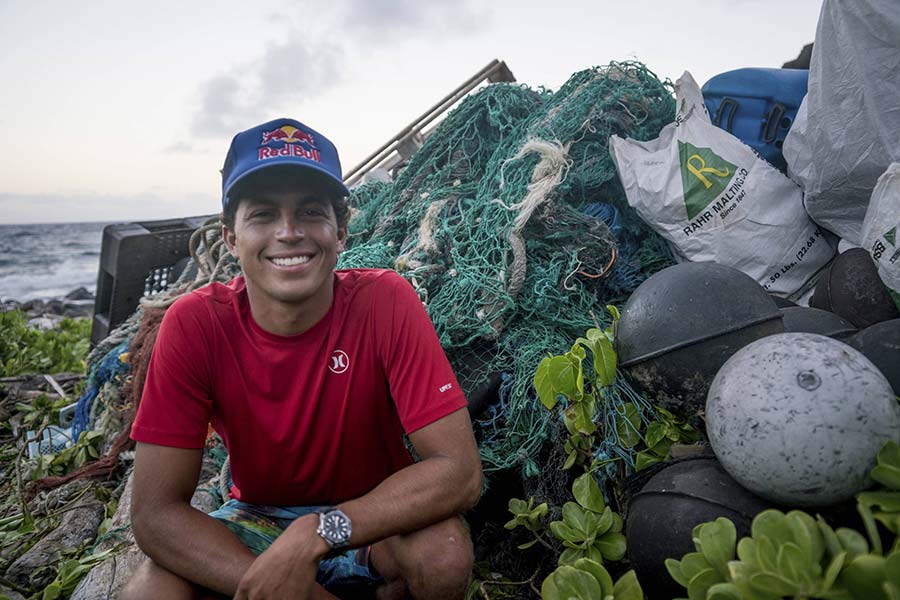
Hawaiian big wave surfer, Kai Lenny, and freestyle kayaker, Dane Jackson, led a successful clean-up operation of their home waters in celebration of Earth Day. Saturday, 22 April, marks Earth Day, an event that has been on the calendar for nearly half-a-century.

This year, it is focusing on environmental and climate literacy, and two athletes in very different parts of the United States have been doing their bit to raise awareness. 

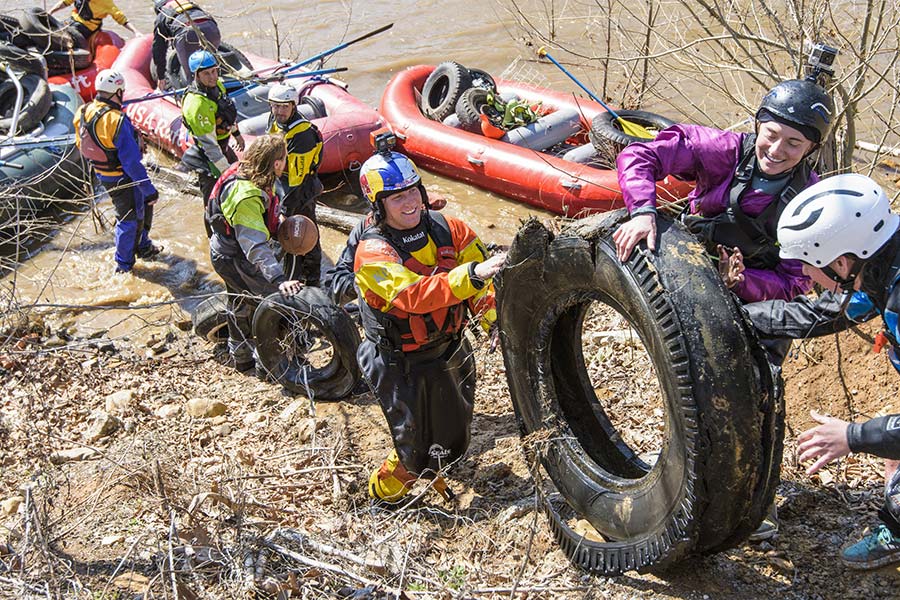
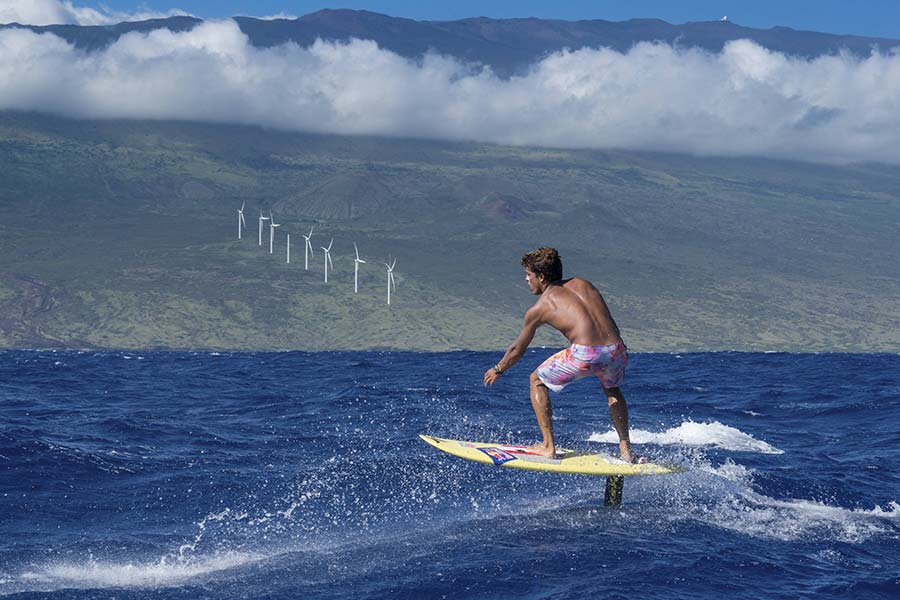
Surfer Kai Lenny (pictured above) took to the waters and shorelines of Hawaii’s big islands for a plastic clean-up, while Dane Jackson (pictured below) led a team of fellow kayakers in Tennessee to fill five rafts with rubbish ranging from 40 tyres to 60 roof shingles in just a three-mile stretch of the Nolichucky River. 

Dane Jackson works with with volunteers from the University of Tennessee Knoxville Outdoor Program and USA Raft to clean up the Nolichucky River in Tennessee, USA. Photo: Lucas Gilman/Red Bull Content Pool.

For both men, the water has very much been their home, Jackson growing up on the aforementioned river, while Lenny is Hawaiian-born and remains a Maui inhabitant. Both were appalled by the waste they were faced with.

Lenny, helped by locals across six islands, explained: “We can clean up all day but we’ve got to figure out a way to stop the flow [of trash] and put a plug in it. Riding those waters, I learned how much trash is in the ocean. Now, I really want to bring awareness to it and make it a preventable thing.” 

To raise awareness, he travelled – occasionally in perilous waters – between the islands in all manner of water vessels from his hydrofoil board, to a kite surf to a traditional paddle board and a plain old sailing boat for the final leg. 

Kai Lenny participates in Downwind Voyage for Change in Hawaii. Photo: Andy Mann / Red Bull Content Pool.

On every major island, he and his team cleaned up one beach in the hope of ridding it of micro plastics.

As he said: “It’s all in the name of protecting our oceans and bringing awareness to the pollution that is micro plastics on our shorelines and in our seas.” 

For Jackson, the pollution just below the surface of his home river was equally devastating to see close-up. The 23-year-old was joined by 10 local kayakers and raft guides for two laps of a three-mile stretch.

“I’ve spent my entire life in or around the river and it’s so mind blowing that so many people just throw their trash in the river,” said Jackson, one of kayaking’s biggest names, at the conclusion of his river clean-up.

“Throwing trash in the river affects everything from wildlife to humans. Trash affects the entire ecosystem of a river. Some waste, like motor oil, is completely toxic and other stuff, like plastic bags, just sticks around forever. 

“It really comes down to ignorance and laziness because it just doesn’t make any sense to throw trash in a river.”


This Earth Day: Make Water Out of Thin Air

People living in arid, drought-ridden areas may soon be able to get water straight from a source that’s all around them — the air, American researchers have said.

Scientists have developed a box that can convert low-humidity air into water, producing several litres every 12 hours, they wrote in the journal Science.

“It takes water from the air and it captures it,” said Evelyn Wang, a mechanical engineer at the Massachusetts Institute of Technology (MIT) and co-author of the paper.

The technology could be “really great for remote areas where there’s really limited infrastructure”, she said.

The system, which is currently in the prototype phase, uses a material that resembles powdery sand to trap air in its tiny pores. When heated by the sun or another source, water molecules in the trapped air are released and condensed — essentially “pulling” the water out of the air, the scientists said.

A recent test on a roof at MIT confirmed that the system can produce about a glass of water every hour in 20 to 30 percent humidity.

Companies like Water-Gen and EcoloBlue already produce atmospheric water-generation units that create water from air. What is special about this new prototype, though, is that it can cultivate water in low-humidity environments using no energy, Wang said.

“It doesn’t have to be this complicated system that requires some kind refrigeration cycle,” she said in an interview with the Thomson Reuters Foundation.

An estimated one third of the world’s population lives in areas with low relative humidity, the scientists said. Areas going through droughts often experience dry air, but Wang said the new product could help them still get access to water.

“Now we can get to regions that really are pretty dry, arid regions,” she said. “We can provide them with a device, and they can use it pretty simply.”

The technology opens the door for what co-author Omar Yaghi called “personalised water”.

Yaghi, a chemistry professor at University of California, Berkeley, envisions a future where the water is produced off-grid for individual homes and possibly farms using the device.

“This application extends beyond drinking water and household purposes, off grid. It opens the way for use of (the technology) to water large regions as in agriculture.”

In the next few years, Wang said, the developers hope to find a way to reproduce the devices on a large scale and eventually create a formal product. The resulting device, she believes, will be relatively affordable and accessible.

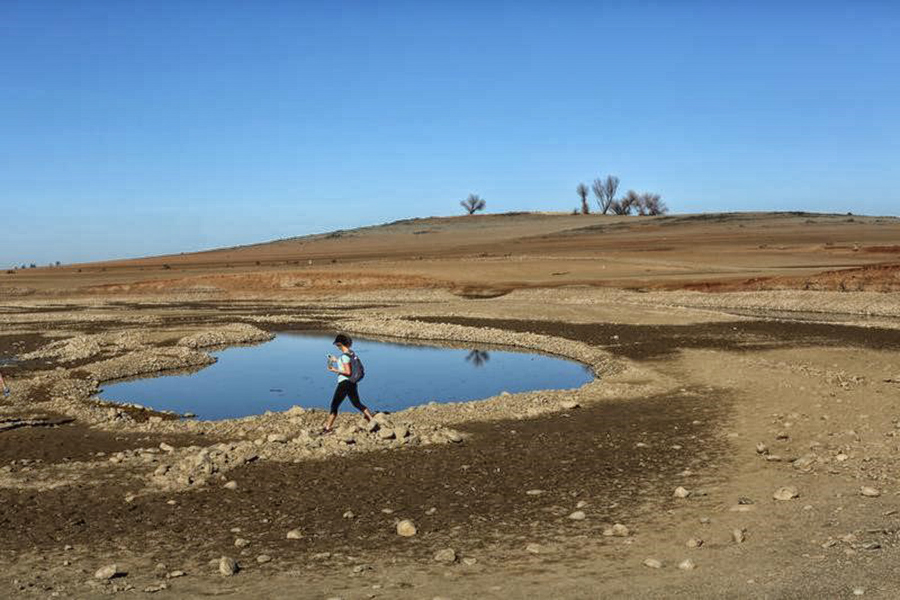
Photo: A visitor walks near the receding waters at Folsom Lake, which is 17 percent of its capacity, in Folsom, California January 22, 2014.  Robert Galbraith/File Photo

By J.D. Capelouto; editing by Alex Whiting; c Thomson Reuters Foundation.


0