Swarovski Puts The Sparkle Into Water Conservation

Water has always been at the heart of the Swarovski story since it was founded in 1895. The family-run company relies on small-scale hydro-electric power at its manufacturing site in the Austrian Alps. The crystal manufacturer recently made a film called “Waterschool,” that teaches young people the importance of fresh water.

Following its premiere at the Sundance Film Festival, Swarovski presented its compelling new film ‘Waterschool’ during the World Economic Forum Annual Meeting, followed by a panel discussion about empowering the next generation to conserve our world’s most precious resource.

If you like this, subscribe here for more stories that Inspire The Future.

The film shines a light on one of the greatest issues facing mankind: safeguarding the continuing supply of fresh water. The documentary follows the experiences of several young female students who live along six of the world’s major rivers – the Amazon, Mississippi, Danube, Nile, Ganges and Yangtze – and celebrates the work of Swarovski Waterschool, a community investment program set up in 2000 that has reached almost half a million young people through 2,400 schools worldwide.

To make ‘Waterschool’, a team of seven UCLA School of Theater, Film and Television graduate students travelled across five continents to capture the moving stories of these young girls, giving voice to the generation for whom the preservation of clean water is most pressing. Vivid, lyrical, and often poignant, the film is a reminder of the power of education – with the support of the business community – to transform lives and tackle the world’s pressing environmental issues.

‘Waterschool’ reveals how the teachers and guides of Swarovski Waterschool are empowering the growing citizens of the new era to take care of the world’s most valuable resource. The result is a powerful call to arms – for teachers and educators as much as young people themselves. As the students discover how best to husband and protect water, so they pass on their insights to their peers, parents and grandparents. 

The Swarovski family set up Waterschool in 2000 to teach young people about the importance of fresh water, and how to use it, conserve it and cherish it. The company recycles 70% of the water it uses to produce crystal and their global education program has reached 461,000 children on the world’s greatest rivers.

If you like this, subscribe here for more stories that Inspire The Future.

Beehive Fence Makes Marauding Elephants Buzz Off

After failing to stop marauding elephants with trenches and solar-powered electric fences, residents have found a sweet solution.

A year ago, no one in Mayilattumpara could sleep soundly at night. Residents of the village in the foothills of Thrissur district, in southwest India’s Kerala state, feared invasions by wild elephants.

The animals, reacting to the loss of their forest habitat and a scarcity of food, frequently invaded the farmland around the village, trampling on plants and crops and destroying incomes.

If you like this, subscribe here for more stories that Inspire The Future.

Everything the villagers tried to deter the animals – digging trenches, beating traditional drums, installing solar-powered electric fences, or planting shrubs with supposed repellent qualities – proved ineffective. One after another, residents began to give up farming.

But the situation has turned around in the past year. Now people in Mayilattumpara are no longer disturbed by elephants. Instead they are agreeably surprised by visiting herds of journalists, scientists and environmentalists.

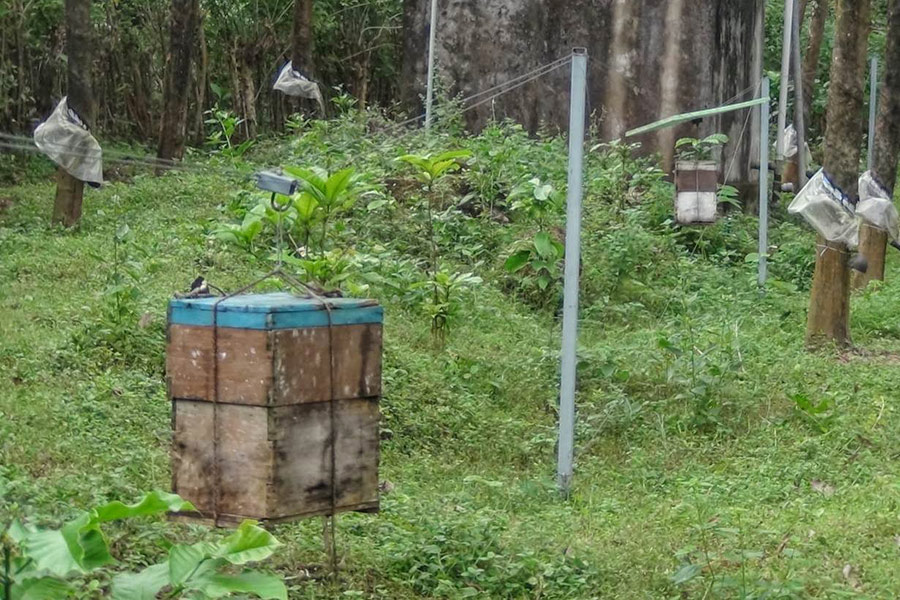
That’s because residents have finally figured out what repels elephants: honey bees. A wire fence strung with beehives now stretches 2.5km (1.5 miles) along the border of 18 village farms. The hives, hanging every 10 metres along the wire, are populated with Italian honey bees bred in Kerala.

Elephants, it turns out, are frightened of loudly buzzing bees and their ferocious stings. When elephants try to pass the wire fence, angry bees swarm out and the elephants quickly flee, residents say. Protected by the bees, farmers can tend their crops again. And some are also beginning to cultivate a new harvest – honey.

Johny Kochery has 9 hectares (22 acres) of farmland in Mayilattumpara, but for a time gave up trying to produce crops after repeated damage by elephants. Now he points to flourishing coconut trees, rubber plants and more than 60 varieties of fruit on his land. Since installing the beehive fence a year ago, “not even a single elephant reached the vicinity of my farm. Elephant attacks are an old story,” he said.

During the recent monsoon season, elephant herds crossed the nearby Peechi reservoir and raided the neighbouring villages of Kalladik, Thekkumpadu and Poolachode, trampling plantain trees and destroying villagers’ huts. But they haven’t come any closer than 100 metres to the beehive fence protecting Mayilattumpara, residents say.

AFRICAN ORIGINS

The fence project, begun in January 2016 by a local farmers’ group with the support of the federal government’s Agriculture Technology Management Agency (ATMA), cost 500,000 Indian rupees ($7,800).

V.S. Roy, who initiated the project while working for ATMA, said the idea came from the work of Lucy King, an Oxford University researcher who in 2008 successfully tested using African honeybees to keep elephants at bay in areas of Kenya where there was conflict between the animals and people.

The experiment was later repeated by other researchers in Tanzania. “If it could (work)in the African forest, why couldn’t it in the Kerala forest?” Roy remembers thinking. According to India’s environment ministry, conflict between humans and elephants across the country leads to regular deaths among both.

In Kerala alone in 2017, 22 people died in conflicts with elephants, which the state government says is a typical annual toll. Last year the state’s forest department paid more than 90 million rupees ($1.5 million) in compensation for loss of life and destruction of property caused by elephants, officials said.

A view of a beehive fence that works to control farm invasions by hungry elephants in Mayilattumpara village in India’s Kerala state, October 2017. Photo: Thomson Reuters Foundation/K. Rajendran

PROBLEMS – AND PROFITS

Roy’s project was not an initial success. An experiment in 2012, in another district, failed in part because he did not first get sufficient support from local people, he said.

When he came to Mayilattumpara, he started the farmers’ association and involved them in the planning to win their backing and participation, he said.

Kochery, who heads the farmers’ association, noted that setting up such a system is not easy “unless farmers are ready for collective, meticulous and patient experimentation”.

Besides figuring out an effective fence and hive system, farmers also had to learn to manage bees and replace colonies that become diseased, and pick up the costs of doing that once initial grant money from ATMA ran out, he said.

None of that has been easy, he said. But today the effort is beginning to pay off. Each December to March honey season, each of the 260 beehives strung along the fence could produce as much as 30 kg of honey, farmers said.

This has the potential to bring in up to 65,000 rupees ($1,000) for each farmer, allowing for a substantial profit even after the costs of maintaining the hives. That has not yet happened, and Kochery said the farmers only broke even last season due to some initial glitches – but they hope to have a big harvest this year.

Despite the challenges, farmers from other areas of human-elephant conflict in the state now hope to replicate the Mayilattumpara effort, and win financial support from the state’s Forest and Wildlife Department. “It should be scientifically sustainable. We are awaiting reports from on the ground,” said Nagesh Prabhu, the state’s head of forest conservation.

Kerala’s government is also trying to defuse conflict between elephants and people by reducing deforestation and rehabilitating elephant habitat, officials said. In the meantime, E.A. Jayson, a scientist with the Kerala Forest Research Institute, which has completed a study of the beehive fence experiment, said the fencing seems to work – but there are now new problems to solve.

“Rather than technical issues, some social issues are creating hindrances. We have met with incidences of theft of beehive boxes,” Jayson said.

By K. Rajendran; editing by James Baer and Laurie Goering.

If you like this, subscribe here for more stories that Inspire The Future.

Long-Term Warming Trend Continued in 2017

Earth’s global surface temperatures in 2017 ranked as the second warmest since 1880, according to an analysis by NASA.

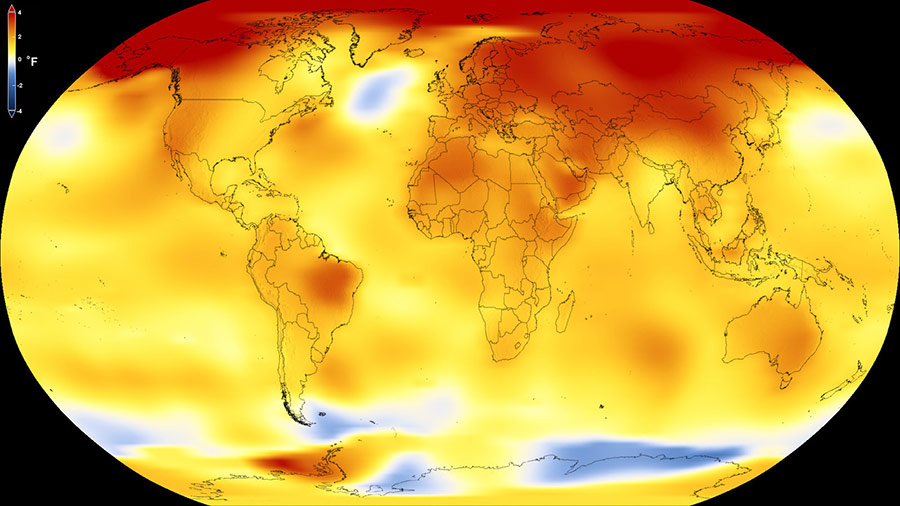
Continuing the planet’s long-term warming trend, globally averaged temperatures in 2017 were 1.62 degrees Fahrenheit (0.90 degrees Celsius) warmer than the 1951 to 1980 mean, according to scientists at NASA’s Goddard Institute for Space Studies (GISS) in New York. That is second only to global temperatures in 2016.

In a separate, independent analysis, scientists at the National Oceanic and Atmospheric Administration (NOAA) concluded that 2017 was the third-warmest year in their record. The minor difference in rankings is due to the different methods used by the two agencies to analyze global temperatures, although over the long-term the agencies’ records remain in strong agreement. Both analyses show that the five warmest years on record all have taken place since 2010.

If you like this, subscribe here for more stories that Inspire The Future.

Because weather station locations and measurement practices change over time, there are uncertainties in the interpretation of specific year-to-year global mean temperature differences. Taking this into account, NASA estimates that 2017’s global mean change is accurate to within 0.1 degree Fahrenheit, with a 95 percent certainty level.

“Despite colder than average temperatures in any one part of the world, temperatures over the planet as a whole continue the rapid warming trend we’ve seen over the last 40 years,” said GISS Director Gavin Schmidt.

This map shows Earth’s average global temperature from 2013 to 2017, as compared to a baseline average from 1951 to 1980, according to an analysis by NASA’s Goddard Institute for Space Studies. Yellows, oranges, and reds show regions warmer than the baseline. Credit: NASA’s Scientific Visualization Studio


The planet’s average surface temperature has risen about 2 degrees Fahrenheit (a little more than 1 degree Celsius) during the last century or so, a change driven largely by increased carbon dioxide and other human-made emissions into the atmosphere. Last year was the third consecutive year in which global temperatures were more than 1.8 degrees Fahrenheit (1 degree Celsius) above late nineteenth-century levels.

Phenomena such as El Niño or La Niña, which warm or cool the upper tropical Pacific Ocean and cause corresponding variations in global wind and weather patterns, contribute to short-term variations in global average temperature. A warming El Niño event was in effect for most of 2015 and the first third of 2016. Even without an El Niño event – and with a La Niña starting in the later months of 2017 – last year’s temperatures ranked between 2015 and 2016 in NASA’s records.

In an analysis where the effects of the recent El Niño and La Niña patterns were statistically removed from the record, 2017 would have been the warmest year on record. 

Weather dynamics often affect regional temperatures, so not every region on Earth experienced similar amounts of warming. NOAA found the 2017 annual mean temperature for the contiguous 48 United States was the third warmest on record.

Warming trends are strongest in the Arctic regions, where 2017 saw the continued loss of sea ice.

NASA’s temperature analyses incorporate surface temperature measurements from 6,300 weather stations, ship- and buoy-based observations of sea surface temperatures, and temperature measurements from Antarctic research stations.

These raw measurements are analyzed using an algorithm that considers the varied spacing of temperature stations around the globe and urban heating effects that could skew the conclusions. These calculations produce the global average temperature deviations from the baseline period of 1951 to 1980.

The full 2017 surface temperature data set and the complete methodology used to make the temperature calculation are available here.

If you like this, subscribe here for more stories that Inspire The Future.

Forget Bitcoin, Planting Trees Can Offer Amazing Returns

A new report has found that money actually does grow on trees. Businesses are making money from planting trees and growing sales as rapidly as 10 times per year.

Many investors don’t know what restoration is or realize the extent of its potential. A new report by World Resources Institute(WRI) and The Nature Conservancy (TNC) reveals that businesses around the world are making money by planting trees, unleashing a growth opportunity for venture capital, private equity and impact investors. The research indicates the restoration economy is at a tipping point.

If you like this, subscribe here for more stories that Inspire The Future.

The new report, The Business of Planting Trees: A Growing Investment Opportunity, shows that restoring degraded and deforested lands is not only a boon for the environment, but a lucrative opportunity for investors and entrepreneurs. WRI and TNC looked at hundreds of companies – tech startups, consumer goods companies, timber producers, etc – and selected 14 enterprises to highlight from around the world. The publication finds that the sector is growing rapidly, with some businesses poised to grow revenues up to 10 times per year.

“The long-term growth outlook is positive as technology lowers the costs of tree-planting, consumers reward companies who restore forests, governments make large commitments to rehabilitate their land, and business model innovation continues,” said Sofia Faruqi, Manager at WRI and report co-author. “The confluence of these factors signals that now’s the time to invest in restoration.”

The report identifies four emerging themes in the restoration economy: technology, consumer products, project management and commercial forestry. To help investor and entrepreneurs gain insight from real-world examples of companies, the report profiles the following 14 businesses: BioCarbon EngineeringBrinkmanEcoPlanet BambooEcosiaF3 Life, Fresh Coast Capital, GuayakiKomazaLand Life CompanyLyme Timber, New Forests, Symbiosis Investimentos, Tentree, and Terviva.

A range of investors have financed the businesses featured in the report, from venture capitalists to development banks to foundations. Investments include debt, equity and grants. Several companies have recently raised millions of dollars in growth capital.

“If we are to be serious about climate change, we have to get serious about investing in nature,” said Justin Adams, Managing Director Global Lands for The Nature Conservancy. “The way we manage lands in the future could cost effectively deliver over a third of greenhouse gas emissions reductions required to prevent dangerous levels of global warming.”

Recent technologies have paved the way for faster, cheaper, more efficient tree planting, allowing rapid reforestation of broad areas of land. From seed-planting drones to companies enabling credit access for small farmers, technology is changing the face of restoration. Many of these innovations were unavailable even five years ago. As technology brings down the costs of restoration, demand will rise, similar to solar energy.

Consumer goods companies are also integrating restoration in innovative ways, from selling yerba mate grown in restored forests, to using their profits to plant trees. As trendy consumers become more engaged in conservation, many companies see a big opportunity to market forest-friendly products that differentiate them in the marketplace.

Bruno Mariani, founder of Symbiosis Investimentos – a company profiled in the report – said “Large-scale reforestation is lucrative. Forests give us wood, water, oxygen, food, fauna, jobs—and a return on investment. Mainstream finance will inevitably tag along but when you rebuild a forest, you create much more than financial value. You protect a healthy environment for future generations to inherit.”

There’s also a large market for companies to support the millions of hectares of public land being restored by countries. The political momentum for restoration continues as countries seek to meet their commitments to the Paris Climate AgreementBonn ChallengeInitiative 20×20AFR100 and more. With 160 million hectares of land committed for restoration, these pledges present a growth pathway for the companies that design, manage and implement the projects.

April Mendez, co-founder of Fresh Coast Capital – a company profiled in the report – said, “We’re offering investors the opportunity to earn a return from urban green spaces. Private investment can accelerate cutting-edge green infrastructure that improves air quality, health and community cohesion, while providing cost-effective stormwater management for cities.”

Although the timber industry has been around for decades, sustainably managed timber that improves land quality has been a bright spot for innovation. From institutional timber funds that set aside large amounts of land for conservation to business models that incorporate smallholder farmers or focus on extinct species, recent developments indicate that sustainable timber has a rising role to play in the growth story of restoration.

More entrepreneurs continue to enter the restoration economy, finding new ways to make money while restoring degraded land. Read the full report.

If you like this, subscribe here for more stories that Inspire The Future.

Biggest Reef in Americas Says “No!” to Offshore Oil

Belize has made history by unanimously passing the Petroleum Operations (Offshore Zone Moratorium) Bill, 2017 which will place an indefinite moratorium on offshore oil in Belize’s marine territory.

This decision has been welcomed by Oceana, WWF, and other members of the Belize Coalition to Save Our Natural Heritage as a landmark step forward to protect the Belize Barrier Reef and strengthen marine conservation worldwide.

This action is historic given Belize’s economic dependence on its natural resources and will safeguard invaluable marine environments including the second longest barrier reef in the world, which runs along Belize’s coast. Just as importantly, this law recognizes and respects the collective leadership and persistent involvement of tens of thousands of Belizeans for more than seven years on the issue of offshore oil.

If you like this, subscribe here for more stories that Inspire The Future.

Oceana has been an unwavering supporter of this call of the Belizean people since it began in the aftermath of the BP oil spill in the Gulf of Mexico in April 2010 and within the reality that Belize’s entire offshore area had already been sold as oil concession licenses. Following today’s proceedings, Oceana’s Vice President for Belize Janelle Chanona said, “This is truly ‘The People’s Law’. Belizeans have remained steadfast in their opposition to offshore oil since they became aware that marine assets were at risk of irreversible damage from the offshore oil industry.”

This news brings hope that the Belize Barrier Reef, a UNESCO World Heritage Site, will no longer be considered a “Site in Danger” as oil was identified as direct threat to the site’s integrity. “We urge Belize’s government to follow today’s historic announcement with the additional actions needed to ensure the site is removed from UNESCO’s in danger list,” said Nadia Bood from WWF.


Oceana is the largest international advocacy organization dedicated solely to ocean conservation and is rebuilding abundant and biodiverse oceans by winning science-based policies in countries that control one third of the world’s wild fish catch. With more than 200 victories that stop overfishing, habitat destruction, pollution and killing of threatened species like turtles and sharks, Oceana’s campaigns are aimed at delivering results. A restored ocean means that one billion people can enjoy a healthy seafood meal, every day, forever.

If you like this, subscribe here for more stories that Inspire The Future.


Biggest Reef in Americas Says “No!” to Offshore Oil

Belize has made history by unanimously passing the Petroleum Operations (Offshore Zone Moratorium) Bill, 2017 which will place an indefinite moratorium on offshore oil in Belize’s marine territory.

This decision has been welcomed by Oceana, WWF, and other members of the Belize Coalition to Save Our Natural Heritage as a landmark step forward to protect the Belize Barrier Reef and strengthen marine conservation worldwide.

This action is historic given Belize’s economic dependence on its natural resources and will safeguard invaluable marine environments including the second longest barrier reef in the world, which runs along Belize’s coast. Just as importantly, this law recognizes and respects the collective leadership and persistent involvement of tens of thousands of Belizeans for more than seven years on the issue of offshore oil.

If you like this, subscribe here for more stories that Inspire The Future.

Oceana has been an unwavering supporter of this call of the Belizean people since it began in the aftermath of the BP oil spill in the Gulf of Mexico in April 2010 and within the reality that Belize’s entire offshore area had already been sold as oil concession licenses. Following today’s proceedings, Oceana’s Vice President for Belize Janelle Chanona said, “This is truly ‘The People’s Law’. Belizeans have remained steadfast in their opposition to offshore oil since they became aware that marine assets were at risk of irreversible damage from the offshore oil industry.”

This news brings hope that the Belize Barrier Reef, a UNESCO World Heritage Site, will no longer be considered a “Site in Danger” as oil was identified as direct threat to the site’s integrity. “We urge Belize’s government to follow today’s historic announcement with the additional actions needed to ensure the site is removed from UNESCO’s in danger list,” said Nadia Bood from WWF.


Oceana is the largest international advocacy organization dedicated solely to ocean conservation and is rebuilding abundant and biodiverse oceans by winning science-based policies in countries that control one third of the world’s wild fish catch. With more than 200 victories that stop overfishing, habitat destruction, pollution and killing of threatened species like turtles and sharks, Oceana’s campaigns are aimed at delivering results. A restored ocean means that one billion people can enjoy a healthy seafood meal, every day, forever.

If you like this, subscribe here for more stories that Inspire The Future.


Can Carbon-sucking Technologies Hold Back Climate Change?

Governments are exploring ways to suck the carbon out of the atmosphere to help keep global warming in check.

As the U.S. state of California tries to slash its climate-changing emissions by 40 percent by 2030 – and 80 percent by 2050 – it is looking at some unusual new technologies, beyond simply cutting its use of fossil fuels.

A California company called Blue Planet is capturing carbon dioxide from a fossil fuel power plant and binding it to small rock particles, to produce the aggregate needed for concrete.

If such material was used in every bit of concrete created in the state, it “would potentially offset all of California’s (power plant) emissions,” said Ken Alex, of the California governor’s office of planning and research.

If you like this, subscribe here for more stories that Inspire The Future.

The state is also looking at storing carbon in soil, through more composting of waste or burying biochar, a form of charcoal, and at technologies such as pumping carbon dioxide underground in an effort to turn it into limestone.

“California recognises we’re not going to get below 1.5 degrees or 2 degrees (of climate change), probably, without carbon sinks or sequestration in some form,” Alex said on the sidelines of the U.N. climate talks in Bonn this week.

As the world continues to battle to cut the use of fossil fuels fast enough to hold global warming to relatively safe levels, governments are exploring not just ways to ratchet up carbon-cutting ambitions but also ways to suck the carbon that is already there back out of the atmosphere.

Some “negative emissions” technologies – such as replanting deforested areas with more trees, which absorb carbon to grow – are relatively uncontroversial.

But other efforts – including a proposal to plant huge areas of the world’s land to forests, which could be harvested and burned for energy, with the carbon them pumped into permanent underground storage – raise worries about risks to everything from land rights to food security.

“Humans are very good – and California’s a great example – at inventing things and then going, eeeww, it has consequences,” Alex noted.

“The perspective of the state is there are a lot of issues around ethics and governance”, particularly with things like pumping carbon underground, he said. “It’s a more complicated question than you may at first think.”

CLOSING THE GAP

With the expected global rise in temperature still headed toward 3 degrees Celsius above pre-industrial levels – and the most climate-vulnerable countries saying the increase needs to be at most half of that – scientists, businesses and governments are looking for innovative ways to close the gap.

Some of those include potential “geoengineering” technological fixes aimed at making global-scale changes to earth systems, such as spraying reflective sulfate particles into the upper atmosphere to mimic the cooling effect of volcanic eruptions – a still untested technology that may pose little-understood risks to world rainfall patterns.

Other proposals include dumping iron oxide into the world’s oceans to spur the growth of carbon-absorbing plankton, creating genetically modified crops with leaves that reflect more sunlight back into the atmosphere, or vaporising seawater to create more sun-reflecting clouds.

The problem with many of the technologies, critics say – beyond the inherent risks in tinkering with the earth’s systems – is that their potential availability could slow efforts to reduce climate-changing emissions.

In Britain, for example, the government is now banking on capturing carbon from power plants and pushing it into storage underground to meet some of its carbon-cutting goals, a move that is slowing efforts to actually cut emissions, said Kevin Anderson, deputy director of the UK-based Tyndall Centre for Climate Change Research.

And the United States, now led by an administration that promotes the use of climate-change-spurring coal, held a first congressional subcommittee meeting last week looking at geoengineering technologies.

Such a meeting happening in Washington, under a government unconcerned about cutting fossil fuel use, is “worrying”, said Hugh Hunt, a Cambridge University engineer who is among those looking at geoengineering options.

“Does that mean someone who has quite a lot of power might write a check and say, ‘Let’s do this engineering’?” he asked.

The Intergovernmental Panel on Climate Change, an independent international body of climate scientists, will issue a report next year looking at how the Paris Agreement aim of holding global warming to 1.5 degrees Celsius might be achieved.

That report is widely expected to suggest that some kind of “negative emissions” will be needed, at least temporarily, to pull back from an expected overshoot of the goal, scientists say.

But achieving the goal is still possible without such risky technologies, if governments have the political will to push ahead with much faster emissions cuts, said Harjeet Singh, a climate policy advisor for aid agency ActionAid International.

“These are unproven technologies and we don’t know the implications,” he said. “Should we try an unproven technology just because we don’t want to make any shift in our lifestyle? Easier options are on the table,” he said.

HOW TO CONTROL?

Advocates for “negative emissions”, however – some of them engineers and scientists who hold patents on some of the new technologies – say that trying out possibilities, in a growing range of small-scale experiments taking place around the world, is simply common sense preparation for action if emissions-cutting efforts fail.

“We need to take more shots. We need to try more stuff,” said Julio Friedmann, a senior advisor for energy innovation at Lawrence Livermore National Laboratory in the United States, and an associate of the U.S.-based Energy Futures Initiative, a non-profit energy innovation group.

“Industrial and engineered solutions to this challenge are part of what’s required,” he said at an event on the sidelines of the U.N. climate talks.

California is open to exploring new technologies, said Alex, of the state governor’s office.

It is, for instance, looking at whether Caltrans – the California Department of Transportation – might be able to create a standard for using Blue Planet’s carbon-trapping concrete aggregate in highway construction, a move that could dramatically increase its use.

But he worries about some of the other technologies.

“What happens if a country or a jurisdiction or an individual or a corporation decides they want to … send mylar (reflective balloons) into space or do some of these other geoengineering possibilities? How do we govern that? Who should have a voice in that?” he asked.

By Laurie Goering @lauriegoering; editing by Alex Whiting.

If you like this, subscribe here for more stories that Inspire The Future.

 

Blood Clots to Leaking Guts – 27 Ways to Die From Heatwaves

Dying during a heatwave is like a horror movie with 27 bad endings to choose from.

Deadly heatwaves are more lethal than you may think. They kill in at least 27 ways, from blood clots to leaking guts, putting millions of lives at risk, scientists said on Thursday.

Global temperatures are rising at a record pace, edging nearer a ceiling set by some 200 nations to limit global warming, and the human body is more sensitive to heat than previously thought, a University of Hawaii at Manoa study found.

If you like this, subscribe here for more stories that Inspire The Future.

“Dying during a heatwave is like a terror movie with 27 bad endings to choose from,” Camilo Mora, the study’s lead author, said in a statement.

“It is remarkable that humanity overall is taking such a complacency on the threats that ongoing climate change is posing.”

Heat kills people in a variety of ways, from the damage of cells to the leakage of intestines and blood clots that can lead to heart, brain, liver and kidney failure, the study said.

Rising heat is underestimated as a threat because it is an invisible, hard-to-document disaster that claims lives largely behind closed doors, experts told the Thomson Reuters Foundation in September.

Victims – many elderly, very young, poor or already unhealthy – often die at home, and not just of heat stroke but of existing health problems aggravated by heat and dehydration.

Rising heat is a severe threat in regions from South Asia to the Gulf, and countries from Russia to the United States.

Over the last 30 years, increasingly broiling summer heat has claimed more American lives than flooding, tornadoes or hurricanes, according to the U.S. National Weather Service.

By Heba Kanso @hebakanso, Editing by Kieran Guilbert and Katy Migiro.

If you like this, subscribe here for more stories that Inspire The Future.


Blood Clots to Leaking Guts – 27 Ways to Die From Heatwaves

Dying during a heatwave is like a horror movie with 27 bad endings to choose from.

Deadly heatwaves are more lethal than you may think. They kill in at least 27 ways, from blood clots to leaking guts, putting millions of lives at risk, scientists said on Thursday.

Global temperatures are rising at a record pace, edging nearer a ceiling set by some 200 nations to limit global warming, and the human body is more sensitive to heat than previously thought, a University of Hawaii at Manoa study found.

If you like this, subscribe here for more stories that Inspire The Future.

“Dying during a heatwave is like a terror movie with 27 bad endings to choose from,” Camilo Mora, the study’s lead author, said in a statement.

“It is remarkable that humanity overall is taking such a complacency on the threats that ongoing climate change is posing.”

Heat kills people in a variety of ways, from the damage of cells to the leakage of intestines and blood clots that can lead to heart, brain, liver and kidney failure, the study said.

Rising heat is underestimated as a threat because it is an invisible, hard-to-document disaster that claims lives largely behind closed doors, experts told the Thomson Reuters Foundation in September.

Victims – many elderly, very young, poor or already unhealthy – often die at home, and not just of heat stroke but of existing health problems aggravated by heat and dehydration.

Rising heat is a severe threat in regions from South Asia to the Gulf, and countries from Russia to the United States.

Over the last 30 years, increasingly broiling summer heat has claimed more American lives than flooding, tornadoes or hurricanes, according to the U.S. National Weather Service.

By Heba Kanso @hebakanso, Editing by Kieran Guilbert and Katy Migiro.

If you like this, subscribe here for more stories that Inspire The Future.


From Grey to Green: Smokestack Cities Power to Bright Future

Essen, once a coal and steel city known as Germany’s “Graue Maus” (grey mouse) for its polluted air and waterways, has gained a reputation as a trailblazer for sustainability.

Bicycle highways, urban farms and local energy hubs – just some of the ways that yesterday’s smokestack cities are turning into tomorrow’s green spaces.

The Urban Transitions Alliance (UTA), a network that brings together cities in Germany, the United States and China, launched this week to help members learn regeneration tricks from each other.

If you like this, subscribe here for more stories that Inspire The Future.

“What to do with your brownfield sites, how to transition with citizens in mind, create new jobs – these cities have a lot of challenges in common,” said Roman Mendle, Smart Cities programme manager at ICLEI, an international association of local governments.

As up to 70 percent of global greenhouse gas emissions are generated in urban areas, cities have to play a leading role in addressing climate change.

Experts from more than 20 countries met in Essen, Germany, this week to launch the UTA and thrash out how post-industrial cities can reinvent themselves in plans that will be submitted to the U.N. climate talks in Bonn this week.

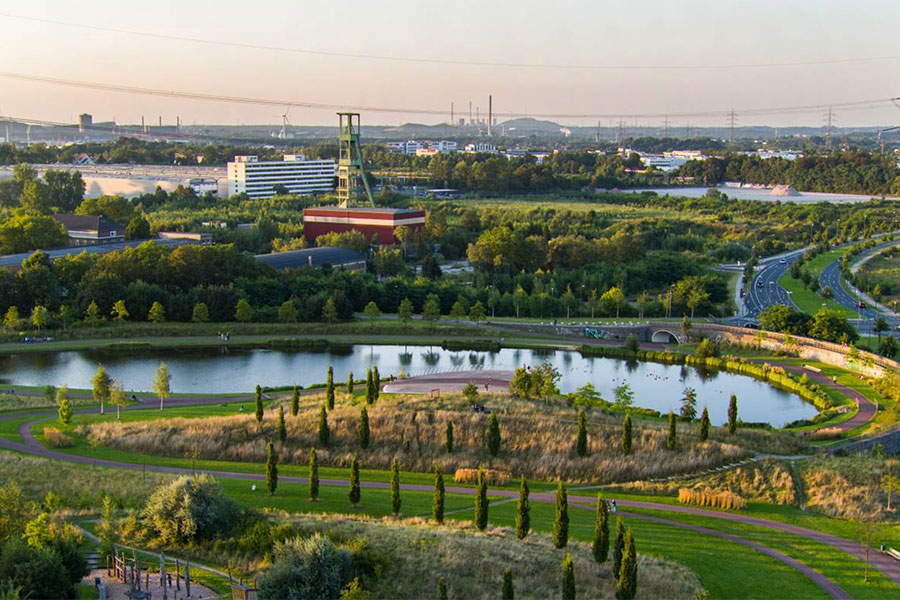
Essen, once a coal and steel city known as Germany’s “Graue Maus” (grey mouse) for its polluted air and waterways, has gained a reputation as a trailblazer for sustainability, becoming the European Commission’s European Green Capital 2017.

“There is a lot of know-how in Essen on how to transition from the age of carbon to a post-carbon world,” said Simone Raskob, Essen’s deputy mayor and head of its environment department.

“No city can do this by itself. There are a lot of challenges,” Raskob, who leads the European Green City – Essen 2017 project, told the Thomson Reuters Foundation.

Experts praise Essen for cleaning up its waterways, creating green spaces and turning grimy industrial sites into dynamic cultural centres, such as the Zeche Zollverein, a towering UNESCO World Heritage site that arose from a disused coal mine.

To ease traffic congestion, Essen built Germany’s first bike highway, connecting with a 100-km (62-mile) regional network.

Pittsburgh, once a dynamo of U.S. heavy industry, has shifted from a fossil fuel-based economy, reinventing itself as a hub for green buildings innovation and clean energy.

The former steel city has been switching over to LED street lights, retro-fitting municipal buildings for energy efficiency and is developing district energy initiatives.

The city will also host the largest U.S. urban farm: 23 acres (9 hectares)on a site where low-income housing once stood.

“One of the key things we have recognised is that becoming greener also brings economic benefits,” said Grant Ervin, Pittsburgh’s chief resilience officer.

Founding UTA members include districts of Beijing and Shijiazhuang in China; Buffalo and Cincinnati in the United States and Dortmund in Germany.

By Astrid Zweynert @azweynert , Editing by Lyndsay Griffiths. 

If you like this, subscribe here for more stories that Inspire The Future.

 

0