

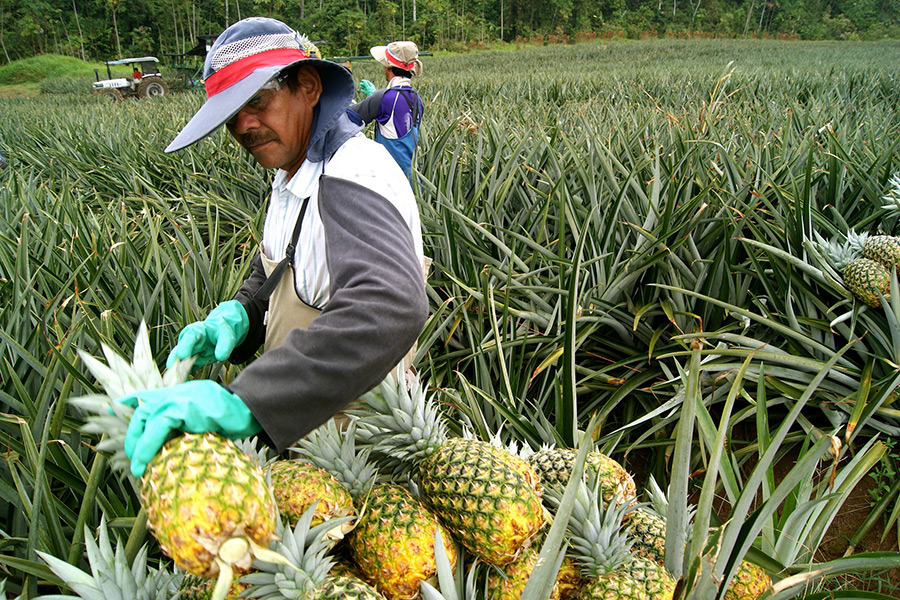
Costa Rican Pineapple Buyers Can Now Guarantee They’re Deforestation-Free

As consumers become increasingly concerned about the environmental impact of agro-commodity production, with the click of a button, companies buying pineapples from Costa Rica – one of the world’s largest producers of the fruit – can now see if their suppliers are engaged in deforestation or not, with help from the United Nations’ Green Commodities Programme.

The Land Use Change Monitoring System within Production Landscapes (MOCUPP), developed with support from the United Nations Development Programme’s (UNDP) Green Commodities Programme, is the world’s first to overlay satellite images with land registry records on an annual basis for an entire national territory. Now, every year, the system will produce images showing forest loss and gain from pineapple production in Costa Rica, with more agro-commodities soon to be added to the system.

If you like this, subscribe here for more stories that Inspire The Future.

This new tool is free for commodity buyers to use. Buyers can easily check if their producers are engaged in illegal deforestation, or if they are increasing deforestation cover. The system allows buyers to check this using their own internal records. This avoids any risk related to commercial confidentiality agreements, as there is no need to provide geo-positioning data to any government entity.

Pineapple farmers producing for export who are doing the right thing also stand to benefit. The new tool allows them to show that their farms are deforestation-free, enabling them to benefit from incentive schemes such as the Payment of Ecosystem Services by the National Forestry Financing Fund.

Costa Rica is one of the world’s biggest pineapple-producing countries. MOCUPP is part of a wider national effort to tackle serious social and environmental concerns in this critical sector, worth US$800 million to the national economy.

Already, MOCUPP has developed imagery showing the rapid spread of pineapple cultivation in Costa Rica between 2000 and 2015. It reveals that over the past 15 years, the country has lost more than 5,000 hectares of forest cover, the size of over 3,000 football pitches, due to the expansion of pineapple farming.

The system is also currently developing baselines and annual monitoring for other agro-commodities, including pasture and palm oil plantations. The aim is that by 2020, all of Costa Rica’s major commodity exports will be monitored on an annual basis for deforestation activity. An annual set of images generated by MOCUPP will be published through the National Territorial Information System web tool, accessible by the public. Meanwhile, property records where forest loss or gain has occurred will be made available to authorities and private sector buyers.

The Ministry of Environment, the National Registry, the National Geographical Institute and the Center of High Technology of Costa Rica, with support from the UNDP Green Commodities Programme, UNDP REDD and the Global Environment Facility developed the system.

It has generated keen interest from the governments of ParaguayMadagascarMorocco and Côte d’Ivoire, who are also facing the challenge of reducing deforestation from valuable commodity supply chains. The UNDP Green Commodities Programme is now working with these countries to replicate this system.

If you like this, subscribe here for more stories that Inspire The Future.

UPS Deploys First Electric Trucks to Rival Fuel Vehicles

UPS has announced that it plans to deploy 50 plug-in electric delivery trucks that will be comparable in acquisition cost to conventional-fueled trucks without any subsidies – an industry first that is breaking a key barrier to large scale fleet adoption.

The company is collaborating with Workhorse Group, Inc.(NASDAQ:WKHS) to design the vehicles from the ground up, with zero tailpipe emissions.

“Electric vehicle technology is rapidly improving with battery, charging and smart grid advances that allow us to specify our delivery vehicles to eliminate emissions, noise and dependence on diesel and gasoline,” said Carlton Rose, President, Global Fleet Maintenance and Engineering for UPS. “With our scale and real-world duty cycles, these new electric trucks will be a quantum leap forward for the purpose-built UPS delivery fleet. The all electric trucks will deliver by day and re-charge overnight. We are uniquely positioned to work with our partners, communities and customers to transform freight transportation.” 

If you like this, subscribe here for more stories that Inspire The Future. 

Workhorse claims these vehicles  provide nearly 400% fuel efficiency improvement as well as optimum energy efficiency, vehicle performance and a better driver experience. Each truck will have a range of approximately 100 miles between charges, ideal for delivery routes in and around cities. The class 5, zero emission delivery trucks will rely on a cab forward design, which optimizes the driver compartment and cargo area, increasing efficiency and reducing vehicle weight. The new trucks will join the company’s Rolling Lab, a growing fleet of more than 9,000 alternative fuel and advanced technology vehicles.   

“This innovation is the result of Workhorse working closely with UPS over the last 4 years refining our electric vehicles with hard fought lessons from millions of road miles and thousands of packages delivered,” said Steve Burns, CEO of Workhorse Group. “Our goal is to make it easy for UPS and others to go electric by removing prior roadblocks to large scale acceptance such as cost.”

UPS will test the vehicles primarily on urban routes across the country, including Atlanta, Dallas and Los Angeles. With zero emissions and lower noise, the electric delivery trucks will help UPS make its fleet cleaner and quieter, a  significant benefit in urban areas.

Following real-world test deployments, UPS and Workhorse will fine-tune the design in time to deploy a larger fleet in 2019 and beyond. Since most of the maintenance costs of a vehicle are associated with the engine and related components, UPS expects the operating cost of the new plug-in electric vehicle to be less than a similarly equipped diesel or gasoline vehicle. UPS’s goal is to make the new electric vehicles a standard selection, where appropriate, in its fleet of the future. UPS has approximately 35,000 diesel or gasoline trucks in its fleet that are comparable in size and are used in routes with duty cycles, or daily miles traveled similar to the new electric vehicles.

UPS has more than 300 electric vehicles deployed in Europe and the U.S., and nearly 700 hybrid electric vehicles. The company recently ordered 125 new fully-electric Semi tractors to be built by Tesla in 2019, the largest pre-order to date. Additionally, last September, UPS announced it will become the first commercial customer in the U.S. to start using three medium-duty electric trucks from Daimler Trucks Fuso brand, called the eCanter.

The initiative will help UPS attain its goal of one in four new vehicles purchased by 2020 being an alternative fuel or advanced technology vehicle. The company also has pledged to obtain 25 percent of the electricity it consumes from renewable energy sources by 2025 and replace 40 percent of all ground fuel with sources other than conventional gasoline and diesel, an increase from 19.6 percent in 2016.

UPS operates one of the largest private alternative fuel and advanced technology fleets in the U.S. This includes all-electric, hybrid electric, hydraulic hybrid, ethanol, compressed natural gas (CNG), liquefied natural gas (LNG) and propane.

If you like this, subscribe here for more stories that Inspire The Future. 

Delta, Duke University Launch Partnership to Offset Carbon Emissions

Delta Air Lines, the official airline of Duke Athletics, and Duke University, are expanding their partnership with a first-of-its-kind sustainability program.

 Delta and Duke’s combined purchase of 5,000 carbon credits, simultaneously offsets carbon from all Duke University business travel on Delta in 2017, while supporting urban forestry in the Raleigh-Durham area through funding the planting and care of 1,000 new trees. A single carbon offset is equal to one metric ton of CO2 being removed from the air, while the 1,000 trees being planted locally will generate the removal of an additional 5,000 metric tons of CO2 from the air during their lifespan – together, that’s like neutralizing the carbon footprint of around 9,000 roundtrip flights between Atlanta and Los Angeles. The program is being facilitated by North Carolina-based Urban Offsets.

If you like this, subscribe here for more stories that Inspire The Future. 

“Duke’s passion for offsetting their travel with Delta is multiplied by their commitment to use the offsets to improve certain Raleigh-Durham neighborhoods where tree canopies have all but disappeared,” said Tim Mapes, Delta’s Chief Marketing Officer. “Projects that build pride in local communities and expand our global sustainability efforts are what being part of a community is all about.”

Approximately half of the trees being planted will benefit historically disadvantaged Raleigh-Durham neighborhoods identified through a 2016 Duke Nicholas School of the Environment student-led report outlining the red-lining policies of the 1930s that resulted in trees being planted in mostly wealthy white neighborhoods.

Delta was the first U.S. airline to offer carbon offsets to customers and is the only airline to cap greenhouse gas emissions at 2012 levels by purchasing carbon offsets – more than 2.5 million in 2017 alone, and more than $8 million-worth since it started the voluntary effort. This new program builds on the global airline’s efforts to continue the carbon-neutral growth it has maintained since 2012, and builds on its industry-leading program that encourages customers to use the carbon calculator at delta.com/co2 to estimate their carbon emissions associated with trips and invest in carbon offset projects of their choice.

“This is a great example of the type of carbon offset project we’re interested in,” said Tallman Trask, Executive Vice President, Duke University. “Rather than seeking out the cheapest available carbon credits, we’re continuing to invest in projects with multiple benefits for our community in North Carolina. We’re happy for the opportunity to partner with Delta Air Lines and Urban Offsets to further catalyze this market.”

Adding trees to urban areas not only means more shade coverage and wildlife habitat, but also improved air quality, noise levels and storm-water control. Cities and their nonprofit partners often struggle to properly fund urban forestry initiatives. This first-of-its-kind carbon offsets program directly addresses that funding gap, helping to ensure every new urban tree can be cared for while it grows, and providing local volunteering opportunities for Duke University faculty, students and staff, as well as Delta employees.

“This model unites the sustainability goals of multiple organizations,” said Shawn Gagné, CEO and founder of Urban Offsets. “Cooperation is the key to addressing sustainability challenges, and Delta and Duke are true champions in this regard.”

If you like this, subscribe here for more stories that Inspire The Future. 

Costa Rican Pineapple Buyers Can Now Guarantee They’re Deforestation-Free

As consumers become increasingly concerned about the environmental impact of agro-commodity production, with the click of a button, companies buying pineapples from Costa Rica – one of the world’s largest producers of the fruit – can now see if their suppliers are engaged in deforestation or not, with help from the United Nations’ Green Commodities Programme.

The Land Use Change Monitoring System within Production Landscapes (MOCUPP), developed with support from the United Nations Development Programme’s (UNDP) Green Commodities Programme, is the world’s first to overlay satellite images with land registry records on an annual basis for an entire national territory. Now, every year, the system will produce images showing forest loss and gain from pineapple production in Costa Rica, with more agro-commodities soon to be added to the system.

If you like this, subscribe here for more stories that Inspire The Future.

This new tool is free for commodity buyers to use. Buyers can easily check if their producers are engaged in illegal deforestation, or if they are increasing deforestation cover. The system allows buyers to check this using their own internal records. This avoids any risk related to commercial confidentiality agreements, as there is no need to provide geo-positioning data to any government entity.

Pineapple farmers producing for export who are doing the right thing also stand to benefit. The new tool allows them to show that their farms are deforestation-free, enabling them to benefit from incentive schemes such as the Payment of Ecosystem Services by the National Forestry Financing Fund.

Costa Rica is one of the world’s biggest pineapple-producing countries. MOCUPP is part of a wider national effort to tackle serious social and environmental concerns in this critical sector, worth US$800 million to the national economy.

Already, MOCUPP has developed imagery showing the rapid spread of pineapple cultivation in Costa Rica between 2000 and 2015. It reveals that over the past 15 years, the country has lost more than 5,000 hectares of forest cover, the size of over 3,000 football pitches, due to the expansion of pineapple farming.

The system is also currently developing baselines and annual monitoring for other agro-commodities, including pasture and palm oil plantations. The aim is that by 2020, all of Costa Rica’s major commodity exports will be monitored on an annual basis for deforestation activity. An annual set of images generated by MOCUPP will be published through the National Territorial Information System web tool, accessible by the public. Meanwhile, property records where forest loss or gain has occurred will be made available to authorities and private sector buyers.

The Ministry of Environment, the National Registry, the National Geographical Institute and the Center of High Technology of Costa Rica, with support from the UNDP Green Commodities Programme, UNDP REDD and the Global Environment Facility developed the system.

It has generated keen interest from the governments of ParaguayMadagascarMorocco and Côte d’Ivoire, who are also facing the challenge of reducing deforestation from valuable commodity supply chains. The UNDP Green Commodities Programme is now working with these countries to replicate this system.

If you like this, subscribe here for more stories that Inspire The Future.

World’s Most Sustainable Home Will be Around in 200 Years

Tom and Marti Burbeck – in search of truly sustainable living – brought together an architect, builder, green building project consultant and multiple building science engineers to design and build their new home, Burh Becc at Beacon Springs.

They have succeeded in creating a home that will still be standing 200 years from now and will still be regenerative to the surrounding ecosystem. In late 2017, their home at Beacon Springs Farm, Michigan, became the second house in the world to achieve a Living Certified ruling via the Living Building Challenge™ certification by the International Living Future Institute. The Burbeck’s hope their truly restorative farmhouse inspires others to reimagine common building techniques.

If you like this, subscribe here for more stories that Inspire The Future.
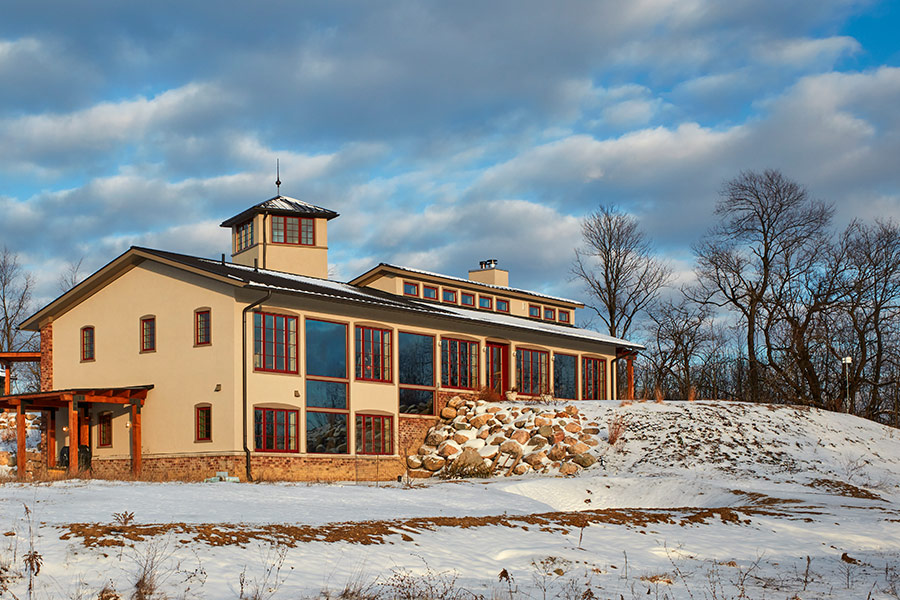
Tom Burbeck describes the Living Building Challenge (LBC) as a green building certification program that “establishes the highest possible standards for residential building sustainability.” He and Marti learned about the LBC certification while seeking to design their farmhouse to have minimal environmental impact.

The 2,200 square foot (main floor living space) home borrows from the characteristics of 200-year-old Tuscan farmhouses, with a 2,400 square foot barn and workshop. The buildings sit at the center of 15 acres of depleted farm land. A 20-person design/build team, led by the Burbecks, spent five years executing the project.

Marti Burbeck said creating a sustainable living environment was just the next challenge on the list for her and her husband to tackle in life. “As we looked at the criteria for LBC certification we thought, why not go for it?” she said. “If our goals include helping to change peoples’ relationship with the environment and to change building philosophies, we should start with our own project, and then become advocates.” 

“Since the 1960s, the number of U.S. households has grown from 53 million to about 126 million last year,” said Michael Klement, one of the members of the design team. “We have to rethink the relationship between humans, buildings and the environment. Our current model is too destructive. We’re depleting our resources and creating an unacceptable amount of economic disparity. The Living Building Challenge forced us to recalibrate how we design a home and build like nature intended. This is our ‘moon shot’ in the building industry,” Klement added.

“The LBC certification comprises seven performance categories – site, water, energy, health, materials, equity and beauty,” explained Eric Doyle, the senior project manager of Catalyst Partners. “These are subdivided into a total of 20 imperatives, each of which focuses on a specific sphere of influence, such as urban agriculture, net positive water, net positive energy and responsible industry.” For example, to receive full “Living” certification a building cannot use any materials such as formaldehyde, halogenated flame-retardants, lead, mercury, phthalates or PVC/vinyl.

“The materials imperative was the most challenging project component I’ve come across in my 21 years in the green building industry,” said Bob Burnside, CEO of Fireside Home Construction. “Multi-component mechanical, electrical and appliance products were the toughest. 

Below are more examples of how the home earned the international credential.

Urban Agriculture

  • Uses permaculture farming methods to reverse the harsh impact commodity farming has had on land immediately surrounding the farmhouse. Permaculture uses an integrated system of design encompassing agriculture, horticulture and ecology.

  • Restores the oak-hickory savanna once common to the area.

  • Provides healthy food for the local community, especially for those with limited access to fresh produce.


Water Conservation

  • Achieves net-positive water through a rainwater and snow harvesting system, capturing runoff from the roofs to supply 7,500 gallons of in-ground cisterns, currently for non-potable water. A new well provides potable water to comply with Michigan building codes, with a future-ready potable rainwater filtration system.

  • Waste water is returned to the aquafer. Black water from low-flush toilets and the kitchen sink, and graywater drains to a traditional septic system and drain field. A future-ready greywater system for reclaiming water from baths, sinks and washing machines will enable drainage to a shallow leach field and rain gardens.


Net-Positive Energy

  • A passive solar house design, with a very tight thermal envelope and a tall cooling tower, minimizes house loads required for heating and cooling.

  • A 16.8-kilowatt photovoltaic system provides electricity to the house and the grid using 60 solar panels covering the south plane of the barn roof.

  • A closed-loop geothermal system provides radiant floor heating during winter, forced air heating during shoulder seasons and potable water pre-heating.

  • During the required 12-month LBC audit period, the house generated 20,270 kWh of electricity, and used 15,987 kWh, producing 26 percent more energy than it used. In total 4,283 kWh were pushed back to the electric utility grid, moving the home past net-zero into net-positive.


The Burbecks now plan to focus on hosting educational workshops and house tours with Architecture Resource, Fireside Home Construction, and Catalyst Partners to educate the community, building industry, government officials and NGOs about sustainable living and the Living Building Challenge. 

In 200 years, who knows what the landscape in this small Michigan community will look like, but the Burbecks do know one thing: this home will still stand as a beacon of sustainability for all interested in playing a part.

If you like this, subscribe here for more stories that Inspire The Future.
World’s Most Sustainable Home Will be Around in 200 Years

Tom and Marti Burbeck – in search of truly sustainable living – brought together an architect, builder, green building project consultant and multiple building science engineers to design and build their new home, Burh Becc at Beacon Springs.

They have succeeded in creating a home that will still be standing 200 years from now and will still be regenerative to the surrounding ecosystem. In late 2017, their home at Beacon Springs Farm, Michigan, became the second house in the world to achieve a Living Certified ruling via the Living Building Challenge™ certification by the International Living Future Institute. The Burbeck’s hope their truly restorative farmhouse inspires others to reimagine common building techniques.

If you like this, subscribe here for more stories that Inspire The Future.
Tom Burbeck describes the Living Building Challenge (LBC) as a green building certification program that “establishes the highest possible standards for residential building sustainability.” He and Marti learned about the LBC certification while seeking to design their farmhouse to have minimal environmental impact.

The 2,200 square foot (main floor living space) home borrows from the characteristics of 200-year-old Tuscan farmhouses, with a 2,400 square foot barn and workshop. The buildings sit at the center of 15 acres of depleted farm land. A 20-person design/build team, led by the Burbecks, spent five years executing the project.

Marti Burbeck said creating a sustainable living environment was just the next challenge on the list for her and her husband to tackle in life. “As we looked at the criteria for LBC certification we thought, why not go for it?” she said. “If our goals include helping to change peoples’ relationship with the environment and to change building philosophies, we should start with our own project, and then become advocates.” 

“Since the 1960s, the number of U.S. households has grown from 53 million to about 126 million last year,” said Michael Klement, one of the members of the design team. “We have to rethink the relationship between humans, buildings and the environment. Our current model is too destructive. We’re depleting our resources and creating an unacceptable amount of economic disparity. The Living Building Challenge forced us to recalibrate how we design a home and build like nature intended. This is our ‘moon shot’ in the building industry,” Klement added.

“The LBC certification comprises seven performance categories – site, water, energy, health, materials, equity and beauty,” explained Eric Doyle, the senior project manager of Catalyst Partners. “These are subdivided into a total of 20 imperatives, each of which focuses on a specific sphere of influence, such as urban agriculture, net positive water, net positive energy and responsible industry.” For example, to receive full “Living” certification a building cannot use any materials such as formaldehyde, halogenated flame-retardants, lead, mercury, phthalates or PVC/vinyl.

“The materials imperative was the most challenging project component I’ve come across in my 21 years in the green building industry,” said Bob Burnside, CEO of Fireside Home Construction. “Multi-component mechanical, electrical and appliance products were the toughest. 

Below are more examples of how the home earned the international credential.

Urban Agriculture

  • Uses permaculture farming methods to reverse the harsh impact commodity farming has had on land immediately surrounding the farmhouse. Permaculture uses an integrated system of design encompassing agriculture, horticulture and ecology.

  • Restores the oak-hickory savanna once common to the area.

  • Provides healthy food for the local community, especially for those with limited access to fresh produce.


Water Conservation

  • Achieves net-positive water through a rainwater and snow harvesting system, capturing runoff from the roofs to supply 7,500 gallons of in-ground cisterns, currently for non-potable water. A new well provides potable water to comply with Michigan building codes, with a future-ready potable rainwater filtration system.

  • Waste water is returned to the aquafer. Black water from low-flush toilets and the kitchen sink, and graywater drains to a traditional septic system and drain field. A future-ready greywater system for reclaiming water from baths, sinks and washing machines will enable drainage to a shallow leach field and rain gardens.


Net-Positive Energy

  • A passive solar house design, with a very tight thermal envelope and a tall cooling tower, minimizes house loads required for heating and cooling.

  • A 16.8-kilowatt photovoltaic system provides electricity to the house and the grid using 60 solar panels covering the south plane of the barn roof.

  • A closed-loop geothermal system provides radiant floor heating during winter, forced air heating during shoulder seasons and potable water pre-heating.

  • During the required 12-month LBC audit period, the house generated 20,270 kWh of electricity, and used 15,987 kWh, producing 26 percent more energy than it used. In total 4,283 kWh were pushed back to the electric utility grid, moving the home past net-zero into net-positive.


The Burbecks now plan to focus on hosting educational workshops and house tours with Architecture Resource, Fireside Home Construction, and Catalyst Partners to educate the community, building industry, government officials and NGOs about sustainable living and the Living Building Challenge. 

In 200 years, who knows what the landscape in this small Michigan community will look like, but the Burbecks do know one thing: this home will still stand as a beacon of sustainability for all interested in playing a part.

If you like this, subscribe here for more stories that Inspire The Future.

The Fashion Brand Made From Ocean Trash

If you want the best quality nylon in the world, stop by your local harbor and pick up an old fishing net.

This is the finding of Spanish fashion entrepreneur Javier Goyeneche (pictured above), who in 2009 decided to ditch his mainstream fashion brand and look for inspiration in the trash floating around our oceans. The entrepreneur had become frustrated with designing collections made from polyester fabrics, production of which relied on digging deeper and deeper for oil, and realized there was already a wealth of polyester freely available – the fishing nets discarded by the fishing industry. Goveneche started the ECOALF Foundation and has formed alliances with companies around the world looking to develop breakthrough technologies that allow fabrics to be manufactured from recycled materials.

“The concept of a sustainable fashion brand arose from my frustration with the excessive use of the world’s natural resources and the amount of waste produced by industrialized countries,” says Goveneche. “We currently use five times more natural resources than the planet is able to generate.”

His new venture had nothing to do with fashion at first. He spent three years traveling the world, meeting with inventors, looking for technical knowledge and the chemical processes needed to start his business. Goveneche reviewed dozens of recycling techniques for plastic bottles, discarded fishing nets, used coffee grounds, and even car tires – all potential materials that might deliver a new generation of fabrics that were more Earth-friendly.

recycled fashion

“Fishing nets are a huge problem because they need to be replaced every four to six years,” says Goveneche. The problem, however, is less about the replacement cost and more about having to pay the ports to mothball two-mile long nets in warehouses. It’s much cheaper to let them quietly slip into the oceans in the dead of night, when no one is watching.

Goveneche was horrified to learn that there’s a permanent stash of around 65,000 tons of fishing nets on the bottom of our oceans. In the North Sea alone, 40,000 nets choke up the waters and strangle sea life to death.

On the east coast of Spain, Goveneche started an initiative called Up Cycling The Ocean, involving 11 ports and 162 fishing boats. In addition to catching fish, the boats also “catch” between 3 and 6 kilograms of old fishing nets when they haul their nets up. He’s has convinced them to put this into special onboard containers, and at last count, he’d collected 18 tons of old netting.

Last year in Florence, Italy, the first collection of products made with yarn from the bottom of the ocean was presented to the public. “Basically, our fashion brand is a huge research and development program, as the quality of our thread depends on the quality of the trash coming out of the ocean,” says Goveneche.

As each garment in the collection gets designed, it initiates another recycling program. “Our sneaker laces are made from plastic bottles, our fabric from fishing nets. When we added belts and shoes to the range, we needed to start a rubber recycling program. One thing has led to another,” says Goveneche, laughing.

bottles-top

“To make fabrics from discarded fishing nets takes seven chemical steps,” he explains. “Traditional fabric-making methods using raw, virgin materials require 17 steps. There’s a lot of water savings and fewer emissions too, of course.”

Cutting-edge, technical experiments are all very well, but ultimately customers must be attracted to buy cool-looking clothing. While the ECOALF story scores full marks on the enviro-meter, Goveneche is  under no illusions that this will be enough to become a profitable business.

“After our chemical engineers are done with the fabrics, our designers make the final products,” says Goveneche. “There’s a misconception that people buy our products because they love nature. But who will buy a jacket that doesn’t fit well or choose a color that isn’t in vogue?”

ecoalf fashion

“Consumers may like your story, but in the end it’s about the fashion. As a business, our price must be right, we need to be in the right stores, and quality must be good,” says Goveneche.

The company has broken-even after three years and Goveneche is looking optimistically at the future. He senses a new generation of brands that are showing that things can be done differently. “Consumers are seeking brands that represent certain values, and that’s our direction,” he says.

“At first, we had to dispel the idea that recycling is something hippie -– where you’d take your grandmother’s old blanket and turn it into a backpack. But that’s not us. We’re about technology and R&D; about plugging into the growing world of ecologically-minded products, such as electrical cars and organic food.”


It Was Only a Matter of Time: Climate Museums

You don’t get a lot of ice cores in downtown Manhattan. But visitors to the inaugural show at New York’s Climate Museum can watch 269 soothing minutes of film featuring nothing but turquoise ice cores, drilled from the depths of the Greenland Ice Sheet.

For scientists, the cylinder-shaped ice blocks open magical windows into prehistoric atmospheric conditions, but in this New York gallery, the goal is to prod the imagination as well as feed the mind.

“If this installation can create even a momentary sense that climate change occurs over millennia, that can help us comprehend the phenomenon’s enormity,” said Peggy Weil, the U.S. artist behind the work.

If you like this, subscribe here for more stories that Inspire The Future.
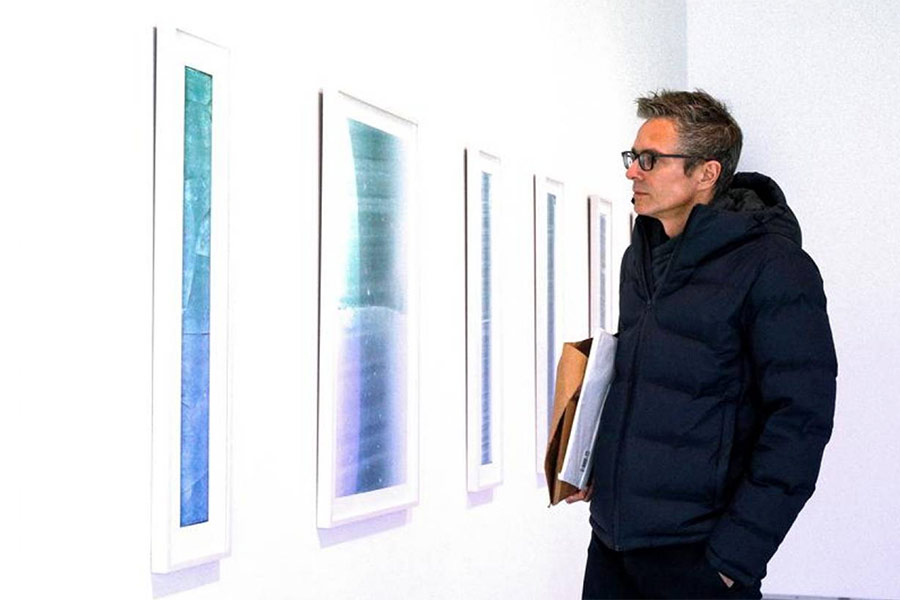
Ice cores are samples of ice excavated from miles below the surface – vital in tracking atmospheric conditions, including rising temperatures, over hundreds of thousands of years.

The film captures the details of 88 such cores in an attempt to reconstruct some of the data scientists use to compare past periods of climate change with today’s.

Art student Leonard Yang said he felt bitter-sweet as he strolled between photographs of the ice cores, which were exhibited at Manhattan’s Parsons School of Design.

“It just makes me feel like all of this is just going to disappear,” said the 29-year-old, wandering the small museum that is now part of a growing global trend. For as world leaders increasingly face up to the fallout of climate change, curators are planning a new wave of museums, devoted to what many consider a defining issue of the times. From Germany to Denmark, Hong Kong to Canada, talk of climate museums is on the rise.

In the German city of Bremerhaven, the Klimahaus Bremerhaven 8° Ost exhibits recreations of different climate zones so museum goers can follow the tracks of changing temperatures. Last year, about half a million people visited the museum, a vessel-like building north of Bremen which opened in 2009, according to a spokeswoman.

In Hong Kong, the smaller Jockey Club Museum of Climate Change chronicles grand scientific expeditions, including those of the Xuelong, an icebreaker that went on voyages to probe the Arctic’s response to global warming.

THINK BIG

Scientists say that left unchecked, projected levels of rising temperatures may displace entire populations, flood cities and trigger conflict. So museums want to fuse art and science to raise awareness.

In Norway, the University of Oslo will this spring start building a 7,000-square-feet (650 square meters) climate museum thanks to a donation of nearly $9 million, said a spokeswoman.


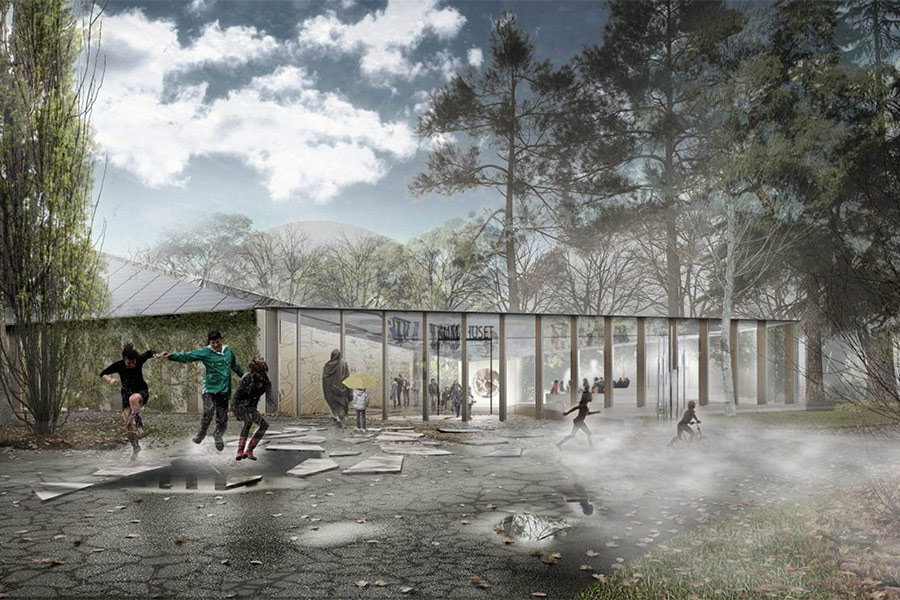
A rendering of the Klimahuset (Climate House), a climate-change themed museum whose construction in Oslo is due to start in May 2018. Illustration: Natural History Museum of Oslo & Lund Hagem Architects.

The Klimahuset (Climate House) has big ambitions.

The museum – its designers call it a “climate machine” – will open with an exhibition that will include a section tracking the “fingerprints” left on the atmosphere by carbon dioxide, a potent greenhouse gas, said project leader Torkjell Leira by phone.

In Britain, entrepreneur Joe Inglis was in talks with the University of Oxford’s School of Geography in the hope of creating a first British climate change museum, dubbed Climatic. His initial plans stalled but he hopes to resurrect the dream.

More than 500 museum staff have joined Canada’s Coalition of Museums for Climate Justice, hoping to push their places of work into staging more exhibits on the issue, said a spokesman.

And near the Danish capital of Copenhagen, Jay Sterling Gregg, a scientist whose day job revolves around climate, formed a group that aims to open the country’s first climate museum.

Stil in its infancy, the plan is to start with pop-up exhibitions then open a physical museum after 2020, he said.

A museum, the university researcher said, was needed because it could reach people in a way that academics cannot.

“It reaches deeper; it evokes emotions; it inspires,” he told the Thomson Reuters Foundation by email.

Photos of ice cores drilled from the depths of the Greenland Ice Sheet, are displayed as part of an installation called ’88 Cores’ by artist Peggy Weil at New York’s Climate Museum inaugural show, featured at the Parson’s School of Design in New York City, U.S., February 6, 2018. Picture taken February 6, 2018. REUTERS/Brendan McDermid

TALK ABOUT IT

Citing climate change, scientists predict sea levels are on track to surge as temperatures rise, posing threats such as deadly heat, extreme weather and land swallowed by rising water.

While the world has rallied around a landmark 2015 agreement to fight global warming by cutting greenhouse gas emissions, U.S. President Donald Trump has pulled his country out of the pact and repeatedly cast doubt on the phenomenon.

And opponents of climate change science remain vocal in the United States, despite research showing that most U.S. adults are believers and think man-made emissions are to blame. But some experts say climate-change nay-sayers are better at spreading their views, especially if science stays off the menu for many Americans when it comes to dinner-time chat.

“One of the issues is that Americans don’t talk about (climate change) with their friends and family,” said Anthony Leiserowitz, of Yale University in the state of Connecticut. “Museums give them an opportunity to engage these themes.”

By Sebastien Malo @sebastienmalo, Editing by Lyndsay Griffiths. 

If you like this, subscribe here for more stories that Inspire The Future.
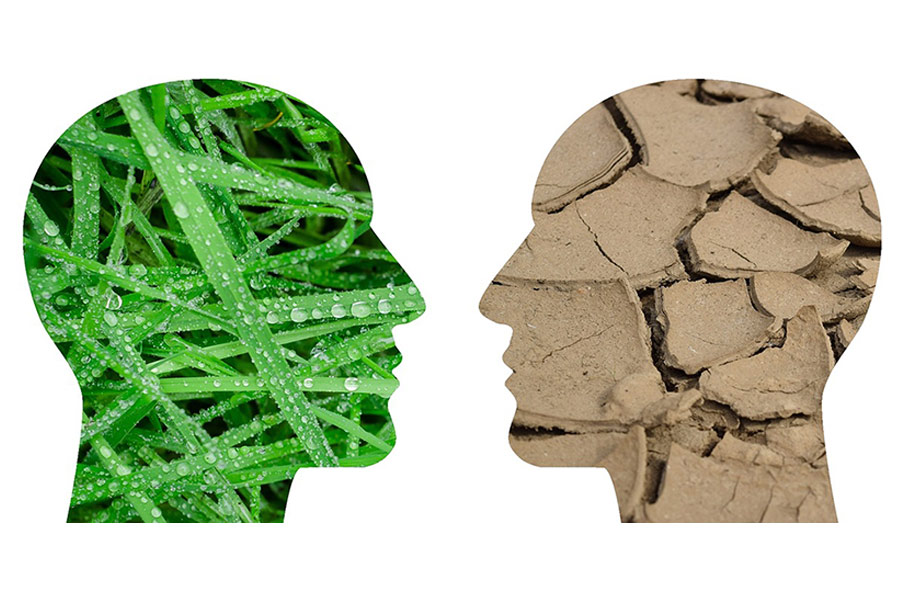
Climate Change Could Explain The Personality Of Your Significant Other

Have you ever wondered why your significant other thinks and acts the way they do? We typically think the answer lies in their parents and genes, but new research points to another insightful possibility: the average temperature where they grew up.

The latest research from Columbia Business School offers compelling evidence for the role of regional ambient temperature in shaping people’s personality. Even after controlling for various factors suggested by previous research, including farming practices, migration patterns, and disease exposure, the researchers found temperature to be a key factor in how personality develops.
 

“Ambient temperature can shape the fundamental dimensions of personality,” says Jackson Lu, a PhD candidate at Columbia Business School who conducted the research alongside Columbia Professor Adam Galinsky. “Our research reveals a connection between the ambient temperature that individuals were exposed to when they were young and their personality today. This finding can help explain the personality differences we observe in people of different regions.”

Climate’s Impact on Five Key Personality Dimensions

This research, titled Regional Ambient Temperature is Associated with Human Personality and recently published in the journal Nature: Human Behaviour, defines personality as “the interactive aggregate of personal characteristics that influence an individual’s response to the environment.” The hundreds of personality traits used to describe humans largely boil down to five broad dimensions, the so-called Big Five: agreeableness, conscientiousness, emotional stability, extraversion, and openness to experience.

The research suggests that a key factor determining these broad personality dimensions is how mild (i.e., clement) the ambient temperature was when individuals grew up. The sweet spot for temperature is 72 degrees F (or 22 degrees C).

“Individuals who grew up in areas where ambient temperatures were closer to this optimal level scored higher on the Big Five personality dimensions, like extraversion and openness to experience, while those in colder or hotter climates scored lower,” says Galinsky.

Large Surveys Fielded in China and the U.S.

To test the hypothesized relationship between ambient temperature and personality, the paper’s 26 authors conducted separate studies in two geographically large yet culturally distinct countries: China and the United States. In the first study, personality surveys were completed online by 5,587 university students born and raised in 59 Chinese cities. The second study conducted in the U.S. involved personality surveys completed by more than 1.6 million Americans of different ages, social classes, and education levels growing up in 12,499 zip-code areas in 8,102 cities.

The result? Temperature matters! Lu explains:

“Clement temperatures encourage individuals to explore the outside environment, where social interactions and new experiences abound. Venturing outdoors and interacting with lots of people make people more agreeable, conscientious, emotionally stable, extraverted, and open to new experiences. But when the temperature is too hot or too cold, individuals are less likely to go outside to meet up with friends or to try new activities.”

The association between ambient temperature and personality is particularly important in light of climate change across the globe, which could result in changes in regional human personalities over time. Of course, as Galinsky explains, the size and extent of these changes await future investigation.

If you like this, subscribe here for more stories that Inspire The Future.
Beyond Meat: The Race to Reinvent The Burger

What do Bill Gates, Richard Branson and Leonardo DiCaprio all have in common? Aside from vast wealth and fame, all three are backing “alt- meat” – a fake meat they say has all the taste but none of the climate problems that come with traditional cattle farming.

“If you’re able to create a product that tastes, smells, feels, looks and costs the same as ground beef, yet is made from plant-based materials, it’s a very large market,” said venture capitalist Samir Kaul. Kaul is a partner at Khosla Ventures, which along with Microsoft founder Gates, has invested millions of dollars in Impossible Foods, which produces the Impossible Burger.

If you like this, subscribe here for more stories that Inspire The Future.

Impossible because it is not meat, but part of a growing market in products that – unlike bean or Quorn burgers – simulate meat rather than just replace it with a veggie option. The meat substitutes market will be worth nearly $6 billion by 2022, according to research firm Markets and Markets. But industry analysts are cautious about the potential.

The United States is a nation of meat eaters – 98 per cent eat it at least once a week, according to Darren Seifer, a food consumption analyst for market research group NPD. “For success in the food industry you have to be patient. What we eat and drink is culturally based and very habitual. It might take as long as a decade to see if there is any moving the needle,” Seifer told the Thomson Reuters Foundation.

The Moving Mountains B12 Burger, pictured surrounded by the ingredients: mushroom, coconut, soy beans, beetroot, potato and onion. Photo: Moving Mountains.

Actor DiCaprio has previously invested in tea that provides an income to indigenous Amazonian families and in a farmed fish company, citing overfishing and collapsing marine ecosystems.
Gates also has previously invested with the environment in mind; he put money into Breakthrough Energy Ventures, a $1 billion-plus fund to finance emerging energy research to reduce global greenhouse gas emissions to near-zero.

There are a handful of international companies like Impossible producing meat that does not involve animals being killed, deforestation or significant production of greenhouse gases. Impossible says its burger creates 87 percent less greenhouse gas emissions than a meat equivalent.

About 80 percent of all agricultural land is dedicated to grazing or growing feed for animals, the United Nations says. The livestock industry consumes 10 percent of the world’s fresh water, while generating methane and other planet-warming emissions, and causing large-scale deforestation.

In December, Beyond Meat, whose products look like meat but are made of plants, announced they had received investment of $55m from two investors with decidedly meaty credentials.

Tyson Foods, which produces a fifth of all animals eaten in the United States, was one; the other was Cleveland Avenue, a venture capital firm run by the former McDonalds Corp. CEO Don Thompson.
“There are many issues that impact upon climate change, but few as negatively as livestock,” Richard Branson wrote in a blog post explaining why he had put his money into Memphis Meats, which is growing meat from animal cells in laboratories.

In the same blog, the Virgin boss revealed he had given up beef because of rainforest degradation.
Gates too has expressed concern for the environment in a blog post entitled: ‘Is there enough meat for everyone?’

“How can we make enough meat without destroying the planet?—one solution would be to ask the biggest carnivores (Americans and others) to cut back, by as much as half,” he wrote.

The two biggest players that have gone to market in the United States – Beyond Meat and Impossible Foods – have now seen investment of more than $300 million. However, some people are not convinced the environment is their motivation.

“Venture capitalists have pinpointed a growth area and the only thing they are looking for is a return,” Simeon Van der Molen of Moving Mountains, a plant-based burger company based in Britain, told the Thomson Reuters Foundation.

A vegan who has sold eco-friendly cleaning products for 17 years, he will launch his own plant-based burger next month, effectively going into competition with the venture capitalists.
“For me venture capitalists are only after their pound of flesh,” he said. He is aiming to keep the company independent.

While motives might be questioned, there is no disagreement over the growing interest.
Market research company Mintel saw a 257 percent rise in new products labelled as vegan-friendly between 2011 and 2016.

In less than a year, the Impossible Burger (made of wheat, coconut and potato) has gone from being available in 11 restaurants to 500 in the United States. That’s still a tiny fraction of the current market – 9 billion servings of burgers were ordered at restaurants and food outlets in 2014, according to U.S. market research group NPD. Beyond Meat, which makes chicken and sausages as well as burgers from pea protein, sells into 19,000 U.S. stores.

Van der Molen says his target consumers will be flexitarians – people who eat meatless meals once a week or more. “There are 500,000 vegans in the UK and 22 million flexitarians. What we want to do is get carnivores to make that conversion,” Van der Molen said.

By Lee Mannion, editing by Lyndsay Griffiths. @leemannion

If you like this, subscribe here for more stories that Inspire The Future.

0