

A Grassroots Activist Swims Against the Tide

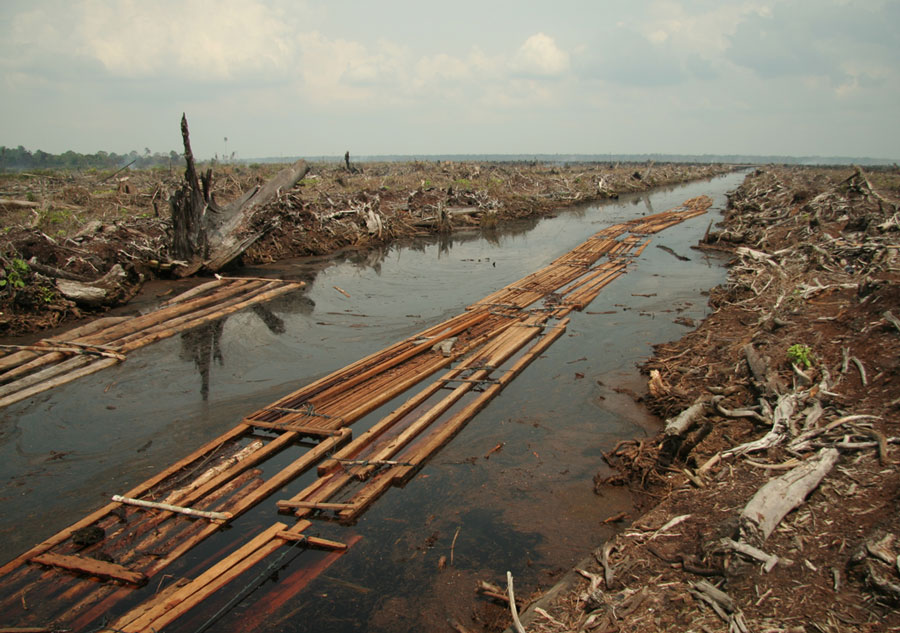
At first glance, Marina Silva is a politician who served as the Minister of Environment in Brazil. At second glance, you realize that she is also a grassroots activist who has fought to protect local communities and against deforestation in the Amazon.

“I had to swim against the tide in many situations- political and personal. When there was a road to be built in my state of Amazonas, crossing the territory of some traditional communities. Most people wanted the road to be built, but it would strongly affect the environment of those traditional territories. So I opposed this decision because it had no study on its environmental impact and no appropriate license. To me, it meant a very high price to pay.

I couldn’t visit half of my state during four years. People got angry with me because they lived in an isolated area, 500 km from the capital city, that could be accessed only by buying very expensive air tickets. The road would be a great achievement for those people if it was made in the right way, but it was not being made in the right way.

If you like this, subscribe here for more stories that Inspire The Future.

So I opposed this decision and it was very hard for me. I used to hear people criticizing me with unfair arguments, saying I was against development, against the improvement of people’s well-being. I knew that the road would not be good, even for them. But not doing it my way was not an option, because not doing it would go against the values I believe in. When we are guided by principles and values, it becomes the basic framework of our actions, of everything we do. But of course, it is not always understood the right way. We have to embody generosity to plant the tree, even when others are going to reap the fruits.”

Silva has an unusual background for a politician. She was born into a family of rubber tappers, in a small village. She was illiterate and orphaned when she moved to the capital at age 16 to study in a convent. She graduated from the Federal University at 26 years old and quickly got involved with local politics. She became Brazil’s Environment Minister and was named one of the “Champions of the Earth” by the United Nations Environment Program.

She has moved from “having” towards “being” that is closer to nature and community, and the way that the earth’s original indigenous people lived like. What we really need is to be persistent and it means that some causes can only take form after a maturation period. The world is made of those who have values, who transform those values into promises and those promises in actions. That is persistence.

As a Minister of Environment she and her team developed a plan how to reduce deforestation by 80% in 10 years. “However, at the same time I suffered big pressure from the Brazilian government to revoke the measures we were implementing. She and her team did not know if they were going to be victorious with the plan but at the same time they couldn’t let it go and not do it. And they did. To achieve the results, they had to conduct several operations with the federal police and other things and all this created big conflicts.

It was a very intense period and they saw many people being murdered for standing against deforestation. It required a lot of persistence. We did provoke a great deal of risk and it was not always working well. Us being criticized by colleagues inside our own government and peers of different states that had been confronted by offenders. But persisting on that matter was very rewarding just to think that we kept 2 billion tons of CO2 from being released into the atmosphere, and millions and millions of native forest hectares from being destroyed. That required a lot of persistence. Courage is not the absence of fear; courage is the prevalent of commitment.”

Meaningful change doesn’t happen overnight. If we want that to happen, we have to understand that it takes some time. It is fundamental to learn how to deal with three things.

  1. Disappointments, which is sometimes very hard to do. Sometimes we do things and we strongly believe that everything is going to work out, but sometimes that doesn’t happen. So we don’t give up on our first, second or third try. That’s why I always say we need to be persistent and insistent.
  2. “Adjournment of pleasure”. Many times, we want to prompt acknowledgment and gratification. We need to learn how to deal with that recognition being delayed.
  3. Weight of responsibility.

Nowadays, more and more people don’t know how to deal with these three aspects of life. I learned this with my grandmother, my mom and my uncle, who worked in the forest, lived with indigenous people and learned the “native science”. I want people to learn how not to be a hostage of the past but to create something good from the past.

If you like this, subscribe here for more stories that Inspire The Future.

 

Can Religions Help in The Fight Against Climate Change?

A growing share of the six billion believers around the world are getting personally involved in the fight against climate change.

In Sikh temples the world over, community kitchens offer free meals to anyone regardless of colour, creed or caste. But the langars – as the kitchens are called – often distribute food grown with chemical pesticides, which can contribute to pollution and leak into rivers and streams. In 2015, a push by Sikh environmental groups drove the Golden Temple, the Sikh faith’s holiest which feeds 100,000 people daily, to start growing its own organic food to reduce its impact on nature.

“There are many hints in our holy book to protect mother earth and to commit to the betterment of society for all life on earth,” said Ravneet Singh, South Asia manager of EcoSikh, a Sikh environmental group.

“The most vulnerable entity on the planet is the planet itself – the forest, the water, the air, the soil,” he told the Thomson Reuters Foundation in a telephone interview. Many of the world’s religions consider nature sacred and religious leaders have increasingly come out in favour of protecting it – including by acting to curb climate change.

Experts say religions, which connect with people’s emotions and personal lives, could help mobilise people in the fight against climate change where facts and politics have failed. Faith groups also control trillions of dollars in assets, which could support that fight. A range of religious organisations are meeting this week in Switzerland to issue rules on ethical investment – including backing away from fossil fuels and moving towards green projects.

A growing share of the six billion believers around the world are getting personally involved in the fight against climate change as well, from eco-friendly mosques in Britain to river cleanups by Hindu groups in India to tree-planting projects on religious land in sub-Saharan Africa.

EMOTIONS FIRST

Under a Paris climate change deal agreed by nearly 200 nations in 2015, countries pledged to keep the rise in average global temperatures below 2 degrees Celsius above pre-industrial levels to stave off the worst effects of climate change.

Despite mounting evidence that global warming will reach catastrophic levels if planet-warming emissions are not drastically cut, governments globally are falling short of the efforts required, experts say.

Average surface temperatures are already 1.2 degrees Celsius above pre-industrial times, the World Meteorological Organization says.

This – combined with an uptick in record floods, hurricanes and other weather disasters – has led a growing number of religious authorities to speak out in favour of climate action. In September, Pope Francis and Orthodox Christian leader Patriarch Bartholomew called for a collective response from world leaders to climate change, saying the planet was deteriorating and vulnerable people were the first to be affected.

Their words could more effectively change many people’s minds than scientific reports, experts say.

“All big faiths talk about caring for the most vulnerable and caring for the earth,” Cynthia Scharf, a former senior staff member on the United Nations secretary general’s climate team, told the Thomson Reuters Foundation.

“What really motivates people is not facts but values and emotions. Those are pretty universal feelings,” said Scharf, who was raised in a Christian Protestant family and whose brother is a missionary.

“Religious communities can address some of the questions which are at the heart of climate change, such as fairness,” she said.

Many religions already advocate environmentally-friendly behaviours as part of their cores values, such as living with fewer material luxuries, saving water or avoiding meat.

Jainism for example, practiced by over four million people in India, prohibits killing animals and promotes a vegetarian lifestyle, which scientists say could play a major role in reducing planet-warming greenhouse gas emissions.

HOLY INVESTMENTS

Around the world, religious investment funds handle trillions of dollars each year, according to environmental group The Alliance of Religion and Conservation (ARC).

Historically, faith-based funds have avoided investing in alcohol, weapons, tobacco and, more recently, fossil fuels that contribute to climate change.

Last month, 40 Roman Catholic groups in countries including Australia, South Africa and the United States said they were shunning investments in fossil fuels and switching to greener energy.

But beyond avoiding certain types of investments, faith groups are also increasingly looking to actively invest in projects that protect the planet, such as renewable energy, sustainable agriculture or forest protection.

“Deforestation is not stopped by divesting (from fossil fuels). Somebody else will buy your stock,” said Gunnela Hahn, the head of sustainable investment for the Church of Sweden. “We want to invest in the solution.” This week in the small Swiss town of Zug, investors and leaders from eight of the world’s biggest religions – including Buddhism, Christianity and Islam – published priorities they have set themselves for ethical investment.

Some of the guidelines include supporting recycling projects and waste reduction, investing in companies that widen access to clean water and education, and chosing enterprises that have a strong environmental record.

GREEN GROUPS

But grassroots faith groups across the globe also are bringing religious teachings into thousands of projects on the ground to protect people and nature from the effects of climate change and pollution.

Many Hindu groups are working to clean the Ganges and Yamuna rivers in India. Believed by Indians to have miraculous healing powers, the Ganges is also one of the world’s filthiest rivers, with tons of raw sewage and industrial waste dumped into it daily.

Muslims in sub-Saharan Africa, who farm some of the least fertile land on the continent and face threats to their food security from climate change, developed a training manual in 2014 to encourage more sustainable farming practices.

A growing number of temples, mosques and synagogues also are switching to renewable energy and ditching disposable plastic cutlery.

Half of China’s Daoist temples have now switched, at least in part, to renewable energy, according to ARC.

“Faiths have the infrastructure – schools, medical facilities, universities, millions of buildings, sacred mountains, rivers and cities” to take direct, on-the-ground action on environmental issues, said Martin Palmer, ARC’s secretary general.

“We have gone from a situation where faiths weren’t aware the environment was a problem to a situation in which now every major religious leader is saying something for the environment and doing something about it,” he told the Thomson Reuters Foundation.

“It’s been like watching a giant wake up.”

THE LIMITS

Faith groups may also have a role in saying how far the planet’s leaders can go to try to protect climate stability. As the risks of global warming get clearer, a small but increasingly vocal group of researchers are exploring using technology to reduce them – in essence by re-engineering planetary systems.

Such “geoengineering” proposals include large-scale, controversial projects that aim, for instance, to dim sunlight by spraying sulfuric acid into the upper atmosphere.

Such action presents a range of risks, including potentially shifting rainfall patterns in parts of the world, scientists say. But the idea of humans deliberately playing with the earth’s climate – which some believe is the prerogative of gods – could leave religious groups sceptical.

Geoengineering proposals are expected to stir the same emotional responses as other controversial scientific advances, from genetic modification to cloning, said Scharf, who now works for a body looking at governance of climate engineering.

“Geoengineering is a humanitarian concern,” said the strategy director at the Carnegie Climate Geoengineering Governance Initiative. “That’s the only reason we should be looking at this issue. The whole purpose of it should be to alleviate suffering,” she said.

By Anna Pujol-Mazzini @annapmzn, Editing by Laurie Goerin.

How to Profit From Open Innovation

Any conversation on business competitiveness begins and ends with a discussion on innovation, a practice defined as “the fusion of invention and commercialization” by Ken Morse, founder of MIT’s Entrepreneurship Center and a leader of ESADE’s Open Innovation and Corporate Entrepreneurship programme

There are three general types of innovation – incremental, radical and open. Of the three, open innovation (OI) appears best-suited for the fierce global competition among firms of all sizes as innovation cycles shorten. Open innovation refers to the practice of looking outside of your organization for ideas and technology to accelerate and improve business solutions. Formally conceptualized by Henry Chesbrough, the methodology is gaining a foothold in entrepreneurially-minded corporations even as it challenges organizational cultures.

How open innovation works

In a perfect OI world, new products, services and business models are produced faster and better through collaboration among company stakeholders, startups and universities. Why? Because “companies recognize that not all of the smart people work for them, and in-house R&D labs can’t create all the innovation necessary to stay competitive,” explains Morse. So, they bring their experience and ideas together in mutually beneficial partnerships.

First, large companies identify startups whose technology matches their needs and become their first customers. Then, they invest further to ensure supply. University R&D centres receive sponsorship for their research activities, and larger firms maintain their competitive advantage by getting new inventions to market faster: “continuous innovation is not an option, it is imperative to success,” he stresses.

Keywords in OI are “inflows” and “outflows”, referring to the direction that ideas and technology move. Firms incorporate knowledge and inventions from outside sources into their innovation processes. Any ideas or developments that are not utilized, however, flow back outside for other organisations to take up, sometimes through joint ventures, licensing or spin offs.

Any company with ambition and global potential can benefit from OI

L Brands, owner of the Victoria’s Secret and La Senza labels, for instance, collaborated with Mast Industries to revamp production using Mast’s deep expertise in rapid sourcing, manufacturing and logistics. L Brands ended up acquiring the company as Mast Global.

How do these disparate parties find each other for open innovation collaboration? That’s a growing industry in itself. Consultancies now specialise in identifying and bringing partners together, and some large companies have in-house scouts, typically company veterans who know the products well and have easy access to the CEO. Global players like GE and Lego have created their own platforms whereby anyone can share new product ideas, and the company supports implementation of the winning ones. University and government research centres like MIT’s Startup Exchange , Startup NASA and UnternehmerTUM in Munich provide places for innovators to connect. Well-known entrepreneurs and networking aficionados like Morse also play a role. “Big companies don’t know how to find those small companies, so they call me and people like me,” he explains.

How to organise for an OI environment

Understandably, OI represents for most companies an entirely new way of developing products, and the culture change can be hard. Leadership makes the difference, Morse emphasizes: “All companies that are doing well with open innovation have made the decision from the top.” Driving strategic innovation from the C-suite is crucial, he believes, in order to “prevent middle-management from watering down programmes.” Also important is the recognition at all levels that failure is inherent to the process of invention and should be seen as part of the learning curve.

Training for the shift

ESADE’s open innovation programme in Barcelona hosts 40 to 50 students each session for an intense five days — two days on OI methodology, two days on sales strategy and elevator pitching, and a wrap-up day of presenting business plans to juries of experienced entrepreneurs and innovators. Morse considers the sales strategy part critical to the success of innovation as “commercialisation is all about sales and acquiring customers.” In his research at MIT, his team found that building the right sales model was actually a better determinant of corporate success than technology. “Pitching is key” to getting your ideas accepted throughout the innovation process, he adds. Morse and other course leaders – including Chesbrough, the “father” of OI – draw on exclusively European company case studies, and require students to prepare and deliver a pitch on a business idea. Most of the participants are executives in established companies in Europe and Asia.

Harvard Business School’s Leading Product Innovation teaches participants to bring flexibility into the product development process, including OI methodology. Participants in The Innovative Organization programme at Berkeley learn strategies to develop an innovative business culture within their organisations while receiving plenty of real-world open innovation examples from Silicon Valley. Finally, the joint MIT/IMD course Driving Strategic Innovation is similar to ESADE’s minus the pitching element and engagement with real-world executives.

As revolutionary as it is, OI is not set to overtake other innovation methods. Morse is quick to acknowledge that it is but one of the tools companies can use, and that most should be pursuing innovation on several parallel tracks. A leader’s job is “to consider alternatives, make investments and remember that it’s all about people,” adds Morse. Corporate leaders who have not yet taken a close look at open innovation might want to start if they wish to keep their organisations out in front.

Kate Rodriguez is a former senior career search researcher and government analyst who covers career development and higher education marketing for The Economist Careers Network.


The 10 Worst and Best U.S. Cities For Clean Air

The American Lung Association’s 2018 “State of the Air” report found ozone pollution worsened significantly due to warmer temperatures, while particle pollution generally continued to improve in 2014-2016.

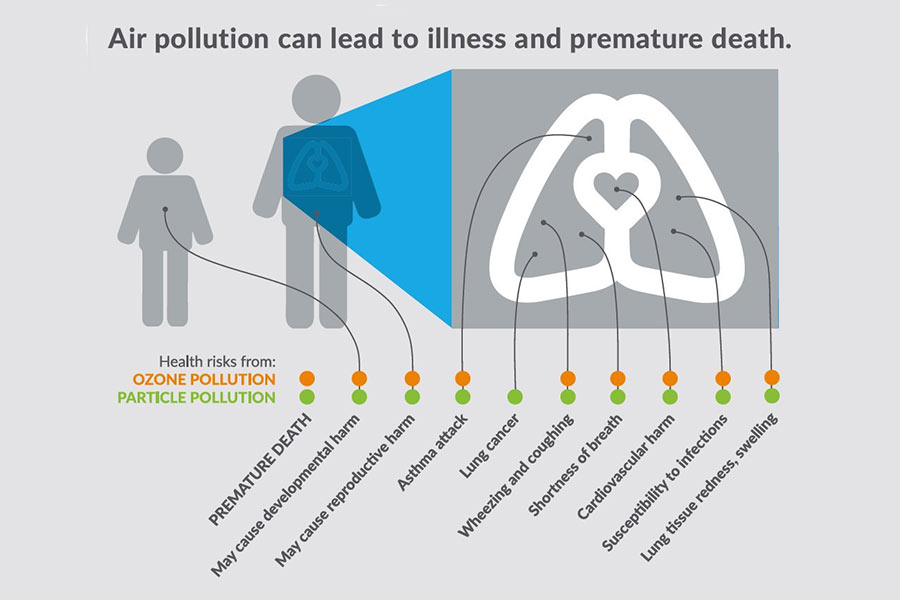
The 19th annual national air quality “report card” found that 133.9 million Americans—more than four in 10 (41.4%) – lived in counties with unhealthful levels of either ozone or particle pollution in 2014-2016, placing them at risk for premature death and other serious health effects such as lung cancer, asthma attacks, cardiovascular damage, and developmental and reproductive harm.

If you like this, subscribe here for more stories that Inspire The Future.
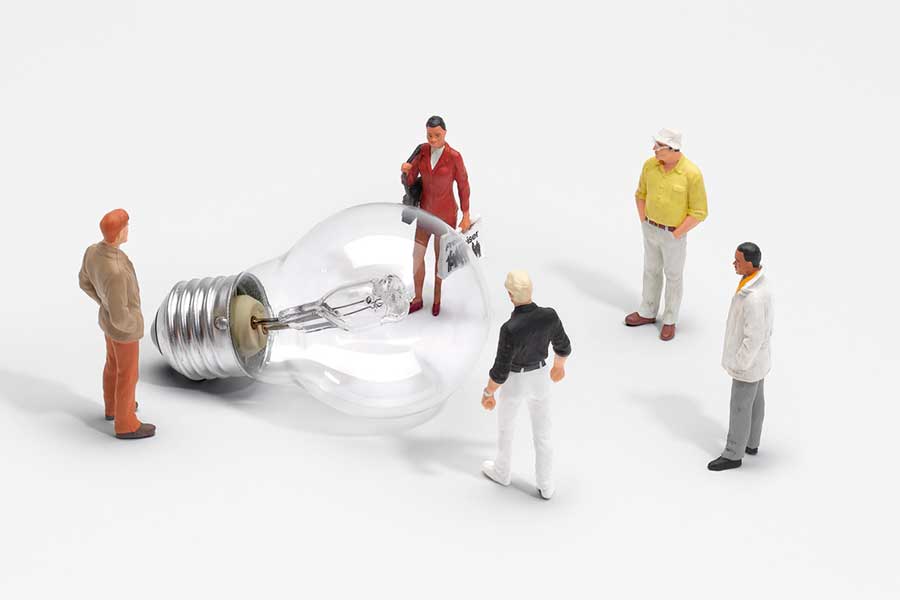
 
“Near record-setting heat from our changing climate has resulted in dangerous levels of ozone in many cities across the country, making ozone an urgent health threat for millions of Americans,” said American Lung Association National President and CEO Harold P. Wimmer.

“Far too many Americans are living with unhealthy air, placing their health and lives at risk. The ‘State of the Air’ report should serve as a wake-up call for residents and representatives alike. Everyone deserves to breathe healthy air, and we must do more to protect the air we breathe by upholding and enforcing the Clean Air Act.”

Each year, “State of the Air” reports on the two most widespread outdoor air pollutants, ozone pollution and particle pollution. The report analyzes particle pollution in two ways: through average annual particle pollution levels and short-term spikes in particle pollution. Both ozone and particle pollution are dangerous to public health and can be lethal. But the trends reported in this year’s report, which covers data collected by states, cities, counties, tribes and federal agencies in 2014-2016, reflect the ongoing challenges to reduce each pollutant in the changing political and outdoor climate.

Inhaling ozone pollution is like getting a sunburn on the lung. It can trigger coughing and asthma attacks and may even shorten life. Warmer temperatures make ozone more likely to form and harder to clean up.

Compared to the previous year, the 2018 report finds that far more people suffered from unhealthy ozone pollution, with approximately 128.9 million people living in 185 counties that earned an F grade for ozone. Of the 10 most polluted cities, seven cities did worse, including Los Angeles and the New York City metro area.

Top 10 Most Ozone-Polluted Cities:


  1. Los Angeles-Long Beach, California 

  2. Bakersfield, California 

  3. Visalia-Porterville-Hanford, California

  4. Fresno-Madera, California 

  5. Sacramento-Roseville, California 

  6. San Diego-Carlsbad, California 

  7. Modesto-Merced, California 

  8. Phoenix-Mesa-Scottsdale, Arizona

  9. Redding-Red Bluff, California 

  10. New York-Newark, New York–New Jersey-Connecticut-Pennsylvania

Unhealthy particles in the air emanate from wildfires, wood-burning devices, coal-fired power plants and diesel engines. Technically known as PM2.5, these microscopic particles lodge deep in the lungs and trigger asthma attacks, heart attacks and strokes, cause lung cancer and shorten life.

The 2018 report covers 2014-2016 data, the most recent data available, and includes the significant wildfires and resulting smoke that swept across the nation in 2016, but not those occurring in 2017. The report grades both daily spikes, called “short-term” particle pollution, and the annual average or “year-round” level that represents the concentration of particles day-in and day-out in each location.

The report finds that during 2014-2016, the year-round particle pollution levels continued to drop, maintaining a long-term trend, with a few notable exceptions, including Fairbanks, Alaska, where expanded monitoring newly identified the highest average levels in the nation. After spiking to record high levels in last year’s report, days with high short-term particle levels also dropped in most locations.


In the 2018 “State of the Air” report, most cities experienced fewer days of spikes in particle pollution, yet 35.1 million people lived in the 53 counties with too many days when particle pollution peaked at unhealthy levels. Bakersfield, California remained the city with the greatest short-term particle pollution levels. Increased heat, changes in climate patterns, drought and wildfires – many related to climate change – contributed to the high number of days with unhealthy particulate matter.

Top 10 U.S. Cities Most Polluted by Short-Term Particle Pollution:

  1. Bakersfield, California 

  2. Visalia-Porterville-Hanford, California 

  3. Fresno-Madera, California 

  4. Fairbanks, Alaska 

  5. Modesto-Merced, California 

  6. San Jose-San Francisco-Oakland, California 

  7. Los Angeles-Long Beach, California 

  8. Salt Lake City-Provo-Orem, Utah 

  9. El Centro, California 

  10. Pittsburgh-New Castle-Weirton, Pennsylvania-Ohio-West Virginia


The data available for the 2018 report show year-round particle pollution levels have dropped across much of the nation, some to their lowest levels yet. However, missing data from areas with invalid monitoring resulted in incomplete estimates of how many people nationwide are at risk from air pollution. According to EPA records, no complete data have been available for the entire state of Illinois since the 2014 report covering 2010-2012.  

In addition, the entire state of Mississippi and Los Angeles County and San Bernardino County in California lacked valid data for year-round particle pollution. The 2018 report, based on available but incomplete data, found that 9.8 million people lived in 16 counties where the annual average concentration of particle pollution was too high. But according to the Lung Association, as a result of the missing data, this likely vastly underestimates the people who are breathing unhealthy levels.

The importance of monitoring became particularly clear in the new ranking of Fairbanks, Alaska. Previously the metro area lacked sufficient monitoring data to provide year-round information. Now, improved monitoring, data revealed the dangerous levels of particle pollution year-round. In fact, Fairbanks is now the city with the highest year-round particle pollution in the 2018 report, up from number 17 in the 2017 report.

“The people of Fairbanks, Alaska, and all Americans have the right to know if the air they are breathing is dangerous. Improved monitoring is a critical step toward clean-up efforts that will save lives,” Wimmer said. “Greater monitoring of air quality nationwide may also identify additional health risks in other locations in the United States.”

Most cities continue to reduce their year-round particle pollution levels, some to their lowest levels yet. This continues a more than decade-long trend, as a result of steps taken under the Clean Air Act to reduce emissions. Despite these advancements, the 11 most polluted cities each violate the Clean Air Act’s U.S. National Ambient Air Quality Standards designed to protect public health.


Top 10 U.S. Cities Most Polluted by Year-Round Particle Pollution:

  1. 
Fairbanks, Alaska

  2. Visalia-Porterville-Hanford, California

  3. Bakersfield, California

  4. Los Angeles-Long Beach, California

  5. Fresno-Madera, California 

  6. Modesto-Merced, California 

  7. El Centro, California 
8. Pittsburgh-New Castle-Weirton, Pennsylvania-Ohio-West Virginia 

  8. Lancaster, Pennsylvania

  9. San Jose-San Francisco-Oakland, California

  10. Cleveland-Akron-Canton, Ohio

“More must be done to clean up the air so that everyone has healthy air to breathe,” Wimmer said. “We need essential pollution monitoring information to safeguard the health of those most at risk of the effects of air pollution, including children, the elderly and those living with a lung disease.”

The “State of the Air” also recognizes the nation’s cleanest cities, and again this year, only six cities qualified for that status. To rank as one of the nation’s cleanest, each city must experience no high ozone or high particle pollution days and must rank among the 25 cities with the lowest year-round particle pollution levels during 2014-2016. Cities new to the list include Bellingham, Washington and Casper, Wyoming. 

Cleanest U.S. Cities (in alphabetical order):

  • Bellingham, Washington
  • Burlington-South Burlington, Vermont
  • Casper, Wyoming
  • Honolulu, Hawaii
  • Palm Bay-Melbourne-Titusville, Florida
  • Wilmington, North Carolina

With this report, the Lung Association calls out Congress and the U.S. Environmental Protection Agency (EPA) for six ongoing threats to the nation’s air quality, including steps to roll back or weaken enforcement of key safeguards required under the Clean Air Act. Those threats include changes to weaken the Clean Air Act itself, undercut the agency’s reliance on health science to inform policy making, and roll back existing cleanup requirements for cars, trucks, oil and gas operations and power plants, including the Clean Power Plan to limit carbon pollution and address climate change.

“The Clean Air Act has saved lives and improved lung health for nearly 50 years,” Wimmer said. “Congress and the EPA are tasked with protecting Americans – including protecting the right to breathe air that doesn’t make people sick or die prematurely. We call on President Trump, EPA Administrator Scott Pruitt and members of Congress to fully fund, implement and enforce the Clean Air Act for all pollutants – including those that drive climate change and make it harder to achieve healthy air for all.”

If you like this, subscribe here for more stories that Inspire The Future.
 

Artist Live Streams Beijing Smog to Raise Awareness

Chinese artist Liu Bolin, known as “the invisible man” for using painted-on camouflage to blend into the backdrops of his photographs, says his latest project aims to put the spotlight on China’s air pollution problem.

As north China battles with poor air quality, Liu said the recent pollution warnings inspired him to show live video of the smog in the capital, Beijing.

If you like this, subscribe here for more stories that Inspire The Future.
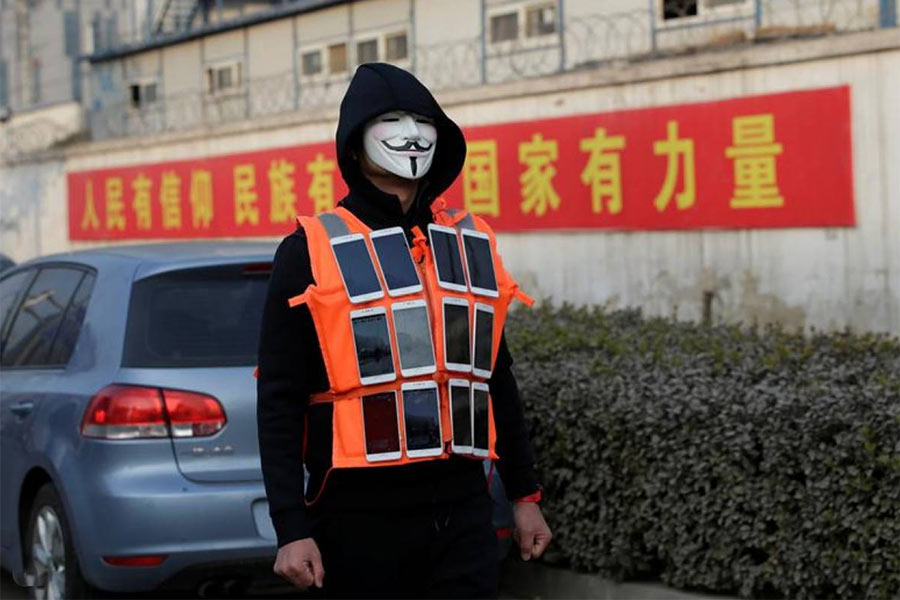
To do that, Liu walks around wearing an orange vest with 24 smartphones attached on the front and back, live-streaming scenes of smog which he calls “a disaster.”
“As an artist, to discuss it with images is what I think we should do,” Liu told Reuters Television.

The artist, who is also a sculptor, has won international recognition with exhibitions in Asia, Europe, the Middle East, the United States and Latin America. Liu’s previous “Hiding in the City” series featured him hidden in plain sight against monuments, murals, buildings and scenes of daily life in Beijing, Venice, New York and elsewhere.

The invisibility theme was done as a protest against the demolition of Liu’s studio when authorities razed an artists’ village in Beijing. But then he fell in love with this way of presenting his ideas.

His latest work is titled “Today Even Numbers Banned”, a reference to Beijing’s odd-even licence plate system for restricting the number of vehicles on roads when pollution levels are high.

China’s environmental watchdog regularly issues warnings about choking smog spreading across cities and orders factories to close, residents to stay indoors and curbs traffic and construction work.

Some Beijing residents were puzzled by the sight of Liu and his orange smartphone vest, but they approved of his efforts to raise awareness of the smog problem.

“I think this is pretty good. I don’t quite understand his art form, but his work can make more people know about smog in Beijing, right?,” said 27-year-old Xu Chenglong. 

If you like this, subscribe here for more stories that Inspire The Future.

Yellowstone Turns to Michelin For Rubber Walkways

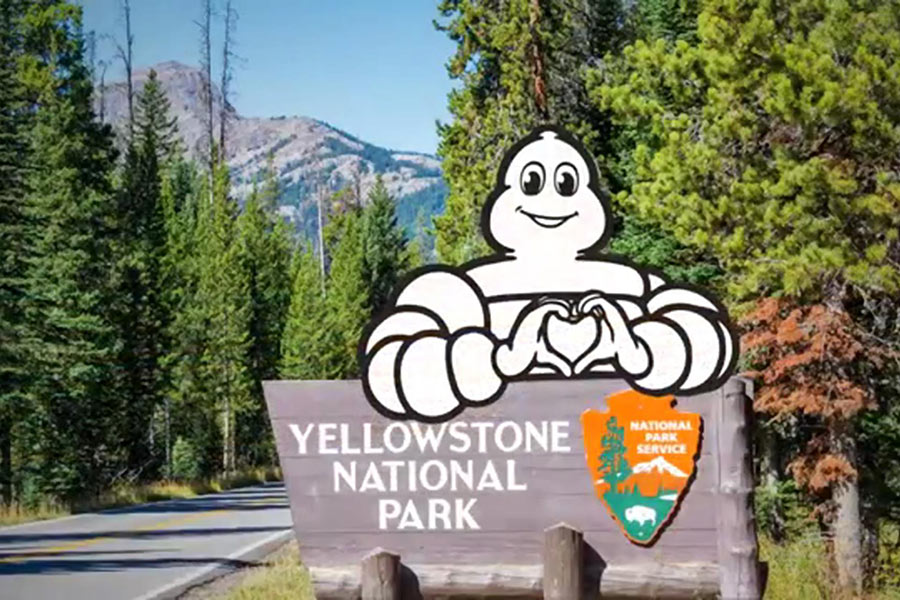
Yellowstone National Park experiences more than 4 million visits annually. The park’s volume of foot traffic, particularly around the famous geyser, Old Faithful, has put a strain on the existing walkways.

Tire manufacturer Michelin first partnered with Yellowstone three years ago, providing the park with reliable tires for its many recreational and maintenance vehicles. This partnership also helped identify other areas where the company could provide assistance, including answering the challenge of creating new and improved paths that would accommodate the crowds without disturbing the park’s ecosystem.

If you like this, subscribe here for more stories that Inspire The Future.
Now, the goals in creating upgraded walkways around the park’s most popular areas include finding a paving material that is durable but also sustainably produced.

Using recycled tires that Michelin donated to the park, the Michelin Corporate Foundation’s plan involves replacing the aging asphalt paths in Yellowstone with KBI Flexi-Pave, a porous material that allows rainwater and melting snow to drain through the material. This process promotes the natural flow of water, minimizes erosion, and allows water to replenish the geyser basin at Yellowstone’s Upper Geyser Basin.

In addition, Flexi-Pave does not release pollutants into the soil, break apart with wear, or cause significant storm-water runoff.
Flexi-Pave is a composite product made of stone and rubber granules that is chemically inert. The granules create a safe, durable, non-slip walking surface that accommodates wheelchairs as well as walkers. The unique material and design of the Flexi-Pave surface also resists the wear and tear associated with freezing and thawing conditions.

Additional goals of the ongoing partnership between Michelin and Yellowstone include educating the public about the importance of preserving national parks and inspiring similar projects elsewhere.

“We hope that this eco-friendly park walkway will inspire other similar projects that help preserve natural systems,” says Jeff Augustin, Senior Director of Park Projects at Yellowstone Forever, the official nonprofit partner of Yellowstone National Park.

“Yellowstone shares Michelin’s commitment to being a global leader in sustainability for the future,” says Leesa Owens, director of community relations for Michelin North America. “Our partnership has created opportunities for visitors to enjoy the park’s wonders for years to come.”

If you like this, subscribe here for more stories that Inspire The Future.
Ghost Boats to Water Treasures: Museums Seek to Spur Climate Action

A toddler’s bath water, tears of joy from a newly ordained priest, condensed sweat from a nightclub – British artist Amy Sharrocks collects all kinds of water.

In 2013 she set up the Museum of Water, a live piece of artwork that travels around the world and invites people to donate water – from spit to melted snow – in a bottle and discuss what it means to them.

The initiative aims to understand why people treasure water and help prepare them for a drier future and climate, Sharrocks told an audience of climate experts, activists and museum curators.

If you like this, subscribe here for more stories that Inspire The Future.
“For example, we show them how to have three-minute showers to better cope with water shortages,” she said at the International Symposium on Climate Change and Museums in Manchester, Britain.

Sharrocks is not alone. As world leaders increasingly face up to the fallout of climate change, curators are planning a new wave of museums, devoted to what many consider a defining issue of the times.

From Germany to Denmark, Hong Kong to Canada, talk of climate museums is on the rise.

In 2015 former civil rights lawyer Miranda Massie created the first U.S. museum entirely dedicated to climate change in New York City, which so far has featured footage of ancient ice cores and live painting of melting Antarctic ice.

“Climate change is affecting virtually every aspect of our lives,” Massie told the conference on Wednesday.

“But we can’t fight the problem with top-down policies alone, we need an engaged public and museums are a way to open people’s minds to what matters,” she said.

CREATE EMPATHY

City planners and experts should use museums to foster empathy in citizens on climate issues, according to Emlyn Koster, director of the North Carolina Museum of Natural Sciences.

“Museums tend to measure their success on whether visitors have had a good time, but they should make you sad, disappointed, angry – make you want to take action,” he said.

Bridget McKenzie, director of Flow Associates, a London-based consultancy working with arts and science organisations, wanted to raise awareness of the plight of the Pacific island nation of Kiribati, which is particularly vulnerable to rising sea levels.

So with her team she set up a “ghost boat” made of old fish nets at the University of Cambridge’s Museum of Archaeology and Anthropology, and asked visitors what they would take with them if they were suddenly forced to leave their homes.

“It was fascinating,” she said. “People are starting to understand that business as usual on climate means ‘thermogeddon’ (when the Earth becomes too hot to live on).”

SCIENTISTS’ VOICES

Museums are not only a way to spark climate action, they can also help scientists make their voices heard, said Jonathan Lynn, head of communications at the U.N. Intergovernmental Panel on Climate Change (IPCC).

“Scientists enjoy huge credibility but if they don’t speak publicly about their work they give space to non-scientific groups like climate deniers to fill the debate,” he told the Thomson Reuters Foundation.

U.S. President Donald Trump, for example, has questioned the scientific consensus that global warming is dangerous and driven by human consumption of fossil fuels, and decided to pull his country out of the Paris climate deal.

Robert Janes, founder of the Canadian Coalition of Museums for Climate Justice, said many museums choose not to call for climate action for fear of alienating visitors and donors.

“But that’s nonsense – the science on climate change is unequivocal,” he said.

GREEN INSTITUTIONS

While museums can be a powerful way of communicating the impacts of climate change, they should also practice what they preach and curb their own emissions, say experts.

Elliot Goodger, a museums’ association representative for the West Midlands in Britain, said that “roughly half of cities’ emissions come from energy use in buildings”.

“Museums have a duty to be energy efficient, for example by using laser lighting for displays or improving their building insulation,” he added.

New York’s Massie thinks every museum has the potential to become a climate museum, whether it is entirely dedicated to the issue or just integrates some climate content into its programming.

“There is no limit to how you can represent climate issues,” she said.

By Zoe Tabary @zoetabary, Editing by Alex Whiting.

If you like this, subscribe here for more stories that Inspire The Future.

Salesforce Builds Largest High-rise Water Recycling System in U.S.

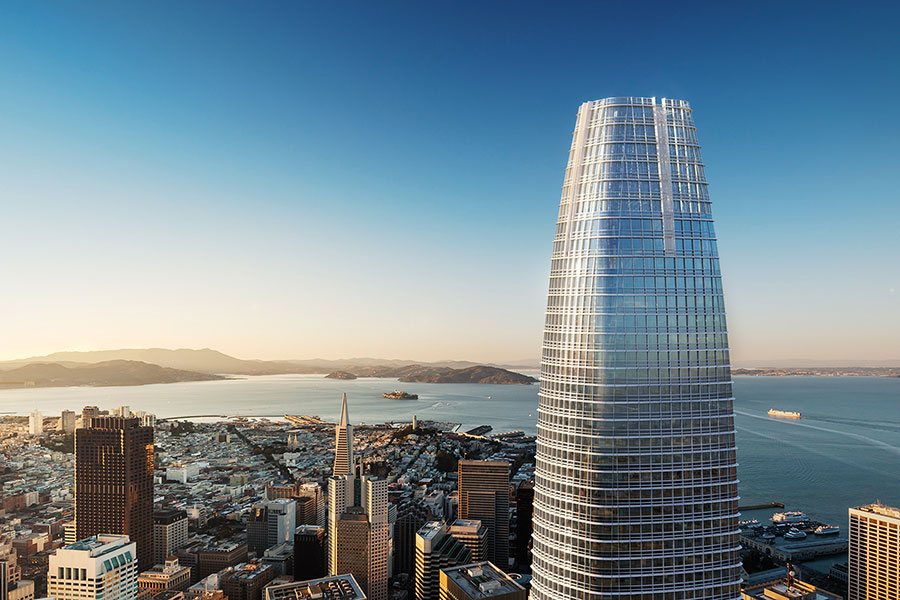
Global Customer Relationship Management (CRM) company, Salesforce, has opened Salesforce Tower in San Francisco – featuring the largest on-site water recycling system in a commercial high-rise building in the United States

In Salesforce Tower, wastewater from sources such as rooftop rainwater collection, cooling towers, showers, sinks, toilets and urinals will be collected, treated in a centralized treatment center and recirculated through a separate pipe system to serve non-potable uses in the building. The system will reduce drinking water demand by saving up to 30,000 gallons of fresh water a day, 7.8 million gallons a year, equivalent to the annual water consumption of 16,000 San Franciscoresidents.

If you like this, subscribe here for more stories that Inspire The Future.

In collaboration with the City of San Francisco and Boston Properties, the blackwater system will be installed in the new building making it the first partnership in the U.S. between a city government, building owner and a tenant to support blackwater reuse in a commercial high-rise building. The system will provide water recycling for all tenants and offers a blueprint for how other companies looking to make a positive impact in the world can harness sustainable innovation.

The water recycling system is the latest example of the company’s commitment to the environment through green building practices. Salesforce has already achieved (or is pursuing) green building certification in 64% of its global office spaces and LEED Platinum certification – the highest possible achievement – for three buildings in its San Francisco headquarters.

“At Salesforce, real estate is more than architecture and design,” said Elizabeth Pinkham, the executive vice president of  global real estate at Salesforce. “It’s about creating a ‘home’ that has a positive impact on all of our key stakeholders, including employees, partners, customers, communities and the environment. Because our offices are a physical expression of our values, we’re committed to integrating green building practices into our real estate strategy, including office design, construction and operations.”

If you like this, subscribe here for more stories that Inspire The Future.

Why North American Cities Are Putting the Brakes on Drivers

Changing the way we think about the future of parking in cities is about more than public transportation and bike paths. Increasingly, the bigger picture view will have yet another opportunity to consider: the oncoming autonomous vehicle revolution.

The question of cars and cities is increasingly challenging city planners and real estate developers across North America, where many cities have been designed for decades to accommodate a car culture. These policies are now showing their age.

If you like this, subscribe here for more stories that Inspire The Future. 

Amid improvements in public transit infrastructure, technology developments and changing urban demographics, cities across the continent are making efforts to curb car dependency. Take Columbus, Ohio, for example, where parking headaches had become so chronic that office vacancies rose, despite continuing demand for sophisticated redevelopment. Downtown property owners, desperate for change, seized matters into their own hands to trial what’s been hailed as the largest of its kind transit subsidy program in the U.S.: the business association is offering a free bus pass to the more than 40,000 people who work in the area.

Meanwhile, Mexico City, the biggest city in North America, has recently made waves for its subtle, but far-reaching move to cut minimum parking space requirements. These laws, which are prevalent across the continent, had required housing developers to build a certain number of parking spaces depending on how many people lived there. Now, buildings can be designed according to the amount of parking that makes sense for the neighborhood, which in transit-heavy areas, may mean close to none.

What’s happening in Columbus and Mexico City is part of a larger story. While frustration with congestion and pollution is inspiring a turn away from long-standing dependencies on cars, powerful new possibilities are emerging in the form of more supported transit, car-sharing and autonomous vehicles that together are poised to transform everything about the way we build cities and move in and around them.

Changing demographics, and a strong case for changing cities

It’s not just cities and public-private partnerships driving change. Private companies have been actively helping employees beat congestion, offering transit subsidies as well as bike-to-work schemes, corporate car sharing programs and commuter buses. Even carpooling is making a comeback.

But perhaps the biggest fundamental driver toward fewer cars can be found in the way we choose to get to the places we live and work.

“We are seeing tremendous change in real estate and mobility preferences, especially with younger generations,” says Eric Enloe, Managing Director of JLL’s Valuation and Advisory Services platform. “In urban areas, it’s not a given that millennials will have or even want a car to get to work. Access to public transportation is one of the top considerations in new office searches. And with the rise of Uber and other services, Millennials in big cities often don’t feel like they have to drive anywhere.”

People want more ways to get to work than the old single-driver commute. Employers can also benefit from offering alternatives. For example, the Columbus initiative cited above is expected to spark new interest from employees who will appreciate the chance to get to work more easily, and in turn their employers. Ultimately, the initiative is projected to decrease the office vacancy rate from roughly 15 percent to around 4 percent.

“Encouraging more sustainable transportation options also fits the culture and mold of Fortune 500 companies,” says Enloe. “Many forward-looking organizations are investing in green buildings, so supporting public transit for employees, making it easy to access car-sharing or ride their bike to work—it all goes hand in hand with a commitment to corporate social responsibility.”

For building developers, cutting the square footage dedicated to parking spaces can produce bottom-line savings and exciting new possibilities. “By saving space and costs on parking, workplace designers can create amenities, potentially creating better experiences for employees,” says Enloe.

The road ahead: Obstacle and opportunity

Commuters may want to break out of gridlock, but change could take more time in some places than in others. Much of the delay can be traced back to how public dollars are managed. Right now, the U.S. government pours far more money into parking subsidies than in commuter transit benefits, with $7.3 billion a year going to tax breaks that help more people to drive to work, compared with $1.3 billion for commuter transit benefits.

Allocating more funds to transit could not only reduce traffic and carbon emissions—it could also improve and expand transit options so that more people can benefit.

But transit isn’t the only answer, warns Enloe. “Throwing money at one solution is not enough,” he says. “Cities, property owners and developers, and citizens alike need to take a look at what mix of transportation makes most sense in their community.”

Revolutionizing cars – and cities

Changing the way we think about the future of parking in cities is about more than public transportation and bike paths. Increasingly, the bigger picture view will have yet another opportunity to consider: the oncoming autonomous vehicle revolution.

“In much the same way that the automobile changed the cities of our country in the 20th century, it’s going to change our cities again,” says Paige Pitcher of the MIT Real Estate Innovation Lab. “And it’s going to disrupt everything we thought we knew about real estate.”

Indeed, the autonomous revolution will encourage designing buildings around people, not cars, she believes. “Cars don’t just take up room on roads, they also take up space in our homes and businesses,” says Pitcher. “We have four parking spaces for every car in the U.S. – that’s trillions of real estate dollars locked up as storage.”

Pitcher analyzed seven studies predicting the reduced demand for parking resulting from autonomous vehicles. Her research forecasts parking demand will decrease 34 percent by 2035. The ultimate result: cars no longer have to drive real estate.

The potential is huge, from parking garages that don’t need space for doors to open, to paved driveways being returned to grass. “It might sound futuristic, but the autonomous vehicle revolution isn’t about robots,” she says in a TedX Talk. “It’s about people and places and property value. Cities of the last century were designed around cars. So if cars change dramatically, then so will our cities.”

Discover more research on the future of cities here.

If you like this, subscribe here for more stories that Inspire The Future. 

Polar Bear Accepts Dare to Run Washington Marathon

In response to a dare laid down by the World Wildlife Fund Panda Bear, the Race Against Extinction Polar Bear will be running in the 2018 Washington D.C. Rock ‘n’ Roll Half-Marathon on March 10th to raise awareness for the protection of its natural habitat and for all species, including humans.

Since coming out of hibernation, the bear has been training to shed its stored fat in order to run the entire 13.1 miles through our nation’s capital. The Race Against Extinction Polar Bear hopes to breaking the world “Bearathon” record while teaching humans how to cope with climate change.

If you like this, subscribe here for more stories that Inspire The Future. 

https://youtu.be/jiAocb0Otck

“I find it fitting that the completion of my training will fall on International Polar Bear Day – February 27 – enabling me to celebrate with the rest of the planet,” said the winded bear. “Regardless of the race day temperature this event will help me prepare for warmer days to come.  It is my hope that all participants and spectators will take a moment to think of ways in which they can help stem climate change or prepare their habitats for the transformation we are all facing together”.

Donations will support WWF’s work towards protecting wildlife and ecosystems across the globe. With your help, our running bear will meet the challenge that has been laid down by the Panda to break the all-time world Bearathon record of 2 hours and 41 minutes.

Your support is needed now more than ever. The Living Planet report found that our planet lost over half of all wild mammals, fish, reptiles and amphibians since 1970 and predicts that by 2020 we will have lost 2 out of 3 of these creatures.

There are solutions and incredible people working to preserve the natural world, by combatting deforestation, habitat destruction, and by promoting more sustainable fishing and agriculture practices worldwide. Please help preserve our planet for the humans that you love and future generations!

The Race Against Extinction is a nonprofit that promotes awareness for the need to protect all things wild while promoting initiatives in which ordinary humans can take part in amazing activities to preserve the natural world for the humans they love.

If you like this, subscribe here for more stories that Inspire The Future. 

0