


Want to Save The Planet? Move to Wales

In rural Wales, a pioneering and collective housing eco-venture is underway.

Fighting climate change is much more than a day job for Chris Vernon and Erica Thompson. It is their entire way of life.

They are part of a groundbreaking Welsh government scheme under which people get to circumvent tight planning rules so long as they build an eco-home in the countryside and go back to working the land on which it sits.

The ‘One Planet Development Policy‘ was adopted by the Welsh government in 2011 and so far, 32 households have signed up.

The aim is ambitious: in a small country where people on average use three times their fair share of the world’s resources, Wales wants its One Planet people to use only the resources they are due. Which means a simpler smallholding life, spending and travelling less, growing and making more.

If you like this, subscribe here for more stories that Inspire The Future.

A spokesman for the Welsh government said the scheme was an important niche initiative, rather than a model to scale up.

“It is intended to provide an opportunity for those wishing to live a highly sustainable lifestyle, project a light touch on the environment, and who will be largely self-sufficient in terms of income, food and energy,” said Matthew Morris, a communications officer with the Welsh government.

“Numbers of such developments are likely to remain small.”

The scheme has mostly attracted digital-era smallholders with a stubborn determination to return to a subsistence lifestyle in the rolling hills and valleys of rural Wales. And not to ruin the planet with a consumerist, throwaway lifestyle.

“We’ve known for 20 or 30 years now what we need to do to address the problem of climate change,” Vernon said from his half-built home.

“We don’t need more data. Whilst I was sitting in my office working on the computer I got the feeling I could be doing something that demonstrates how we can address the problems.”

Vernon and his partner Thompson know more about “the problems” than most. She holds a PhD in climate science, he has one in glaciology and is a climate modeller at Britain’s national weather service, the Met office.

They decided it was time for action, not academia.

Eight months pregnant and elbow-deep in local clay plaster, Thompson said their home had to be zero carbon in construction and use to win government go-ahead.

It sits deep in bucolic Pembrokeshire, a lush, coastal county in the southwest of Wales that pioneered the green approach before it was adopted countrywide.

Just up the road lies the Lammas community, a pioneering and collective eco-venture where nine smallholdings nestle in the landscape around a central community hub.

HEATWAVE

The Intergovernmental Panel on Climate Change, the leading international group that assesses climate change, estimates that global temperatures could rise 3.4 degrees Celsius by the end of the century.

Amid a European heatwave running from North Africa up to the Arctic Circle, the Welsh initiative is taking root on the Western fringe of the continent in a bid to redress some of the damage.

The policy also aims to address a myriad of problems beyond rising temperatures, from soil degradation to rural de-population, a housing crisis to wasteful global supply chains.

It offers people with little money, but plenty of determination, a way out of the rat race and back to the land.

With property prices out of reach for many rural workers and tight regulations restricting new builds, the scheme is the only way for many locals to own a home and work nearby, said another One Planet home builder, Cathryn Wyatt.

Dairy farmer Brian Boman sums up the difficulties faced by locals seeking to live and work in the area.

“We have two sons both in their 30s, both involved in the business. We have more than enough room here, to build something on the farm for the pair of them, but of course planning is a huge issue,” he told the Thomson Reuters Foundation.

Housing figures across Wales tell the same story.

In the 1980s, it would have taken a typical 20-something household about three years to save for an average deposit, according to the Resolution Trust think tank.

The research shows it would now take 19 years.

Like many of her fellow One Planet builders, Jacqui Banks wanted to jettison her old life and be true to her principles.

“It’s a lot of work, in the early years, but what we’re building is hopefully a resilient system that is going to help us have a positive impact on the world,” she told the Thomson Reuters Foundation.

“Living in the city I found it extremely difficult – the consumerist lifestyle and the waste involved.”

THE GOOD LIFE

To get permission to build a One Planet Development, three requirements must first be satisfied.

First is the overall ecological footprint.

As Vernon explained, each household must only use their global fair share of land: “If you take the entire global resource … you divide it by the population of the planet, you get a number: 1.88 hectares, it’s a fairly arbitrary number, but that’s the number that is your fair share.”

Each applicant must also show that within five years, 65 percent of their basic needs are covered by their patch of land, including food, water, energy and waste.

Hence the hodge podge of greenhouses and polytunnels that dot the land, often cobbled together from reclaimed materials and designed to make the most of a grass incline, woodland shelter or power-generating stream.

Applicants must also come up with a zero-carbon house design using locally-sourced and sustainable materials.

The result: a magical landscape dotted with “hobbit houses” straight out of JRR Tolkien’s “Lord of the Rings”, with mesmerising wooden beams, grass roofs and hemp walls.

Thirdly, everyone must set up a rural business to pay the sort of bills – internet, clothes, council tax – that cannot be met with a subsistence-only lifestyle.

Enterprises range from fruit wine to bees, an exotic tree nursery to sculpture – anything that brings in a small income.

By Max Baring, Editing by Lyndsay Griffiths.

If you like this, subscribe here for more stories that Inspire The Future.
Fight California Fires With Ancient Knowledge, Researchers Say

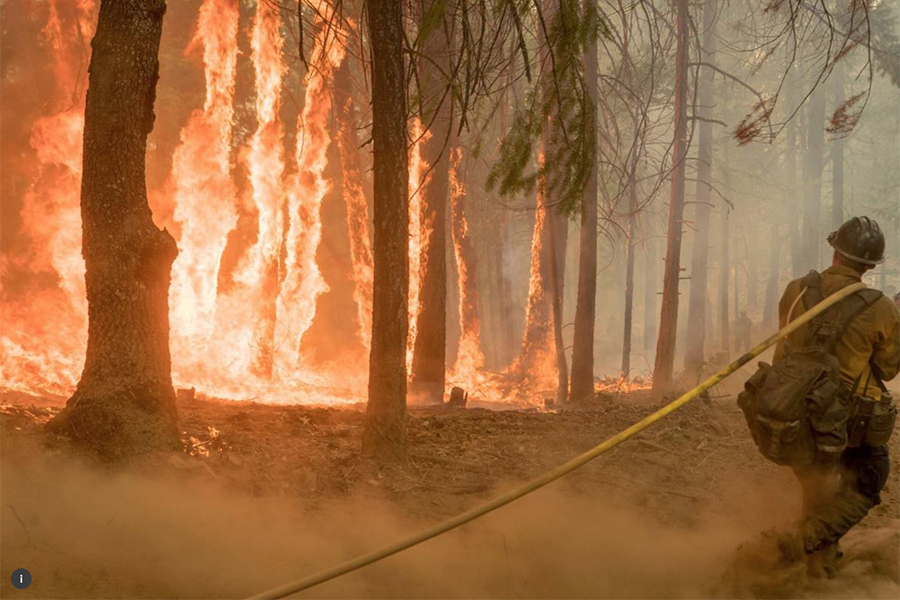
Countries at risk of catastrophic wildfires should adopt ancient practices used by indigenous people, researchers have said, after scores of deadly blazes engulfed parts of the northern hemisphere.

Wildfires have menaced villages and forests from Greece to the United States this summer, killing hundreds and displacing tens of thousands of people.

Fire services should collaborate with indigenous communities that have practised techniques for thousands of years to maintain their land and prevent large blazes, said a report by the Prisma Foundation, an El Salvador-based research group.

If you like this, subscribe here for more stories that Inspire The Future.
“The best firefighting equipment in the world cannot stop the most devastating wildfires. An effective weapon to prevent uncontrolled wildfire is knowledge,” the report said.

Indigenous people, who manage nearly 900 million hectares of land worldwide, hold “highly sophisticated” knowledge of fire management, the report noted.

Indigenous groups around the world deliberately light small fires throughout the year, which reduces the amount of fuel, preventing wildfires from spreading rapidly.

“Small controlled burns can reduce the impact and threat of catastrophic wildfires,” lead researcher Andrew Davis told the Thomson Reuters Foundation.

In the Brazilian savannah, the number of dry season fires decreased by 57 percent after fire services started collaborating with indigenous tribes, according to the Prisma Foundation.

The U.S. Forest Service formed a partnership with the Yurok tribe in northern California last year, after a fast-moving wildfire killed 43 people.

The Yurok use controlled burns to protect settlements from larger fires, and exposure to heat also makes their crops more resistant to drought, said Frank Lake, a Native American ecologist.

“Fire is medicine. This ancient lesson has an application to our modern conditions and situations,” he said by phone from New Orleans.

Fire now consumes more than half the annual budget of the U.S. Forest Service, which is in charge of managing national forests and grasslands, and it could exceed 67 percent by 2025, according to a 2015 report by the U.S. Department of Agriculture

In 1995, firefighting accounted for 16 percent of the Forest Service’s yearly budget, and that allocation rose to more than 50 percent in 2015, said the report.

Despite the extra resources for firefighting, California has suffered its most destructive fire season in history this summer, according to the Prisma Foundation report.

“Fire agencies are really struggling and looking for new strategies to address the wildfires,” Lake said. The need for new strategies will become more urgent as climate change is likely to bring an increase in wildfires, experts say.

The number of high-risk fire days will increase from 20 to 50 percent globally by 2050, according to a report published last year in the journal Nature Ecology & Evolution.

By Isabelle Gerretsen, Editing by Jared Ferrie

If you like this, subscribe here for more stories that Inspire The Future.
 

World’s Largest 3-D Printed Reef Installed in Maldives

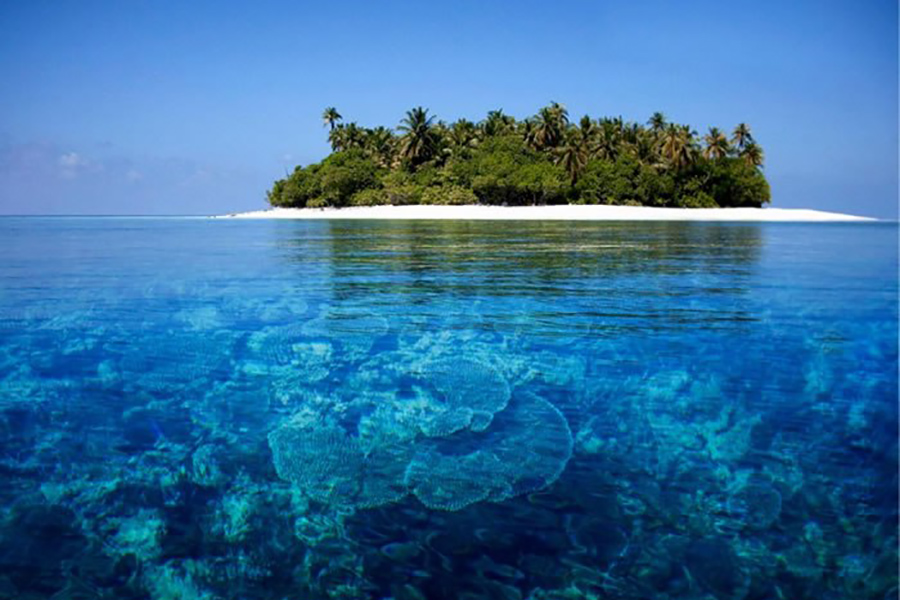
The world’s largest 3-D printed reef was submerged on 11 August at Summer Island in the Maldives, in what is hoped could be a new technology-driven method to help coral reefs survive a warming climate.

The artificial reef, assembled with hundreds of ceramic and concrete modules, was submerged at Summer Island’s ‘Blue Lagoon’ – a sandy part of the lagoon, where the resort hopes to create a new coral reef ecosystem.

If you like this, subscribe here for more stories that Inspire The Future.
The project started in a lab in Melbourne, Australia, where industrial designer Alex Goad of Reef Design Lab used sophisticated computing modeling to design reef structures similar to the coral reefs found naturally in the Maldives. 

A large 3-D printer whirred away for 24 hours to print moulds of the reef structures. These moulds were cast in ceramic – an inert substance, similar to the calcium carbonate found in coral reefs. The ceramic moulds were shipped to the Maldives, and filled with concrete on the beach at Summer Island. 

220 ceramic, concrete filled moulds were then slotted together, like a giant LEGO set, to create the new reef. 

The new reef sits in seven metres of water, close to the resort’s existing coral nursery. Fragments of coral from the nursery are being transplanted onto the 3-D reef, where they will grow and colonise the structure. 

As Alex explains: 3-D printing technology helps us to develop more innovative ways of protecting coral reefs. The technology allows us to mimic the complexity of natural reef structures, so we can design artificial reefs that closely resemble those found in nature. We hope this will be a more effective way of growing and restoring corals.”  

In a year or two, when the corals have grown over the 3-D reef, the resort hopes to have a new, natural looking reef, teeming with fish and marine life. 

If the 3-D printing technology proves more successful at growing corals than existing coral propagation methods, it could be a novel way of helping coral reefs survive a warming climate. 

The Maldives is one of the world’s most climate-vulnerable nations. Rising sea temperatures pose a grave threat to the world’s coral reefs, and mass bleaching events are becoming more common and more severe.

Summer Island Maldives has implemented a number of recent environmental initiatives, including the adoption of solar energy, a ban on the use of plastic straws, phasing out imported drinking water, and coral conservation projects.

Summer Island Resort Manager Mari Shareef explains: Projects like the 3-D printed reef are popular among guests, who like that we protect our environment. And it’s not only for the guests. Our staff, most of whom are Maldivian, want to protect their environment. Ultimately, we want to help promote a culture of environmental stewardship, not just at Summer Island, but across the Maldives.”

If you like this, subscribe here for more stories that Inspire The Future.
World’s Largest 3-D Printed Reef Installed in Maldives

The world’s largest 3-D printed reef was submerged on 11 August at Summer Island in the Maldives, in what is hoped could be a new technology-driven method to help coral reefs survive a warming climate.

The artificial reef, assembled with hundreds of ceramic and concrete modules, was submerged at Summer Island’s ‘Blue Lagoon’ – a sandy part of the lagoon, where the resort hopes to create a new coral reef ecosystem.

If you like this, subscribe here for more stories that Inspire The Future.
The project started in a lab in Melbourne, Australia, where industrial designer Alex Goad of Reef Design Lab used sophisticated computing modeling to design reef structures similar to the coral reefs found naturally in the Maldives. 

A large 3-D printer whirred away for 24 hours to print moulds of the reef structures. These moulds were cast in ceramic – an inert substance, similar to the calcium carbonate found in coral reefs. The ceramic moulds were shipped to the Maldives, and filled with concrete on the beach at Summer Island. 

220 ceramic, concrete filled moulds were then slotted together, like a giant LEGO set, to create the new reef. 

The new reef sits in seven metres of water, close to the resort’s existing coral nursery. Fragments of coral from the nursery are being transplanted onto the 3-D reef, where they will grow and colonise the structure. 

As Alex explains: 3-D printing technology helps us to develop more innovative ways of protecting coral reefs. The technology allows us to mimic the complexity of natural reef structures, so we can design artificial reefs that closely resemble those found in nature. We hope this will be a more effective way of growing and restoring corals.”  

In a year or two, when the corals have grown over the 3-D reef, the resort hopes to have a new, natural looking reef, teeming with fish and marine life. 

If the 3-D printing technology proves more successful at growing corals than existing coral propagation methods, it could be a novel way of helping coral reefs survive a warming climate. 

The Maldives is one of the world’s most climate-vulnerable nations. Rising sea temperatures pose a grave threat to the world’s coral reefs, and mass bleaching events are becoming more common and more severe.

Summer Island Maldives has implemented a number of recent environmental initiatives, including the adoption of solar energy, a ban on the use of plastic straws, phasing out imported drinking water, and coral conservation projects.

Summer Island Resort Manager Mari Shareef explains: Projects like the 3-D printed reef are popular among guests, who like that we protect our environment. And it’s not only for the guests. Our staff, most of whom are Maldivian, want to protect their environment. Ultimately, we want to help promote a culture of environmental stewardship, not just at Summer Island, but across the Maldives.”

If you like this, subscribe here for more stories that Inspire The Future.

Which Countries Are The Most Environmentally-friendly?

With the increase in carbon emissions alongside population growth, it has never been more critical for countries to become more sustainable.

Fortunately, more and more nations are starting to take environmental issues seriously, with the environmental performance index (or EPI) a useful tool to measure the green credentials of various countries around the world.

If you like this, subscribe here for more stories that Inspire The Future.
The EPI assesses a country’s eco-performance across nine categories: agriculture, air quality, biodiversity and habitat, climate and energy, forests, fisheries, health impacts, water resources, and water and sanitation.

Countries are ranked based on how well they protect both human health and natural ecosystems across these categories.

So who are the most environmentally-friendly countries in the world?

Scandinavian countries lead the way, according to the EPI, with the top four spots taken by Finland (first), Iceland (second), Sweden (third), and Denmark (fourth).

For those familiar with the culture and politics of this region, this is a reflection of Scandinavia’s commitment to sustainability and green living. Finland, in particular, has pledged to become carbon neutral by 2050, demonstrating a continued commitment to achieving this aim.

With one of the largest geothermal power stations in the world, EPI places Iceland in second position, a fantastic achievement considering the country’s population is just 338,000 people.

Following the example set by the Nordic countries, the top 10 is rounded out by six other European nations, with Slovenia (fifth), Spain (sixth), Portugal (seventh), Estonia (eighth), Malta (ninth), and France (tenth), also committed to positive environmental practice.

Of the non-European countries ranked by EPI, New Zealand is the highest-ranking, placing eleventh. The UK is in twelfth position, thanks to the progress made in renewable energy through offshore wind farms. Canada and the USA are 25th and 26th respectively, while Germany rounds out the top 30.

View the top 30 most environmentally-friendly countries in the world below:


Source: eCO2 Greetings

Art Tackles Drought

For 31-year-old graffiti artist Mundano from São Paulo, Brazil, art has to do with attitude. He makes people stop and think about the issues swirling around them everyday.

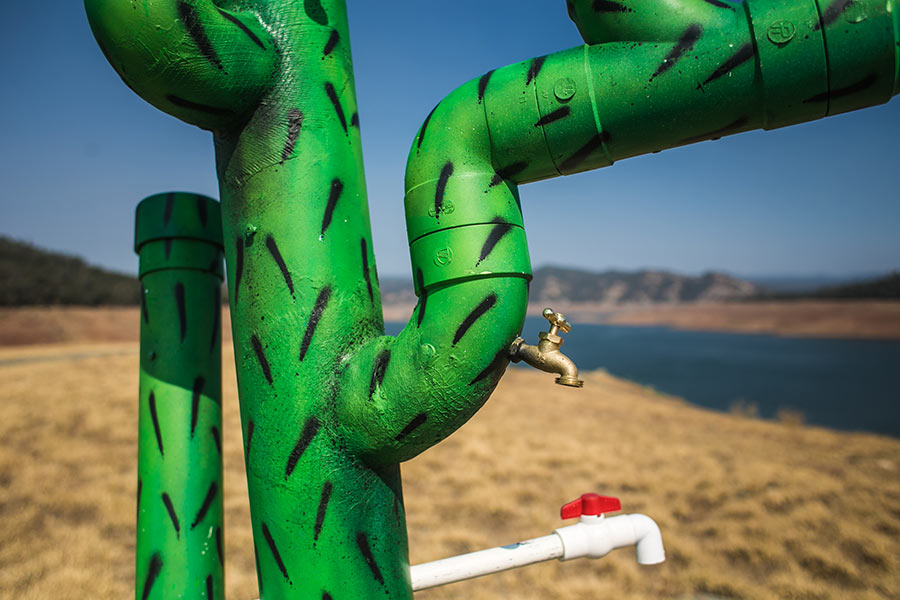
His bold, colorful street art isn’t just eye candy; it calls attention to social, environmental and political issues, while raising chuckles from passersby. Coming across a cactus in drought-stricken California with faucets sticking from it, is sure to make you chuckle.

If you like this, subscribe here for more stories that Inspire The Future.

The bright-green cactus wants to convey the urgency of vanishing water in California –  suffering the worst drought in 1,200 years. Mundano’s tour included eight lakes and reservoirs that supply the cities of California — and crucially, also supply the farmers of the Central Valley, who produce an amazing 25% of all the food consumed in the United States.

The water will end. And I’m not talking about the water that we will leave for our children, but the water we need next year. We need citizens to mobilize to reverse this scenario.

At each site, Mundano installed a cactus sculpture constructed from recycled water pipes. “I started painting cacti as graffiti a long time ago,” he says. “To me, they are the symbol of strength and the best representation of the Brazilian people, who survive on very little – but it is also an international symbol anyone can identify with.”

Each sculpture is fitted with taps that run (temporarily!) with real freshwater.

If you like this, subscribe here for more stories that Inspire The Future.

Heed The Ancient Mariner: Stop Dumping Plastic in The Ocean

In the “Rime of the Ancient Mariner”, the killing of an albatross was believed to have turned the fates against a ship in open water. “With my crossbow, I shot the Albatross,” confessed the ancient Mariner. Ruin, guilt, and pain followed. As we look across the oceans today, Samuel Taylor Coleridge’s epic poem looks prescient.

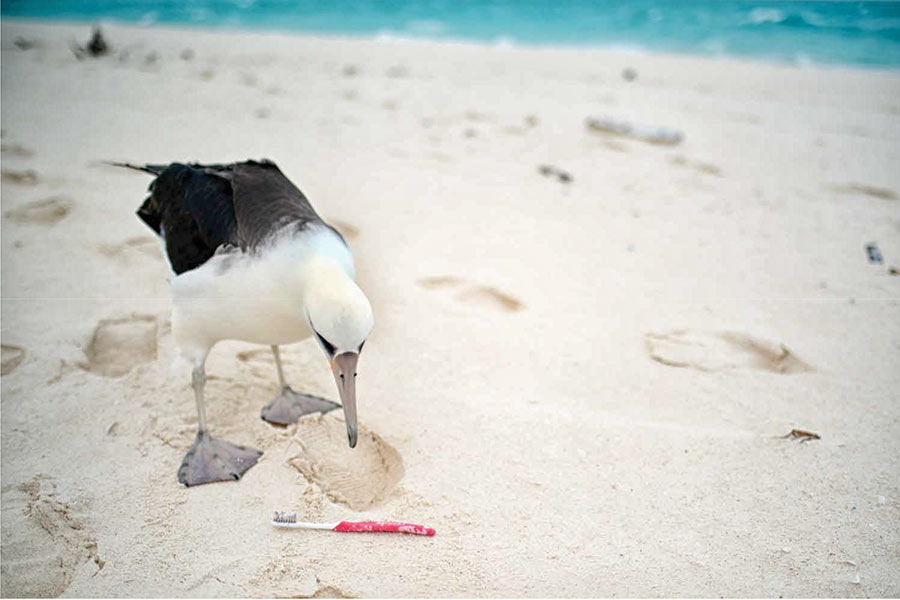
In 1966, 74 Laysan Albatross chicks became the first documented cases of sea life dying from ingesting plastics. Since that time, 250 million metric tons of plastic have been dumped into the ocean, thousands more albatross have been killed, and marine life hangs in the balance.

If you like this, subscribe here for more stories that Inspire The Future.

In the 1960s when the chicks were discovered, plastic use was one twentieth of what it is today. Since then, plastic use has doubled every eleven years, and we will soon produce more plastic in one year than all the plastic produced previously in history. The effects on marine life have been devastating. Today, 90% of the albatross chicks born in the Midway Atoll National Refuge have ingested plastic. By 2050, scientists believe there will be more plastic weight in the ocean than fish weight, and 99% of all seabirds will have ingested plastic.

Where does all this plastic come from? Most of it comes from consumers who use something once and throw it away. The majority of it is from poor countries. The U.N. estimates packaging accounts for half of the plastic waste in the world. In the

United States, for example, 500 million plastic straws are used once and thrown away each day. Worldwide, consumers use 500 billion single use plastic bags per year. In all, an estimated eight million metric tons of plastic are dumped into the ocean per year, inflicting an economic cost of $13 billion. This is on top of the 250 million metric tons already there.

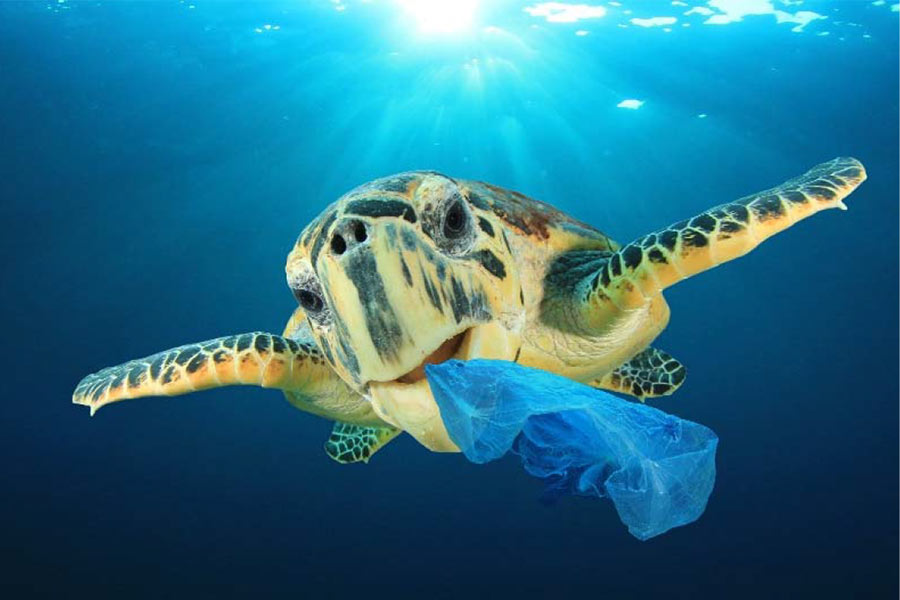
Turtles can mistake plastic bags for jelly fish.


The potential health, environmental, and economic costs are massive. An estimated 100,000 marine mammals and 1,000,000 seabirds die each year in the plastic killing fields. At the microscopic level, plastic is now a staple of the human diet, which gets 17% percent of its animal protein from the sea.

Fishing also contributes $1.5 trillion to the (legal) global economy, provide the livelihood to 12% of its population, and 17% of the animal protein consumed worldwide. In addition, illegal global fishing is estimated to be worth $25 billion per year.

Fortunately, unlike so many other man-made problems, continued dumping of plastic in the ocean can be solved. For one thing, the waste is actually valuable. Plastic packaging that is discarded is estimated to be worth over $100 billion a year. So, there is an economic incentive to monetize plastic trash. Doing so can help prevent plastic from being dumped in the ocean while simultaneously providing a source of income to the poor in developing countries.

There is also a tremendous potential market for any plant-based or a biodegradable plastic. For example, over 1,000,000 plastic water bottles are sold worldwide each minute, and 91% are not recycled. A bi-degradable plastic would have a huge market and likely government support. At the most recent G7 Summit in Charlevoix, Canada, five of the seven G7 members signed an Ocean’s Plastic Charter to encourage the reduction of plastic use, the development of alternative technologies, and the support of government roles in the recycling process (Japan and the U.S. did not sign).

Public awareness on the issue keeps building as well. For example, investors are starting to see heightened brand risk for companies who fail to reduce their plastic packaging. The environmental organization As You Sow recently brought together an alliance of investors representing $1 trillion in assets under management to engage companies on the necessity of reducing plastic in their packaging. The issue is not a hard sell because the environmental, economic, and moral arguments are manifest. When a garbage patch of plastic twice the size of Texas collects in the northern Pacific gyre, something is wrong. When developed countries recycle a fraction of what they can, something is wrong. When poor countries literally throw valuable trash in the ocean, something is wrong.

Given Coleridge’s poem, it is poignant that the albatross gave us our first glimpse into this problem, but it stands to reason. In the vastness of the Pacific, there is often only the albatross in sky. Some even say the albatross ferry the souls of sailors lost at sea. As it turns out, these timeless companions of the seafarer are very vulnerable to ingesting plastic. Albatross don’t dive deep; they skim the surface looking for squid and fish. Increasingly, they are ingesting all manner of plastic detritus in the process.

The albatross hung around the ancient Mariner’s neck as a reminder of what he had done. Hence the expression, “albatross around my neck.” The ancient Mariner’s lifelong penance was to tell his story so others would learn the tragic lesson:

He prayeth best, who loveth best All things both great and small; For the dear God who loveth us, He made and loveth all.

It is time to heed the ancient Mariner and stop the assault of plastic on the marine ecosystem. Anything less is tempting fate.

If you like this, subscribe here for more stories that Inspire The Future.
Should Your Workplace Ban Meat?

If everyone became vegetarian by 2050, food-related emissions would drop by about 60 percent.

Office-sharing company WeWork, which operates in 22 countries, is going meat-free and will ban its 6,000 staff from expensing meals containing meat in a bid to “leave a better world for future generations”.

If you like this, subscribe here for more stories that Inspire The Future.
Environmentalists say livestock farming is a major contributor to global warming. Here are some facts:

– Livestock accounts for more than 14 percent of planet warming emissions, mainly from animal burping, manure and feed production.

– Production of animal-based foods accounts for two-thirds of agricultural greenhouse gas emissions and three-quarters of agricultural land use, while only contributing 37 percent of the global protein supply.

– If cattle were a nation, they would rank third behind China and the United States among the world’s largest greenhouse gas emitters.

– The livestock industry is responsible for more greenhouse gas emissions than the world’s biggest oil companies.

– The combined emissions of the top 20 meat and dairy companies exceed the emissions of entire countries such as Germany or the United Kingdom.

– A quarter of the world’s landmass, excluding Antarctica, is used for pasture.

– Cattle release methane, nitrous oxide and carbon dioxide. Methane, which traps far more heat than carbon dioxide, is released mainly through belching.

– Scientists are looking at how to make livestock less gassy by breeding animals that burp less or adjusting their diets – including feeding them seaweed.

– If the 2 billion biggest consumers of meat in the world shifted towards plant-based foods, it could save an area twice the size of India, making it easier to feed a growing world population without cutting down more forests.

– It takes 25kg of grain to produce 1kg of beef and roughly 15,000 litres of water.

– Per gramme of protein, producing beef takes 20 times as much land, and emits 20 times as many greenhouse gases, as producing beans.

– Producing chicken takes three times as much land, and emits three times as many greenhouse gases, as producing beans, per gramme of protein.

– Americans eat about 10 billion burgers each year. Replacing 30 percent of the beef with mushrooms would have the same impact as taking 2.3 million cars off the road.

– If everyone became vegetarian by 2050, food-related emissions would drop by about 60 percent. If they went vegan, the decline would be around 70 percent.

Sources: World Resources Institute, Institute for Agriculture and Trade Policy, Food and Agriculture Organization, Oxford Martin Programme on the Future of Food

By Emma Batha, Editing by Claire Cozens. 

If you like this, subscribe here for more stories that Inspire The Future.

Lamborghini’s Latest Innovation: A Bicycle

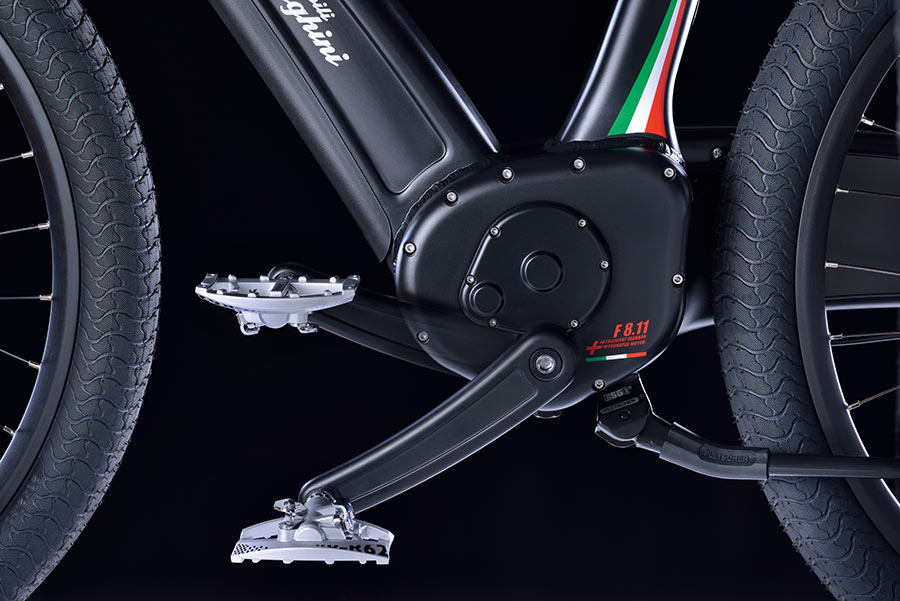
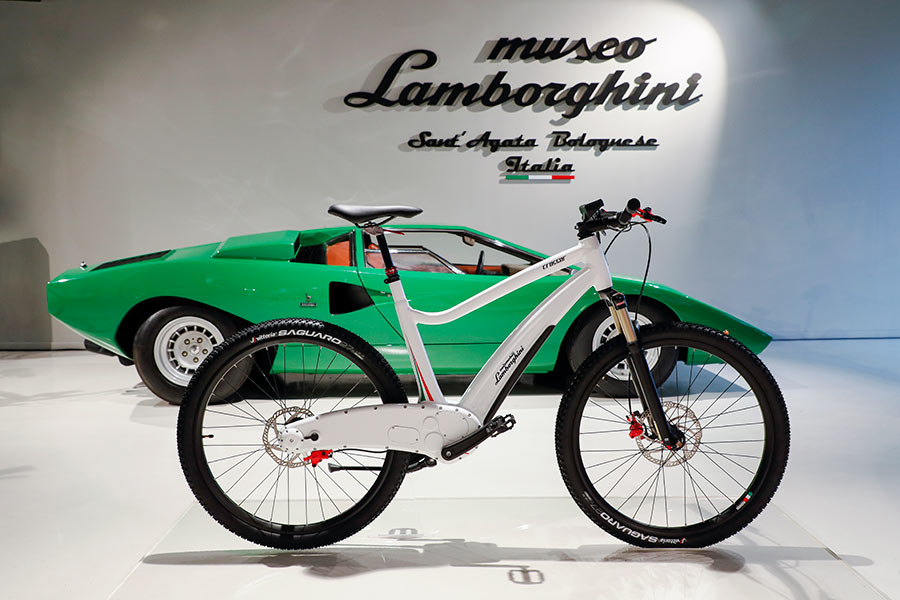
Want a Lamborghini but not the guilt of destroying the environment? Automobili Lamborghini has signed a partnership with Italtechnology to develop the first range of E-Bikes bearing the Lamborghini name.
 
In keeping with Lamborghini tradition, the battery powered E-Bikes are masterpieces of advanced technology, aimed at an exclusive and demanding clientele. Conceived, designed, and built entirely in Italy, the bikes are the result of over five years’ research and feature technological innovation, cutting-edge design, and four international patents.
 
 
There’s not much detail on the bike itself from the legendary Italian car manufacturer, but a battery powered bicycle is certainly a symbolic step in the right direction and signals a greener future.
 
The new E-Bikes will initially be available in two versions: an MTB designed for a dynamic lifestyle and outdoor activities, and a version dedicated more to speed for customers who want ultimate performance on the road, with a bike that can quickly reach the maximum speed allowed by current regulations.
 
For both models the battery life in “eco” mode is a maximum of 90 miles (145 km) and for full recharge the time is four hours. As with their cars, the Lamborghini bike is not expected to be cheap, starting at around $17,000.
 
The exclusiveness of the bikes is completed by the “Ad Personam” program, which customizes the livery in the paint colors – usually reserved for Lamborghini’s super sports cars. The first two versions of the pedal assist E-Bikes bearing the Lamborghini will become available online and through selected specialized retailers worldwide. 


Lamborghini’s Latest Innovation: A Bicycle

Want a Lamborghini but not the guilt of destroying the environment? Automobili Lamborghini has signed a partnership with Italtechnology to develop the first range of E-Bikes bearing the Lamborghini name.
 
In keeping with Lamborghini tradition, the battery powered E-Bikes are masterpieces of advanced technology, aimed at an exclusive and demanding clientele. Conceived, designed, and built entirely in Italy, the bikes are the result of over five years’ research and feature technological innovation, cutting-edge design, and four international patents.
 
 
There’s not much detail on the bike itself from the legendary Italian car manufacturer, but a battery powered bicycle is certainly a symbolic step in the right direction and signals a greener future.
 
The new E-Bikes will initially be available in two versions: an MTB designed for a dynamic lifestyle and outdoor activities, and a version dedicated more to speed for customers who want ultimate performance on the road, with a bike that can quickly reach the maximum speed allowed by current regulations.
 
For both models the battery life in “eco” mode is a maximum of 90 miles (145 km) and for full recharge the time is four hours. As with their cars, the Lamborghini bike is not expected to be cheap, starting at around $17,000.
 
The exclusiveness of the bikes is completed by the “Ad Personam” program, which customizes the livery in the paint colors – usually reserved for Lamborghini’s super sports cars. The first two versions of the pedal assist E-Bikes bearing the Lamborghini will become available online and through selected specialized retailers worldwide. 
 
 
0