The solar light accessory company revealed its latest consumer product for eco-friendly bikers.
MPOWERD CEO Seungah Jeong and Founder John Salzinger have launched their latest Luci light in an Indiegogo crowdfunding campaign for the first-ever modular Solar Bike Light. They are bringing clean energy to clean transportation. The Luci Bike Light is an innovative take on the bike light: rugged yet modern, durable yet sleek, and ideal for the adventurous commuter. Luci Bike Light includes a front and backlight that connect through an industrial strength magnet, is rechargeable via solar or USB, and shines up to 100 lumens. It is scheduled to ship in May 2020.
Each purchase allows MPOWERD to continue deploying lights to those who do not have reliable access to electricity. As an example, MPowerD just shipped 77,000 lights to California for those affected by the fires and power outages.
You can watch a Real Leaders interview with MPOWERD’s CEO Seungah Jeong and Founder John Salzinger below.
From electric buses to pollution-sucking gardens, cities around the world are experimenting with ways to ensure global climate goals are met.
From electric buses to pollution-sucking urban gardens, cities around the world are experimenting with ways to ensure global climate goals are met, as they account for about three-quarters of planet-warming emissions, according to the United Nations.
Here are seven award-winning initiatives to make cities greener, announced by the C40 network of cities tackling climate change on Thursday:
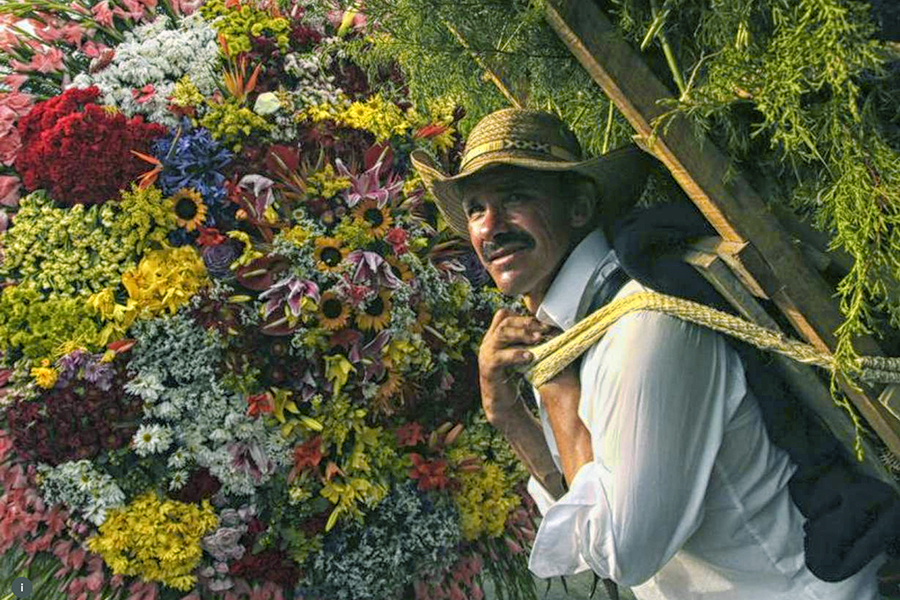
1. MEDELLIN, Colombia – Colombia’s second city has invested more than $16 million to plant almost 9,000 trees to form 30 “green corridors” across the city since 2016. Besides capturing pollution, the plants have helped reduce average temperatures in the city by 2 degrees Celsius (3.6 Fahrenheit) and increased biodiversity, providing friendly habitats for animals.
2. ACCRA, Ghana – Since 2016, Accra has been working with more than 600 informal refuse collectors, who used to dump rubbish that was burned at illegal open-air sites, causing pollution. More waste is now being collected, recycled and disposed of safely.
3. KOLKATA, India – Kolkata is planning to have its entire 5,000-strong bus fleet, as well as ferries crossing the Ganges River, run on electricity by 2030. It has bought 80 electric buses and plans to add another 100 next year.
4. LONDON, United Kingdom – London introduced the world’s first Ultra Low Emission Zone in 2019, requiring all vehicles passing through the city centre to meet strict emissions standards or pay a fee. Within months, the number of more polluting vehicles fell by a third as people were pushed to walk, cycle or use public transport.
5. SAN FRANCISCO, United States – San Francisco’s CleanPowerSF programme allows residents to get their electricity completely or in large part from renewable sources at competitive rates. The city hopes this will help it achieve a goal of reducing greenhouse gas emissions by 40% by 2025.
6.GUANGZHOU, China – Since 2017, Guangzhou has invested $2.1 billion to convert its entire fleet of 11,220 buses to run on electricity and installed some 4,000 charging stations to power them. This has reduced air pollution and noise as well as the city’s transport system operational costs.
7. SEOUL, South Korea – Seoul has subsidised the installation of solar panels on balconies and rooftops of 1 million homes since 2017, as well as city buildings like schools and parking lots. The city hopes to produce up to 1 GW of solar energy – equal to that generated by a nuclear reactor – by 2022.
By Umberto Bacchi @UmbertoBacchi, Editing by Katy Migiro. Sources: C40, Transport for London, Thomson Reuters Foundation
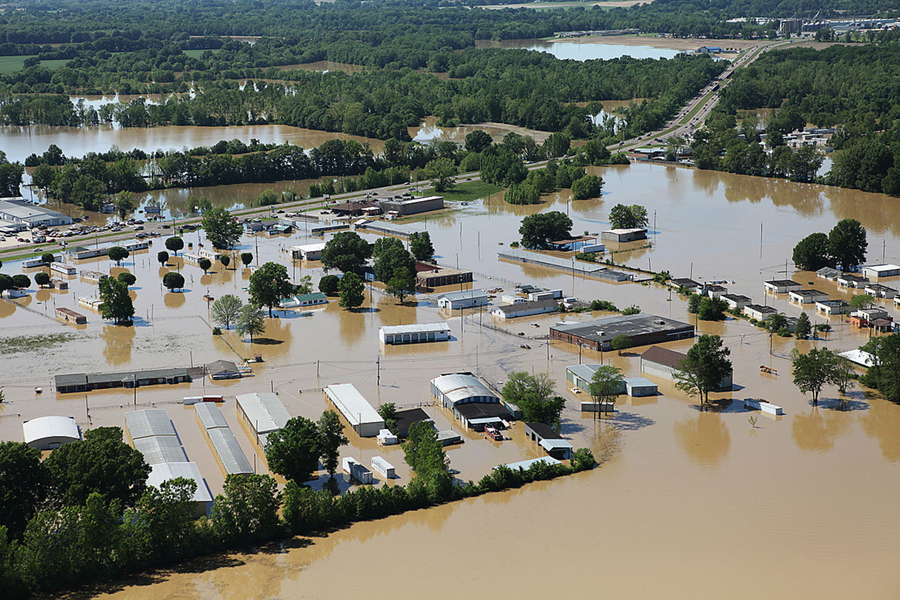
People in Britain whose homes are damaged by floods, storms or other wild weather are 50% more likely to suffer mental health problems such as depression or anxiety – even if they do not have to move out temporarily, researchers said last week.
That suggests disaster response may need to be better joined up with psychological support, as climate change brings larger and more frequent extreme weather threats, said Hilary Graham, a health sciences professor at the University of York.
“There’s increasing awareness that beyond these very dramatic human impacts – like loss of life – there are what official reports refer to as ‘psychological casualties’,” said Graham, lead author of a new study.
When extreme weather harms homes, “people’s mental health takes a big hit”, she added.
Researchers looked at 7,500 people surveyed in a national assessment, the main source of information on mental health in England. They found that diagnosed mental health problems rose by about half in those whose homes were damaged by floods, storms, rain or wind.
Some of that stress could be financial, they said, but a lost sense of security also seemed to be a significant issue.
“We believe in the stability of our environment, that it will be the same place tomorrow as yesterday, and we derive a lot of security from that,” said Graham, a sociologist.
“It’s not until that security is threatened that you realise how much you rely on it. Like Joni Mitchell said, ‘You don’t know what you’ve got till it’s gone’.”
In particular, loss of priceless family photos and other memories “undermines people’s sense their home is a safe place”, Graham said.
As Britain has largely avoided the deaths seen in other countries grappling with the growing risk of weather disasters, it has tended to focus on economic rather than health threats, researchers said.
But as flood risk, in particular, grows – 1.4 million people are now signed up to receive Environment Agency flood warnings – health concerns will need more attention, said the study by the National Centre for Social Research and the University of York.
The findings amount to “a wake-up call about the importance of thinking about mental health when we think about flood prevention”, Graham said.
The Environment Agency and the National Health Service should cooperate more closely, she said, adding that “flood protection is health protection as well”.
Julie Foley, director of flood risk strategy and national adaptation at the Environment Agency, warned that the “devastating” impact of flooding on people “can last long after the flood waters have gone away”.
And while efforts to boost flood defences will protect more homes, “we can never entirely eliminate the risk of flooding”, she said in a statement.
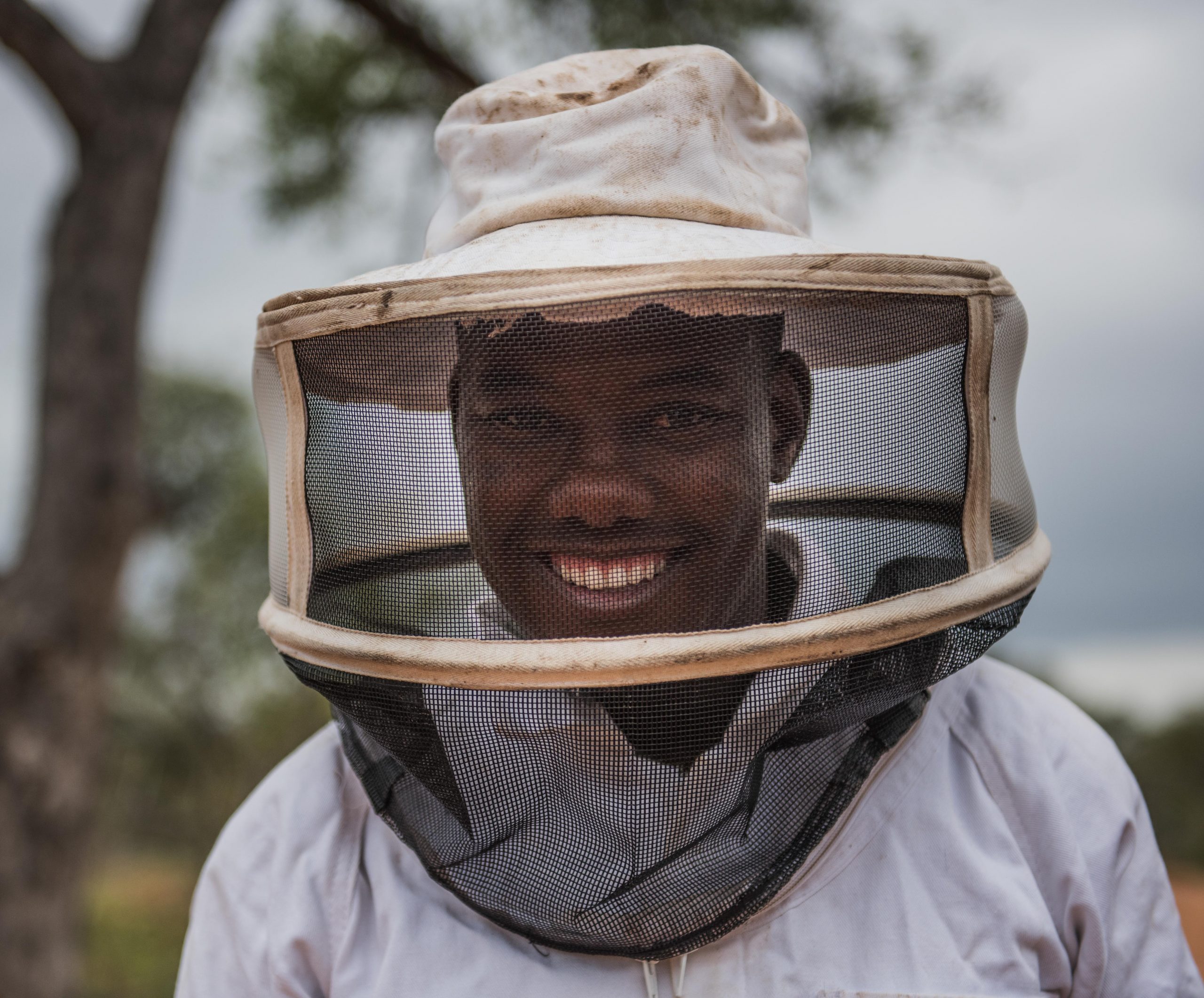
It’s unimaginable that a 14,000 pound animal would fear a tiny insect, but elephants are scared of bees. Ronnie Makukule is using this simple fact to conserve vulnerable vegetation and protect crops. Elephants have the capacity to completely wipe out thickets of trees by eating or trampling them. Efforts to deter them – thorny hedges, deep trenches, or fighting back with rocks, spears, firecrackers and guns – have not only failed, but in some cases resulted in the loss of life of both humans and elephants. In the midst of what appears to be a lose-lose situation, Makukule manages the world’s largest land mammals with fences made from bee hives.
The revolutionary method harnesses the natural animosity between the two creatures. When bees are aggravated by elephants, they target their vulnerable spots – their trunks and eyes. The elephants have since learned to stay away. Working in bee husbandry, Makukule’s fences provide a more humane method of control. It also allows him to explore his interest in conservation, which has been growing since he was a child. After Makukule was awarded a scholarship to study environmental education and nature conservation at the Southern African Wildlife College, he then ran environmental awareness programs at schools for the Timbavati Foundation. In 2016, Makukule joined Elephants Alive, using his ability to identify individual elephants and collect DNA samples to become a valuable researcher on the team. However, it’s his work as head of the Bee Project that has made the most significant impact.
Human aggression towards elephants has contributed to their already dwindling numbers caused by poachers. Beehive fences are a peaceful means of alleviating the conflict between humans and elephants, without causing harm to either. The bees also pollinate plants and add to the biodiversity of the area. Unlike electric fences, the initial cost of beehive fences is soon counteracted by the income from honey production. It’s an ingenious method and proof that nature has the best solutions. With a little creative thinking, something small can make a huge difference in conservation and wildlife management.
Beautiful News is reframing our world, one film at a time, every day at 4:14pm.
For over 1 billion people, their ability to survive and thrive is undermined without access to sustainable cooling.
By Jeppe Kofod, Danish Minister for Foreign Affairs, Dr. Seleshi Bekele, Ethiopian Minister of Water, Irrigation and Energy, and Rachel Kyte, CEO and Special Representative of the UN Secretary-General for Sustainable Energy for All – all co-leads of the Energy Transition Track at the UN Climate Action Summit.
It has been a hot year so far. In France, Belgium and Germany, summer temperatures reached such highs that records were broken twice in just 24 hours. Dangerous heatwaves were felt yet again across India, Africa, Russia and the Arctic – the list goes on.
From the poles to the tropics, the world is getting hotter and the destructive effects of the climate emergency are being felt. Unsurprisingly, this has brought greater attention to the issue of cooling – often taken for granted – and has begged the questions: how do we deliver cooling sustainably in a warming world and how do we keep people, medicines and food safe?
But what is cooling? Your mind first turns most likely to air-conditioning. But cooling, and how it touches our lives, is about so much more. Cooling is essential to keep food nutritious, vaccines effective, and people safe during heatwaves. In hot climates, it makes economies productive, and for growing numbers of people, life without it is unimaginable.
The impacts are plain to see. Heatwaves already kill an estimated 12,000 people annually across the world, a number the World Health Organization says will grow to 255,000 people per year by 2050 if unchecked. Nearly 20% of temperature-sensitive healthcare products in India arrive damaged or degraded because of broken or insufficient cold chains, including a quarter of vaccines.
Sustainable Energy for All research shows that for over 1 billion people, their ability to survive and thrive is undermined without access to sustainable cooling. It puts out of reach hopes for health care and nutritious food, good schools and comfortable workplaces.
Sustainable cooling is essential for economic growth, and without it, it will be the developing world that feels the most significant “productivity penalty”. By 2050, work hour losses – worth billions of US dollars – due to excessive heat and lack of access to cooling are expected to be more than 2% and as high as 12% in the worst-affected regions of South Asia and West Africa.
In a warming world, cooling is not a luxury. It is an issue of equity, and an urgent and growing problem that calls for fast action.
Delivering cooling sustainably – using little energy and without polluting hydrofluorocarbons (HFCs) that speed global warming – will also be essential for energy systems to be in line with the triple challenge: meeting sustainable energy for all as agreed under the Sustainable Development Goals; the Paris Agreement with the promise of keeping global warming below 2 degrees Celsius; and the Kigali Amendment to the Montreal Protocol to rid ourselves of HFCs.
By 2050, indoor cooling alone will consume as much electricity as India and China today. If we don’t start grappling with cooling sustainably, the spike in energy demand and climate-forcing pollutants will drive a dramatic rise in greenhouse gas emissions.
ROOFS AND RENEWABLES
Solutions exist. For example, new innovations in off-grid “cold chain” refrigeration that need little power to get a farmer’s goods safely from farm to table without spoiling. Scaling up innovations and investment in clean cold chains can boost farmers’ incomes, help people lead healthier lives, and reduce food waste.
We must think holistically about reducing demand for cooling. There are simple and cost-effective solutions, including moving to cool roofs, painted white or planted green. We can also use solar power to drive fans for people living in densely packed slums, creating safer living conditions and reducing the dangers of frequent power outages during heatwaves.
In rural villages, renewable energy can power cooling for schools and clinics, meaning that children can have more productive days at school and families can take their children to be vaccinated with confidence that it will be effective.
These efforts can be supported in three ways. One, increase finance and deployment of energy-efficient solutions; two, invest in zero-carbon or no-to-low global warming cooling innovations for the future; and three, think systematically about meeting cooling needs while minimizing energy demand, utilizing access solutions like district cooling and solar home systems.
COLLECTIVE ACTION
We must also collectively rethink how we understand cooling needs across cities and cold chains, and design and finance solutions and technologies that meet those needs.
Leading governments should integrate cooling into their national climate action plans, setting strong energy-efficiency requirements for building codes and cooling technologies.
Cities must integrate cooling needs into urban planning, develop heat action plans to protect the vulnerable in heatwaves, and paint roofs and walls white to reduce the urban heat island effect.
Industry can invest in energy-efficient cooling of their production facilities and value chains. Technology providers can help deliver affordable and sustainable solutions by working with the public sector to bring the best technologies to scale. Investors can set requirements for energy-efficiency in investment projects.
Next week at the United Nations’ Climate Action Summit, the energy transition track – led by Denmark, Ethiopia and Sustainable Energy for All – will shine a light on the need for sustainable cooling.
This work will highlight the innovative solutions from forward-thinking businesses, and see governments commit to national cooling plans that meet the needs of their citizens with hyper-efficient energy solutions.
As the summer begins to cool down for many, we must not let our action and commitment to thischallenge cool off with it.
Can the wisdom of a 16-year-old inspire us to action around the climate crisis?
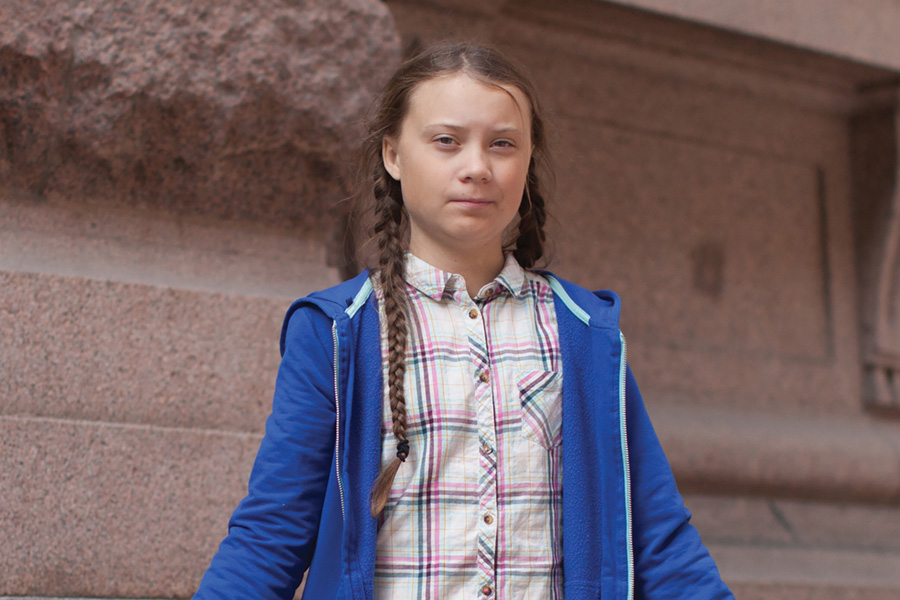
In January this year, an unassuming 16-year-old Swedish girl, Greta Thunberg, stepped up to a podium before some of the world’s most powerful global leaders at the World Economic Forum in Davos, Switzerland. Her soft voice began to stress the urgency of action around climate change, but she wasn’t looking for pity or to preach a feel-good message around hope. Dismissing hope as a weak strategy, she felt something stronger was needed: fear.
Still in school, Thunberg is too young to vote, has no economic resources, and lacks any position of formal power that would allow her to sway global markets. But she does have a voice, and a growing following of young people around the world that join her to “strike for the climate.” Love her or dismiss her, there’s no ignoring that this teenager is inspiring young and old to act around the world. Here’s what she had to say:
“According to the Intergovernmental Panel on Climate Change (IPCC)we are less than 12 years away from not being able to undo our mistakes. In that time, unprecedented changes in all aspects of society need to have taken place — including a reduction of our CO2 emissions by at least 50 percent. And please note that those numbers do not include the aspect of equity, which is absolutely necessary to make the Paris Agreement work on a global scale. Nor does it include tipping points or feedback loops such as the extremely powerful methane gas being released from the thawing arctic permafrost.
At places like the World Economic Forum in Davos, people like to tell success stories. But their financial success has come with an unthinkable price-tag. On climate change, we have to acknowledge that we have failed. All political movements in their present form have failed, and the media has failed to create broad public awareness. But homo sapiens has not yet failed.
Yes, we are failing but there is still time to turn everything around. We can still fix this. We still have everything in our own hands. But unless we recognize the overall failures of our current systems, we most probably don’t stand a chance. We are facing a disaster of unspoken suffering for enormous amounts of people. Now is not the time to speak politely or focus on what we can or cannot say. Now is the time to speak clearly.
Solving the climate crisis is the greatest and most complex challenge that homo sapiens has ever faced. The main solution however, is so simple that even a small child can understand it — we have to stop our emissions of greenhouse gases. Either we do that or we don’t. You say that nothing in life is black or white — but that is a lie. A very dangerous lie. Either we prevent a 1.5 degree of warming or we don’t. Either we avoid setting off that irreversible chain reaction beyond human control — or we don’t. Either we choose to go on as a civilization or we don’t. That’s about as black or white as it gets. There are no gray areas when it comes to survival.
We all have a choice: We can create transformational action that will safeguard the living conditions for future generations, or we can continue with business as usual and fail. This is up to you and me. Some say that we should not engage in activism. Instead, we should leave everything to our politicians and rather vote for change. But what do we do when there is no political will? What do we do when the politics we need are nowhere in sight?
Just like everywhere else, everyone is talking about money. It seems that money and growth are our only concerns. Because the climate crisis is one that has never before been treated as such, people are simply not aware of the consequences in their everyday lives. People are not aware that there is such a thing as a carbon budget and just how incredibly small that remaining carbon budget is. That needs to change today.
No other current challenge can match the importance of establishing a wide, public awareness and understanding of our rapidly disappearing carbon budget. This should (and must) become the new global currency and the very heart of our future and economics.
We are now at a time in history where everyone with any insight into the climate crisis, that threatens our civilization and the entire biosphere, must speak out — in clear language — no matter how uncomfortable and unprofitable that may be. We must change almost everything in our current societies. The bigger your carbon footprint, the bigger your moral duty. The bigger your platform, the bigger your responsibility.
Adults keep saying, “We owe it to young people to give them hope.” But I don’t want your hope. I don’t want you to be hopeful. I want you to panic. I want you to feel the fear I feel every day, and then I want you to act. I want you to act as you would in a crisis. I want you to act as if our house is on fire. Because it is.”
Can the wisdom of a 16-year-old inspire us to action around the climate crisis?
In January this year, an unassuming 16-year-old Swedish girl, Greta Thunberg, stepped up to a podium before some of the world’s most powerful global leaders at the World Economic Forum in Davos, Switzerland. Her soft voice began to stress the urgency of action around climate change, but she wasn’t looking for pity or to preach a feel-good message around hope. Dismissing hope as a weak strategy, she felt something stronger was needed: fear.
Still in school, Thunberg is too young to vote, has no economic resources, and lacks any position of formal power that would allow her to sway global markets. But she does have a voice, and a growing following of young people around the world that join her to “strike for the climate.” Love her or dismiss her, there’s no ignoring that this teenager is inspiring young and old to act around the world. Here’s what she had to say:
“According to the Intergovernmental Panel on Climate Change (IPCC)we are less than 12 years away from not being able to undo our mistakes. In that time, unprecedented changes in all aspects of society need to have taken place — including a reduction of our CO2 emissions by at least 50 percent. And please note that those numbers do not include the aspect of equity, which is absolutely necessary to make the Paris Agreement work on a global scale. Nor does it include tipping points or feedback loops such as the extremely powerful methane gas being released from the thawing arctic permafrost.
At places like the World Economic Forum in Davos, people like to tell success stories. But their financial success has come with an unthinkable price-tag. On climate change, we have to acknowledge that we have failed. All political movements in their present form have failed, and the media has failed to create broad public awareness. But homo sapiens has not yet failed.
Yes, we are failing but there is still time to turn everything around. We can still fix this. We still have everything in our own hands. But unless we recognize the overall failures of our current systems, we most probably don’t stand a chance. We are facing a disaster of unspoken suffering for enormous amounts of people. Now is not the time to speak politely or focus on what we can or cannot say. Now is the time to speak clearly.
Solving the climate crisis is the greatest and most complex challenge that homo sapiens has ever faced. The main solution however, is so simple that even a small child can understand it — we have to stop our emissions of greenhouse gases. Either we do that or we don’t. You say that nothing in life is black or white — but that is a lie. A very dangerous lie. Either we prevent a 1.5 degree of warming or we don’t. Either we avoid setting off that irreversible chain reaction beyond human control — or we don’t. Either we choose to go on as a civilization or we don’t. That’s about as black or white as it gets. There are no gray areas when it comes to survival.
We all have a choice: We can create transformational action that will safeguard the living conditions for future generations, or we can continue with business as usual and fail. This is up to you and me. Some say that we should not engage in activism. Instead, we should leave everything to our politicians and rather vote for change. But what do we do when there is no political will? What do we do when the politics we need are nowhere in sight?
Just like everywhere else, everyone is talking about money. It seems that money and growth are our only concerns. Because the climate crisis is one that has never before been treated as such, people are simply not aware of the consequences in their everyday lives. People are not aware that there is such a thing as a carbon budget and just how incredibly small that remaining carbon budget is. That needs to change today.
No other current challenge can match the importance of establishing a wide, public awareness and understanding of our rapidly disappearing carbon budget. This should (and must) become the new global currency and the very heart of our future and economics.
We are now at a time in history where everyone with any insight into the climate crisis, that threatens our civilization and the entire biosphere, must speak out — in clear language — no matter how uncomfortable and unprofitable that may be. We must change almost everything in our current societies. The bigger your carbon footprint, the bigger your moral duty. The bigger your platform, the bigger your responsibility.
Adults keep saying, “We owe it to young people to give them hope.” But I don’t want your hope. I don’t want you to be hopeful. I want you to panic. I want you to feel the fear I feel every day, and then I want you to act. I want you to act as you would in a crisis. I want you to act as if our house is on fire. Because it is.”
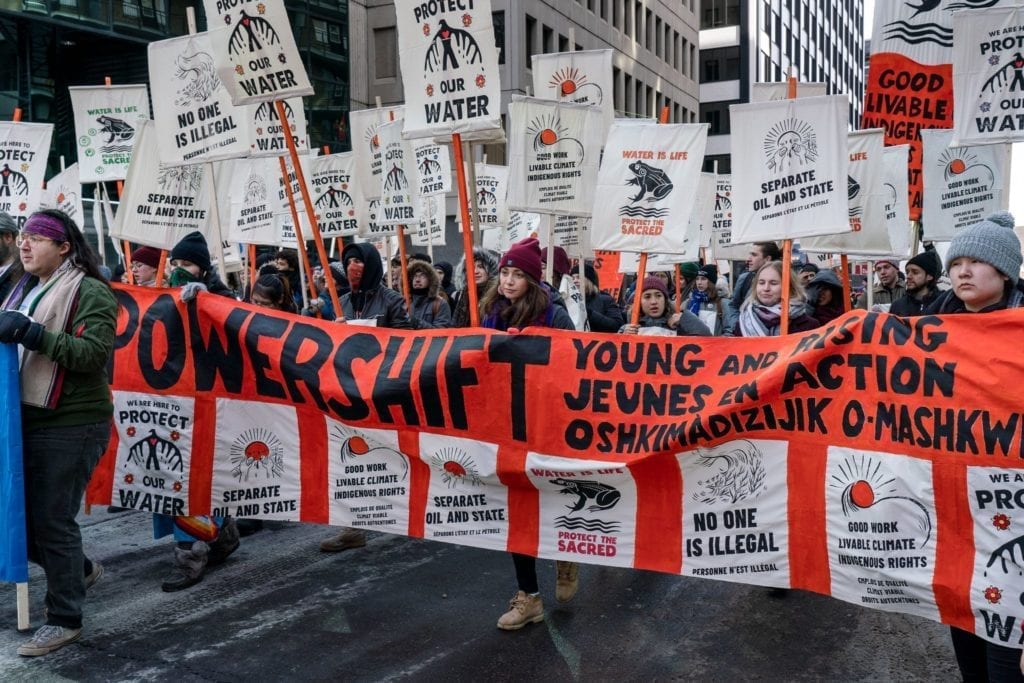
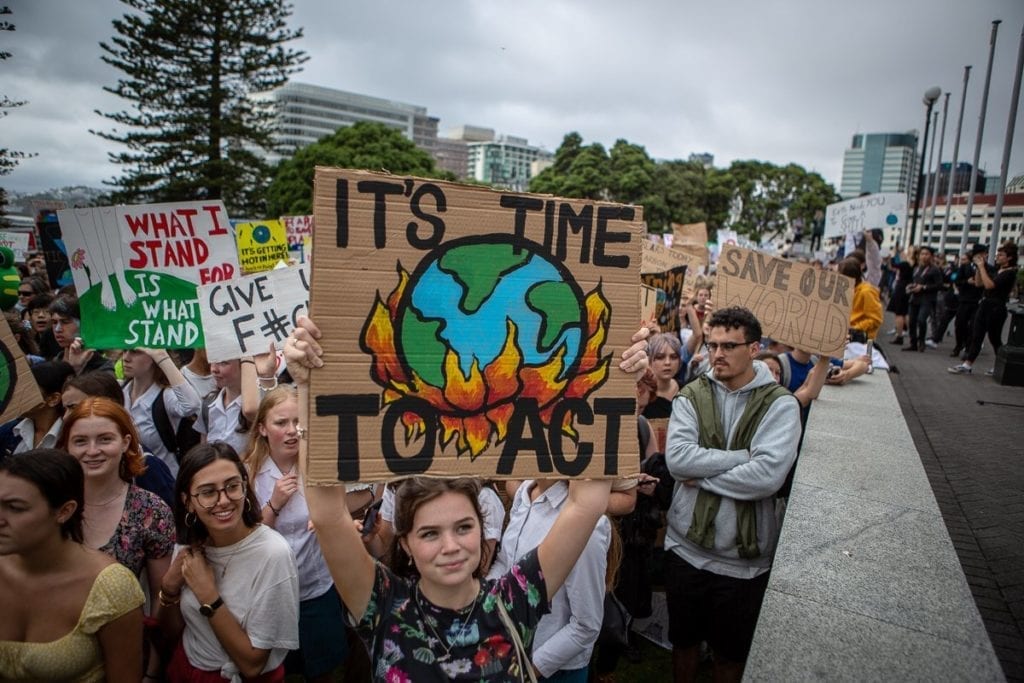
The September 20th climate strikes, that will continue for the duration of next week, have already seen 2,500 strikes registered globally and over 500 strikes taking place across the U.S.
The Youth Climate Strike Coalition in the U.S. issued a set of policy demands calling for a just transition to 100% renewables by 2030, a halt to all leasing and permitting for fossil fuel extraction, protections for frontline communities, indigenous people, and biodiversity through transformative and decisive climate action.
Coordinated by Future Coalition, the U.S. youth-led strikes includes Earth Uprising, Fridays for Future USA, Extinction Rebellion-Youth, Sunrise, Zero Hour, Indigenous Youth Council and Earth Guardians. The Youth Climate Strike Coalition is steering the national campaign, with active support, participation and collaboration from an Adult Climate Strike Coalition, which includes leading national organizations such as 350.org, Greenpeace, SEIU and March On. Youth and adults, institutional and grassroots organizations, climate-focused and social justice groups, are coming together as a unified front to demand transformative action on climate.
Xiye Bastida, Fridays For Future NYC said, “September 20th isn’t a goal, it’s a catalyst for future action. It’s a catalyst for the engagement of humanity in the protection of Earth. It’s a catalyst for realizing the intersectionality that the climate crisis has with every other issue. It’s a catalyst for the culmination of hundreds of climate activists who won’t stop fighting until the climate emergency is over.”
Vic Barrett, 20-year-old Juliana v. United States plaintiff from White Plains, NY said: “Because of the actions of the United States government and the fossil fuel industry, my generation has never known a world free from the impacts of climate change. Time is running out. This decade is our last chance to stop the destruction of our people and our planet. This is our time to join in solidarity with communities around the world to fight for a just future. This is why we strike.”
The strike actions aim to demonstrate that the fight for climate action is beyond one moment, and put a spotlight on key climate justice fights taking place throughout the United States. Actions, vary from fossil fuel project shutdowns to demanding climate town halls to mass actions against fracking and fossil fuel finance
During Climate Week, escalated actions will happen throughout New York City and across the US during the week of September 23-29. Communities are joining youth-led climate strikes, as well as coming together to protect families, air, and water from toxic fossil fuel projects, including in Minnesota, Seattle, Portland, New Hampshire, and more with hundreds across the country taking on the fossil fuel corporations and financiers.
Tamara Toles O’Laughlin, 350.org North America Director, said “The September 20th Climate Strikes and the following week of action across the United States is an intergenerational and multiracial moment to make our stand for our right to transformative climate action that preserves a sustainable, healthy, and livable future for all. With the leadership of young people backed by grandparents and parents alike, health workers, teachers, cab drivers and more, now is the time for all of us to come together to demand that real climate leaders at the national, state and local levels hold fossil fuel companies accountable for decades of negligence and damage.”
The first ever widespread global blackout will also be taking place with many organizations and businesses planning to stop business as usual by shutting down their websites and redirecting them to the global climate strikes website.
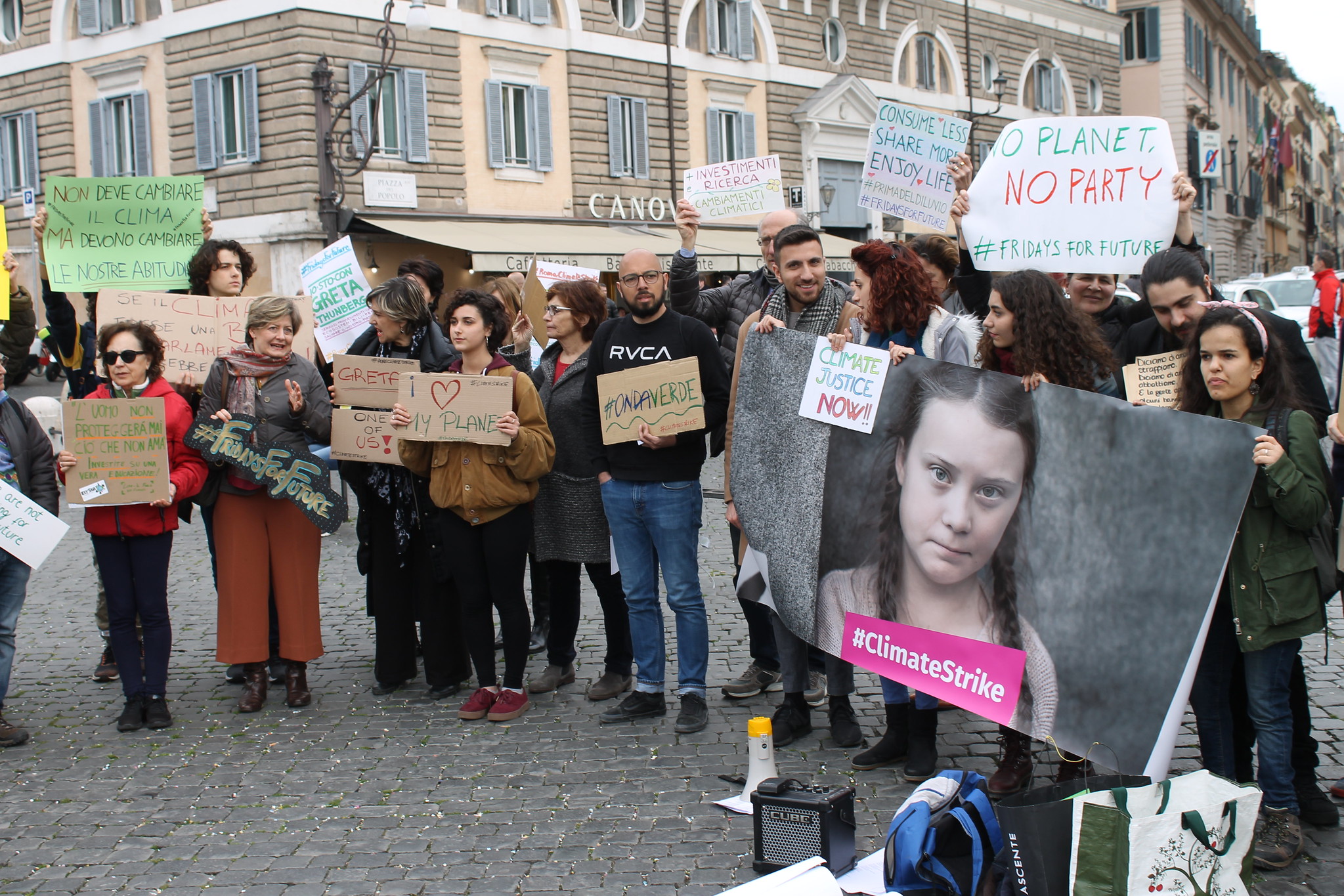
In New York City, the strike on September 20th will be led by youth strikers including Greta Thunberg, who arrived in the city to take part in the UNSG summit, kicking-off with a rally in Foley Square before marching to Battery Park for key speakers and performers. The weeklong movement will surround the UN Climate Summit being held on the 23rd of September, which will gather world leaders in an attempt to accelerate real actions to implement the Paris Agreement and meet the climate challenge.
Other notable strike locations are Washington D.C., Boston, Seattle, Minneapolis, Miami, Los Angeles and Denver.
The climate strikes movement inspired by teenager Greta Thunberg has spread rapidly across the world in the last 12 months. Strikers are demanding that governments step up to take urgent action to prevent catastrophic climate breakdown by phasing out fossil fuels, accelerating the urgent transition to a 100% renewable energy powered world with climate justice and equity at its core, and holding fossil fuel billionaires most responsible accountable for their destruction.
What People Are Saying
Jamie Margolin, founder of Zero Hour said, If adults want youth to be studious and pay attention in school in order to prepare for our futures, then they need to do their jobs to make sure a future actually exists for us. That is why I am striking for the survival of my generation and civilization as we know it. I am striking because it is pointless to study for a future that does not exist.I am striking for complete system change.”
Jesus Villalba Gastelum, Age 16, Earth Uprising LA City Coordinator/ Youth Climate Strike Los Angeles Organizer, said: “I live in Los Angeles, a diverse city of many roots, including Indigenous, Mexican, Spanish, American, and Tongva. We are organizing the LA Youth Climate Strike from a place of love, hope, and resolve. We are taking to the streets this September 20th in order to claim the future that is rightfully ours. While this mobilization is youth led, we welcome people of all generations to join us in kicking off LA’s week of action. Our march is calling out inaction on the climate crisis, and stands in support of refugee rights, human rights, and dignity for all.”
Katie Eder, executive director of Future Coalition said, “On September 20th the voices of thousands of young people from more than 400 locations across America will be heard as we strike for our future. Our message will be clear — we must act now to avoid the worst effects of climate change because all of our lives depend upon it. We are the new face of the climate revolution and we demand just and equitable climate action.”
Daphne Frias, founder of Box the Ballot, a member of Future Coalition said, “I’m striking this September to secure my future. When I take to the streets on the 20th and 27th, I take with me the resilience of my Latino and Disabled communities. People who are so disproportionately affected by climate change. Most importantly, I strike to show that you don’t have to stand to take a stand; our voices are our most powerful tool and I will use mind to protect this planet we call home.”
“A livable climate tomorrow requires halting public-lands fossil fuel expansion today. We’re proud to stand with Colorado’s youth calling for climate solutions that match the scale of the crisis,” said Taylor McKinnon, senior public lands campaigner with the Center for Biological Diversity, participating in escalated actions in Colorado.
“We’re making a stand that we’re still here. The Gitche Gami is really important to the people of Minnesota, and we want to honor that through a peaceful prayer action on September 28th. Our goal is to teach people that treaties are a two-party agreement — Native people are not the only ones responsible for maintaining the treaties, but that we’re all responsible and we need to move in solidarity. We all need the water, and we all need to do this together,” said Nancy, MN 350, Minnesota Chippewa / Leech Lake, participating in a rally and gathering to stop Line 3 in Minnesota.
“The climate crisis is a human issue – affecting all of us. We are inspired by the youth activists who have led a global movement, and Patagonia is calling for urgent and decisive action for people and our home planet. On Friday, September 20th, we will be walking out of our stores, striking with the youth activists and calling for our government to take action. There is no room in governments for climate deniers and their inaction is killing us. We invite the business community and all those concerned about the fate of our planet and humankind to answer with actions and join us,” Rose Marcario, President & CEO, Patagonia.
“As people of faith, we say that we believe in love, in compassion, in justice – then it follows that we must join this strike as surely as dawn follows the deepest darkness. Our children are calling to us. We must respond,” Fletcher Harper, Executive Director, GreenFaith.
“Climate breakdown is one of the greatest human rights issues we face. Fighting climate breakdown is about much more than emissions and scientific metrics it’s about fighting for a just and sustainable world that works for all of us. We need to start by phasing out fossil fuels, building real and long lasting solutions and prioritizing the communities at the frontline of the climate crisis,” May Boeve, Executive Director, 350.org.
Global deforestation may be a growing concern, but reforestation efforts are tackling the root of the problem.
“People don’t realize how important trees are,” says Matt Hill, Founder and CEO of One Tree Planted, a Vermont-based non-profit that supports reforestation campaigns across the globe. Trees are a major food source, and make up the key ingredients in 25% of all medicines. They filter our water and clean the air we breathe. They are the habitat for 80% of the world’s terrestrial wildlife, and the source of jobs for over 1.6 billion people. And yet, every 2 seconds humanity destroys enough trees to fill a football field, and 28,000 species of trees are expected to become extinct in the next 25 years if our current deforestation rates continue.
Business is a huge source of deforestation that has largely contributed to the depletion of 80% of our Earth’s forests. Felling trees has the additional impact of contributing 20% of our global greenhouse gas emissions, because trees release all the carbon they’ve absorbed once they’ve been burned or cut down.
Fortunately, the damage we’ve done can be remedied by replacing the resources we’ve consumed; planting trees to replenish forests and protect the organisms that live there. This is where One Tree Planted comes in.
“There’s a lot of businesses out there looking to do more for sustainability initiatives, they just don’t know how to do it,” Matt explains. “I wanted to give businesses easy metrics to understand how they can help the environment.” And it couldn’t be easier: One Tree Planted guarantees that one dollar plants one tree. From there, they branch out to watersheds and organizations to kickstart planting projects worldwide that might not otherwise receive the necessary funding.
There’s no end of creative ways for a company to ensure they’re making a difference. Adidas ran a social media campaign #adidastreefortree for International Yoga Day. Unilever is planting 250,000 trees in the Amazon for its new “plant-powered” energy drink. Livestrong is focusing its efforts in Kenya. And House of Marley donates a set amount each quarter and have to date planted over 160,000 trees. Big companies making an impact inspire others to do the same. Matt elaborates, “Companies are happy to say, ‘We’re a part of this.’”
According to a recent study published in Science by the Institute of Integrative Biology in Zurich, Switzerland, the solution to climate change is to plant one trillion trees. One Tree Planted is intent upon helping us reach that goal. But this isn’t just a plausible stepping stone to purifying our air, planting and replenishing trees is necessary for protecting our planet’s richest and most vulnerable ecosystems.
One Tree Planted ensures that all participating businesses understand the lasting impact each of their dollars has, by keeping businesses along for the journey in how they’re making a difference. It takes 5-7 years for a tree to mature enough to make the kind of impact we’re relying on, and those who partner with One Tree Planted are kept informed with progress reports every step of the way. Partners are highly encouraged to take a hands-on approach to these sustainability efforts, like L’Oreal Canada, which gets its employees to a tree planting event each year.
But planting trees is not as simple as putting saplings in the ground. Matt explains, “We need types of trees that are going to be more resilient and better fitted to the future.” Reforestation is most impactful when it introduces species that will adapt better to the current state of the ecosystem. In British Columbia, the Douglas Firs that perished in the recent fires are being replaced by Aspens and Cottonwoods, which were virtually immune to the flames. In Florida, tree species are being selected that will better withstand hurricanes. The goal is that these new forests will grow strong and tall and stay that way.
One Tree Planted currently has 4,000 business partners, and is now challenging more businesses to make an impact with the North American Million Tree Challenge. 500 companies each plant 2,000 trees in California to help the state recover from the worst fire season in its history. It will take many more efforts like this one to reap the benefits that come with one trillion trees planted, but every dollar gets us one tree closer. As Matt says, “Some people hug trees, we plant them.”