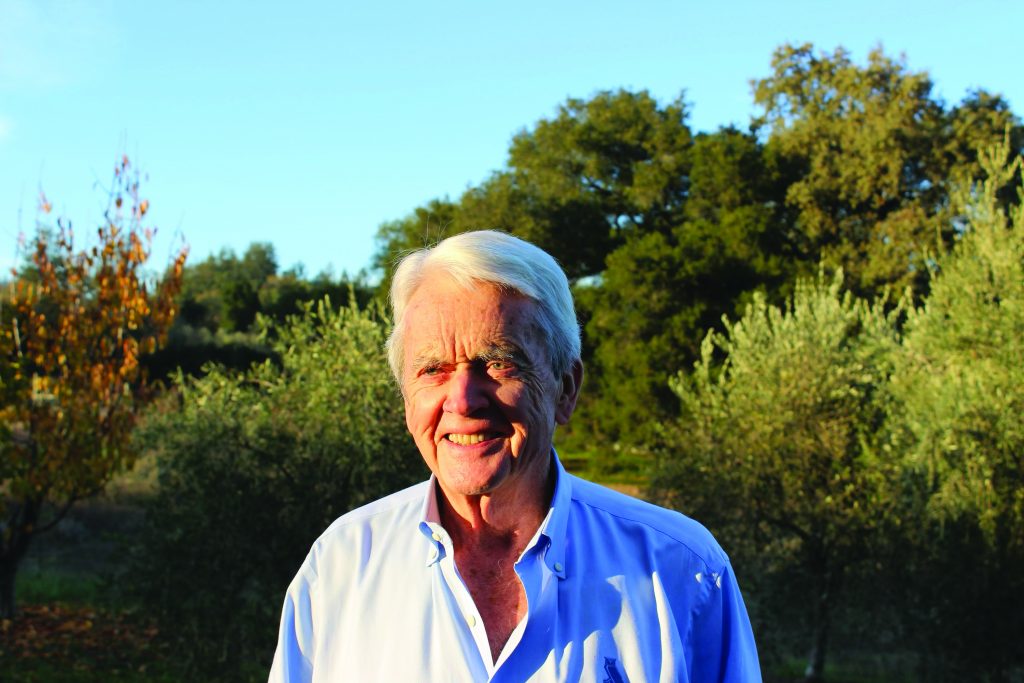
Former EPA Head William Reilly’s Wrestle With Regret


In the twilight of his career, Reilly ruminates over the climate change road not taken — but it’s not over yet.

He had direct access to a sympathetic president of the most powerful country in the world but struggled — he might even say failed — to secure the most critical planet-focused agenda of our time: the battle against global warming. Now it’s all coming to light in a documentary about why the U.S. walked away when the rest of the world was poised to stop the climate crisis.

Head of the Environmental Protection Agency from 1989–1993, William K. Reilly was asked to share intimate details about the behind-the-scenes battle that shaped the nation’s stance on climate change for a film called The White House Effect. With screenings around the world for the last 12 months, the documentary surfaced a host of memories and a deeply personal contemplation of his role in what Indiewire describes as “the quiet tragedy about how we let our planet slip away.”
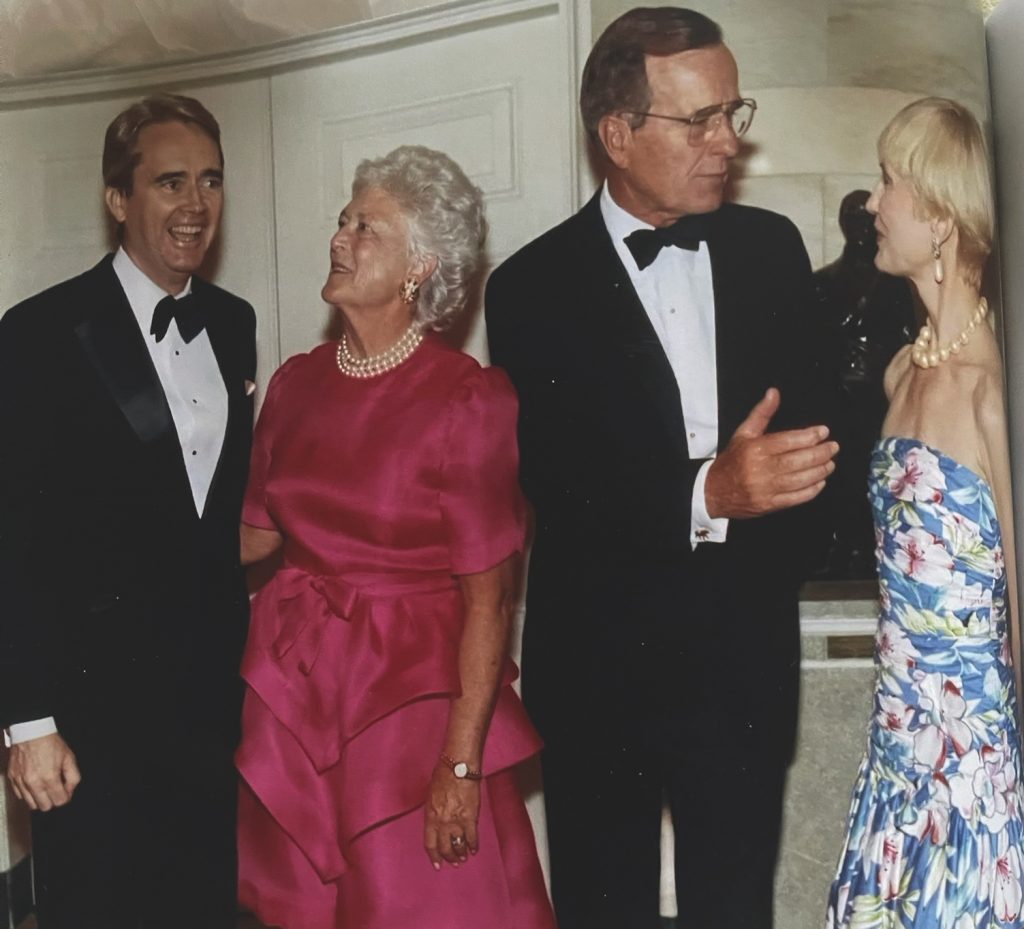
From left: William K. Reilly, Former First Lady Barbara Bush, Former U.S. President George H.W. Bush, and Reilly’s wife, Elizabeth (Libbie) B. Reilly

Directors Bonni Cohen, Pedro Kos, and Jon Shenk focus on the pivotal years of the George H.W. Bush administration, when scientists were desperately trying to educate people about global warming. Bush promised to use “the White House effect” to face the issue head-on and create a plan to get it under control. The documentary reveals how Bush finds himself wedged between Chief of Staff John H. Sununu and industry powerhouses on one side and Reilly and climatologists on the other. The White House Effect explores how, when faced with tremendous pressure to make a decision, the United States undermined a global agreement at the 1992 Rio Earth Summit that set aggressive limits on emissions — and changed history.

“I was not thrilled to hear a movie was being done on one of my biggest disappointments, but they got it right,” Reilly tells Real Leaders. “They treated Bush as a serious man whose reasons for doing what he did were quite plausible. It was clear that the directors were not chasing headlines. They were extremely careful.”

For the making of the documentary, Reilly gave interviews and shared thousands of pages of notes from his years serving the White House and the American people as its chief environmentalist. His personal stories from that time feature an all-star cast: Bush, Sununu, James Baker. The plot? Tackling global warming in a country divided on the issue. The villain? Senior leaders in a presidential administration who didn’t stand with the rest of the world on climate change. The hero? Well that’s the problem. Reilly wonders if it should have been him.

He certainly had his share of triumphs — founding Aqua International Partners, an investment group that serves the water and renewable energy sectors; leading the World Wildlife Fund with over 1 million members; heading the EPA, where he employed over 18,000 people and managed a $7-billion budget; and overseeing amendments to the Clean Air Act, including an emissions trading program to cut acid rain. Reilly also fostered innovative technologies for cleanups, breathing new life into the Superfund program and raising billions of dollars through tough enforcement regulations.

But as heroes often do, Reilly questions whether he should have — or even could have — done more to ensure the U.S. took climate change more seriously and acted with the rest of the world on what the science was saying.

Science — that was also part of the problem, says Reilly. While he was able to strengthen the role of science at the EPA, securing the adoption of “green” provisions in the North American Free Trade Agreement and asserting environmental priorities in U.S. foreign policy, the sad truth is that the need to protect our planet became politicized. 

Reilly says the fossil fuel industry, for example, was quite calculating in the way it dealt with the climate issue. “They got advice from their lobbyists not to disparage the science behind climate change but to simply point to the facts and say that it’s uncertain and that scientists have not really agreed,” says Reilly. “The scientific community would not attribute any specific heat wave or great storms or hurricane frequency to climate change, so that played into it too. It was a smart political strategy: ‘Don’t say it isn’t true. Just say it isn’t proven,’ which basically meant they didn’t have to step back on fossil fuels or support a change in our lifestyle. Environmentalists, frankly, were mistaken in repeatedly shouting from the rooftops that climate change requires a transformation of the American way of life. I don’t think the public wanted anything to do with what sounds like a transformation of their way of life.”

Just prior to his service in the Bush administration, Reilly says people could talk about nothing else but climate change. “It was a hot summer in 1988,” he recalls. “Medical waste had washed up on the beaches of New Jersey. There were records set in city after city for pollution problems connected to the very heavy heat, and it was quite clear that Bush’s statement that he would bring the White House effect to bear on the climate effect was extremely important politically. Everybody’s mind was on climate change, and the press was covering it every night.”

Reilly says the documentary captures the arc from high public concern around climate change to utter disinterest four years later, when the headlines turned to the economy and jobs. “It’s quite clear that they made the right call to switch focuses from a political point of view,” says Reilly. “People could see their friends losing jobs, but climate change was more of a future problem.”

Reilly says everyone close to Bush urged him to focus on the economy. “Everyone except me and National Security Adviser Brent Scowcroft,” he recalls. “We thought Bush should join the rest of the developed world and focus on climate change. Bush had promised stabilization of greenhouse gases, but he was the only major world leader who didn’t press it. He dropped it when he saw the way things were going at home.”

The documentary, Reilly says, accurately portrays how Sununu isolated the president from any real scientists. “Bush never met with the National Academy of Sciences, for example, and the movie made clear that Secretary of State Jim Baker was always friendly toward me and had delivered a very supportive speech about the climate problem, but the chief of staff warned him off. Baker recused himself from the climate issue, and he sent word to me, ‘Tell Reilly he will never beat the White House,’ which was his way of saying to drop the climate issue.”

The documentary gave Reilly a chance to reflect on that time and process its most important lessons. “One of my lessons from this experience is stay with the issue, whether you’re losing or not. You could still have an impact, and at least historically, people would see that we did have the information. We did have cause to do something that we chose not to do.”

Secondly Reilly learned the importance of acting on opportunity when it comes. “If you don’t seize it, it may have consequences you don’t anticipate,” he says. “When you’re doing important work, drive it hard. Realize those moments for what they are and take great satisfaction in them because it may never come again in your career.”

Highs and Lows

During an interview at the end of the documentary, Reilly reflects on a conversation he had with George Mitchell, senior majority leader at that time and a strong environmentalist. “I asked him, ‘If Bush had made a different decision to stabilize or reduce our greenhouse gas emissions, and we put that into a legislative proposal, could it have passed?’ He said, ‘No, you could not have beaten Dingle in the House and Byrd in the Senate and the coalitions they had.’ Then he quickly added, ‘But I would have said the same thing about the Clean Air Act, and you did win there. You defeated them on that, but I don’t think you could have done it again.’”

Over the years Reilly has thought a lot about why the American public doesn’t always take climate change seriously. He points out that while people could see air pollution in the late 1960s and early 1970s, climate change is imperceptible on a day-to-day basis. “For so long scientists have been unwilling to attribute special episodes of heavy heat to climate change,” says Reilly. “They said it’s consistent with what the science tells us to expect, but they couldn’t trace it directly. It took a long time for the scientists to resolve altogether that humans are causing this. I knew they had essentially resolved it during our time in office. The National Academy of Sciences reported twice on climate change, so we had enough science, and that bothered me a lot.”

The truth is, he says, that many industries are completely aware of climate change, but to acknowledge it publicly would result in more regulations and the need to conform to new, more costly practices. “That’s why Al Gore calls it an inconvenient truth,” says Reilly. “Many people don’t want to acknowledge climate change to protect their own economic interests.”

In preparing his memoir Reilly has had the opportunity to think about the highs and lows of his career. His high point was the signing of the Clean Air Act amendments, which Reilly describes as path-breaking due to its use of market-based incentives, the fact that it was a permit-based system with sensors in the smokestacks that sent data straight to EPA, and that it had very significant fines for overages.

“If you exceeded your emissions limit, you had to buy the rights from another company that had reduced its emissions more than the requirement,” Reilly explains. “It was a very efficient market system. The Office of Management and Budget predicted that the cost of the clean air and acid rain requirements would be about $1,400–$1,600 a ton. It ended up being less than $100 a ton because of the efficiency of the market design.”

He remembers his career low very clearly. He was head of the U.S. delegation to the United Nations Conference on Environment and Development in June 1992 in Rio de Janeiro, Brazil. “I got up to deliver the statement for the United States, and I remember walking toward the platform thinking, ‘This should have been the high point of my career, but it’s not.’ I couldn’t talk about the biodiversity convention — which we were refusing to sign — or the climate convention, which was our idea, but we were refusing to put teeth into it by not making the commitment to reduce greenhouse gases. So I talked about the magnificent work the EPA was doing cleaning up Eastern Europe. There were a lot of Eastern European countries who were very pleased with that statement, but it wasn’t the statement I wanted to give. It was a real disappointment.”

Reilly says he overanalyzed whether there was anything he could have done to change Bush’s mind on greenhouse gas stabilization. “Given that I was all alone on that, I don’t think so,” he admits. “The vice president, senior staff, the Council of Economic Advisers chairman, the science adviser — they were all on the other side of the issue. I don’t think it’s reasonable to think that I could have, but I have thought about it for decades.”

For example he wonders what might have happened had he gotten Helmut Kohl, chancellor of Germany who was very respected by Bush, to call the president. “During a meeting in Germany, Kohl looked me square in the eye and said, ‘On your country and mine depends whatever hope this planet has to avert a catastrophe of climate, and on your shoulders, Mr. Reilly, rests the responsibility for bringing your president to understand the significance of this decision and of this issue.’ I knew how passionately Kohl cared about climate, but I didn’t use that card. I didn’t try to get Kohl involved, and I’ll never know whether it would have made any difference.”

Another important factor in America’s stance on climate change is that all of this was unfolding during an election year. “Tommy Koh, a Singaporean diplomat, said that a very important lesson from this conference is never schedule a conference of international significance within an American election year,” recalls Reilly. “I thought that was very shrewd, and it’s true because in an election year we are much more vulnerable and sensitive to the politics than we would be otherwise.”

Business in Politics

Reilly doesn’t think it’s a bad thing that more business leaders are getting involved in politics. “There is a shift in the country toward protecting the environment, and businesses know that,” he says. “Renewables are making the case for themselves.”

Reilly admits he was at a real low point after the first two months of the Trump administration. “He basically destroyed a number of things I personally initiated, like the Office of Environmental Justice, EPA, and ENERGY Star. It has been proposed to defund a whole series of regulations on cars and trucks. I was pretty unhappy and wasn’t sleeping very well.”

But Reilly found his inspiration again last April at the 2025 William K. Reilly Leadership Award presentation at the Center for Environmental Policy, School for Public Affairs, at American University. Research scientist award-winners Gretchen Goldman and Adrienne Hollis were recognized. Before the ceremony, Goldman taught a class that Reilly attended. “There were probably 40 or 50 students, and the energy in that class was electric. You could feel it. It was crisp, excited, and ambitious,” says Reilly. “I was so taken by their energy, their enthusiasm. They were not preoccupied with all the destruction of the environmental apparatus. They asked me for advice on finding environmental careers.”

Reilly told the students that while many environmentalists work at the federal government, most states have environmental problems and need their help. He shared a story about a young environmentalist from Kentucky that he met at a Yale University symposium. “She said that never until the first Trump administration did Kentucky establish a series of environmental priorities and responsibilities, which the state had never thought was in its purview. She said because the federal government was not doing anything on climate or the environment, the state decided to take it on themselves. She said Kentucky never had a more creative and productive period than the four years of the first Trump administration. And I was quite taken by that.”

Reilly told the students, “We’re about to see if the states can step up to this challenge. Many states have built a great record on the environment over the last 50-plus years since Earth Day 1970, and they’re going to want to keep it. That’s where you will find your jobs.”

Soon after at a screening of The White House Effect at Yale University, Reilly was inspired again by the students’ questions. “It’s not a very hopeful movie because things didn’t come out well for those of us who wanted a response to climate change,” he says. “But the students thought that I had really stayed with the issue, which surprised me. I said, ‘I think you should learn from that. It’s not over when you lose a big decision. It’s not over. Look for your day to come again and work for it.’”

Reilly, 85, has given much thought to what he wants his legacy to be: He hopes the next generation will draw from his lessons and boldly champion the charge against climate change — with no regrets. 


A New EPA? Opportunity to Right Some Wrongs

Reilly recently gave a keynote speech at the EPA Alumni Association Annual Meeting with an insightful message: The decomposition of the EPA by the Trump administration gives environmentalists a chance to fix what is broken. “The EPA’s creation and structure were political,” he says. “It was not operational or efficient.”

For example he points out that the National Oceanic and Atmospheric Administration should never have been put in the Commerce Department. “People who are appointed commerce secretary are typically trade people,” Reilly says. “They’re not environmental or scientific people. NOAA is only part of the Commerce Department because the Interior secretary in the Nixon administration attacked the Vietnam War policy — so no way was Nixon going to give a large, new agency to the Interior Department, which is where it had been slated to go.”

Reilly’s point is that in a future reconfiguration, these issues can be fixed. “We can put NOAA, Fish and Wildlife, and the Interior exactly where they belong in a newly structured EPA,” he suggests. “Maybe it won’t be the EPA — make it the Department of the Environment, full cabinet level. That’s where I would place my mind and attention.” Reilly says the EPA Alumni Association created a project team to contemplate how to rebuild the environmental protection and regulatory apparatus. 

“The EPA wasn’t perfect,” he says. “We weren’t perfect. We can do better, and we have to. We can rebuild the EPA. I don’t know if I will be around to be part of it, but I believe it will come sooner than we think. If we don’t have a functional FEMA, if people go to our national parks and discover there are not sufficient rangers to manage the waste and crowds and take care of the trails, the country might become very impatient.”
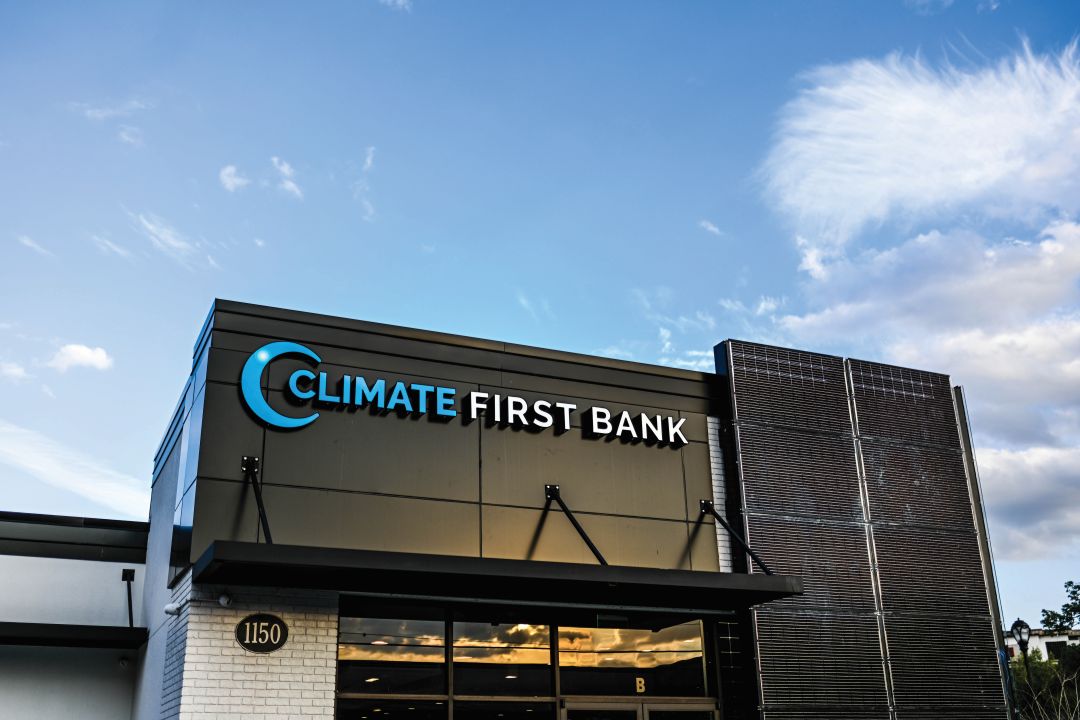
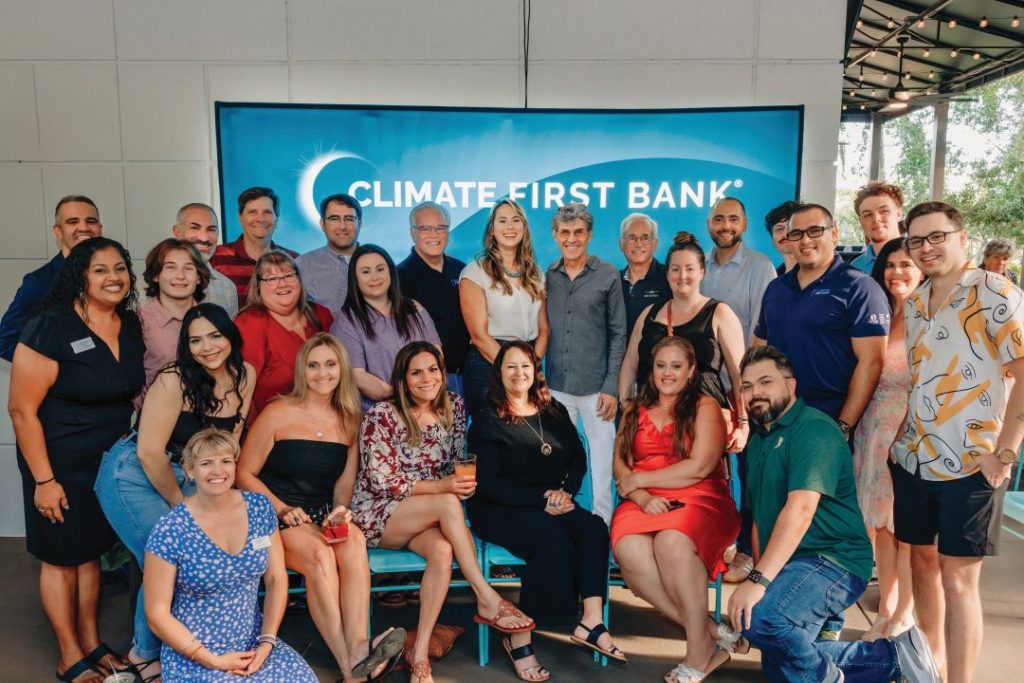
Putting the Climate First: Climate First Bank

Here’s how I created a banking business model to serve economic and environmental goals.


In today’s rapidly evolving financial landscape, the role of banks is no longer just about creating wealth — it’s about shaping the future. As business leaders, we must recognize that the power we wield can either perpetuate the status quo or ignite lasting change. 

The truth is that the banking industry is at a pivotal moment. The climate crisis is accelerating, and businesses must adapt. Banking is uniquely positioned to drive this transformation by financing projects that benefit communities and the environment. But how can we create a business model that serves both economic and environmental goals? After all, sustainable business must deliver long-term security and growth for shareholders and employees while still delivering on sustainability goals. 


First, start with your mission. At Climate First Bank, we believe in the power to use finance as a force for good and that every financial decision is an opportunity to build a sustainable tomorrow. We put the planet and people ahead of everything else because we know that when you do what is best for your community, financial prosperity will follow. This drives not only our lending practices but also our partnerships, vendor selection process, and internal operations. We encourage our employees to play a proactive role in their communities by volunteering, continuing their education, and attending values-based events. By weaving initiatives like this into our day-to-day operations, we’ve built a culture based on a solid foundation of giving back to our communities. 

Next, rethink the products and services you offer. In banking, financing solar energy projects, supporting sustainable agriculture, and financing worker-owned cooperatives are just a few ways we have aligned the bank’s portfolio with a more sustainable future. 

Finally, be transparent with your customers. Show them how their money is making a positive impact. At Climate First Bank, we report annually on our impact — we don’t just talk the talk; we walk the walk. Showcasing these accomplishments to a wider audience helps us in every aspect of our business and keeps us focused on the mission at hand. 

For Climate First Bank, “banking like tomorrow depends on it” means recognizing the responsibility we have today. By transforming your business into a force for good, you can lead the way in creating a sustainable and thriving future for all. 

Switching It Up with Deako

A smart lighting technology innovator finds a more efficient way to illuminate homes.

By Hannah Blum


When Derek Richardson manually replaced the light switches in his home, he found the process extremely difficult and even dangerous at times. Between the hassle of stripping wires and navigating circuit breakers, there’s plenty of room for human error, especially for inexperienced homeowners. There is also the issue of time spent on such a project, which can take up to 45 minutes to an hour per light switch. Richardson found himself sacrificing three to four hours per weekend for six weekends changing out 40 light switches in his home and thought there must be a more efficient way to do this.

This experience sparked the idea behind Deako, a company Richardson founded to revolutionize how we interact with light switches.


Deako is focused on simplifying this process for homeowners, and it works alongside home builders to do so. In lieu of a typical light switch, these builders install the Deako backplate into their homes, which is wired into a standard junction box like any other light switch. It is then typically equipped with a Simple Rocker light switch before the screwless faceplate is snapped in place. From there, customers can choose from an array of switches, ranging from Smart Dimmers to Simple Motion Sensor Switches, and easily pop off the faceplate to change the switch.

This innovation is designed for everyone. Firstly, it decreases the time it takes to replace the light switch. It also eliminates the chances of an inexperienced homeowner shocking themselves and cuts the cost of having to call an electrician for backup. The flexibility behind Deako’s plug-n-play switches makes it easier for homeowners to adapt their homes to their everyday needs and make upgrades at their own pace without requiring rewiring or professional installation. Deako switches are also certified by the Underwriters Laboratories and Electrical Testing Laboratories.

Deako was founded almost 10 years ago, and like most companies, it didn’t happen overnight. “In any venture, you don’t just lace up your sneakers and start playing in the NBA. You work your way up,” says Richardson, who is also CEO of the company.

To streamline its idea, Deako began receiving feedback from a few locals who first put the switches in their homes. This response then started coming from a group of small home builders installing the switches and gradually made its way up to builders who construct 100,000 homes a year. Deako continues listening to the homeowners too, and one of its newest additions are smart switches that connect to a smart home assistant for even more accessibility options.

Deako believes in the power of listening to all of its employees and customers. “Probably the biggest pivoted change that we had came from a customer in an off-the-cuff comment that they made,” Richardson notes. “The best ideas have to win — not be based around company hierarchy.” This approach has been pivotal in ensuring that Deako stays innovative and meets homeowners’ evolving needs. 

The company has collaborated with Google Home, secured deals with homebuilders across the country, and entered into several key partnerships as it has successfully scaled up, acquiring 10 U.S. patents and trademark acknowledgements along the way. Most recently, in September 2024, it announced the debut of a Simple Ventilation Timer to improve air quality in single- and multi-family homes with enhanced energy efficiency, assisting builders in meeting certain ventilation codes and allowing them to earn ENERGY STAR® points for improved exhaust ventilation. 


Deako continues to expand its horizons, branching out to other ventures like outlets that match the design of its switches to customizable faceplates and backplates to reflect anyone’s personality. It’s important to continue adapting to the needs of its customer, sharing ideas, and giving credit where credit’s due for everyone involved. Today, there are about 10,000 homes a month installing Deako light switches, and the continued line of communication between company and customer is responsible for this growth.


“A real leader is thinking about the success of the whole over the success of themself,” Richardson says. Deako’s journey highlights that, with the right mindset, even something as simple as a light switch can be revolutionary.


Hannah Blume is a contributing writer to Real Leaders.

Printing with Purpose

By Real Leaders

Printing industry innovations include recycling, composting, and educating consumers on responsible disposal.

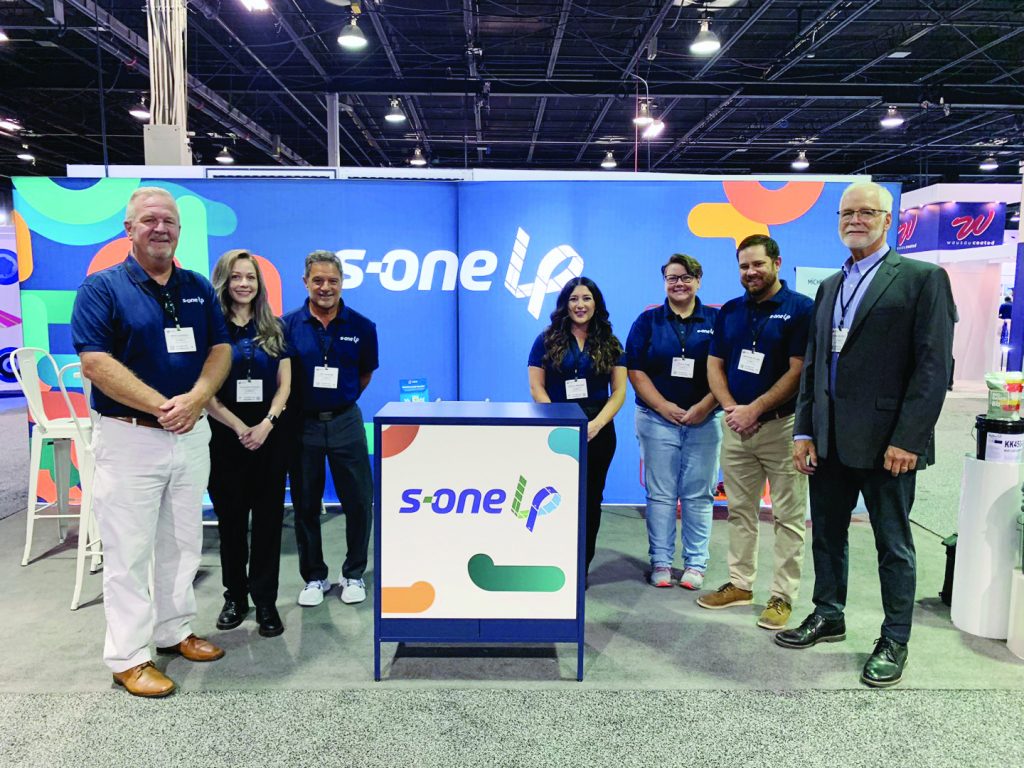
S-One Holdings Corp. is a global company with subsidiaries and brands that develop and sell printing and graphics products. The 30-year-old business has been incorporating sustainability across its companies and business practices to reduce its environmental footprint, designing and producing environmentally conscious printing products manufactured, used, and recovered in a way that embraces a circular economy.

“We are dedicated to developing solutions that make the printing industry around the globe more environmentally conscious,” Co-Founder Art Lambert says. “Being sustainable is part of who we are and how we help make our communities cleaner and healthier.”

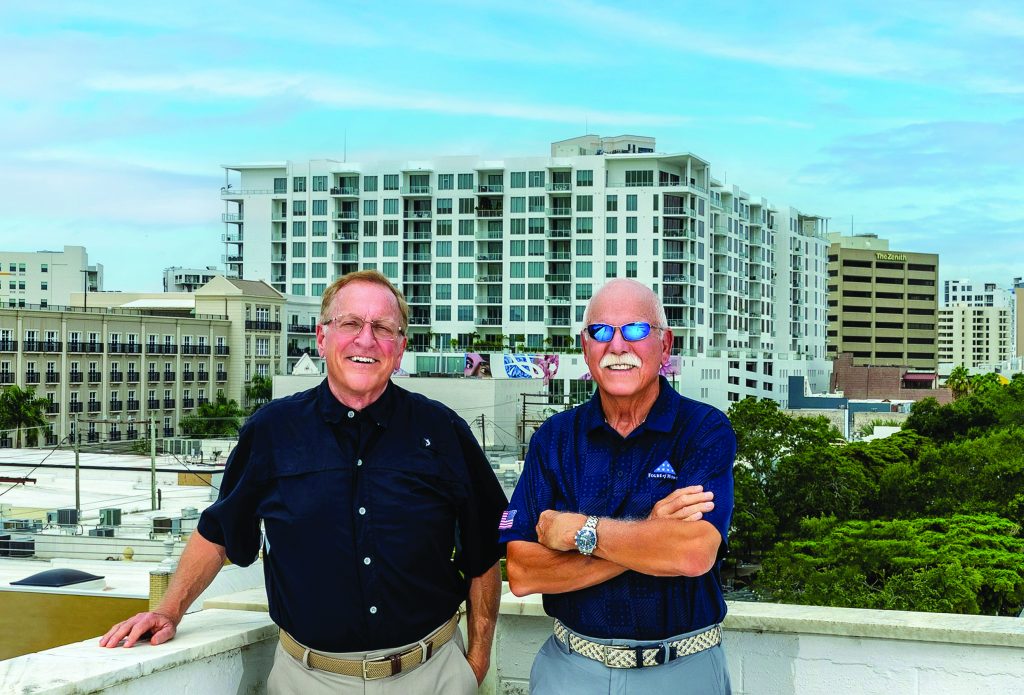
(Ron Simkins Left ; Art Lambert Right)


S-One offers over 100 eco-friendly products and has implemented several initiatives to help green the printing industry, including:


For HP, subsidiary BMG developed a satin canvas for large-format printing materials with recycled bottles and coating materials; recycled bond paper; PVC-free banner material that does not contain chlorine or phthalates; and recycled removable adhesive fabric.


Subsidiary LexJet’s ink cartridge recycling program has returned over two tons of cartridges from across the U.S. since 2021.


S-One Labels and Packaging created a sustainability resource guide to educate customers on environmental requirements, responsible disposal of packaging, and incorporating sustainable features in package design.


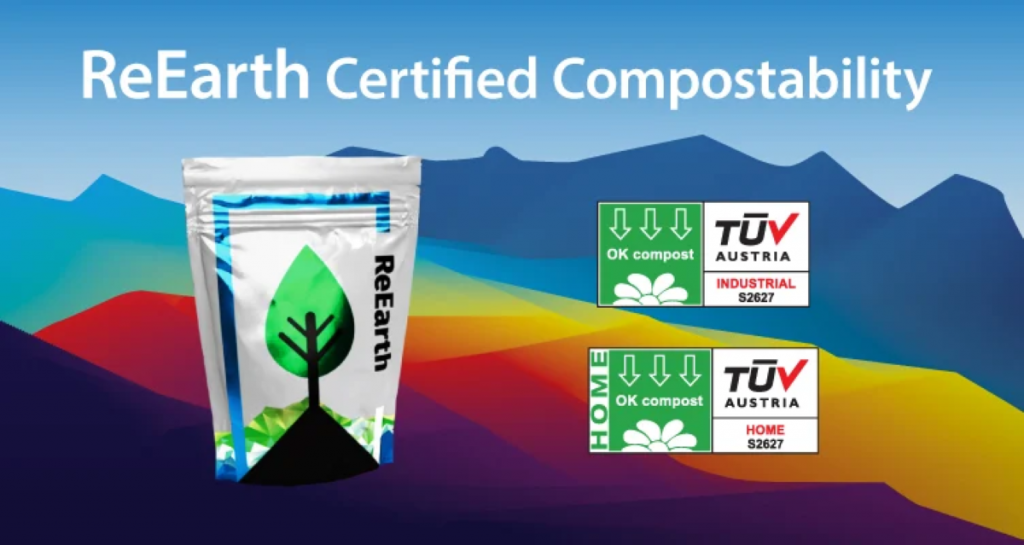
Its ReEarth bio-based films are made with raw materials that quickly compost, some of which can go into a countertop composter with food scraps to become usable soil.


ReTreve, a family of flexible packaging films, meets guidelines for store drop-off through programs for recycling into new bags or composite decking.


Subsidiary WallBottle.com makes wall décor and custom photo printing with sustainability in mind. Images are printed with environmentally certified inks on canvases made from recycled bottles and mounted on wooden frames sourced from sustainably managed forests. For every canvas purchased, WallBottle donates a portion of the sale to the World Wildlife Fund for environmental preservation and animal conservation.


Part of the United Nations Global Compact initiative, S-One continues to develop sustainable solutions in the evolving technology landscape. Through these efforts, the Sarasota, Florida-based company spreads awareness and social impact on making communities around the globe cleaner and healthier today and for future generations.

Solar at Sea

Yachts powered by the sun could help reduce harm to the environment.


By Marleny Rodriguez


In the middle of the ocean, perfect silence is usually interrupted by the rumble of a boat’s generator, the vibrations skipping off the water. Michael Köhler is the co-founder of Silent Yachts, which creates high-quality, environmentally friendly yachts that blend sustainability and luxury via solar energy.

He explains, “It’s more than unbelievable comfort that there is no generator running. There is no noise, there is no oil film on the water, there are no vibrations, and no fumes in the cockpit.”

The idea to create an environmentally conscious way to power yachts first ignited in Köhler’s mind around the 1990s, when he built a basic invention involving a bag of transistors and a battery.

“I never studied any technical studies at university, but I had the passion for it,” Köhler says, “and so I was simply learning by doing and was observing every technician who was on my boat.”

He continued to work to find a way to enjoy the luxury of sailing but also avoid using a diesel engine that would only contribute to the harmful use of fossil fuel. In 2009 he and his wife, Heike, founded Silent Yachts in Austria and produced one of the first solar-powered boats, the Solarwave 46. The couple tested the durability and efficiency of solar energy on a five-year journey through Europe’s rivers and foul weather. As a precaution, Köhler still believes in having a generator on board in case of risky weather or mechanical issues, but the generator was used fewer than 50 hours during the trip, and no maintenance was needed on the solar panels.

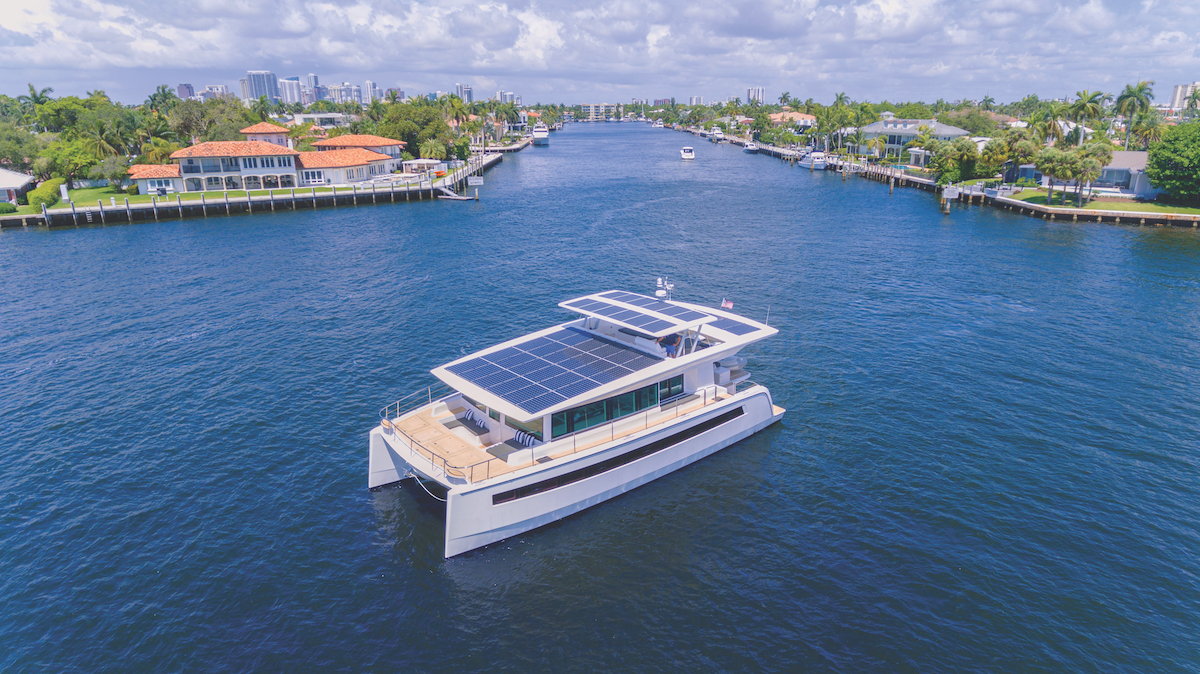
On a Silent Yacht, solar power is the main power source and the focal point of all design.

The placement of the solar panels is specific to each style of yacht and considers factors like the appliances it must support and the weight of interior furniture that affects drag and friction on the water. The windows are shaded by the hull and/or the roof, using less energy to keep the cabin temperature cool. On cloudy days or when more speed is needed, the solar panels provide all the energy necessary while also powering household appliances. Energy can also be stored in batteries in case of consistently overcast weather.

The transparency in the company’s willingness to teach potential consumers about its production decisions sets it apart, as boat operations are well-known to contribute to pollution in waterways via engine emissions, chemicals, oil spills, and more. Silent Yachts’ YouTube channel features a Tech Shorts series that explains how and why certain parts or materials are used in the production of its boats. For example, the company has taken a note from submarine development in its use of carbon-fiber propellers, which consume less fuel and are also conveniently silent.

Silent Yachts received a 2024 Real Leaders Impact Award for Most Impactful People, ranking first in employee growth over a three-year period.

“A big point is to help others develop themselves because the company can only grow if the team members grow — not in number, but as individuals,” Köhler notes. “It’s really important that everybody understands that there is good soil for them to grow here. The company is led as a democracy. The main task is to keep the wheel spinning, to listen to the team to understand where there is a deficit or something that can be improved.”

Kakariki Capital: Decarbonizing the Planet

Investing in carbon and environmental projects and assets could be key to moving the needle forward.


By Real Leaders

Kakariki Capital is on a mission to decarbonize the planet.

The privately owned, Australia-based company invests in carbon and environmental projects and assets — a new, rapidly expanding sector — from early stage pre-development to de-risked. Kakariki’s philosophy and purpose are reflected in its name, which refers to the color green in Maori and is also a parakeet native to New Zealand fighting to survive despite climate change.

Founder and Chief Investment Officer Izzy Jensen applies close to a decade of experience leading research and origination in carbon and environmental markets to guide Kakariki’s investments in environmental solutions aligned with the United Nations Sustainable Development Goals. Core to its investment thesis is that carbon credits are crucial to achieving net-zero targets, and carbon credits make other global challenges bankable, such as biodiversity. Kakariki looks to identify assets that are fundamentally undervalued due to the complex nature of the carbon market. 

“While value is our major driver, investing behind our values is our passion,” Jensen says. Thus, Kakariki aims for exposure to reputable project developers, impactful projects for the environment, and projects that improve the lives of stakeholders. The organization manages individual management agreements, the wholesale Kakariki Carbon Fund 1.0, and the Kakariki Land Generation Fund.

Carbon Fund 1.0


Kakariki’s Carbon Fund 1.0 is the first fund of its kind in the Australian market that takes a long-term view of carbon credits and related assets. The wholesale, open-ended Australian unit trust invests in high-quality carbon assets and offsets. While the fund focuses on nature-based projects in the international market, it also invests in Australian and compliance market assets.

One key example, Verity Nature is a significant investment in Kakariki’s inaugural fund. As an integrated carbon project developer operating in Australia and East Africa, Verity Nature not only focuses on carbon emissions reduction, but it also prioritizes positive social, cultural, environmental, and economic impacts within the communities in which it engages. Its projects create employment opportunities, support local communities, and generate wealth through wages, taxes, and business ventures while simultaneously removing carbon emissions and restoring biodiversity. 

Land Generation Fund


Kakariki recently launched its own land generation fund to acquire and steward land assets with substantial carbon sequestration potential. By employing innovative practices and technologies, it aims to maximize carbon offset generation while fostering biodiversity conservation.

“This will have a huge impact on restoring cleared and degraded land and enhancing biodiversity,” Jensen says. The fund’s overarching goal is to promote the harmonious coexistence of agricultural and carbon farming with a targeted distribution yield of 6–7% per annum, offering investors the option to generate income from cash, Australian carbon credit units, or other environmental credits with a targeted 12–14% total internal rate of return. 

Looking ahead, Jensen says there’s no time to waste when it comes to decarbonizing the planet. “In the imperfect landscape of carbon and environmental markets, perfection is a luxury our climate and planet cannot afford,” Jensen says. “It’s imperative to act now to simultaneously reduce emissions and offset our environmental impact. Let us harness every available tool at our disposal to forge a sustainable path forward for the sake of our planet and the generations to come.” 

Recognition for Collaboration


Kakariki earned a 2024 Real Leaders Impact Award for Best Collaboration with Impact Outfit. Impact Outfit, also based in Australia, supports family offices, foundations, and funds to use business and capital for positive impact. It works with clients on strategy and advisory, stakeholder engagement, and experience design and curation. The partnership advanced both companies’ sustainability goals while fostering mutual growth and success. 

When Kakariki was a newly established carbon fund, it sought guidance from Impact Outfit to maximize its impact and reach and to create and nurture sustainable relationships with investors and family offices. Leveraging Impact Outfit’s expertise in the impact investment space, the collaboration enabled Kakariki to identify high-impact investment opportunities and build a network of values-aligned potential partners.

“The collaboration was meaningful to us because when Kakariki first started, we didn’t really know what the impact space was,” Jensen says. “We just saw this as a financial opportunity that obviously did good. Then we learned that there was this whole group of investors and this way of thinking about having a positive impact.”

Conversely, Impact Outfit gained experience and exposure through its partnership with Kakariki. By working closely with Jensen, Impact Outfit expanded its portfolio of impactful clients and built expertise in a nascent and important new market. It gained firsthand insights into the complexities of carbon offsetting and sustainable investment, enhancing its ability to advise clients on navigating similar challenges.

William McDonough ‘The Sustainability Crises of Our Time: A Business Perspective’

William McDonough ranked among the highest in the category of values-aligned impact for the Real Leaders Top 50 Keynote Speakers awards.

His speech at the Global Sustainable Development Congress in May 2023 at King Abdullah University of Science and Technology in Saudi Arabia encourages “waging peace through commerce.” Here’s an excerpt.


By William McDonough

“So what I’ve seen in the last 40, 50 years now is this awareness of change. That is not always positive. And we hear about these certain changes like the Silent Spring announcements in the United States, DDT, or on various kinds of pollution, various kinds of desertification, and so on. And this buildup does not leave room for question — it’s really a climate crisis, as we’ve heard the words. It’s not just change. We’ve now reached the point where change has become a crisis. So I think that idea, and the urgency that it requires … it’s very important. This is a crisis that built up slowly, and there is no better time than the present to make positive change to ensure a future on planet earth for our children of all generations to come. …

When John Kennedy in 1960 said, ‘We are going to the moon,’ the people who did that — and I know because I designed NASA (International) Space Station on Earth — did it in nine years, not a decade. … And the average age of the NASA engineer who put Neil Armstrong on the moon was 28, which means when President Kennedy said, ‘We’re going to the moon,’ they were students. So how important is education and its leadership?


We have seen the business community take this up. It started with the leaders. It started with very senior business leaders, but it then morphed into sustainability becoming a normal statement with not a highly defined set of parameters, except the first one from the (United Nations) Brundtland Commission, which was: Meet the needs of the present generation while allowing future generations to meet their own needs.

But a sustainable, safe, then circular future is about more than just needs. It’s also wants. So we then saw companies setting up chief sustainability officers, and then the whole C-suite. We need leaders, and we need leaders in the academic institutions living it every day, and we need faculty, students who enjoy it and understand this is the future that we decide and make. 

And so we’re at the point now of crisis, and everywhere we see people calling for ESG and getting confused or calling for sustainability without knowing what it means, and we see very strident regulations coming out of Europe even to this day, we see a lot of anxiety, or the concept of offsets and how to report our carbon footprints, and things like that. So it’s an amazing time, and we need clarity and the academic community and the business community to both come together to — I think of it as waging peace through commerce.”

Forward Faster

The UN asks companies to help accelerate progress on 5 Sustainable Development Goals.

By Real Leaders

Only 15% of the United Nations Sustainable Development Goals (SDGs) are on track for 2030, and the UN is calling upon the private sector to help improve that number.

The UN identified five action areas for companies: gender equality, climate action, living wage, finance and investment, and water resilience. These targets can accelerate progress across all 17 SDGs and are where the private sector can collectively make the biggest, fastest impact by 2030, the UN says. They also help build more resilient companies and can lead to positive corporate returns.

The UN’s Forward Faster initiative aims to increase accountability and transparency by calling for companies to publicly declare their commitments, highlight the actions they will undertake, and report on progress annually to the UN Global Compact, which provides a framework to guide all businesses regardless of size, complexity, or location. 

Gender Equality

At the current rate, it will take over 160 years to achieve gender equality in terms of women’s economic empowerment and participation.

Companies can increase profitability and performance by ensuring inclusive workplaces and parity in their workforce. When women are empowered and included, economies grow, communities thrive, and businesses flourish. By taking action on gender equality, companies can gain important advantages:

  • When women serve as leaders and employees of companies, businesses benefit and performance improves.
  • On average across countries, long-run GDP per capita would be almost 20% higher if gender employment gaps were closed.
  • When boardrooms are gender balanced, enterprises are 2% more likely to have improved business outcomes.
  • Gender equality in the workplace can help unlock more than $12 trillion in new market value linked to the SDGs.

Action

Target 1: Equal representation, participation, and leadership across all levels of management by 2030.

Target 2: Equal pay for work of equal value by 2030.

Climate Action
In order to limit global warming to 34.7°F above pre-industrial levels, emissions need to be cut in half by 2030.

Businesses can protect themselves from long-term volatility by working toward net zero and a just transition. Taking climate action will help future-proof businesses. Here’s how taking ambitious action in this area benefits companies:

  • Improve efficiency and cut operating costs by reducing energy usage and emissions.
    Strengthen companies’ reputation with customers, suppliers, investors, and regulators whilst reducing companies’ exposure to climate risks.
  • Stay one step ahead of policy changes and climate regulations.
  • Ensure businesses leave no one behind in the transition to an environmentally sustainable economy.

Action

Target 1: Set corporate science-based net-zero emissions reductions targets in line with a 34.7°F pathway with the goal of halving global emissions by 2030 and reaching net-zero by 2050 at the latest.

Target 2: Contribute to a just transition by taking concrete actions that address social impacts of climate change mitigation and adaptation measures in partnership with actors such as workers, unions, communities, and suppliers.

Living Wage
Over a billion working people worldwide — one third of all workers — are estimated to earn less than they need to afford a decent standard of living.


Companies can reduce inequalities and build more resilient supply chains by ensuring a living wage across their workforce. By paying living wages, companies can improve productivity and gain important advantages:

  • Reduce staff turnover and absenteeism, increase retention and motivation, attract new talent, and increase staff productivity.
  • Improve supply chain relationships, performance, resilience, and transparency.
  • Create a pathway to tackle poverty and reduce inequalities.
  • Demonstrate a commitment to respecting and promoting the human rights of workers.

Action

Target 1: One-hundred percent of employees across the organization earn a living wage by 2030.

Target 2: Establish a joint action plan(s) with contractors, supply chain partners, and other key stakeholders to work toward achieving living wages and/or living incomes with measurable and time-bound milestones.

Finance and Investment
The world will need to spend between $3–5 trillion annually to meet the SDGs by 2030.


Shifting corporate capital towards the SDGs is critical to closing existing financing gaps. Aligning financial strategies with the SDGs unlocks new revenue possibilities. By taking action in this area, companies can increase performance and gain new opportunities: 

  • Attract investors and open up new avenues for capital investment 
  • Protect long-term financial performance and avoid potential legal and reputational issues.
  • Identify and mitigate risks associated with environmental, social, and governance factors.
  • Attract top talent who prioritize purpose-driven work and seek employers committed to sustainability.
  • Expand into new markets and attract environmentally and socially conscious customers.

Action

Target 1: To the fullest extent possible, align corporate investment with SDG policies and strategies, set targets, and track and report on the amount and proportion of such SDG investments.

Target 2: Establish a corporate financing strategy linked to SDG investments and performance, and report on the amount and proportion of such SDG finance.

Water Resilience
More than 2 billion people lack safe drinking water. It’s estimated there will be a 40% gap between available water and demand for water by 2030.


Companies can increase efficiency and reduce supply chain disruption while helping vulnerable communities in water-challenged regions. Building water resilience at your organization can improve business performance and accelerate growth. Taking ambitious action in this area will help businesses:

  • Reduce potential business risks caused by water challenges (operational and supply chain).
  • Enhance companies’ reputation in the communities you operate and with your investors.
  • Profoundly impact the ability to fulfill the UN human right to water and sanitation and broader SDGs.
  • Support ecosystems that capture, filter, and store water resources, while supporting biodiversity and helping reduce the impacts of climate change.

Action

Target 1: Build water resilience across global operations and supply chains and join hands to achieve collective positive water impact in at least 100 vulnerable prioritized water basins by 2030. 

Zero Carbon Reaches New Heights

By Real Leaders

A Landmark Among Skyscrapers

North America’s first zero-carbon commercial tower, The Stack, opened in September 2023 at 1133 Melville St. in downtown Vancouver, British Columbia. Co-owned by Oxford Properties and CPP Investments, The Stack is 37 stories tall, totaling 550,000 square feet of prime real estate. James K.M. Cheng Architects designed the unique, twisting stacked box aesthetic. The building was awarded the Canada Green Building Council’s Zero Carbon Building – Design Standard certification and is pursuing LEED v4 Core and Shell Platinum. 

“The Stack is leading the real estate industry to new levels of sustainability,” says Andrew O’Neil, vice president of development for Oxford Properties.

Employee Haven

Employee experience and wellness were other priorities in The Stackʼs design, with architectural elements such as operable windows for natural ventilation, several outdoor terraces, and a landscaped pocket park that features a public art installation by Canadian contemporary artist Lawrence Paul Yuxweluptun. To foster active transportation and promote wellness, The Stack features a 5,000-square-foot fitness center, 250 bike parking stalls, and health-club quality end-of-trip facilities for those who want to bike, jog, or walk to work.

Tackling Decarbonization

Innovative features minimize carbon emissions and energy intensity, including low-carbon building systems, high-performance, triple-pane glazing, and solar panels. The Stack also deploys smart technology to provide insights on energy management, optimize building performance, and enable preventative maintenance. 

“We can use the insights and learnings from this project across our portfolio and share best practices with the wider industry as we collectively tackle decarbonization as one of the most pressing issues of our times,” says Andrew O’Neil, vice president of development for Oxford Properties.

Taking Things Up a Notch

At 530 feet high, a 6,000-square-foot rooftop terrace offers unobstructed panoramic views of English Bay, Stanley Park, Burrard Inlet, and the North Shore Mountains with regular access as well as corporate events. 

“We’re seeing in cities across the globe that providing employees with a high-quality workplace experience has been an integral part in successful return-to-office programs for firms looking to unlock the benefits of in-person collaboration,” says Ted Mildon, vice president of office leasing and operations at Oxford Properties.

Cleancult: Refill, not Landfill

Cleancult keeping your home and the planet free of waste

Ryan Lupberger is helping lead the movement to clean up the cleaning industry. The Colorado native grew up valuing natural products, and upon reading the ingredients in his laundry detergent, he was concerned to see so many unrecognizable ones.

Lupberger started researching and became even more disheartened when he learned that many of the chemicals allowed in the U.S. are banned overseas, and there is no regulatory body overseeing cleaning products in the U.S. So, he was inspired to start Cleancult, a natural cleaning product company, in 2019. Cleancult sells hand soap, dish soap, all-purpose cleaners, and laundry detergent.

“As we further our mission, the goal to bring accessible sustainable solutions to more and more people is not only a fundamental business model, but also an innate responsibility to our community and the cleaning industry,” Lupberger says.

Not only does Lupberger care about what is in the products, but he also has achieved zero-waste packaging, as opposed to the industry-standard single-use plastic bottles. After all, Americans dispose of 40 million tons of plastic every year, only 5% gets recycled, and it takes over 500 years to decompose.

Lupberger spent a year traveling the U.S. to find the best solution and ended up having his own machinery built to create a patented, recyclable cardboard refill packaging similar to milk cartons that consumers are encouraged to transfer into glass dispensers (which they can purchase from Cleancult) for at-home use. The company uses Forest Stewardship Council-certified paper. Recently, it also introduced refillable aluminum bottles. Cleancult has diverted over 7 million pounds of plastic from landfills and oceans.

While other eco-focused cleaning product companies sell concentrated liquids or powder alternatives, Lupberger sees Cleancult as preferred for consumers who don’t want to add a step or change to powder.

“We want to go after the 99%,” Lupberger says. “We have to meet them where they are with ready-to-use formulas and ready-to-use bottles.”

Cleancult’s Support for Innovative Waste Management Projects

Cleancult is an activator in the U.S. Plastics Pact, a global network working toward a goal of having all plastic packaging be reusable, recyclable, or compostable by 2025. The company is a member of the Sustainable Packaging Coalition to take action toward packaging sustainability. Plus, it joined rePurpose Global, and its Plastic Neutral Certification helps fund and support sustainable waste management projects that recover and remove as much plastic waste from the environment as it uses in its packaging.

Among these initiatives lies Sueño Azul, supporting a cooperative of waste workers who have revolutionized waste management practices in Bogotá, Colombia.

When Lupberger started Cleancult, he launched a direct-to-consumer (D2C) website. “I really hoped D2C would work long-term,” Lupberger says. However, he found the digital marketing and shipping costs to be challenging, especially during the Covid-19 pandemic. 

So, in 2021, Lupberger shifted the company’s focus to retail sales, debuting in a handful of regional grocers. In 2022, Cleancult entered Walgreens, CVS, and Bed Bath & Beyond. This year, in its largest retail expansion yet, it hit shelves at 3,000 Walmart stores across the U.S., as well as on its online marketplace. Plus, Cleancult is available on Amazon.com’s marketplace. Lupberger has been pleased with the results, with sales growing 50% year over year for the business overall (while sales are flat on Cleancult’s website).

“Through key retail partners, including Walmart, we have grown the brand’s retail presence by 7,500% since 2019 and are excited to continue on this positive growth trajectory,” Lupberger says.

0