5 Ways to Better Manage Millennials in a Family Business

There are always gaps in attitudes and perspectives from one generation to the next. In a family business, trying to weave together the differences between the current generation and the next generation from a business perspective is always hard. But today’s gap between baby boomers and millennials is the biggest in history.

From the boomer’s perspective, the older generation needs to instill the core basics of running a business in the next generation. But they also need to acknowledge that the future is digital and mobile, and we’ll work via the Internet, smart phones, ARI, and new innovations we don’t even know of yet. Millennials are going to be far more prepared to deal with that.   

Family business owners can improve things by first seeking to better understand the millennials in their companies, learning how to take advantage of the smarts and tech savvy of next generation. So here are 5 tips for better managing millennials, and setting them up to succeed:


1. Acknowledge the World has Changed

Baby boomers (born 1946 – 1964) operate out of a distinctive context. They come from a world of sacrifice, loyalty, hard work, and dependability, much of it formed due their proximity to World War II and stories from their parents about the Great Depression. Boomers are generally always ready for dire consequences. But millennials came of age in an entirely different world: from child mortality worldwide (from 40% of children dying before the age of 5 in 1900 to 4% now), to entertainment (from 1,000 new movies in 1960 to 11,000 today), to science (from thousands in 1950 to more than 2 million today) to technology (mobile phone ownership was under .001% in 1980, but more than 95% of American adults own one now). Actually, the world has changed more in the last fifty years than at any other time in history.


2. Understand the Millennial Context

Being unaffected by the world events that shaped boomers’ perspectives means that millennials have a natural disconnect in potentially serious business situations. They are more likely to respond with a  “Don’t worry,” “It will be okay,” or “It doesn’t matter.” It may appear that they don’t grasp the potential consequences or simply lack a sense of respect. But it’s more likely a figment of their growing up in this entirely new world. 


3. Recognize Millennial Values Around Work

Millennials value the attractiveness of the work itself, mobility (both geographical and between assignments), the opportunity to meet people and network, and a relaxed atmosphere. They love being able to customize their compensation packages with additional days off, flexible hours, telecommuting, or discounts. They have a different concept of work/life balance than boomers, viewing life and work as two separate entities—and life comes first: it’s not work/life balance, but the other way around. They value teamwork, care about teammates, and cultivate relationships. They also expect ready access to those in positions of influence.


4. Create a Better Work Culture

Creating a strong company culture is key for better managing millennials and setting them up for success in the family business. A great culture is more valued than great compensation for millennials. That means:

  • Collaborative working environment:Millennials have an urge to contribute. Encourage collaboration in your company by holding weekly team meetings or brainstorming sessions. Listen to what millennials have to say.
  • Use of tech and social media:Generally speaking, millennials were born with computers, the Internet, and mobile phones at their fingertips. They function in networked environments where simultaneous communications are more efficient than long meetings. Take advantage of their tech savvy, and never try to deny them the use of technology — this can be a flash point with millennials.
  • Exciting, meaningful vision of the future:Lay out the future vision and talk about their career path. Perhaps get the millennials involved in family governance. If you share with them the reason that something must be done, they may surprise you with ideas about how to achieve it.
  • Work that’s fun and fast-paced:Fun matters. Millennials are extremely enthusiastic and optimistic, and crave a work environment that fosters their outgoing attitude. They are more willing to do hard work when it’s in a fun environment. While goal-oriented, they can be impatient, and thrive on quick results
  • Plenty of feedback:This is a feedback generation. Millennials thrive on feedback — informal and in real time — and expect routine encouragement. Boomer managers in the family business may find this draining. But providing feedback could be interpreted as a sign that you do not value them.
  • Room to learn:Don’t micromanage millennials. Give them space to learn, discover, and experiment. Millennials like a challenge and the chance to create innovative solutions. Let them learn through immersion, engagement, trial and error, and entrepreneurial activities.


5. Know When Not to Bend

Certain areas in business can’t be compromised, such as basic and sound business practices that continue to apply today. It’s key to stress their importance to the next generation:

  • Follow through with a commitment.
  • Take responsibility for your actions and mistakes.
  • All actions in the business should be made with an eye towards “How does this make the company profitable?”
  • Good business decisions, even if gut decisions, should be based on some form of data, history, or research.
  • Good personal relationships and communication with employees, customers, and suppliers are paramount.
  • Have a reputation of trustworthiness, integrity, dependability, and respect for others.
  • Always be a student of your field, and consistently strive for excellence.

While millennials may have a different culture, many may have what it takes to assume the helm of the family business one day. It’s up to the boomer generation to help millennials to settle down, resist showing off their technology chops, and respect traditional business systems instead of reflexively condemning them as outdated. And when both sides understand each other and appreciate each other’s differences, that makes the transition from one generation to next far smoother.

 

Oprah Winfrey: “I Don’t Believe in Failure”

Oprah Winfrey holds a fascinating role in American life, with a celebrity status that goes beyond entrepreneur, TV personality and wellness guru. Most will agree that she Is certainly inspirational. She shares her greatest lesson, her hopes for the future and what she would have done differently.


What is the greatest lesson you’ve learned throughout your life and career?

My greatest lesson came from Maya Angelou, when I first met her. After I’d known her for a while, she said, ‘Baby, you know, you need to know that when people show you who they are, you believe them the first  time. Your problem is it takes you 29 times to see the same lesson coming in a different skirt, wearing a different pair of pants.’  That has been one of my greatest wisdom teachings – to assess from people’s behavior, their actions; and not just towards me, but towards other people; who they are and how they behave. Because if people talk about other people, they’ll talk about you. So, I think in business and in personal  relationships, that’s always been my greatest lesson. Also staying  grounded, you know, has been really great for me.

You’re on top of the world right now. What humbles you?

When I was called by the Golden Globe Awards and was told they wanted me to accept the Cecil B. DeMille award in January 2018, I said, ‘I shouldn’t be the person to get it.’ You know why? I was working with Reese Witherspoon at the time, and happened to just say to her in the make-up room one morning, ‘So how many movies have you done?’ She said, ‘Oh honey child, I don’t know. It’s been so many.’ And then I  thought, ‘I hope she doesn’t ask me because I think it’s been five.’ [laughs] I didn’t understand why they wanted to give me an award. Then, they explained that it was about overall entertainment. Now, what I was able to do with The Oprah Show and the cultural statement we were able to make throughout the world, I feel very, very proud of, but I think that when it comes to films, that I’m really the new kid on the block. I always feel when I’m acting I’m out of my box. It’s the most intimidated I ever feel.

What wisdom would you pass on to future generations of people in Hollywood who want to make films?

The way to make movies is to do stuff you love. For 25 years I worked on The Oprah Show, and Stedman [Graham – her partner] will tell you there were nights when I came home and it was hard to even take off my clothes because I knew I was going to be  getting up four hours later. But I never really felt exhausted, like  depleted. I felt exhausted, but I never felt depleted. Do the work  that comes straight from the soul of you, from your background, from stories that you’ve grown up with, from stories that bring you passion. The key to fulfillment, success,  happiness and contentment in life is when you align your personality with what your soul actually came to do. I believe everybody has a soul and has their own personal spiritual energy. So when you can use your  personality to serve whatever that thing is, you can’t help but be  successful.

If you do films that come from your soul, work or art that comes from inside you, you can’t miss. When you’re doing stuff that you think might make money, that may be a hit, or you think may bring you some level of attention or success, it usually doesn’t. All the great, wonderful experiences of my life that have  brought me to this moment have come from working from the interior of myself. That’s why it feels so authentic, because it actually is.  When you do that, you’ll win.


Oprah’s Life Lessons

Work together in the service of something greater than yourself. My deepest satisfaction and biggest rewards have come from exactly that –  picking a problem and doing something about it, because to somebody who’s hurting, something is everything. Vote. Pay attention to what the people who claim to represent you are doing and saying in your name. They represent you and if they’re not doing right by you and their policies are at odds with your core beliefs, then you have a responsibility to send them packing. Remember that people died for your right to vote, so don’t let their sacrifice be in vain. Eat a good breakfast, pay your bills on time, recycle, make your bed, aim high, say thank you to people and actually mean it. Ask for help when you need it and put your phone away at the dinner table (just sit on it). Know that what you tweet and post on Instagram today might be asked about in a job interview tomorrow or even 20 years from today. Be nice to kids, elders and animals. Know that it’s better to be interested than interesting.


You’ve always given great advice to everyone else. As you review your life, what advice would you give to a seven-year-old Oprah or a 13-year-old Oprah?

Age seven, I was so sad. At seven, all of my real love came from my teachers. You have no idea of the power of noticing another human  being and what it feels like when somebody knows that they’ve been seen, truly seen. It’s the greatest gift you can give, and from all those years of The Oprah Show, the greatest lesson I learned was that after every show, someone would invariably say, in one way or  another, ‘How was that?’ I would  finish an interview with a father who killed his twin daughters, I’d finish an interview with Barack Obama, George Bush or Beyoncé. They’d all say the same thing: ‘How was that?’ I started to see this common thread in humanity – where everybody wants to know how they did. ‘Did I do okay?’ ‘Did you  hear me?’ ‘Did what I say mean something to you?’ Recognizing this in other people has helped me to become a person of compassion, a person of understanding, a person who can interview anybody about anything because I know that at the core of  them is the same as the core of me. People just want to be heard.

There has been much social activism in America over the past year. Do you feel we are moving in a better direction yet?

From thousands and thousands of interviews and watching people in their dysfunction, when something negative is brewing, the direct opposite reaction is also possible. Because for every action, there is an equal and opposite reaction. When something as big as the Harvey Weinstein scandal started to unfold, I  thought, ‘Whoa, whoa, whoa!’ With each day’s new revelation, I thought, ‘Here’s an opportunity for something powerful. How do we use this moment to elevate what is happening instead of continually victimize ourselves?’ There isn’t a culture, race, religion or workplace that hasn’t been affected by this particular issue. People didn’t feel they could speak up. There are so many women who have endured so much and remained silent and kept going because there was no other recourse. Now that we’ve all joined as one voice, I think that it feels like empowerment to those women who never had it.

Oprah Winfrey: “I Don’t Believe in Failure”

Oprah Winfrey holds a fascinating role in American life, with a celebrity status that goes beyond entrepreneur, TV personality and wellness guru. Most will agree that she Is certainly inspirational. She shares her greatest lesson, her hopes for the future and what she would have done differently.


What is the greatest lesson you’ve learned throughout your life and career?

My greatest lesson came from Maya Angelou, when I first met her. After I’d known her for a while, she said, ‘Baby, you know, you need to know that when people show you who they are, you believe them the first  time. Your problem is it takes you 29 times to see the same lesson coming in a different skirt, wearing a different pair of pants.’  That has been one of my greatest wisdom teachings – to assess from people’s behavior, their actions; and not just towards me, but towards other people; who they are and how they behave. Because if people talk about other people, they’ll talk about you. So, I think in business and in personal  relationships, that’s always been my greatest lesson. Also staying  grounded, you know, has been really great for me.

You’re on top of the world right now. What humbles you?

When I was called by the Golden Globe Awards and was told they wanted me to accept the Cecil B. DeMille award in January 2018, I said, ‘I shouldn’t be the person to get it.’ You know why? I was working with Reese Witherspoon at the time, and happened to just say to her in the make-up room one morning, ‘So how many movies have you done?’ She said, ‘Oh honey child, I don’t know. It’s been so many.’ And then I  thought, ‘I hope she doesn’t ask me because I think it’s been five.’ [laughs] I didn’t understand why they wanted to give me an award. Then, they explained that it was about overall entertainment. Now, what I was able to do with The Oprah Show and the cultural statement we were able to make throughout the world, I feel very, very proud of, but I think that when it comes to films, that I’m really the new kid on the block. I always feel when I’m acting I’m out of my box. It’s the most intimidated I ever feel.

What wisdom would you pass on to future generations of people in Hollywood who want to make films?

The way to make movies is to do stuff you love. For 25 years I worked on The Oprah Show, and Stedman [Graham – her partner] will tell you there were nights when I came home and it was hard to even take off my clothes because I knew I was going to be  getting up four hours later. But I never really felt exhausted, like  depleted. I felt exhausted, but I never felt depleted. Do the work  that comes straight from the soul of you, from your background, from stories that you’ve grown up with, from stories that bring you passion. The key to fulfillment, success,  happiness and contentment in life is when you align your personality with what your soul actually came to do. I believe everybody has a soul and has their own personal spiritual energy. So when you can use your  personality to serve whatever that thing is, you can’t help but be  successful.

If you do films that come from your soul, work or art that comes from inside you, you can’t miss. When you’re doing stuff that you think might make money, that may be a hit, or you think may bring you some level of attention or success, it usually doesn’t. All the great, wonderful experiences of my life that have  brought me to this moment have come from working from the interior of myself. That’s why it feels so authentic, because it actually is.  When you do that, you’ll win.


Oprah’s Life Lessons

Work together in the service of something greater than yourself. My deepest satisfaction and biggest rewards have come from exactly that –  picking a problem and doing something about it, because to somebody who’s hurting, something is everything. Vote. Pay attention to what the people who claim to represent you are doing and saying in your name. They represent you and if they’re not doing right by you and their policies are at odds with your core beliefs, then you have a responsibility to send them packing. Remember that people died for your right to vote, so don’t let their sacrifice be in vain. Eat a good breakfast, pay your bills on time, recycle, make your bed, aim high, say thank you to people and actually mean it. Ask for help when you need it and put your phone away at the dinner table (just sit on it). Know that what you tweet and post on Instagram today might be asked about in a job interview tomorrow or even 20 years from today. Be nice to kids, elders and animals. Know that it’s better to be interested than interesting.


You’ve always given great advice to everyone else. As you review your life, what advice would you give to a seven-year-old Oprah or a 13-year-old Oprah?

Age seven, I was so sad. At seven, all of my real love came from my teachers. You have no idea of the power of noticing another human  being and what it feels like when somebody knows that they’ve been seen, truly seen. It’s the greatest gift you can give, and from all those years of The Oprah Show, the greatest lesson I learned was that after every show, someone would invariably say, in one way or  another, ‘How was that?’ I would  finish an interview with a father who killed his twin daughters, I’d finish an interview with Barack Obama, George Bush or Beyoncé. They’d all say the same thing: ‘How was that?’ I started to see this common thread in humanity – where everybody wants to know how they did. ‘Did I do okay?’ ‘Did you  hear me?’ ‘Did what I say mean something to you?’ Recognizing this in other people has helped me to become a person of compassion, a person of understanding, a person who can interview anybody about anything because I know that at the core of  them is the same as the core of me. People just want to be heard.

There has been much social activism in America over the past year. Do you feel we are moving in a better direction yet?

From thousands and thousands of interviews and watching people in their dysfunction, when something negative is brewing, the direct opposite reaction is also possible. Because for every action, there is an equal and opposite reaction. When something as big as the Harvey Weinstein scandal started to unfold, I  thought, ‘Whoa, whoa, whoa!’ With each day’s new revelation, I thought, ‘Here’s an opportunity for something powerful. How do we use this moment to elevate what is happening instead of continually victimize ourselves?’ There isn’t a culture, race, religion or workplace that hasn’t been affected by this particular issue. People didn’t feel they could speak up. There are so many women who have endured so much and remained silent and kept going because there was no other recourse. Now that we’ve all joined as one voice, I think that it feels like empowerment to those women who never had it.

Why we Threw Eve Under the Bus

Everybody knows the story. Adam and Eve were blissfully enjoying paradise when dumb, ignorant Eve went and screwed it all up. She had to talk to that evil snake. She had to trust it and take its advice about that stupid apple. She had to get poor, innocent, perfect Adam into trouble. They were both expelled from paradise.

Clearly, the trouble with the world always was — and still is — Eve!

Having recently made very personal revelations about myself that nobody wants to talk about, I’ve been feeling a little like Eve myself. My apple, my snake and I are walking listlessly through the city wondering why it ever occurred to us, to tell the truth. Why couldn’t we just have played along with beautiful, successful, above-all-sin Adam and his Instagram-perfect friends?

Some people look down on us. Some look away. Some pat us on the back and say “Wow! You’ve been so brave!” Before disappearing back into their busy lives again. My apple, my snake and I know that many people do the best they can. It’s pointless to expect more. Maybe we just don’t deserve it. Or perhaps what we bring to the table is too overwhelming.

In ancient mythology snakes often symbolized sexual energy. Now you understand why the snake became the evil, disgusting creature depicted in the Bible. A myth written, by the way, by the first patriarchal societies who had conquered innocent and generous matriarchal cities. These cities, ruled mostly by women and female deities, hadn’t thought of building protecting walls or surrounding themselves with strategic obstacles like rivers, mountains or dragon pits.

These powerful women were generous and mostly selfless. They used power to serve their people and nature. But what really made the new warriors uncomfortable was how sexy these women were. They held too much control over men because their sexual energy made every man lose his marbles sooner or later.

I guess we might call the Adam and Eve myth the first case of fake news! Warriors were idealized as fair, excellent leaders. They needed to cleanse their reputations after all the bloodshed and carnage necessary to acquire power. In the newly-written history books they become beautiful, smart, worthy, God-fearing Adams. All the ugliness, the blame, the guilt was assigned to filthy, sexy Eve. And her damned snake.

It’s pretty laughable when told this way, isn’t it? Giggles turn to tears, however, when you realize how Eve was betrayed by Adam, whom she loved deeply. Her lover turned against her, blamed her for everything wrong in his life, and let the world believe that she was the very definition of what sin.

Several thousand years later, we are still terrified and disgusted but totally fascinated with that snake. Of course! Sexuality is the root energy that mobilizes us towards life, towards reproduction, and the survival of our species. Sex drives money and power. We continue to admire Eve while we condemn her, exclude her and punish her: “Women, women, women! What are we to do with them?”

So much so, in fact, that for many women it’s easier to become more like Adam, or what Adam likes: hard-working, never complaining, deserving of Adam’s validation. Not that sexy anymore, but hey, safe and comfortable. As long as these women remain girly, Adam feels safe.

Here’s the really tough question to ask a woman today. It’s such a personal question that nobody has the right to ask others. It’s a question only you can ask yourself: “Am I a woman like Eve, or am I more like Adam’s preferred image of her?”

If you’re a man, the question is equally upsetting: “Do I want Eve by my side? Or do I prefer to have a more submissive, more manageable and complacent model in my life?”

I hope you’re grasping all the subtle implications these questions entail, both within our private lives and in business. The Alpha female stereotype we’ve admired these past few decades seems uncomfortably closer to a warrior than to a selfless, generous and – very sexy – Eve, don’t you think? Personally, her “perfectly toned arms” – and how she proudly displays them on every occasion, reminds me more of Adam than of Eve!

For some reason, I’ve always been Eve. It’s been tough as hell, I must admit. I will not boast of amazing sexual magnetism because that would be an Adam-warrior-show-off kind of quality.

Yes, Adam betrays me daily. Adam still believes having the most competitive woman in his life is safer and easier than having to deal with me and my unpredictable mood changes. Adam seeks the world-winner of all possible female competitions — beauty, intelligence, discipline, executive success, power mongering, Instagram yoga poses, mother of the year, you name it! She’s in his life because she makes him look good. And besides, she does everything he wants her to do.

But, Adam baby, aren’t you bored? Don’t you want to be a better man? Don’t you dream of endless passion driving every adventure you embark on in business and in life? Wouldn’t you prefer to risk it all for the opportunity to become a hero every single time?

That, my dear readers, is why Eve is sinful and dangerous. And why life without her is never going to be remotely close to paradise. It just gets grayer and grayer as you go.

My apple, my snake and I salute your choice with a playful smile. When you’re ready to jump, you know where to find us.

Women in Leadership: It’s Time to Remove the Roadblocks

Last year, I created a virtual “women in leadership training” trash bin. The dismal statistics across all business sectors were irrefutable. The women in leadership dialogues I had embraced (or been subjected to) for my entire professional career were clearly not working.

Statistics on women in leadership across all business sectors continue to lag at unjustifiable rates, and not just at the C-Suite and board level, but also at the senior manager and director levels as well. Given the facts, I could not in good faith be a true advocate for professional women if I was doing nothing but recycling strategies that had repeatedly proven themselves to be ineffective.

Bin the baggage

So, I created my trash bin. Dumping my own training baggage seemed like a reasonable (and maybe necessary) place to start. I began with the easy targets. Topics like confidence, balance and guilt were the first to go. Be more assertive and be less aggressive were two topics that quickly followed.

Feeling energized, I began to talk to other professional women, inviting them to join in my soul-freeing exercise. As a result of these discussions, my trash bin not only filled-up, but virtually overflowed with tired topics. Delegation. Networking. Dressing for success. Learning to golf. And even with a few misgivings, in went mentoring, sponsorship and bias. No matter how much I liked those topics, they were not yielding results either. And, my absolute favorite topic to toss in the bin? Learning how to overcome the obstacles. Really? If we can identify the obstacles, shouldn’t we just be removing them?

Lift the barriers

And this is when the epiphany struck. Literally years of effort has been wasted on training that was designed to support women’s success in a traditional business environment that is riddled with obstacles. Unburdened by all the prior training noise in my head, the path forward was suddenly very clear to me. It was time to seek (and maybe even demand) changes to the traditional working environment, which honestly is not particularly friendly to anyone. Moreover, I believe the timing to seek these changes is ripe for three primary reasons, all of which have shifted the business motivations for this change.

  • Talent demographics: Women have been pouring out of educational institutions worldwide at the BA/BS, MA/MS and PhD levels across disciplines at a rate that outpaces men for several decades now. The skills and experience of women are changing the demographics of the talent pools. As a result, it is more important than ever for companies to provide an environment where women can be successful. Failure to attract and retain a vital part of the world’s talent pool will jeopardize long-term competitive advantages.
  • Female buying power: Women represent more than 50% of the world’s population in the majority of industrialized nations. They have always made 80% of the consumer buying decisions, but they are also now an empowered consumer force with their own economic independence. This is a growing market segment that needs to be understood and catered to for profitability, business growth and success in the future.
  • Younger generation workers: The younger generation of workers – both male and female – is seeking non-traditional working environments, enabling them to pursue a myriad of work and life ambitions. Companies that refuse to challenge their workplace status quo will be unable to attract and retain the newest generation of workers.

Excuses are no longer justifiable. We must act now to create an environment that not only professionally empowers more than half the talent pool, but that also enables women to thrive. We need to remove the impediments that are keeping women from contributing to their full potential.

Is your training trash getting full? How do you think we can remove the roadblocks to women in leadership? Comment below.


The Top 10 States for Women Entrepreneurs

Unless you’re living under a rock, ever since the Harvey Weinstein scandal, daily news reports are detailing a never-ending litany of sexual harassment cases toward women in the workplace. 

The daily barrage of #MeToo posts describing women’s inappropriate treatment in the workplace, is, sadly, the new normal. With that in mind, now may be the time for women to start businesses of their own. In fact, they’ve already accomplished that and more: according to research, the number of female-owned businesses grew five times faster than the national average in the last nine years. In the U.S., the number of all women-owned firms grew by 45% as opposed to a nine percent increase among all firms between 2007-2016.

If you like this, subscribe here for more stories that Inspire The Future.

While that figure is impressive, not all states are created equally when it comes to a favorable business climate for female entrepreneurs. Female business owners face their own unique set of challenges and obstacles in today’s professional environment. Establishing a business in a location most receptive to female entrepreneurs can be tremendously helpful.

Fit Small Business, an online publication serving small owners, helped identify which states are the most favorable to female entrepreneurs. The publication assembled publicly-available data from leading sources including the U.S. Census Bureau, Womenable and American Express Open – and thoroughly analyzed it to determine the best states for female entrepreneurs. The good news is that the Top 10 states for female entrepreneurs are scattered throughout the country. 

Top 10 States for Women Entrepreneurs:

#1  Georgia

#2  Florida

#3  Maryland

#4  California

#5  Colorado

#6  Virginia

#7  New York

#8  Texas

#9  Hawaii

#10 New Mexico

The following six categories were chosen to help to determine a state’s desirability for female business owners:

1. Percentage of women-owned firms out of total businesses in a state
2. Percentage of a state’s business revenues coming from women-owned firms
3. Women economic clout in each state
4. Trend in net number of women-owned firms per day
5. Percentage of women-owned firms with paid employees
6. Percentage of employees in the state that are working in women-owned firms

“While news stories these days portray a dismal outlook for women in the workplace, we were encouraged to discover that female entrepreneurs are receiving more supportive treatment in a variety of states across the country,” said Managing Editor Priyanka Prakash.

If you like this, subscribe here for more stories that Inspire The Future.

Why Everyone Needs Forums In Their Workplace

[et_pb_section fb_built=”1″ _builder_version=”3.22″ border_radii=”on|2px|2px|2px|2px” border_width_all=”2px” border_color_all=”#E02B20″][et_pb_row _builder_version=”3.25″ background_size=”initial” background_position=”top_left” background_repeat=”repeat”][et_pb_column type=”4_4″ _builder_version=”3.25″ custom_padding=”|||” custom_padding__hover=”|||”][et_pb_video src=”https://www.youtube.com/watch?v=p3l1IutC0iA&t=10s” image_src=”https://old.real-leaders.com/wp-content/uploads/2019/02/F@WThumbnail.png” _builder_version=”3.19.14″ max_width=”60%” module_alignment=”center”][/et_pb_video][/et_pb_column][/et_pb_row][/et_pb_section][et_pb_section fb_built=”1″ _builder_version=”3.22″ border_radii=”on|2px|2px|2px|2px” border_width_all=”2px” border_color_all=”#E02B20″][et_pb_row _builder_version=”3.25″ column_structure=”1_2,1_2″][et_pb_column type=”1_2″ _builder_version=”3.25″ custom_padding=”|||” custom_padding__hover=”|||”][et_pb_blurb use_icon=”on” _builder_version=”3.19.14″]

By 2020 an estimated 50% of the US workforce will work remotely. While millennials are increasingly yearning work-life balance, managers are witnessing first-hand the struggle of alignment, productivity, and lack of in-person leadership.

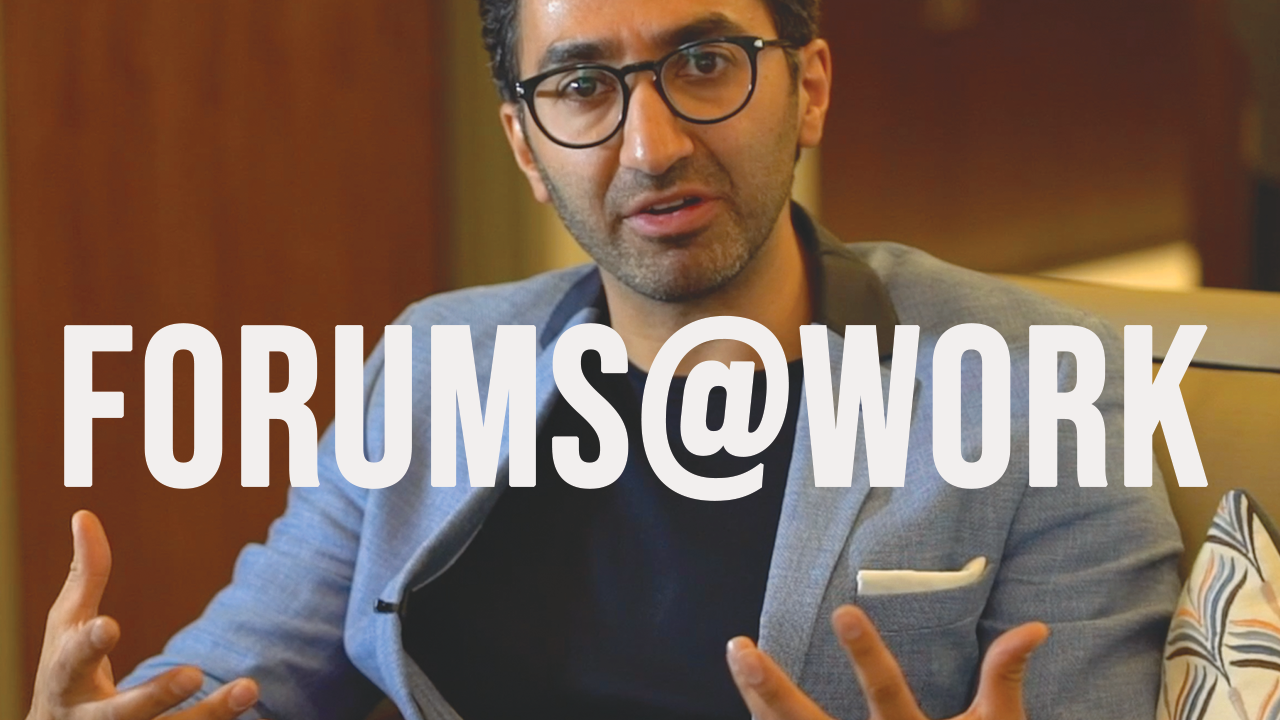
Ahad Ghadimi, CEO of Forums@Work might just have the remedy, “Forums@Work are company-peer groups who meet regularly in an open, honest, candid and safe setting with the purpose of becoming better leaders,” Ghadimi told Real Leaders magazine earlier this month.

Bringing forums to the workplace has already made an impact on Contegix and their CEO, David Turner. In the video above, Turner giddily explains the impact Ghadimi’s once-a-week peer group meetings have had on his remote workforce, “I’ve heard words like, ‘this has been the best thing in my career,’ ‘I’m honored to be a part of this,’ ‘it’s made such a difference in my home-life,’ you just don’t hear things like that from other leadership programs,” Turner revealed.

There is no way to undersell the value of leadership and its importance in any setting. When we asked Turner about his return on investment, he promptly stated, “there’s no better value, period, full-stop than creating forums within the workplace.”

Witness the impact of forums in your workplace and visit the website or email Forums@Work CEO, Ahad Ghadimi!

[/et_pb_blurb][/et_pb_column][et_pb_column type=”1_2″ _builder_version=”3.25″ custom_padding=”|||” custom_padding__hover=”|||”][et_pb_cta title=” I’d like to learn about the leadership culture program!” button_url=”https://goo.gl/2NuA3d” button_text=”Visit Forums@Work” _builder_version=”3.19.15″ header_font=”Times New Roman|700||on|||||” header_font_size=”30px” body_font=”||||||||” custom_button=”on” button_text_size=”26px” button_text_color=”#000000″ button_bg_color=”#ffffff” button_border_width=”5px” button_font=”||||||||”][/et_pb_cta][/et_pb_column][/et_pb_row][/et_pb_section]

Female Iranian Motorcross Rider Challenges The Norm

Behnaz Shafiei is a 29-year-old Iranian motocross trailblazer who has been challenging gender norms since refusing to submit to an arranged marriage at age 16.

She uses her sport to advance women’s rights – including the right for a woman to ride a motorbike on public streets in Iran, where it’s currently banned. Her vision is to develop an Iranian women’s team and has single-handedly trained 117 women and teenage girls in the past year.

Shafiei has been riding motorbikes since age 15, disguised as a boy and practicing after dark between 9 pm and 3 am to avoid revolutionary guards. “Remember that American women fought for nearly 100 years before they were allowed the vote in 1920,” she says. “Since then, America has only inched closer to gender equality in business, politics, the arts and sports.”

www.shirzanan.org

UK Intelligence Agency’s New Mission – Train Girls in Cyber Skills

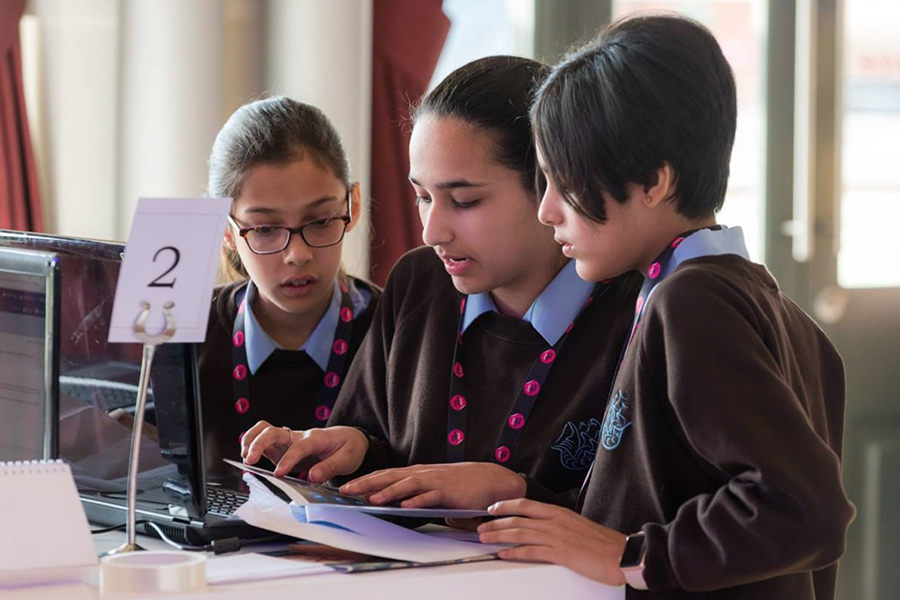
Britain’s national intelligence agency has unveiled plans to train about 600 teenage girls in cyber-skills this year in a bid to get more women into the male-dominated field.

The Government Communications Headquarters (GCHQ) said it would chose girls aged 12 and 13 to take part in four-day courses in coding, cryptography, logic, and protecting networks following a nationwide competition this month.

A spokesman from GCHQ said the aim was to encourage more young people – particularly girls – to work in cyber security with figures showing only 11 percent of the global cyber workforce is female.

“We are looking to address this imbalance … ensuring the inquisitive instincts of young people to find out how things work are maintained is hugely important,” said NCSC Deputy Director Chris Ensor in a statement.

The initiative was welcomed by the technology industry and viewed as timely with UK government figures showing that in 2017 about 43 percent of businesses and 19 percent of charities reported a cyber security breach over the course of a year.

Girls’ early exposure to images of male James Bonds and teenage boys coding in their bedrooms reinforced stereotypes about who fitted in the tech sector.

Without role models, girls do not consider entering the field which has tried to address the lack of women by training staff in unconscious bias, highlighting female role models on social media, and deleting gender from CVs.

Last year, defence secretary Gavin Williamson announced that women could fight in frontline infantry, the Royal Marines and specialty units previously closed to them.

By Kate Ryan; Editing by Belinda Goldsmith


UK Intelligence Agency’s New Mission – Train Girls in Cyber Skills

Britain’s national intelligence agency has unveiled plans to train about 600 teenage girls in cyber-skills this year in a bid to get more women into the male-dominated field.

The Government Communications Headquarters (GCHQ) said it would chose girls aged 12 and 13 to take part in four-day courses in coding, cryptography, logic, and protecting networks following a nationwide competition this month.

A spokesman from GCHQ said the aim was to encourage more young people – particularly girls – to work in cyber security with figures showing only 11 percent of the global cyber workforce is female.

“We are looking to address this imbalance … ensuring the inquisitive instincts of young people to find out how things work are maintained is hugely important,” said NCSC Deputy Director Chris Ensor in a statement.

The initiative was welcomed by the technology industry and viewed as timely with UK government figures showing that in 2017 about 43 percent of businesses and 19 percent of charities reported a cyber security breach over the course of a year.

Girls’ early exposure to images of male James Bonds and teenage boys coding in their bedrooms reinforced stereotypes about who fitted in the tech sector.

Without role models, girls do not consider entering the field which has tried to address the lack of women by training staff in unconscious bias, highlighting female role models on social media, and deleting gender from CVs.

Last year, defence secretary Gavin Williamson announced that women could fight in frontline infantry, the Royal Marines and specialty units previously closed to them.

By Kate Ryan; Editing by Belinda Goldsmith


0