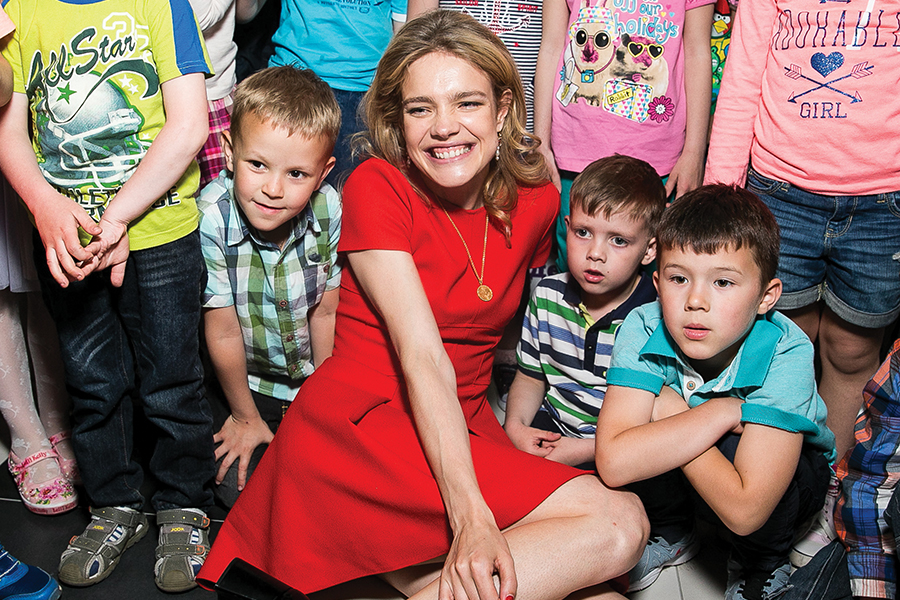
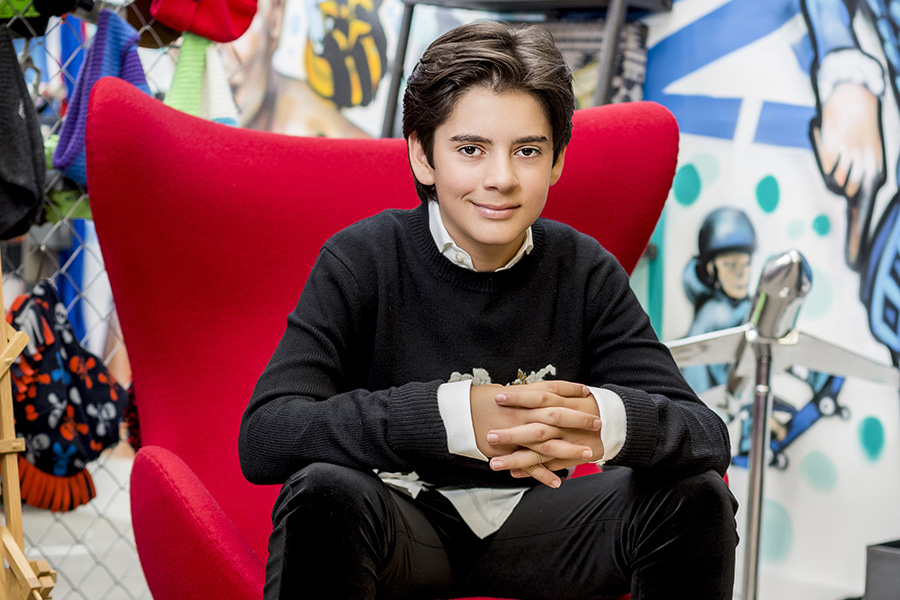
In just a few short years, Natalia Vodianova went from peddling fruit on the streets of Nizhny Novgorod, Russia, where she grew up with a single mom and disabled sister, to becoming one of the most sought after fashion models in the world.
Vodianova has walked countless runways and became the face for Gucci, Yves Saint Laurent, and Calvin Klein as well as beauty brands Guerlain and L’Oreal. Not content to dissolve into the comfortable world of celebrity, she decided to reinvest her time and resources into helping kids affected by tragedy.
Success brought about some familial improvements, such as moving her mother to a nicer flat, sending her youngest sister to a private boarding school, and helping to keep her grandparents comfortable in their advanced age. Yet, as amazing as life had become for Vodianova, there were moments when she felt empty and purposeless.
In 2004, tragedy struck her homeland when Chechen rebels attacked a school in Beslan North Ossetia, killing 334 people which included 186 children. The incident had a profound effect on Vodianova, who was visiting Moscow at the time.
“I was so tormented by what happened and wanted to do something for the children that survived,” she told Business of Fashion in 2015.
As the eldest child of three being raised by a poor, single mother, she grew up fast, leaving school at an early age to help her mother and care for her siblings. In thinking of a way to give back, she tapped into her own hard childhood. “I thought about what I missed in my own life when I grew up and realized that I didn’t have the opportunity to play,” she said in a 2014 Vanity Fair interview.
It inspired her to develop playgrounds that help children affected by tragedy to heal, and her Naked Heart Foundation, a charity that builds public play parks in urban areas throughout Russia, was born. Since its creation, the foundation has built 160 facilities across Russia, with some located near orphanages, children’s hospitals, and rehabilitation centers.
Beauty may have helped her become a supermodel, but her compassion made her a world-class role model. Here, she tells us how finding a humanitarian purpose has inspired her.
Julia Chance: What would you most want people to know about your homeland and its contributions to society and culture?
Natalia Vodianova: Russia is full of extremes: Russian literature, ballet, music, and art are extremely sophisticated and beautiful. At times, Russia may be seen as chaotic and even dangerous, but in truth, all lives co-exist in love. It was a very dark, Russian novelist, Fyodor Dostoevsky, who once said that “Beauty will save the world.” What he actually meant was that the savior is love. The feeling of infinite love, devotion, and forgiveness is something about Russia I would want to share with people.
As one of the world’s foremost fashion personalities representing the world’s largest brands and houses, how do you view the role of fashion on our cultural landscape?
Our nature, as human beings, needs to be nourished by beauty. Despite its superficial appeal, fashion is an essential source of inspiration as much as art is. It’s an amazing form of expression that allows us to dream and escape from reality — something as vital as air for our souls. The dreamy and playful part of my experience with fashion is exactly what inspired my social projects and activities. Everything I do has ‘play’ at its core. I grew up understanding how valuable this was in my life and decided to give back to those who deserve it most: children.
What have been some of your most significant challenges, and how did you triumph through those circumstances?
Tackling the stigma of disability is the greatest challenge I face every day with the Naked Heart Foundation. When we started to work with children with special needs, some of the initial feedback was so negative. Many people wondered why we were willing to spend time and resources toward the cause, when there is little perceived potential in these children’s ability to contribute to society and when those same funds could simply cure other children who might have a better chance at a normal life. We found the same resistance when we talked to the media. Any story we tried to spread about children with special needs was initially refused by magazines because it was not appealing enough or there was no quick recovery success story. The editors responded that they can’t sell magazines writing about that subject.
We triumphed because we never gave up. None of this could stop the foundation and me because our belief was clear and solid, and we knew how important this fight was. I never stopped believing in the purpose. In addition to the many new facilities and programs we have built for children with special needs and their families, the most significant result has been a big change in public attitude for the better.
Can you share some of your greatest life lessons?
If we follow our hearts, if we are incredibly honest with ourselves, being “naked” to our own inner eyes, then we really have nothing to lose. It’s the most natural thing ever. In my early life, this happened to be my only option of surviving my daily life. Since then, I have applied that thinking to everything, making the most out of it. Having nothing to lose ended up being the essence of my positive thinking. I’m grateful for those lessons that I learned very young, which has kept encouraging me and pushed me further.
You believe that little actions make a big difference. For those with little means but hearts to act, what actions would you encourage?
Consideration and altruism are innate to human nature. They are originated by love, which is part of our instinct. We not only need to receive it but naturally need to give it back. When we learn about causes we aren’t aware of — causes that might seem far from our lives — people often believe their contribution can never make a difference, or they feel they have nothing relevant to give. I want to empower everybody, Millennials especially, to affect the world positively, starting with small symbolic donations: A drawing, a smile, a selfie, a picture — that you might do during your day anyway — but don’t realize what a substantial difference it can make to a suffering child or parent struggling to find hope and encouragement.
What advice can you share that’s been a constant in your success?
I have a motto that has continuously helped me move forward: “See the goals and don’t see the obstacles.” My own success would have definitely been affected if I had stopped in front of the many difficulties I’ve experienced on my path. I have simply ignored them; I knew they were there, but I kept my focus on my objectives. I share this precious advice, especially with the younger generation who face cultural challenges or any other limitations, which should never deter them from what they want to achieve. Believing is the key to success.
Julia Chance is a journalist and author based in New York.
The African proverb “Umuntu ngumuntu ngabantu” can be translated to mean that to be human is to recognize the humanity of others. It’s from this proverb that the notion of Ubuntu is developed — a phrase commonly used in Southern Africa when appealing to people’s better halves when discussing problematic situations.
The spirit of Ubuntu is essentially to be humane and ensure that human dignity is always at the core of your actions, thoughts, and deeds when interacting with others. Having Ubuntu is showing care and concern for your neighbor. It’s lending a helping hand and displaying an understanding of the dignity with which human beings ought to be treated — for the simple reason that they are human. Ubuntu exists because human beings exist and seeks to provide a code of conduct for the co-existence of human beings. Archbishop Desmond Tutu expounds on this human connectedness in his definition of Ubuntu, where he defines Ubuntu as, “My humanity is caught up, is inextricably bound up, in what is yours.”
Each year, on 21 March, we celebrate Human Rights Day in South Africa, where we pause to remember the importance of protecting our rights as humans beings. As a conscious member of society, I can never forget the courage of the South Africans who arose in unison on 21 March 1960 in Sharpeville, outside Johannesburg, in an attempt to proclaim their rights. The Sharpeville Massacre that killed 69 people is central to this public holiday as it reminds us of the cost to enforce human rights. The rally in 1960 was an outcry and outburst against the inhumane treatment by the Apartheid regime. Understanding how humans ought to be treated becomes imperative in ensuring that such events never happen again. Ubuntu shows us a way of acting humanely toward each other and can be a pivotal guide for society as we celebrate and enforce as human rights.
The South African Bill of Rights, which is the second chapter of the Constitution of the Republic of South Africa of 1996, embeds the rights of all people in our country in an enduring affirmation of the democratic values of human dignity, equality, and freedom. The South African Bill of Rights states: “Everyone has inherent dignity and the right to have their dignity respected and protected.” What becomes apparent when one indeed observes the state of our nation, particularly the significant challenges we face as a country — such as rampant unemployment, inequality, and poverty — is that we owe it to ourselves and our children to restore the human dignity of our people.
I think that the social ills that we experience in our communities, such as crime, gender-based violence, HIV/AIDS and human trafficking, need to be countered with a positive response from civil society —guided by Ubuntu. If each of us in our capacities, whether we represent governments, corporations, or communities, acknowledge our human connectedness, we would think first before we speak or act harshly. It’s encouraging when I see evidence of Ubuntu in our country, in campaigns around social problems and the guarding against hate speech and racial prejudice. It shows that the spirit of Ubuntu is, to a degree, prevalent in our society and can be further encouraged.
In closing his tribute to former president Nelson Mandela and his family at Mandela’s memorial service in 2013, former U.S. President Barack Obama said, “There is a word in South Africa – Ubuntu – that describes his greatest gift: his recognition that we are all bound together in ways that can be invisible to the eye; that there is a oneness to humanity; that we achieve ourselves by sharing ourselves with others, and caring for those around us.”
You’d assume a teenagers life is just studying, video games and hanging out with friends — but not for these teenage tycoons. We took a look at some of the world’s top entrepreneurs born in the 2000s.
Thinking of starting a business? Feel like you need more experience? Meet the 13 children below who will leave you inspired with their business stories. Across Britain, America, and Australia, young CEOs are signing deals for their products, some worth up to $11 million! Their innovative companies include a trainer reselling website, a braille printer for the visually impaired and a childcare agency. UK company Comparethemarket.com has compiled profiles for 13 of the most successful entrepreneurs born in the 2000s. Children are naturally creative, but these entrepreneurs capitalized on their ideas and created huge businesses from scratch. Their companies often started while still living with their parents and attending school.
1. Braigo
Created by Shubham Banerjee when he was just 12 years old, this company creates Braille printers to help the visually impaired access expensive technology. His invention uses LEGO and robotics to design a product and sell it at less than half the price of others on the market. Banerjee is the youngest entrepreneur to receive Venture Capital funding.
2. Sneaker Don
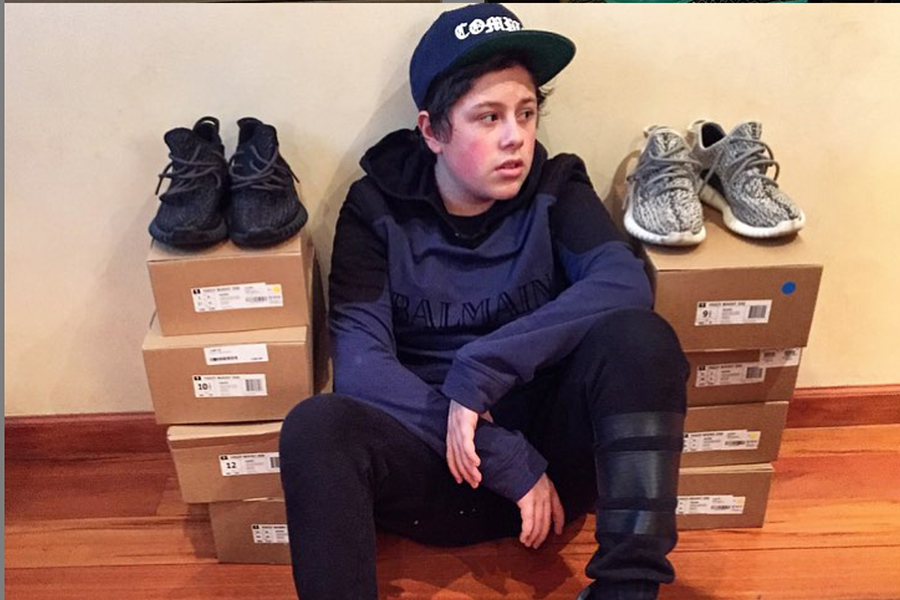
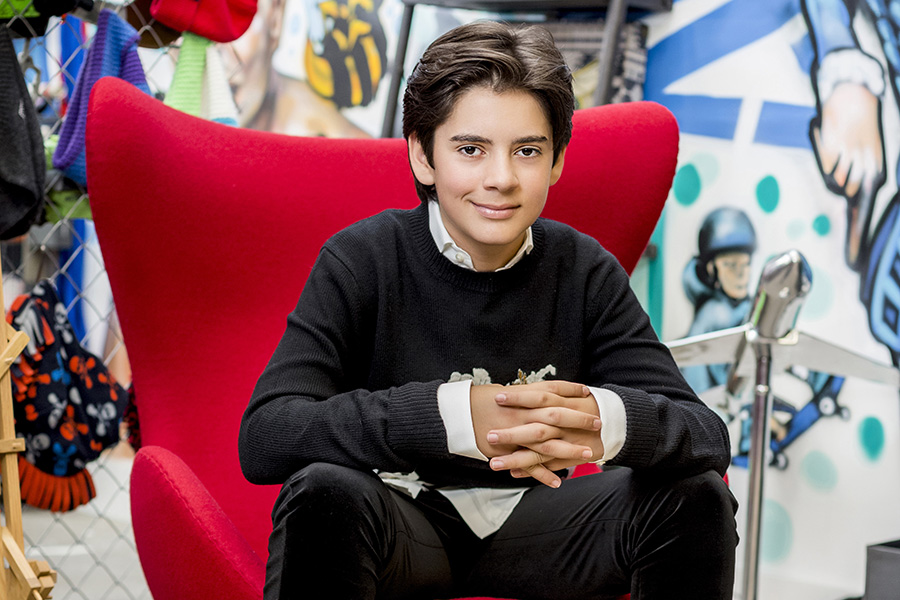
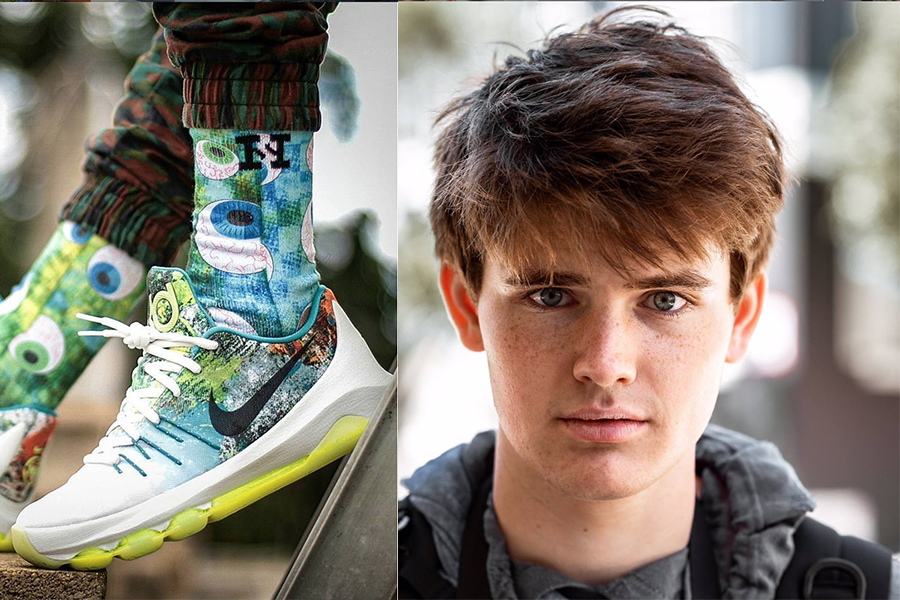
At only 16 years old, American Benjamin “Kickz” Kapelushnik created a rare trainer reselling website as a hobby. As his business grew, he began to gain celebrity clients including DJ Khaled and Odell Beckham alongside an ever-growing customer list. As he made more contacts, he was able to bulk buy sought-after items. His sales are now worth over $1 million.
3. Nannies by Noa
While growing up in New York, Noa Mintz discovered a gap in the market for an easy way to locate the best nannies available in the area. She used her first-hand experience of being a child in the city and founded Nannies by Noa when she was just 12 years old. The agency provides services that include thorough background screening, workshops for nannies and ongoing support for customers.
4. Mr. Cory’s Cookies
Founded by six-year-old Cory after he sold hot chocolate on the streets of New Jersey to help his mother buy a new car. Now aged 15, Cory is the CEO of Mr. Cory’s Cookies. His delicious all-natural cookies have landed him collaborations with huge department stores including Bloomingdales, Macy’s, Viacom and Whole Foods. Investor and businessman Marcus Lemonis, invested $100,000 in the company when Cory featured on CNBCs The Profit in 2017.
5. Me & The Bees Lemonade
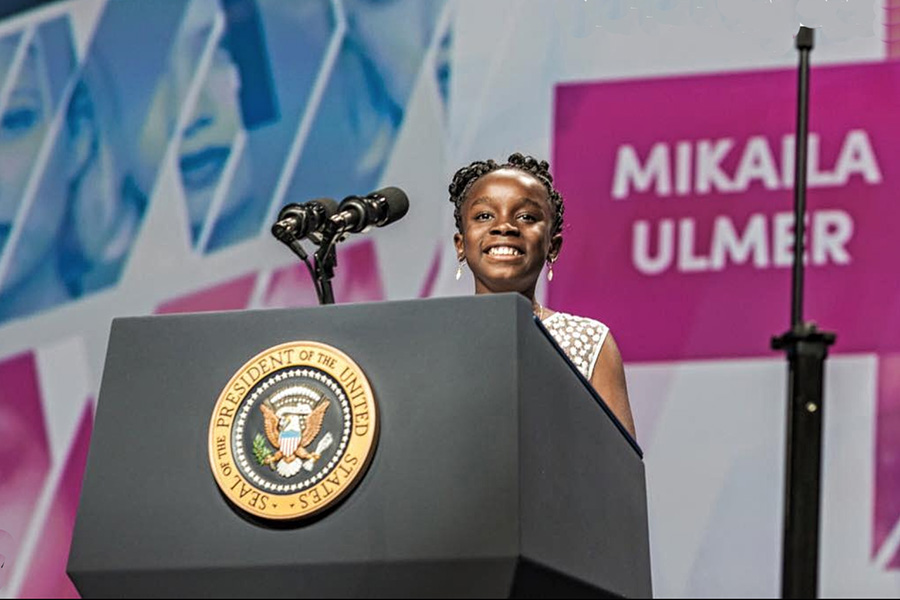
When Mikaila Ulmer was four years old, she entered a children’s business competition. Fascinated by bees, she decided to sweeten her great grandmother’s flaxseed lemonade recipe with honey. She began selling her Me & The Bees Lemonade at youth entrepreneurial events and was an instant success. At the age of 11, she negotiated a $11 million distribution deal with Whole Foods. She donates a percentage of her profits to Texas Beekeepers Associations, hence her slogan ‘Buy a Bottle… Save a Bee’.
6. Mo’s Bows
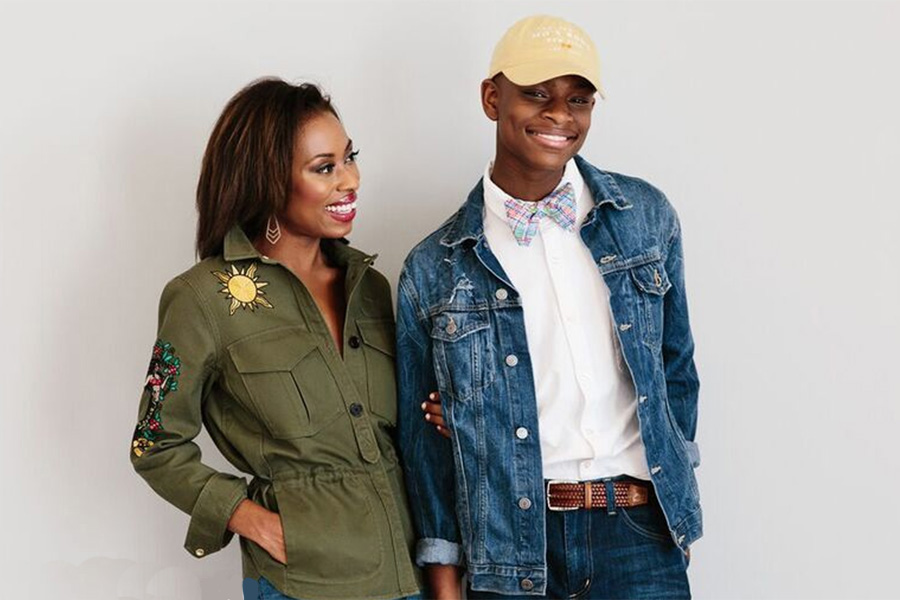
Seventeen-year-old Moziah Bridges is the president and creative director of Mo’s Bows, based in Memphis, Tennessee. He’s been featured in Fortune’s ’18 Under 18′ and with aspirations to be a fashion mogul, he’s certainly on his way, after signing a seven-figure deal to make bow ties for the NBA.
7. Kidzcationz
Tired of receiving lousy treatment while on vacation, Bella Tipping decided to create Kidzcationz, a website which allows users to rate and review locations based on their child-friendly options. Also featured in Fortune’s ’18 Under 18′ list, she has a goal to help make the world a better place.
8. Pura Cosmetics
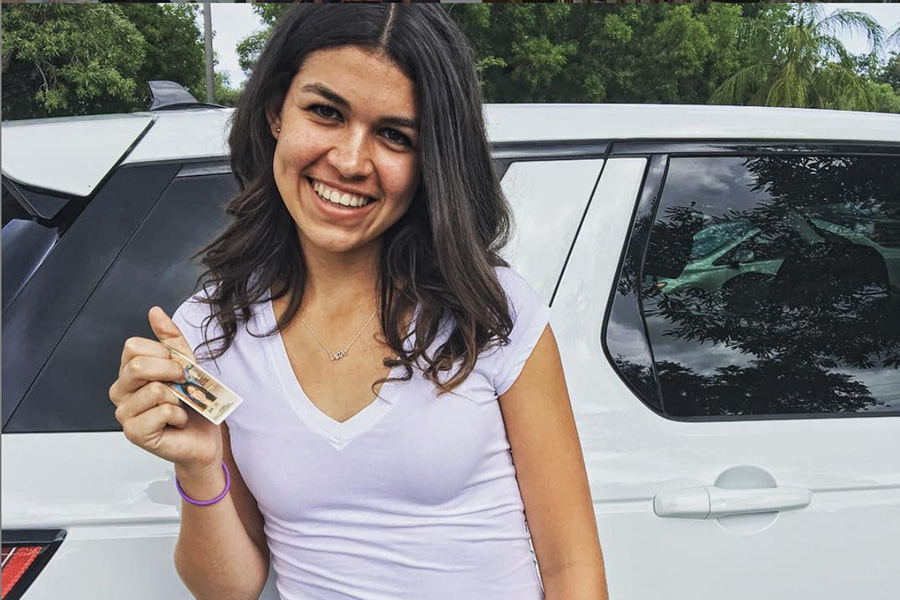
At 15, Rose Dyson was studying for her GCSEs when she decided to enter a competition. She created Pura Cosmetics, a cruelty-free, vegan-friendly lip balm business. Now 19-years-old, she still makes all her products by hand, which are stocked in shops and department stores across the United Kingdom. She started her business with $33.
9. iCoolKid.com
At age 14, Jenk Oz is the youngest CEO in Britain. When he was 8-years-old, he decided to create iCookKid, a website that covers everything from art, tech and science for children. Not only is Jenk an entrepreneur with $63,000 in revenue, but he also acts in West End theatre productions and records his own music.
10. HoopSwag
Brennan Agranoff has been a budding entrepreneur since age 7. Now 19-years-old, his first business, HoopSwagg, is a customizable sports apparel company which launched in 2013. With his business growing each year, and current revenue of $1 million, he hopes to focus on HoopSwagg full-time when he finishes college.
11. Gladiator Lacrosse
At 13-years-old, Rachel Zietz created Gladiator Lacrosse after being disappointed by the range of products available for lacrosse players. Her business was projected to make more than $2 million after she landed a deal with one of the largest sporting brands in the United States.
12. Luv Ur Skin
Australian Isabella Dymalovski started her business, Luv Ur Skin at age 8. At age 13, she appeared on Shark Tank and landed herself and investment deal worth $65,000 to start a natural skincare range. Now 17, the entrepreneur has launched her range in the United States and has her sights set on the European and Asian markets, too.
13. Not Before Tea
At age ten, British teenager Henry Patterson wrote The Adventures of Sherb and Pip. Now 15, he has turned his venture into a lifestyle brand called Not Before Tea. Named ‘One to Watch’ by The Independent, he’s also been featured in Forbes and was the youngest person to appear on CNBCs Breakfast Show.
Are life sciences companies finally starting to value professionals with diverse and non-traditional career paths?
A few months ago, I was retained to find a medical executive for a growing biotech. The Hiring Manager set forth all of the expected criteria during our briefing, and then something extraordinary happened. “You don’t need to find me a pretty CV,” she instructed. “I’m happy with a messy one.”
“You know, it’s ok if you find someone with diverse experiences,” she continued. “Or who took some time off or traveled the world or whatever.” As the proud owner of a messy — aka nontraditional career path – CV, I was ecstatic with this briefing.
Understanding my joyous response probably requires a little background. You see, thirty years ago, I applied to law school with a pharmacy degree and two years of pharmaceutical industry experience under my belt. I still remember the sting of reading my Harvard Law School rejection letter, which expressly declared my 5-year pharmacy degree to be “vocational training” unsuited for legal studies. Luckily, I have always been the type to persevere and received my law degree despite these narrow-minded rejections — performing quite well, thank you, despite my alleged lack of educational foundation. I then survived the interviewers that told me that I appeared professionally “unstable,” and landed a job at a top international law firm.
I spent the next 14 years pursuing a legal career, even reaching that coveted partnership milestone. The next decade, however, involved more wonderful mess. Expatriate living in two different European countries as a trailing spouse and mom, and my current (perhaps third) career evolution to a partner in a boutique (female-owned and operated) executive search firm. Now, when I walk someone through my professional history, the most common word that comes back at me is “impressive.” And, more importantly, in my current role, literally all of my life experiences are professionally relevant. Given the historical response to my nontraditional career path, the current response to my “messy” CV always makes me smile.
So, what has changed precisely to give a boost to the credibility of the nontraditional CV? The answer is simple. The life sciences business trends are creating working environments that are increasingly dynamic (i.e., a kind word for messy) shifting the types of competencies needed for business success. The pressure to boost pipeline innovation and speed to market — while preserving efficacy, safety, and quality — is creating a business model where cross-functional collaboration and external alliances are the norms. Big Data, digitalization, and artificial intelligence are drastically changing the scope and impact of products, services, and operations. Precision and personalized medicine are creating health care delivery models that are dismantling established treatment norms.
Sustainability of health care ecosystems with limited resources requires that patient access to treatments be value-driven. And, changes in global patient demographics, emerging market demands and opportunities, and an increasingly female talent pool, are presenting the industry with diversity demands that benefit from cross-cultural understanding and inclusion.
In an environment where change is a constant and lots of flexibility and curiosity are needed, the owners of a nontraditional CV experience suddenly have attributes that are recognizable as being valuable to business success. Messy CV owners have proven an ability to challenge the status quo, a quality that is needed to drive and embrace creative and innovative ways of working. Flexibility and change management resilience is derived from both personal and professional life choices. Living and working internationally supports multi-cultural understanding. Engaging in cross-functional roles or educational experiences enhances contribution and collaboration.
So what is our advice? If you are a professional with a nontraditional career path, take a look at the competencies you’ve gained as a result of your varying professional and life experiences and display them confidently in your messy CV. No apologies needed. If you are a hiring manager, don’t be afraid of messy CVs. Nontraditional candidates might have all of the competencies that are required for success in your challenging and dynamic global environment.
A few years ago, I considered a cross-country move to work for a renowned public relations firm. I had researched, followed, and immersed myself in everything they were about, to the point of imagining a new life working for them. After some hard work, I eventually landed a phone interview. While my answers to the interviewer were close to ideal, I made a critical mistake that cost me the job. What was it?
At the end of the phone call, I was asked if I had any questions. Already knowing so much about the company from my research, I thought it unnecessary to ask anything further. It was this lack of curiosity that I believe ultimately landed my resume on the cutting room floor.
From that day forward, I came prepared with questions — thought-provoking, intriguing questions that caused my interviewers to reflect on their company’s mission, metrics, and core values. Questions that created a pause in almost all my conversations, that was usually followed by an inevitable, “Wow, that’s a great question!”
Here are five questions you should never avoid in your next interview:
At the end of the next three years (using three years as a measurement for success), what outcome would you like to see as a result of hiring me?
What three significant obstacles will I face in accepting this new role?
Where are the most significant future opportunities to be found in your company, as it relates to my new position?
What are your company’s cultural values, and how are employees held accountable to them?
How do you ensure that innovative ideas move from a lower-level employee to a decision-maker within your company?
The reason these questions work is because they deliberately forecast your future success, and that of the company, while determining whether their corporate culture is a high five or a hard pass. Here’s to your dream job in 2020!
All nine recently announced 2019 Nobel science laureates were male, despite a significant and growing cohort of female contenders.
Nor is women’s contribution to science a recent phenomenon.
Ada Lovelace devised the world’s first computer program in 1840. Austrian physicist Lise Meitner led a small group of scientists who discovered nuclear fission. Soviet cosmonaut and engineer Valentina Tereshkova became the first woman to fly in outer space in 1963.
Longstanding occupational stereotypes and social norms play a huge role. Why else would we still believe that men are hard-wired to handle machines and numbers, while women are naturally predisposed for careers in education, psychology, and the social sciences?
Such biases build powerful barriers to women’s advancement over the course of a lifetime — for which both the world, and the women in it, pay a steep price.
While more women are graduating with science doctorates, they too frequently encounter glass ceilings and too often find jobs only in the public sector, which offers better work-life balance but fewer career opportunities than the business world.
In principle, men and women should have the same opportunities in any profession; in numbers, advancing gender equality in high-value private sectors could also add trillions of dollars to global economic output.
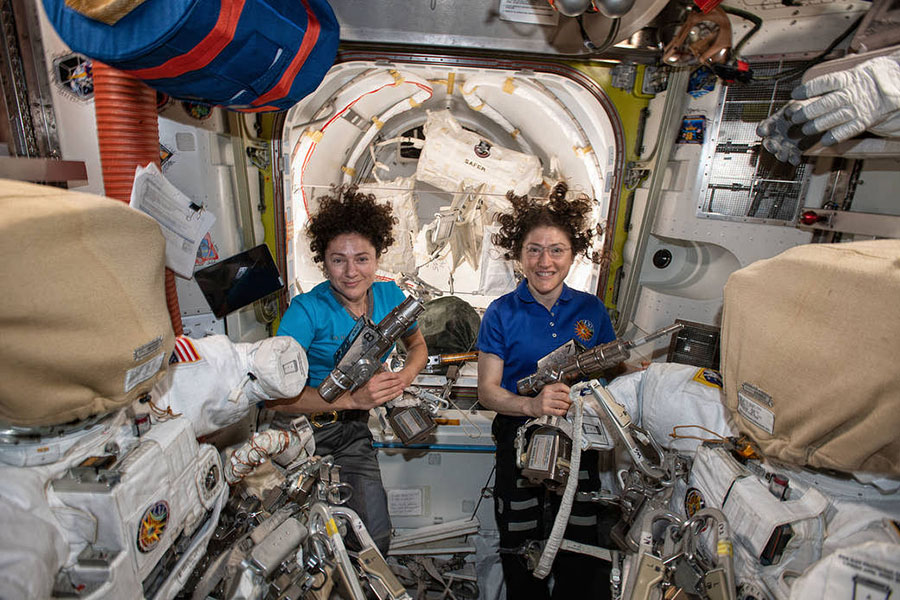
NASA astronauts Jessica Meir (left) and Christina Koch inside the Quest airlock preparing the U.S. spacesuits and tools they will use on their first spacewalk together. The Expedition 61 flight engineers are holding the pistol grip tools they will use to swap out a failed power controller, also known as a battery charge-discharge unit, that regulates the charge to batteries that collect and distribute power to the International Space Station. Photo: NASA
If the current situation seems dire, could the Fourth Industrial Revolution bring about a reversal of fortune? The answer isn’t entirely clear and may vary according to skill level, age group, and location.
Artificial Intelligence and automation have long promised to relieve women of many domestic chores, which social norms around the world disproportionately assign to girls and women and which rob many female workers of opportunities available to men.
Some research also suggests that lower-paying or non-paying “caring” roles—historically assigned to women—may be impacted relatively less by automation. At the same time, the IMF has found that 180 million predominantly “female” jobs actually have a 70 percent or higher probability of automation.
What’s abundantly clear, and undisputed, is that the number of women leaders and experts in the world’s fastest-growing industries remains shockingly small. At the very least, women will have to achieve a giant leap forward in compensation, career progression, and leadership opportunities to reach parity.
Let’s remember we have a huge opportunity to close the gender gap in science and technology by 2030, the deadline for achieving the Sustainable Development Goals. Representatives of UN Member States, multilateral organizations, and other entities have begun to review this issue extensively ahead of the 25th anniversary of a landmark gender conference held in Beijing.
In Eastern Europe and Central Asia, the region for which I am responsible at the United Nations Development Programme (UNDP), many countries have higher than average proportions of women in science, having belonged to or aligned with the former Soviet Union, which pro-actively trained female scientists.
That legacy endures. For instance, women now make up 48 percent of STEM professions in Central Asia and the majority of researchers in Azerbaijan, Georgia, and Armenia.
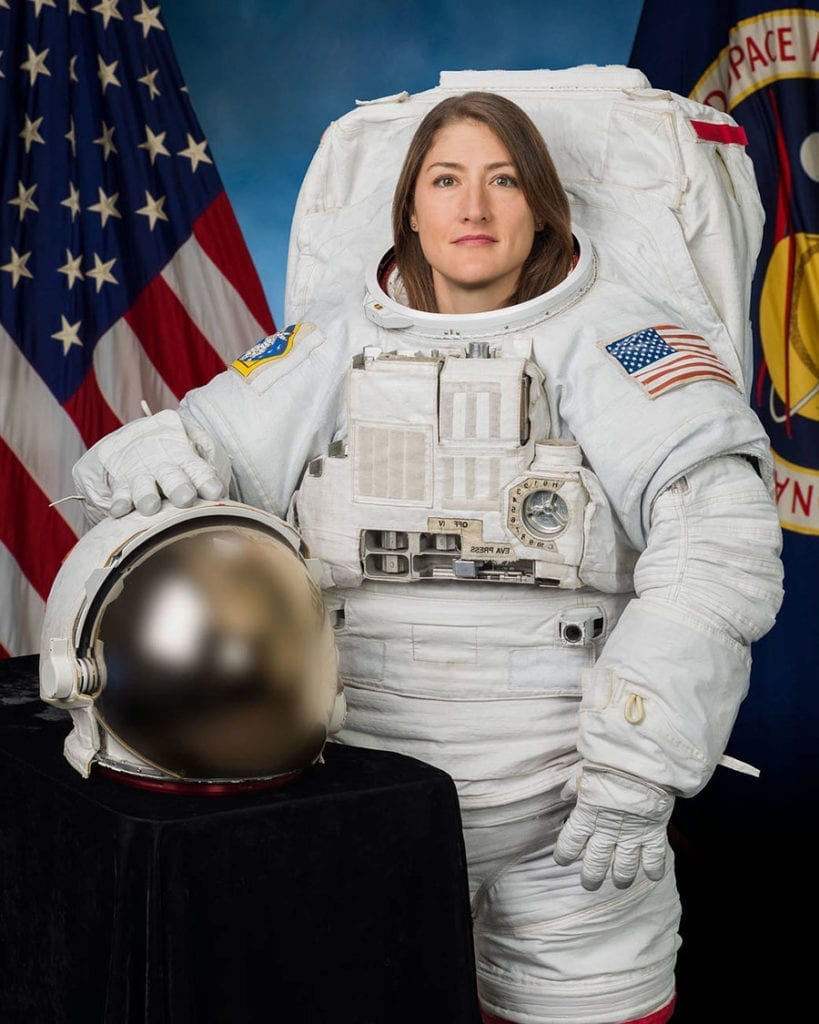
Official portrait of NASA astronaut Christina Koch. Photo: Bill Stafford
While solutions may differ from one region to the next, three actions could help move the needle in the right direction:
First, by capturing girls’ and young women’s imaginations, ensuring they graduate in fields in which their skills may be in high demand. Surely, culture and family come into play when it comes to choosing one’s profession. Smart policy can also play a key role in ensuring equal access to finance and connectivity, as exemplified by Nordic and Baltic countries. Incentives are key.
Led by UNDP and the Limak Foundation, an initiative called “Engineer Girls of Turkey” is helping provide scholarships, internships, and mentoring to hundreds of young women across the country. Similar programs have now been launched across the region, including in Uzbekistan, North Macedonia, and Moldova.
Second, by fixing the shortage of affordable daycare services, introducing parental and family leave programmes, and creating financial incentives for men to share the burden of delivering domestic and care work.
UNDP and other agencies are working with local development initiatives to unlock private finance for infrastructure projects that lift women’s disproportionate burden of unpaid work.
Third, by offering targeted training programs so women can update their skills in rapidly changing fields and professions and achieve leadership positions in science and tech. Making sure women are in the driver’s seat is the best way to correct gender imbalances from within the industry.
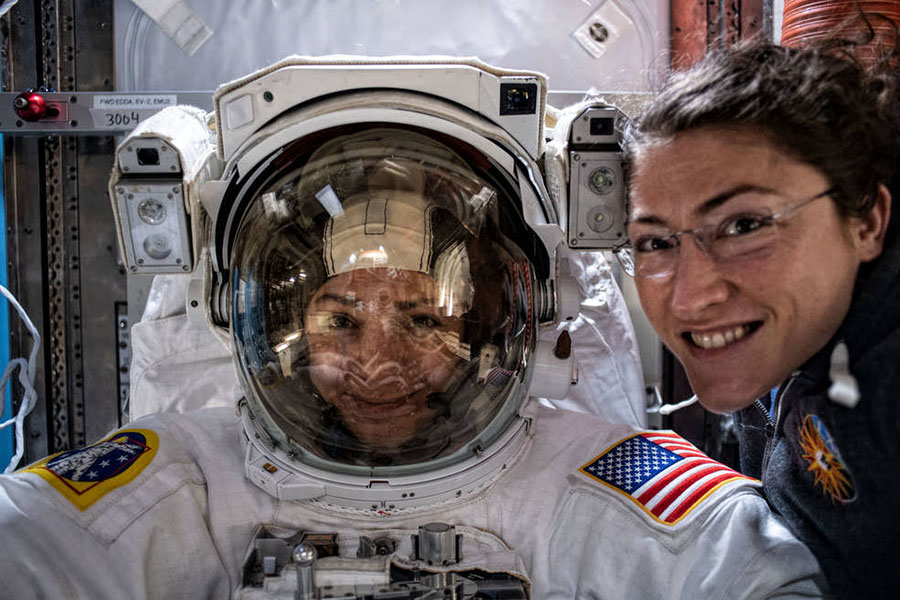
Last year, NASA conducted its first all-woman spacewalk in a symbolic milestone for humanity. I look forward to the day when such events are no longer newsworthy.
“Women of Iceland” is the first book of a trilogy featuring intimate photographs and personal interviews with courageous women stepping first to shape the frontier of a changed world. There is clearly something happening with the women of Iceland.
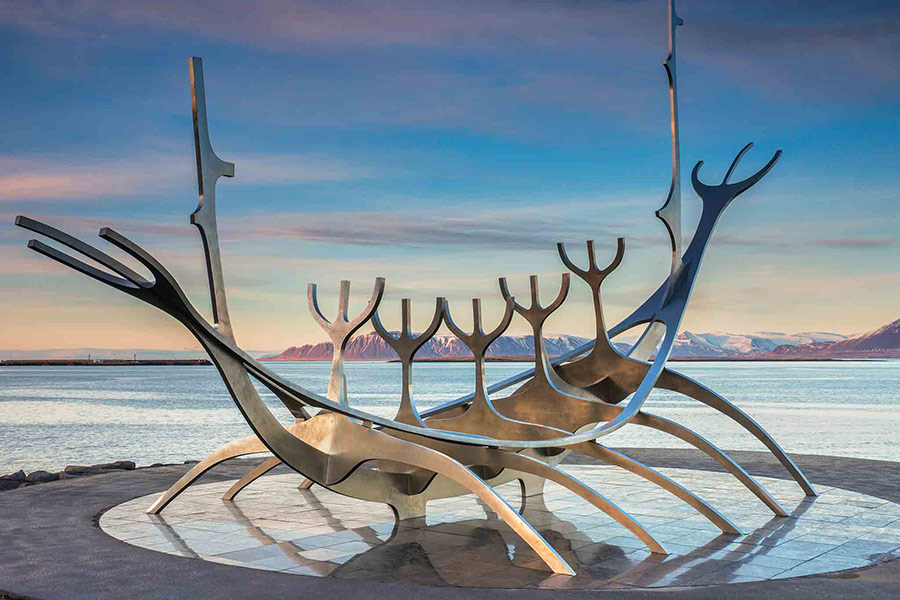
From her Viking history to the famous strike of 1975 and hosting the globe’s first democratically elected woman President, to her transformation of finance through feminine values, and now leading the world’s first ever comprehensive gender pay equity legislation – what is it about this small fishing island that brought her to the frontier of feminine and gender equality? The following are selected interview excerpts from: “Women of Iceland in Their Power: Courageous Vulnerability Book.”
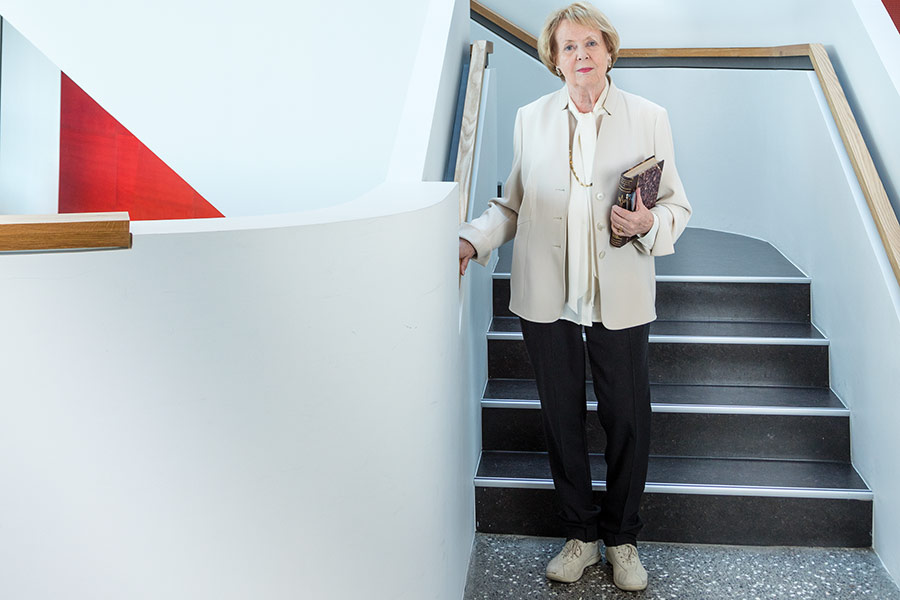
Vigdís Finnbogadóttir stands in the newly opened Vigdís International Centre for Multilingualism and Intercultural Understanding. She holds her Sustainable Development Goal (SDG) object: Her favorite and the most famous Icelandic “Laxdæla Saga” book re-printed in the 1930’s. Global Goal #4: “Quality Education.” When asked about all 17 Global Goals, Vigdís went through them all one by one, and declared the solution to each was clearly quality education. Photo: Ralph Reutimann Photography.
The Mother of Iceland.
Vigdís Finnbogadóttir (pictured above) served as the first woman President of Iceland and the first democratically elected woman in the world. She paved the way for generations of women in Iceland and worldwide to consider, many for the first time: “If she can do it, why can’t I?”
At 87 years young, and serving as the UNESCO Goodwill Ambassador of Languages, Vigdís has continued to tirelessly champion linguistic diversity, women’s rights and education worldwide; and last year, with the support of the people of Iceland launched her next venture – the newly opened Vigdís International Centre for Multilingualism and Intercultural Understanding. She shares her approach to leadership, philosophy on life and how she is keeping the conversation going.
I have dedicated my life to analyzing and preserving the languages of the world. Without them, you lose the ability to think and express yourself. The Icelandic language hasn’t changed in centuries and can be traced back to the Middle Ages. The Icelandic Sagas – prose and narrative on the early struggles and conflicts found in thirteenth and fourteenth century societies – convey the full range of human emotions. One of these sagas tells the story of strong women, who in an age of slavery set their slaves free, knowing that by doing so would make them friends, not enemies.
In many cases, women actually don’t know they are strong, and neither do the men. I was given important duties by my mother when I was young and it made me realize that I was a responsible person. As a teenager, a group of boys included me in their discussion group on history, literature and art. It was an unusual act at the time, but one that gave me an impression that I was welcome and valued.
The greatest joy in life is being alive – if you can handle life, that is. This means offering the best of yourself to society: Your honesty, ambition, mind and love for people. Being curious and wanting to use your eyes and ears will make you what you are.
I am uncomfortable with the term “leader,” if it is placing one above the other. It should be handled by people who are strong and can be trusted. I look for positive leadership – something creative, that inspires, with ideas that can be applied for good. When I was President and arrived in Reykjavík in the official car, children would ask me if this big car was mine. “No,” I would answer, “It is yours. You own it!” They would look at me in amazement. It is so important that as public leaders we know we are only there to serve the people. Leadership is also about going ahead and having people follow you. Popularism is like the flu, if it gets too strong it can be bad for society.
The Icelandic concept of a role model is encapsulated in the word “fyrirmynd.” It’s more powerful than simply trying to copy someone’s actions – it has less to do with playing a “role” and more to do with authenticity and what is good for people. Some people have the gift of great speechmaking and become great leaders, but many who haven’t got oratory skills never become one, despite being qualified. We must not underestimate the power of language.
As President, my office door was open once a week to hear people’s problems. It might have been a problem as small as a car license, but the fact someone was prepared to listen was the important point.
In 1975, before I had decided to run for President, the United Nations declared that year International Women’s Year, to raise awareness on subdued women around the world. In Iceland, there was discontent about the unfair wage gap and women began meeting in public places regularly to discuss issues, sing songs and socialize.
Suddenly, the whole country was shut down at certain hours, because all the factories, businesses and restaurants relied on women to keep them going. The women’s strike made world news, and in 1980, when presidential elections came around, someone said, “we cannot have this election without a woman.” Imagine my surprise when I started seeing my name in the newspapers. I resisted at first, but when someone made me see this role as being a spokesperson for others, it helped change my mind.
During my campaign I received a telegram from the entire crew of a fishing ship. It was signed by everyone, from the captain to the mechanic below deck. They asked me to be their president. It touched me deeply, as I knew why they had sent it – they were acknowledging the fact that women run everything ashore while they’re at sea. It was also an acknowledgment that we are the ministers of finance, ministers of education and the architects of our homes, with the specialized skills to successfully run a household and life. It was interesting being the only woman moving in a male political world. While men got away with just polishing their shoes and putting a handkerchief in their jacket pockets, I had more of a problem with what to wear. The one thing I insisted on was wearing high heels; not for any fashion statement, but because I thought it important to look a man in the eye, not up to him.
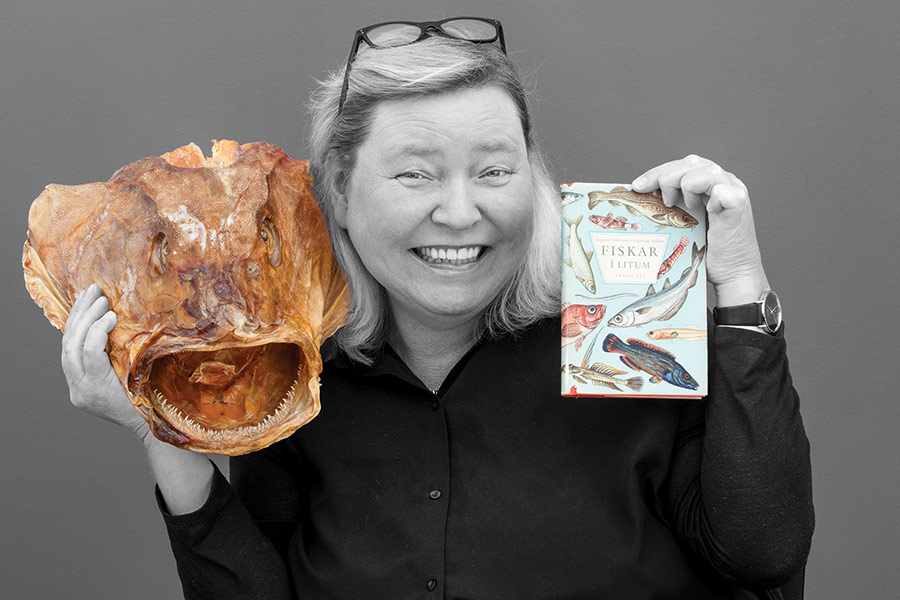
Katrín Pétursdóttir holding her SDG objects: a friendly dried cod head reminding how she created her own path “in the head hunting business!” and “Fiskar í Litum” a cherished childhood book she memorized about the fish of the sea, from her father. Global Goal #14: “Life Below Water.” Photo: Ralph Reutimann Photography.
If You Can’t Beat ‘em, Eat ‘em.
Katrín (kata) Pétursdóttir is the CEO of the world’s largest fish oil company LYSI, founded in 1936 by her grandfather. It exports Omega-3 brain-boosting supplements globally.
Nothing goes to waste in our factories, every part of the fish is used for something. It’s an ideology that should be applied to business in general – a consideration for nature, making money and giving back. Despite the company being founded by my grandfather I bid on it and purchased it in 1999; a family business does not always mean getting something for free. I always choose to prove things on my own, first.
My mother taught me to believe in my ambition and to not lack courage when doing something I believed in. She would tell me that waiting is the same as losing, and I pushed through many uncomfortable situations at an early age because I believed I could do it.
I made my fortune in the “head hunting business!” When I first went into the fish business, I asked my mama to join me as my partner, and we secured a small factory in Nigeria, where we opened a new market to sell Icelandic fish heads. We convinced the Icelandic fishermen that the fish heads being thrown away had value. We paid them for it and started producing fish oil health products. The hardest part was convincing people that something regarded as waste could actually generate income. Interestingly, Nigerians saw nothing wrong with an Icelandic women doing business in their community. I found more resistance from men on an international level when attending conferences and meetings. After an encounter with a businessman who got offended by the fact that a woman had turned up for his meeting, we considered taking male businessmen along with us, but decided we weren’t prepared to respect other people’s discriminations. We now do business the Icelandic way.
My strength comes from my mother, who died from a car accident in Spain many years ago. Each year on her birthday, we celebrate the occasion with friends and share stories of her life. It’s a constant reminder of a beautiful life and that we all need to make the most of ours. Women have started bringing their daughters to these gatherings now – to continue the legacy and impart wisdom.
Honesty is the hallmark of a good leader. You should keep to the rules, yet still have the flexibility to develop a company that is unique. Being aware of the surrounding community and how you fit into it, is one way of earning respect, and respecting the environment by using renewable energy and not wasting anything is another. It makes me SO angry when I see others polluting the oceans. If we do not respect the ocean, neither we nor the fish will last. It’s about thinking differently. This is something I always try to do. And the secret to a good and happy life? Stay honest to yourself. And drink fish oil every day! My team and I do this every morning.
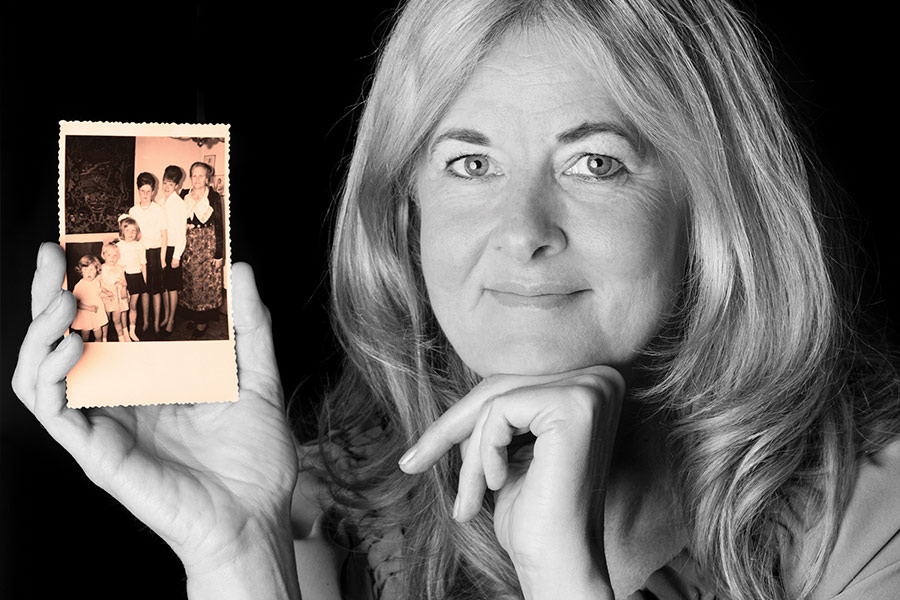
Katrín Olga holding her SDG object: a family photo, showing her female family lineage going back four generations. Global Goal # 5: “Gender Equality.” Photo: Ralph Reutimann Photography.
Take me to The Edge.
The first women Chair of the Icelandic Chamber of Commerce in its 99 years of operation, Katrín Olga, gives her views on gender, business, leadership and what more we need in the world right now. Having sold the company she successfully grew and exited, Katrín is also Vice Chairman of Iceland Growth Forum, Board member of Icelandair Group; and looking for her next great business adventure.
I have an urge to go further and be challenged in life. I’m tired of being the polite woman people expect me to be. Women need to find the courage to go out into the streets to get things moving. Iceland was once a leader in technology and an early adopter of innovation, but we’ve become a little afraid lately of moving on. We’re always thinking in four-year periods, based on our election cycle – and not 20 or 30 years ahead, like we should be. We’ve always had strong women in Iceland. Those married to fishermen where the managers at home because their husbands were away at sea for months. We’re also demanding and not accepting of certain things, such as lesser pay for women during maternity leave.
I live by the motto: What you’ve been doing is an indication of what you can do. Because we rank so high in the world as a leader in women’s rights, it doesn’t mean Iceland is perfect. In daily life there is still frustration. For example, there are no women-run companies on the local stock exchange and we should ask why this is so. Maybe my generation is the pioneer in this and change will come for our daughters. Gender diversity should bring about a realization that there’s another way to think about the world – that can help move it forward. Have women been too timid in putting this idea forward? There are two ways to change things – work within the system or destroy it completely. I chose to work from within, but I’m disappointed that it hasn’t worked so well. Destroying the system would have meant sacrificing myself too, so the question is how you change the system without doing this.
I’ve tackled empowerment the professional way; read huge amounts of data and studied McKinsey reports that show increased profits for gender diverse companies. I become angry and despair. Ultimately, you have to “walk your talk” to prove your point, not just be an explorer. There is still a fear that going public with my views would destroy me, not support me. There are two things that I burn for: equality and a farsighted vision for the future. Wouldn’t it be wonderful if a country become a leader by harnessing all the positive things in the world?
You first need to paint a picture of what this looks like; create a vision. The Fourth Revolution is here and disrupting systems. Truck driving jobs in the U.S. are being threatened by automated driving software. Threats and opportunities alike must be highlighted if we are to thrive, not just the exciting, futuristic stuff.
The future I envisage is one where we all stop thinking a certain way – just because we’ve always thought like that – where we stop being afraid and resistant to change.
Why are our kids still being taught to think like us in schools? Why aren’t hospitals treating patients like customers? Why is technology doing away with a need for some personal interactions?
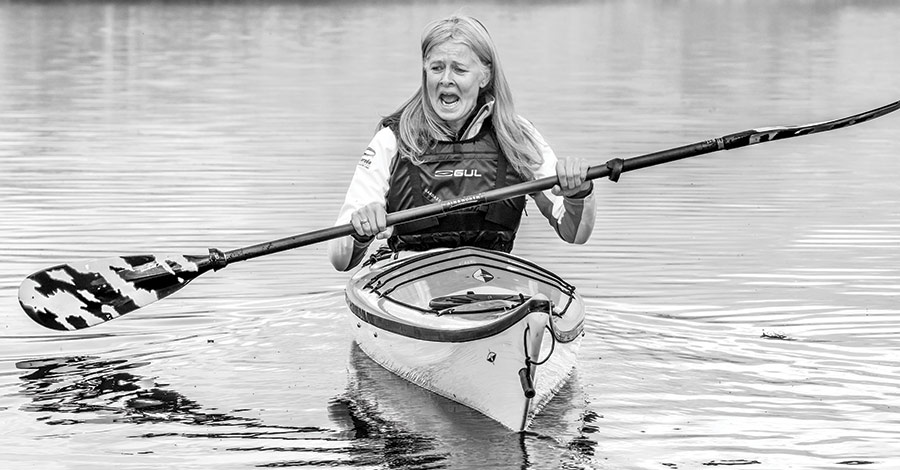
When asked where she was fearless, Katrín without hesitation said,“I’m fearless in business. I love business! And feel completely at ease here.” When asked where she felt vulnerable: “Definitely in a kayak, out in nature where I’m not in control.” Stepping into her courageous vulnerability, Katrín was willing for the first time to kayak, showing the true spirit of the Viking heritage and the Women of Iceland’s courage and vulnerability. Photo: Ralph Reutimann Photography.
Big change in the world has historically happened through catastrophe, maybe this will be what it takes. Each company should ask what they’d do in a worst-case scenario because this will force them to plan ahead. Be afraid if you’ve been in a comfort zone for too long, it means you’re no longer one step ahead of the competition. Courageous vulnerability is needed. You have the choice to become a victim or a warrior in life, and how you react after a disappointment is crucial. Rather, become the warrior.
Being involved in business can be very creative – you can create a product, process or relationship. Whatever personality you are, you’ll find something that resonates with who you are. Business shouldn’t be something you’re restricted to because of education or qualification and being a leader doesn’t mean you should be an expert who knows everything. Learn how to let go and delegate – it’s been one of my biggest lessons. I sometimes ask myself sometimes what I’d like to leave behind when I leave this earth.
I was reminded of this responsibility recently when my 22-year-old niece picked up a copy of The Most Powerful Women in Iceland list and said, “I will be here one day.” It made me realize the power of my role modeling. I want to be a good role model for other women who are stepping forward first into business, so it’s not so hard for them; and so that we are truly treated equally. I champion women’s equality in all that I do, and sometimes I am criticized for this. I want to be brave enough to be myself, without holding anything back. I want to be taken to the edge!
Iceland has the potential to become the first country to achieve full gender equality. This is an untapped resource. Boys and girls need to be open minded. Put your heart and passion into things, it makes things easier. I’m hopeful for a bright future – looking at data I see a world that is doing better than the past in many ways – despite the despair we see in our news every day. Looking at the wisdom and confidence in our young people, I can’t see them letting us down by allowing the fears of today become the reality of tomorrow.
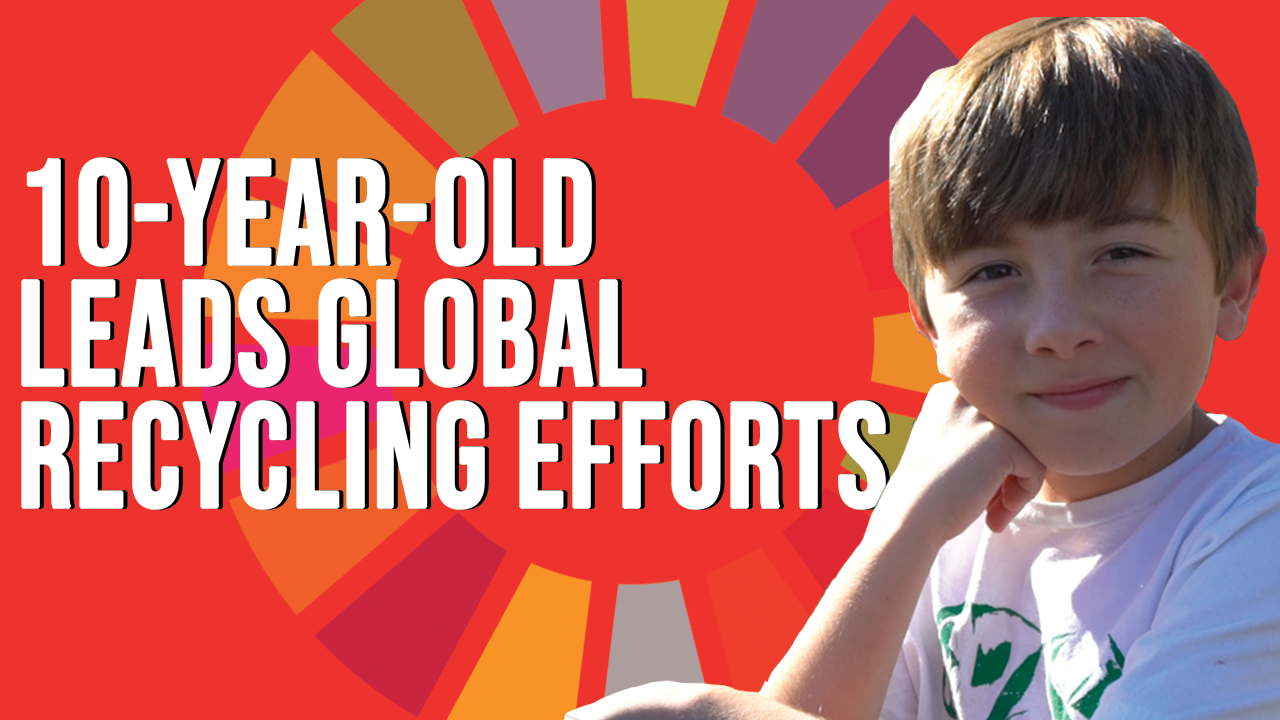
Ten-year-old Ryan Hickman has been operating his own recycling company since he was three years old. Ryan’s Recycling started out as something fun that was also beneficial for the environment and has since turned into a means of addressing a recycling problem in California. Many California redemption centers have recently shut down because of a new conundrum: increased costs to maintain recycling programs and a decreased value for recycled aluminum and PET (Polyethylene terephthalate) plastic.
Ryan’s increased passion for recycling caught wind amongst the San Juan Capistrano community where members became conscious of their complacent waste and environmental impact and started dropping off their recyclables for the youngster. By gathering bottles and cans in his community that would have otherwise been sorted at redemption centers or ended up in landfills Ryan has made recycling convenient for all by doing the sorting himself. His goal is to prevent aluminum, plastic, and glass from ending up in landfills, where they can take anywhere from 90 to one million years to break down. The young professional also wants to prevent bottles and cans from making their way to the ocean, where they become harmful to marine life. Over the last 7 years, Ryan has now collected over 700,000 bottles and cans—that’s over 100,000 pounds of recyclables!
Public attention to the recycling crisis has resulted in business development for Ryan’s recycling; partnering with organizations to further address recyclings importance. He’s working with Recycle Across America (RAA) to develop standardized recycling labels and is set to travel around the world with Valley Living to educate others about filtering. His advice? “If a kid like me can do it, anybody can do it. It’s easy.”
It’s all too common for people in organizations to be promoted up the hierarchy to their “level of incompetence.” In management, the concept is known as the Peter Principle.
People are promoted because they did well in their previous job, not because they have the potential or the skills to meet the requirements of their new role. In fact, there’s often no training for the new skills they need to learn to succeed in the new position.
This combination of poor promotion practices and lack of training stems mainly from a dangerous judgment error known as the curse of knowledge: once we learn something, we can’t relate to someone who hasn’t learned it. For instance, we learn how to manage others, then completely forget that not everyone knows how to do it. Or we learn the jargon of our profession and use it with those who don’t know the terms, baffled as to why they don’t understand us. We can’t teach others how to do our roles because we can’t communicate the skills and knowledge the position requires.
The error stems from how our brains are wired. It’s one of a whole range of cognitive biases that cause us to make mistakes in all areas of our work and lives. Fortunately, there are practical strategies we can use to overcome these dangerous judgment errors.
Here’s a case in point:
A Northeast state’s Department of Transportation was having a severe Peter Principle challenge: staff were being promoted into supervisory roles based on seniority and prior performance, not the proven ability to supervise. Nor were they given any advance training: the just-promoted supervisors were expected to pick up their newly required skills on the job. It was a clear instance of the curse of knowledge: department leaders had forgotten how hard it was to develop their leadership skills.
Thankfully, a newly hired HR Director who had an outsider’s perspective was able to see the flaws in this approach — and pointed out the seriousness of the issue to department leadership. She convinced them to create a leadership development training program for newly-promoted supervisors. The HR Director brought in Disaster Avoidance Experts to consult on creating the leadership development program. The opt-in program, meant for new supervisors promoted from within the ranks, included new skills and relevant knowledge and was soon expanded with a mentoring program.
In the past, a six-month performance review of new supervisors found that 63 percent on average met or exceeded expectations — and that became the department’s benchmark. When performance reviews were conducted for those who had voluntarily joined the program, the rate jumped to 83 percent. But of those who did not participate, it fell to 59 percent — a clear indicator that training was an effective way to overcome the problem. Based on the success of the program, the Department of Transportation adopted a commitment to training all of their newly promoted supervisors. While the roots of this flawed promotion system could not be addressed due to contracted promotion guidelines, the curse of knowledge could be alleviated.
Every organization should assess whether or not cognitive biases are harming your teams and your success. If so, there are effective techniques for making and implementing decisions on how to mitigate the damage and launch better long-term strategies. Using structured decision-making will put you in a better position to make those daily decisions quickly, those more important ones more thoroughly, and those significant decisions more accurately.
As baby boomers retire from executive positions, millennials are expected to take over leadership roles and even to transform the organization in the future. Transformational thought leader, Rob Delany, worries that companies are risking losing their best and brightest… who will still become future leaders, but at their competitors. He asks, “how can companies attract and retain millennials, teach them management skills, give them the seasoning they need to become successful leaders and all the while retain them?”
In order to create a process where millennial leaders can thrive, today’s management needs to create a more transparent leadership pipeline that enables millennials to envision themselves in an executive position down the line with the power to transform.
Here are some valuable tips on how to create a transformational leadership culture that future millennial leadership will embrace:
1) Enhance your current culture. Make your company feel like a place with an eye on the future; a place where millennials will like to work. Alleviate some of their stresses so they can work harder for you. For example, develop an environment and policies that are supportive of today’s lifestyles, such as encouraging family time, creating social interaction, doing good deeds, and more, without compromising productivity and performance.
2) Communicate your tradition as a springboard to the future. Transformation isn’t just about changing the system, it’s usually about building on top of a solid foundation. Many companies assume employees will grasp a company’s tradition and what has made it successful just by being there. That won’t automatically happen unless management takes the initiative to define the tradition and communicate it within the context of the future.
3) Don’t just be a boss, be a mentor. Be receptive to transformative ideas and respectful in your feedback. Coach future leadership on the most effective ways to to get the organization embrace transformation.
4) Create ownership. Don’t just make millennials aware of an agenda: make them a part of it. Allow them to develop a sense of ownership in what they do, so they can envision themselves setting the agenda a few years down the line.
5) Define the organization’s future vision. It is easier to feel that they are contributing to the organization’s success when they clearly visualize what success means. Make millennials proud of what they are part of growing.
6) Develop new views on performance and on rewarding successful performance. In a transformative process, key performance indicators (KPI’s) most assuredly will transform as well. Make sure performance and rewards keep pace with the transformation, so people feel appreciated for what they do.
Making an effort to attract and retain millennials will pay rich dividends because you are investing in your future leadership and the success of your organization.