Emma Watson New UN Goodwill Ambassador

The United Nations organization dedicated to gender equality and the empowerment of women, today announced the appointment of British Actress, Emma Watson, as Goodwill Ambassador.

Best known for her role as Hermione Granger in the ‘Harry Potter’ film series, the accomplished actress, humanitarian, and recent graduate of Ivy League institution, Brown University, will dedicate her efforts as UN Women Goodwill Ambassador towards the empowerment of young women and will serve as an advocate for UN Women’s HeForShe campaign in promoting gender equality.

“We are thrilled and honored to work with Emma, whom we believe embodies the values of UN Women,” stated Phumzile Mlambo-Ngcuka, Under-Secretary-General and Executive Director, UN Women. “The engagement of young people is critical for the advancement of gender equality in the 21st century, and I am convinced that Emma’s intellect and passion will enable UN Women’s messages to reach the hearts and minds of young people globally,” added Ms. Mlambo-Ngcuka.

Ms. Watson has been involved in the promotion of girls’ education for several years, and previously visited Bangladesh and Zambia as part of her humanitarian efforts.

“Being asked to serve as UN Women’s Goodwill Ambassador is truly humbling. The chance to make a real difference is not an opportunity that everyone is given and is one I have no intention of taking lightly. Women’s rights are something so inextricably linked with who I am, so deeply personal and rooted in my life that I can’t imagine an opportunity more exciting. I still have so much to learn, but as I progress I hope to bring more of my individual knowledge, experience and awareness to this role,” said Ms. Watson.

Ms. Watson is the first Goodwill Ambassador appointment under Ms. Mlambo-Ngcuka’s leadership.


20 Student Teams Race to Design the Car of the Future

Global automotive supplier Valeo today named the 20 teams shortlisted by its experts to compete in the second round of the Group’s global innovation challenge. The global competition is open to student around the world, who are encouraged to design and develop automobile products or systems that will revolutionise the car. The participating teams represent thirteen countries around the world: Australia, Belgium, Brazil, Canada, China, Egypt, France, Germany, India, Mexico, Poland, the United States and Spain. The teams have all given themselves unique names, such as Aero Commander from China, the Falcons from India, Hawkeye from France and Master Bolt from Mexico.

A large number of unique, innovative project submissions, some of very high quality, have been reviewed by Valeo’s experts. These technical solutions are illustrative of each country’s specific societal concerns. For example, the Indian engineering students are taking up the issue of road safety, while the emphasis for the Mexican contingent seems to be individual safety and security. The European students, like their North American peers, are more concerned about reducing CO2 emissions and creating a smart, connected and autonomous vehicle.

Blacklist

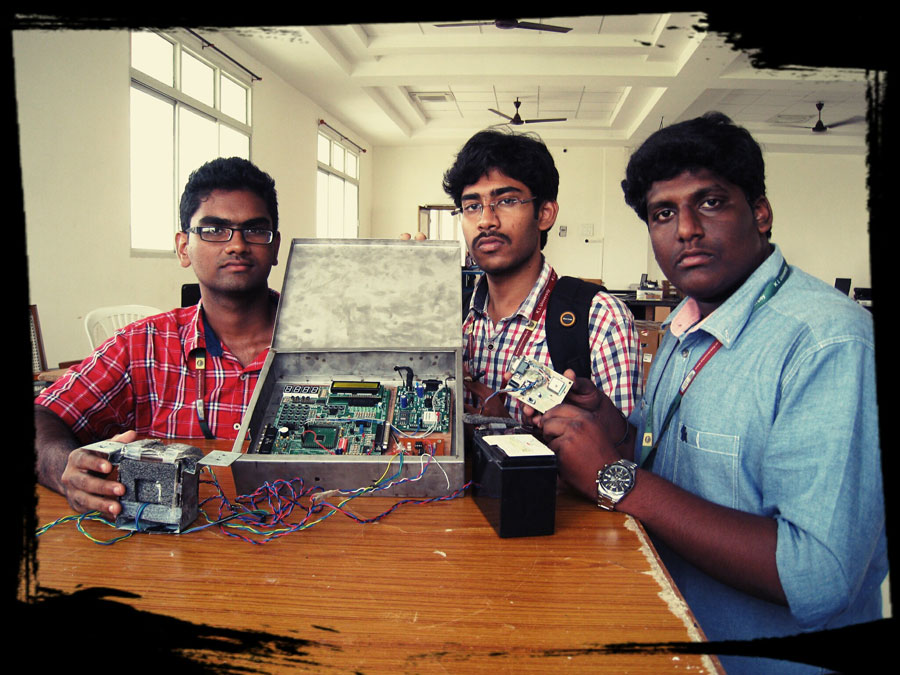
The Blacklist team from KL University, India

Across the board, they are working to make the car of 2030 a cleaner, safer and more enjoyable ride. The shortlisted teams now have until August 29, 2014 to develop a working prototype of their project using €5,000 in funding appropriated to each of them by Valeo. Six finalists will then be selected to present their project to the jury at the 2014 Paris Motor Show in October 2014. Comprised of Valeo experts and outside partners, the jury will be chaired by Valeo CEO Jacques Aschenbroich. The winning team will take home a €100,000 prize and the second and third-place teams will each receive €10,000.

Launched by Valeo in September 2013, the Valeo Innovation Challenge is a global contest open to engineering students around the world, invited to play an active role in automotive innovation by designing the product or system that will create smarter, more intuitive cars by 2030. Nearly 1,000 teams from 55 countries signed up for a chance to propose and develop daring solutions that will revolutionize the car of the future.

In 2013, for the second consecutive year, Valeo was featured in Thomson Reuters’ Top 100 Global Innovators ranking, reflecting the Group’s commitment to innovation. Most of the Group’s research and development programs are focused on the design of technologies that reduce motor vehicle carbon emissions and promote intuitive driving.

The company ranks among the leading patent filers in France and dedicates around 10% of its original-equipment revenue to innovation. With close to 9,000 researchers in 16 research centers and 35 development centers around the world, Valeo has developed an array of innovative products and technologies that represent more than 30% of orders.

Valeo was also awarded the Top Employers label in 18 countries for 2013. The Group plans to hire some 1,000 engineers and technicians a year over the next three years.

Valeo is an automotive supplier, partner to all automakers worldwide. As a technology company, Valeo proposes innovative products and systems that contribute to the reduction of CO2 emissions and to the development of intuitive driving.  In 2013, the Group generated sales of €12.1 billion euros and invested over 10% of its original equipment sales in research and development. Valeo has 124 production sites, 16 Research centers, 35 Development centers and 12 distribution platforms, and employs 74,800 people in 29 countries throughout the world. www.valeo.com


Olivia Wilde is Turning Philanthropy on Its Head and Making a Profit

As a self-proclaimed proponent of the power of voting with your dollars, actress Olivia Wilde is proving it’s possible to live well without destroying the Earth and its inhabitants. Olivia, along with her business partner, Barbara “Babs” Burchfield, launched Conscious Commerce three years ago. The online marketplace features curated goods from ethical brands, as well as limited edition products that have resulted from collaborations between brands and smaller organizations. Because of Conscious Commerce’s success Olivia was recognized by Forbes as one of Hollywood’s young social entrepreneurs.

Olivia’s recognition is well deserved, as Conscious Commerce is more than just a digital boutique. Like any successful innovator, Oliva is tracking and anticipating trends. Right now, she sees philanthropy moving away from “$10,000 a plate fundraiser attendees” and “rich, white people who write checks” to a  for-profit philanthropy model that educates and empowers young millennials to “give back while shopping,” specifically through products that they would be purchasing anyway. (Olivia cites the success of social entrepreneur Blake Mycoskie and TOMS as a sign of the potential of this movement.)

This is why the products featured on Conscious Commerce have been paired with a nonprofit that will directly benefit from the product sales. By tapping into the billions of dollars being spent everyday, Conscious Commerce is helping consumers purchase the goods they would buy anyway and support incredible causes.

For more on Olivia’s business philosophy and Conscious Commerce, check out her interview with Forbes.

What do you think about Conscious Commerce and the idea of consumers voting with their dollars?

Jessica Alba: Hollywood Heroine To The Rescue

Better known for her role as the Invisible Woman in The Fantastic Four, and being voted “Sexiest Woman in the World” by FHM in 2007, actress Jessica Alba has an entrepreneurial side that aims to redefine the idea of the family brand.

In 2008 Alba became the mother of a little girl, Honor, and three years later gave birth to her second daughter, Haven. Call it maternal instinct or a new insight on life; Alba felt her priorities in life shift immediately. “I felt this intense responsibility to create the safest, loving and healthiest environment for my children,” says Alba.

Her inability to find baby products that didn’t have toxic chemicals in them, or even diapers that weren’t tainted with dyes and nasty substances that caused allergic reactions alarmed her as a parent.

Alba experience this first-hand one day when she did a load of washing, using “baby safe’ laundry detergent, and broke out in a rash. Knowing that this couldn’t be good for her baby she began educating herself about untested chemicals found in baby products and household cleaners. She found alternative, “safer” options, but they still contained other chemicals that were unsatisfactory.

She calls this a “social injustice” and was determined to create a range of products that made it easier for her, and others, to find safe and attractive products that worked. She met Christopher Gavigan, author of Healthy Child Healthy World, who also ran a non-profit aimed at children’s health, and they teamed up to source and sell the very products they saw lacking on supermarket shelves.

The company raised $27 million in venture funding in March this year, giving the company a healthy start, and bring total funding to date to $52 million.

To ensure sales and availability where made as easy as possible, they brought on board Brian Lee, a veteran of ecommerce, as their CEO, who also has kid’s the same age as Alba’s. As a business-minded entrepreneur Lee was aware that alternative products needed to be priced affordably, for consumers to buy into them. With many health and eco products charging a premium, he wanted to ensure that The Honest Company could challenge mass consumer goods at a similar price point. A customer service team now listens to customer requests and they have already launched 13 new products based on this direct feedback.

Alba’s celebrity status, and having over 6.8 million followers on Twitter, has also helped in creating a meaningful dialogue with customers.

Gavignan was aware of a growing trend among the Hollywood A-list that saw celebrities aligning themselves with tech startups and was at pains to avoid it. With household names lending their money and fame to products and commercial ventures outside of their entertainment image, Alba and Gavignan were aware of positioning The Honest Company differently. They didn’t want Alba’s fame to distract from the real differences they were trying to make.

Coming from a non-profit world, Gavignan wanted to found a business that had goals that went beyond profit, that didn’t have non-financial goals tagged on as an afterthought. He wanted it integrated into the DNA of the company. The star studded line-up of other celebrities who’d ventured beyond the entertainment spotlight include Magic Johnson, who has invested in Stylecaster and Sociocast through his Detroit Venture Partners, Leonardo DiCaprio who has invested in photo sharing service Mobli, Edward Norton backing fundraising site Crowdrise, Bono, who bought a 1.5 percent stake in Facebook, netting him a cool $1.5 billion profit and Justin Timberlake who is an investor and brand ambassador for social music sharing site Myspace.

While many of these ventures fit into traditional investment models, Alba and Gavignan wanted a company that would help transform the quality of life for millions, through education and choice. “Before you have children, there’s a classic selfishness about life with many people,” says Gavignan. “After you have children, you develop a new attitude that is prepared to do anything for this new, little being. Todays parents are facing new, and increasing, realities of autism, allergies and childhood cancer, without really understanding how to protect their children from these chronic diseases.”

“There’s an assumption that everything on a store shelf is safe,” says Gavignan. “This is not always the case. There are many toxic chemicals, found in everyday products that are linked to chronic diseases”

“There is so much information around about what you should be doing, that many parents are so confused, they can’t figure out the right choice anymore,” says Alba. “We started The Honest Company to make it easier for parents to buy safe products for their families.” And not happy to simply focus on her own business, Alba travelled to Washington D.C. in 2011to participate in a two-day lobbying effort in support of the Safe Chemicals Act, a revision of the Toxic Substances Control Act of 1976.

From inception, The Honest Company has placed corporate responsibility as a core part of the company’s DNA. They are constantly working towards innovative solutions to reduce their collective impact, causing no unnecessary environmental harm, and making products that are as safe as possible. Alba and Gavignan continually invest in eliminating supply chain waste by delivering directly to customers, using plant-based ingredients in their products to eliminate toxins, and using 100% renewable or recycled materials in all their packaging.

Their ultimate goal to positively change the way people, companies,and even governments make impactful decisions related to health and safety, social goodness, environmental protection, and sustainable business practices. “We are committed to operating with integrity and transparency, and with humble honesty, as we strive to always create better, do better, and be better,” says Alba. Far from crafting feel-good, marketing slogans, the partners have initiated real change in every part of their business. Some of these proactive measures have included donating a percentage of proceeds towards addressing critical health and social issues affecting children and families.

The Honest Company range is made from natural, organic, sustainably harvested, renewable, pure raw materials and they track the production journey of all materials so they can report on what’s known as cradle-to-grave impact. Electricity used in making their products is even from renewable energy sources. Customers are encouraged to choose ground shipping fortheir orders whenever possible, as expedited air freight generally uses six times more energy than ground shipping.

To highlight their sustainability point, Alba and Gavignan have registered The Honest Company as a B-Corp, a business accreditation in the U.S. that shows you’re serious about looking after the triple-bottom-line. And not content to be the only one’s doing the right thing, they have introduced a code of conduct for their suppliers too, making sure they comply with human rights, environmental and non-harmful practices.

A major reason for Gavignan wanting to start the company was a belief that what he wanted to accomplish couldn’t be achieved by a not-for-profit. His goal was to create an avenue through which parents could safely purchase products for their babies, and in so doing, change their behavior – to start using non-toxic chemicals and eating organically. An unseen benefit of this approach has now emerged, as they eye expansion abroad. Stricter chemical regulations in Australia and the U.K. mean they are now able to meet these legal requirements.

In the U.S. around nine chemicals are banned from baby products. In the U.K. this number is 1,000 and The Honest Company’s products avoid them all.

The Honest Company have an active focus on minimizing the presence of petroleum in their products and packaging, and are striving to one day be 100% plant-based. The online shop makes a point of listing all ingredients, where you’ll even find dishwasher pods made from minerals and plant extracts.

Even their floor cleaner, usually just below paint stripper in harshness, has shown an effectiveness that you would not expect from natural ingredients, showing that natural products can actually be highly effective. Generations of parents using harsh chemicals has created ignorance among consumers of what is possible. Alba and Gavignan hope to change all that… for the sake of the children.

 

Microfinance – a Local Solution to a Local Problem

Lily Lapenna spent thousands of Pounds on her education growing up but had no clue on how to manage her finances as an adult. Sound familiar?  She gives a first-hand account of setting up MyBnk, a London-based social enterprise that works with young people to build the knowledge, skills and the confidence to manage their money effectively. The idea for MyBnk started when I was at school, disillusioned with the overtheoretical nature of learning and frustrated at having so many ideas and so little I could do with them. So I started running car boot sales, making and selling things and putting on plays at school, all my profits went to charity.

These little entrepreneurial endeavours gave me the energy I needed to survive the many hours in the classroom. As I grew up and started to study and work in international development in amazing places like Zimbabwe and  Bangladesh I developed 2 passions, one for education and one for microfinance. At the age of 18 I finished school in London where I was born and I decided to go and work in Zimbabwe, where I worked in a rural primary school on non-formal education programmes. The school became a hub for community involvement and social innovation.

Together with the community, the teachers and the children, we created huge AIDS awareness campaigns, built libraries and influenced local policy makers on issues relating to education and health. I realised how non-formal education could change communities for the better. More importantly, I realised how much joy and energy I got out of working with young people and how I could happily spend the rest of my life working with and for young people, helping them improve their lives.

My interest in microfinance started after my work in Zimbabwe when I returned to London and did a degree at the unorthodox university SOAS (School  for Oriental and Africa Studies). In my three years of study at SOAS and a year Erasmus at the Istituto Orientale in Naples, I became very disillusioned with trends in international development.

It was apparent that the aid industry had created many dependencies across countries and had in many cases failed to acknowledge and utilise local knowledge and local problem solving. It was common for the western aid organisations to go to the majority worlds and impose development solutions and often these didn’t lead to the desired outcomes.

In contrast to this, I started to learn about microfinance a local solution to a local problem, a movement in Bangladesh led by superheroes such as Professor Yunus and Faisel Abed (the founder of BRAC). Microfinance is a self-sustaining development model that creates a ladder to self-sufficiency for the poor. In essence micro finance is about unleashing enterprising ideas by giving women small loans to set up businesses. Three days after I graduated, I moved to Bangladesh and there I worked in the rural north with women borrowers and savers. These women, where using microfinance to change their lives and those of their children. They inspired me!

I was lucky enough to spend months with them and to realise how microfinance was not only a powerful financial tool but also a powerful educational tool. I started exploring how small enterprise loans and saving schemes provided a transformational educational experience for the Bangladeshi women. They were in many cases illiterate and yet they had a business acumen that no MBA programme could teach. They were innumerate and yet were savvy at  managing their family finances in a way that most of us in the UK would envy. I came to the conclusion that I had spend thousands of pounds on my education but sadly I had no clue how to manage my money nor did I have business skills.

Coming back to the UK I found many people my age facing spiralling debt, the majority of adults being financially illiterate (myself included of course), more people in the country getting a divorce than changing banks and a staggering 150,000 young people  growing up believing that an ISA (Individual Saving Account) is an IPod accessory!

The government rhetoric in the UK at the time (2007) was that if we didn’t have an enterprising new generation “China would have us for breakfast and India would have us for tea.” At this point, it all started to make sense to me; the need for a sort of microfinance and education programme in the UK was evident. In 2007, I set up MyBnk – a London based social enterprise that works with young people to build the knowledge, the skills and the confidence to manage their money effectively and to make enterprising choices throughout their lives.

Right at the start of the MyBnk journey, when it was just me, my laptop and this idea, a group of friends took me to a Chinese restaurant for dinner. We ate, talked, and after dinner we were given a fortune cookie each. I opened mine to find this Chinese proverb: “I do not know the solution, but I admire the problem”


Three Unconventional Lessons for Business School Students

It’s unusual when a successful entrepreneur opens a presentation to a room full of business school students with a photograph of her twin baby boys. But then Jessica Jackley isn’t a typical entrepreneur. As one of the speakers of a three-year series funded by the Pears Foundation at the Saïd Business School at Oxford, entrepreneur and investor, Jessica Jackley, had a rather unconventional set of recommendations for her audience.

Jackley cofounded Kiva.org, a nonprofit microlending platform that has facilitated nearly $440 million in loans since its inception in 2005. She went on to found ProFounder, a small/medium enteprrises fundraising platform, and is now an advisor to a Silicon Valley venture fund. She offered to her audience three pieces of advice, which she described as “reminders” to her crowd and to herself.

1. Know your mission(s)

During the early days of Kiva, the now-global microlender that Jessica cofounded in 2005, she and her team turned down a $10m offer of funding from a corporate social responsibility office of a large corporation. The funder didn’t want to connect to the borrowers on her platform, cutting against the grain of Kiva’s chief mission, which is to “connect people.”

Had she and Kiva not been crystal clear on their mission and the values from which it grew, turning down such an offer might have been difficult. Business students on the job market should similarly be clear on their mission and be willing to turn down great opportunities in favor of “the path that is true to who you are.”

2. Learn to Listen

Jackley cites as her role model and inspiration as Muhammad Yunus, the Nobel prize-winning economist credited with the creation of microfinance, in which tiny loans are typically provided to groups women with self-created income. “Yunus,” says Jackley, “arrived at his insight by listening intently to others. If we listen closely, we may hear something no one else has heard before.”

3. Iterate

In founding Kiva, Jackley didn’t wait until her product or website were perfect to begin collecting loans from her friends and family to distribute to the entrepreneurs she had met during a 2004 trip to East Africa. Such an approach demands transparency and patient supporters who are comfortable focusing on the “how might we” questions instead of the “but what about” questions.

These “what if” questions are the kinds of questions that Jackley’s twins wake up with every morning. If grownups were to approach the world with the same sense of wonder and opportunity, listen carefully to others and remaining true to who they are, how many more Kivas might we create?

By Mark Clayton Hand  www.markclaytonhand.wordpress.com Saïd Business School, University of Oxford www.sbs.ox.ac.uk


0