Cynthia Cleveland, Founder, Broad Think

RL-100-badge29

“If your actions inspire others to do more, to learn more, to dream more or become more, you are a leader.” John Quincy Adams

Vision: A world where everyone’s talent is valued, our differences are a strength and collaboration provides new solutions. Action: Created educational programs for increasing board skills. Supported the Lean In movement by forwarding more than 50 members of the Women’s YPO Network to launch Lean In circles for young women. www.broad-think.com

Michael van Patten, Founder, Mission Markets

RL-100-badge8

“Consume your life in your vision, make it your obsession and do not think about plan B, but also be flexible as the road is not straight.”

Vision: To use the power of the capital markets as a catalyst for positive change. Action: Threw his life into his vision with a single-minded purpose, pushing forward in the face of huge setbacks, personal financial hardships and skepticism from friends and family. Has worked within capital markets to take impact investing mainstream. www.MissionMarkets.com

Stedman Graham, CEO, S. Graham & Associates

RL-100-badge40

“You are not your circumstances. You are your possibilities.”

Vision: To help people understand their potential, develop an identity, and recognize the value of knowledge and how it applies to their lives each day. Action: Graham teaches identity development and leadership to people all over the world – from youth to executives. He has written 11 books to share these messages. Graham wants to transform people from followers to leaders. www.StedmanGraham.com

Danae Ringelmann, CoFounder, Indiegogo

RL-100-badge19

“It’s important to empower entrepreneurs, artists and causes to fund what matters to them.”

Vision: Raising funds through online crowdfunding to make ideas that matter happen. Action: Made it easy to take an idea, start a campaign and get it funded. A way for people all over the world to join forces to make worthy ideas happen. Bringing dreams to life by allowing people to make their case directly to the public, while mitigating market risk and working alongside traditional finance routes. www.Indiegogo.com

Nelson Mandela (1918-2013), Former President of South Africa

RL-100-badge30

“There is no passion to be found playing small – in settling for a life that is less than the one you are capable of living.”

Vision: A society based on dialogue and the art of speaking and listening to others. Action: Implemented transformative dialogue, problem-solving and social renewal that made South Africa’s remarkable transition possible. He drove positive change that resulted in racial and gender equality and social justice. www.NelsonMandela.org

Laura Roberts, CEO, Pantheon Enterprises

RL-100-badge9

“Building a substantial business is the best way to make a significant difference.”

Vision: To transform the industrial chemical industry and remove toxic chemicals from the environment. Action: Worked for years in a predominantly male industry to replace harmful chemicals with non-toxic ones. Proved that alternative products without toxins can do the job equally well. Her aerospace paint PreKote has reduced the amount of toxins reaching us by 3 million pounds. www.pantheonchemical.com

Rebecca Masisak, CEO, TechSoup Global

RL-100-badge41

“Managing technology is managing change. Leadership can come from any place.”

Vision: A world where technology is a powerful enabler for social change. Action: Leading a worldwide network of individuals and organizations that share a conviction to work together to develop and exchange new solutions to our most urgent social challenges. Masisak believes NGOs and nonprofits around the world can be more effective through the appropriate use of technology. www.TechSoupGlobal.org

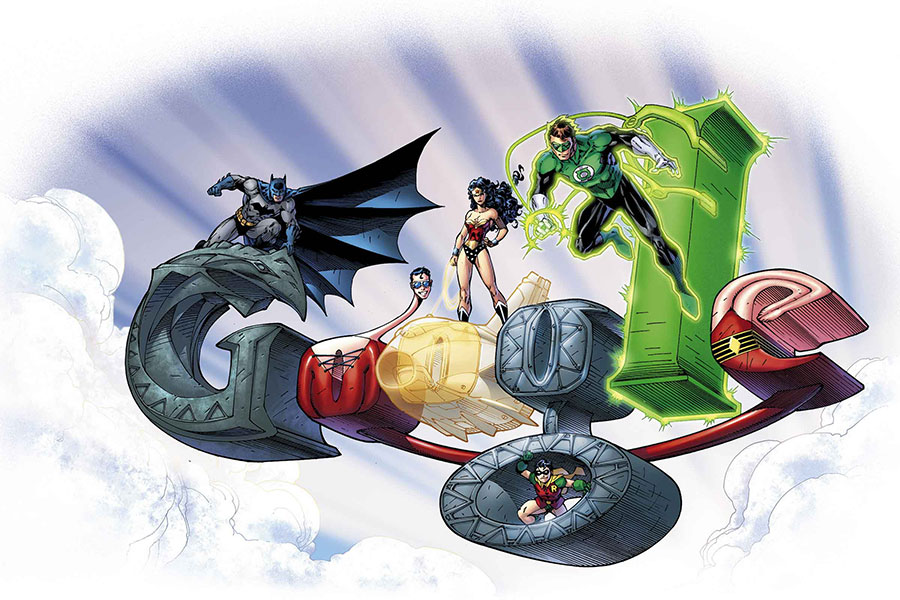
Google Values the Power of Speed

In a world undergoing constant changes life is a constant learning journey. What we know and understand today may not hold true tomorrow; policies may shift, structures could have collapsed, theories may be disproven, competitors might be on the rise. No matter how many accomplishments are entailed in our bio, therefore, we still have more to experience and absorb. Consider how interactions encourage the adaptability of thoughts, inspiration for goals or a change of heart. Often times it is this shared communication that allow us to understand, alter or challenge a perspective.

Our relationship to the social and material world facilitates a certain awareness – one that might adjust. In 2012, when I was working in Argentina, I had the opportunity to hear two entrepreneurs express their experiences. Especially as an young entrepreneur myself, I admire understanding others path to success.

The first speaker was Mike Cassidy, current Vice President of Google and start-up founder of Ruba, Xfire, Direct Hit and Stylus Innovation. It was a rather intriguing theme set for his presentation: speed. Why speed?

  • It makes it difficult for competitors
  • It builds a strong team set up for success
  • It generates press
  • It is a valuation of the company

He explored how start-ups endure a common process – from idea to financial and labor support then onto the creation of a product. Most ventures generally find that 23-27 months would be an appropriate allocation of time. This is about two years of extreme hard work and much patience all driven by the passion. Yet, Mike Cassidy explained that his personal time for each of the four successful start-ups, he spent 1/6 of the time on the above process. Four months. When exploring ideas, you cannot allow yourself enough time to talk yourself out of an idea.

When raising funds, you want to do it when the conditions are in your favor. To expedite the managerial and creative process, have all the decision makers of your team in one room; there’s no point in calling a meeting when a valuable voice in not present. Competition additionally needs to be considered. So, synchronize the timing of competing offers. Always be aware of who you are up against and be one step ahead.

If your process is faster than your competition, you will automatically be one step ahead! Lastly, make if/then contracts. He put this into context by suggesting that if his company was going to provide search engines that can perform x feature, then will you buy our product for feature, then will you buy our product for y amount? Of course this is a non-binding agreement, but he has found that it instantly hooks people. Next phase, an incredibly short process of 2 weeks he offers, is building a team (including both the people and physical location). The hiring process requires you to get experienced developers whom you may or may not know. A day in the life of a Cassidy interview is simply just a day.

If he finds the applicant as a suitable potential employee, Cassidy would call shortly after getting a background/Facebook check and call the applicant’s references. If all goes well, the offer is on the table, and not even a 24 hours later he expects a decision. In some cases, Cassidy might even ask the interviewee to join him for dinner in order to get to know the real person behind the CV paper. It’s the excitement of one day, quicker than flying to Australia from Chicago. There is not much time to daze off or push off tasks. Priorities are set quite high, and there’s an expectation of rapid growth and action. If you don’t yet see why speed is so important, he elaborated that the probability of a deal closing declines by 10% each day it doesn’t close.

Speed? Yes, speed means you can’t spend as much money, you can’t hire as many, etc. He ended with saying that if you see it, you’ll believe it. Josh Silverman, former CEO of Skype and current President (of U.S. Consumer Business) of American Express, took the stage after Mike Cassidy. He began by revealing that he had aspired to create positive change. Personally, living abroad and having access to a service like Skype have had a major social impact on my life; the interconnectivity and cross-communication that is now possible is incredibly transformational. He gave some insight into how he operates, and perhaps how he got to where he is today. Take advantage of crisis, “never waste a great crisis.”

During the time of heightened tensions and extreme pressure, the truth comes out. People are directed to reflect and realize what should have been done, and come together to brainstorm what can be done now too. So a technique he often practices, during the high times. This allows for a keen awareness to circumstances and functionality. A series of what if questions are ways to advance and get ahead of the game. It’s about how to play the game, and the players of the game.

So he began to highlight the difference between being a founder and a CEO. Being a founder means that you have a special understanding of the brand and product; you are unusually in power and are able to take bigger risks because of that. When you are a CEO, on the other hand, you are an employee, and you report to a board. To reiterate, that reduces some of your freedoms or authority. Additionally as a CEO, there is a bar of excellence that you are expected to achieve.

A common denominator for both CEO’s and founder is the inherent aspect of leadership. When you’re a leader, Silverman explained, people look to you. They look at everything you do: body language, actions, behavior, mood, attitude and confidence. He said that being the youngest “in charge” of people his brothers age, for example, the pressure was high and he began to recognize the significant influence the frontrunner has the rest of the organization.

He could feel the difference within the group on days that he was in a good mood versus the days when he was a little frustrated. There is a certain degree of responsibility integral to being a leader. In business, others adhere to a leader’s opinion or decisions, and tend to follow the values and environment created.

He argues, therefore that this is the reason people are born to be leader. As people with influence, it is up to us to determine how we use that power. We must remain cautious, on point and aware. To create change and to generate impact, well that lies within us. So on our journey throughout life, as we begin to make shifts in the world, the world mutually guides changes in us too.

Be open to listen and learn from others but be aware others are listening and learning from you too.

Do We Accept Circumstances Or Fight Them?

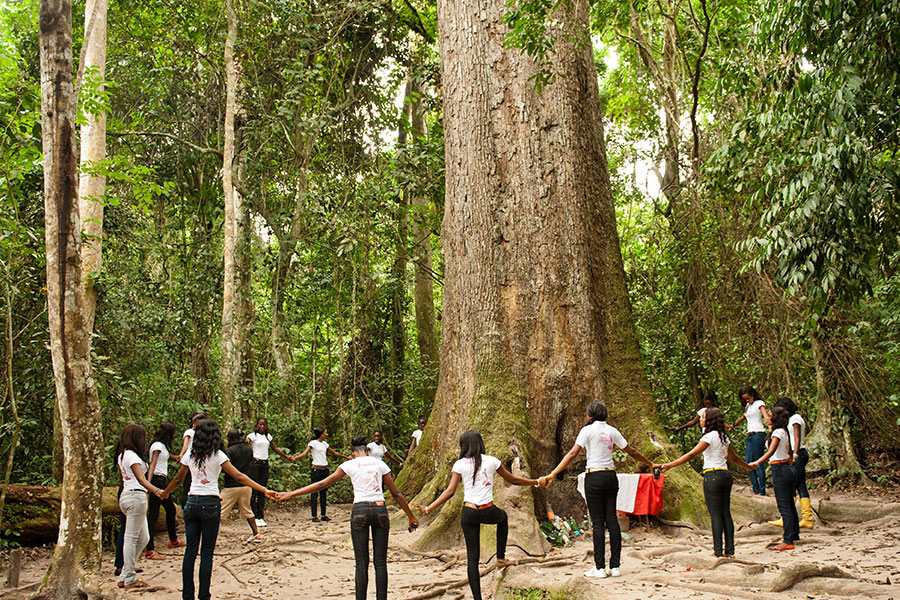
There once stood a tree. It had stood for longer than the oldest person had lived in that area, and almost longer than America had been a country. It reached higher than our necks allow us to see – a skyscraper of the Amazon, some may say. It’s home to our friends with wings, plants and crawling critters, playing children and the air we breathe. Yet for outsiders it’s simply a tree. It may just be one tree, but for 25 communities living along a river in the Ecuadorian Amazon, there are only three other living trees like this in existence.

In spite of this, in the eyes of some outsiders, this tree is replaceable by the plentiful other trees around it. Foreigners might ask – within a territory covered in greens of all shades and barks of all textures – “what’s the value of just one more tree?” Well, through a local viewpoint, no other oxygen-omitting being would begin to suffice.

An endangered species, they protested. Spiritual symbolism, they claimed. Historical significance, they explained. In a place in which nature and culture are commonly intertwined it felt as if the possible destruction of nature was equally a possible destruction of their society. The intruders, as a few Amazonian’s framed it, began to propose a scheme of deforestation. They cleverly assembled a proposition stuffed with linear logic of growth and capitalistic gain – gain for themselves of course, not the locals. $20 for a 200-year-old tree that could still grow for a further one hundred years.

Perhaps they fell asleep during that part of their environmental science class that explained that, for a tree of that size, at least 200 years more years should pass. They do say time is money, but the locals struggled to accept that $20 equates to 200 years of time. I think they were even further puzzled when the constructors attempted to rationalise the offer by saying it would only take four hours of their time. Four hours pass and the construction site would be a hidden site.

Or on the other hand, four hours pass and the construction site would be a graveyard site to the natural, spiritual, social and cultural elements that stemmed from that tree. Fortunately, a few activists were not willing to put up a tombstone. It takes one thought, one person, one group, one action to change the course of what some believe may be fate. In this case it was one proposal. An outside group stepped into the negotiations and raised the offer by $80.

Rather than $20 to cut the tree down, how about $100 to leave the tree untouched? The team of constructors were not swayed by the three-digit offer. At this point, while some lost hope, others transformed their lost hope into confidence – for saving the tree. Workers from a local social enterprise joined the movement and they made a commitment to each other to protect this historical, spiritual, playful being of a tree.

As I mentioned before, to change the course of the future begins with us.

As I mentioned before, to change the course of the future begins with us. From an idea to initiative to execution of our vision, we are able to achieve our mission. Even when the first attempt fails that does not mean that the second or third shot should also disappoint. The local’s story follows this pathway. Although the foreigners thought they were rather clever, the locals accessed some indigenous genius. They expressed that the tree the outsiders were hoping to kill resided within indigenous territory. These foreigners did not just stumble upon land with the right to claim or destroy any element of it.

There was no equivalent phenomenon to Columbus discovering America “by accident.” For this reason, the foreigners consequently had to play by indigenous rules. It only took some creative, innovative thinking to completely switch the situation around. Now, those wearing the power shoes were the locals, with land, rather than the foreigners with money. If you want any more nights with your families, the locals warned, you’d better hustle out of our terrain.

Of course this was an intimidation tactic rather than one they would straightforwardly follow. Nonetheless, they provide the proof that with dedication to a particular belief, no obstacle stands in the way as a barrier. Although less politically significant or economically established, their drive to lead and achieve was more powerful than imagined. After clearly outlining the importance of the tree and exposing the ignorance of the outsiders, a deal was closed.

With a voice willing to speak up for what they believed in, they not only saved the tree, but also initiated a continual benefit from the tree; each month $100 is dispersed throughout the community which helps to support the families of the village. In what seemed an unfortunate event, fortune was actually found.

Much of our life and what we aspire to achieve is dependent on how we choose to go about living; whether we accept circumstances or take circumstances into our own context.

Much of our life, and what we aspire to achieve, is dependent on how we choose to go about living; whether we accept circumstances or take circumstances into our own context. As these Amazonian’s taught me, there is power in “one.” In the same way a match has the ability to light a candlelight, a bonfire, a devastating house fire or forest fire, our beliefs and goals can also leave an impact of any size. After all, an obstacle is only an obstacle if we perceive it to be.

So, when presented with what seems bad, reconsider how this “unfortunate” event may actually result in fortune.

Emma Watson: Are You Man Enough For Equality?

Since the HeForShe launch in New York last September I think it would be fair to say that my colleagues and I have been stunned by the response. The HeForShe conference was watched over 11 million times, sparking 1.2 billion social media conversations, culminating in the HeForShe hashtag becoming so popular that Twitter painted it on the walls of its headquarters and men from almost every country in the world made the commitment.

Everyone from Desmond Tutu to Prince Harry to Hilary Clinton to Yoko Ono have issued their support or contacted us since September 20th. Everything from marathons being run, merchandise being created, 15 year old boys writing to national newspapers deploring female discrimination, young girls collecting hundreds of signatures – it’s all happened in the last 4 months. I couldn’t have DREAMED it (!) but it’s happened.

Thank you so much for watching and thank you so much for your support. What is Impact 10x10x10? It’s about engaging governments, businesses and universities and having them make concrete commitments to gender equality but I want to hear from the human beings that are behind these organizations.

I spoke about my story in September – what are your stories? Girls who have been your mentors? Parents did you make sure you treated your children equally, and if so, how have you done it? Husbands have you been supporting your female partner privately so that she can fulfill her dreams too? Young men have you spoken up in a conversation when a woman was casually degraded or dismissed? How did this affect you? How did this affect the woman you stepped up for? How did you take action when you became aware a woman was a victim of violence?

Businessmen have you mentored, supported, or engaged women in leadership positions? Writers have you challenged the language and imagery used to portray women? CEO’s have you implemented the women’s empowerment principles in your own company? What change have you seen? Are you someone that has been persuading men to become HeForShes and collecting their signatures for our website? How many have you got? We want to know. One of the biggest pieces of feedback I’ve had since my speech is that people want to help but they aren’t sure how best to do it. Men say they have signed the petition – What now?

The truth is the ‘what now’ is down to you. What your HeForShe commitment will be is personal. And there is no ‘best’ way – everything is valid. Decide what your commitment is, make it public, and then please report back to us on your progress so that we can share your story. We want to support, guide and reinforce your efforts. Impact 10x10x10 is about concrete commitments to change, the visibility of these commitments and the measurability of them too. How has the campaign impacted me so far?

I’ve had my breath taken away when a fan told me that since watching my speech she has stopped allowing herself to be beaten by her father. I’ve been stunned by the amount of men in my life that have contacted me since my speech to tell me to keep going and that they want to make sure their daughters are still alive to see a world where women have parity, economically and politically. While I would love to claim that the success of the HeForShe campaign is a direct result of my own incredible speechwriting skills. I know that it’s not. It’s because the ground is fertile. It’s my belief that there is a greater understanding than ever that women need to be equal participants in our homes, our societies, in our governments, and in our work places.

And they know that the world is being held back in every way because they are not. Women share this planet 50/50 and they are massively neglected and underrepresented, their potential astonishingly untapped. We are very  excited to be launching Impact 10x10x10 to bring HeForShe into its next phase. If you’re a HeForShe – and I am assuming you are because otherwise you’d be at somebody else’s press conference right  now – I’m here to ask you what is the impact you can have? How, what, where, when and with who? We want to help and we want to know.

If you agree with Emma, please sign our 5050×2020 gender balance pledge here

0