Mila Kunis: Actress

Milena Markovna “Mila” Kunis, born August 14, 1983, is an American actress who moved to Los Angeles from Ukraine in 1991 at the age of seven.

After being enrolled in acting classes as an after-school activity, she was soon discovered by an agent. She appeared in several television series and commercials, before acquiring her first significant role prior to her 15th birthday, playing Jackie Burkhart on the television series That ’70s Show. Since 1999, she has voiced Meg Griffin on the animated series Family Guy.

Her breakout film role came in 2008, playing Rachel in the romantic comedy-drama Forgetting Sarah Marshall. Her other films include the neo-noir action film Max Payne (2008), the post-apocalyptic action film The Book of Eli (2010), the romantic comedy Friends with Benefits (2011), the comedy Ted (2012), the fantasy Oz the Great and Powerful (2013) as the Wicked Witch of the West, and the drama Black Swan (2010). This performance gained her worldwide accolades, including the Premio Marcello Mastroianni for Best Young Actor or Actress, and nominations for the Golden Globe Award for Best Supporting Actress and Screen Actors Guild Award for Outstanding Performance by a Female Actor in a Supporting Role.

Kunis is married to actor Ashton Kutcher.


Disney Announce Girl Power Star Wars Spin-offs

Disney expand the Star Wars universe by creating all-female animated shorts and a new line of toys aimed at a female audience. 

Disney are celebrating the girl power of ‘Star Wars’ by creating short on-line animations based on iconic female Star Wars characters including Rey, Jyn Erso, and Princess Leia.

Entitled ‘Star Wars Forces of Destiny’, each episode will focus on one female character, which will be voiced by the franchise’s original actresses – excluding the late Carrie Fisher, who will be replaced by actress Shelby Young.

“These pieces are all interconnected within the larger story universe of Star Wars. They are told in a way that they are self contained,” says Vice President of Lucasfilm Animation Development, Carrie Beck.

“So if you know nothing you can come in and experience these stories brand new. But if you are a fan and you know everything about Star Wars, this will add new dimension and new layer to the characters you already know and love.”

Disney haven’t just stopped with the animation series. They are bringing out a whole new set of more doll-like action figures aimed at girls too.

“We know that, through our testing, that this (the action figures) appeals to both boys and girls,” says Senior Vice President of Hasbro Brands, Samantha Lomow. “Of course you’ve got these great heroic female leads but we also have the really fun sidekicks that they interact with in the entertainment. We really wanted to bring those out as well. You may even see a villain or two on the way.”

‘Star Wars Forces of Destiny’ will begin on Disney’s YouTube channel in July.

By Rollo Ross


Men at Higher Risk of Losing Jobs to Robots

Up to one-third of British jobs could be taken over by robots by the early 2030s, impacting 10 million Britons but with women less likely to face redundancy, a recent UK study has shown.

The research, by accountancy firm PricewaterhouseCoopers LLP, found 30 percent of UK jobs could face automation compared to 38 percent in the United States, 35 percent in Germany, and 21 percent in Japan.

Researchers, however, said this wouldn’t necessarily lead to less employment as jobs may change rather than disappear.

But the distinction between men and women was clear, with PwC estimating 35 percent of men’s jobs were at risk compared to 26 percent of women’s because of the high number of women in sectors requiring social skills like education and health.

Male workers are also more concentrated in jobs requiring lower education levels, like transportation and manufacturing.

PwC Chief Economist John Hawksworth said in the future employees of both genders will “have to be more adaptable, not stuck in the stereotypes”.

He said this could present an opportunity for men and women to break down traditional gender gaps and progress in careers, provided they can upskill or access training opportunities.

“The whole thing has become more fluid,” he told the Thomson Reuters Foundation.

However, it was uncertain whether these changes would have any impact on the gender pay gap. Figures from the UK’s Office of National Statistics show on average women earned about 18 percent less than men in Britain in 2016.

By Sally Hayden @sallyhayd, Editing by Belinda Goldsmith; c Thomson Reuters Foundation.


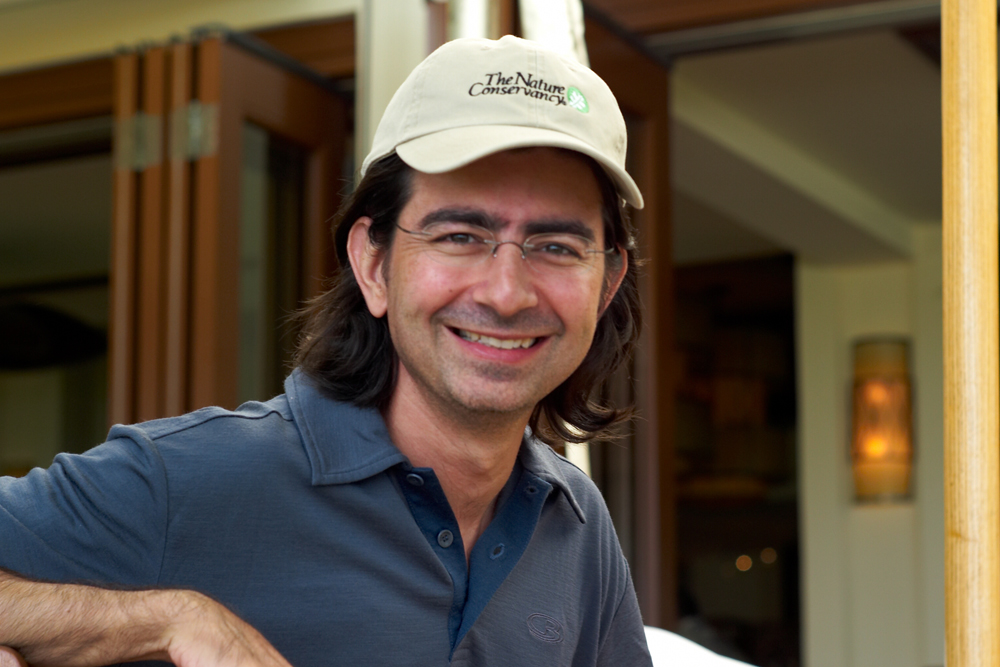
Pierre Morad Omidyar: Founder of eBay

Pierre Morad Omidyar, born June 21, 1967, is a French-born Iranian-American entrepreneur and philanthropist. He is the founder of the eBay auction site where he served as chairman from 1998 to 2015.

Omidyar was born in Paris, the son of Iranian immigrant parents who had been sent to France by their parents to attend university. He was given the name of Parviz by his Iranian parents. His mother, Elahé Mir-Djalali Omidyar, is an academic and his father, a surgeon, worked as a urologist at Johns Hopkins University in Baltimore. Due to his father’s work the family moved to the United States when Omidyar was a child.

His interest in computers began while he was a ninth-grade student. He graduated from St. Andrew’s Episcopal School  in 1984 and from Tufts University in Medford/Somerville, Massachusetts, with a bachelor’s degree in computer science in 1988. Shortly after, he went to work for Claris, an Apple Computer subsidiary, where he worked on the team that upgraded MacDraw to MacDraw II. In 1991, he co-founded Ink Development, a pen-based computing startup that later was rebranded as an e-commerce company and renamed eShop.

In 1995, at the age of 28, Omidyar began to write the original computer code for an online location that enabled the listing of a direct person-to-person auction for collectible items. He created a simple prototype on his personal web page, and on Labor Day, he launched an online service called Auction Web, which eventually became the auction site eBay.

In 1998, eBay launched a successful public offering, making Omidyar a billionaire. As of July 2008, Omidyar’s 178 million eBay shares were worth around $4.45 billion. Omidyar is also an investor of Montage Resort and Spa in Laguna Beach, California. Additionally, Omidyar is also a member of the Berggruen Institute’s 21st Century Council.

In 2013, prompted by the Edward Snowden leaks, Omidyar announced the creation of First Look Media – a venue for “original, independent journalism.”


From Adventurers to Inventors, Saudi Women Inspire a New Generation

Saudi women from adventurers to inventors hope a unique conference in Riyadh will highlight their changing roles and inspire younger women to push for new opportunities in the ultra-conservative kingdom.

The event comes at a time when reforms are slowly affecting women’s lives in one of the world’s most gender-segregated countries – where women live under the supervision of a male guardian and cannot drive.

Women can now sit on the government advisory Shura Council, vote in municipal elections and work in some retail and hospitality jobs with the government’s Vision 2030 trying to diversify the oil-reliant economy by boosting female employment.

At a one-day conference run by Alwaleed Philanthropies, a charitable group working to help women, Saudi women from various walks of life took to the stage alongside international speakers such as British women’s rights campaigner Cherie Blair.

Raha Moharrak, 31, who made history in 2013 as the first Saudi woman to climb Mount Everest (pictured above), said girls in Saudi Arabia must be taught that they are not less than boys.

“My journey started as a mini-rebellion … I wanted to shock my parents,” said Moharrak, who was determined to do something different after studying abroad and won her reluctant father over by explaining why climbing was important to her.

“In our culture we are taught to be quiet, taught that being bold is ugly, that being different is discouraged. I think that bold is beautiful, that being different is unique.”

Other speakers included Hadeel Ayoub, who invented a smart glove that converts sign language to text, and writer Kawthar Al Arbash, whose son was killed in 2015 trying to stop an Islamic State suicide bomber.

“SAUDI WOMEN CAN”

Princess Lamia bint Majed Al Saud, secretary general of Alwaleed Philanthropies, said the conference, with the slogan “Saudi Women Can”, was part of a campaign to draw attention to their achievements and inspire the next generation.

After the conference – which she hopes to make annual – a microsite SaudiWomenCan.com with a mobile app will issue daily motivational quotes, and other initiatives are planned.

“I want to give the younger generation role models to show them that, no matter what obstacles, there are opportunities and give them stories to inspire them,” Princess Lamia told the Thomson Reuters Foundation, which is partnering with the charity to provide training for Saudi journalists on women’s issues.

Speaker Eqbal Darandari, associate professor at King Saud University who was elected to the Shura Council in 2016, said it was important women learn responsibility and leadership.

“We need to teach females to be stronger … to make change, to work on their own,” said Darandari, adding the biggest progress would come if women were given decision-making roles.

“We are achieving things but not as fast as we would like. But this is a problem not from the top but from down, from the people, as what is needed is social change and that is slow.”

Saudi Arabia is ranked 141 of 144 countries in the Global Gender Gap, a World Economic Forum study on how women fare in economic and political participation, health and education.

A state policy of gender segregation between unrelated men and women is strictly enforced with separate areas in public spaces and separate entrances at workplaces.

In public all women must wear a head-to-toe black garment.

Moharrak, a graphic designer, said women need to get the support of their fathers and brothers for real change to happen.

“All the women who have managed to achieve independence have two things in common: a rebellious heart and an understanding father. We don’t grow up with an easy path but no one wants to be disowned or disrespect their father,” she said.

By Belinda Goldsmith @BeeGoldsmith, Editing by Ros Russell and Ellen Wulfhorst. c Thomson Reuters Foundation.


The Three Things We Must Teach Our Daughters

In today’s society, women are suffering. Our young women are suffering.  My granddaughters are suffering. Not because they are incompetent or weak, but because society tells them day-in and day-out that they are NOT good enough.

These conflicting messages become apparent as early as pre-teen years because our daughters look around and become very aware that males have privileges that they do not, and they realize they live in a male centered world. So, it’s no surprise girls become great at becoming something they are not. Change is needed.

My advocacy of women came about because of deep and sustained research of leadership effectiveness that the Gap company asked me to do. What I discovered at Gap was that women have distinctive advantages in leading teams and organizations that rely on collaboration. Women are especially able to create and implement innovation that people and their customers valued, and women especially excel in conditions of ambiguity and change. 

My subsequent research took me deep into the field of neuropsychology. This is a new field that studies the interactive effects of our brain biology and social environment. This led me to understand how negative impact of systemic bias severely limits the lack of confidence that most women battle when fulfilling their potential in the workplace. It also inhibits women’s happiness and life satisfaction.

Put simply, it’s a man’s world. It has been for thousands of years. And the world we currently have is about as good as male brains can make it. It doesn’t appear to be good enough.

Due to the explosion of world population from 2.5 billion to 7.5 billion people the last 60 years, and an unprecedented advancement of technology, everything in our world has become more intensely interconnected. It turns out, the holistic neuro networks of female brains are better designed to deal with this complexity than the linear brains of most males. However, unless women’s voices and thinking versatility is elevated to the highest levels of our institutions, the short term, binary, blue brain thinking of testosterone thinking will continue to dominate.

We need to train our daughters to overcome the female self-doubt that is driven by the bias in our world culture. We need to obliterate the limits of women’s contributions that will lead to better business, better government and a better world.

In my women’s leadership training I summarize the mindset of successful high functioning women leaders. It is based on years of leadership science that examines the results of 360° leadership surveys and the business results achieved by high impact women leaders. It is also very relevant in teaching and raising young girls.

The Confident Mindset

 The foundation is confidence.  Confidence arises when you believe that the result of your best efforts will be successful. When you don’t have that experience because others, who are less capable, are consistently given more opportunities and advantages than you, it is natural for your confidence to erode. Too often, women settle for jobs which are designed to help other people achieve their goals.  But for our world to work for everyone young girls and women need to pursue their goals.
 
The confident mindset is built on three principles:
 
1.Be BRIGHT: Carol Dweck’s  growth mindset research ( insert amazon link book link) confirms that if you have an IQ of 115,  you can learn anything.  You can become a rocket scientist or a brain surgeon. You can certainly become the President of United States.   This idea is new for women.  In 1960, nearly all major universities would not except women into their engineering programs.  1960! Most states would not license women to become architects until the 1950s because architecture was considered too technical a field for women to master.  Unfortunately, that mindset lingers.  We have to actively build a confidence of our girls that they are intellectually, socially, and emotionally gifted to learn whatever they need to learn to make the greatest contribution they can make in whatever field they choose. Teach your daughters that they can learn anything.

2.Be BRAVE. Personal bravery is a willingness to try things at the outer edge of your competence. When you are  brave enough to push yourself out of your comfort zone your learning and development expands.  One of the greatest abilities of women is their mental and social agility which allows them to move beyond mistakes and shortcomings to endlessly become better and better. Recent research from McKinsey and Company reveals that women continue to seek and grow from feedback after age 40. The research found that as men age they tend to respond to negative feedback defensively. They become more self justifying. For women, the greatest deterrent to bravery is perfectionism.  Teach your daughters that a well lived life is a life of progress not perfection.

3.  Be TRUE. In the Facebook era, we swim in an ocean of social comparison. But high functioning people do not define themselves by comparing their looks, their achievements or their stuff to anyone else’s. To be true means that you consistently invest the inner energy necessary to understand your unique motivated talents.  These are the abilities that you love to use and develop. These are talents that can be harnessed in the service of what intrinsically rewards you. When your highest motives and your greatest talents are combined you’re on the path to fulfillment.

You are not your body.
You are not your achievements. 
You are not your grades. 
You are not your friends. 
You are not your emotions. 
You are not your fears.  

You are not any of these things because all of these things change. You are something much deeper.  You have an intrinsic, essential self that is gently seeking to be fully realized.  You’re not seeking self-fulfillment as much as soul fulfillment. This is not an airy- fairy, quacky notion. It is the conclusion of the collective wisdom of thousands of years of philosophers and spiritual leaders worldwide. And after three decades of helping people fulfill their inner sense of purpose as well as their professional and personal goals, it is also my strongest conviction.  Teach your daughters not to be defined by anyone else, and to seek soul fulfillment.
 
Be bright.

Be brave.

Be true.
 
These are the things to teach your daughters and the young girls in our communities. One of the greatest benefits in teaching them these three principles is that you will more fully become the truth that you teach. For it is in our examples that the most powerful teachers emerge, always.


The Smurfs Occupy UN on International Day Of Happiness

Today is International Day of Happiness. In the lead up to this day of potential elation and glee, the United Nations held a special ceremony at the UN headquarters in New York on March 18 with the cast from the movie Smurfs: The Lost Village to lend their support towards the human pursuit of happiness and well-being throughout the world.

The campaign themed “Small Smurfs Big Goals” encourages everyone to support the United Nations Sustainable Development Goals that include ending extreme poverty, protecting the planet and giving everyone the chance to enjoy peace and prosperity.


The Red Carpet Event saw UN and UNICEF dignitaries mingle with Smurfs actors Demi Lovato (voice of ‘Smurfette’), Mandy Patinkin (voice of ‘Papa Smurf’), Joe Manganiello (voice of ‘Hefty Smurf’) and film director Kelly Asbury. Smurfs: The Lost Village will be released in cinemas globally from 29rd March 2017.

A profound shift in attitudes is underway all over the world. People are now recognising that ‘progress’ should be about increasing human happiness and wellbeing, not just growing the economy.

March 20 has been established as the annual International Day of Happiness and all 193 United Nations member states have adopted a resolution calling for happiness to be given greater priority.

We are a social species and we thrive when we’re closely connected to others. But modern society is leaving more and more people feeling disconnected, isolated or lonely. On the day, thousands of people all around the world reached out to make new, positive connections with others.


The UN Ceremony, held in the iconic General Assembly Hall of the United Nations, saw the Smurfs actors present Youth Champions with the keys to “Smurfs Village.”

www.smallsmurfsbiggoals.com


Mo Farah: British Track Athlete

Sir Mohamed Muktar Jama “Mo” Farah is a British distance runner, originally from Somalia.

Born in 1983 Farah moved to the UK as a child. He was originally based in London and ran for Newham and Essex Beagles athletics club. He is the European record holder for the 1,500 meters, 10,000 meters and half marathon. He also holds the British title for the 5,000 meters, the European indoor 5,000 meters and the current indoor world record holder for the two mile race.

He is the most decorated athlete in British athletics history, with nine global titles, and was the first British athlete to win two gold medals at the same world championships. His five gold medals at the European Athletics Championships make him the most successful individual athlete in championships history.

Farah is noted for his unique victory celebration dance known as the “Mobot”. 

Farah is involved in various philanthropic initiatives, launching the Mo Farah Foundation after a trip home to Somalia in 2011. The following year, he participated in ITV’s The Cube and won £250,000 for his foundation, becoming the first person ever to win the top prize on the show. Along with other high-profile athletes, Farah later took part in the 2012 Olympic hunger summit at 10 Downing Street hosted by then prime minister David Cameron, part of a series of international efforts which have sought to create awareness of hunger as a high-priority global issue.

Farah has endorsement deals with a number of companies, including Pace Sports Management, Nike, Lucozade, Quorn, Bupa and Virgin Media. He is expected to earn roughly £10 million in advertising and sponsorships in addition to making roughly £250,000 – £450,000 during exhibitions, and promoting “Brand Mo” with management firm Octagen.


Which Countries Lead With Women Leaders?

Women made scarcely any progress increasing their presence in the top echelons of government last year, leaving gender equality in legislatures and ministries a distant goal, data showed on Wednesday.

A map ranking countries based on women in politics showed the number of women ministers and legislators barely rose, and the number of countries with a female head of state fell.

Progress getting women and men in equal numbers among the world’s political leaders is at a near standstill, said the Inter-Parliamentary Union (IPU) and U.N. Women, which compiled the map.

“The overall stagnation and specific reversals are warning bells of erosion of equality that we must heed and act on rapidly,” said Phumzile Mlambo-Ngcuka, executive director of U.N. Women.

Specifically, the number of women ministers nudged up to 732 from 730 in 2015, and their representation in parliaments rose less than a full percentage point to 23 percent. The number of countries with a female head of state or government fell to 17 from 19.

“These developments show that progress in gender equality remains slow in all structures of power and types of decision-making,” IPU Secretary-General Martin Chungong said in a statement.

“Power is still firmly in men’s hands,” he said. The Swiss-based IPU works to promote representative democracy.

Nordic countries suffered the largest setback globally, with a 6 percent drop in women ministers. Overall, however, women account for 44 percent of the top political executives.

In Africa, women hold one-fifth of the ministerial posts but, with the exception of the Congo and Zambia, saw a steady decline over the last two years.

Finland, which had the most women ministers in 2015, saw a sharp fall to 39 percent from 63 percent. Finland now ranks 14th, while Bulgaria, France, and Nicaragua share first place.

In those three top countries as well as in Sweden and Canada, the number of women in ministerial positions is slightly more than half.

Rwanda has the highest ratio of female legislators, at nearly two-thirds in its lower house, followed by Bolivia, Cuba and Iceland.

North, Central and South Americas made significant gains over the year, with women comprising a quarter of the legislatures.

In Arab states, the biggest improvement was in Tunisia, where the ratio of women in parliament rose to 23 percent from 11 percent.

By Anastasia Moloney @anastasiabogota, Editing by Ellen Wulfhorst. c Thomson Reuters Foundation.


The Future Architects of Healthcare Will Be Women

The first principle of classical ethics is that no human being should willfully cause other human beings to suffer. The second principle is if you have the ability to prevent or alleviate human suffering you should. Obviously, those principles are violated constantly.

When philosopher Adam Smith wrote about the benefits of capitalism, he did not promote the misguided notion that all human provided services would be better if driven by the profit motive. There is a distinct difference between commercial markets needed community services. Whenever people misuse the profit motive to serve essential human needs, whoever has the least amount of money will get the least benefit. That’s why Benjamin Franklin founded our country’s first community fire departments. If only wealthy individuals could afford to pay to protect their houses with private fire departments, entire cities would’ve burned to the ground because the widespread devastation of fires can’t be contained.

So what about our health?

The fact is, that unless every American citizen is in one 330 million-shared risk pool, the only way profit-making insurance companies can make money is restricting coverage for the truly sick and gouging the healthy. Therefore, one all-inclusive pool is the only way we can harness the law of averages to keep healthcare remotely affordable.  And that’s only the beginning.

The problem we face is profit-driven health care requires so much regulation to avoid profiteering and exploitation that all we can create is a bureaucratic mess. That’s what politics is doing to healthcare. And it’s creating needless human suffering.

Why Women Must Take the Lead in Healthcare

I have little confidence in our male political leaders to do anything creative or collaborative to solve the healthcare cost crisis. So, it’s time to get female candidates ready for 2018. The answer: we must elect many more women to Congress.

Here’s why women need to take the lead in solving this problem:

  1. Women are more likely than men to need medical services. They need to visit doctors more frequently and as a result, have to pay a greater proportion of their income for healthcare.
  2. Women earn less than men, and are more likely to live in poverty. So they’re less likely to afford medical care. As a result, uninsured women are nearly 20% more likely to have trouble obtaining health care.
  3. Young women, rural women, Latinas, and African American women all face severe obstacles to obtaining medical care. Cost and access to competent care is much more limited for these women.
  4. Because women are more likely to work part-time jobs, they’re less likely to have employment-offered health insurance.
  5. Women are economically disadvantaged because they now spend nearly 1/3 of their lives caring for their children, and for relatives who are sick, disabled, or elderly.
  6. Women are much more vulnerable to losing healthcare coverage because of divorce than men.
  7. Reductions in Medicaid disproportionately harm women because more women live beneath the poverty line.

(All of these statistics come from Dr. Susan Sered; Suffolk University Boston.)

The Answer to Healthcare is Unlikely to Arise from Males

The answer to these problems is unlikely to be addressed by blue-brained males who mistakenly believe that marketplace competition creates quality and efficiency in all cases. The concept of limited government is appealing but quickly loses its practical value in the face of virtually unlimited, powerful, supersized corporations. When the size and power of our institutions become imbalanced, power becomes concentrated for a few at the expense of the many.

The conservative Heritage Foundation promotes a severely limited government. They espouse a fundamentalist belief that taxes rob the worthy wealthy of their just rewards for their hard work and give it to unworthy lazy people who are either poor or sick because they have brought it on themselves. This sincerely held belief is cloaked in the costume of personal responsibility, as if every struggling, abused, or single mother has brought her suffering on herself.

Although that might seem far-fetched, it’s not.

The roots of William F. Buckley’s 1950’s arguments for modern conservative values, are deep in the soil of New England Calvinism. Calvinists believed that whether you were going to heaven or hell was pre-destined. Worthy people who are pre-selected to go to heaven were born to good families, who could afford to give them good educations and opportunities. Unchosen people were usually born to poor families or slaves, where they lived out there pre-destiny of suffering both in this life and the next. Moreover, many of these fundamentalists believed that trying to empower the poor or the unchosen was against the divine will. They believed people got what they deserved.

These misguided 17th-Century beliefs are so buried deep within conservative dogma, that they would never be openly acknowledged.

Yet, you clearly saw this kind of thinking when Congressman Jason Chaffetz told a journalist last week that people “are just going to have to choose between a new iPhone or their healthcare.” He is simply representing the self-righteous condemnation of the poor and the disadvantaged, as if they have only themselves to blame.

 As this kind of thinking creates a binary society of winners and losers, of the deserving and the undeserving, we lose the reality of our new level of interconnectedness. We lose the aspiration of creating a society that honors both personal responsibility and our common good.

Often Conservatives plead that they’re just being practical.  They argue we can’t afford what is necessary to create a more ideal society. That is simply not true. It is a matter of priorities.  And priorities are guided by whatever your inner story is. Countries on the rise invest their taxes in the capacity and well being of their citizens. If we taxed investment gains in exactly the same way we tax wages we could create a 21st Century country. The only reason we don’t is we choose not to.

Why is the value of money made by high-speed stock trading more valuable and taxed less than money earned by hard-working nurses? For instance, if we were willing to tax the first $125,000 of investment gains at the same rate we deduct Social Security and Medicare taxes from wages those programs would have ample money.

Investing in a Level Playing Field

The research is clear; we know what to invest in. There are five conditions that create a level playing field that actually empower people’s self-reliance, discipline, and vision to elevate themselves. The five are universal access to:

  1. quality education,
  2. healthcare,
  3. capital,
  4. justice,
  5. and infrastructure from transportation to high-speed internet.

Countries that provide free education, healthcare, justice, low cost capital and life leveling infrastructure have the highest rates of social mobility. That means were you start in life doesn’t determine where you end. That was once the American dream but is now more likely to be found in countries like Canada and New Zealand.

My concern is that as long we have authoritarian, highly-competitive males determining how citizens can access healthcare, we will only come up with costly answers that cause unnecessary suffering and lack of access by the people who need healthcare the most—especially  women.

I don’t believe the answers will be found on the Right or Left. I don’t believe government run healthcare will be the best and most efficient. And I am certain that healthcare rationed by a few highly profitable insurance companies, obscenely profiteering drug companies, and a competitive swirl of hospitals and doctors, will never sort itself out into something remotely effective or fair for all.

The answer?

We already have some well-established models that rely on collaboration and commitment to provide the best care for the most people. They’re called Accountability Care Organizations (ACO’s).  They are collaborative, non-profits that invest surpluses in new technologies, thus eliminating waste and breakthroughs like tele-medicine. The best governance model, to scale these organizations to serve every American, is the medical cooperative.

Medical cooperatives are run for the primary benefit of every member they serve.  They’re governed by citizens not bureaucrats. The promise of citizen-led organizations with proper rules of governance and a clear and narrow guiding mandate will provide innovative choices of how to provide high-quality services, that every citizen needs, without the bureaucracy, corruption, and greed that clog our path to the future.

The architects of Citizen Healthcare will be Women. Because women are the force of civilization.

Women have always wanted a future that is better, safer and fairer for their children, their community’s children, and the world’s children.

We need something new. We need it  now.

 

0