12-Year-Old Boy And Refugee Swim From Robben Island

A Congolese refugee and a 12-year-old boy, inspired by Mandela’s legacy, teamed up to complete a five-mile swim from Robben Island in Cape Town to raise funds for charity.

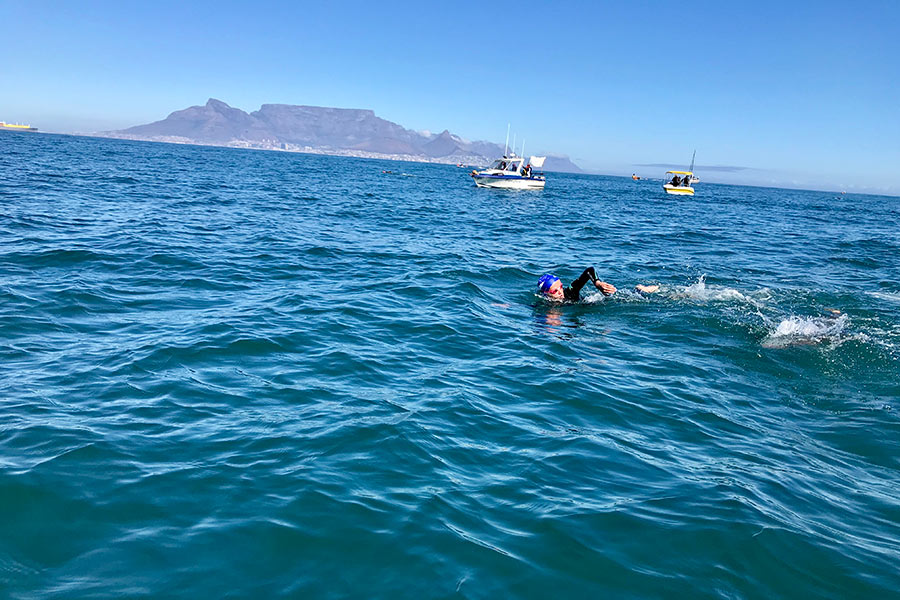
The Freedom Day Swim took place on 21 April and saw people from around the world swim from Robben Island to the mainland. The island is infamous as the place where Nelson Mandela was imprisoned for 18 of the 27-years he served behind bars. The swim is held each year to celebrate the beginning of democracy in South Africa (27 April 1994).

If you like this, subscribe here for more stories that Inspire The Future.

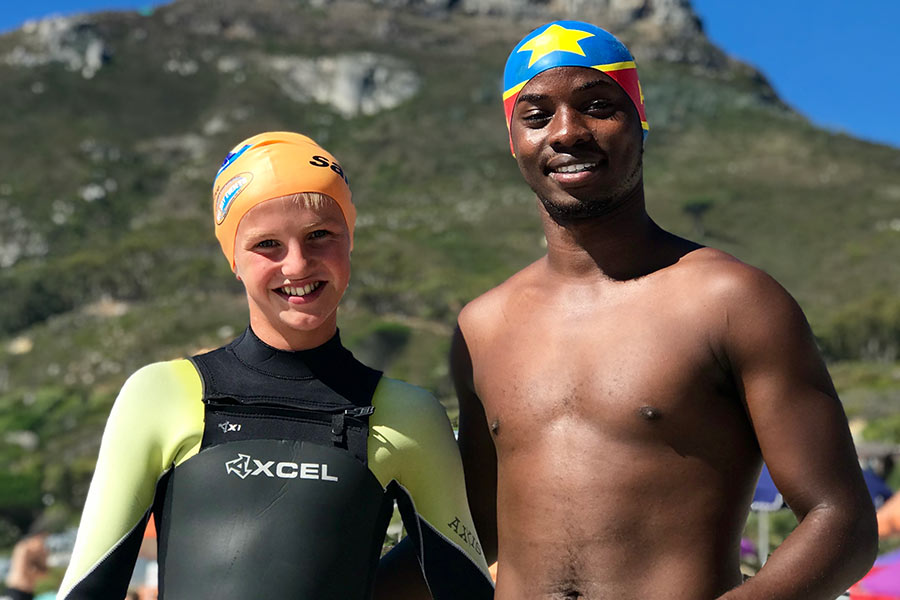
Challenged to come up with a leadership project at school, Grade 6 learner Gabriel Schreiber teamed up with 23-year-old Congolese refugee Arafat Gatabazi as his swim coach and decided to push himself out of his comfort zone. The swim from Robben Island is considered the “Everest” of open water swimmers in South Africa, not only for its distance but for the cold water, jellyfish and Cape Town’s resident evil: the great white shark.

Schreiber and Gatabazi at the halfway mark.

Gatabazi fled Africa’s deadliest conflict in the Democratic Republic of Congo in 2013, spending four months on the road without his parents, eventually making his way to South Africa. He only learned to swim after arriving at a Cape Town refugee shelter as a teenager, and loved it. No longer bothered by extremes, he took a liking to open water swimming and has since completed the Atlantic Ocean swim from Robben Island multiple times.

The pair swam alongside each other the whole way and completed the five-mile swim in 2 hours and 34 minutes. Schreiber became the third youngest person in the world to complete the swim, beating many of the adult competitors. Much of their training in the weeks before  the event had been to accustom their bodies to the 50 °F water and the real risk of hyperthermia.

Their swim, dubbed the #StrokesForSpokes Challenge, aimed to raise funds for Chaeli Mycroft’s Sport & Recreation Club, an organization that helps disabled children, especially young wheelchair users from disadvantaged communities, take part in activities they would usually not be able to enjoy. 

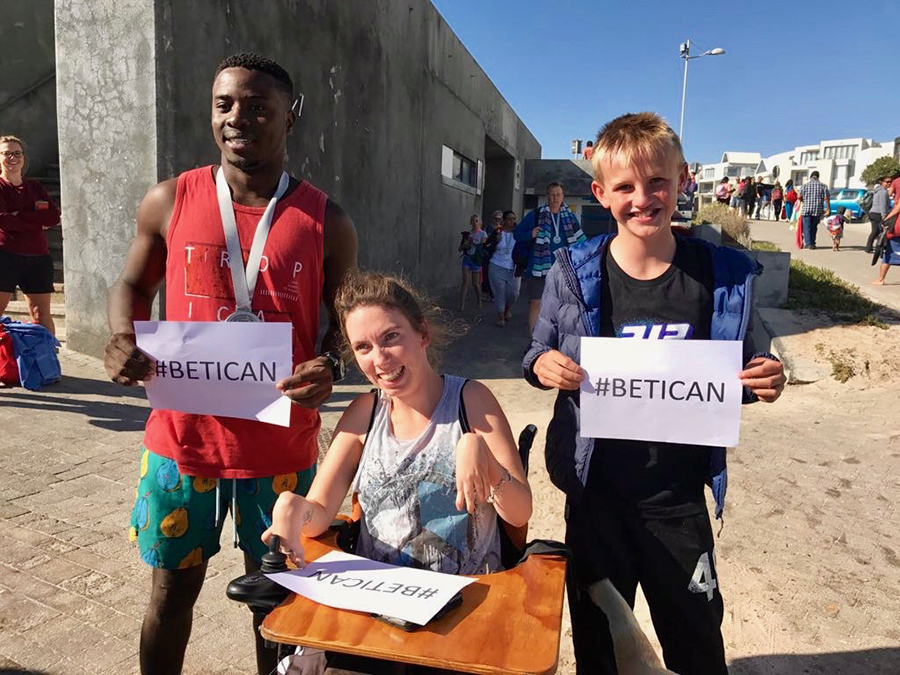
From Left: Arafat Gatabazi, Chaeli Mycroft and Gabriel Schreiber.

Despite being a quadriplegic in a wheelchair, Mycroft does not shy away from physical challenges either. She has been up Africa’s highest mountain, Kilimanjaro, and was the first wheelchair athlete in history to participate in the 55-mile Comrades Marathon. She also won the International Children’s Peace Prize in 2011, the equivalent of the Nobel Peace Prize for kids.

Mycroft has challenged young people to achieve the impossible by starting the #BetICan campaign and has undertaken a series of physical challenges to prove skeptics wrong.

“I did this swim to raise awareness around children who are much less fortunate than me,” says Schreiber. “I’m lucky to have a body that can do almost anything, and I want to remind people about those who can’t move about freely, like most of us. Chaeli has inspired me by showing that disability can be turned into ability.”

Some say leadership is learned; not something you’re born with. If that’s true, we should start examining what we teach our kids at school. Pinning a goal to a higher cause is one good example. Pushing physical boundaries is another, which can surely teach kids how to push past mental boundaries too, and in so doing, create a new generation of leader who sees the value of achievement tied to social good.

If you like this, subscribe here for more stories that Inspire The Future.


Kate Hudson’s Fabletics Empowers Women to Lead

Fabletics, an active-lifestyle brand co-founded by Kate Hudson in 2013, has launched a global capsule collection to benefit the United Nations Foundation’s Girl Up initiative.

For over a year and a half, Fabletics and Girl Up have joined forces to support a common mission – to make girls leaders of tomorrow through the empowerment of girls worldwide. Since the launch of Girl Up in 2010, the organization has funded United Nations programs that promote the health, safety, education, and leadership of girls globally and has built a community of over half a million passionate advocates.

If you like this, subscribe here for more stories that Inspire The Future.

Inspired by Kate Hudson’s vision for Fabletics to be a fashion-focused activewear brand with the mission to empower women by making a healthy, active lifestyle accessible to everyone – the capsule collection embodies this message through branding select styles with “Girl Almighty” to inspire girls and women to stand up and celebrate each other regardless of size, shape, age or ability.

“It has been a truly rewarding experience to work closely with the organization and the girls to create a collection that spreads the message that girls and women are the fearless leaders of tomorrow,” says Hudson.

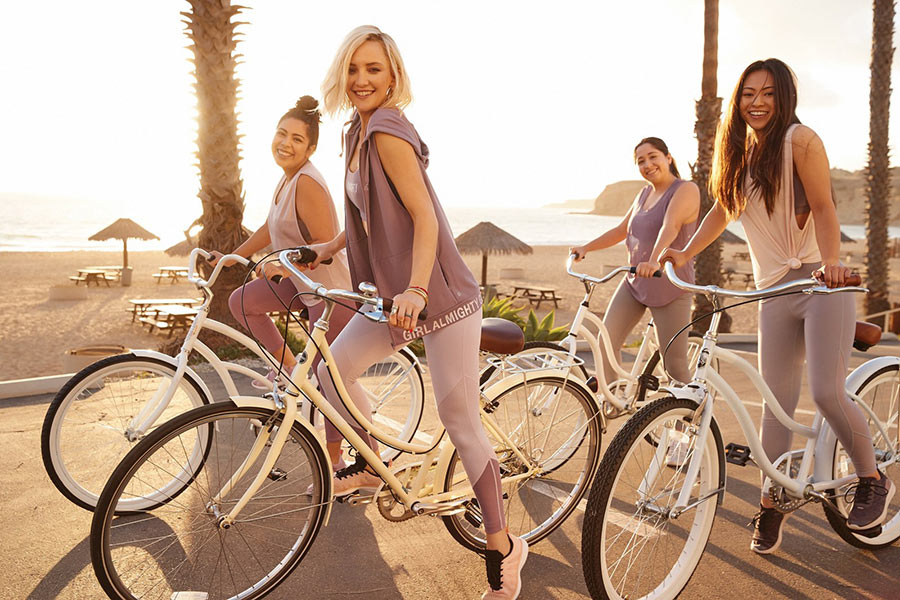
The Girl Almighty collection will support Girl Up’s SchoolCycle initiative, donating 20% of net proceeds to reach Fabletics’ goal of $50,000. Girl Up’s SchoolCycle initiative works with UNFPA to give girls bikes in developing countries – along with spare parts and maintenance training – so they can continue their education and travel quickly and safely to and from school, as well as give them independence and mobility to create a better future for themselves, their families and communities.

Girl Up is “by girls, for girls” – girl-led and girl-driven – and engages girls to take action to achieve global gender equality and change our world. It’s a shining example of the positive action that takes place when organizations, celebrities and business join forces for good.

If you like this, subscribe here for more stories that Inspire The Future.

Kate Hudson’s Fabletics Empowers Women to Lead

Fabletics, an active-lifestyle brand co-founded by Kate Hudson in 2013, has launched a global capsule collection to benefit the United Nations Foundation’s Girl Up initiative.

For over a year and a half, Fabletics and Girl Up have joined forces to support a common mission – to make girls leaders of tomorrow through the empowerment of girls worldwide. Since the launch of Girl Up in 2010, the organization has funded United Nations programs that promote the health, safety, education, and leadership of girls globally and has built a community of over half a million passionate advocates.

If you like this, subscribe here for more stories that Inspire The Future.

Inspired by Kate Hudson’s vision for Fabletics to be a fashion-focused activewear brand with the mission to empower women by making a healthy, active lifestyle accessible to everyone – the capsule collection embodies this message through branding select styles with “Girl Almighty” to inspire girls and women to stand up and celebrate each other regardless of size, shape, age or ability.

“It has been a truly rewarding experience to work closely with the organization and the girls to create a collection that spreads the message that girls and women are the fearless leaders of tomorrow,” says Hudson.

The Girl Almighty collection will support Girl Up’s SchoolCycle initiative, donating 20% of net proceeds to reach Fabletics’ goal of $50,000. Girl Up’s SchoolCycle initiative works with UNFPA to give girls bikes in developing countries – along with spare parts and maintenance training – so they can continue their education and travel quickly and safely to and from school, as well as give them independence and mobility to create a better future for themselves, their families and communities.

Girl Up is “by girls, for girls” – girl-led and girl-driven – and engages girls to take action to achieve global gender equality and change our world. It’s a shining example of the positive action that takes place when organizations, celebrities and business join forces for good.

If you like this, subscribe here for more stories that Inspire The Future.

10 Things I Learned From Sheryl Sandberg’s New Class About Resiliency

Sheryl Sandberg’s life changed forever the moment she found her husband, successful Silicon Valley entrepreneur and SurveyMonkey CEO Dave Goldberg, dead in a hotel gym during their 2015 family vacation in Punta Mita, Mexico. Goldberg, 43 at the time of his death, had suffered heart complications and is survived by Sandberg and their two children.

Coping with Goldberg’s death was, and still isn’t, an easy feat for the Facebook COO — and she’s written about her grieving experiences in her New York Times best-selling book Option B: Facing Adversity, Building Resilience, and Finding Joy, which she co-wrote with Wharton psychologist Adam Grant. She wrote about how to make the most of Option B when Option A is no longer in the cards in the face of adversity. 

If you like this, subscribe here for more stories that Inspire The Future.

Recently, Sandberg shared a course that highlights some of the most powerful topics in their book on LinkedIn— it includes how to talk to friends and colleagues who are hurting when you’re not sure what to say, how to fight the idea that the hurt you’re feeling is permanent and how to give yourself permission to experience happiness again. The book is a resource for those trying to resume normalcy in their lives, possibly get back to work and carry on, but are struggling.

“Dodging adversity is often not a choice,” reads the description of the course, “The Importance of Resilience.” “Encountering a devastating event — the gut-wrenching kind that zaps away joy — is an inevitability of life.”

In the course, resilience is described as the strength and speed of our response to adversity. It’s “when something bad happens, big or small, how much are we able to overcome it — or how well do we persevere in the face of it,” Grant explains.

I’ve experienced adversity in my own life, when I suddenly lost my dad also from heart complications in 2015. So I took Sandberg’s course on resilience, and here are 10 lessons I learned about overcoming any kind of traumatic experience (and helping friends and colleagues to do the same) — albeit loss or something else entirely.

1. Trauma can have a cascade effect.

We need to understand that trauma isn’t always just one big fiasco. Trauma like loss can affect someone’s confidence in other domains of their life — many people will experience survivor’s guilt or feel like their depression is a nuisance to those around them. It could really put a damper in their confidence. So a primary loss can lead to a cascade effect of secondary losses, Grant explains, which have a negative impact on different parts of our lives.

After losing my dad, for example, I gained 40 pounds, lost fistfuls of hair, had very little faith, and became increasingly irritable and alarmingly apathetic. Work felt like a dreaded chore, when it used to feel like something I loved. So that primary loss led me to a myriad of secondary losses that ultimately turned me into someone I no longer recognized. For a while, “resilience” felt like a foreign concept — I thought I had none of it.

2. Resilience is not something we have; it’s something we build.

When Sandberg lost her husband, she began asking Grant how much resilience she had, she says. But he told her that she was asking the wrong question; what she should have been asking was how she could build resilience. And, according to Grant, it’s something we can build long before we face any tragedy or difficulty. 

I’d also realized that I’ve been building resilience my entire life — we’ve all had to face adversity to some capacity throughout our lives, and we can take those lessons we’ve learned from doing so to help ourselves and others overcome extreme trauma, too. Over time, resilience builds. We just need to recognize that.

3. Resilience can be strengthened by expressing gratitude.

Grant says that we can build resilience by changing how we process negative events. When we recognize and appreciate the good we do still have in our lives, and realize that our lives could theoretically be worse, we can find the strength to carry on.

Sandberg says that she’s grateful for her own health, her children’s health, every birthday, every dinner, every minute. She also feels fortunate that she at least still has her children in her life. I’m, too, grateful for my health, my family, my work and the many priviledges in life.

4. Adversity isn’t permanent, but unhappiness can become a self-fulfilling prophecy.

“I learned that one of the best ways to build resilience is to fight permanence; you have to believe that it won’t be this bad forever,” Sandberg says.

Grant says that, while many people think that their feelings of overbearing depression and anxiety will last forever — as I did the day I learned the news of my father’s death, and even in the months thereafter — evidence suggests that it probably won’t. Affective forecasting, he explains, is a prediction of how we will feel in the future, and most of us overestimate just the intensity and duration of our misery. He remembers when Sandberg told him that she’d never feel joy again, but he advised her that, if she genuinely believes that, she’ll never do anything that brings her joy again — and then it’ll become a self-fulfilling prophecy.

5. We all deserve to feel joy, and we can again.

Sandberg tells a story of finding just a moment of happiness while dancing with her friends, but she explains how she immediately felt guilty for feeling happy without her husband. 

Grant explains that we have to take back and reclaim our joy, and we can do so by starting up the things we love again. “Happiness is really the frequency of positive experiences,” he explains. “Not the intensity.” 

Dance more. For me, that meant realizing that life is too short so I started a new job doing what I love: writing. I revamped my blog. I took up kickboxing again, promising myself at least two days a week. I kept myself busy with the things I knew would make me feel even an inkling of happiness or, at the very least, not depression.

6. We can grow from trauma.

A lot of people who experience trauma expend their energy trying to bounce back, but psychologists have discovered that it’s possible for people to actually bounce forward, too. We can find meaning in the loss or traumatic event that’s happened to us, and grow from it. 

For Sandberg, this means helping other women in the same way that her husband helped so many people — all of whom raised their hands at his wake to admit that he’d helped them each in some way.

Many of us choose to volunteer or to try to help others overcome the same suffering that we’ve been through; doing so gives our life and our suffering meaning.

7. We should treat others as they would want to be treated.

How we cope may not necessarily be how other people cope, so how we want to be treated might not necessarily be how someone else wants to be treated.

That said, asking someone what you could do to help them places the burden on them — and asking for help isn’t always easy for someone, especially if they may already be feeling survivor’s guilt or like their depression is encumbering those around them. Sandberg says that doing anything at all to be there for someone is better than asking what you could do — maybe they don’t know what they need, but if they know that someone is there for them regardless, it helps them to not feel so isolated.

8. Sometimes, people just don’t know what to say.

I know this firsthand, because no one knew what to say to me, and I still don’t know what to say to people when they go through the same thing — I don’t actually think that there is any “right” thing to say. The Mum Effect is when people avoid talking about upsetting topics, Grant explains, sometimes because they don’t want to be that person and other times because they don’t want to remind someone of a bad experience. 

But we need to talk about these things so we don’t bottle them up. And, for me, it wasn’t always easy to bring up first. So we can all be more sensitive in how we ask people about how they’re facing adversity.

Sandberg explains that she felt very alone after losing her husband and when people would ask her how she is doing, even though it was always asked with the best intentions, it felt insensitive. She just lost her husband — how did anyone think she was doing? But when someone would ask her, “How are you today?” she felt like they’d acknowledged that she was suffering while asking how she was handling it that day. And that made all the difference. Plus, it’s a lot easier for the mind to explain what you did that day than to attempt to articulate the total roller coaster of emotions one’s had since their trauma.

9. Mattering matters.

Mattering is “knowing that others notice you, care about you and rely on you,” according to the course. Sandberg explains that, despite how hard it is for a young boy, her son was able to ask friends to step out of school with him to be with him while he had cry breaks. As she told her children, sadness will come overcome them when they don’t want it to. Her son realized that his friends did care about him and actually wanted to be there for him during those cry breaks, and that helped him cope with his father’s loss. 

I remember approaching the first anniversary of my dad’s death. My biggest fear was that my sulking time was over — I could no longer burden my friends and family with sob stories because it’s been a whole year, right? The first few days after a tragedy like mine, everyone is there for you — people fly in from all over to console you (and mostly feed you). But then it’s over; everyone goes home and carries on with their lives, and you’re still stuck living a nightmare, seemingly alone. After a few months, I felt like crying about it was still warranted, but I thought I had to give myself a cut-off time so I was neither walking around like “woe is me” nor being “weak” by my own unfounded definition of the word.

On the anniversary of my dad’s death, knowing about my fear, my best friends threw me a legitimate “pity party.” They went so far as to hang streamers in my apartment, put out my favorite foods and wrote me the most beautiful card to let me know that I can always cry to them — for eternity. Friends called me up or showed up at my apartment periodically, and still do, to share memories with me or check in. My coworkers mailed me flowers and took care of my workload as best they could. I’ll never forget those gestures that made me feel like I matter. We can all make others feel like they matter just by being there or lending an ear, too.

10. Being open helps the community.

When we’re all open about the hardships we each face, at least with one other person, we help each other to open up. Everybody is going through something, but it’s not always easy to talk about unless we feel safe, cared about and not alone. Community is key.

By AnnaMarie Houlis – a multimedia journalist and an adventure aficionado with a keen cultural curiosity and an affinity for solo travel. She’s an editor by day and a travel blogger at HerReport.org by night.

If you like this, subscribe here for more stories that Inspire The Future.

10 Things I Learned From Sheryl Sandberg’s New Class About Resiliency

Sheryl Sandberg’s life changed forever the moment she found her husband, successful Silicon Valley entrepreneur and SurveyMonkey CEO Dave Goldberg, dead in a hotel gym during their 2015 family vacation in Punta Mita, Mexico. Goldberg, 43 at the time of his death, had suffered heart complications and is survived by Sandberg and their two children.

Coping with Goldberg’s death was, and still isn’t, an easy feat for the Facebook COO — and she’s written about her grieving experiences in her New York Times best-selling book Option B: Facing Adversity, Building Resilience, and Finding Joy, which she co-wrote with Wharton psychologist Adam Grant. She wrote about how to make the most of Option B when Option A is no longer in the cards in the face of adversity. 

If you like this, subscribe here for more stories that Inspire The Future.

Recently, Sandberg shared a course that highlights some of the most powerful topics in their book on LinkedIn— it includes how to talk to friends and colleagues who are hurting when you’re not sure what to say, how to fight the idea that the hurt you’re feeling is permanent and how to give yourself permission to experience happiness again. The book is a resource for those trying to resume normalcy in their lives, possibly get back to work and carry on, but are struggling.

“Dodging adversity is often not a choice,” reads the description of the course, “The Importance of Resilience.” “Encountering a devastating event — the gut-wrenching kind that zaps away joy — is an inevitability of life.”

In the course, resilience is described as the strength and speed of our response to adversity. It’s “when something bad happens, big or small, how much are we able to overcome it — or how well do we persevere in the face of it,” Grant explains.

I’ve experienced adversity in my own life, when I suddenly lost my dad also from heart complications in 2015. So I took Sandberg’s course on resilience, and here are 10 lessons I learned about overcoming any kind of traumatic experience (and helping friends and colleagues to do the same) — albeit loss or something else entirely.

1. Trauma can have a cascade effect.

We need to understand that trauma isn’t always just one big fiasco. Trauma like loss can affect someone’s confidence in other domains of their life — many people will experience survivor’s guilt or feel like their depression is a nuisance to those around them. It could really put a damper in their confidence. So a primary loss can lead to a cascade effect of secondary losses, Grant explains, which have a negative impact on different parts of our lives.

After losing my dad, for example, I gained 40 pounds, lost fistfuls of hair, had very little faith, and became increasingly irritable and alarmingly apathetic. Work felt like a dreaded chore, when it used to feel like something I loved. So that primary loss led me to a myriad of secondary losses that ultimately turned me into someone I no longer recognized. For a while, “resilience” felt like a foreign concept — I thought I had none of it.

2. Resilience is not something we have; it’s something we build.

When Sandberg lost her husband, she began asking Grant how much resilience she had, she says. But he told her that she was asking the wrong question; what she should have been asking was how she could build resilience. And, according to Grant, it’s something we can build long before we face any tragedy or difficulty. 

I’d also realized that I’ve been building resilience my entire life — we’ve all had to face adversity to some capacity throughout our lives, and we can take those lessons we’ve learned from doing so to help ourselves and others overcome extreme trauma, too. Over time, resilience builds. We just need to recognize that.

3. Resilience can be strengthened by expressing gratitude.

Grant says that we can build resilience by changing how we process negative events. When we recognize and appreciate the good we do still have in our lives, and realize that our lives could theoretically be worse, we can find the strength to carry on.

Sandberg says that she’s grateful for her own health, her children’s health, every birthday, every dinner, every minute. She also feels fortunate that she at least still has her children in her life. I’m, too, grateful for my health, my family, my work and the many priviledges in life.

4. Adversity isn’t permanent, but unhappiness can become a self-fulfilling prophecy.

“I learned that one of the best ways to build resilience is to fight permanence; you have to believe that it won’t be this bad forever,” Sandberg says.

Grant says that, while many people think that their feelings of overbearing depression and anxiety will last forever — as I did the day I learned the news of my father’s death, and even in the months thereafter — evidence suggests that it probably won’t. Affective forecasting, he explains, is a prediction of how we will feel in the future, and most of us overestimate just the intensity and duration of our misery. He remembers when Sandberg told him that she’d never feel joy again, but he advised her that, if she genuinely believes that, she’ll never do anything that brings her joy again — and then it’ll become a self-fulfilling prophecy.

5. We all deserve to feel joy, and we can again.

Sandberg tells a story of finding just a moment of happiness while dancing with her friends, but she explains how she immediately felt guilty for feeling happy without her husband. 

Grant explains that we have to take back and reclaim our joy, and we can do so by starting up the things we love again. “Happiness is really the frequency of positive experiences,” he explains. “Not the intensity.” 

Dance more. For me, that meant realizing that life is too short so I started a new job doing what I love: writing. I revamped my blog. I took up kickboxing again, promising myself at least two days a week. I kept myself busy with the things I knew would make me feel even an inkling of happiness or, at the very least, not depression.

6. We can grow from trauma.

A lot of people who experience trauma expend their energy trying to bounce back, but psychologists have discovered that it’s possible for people to actually bounce forward, too. We can find meaning in the loss or traumatic event that’s happened to us, and grow from it. 

For Sandberg, this means helping other women in the same way that her husband helped so many people — all of whom raised their hands at his wake to admit that he’d helped them each in some way.

Many of us choose to volunteer or to try to help others overcome the same suffering that we’ve been through; doing so gives our life and our suffering meaning.

7. We should treat others as they would want to be treated.

How we cope may not necessarily be how other people cope, so how we want to be treated might not necessarily be how someone else wants to be treated.

That said, asking someone what you could do to help them places the burden on them — and asking for help isn’t always easy for someone, especially if they may already be feeling survivor’s guilt or like their depression is encumbering those around them. Sandberg says that doing anything at all to be there for someone is better than asking what you could do — maybe they don’t know what they need, but if they know that someone is there for them regardless, it helps them to not feel so isolated.

8. Sometimes, people just don’t know what to say.

I know this firsthand, because no one knew what to say to me, and I still don’t know what to say to people when they go through the same thing — I don’t actually think that there is any “right” thing to say. The Mum Effect is when people avoid talking about upsetting topics, Grant explains, sometimes because they don’t want to be that person and other times because they don’t want to remind someone of a bad experience. 

But we need to talk about these things so we don’t bottle them up. And, for me, it wasn’t always easy to bring up first. So we can all be more sensitive in how we ask people about how they’re facing adversity.

Sandberg explains that she felt very alone after losing her husband and when people would ask her how she is doing, even though it was always asked with the best intentions, it felt insensitive. She just lost her husband — how did anyone think she was doing? But when someone would ask her, “How are you today?” she felt like they’d acknowledged that she was suffering while asking how she was handling it that day. And that made all the difference. Plus, it’s a lot easier for the mind to explain what you did that day than to attempt to articulate the total roller coaster of emotions one’s had since their trauma.

9. Mattering matters.

Mattering is “knowing that others notice you, care about you and rely on you,” according to the course. Sandberg explains that, despite how hard it is for a young boy, her son was able to ask friends to step out of school with him to be with him while he had cry breaks. As she told her children, sadness will come overcome them when they don’t want it to. Her son realized that his friends did care about him and actually wanted to be there for him during those cry breaks, and that helped him cope with his father’s loss. 

I remember approaching the first anniversary of my dad’s death. My biggest fear was that my sulking time was over — I could no longer burden my friends and family with sob stories because it’s been a whole year, right? The first few days after a tragedy like mine, everyone is there for you — people fly in from all over to console you (and mostly feed you). But then it’s over; everyone goes home and carries on with their lives, and you’re still stuck living a nightmare, seemingly alone. After a few months, I felt like crying about it was still warranted, but I thought I had to give myself a cut-off time so I was neither walking around like “woe is me” nor being “weak” by my own unfounded definition of the word.

On the anniversary of my dad’s death, knowing about my fear, my best friends threw me a legitimate “pity party.” They went so far as to hang streamers in my apartment, put out my favorite foods and wrote me the most beautiful card to let me know that I can always cry to them — for eternity. Friends called me up or showed up at my apartment periodically, and still do, to share memories with me or check in. My coworkers mailed me flowers and took care of my workload as best they could. I’ll never forget those gestures that made me feel like I matter. We can all make others feel like they matter just by being there or lending an ear, too.

10. Being open helps the community.

When we’re all open about the hardships we each face, at least with one other person, we help each other to open up. Everybody is going through something, but it’s not always easy to talk about unless we feel safe, cared about and not alone. Community is key.

By AnnaMarie Houlis – a multimedia journalist and an adventure aficionado with a keen cultural curiosity and an affinity for solo travel. She’s an editor by day and a travel blogger at HerReport.org by night.

If you like this, subscribe here for more stories that Inspire The Future.

Jawed Karim, Co-founder of Youtube

Jawed Karim was born in Merseburg, East Germany in 1979. His father, Naimul Karim, is a Muslim Bangladeshi who works as a researcher at 3M and his mother, Christine, is a German scientist of biochemistry at the University of Minnesota.

He crossed the old East-West German border with his family in 1981 and grew up in Neuss, West Germany, after which he moved with his family to Saint Paul, Minnesota in 1992. While studying at the University of Illinois, Department of Computer Science, he decided to leave before graduation to become an early employee of PayPal.

While working at PayPal, he met Chad Hurley and Steve Chen. The three later founded the YouTube video sharing website in 2005 and YouTube’s first-ever video “Me at the zoo” was uploaded by Karim on 23 April 2005.

After co-founding YouTube Karim enrolled as a graduate in computer science at Stanford, while still acting as an adviser to YouTube. When the site was eventually launched, Karim decided not to be an employee, but rather an informal adviser because he wanted to focus on his studies. As a result, he took a much lower share in the company compared to Hurley and Chen and subsequently became a mostly unknown, third founder of YouTube.

Despite his lower share in the company, the purchase of YouTube by Google in 2006 was still large enough for him to aquire stock worth about $64 million.

In March 2008, Karim launched a venture fund called Youniversity Ventures, with the goal of helping current and former university students to develop and launch their business ideas.

Lady Gaga Partners with Staples To Ease Burden on Teachers

Students today face not only academic challenges, but also the emotional challenges of stress brought on by negative classroom environments, according to data from a recent survey by the Sesame Workshop.

In the survey, 86% of teachers and 70% of parents reported worrying that “the world is an unkind place for children.” In addition, teachers face financial challenges to making their classrooms places where students can succeed.

If you like this, subscribe here for more stories that Inspire The Future.

Data from the Education Market Association show that nearly all public school teachers (99.5%) dip into their own money to purchase classroom supplies, and many of them spend as much as $400 per year on basic items.

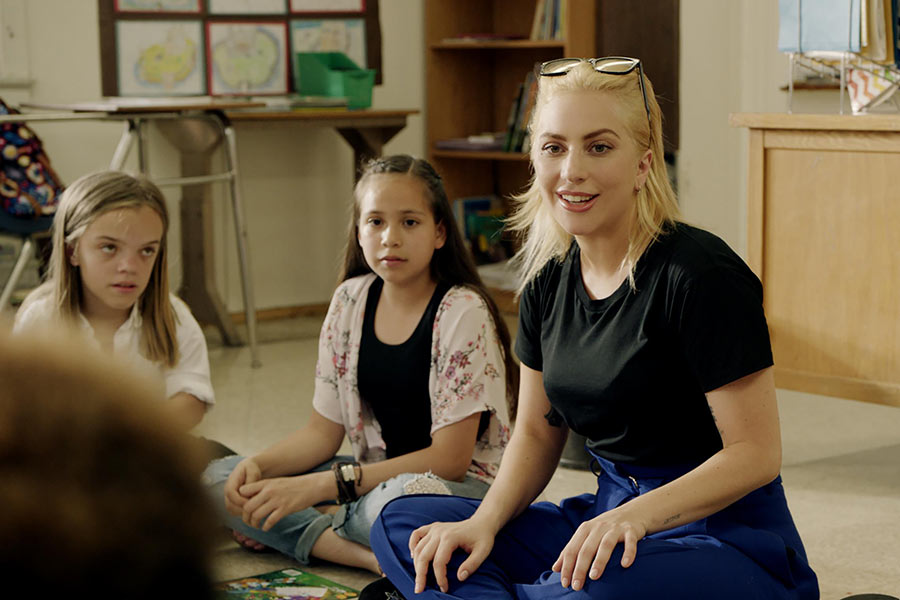
To help ease the burden on teachers and foster an atmosphere of kindness and tolerance in the classroom, Staples, Inc., is partnering with music icon Lady Gaga to create a series of public service announcements.

The public service campaign includes 15-, 30- and 60-second TV and radio spots in which Lady Gaga encourages positive behavior and attitudes, as well as support for students and teachers in reaching their educational goals.

The PSAs also highlight two charities: DonorsChoose.org, which allows individuals to contribute to more than 25,000 classroom projects for teachers across the country; and the Born This Way Foundation, a nonprofit organization founded by Lady Gaga and her mother, Cynthia Germanotta, to support and empower children, teens, and young adults.

As part of its mission to support education, Staples announced donations of $1 million each to DonorsChoose.org and the Born This Way Foundation.

“I want kids to love themselves, fearlessly,” Lady Gaga says in a video on the StaplesforStudents.org website. The lack of basic school supplies is a chronic problem that can get in the way of children’s learning and achieving their goals, she adds.

If you like this, subscribe here for more stories that Inspire The Future.

1,500 UK Firms Face Action Over Gender Pay Silence

About 1,500 large British companies that failed to meet a government deadline to report the pay gap between male and female employees could face legal action, Britain’s equality watchdog has said.

A law introduced last year requires companies and charities with more than 250 workers – covering almost half of Britain’s workforce – to report their gender pay gap each year by April 4.

If you like this, subscribe here for more stories that Inspire The Future.

More than 10,000 employers met the midnight deadline, with data showing that almost eight in 10 pay men more than women on average, while only 14 percent pay female staff higher salaries.

Britain’s Equality and Human Rights Commission (EHRC) said the 1,500-odd companies that had not met the deadline would be given a month to comply before the watchdog took action – which could lead to court proceedings and result in unlimited fines. “Reporting gender pay gaps is not optional; it is a legal requirement, as well as being the right thing to do,” Rebecca Hilsenrath, chief executive of the EHRC, said in a statement.
“We will soon be starting enforcement against all employers that haven’t published,” she added.

As in many other countries, gender pay inequality has been a persistent problem in Britain despite sex discrimination being outlawed in the 1970s, and has sparked a public debate in recent years over why wages are still so different for men and women. The overall gender pay gap in Britain stands at 18.4 percent, according to government data published last year.

HSBC, Virgin Atlantic and a unit of Barclays were among the largest companies with the biggest gender pay gap – at 59, 58 and 49 percent respectively – according to a Reuters analysis of the published data using the mean as the measure.

Companies are not required to break down the data in detail, leading to criticism that the average figures could obscure or exaggerate demographic explanations for disparities. Yet they mark a turning point for women in the workplace, advocates say.

“By finding out what their colleagues earn, women are then in a position to challenge any pay inequality,” Sam Smethers, chief executive of the Fawcett Society, a UK-based women’s rights group, told the Thomson Reuters Foundation by email.

“We are calling on women everywhere today to take that first step and simply have the conversation about pay,” she added.

By Kieran Guilbert, Editing by Megan Rowling.

If you like this, subscribe here for more stories that Inspire The Future.

Ebay Billionaire Donates Millions to Keep #MeToo Moving

A website that makes reporting sexual assault easier is one of six organisations gifted $7.5 million by an Ebay billionaire in order to ramp up their effectiveness.

The Skoll Foundation – started by Jeff Skoll, former president of Ebay – rewarded five female and one male social entrepreneurs tackling subjects as diverse as access to clean energy and improving the way governments work.

If you like this, subscribe here for more stories that Inspire The Future.
Every year the Skoll Foundation gives awards to social entrepreneurs whose businesses are helping solve social and environmental problems with more than 100 organisations benefiting since 2005.

“To have them help you along the way, it’s so valuable. There’s a big opportunity with the #MeToo movement to expand our model,” said Jessica Ladd of Callisto.

Callisto is a web platform where students at 13 colleges in the United States can log incidents of sexual assault even if they are unsure of reporting it to authorities for fear of repercussions.

One in five women at university in the United States has experienced sexual assault or sexual misconduct, according to the Association of American Universities. Institutions surveyed said reporting figures of incidents were as low as 5 percent.

Ladd said her organisation, which started in 2015, was exploring how to adapt the system for other institutions before the Harvey Weinstein scandal broke.

“Now is this moment where people are caring and talking about this issue in a lot of different industries all at once,” she told the Thomson Reuters Foundation.

“How can we use this moment to not just let this be a momentary public outing or social media movement, but put systems into place to keep this going?” said Ladd, who plans on increasing her staff to 30 from 10 by the end of the year.

The Skoll Foundation looks for organisations that have proven, innovative solutions to global problems, awarding them funding of $1.25 million each as well as help with the business.

Other winners of the 2018 awards include myAgro, which offers solutions to improve the methods and livelihoods of farmers in developing countries, and Global Health Corps, which works to expand the availability of healthcare.

“It is a special moment when our ‘family’ of social entrepreneurs expands. Our community immediately strengthens, as does our collective understanding of how to solve the world’s most pressing problems,” Skoll said in a statement.

By Lee Mannion @leemannion, Editing by Belinda Goldsmith.

If you like this, subscribe here for more stories that Inspire The Future.
Why Women are Key to the Next Wave of Impact Investing

Why aren’t more women and minorities represented in angel and venture capital investing?

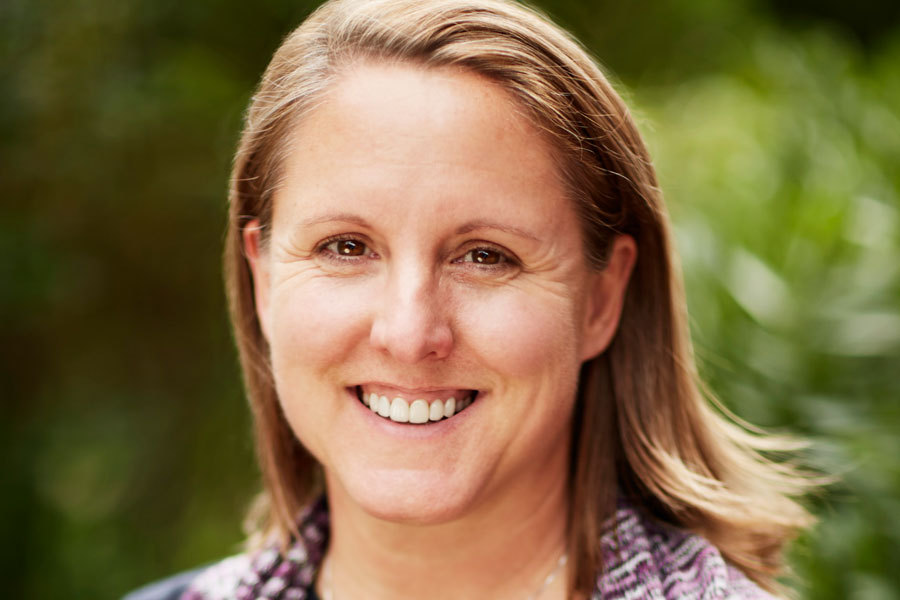
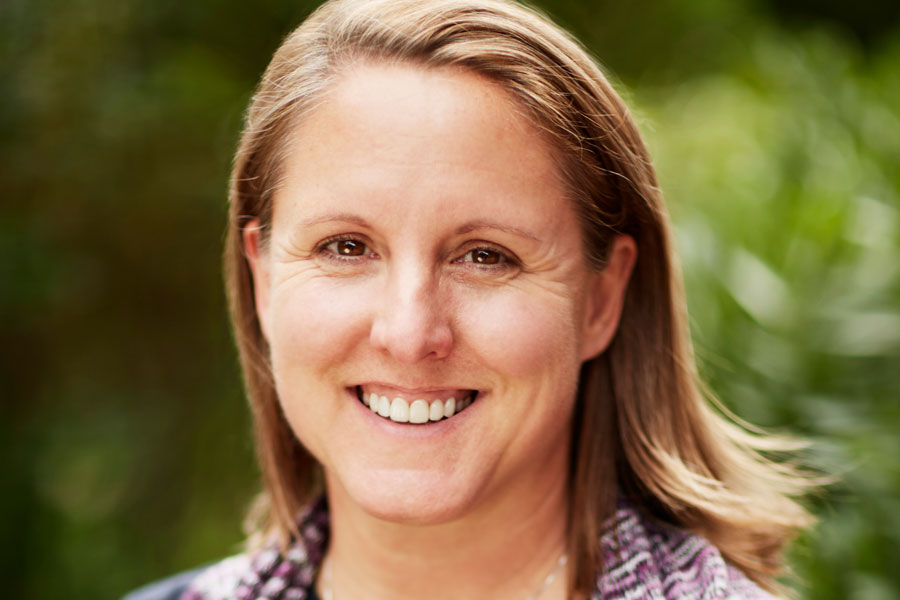
It’s a vexing question Alicia Robb is addressing. The founder and managing partner of the Next Wave US Impact Fund, an early-stage investing fund focused on bringing more women into angel investing—with a focus on social innovation and impact investing—describes her personal journey to (and resulting passion for) the space. 

What personal actions and motivations drove her to become a leader in impact investing? How is Next Wave seeking to increase diversity in angel investing and high growth entrepreneurship. Most importantly, how can successful entrepreneurs get information and access in order to make their own positive impact?

If you like this, subscribe here for more stories that Inspire The Future.
Robb answers these questions and more.

How did you become involved with impact investing? Was there a pivotal moment?

I was at the Kauffman Foundation and previously at the Federal Reserve Board in the Greenspan days, working on small business finance issues. I’ve written a few books about women and minority entrepreneurs and entrepreneurial finance. When Stanford University Press came to my co-author and I and asked if we would write a follow-on book focused on high-growth women’s financing strategies, we said we would if we could also look at the gender gap on the investor side. When you look at the gender and racial gaps in high growth entrepreneurship, one reason is because they get only a tiny fraction of venture capital and angel financing.

From our research, I designed a learning-by-doing fund and program that overcame the barriers that prohibit women and minorities from becoming angel investors. I took the idea to Kauffman and they said, “Great idea, but it will take us five years to get it through the lawyers, so just go off and do it and we’ll fund the education and training piece.” I launched the Next Wave Ventures, and through that I did two pilot funds in the United States and Europe, which brought together nearly 200 women from 25 countries and 24 states in the US.

However, I wasn’t super passionate about what some of the companies did that we invested in. I realized that if I was going to stay involved in angel investing and spend my time, energy and money on this asset class, I really wanted to invest only in companies I was really excited about. Those are impact companies. Next Wave Impact is our first impact fund, which was launched last year. We have 99 women investors in the fund, 25 of them minorities, from 18 states and six countries. And we are all passionate about impact, so I’m really excited about what we’re going to be doing over the next few years.

Is it the investing club of the future?

I hope so. It mitigates a lot of the reasons why we don’t see women and minorities in angel investing, as well as some of the risk by building a diversified portfolio. You’re investing alongside many different people, and the human capital on the ground in our investors across the country from different sectors widens the set of investable companies and allows to invest in the best opportunities.

What are your goals with Next Wave Impact, specifically with metrics and measurement?

We have two sets. With the investor piece, it’s to educate and train new people in angel investing. Outcomes are measured by participation in the fund through the due diligence and screening of companies, and whether they go on to be active angel investors. It might not be for everyone, so people not continuing isn’t necessarily a bad outcome. However, we are trying to drive more engagement of women and minorities in investing, so if we help move the needle, that would be one success.

With the investment piece, we want to invest in companies that are successful in scaling and/or becoming profitable while having a significant impact. However, because we’re a generalist fund and investing across a wide spectrum of industries, the specific metrics used to track each company will depend on the sector they occupy. Some examples are number of good jobs created, an increase in financial inclusion, better educational achievements, etc. Obviously increasing the number of women and minority-led businesses is also an outcome we are seeking with the fund.

One of the ways you have made Next Wave available to investors is through philanthropic vehicles like the ImpactAssets Giving Fund. How does that work and why is it a good fit for a fund that seeks to expand access to angel and impact investing?

We have several Limited Partners in our fund that use philanthropic capital. ImpactAssets is a unique case because it brought together donations from a bunch of different people to join that donor-advised fund. And then we have a couple of family offices that have invested using philanthropic capital using their own donor advised funds. And then we have a foundation. It’s important to keep that option on the table because a lot of people are comfortable with philanthropy and not necessarily ready or wanting to use investment dollars for impact. Next Wave is trying to move more people into thinking about impact investing on the investor side of it rather than philanthropic, but there’s a lot of different reasons why people might want philanthropic money used for this. It can be a way to ‘toe-dip’ into angel and impact investing. It’s a way to test the waters.

It sounds like there’s significant demand. And are you planning to launch other funds?

Yes, we are. We’re going to wait a couple years until we’ve deployed a significant amount of capital with this fund, but the plan is to expand and launch other larger funds. We’re also looking at launching some regional funds so that we can invest locally, and then mitigate that risk by co-investing and syndicating deals with other regional funds. The time horizon for those is as soon as 12 to 18 months.

Where do you see Next Wave in five years?

I hope to see Next Wave doing additional funds at the regional level, as well as co-investing across the country and across borders. We’ve been working with some folks in Africa, Asia, and Latin America, to see how we can adapt this model and training methods to bring more people into angel investing. So hopefully, we’ll see a much larger network that spans not only the United States but also other continents. Personally, as a vegan, I plan for my next fund to focus on investing in companies that are removing animals from the supply chain. I don’t think we need to exploit animals for food, clothing, entertainment, or medical experiments. I want to see more companies that offer plant based alternatives that are more sustainable, healthy, and humane.

What’s your message to successful entrepreneurs that are looking to harness the power of this type of investing? How should they get started?

One of our goals with this fund is to provide an additional data point or piece of evidence to prove you can achieve a nice financial return by investing in companies that are doing good things. There are so many problems in the world. I think if more people directed their time, energy, and money towards companies that are solving serious problems instead of trying to make a big buck with those ever-elusive unicorns, I think we’d all be better off.

I think the venture capital system is broken. I don’t think we need to accept the fact that out of 10 investments, eight are going to fail, one will return your capital, and one’s going to be a home run. I think that disruption and destruction of eight failures out of 10 in terms of the societal costs to the employees, founders, investors and other stakeholders is something we don’t need to accept.

If you like this, subscribe here for more stories that Inspire The Future.
0