Soup, Beer & Soap From Food Waste? Dutch Shoppers Say Yes

“We sold about 700 items in one week. It’s double what we sell for organic products”

First it was a supermarket aisle free of plastics, now the Netherlands has notched up another novel solution in its fight against waste and pollution – products made with food that otherwise would be chucked in the bin.

Soups and chutneys made from wonky vegetables, beer from stale bread, cider from blemished apples and soaps from discarded orange peels are selling fast in the Wageningen branch of Jumbo, one of the biggest Dutch supermarket chains.

If you like this, subscribe here for more stories that Inspire The Future.

First-week sales have surpassed expectations, said George Verberne, an entrepreneur who runs the branch, about 90 km (56 miles) north of the capital, Amsterdam.

“We sold about 700 items in one week. It’s double what we sell for organic products,” he told the Thomson Reuters Foundation in a phone interview.

“I’m proud and very happy we’re the first to do it.”

Verberne and 18 Dutch companies launched the Verspilling is Verrukkelijk or “Waste is Delicious” initiative last week, supported by a local university as part of a new national programme, United Against Food Waste.

The government is aiming to halve the amount of food thrown away by its 17 million people to become the first country in Europe to meet this global development goal by 2030.

Globally, one third of all food produced, worth nearly $1 trillion, is thrown away every year, according to the United Nations Food and Agriculture Organization (FAO).

Critics say this is not only unethical in a world where hunger levels are rising but also environmentally destructive.

The Dutch organic chain Ekoplaza set up in February what it said was the world’s first plastics-free supermarket aisle, which has led to calls for others to follow suit.

TOO BIG, TOO CROOKED

The idea of selling food whose appearance does not meet supermarket standards was born when Verberne saw a presentation on food waste by Toine Timmermans of Wageningen University & Research, and offered to help.

Timmermans, who has worked on sustainable food issues for 15 years, asked for shelf space to showcase products made from waste and see how consumers responded.

At least 200 entrepreneurs across Europe offer products using surplus food, but they tend to be small and have limited impact, he said in a phone interview.

“If you want to solve food waste and achieve sustainable food systems, you need to work with people who have access to the market, like retail stores,” he said.

Researchers from the university will monitor sales over the next six months to learn how best to expand the products.

Chantal Engelen, co-founder of soup-making Kromkommer, one of 18 companies participating in “Waste is Delicious”, said about 30 percent of carrots get rejected because they have two legs, are too big or too crooked.

“We buy them straight from the grower for a fair price and turn them into healthy food,” she said, adding that their ultimate aim is to change consumer behaviour so that the reject carrots are sold in shops and Kromkommer’s work become obsolete.

The Netherlands is a small nation but it is one of the world’s largest agricultural exporters.

“Waste is Delicious” said it plans to expand to three more supermarkets in the next few months.

Timmermans is glad to see that higher pricing than established brands has not deterred customers.

“We cannot sell for less, because for the social innovators, this is their source of income,” he said.

“So working together and the message, ‘by buying this, you’re contributing to a better world’ is a very important one.”

Verberne believes wonky vegetables have a bright future.

“A lot of colleagues called me and sent me emails asking, “how does it work? Can I also do something like this?’,” he said. “I think we have to do this. This planet deserves it.”

By Thin Lei Win @thinink, Editing by Katy Migiro.

If you like this, subscribe here for more stories that Inspire The Future.

Dunkin’ Donuts to Eliminate Foam Cups Worldwide

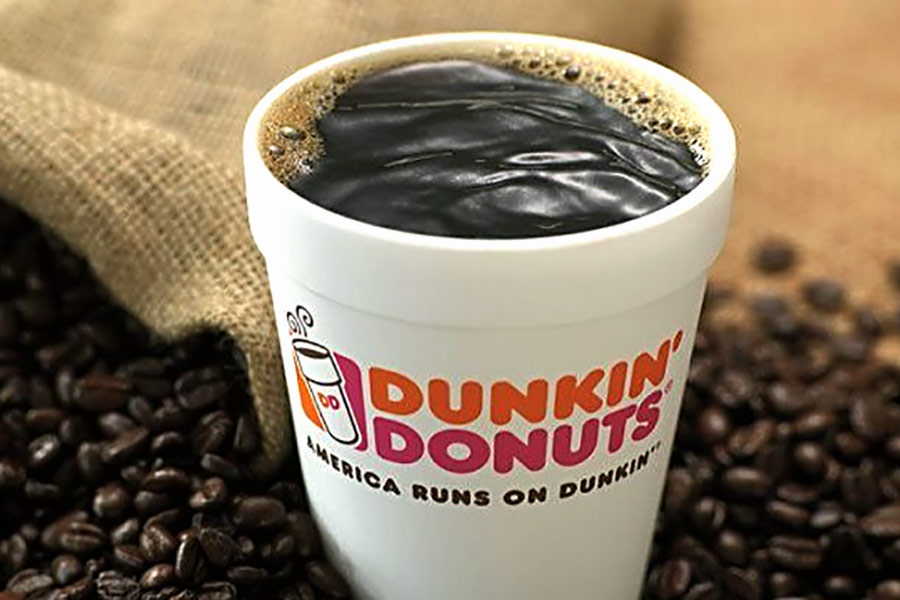
As part of its commitment to serve both people and the planet responsibly, Dunkin’ Donuts, the popular retailer of hot, brewed coffee, has decided to eliminate all polystyrene foam cups in its global supply chain beginning in spring 2018, with a targeted completion date of 2020.

In U.S. restaurants, Dunkin’ Donuts will replace the foam cup with a new, double-walled paper cup. The majority of Dunkin’ Donuts’ international markets are currently using paper cups, and the brand will work with its franchisees to eliminate foam cups from the remaining international markets by the 2020 goal.

If you like this, subscribe here for more stories that Inspire The Future.

The move complements Dunkin’ Donuts’ earlier commitments in the U.S. to have 80% of fiber-based consumer-facing packaging certified to the Sustainable Forestry Initiative Standard by the end of this year; eliminate artificial dyes from its menu; build new, more energy-efficient restaurants; and partner with the Rainforest Alliance to source certified coffee.

The new, double-walled paper cup is already in use at Dunkin’ Donuts’ next generation concept store, which opened in mid-January in the company’s birthplace of Quincy, Mass. It will be introduced at all Dunkin’ Donuts restaurants in New York City and California in spring 2018, and will be phased in across the U.S. as supplier manufacturing capabilities ramp up.

The double-walled paper cup is made with paperboard certified to the Sustainable Forestry Initiative Standard and will feature the current re-closable lid that Dunkin’ customers are familiar with. With heat retention properties equal to the company’s foam cup, the new double-walled paper cup will keep beverages hot while keeping hands cool, without the need for a sleeve.

According to Karen Raskopf, Chief Communications and Sustainability Officer, Dunkin’ Brands, “With more than 9,000 Dunkin’ Donuts restaurants in the U.S. alone, our decision to eliminate foam cups is significant for both our brand and our industry. We have a responsibility to improve our packaging, making it better for the planet while still meeting the needs of our guests. Transitioning away from foam has been a critical goal for Dunkin’ Donuts U.S., and with the double-walled cup, we will be able to offer a replacement that meets the needs and expectations of both our customers and the communities we serve.”

In 2011, Dunkin’ Donuts announced that its number one sustainability goal was to find an environmentally friendlier coffee cup. Over the past several years, the brand has worked extensively to find a suitable replacement for the foam cup that met criteria for performance, environmental impact and cost. Dunkin’ Donuts’ transition to paper cups will remove nearly 1 billion foam cups from the waste stream annually.

If you like this, subscribe here for more stories that Inspire The Future.

Top 10 Opportunities For 2018

It has become a truism that the movement of data, people, and goods connects us all in unprecedented ways across geographical boundaries.

In the ever-more complex environments businesses are forced to operate in, their ability to analyze, confront, and utilize uncertainties is critical to their success. Furthermore, the vast majority of businesses need to look beyond their own immediate financial interests for this success to last. In other words, they are deeply dependent on the well-being of their surrounding community and, by extension, the world at large.

The Global Opportunity Report, compiled each year by Sustainia and DNV GL in Denmark and the UN Global Compact is a direct product of this reality, born out of a determined belief that behind every global risk the world faces hides multiple opportunities to innovate and create better, more prosperous, and sustainable societies.

There is no doubt we live in disruptive times. Complex and interconnected crises in the political, environmental, and social spheres are taking hold of our world – and it is time change-makers with a shared vision for a sustainable future seize the moment. Below are the top 10 opportunities identified in the 2017 report. 

If you like this, subscribe here for more stories that Inspire The Future.

1. WATER IS A WINNER

For the third year in a row, an innovative opportunity related to water tops the list of the most impactful and actionable opportunities. Smart water technology enables consumers to use water in a more sustainable manner without increased effort – the smart water pipes and meters will make the sustainable water choices for them. Understanding the potential of this opportunity and fully capitalizing on it to deliver crucial services will represent a huge market opportunity; by 2021, the smart water tech market will be worth 20.10 billion USD up from 8.46 billion USD in 2016.


2. KNOWLEDGE BRINGS PEACE AND PROFIT

Leaders see the most complex category of markets – delivering education to conflict areas – as the runner-up opportunity. This opportunity showcases the positive impact that can occur when the private sector applies digital technology to address a public need.

This finding signals a change in the perception of leaders: as of now, high-risk markets can be potential hotbeds for innovation. Applying innovation from the ground up, and engaging in dialogue with digitally engaged local consumers to drive peace and profit define this opportunity. The global smart education and learning market is worth 586.04 billion USD by 2021.


3. ARTIFICIAL INTELLIGENCE IS REDEFINING OUR INFRASTRUCTURE

Artificial intelligence enables companies and individuals to be two steps ahead of the next cybercriminal. This opportunity employs machine-learning to drive a new market that will secure our most vital infrastructure in the digital economy.

It is a sustainable choice made easy for the user of the infrastructure by supplementing firewalls and other cybersecurity tools with machines able to learn and adapt to the tactics of hackers. There are two important drivers of this market opportunity:

  1. Intelligent automation in general with systems making decisions for us and
  2. the lack of a sufficient number of people with the right skill-set drives a need for less people-intensive approaches.

The artificial intelligence market is expected to be worth 16.06 billion USD by 2022, growing at a compound annual growth rate (CAGR) of 62.9 percent from 2016 to 2022.


4. THE POWER OF PEER-TO-PEER TRADING

Leaders believe peer-to-peer energy sharing and trading on digital platforms is a market ready for take-off. Blockchain is an open source digital ledger that allows users to record and trace all types of transactions. With regard to energy transactions, users can have a payment, and a means to keep track of electricity consumed and delivered.

It introduces a new corporate logic, transforming the role of business in the energy transaction from that of the service provider to that of the consumer enabler. This could be by helping users share and trade electricity, or even donate excess electricity in an expression of new forms of solidarity.


5. COMPLEX CHALLENGES CAN DRIVE MARKET TRANSFORMATION

The survey reveals which opportunities represent the best business case in the eyes of the leaders surveyed. Opportunities that capitalize on specific and digitized markets, such as intelligent cybersecurity and behavioral biometrics, are seen as more favorable business cases. Meanwhile, opportunities that address more complex challenges – such as housing refugees and upgrading communities with informal housing – are viewed by business leaders as weaker business opportunities.

Addressing complex challenges has the potential to create stable societies, which is a critical condition for long-term business viability. Carving out specific new markets out of complex challenges can help kick-start markets for transformation. One opportunity from we can learn when doing this is “Knowledge for Peace,” as this opportunity takes a specific and actionable approach to handling a very complex problem.


6. SOIL DEPLETION IS READY FOR A MARKET INTERVENTION

Opportunities related to soil depletion rate high in their benefit to society, yet are still rated low as business opportunities compared to other opportunities. Businesses should pay special attention to the opportunities in this quadrant, as they represent the next, most immediate frontier in new market opportunities. It’s clear they offer huge benefits to society; if the companies can find a way to capitalize on them, they could uncover and solidify their stake in a crucial future market.


7. SIX GOLDEN GLOBAL GOALS

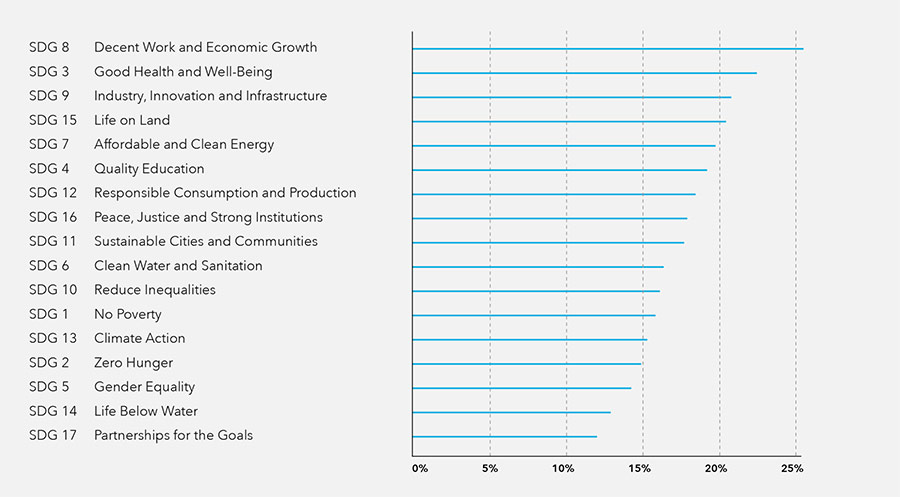
Across the globe, and over the last two years, notable agreement has emerged about the most promising UN Sustainable Development Goals for business. The same selection of six Sustainable Development Goals is rated as most promising, even if they’ve jostled a bit in rank. The cluster is composed of Sustainable Development Goals that address jobs and growth, good health, life on land, affordable energy, education and industry, innovation and infrastructure.


8. AFRICA IS READY FOR BLOCKCHAIN

Though they are rated number 4 and 15 on the overall opportunity landscape, opportunities related to blockchain, “Clever Codes Disrupt Inequality” and “Business of Power,” are the top-ranking opportunities in Sub Saharan Africa, indicating the region is ready and willing to invest in this critical new way to access services once dominated by formalised and centralised authorities.

Blockchain allows for the decentralized exchange of critical services like energy and finance, giving consumers the ability to access loans, insurance, finance, and other vital elements of the economy. African markets can be expected to leapfrog into the next digital era defined by a blockchain-based internet.


9. MENA AND SOUTH AMERICA ARE CONFIDENT IN THEIR ABILITY TO PURSUE GOALS

Businesses in the Middle East and North Africa (MENA)and South America reported an increase in their perceived capacities to pursue new opportunities, as well as an increase in their willingness to pursue them, as compared to last year. This ability and willingness to pursue cutting-edge market opportunities indicate these regions will become increasingly important hotbeds for market development in the coming years.


10. CASH-IN ON POWER AND TECH

Decentralised power delivery, behavioral biometrics, and artificial intelligence to combat cybercrime are three opportunities that can be expected to mature rapidly through investments and business action. In the global survey, leaders across the globe perceived these three markets to hold a good business case as well as a good investment case. Also, leaders perceive these markets to positively impact business, and both the financial sector and business are ready to actively advocate for growing these markets. Both are important conditions for the opportunities to scale rapidly.

Download the full Global Opportunity Report 2017 report

If you like this, subscribe here for more stories that Inspire The Future.


‘Radical Greengrocer’ Tops Sustainability List

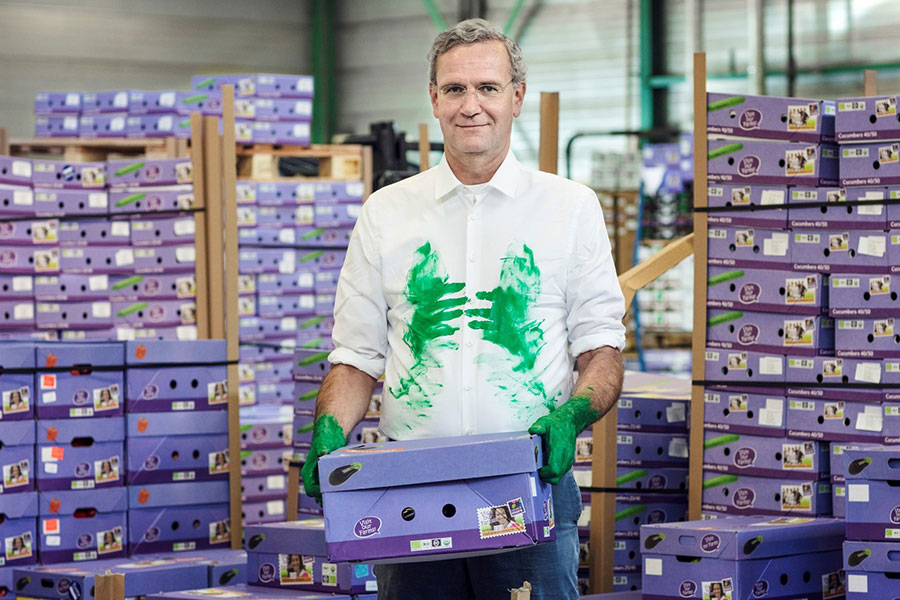
Volkert Engelsman, founding director of fresh organic importer and distributor Eosta, has been awarded top place in the annual Dutch Sustainability Top-100 list compiled by daily newspaper Trouw.

Recognising the Dutch entrepreneur as “a greengrocer with a radical vision,” the jury acknowledged Engelsman’s pioneering leadership in the field of sustainable food and farming, specifically in True Cost Accounting. 

If you like this, subscribe here for more stories that Inspire The Future.

Eosta, based in the Netherlands, was founded by Engelsman in 1990. With suppliers across six continents and customers in Europe, the US and the Far East, it’s now a leading European specialist in organic produce.

Since 2016, Engelsman has been active in promoting True Cost Accounting as a pathway to sustainability, giving speeches at congresses and think-tank events worldwide. True Cost Accounting is a new form of bookkeeping that makes the true price of food visible, including environmental, social and health impacts.  

The jury especially appreciated Engelsmans commitment to making True Cost practical, by bringing the numbers to store shelves in Europe, and putting hidden costs on organic apples, pears and other products.

Engelsman used his acceptance speech to call for new partnerships in the sustainable movement, especially in the finance sector. He said: “Many financial institutions are starting to realise that there is something wrong with our definition of ‘profit,’ if it results in the destruction of our natural habitat and makes life miserable for 90% of humanity, including our children’s children. There’s nothing wrong with profit, but you have to calculate it fairly.”

“As a movement we need to help financial institutions such as banks, accounting firms and institutional investors to start making better choices. The main flow of capital is still being driven by an outdated profit definition, which is basically killing the planet.”

New profit definition 

Thanking Eosta’s partners in its recent True Cost Accounting campaign, which included the FAO, WHO, NCC, Triodos Bank, EY and Soil & More, Engelsman stressed the need for a new profit definition that includes human and ecological values.

In June 2017, Eosta published a pilot study named ‘True Cost Accounting for Food, Farming and Finance’. The study resulted in a practical dashboard for investors to assess impacts on financial, natural and social capital. It was presented to Peter Bakker, president of World Business Council for Sustainable Development, and in Wales to HRH Prince Charles.

If you like this, subscribe here for more stories that Inspire The Future.

How Tech is Disrupting Poverty, Energy & Health Care

At the recent Bloomberg Global Business Forum, held in New York, one of Wall Street’s most prominent figures, David Rubenstein, the founder and co-CEO of the private-equity firm The Carlyle Group, hosted a panel discussion between Aliko Dangote, Bill Gates, Indra Nooyi and Masayoshi Son.

David Rubenstein: I’d like to ask each of you; clearly there’s going to be a lot of innovation over the next ten years, 20 years, 30 years. All of us might not be here 30 or 40 years from now. We might if we’re lucky.

If you like this, subscribe here for more stories that Inspire The Future.

If you had the chance to give up everything you currently have; your wealth, your fame and accomplishments, and live through the next 30 years or so of innovation and start all over again, would you rather live through the next 30 years of innovation and see what the world’s going to become or would you like to stay where you are right now?

Dangote: I will give up, yes, because I’m sure great things are going to come.

Gates: Living longer is worth the better deal.

Nooyi: I’d like to say something my two kids told me. I asked them what they’d like for their birthday. They said, “We’d like a week without the Internet.” So in a way, I’d like to go back to those days when life was a little simpler.

Son: Oh, I’ll go for everything for the future.

What has been the most important innovation that you have seen in the last 10 years in the world in which you operate? What’s been the most crucial change or innovation?

Son: I think in the world in which I operate, in Africa, there’s this massive GSM revolution. If you look at us in Europe, we had about 500,000 lines in 2001. In 2017, we already have 139 million lines. So it’s a massive jump, and you can also see what happened in India, where they were able to create 100 million lines in 170 days.

Gates: I had an early career in the digital revolution, and that’s still the fastest-moving thing. It’s so horizontal in nature that it’ll change banking, education, scientific research, sales and marketing. Today, a lot of my focus is more on health, and particularly miracle vaccines – developing malaria, HIV and TB vaccines. I get to back amazing scientists.

The digital revolution isn’t slowing down. So we get the benefit of that. But regarding equity, it’s the health breakthroughs I’m most excited about.

And you think people with health breakthroughs can live to be 90, 100, 110?

Gates: Well, I’m not working on that problem. There are other Silicon Valley billionaires who want to live forever.

My main focus is on inequity. It’s 100 times more likely for a child in Africa to die than a child in the United States. And these are all solvable diseases; we can get rid of that inequity. Extending life is very difficult because your many body parts, including your brain, wear out. So I’m not in that field. I’m in the malaria, HIV and nutrition game.

I don’t think your brain’s going to wear out, but OK.

Nooyi: I think every aspect of our life is changing because of what people are doing with technology. The single biggest thing I feel good about is how technology is enabling gender inclusion. Women are being enabled a lot more and their voices are being heard. And I hope that progresses going into the future.

Well, let me ask about that. You have done two things in your career that were very innovative. One, you’re an immigrant to the United States and became the CEO of one of the most important companies in the United States and the world, but you’re also a woman. Was it more challenging to become the woman CEO or the Indian immigrant CEO?

Nooyi: All of it. I came into the workforce when there were hardly any women in senior executive positions. It’s different now, but 20 or 30 years ago when I first started working, there weren’t many women. It was difficult. Being an Indian got me attention because I was often the only colored person in the room. And so that got me attention, but I had to work harder to prove that color and gender should not be counted against me – that I could do a damn good job, too. 

Well, you have to be better qualified than white men, right? 

Nooyi: Way better. A lot more. 

What’s the most significant innovation that you’ve seen in the last ten years? 

Son: Not just ten years, but the last 30 years. Using the microprocessor as a base for creating the Internet has changed the life of almost everyone on the earth. But going forward, it’s accelerating even more on that. 

Earlier in your career, you were a technology innovator. And at one point, I think in the year 2000, you lost $70 billion of net worth. What did it feel like to lose $70 billion of net worth in one year? 

Son: Well, it was a crash. Everybody crashed. But somehow, at the bottom of the crash, I actually revived my fighting spirit, so it was good. By the way, what Bill doesn’t know is that for three days, I became richer than him. But 12 months later, I was almost broke. I had a 99% drop in our share price in one year. 

At one point, you made an investment of $20 million in a little, unknown company called Alibaba. It became worth around $90 billion and is now worth about $130 billion. How did you decide that Alibaba was a good investment and do you have more like that you could recommend to us? 

Son: Well, it was about Jack Ma. Not because of his business model or technology, but because of his charisma and leadership. China had an enormous opportunity for the upside. I said this is the guy that can be the leader of this innovation. 

Indra, you’ve tried to take a company that was known for selling sugar water – in the view of some people – and make it a more nutritionally safe and better company. Was that hard, to beat the bureaucracy back at Pepsi when many people didn’t want to do the things you wanted to do? 

Nooyi: I think it was hard within the company, it was hard outside the company. I remember investors telling me not to forget that we’re Americans – we like our soda and chips. Don’t try to change us. And when I asked them if they changed their habits, he said oh yes, we’ve changed our habits, but we don’t want you to change what you’re doing. 

We had to fight battles on multiple fronts. Change does not happen quickly in our industries. Because we have to change consumer taste, we have to change the product portfolio; we have to change the business system. So it’s still happening. It’s a work in progress. 

Now when you go to somebody’s house for dinner, and they say would you like a Coke, what do you say? Has that ever happened and would you rather leave?

Nooyi: I’d say it was nice knowing you and leave. Actually, my secretary sends them a list ahead of time in case there’s a mistake. 

Bill, I’d like to ask you a question I have asked you before, but people are still interested. All of us who use personal computers are familiar with turning them on. We need three fingers to do so, control, alt, delete. It’s a little awkward sometimes. You’re the person who came up with this idea. Why? 

Gates: The IBM PC hardware keyboard only had one way that it could get a guaranteed startup. Clearly, the people involved should have included another key to make that work. A lot of machines now days do have that as a more obvious function. 

No regrets about doing it that way? It worked out OK? 

Gates: Well, I’m not sure you can go back and change small things in your life without putting the other things at risk. Sure, if I can make a small edit, I would – I’d make that a single-key operation. 

By the way, you dropped out of college. Do you think if you’d gotten your college degree your life would have been better off? 

Gates: At the time it felt like it. There was a huge sense of urgency around the fact that the microprocessor was revolutionary and software needed to be written for it. A lot of existing companies, including IBM, with infinite resources would have gone and done that. 

So if we were to have any hope, the sooner we did it, the quicker we did it, and the more hardcore we were about it, the better. I didn’t want to waste a day. In my 20’s I worked weekends, I didn’t believe in vacations. 

We had to move at high speed because eventually, IBM did compete with us. Many companies came along later, and of the companies formed in that time, we were the sole survivor. 

It would’ve been hard to hold me back once I saw that opportunity. Harvard, which I loved, was very relaxing; where you would sit in class and stay up all night talking. It didn’t have the same intensity. Once I saw the opportunity, I knew I was going to leave.

And your parents, what did they say? 

Gates: They said: “Hey, we’re paying your tuition. What does this mean?” And I said, “well, I’m on leave,” which was true, I could have gone back. Harvard’s very generous about that but eventually, the course catalog moves on and you become a little too old for it. 

They weren’t sure if it would succeed or not so my parents thought maybe I’d head back. But, I was single and maniacal in those days, and it was the perfect thing for me. 

Now you’re innovating in a number of areas and one of them is energy. You’ve started a fund to invest in energy innovation. Why? 

Gates: With energy, we have a real danger that even with fantastic innovation it can proceed at different paces within different industries. In education, it proceeds very slowly for a variety of structural reasons. There is no one incentive because a new type of power plant is going to take decades to prove and your patents will expire. The regulatory commissions don’t want to take the risk of a new power plant. We’ve seen what’s happened with nuclear, how tough that’s been. And so, because of climate change, and because Africa has less electricity today per person than they had ten years ago because the population has exceeded the electrical generation capacity increase, we have a huge problem. We need low-cost clean energy.

For those with spare capital – risky capital – joining in on this is a great thing. 

You now have that fund?

Gates: Yes, it’s about a billion dollars, and we’ve spent the last year hiring an incredible team. It’s about a 15 to 20-year time period per person, a little longer than you’d have in, say, biology or digital investment because just proving the energy plants and scale is very hard. 

Aliko, rightly or wrongly many people think innovation is based in Silicon Valley, Seattle, Japan or China, but not Africa. Is this unfair and do you think there are African entrepreneurs who in the next ten years will change the face of Africa?

Dangote: Let me tell you a short story. We have about a million people we want to reach through the Ubuntu Foundation in various local governments– local governments are what you call counties in the USA.
We go to every local government and meet with thousands of women and give them free grants to improve their lives.

In the beginning, we did this manually, through commercial banks, but later we registered all of them and now use a mobile banking system to both pay and register everyone on our database. In doing this, we’ll be able to use the database to determine if it’s really changing lives – which it is currently doing.

The same idea is delivering results in our partnership with Bill to fight Polio. Despite vaccinators going into the field to vaccinate seven million children, we saw the incidence of Polio going up. Now we give the health workers a mobile device with a chip that shows us where they’ve been – to verify it’s being done properly.

Bill, let me ask you about your efforts to beat back malaria. What’s the argument against killing all mosquitoes? Why don’t we just eliminate all mosquitoes, which I think we have a capability of doing, to eliminate malaria. What’s the argument against that?

Gates: Malaria is only carried by the Anopheline mosquito, which is only one out of every 1,000 mosquitoes. The main reason is that it can set a precedent. If you think “OK, humans can go and eliminate this species,” then what’s your criteria for anything else that might be a nuisance? You might make a mistake; it might be key to an ecosystem.

There some bats that feed on those mosquitoes and you’d have to look at the effect on those ecosystems. There’s a new genetic approach called gene drive that’s still in the labs and not totally proven, but it has a good chance of knocking down Anopheline populations by 99% over five years. 

Indra, we often hear about great technology leaders or great innovators that are men. Is that because of a sexist thing where men don’t tend to give women opportunities? Do you think it’s going to change anytime soon?

Nooyi: I’m not an expert on women in technology, but I will say something interesting. I was at an MIT event recently, and the president of MIT told me that 50% of their engineering graduates are women. But if you go to most companies, 50% of engineering staff are not women. If you read the stories about Silicon Valley, 50% of the people getting funding are not women. There’s obviously something causing that leak between MIT and the workplace. We have to do something different.

Masa, is artificial intelligence a good thing for humans or not? Are your robots going to take over humanity?

Dangote: I think that the misuse of artificial intelligence could be horrible. But there are thousands of good reasons to utilize artificial intelligence for good – for humanity. It has solved unsolvable diseases, solved unsolvable disasters and many other things. So I think it’s really good.

If you like this, subscribe here for more stories that Inspire The Future.

Impact Investing: What Most Entrepreneurs And Executives Get Wrong

What does it take to find success in impact investing? And how are business skill sets and expertise most effectively transferred to this way of doing business?
We asked Adam Bendell, someone who’s done both, for specific, actionable steps to help business leaders think through the impact investing process. Bendell, CEO of Toniic, the largest global action community and network for impact investors, was more than happy to share.

Amy Bennett: How did your career arc, from entrepreneur to Toniic CEO, lead you to impact investing?

Adam Bendell: I’m now on my fourth career, and I’ve only recently had the courage to say, “I’ve focused long enough on making money. I want a day job that has positive impact on the world.” Impact investing is natural for me because at Toniic, we’re unapologetic yet compassionate capitalists who want to empower business as the greatest force for good on the planet. What a hoot it is to both make money and improve the planet!

Was there an “aha!” moment that triggered the courage to take this different path?

Like most other impact investors, I began my journey by dedicating a portion of my portfolio to impact, and then traditionally managing the rest of the portfolio. That’s what I would call a “classic” approach to impact investing.

As I got into the Toniic role, I realized that approach was outdated, because I found many of our members have committed to 100 percent impact investing across their portfolios.

 I started thinking about my own portfolio in that context, and the “aha!” is that I was probably doing a lot more damage with the 90 percent of my portfolio that was traditionally invested than I could possibly offset with the good I was doing from the 10 percent in impact.

How long does it take to unwind the traditional investments in the portfolio and get to 100 percent impact investing?

I don’t know about 100 percent, but you can get to 80% or 90% within three or four years of steady progress. For example, private equity is completely illiquid. You can’t get out of those positions until the fund pays back. So you can make a lot of progress relatively quickly, and then the tail-end of the portfolio may take some years.

As an impact investor and Toniic leader, have there been rewards that you had not anticipated?

Absolutely. I’ve found that the journey towards portfolio alignment is independently rewarding, and I didn’t anticipate that. In any given year, I have seen  my financial returns go up or go down. They go up, I feel great; they go down, I feel awful. Even measured impact has volatility, whether you’re looking for social impact or carbon reduction, those things go up and down. But values alignment—the process of aligning my investments with my values across asset classes—that can go up every year until it reaches 100 percent. And that steady progress is a source of tremendous psychic income, one that mitigates the emotional volatility of investing and brings lasting joy.  Try it!

How do you, as an organization, measure success?

Even though Toniic is a nonprofit, we hold ourselves to the same standards of impact accountability to which our members hold the businesses in which they invest.

We are focused on amplifying our members’ individual and collective impact.

That starts with measuring the capital that we collectively invest, but it also includes our impact on policy, our effects in enticing traditional advisers to embrace impact, our influence in working fundamental change in the global capital markets to take positive or negative impact into account. We track our footprints in doing so, both in empowering current impact investors, and in inspiring traditional investors who are curious about impact investing, to taste the rewards of values-aligned investing. So, we have a series of metrics that we use to measure that progress.

What is the best advice you could give successful entrepreneurs who are looking to take a first step into impact investing?

First, follow your passion. Then, get support in implementing a plan by connecting with peers who are also doing it. Many traditional investment professionals will speak endlessly against it, so find peers who are doing it to consult with, but ultimately make your own decisions, just as you have done when you made your bravest business decisions.  Those were often my best decisions – I bet they were yours, too.

Is there a concise call-to-action you can leave us?

Although many entrepreneurs are running sustainable businesses aligned with their values, I’d encourage them to ask, “Where is my money spending the night?” Unless you are actively participating in the impact community, you may be missing an incredible opportunity to empower like-minded entrepreneurs with capital, and thereby building out the global cohort of mission-aligned investors. Most of all, you’re missing the personal joy and the rewards of being on the impact investing journey. Try it, you’ll see. That’s my call to action.


How to Unleash Capital Market Power for Positive Impact

Here’s a bit of a thought experiment. Austria has an organ donation rate of 90 percent, meaning 90 percent of its citizens donate their organs at time of death, while Germany sees less than 15 percent.

Why such a large disparity among neighboring countries? A 2012 study from Stanford University has the answer—the former makes organ donation the default option, while citizens of the latter must “opt-in.”

The findings can be applied to any number of policies to help guide positive social outcomes, and one in particular comes to mind; environmental, social and governance investing (ESG).

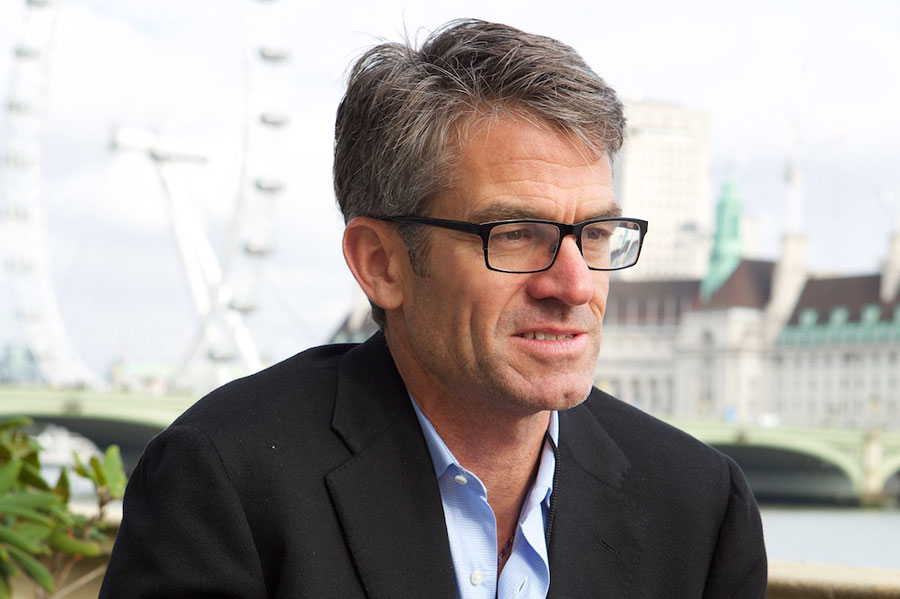
“If we can take that same model and apply it to ESG investing, what would it look like in the capital markets?” Matthew Weatherley-White (pictured above) rhetorically asks. “How could that potentially change our perception of the challenges embedded in ESG investing?”

Weatherley-White is managing director of The CAPROCK Group, a firm that provides family-office wealth management and outsourced chief investment officer services. He says issues like natural resource efficiency, climate risk and the potential cost of carbon are on everyone’s mind, yet the amount of capital currently allocated to ESG and impact investing is relatively small.

An opt-out model would make the process easier and “a lot less threatening.” And even though direct ESG market penetration is small, many assets mangers might not self-identify as impact investors even though they incorporate its precepts, something Weatherley-White refers to as “ESG creep.”

Which is important, because ESG and impact investing can unleash capital markets for positive impact, he argues, calling it “the most powerful optimization vehicle on the planet.”

Corralling Capitalism

When attempting to “corral such a force” to realize the benefits of impact investing, Weatherly-White points to three critical areas:

  1. Models of effectiveness: ESG asset managers have strong investment performance. When enough “gravitational pull” occurs around a successful impact strategy, it shifts the capital market’s perspective about the strategy.
  2. Regulation: Rather than laws to enforce the application of impact or ESG, regulation means internalizing cost structures that traditionally have been externalized. “An example might be coal,” says Weatherly-White. “We know burning coal leads to increased health costs in communities immediately downwind—and increased environmental costs. Those are known costs, and they’re borne by taxpayers, so they are externalized to the cost of the commodity. Internalizing those costs” can change investment prospects.
  3. Paradigm shift: More Austria and less Germany, meaning the aforementioned opt-out model as the new standard. When combined with more education to combat the widespread (and incorrect) notion that investors must sacrifice return to realize a positive social or environmental impact, these changes will significantly increase ESG adoption. “While one might intentionally accept concessionary returns in order to build a new market, or test a pre-scale service delivery model, one does not need to sacrifice performance in pursuit of impact,” he explains.

Incremental and Total Impact

As a longtime champion of ESG and impact investing, Weatherly-White also recognizes that impact investing is not absolute. Initially, a percentage of assets can be allocated that corresponds with investor comfort. This often leads to interesting revelations, and the behavioral choices that naturally follow.

“At some point, investors realize they’re trying to solve problems with one part of the portfolio that the rest of their portfolio is creating,” he notes. “What we’ve seen is that once investors start down the ESG path, they often continue in that direction, and move toward a complete allocation.”

While some investors are 100% impact investors from the start, performance drives others to increase their allocation. “Once they see returns generated in a responsible way, they ask themselves why they wouldn’t want to do more of it, and it becomes a really different conversation.”

Beyond investment return, investors want to know if they are truly making an impact. This second piece, benchmarking social and environmental impact, is more difficult to measure. Weatherley-White turned to tech for a solution, creating an impact reporting platform called Impact Portfolio Assessment and Reporting (iPAR).

“We require that our impact managers use it in tracking their Impact Reporting and Investment Standards (IRIS) metrics, which include the number of tons of carbon not generated, or solar power used, or whatever it might be.”

Just Do It

For successful entrepreneurs, executives and investors looking to enter the impact investing space, Weatherly-White says opportunities are growing rapidly in a variety of sectors.

“From a personal perspective, the best advice I would give is just get started,” he says. “There is no performance sacrifice required. Take a step, and there’s lots of places to get started. It’s not intimidating once you’ve taken the first step.”

For those looking to run their business in a sustainable manner, he suggests the B Lab Impact Assessment, an online tool to help business owners measure their organizations’ social and environmental impact.

“It gives a window into best practices in sustainable business management,” says Weatherly-White. “You don’t have to get all the questions right immediately, but pick a few things you can improve on over the next year and steadily work toward incorporating them.”


Chinese “Take Over America” Campaign for 4th of July

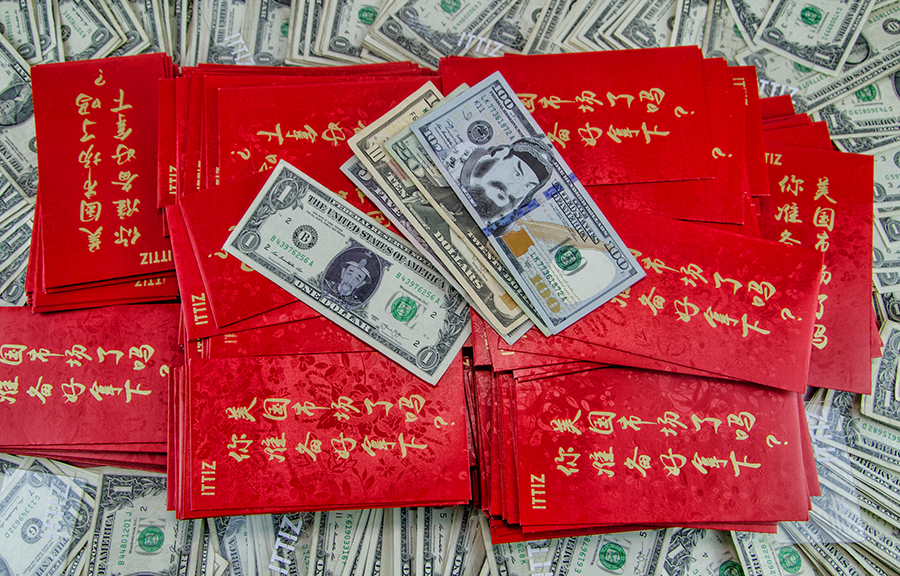
A marketing agency in Shenzhen has given the world a glimpse of what the world could look like if China took over – by creating U.S. currency featuring the faces of Chinese emperors.

Timed to coincided with the yearly Fourth of July celebrations – American Independence Day – the date was chosen for maximum impact. Chinese marketing company ITTIZ and Asian business advisors Global from Asia sent out red envelopes containing U.S. banknotes to 500 of the biggest companies in Shenzhen, a commercial area of China that links it to Hong Kong.

All the bills were actual U.S. currency notes, ranging in value from $1 to $100, with a removable sticker of a Chinese emperor covering the respective images of U.S presidents that appear on the notes. *

ITTIZ came up with the idea for the campaign a few months ago when considering the outcome of the U.S. presidential election. Sean Davis, CEO of ITTIZ, said that with the current state of globalization and the general interconnectedness of countries, the likelihood of China’s rise is as probable as ever, and pulling back isn’t a reasonable option. 

The company wanted to create something that taught companies in Shenzhen the value of thinking creatively, and so the financial, political, competitive and comedic aspect of this campaign became appealing to them.


Along with support from Mike Michelini, CEO of Global from Asia, the campaign came to life. Each note is customized and titled, “Are you ready to take over America?”

The marketing company believes this was a creative way to share the importance of marketing with Chinese companies – by tying the idea directly to currency, revenues, and overseas competition. The campaign is expected to reach a wide audience spanning various industries. Thus far, there has been a range of reaction, with the majority finding the campaign humorous.

“We see Shenzhen becoming a technology hub for the 21st century,” says Davis. We feel that creative ideas will only accelerate this movement. The future is coming at us quickly, everything in today’s economy is up for grabs, and Shenzhen is ready to grab hold and take it.”

* The currency is not defaced in a way that would violate Title 18, Section 333 of the United States Code.


Two Critical Ingredients For Successful Impact Investing

“How do we build bridges between talent and opportunity?”

It’s a question rhetorically asked and answered by impact investor Ron Cordes, founder of financial powerhouse AssetMark Investment Services, and central to his “second act” career mission, one with the ultimate goal of leveraging capital markets to help solve large-scale societal and environmental challenges.

 “I had some real trepidation about striking out and reinventing myself, but I was pretty good at building investment capacity over 25 years, and it was very transportable to this new role,” he explains. “I could apply all of those skills, context and experience in ways that could significantly move the needle on issue areas important to me.”

Those skill sets, which led to overwhelming success with AssetMark before its sale in 2006, are finding their equal when transferred to impact investing, as well the numerous foundations, grants and—yes—businesses of which he and his wife Marty are a part of. They’re building the aforementioned bridge of which he speaks.

With investments in 50 countries located in every part of the globe, Cordes has made trips to the world’s poorest, including Kenya, Rwanda and Uganda, as well as (closer to home) Haiti, in order to make responsible investments using capital market fundamentals that aim for solid financial returns. It’s a win-win for all involved, and far more sustainable than charitable-based strategies of the past.

It’s also something that’s gaining more and more interest from high-net-worth investors and entrepreneurs, giving a new and exciting spin to the concept of “leaving a legacy.” They’re leveraging the aforementioned entrepreneurial skills that have taken years, often decades, to develop in order to do well by doing good.

“What’s important is that it’s not so much about reinventing yourself as it is re-pivoting from one place to another,” he says. “For me, that re-pivot was in the investment world, and impact investing became a natural vehicle for me. You might not appreciate how many of your skills can be applied when addressing and ultimately solving whatever problems you’re passionate about.”

One critical ingredient to impact investing success—humility—isn’t endemic to high-net-worth entrepreneurs, especially type-A personalities used to shouldering heavy burdens and leading large organizations.

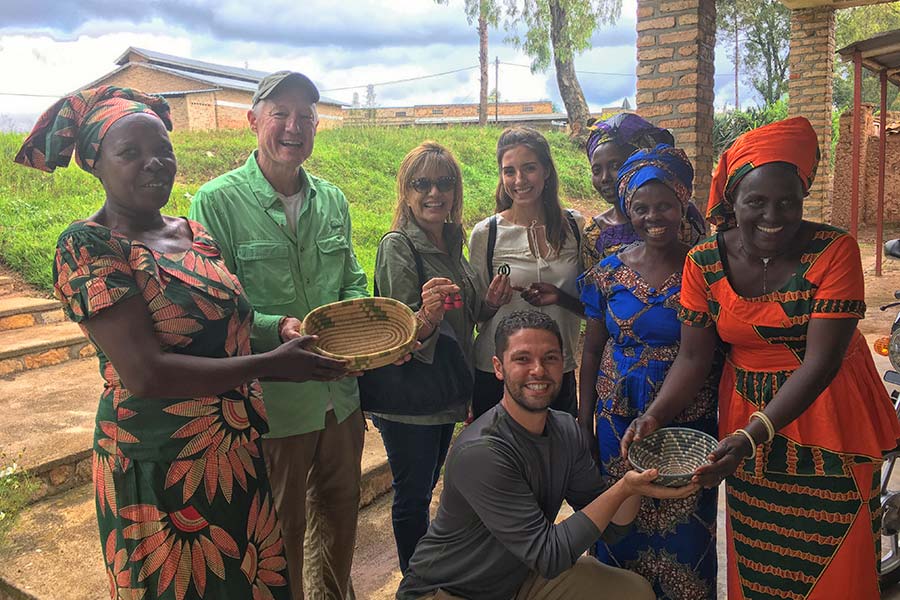
The Cordes Foundation team – Ron, Marty, Steph and Eric – visit a co-op of women artisans in Rwanda. They partner with All Across Africa to make handmade baskets that are sold through Pro Flowers and Costco.

Recognizing it, Cordes developed the following equation: Humility plus Empathy equals Impact, or H+E=I. It’s something he learned firsthand during a trip to Africa in 2007.

“On the first day, we had our clipboards and were looking at some of the projects and feeling like we knew all the answers,” he recalls. “We were there, we had the resources, and we had experience. By the second day we realized that not only did we not know the answers, but we were actually struggling to ask the right questions.”

It led to a heavy dose of the second ingredient—empathy—and “acting as a resource for the people that we serve, as opposed to a savior. They’re capable of being architects of their own solutions; they just need some help and resources from us.”

It involved traveling to countries like  El Salvador, the Philippines and Nicaragua to speak with and (more importantly) listen to the people they serve.

“We would literally ask where we could find the most economically disadvantaged populations, and then figure out what they believe they need. What are the solutions they’re looking for, and how can we help them be architects of those solutions?”

This combination, humility and empathy, resulted in far greater success than any seen to that point. Rather than colonial, patronizing Americans that offered a pat on the head and a condescending “poor you” attitude, Cordes and his group “removed the Superman capes to become true partners in economic development and investment.”

Which is all well and good, but how is that success measured?

“Impact’s measurement is a field unto itself,” he concedes, but one that “has come a long way over the last 10 years.”

While noting it’s “imprecise and still has a long way to go” it can involve the number of jobs created, the level of those jobs, the amount of capital flowing to local entrepreneurs and how it’s utilized.  

“Sometimes the impact is not necessarily quantifiable,” he concludes. “The best way to experience it is to actually get out and meet the people that you’re trying to impact to determine for yourself, through conversations within in their communities, if what you’re doing is working.”


Does Impact Investing Make Sense for High-Net-Worth Portfolios?

It’s far from just talk. Ron Cordes spent the first actions of his career creating “the best business in the world.” In his second, he felt compelled to build the best businesses “for” the world. But it’s not as if the two are mutually exclusive.

The disruptive lessons learned from building financial powerhouse AssetMark Investment Services can indeed be applied to impact investing. It’s fueling a non-traditional investing strategy that’s far more effective and sustainable than conventional models of the past, the steps of which can be emulated by other high-net-worth investors.

It began with the sale of the Assetmark in 2006, which Cordes founded with two partners and today claims roughly $30 billion in assets under management. It was one of the first companies to provide financial advisors with a platform to charge fees, rather than commissions, on the products and services they offer.

Like many high-net-worth couples, the liquidity event gave Cordes and his wife Marty the opportunity to create a traditional family foundation. They soon discovered, however, the rapid pace of innovation in the impact investing space and, in keeping with their disruptive roots, quickly adapted.

“If you asked me ten years ago what we’d be doing today, we would be conventional philanthropists, giving money away toward a mission area that included global poverty, women and girls and economic development,” he says.

While he’s quick to note it’s something they do from a mission and grants perspective, what’s happened with the other 95 percent of the portfolio is far much more interesting and impactful. It not only enjoys a positive social and environmental return on investment (ROI) but a financial one as well.

“When I first got into this in 2006, I didn’t appreciate that there were all these folks using capital markets in business models as tools to solve enormous societal and environmental problems,” Cordes explains. “As I started to help these CEOs build their businesses, I realized that many provided compelling investment opportunities.”

The issue was a lack of an “investment ecosystem,” and no real way for investors commit. While meeting with the foundation’s board, Cordes and Marty noted a few microfinance investments they’d recently made.

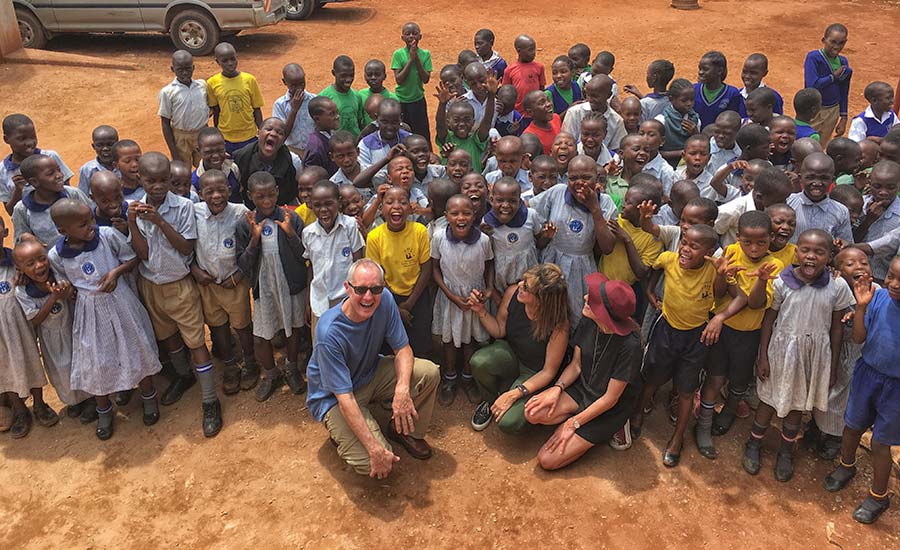
The Cordes family – Ron, Marty and Steph – visit Hands for Hope primary school in Kampala, Uganda. The visit fell on Marty’s birthday so the students surprised her by singing happy birthday.

“We said, ‘let’s make a commitment over the next 12 months to allocate 20 percent of our portfolio to impact investing.’ We didn’t even call it impact investing because the term hadn’t yet been defined. We called it social enterprise investing because we figured we were investing in social enterprises.”

Over the course of the following year, and with the help of MBA students at college programs they supported, a range of opportunities was identified to help alleviate global poverty, mainly through microfinance and small business investments. By September of 2008 they were feeling pretty good, that is, until “the bottom fell out in the global financial markets.”

Obviously concerned with the economic downturn’s effect on the portfolio, Cordes informed the board that they might “take some arrows on this thing,” but to nonetheless commit to impact investing so that others may learn how it’s done.

Despite the brave front, “I was more than somewhat concerned, having seen the rest of our portfolio mark-to-market, with what was going to happen with the 20 percent we had in impact investing,” he adds.

Thankfully, the angst and anxiety were all for naught, and at the year’s end Cordes saw the impact portion of the portfolio was not only “not the worst-performing, but as a group, among the best.”

The investments’ non-correlation with more traditional debt and equity asset classes acted as a firewall of sorts when global markets were aflame, disproving the oft-repeated critique that investors must sacrifice return to invest their conscience.

“Every other asset class or category we had in the portfolio was completely correlated, but now I found this non-correlated asset class. As an investor, it piqued my interest and was the impetus that led to a deeper look at impact investing.”

That impetus also led to the founding of ImpactAssets, a firm capitalizing on impact investing’s momentum and demand. Citing a study from the Calvert Foundation, Cordes notes that 48 percent of high-net-worth investors either interested or very interested in impact investing, with another 40 percent somewhat concerned.

“I remember the math because I’ve used it so often—almost nine out of 10 have some level of interest,” he concludes. “Yet, virtually nobody was doing anything in the space. When I researched why, I found that 1) there was a lack of ecosystem as mentioned above or infrastructure, particularly among the financial advisors and intermediaries who help people invest, as well as, 2) a lack of a cohesive voice and, 3) a lack of investment products. ImpactAssets is an opportunity, in my second life, to address all three.”


0