Western Governance Models May Not Work in Asia

Governance expert and Oxford academic, Professor Colin Mayer says Japan’s experiences in the 20th century are a warning against importing institutional structures and regulations. As Japan tries once again to reform corporate ownership, and as China and other Asian nations start to establish the institutions that they will need for the promotion of their stock markets, Professor Colin Mayer, Saïd Business School, University of Oxford, has warned them against trying to impose UK- or US-style institutional structures or governance arrangements.

In a paper to be published by The Review of Financial Studies, The Ownership of Japanese Corporations in the 20th Century, Professor Mayer and his co-authors, Julian Franks, London Business School, and Hideaki Miyajima, Waseda University, argue that the collapse of the banking system and the “lost decade” in Japan at the end of the 20th century show that there are real risks in trying to import institutional structures from one country into another, particularly when their social contexts and financial and legal systems are very different.

“Our research into the striking history of the ownership of Japanese corporations, which features a structural break in the middle of the twentieth century, has yielded important lessons for governance reform in other Asian countries,” said Professor Mayer. “Governance reform in these countries should focus on strengthening the role of dominant owners in upholding trust in their societies rather than adopting policies and practices from western economies with completely different ownership, legal and financial systems.

The Japanese experience should be a reminder to us of how little we know about institutional and legal design and how cautious we should be in making policy recommendations about it.” In the most comprehensive description to date of Japanese corporate ownership pre-World War II, Mayer et al demonstrate that, in the first half of the 20th century, Japan’s flourishing equity markets were characterised by weak legal protection for shareholders, but strong institutional arrangements, particularly through the dominance of the zaibatsu, family-based financial and industrial conglomerates.

These “institutions of trust” allowed outside shareholders to have confidence that their interests would be upheld by those responsible for the management of the firms in which they were investing. When, after the war, the American occupation authorities introduced high formal levels of investor protection and instigated the breakup of the zaibatsu, it initially resulted in even higher levels of dispersion of equity ownership and in particular widespread ownership in the hands of individual investors.

But without institutions of trust to represent the interests of the shareholders, and with an increase in debt-for-equity and other similar bank practices, ownership by individuals was gradually replaced by cross-shareholding by banks and corporations. This model of “inside ownership” – ownership by shareholders with more than a purely financial interest in the firm — dominated post-war Japan, but began to fall apart in in the last quarter of the century, leading to a systemic banking failure and prolonged recession.

“The changes made in Japan in the middle of the century show how difficult it is to import structures from one country to another without a nuanced understanding of the differences between their social and legal contexts,” said Professor Mayer. “As countries in Asia are attempting to reform their corporate governance, it would be tempting but risky for them to draw on established models such as those in the UK and US.

The latter countries rely heavily on the existence of markets for corporate control and well-developed systems of corporate law and enforcement, which are embryonic at best in most emerging markets. The trust-based mechanism that prevailed in pre-WW2 Japan and is now beginning to re-emerge in 21st century Japan may be a more relevant model for many Asian countries.”

However, he pointed out that institutions of trust take time to establish and embed in local arrangements. They are highly country- and context-specific, and laws and rules that function in one country may be inadequate or inappropriate in another. The importance of families in some Asian countries, such as Korea, and the state in others, such as China, means that the sources of trust relationships in these countries are very different.
 

The $24 Million Disability Staffing Business

The United States has a large minority population that is its most overlooked and under-leveraged workforce: people with disabilities. People with disabilities have an unemployment rate twice that of people without disabilities, according to the Bureau of Labor Statistics, and just one-third of people with disabilities participate in the workforce, as compared to three-quarters of people without disabilities.

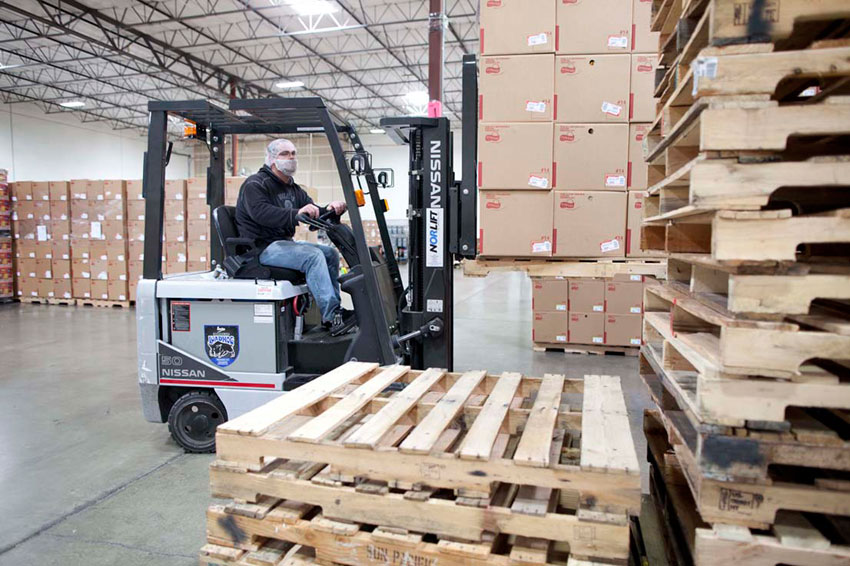
This despite the fact that there is a strong business case for employing people with disabilities – including reduced costs, increased productivity, and reduced employee turnover. Based on the above figures, about 6.4 million jobs will need to be filled by people with disabilities in order to close the existing employment gap between people with disabilities and people without disabilities. At DePaul Industries, our social enterprise approach (known as alternative staffing) utilizes the commercial staffing model to help people with disabilities find jobs.

This year, our staffing business is on track for $24 million in sales, and more than 300 of our employees will go on to find permanent work with our customers, an important metric that we use to help measure our impact. DePaul’s focus is on changing the employment landscape for people with disabilities; other alternative staffing organizations focus on different barriers to employment, such as a criminal record, a lack of stable housing and/or homelessness.

Annually, American and Canadian alternative staffing organizations employ 25,000 people and exceed $100 million in sales, according to the Alternative Staffing Alliance. While this may be a good start, it’s only a start. This model has such great potential for sweeping change that DePaul Industries is looking to expand the model nationwide with a staffing network to help individuals with barriers to employment gain jobs: PurposeSTAFF. The strength of the alternative staffing model is that it is demand-driven and beneficial for both parties, without sacrificing quality for either.

Businesses hire alternative staffing organizations because they provide qualified, reliable employees – not to fill a diversity quota. But with an increased emphasis on corporate social responsibility, some companies do find the social mission to be a unique selling point. The social benefit is that people who face high barriers to employment are connected to jobs. The experience and job skills many employees learn while working for a staffing firm will help them to earn permanent, higher-paying jobs, whether with customers or elsewhere.

Alternative staffing organizations are no different than other social enterprises in the search for balance between business and mission. At DePaul Industries, the concept we’ve found that works best is 51% money versus 49% mission. We can’t achieve our social mission if we don’t have the revenue and solid financial footing to sustain it, but mission remains the foundation and guiding principal for the organization.

Legal structure also varies for alternative staffing organizations: whether to organize as a nonprofit, for-profit, or a hybrid of the two. The benefit corporation legislation now passed in 20 states and the District of Columbia is a viable and welcome option, as a benefit corporation must prioritize both a positive impact on society and profit. In January, DePaul Industries registered PurposeSTAFF as an Oregon benefit company, whose bylaws contain our mission of employing people with disabilities, and it is now a Certified B Corporation.

Alternative staffing is just one example of a social enterprise approach that brings about real change, and I’ll be speaking about it during an intensive session at the Social Enterprise Alliance Summit 14 in Nashville April 13-16.

Diverse organizations around the United States are using the power of business and the marketplace for the common good, and the Summit will bring these social enterprise leaders together to connect, collaborate and learn. I hope to see you there.

This post was written by Dave Shaffer, President and CEO of DePaul Industries, an integrated social enterprise providing employment opportunities for people with disabilities. Shaffer will be speaking on two panels, one on alternative staffing and one on accessing capital, at the Social Enterprise Alliance Summit ’14 in Nashville April 13-16.

Occupy Hollywood: How Films With A Conscience Are Invading Your Screen

What do these blockbuster films have in common?: Lincoln, The Help, Contagion, Waiting for Superman, Charlie Wilson’s War, The Kite Runner, North Country, An Inconvenient Truth, Good Night and Good Luck, Syriana. Participant Media of course. And they’re expanding our thinking while entertaining us. 

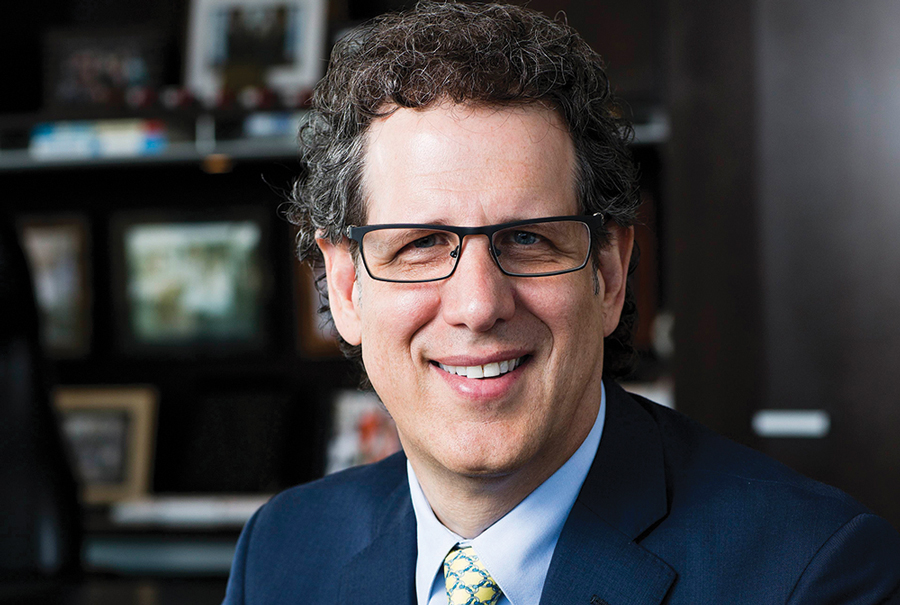
The challenge founder Jeff Skoll presented to CEO Jim Berk (pictured above) was impossible according to many industry pundits: Build a commercially successful media company by telling stories that both entertain and raise important issues that inspire people to take action. In only 10 years, Participant’s 50 films, 36 Academy Award nominations, and seven Oscars can no longer be treated as an anomaly.

Jeff believes that a good story, told well, can truly make a difference in how one sees the world. Whether it’s a feature film, documentary, television show or other form of media, the work exists to tell compelling, entertaining stories that also create awareness of the real issues that shape our lives. To date, Participant has developed active, working relationships with 600 nonprofits that collectively have the potential of reaching more than 75 million people. We asked Berk about the role of entertainment in changing people’s perceptions of the world.

What is the key ingredient needed to inspire a movie audience to take action? 

You have to introduce something in the spirit of the film that makes an audience realize something is really important. We focus on that because we know that politicians and policymakers react to that, and if people demand a product or idea, then there’ll always be companies that come to the rescue and start delivering them. We use a term called “key influencers,” who are people found in small numbers, but who have the ability to impact and influence a huge audience. It’s the same reason a brand has an athlete to endorse something.

We’ve found that with some of our films, even if the box office numbers aren’t anywhere near the latest Spider-Man movie, our impact is disproportionate because the stars are people who have the ability to change an issue for the better. In many ways, there’s a parallel between what we do and what Real Leaders is doing, a magazine that put ideas in front of people, that provides awareness initially, and then ignites an interest that ultimately drives action for the better. Most people want to live in a world of peace and sustainability, something at the heart of what Participant founder Jeff Skoll set out to achieve.

You fundamentally have to be an optimist and believe there are solutions. Films are the perfect vehicles for conveying solutions; that’s the power of storytelling. It allows us to create a narrative that binds you emotionally to something. Despite our success there hasn’t been a year where Jeff hasn’t sat us down and said, “Yes that’s all great, wonderful stuff,” yet sends me an email over the weekend saying, “I’ve been thinking about this and think there are three other areas we should also be thinking about, come back to me with a plan.”

This year we have 11 films that are going to premier in a festival or be released, between our feature length documentaries and feature narrative films. We’ve also launched Participant PanAmerican, and have our first Latin American films coming out next year. It seems the more we do, the more aggressive we get about wanting to do more; it exhausts us in the most wonderful way.

The influencer approach then targets in a very specific way. Our small, award-winning film The Middle of Nowhere, looked at a family that was pulled apart by incarceration. We connected recidivism to a lack of access by prisoners to their family members. We also discovered telecommunications companies didn’t regulate collect calls from prisons, and that inmates were paying five, 10 or 20 times the going rates.

If a standard call rate was three cents a minute, they were being charged US$3.50 a minute. Many calls would drop because of this.  We targeted that issue and it ended up making it’s way through the Federal Communications Commission (FCC) with a coalition of NGOs we had pulled together. Consumers will save over a billion dollars a year as a result of this.

contagioninconvenient_truthlincolnhelp

How do you respond to people who try and put you into a political party box?

That depends on the context and the content. One minute we’re called a liberal company, the next minute we’re very conservative. According to people who saw Waiting for “Superman,” we’re a very conservative company. People saw An Inconvenient Truth and thought we’re a more liberal company. I view Participant as a progressive company, interested in positive social change and I simply don’t care whether you wear red, green or blue, we just want you to be aware of the colors.

How do you take advantage of the key influencers that you have access to? How do you get the films that you most want to get in front of key influencers in a way that fits the organization?

For us the double bottom line, the social impact, is as important as the financial part in terms of driving the financial aspect. It keeps the “what,” “how” and “why” of what we do at the forefront. Look at how Corporate Social Responsibility has moved into the marketing department – it’s no longer something we do for long-term brand efficiency, it’s now how we retain our customer base in a world where people have no hesitation in ditching a brand, unless that brand stands for something, other than giving you 10 cents for every noodle you buy.

It’s about being authentic. For Millennials, authenticity is more important than price.  They want authenticity and transparency and they don’t care if you’re trying to sell them something, they just want to be told when you’re trying to sell something to them. They want a purpose beyond the sale. It’s trying to do something that has authentic impact.

With all your focus on social change, is Participant doing well financially?  

Yes, we’re pleased with where we are in the financial growth of Participant these past 10 years. Jeff is focusing the rest of his life on making bold bets on good people doing good things. He’s someone who’s going to deploy all the capital of his lifetime into making the world a better place. We use financial success as part of our measurement, because if we’re financially successful we know people are consuming our content, and this enables us to accelerate our impact.

In the last two years, we’ve been a part of films that have grossed over US$750 million in U.S. domestic box office receipts. Ten years later, people have now realized this is not a hobby or a one-off event. Jeff’s not making films for vanity or to be liked. There’s a reason we chose a business model for Participant over a nonprofit.

Look at Disney, where the founder has instilled values that have lived on well beyond him. I would rather be like Disney than a traditional foundation, where the business evolves into a global brand. There is a place for both. Look at the work of the Skoll Foundation; the social entrepreneurs they support are creating meaningful, lasting impact.

Is there any chance that others will see your approach as highly profitable and want to follow what you’re doing?

It’s already happening. The reason we created TAG, our cause marketing agency, is because blue-chip companies were coming to us wanting to know how we did things, and what our secret sauce was, that they wanted to apply to their business model. We want to apply this idea of social engagement as a way of building relationships with the consumer, so we’re creating programs and training people. It doesn’t matter what you sell or what business you’re in.


The Power of the Collective: Co-location & the Social Economy

The socio-political and economic conditions in North America have been undergoing a considerable shift over the last several decades. The end of the post-WWII “golden age” heralded a gradual erosion of the Keynesian welfare state social safety-net and as a result, state funding has been continuously withdrawn from social services.

The reason for this shift is due to the rise of a neo-liberal brand of capitalism that has the ability to create vast amounts of wealth but does not adequately account for the social and environmental externalities that result from ‘business-as-usual’ practices. These externalities can be understood as the destruction of the environment and the systemic social exclusion and poverty that arises due to the inherently dispassionate and detached nature of Neoliberalism – best captured by the sentiment of one of its staunchest supporters, Milton Friedman, “there is one and only one social responsibility of business – to use it resources and engage in activities designed to increase its profits.”

By design, this economic system creates an ongoing need for non-profit organizations to fill the void in social service provision; however this responsibility has been undertaken in an economic environment increasingly characterized by limited fiscal and human resources. Enter the Social Enterprise.

Social enterprises operate at the intersection of the private, public and third sectors. In this space, the social enterprise fulfills a critical role of furthering social and environmental agendas within the confines of the capitalist system. That is to say, they utilize the tenets of capitalism to appeal to society’s consumer culture, but do so as a means of achieving social change.

This is an important distinction – one that has the potential to revolutionize the status quo and create a more socially equitable and environmentally sustainable reality. Having the triple bottom line (social, environmental and profit) as the guiding principle instead of solely profit, allows for a more inclusive system that can appropriately account for (if not eliminate) negative externalities.

My work as an independent researcher has focused on the ways we can adapt and enhance the social economic paradigm to create better business models capable of competing on larger scales, with private sector giants. The most recent article I’ve published on this subject deals with the concept of Co-location as a viable model that can reduce financial and administrative burden of social enterprises while generating social innovation.

Co-location is a popular concept for supply chain integration in the private sector and has incredible potential for social enterprise. The theory is based on the fact that throughout our history, humans have always thrived when working together towards common goals. The power of our collective action has built cities, transformed entire societies and even changed the course of history.

Co-location builds on this fundamental principle of human system interaction and is premised on the notion that sharing space can be an effective way for smaller non-profit or social enterprise organizations to reduce their costs, expand their services and improve their operational efficiency. Co-location also offers an avenue to capture and harness the creative energies of like minded people. Sharing space has been a practice of the third sector for decades, however new social research has uncovered that the benefits of sharing space go far beyond simple economic considerations.

Specifically, sharing space can “break down silos, reduce costs, increase opportunities for collaboration and cooperation, create knowledge and learning networks and spark social innovation”. So while this may not be a new concept, it is certainly one worth looking at again.

The research on co-location over the last two decades has found that the social, political and economic advantages of sharing space are profound. This is particularly important for non-profits or social enterprises that are more often than not: understaffed, underfunded and overworked. At a very mechanistic level, sharing space can reduce the administrative burden on non-profits through cost-sharing for common tools such as advertising, printing, heating and water costs etc.

There are also political advantages to sharing space: the political leverage that can be exacted from having strategic clusters working together on bids or lobbying can be significantly more than a singular organization working towards the same ends. Most importantly, there are tangible synergies that transcend these more technical advantages. The real magic of the shared space concept is predicated on the equation: Physical Space + Community = Social Innovation. The theory of co-location asserts that by sharing space (and costs) with driven, talented and like-minded individuals social innovation can occur at a more rapid and frequent pace.

Being immersed in such a creative environment allows for continuous learning, inspiration and accelerated growth and development. The upcoming Social Enterprise Alliance Summit 14 employs the tenets of co-location at the temporary but macro-cosmic level by bringing together giants in the social economy to help foster an atmosphere of learning by creating opportunities to engage with each other in order to harness the power of our collective action.

Summit 14 provides a platform to explore the potential of this emergent sector to create lasting and meaningful change that will ensure a better future for our children – and to remind us that together, we CAN make a difference.

This post was written by Andi Sharma, MPA, Policy Analist, Government of Manitoba. She will be speaking on this topic at the upcoming Social Enterprise Alliance Summit ’14.


Injecting Shared Value Into The World

Can a family business grow into a multi-national public company without losing its values? You decide.

While the world is becoming increasingly connected through technology and mobile devices, there’s one company that is going out of its way to ensure we stay untouched. For 117 years, medical technology company BD (Becton Dickinson and Company) has supplied medical devices and diagnostic equipment to help protect healthcare workers while they work to cure patients and alleviate suffering.

The company’s first patent was a glass syringe in 1898 and this early drive for innovation produced successive leaders, who continued to oversee medical firsts, notably, easy-to-use injection devices designed to protect healthcare workers from needlestick injuries and exposure to bloodborne pathogens.

According to the World Health Organization, over two-thirds of all people infected with HIV/AIDS live in sub-Saharan Africa, yet the continent relies on just 3 percent of the world’s healthcare workforce, a disparity that creates tremendous stress for caregivers. It’s estimated that African health systems may lose 20 percent of their workers to HIV/AIDS in the coming years due to illness and unacceptable working conditions.

From the humble glass syringe, dozens of patents followed at BD, all aimed at delivering medication and diagnostic products that reveal quick results while protecting those that administered them. Generations of patients might recall some of their landmark inventions – the Bulb Syringe, the ACE bandage (All Cotton Elastic), the stethoscope, the first insulin syringe and the BD Vacutainer System, the now familiar device that draws blood by vacuum through a needle into a test tube – when you can bear to watch, of course.

BD now has a global presence in more than 50 countries and has branched out into three divisions: Medical, Diagnostics and Biosciences. It has also been named one of the World’s Most Admired Companies by Fortune and one of the most ethical ones, too. The company’s motto is “helping all people live healthy lives” and it has embarked on a two-pronged marketing approach – strengthening existing healthcare systems and increasing access to healthcare in the developing world.

Anyone who has ever anxiously awaited medical test results will know that the quality and speed of diagnosing infectious diseases or cancers is a crucial stage of treating illness effectively. While many pharmaceutical companies focus exclusively on developing drugs, BD has focused on a critical part of the treatment – delivery into your body. US$8 billion in annual revenue puts them in the category of serious global player, yet they’ve also realized that non-profit and humanitarian initiatives are an important part in helping create their vision of a healthier planet and stronger communities.

Around 60 percent of BD’s sales are outside the U.S., with 24 percent of this within emerging markets. Vincent Forlenza joined BD in 1980 and now holds three roles at the company, chairman of the board, CEO and president. When reflecting on how they’ve achieved such impact around the world since the founder’s sons took the company global in 1948, Forlenza cites values as a key ingredient. aids

“Looking back, we’re built on a strong foundation of core values, that started with quality and giving back to the communities we serve,” he says.  “This came from the Becton and Dickinson families themselves and from their sense of purpose around improving healthcare. The values they preached from the start have been fundamental to the success of the company.” Gary Cohen, BD’s executive vice president (pictured above in Uganda), who has helped take the idea of shared value and turn it into a practical management system, has helped Forlenza with the ongoing maintenance of these values. “Shared value is in the DNA of our company, says Cohen.

“It goes all the way back to when the first polio vaccine trials were being done. They didn’t have disposable syringes at the time, so we had to invent one.” A huge focus on health and safety in the 1980s, coupled with large, emerging healthcare issues, made BD realize that society wasn’t aligned to meet those needs. BD’s company records show that the great medical needs of the time were always tackled with enthusiasm, and it’s no different today.

Much of their work has been on HIV/AIDS, one of the biggest medical threats of our time, and they have worked hard at refining CD4 cell testing, a white blood cell count that indicates the stage of HIV or AIDS in a patient. “This cutting-edge approach is something that’s embedded in our company history, and very much aligned with our founders,” says Forlenza.

“I’m the seventh CEO in 117 years, in a company that’s had uninterrupted structure, the only change being in 1962, when we went from being a family health company to a publicly traded company on the NYSE. There haven’t been any takeovers, major mergers or major changes in legal structure.” This unbroken culture of doing good was retained when the company became a global, publicly traded company.

It’s a culture that influences BD’s workers each day, by instilling a responsibility for doing well financially and understanding the needs of all stakeholders. “None of this would be sustainable without creating resources to keep moving forward and innovating continually,” says Forlenza. A company’s longevity seems to be directly linked to having strong principles, and a stable executive team with steady leadership is valuable, too.

“If you look back at Jim Collins’ work in the 1990s  – Built to Last and Good to Great  – he talks about Level Five Leadership,” says Cohen. There’s a continuity of leadership in the companies that are the highest performing, because they have missions that go beyond profit only.”


Don’t Work For A Jerk

Work should be a source of joy.

Okay, if that’s too strong, it should at least be a source of well-being. Gallup’s research confirms that work is the second most important factor in promoting our life satisfaction. (The first is the quality of our relationships.) We spend half our waking hours working. It is a source of personal identity, growth, and self-efficacy. That’s all great when our work is good. But when our work is not good, it’s our single greatest source of stress. And new research is confirming what we all know.

If our work is stressful, it’s mostly because our boss is bad. 

Here’s why: Business organizations are designed as power hierarchies. This is because the military is run as a power hierarchy, and modern organizations come from the military gene pool. The family tree of business also runs back to royalty, warlords, and a host of archaic organization models. They people at the top of hierarchies hold life-and-death power (or hire-or-fire power) over everyone. They are also expected to be smarter, better informed, and more capable than their employees. Of course, sometimes they are. Often they are not.

But it’s not competency alone that determines whether a leader creates a great place to work. More often, it is his or her personality, values and worldview. 

The emerging research on leaders of large, modern enterprises is that they tend to be more narcissistic and less empathetic than average. I know, this is not surprising. But let’s take a closer look. Narcissists:

  • Tend to act confident, be well-groomed, self-promoting, and extroverted. They make eye contact, offer inflated compliments, and have high energy.
  • Need and may demand the spotlight, recognition, and admiration.
  • Are self-serving, self-focused, and insistent.
  • Constantly search for better deals, better people, better jobs, better spouses.

And their grand ability is to leverage their influence to dominate a social group. That’s why leadership positions in business, politics, and the media appear to be loaded with narcissists. What’s dangerous about this is that the most dominant traits of a narcissist is fake empathy. That is when a person pretends to care about the sufferings and sacrifices of others, but really doesn’t.

It’s what enables business executives to permanently lay off hardworking, creative successful employees to temporarily raise profits. It is what enables leaders to sell and promote bad food and harmful products, or brazenly pollute and poison the environment. Researches have now administered thousands of personality assessments, and found that people with low empathy scores tend to become lawyers, economists, and investment bankers. (I know, I know, no surprise.) So what’s this got to do with our work? Everything.

IBM published research a couple of years ago revealing the person most employees least enjoy spending time with is their boss. They found that our stress hormone levels skyrocket when we talk to our bosses, due to the massive economic and social power bosses have. If that power is wielded by a narcissist or a low-empathy leader, it’s frankly very scary. The cure is simple. Not easy, but simple. And it has two elements.

First, become great at something.

That way, you have a career instead of a job. We all earn money by creating value. Value in a business is primarily created by saving money or making money. Be clear on what you’re great at and get better. Become an expert in a field you’re passionate about. You do this by reading, going to conferences, writing speaking, doing. Do something for at least 30 minutes each day to learn something new in your field of choice. Give yourself three years to get in the top 25% of your field. In five years, you’ll be in the top 10%. Life is short. Be great at your work so you will always be in demand.

Second, don’t work for a jerk.

Remember, business is a magnet for slick narcissists. So if you are going to work for someone rather than yourself, you must target great companies that push self-promoters away. You will discover these humane places to work through networking, reading local lists of good companies, and asking around.

Sometimes transitions take time. Don’t fret about it. Just don’t settle for being stressed, scared, and exploited. I recently finished teaching a career class to about 60 adults at the University of California at San Diego. What was reinforced to me is that we all have gifts to give. We all have a difference we can make. And if you want to, you can put yourself in the right place at the right place with the right people to work the way you are uniquely designed to.

Never give up your dream. 

Never.

Unexpected Workforce Excels in Recycling Industry

My name is Bill Morris and in 2008 I was recycled. After a 25-year career in the telecom industry, there didn’t seem to be much demand for my experience and technical expertise, which had become mostly obsolete. After trying to start my own for-profit business (which failed) and working for other businesses (which I could no longer do), I decided I needed to find something where I could give back. In order to do that I took a job for the lowest wages I have ever received, and for which I had no qualifications – Program Director for a Disability Services Provider. 

I found myself managing a building full of adults with a wide range of developmental disabilities. The average day involved everything from screaming, seizures, incontinence, fights between the people we served and fights between staff members over who had to serve the lowest functioning person in the building that particular day. Not quite the image conveyed on the side of those thrift store trucks, huh? In the back of this building I came across a small group of people taking apart unwanted electronics that had been donated.

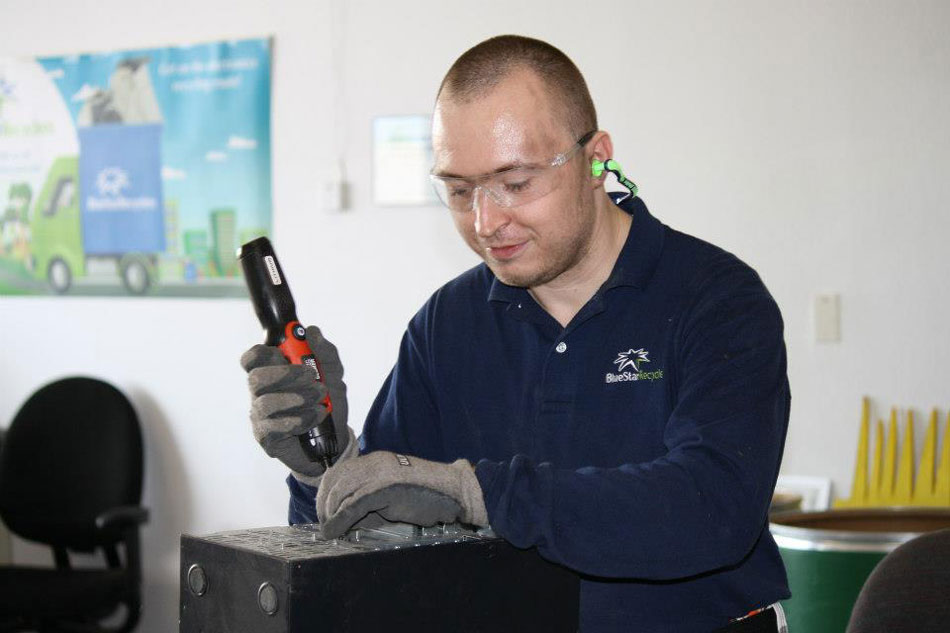
They were languishing a bit, but this group actually seemed to enjoy being there. I investigated more closely and discovered they were really good at the work. You could place an old computer in front of one of them and they would have it broken down to its base materials in a matter of minutes.  I inquired where they learned this skill, and they shrugged their shoulders. After a few more days of observing their proficiency at the task, I looked at their files and found virtually every one of them was on the autism spectrum.

Since I had no knowledge of autism or electronics recycling, I did a little research and discovered two sobering facts:

1) Adults with autism face over 80% unemployment.

2) Less than 20% of electronics are recycled ethically.

Not having the nonprofit service provider perspective, my first thought was, “Why aren’t these folks employed doing this task?” That question spurred me to create a business plan for an electronics recycling vocational training and employment program. Next I found a recycler who would pay us five cents a pound to take computers apart, and within a few months we had our first four adults employed. Then I experienced the very definition of serendipity through a chance meeting with a local business owner and his wife. They just happened to own a warehouse with a prior tenant who had gone out of business, and who had left behind a truck and a huge pile of electronics.

We needed all three. And if that wasn’t good enough, they also put a large sum of money to get the enterprise up and running. That was five years ago. Today Blue Star Recyclers is an award-winning social enterprise, with 24 employees in Colorado Springs. Along the way we’ve ethically recycled 5 million pounds of electronics, produced over $1.5 million in earned income, which has enabled us to become 90% financially self-sustainable.

In addition, the workers we employ are less dependent upon government-funded services, resulting in taxpayer savings of another $1.5 million. In 2011 we established a program called VERN (Vocational Electronics Recycling Network).  VERN is our way of sharing our mission and proven model with other communities and recyclers who want to create local jobs for people with autism. VERN has created another 30 such jobs, mostly in smaller communities where unemployment for adults with autism is often 100%.

Here’s the best part of our story: In five years we have had zero turnover, zero absenteeism, and no lost time accidents (absolutely unheard of in our industry). People with autism are not just good workers; they are phenomenal workers every employer should seek to employ. Adding a significant social deliverable to a recycling enterprise business model has created an entirely new market, which has enabled us to triple the size of our organization in five years. You see, we don’t just have customers- we have advocates.

Recycling is about two things: convenience and motivation. We don’t lead with the social deliverable. We don’t have to. We provide the best recycling services and value in Colorado and we just happen to provide a world-class workforce with an opportunity to show the world how great they are.

By Bill Morris, CEO of Blue Start Recyclers.

The Innovation of the Future Works in Reverse

In business, you have to think outside the box to beat the competition. This often means expanding internationally earlier and more effectively. To do this, you need to be thinking ahead. This doesn’t mean taking an expensive Western product and producing it more cheaply (as Apple did with the iPhone 5c). Rather, it means looking at ways to start with a lower-cost, more efficient — and ultimately, more useful — product. The answer is reverse innovation.

How Reverse Innovation Works

Many established companies use the traditional strategy of taking existing products, removing expensive features, and trying to market them in less-developed countries. One of the biggest problems with this is that these products frequently only target the upper strata of the socioeconomic divide, which means you miss out on a much bigger customer base. On the other hand, reverse innovation acknowledges that ingenuity can go both ways. In places like India and China, populations are immense, and resources are scarce.

People have to be more creative — more innovative — to solve problems. This makes it easy for established businesses to study the cultures and develop new products based on the adaptations they observe. Once those products are successful in the developing world, they can be adapted and sold to the developed world.

An excellent philosophy that centers on reverse innovation is Jugaad innovation. Jugaad is a Hindi word that roughly means “overcoming harsh constraints by improvising an effective solution using limited resources.” For business, it means forming a deep understanding of what enables the developing world’s workarounds to lead to new, successful products using the same resourcefulness.

The Benefits of Starting Small

Unlike expansion methods that start with products established in the West and trying to adapt them, reverse innovation begins in a setting where resourcefulness is a necessity. It cuts down on waste and losses by designing with scarcity in mind in the first place. Ideas are pre-tested and refined with cheap, available materials in local conditions before they are commercialized.

One of the challenges of many product innovation efforts is doing too much too soon, meaning that products are prototyped at an invested cost and complexity level long before they have been fully tested and refined for the customer. By observing the workarounds and adaptations in the developing world, a whole level of experimentation has already taken place that will not need to be replicated. The idea in use is a tested and confirmed concept, making the steps to introduce it to the developed world much easier.

How Did We Get So Systematized?

These days, efficiency and the Six Sigma approach dominate big business strategy, which consequently leaves little room for creativity and innovation. But it wasn’t always this way. America used to be filled with reverse innovators. The can-do spirit of the pioneers and the frugal, flexible mindset common in the Industrial Revolution drove this country forward. But technology got faster and faster, and we became obsessed with cutting waste. Businesses worked hard to make the most of the technological advances available, and the pace of life sped up.

We opted for systematized, predictable processes over innovation, and now it’s something we have to consciously pursue. Yet many companies are succeeding in their pursuit — and they’re using reverse innovation. GE Healthcare had doctors in India and China who needed to give patients ultrasounds. But a standard ultrasound machine is huge and costs anywhere from $100,000 to $350,000.

It needs to be housed in a clean, stable environment. In India, where more than two-thirds of the population lives in rural areas, it’s unrealistic to expect patients to be able to reach a hospital. So GE Healthcare developed a portable ultrasound machine that can go to patients. It now sells the machine in the U.S. at an 80 percent markdown compared to similar products. The Aravind Eye Care System is another great reverse innovator.

Founded by Govindappa Venkataswamy in India in 1976, the company has performed over 4 million operations thanks to its fast-food style, high-volume assembly. Aravind also developed an intraocular lens (manufactured by its subsidiary, Aurolab) at a fraction of the cost of imports. Building on these breakthroughs, salaUno has replicated the Aravind model in Mexico. Over the past year, salaUno has carried out 133 cataract operations a month — free of charge. Doctors from the developed world have beaten a path to the door of Aravind to learn their techniques and take them home.

Applying Reverse Innovation to Service Businesses

Reverse innovation is amazing for product-based companies, but service-based companies face the challenge of identifying analogous activities happening in other cultures. Here are several strategies that can help you overcome that challenge.

1. Find local partners.

Working with local organizations will give you unique insights. And don’t forget to consider NGOs — they’ve been working on the ground all over the world for years.

2. Spend time on the ground.

Try to experience for yourself how service transactions play out. This is where observation is key. Analyzing and forming a clear understanding of insights based on what you see will lead to great opportunities for your enterprise.

3. Study great examples.

One of the most spectacular services in the developing world to observe is the dabbawallas of Mumbai. They have created an exemplary low-cost food delivery system that thrives in a place where human capital makes up for technological shortfalls. No matter what your field of expertise, if you’re looking to expand internationally, consider reverse innovation.

Take the strategy that will give you increased efficiency and less waste, even as you put resources toward innovation. Use the innovation of the future to stay ahead of the competition.

Andrew (Drew) C. Marshall is the Principal of Primed Associates, an innovation consultancy. He lives in central New Jersey and works with clients across the U.S. and around the world. He is a co-host of a weekly innovation-focused Twitter chat, #innochat; the founder, host, and producer of Ignite Princeton; and a contributor to the Innovation Excellence blog. He is also providing support for the implementation of the Design Thinking for Scholars model with the Network of Leadership Scholars (a network within the Academy of Management).


Olivia Wilde is Turning Philanthropy on Its Head and Making a Profit

As a self-proclaimed proponent of the power of voting with your dollars, actress Olivia Wilde is proving it’s possible to live well without destroying the Earth and its inhabitants. Olivia, along with her business partner, Barbara “Babs” Burchfield, launched Conscious Commerce three years ago. The online marketplace features curated goods from ethical brands, as well as limited edition products that have resulted from collaborations between brands and smaller organizations. Because of Conscious Commerce’s success Olivia was recognized by Forbes as one of Hollywood’s young social entrepreneurs.

Olivia’s recognition is well deserved, as Conscious Commerce is more than just a digital boutique. Like any successful innovator, Oliva is tracking and anticipating trends. Right now, she sees philanthropy moving away from “$10,000 a plate fundraiser attendees” and “rich, white people who write checks” to a  for-profit philanthropy model that educates and empowers young millennials to “give back while shopping,” specifically through products that they would be purchasing anyway. (Olivia cites the success of social entrepreneur Blake Mycoskie and TOMS as a sign of the potential of this movement.)

This is why the products featured on Conscious Commerce have been paired with a nonprofit that will directly benefit from the product sales. By tapping into the billions of dollars being spent everyday, Conscious Commerce is helping consumers purchase the goods they would buy anyway and support incredible causes.

For more on Olivia’s business philosophy and Conscious Commerce, check out her interview with Forbes.

What do you think about Conscious Commerce and the idea of consumers voting with their dollars?

And The Most Promising Green Technologies Of 2014 Are…

Looking back on 2013 it is apparent that we’ve reached a unique place in history where technology and the modern lifestyle are merging. And we seem to have finally reached a point where the technologies we build and choose to integrate into our lives have been developed with environmental impact in mind. In the past, when companies were developing new technology for public consumption, they were concentrated solely on which features were going to attract the most customers.

The environmental impact of a given technology, however great or small, was something that was simply not on the minds of most consumers and did not affect their buying decisions. Last year saw the growth of a mass movement of consumers concerned about the environmental impact their lives. This has obvious implications for technology. For the first time it seems, companies can win customers by being green, and not just that niche group of Priuses buyers. Everyone wants to be green today.

This years promises to be a big one for the technology we use and its impact on the environment. Expect 2014 to be the year of the green gadget, as consumers grow more and more educated about global warming and the impact we humans have on our own environment. We are barely a month into the new year and there are already dozens of promising new technologies and gadgets coming out that will bring us closer to the technologically and environmentally integrated world we desire. Including an honorable mention from 2013, here are a few technologies that could revolutionize the way we live and treat our planet in 2014:

The Tesla Model S

This is the 2013 honorable mention and If you haven’t already heard of the Tesla, you’ve probably been living under a rock for the past few years. The Model S and the earlier Tesla Roadster have been making waves around the world both in design and technological circles for quite some time. The Roadster, while stunning to look at and exhilarating to drive, was little more than a modified Lotus Elise- but one which performed worse in almost every category other than raw speed. The Model S, however, changed the equation.

This luxury sedan was built from the ground up to be an all-electric car for everyday. Its 320-plus kilometer range is sufficient for almost any commute, and the quality of the car and its handling are equal to or better than any contemporary luxury car made by BMW, Mercedes or Lexus. With the Model S, Tesla has done something brilliant: made an electric car that average drivers will want to buy. They had better hurry, though, there surely won’t be enough to go around in 2014.

ISI Technology’s Heatworks Model 1

The Heatworks Model 1 is almost as far as you can get from an electric luxury automobile, but its impact could be just as great. The Model 1 is a water heater, but it is far from ordinary. Its claims to slash electricity bills and save the planet at the same time is every bit as bold as Tesla’s. Conventional water heaters use gas or electric heating elements to heat up a container of water for bathing, washing dishes and the like.

Tankless heaters that have recently appeared on the market pass the water directly over a heating element and on to the faucet. But the temperatures needed to heat the water in tankless heaters – upwards of 1000 C – make the systems inefficient and prone to failure. Heatworks is a tankless heater, but its technology is brand new.

According to Digital Trends, its “direct electric resistance” technology uses two graphite electrodes and the water’s own resistance for heating. However strange that may sound, it is a true revolution in technology. The new heating system, combined with advanced computer controls, is up to 40% more efficient than conventional water heaters, and the whole unit is little bigger than a soccer ball.

The McLaren P1, The Porsche 918 Spyder and the Ferrari LaFerrari

Heading back to the track for the third and final notable environmental technology of 2014, it is worth looking at a few examples of the best that the automotive world has to offer and how, even in the top tier, things are turning green. Is is one thing to make an electric car for the average driver, but it is another thing to make a green car that makes the world’s 10-year-old boys drool. This is exactly what Ferrari, Porsche and McLaren have done this year.

The Ferrari LaFerrari, the Porsche 918 Spyder and the McLaren P1 are not pure electric cars, and they aren’t exactly built for a run to the supermarket, but these hybrids make a statement that most auto enthusiasts have refused to hear for years: Not only can green cars work in the real world, they can be faster than anything you’ve ever seen.

All three cars use advanced hybrid systems that make use of electricity not to extend driving range, but to be the fastest cars in the world. Gone are the days when seeing a lavishly expensive supercar in the street must come with the smell of gasoline fumes and burning rubber.


0