Becoming a B Corporation: To B or not to B?

“Leaders aren’t born; they are made. And they are made just like anything else, through hard work.”

Those are Vince Lombardi’s words, but I can relate. Leading my company through the rigorous B corp certification process changed our company’s profile and had a profound effect on the way I approach leadership.

Leading an organization through transformational change is a delicate balance of acknowledging fear of the unknown while inspiring buy-in and commitment. It’s daunting, especially when you consider that more than 70 percent of change initiatives undertaken by companies fail.

The decision to pursue B corp certification was the right step for our company. Like many other businesses, sustainability was always important to us, and we wanted to grow our commitment to directly and broadly improve the social and environmental impact of our operations.

Lighting the Way Toward Change

Navigating change is easier when there is a clear alignment between purpose, brand, and the content of the change. As we looked ahead, the changes required to become a certified B corp aligned perfectly with our corporate purpose and pushed us further down the path of modeling a sustainable approach to business.

The nature of our work put us ahead on our journey, but the process still wasn’t easy. Guiding my organization through the changes needed to achieve such uncompromising certification standards taught me some powerful lessons in leadership:

  1. Use a credible structure.

Use an existing, well-researched framework to help you understand the relevant benchmarks, set clear goals, and focus your efforts on leading the change rather than on inventing a structure to manifest it.
We’re not experts in sustainability reporting structures, so my first job as a leader was to explore different options to determine what made sense for us. In the end, the free B Impact Assessment was the right fit for us. It follows the triple bottom line approach and is suited to smaller companies.

The results are published online, fulfilling an important part of the transparency component. The tool prompted us to carefully examine our business through an outside lens and guided the decisions we needed to make.

  1. Identify and articulate why you do what you do.

With a structure in place, you now have to communicate a compelling case for change. If you can’t clearly state your company’s overarching purpose, you’ll never achieve true engagement across the organization.

Author Simon Sinek puts it this way: “People don’t buy what you do; they buy why you do it.” When you can credibly and consistently connect your goals to your purpose — your “why” — you’re well on your way.

At the start of the B corp certification process, we were expressing our purpose in many different ways. It crystallized for me when a colleague explained how she struggled to find the right words when asked what our company does. We needed to arrive at our core purpose and then express it the same way in every conversation, employee meeting, and customer presentation.

It’s not always easy to distill your efforts and products down to a simple unifying purpose, but it’s critical to do so. You might try brainstorming with a diverse group of people and perspectives or hire a skilled brand consultant to help peel back the corporate onion and get to the essence of why you do what you do.

With some open minds up to the challenge, we came away with a simple, straightforward statement: “We help business leaders reduce the needless consumption of resources related to printing.”

This statement, which distills our essential “why,” gave employees something to believe in and helped us through the changes we were making to achieve B corp certification. It gave us a simple way to articulate our story, both internally and externally.

  1. Don’t fight the friction.

Nearly half of senior managers claim their change management endeavors fizzle right as it’s time to execute. Some friction is unavoidable, especially with big changes; as a leader, you need to embrace it.

In our case, the main source of friction came from honestly assessing how our company was living our purpose and how we could do better. For example, we instituted a recycling and composting program to mitigate our environmental impact. Knowing we wouldn’t be successful with a mandate, we approached it with a mix of leadership by example, education, and — most importantly — employee advocates.

The key for us was identifying the change sponsors, change agents, and change targets within our organization. Having these roles in place helped us anticipate the uncertainties and stress points employees might experience as we implemented the change.

As a leader, it’s also important to share and celebrate achievements along the way to recognize progress, create positive perceptions, and reinforce new behaviors.

  1. Feed the fire.

As commitment to change grows, recognizing individual contributions makes it contagious — i.e., it feeds the fire. In fact, as more people buy in, pour gasoline on the fire whenever you can.

Enlist the help of early adopters who recognize the value of the change and are willing to lead special interest groups. To help manage our recycling program, our sustainability interest group meets each month over lunch. It’s an engaged team that has proven to be highly and consistently productive.

Share your enthusiasm for the group’s efforts via internal communications. Snap a photo of them taking care of the recycling or compost and put it on your internal website. Give them first shot at using the returned compost for gardening at home. Let them choose where to get lunch for a companywide recycling orientation. Lather, rinse, and repeat.

To paraphrase Lombardi, leading change is hard work. When everyone is listening and watching what you do, you have to learn your lessons and apply them as you go. Inspiring people to buy into a common vision and commit to it — even when it’s exceedingly difficult — is both the challenge and the reward of successful leadership.

 

Business Leaders Ready to Tackle Social Challenges

The Global Opportunity Network shows us how to turn risk into opportunity.

How we see the world

The Global Opportunity Network Report is rooted in the tension between global risks and opportunities. The concept of opportunity offers a perspective of the world where change is beneficial, even on a large societal scale. From the two concepts of risk and opportunity emerges the third and final ingredient  – opportunity leadership. In combination, these three ideas inspire a fundamentally new way of looking at the world and exercising leadership. Opportunity leaders are what we call those who react to risks from the perspective of opportunities. Systemic risks are fueled by globalization and the rapid rise of technology. Opportunities create value for societies and the planet, not just for individuals or businesses.

Business leaders see social challenges as among the most pressing risks they face. Of the more than 5,500 leaders surveyed worldwide, 42 percent answered that wasting an entire generation of youth to unemployment was at the top of their concerns among this year’s five risks. Looking at the broader risk landscape, a similar trend emerges, most notably unemployment, poverty, and hunger. We tend to assume that business leaders are concerned only with short-term profits and not with societal well-being. However, the above findings demonstrate that social unrest and economic disparity damage everyone’s prosperity.

Indeed, today’s most pressing risks are all concerned with human need that we all share; a job for a life without poverty. It is the social glue of our societies. Poverty, hunger, and youth unemployment are eroding the foundation of progress – not only in the world’s poorest countries, but within almost every country around the world. More than ever before, businesses must keep an eye on the wider risk and opportunity landscape in order to ensure current and future profits. Business leaders can be the change makers that COP21 asked for. The message from Paris was clear – that we need to mobilise new drivers of change. Also, that business holds important keys to solving a major global challenge like climate change. Businesses have broadened their view on what is best for both society and for business.

Systemic risks present global opportunities

As with every risk, there are opportunities to be pursued in this apparent crisis – indeed, this is the foundation of the Global Opportunity Network. Pursuing these opportunities is not simply a matter of making a bad situation a little better, it is a matter of turning it around. Our future depends on the opportunity mindset. Youth unemployment is an urgent example of the threatening ripple effects of a generation without prospects. Unemployment rates have reached particularly alarming heights in the Middle East and North Africa, where the lack of prospects for young people threatens to waste an entire generation.

The untapped potential of millions of people has repercussions far beyond their immediate societies. The good news is that opportunities for change can be found if a systemic approach is applied to solving the youth unemployment crisis. Tomorrow’s professionals are today’s children. A systemic approach looks at how schools and higher education systems interact with youth and how policies and corporations mold youth and their skills and culture of working. With new thinking about education, knowledge-sharing, and entrepreneurship, aided by digital innovations, entire societies can be uplifted and several global risks mitigated.

Businesses are the new activists

So where do we go to pursue these opportunities for systemic change? The survey data shows that business leaders are perceived to be the new advocates for systemic changes, alongside civil society. While the task of tackling entrenched social problems once firmly belonged to the realm of government, a clear shift is taking place: progressive businesses are working for the society they want to operate in. This is not motivated simply by altruism, but rather by an increasing recognition that social risks are detrimental to the bottom line and may present business opportunities in addressing them. A growing number of businesses must take the long view and look beyond their immediate interests to thrive.

To this end, a new alliance is emerging between progressive businesses and civil society actors, who strive to achieve the same sustainable goals. This promises to strengthen the social bottom line on the sustainability agenda, together with the environmental and economic bottom lines, and is ushering in a new kind of social capitalism. It’s large scale societal change from the bottom up. Conventional thinking sees entrepreneurship as an alternative to the conventional corporate world, but bringing the two worlds together through corporate incubators is an opportunity to generate jobs and futurepreneurs. Futurepreneurship empowers youth to take charge of their employment situation with the support of more experienced entrepreneurs.


The Future of Finance: Become Your own Bank

Bankers are happy to loan you money as long as you can prove that you don’t need it.

Roger Ying found a better way and is making traditional banking obsolete with technology-driven tools that empower the 99 percent.

Ying stepped into this brave new world and founded financial services company Pandai in 2011, after seeing a fundamental shift in what people expected from their banks, but weren’t getting. Occupy Wall Street and the anti-globalization movement may have been the catalyst for ordinary people to demand change in world finances, but increased political interference by governments has also created inefficiencies in banks that have stifled the flow of money to billions of consumers.

ying

“The average consumer started to realize how crony capitalism can come about,” says Ying “It’s become clearer how banks choose to finance some people over others, and many people have woken up to how big banks use and spend their money.”

Ying attributes the increased awareness and demand for change to the Internet, where shared information and experience has resulted in a more educated consumer. A rise in the concept of a shared economy has disrupted what traditional banking and finance is all about, and has people questioning what currency they still believe in. It has become an increasingly difficult question to answer.

“The rise of crypto-currencies, such as Bitcoin, have raised an interesting point. Would you rather believe in something that has been manipulated by a central government or bank, or a system with firm and fixed rules that technology has enabled – that are clear, decentralized and transparent?” asks Ying.

When the global banking crisis began in 2008 and people in Iceland, Spain, Ireland, Russia and the United Kingdom began losing their savings, there was one unbelievable detail: no one knew how they’d lost their money. Money had been entrusted, but no one knew what the bank was actually doing with it.  A result of this has been a demand for greater transparency and has seen the emergence of crowdfunding and peer-to-peer lending. “This is essentially saying that you’d prefer to meet the cow that will become your steak,” says Ying. “Knowing who has your money, and how they’re using it, is an important consideration in the new world of finance.

“Financial services before the crisis had an attitude of, ‘Just trust me. If I lose your money, I don’t owe you an explanation,’” explains Ying. “Added to this were layers of legal complexities that a banking client could never hope to understand.”

Pandai’s approach is to connect credit-worthy borrowers with lenders, which may sound like a familiar lending model, until you realize how many people might become involved in a USD10,000 loan. In this model, hundreds, or even thousands, of lenders will each lend USD10 or more to make up the total loan amount.

The lender can now become their own “banker” by diversifying their investment over hundreds of borrowers (customers) financing their loan.

“It’s reverse banking,” says Ying. “And turns the borrower into the banker.” It’s an idea that Pandai is rolling out to the Chinese rural agricultural sector – 800 million farmers that make up more than half of China’s 1.3 billion population. It’s a huge, untapped market.

“In 2009 the peer-to-peer lending market in China stood at USD4.5 million, a figure that grew to USD66 billion last year,” says Ying. Crowdfunding, or crowdlending, diversifies the risk by spreading it among many people and essentially doing what a bank does: collecting many deposits from many customers. The lender  can now become their own “banker” by diversifying their investment over hundreds of borrowers  (customers) financing their loan. For skeptics who think this way of banking is unrealistic, 100 percent of Pandai’s lenders have received returns of between 7-15 percent.

This approach may seem innovative, but is actually nothing new. “Over 100 years ago, banking was a community business,” says Ying. “A bank manager knew every customer – who was doing well and who was doing poorly. With the advent of central credit bureaus and big data, risk formulas were developed that didn’t always acknowledge a person’s true earning potential, or ability to repay.”

“I see increasing numbers of people taking financial matters into their own hands and not feeling they need large corporations to think for them anymore,” explains Ying. “Technology has allowed people to buy into concepts, rather than big brands, and the emergence of robo-advisor’s, online portfolio management services that use algorithms to manage portfolios without the use of human financial planners, has empowered many investors.

“Banks usually look after their own interests,” says Ying. “In China, for example, state-owned banks are not incentivized to take risks, but rather to lend to other state-owned enterprises, effectively freezing out the general public from cheap access to capital.”

The Chinese banks won’t touch the farmers and truck drivers that Pandai finances, and Ying acknowledges that self-interest is still a problem. Stifling bureaucracy and a conflicting agenda between state and private enterprise are just two obstacles that need to change.

“There’s no reason for many banks to change as they exist as an arm of government,” he says. So, will banks die out like the dinosaurs one day? Ying thinks banks can change and are being forced to become more consumer-centric. Partnerships between banks and companies such as Pandai have shown banks how to expand their product range.

ying_02

The future of banking is an increased transparency and having all your financial information on your mobile phone – all your accounts, policies and portfolios instantly accessible from anywhere. On a recent trip to India, Ying witnessed how transparency can still play a central role, despite the lack of technology. “Some peer-to-peer lending platforms allow the lender to call up the borrower at any time and have a conversation,” he says. Private banking used to be a term reserved for the wealthy, but now it seems that a private phone call between any one of 800 million farmers and their benefactors represents a whole new way of defining wealth.


Eat Your Food Packaging, Don’t bin it – Scientists

Scientists are developing an edible form of packaging which they hope will preserve food more effectively and more sustainably than plastic film, helping to cut both food and plastic waste.

The packaging film is made of a milk protein called casein, scientists from the U.S. Department of Agriculture said at a meeting of the American Chemical Society.

The milk-based packaging does not currently have much taste, but flavors could be added to it, as could vitamins, probiotics and other nutrients to make it nutritious, they said.

The film looks similar to plastic wrapping, but is up to 500 times better at protecting food from oxygen, as well as being biodegradable and sustainable, the researchers said at the meeting in Pennsylvania, which runs until Thursday.

“The protein-based films are powerful oxygen blockers that help prevent food spoilage. When used in packaging, they could prevent food waste during distribution along the food chain,” research leader Peggy Tomasula said in a statement on Sunday.

Between 30 and 40 percent of food produced around the world is never eaten because it spoils at some time after harvest or during transport, or gets thrown away by shops and consumers.

Yet almost 800 million people worldwide go to bed hungry every night, according to U.N. figures.

Halving food waste by 2030 was included as a target in global development goals adopted by world leaders in 2015.

The U.S. scientists also want to reduce the amount of plastic that is thrown away.

“We are currently testing applications such as single-serve, edible food wrappers. For instance, individually wrapped cheese sticks use a large proportion of plastic – we would like to fix that,” said Laetitia Bonnaillie, co-leader of the study.

Single-serve pouches of cheese would still have to be encased in a larger plastic or cardboard container for sale on store shelves to prevent them from getting wet or dirty.

Edible packaging made of starch is already on the market, but it is relatively porous and does not block oxygen from reaching the food as effectively.

Bonnaillie said she hopes the milk protein packaging will be on store shelves within three years.

By Alex Whiting, Editing by Jo Griffin.

Fears for Social Entrepreneurs in Britain as Brexit Looms Large

Britain’s role as a pioneering country for social entrepreneurs could suffer as it prepares to leave the European Union after decades of the government actively promoting business leaders seeking to do good, experts said.

A Thomson Reuters Foundation poll of experts in the world’s 45 biggest economies ranked Britain third after the United States and Canada as having the best environment for entrepreneurs using businesses to help tackle social problems.

From The Big Issue newspaper sold by homeless people and ecotourism attraction the Eden Project to Divine Chocolate, a company co-owned by cocoa farmers in Ghana, Britain’s social enterprise sector has grown rapidly in 20 years.

Britain launched a social enterprise strategy in 2002, the first social impact bond in 2010, introduced social investment tax relief and brought in a law in 2013 calling for all public sector commissioning to factor in social value.

But economic uncertainty after Britain’s decision to leave the EU poses significant financial and operating challenges for the sector, said Peter Holbrook, chief executive of Social Enterprise UK, a membership organisation for social enterprises.

“While there is no blueprint to know what will happen after Brexit we can expect there will be less government support, financially and in terms of policy, because there will be some economic contraction,” Holbrook said.

The Thomson Reuters Foundation poll, carried out in partnership with Deutsche Bank, the Global Social Entrepreneurship Network (GSEN) and UnLtd, foundations for social entrepreneurs, found Britain came seventh when experts were asked if government policy supports social entrepreneurs.

South Korea, Singapore topped the list with France tied with Chile in third place followed by Canada and the United States.

In Britain government records identify about 70,000 social enterprises – loosely defined as ventures combining business with social purpose – employing nearly one million people.

But leaving the EU could bring new challenges such as delays on public sector contracts – a source of income for larger social enterprises – and social businesses may find it harder to borrow money amid financial uncertainty, Holbrook said.

MOMENTUM SLOWING?

In Britain, as elsewhere in the world, public funds have come under increasing pressure from shrinking economic growth, making governments more aware of the potential of social enterprises to promote a more equitable and sustainable society.

Nigel Kershaw, executive chairman of the Big Issue Group, said the sector had grown since the 1990s out of co-operatives and community enterprises wanting to use business to create social change.

Growing demand from the government to buy services from charities has also boosted the sector, Kershaw said, a factor he said he expects to continue despite Britain’s EU exit.

The poll found that selling to government was one of the main challenges faced by the growing sector.

The Big Issue, one of Britain’s best-known social enterprises, was formed in 1991 as a business solution to a social crisis and inspired street papers in more than 120 countries.

“It’s about finding sustainable business solutions that are making a difference to people’s lives throughout the U.K. in a time when we need a more innovative way of doing business,” Kershaw said.

GOVERNMENT ALLY

But despite Britain’s leadership on social entrepreneurship, experts in the Thomson Reuters Foundation poll ranked Britain only 27th when asked if social entrepreneurship was gaining momentum, while Canada and the United States ranked top.

Experts said the sector could be impacted if the new government of Theresa May does not provide the same level of support enjoyed by social entrepreneurs in the past two decades.

A decision to move responsibility for the sector from the Cabinet Office – a department at the heart of government – to the Department of Culture, Media and Sport set alarms bells off.

“There is a danger that the needs of social enterprises, social investors and mutuals will be sidelined,” Holbrook said.

Britain’s model of government support for social enterprise has caught the attention of other governments, aware of the power of using business to help social problems, experts said.

In Malaysia – which came 9th in the overall ranking and 10th when it came to government support – Prime Minister Najib Razak last year allocated 20 million ringgit ($5 million) to boost the number of social enterprises to 1,000 by 2018 from around 100.

As part of the plan it set up the Malaysian Global Innovation and Creativity Centre (MaGIC) which provides training in setting up a business, how to access funding and networking opportunities, along with competitions and outreach.

“It’s been a tremendous help to get this type of government support,” said Su Seau Yeen, founder of Simply Cookies, a social enterprise based in Kuala Lumpur that trains single mothers to bake in a kitchen where they can bring along their children.

By contrast Australia ranked 36th on government support with experts saying the sector needed coordinated government support.

“It’s a hot-button issue right now and there is a strong sense that there’s not a lot of government support,” said Jo Barraket, a professor and director of the Centre for Social Impact at Swinburne University of Technology in Melbourne.

($1 = 0.7769 pounds);($1 = 4.0050 ringgit)

(For the full results of the 2016 poll on the best countries for social entrepreneurs go to poll2016.trust.org)

By Astrid Zweynert. Additional reporting by Pauline Askin in Sydney; Editing by Belinda Goldsmith. Thomson Reuters Foundation is the charitable arm of Thomson Reuters, which covers humanitarian news, women’s rights, trafficking, property rights and climate change.


How to Create a Personal Connection With Corporate Values

It’s one thing to rationally explain your organisation’s purpose but quite another to fully translate that purpose so that employees throughout the company can connect emotionally to your mission and strategy.

Lacking an alignment of stated values and lived reality, an entire organisation may suffer. In the words of management strategy author Patrick M. Lencioni, “Empty values statements create cynical and dispirited employees, alienate customers, and undermine managerial credibility.”

One potential tactic is to create a corporate social responsibility department. In practice, though, these units often become siloed, and the the work they do may not ever enter the consciousness of the average employee. So how do you turn a bulleted list of core values on a webpage or PowerPoint slide into everyday behaviours that fully embody the values you’ve set forth?

One technique being embraced by socially conscious, values-based organisations is immersive, intercultural off-site experiences.

More than a mission statement
“Get out of the office,” says Annemarie de Jong, a partner with the Netherlands-based leadership consultancy Better Future. “But don’t just hold a retreat at some anonymous corporate venue in the woods. It should take you and your team far beyond the confines of your everyday context, where you can get to know your customers, partners and contractors while tackling real-life social challenges and make an immediate positive impact.”

De Jong’s group does this by taking leaders and their teams on multi-day, immersive “journeys” to locations around the world – an approach based on the research of Dr. Otto Scharmer, a Senior Lecturer at MIT’s Sloan School of Management and co-founder of the Presencing Institute. “We take teams to places where they can get a direct sense of the effect their work has on others. For instance, we might take investment bankers to the countries where their money is being put to use, and put them to work on real-world business challenges with their local client counterparts.”

By coming to understand customers and partners as people and not just personas, by immersing themselves in the social scenarios impacted by their work, the executives who go on these journeys come to embody the values leading their organisations. Immersion experiences abroad also usually include homestays with local families, so that both parties can experience each other holistically, in both public and private environments.

Micro-immersion alternatives
De Jong generally organises week-long journeys for clients, but not all budgets are up for the bill. Managers looking to stay lean can still foster transformational experiences with as little as a single day of good actions close to home. For example, the managers from your construction company could spend a day volunteering in a soup kitchen frequented by the people who will be living in the low-cost housing they’re building.

One last tip that de Jong has for any organisation setting up immersive social challenges for employees is this: if the immersion is only available to a limited number of individuals – say, senior executives – make sure to equip them with the tools to transmit some of their core learnings to the teams they oversee. “The impact of the experience is exponential,” she says, “when those involved act as catalysts for change back in the office.”

Laura Montgomery is a higher-education expert who blogs for The Economist Careers Network


Jupiter, Juno and Galileo Have Beaten Tesla Billionaire to Outer Space

In 2014 when Tesla founder, billionaire Elon Musk, announced that he wanted to establish a colony on Mars with his space company, SpaceX, he upped the stakes in the race to become the first to place humans further into space than ever before. Unfortunately, Musk just lost.

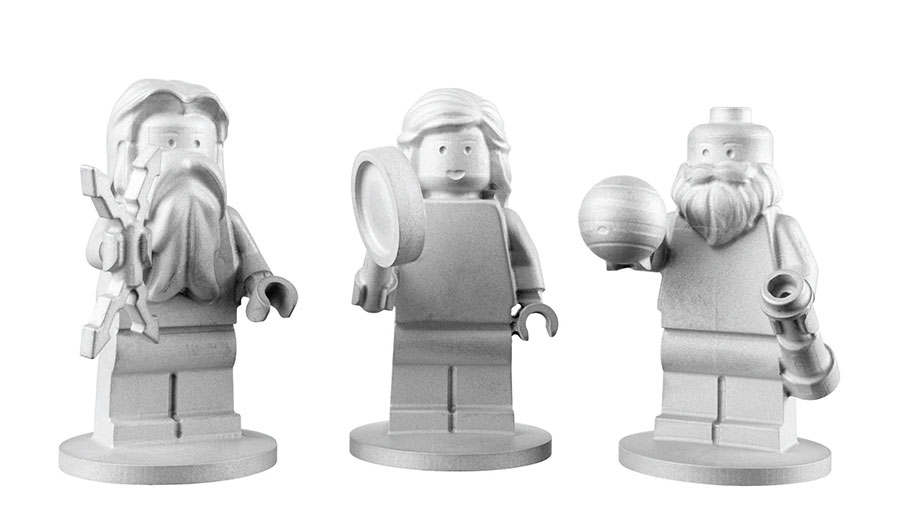
As the Juno space probe approached the planet Jupiter on 4 July of this year, three lucky passengers onboard could lay claim to being the first to reach the fifth rock from our sun. Well, they may have resembled the human form, but they weren’t actually breathing. And they were made of aluminum.  Three Lego minifigures were placed aboard the NASA mission in 2011, and have been drifting toward Jupiter for the past five years. The crew’s mission? To inspire children to explore science, technology, engineering and mathematics, and to dream impossible dreams that may well see our grandchildren embarking on such a journey one day.

A joint outreach and educational program named Lego Bricks in Space was established between NASA and the Lego Group before the launch of Juno, and while the space probe’s principal goal is to understand the origin and evolution of Jupiter, the minifigures are boldly entering unchartered territory as symbolic space scouts.

So, who exactly are these three lucky passengers? The crew consists of the Roman god Jupiter, his wife Juno and the “father of science,” Italian astronomer Galileo Galilei. In Greek and Roman mythology, Jupiter drew a veil of clouds around himself to hide his mischief, but from high-up Mount Olympus, Juno was able to peer through the clouds and see Jupiter’s true nature. She’s certainly not leaving him alone on a journey of 365 million miles after that. The Juno spacecraft will also be looking beneath the clouds, to help NASA understand the planet’s structure and history. The minifigure of Juno holds a magnifying glass to signify her search for the truth, while her husband holds a lightning bolt. The third Lego crew member, Galileo, who made several important discoveries about Jupiter in 1610, is depicted holding a telescope.

To withstand the extreme temperatures the Lego crew would endure, the figures were milled from a single block of aluminum, a metal with a melting point of 1,221°F.  While other metals have a higher melting point, another consideration was that aluminum is non-magnetic and wouldn’t interfere with onboard equipment.

Lego’s goal, beyond exciting kids everywhere, is an effort to help broaden awareness around the importance of planetary research.

It may seem like science fiction now, but many notable scientists and business people have acknowledged that we need to start looking at future homes for humanity. Just in case. Through the minifigures on Juno, Lego wants children to dream up their own stories and adventures and explore their own innate creativity, hopefully resulting in an exploration of their everyday lives.

Despite the trio being made from one solid piece of metal to prevent them from coming apart during the six-year mission, the crew will unfortunately not be coming back to earth. In around one year’s time, during its 37th orbit, Juno will plummet toward Jupiter in a controlled deorbit and burn up and disintegrate in the planet’s atmosphere.

The controlled deorbit will eliminate space debris and the risks of contamination in accordance with NASA’s Planetary Protection Guidelines. Yes, unbelievably, there are already rules in place to preserve the pristine nature of celestial bodies and prevent contamination in space. Around 104 states, representing every space-faring nation, and some aspiring ones too, have signed the Outer Space Treaty, promising to abide by the rules of planetary protection. Now if only we could get earth included in that deal …

Elon Musk Just Made Your Car (and NASA) Obsolete

It takes a special type of car manufacturer to add a button to their car called “insane mode.” It’s what Tesla founder Elon Musk decided would highlight the fact that battery-powered cars had moved on from kids’ toys and golf carts. That didn’t stop him from going one step further a year later by adding “ludicrous mode” to his Model S P9OD in 2015, which saw the all-electric car accelerate from 0 to 60 mph in just 2.8 seconds. That’s faster than falling.

Over and above the obvious adrenaline rush of being thrust forward at the pace of a fighter jet, it had less to do with boastful bravado and more to do with the pace of Elon Musk’s brain, the founder of the most innovative automobile company on the planet.

How we transition to a sustainable energy economy, in which electric vehicles play a pivotal role, has been his central interest for almost two decades, and he’s pursuing this vision at a frantic pace. He has also set his sights beyond our roads, into outer space, and is the chief designer for space exploration company SpaceX, where he oversees the development of rockets and spacecraft that he hopes will one day allow humans to colonize other planets. For Musk, it’s dream big or go home. Musk and Tesla are an example of how inspired business leaders are taking on some of the world’s most challenging problems and solving them profitably.

But what kind of crazy dream would make you want to reinvent the auto industry, an industrial sector that has operated along the same mechanical principles since the first fossil-fueled car of 1886? Musk already pondered this question at university. “I thought about the problems that would most likely affect the future of the world or the future of humanity,” he says. “I think it’s extremely important that we develop sustainable transport and sustainable energy production.” Silicon Valley, not Detroit, was to be the home of the automobile revolution. Musk’s first solution was the Tesla Roadster in 2008, which sold well, but wasn’t without its problems. As with most tech products, it’s sometimes best to wait until version 2.0 comes out before embracing brand new software or products.

Tesla’s next move was into the luxury market, and the launch of the USD70,000 Model S heralded a shift in consumer perception – here was a luxury performance car that was also environmentally friendly. It went against all the stereotypes of wealth, oil, gas and performance cars that belch out CO2 and accelerate our environmental demise – all for the sake of attracting smiles from attractive strangers at traffic lights.

As alluring as the Model S seemed to those who valued clean, renewable transport, there was one glaring problem for the ordinary person: a price tag that would buy you a three bedroom house in Syracuse, New York, USA. However, there was some method to his pricing madness. Musk had formulated a financial model that saw his high-end, premium models subsidize the development of a much larger dream – the production of affordable electric cars for the masses.

spacex

You might say that Musk’s impatience at finding responsible solutions to our mobility has seen him subscribe to a familiar business mantra: “Say yes, and then find a way to do it afterward.”

“Given that we have to solve sustainable electricity generation, it makes sense for us to have electric cars as the mode of transport,” he says. By creating demand, Musk thinks that others will jump onboard and help create the infrastructure and products needed to drive his new world – and all-important profits along the way.

Key to Tesla’s success will be the ability to scale electric batteries at a massive rate. It’s a lesson Henry Ford learned in 1913, when he realized that assembly lines and mass production was the way to drive down automobile costs to levels that middle-class Americans could afford.

n July, Musk unveiled the Tesla Gigafactory, 24 miles outside Reno in the Nevada Desert. The new building, the size of 107 American football fields, will house the world’s biggest battery factory that aims to deliver most of the world’s lithium-ion batteries by 2018. Still in its infancy, the Gigafactory is only operating at a fraction of its capacity and will see another USD5 billion-plus being spent on completion over the next few years. It’s the usual cart-before-the-horse scenario, without any guarantees of success. You can only imagine the conversations that took place with investors, based on Musk’s propensity to find a solution after the fact.

The entire Gigafactory will be powered with solar panels and offsite renewable energy. The only fossil fuel to be found on site will be in the tanks of visiting, vintage cars.

The Gigafactory is not just for car batteries. Stationary Powerpack units for businesses and utilities will be manufactured too, and Powerwall units for homes, linked to roof solar panels. A typical Powerwall installation with solar panels costs around USD16,000, which is steep, but some families have already reported an incredible 90 percent saving on energy bills (from USD6 a day to just USD59 cents a day). Another financial perk of buying a Tesla car is that Supercharging stations for recharging your car are free, for life. No more swiping your card at the pump.

tesla car

While Musk reinvents mobility and new ways of storing solar power here on earth, he keeps his head above the clouds at all times. Way above the clouds. SpaceX wants to advance rocket technology, and in particular try and crack a problem that Musk thinks is vital for humanity to become a space-faring civilization – a rapidly and fully reusable rocket. NASA has been doing space exploration since 1958, what would a guy building battery cars know?

Musk made USD165 million from his sale of Paypal and decided to start a space company. “I tell people I was trying to figure out the fastest way to turn a large fortune into a small one,” he jokes. Another example of his gamble with the future of humanity, but unlike the Tesla financial model, this bill was on him.

“I built rockets as a kid, but didn’t think I’d be involved in something like this. It was more about the things that need to happen in order for the future to be an exciting and inspiring one. There’s a fundamental difference between a humanity that’s a space-faring civilization, exploring multiple planets, compared to one that is forever confined to Earth until some eventual extinction event.”

Space exploration has always been about huge, expendable waste. The first Apollo missions of the ‘60s and ‘70s, the Space Shuttle and the thousands of commercial satellites flying overhead today were all made for once-off use.

Reusable parts could revolutionize the launch industry with lower costs. “The space shuttle was an attempt at a reusable rocket, but even the main tank of the space shuttle was thrown away every time,” says Musk. “The parts that were reusable took a 10,000-person group nine months to refurbish for flight. The space shuttle ended up costing a billion dollars per flight – not great for scaled-up space exploration.”

Amazingly, fuel only accounts for 0.3 percent of the cost of a space rocket, meaning you could get a 100-fold improvement in flight costs by reusing components. “Every mode of transport that we use, whether it’s planes, trains, automobiles, bikes or horses is reusable, but not rockets,” says Musk. He compares the waste with rockets to a scenario where we’d burn a cruise ship after each voyage. “How popular, and more expensive, do you think vacation cruises would be if we did this?” he asks.

Musk is a brave pioneer, a king of the new frontier, a scientist, a workaholic and an inventor. How on Earth (or space) has one man managed to innovate on so many levels? One theory is that he has an ability to pull together design, technology and business in a way that few can, and then have the unbelievable confidence to pull it off – taking crazy risks without fear.

Being a deep thinker, Musk has considered this question before. “Most of our lives, we essentially copy what other people do with slight variations, just to get through the day. But when you want to do something new, you need to do things that are counterintuitive.”

Born and raised in South Africa, and severely bullied throughout his childhood, Musk rose above the small-mindedness of others to become a highly-motivated entrepreneur with a single-minded vision that borders on obsession. The lesson for the rest of us is less about how to become a mad scientist and more about whether we will wait for the future to happen, or actively take a hand in shaping it.

Is Mobile Inspiration Making The World a Better Place?

Research from AT&T shows that people find inspiration on their smartphones and tablets. They believe it makes their world a better place.

More than 7-in-10 Americans (71%) say their mobile devices are digital portals to inspiration. AT&T also found 8-in-10 (80%) people saying that mobile technology facilitates inspiration. For nearly half of respondents (46%), connecting to inspiration with mobile devices is part of their daily routine.

The report is part of a national conversation AT&T calls Inspired Mobility. It’s an ongoing dialogue about how people connect with their faith and inspiration with mobile devices.

Hip hop icon and digital inspiration guru Rev. Run joined AT&T to discuss the study. He reaches 4.5 million people every day with just one tweet from his device.

“I believe inspiration can change the world,” Rev. Run said. “It gives people a much-needed lift. In our current times, this couldn’t be more important.”

The new findings show people are not just using their devices for work email, launching chickens and zapping zombies.

“It’s much more personal and enriching than that,” said Leonardo Torress, executive director, entertainment group, AT&T Diverse Markets. “They’re telling us mobility improves their lives – and the lives of others – virtually anytime and anywhere. That’s a new way to look at the power of this technology.”

The report details how people seek and share inspiration with their mobile devices:

Respondents say inspiration is a part of their mobile experience more than half the time. Even when people turn to their device for fun, information or productivity, inspiration is a part of the mix.
When seeking inspiration on mobile technology, 7-in-10 (70%) people say they access faith-based content the most, followed by inspirational stories and quotes.

More than half of women reported accessing inspiration for motivation, compared to 4-in-10 men. Nearly 6-in-10 (58%) young people (18-25) say they use mobile for inspiration as part of their daily routine.

“So think twice before you tell someone to put down their mobile device to tune into something more constructive,” said Torress.  “They could actually be busy making the world better.”


0